The Lord Is My Chef Breakfast Recipe for the Soul by Fr. Nicanor F. Lalog II
Thursday, Week XXXIV, Year II in Ordinary Time, 26 November 2020
Revelation 18:1-2, 21-23; 19:1-3, 9     >>>  +   <<<     Luke 21:20-28
Praise and glory to you, Lord Jesus Christ for your words today that offer us with clear images about true freedom that leads to fullness of life. So often, many among us are greatly misled by the belief that true freedom is breaking free from sufferings and God and morals, of having absolute freedom to do everything.
That has always been one of the fundamental tenets of pagans of ancient Rome you have banished for being a “cage”, an imprisonment!
“Fallen, fallen is Babylon the great. She has become a haunt for demons. She is a cage for every unclean spirit, a cage for every unclean bird, a cage for every unclean and disgusting beast.”
Revelation 18:2, 21
True freedom is choosing what is true and good, trying to bear all pains and sufferings that purify us into better persons, that free us from impurities to enter into your heavenly banquet of eternal life.
Then the angel said to me, “Write this: Blessed are those who have been called to the wedding feast of the Lamb.”
Revelation 19:9
Life continues to bear down upon us these days, Lord, especially the poor who are left with almost nothing in this life; worst, with nothing else but their dignity as persons, there are times they are being forced to give it up for a price.
Give us the grace of perseverance, to withstand all pressures by holding on to you, clinging to your merciful love that amid all the trials and sufferings going on, we may “stand erect and raise our heads because our redemption is at hand” (Lk.21:28).
Let us not be ashamed of being faithful to you, Jesus, for you alone can lead us to true freedom as a person. Amen.
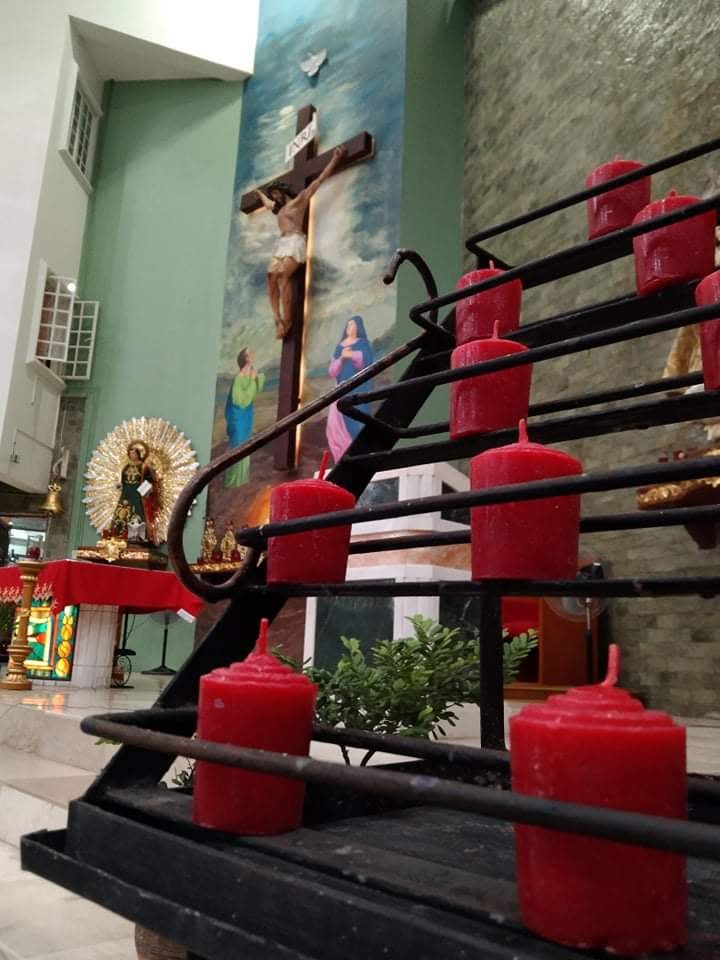
Photo by Ms. Ria De Vera, Christ the King celebrations in the parish, 22 November 2020.
The Lord Is My Chef Breakfast Recipe for the Soul by Fr. Nicanor F. Lalog II
Red Wednesday, 25 November 2020
Revelation 15:1-4     >><)))*>  +++  <*(((><<     Luke 21:12-19
Photo by author, Red Wednesday 2020.
Once again, dear Jesus, we pray in the most special way this Red Wednesday for your persecuted Church including those severely affected by the COVID-19 pandemic like the medical frontliners, the survivors and their families, and the poor who have sank deeper into poverty due to the prolonged lockdowns we have had.
We pray that we may find your good news behind every persecution we suffer and go through as a community of your believers and disciples because where there are sufferings, there are hearts and souls willing to comfort, willing to share, willing to sacrifice.
When there are sufferings, there is the color RED that means LOVE because that is when we have your Cross, Jesus Christ, and therefore share in your own destiny of glory!
It is in every shade of red like the blood poured out by Christ and the martyrs after him that the Father’s “righteous acts have been revealed” (Rev.15:4), that is, when we experience more of God’s protection and salvation in the face of grave dangers and even death.
Grant us the grace, Lord Jesus, to persevere in your words and ways so we may secure our lives in you. Amen.
The Lord Is My Chef Breakfast Recipe for the Soul by Fr. Nicanor F. Lalog II
Thursday, Memorial of St. Peter Chrysologus, Bishop and Doctor of the Church, 30 July 2020
Jeremiah 18:1-6 ><)))*> >><)))*> >>><)))*> Matthew 13:47-53
Photo by author, Third Sunday of Lent, 15 March 2020.
How amazing O God on this day as we celebrate the Memorial of St. Peter Chrysologus who spoke eloquently of the Incarnation of your Son in one of his homilies, your Prophet Jeremiah today also spoke something of our being clay in the potter’s hand.
He who made man without generation from pure clay made man again and was born from a pure body. The hand that assumed clay to make our flesh deigned to assume a body for our salvation. That the Creator is in his creature and God is in the flesh brings dignity to man without dishonor to him who made him.
Why then, man, are you so worthless in your own eyes and yet so precious to God? Why render yourself such dishonor when you are honored by him? Why do you ask how you were created and do not seek to know why you were made?
St. Peter Chrysologus in his sermon on the sacrament of Christ’s incarnation, Office of Readings
Thank you, dear God, for this enlightenment from St. Peter Chrysologus also known as the “man of golden speech” for reminding us the great honor of being created by you… from worthless clay!
Help us to reflect more on why you have created us than ask how we were created, and transformed like in the potter’s hand.
Then the word of the Lord came to me: Can I not do to you, house of Israel, as this potter has done? says the Lord. Indeed, like clay in the hand of the potter, so are you in my hand, house of Israel.
Jeremiah 18:5-6
Teach us, sweet Jesus, to be pliant and docile to the Father who continues to form us like clay in the potter’s hand — that no matter how painful life can sometimes be, even difficult, may we also see and appreciate the Father’s wonderful plans for our transformation in the future.
Help us to go through the pains of growing up and maturity so that when judgment day comes, may we all turn out to be good fish to be collected than bad ones that are thrown according to your parable of the net. Amen.
The Lord Is My Chef Sunday Recipe for the Soul by Fr. Nicanor F. Lalog II
Week XVI, Cycle A in Ordinary Time, 19 July 2020
Wisdom 12:13, 16-19 >><}}}*> Romans 8:26-27 >><}}}*> Matthew 13:24-43
Our Lord Jesus Christ invites us today to join him into a different kind of journey that would take us deep into God’s mystery in our very selves through the parables he has started to tell us last Sunday.
Recall, dear readers, that parables constitute the heart of the Lord’s preaching.
We have defined these as simple stories with deep realities that must be cracked open through prayers and reflections to get its meaning. From the French para bolein that literally means “along the path”, a parable is likewise a bridge that leads us into something unknown to us before.
In itself, a parable is a journey calling us to walk through it into our inner selves to discover the many inner beauties that lie within us but we take for granted. Ultimately, as we discover these giftedness within us, we then uncover God dwelling within us.
This is the reason why Jesus would always tell his audience after narrating his parables that “Whoever has ears ought to hear” (Mt.13:43) to insist on them to go deeper inside themselves for their meaning.
And that is when we are transformed, when our lives are changed into true disciples of Jesus Christ.
Greatness in littleness
First thing we notice in the three parables of Jesus today is his insistence on the coming of the kingdom of heaven or kingdom of God through him as the mysterious seed.
This kingdom of heaven is used interchangeably with “kingdom of God” that Jesus would always speak of in his entire ministry until his crucifixion is not according to our understanding of a kingdom: it is not about a territorial domain or the exercise of power over subjects using force.
St. John Paul the Second expressed it beautifully by declaring the person of Jesus Christ himself is the kingdom of God. No wonder, Christ would always liken himself and the kingdom of God with the seed being sown.
It is always good. It is for everyone as the sower scatters the seeds everywhere. And it is always small like Jesus who was born like any infant so fragile and even poor like most of us. He is like the seed we take for granted from which comes forth all kinds of plants like trees, big and small.
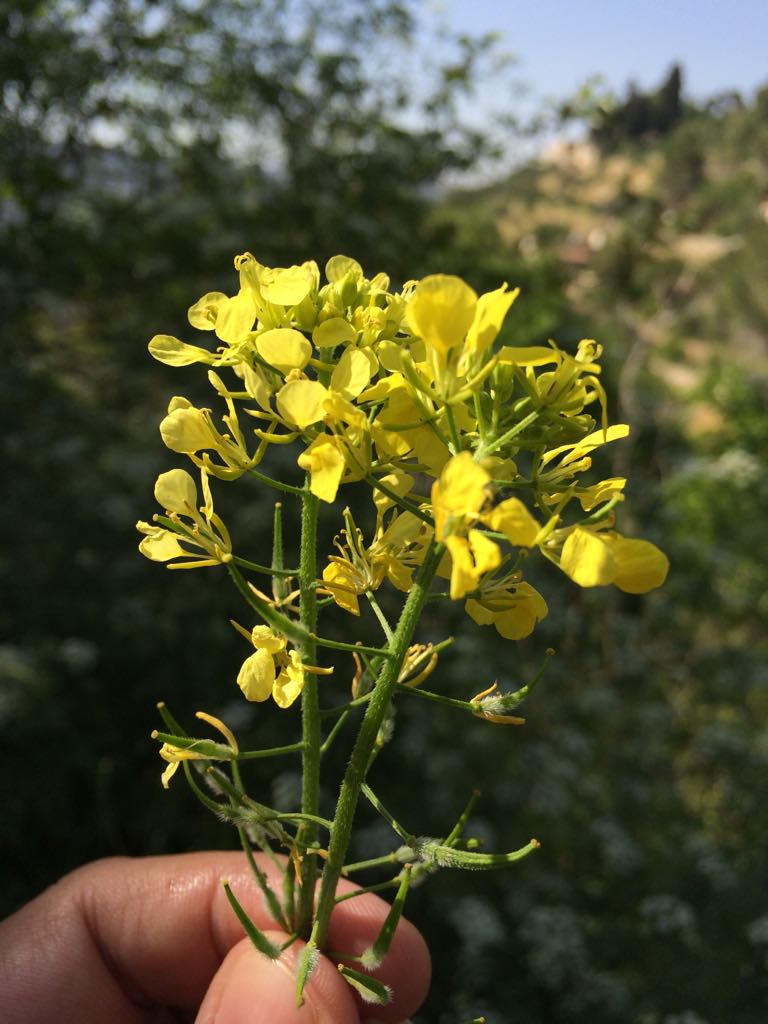
Flowers of a mustard plant from which seeds are taken. Photo by author, Israel, 2017.
Or most specially, like those seeds that turn into crops of wheat and shrubs like the mustard with leaves and branches where birds may dwell that describe the first two parables today.
Jesus then added a third parable of the yeast mixed into flour that leavened the dough into a bread.
Like him our Lord, we his disciples are also like the small seeds packed with great possibilities in God.
In all these three parables today, there is that element of smallness, of littleness that remind us how everything that is great always starts small.
When we come to think of this, we realize how we embarked on this great mission of making Jesus Christ known: it started like a small spark within us, perhaps from a single word we have heard or read, a simple inspiration by God through the most ordinary persons and situation.
Not only in things regarding our spiritual lives but even our personal lives when we recall those humble beginnings of our family and of our business.
Like a little seed or yeast, they just grew!
Now we are surprised, even amazed, how we have changed, how we have grown. Of how we are now reaping the fruits of our labors and sacrifices.
Most of all, how we have known and experienced Jesus Christ who fulfills our lives.
Weeds among the wheat
But not all days are bright and sunny. There are dark clouds that hover above us bringing storms and heavy rains that lead into floodings. A lot often in life, the darkest nights turn out to be the longest nights too.
And this is the meaning of Christ’s main parable for today.
Jesus proposed another parable to the crowds, saying: “The kingdom of heaven may be likened to a man who sowed good seeds in his field. While everyone was asleep his enemy came and sowed weeds all through the wheat, and then went off. When the crop grew and bore fruit, the weeds appeared as well. The slave of the householder came to him and said, ‘Master, did you not sow good seed in your field? Where have the weeds come from?’ He answered, ‘An enemy has done this.’ His slaves said to him, ‘Do you want us to go and pull them up?’ He replied, ‘No, if you pull up the weeds you might uproot the wheat along with them. Let them grow together until harvest; then at harvest time I will say to the harvesters, ‘First collect the weeds and tie them in bundles for burning; but gather the wheat into my barn.'”
During my prayer periods this past week, I have been filled with anger and disappointments at how things are going on in our country and even in my personal life. It pains me so much why at this time of the pandemic when we have to go through all these bad things.
Last Friday morning before our daily Mass, we discovered the glasses shattered in our windows near the office door and at the side door of the church. There were scratches outside indicating attempts to unlock the doors inside and steal from the church.
After the Mass, I grew more angry as we inspected the damages, thinking so negatively harsh against whoever tried to burglarize us.
By night time during prayers, I remembered Victor Hugo’s Les Miserables where Valjean was caught by the police stealing silver from the good bishop who had welcomed him into his rectory with food and accommodations. Instead of pinning him down for his crime, the bishop told the police he had given Valjean the silver found in his bag, even chastising him he had left behind the other silver candlesticks he had asked to take!
The wheatfield owner in our parable and the good bishop of Les Miserables are both the merciful God mentioned by the author of the Book of Wisdom in our first reading today:
But though you are master of might, you judge with clemency, and with much lenience you govern us; for power, whenever you will, attends you. And you taught your people, by these deeds, that those who are just must be kind; and you gave your children good ground for hope that you would permit repentance for their sins.
Wisdom 12:18-19
Think of our parents and elders, our mentors or those we look up to for their wisdom gifted with wonderful insights in life called perspicacity which means “a penetrating discernment… a clarity of vision or intellect which provides a deep understanding and insight.”
Being perspicacious or having perspicacity like the wheatfield owner or the good bishop of Les Miserable means having a deeper wisdom that one can keenly see and understand things beyond ordinary perception following a long process of silent reflections in life.
Many times, our sights can be limited that we do not see the other repercussions and even ramifications of our decisions on certain situations. There are times we think only of finding solutions, of winning the battle but not the war.
It is also along this line that Jesus added the third parable: the yeast is mixed with the flour to leaven the dough.
We are like the yeast who have to mix with others, including the evil ones to become bread that will feed the world.
We are the wheat, the mustard seed, the yeast thrown into the world to make a difference in Christ! We are not the ones who will change the world but Jesus Christ, the mysterious seed, the yeast in the dough who grows and effects the changes in us and among us.
Parables as inner journey in Christ Jesus
With Jesus living and nurturing within us, that is when we become fruitful like the wheat and mustard plant or leavened bread that we are able to feed more people who would eventually become bearers his in the future. That is how the kingdom of heaven comes into this world, when God is seen and felt by everyone through us
This we achieve in prayers as St. Paul reminds us in the second reading. It is not just reciting our basic prayers as Christians including the novenas we love to collect and follow through. The kind of prayer that St. Paul speaks here is a prayer guided by God’s Holy Spirit who perfectly knows God’s will.
Photo by Dr. Mylene A. Santos of kids she’s teaching on the values of health, education and nature at Katmon Harbor Nature Sanctuary, Infanta, Quezon.
Brothers and sisters: The Spirit comes to the aid of our weakness for we do not know how to pray as we ought, but the Spirit himself intercedes with inexpressible groanings.
Romans 8:26
In this time of too much weeds among the wheat, of so many evil and sins prevailing over us, we can feel frustrated at times that make it so difficult for us to pray.
Sometimes, the evil and sins, or the plain sufferings we go through in our own family, in our community or at work and in school can be so overwhelming that we feel our prayers are useless, that God is not listening at all to us.
Then we stop praying, we stop journeying within even with weeds among the wheat. How can the flour be leavened if the yeast is not mixed with the dough to become bread or cake.
Remain in the Lord!
Pulling out the weeds will not solve the problem; worst, it may endanger us all too in the process that we become like our enemies in the end. Never lose hope in God who knows very well of the presence and source of weeds. Sometimes, these pains and sufferings from evils we go through from others may actually lead us to our being fruitful!
Evil and sins are a parable in themselves that can teach us so well in life if we handle them with prayers.
Photo by Dr. Mylene A. Santos, Infanta, Quezon, May 2020.
Praying in the Holy Spirit is when we spend time with Jesus to reflect and crack open his words that come to us in the Sacred Scriptures and ordinary events in daily life through long hours of silent meditation and contemplation.
The more we dive into God’s mysteries in the parables he sends us in daily living, the more we see the beauty and wonder of life because our horizons are widened and get clearer.
Praying into our parables in life is like looking into a telescope or binoculars that enable us to see something distant within reach.
The Lord Is My Chef Breakfast Recipe for the Soul by Fr. Nicanor F. Lalog II
Thursday, Memorial of Our Lady of Mount Carmel, 16 July 2020
Isaiah 26:7-9, 11, 16-19 >><)))*> + <*(((><< Matthew 11:28-30
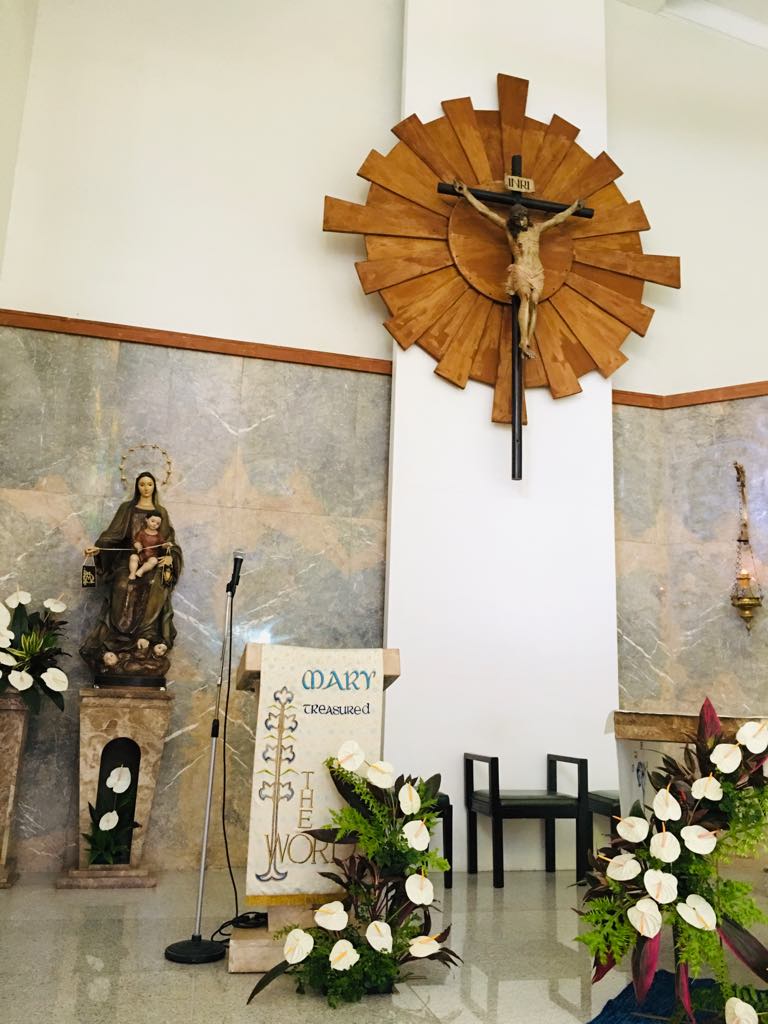
Photo by author, Our Lady of Mt. Carmel of the Holy Family, Guiguinto, Bulacan, 08 December 2019.
Your words today, O God our Father, are very comforting and consoling, so reassuring of your love and mercy for us sinners, giving us new life in you as we celebrate the memorial of Our Lady of Mount Carmel.
Like the Israelites living in exile because of their own making when they turned away from you in sins worshiping false gods, we also admit our sinfulness and failures in standing up for what is true and just, in being faithful to you.
Help us to rise again, heavenly Father, breathe into us your life-giving Spirit specially at this time we feel so down and crushed not only by COVID-19 pandemic but by public officials concerned only with their well-being and whims forgetting the people they are supposed to serve.
We conceived and writhed in pain, giving birth to wind. Salvation we have not achieved for the earth, the inhabitants of the world cannot bring it forth. But your dead shall live, their corpses shall rise; awake and sing, you who lie in the dust. For your dew is a dew of light, and the land of shades gives birth.
Isaiah 26:18-19
If there is anything we would want to have these days, it is rest, O Lord.
A lightening of our load and burdens.
But why another yoke, Jesus?
Forgive us Jesus when we feel negative with yoke because they always portray to us images of slavery and oppression. Open our eyes, Lord, as we come closer to you to take your yoke because you not only help us carry our burdens but most of all, your yoke gives us direction in our path back to the Father.
May your Blessed Mother of Mount Carmel help us to hold on to God in this hour of darkness in our lives as individuals and as a nation. Amen.
Photo by author, Our Lady of Mount Carmel of the Holy Family, Guiguinto, Bulacan, November 2019.
The Lord Is My Chef Sunday Recipe for the Soul by Fr. Nicanor F. Lalog II
Week XV, Cycle A in Ordinary Time, 12 July 2020
Isaiah 55:10-11 >><}}}*> Romans 8:18-23 >><}}}*> Matthew 13:1-23
“The Sower” painting by Van Gogh, photo from Wikimedia Commons.
Parables constitute the heart of Jesus Christ’s preaching. From the French para bolein which means “along the path”, parables are simple stories with deep realities that must be cracked open through prayers and reflections to uncover its meaning.
In fact, every parable by Jesus is a word of God that is like a seed that must be received, planted, and nurtured so we may eventually see and experience what is within it who is God himself!
On that day, Jesus went out of the house and sat down by the sea. Such large crowds gathered around him that he got into a boat and sat down, and the whole crowd stood along the shore. And he spoke to them at length in parables, saying: “A sower went out to sow. As he sowed, some seed fell on the path, and birds came and ate it up. Some fell on rocky ground, where it had little soil. It sprang up at once because the soil was not deep, and when the sun rose it was scorched, and it withered for lack of roots. Some seed fell among thorns, and the thorns grew up and choked it. But some seed fell on rich soil, and produced fruit, a hundred or sixty or thirtyfold. Whoever has ears ought to hear.”
Beginning today until the last Sunday of this month of July we shall hear different parables by Jesus taken from this 13th chapter of the gospel according to St. Matthew.
It is very interesting that as Jesus now begins to preach in parables, we also notice his usual usage of this image of the seed, especially of the mustard seed to stress to us what we have mentioned earlier about the significance of parables as simple things with deeper realities. Every seed is so small, easy to overlook and taken for granted. Yet, we all know how every seed is also the presence of what is to come in the future, of something so big and huge that we can never imagine.
That is how Jesus would always portray the Kingdom of God, which is himself, his very person who is always taken for granted but full of mysteries that later in the fourth gospel he would reveal a deeper reality of this seed akin his Cross:
“Truly, truly, I say to you, unless a grain of wheat falls into the earth and dies, it remains alone; but if it dies, it bears much fruit.”
John 12:24
That is the mystery of the seed, the mystery of Christ: something so ordinary we take for granted with immense possibilities when given up, when it dies. In this parable of the sower, Jesus shows us a hint of this profound truth about himself as a mysterious seed, someone who must be broken to die in order to grow and bear fruit.
If we read the full text of today’s gospel, we find Jesus explaining the meaning of this parable and we discover that he himself is both the sower and the seed: he goes out everyday to bring us the good news of salvation, providing us with seeds we must plant so we can have food in the future.
Every seed Jesus sows in us is always good as the first reading assures us.
Thus says the Lord: Just as from the heavens the rain and snow come down and do not return there till they have watered the earth, making it fertile and fruitful… so shall my word; my word shall not return to me void.”
Isaiah 55:10-11
Most of the time, we reflect on this parable on the importance of the soil on which the seed is sown.
This Sunday, let us reflect on what kind of a seed are we, of how we waste or put into good the enormous potentials packed in each of us by God.
“A sower went out to sow. As he sowed, some seed fell on the path, and birds came and ate it up.“
Jesus the sower does not make distinctions on different kinds of soil; he just scatters the seeds freely. His words concern everyone.
Unfortunately, there are some of us who do not care at all, as hardened as the path or pavement.
These are the people who has no plans in life, no directions, spending their lives watching days pass without knowing that they are really the ones passing by.
Sometimes, they just go wherever the winds would lead them while once in a while, they step out of themselves a little to join friends or peers wherever they may be going. Eventually they leave when the journey gets farther.
They are literally wasting their lives.
“Some fell on rocky ground, where it had little soil. It sprang up at once because the soil was not deep, and when the sun rose it was scorched, and it withered for lack of roots.“
They are the “spur of the moment” type who eventually end up as what we call ningas-cogon (a kind of local grass when dried is highly combustible; quick to start fire but quick to extinguish too).
Beware of them who are at the beginning very enthusiastic in every project and endeavor but when the goings get tough and difficult, they are the first to leave.
No roots, no foundations in life. Easy to give up. Just as hard as those seeds on the pavement.
Photo by author at Petra, Jordan, May 2019.
“Some seed fell among thorns, and the thorns grew up and choked it.”
These are the people who thrived a little but eventually the “thorns of the world” choked them that they eventually dried and died.
They are the kind of people we lament and sometimes grieve, wondering what have happened within them that their hearts have suddenly turned away from God and others with their noble causes we used to share with them at the beginning.
Oh, they are well represented in Congress, especially the party-list representatives of various advocacies for the marginalized and less privileged who eventually come out with their true colors and ugly features. Some of them simply stopped thinking and feeling the other persons, blinded with power and wealth selling off their souls completely to any golden calf willing to pay them.
The modern Judas Iscariots.
“But some seed fell on rich soil, and produced fruit, a hundred or sixty or thirtyfold.“
Photo by Ms. Jo Villafuerte, flower farm at Atok, Benguet, 2019.
We now come to the better seeds (because all are good seeds, remember?).
They are the ones who fell on rich soil and produced fruit because they were the ones who willingly gave themselves up to the Sower. They are the ones who let go and let God, those who let themselves “die” and fell on the ground to give way to new life.
They are fruitful, not successful; the former relied on the powers of God, patiently bearing all pains and sufferings while the latter relied on their own powers, own intelligence and even connections that on the surface may seem to have the upper hand but totally empty inside.
The fruitful seeds are those willing to fall and be broken by God according to his divine plan. Many times, what is fruitful to God may be failures to us humans. Being fruitful is not about results and accumulations we have made but what have we become.
Fruitful people are focused on with the future glory to revealed by God through our pains and sufferings as St. Paul reminds us in the second reading today.
Let us not put into waste this good seed sown in us by Jesus Christ, allow it to be cracked open and broken to let the new life within us spring forth and lead us to becoming fruitful. Amen.
The Lord Is My Chef Sunday Recipe for the Soul by Fr. Nicanor F. Lalog II
XIVth Sunday in Ordinary Time, Cycle A, 05 July 2020
Zechariah 9:9-10 >><)))*> Romans 8:9, 11-13 >><)))*> Matthew 11:25-30
From Google.
We now come to the conclusion of our series of teachings of Jesus about discipleship that began two Sundays ago when he asked us not to be afraid and to be “possessed” or overtaken by him to fulfill our mission of proclaiming his good news of salvation.
And so, we now ask, “Why should we follow Jesus and be his disciples, forgetting our very selves and still carry our cross? Have we not suffered enough especially in this pandemic?”
His answer: because unlike other lord and master, Jesus is the only one who is meek and humble of heart, full of compassion to everyone!
He is the only one truly with us in our pains and cries because before all these trials have come to us, Jesus was there first to suffer and die for us on the Cross so we can share in the grace and peace of his Resurrection, calling us with these comforting words….
“Come to me, all you who labor and are burdened, and I will give you rest. Take my yoke upon you and learn from me, for I am meek and humble of heart; and you will find rest for your selves. For my yoke is easy, and my burden is light.”
Matthew 11:28-30
Our desire for everything “lite” and easy
If there is anything that we all want at this time is a rest, a break from the heavy burdens 2020 has brought upon us all as individuals and as a nation, not only in the country but the whole world.
We all want things to be “light” and easy like before COVID-19.
The world has long been offering us everything that is “light” (also spelled as “lite”), claiming it to be the key to a healthy and fulfilling life that many products are labelled as lite — from cooking oil to mayonnaise, cheese and ice cream, soda and even brandy, beer, and cigarettes!
But they are all lies!
We still get fat and even sickly with those lite products because being light does not necessarily mean removing or taking away things that are heavy and “toxic” or difficult. Being light does not mean free from responsibilities and duties, or not having a cross and sufferings in life.
Life is difficult as M. Scott Peck insists in The Road Less Travelled, telling us that the sooner we accept this reality, the better we are in life.
It is the truth Jesus Christ has long been telling us, so timely to be reminded again this first Sunday of the second half of 2020 as we continue to hurdle more difficulties ahead in fighting COVID-19 as well as in dealing with a hosts of other problems it had created in the many aspects of our lives.
Today, the Lord is telling us that to be light in life, we have to come to him, be his disciple by taking his yoke and learning from him.
We all know from experience that anything becomes light, especially a burden and a problem, when shared with someone who loves us, someone who cares for us, someone who believes in us. Many times, our problems and burdens need not be solved at all; they simply have to be shared with any one willing to accompany us.
Being light in life is having a companion to share with our burdens and woes because having these all by ourselves is indeed so difficult and impossible. That is the literal meaning of the Latin origin of the word companion – cum panis – someone you break bread with in a journey.
Jesus Christ is that only companion par excellence we can have for he is meek and humble of heart
Photo by Ezra Acayan of Getty Images, Baclaran Church, February 2020.
The gentle mastery of Jesus Christ
In the past two Sundays, Jesus spoke about ourselves and our dispositions to become his disciples. This Sunday, he speaks about himself as our Lord and Master, describing himself as “meek and humble of heart”.
Earlier at the start of his preaching in his Sermon on the Mount, Jesus spoke of true blessedness in the Beatitudes that actually gave us an image of himself as the Blessed One. Each beatitude speaks of Jesus Christ being poor in spirit, being meek, being merciful, being clean of heart, being a peacemaker, and being persecuted.
See that the third beatitude is how he also described himself today in the gospel, “Blessed are the meek for they shall inherit the land” (Mt. 5:5).
Very interesting is the fact that in his Sermon on the Mount when he preached the Beatitudes, Jesus was presenting himself to the people as the “new Moses” who gave them the Ten Commandments of God at Mount Sinai. As the most towering figure among the Jews, Moses is also described as “very meek, more than all men that were on the face of the earth” (Numbers 12:3)!
Meekness of Jesus: focusing more on persons than letters of the law
In calling us to come to him to take his yoke and learn from him for he is meek and humble of heart, Jesus is telling us that indeed, he is the new Moses in whom pure goodness is found. And even more surpassing than Moses because Jesus himself is the Law and its fulfillment. Unlike in Moses wherein the people focused more on the letters of the laws, Jesus our Lord insists more on the person, always reminding us that “Sabbath was created for man, not man for sabbath.”
But the most beautiful key in understanding the meekness of Jesus is found in our first reading which we also hear proclaimed on Palm Sunday:
Thus says the Lord: Rejoice heartily, O daughter Zion, shout for joy, O daughter Jerusalem! See, your king shall come to you; a just savior is he, meek, and riding on an ass, on a colt, the foal of an ass. He shall banish the chariot from Ephraim, and the horse from Jerusalem.
Zechariah 9:9-10a
Photo from Google of an ass considered as the dumbest creature on earth.
Unlike the proud masters and rulers of the world, Jesus our Lord and King entered Jerusalem riding on an ass in fulfillment of this part of the Old Testament.
Here we find Jesus as the exact opposite of the kings and rulers of the world whose kingship does not depend on political and military might, no exercise of brute force and power characterized by the chariots and horses of his time.
Meekness of Jesus: oneness with us his people
In this beautiful imagery of Jesus riding an ass considered as the dumbest creature on earth we find Christ’s inmost being of humility and meekness before God and men. No display of arrogance and shameless feelings of entitlements like our officials in the government and military. Most of all, Jesus riding on an ass illustrates his oneness with us all because the ass is the means of transportation of the poor, of the common tao.
Here is the meekness and humility of Jesus Christ — his being one with us in our brokenness and poverty, pains and hurts. You can really experience him especially in this time of the corona when everything seems to be getting worst than better, when everybody is trying to make ends meet amid the economic crisis with Jesus never abandoning us in our darkest moments of uncertainties, fears, hunger, and sadness.
At the rate things are going, we have nobody else to turn to at this time but Jesus our Lord. We have to muster all our faith in him, deepen ourselves in prayer because we cannot rely on our officials who cannot even get a clear data on COVID-19 infections nor even a sound plan in addressing this pandemic despite the longest days of lockdown in the world and loans from abroad.
And we all feel so hopeless, disgruntled and so disgusted especially with the public officials and those from congress and the police who are oblivious to our sufferings and hardships in this time of the corona as they shamelessly flaunt their privileges and exception to the rules.
How can we heal as one when in the first place they are not one with us?
Discipleship in Christ is life in the Holy Spirit
Despite all the irresponsibilities and inanities of the government, we choose to be like our Lord and Master Jesus Christ in bearing all pains and hardships in his holy name, always hoping that this experience can lead us to more meaningful lives as citizens of the republic.
We choose the path of non-violence despite the government’s militaristic response to the crisis aggravated by the legislative’s dangerous foray into more draconian measures to silence critics of the administration.
It is so tempting to fight back and forget all about meekness and humility but that is not the way of Jesus Christ.
In the second reading, St. Paul reminds us of the fundamental choice that lies before every disciple of the Lord: to live in solidarity with Christ empowered by his Spirit, or to live in solidarity with the old humanity enslaved to sin.
May we choose Jesus because he alone is meek and humble of heart, in him alone can we find rest because his yoke is easy and his burden light. Amen.
Lawiswis ng Salita ni P. Nicanor F. Lalog II, Ika-16 ng Hunyo 2020
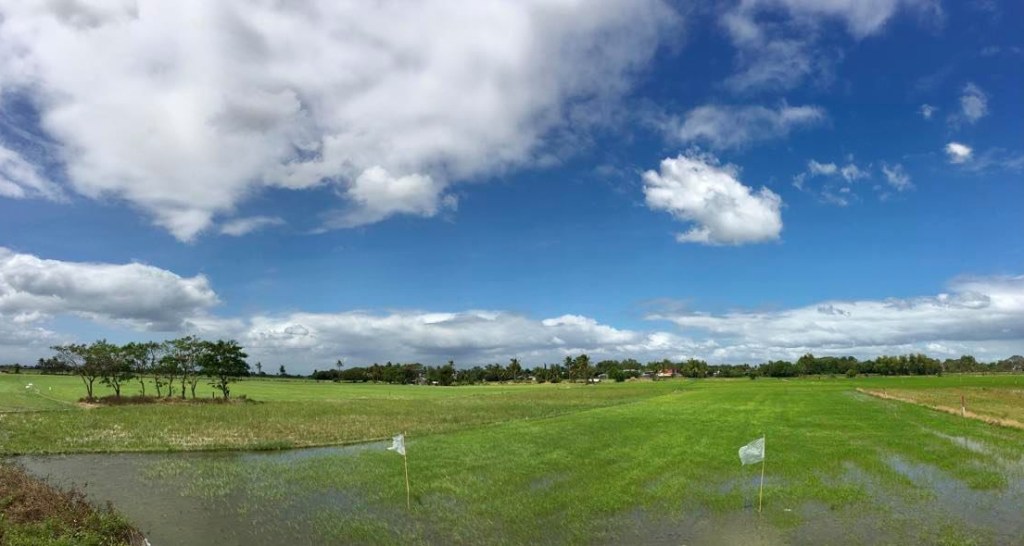
Larawan kuha ng may-akda sa Pulilan, Bulacan, Enero 2020.
Minsan aking napanaginipan
matalik kong kaibigan
aming binalikan
mga bukid aming nilakaran
noong aming kabataan;
nagtungo rin kami sa simbahan
doon sa kabayanan
at umistambay pagkaraan
para magkuwentuhan sa Krus na Daan.
Hiniling ko sa kanya
ako'y isama sa kanyang bahay-pahingahan
doon sa bukid ngunit tinanggihan
pinauwi at binilinan tulungan
maraming nangangailangan
lalo na aming mga kaibigan.
Sa aking pagtayo at paghayo
siyang gising ko naman
at natanto
matagal nang yumao
kaibigan ko.
Larawan kuha ng may-akda sa Assumption Sabbath, Baguio City, Enero 2018.
Maliwanag sa akin
kahulugan ng napanaginipan
dahil kung minsan
ako ay nahihirapan at nabibigatan
sa mga pasan-pasan
at tila naman walang ibang maasahan
bukod sa wala ring pakialam
kaya di maiwasan mag-asam
na mawala na lamang
at sumakabilang buhay.
Ngunit hindi iyon ang solusyon
hindi rin kalooban ng Panginoon
na mayroong nilalayon
dapat nating bigyan ng tuon;
mga hirap at pagod
konsumisyon at ilusyon
bahagi ng ating misyon
bigay at dinadalisay ng Panginoon
kaya't magtiyaga, Siya ay ating abangan
at tiyak matatagpuan, Kanyang tutulungan.
“Screenshot” ng palad ng isang mag-aaral sa Dr. Yanga’s Colleges Inc. na nagsulat ng mga aral napakinggan niya kay G. Michael Yanga, Pangulo ng naturang paaralan, 2019.
Madalas tayo ang nagtatanong
sa Panginoon ng direksiyon
ngunit paano kung Siya mismo
sa atin naman ang magtanong
sa kalagitnaan ng ating misyon
"Bakit ka narito?" gaya noong
paghintayin Niya si Elias sa yungib ng Horeb
matapos Siyang mangusap
sa banayad na tinig ng hangin;
kay sarap namnamin at damhin
dahil tuwing tayo tatanungin
nitong Panginoon natin,
ibig sabihin Siya ay ating kapiling!
Ano man iyong gampanin
ngayong quarantine ay pagyamanin
palaging unahin na ang Diyos ay hintayin
dahil tiyak na Siya ay darating
hanggang matapos itong COVID-19
pangako Niyang kaligtasan at kaganapan
Kanyang tutuparin!
The Lord Is My Chef Breakfast Recipe for the Soul, Memorial of St. Philip Neri, 26 May 2020
Acts of the Apostles 20:17-27 <*(((>< >+< ><)))*> John 17:1-11
Dome of the Malolos Cathedral. Photo by author, December 2019.
The beautiful readings of this week after the Ascension of the Lord complement the crucial week ahead for us all in this time of the corona virus.
Your words, O Lord, continue to amaze us with its many meanings to guide and soothe and assure us of your loving presence.
Jesus raised his eyes to heaven and said, “Father, the hour has come. Give glory to your son, so that your son may glorify you, just as you gave him authority over all people, so that your son may give eternal life to all you gave him.”
John 17:1-2
After praying for us your disciples, now you tell us of your “hour” when you shall fulfill your mission which is to suffer and die on the Cross for our salvation. It is your hour of glory, Lord Jesus, because it is the outpouring of your and the Father’s immeasurable love for us all.
Yesterday you have taught us that before everything else in our lives, there has always been your love.
Today, you assure us especially in this time of the corona virus that before all these sufferings and pains we endure, you were there first to suffer and die for us still because of your love for us.
Teach us to be like St. Paul to be firm and persevering in our mission to love against all odds, to never “shrink” in our love and patience to our detractors and those who mean to discredit us.
Like St. Paul, may we never “shrink“before all those who malign your holy name, those who find material things more essential than you our Lord and our God.
Let us never shrink in our love and understanding, patience and wisdom.
Likewise, fill our hearts with your joy and humor like St. Philip Neri who attracted many followers and believers to you with his infectious cheerfulness.
Despite our many limitations and sinfulness, may your Holy Spirit, dear Lord Jesus Christ help us to continue loving you among one another especially to those with special needs in this time of crisis.
And Lord, despite the continued abuse of those in power and authority in pushing and shoving us, shouting and cursing us for everyone to hear and see on national TV, let us never shrink in choosing to be peaceful and understanding. Amen.
The Lord Is My Chef Breakfast Recipe for the Soul, Thursday, Easter Week VI, 21 May 2020
Acts of the Apostles 18:1-8 ><)))*> ><)))*> ><)))*> John 16:16-20
Photo from yourteenmag.com.
Thank you dear Jesus in speaking to us today in our readings about rejection we all detest due to its deep and painful hurts that affect us even for a lifetime.
In the first reading, St. Paul was successively rejected in his preaching about your Good News of salvation while in the gospel, you remind us of our coming rejection by the world that had first rejected you.
Indeed, you were the first to be rejected and that is why you can speak so well of its nature; but, at the same time, you encourage us to be strong because when we are rejected, that is when we are led into joy.
You know how sad and even tragic is the feeling of being rejected by others, of being turned down, of being driven out, and worst, of being crucified simply because others refuse to accept us for so many reasons, from our skin color to our hairstyle to our religious beliefs and everything.
That is the saddest part of rejection: when we are rejected for reasons we have no control of, for being who we are.
But, you also teach us today, Jesus, that the worst part of rejection is “self-rejection” — when we ourselves affirm our rejection by others!
That happens when we stop pursuing our dreams and fulfilling our mission, when we stop living and give in to the rejection of others, when we go into self-pity that we are worthless, that we are nothing, that we are useless.
Like yesterday when the Athenians scoffed and rejected St. Paul’s teachings of your resurrection, they could not accept that there is always a chance in life in you, that we are all your beloved, forgiven and saved.
Give us the drive and determination of St. Paul to never lose sight of our mission in life despite many rejections by others. Keep us strong and persevering despite the many rejections we go through in life.
“Amen, amen, I say to you, you will weep and mourn, while the world rejoices; you will grieve, but your grief will become joy.”
John 16:20
Most of all, let us always be filled with the grace and power of the Holy Spirit to keep in mind we are your Father’s beloved children, saved and forgiven in you Jesus Christ from our many sins and shameful past, ensured of a better tomorrow because you always believe in us, you always trust us, and you always give us each morning as a new chance to make up for our losses and mistakes yesterday. Amen.



















 lordmychef.com