Generous and cheerful

The Lord Is My Chef Breakfast Recipe for the Soul by Fr. Nicanor F. Lalog II
Monday, Memorial of St. Lawrence, Martyr and Deacon, 10 August 2020
2 Corinthians 9:6-10 >><}}}*> // + \\ <*{{{><< John 12:24-26
Photo by Mr. Jim Marpa, 2019.

Dearest Lord Jesus, teach me to be generous and cheerful too, because sometimes our generosity is filled with sadness or bitterness as it is comes from having excess of anything that we have. Worst, it is only when we are forced to become generous by others or due to circumstances.

True generosity is always borne out of joy when our only reason in giving and sharing is due to our faith in you — that no matter what happens to us, you will never abandon us, Lord, providing whatever we need in this life.

Moreover, God is able to make every grace abundant for you, so that in all things, always having all you need, you may have an abundance for every good work.

2 Corinthians 9:8

Most of all, generosity with cheerfulness is always a choice, a decision freely made in imitation of you, Jesus Christ like St. Lawrence your deacon. Those who give or share anything with a heavy heart, if given the choice, would rather keep whatever they have to remain like a grain of wheat without dying.

Like St. Lawrence, teach us generosity that is naturally human and divine, that like him while being roasted alive, he had the sense of humor to ask his persecutors to turn him so that his grilling may be perfect and even. Amen.

“Martyrdom of St. Lawrence, Deacon” by Hipolito de Rioja (16th c.); from commons.wikimedia.org

Meeting Jesus

The Lord Is My Chef Sunday Recipe for the Soul by Fr. Nicanor F. Lalog II
Week XIX, Cycle A in Ordinary Time, 09 August 2020
1 Kings 19:9, 11-13 >><}}}*> Romans 9:1-5 >><}}}*> Matthew 14:22-33
Photo by Mr. Raffy Tima of GMA-7 News, Batanes, 2018.

I have always loved the sea and lately my thoughts have always been about the beach as I miss it so much after COVID-19 had robbed us of our summer vacation.

In ancient time, the sea evoked fear because it was largely unknown that even in the bible, it is the symbol of evil and its powers over man. That is why our gospel today is very significant when Jesus walked on water to show God’s greater power over evil and sin.

And like our gospel last week, our story today tells us a lot more about Jesus walking on water in the midst of a storm to reveal himself and most of all, his desire to meet us his disciples.

Place and location as non-verbal communication of one’s presence

Every meeting and encounter presupposes locations or places, a locus; but, everything is “levelled up” or elevated in Jesus in whom things do not remain in the physical level.

Proxemics is the non-verbal communication that refers to places and location, its nearness and orientation. How we arrange our furnitures, designate the rooms and sections in our homes, offices, schools and every building we stay and gather communicate and reveal who we are.

For example, Catholic homes are easily identified in having a grotto at the garden, an altar of the Sacred Heart or any saint at the sala, and the Last Supper painting in the dining hall.

But for Jesus, a place or a location is more than the physical site because in him, proxemics takes on a deeper dimension and higher meaning when we meet him in situations and places. That is why after feeding the more than five thousand people last week, he ordered the Twelve to cross the Sea of Galilee (which is actually a lake) ahead of him while he dismissed the crowds.

After doing so, he went up on the mountain by himself to pray. When it was evening he was there alone. Meanwhile the boat, already a few miles offshore, was being tossed about by the waves, for the wind was against it. during the fourth watch of the night, he came toward them, walking on the sea. When the disciples saw him walking on the sea they were terrified. “It is a ghost,” they said, and they cried out in fear. At once Jesus spoke to them, “Take courage, it is I; do not be afraid.”

Matthew 14:23-27
Photo by author, Sea of Galilee at Capernaum where Jesus used to preach, May 2019.

Crossing to Jesus, crossing with Jesus

I love that scene very much, of Jesus getting his disciples into the boat to precede him to the other side of the lake while he dismissed the crowds. Again, St. Matthew never bothered to tell us why Jesus sent the Twelve ahead of him as he stayed behind, dismissing the crowds and later praying alone at night atop the mountain.

Let us now reflect the proxemics or non-verbal communication of our gospel scene this Sunday.

We need to cross to the other side to meet Jesus.

To meet Jesus Christ, we always have to “cross to the other side” by leaving our “comfort zones”.

More than going to the other side of the lake physically, we have to move over to unchartered areas of life, be bold and daring to try new things, new situations in order to mature and find fulfillment by meeting Jesus Christ.

And sometimes, we really have to literally cross the sea or get to the other side of the country or the world to find our self and meet Christ.

Fifteen years ago I went on vacation to Toronto for some soul-searching as I went through a burn-out. While serving at St. Clement Parish, I met many Filipinos serving as lectors, choir members, catechists and volunteers.

Graph shared by sugarindustryfoundationinc.org.ph.

They would always confess to me with both a sense of pride and little shame that they never went to Mass regularly when in the Philippines and now in Canada, they were amazed at how God had brought them there to be involved in parish activities and be closer to Jesus than ever!

As I listened to their stories, I realized the many sacrifices and hardships they have to endure in that vast and cold country with no one to turn to except God. If given the chance, many of them admitted they would return to the Philippines for there is no place like home!

Though I have found so many things I have been searching for in my initial three months of stay there on top of other opportunities given me, I still felt empty. That raging storm within continued. As I prayed and reflected guided by an old, Polish priest who claimed to have been the student of St. John Paul II, I saw myself more, eventually leading me to God anew who refreshed my vocation that I finally decided to go back home after six months of my supposed to be one year leave.

Sometimes in life, we need to get away from our comfort zone, cross to the other side, especially when life becomes so artificial. Jesus invites us to go ahead and cross to the other side of the lake or sea to experience life at its “raw” so we can feel again our souls within and desire him anew until we finally meet him wherever we may be in the world.

It is when we are at the other side of the sea in the midst of a storm when Jesus comes, immediately answering our cries for help – At once Jesus spoke to them, “Take courage; it is I” – because when we are reduced to emptiness and nothingness, then our faith kickstarts again. Faith, like love, is always an encounter with God.

Try going to the other side, leave your comfort zone to meet Jesus and finally have meaning and direction in life!

Silence is the presence of God.

In the first reading we have heard that beautiful story of Elijah meeting God at the mouth of a cave — not in the strong and heavy wind nor earthquake nor fire like Moses before him.

After the fire, there was a tiny whispering sound. When he heard this, Elijah hid his face in his cloak and went and stood at the entrance of the cave.

1 Kings 19:12-13

Silence is the place of the presence of God because silence is his language too. Wherever there is silence, we can surely find and meet God there.

That is why Jesus wants us to cross to the other side, to be silent and listen to him.

Photo by author, crossing the Lake of Galilee, May 2019.

In his silence, God teaches us that except for sin, he never considers everything as being finished; everything is a “work-in-progress” even if he seems to be silent that some think he must be absent or even dead.

The world thrives in noise, loud talks, and screams with each voice trying to dominate another resulting in cacophony of sounds. Shakespeare’s Hamlet said it well when he told Polonius what he was reading were “Words, words, words” — nonsense!

Some people like those in power think that the more words they say, the more meaningful their thoughts and ideas become. Worst, they thought that using foul and filthy language make them so natural and credible, not realizing the more they look stupid with their crazy thoughts and ideas not even clowns and comedians would ever attempt to imitate.

But when our words come from deep silence, they come with power and meaning, touching everyone’s heart and inner core.

That is when silence becomes fullness, not emptiness or mere lack of noise and sound.

Like when our medical frontliners and medical experts spoke with one voice last week airing their thoughts about the pandemic — we were all moved and reawakened to realize how we have been going about with our lives almost forgetting them these past five months!

What a tragedy at how our officials in government and Congress reacted negatively, feeling hurt deep inside with the painful truth of how they have been irresponsible from the beginning. Sapul!

Pico Iyer wrote in a TIME magazine essay 30 years ago that “silence is the domain of trust”.

True. The most trustful people are the most silent; those who speak a lot trust no one and most likely, cannot be trusted too.

Jesus invites us to cross to the other side to be silent and learn to trust him. It is only then when we can meet him. In silence.

Photo by Mr. Raffy Tima of GMA-7 News, Manila Bay with Mt. Samat’s Cross at the background, April 2020.

Jesus meets us in darkness.

Jesus asks us to cross to the other side of the lake or sea like his disciples in order to meet us in darkness. This is a paradox because Jesus is the light of the world.

But, note the most notable moments in his life happened in darkness: he was born on the darkest night of the year, he died when darkness covered the whole city of Jerusalem, and he rose from the dead when it was still dark on the first day of the week.

Jesus had overcome darkness! So, what happened to Peter in this episode after being called by Jesus to walk on water too?

Jesus said, “Come.” Peter got out of the boat and began to walk on the water toward Jesus. But when he saw how strong the wind was he became frightened; and, beginning to sink, he cried out, “Lord, save me!”

Matthew 14:29-30

Imagine how everything was going so well with Peter doing another crossing while crossing the lake! But when he saw how strong the wind was he became frightened; and, beginning to sink, he cried out, “Lord, save me!”

Jesus calls us into the dark so that we only look for him and upon finding him, focus on him alone. Peter saw the strong wind, not the stronger and powerful Jesus walking on water, that fear overtook him.

That’s the whole point of St. Paul in our second reading today: he was telling the Romans how some people in Israel trusted more in their physical descent from Abraham than in God’s promise of salvation fulfilled in Jesus they have refused to see and recognize as the Christ (Rom.9:1-5).

When in the dark, be silent and still for Jesus is near! Keep your sights at him, not on anything else. Problem in darkness is not God but us who follow other lights or have become delusional.

Photo by Mr. Jim Marpa, 2019.

That is the tragedy we are into as a nation while crossing to the other side of the sea of pandemic in just one boat when our officials see only themselves as always being right. Worst, they all want to be on the stage with all the lights on them as they speak and sing in cacophony like psychopaths.

All the more we must hold on tight, trust and focus in Jesus who is “now here”, not “nowhere” for he will never allow us to perish.

Let us trust Jesus overcoming all these evil, leading us to the shore. Amen.

A blessed rainy Sunday to you and your loved ones!

Journeying in Christ

Quiet Storm by Fr. Nicanor F. Lalog II, 25 July 2020

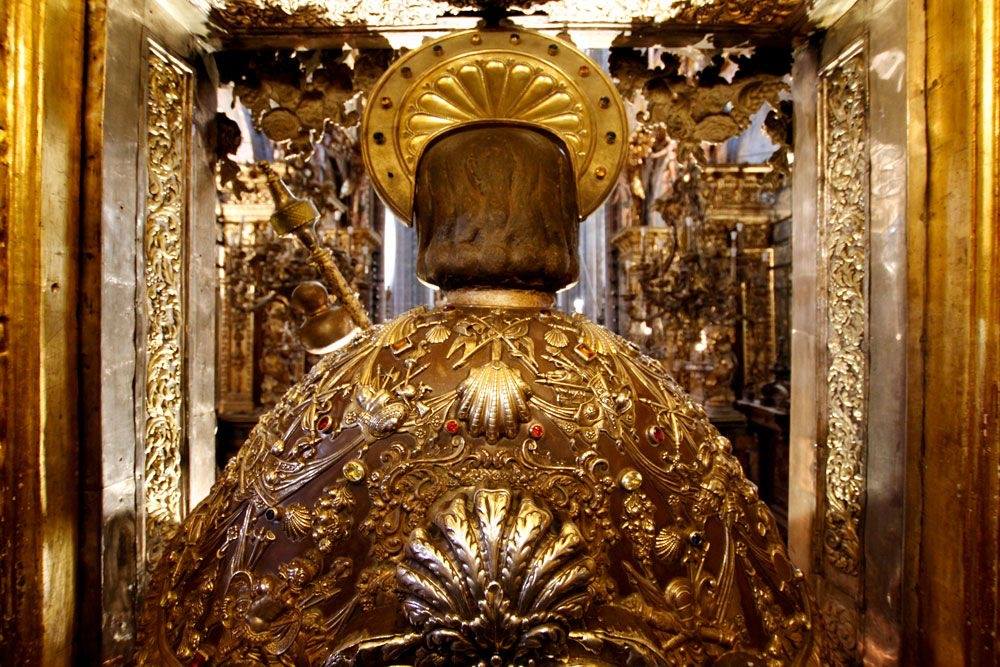
Santiago de Compostela in Spain is one of the world’s oldest and most popular pilgrim sites where the body of the Apostle St. James the Greater whose feast we are celebrating today is believed to be buried in its beautiful cathedral.

I have not been there yet and despite COVID-19’s disruption of air travel expected to last until 2022, my hope remains that someday in God’s time I may finally do the “el camino de Santiago de Compostela” (the way of Saint James of Compostela), too.

But, with or without the el camino de Santiago de Compostela, this great Apostle from the very beginning had always been in a journey in himself into the kingdom of God – Jesus Christ – by showing us the way of transformation into a true disciple of the Lord.

He is called the Greater not because he is holier than the other St. James called “the Lesser”, son of Alpheus, but to simply indicate the different importance they received in the writings of the New Testament. In the gospel of Mark, he comes in second in the list after Peter while in the gospels of Matthew and Luke, he is ranked third after the brothers Peter and Andrew; he again comes in third in the Acts of the Apostles after St. Peter and his brother St. John.

It is from this book where we also learn St. James the Greater as the first bishop of the original Christian community in Jerusalem that during the persecution by King Herod Agrippa in 40 AD, he also became the first Apostle to be martyred (Acts 12:1-2).

His martyr’s death thus fulfilled Christ’s words to him that he would indeed “drink from his chalice” to be with him in his Kingdom, a journey that essentially began within this great apostle after leaving everything behind to follow Jesus.

The journey within self to Jesus Christ

St. James the Greater and his brother St. John the Evangelist and believed to be the same beloved disciple came from a middle class family with both parents still alive and most likely, very supportive of them as attested by some little anecdotes in the gospel accounts.

Money was never an issue for them because their father Zebedee could hire workers to work in their fishing business. He must have sighed with a great relief when James and John immediately left him after being called by Jesus to be his disciples.

Marker along the “el camino de Santiago de Compostela”.

Finally, his sons have found some directions in life following Jesus who was getting known then in Galilee as a powerful and credible Teacher unlike the Pharisees and scribes.

Jesus nicknamed James and John as Boanerges for “Sons of thunder” (Mk.3:17) due to their temperament like when they proposed that they send fire to burn a Samaritan town that have refused them passage during their journey to Jerusalem (Lk.9:54).

They have seen and experienced the tremendous powers of Jesus not only in preaching but most especially in calming the storms, walking on sea, exorcising evil spirits, healing all kinds of sickness, and even raising to life some who have died.

Most of all, St. James the Greater was privileged to witness along with his brother and St. Peter the Transfiguration of Jesus Christ on Mount Tabor, seeing all the glory of Christ conversing with Moses and Elijah. It was after this major event that their most controversial episode would occur when their mother came to ask Jesus that James and John be seated “one at your right and the other at your left, in your Kingdom” (Mt.20:21).

The other ten Apostles “grew indignant” of the brothers James and John for being so ambitious but Jesus summoned them and explained things which all of them would heed except for one:

“You know that the rulers of the Gentiles lord it over them, and the great ones make their authority over them felt. But it shall not be also among you. Rather, whoever wishes to be great among you shall be your servant; whoever wishes to be first among you shall be your slave. Just so, the Son of Man did not come to be served but to serve and to give is life as a ransom for many.”

Matthew 20:25-28

This took place shortly before Palm Sunday when Jesus entered Jerusalem.

A few days later on the evening of Holy Thursday, Jesus again brought St. James the Greater with his brother St. John and St. Peter to accompany him pray at Gethsemane where Judas Iscariot eventually betrayed him to his enemies.

A pilgrim hugging from the back the statue of Santiago de Compostela after completing his el camino.

Here we find St. James the Greater being present to two major stops in Jesus Christ’s journey to the Calvary: first, on Mount Tabor for his Transfiguration and second, at Gethsemane for his agony in the garden. In both events in the life of our Lord, St. James the Greater was a privileged witness, first of his coming glory and then of his passion and death.

It would only be after Easter and the Pentecost when all these major stops in his personal journey with Christ when everything would become clear to him and the other Apostles.

All along their journey from the shores of Galilee to Jerusalem, St. James the Greater remained by the side of Jesus Christ, probably unaware of another journey with the Lord taking place right inside his heart to truly be a part of his Kingdom by sharing in his Passion, Death, and Resurrection.

For his faithful adherence to Jesus from Galilee to Jerusalem, St. James the Greater again had the rare privilege like at Mount Tabor and Gethsemane in being the first to die as a martyr proclaiming the Gospel of Christ which is the meaning of the expression of “drinking from the chalice” of the Lord.

Sometimes in life, we just have to make “sakay” as my generation used to say, “sakay lang ng sakay” or “ride on, man, ride on” without really knowing where our trip would lead us. St. James just made “sakay” without knowing Jesus was already fulfilling his wish of “drinking from his chalice”.

Photo by Fr. Gener Garcia, sculpture of a pilgrim’s feet at Santiago de Compostela museum, 2019.

St. James the Greater was truly great not because of the distances in miles or kilometers he had covered with Jesus from Galilee to Jerusalem and all the way to Compostela in Spain; we honor him today because of that great journey he had undertaken within him, in his heart to remain always at the side of Christ even if had to smoothen his many rough edges as a person, and cleanse his heart as a sinner like us.

That is the most important journey we are all taking in this life, the journey within us.

The longest journey in life is the distance between the heart and the mind.

Former UN Sec.Gen Dag Hammarskjold in “Markings”

My friend Fr. Gener Garcia last year went to Santiago de Compostela to follow the el camino with our kababayan Bishop Bart Santos of Iba, Zambales and Fr. Jaypee Avila assigned as a chaplain for OFW’s in Milan, Italy.

He is so generous to share with us his photos of their pilgrimage as well as his experiences and realizations in life. According to him, on the four sides of the sculpture of the pilgrim’s feet in front of the museum of Santiago de Compostela is the following quotation:

Marker along the el camino de Santiago de Compostela.

Camino recto, camino erguido, camino buscando un sentido. Camino porque tengo un objetivo, y no parare hasta alcanzar mi destino.

(I walk straight, I walk upright, I walk looking for meaning. I walk with a purpose and I won’t stop until I meet my destiny.)

The pilgrim’s journey is the same one you and I are on. Know your goals and understand your challenges. Face them head-on, tackle them with intention, and never give up.

Do you know what your purpose in life is? What would you say if someone ask you what your destiny was?

Santiago de Compostela Museum of Pilgrims

Have a blessed Saturday everyone!

*All photos by Fr. Gener Garcia, 2019.

Let nature remind us of God

The Lord Is My Chef Breakfast Recipe for the Soul by Fr. Nicanor F. Lalog II
Monday, Week XVI, Year II in Ordinary Time, 20 July 2020
Micah 6:1-4, 6-8 <*(((><< )) + (( >><)))*> Matthew 12:38-42

Praise and glory to you, O God our loving Father for this beautiful Monday! We are midway through the month of July in this challenging year. Yes, 2020 is heavy for most of us with all the various problems we are going through but you have never left us, O Lord.

And that is why, Father, we also wonder what else have we not done that would set things right again?

Let us heed your words, O God.

Let us be reminded of your ways, of your very self by nature around us!

Hear what the Lord says: Arise, present your plea before the mountains, and let the hills hear your voices! Hear, O mountains, the plea of the Lord, pay attention, O foundations of the earth! For the Lord has a plea against his people, and he enters into trial with Israel. O my people, what have I done to you, or how have I wearied you? Answer me! You have been told, O man, what is good, and what the Lord requires of you: Only to do right and to love goodness, and to walk humbly with your God.

Micah 6:1-3, 8

Forgive us, merciful Father, for being “an evil and unfaithful generation” always looking for signs of your loving presence.

Teach us to trust you even if we cannot understand your plans.

May we learn from nature around us that thrives so well in your loving care – full of life, full of zest even without so much attention, reminding us of your saving power in Jesus Christ. Amen.

All photos by author except bougainvillea with our parish church by Gelo Nicolas Carpio in the collage above.

Journeying into God in parables

The Lord Is My Chef Sunday Recipe for the Soul by Fr. Nicanor F. Lalog II
Week XVI, Cycle A in Ordinary Time, 19 July 2020
Wisdom 12:13, 16-19 >><}}}*> Romans 8:26-27 >><}}}*> Matthew 13:24-43

Our Lord Jesus Christ invites us today to join him into a different kind of journey that would take us deep into God’s mystery in our very selves through the parables he has started to tell us last Sunday.

Recall, dear readers, that parables constitute the heart of the Lord’s preaching.

We have defined these as simple stories with deep realities that must be cracked open through prayers and reflections to get its meaning. From the French para bolein that literally means “along the path”, a parable is likewise a bridge that leads us into something unknown to us before.

In itself, a parable is a journey calling us to walk through it into our inner selves to discover the many inner beauties that lie within us but we take for granted. Ultimately, as we discover these giftedness within us, we then uncover God dwelling within us.

This is the reason why Jesus would always tell his audience after narrating his parables that “Whoever has ears ought to hear” (Mt.13:43) to insist on them to go deeper inside themselves for their meaning.

And that is when we are transformed, when our lives are changed into true disciples of Jesus Christ.

Greatness in littleness

First thing we notice in the three parables of Jesus today is his insistence on the coming of the kingdom of heaven or kingdom of God through him as the mysterious seed.

This kingdom of heaven is used interchangeably with “kingdom of God” that Jesus would always speak of in his entire ministry until his crucifixion is not according to our understanding of a kingdom: it is not about a territorial domain or the exercise of power over subjects using force.

St. John Paul the Second expressed it beautifully by declaring the person of Jesus Christ himself is the kingdom of God. No wonder, Christ would always liken himself and the kingdom of God with the seed being sown.

It is always good. It is for everyone as the sower scatters the seeds everywhere. And it is always small like Jesus who was born like any infant so fragile and even poor like most of us. He is like the seed we take for granted from which comes forth all kinds of plants like trees, big and small.

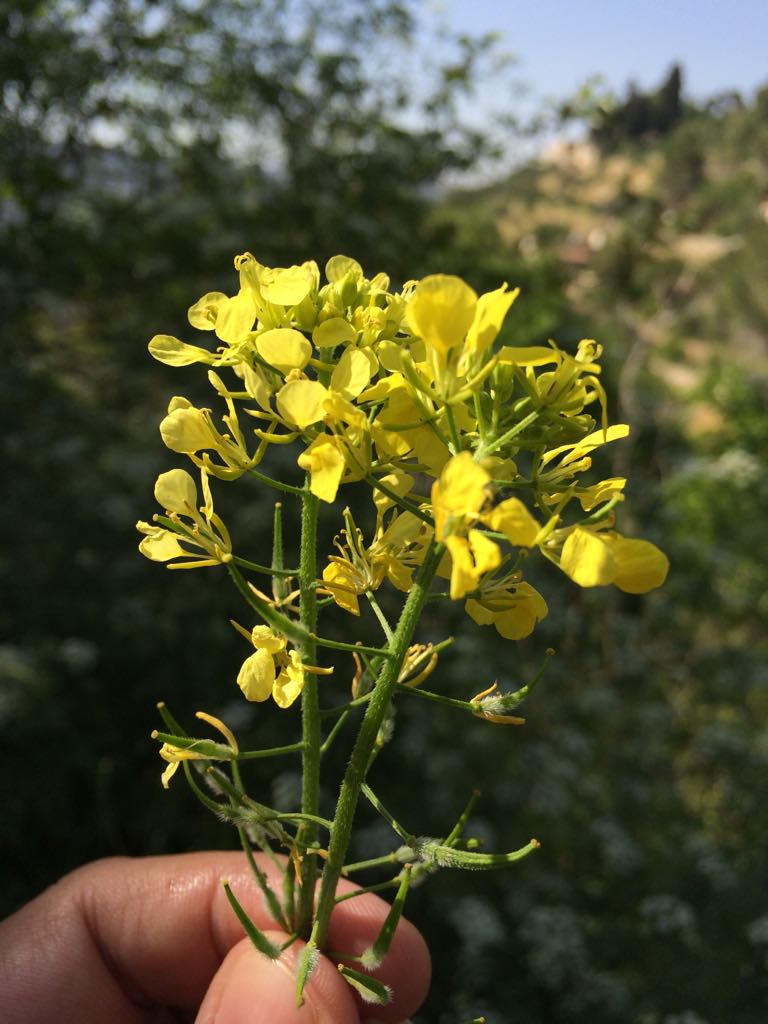
Flowers of a mustard plant from which seeds are taken. Photo by author, Israel, 2017.

Or most specially, like those seeds that turn into crops of wheat and shrubs like the mustard with leaves and branches where birds may dwell that describe the first two parables today.

Jesus then added a third parable of the yeast mixed into flour that leavened the dough into a bread.

Like him our Lord, we his disciples are also like the small seeds packed with great possibilities in God.

In all these three parables today, there is that element of smallness, of littleness that remind us how everything that is great always starts small.

When we come to think of this, we realize how we embarked on this great mission of making Jesus Christ known: it started like a small spark within us, perhaps from a single word we have heard or read, a simple inspiration by God through the most ordinary persons and situation.

Not only in things regarding our spiritual lives but even our personal lives when we recall those humble beginnings of our family and of our business.

Like a little seed or yeast, they just grew!

Now we are surprised, even amazed, how we have changed, how we have grown. Of how we are now reaping the fruits of our labors and sacrifices.

Most of all, how we have known and experienced Jesus Christ who fulfills our lives.

Weeds among the wheat

But not all days are bright and sunny. There are dark clouds that hover above us bringing storms and heavy rains that lead into floodings. A lot often in life, the darkest nights turn out to be the longest nights too.

And this is the meaning of Christ’s main parable for today.

Jesus proposed another parable to the crowds, saying: “The kingdom of heaven may be likened to a man who sowed good seeds in his field. While everyone was asleep his enemy came and sowed weeds all through the wheat, and then went off. When the crop grew and bore fruit, the weeds appeared as well. The slave of the householder came to him and said, ‘Master, did you not sow good seed in your field? Where have the weeds come from?’ He answered, ‘An enemy has done this.’ His slaves said to him, ‘Do you want us to go and pull them up?’ He replied, ‘No, if you pull up the weeds you might uproot the wheat along with them. Let them grow together until harvest; then at harvest time I will say to the harvesters, ‘First collect the weeds and tie them in bundles for burning; but gather the wheat into my barn.'”

Matthew 13:24-30
Photo by Onnye on Pexels.com

During my prayer periods this past week, I have been filled with anger and disappointments at how things are going on in our country and even in my personal life. It pains me so much why at this time of the pandemic when we have to go through all these bad things.

Last Friday morning before our daily Mass, we discovered the glasses shattered in our windows near the office door and at the side door of the church. There were scratches outside indicating attempts to unlock the doors inside and steal from the church.

After the Mass, I grew more angry as we inspected the damages, thinking so negatively harsh against whoever tried to burglarize us.

By night time during prayers, I remembered Victor Hugo’s Les Miserables where Valjean was caught by the police stealing silver from the good bishop who had welcomed him into his rectory with food and accommodations. Instead of pinning him down for his crime, the bishop told the police he had given Valjean the silver found in his bag, even chastising him he had left behind the other silver candlesticks he had asked to take!

The wheatfield owner in our parable and the good bishop of Les Miserables are both the merciful God mentioned by the author of the Book of Wisdom in our first reading today:

But though you are master of might, you judge with clemency, and with much lenience you govern us; for power, whenever you will, attends you. And you taught your people, by these deeds, that those who are just must be kind; and you gave your children good ground for hope that you would permit repentance for their sins.

Wisdom 12:18-19

Think of our parents and elders, our mentors or those we look up to for their wisdom gifted with wonderful insights in life called perspicacity which means “a penetrating discernment… a clarity of vision or intellect which provides a deep understanding and insight.”

Being perspicacious or having perspicacity like the wheatfield owner or the good bishop of Les Miserable means having a deeper wisdom that one can keenly see and understand things beyond ordinary perception following a long process of silent reflections in life.

Many times, our sights can be limited that we do not see the other repercussions and even ramifications of our decisions on certain situations. There are times we think only of finding solutions, of winning the battle but not the war.

Photo by Life Of Pix on Pexels.com

It is also along this line that Jesus added the third parable: the yeast is mixed with the flour to leaven the dough.

We are like the yeast who have to mix with others, including the evil ones to become bread that will feed the world.

We are the wheat, the mustard seed, the yeast thrown into the world to make a difference in Christ! We are not the ones who will change the world but Jesus Christ, the mysterious seed, the yeast in the dough who grows and effects the changes in us and among us.

Parables as inner journey in Christ Jesus

With Jesus living and nurturing within us, that is when we become fruitful like the wheat and mustard plant or leavened bread that we are able to feed more people who would eventually become bearers his in the future. That is how the kingdom of heaven comes into this world, when God is seen and felt by everyone through us

This we achieve in prayers as St. Paul reminds us in the second reading. It is not just reciting our basic prayers as Christians including the novenas we love to collect and follow through. The kind of prayer that St. Paul speaks here is a prayer guided by God’s Holy Spirit who perfectly knows God’s will.

Photo by Dr. Mylene A. Santos of kids she’s teaching on the values of health, education and nature at Katmon Harbor Nature Sanctuary, Infanta, Quezon.

Brothers and sisters: The Spirit comes to the aid of our weakness for we do not know how to pray as we ought, but the Spirit himself intercedes with inexpressible groanings.

Romans 8:26

In this time of too much weeds among the wheat, of so many evil and sins prevailing over us, we can feel frustrated at times that make it so difficult for us to pray.

Sometimes, the evil and sins, or the plain sufferings we go through in our own family, in our community or at work and in school can be so overwhelming that we feel our prayers are useless, that God is not listening at all to us.

Then we stop praying, we stop journeying within even with weeds among the wheat. How can the flour be leavened if the yeast is not mixed with the dough to become bread or cake.

Remain in the Lord!

Pulling out the weeds will not solve the problem; worst, it may endanger us all too in the process that we become like our enemies in the end. Never lose hope in God who knows very well of the presence and source of weeds. Sometimes, these pains and sufferings from evils we go through from others may actually lead us to our being fruitful!

Evil and sins are a parable in themselves that can teach us so well in life if we handle them with prayers.

Photo by Dr. Mylene A. Santos, Infanta, Quezon, May 2020.

Praying in the Holy Spirit is when we spend time with Jesus to reflect and crack open his words that come to us in the Sacred Scriptures and ordinary events in daily life through long hours of silent meditation and contemplation.

The more we dive into God’s mysteries in the parables he sends us in daily living, the more we see the beauty and wonder of life because our horizons are widened and get clearer.

Praying into our parables in life is like looking into a telescope or binoculars that enable us to see something distant within reach.

Like God himself.

And salvation as well as fulfillment in Christ.

Amen.

A blessed new week ahead of you!

Holding on to God

The Lord Is My Chef Breakfast Recipe for the Soul by Fr. Nicanor F. Lalog II
Thursday, Memorial of Our Lady of Mount Carmel, 16 July 2020
Isaiah 26:7-9, 11, 16-19 >><)))*> + <*(((><< Matthew 11:28-30
Photo by author, Our Lady of Mt. Carmel of the Holy Family, Guiguinto, Bulacan, 08 December 2019.

Your words today, O God our Father, are very comforting and consoling, so reassuring of your love and mercy for us sinners, giving us new life in you as we celebrate the memorial of Our Lady of Mount Carmel.

Like the Israelites living in exile because of their own making when they turned away from you in sins worshiping false gods, we also admit our sinfulness and failures in standing up for what is true and just, in being faithful to you.

Help us to rise again, heavenly Father, breathe into us your life-giving Spirit specially at this time we feel so down and crushed not only by COVID-19 pandemic but by public officials concerned only with their well-being and whims forgetting the people they are supposed to serve.

We conceived and writhed in pain, giving birth to wind. Salvation we have not achieved for the earth, the inhabitants of the world cannot bring it forth. But your dead shall live, their corpses shall rise; awake and sing, you who lie in the dust. For your dew is a dew of light, and the land of shades gives birth.

Isaiah 26:18-19

If there is anything we would want to have these days, it is rest, O Lord.

A lightening of our load and burdens.

But why another yoke, Jesus?

Forgive us Jesus when we feel negative with yoke because they always portray to us images of slavery and oppression. Open our eyes, Lord, as we come closer to you to take your yoke because you not only help us carry our burdens but most of all, your yoke gives us direction in our path back to the Father.

May your Blessed Mother of Mount Carmel help us to hold on to God in this hour of darkness in our lives as individuals and as a nation. Amen.

Photo by author, Our Lady of Mount Carmel of the Holy Family, Guiguinto, Bulacan, November 2019.

Prayer in a time of “war”

The Lord Is My Chef Breakfast Recipe for the Soul by Fr. Nicanor F. Lalog II
Tuesday, Memorial of St. Camillus de Lellis, Priest, 14 July 2020
Isaiah 7:1-9 <*(((><< ] + [ >><)))*> Matthew 11:20-24
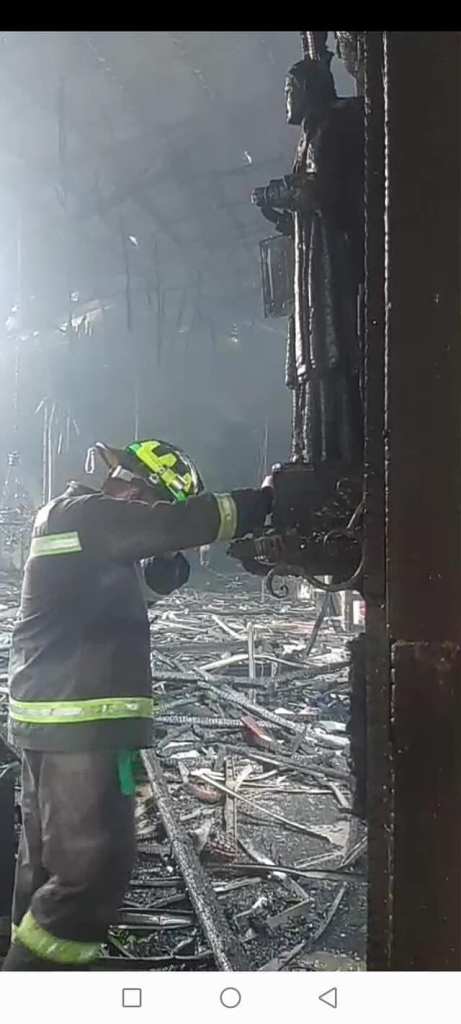
Fire at the Pandacan Church, 10 July 2020.

O God our Father, we are in a war.

A war between good and evil, between light and darkness, sanity and insanity.

It is a war long been raging within us that I fear must have reached a stalemate because of our indecision, of our indifference. Some battles may have been won but the war rages on because we have refused to make a gallant stand for you.

Banish our fears, assure us with your same words to King Ahaz of Judah when threatened with simultaneous attacks by his neighboring kingdoms:

Take care you remain tranquil and do not fear; let not your courage fail before these two stumps of smoldering brands… Unless your faith is firm you shall not be firm!

Isaiah 7:4, 9

Sometimes, our faith waver especially at how things are now going on among us like divisions and confusions due to lack of clear leadership in government while many of us in the church are in disarray.

Make us realize that there is a day of reckoning for all our sins, for taking side with the enemies, for refusing to stand for what is true and just when Jesus Christ reproached Chorazin, Bethsaida, and Capernaum who refused to recognize his works of salvation when he came.

May we learn from the experience and lessons of St. Camillus de Lellis who was a soldier addicted to gambling but later converted to follow Jesus as a priest taking care of the sick, realizing the need for us to grow in holy charity. Amen.

Prayer to see more clearly

The Lord Is My Chef Breakfast Recipe for the Soul by Fr. Nicanor F. Lalog II
Monday, Week XV, Year II in Ordinary Time, 13 July 2020
Isaiah 1:10-17 <*(((><< >0< >><)))*> Matthew 10:34-11:1

Dearest Lord:

Today I pray to you so I may see more clearly your will, your plans for us amid this great darkness cast over us last Friday.

You have seen them all, Lord: they were all too much for me that I find so difficult to focus my sights this Monday as we embark for another week of work and studies, apostolates and ministries, prayers and reflections.

Until now, I am still overwhelmed by the fire that razed the historic Pandacan Church and that infamous death by 70 lawmakers to ABS-CBN’s bid to renew their franchise.

Though very painful and sad, I can take the Pandacan fire; in fact, it had strengthened my faith in you. The devotion and tears shed by responding firemen and supportive parishioners were so moving, positively giving me hope for the eventual rebuilding of the church.

But, totally different Lord was the ABS-CBN incident: it was so repulsive to have happened right before us on television’s daily news with men and women claiming to be “honorable” shamelessly handed a decision grossly unfair and unjust. Making things worst are those who rejoice at the victory of evil, unmindful and numb to the sufferings of more than 11,000 employees about to lose their jobs with the network’s going off the air.

I have been waiting for your inspiration, Lord, trying so hard to pray but my mind kept on wandering while my heart continues to cry because the issue here is more than the franchise of a broadcast network but our soul as a nation, as a community of your disciples.

Have you turned your back on us, Father?

When you spread out your hands, I close my eyes to you; though you pray the more, I will not listen. Your hands are full of blood! Wash yourselves clean! Put away your misdeeds from before my eyes; cease doing evil; learn to do good. Make justice your aim redress the wronged, hear the orphan’s plea, defend the widow.

Isaiah 1:15-17

Through your Son our Savior Jesus Christ, teach us O God our Father to look more inside ourselves, examine our priorities in life.

Let us look for you within us first before looking outside to see clearly those who need most our loving service in you — not just our family and loved ones or colleagues, or lords and masters in politics and business.

Let us look inside ourselves for you so we can truly find you in others. Amen.

We are disciples of a meek and humble Lord

The Lord Is My Chef Sunday Recipe for the Soul by Fr. Nicanor F. Lalog II
XIVth Sunday in Ordinary Time, Cycle A, 05 July 2020
Zechariah 9:9-10 >><)))*> Romans 8:9, 11-13 >><)))*> Matthew 11:25-30
From Google.

We now come to the conclusion of our series of teachings of Jesus about discipleship that began two Sundays ago when he asked us not to be afraid and to be “possessed” or overtaken by him to fulfill our mission of proclaiming his good news of salvation.

And so, we now ask, “Why should we follow Jesus and be his disciples, forgetting our very selves and still carry our cross? Have we not suffered enough especially in this pandemic?”

His answer: because unlike other lord and master, Jesus is the only one who is meek and humble of heart, full of compassion to everyone!

He is the only one truly with us in our pains and cries because before all these trials have come to us, Jesus was there first to suffer and die for us on the Cross so we can share in the grace and peace of his Resurrection, calling us with these comforting words….

“Come to me, all you who labor and are burdened, and I will give you rest. Take my yoke upon you and learn from me, for I am meek and humble of heart; and you will find rest for your selves. For my yoke is easy, and my burden is light.”

Matthew 11:28-30

Our desire for everything “lite” and easy

If there is anything that we all want at this time is a rest, a break from the heavy burdens 2020 has brought upon us all as individuals and as a nation, not only in the country but the whole world.

We all want things to be “light” and easy like before COVID-19.

The world has long been offering us everything that is “light” (also spelled as “lite”), claiming it to be the key to a healthy and fulfilling life that many products are labelled as lite — from cooking oil to mayonnaise, cheese and ice cream, soda and even brandy, beer, and cigarettes!

But they are all lies!

We still get fat and even sickly with those lite products because being light does not necessarily mean removing or taking away things that are heavy and “toxic” or difficult. Being light does not mean free from responsibilities and duties, or not having a cross and sufferings in life.

Life is difficult as M. Scott Peck insists in The Road Less Travelled, telling us that the sooner we accept this reality, the better we are in life.

It is the truth Jesus Christ has long been telling us, so timely to be reminded again this first Sunday of the second half of 2020 as we continue to hurdle more difficulties ahead in fighting COVID-19 as well as in dealing with a hosts of other problems it had created in the many aspects of our lives.

Today, the Lord is telling us that to be light in life, we have to come to him, be his disciple by taking his yoke and learning from him.

We all know from experience that anything becomes light, especially a burden and a problem, when shared with someone who loves us, someone who cares for us, someone who believes in us. Many times, our problems and burdens need not be solved at all; they simply have to be shared with any one willing to accompany us.

Being light in life is having a companion to share with our burdens and woes because having these all by ourselves is indeed so difficult and impossible. That is the literal meaning of the Latin origin of the word companion – cum panis – someone you break bread with in a journey.

Jesus Christ is that only companion par excellence we can have for he is meek and humble of heart

Photo by Ezra Acayan of Getty Images, Baclaran Church, February 2020.

The gentle mastery of Jesus Christ

In the past two Sundays, Jesus spoke about ourselves and our dispositions to become his disciples. This Sunday, he speaks about himself as our Lord and Master, describing himself as “meek and humble of heart”.

Earlier at the start of his preaching in his Sermon on the Mount, Jesus spoke of true blessedness in the Beatitudes that actually gave us an image of himself as the Blessed One. Each beatitude speaks of Jesus Christ being poor in spirit, being meek, being merciful, being clean of heart, being a peacemaker, and being persecuted.

See that the third beatitude is how he also described himself today in the gospel, “Blessed are the meek for they shall inherit the land” (Mt. 5:5).

Very interesting is the fact that in his Sermon on the Mount when he preached the Beatitudes, Jesus was presenting himself to the people as the “new Moses” who gave them the Ten Commandments of God at Mount Sinai. As the most towering figure among the Jews, Moses is also described as “very meek, more than all men that were on the face of the earth” (Numbers 12:3)!

Meekness of Jesus: focusing more on persons than letters of the law

In calling us to come to him to take his yoke and learn from him for he is meek and humble of heart, Jesus is telling us that indeed, he is the new Moses in whom pure goodness is found. And even more surpassing than Moses because Jesus himself is the Law and its fulfillment. Unlike in Moses wherein the people focused more on the letters of the laws, Jesus our Lord insists more on the person, always reminding us that “Sabbath was created for man, not man for sabbath.”

But the most beautiful key in understanding the meekness of Jesus is found in our first reading which we also hear proclaimed on Palm Sunday:

Thus says the Lord: Rejoice heartily, O daughter Zion, shout for joy, O daughter Jerusalem! See, your king shall come to you; a just savior is he, meek, and riding on an ass, on a colt, the foal of an ass. He shall banish the chariot from Ephraim, and the horse from Jerusalem.

Zechariah 9:9-10a
Photo from Google of an ass considered as the dumbest creature on earth.

Unlike the proud masters and rulers of the world, Jesus our Lord and King entered Jerusalem riding on an ass in fulfillment of this part of the Old Testament.

Here we find Jesus as the exact opposite of the kings and rulers of the world whose kingship does not depend on political and military might, no exercise of brute force and power characterized by the chariots and horses of his time.

Meekness of Jesus: oneness with us his people

In this beautiful imagery of Jesus riding an ass considered as the dumbest creature on earth we find Christ’s inmost being of humility and meekness before God and men. No display of arrogance and shameless feelings of entitlements like our officials in the government and military. Most of all, Jesus riding on an ass illustrates his oneness with us all because the ass is the means of transportation of the poor, of the common tao.

Here is the meekness and humility of Jesus Christ — his being one with us in our brokenness and poverty, pains and hurts. You can really experience him especially in this time of the corona when everything seems to be getting worst than better, when everybody is trying to make ends meet amid the economic crisis with Jesus never abandoning us in our darkest moments of uncertainties, fears, hunger, and sadness.

At the rate things are going, we have nobody else to turn to at this time but Jesus our Lord. We have to muster all our faith in him, deepen ourselves in prayer because we cannot rely on our officials who cannot even get a clear data on COVID-19 infections nor even a sound plan in addressing this pandemic despite the longest days of lockdown in the world and loans from abroad.

And we all feel so hopeless, disgruntled and so disgusted especially with the public officials and those from congress and the police who are oblivious to our sufferings and hardships in this time of the corona as they shamelessly flaunt their privileges and exception to the rules.

How can we heal as one when in the first place they are not one with us?

Discipleship in Christ is life in the Holy Spirit

Despite all the irresponsibilities and inanities of the government, we choose to be like our Lord and Master Jesus Christ in bearing all pains and hardships in his holy name, always hoping that this experience can lead us to more meaningful lives as citizens of the republic.

We choose the path of non-violence despite the government’s militaristic response to the crisis aggravated by the legislative’s dangerous foray into more draconian measures to silence critics of the administration.

It is so tempting to fight back and forget all about meekness and humility but that is not the way of Jesus Christ.

In the second reading, St. Paul reminds us of the fundamental choice that lies before every disciple of the Lord: to live in solidarity with Christ empowered by his Spirit, or to live in solidarity with the old humanity enslaved to sin.

May we choose Jesus because he alone is meek and humble of heart, in him alone can we find rest because his yoke is easy and his burden light. Amen.

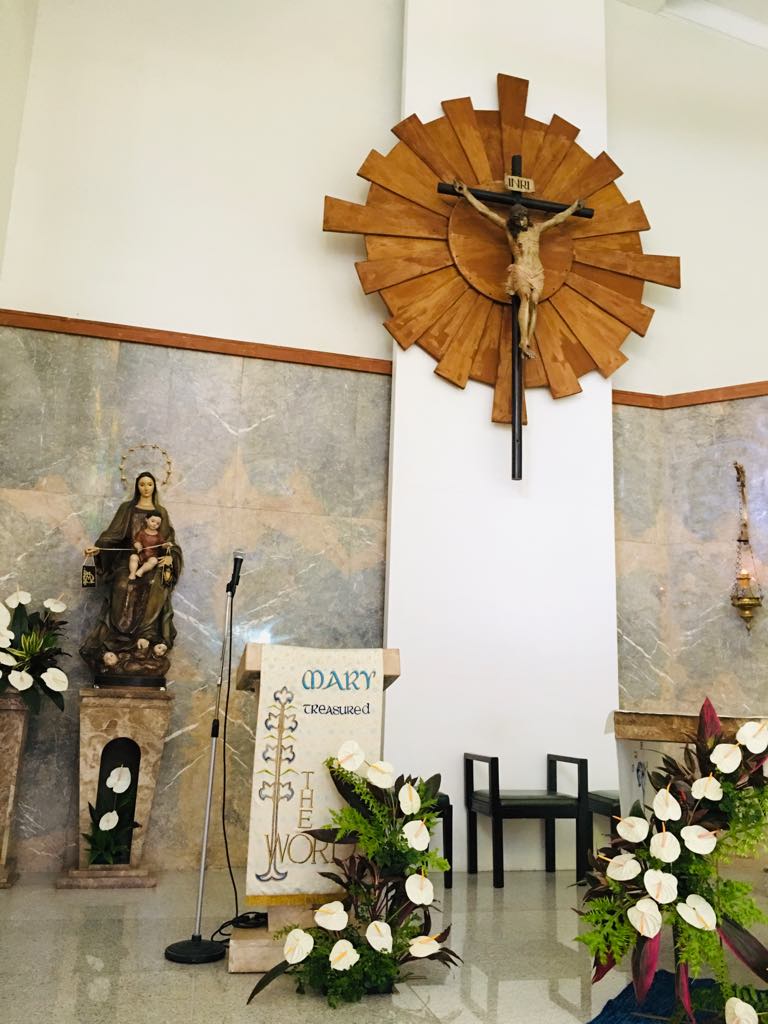
Photo by Mr. Angelo Nicolas Carpio, 2020.
Praying for prophets and martyrs

The Lord Is My Chef Breakfast Recipe for the Soul by Fr. Nicanor F. Lalog II
Tuesday, Memorial of the First Martyrs of the Holy Roman Church, 30 June 2020
Amos 3:1-8, 4:11-12 >><)))*> <*(((><< >><)))*> <*(((><< Matthew 8:23-27
First Martyrs of the Holy Roman Church photo from ucatholic.com.

As we remember today, O Lord our God, the courage and fidelity of the first martyrs of Rome, we also pray for more martyrs and prophets who may inspire us to be your witnesses in this troubled time.

Or better still, make us one!

How sad that until now, we live in a time so similar with ancient Israel and ancient Rome where many of us turn away from you to worship money and other false gods, blinded by the material wealth and prosperity around us.

Many of us have become greedy and unjust in our ways to others especially the poor and marginalized.

Send us a prophet, Lord, like Amos who would dare to speak your words of truth, warning people who have gone astray.

The lion roars — who will not be afraid! The Lord God speaks — who will not prophesy! I brought upon you such upheaval as when God overthrew Sodom and Gomorrah: you were like a brand plucked from the fire; yet you returned not to me, says the Lord. So now I will deal with you in my own way, O Israel! And since I will deal thus with you, prepare to meet your God, O Israel.

Amos 3:8, 4:11-12

Increase our faith in you, O God, while at the middle of this great storm of COVID-19 pandemic worsened by many social upheavals happening around the world and right in our country.

Sometimes, we feel like the disciples of your Son Jesus, so terrified with the violent storm going on with waves almost swamping us.

Forgive us, Lord, when we panic because we sometimes feel that you do not care at all that we are perishing in the storm while you are “sound asleep”.

Fill us with your courage, sweet Jesus, to give witness to you like the martyrs of Rome who chose death than be one with the modern Neros of our time who lie and mislead many others into evils and sin. Amen.

Red Wednesday in our Parish last November 2019.