Journeying into God in parables

The Lord Is My Chef Sunday Recipe for the Soul by Fr. Nicanor F. Lalog II
Week XVI, Cycle A in Ordinary Time, 19 July 2020
Wisdom 12:13, 16-19 >><}}}*> Romans 8:26-27 >><}}}*> Matthew 13:24-43

Our Lord Jesus Christ invites us today to join him into a different kind of journey that would take us deep into God’s mystery in our very selves through the parables he has started to tell us last Sunday.

Recall, dear readers, that parables constitute the heart of the Lord’s preaching.

We have defined these as simple stories with deep realities that must be cracked open through prayers and reflections to get its meaning. From the French para bolein that literally means “along the path”, a parable is likewise a bridge that leads us into something unknown to us before.

In itself, a parable is a journey calling us to walk through it into our inner selves to discover the many inner beauties that lie within us but we take for granted. Ultimately, as we discover these giftedness within us, we then uncover God dwelling within us.

This is the reason why Jesus would always tell his audience after narrating his parables that “Whoever has ears ought to hear” (Mt.13:43) to insist on them to go deeper inside themselves for their meaning.

And that is when we are transformed, when our lives are changed into true disciples of Jesus Christ.

Greatness in littleness

First thing we notice in the three parables of Jesus today is his insistence on the coming of the kingdom of heaven or kingdom of God through him as the mysterious seed.

This kingdom of heaven is used interchangeably with “kingdom of God” that Jesus would always speak of in his entire ministry until his crucifixion is not according to our understanding of a kingdom: it is not about a territorial domain or the exercise of power over subjects using force.

St. John Paul the Second expressed it beautifully by declaring the person of Jesus Christ himself is the kingdom of God. No wonder, Christ would always liken himself and the kingdom of God with the seed being sown.

It is always good. It is for everyone as the sower scatters the seeds everywhere. And it is always small like Jesus who was born like any infant so fragile and even poor like most of us. He is like the seed we take for granted from which comes forth all kinds of plants like trees, big and small.
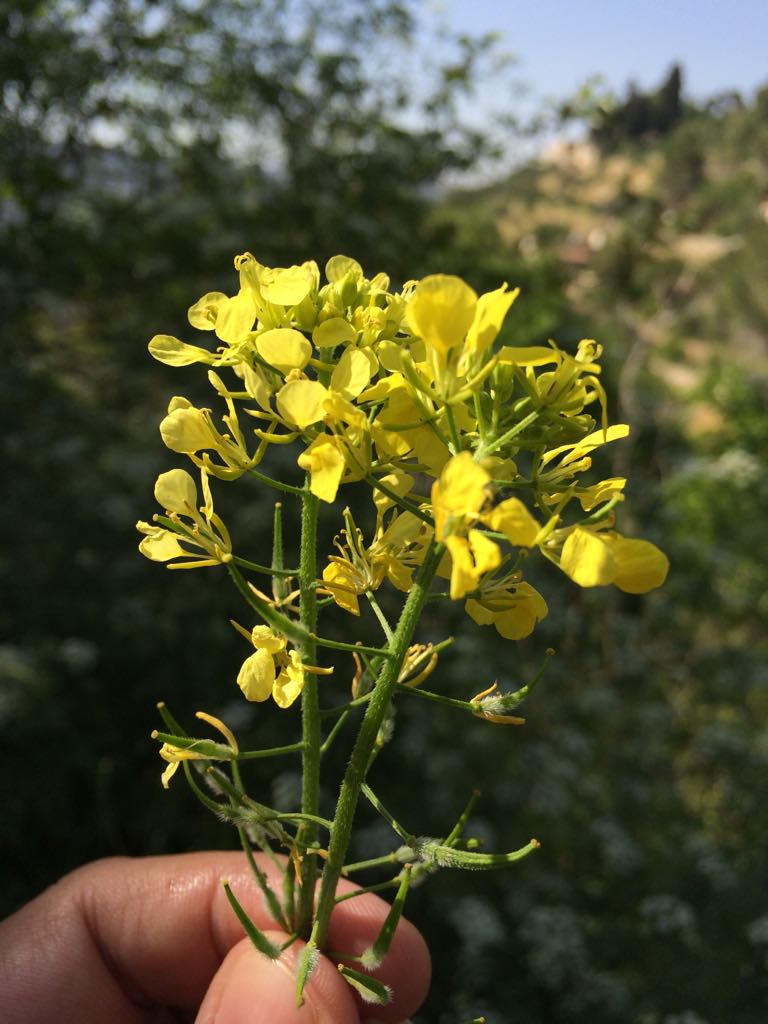
Flowers of a mustard plant from which seeds are taken. Photo by author, Israel, 2017.

Or most specially, like those seeds that turn into crops of wheat and shrubs like the mustard with leaves and branches where birds may dwell that describe the first two parables today.

Jesus then added a third parable of the yeast mixed into flour that leavened the dough into a bread.

Like him our Lord, we his disciples are also like the small seeds packed with great possibilities in God.

In all these three parables today, there is that element of smallness, of littleness that remind us how everything that is great always starts small.

When we come to think of this, we realize how we embarked on this great mission of making Jesus Christ known: it started like a small spark within us, perhaps from a single word we have heard or read, a simple inspiration by God through the most ordinary persons and situation.

Not only in things regarding our spiritual lives but even our personal lives when we recall those humble beginnings of our family and of our business.

Like a little seed or yeast, they just grew!

Now we are surprised, even amazed, how we have changed, how we have grown. Of how we are now reaping the fruits of our labors and sacrifices.

Most of all, how we have known and experienced Jesus Christ who fulfills our lives.

Weeds among the wheat

But not all days are bright and sunny. There are dark clouds that hover above us bringing storms and heavy rains that lead into floodings. A lot often in life, the darkest nights turn out to be the longest nights too.

And this is the meaning of Christ’s main parable for today.

Jesus proposed another parable to the crowds, saying: “The kingdom of heaven may be likened to a man who sowed good seeds in his field. While everyone was asleep his enemy came and sowed weeds all through the wheat, and then went off. When the crop grew and bore fruit, the weeds appeared as well. The slave of the householder came to him and said, ‘Master, did you not sow good seed in your field? Where have the weeds come from?’ He answered, ‘An enemy has done this.’ His slaves said to him, ‘Do you want us to go and pull them up?’ He replied, ‘No, if you pull up the weeds you might uproot the wheat along with them. Let them grow together until harvest; then at harvest time I will say to the harvesters, ‘First collect the weeds and tie them in bundles for burning; but gather the wheat into my barn.'”

Matthew 13:24-30
Photo by Onnye on Pexels.com

During my prayer periods this past week, I have been filled with anger and disappointments at how things are going on in our country and even in my personal life. It pains me so much why at this time of the pandemic when we have to go through all these bad things.

Last Friday morning before our daily Mass, we discovered the glasses shattered in our windows near the office door and at the side door of the church. There were scratches outside indicating attempts to unlock the doors inside and steal from the church.

After the Mass, I grew more angry as we inspected the damages, thinking so negatively harsh against whoever tried to burglarize us.

By night time during prayers, I remembered Victor Hugo’s Les Miserables where Valjean was caught by the police stealing silver from the good bishop who had welcomed him into his rectory with food and accommodations. Instead of pinning him down for his crime, the bishop told the police he had given Valjean the silver found in his bag, even chastising him he had left behind the other silver candlesticks he had asked to take!

The wheatfield owner in our parable and the good bishop of Les Miserables are both the merciful God mentioned by the author of the Book of Wisdom in our first reading today:

But though you are master of might, you judge with clemency, and with much lenience you govern us; for power, whenever you will, attends you. And you taught your people, by these deeds, that those who are just must be kind; and you gave your children good ground for hope that you would permit repentance for their sins.

Wisdom 12:18-19

Think of our parents and elders, our mentors or those we look up to for their wisdom gifted with wonderful insights in life called perspicacity which means “a penetrating discernment… a clarity of vision or intellect which provides a deep understanding and insight.”

Being perspicacious or having perspicacity like the wheatfield owner or the good bishop of Les Miserable means having a deeper wisdom that one can keenly see and understand things beyond ordinary perception following a long process of silent reflections in life.

Many times, our sights can be limited that we do not see the other repercussions and even ramifications of our decisions on certain situations. There are times we think only of finding solutions, of winning the battle but not the war.

Photo by Life Of Pix on Pexels.com

It is also along this line that Jesus added the third parable: the yeast is mixed with the flour to leaven the dough.

We are like the yeast who have to mix with others, including the evil ones to become bread that will feed the world.

We are the wheat, the mustard seed, the yeast thrown into the world to make a difference in Christ! We are not the ones who will change the world but Jesus Christ, the mysterious seed, the yeast in the dough who grows and effects the changes in us and among us.

Parables as inner journey in Christ Jesus

With Jesus living and nurturing within us, that is when we become fruitful like the wheat and mustard plant or leavened bread that we are able to feed more people who would eventually become bearers his in the future. That is how the kingdom of heaven comes into this world, when God is seen and felt by everyone through us

This we achieve in prayers as St. Paul reminds us in the second reading. It is not just reciting our basic prayers as Christians including the novenas we love to collect and follow through. The kind of prayer that St. Paul speaks here is a prayer guided by God’s Holy Spirit who perfectly knows God’s will.

Photo by Dr. Mylene A. Santos of kids she’s teaching on the values of health, education and nature at Katmon Harbor Nature Sanctuary, Infanta, Quezon.

Brothers and sisters: The Spirit comes to the aid of our weakness for we do not know how to pray as we ought, but the Spirit himself intercedes with inexpressible groanings.

Romans 8:26

In this time of too much weeds among the wheat, of so many evil and sins prevailing over us, we can feel frustrated at times that make it so difficult for us to pray.

Sometimes, the evil and sins, or the plain sufferings we go through in our own family, in our community or at work and in school can be so overwhelming that we feel our prayers are useless, that God is not listening at all to us.

Then we stop praying, we stop journeying within even with weeds among the wheat. How can the flour be leavened if the yeast is not mixed with the dough to become bread or cake.

Remain in the Lord!

Pulling out the weeds will not solve the problem; worst, it may endanger us all too in the process that we become like our enemies in the end. Never lose hope in God who knows very well of the presence and source of weeds. Sometimes, these pains and sufferings from evils we go through from others may actually lead us to our being fruitful!

Evil and sins are a parable in themselves that can teach us so well in life if we handle them with prayers.

Photo by Dr. Mylene A. Santos, Infanta, Quezon, May 2020.

Praying in the Holy Spirit is when we spend time with Jesus to reflect and crack open his words that come to us in the Sacred Scriptures and ordinary events in daily life through long hours of silent meditation and contemplation.

The more we dive into God’s mysteries in the parables he sends us in daily living, the more we see the beauty and wonder of life because our horizons are widened and get clearer.

Praying into our parables in life is like looking into a telescope or binoculars that enable us to see something distant within reach.

Like God himself.

And salvation as well as fulfillment in Christ.

Amen.

A blessed new week ahead of you!

With God, everything continues; without God, everything ends

The Lord Is My Chef Breakfast Recipe for the Soul by Fr. Nicanor F. Lalog II
Friday, Week XIV, Year II in Ordinary Time, 10 July 2020
Hosea 14:2-10 <*{{{><< <*{{{><< + >><}}}*> >><}}}*> Matthew 10:16-23
Photo by author, Wailing Wall of Jerusalem, May 2019.

Your words today, dear God, hit us hard, very hard especially after we have gravely sinned against you when we have “collapsed through our guilt” (Hosea 14:2). Indeed, without you on our side, everything ends.

And the sad part of this reality is we refuse to listen to you. We have grown so accustomed to our sinful ways, believing more to our selves that we can get away with everything. How foolish, indeed, O Lord that we would not stop until everything collapses and crumbles before us. We have been so drunk with the fleeting pleasures of the world, thinking they are the “real things” we badly need.

Open our eyes, our minds, and our hearts to your love and mercy, Father.

Teach us to be wise to understand your ways and your teachings, your offer of redemption to start anew because with you, everything continues despite some setbacks sometimes.

Let him who is wise understand these things; let him who is prudent know them. Straight are the paths of the Lord, in them the just walk, but sinners stumble in them.

Hosea 14:10

Let us take into our hearts the assurance given us by your Son Jesus Christ not to worry about what to speak or say when persecuted because it is the Holy Spirit who shall be speaking for us, fighting our battles.

Most of all, teach us how to be “shrewd as serpents and simple as doves” (Mt. 10:16) especially in this world and time where sin and lies are glorified and seemingly to be having the “upperhand” in everything, whether in our personal lives or life as a community and a nation.

May we see beyond this world where our lives and stories live on, continuing in you through eternity. Amen.

Photo by author, 2020.

When evil becomes life

The Lord Is My Chef Breakfast Recipe for the Soul by Fr. Nicanor F. Lalog II
Wednesday, Week XIII, Year II in Ordinary Time, 01 July 2020
Amos 5:14-15, 21-24 <*(((><< <*(((><< >><)))*> >><)))*> Matthew 8:28-34
Photo by Mr. Raffy Tima of GMA7 News, Taal eruption, January 2020.

Praise and glory to you O God our loving Father for this brand new month of July! It is our hope this month will be kinder and more gentle with us than June. It is our hope that this July, we can all come closer to you doing what is good, what is right.

Seek good and not evil, that you may live. Then truly will the Lord, the God of hosts, be with you as you claim! I hate, I spurn your feasts, says the Lord, I take no pleasure in your solemnities… Away with your noisy songs! I will not listen to the melodies of your harps. But if you would offer me burnt offerings, then let justice surge like water, and goodness like an unfailing stream.

Amos 5:14, 21, 23-24

Most of all, through your Son Jesus Christ our Lord, it is our hope O merciful Father that beginning today we start to reject and shake off evil from our lives, from our very selves.

We have not only sinned, O sweet Jesus; worst part of our sinfulness is how we have accepted sin and evil as a way of life, as a part of life itself with our usual excuses and arguments “wala nang magagawa, nariyan na yan, hayaan na lang” (there’s nothing that can be done, just accept it).

We have got so used to immoralities and lies that we simply accept them as facts of life.

Like those people at Gadarenes where two demoniacs have terrorized them for some time that “no one could travel by that road” (Mt.8:28).

But when you came, Lord Jesus and drove the demons into entering the herd of swine that jumped and drowned into the sea, the whole town came out to meet you and begged you to leave their district!

Instead of being thankful, they begged you to leave, Lord, because you have disturbed their lives so used to the demons. They have failed to see how two people were finally healed and exorcised. Most of all, they have refused to accept the new order in their place.

What a silly turn of events that continues to happen day when people have grown so used to evil and sin, refusing changes and conversion.

How sad that whenever we make a stand for what is right and good, what is true and just, we are the ones made to suffer, even persecuted for bringing order because we have disturbed the evil that people have been used to.

We pray for those who continue to fight injustice and immoralities in our communities, in our church that they may always be guided and strengthened by the Holy Spirit.

And we pray for those among us who have lost the sense of sinfulness, of living with sin and evil and yet continue to worship and praise you O God. Amen.

Photo by Gelo Nicolas Carpio, June 2020.

Let Christ possess us

The Lord Is My Chef Sunday Recipe for the Soul by Fr. Nicanor F. Lalog II
XIIIth Sunday in Ordinary Time, Year A, 28 June 2020
2 Kings 4:8-11, 14-16 >><)))*> Romans 6:3-4, 8-11 >><)))*> Matthew 10:37-42
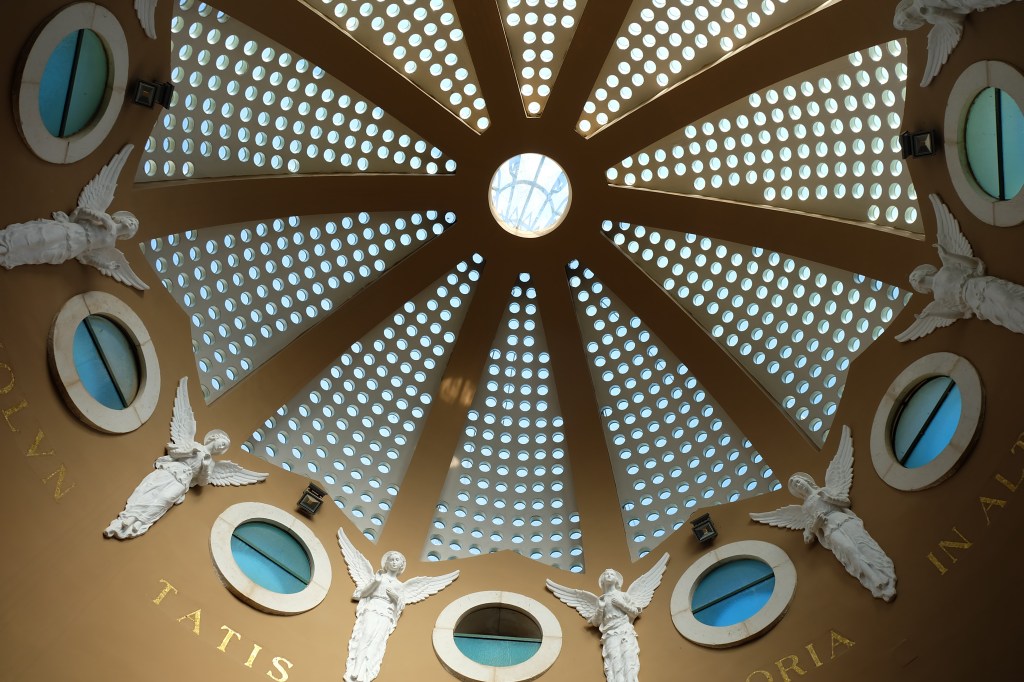
Photo by author, Dome of the Chapel of Nativity at Shepherd’s Field, Bethlehem, the Holy Land, May 2019.

Jesus continues his lessons to us his disciples being sent to look for the “lost sheep of Israel”, to be not afraid for he is with us in this journey and mission. But, it is not enough that we have Jesus on our side and be present among us: we have to allow Jesus to take possession of us completely!

From having no fear because Jesus is here, Christ now deepens his presence by inviting us to be possessed by him, to be in communion with him.

Jesus said to his disciples: “Whoever loves father and mother more than me is not worthy of me, and whoever loves son or daughter more than me is not worthy of me; and whoever does not take up his cross and follow after me is not worthy of me. Whoever finds his life will lose it, and whoever loses his life for my sake will find it.”

Matthew 10:37-39
Photo by author, processional Cross at the altar, 2019.

The Mystery of the Cross

Discipleship in Jesus Christ is more than a total allegiance to him who is neither a demanding nor exacting Lord and Master for he does not arbitrarily impose himself upon us.

Nothing like that of subservience but something more lofty because it is wrapped in a mystery — a mystery of love freely given and shared to us by God even if we do not deserve it all. Remember the mystery of the Blessed Trinity four Sundays ago (June 07)?

Ever since, God has never imposed himself upon us, that we should love him back in return for he does not really need our love. He gave us the gift of freedom so that we may love him freely for he never imposes on us.

And here lies the beauty of discipleship, of this relationship we have with God that is based solely on love expressed to us in the most personal manner by giving us his Son Jesus Christ who suffered and died on the Cross but rose again on Easter. This we were reminded by the Solemnities of the Body and Blood of Jesus and of his Sacred Heart last June 14 and 19 respectively.

Now you see my dear readers the clearer picture of our liturgical celebrations expressing our concrete experiences of being loved by God in Jesus Christ most especially during times of trials and sufferings like in this COVID-19 pandemic.

It is Christ who made the initiative to be one with us in our pains and sufferings; God did not remove our crosses in life but made them holy in his Son Jesus Christ so that every time we go through life’s many difficulties, we share in the Lord’s Passion, Death, and Resurrection.

That is why, we are invited to take and carry our cross every day for it is through the Cross we are saved. It is not enough to simply believe in the person of Jesus but we need to accept and embrace his Cross because it is through which he had won our salvation by dying on it and rising again.

This is easier said than done. It is so difficult to love Jesus more than our loved ones like family and friends. And it is most difficult to love the Lord more than our selves, when we have to let go of our plans and agenda.

Letting go and letting God in itself is already crucifying — but that is when this mystery of Christ’s love and of his Cross deepens further when we lose ourselves in him!

Celebrating Mass without te congregation during the ECQ, March-April 2020.

Possessed by Christ

To be possessed by Jesus is to receive God and his gift of salvation through the mystery of Christ and his Cross. Like our Christian life, proclaiming the gospel carries with it the sign of the Cross of Christ.

We are not asked to reenact or reproduce his Crucifixion nor is Jesus asking us to be suicidal or go against our natural aspirations and dreams.

To be possessed by Jesus means we continue to take care of ourselves without neglecting the needs of others.

To be possessed by Jesus means being generous to others in the same manner Jesus has always been generous to us.

To be possessed by Jesus means to realize that every act of self-giving is really an act of receiving!

Photo by author, Malagos Park, Davao City, 2018.

That is the paradox of the Cross, of discipleship in Christ: “Whoever finds his life will lose it, and whoever loses his life for my sake will find it” (Mt.10:40).

And that is also where the mystery of Christ’s love deepens because whatever we give is not really ours but Christ’s.

Every time we give love, it is the love of Jesus.

When we are kind and generous with others, it is the kindness and generosity of Jesus we give and share.

When we are patient and understanding to others, it is still the patience and understanding of Jesus in us.

Even if we give and share material things like money, food, clothing… whatever good we share and give are all from Jesus not from us.

And the more we give, the more we receive!

Have you noticed especially during this pandemic how the generous among us are now more blessed?

Wonder no more because you have allowed yourself to be possessed by Jesus Christ!

This is what the woman at Shumen had realized after welcoming the Prophet Elisha into her home in our first reading. She even gave him a room to stay every time he comes for his mission while the Lord provided all her needs, even rewarded her with a son as promised by Elisha.

When we allow Jesus to take over us, when we enter into communion in him and with him in his very life, we become more free to love, we strengthen our relationships with others, we wander less and worry less in life; most of all, we feel lightened in our burdens with the presence of Jesus giving us fullness of life in him.

This is the grace I hope we have seen from this quarantine period, especially those two months of lockdown when were freed from our usual grind and busyness with more time to be silent and still, to pray and reflect on our relationships with God and with others. It was a difficult and very trying period that had given in return a lot of opportunities to others.

Photo by author, Marcos Highway, 2019.

Dead to sin, alive to God

Brothers and sisters: We know that Christ, raised from the dead, dies no more; death no longer has power over him. As to his death, he died to sin once and for all; as to his life, he lives for God. Consequently, you too must think of yourselves as dead to sin and living for God in Christ Jesus.

Romans 6:9-11

It has been four months since houses of worship were ordered closed to help stop the spread of the corona virus. Somehow, the lockdown had made us realize the importance of receiving the Sacraments especially the Holy Eucharist.

But, sacraments are not everything for we have the bigger roles of putting into practice its reality of being the saving presence of Jesus Christ.

Now that lowly life is beginning to go back to its usual grind especially the traffic, soon we might forget again the more important things in life like God and our relationships in our family and friends that it is hoped we have rediscovered during the quarantine period.

That is why I strongly feel the government must now allow Churches to open so the people may experience again God in the sacraments and in our rites and rituals lest they get busy again with so many things only to miss finding anew the meaning of our lives found in silence and stillness before the Cross of Christ.

It is my hope that in this quarantine period, may we find through the Cross of Jesus that when we learn to submit and surrender to him, that is when we truly become free; and, when we lose and give away our lives to him, that is when we gain fullness of life in him. Amen.

A blessed week and a more abundant July to everyone!

God our foundation

The Lord Is My Chef Breakfast Recipe for the Soul by Fr. Nicanor F. Lalog II
Thursday, Week XII, Year II in Ordinary Time, 25 June 2020
2 Kings 24:8-17 <*(((>< ><)))*> <*(((>< ><)))*> Matthew 7:21-29
Photo by author, the Walls of Jerusalem, May 2019.

Your words today, O Lord, are so graphic and chilling about the nature of sin that unfortunately, we continue to take for granted.

Jesus said to his disciples: “Not everyone who says to me, ‘Lord, Lord,’ will enter the Kingdom of heaven, but only the one who does the will of my Father in heaven.”

Matthew 7:21

Forgive us Jesus when we are so complacent with our prayers and words to you that remain only in our mouths and lips, but never coming from our hearts and most of all far from our actions.

Forgive us Lord for the great divide within us, between our words and our actions, of what we believe and what we live.

Give us the grace to be rooted in you always, to have you as our foundation.

Your words are so true, Lord, that so often our lives collapse like Jerusalem in the Old Testament, like the house built on sand in your parable because we live far from you.

Help us to take these lessons into our hearts, that whatever bad befalls us is never your punishment but the result of our sins, when everything collapses in us and starts to breakdown.

May we hold on fast to your words and examples in the power of the Holy Spirit. Amen.

Photo by author, Church of the Holy Family, Taipei, Taiwan, 2019.

How ugly sin can be

The Lord Is My Chef Breakfast Recipe for the Soul by Fr. Nicanor F. Lalog II
Tuesday, Week XI, Year II in Ordinary Time, 16 June 2020
1 Kings 21:17-29 <*(((>< <*(((>< ><)))*> ><)))*> Matthew 5:43-48
Photo from Google.

O God our heavenly Father, we come to you today begging for your mercy, for more enlightenment, for prudence and for self-control amid all the things going on in our land and elsewhere abroad while still under threats with this COVID-19 pandemic.

Every day we are beginning to see how ugly sin can be, often expressed in so many forms of injustice to one another; its ugliness can be seen in the “punishments” King Ahab shall suffer following the death of Naboth whose vineyard he had so desired to own.

Ahab said to Elijah, “Have you found me out, my enemy?” “Yes,” he answered. “Because you have given yourself up to doing evil in the Lord’s sight, I am bringing evil upon you: I will destroy you and will cut off every male in Ahab’s line, whether slave or freeman, in Israel. When one of Ahab’s line dies in the city, dogs will devour him; when one of them dies in the field, the birds of the sky will devour him.”

1 Kings 21:20-21, 24

Help us to turn away from sins, Lord, and cleanse our hearts and our hands of our many sins of dishonesty and insincerity, of lies and injustices, of pride and power tripping.

All these things happening to us today are largely due to our past sins that until now we refuse to admit and confess to you.

Give us the grace of honesty within, of confronting our true selves and admit our guilt, confess our sins to you to start anew like King Ahab towards the end that moved you, merciful God, to let go of your wrath in him.

May we find the wisdom and the immense beauty and power of your love as preached by Jesus to us in the gospel today.

Inspire us to be perfect, to be holy today just like you, our Father, is holy, perfect, and beautiful.

Holiness is not being sinless, Lord; fill us with your Self, O God so we may be strong enough to ward off sins and evil and be truly a reflection of your image and likeness in Christ Jesus. Amen.

Photo by author, January 2020, Pulilan, Bulacan.

Who we are vs. who we are not

40 Shades of Lent, Sunday Week I-A, 01 March 2020

Genesis 2:7-9, 3:1-7 +++ Romans 5:12-19 +++ Matthew 4:1-11

From Google.

Lent has always been associated with the Sacrament of Baptism since the beginning of the Church. In fact our Sunday readings this 2020 (Cycle A) are among the oldest in our liturgy used in the preparation of candidates or catechumens to Baptism on Easter Vigil.

This intimate link between Lent and Baptism is very evident in our synoptic gospels as Matthew, Mark, and Luke present to us how after Jesus was baptized by John in Jordan River, his temptations by the devil in the desert immediately comes next.

At that time Jesus was led by the Spirit into the desert to be tempted by the devil. He fasted for forty days and forty nights, and afterwards he was hungry. The tempter approached and said to him, “If you are the Son of God, command that these stones become loaves of bread.”

Matthew 4:1-3

The Season of Lent and the Sacrament of Baptism

From Google.

Let us go back a little to that Baptism scene of Jesus at Jordan so we can understand this link between Lent and Baptism as well as to appreciate the meaning of our celebration this first Sunday of Lent.

It was during his Baptism at Jordan when the Father formally launched and made known the mission of Jesus as the Christ or the “Anointed One” of God, that is, the Messiah in Hebrew or Christo in Greek from which we derived the word Christ in English.

As a prefiguration of his coming Pasch – Passion, Death, and Resurrection – Jesus Christ’s Baptism became his “investiture” or “commissioning” when the Father declared, “This is my beloved Son, with whom I am well pleased” (Mt. 3:17).

In his Baptism, Jesus entered into solidarity with us sinners when he plunged into Jordan River to be one with us in everything except sin. It is here we find very clear the intimate link of Baptism with Lent when we are called to be faithful children of God like Jesus Christ

An anatomy of temptation and sin

Detail of the mosaic of the “Temptations of Christ” at the St. Mark Basilica in Venice. Photo from psephizo.com.

Every temptation by the devil, every sin is always a turning away from God, a deviation from our identity as children of the Father in Jesus Christ.

Whenever we would wake up, the Father reminds us like at the Baptism of Jesus at Jordan that we are his beloved son or daughter with whom he is well pleased despite our many sins, failures, and weaknesses.

And like Jesus Christ right after his Baptism at Jordan, the devil also comes every day to tempt us to turn away from the Father, echoing to us his same words in the desert with the Lord, “If you are the Son of God” to lure us into becoming someone we are not.

The tempter approached and said to him, “If you are the Son of God, command that these stones become loaves of bread.” He said in reply, “It is written: One does not live by bread alone, but by every word that comes forth from the mouth of God. Then the devil took him to the holy city, and made him stand on the parapet of the temple, and said to him, “If you are the Son of God, throw yourself down. For it is written…”

Matthew 4:3-6

See this pattern of the devil in his first two temptations, “If you are the Son of God” – very enticing to be somebody else, to prove one’s worth and being.

This pattern will significantly change at the third temptation when the devil took Jesus to a high mountain to show him all the kingdoms of the world in their magnificence. No more “If you are the Son of God” but a more direct temptation that is affront and “garapal” as we say in Filipino:

“All these I shall give to you, if you will prostrate yourself and worship me.”

Matthew 4:9

Observe how cunning was the devil in his temptations of Jesus until finally, he brings out his sinister plot: worship him, turn away from God!

The same is true with us: the devil will lure and deceive us in so many ways with just one objective which is for us to turn away from God. In every temptation, in every sin, the issue has always been the primacy of God which Jesus Christ firmly affirmed in his triumph over the devil’s temptations at the desert.

And this issue on the primacy of God is always attacked by the devil in every temptation when he confuses us on who we really are like the woman in the first reading after the serpent had told her that she would be like God:

The woman saw that the tree was good for food, pleasing to the eyes, and desirable for gaining wisdom. So she took some of its frit and ate it; and she also gave some to her husband. Then the eyes of both of them were opened, and they realized that they were naked; so they sewed fig leaves together and made loincloths for themselves.

Genesis 3:6-7

Do we not feel the same way after every sin? We feel naked – ugly, dirty, and alienated from our very selves precisely because we have not become our true selves!

These temptations of Jesus by the devil would persist up to his crucifixion where some people jeered and taunted him, telling him “if you are the Son of God” or “if you are the Messiah” so that he would turn away from the Father and forget all about his mission and Divine plan of salvation.

Notice that the last temptation of Jesus is exactly our last temptation too: abandon God the Father and simply be like the devil, with no dignity, with nothing at all because he is separated from God, our only grounding of being.

Hubris, our greatest temptation and sin

Photo by Mr. Raffy Tima of GMA-7 News, Batanes, 2018.

Last Sunday we have mentioned how the Greeks have always held that man’s first and greatest temptation and sin is hubris – that is, the arrogant presumption of man that he is god, or that he can defy the divine to do everything and have anything.

We call it pride which is at the very core of every temptation and sin. The director of the classic film “Ten Commandments”, Mr. Cecil de Mille was once asked which of the Lord’s commandments is most often violated by man?

According to Mr. De Mille, it is the first commandment of God that we always violate because whenever we sin, that is when we also have another false god or idol aside from the true God.

Very true!

Our problem in the world is not really hunger or war or poverty but our refusal to be faithful to God, to be who we really are as his blessed sons and daughters. In some instances, there are some who have totally rejected and denied God, believing more in themselves, in the sciences and technologies.

Jesus is not indifferent to hunger or wars still going on in many parts of the world today; he had come to show us the path to our problems is to reclaim our being children of the Father, listening and living his words, worshiping and trusting him alone.

In going through his Pasch, in fighting all temptations, Jesus shows us the path to see and experience the God we can meet when we come to our desert where we rely only in him alone. It involves hard work, without any shortcut and quick fixes or instants that have become our norm these days.

It is not a simplistic approach to the many problems we are facing, but if you read the newspapers or watch the news, we see how humanity is still in solidarity with Adam, with sin, with the material world as St. Paul explained in the second reading.

On this first Sunday of Lent, we are reminded anew of our identity as beloved children of the Father in Jesus Christ who showers us with every grace and blessing that we need. Let us live in him, trust in him, hold on to him to experience life anew.

Let us give Jesus a chance to work in us, rise with him to our being beloved children of the Father! Amen.

Photo by author at the ancient city of Jericho, Israel, May 2019.

The joy of Lent

40 Shades of Lent, Saturday after Ash Wednesday, 29 February 2020

Isaiah 58:9-14 +++ 0 +++ Luke 5:27-32

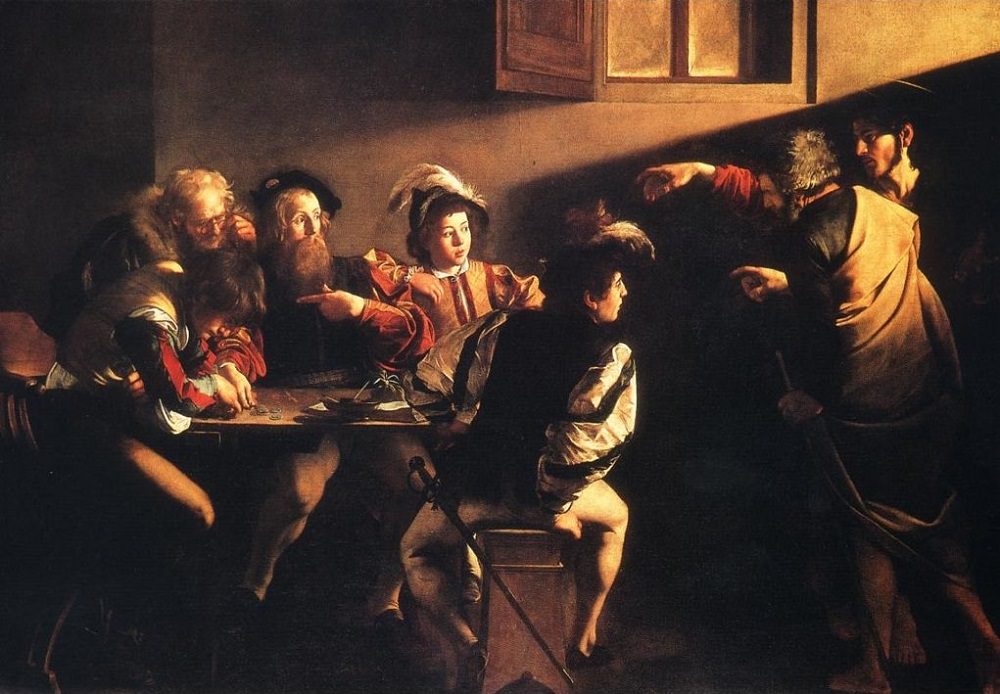
“The Calling of St. Matthew” by Caravaggio. From Google.

Dearest Jesus: I have been imagining in prayer of myself being Levi the tax collector sitting at his post.

It must be so lonely being like him, rich but deep inside longing for something deeper and meaningful than money and wealth.  He had been thinking of making a “lifestyle shift” but he felt hopeless with nobody to help him.

Like in the first reading, your invitation Lord through the Prophet Isaiah seem to be too good to be true that anyone like Levi – or me – could make a big difference in life by “giving food to someone hungrier, abandoning my own comfort to care for someone afflicted, substituting a kind word for a malicious gossip, and worshipping you than pursuing my own interests” (Is.58:10,13).

I felt like Levi – there in his little customs post – that is impossible because everything is hopeless and there is no chance to change.  Everything is doomed, especially for me, a sinner, Lord.

Then, suddenly you came, saying, “Follow me” (Lk.5:27).

How I love looking back, Lord, to those dark days when you suddenly came calling me to follow you!

It was so simple. 

Like Levi, I just stood and followed you and everything changed in my life! 

That was so nice of you, Lord Jesus, to take such a bold step of coming to Levi’s post to call him and, me.  It was – and still is – a gamble on your part to call us sinners to follow you. And since then, you have never stopped calling us sinners Lord Jesus to follow you, even on our darkest and lowest days and hours, Lord, when everything seemed to be so doomed.

As we prepare for the first Sunday of Lent, remind me, O Lord, that this holy season is not all that drab and dry.  After all, Lent originally means “springtime”, the coming joy of Easter which happens every time we turn our hearts to you like Levi.  Amen.

From Google.

Lent is about God, not us

40 Shades of Lent, Ash Wednesday, 26 February 2020

Joel 2:12-18 + + + 2 Corinthians 5:20-6:2 + + + Matthew 6:1-6,16-18

From Google.

We begin today the Season of Lent, the 40 days of prayers and fasting, contrition and alms-giving in preparation for Easter Sunday. It is the only season in our liturgical calendar that starts on an ordinary day, Ash Wednesday when we are reminded of that basic truth in life we have always evaded: that we all die and go back to God.

“Remember man that dust thou art, and unto dust shalt thou return.”

In this age of social media where many practically live in media making known to everyone everything happening to them from confinement to hospital to drinking coffee somewhere or simply saying “thank you” to someone just beside for a gift they have received, the more we need this blessed season to recover the essential realities in life like our true self and God.

So unlike Adam and Eve who went into hiding after their fall, modern men and women have shamelessly flaunt everything they think they have that actually indicate what they lack – depth and meaning, sense and respect.

Ash Wednesday enables us to find anew our bearings in life that must be centered in God, our very life and meaning of being and existence.

Life is a daily Lent.

From Google.

St. Benedict tells his followers in his Rule that “the life of a monk ought to be a continuous Lent”. And this is also very true for every Christian who follows Jesus Christ as Lord and Master.

Our life is a daily Exodus from darkness into light, from sin into grace, from failure into victory, from slavery into freedom when we experience the Paschal mystery of Jesus Christ even if we are not aware of it.

And the sooner we become aware of this reality, the better for us because that is when we find more meaning in life, the deeper our existence becomes.

Pope Francis tells us in his Lenten Message this year that “Jesus’ Pasch is not a past event; rather, through the power of the Holy Spirit it is ever present, enabling us to see and touch with faith the flesh of Christ in those who suffer.”

Life is all about God. This life we live is a sharing in his very life and the more are aware of this reality and link, the more we discover its beauty because we get to know God more in Jesus Christ who have come in flesh and blood for us.

“Brothers and sisters: We are ambassadors for Christ, as if God were appealing through us. We implore you on behalf of Christ, be reconciled to God.”

2 Corinthians 5:20

To be reconciled to God is to be one in God in Christ Jesus through daily conversion. This we achieve through the many sacrifices and corporal and spiritual works of mercy during this season. Fact is, these pious practices are meant to be done even outside the Lenten season so we never lose sight that life is all about God, not us.

From Google.

Lent is a journey into our hearts, and into the heart of God, too!

In these 40 days of Lent, we try little by little to “rend our hearts, not our garments to return to the Lord our God” (Joel 2:13) through prayers and sacrifices. These are done not for others to see but primarily for us to find and meet God waiting for us always to experience his love and mercy, his life and his fullness right in our hearts.

Like in our gospels these past two weeks when we reflected on the “education of the heart”, it is the truth of the heart that is being worked out in Lent. It is our heart that must be strengthened and converted by all these religious practices of the season.

It is in our hearts where God dwells and resides though we often try to bury and disregard.

All these fasting and abstinence, confessions and alms-giving as well as other works of mercy are meant to create a space in our hearts for God and for others. Without the proper attitude in our hearts, everything then becomes a hypocrisy that neither deceives God nor fools humans.

See how Jesus in the gospel which is also a part of his Sermon on the Mount which we have been reflecting these past three Sundays of Ordinary Time have painstakingly reminded us to guard against pleasing humans than God.

Jesus said to his disciples: “Take care not to perform righteous deeds in order that people may see them; otherwise, you will have no recompense from your heavenly Father.”

Matthew 6:1

It is not that we are encouraged to give alms, pray and fast to get rewards from God that Jesus is telling us to practice these pieties but in order to be more focused with the Father. Ultimately, getting into heaven is the reason why Jesus came to save us, to assure us of this reward of being with the Father eternally. There is nothing else greater than that.

This is why Lent is all about God, not us.

From Google.

In our journey to him this season, both as an individual and as a community, Lent enables us to free ourselves from our strong individualistic drives within so we can truly experience conversion in the midst of a community of believers.

The more we see God, we see our sinful selves, and that is when we are converted and renewed in Christ.

This is always marked with a deep realization that we are not alone, that there are also others suffering with whom we must share with God’s rich mercy and love rather than keep these for ourselves alone.

That is what that ash on our forehead reminds us, of God who loves us all, dwelling within each one of us, renewing us, loving us, and most of all, forgiving us. Amen.

The evil that is sin

The Lord Is My Chef Breakfast Recipe for the Soul

Wednesday, Week 4, Year 2, 05 February 2020

2 Samuel 24:2, 9-17 ><)))*> 0 <*(((>< Mark 6:1-6

The thing we dearly miss in Baguio is the beautiful scenery now marred by houses and buildings sprouting everywhere that pose grave risks to lives in case of calamities.

O God our Father, you are so loving and merciful. You have only one desire for each one of us to be fulfilled in life that you always insist on our obedience and fidelity to you.

One thing we fail to see is the reality of evil that is sin found actually within each one of us, not from without or outside of us. Worst part of sin is how we kind of “assert” its reality in the world through us!

In the first reading, you have given David three options to choose from as his punishment for his grave sin (again) in ordering a census of Israel; he chose pestilence than fall into the hands of his enemies as well as three years of pestilence in his kingdom.

But upon seeing the severity of the pestilence that happened during the wheat harvest, David felt so sorry for his people. Most of all, so guilty of his sin. Just like us whenever we commit grave sins, when we never think of its serious repercussions on others, especially those dearest to us.

When David saw the angel who was striking the people, he said to the Lord: “It is I who have sinned; it is I, the shepherd, who have done wrong. But these are sheep; what have they done? Punish me and my kindred.”

2 Samuel 24:17

In the gospel, we also find ourselves among the town folks of Jesus Christ who “took offense at him” (Mk.6:3) that he was not able to perform any mighty deed there because of their lack of faith.

Yes, Lord Jesus, the problem is with us, not with you.

We are the ones who always make life so miserable and unbearable for us and for others because of our sinfulness.

Forgive us, Lord, for those many times when we were so absorbed with our selves that we totally ignored those around us who have to suffer the consequences of our sins.

Today we pray for the gift of sensitivity and consideration for others. Amen.