Elijah & Jesus with “Lolo and the Kid”

Quiet Storm by Fr. Nicanor F. Lalog II, 13 August 2024
Photo from reddit.com

This is a rejoinder to my Sunday homily I posted here Saturday morning (https://lordmychef.com/2024/08/10/when-we-cry-this-is-enough-god-gives-us-more-than-enough-to-go-on/).

I had published my Sunday homily that Saturday morning when I decided to unwind by watching any movie on Netflix which I do only on weekends. So glad it was the first movie I saw, very related with the story of Prophet Elijah and Jesus Christ’s “Bread of Life Discourse” that Sunday.

First think I liked with Lolo and the Kid is its fast-paced story that revolved around the two characters played by veteran Joel Torre and GMA7’s famed Firefly star Euwenn Mikael Aleta.

Second thing so interesting with me is how Lolo and Kid have no proper names at all (I just learned Lolo’s name was Mario after reading the various write ups) maybe because they stand for all of us who are caught in this great race for money and material things but deep inside longing for the more essential and truly lasting in life like love. And people who love us too, who care for us, and would stand by us.

We are Lolo and Kid who many times have traded our principles for momentary satisfaction but despite our seemingly strong facades of pragmatism and “resourcefulness” or madiskarte as Lolo taught Kid in the movie, deep inside us is still our conscience where God dwells, telling us to pursue good and shun evil. Joel Torre perfectly portrayed this beautiful side in each one of us (with his Ilonggo accent) of keeping a conscience despite our sinfulness, like a soft shell we delicately keep whole and intact inside lest we lose everything in life.

Photo from de.flixable.com

Recall our first reading last Sunday about Elijah fleeing to the mountain from an army pursuing to kill him. Elijah felt a total failure like Lolo and us many times in life when after all our goodwill and love, we are dumped by the very people we care for.

Elijah went a day’s journey into the desert, until he came to a broom tree and sat beneath it. He prayed for death, saying: “This is enough, O Lord! Take my life, for I am no better than my fathers” (1 Kings 19:4).

In one of the scenes of Lolo and the Kid, we find Lolo crying, cursing everyone and murmuring just like in last Sunday’s gospel. As he tried to end his life with a knife, Lolo suddenly heard the cry of an infant from the heap of garbage around him. What a beautiful portrayal of that infant left in the trash like Jesus Christ born on a manger becoming the savior of Lolo, a definitive message of mercy and love from God after his apparent cry of “This is enough, Lord!”

How many times have we found ourselves in the same situation, often in less momentous ones than Elijah or any prophet and saint, crying out to God in the heavens “this is enough”?

But, what is also most true behind every cry of “this is enough” that we make, we continue to believe and to hope in God that there is still a way out of our plight. And very often like in the story of Elijah last Sunday and in that scene in Lolo and the Kid, God comes at the nick of time like that infant crying in the garbage heap, a reminder of life and beauty found within us despite all the dirt we may have around us.

From netflixlovers.it

Here we find the Kid, perfectly played by Euwenn like in Firefly, as the saving grace, the Christ-figure in the movie bringing salvation to Lolo. Kid was “the bread of life from heaven” who “fed” Lolo with life with its meaning and direction. And joy found in Kid, the image of Christ Jesus.

Now, joy according to Jesus at the Last Supper is like a woman at the pangs of childbirth (Jn.16:21-22); it is deeper than happiness. True joy is borne out of self-sacrifice, a fruit of self-denial, of loving somebody more than one’s self. This we find at the end of this moving film.

Now all grown up, Kid finally met again Lolo in the hospital a day after his college graduation. Kid brought Lolo while seated on a wheelchair to visit Taba (another character without a name), their suki in fencing. From there, they went to their usual stop, a videoke bar to eat and drink, singing repeatedly Kenny Roger’s Through the Years.

Then, Lolo died, singing the only tune he knew that summed their beautiful relationship.

Photo from list23.com.

After Lolo’s body was taken out of the videoke bar, Kid opened Lolo’s bag that had a tin can of biscuit filled with old photographs taken with their stolen Polaroid camera. The photos did not merely remind Kid of their happy times together but most especially when they were already apart!

Unknown to Kid, Lolo hid to take photos when he moved to his adoptive parents, from his first ever birthday party to his college graduation! Through the years, Lolo, like God, was always there, present in all of Kid’s milestones in life because he is truly loved.

I have never liked that song Through the Years even when it was a hit during our high school days in 1981 but since Saturday, I have been humming it silently, hearing it inside me as an LSS until now. We hear the song playing throughout the end of the movie with scenes of how Lolo secretly took Kid’s photos filled with love and joy amid the strong current of pain within he had to endure to be far and away yet so near to his beloved apo.

If the Kid is the Christ figure in this film, Lolo is the God-the-Father figure, the One who seems so far from us as if He does not care at all. In Lolo and the Kid, there is that message of God never leaving us wherever we may be, whether we are in the squalor of poverty and sin or in the purity and cleanliness of affluence and grace maybe. God like Lolo to Kid is always with us but never interferes, silently doing many things to ensure that despite our many faults and failures in life, we end up in Him and His love.


We go back to Elijah’s cry of “This is enough, Lord!”, our very same cry like Lolo in the movie.

It is a cry that is also a prayer coming from our innermost being when we feel so saddled with no one to unload our woes except to God – who after all is the very reason why we cry! Watch for Lolo’s soliloquy on this reality we often do.

Photo by author, James Alberione Center, QC, 08 August 2024.

It is a cry of faith so akin with love because to believe and to love go hand in hand. It is during that moment when we feel like giving up to God, crying “this is enough” when in reality we surrender everything to God because we have been caught up by Him that we cannot resist His attraction.

It is that moment when we feel so “fed up with life” but deep inside, we hear God telling us like Lolo with the cries of an infant or like Elijah with an angel instructing him, “Get up and eat, else the journey will be too long for you!” (1 Kings 19:7).

Yes, our life journey is still long but we have a companion in Jesus, our bread of life from heaven, nourishing us, strengthening us, teaching us that essential beauty of love found only in sharing one’s life for the other. As we have said in last Sunday’s homily, it is when we cry “it is enough, Lord” when God gives us more than enough to sustain us sometimes in the form of a good movie like this one. May we have more “bread” like Lolo and the Kid that feeds our soul and gladdens our heart.

*BTW, we are not paid to endorse this movie; simply sharing with you its good news.

Jesus makes every family holy – even Firefly the movie!

The Lord Is My Chef Sunday Recipe for the Soul by Fr. Nicanor F. Lalog II
Feast of the Holy Family, Sunday in the Christmas Octave-B, 31 December 2023
Genesis 15:1-6, 21:1-3 ><]]]'> Hebrews 11:8, 11-12, 17-19 ><]]]'> Luke 2:22-40
Photo by author, 25 December 2023.

After the birth of the Christ in Bethlehem and the visit of the shepherds, Luke tells us how the Child was circumcised on the eighth day and given with the name Jesus. A short while after that, Mary and Joseph brought Jesus to Jerusalem to present him to God in the temple.

And that was when more exciting and wonderful things continued to happen to Mary and Joseph when two elderly people filled with the Holy Spirit, Simeon and Anna, took the Child Jesus and spoke great things about him to his astonished parents.

The child’s father and mother were amazed at what was said about him; and Simeon blessed them… There was also a prophetess, Anna, the daughter of Phanuel, of the tribe of Asher. She was advanced in years, having lived seven years with her husband after her marriage, and then as a widow until she was eighty-four. She never left the temple… And coming forward at that very time, she gave thanks to God and spoke about the child to all who were awaiting the redemption of Jerusalem.

Luke 2:33-34, 36-38
Photo from crossroadinitiative.com.

See again the artistry of Luke in showing to us in this scene how Jesus Christ makes every family holy. In narrating to us the story of Christmas, Luke had earlier shown us that Jesus comes first in every family, in every husband and wife and their children.

Clearly we see Luke’s consistency in telling us that in this season and beyond, our focus must always be centered on the person and mission of Jesus Christ as the Son of God, our Savior who makes every family holy like his! How they unfolded through Mary and Joseph is worth reflecting this Sunday. 

I have always been amazed since our 30-day retreat in 1995 with this gospel scene of the presentation of Jesus at the temple. The situation of the Holy Family of Joseph, Mary and Jesus was simply an ordinary one with hundreds of other families making the same journey to the temple with nothing unusual happening. 

Then all of a sudden, the unforeseen and unforeseeable take place amid all the crowds in the temple on that day. A great revelation by God not only for people at that time but also for us today is made known which allowed us too to perceive the hidden Jesus coming daily in our lives. See the obedience of Mary and Joseph to their Laws and customs. Most of all, their continuing openness to the many revelations still unfolding about their child Jesus.

Photo by author, Nazareth, Israel, May 2019.

It was not a case of exceptional grace to exceptional couple of Joseph and Mary nor to individuals like Simeon and Anna whom I always wondered how were they able to recognize Jesus as the Christ being offered on that day in the temple. 

Again, we are invited to be attuned and opened always to the promptings of the Holy Spirit, of keeping that spark of faith within us like Abraham in the first reading who “put his faith in the Lord, who credited it to him as an act of righteousness” (Gen. 15:6). Here we find how God guides us in our steps and those of others in our long and often circuitous journeys in life to have faith in him in finding Jesus the light of our salvation and fulfillment. But faith is more than simply putting ourselves blindly in the hands of God, just moving on with life with a bahala na attitude.

Faith is more than believing and trusting God and persons. It is entering into a communion, a bond with God as our Lord and Master or anyone we love so dearly like our family. The author of the Letter to the Hebrews stressed this aspect of faith as a communion and a bond in our second reading which we find not only in Abraham but also in Joseph and Mary as well as in Simeon and Anna, too.

Recall those moments when you felt like Abraham who was already too old, when you felt it was already “game over” for our plans in life, the end of your rope or when you felt everything is down the drain that you simply accepted it as the reality when suddenly, because of that firm faith and union in God, something happens like a twist or a turn when everything in your life just falls into its right places!

Remember those moments in the past when we dared to walk in the right direction of Jesus – full of humility amid the pains and sufferings of his Cross – when we find later on how his words jibed perfectly with our experiences, so intertwined with our dreams and aspirations along with other people especially with our family that eventually get fulfilled – if not in us, in those next to us. This is the gist of the beautiful movie Firefly.

From GMA Films and GMA Public Affairs.

Firefly is one exceptional film in every aspect. Everything is so good. Watching it convinced me of a renaissance in Filipino film industry. It is a fantasy movie everyone must see this Season because it is a Christmas story, a Christ-film in fact. 

Its main character is a small child named Tonton who lost his mother at a young age and embarked on a long journey to bring his mother’s ashes to her birthplace in an island in Bicol said to be inhabited by fireflies.

All Tonton had was faith and love for his mother played by Alessandra de Rossi. His map was actually his scrapbook of his colorful illustrations of the story narrated to him by his mother. Along the way, he met three individuals living in the darkness of their past, uncertain of their future: an ex-convict heading home, doubtful if he would be accepted by his wife and son; a broken-hearted man cheated by his girlfriend at a loss what to do with her name tattooed on his bicep; and a lovely lady on a backpack trip with a camera and some envelops she used to scam money from people for her supposed outreach programs for kids.

From GMA Films and GMA Public Affairs

They all found the light of life through the life and words of Tonton whom they helped reached his mother’s home island where he too eventually came to terms with his own ghosts of the past. 

I won’t tell you any details any more. Do watch the movie and be enthralled with its attention to details, the many symbolisms, most of all, of the good news about the beauty of this life made manifest by the Child who opened our eyes to see the light of love and life. Amen. Have a blessed family in Christ Jesus this new year of 2024!

A short poem I wrote after watching Mallari and Firefly:

Two fantasy movies, 
One so scary
The other a thing of beauty!

The best in cinematography
Indeed is Mallari:
How they sew together seamlessly
Fiction into a true story so eerie
Of the evil reality
But sadly sank deeply
In vicious circle of sin
And infamy.

But if you have to see
A movie do not miss Firefly
Everything is about beauty
Despite the ugly reality
Of life we all see;
The slum by the sea
The kid and his bullies
The story of his mommy
Led him into a journey
Intertwined with a many
Treading blankly from each one’s past
Into their present
afraid of what will be
Only to see through this kid’s story
That many times a fantasy
Is in fact the reality
We refuse to believe
That is why we can’t see;
How lovely is the movie
Though not about history
Or social malady
But deep theology
Of how a child brought
Fire and light
And made us see
We are loved so immensely
So that someday
We too can rise and fly
High to the sky.

The Good Nurse: every one must be good

Quiet Storm by Fr. Nicanor F. Lalog II, 08 November 2022

Still streaming in Netflix is The Good Nurse that will surely make you feel good that despite all the evil going on in this world, there are still good people who make our planet a safer place to live. Truly, St. Paul’s words ring so true in this Netflix movie, “where sin increased, grace overflowed all the more” (Rom. 5:20).

Based on the 2013 true-crime book of the same title by investigative journalist Charles Graeber, The Good Nurse is about how a good nurse named Amy Loughren stood her ground to cooperate with two hardworking detectives in New Jersey to arrest and eventually put into jail her fellow nurse Charles Cullen who is considered as one of America’s most prolific serial killers. According to the movie, Cullen admitted to have killed 29 patients by administering harmful drugs in nine different hospitals he had worked as nurse in a span of 16 years although authorities believe he may have killed up to 400 patients!

The only reason I watched The Good Nurse – in three installments while watching Black Butterflies two weeks ago – is because I am assigned as a chaplain in a University offering BS Nursing with a Medical Center. I was hoping to learn some “talking points” for my Masses and spiritual conferences with them from the movie; however, what actually happened was they prepared me to appreciate deeply this kind of movie with my many interactions with them both in school and the hospital.

I just have to warn you that the movie is too long, more than two hours. And very slow. But, it is well worth it especially in the last 50 minutes when tempo changes and shifts to high gear of action and suspense that you get so involved with the movie even if you are watching it alone on a laptop like me. There is that urge you actually talk to Amy not to fall in love with Charlie, especially in that part he was fired from their hospital and he suddenly spent the afternoon with her kids, sending their babysitter home as he prepared even their meal!

Yay…naku!!! I was really telling Amy to spit out that piece of meat Charlie had cooked as it may be laden with poison or insulin and digoxin!!! Hahaha!!!

Dramatic and suspenseful, most of all, feel good is what The Good Nurse is all about.

What I like most in the movie is the courage of Amy to secretly meet with the two detectives after realizing herself Charlie was not exactly true as himself – kind and diligent, silent and reserved. She eventually researched and discovered the many evidences that established Charlie’s culpability that finally put him behind bars serving 18 consecutive life sentences.

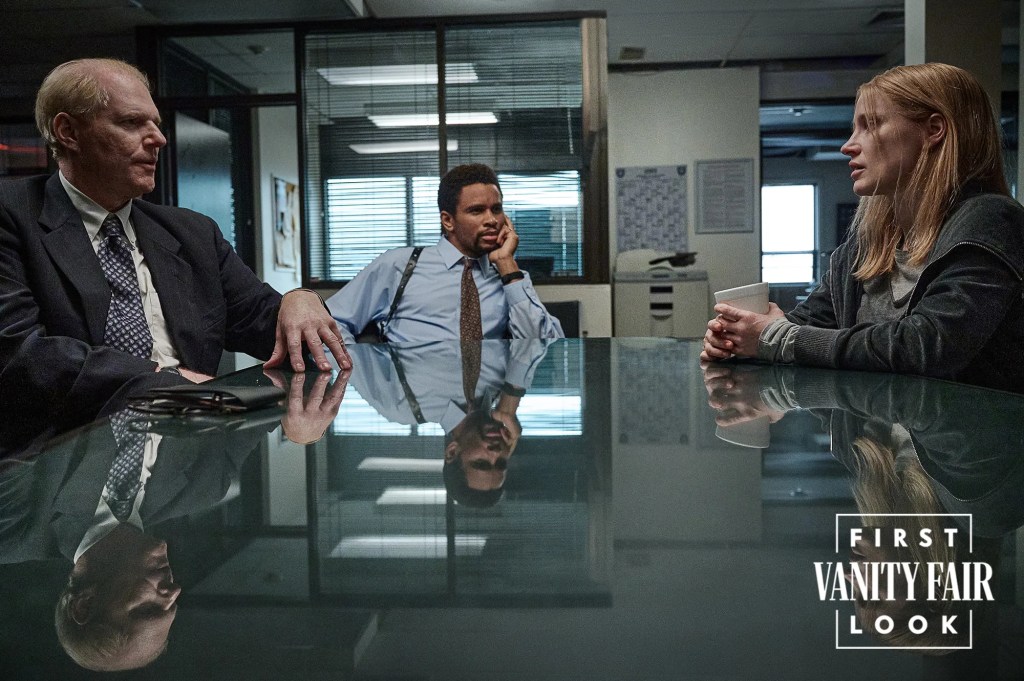
Most touching part was when Amy visited Charlie in the police headquarters after his arrest where the detectives have failed to extract any confession from him for the mysterious deaths of patients in their hospital. In one part of the interrogation it was revealed that Charlie had a deeply disturbed and dangerous personality similar with that kid in an old movie also streaming in Netflix, Primal Fear. He just kept shouting and shouting the answer “no” to every question given him, sounding like a deranged man with his face contorting and eyes so menacing.

Everything changed when Amy came inside the interrogation room. The detective warned her not to get near Charlie who was extremely dangerous. Despite that warning, Amy requested Charlie’s cuffs be removed as she sat near him at his side. When she noticed Charlie freezing inside the room, she took off her sweater and put it on him while the detective stood on guard, worried for any untoward incident to happen.

Charlie was at first cold toward Amy, refusing to look at her directly.

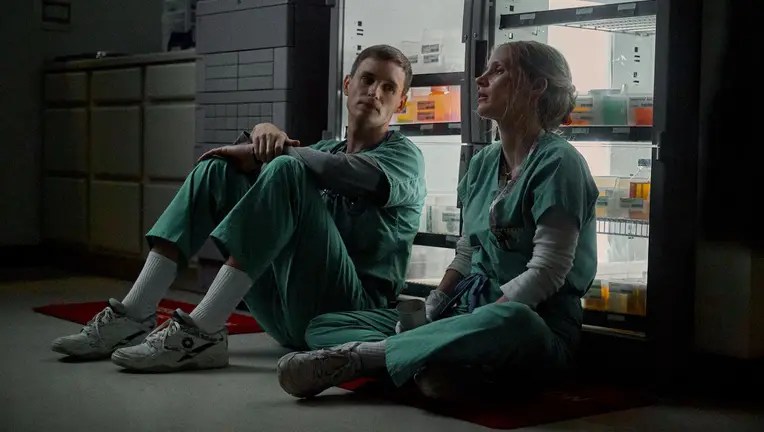
When Amy began speaking by apologizing to Charlie, telling him how she felt sorry that despite his being kind to her, despite their being friends, she had to tell everything to the cops. Actress Jessica Chastain who played the role of Amy was able to perfectly exude that kind of warmth and caring self despite the fears in being with a mysterious suspect that slowly, Charlie softened and confessed his crimes.

And that is where the high point of the movie is when Amy asked him to tell her the truth why he did it, Charlie simply said because “nobody stopped me”. He sobbed, covering his face.

Then, Amy asked him for names of his victims and Charlie readily identified them one by one with the next scene showing him being led down the hallway of the prison. The final scene showed Amy in bed with her two daughters, being awakened by the eldest daughter telling her it is a school day.

Amy told her, “today we stay in bed”, finally giving her daughters with the much needed quality time they sorely missed from her who had to work so hard for their needs. According to the notes after the movie, Amy now lives in Florida with her daughters and grandchildren. She eventually had her heart surgery.

The movie is very timely. In fact, I have been using it in my homilies. It is very Christian and Catholic as it presents our so-called universal call for holiness, of how each one of us must strive to be good or perfect and holy like our Father in heaven (Matt. 5:48), echoed by Vatican II’s Lumen Gentium over 50 years ago calling us all to strive in creating a more just and humane society in this imperfect world.

There was no mention of religion nor any scene from the church or of anyone praying but it is very clear in the movie about the need for us all to be good like the good nurse, Amy.

According to the movie based on Graeber’s book, Cullen went on a killing spree as a nurse for 16 years because none of the hospital where he used to work at acted decisively on his case despite their suspicions over the mysterious deaths of some patients. Ironically, according to the movie, those hospitals never bothered to take drastic steps and measures in solving the mysterious deaths of their patients amid the suspicions on Cullen because they were afraid of the legal cases that might be filed against them by the families of his victims that is now exactly happening as per the movie.

There is that quotation attributed routinely to Edmund Burke that says “the only thing necessary for evil to triumph is for good men to do nothing”.

The Good Nurse Amy Loughren did not let the evil of Charlie Cullen to triumph. Against all odds of losing her job as a nurse, of losing herself as she was afflicted with a heart ailment, Amy proved to be so good indeed that she did everything to stop Charlie who said it so well that he did all those killings “because nobody stopped me.”

Here comes the true relevance of this good movie that challenges us all in this time to be good as always, fighting and standing up against every form of evil, regardless of who is committing them. Of course, it is not enough to just speak and fight without any evidences and most especially efforts to personally confront the evil-doers like the good nurse.

Jesus himself reminded us that “If anyone comes to me without hating his father and mother, wife and children, brothers and sisters, and even his own life, he cannot be my disciple” (Lk.14:26).

This is most challenging for us in the Church, most especially among bishops and priests who chose to be silent, to let evil triumph right inside our hallowed houses of worship and apostolate when all these sex scandals occurred even a long time ago and still continues these days. We in the clergy must be above all most good than others in stopping evil from happening among our ranks. It is so sad and deplorable, even shameful when we priests and bishops are so vocal in denouncing injustices in the society perpetrated by civil authorities and politicians when we would not even raise our voices against the evil happening in our own turfs, of clergy and religious breaking all vows of chastity and poverty completely selling their souls to the devil for sex, money, power and fame.

The Good Nurse is a call for us all to return to being good, of saying no to sin and evil, of being truly human who respects and cares for life always which is at the core of our Lord’s teachings and of our humanity too. Happy viewing everyone!

When black butterflies mean more than death

Quiet Storm by Fr. Nicanor F. Lalog II, 31 October 2022

Now streaming at Netflix is Black Butterflies which we find so perfect for this long weekend coinciding with the Halloween celebrations in the real sense. By that I mean the hallowed – which is the old English for “holy” – evening of saints not of demons and evil creatures as Hollywood had erroneously preferred to portray.

Based on a French original “Les papilons noirs”, Black Butterflies is a psychological thriller of superb storyline and cinematography. Despite its depiction of violence and nudity, it is unmistakably French artistry at its best. Every bit in the series is interesting and masterly crafted that you won’t dare to skip and advance to the next scenes.

Overall, Black Butterflies is excellent first of all because of its brevity. It is a six-part series of not more than 60 minutes each episode except for the final one that went four minutes overtime. Despite the many twists and turns in every episode, it is not boring because there are always new revelations from the past and present lives of each of the main characters. I would not say the series is addictive but it is more of interesting as it tickles the mind, including one’s heart and soul that you examine your value systems and philosophy in life especially how we see and judge people.

Black Butterflies is a story of a novelist named Adrien who had agreed to write into a novel the memoir of an elderly man named Albert who had specifically chosen him for the task. How and why he was chosen to write, I will not discuss here so as not to spoil your viewing pleasures but that is the main plot actually.

Creators Olivier Abbou and Bruno Merle seamlessly weaved into a beautiful tapestry the stories of three men around one woman named Solange — Albert who had loved her so much, so true and so passionately worthy of emulation to some extent; Adrien the writer whose inner self was so affected and disturbed, later altered upon uncovering the real persons behind Albert and especially Solange later; and Carrel, the police investigator who had pursued the cold case against Albert and Solange.

Another woman, a tattoo artist and painter named Nastya who turned out to be a half-sister of Solange suddenly joined the plot later in the series. Albert helped launch her career when he bought her first major work of art, a painting of black butterflies that adorned the entrance wall of his residence. Adrien would meet her once at Albert’s home and would sought her about thrice for sex and conversations, only to find out that she is the “missing link” in his novel, even to his life when Nastya turned out to be a vital witness in one of Albert and Solange’s series of murders!

Oh yes, Albert and Solange as couple had the most strange and deviant sexual fantasy that seemed so unbelievable even to Adrien at first.

According to Albert, he met Solange when they were both young kids barely in their teens; she was an outcast in their village being the daughter of a prostitute to a German soldier in World War II. As a consequence, both mother and daughter were mocked by everyone including young boys.

Albert would be her knight in the shining armor, the one who would always defend her until they fell in love with each other and got involved into a series of murders together. Even up to the end after their separation, Albert remained faithful and true to Solange, defending her, covering up for her. In fact, he must have loved and respected Solange so much even from the very start of their relationship that having sex with her never crossed his mind – until one afternoon after an incident at the beach.

They were spending a quiet afternoon at the beach when two American brothers arrived and fascinated with tourists because “they were just like them”, they befriended them. Albert and the two visiting brothers played at the sea while Solange retreated to lie and rest at the shore. The elder American followed her and tried raping her; Solange fought by stabbing him with a corkscrew to his back. Albert and the younger American saw everything from the sea and when the kid tried to flee, Albert killed him to ensure there were no witnesses to the crime. Albert and Solange then fled from the scene, running into the woods and that was only when they had their first sexual experience together. It was so passionate that from then on they would be inseparable, would have a lot of sex. And murders.

The couple opened a salon and were very successful that they could afford to go on vacations so often around France and even Italy. Solange would flirt with men and once they are turned on, she would suddenly back out; naturally, she would anger her target who would then try to rape her. That is when Albert would come into the scene, “rescuing” Solange from her rapist by killing him. After every murder – whether inside the victim’s home or mobile camper, or outside in the wilderness – Albert and Solange would passionately have sex right at the crime scene with all the blood still in their hands.

One of their victims they have met while vacationing was the father of Carrel the police investigator; after killing his father, Solange who had had two previous abortions took the baby left behind but Albert refused the idea of adopting him. He then placed the baby in a basket and left him in a cemetery. That explained the troubled childhood and memory of Carrel who became a police detective spending much of his career looking for the suspects behind his father’s murder who turned out to be Albert and Solange. He almost arrested Albert one night in his home but was overpowered by Albert, thus ending all his investigations into Albert and Solange that spanned 30 years! It would finally be put into conclusion by Carrel’s only friend and partner, Mathilde.

Black Butterflies may have many scenes of violence and nudity but overall, it is a feel good series where the virtues of justice and kindness are highly extolled in the most unusual way. It is a great story of love told in the most absurd way that makes us examine too in our post-modern time how we have become so relativistic without realizing that in the end, moralities and virtues would always remain true and valid and relevant even in our modern time. Despite new discoveries in the many effects of genetics even in human behavior as espoused by Adrien’s wife Nora who worked as a researcher, the series showed the importance of human freedom that enables us to choose what is good and better and best for us.

Most of all, despite all these trends in science and philosophy professing the concept of a “superman” even without claiming to be a follower of Nietzsche, Black Butterflies beautifully expressed in the end the reality of a personal and loving God in Jesus Christ. At a reception celebrating Adrien’s literary award for his novel based on Albert’s memoir, one of the guest reminds him that his favorite quotation in the novel was actually from the Book of Jeremiah, citing its complete quote as “In those days they shall say no more: the fathers have eaten sour grapes, and the children’s teeth are set on edge” (31:29). Albert used to tell Adrien the quotation as if it were his original, implying that his murderous tendencies were borne out of his father’s sins. The expression had an impact on Adrien especially whenever he, too, would remember his violent past. It was only after the guest had explained that this prophecy had long been fulfilled in Jesus Christ who had set us free from sin did Adrien come to his senses and decided to set everything in his life right by writing the final ending of his novel before turning himself over to the police for a murder too.

Incidentally, while the police were pursuing Adrien, his wife Nora was also chasing his mother who had kidnapped their son. She too would be arrested by the police for child kidnapping.

The series ends with Adrien seated inside the police interrogation room, finally stating his real name for the first time after it was hidden from him by his own mother for fears he might end up a murderer like his father. Or, mother?


Last interesting twist in this series is why it is called Black Butterflies?

It was never tackled in any of the six episodes though the term black butterflies and its images were mentioned and shown only in passing. It seems to me that while black butterflies are always considered as a bad omen in almost every culture like ours which often signify the dead and death itself, Black Butterflies the series is inviting us to examine anew what is really evil and bad, morally wrong by looking more into our hearts in the light of Jesus Christ and his teachings than putting its blame on somebody else, especially our dead ancestors. Have a blessed All Saints’ Day and All Souls’ Day!

Photo credits:
All from Netflix - Black butterfly in a frame, Adrien, Albert, and younger Albert and Solange at their Salon.
Last photo by Author, cemetery facing Jerusalem, 2019.

Grey areas in the “Gray Man”

Quiet Storm by Fr. Nicanor F. Lalog II, 25 July 2022
Image from Pinterest.

It has been a long time since I have truly enjoyed a movie in Netflix that seems to me not only in big trouble with its decreasing number of subscribers but mostly to lack of any good offering lately. Not even their documentaries are exceptional anymore. In fact, I have been trying to finish out of charity and old time’s sake since May the new season of “Stranger Things” that has become so strangely uninteresting even with its music selection.

Yesterday was a very exhausting Sunday with so many patients to visit and anoint in our hospital that after a much delayed lunch, I tried treating myself with a good dose of action with its new release “The Gray Man”.

But, I was totally wrong.

Photo from imdb.com.

It has a great stellar cast led by Ryan Gosling but sad to say, sayang (what a waste in Filipino).

It started great but quickly became so boring. It is like being misled into a new roller coaster in town but it turned out it is just a caterpillar ride that you just tell your self, “what the heck… let us just try to enjoy the stupid ride.” Again, because it is sayang.

Action movies are meant to excite us but “The Gray Man” has a lot of grey areas that are not only confusing but actually distracting and detracting from whatever plot it has which is the usual story of some CIA big shots out to terminate a morally upright agent (Gosling) who had uncovered their dark and evil operations worldwide.

And the main culprit is perhaps is its long duration of two hours, bringing you to different cities around the world that it looked like a travel show. Hence, the problem with its pacing wherein when actions begin exploding, they would abruptly stop and shift somewhere else with new twists. As I have told you, it is like taking a caterpillar ride which you thought was a roller-coaster.

Worst of all, the ending was not good enough to even motivate viewers to make wild guesses on what could have possibly happened to the bad guys. Of course, it left so much room for a sequel but after seeing this initial installment based on Mark Greaney’s novel, it is doubtful if anyone would really care to wait for its sequel.

The microchip everybody wanted to have was simply pulverized — and, oh! how crudely and primitively it was done by the evil CIA official who prides himself in the movie as a graduate of Harvard that you now begin to suspect anyone can easily brag being an alumnus of any Ivy League school or even Oxford like our own president without any bearings at all of a genius or an erudite.

There are, however, two saving factors in “The Gray Man”.

First is the parting line by the Tamil assassin who surrendered the microchip embedded in a pendant to the agent helping Gosling because the CIA bosses were “not honorable people” partly because they hurt women. There are some notable scenes women are highly extolled and for that, the movie is exceptional for me. One of the few instances in Hollywood where women are explicitly mentioned as persons to be respected and cared for.

Secondly, I think Gosling could be another Bruce Willis with his physique and acting abilities if given with better handlers next time.

Go see for yourself… at least, I have warned you.

Photo from deadline.com.

My screen this quarantine – when trolls and bullies rule the earth

Quiet Storm by Fr. Nicanor F. Lalog II, 15 September 2021
Image from Pinterest.

Instead of being sick with the government’s new experiment that begins today of designating letters and numerals to our quarantine level, stay home if there is nothing really necessary for you to do outside and keep your sanity as you enjoy some series at Netflix that has become our bestest friend since this pandemic began.

Topping our recommendations are Clickbait and Blackspace that tackle relevant issues of our time, reminding us for the need to recover our sense of morals, values and virtues now becoming so rare.

What we like best with both series is its packaging into short installments of eight episodes with each running less than 50 minutes. Each episode is quick-paced, so impactful that you would be forced to finish the series in one whole day, especially if you happen to be in quarantine due to COVID-19.

Communicating responsibly

The term “clickbait” was coined by blogger Jay Geiger in December 2006 by combining the words “click” of the computer mouse and “bait” that literally means to lure the user to something in the internet. Google defines clickbait is an internet content that aims to attract attention and encourage visitors to click on a link to a particular web page.

The term has become notorious in its meaning and usage which the Netflix series Clickbait presents and explores so well that in the process every episode had in fact been a clickbait – luring you to click on the next episode to finish the series.


Clickbait is one series that may be used in computer literacy programs
 that reminds us of the Church's teaching at Vatican II that  
"Communication is more than the expression of ideas and the indication of emotion.  
At its most profound level, it is the giving of self in love" 
(Communio et Progressio, #11). 

Photo from webseriescast.com.

Australian Tony Ayres did an excellent job creating the series with its story line that kept us “clickbaiting” too to find out if Nick Brewer really “abused women” and finally, who really killed him.

And that indeed is a good question to ask as the series unfolds with so many twists and turns happening, exactly like in real life when we are so quick to jump into conclusions “whodunnit” just because everything seems to fit with what we think, with what we know, or what we believe.

In the end, we realize like Dustin Hoffman in the 1997 movie Mad City that we killed” a totally innocent man because of how we have allowed ourselves to fall into bait in abusing and mishandling the great powers of communication.

Clickbait teems with so many instances reminding us to be careful with this gift of communication which is a power God only shared with us humans. Recall how in the creation account that God spoke only with words and everything came into being; such is the power of communication. Hence, another movie, Spiderman reminds us too that with “great powers come great responsibilities”.

From Facebook, February 2020.

The series Clickbait presents so well how our pride and ego come into interplay for our dreams of greatness, of being somebody else who is famous, well-liked by everybody, building our own tower of Babel, only to crash and crumble in death and destruction because of the web of lies we have succumbed to and could no longer be stopped just like those nasty things we find trending and viral in the internet or simple rumors and gossips going out of proportion.

At the same time, Clickbait teaches us with so many values, primarily the importance of family relationships (first and foremost), fidelity, respect to elders and love among siblings, the value of life as against suicide, and most of all, the value of every person – that we in our very selves are good without any need to be famous and be liked by everybody.

It also focuses on the need for more trust among couples and siblings in this age of modern and instant communications that can never fully express who we are and what we feel deep inside us.

Clickbait is one series that may be used in computer literacy programs that reminds us of the Church’s teaching at Vatican II that “Communication is more than the expression of ideas and the indication of emotion. At its most profound level, it is the giving of self in love” (Communio et Progressio, #11).

Don’t miss this series. See it with your loved ones because Clickbait is one good mirror of who we are these days of the internet and smartphones, of how sincere and honest are we with one another and with our true selves.


Respect for each one’s dignity

One very good thing with Netflix is our being exposed to foreign movies and series we never had the chances before. It is very educating and enriching like this Israeli series Blackspace that is so bold and daring to discuss the dignity of every human person through prevailing issues not only there but in the whole world.

The series begins with a caution to viewers of the violent and disturbing scenes in its first episode that opens with a mass shooting inside a school during a memorial program.

As we have said, the series is bold to present how the Israeli police attempted to twist their investigation by coercing some workers found hiding on the school’s roof deck as primary suspects to the crime just because some were from the West Bank and non-Jewish.

But what is so entertaining and thought-provoking in Blackspace is how the chief investigator Rami Davidi played by Guri Alfi solved the case by proving himself right that it was an inside job by some students who were all victims of bullying – just like him!

Photo from netflix.fandom.com.

It was in fact a homecoming of sorts for Davidi to his old high school still with the same principal who was the assistant principal when he was bullied while a student that cost him his right eye.

Though the series is a bit slow in its pacing, it is still an excellent one where the creators have woven seamlessly various topics into a beautiful tapestry that present to us the many problems we adults and the young people are dealing with without getting into its very roots.

First is the value of respect for every person with equal rights and dignity that begins at home, at how parents treat their children and accept/reject them when their inclinations are different from theirs or when they have homosexual tendencies. It is very surprising how this series is able to weave into its storyline issues about fatherhood and single-parenthood, about suicide and drugs, and yes, the abuse and misuse of the internet and computer technologies!

“Blackspace” is supposed to be a meeting room of the students in the dark internet.

Everything is summarized towards the end like a scene between Pontius Pilate and Jesus (no pun intended) when Davidi finally solved the crime that involved a school official who told him, “There is no truth. Only consequences.”


It is amazing that 85 years ago today, Pope Pius XI wrote “good motion pictures are capable of exercising a profoundly moral influence upon those who see them. In addition to affording recreation, they are able to arouse noble ideals of life, to communicate valuable conceptions, to impart a better knowledge of the history and of the beauties of the Fatherland and of other countries, to present truth and virtue under attractive forms, to create, or at least, to favor understanding among nations, social classes and races, to champion the cause of justice, to give new life to the claims of virtue and to contribute positively to the genesis of aa just social order in the world” (Vigilanti Cura, #25).

Clickbait and Blackspace just did what the Holy Father wrote in 1936.

See you in the next flick. Have a blessed day!

My screen this quarantine – love and respect, the perfect company

Quiet Storm by Fr. Nicanor F. Lalog II, 02 September 2021
Image from Pinterest.

Romantic movies are what I have always avoided since I was a teenager and now that I am a priest: it is so nakaka-iinggit (so tempting)! Mahirap na. That is why I have always gone for action and comedy films and series, as well as documentaries.

But sometimes, the soft side in me prevails that I give into some love story flicks especially in Netflix since this surge in COVID-19 cases.

Two movies I highly recommend catching while still in Netflix are The Upside and The Last Letter From Your Lover; the former is an old remake based on a true story made to look modern while the latter is a modern one set in the past.

What I like most with these two movies is the strong emphasis on the value of respect, something that has become rare these days.

The word respect is from two Latin words “re” (again) and “specere” (to look/see) that literally mean “to look again” or “see again”. From specere came the words spectacular and spectacles or glasses to see and read. When we look at another person again and again especially when we are not actually together, that is when we not only respect them but also become faithful and loving with them because that is when we recognize their dignity as persons. That is one good thing with our wearing of face masks this pandemic when we rediscover the value of looking again closely at the face of the other person we meet – hopefully, not only to recognize who is he/she but to respect most of all!


Going back to The Upside and The Last Letter From Your Lover ….

The Upside is about an ex-con being chosen by a paralyzed billionaire and best-selling author to be his personal nurse despite the long list of better qualified applicants.

It is a third remake of a French movie said to be based on a true story. Though many critics find it short of making a better version than the previous ones, we find it very good.

Because it teems with a lot of respect!

The ex-con turned caregiver is played by Kevin Hart as Deli while Bryan Cranston plays the quadriplegic billionaire Philip Lacasse. It opens with Deli driving Philip around New York City in his Ferrari when they were stopped by cops. They duped the cops into believing they were on a medical emergency but after being escorted to the nearest ER, they sped away and the film switches to the past previous weeks.

Photo from en.wikipedia.org

Philip had lost his wife in a hang gliding accident in the mountains of New York that left him paralyzed. He had wanted so much to be dead after losing his wife that he kept on reminding his secretary Yvonne played by Nicole Kidman to “don’t resuscitate” him in case of another accident.

Then came Deli who was recently granted with a parole from jail and the exact opposite of Philip: he was desperately trying to pick up his life by reconnecting with his wife and son as he tried his best to find a job to no avail until he tried his luck to apply as Philip’s caregiver after seeing the long queue of people leading to his penthouse in an exclusive section of the Big Apple. He was the exact opposite of Philip but they clicked – because they had respect for each other.

It was their mutual respect for each other as seen in the various scenes in the movie that they both found their self-worth as persons.

Deli found direction in his life after Philip taught him to “just do what you like best” which he did by doing a painting which Philip was able to sell for 50 grand which he gave Deli as his “seed money” for whatever undertaking he was planning. First thing Deli did was find a better apartment for his wife and son with the remaining money he invested in a business manufacturing motorized wheelchairs.

The most beautiful part is how Philip regained his self-worth and confidence – and new love – with a lot of respect given him by Deli, from smoking weeds to going on a date again and returning to the site where he and his wife last went on a vacation.

This is when the movie switched back to the present when they were escorted by the police to a New York City ER but Deli sped away and drove Philip to the mountains to enjoy hang gliding again. They later checked into the same hotel where he and wife last spent their vacation and the following morning at breakfast, Deli led Philip to a table to meet his new love, his “boo”.

The last scene is very short but got a very strong impact, even romantic. Very simple yet lovely. And filled with respect. Find out who that woman is!


Truly a British movie released to Netflix this year, we find most striking with The Last Letter from Your Lover is its use of elegant English language that actually features the love stories of two journalists more than 50 years apart.

It opens with lead star Felicity Jones as Ellie Haworth waking up late in bed with her ex as she rushed to her newspaper office to write a feature article about a deceased editor. After having a hard time in getting access to their archives due to the very formal Rory played by Nabhaan Rizwan, Ellie found a mysterious love letter to someone identified as “J” from somebody named “Boot”.

Photo from en.wikipedia.org

She became friend eventually with Rory who helped her find more love letters between “J” and “Boot” that she soon followed up to become the main story of the film set in 1965 about the socialite Jennifer Stirling as “J” married to a stern industrialist interviewed by business writer Anthony O’Hare who called himself “Boot” or “B” while at the French Riviera. Jennifer’s husband had to hurriedly leave for business that became the occasion for her to get closer with Boot who had recently divorced from his wife.

Though one can readily see the sparks and intense feelings between them in their many informal meetings while awaiting the return of J’s husband at the French Riviera, Boot was very respectful to her. His respect would be put to test when one night J tried to kiss him but he declines – out of respect for her which he explained in one of his letters.

It was upon their return to London that they began writing each other and after some trysts in London, Boot finally asked J to join him to New York where he was being assigned as correspondent. On her way to the train station for their flight to New York, J met an accident and had a partial lost of memory while Boot thought his proposal was rejected.

It was during her hospitalization when J’s husband learned of her affair after discovering a letter from Boot. Meanwhile, Ellie and Rory discovered more love letters between the two lovers of the past while at the same time, they have started to fall for each other too. So funny is how the film writer Jojo Moyes had seamlessly weaved together the two love stories in the past and present, coinciding with each one’s peculiar twists and turns.

Eventually, Rory found out J and Boot were still alive and most of all, very eligible to finally reunite. She convinced Boot to write another letter to J for them to meet anew at their favorite meeting place as lovers. Boot wrote one last letter, meeting up with J finally after more than 50 years. Watching them not far were Ellie and Rory embracing each others also filled with love – and respect – who were instrumental in bringing the two lovers again. The scene is so “kilig” with both couples unknowingly being instrumental in making their loves bloom with a lot of respect.


Jesus told his disciples: “This is my commandment: love one another as I love you… You are my friends if you do what I command you. I have called you friends, because I have told you everything I have heard from my Father.”

John 15:12, 14, 15

Whenever I officiate weddings especially of friends who have turned into lovers, I always choose this beautiful Last Supper scene of Jesus with his apostles discussing his commandment of love.

I tell the couple that one very important letter in the word F-R-I-E-N-D is the letter “R” which when removed changes the word into F-I-E-N-D or “enemy”.

That letter “R” stands for RESPECT. When there is no respect in any relationship especially among friends and lovers, love dies and ties are damaged or even lost.

Both movies teem with many instances of respect for the other person that in the end, love triumphed.

Have a blessed viewing!

Photo by Plush Design Studio on Pexels.com

My screen this quarantine

Quiet Storm by Fr. Nicanor F. Lalog II, 17 August 2021
Image from Pinterest.

We are almost done with the first week of our third lockdown with nine more days before it is either extended or modified depending on what jumbled letter combinations come out from the magic roulette in the Palace. Either way, hail to all couch potatoes for longer weeks in front of that magic screen!

Thanks for the gift of Netflix in keeping our sanity in this pandemic. And more thanks again Netflix in streaming more television shows lately especially coming from the Philippines.

Forget My Amanda that should have been called My Cars or My Abs or My Hair

One series you should not miss before the end of this Enhanced Community Quarantine (ECQ) is Bagman starring Arjo Atayde.

First released in 2019 as an original series in iWantTFC, Bagman is so unique as a Filipino series because of its fast-paced tempo of less than 30 minutes per episode without the usual Pinoy director’s penchance for intense close up shots on faces of the characters with nothing expected to happen at all.

Everything in the production is superb, especially cinematography and musical scoring as well location sets that are characteristically the hallmarks of every ABS-CBN film undertaking. In fact, Bagman is one perfect reason that ABS-CBN should get back its franchise to operate for helping elevate television and film in the country.

Unlike other socio-political movies where we already know how low and evil is politics in the country, Bagman challenges us for a more personal response in ending this vicious circle of corruption and decadence in our culture and life as a nation.

Kudos to its creators Philip Kind, Lino Cayetano and Shugo Praico who directed the two-season series we hope would still have a final sequel. Their great attention to details with subliminal meanings on the roles and manners of different characters make the viewers “experience” – not just watch – the series done in first-person storytelling with narrations by Atayde himself as a former barber becoming a bagman of the governor. Each episode opens with a disclaimer that it is a work of fiction based on realities we have heard and read.

At its best, Bagman can be described as “totoong-totoo” – very true with its great storyline with characters played out so well by every actor like a thespian, beginning with Atayde and his co-stars that included the resurrected former sex-goddess Ms. Rosanna Roces and former Bagets Ms. Yayo Aguida.

From Twitter.

Personally striking for me as a former smoker and police reporter is Atayde puffing his cigarettes clipped between his middle and ring finger.

So classic, tsong!

They must really have a superb study for Atayde and even everyone, like Mr. Joel Saracho who played a supporting role in a few episodes as a former cobbler turned “assistant” of the evil congressman played by Romnick Sarmenta. A writer himself and a veteran to many great productions on stage and the movies, Saracho brought his usual finesse in the few scenes he was included with great impact.

Bagman teems with many scenes focused on marginalized people forced to make that desperate “kapit sa patalim” due to poverty and exploitation by crooks who come from both the rich and poor alike. Here lies the beauty of the series in teaching everyone without pontificating the need to always choose the right path in life, to be careful of getting stuck into a situation one can no longer get out and cost one’s life or loved ones, or both.

One unforgettable scene for me is that episode focused on Atayde’s father-in-law played by Rolando Inocencio as a Political Science professor telling his class the story how three congressmen died and were held at the gates of heaven by St. Peter for interview. The first two were sent to hell for their sins but the third lawmaker made into heaven after “bribing” St. Peter!

The whole class burst into laughter while Inocencio lamented in a very fatherly manner how deeply ingrained is corruption among us Filipinos until the bell rang and his class dismissed. In a later episode, Inocencio would ask their hostage-taker (Karl Medina) claiming to be his former student how did the third congressman get into heaven to check if he was indeed in his class at the university.

Medina would not give any reply at all to Inocencio who would again lament how every student of his would surely know the answer because he tells the same story in every class he handled. For me as a priest, the scenes that followed reverberated with voices, asking us teachers and educators what have we really done in forming the minds of the young in our schools and parishes when corruption is even getting worst?

Bagman is a timely reminder for us in this time of pandemic of rectifying the excesses of our “old normal way of life” that is so unfair and unjust that many clamor to bring back in the face of the “new normal” that is still far from what is just and true.

One downside for me with Bagman is the excessive use of foul language, one of the worst “new normal” introduced to our society four years before COVID-19 came. The series could have been more effective and compelling minus those p*@#&^_!

See it for yourself. Enjoy and reflect the series.

More power to the people behind Bagman!

From Esquire Philippines.

Republikula ng Pilipinas

Lawiswis Ng Salita ni P. Nicanor F. Lalog II, Ika-24 ng Agosto 2020
Larawan kuha ng may-akda sa Pulilan, Bulacan, Enero 2020.
Ang sabi nila
buhay ay parang isang pelikula
tayong lahat ang bida at artista;
kaya lalo nang malaking pelikula
at tiyak patok sa takilya
pelikula ng ating republika!
Siyempre, lahat ay pabida
gusto umeksena
hindi lang sa Palasyo at Kongreso
pati na rin sa mga paseo basta matao.
Ang nakakatawa pero bumebenta
lalo na sa mga tanga 
mga artista nagpipilit sa pulitika
mga pulitiko umaarte, nagpapabebe!
Dating pelikula ng ating republika
makasaysayan at makahulugan
maituturing na isang sining
nababanaagan maningning na liwanag
 katulad din ng pinilakang tabing
kapupulutan ng mga ginintuang aral
mga talastasan at eksena 
mula sa mga aninong gumagalaw;
nang magdeklara ng Martial Law
nagsimula rin ang kasalaulaan
ng pamahalaan maging sa sinehan
kung saan mga hubad na katawan 
 pinagpipistahan, kunwari'y film festival
ang totoo ay karnabal.
Nagwakas din at nagsara ang tabing
ng malagim na yugto ng kasaysayan natin
bagong simula ang dokyu ng EDSA
kinalaunan naging trahedya
pelikula ng republika, naging telenovela at komedya
nang maupo tunay na artista ng masa, 
nagreyna sa media at chika
puro artista, kaya dumagsa na rin sila
naging zarzuela pelikula ng ating republika
naglabo-labo at moro-moro, gumulo nang gumulo
kaya heto tayo horror na nakakatakot 
nakapangingilabot kadiliman 
at kasamaang bumabalot parang bangungot
hugot sa isang eksena ng pelikula na sana'y matapos na.
Ngunit kung titingnan
mga pelikulang horror walang laman
puro kabobohan at katangahan
dinaraan lang sa gulatan 
hanggang maging katatawanan.
Hindi ba't ganyang-ganyan 
ating lipunan at pamahalaan
isang malaking pelikulang katatakutan
na puro kabalastugan at kahangalan?
Kaya aking payong kaibigan, 
sa susunod na halalan
tanggihan, huwag nang pagbigyan 
mga artista sa pulitika, 
mga pulitiko na payaso!
Photo by Pixabay on Pexels.com