Lord My Chef Daily Recipe for Soul by Fr. Nicanor F. Lalog II
Wednesday, Twenty-third Week in Ordinary Time, Year II
Memorial of St. Peter Claver, SJ, Priest, 09 September 2026
1 Corinthians 7:25-31     <*((((>< + ><))))*>     Luke 6:20-26
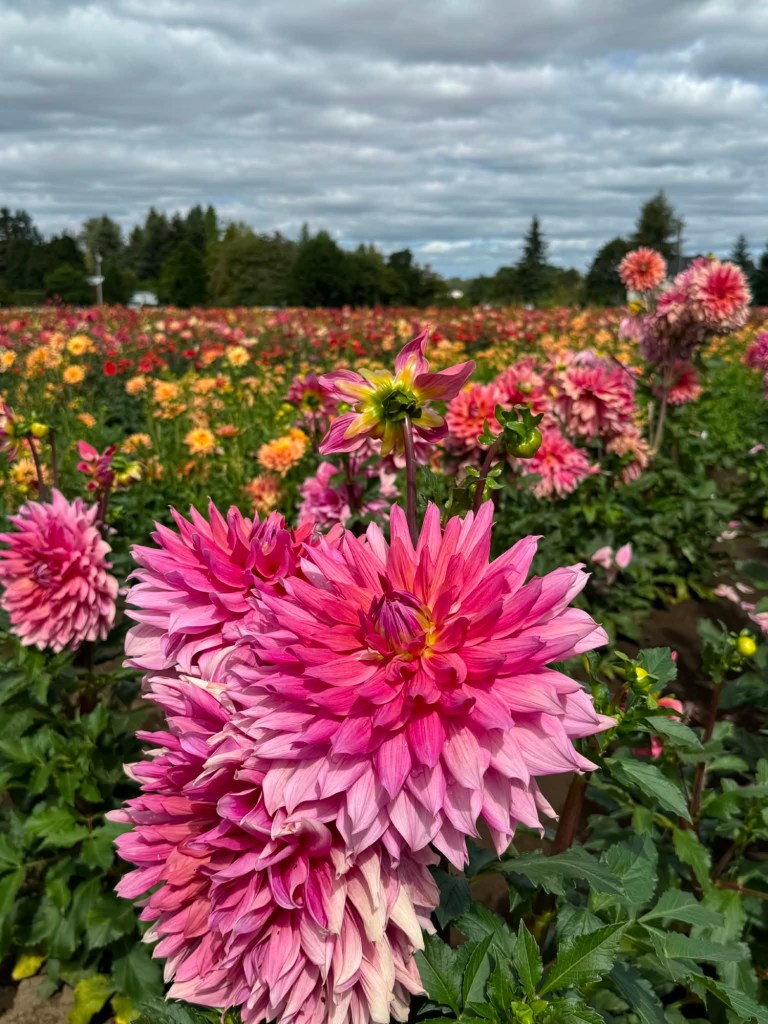
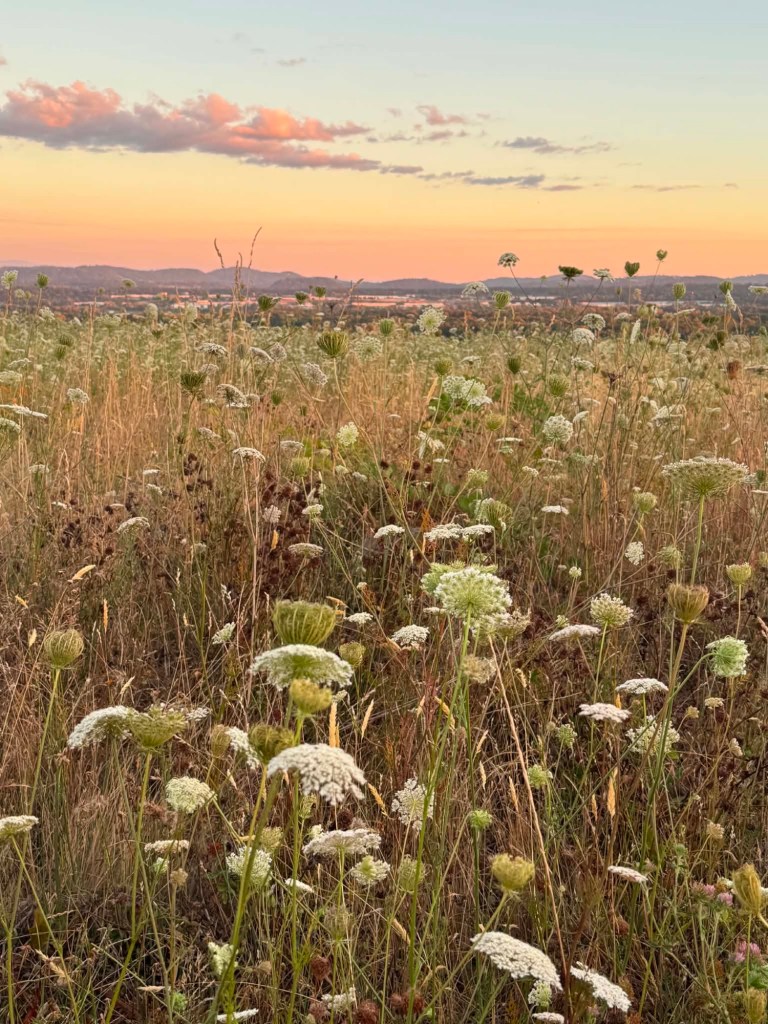
Photo by a friend from Swan Island Dahlia Farm, Canby, Oregon, 29 August 2026.
The rains have not stopped,
the sun remains hidden
and dark clouds continue
not only above us but even
in our lives these days;
many are so hard pressed
in life - displaced from homes
due to floods, some could not work
and earn with barely nothing to
keep them warm and fed
while others are depressed,
fearful, uncertain of what is next:

I pray for them all,
Jesus; speak to them
directly like today in
the gospel; let them hear,
move them and stir their hearts
to life and animation,
to realize they are loved
and cared for,
to never lose hope
in this life,
to let go of their past
sins and mistakes,
to simply not worry
and trust you
by being grateful
for your many blessings.
“Blessed are you who are poor, for the Kingdom of god is yours. Blessed are you who are now hungry, for you will be satistifed. Blessed are you who are now weeping, for you will laugh. Blessed are you when people hate you, and when they exclude and insult you, and denounce your name as evil on account of the Son of Man” (Luke 6:20-22).
You are speaking directly
to each one of us, Jesus;
may those going through
difficulties these days
hear and feel your blessings,
Jesus;
it is hard and so difficult
to listen and accept
being called blessed
according to your gospel,
Jesus
because many of us are
going through it!
May your beatitudes
comfort us, dear Jesus,
find consolation in you
like your Jesuit Saint
Peter Claver
who offered his life
 to those enslaved
in Colombia,
choosing to live among
those despised than among
those comfortable;
help me find blessedness
Jesus in solidarity with
those suffering,
for those in the margins,
for those forgotten
for those suffering in silence.
Amen.
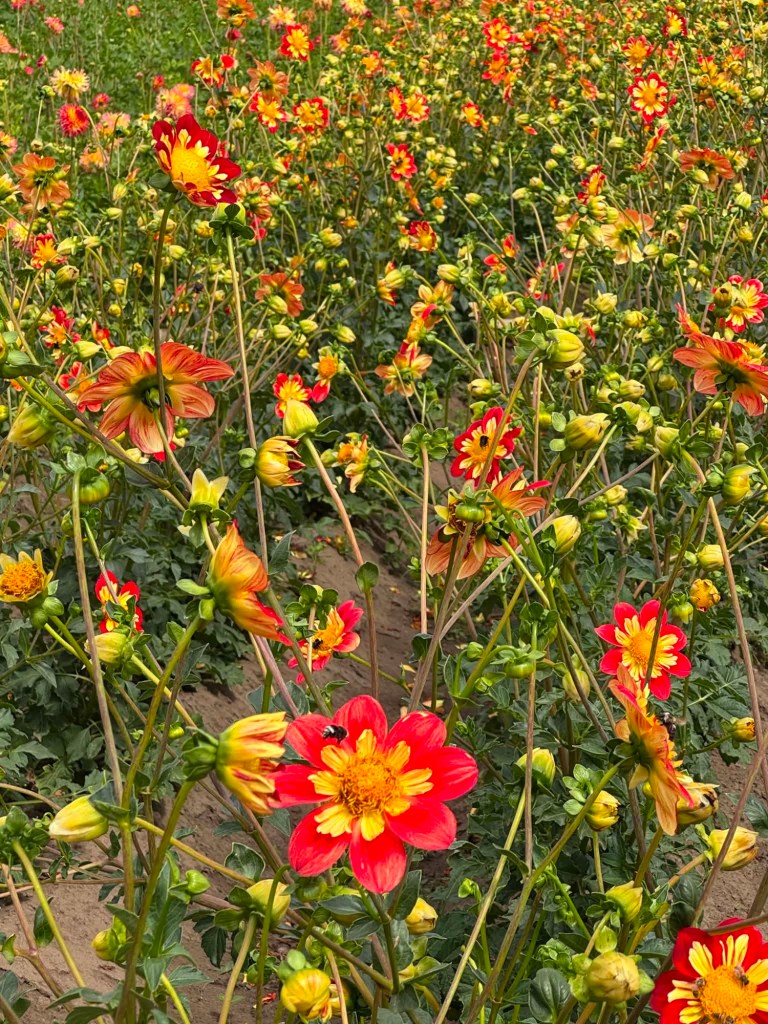
Photo by a friend from Swan Island Dahlia Farm, Canby, Oregon, 29 August 2026.
Lord My Chef Daily Recipe for Soul by Fr. Nicanor F. Lalog II
Tuesday, Twenty-third Week in Ordinary Time, Year II
Feast of the Nativity of the Blessed Virgin Mary, 08 September 2026
Romans 8:28-30     ><}}}}*> + ><}}}}*> + ><}}}}*>     Matthew 1:18-23
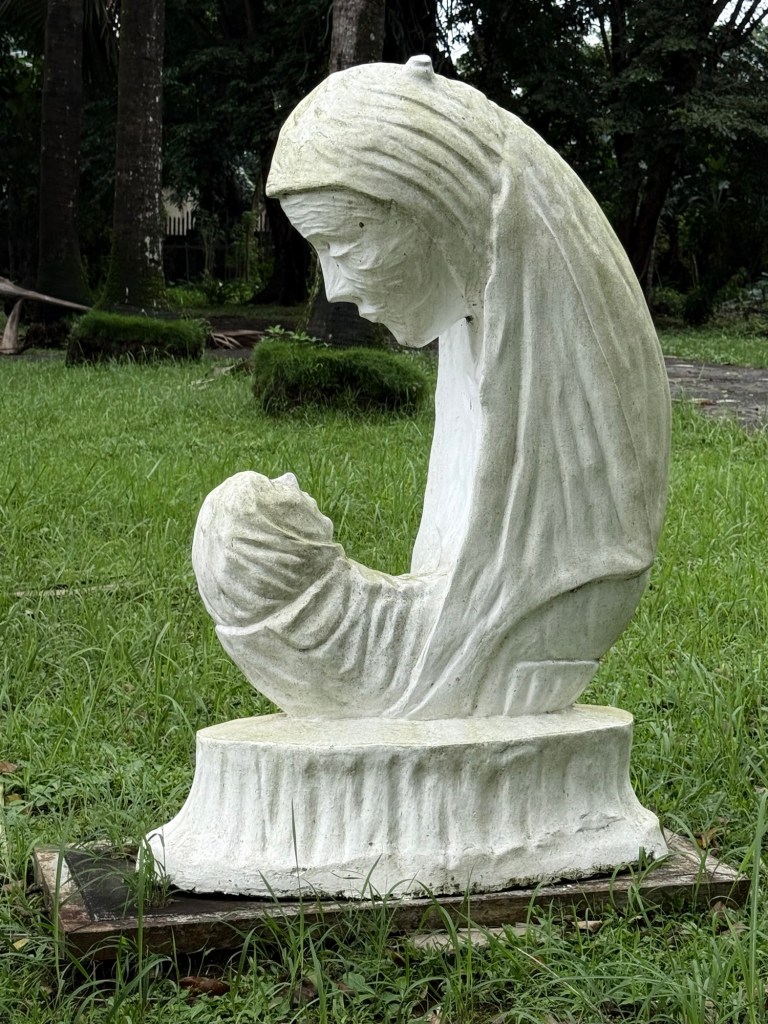
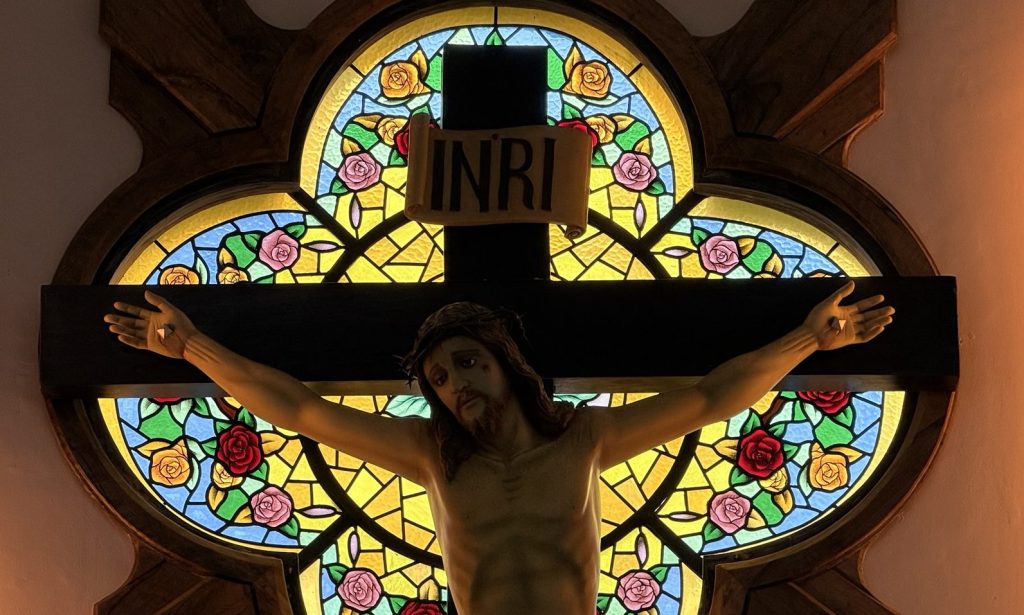
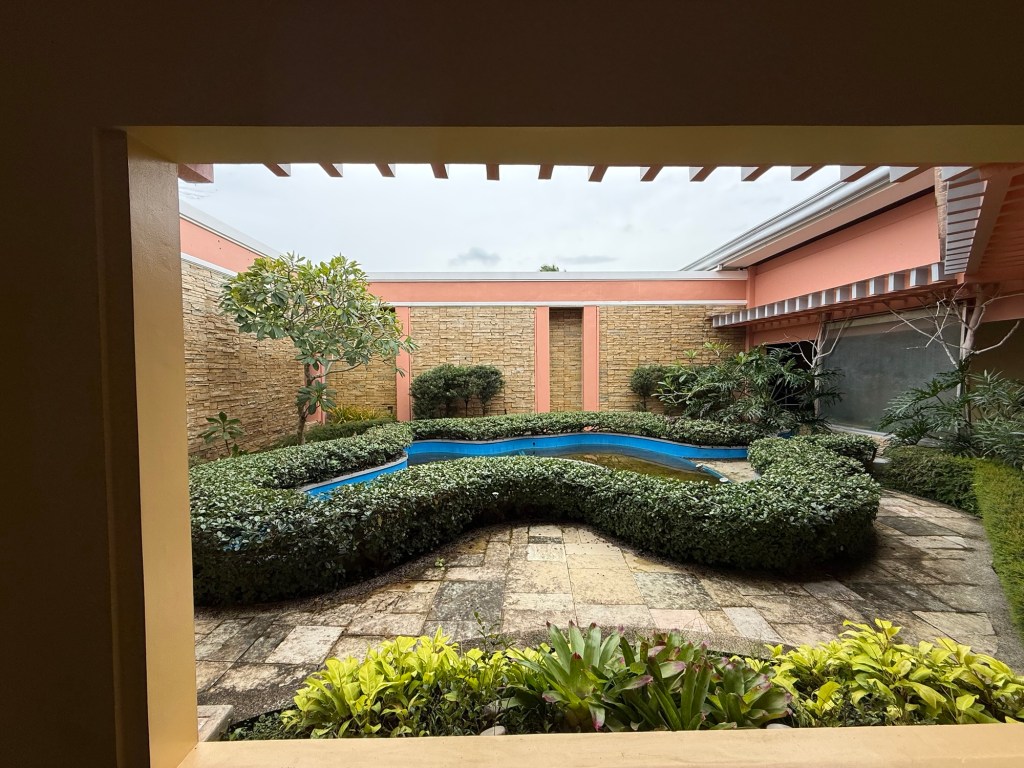
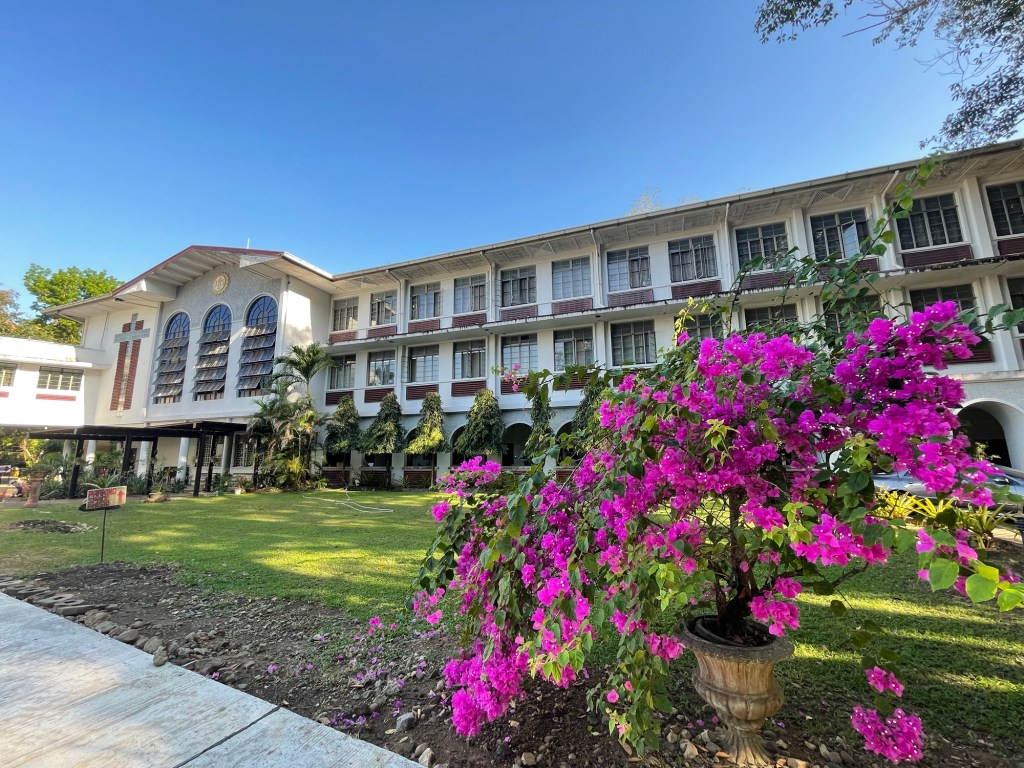
Photo by author, St. Paul Spiritual & Renewal Center, Bgy. Tanyawak, Alfonso, Cavite, 19 August 2026.
It is the Feast of the Nativity
of the Blessed Virgin Mary but
your words, O Lord Jesus,
spoke more about St. Joseph
your foster father.
Now this is how the birth of Jesus Christ came about. When his mother Mary was betrothed to Joseph, but before they lived together, she was found with child through the Holy Spirit. Joseph her husband, since he was a righteous man, yet unwilling to expose her to shame, decided to divorce her quietly. Such was his intention when, behold, the angel of the Lord appeared to him in a dream…. (Matthew 1:18-20).
Thank you,
dear Jesus for being
like us,
for coming like us
in all of our human
vulnerabilities:
birth is always a grace
from the Father
lest we forget;
in your coming to us,
Jesus, you have showed
how Mary and Joseph
faced not only their toughest
tests but most of all
their vulnerabilities
they gladly embraced
that you finally came
among us!
Mary humbly submitted
to being your Mother,
entrusting everything to God
who sent an angel to explain
everything to Joseph so
Christmas would happen;
how amazing that Mary's
pregnancy was revealed
to Joseph while he was asleep,
when he was most vulnerable,
without full control;
Mary on the other hand
submitted her full control
to God when your birth was
announced -
what a beautiful lesson for us
to remember on her birthday
on the need for us to embrace
our vulnerabilities
because as St. Paul assured us,
"We know that all things work
for good for those who love God,
who are called according
to his purpose"
(Romans 8:28).
O blessed Mother Mary,
pray for us to be more
trusting in your Son Jesus,
submitting ourselves wholly
to his will by embracing
our vulnerabilities,
becoming fully human
and blessed to share
Christ like you and Joseph.
Amen.
Lord My Chef Daily Recipe for Soul by Fr. Nicanor F. Lalog II
Tuesday, Twenty-Third Week in Ordinary Time, Year II
Feast of the Nativity of the Blessed Virgin Mary, 08 September 2026
Micah 5:1-4     ><]]]]*> + ><]]]]*> + ><]]]]*>     Matthew 1:18-23
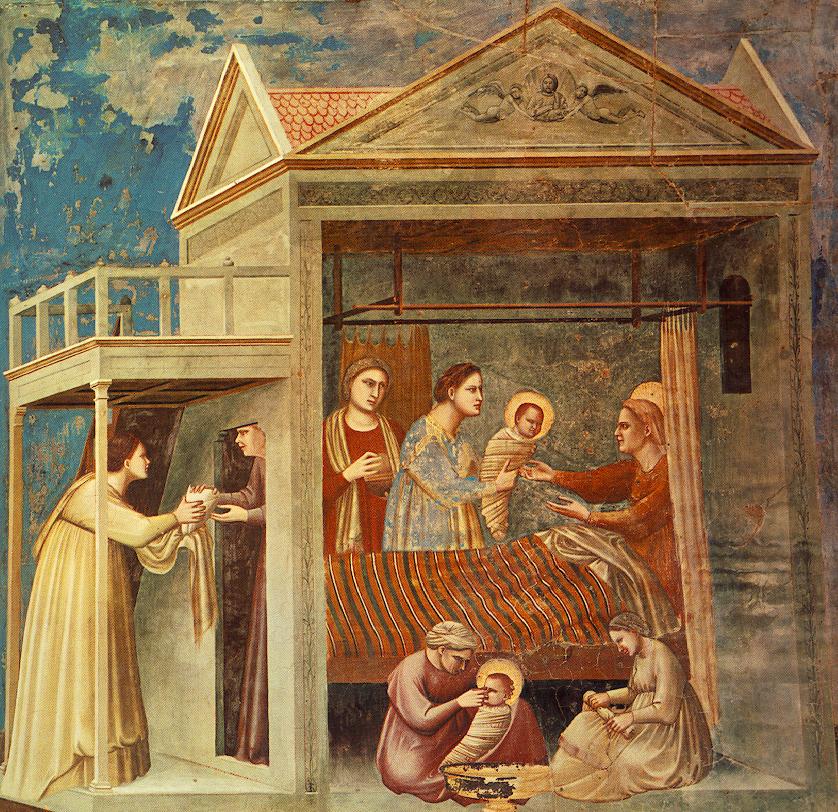
“The Birth of the Blessed Virgin Mary”, a 1305 painting by Renaissance artist Giotto in the Scrovegni Chapel in Padua, Italy. The two babies depicted are both the Virgin Mary: below is Mary upon birth wrapped in swaddling cloth and washed by attendants and then above being handed to St. Anne her mother. Photo from en.wikipedia.org.
Feasts of saints are often based on the date of their death when they enter eternal life; sometimes it may also be the date when their remains were transferred for proper burial.
There are only three birthdays we celebrate in our liturgy, two are of the highest order as a Solemnity, our Lord Jesus Christ on December 25 and his precursor St. John the Baptist on June 24; the third is that of the Blessed Virgin Mary which is a rank lower as a Feast, falling on this date, eighth of September which is nine months after her Immaculate Conception.
In this age of social media when every platform has its unique way of alerting everyone of someone’s birthday so that nobody can no longer hide to celebrate silently one’s birthday, the Blessed Mother’s nativity offers us a beautiful opportunity to reflect on the significance of a birthday always seen in relation with Jesus Christ’s birth and coming. St. John Paul II perfectly expressed this in his 1995 Encyclical Evangelium Vitae (The Gospel of Life), declaring that “Every birthday is a small Christmas because with the birth of every person comes Jesus Christ” (sorry I can’t recall the citation).
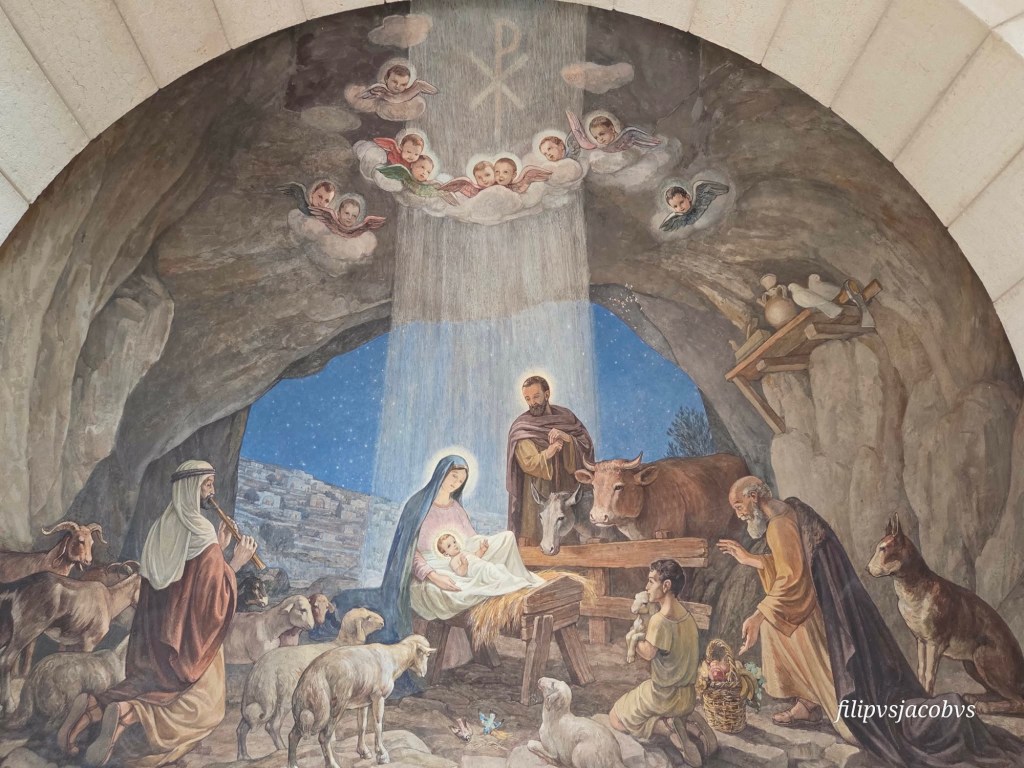
What makes that so true with every birthday beginning with the Blessed Virgin Mary is God’s great mystery of becoming small, of being “insignificant” in the birth of his Son Jesus Christ which we find even in his birthplace prophesied by Micah:
“You, Bethlehem-Ephrathah too small to be among the clans of Judah, from you shall come forth for me one who is to be ruler in Israel; whose origin is from of old, from ancient times” (Micah 5:1).
Photo by Ar. Philip Santiago, Angels’ Field Chapel in Bethlehem, October 2025.
And if we go further, this true greatness of Jesus Christ in being small is found also in his Mother, the Blessed Virgin Mary who came from the obscure town of Nazareth, the only place in the New Testament never mentioned in the Old Testament.
Recall how Nathanael or Bartholomew the Apostle belittled the Lord’s hometown after being told by Philip that they have found the Messiah from Nazareth, saying, “Can anything good come from Nazareth?” (Jn.1:46) because Nazareth was totally unknown during that time.
And so was Mary!
That is why it is so disappointing and sad when many Catholics unfortunately led by some priests have the misimpression of portraying Mary as a “beauty queen” with flawless skin and Western features when she is clearly Middle Eastern woman. Worst of all is the pomp and pageantries we have in the recent fads of processions and coronations in many dioceses and parishes.
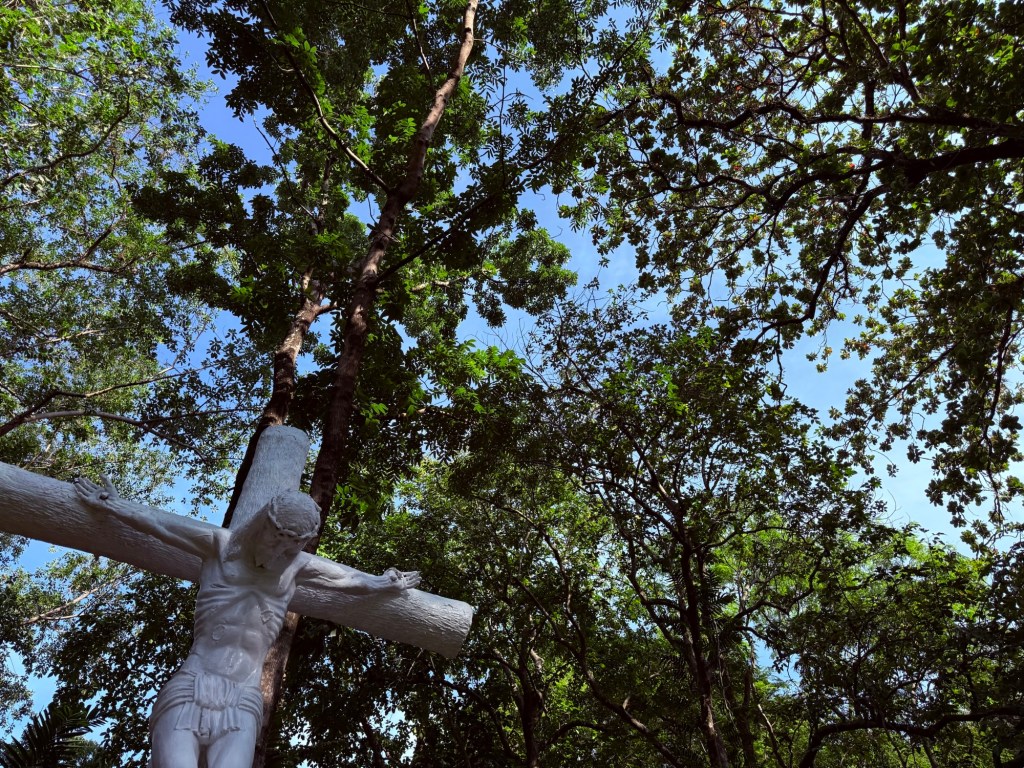
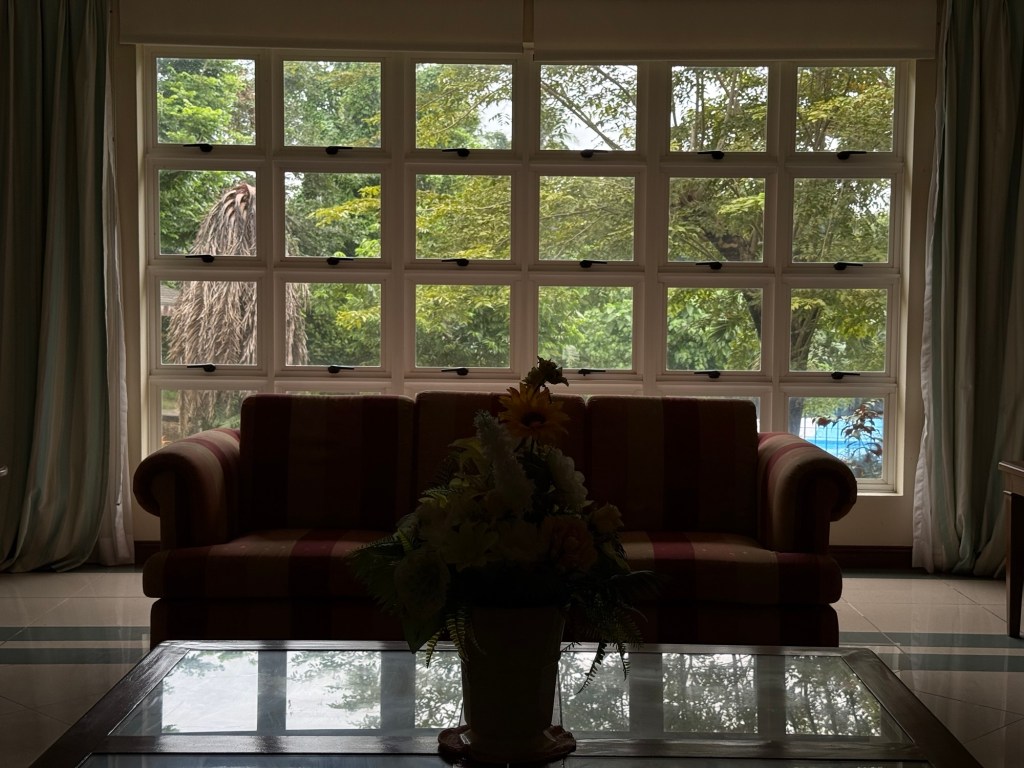
Photo by author, St. Paul Spiritual & Renewal Center, Bgy. Tanyawak, Alfonso, Cavite, 19 August 2026.
How sad we have missed the Blessed Virgin Mary as the model disciple of Jesus was the first to embody his teaching of being small like little children with her simplicity and humility so very well expressed in her 20th century apparitions in Fatima, Portugal and Banneux, Belgium.
Enough with the extravagant sometimes imeldific celebrations of Marian feasts and events that have become egregious display of wealth and power.
Being simple and small like Mary, both as a child and as an adult, enable us to see again the value of life and of every person.
Aside from the lack of any account on the birth of Mary, we heard proclaimed today the birth of Jesus to teach us that truth expressed by St. John Paul II that in every person Jesus actually comes. The more simple and true we are like Mary and Joseph, the more Jesus is seen and experienced in us!
That is why when we greet somebody a “happy birthday”, what we really mean telling him/her is “I love you, I thank you for making me who I am today.” Through one’s simplicity and littleness in Christ, we are transformed into better persons because we are able to have glimpse of God’s love and kindness.
The true joy of celebrating a birthday is not found in the externalities of gifts and parties and guests with all the fun that come along but in the silent, prayerful reflection of our life’s beginning and direction into eternal life. See how there are still people who only celebrate Mass on two occasions each year – on their birthday and on Christmas, a clear recognition of our origin and direction in Christ in life.
Photo by author, Sacred Heart Novitiate, Novaliches, QC, March 2023.
In the birth of Jesus Christ, we are reminded by every birthday that life is precious because it is so fragile – any infant and every person can be easily hurt and harmed, be sick and eventually die.
Like Mary and Joseph, the little Child born in Bethlehem asks us, even begs us to take care of him found in everyone among us.
Let us be more loving and kind, understanding and caring, even merciful and forgiving with one another especially in this time of calamities.
Such is the wisdom of God in making life small and fragile so that we may care and value it because there lies also its greatness. The best birthday greeting we can express to the Blessed Mother Mary today is to start being small and simple like her to share Jesus with everyone. Not with those many cakes we buy and “offer” – tayo rin naman kakain!Amen.
Lord My Chef Daily Recipe for Soul by Fr. Nicanor F. Lalog II
Tuesday, Twenty-Second Week in Ordinary Time, Year II
World Day of Prayer for Care of Creation, 01 September 2026
Wisdom 13:1-9 ><}}}}*> Colossians 1:15-20 ><}}}}*> Matthew 8:23-27
Photo by a friend in Washington, 28 July 2026.
Thank you dear God
for this brand new month of
September when we dedicate
its first day as prescribed by
Pope Francis to be a
World Day of Prayer for
Care of Creation:
how timely on this first of
September 2026 we are still
reeling from the devastations
of many natural calamities
not only here in the Philippines
but from throughout the world -
from the powerful earthquake in
Colombia to the catastrophic
collapse of glaciers in the Himalayas
that swept entire villages in Nepal,
Tibet, and China where thousands
are still missing while death tolls
continue to rise.
World climate is indeed changing
but still many refuse to believe it,
refusing to change lifestyles as told
by Pope Francis in "Laudato Si"
in order to curb our consumption
to lessen adverse impact to the environment;
worst of all is how men and women
especially those in our government
are deeply into shameless corruption
destroying nature, altering its flow
that turned calamity into criminality
leading to losses in lives and properties
as well as thousands of productive hours;
indeed, many people worship money,
seeing nature more as a source of wealth
without recognizing you as its Creator:
For all men were by nature foolish who were in ignorance of God, and who from the good things seen did not succeed in knowing him who is, and from studying the works did not discern the artisan… But doomed are they, and in dead things are their hopes, who termed gods things made by human hands (Wisdom 13:1, 10).
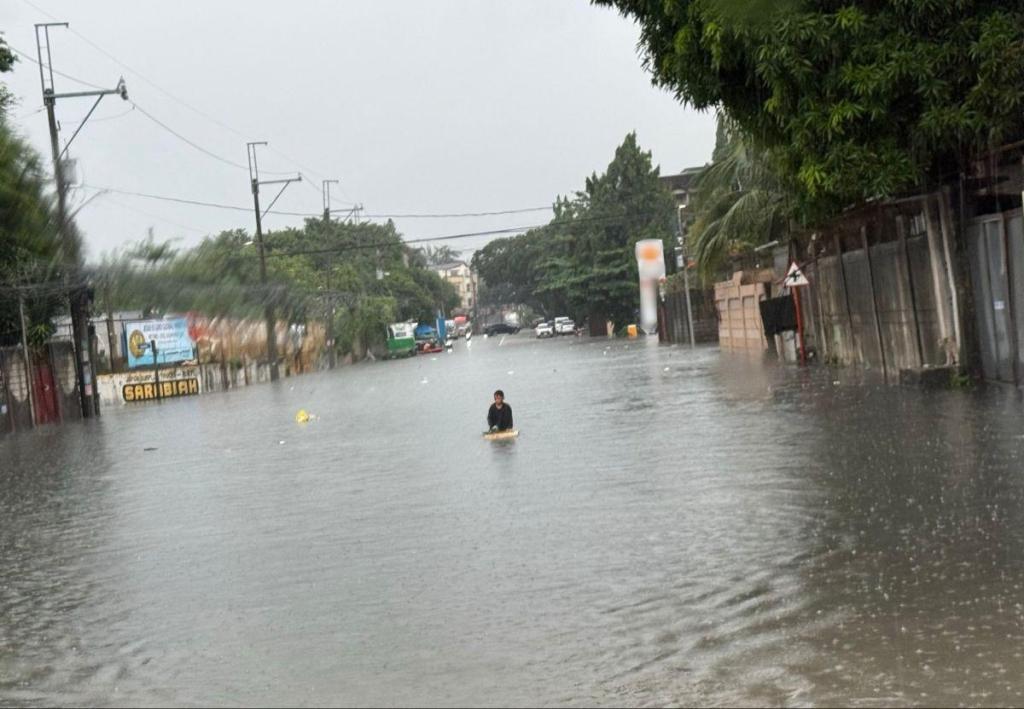
Photo by Ms. Bernadette Reyes, flood in Sto. Domingo, QC, GMA News, 29 August 2026.
Let us care for your creation,
Lord for it is actually caring
for ourselves and for one another;
we only have one home we call
Earth you have entrusted to us;
for many years,
nature have taken cared of all
our needs but offered it no care at all;
let us realize that this Earth
and everything in it
is a reflection of your goodness
and love for us
with Jesus Christ's coming,
"in him all things hold together"
(Colossians 1:17);
let us find, dear God,
 in every beauty of  nature
your majesty and mercy
so we may be kinder not only
with your Creation
but especially
with one another
through Jesus your Son
who alone can restore
order in this nature we have
so destroyed due to our
greed and selfishness;
let us not only pray
to care for Creation
but most especially
find Christ in every storm
in life so we may care most
of all for one another
in whom we find you
dear God
who loves us immensely.
Amen.
Rembrandt’s famous painting “The Storm on the Sea of Galilee” (1633) stolen from a museum in Boston in 1990 and still has not been found yet. From en.wikipedia.org.
Lord My Chef Daily Recipe for Soul by Fr. Nicanor F. Lalog II
Monday, Twenty-Second Week in Ordinary Time, Year II, 31 August 2026
1 Corinthians 2:1-5     <*((((><  +  ><))))*>    Luke 4:16-30
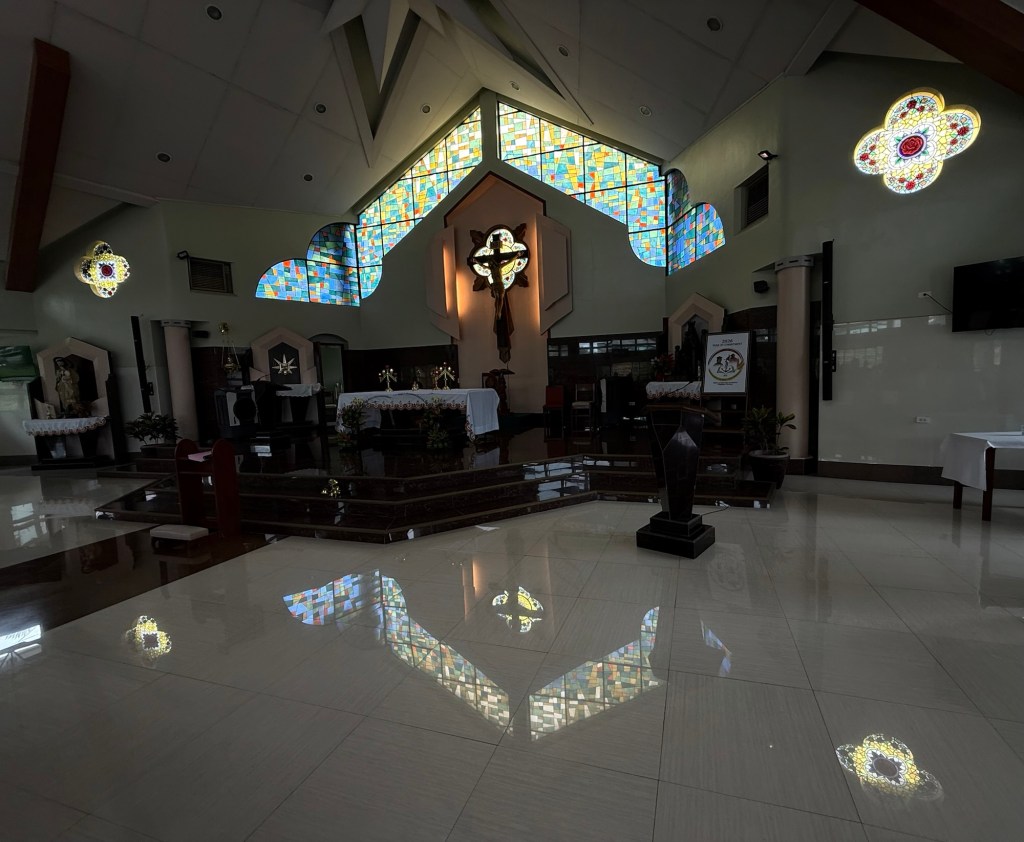
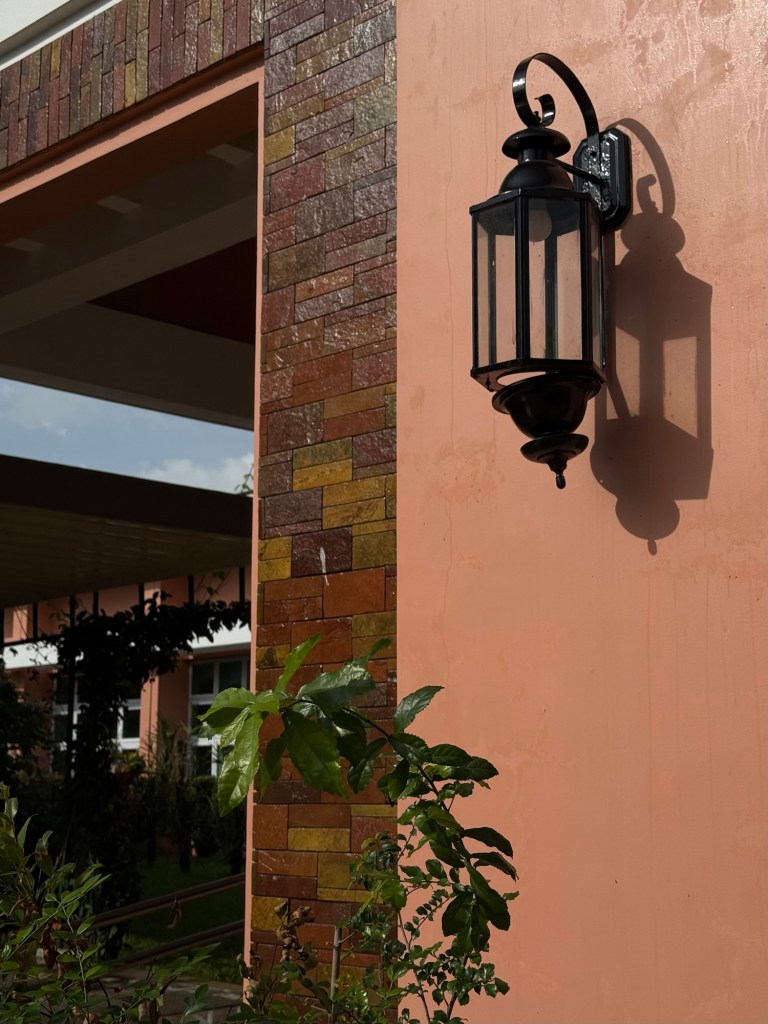
Photo by author, St. Paul Spiritual & Renewal Center, Bgy. Tanyawak, Alfonso, Cavite, 19 August 2026.
Teach me Lord
to "know nothing except
Jesus Christ crucified" like St. Paul,
not just "looked intently at you"
like your folks in Nazareth
when you preached in your synagogue;
it is not enough to just look
intently at you,
imitating you and your manners
and style but not your life,
your self-sacrifice on the Cross;
what a shame in this age of social media
we speak and preach about you
merely to chase clout for ourselves
using sublimity of words
or persuasive words of wisdom
used by demagogues and
influencers for followers
and shameful profits.
Help us realize,
Jesus, that our faith
rests on the power of God
best shown in your Crucifixion,
not in our personality
nor eloquence in speech
nor being savvy with new
technologies that blind us from
the realities of life
like love and sacrifice,
kindness and patience,
justice and truth.
Amen.
Photo by author, St. Michael Retreat House, Antipolo City, 16 June 2026.
Quiet Storm by Fr. Nicanor F. Lalog II, 27 August 2026
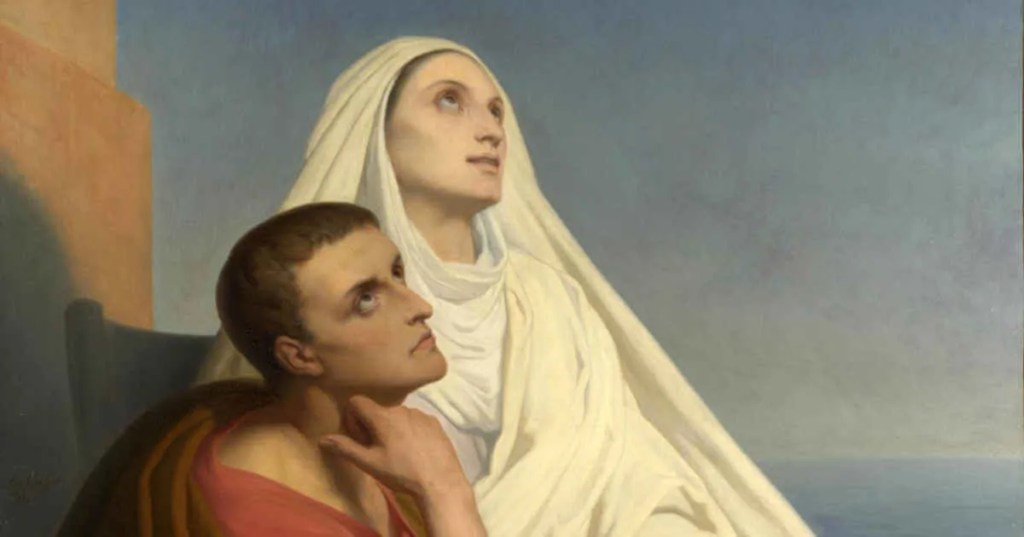
St. Augustine with his mother Monica from mycatholic.life
Next to the Blessed Virgin Mary, St. Monica is perhaps the best example of motherhood beyond compare. She is the patron saint not only of wives and mothers, but also of those seeking patience and victims of abuse.
Stories of her suffering in silence with an abusive, philandering, pagan husband named Patricius seem to have given us Filipinos with the wrong impression of a “martyr” as being a wife who willingly bears without complaints the abuses by her husband.
St. Monica was very far from that kind of a “martyr”; she was in fact a “martyr” in the truest sense of its meaning from the Greek word martyria that means to witness Jesus Christ.
Witnessing Christ by bearing sufferings does not mean allowing one’s self to be abused freely by anyone; witnessing Christ is living a life centered on Jesus in prayers that flow into good works and holiness. Martyrdom is overcoming evil with goodness that ends in death, either literally or figuratively speaking. However, it is not a death that is a defeat but a triumph that leads to conversion of sinners and unbelievers, exactly how Christianity spread before and until now.
Photo of St. Monica from the cover of the book “St. Monica Club: How to Wait, Hope and Pray For Your Fallen-away Loved Ones” by Maggie Green, Sophia Institute Press, 2019.
According to St. Augustine’s own account in his book Confessions, although domestic abuse was prevalent during their time, their ill-tempered father never beat their mother. Her daily prayers especially her frequent going to the Mass with so many acts of charities to the poor irritated their father Patricius and yet led him to respect St. Monica. Eventually, her prayer life that found expressions in her almsgiving and kindness to everyone won the heart of Patricius, calmed his violent tendencies until he finally converted to Christianity before his death.
Before calming and converting her husband, St. Monica first won over her equally difficult to deal with mother-in-law! So, for those having problems with in-laws, St. Monica is the saint to go to!
But it was not that easy at all.
St. Monica must have cried an ocean of tears in her sufferings sustained by her cultivation of a deep prayer life in God whom she had allowed to work in her that she grew deep in faith, hope and love as well as the other virtues especially patience. All these aspects of her faith flowed in her remaining so sweet and gentle despite her problematic husband and three children (whom Patricius refused to be baptized as Christians) that she exercised great influence over abused wives and suffering mothers who were so moved by her examples.
Now here is the funny thing that most likely mothers and wives today would surely laugh at – St. Monica’s advise to them: “If you can master your tongue, not only do you run less risk of being beaten, but perhaps you may even, one day, make your husband better.”
Huwag daw po kuda nang kuda, mga Nanay at mga Misis…
I always tell young people that our mothers’ nagging is actually their “love language”: they may be saying a lot even without thinking at all but that’s because they love us, they care for us. That is why see also how Filipino mothers are very prophetic too: listen to whatever they are saying even if painful to the ears because so often, they tell the truth. They rarely go wrong in their suspicions so that when problems arise, they say the same thing,“sinasabi ko na nga ba…!”
Image of St. Monica from grunge.com
One thing I miss these days after my mom’s death two years ago are her words of love and wisdom, especially whenever she would hold my hand and arm after I had kissed her every time I came home.
There is that certain sense of gravity, of weight in a mother’s words, even if repetitive and uncontrolled in pitch. So reassuring of her love for us.
Now my mom is gone, no one reminds and “nags” me anymore in the good sense. And the worst part of that is, you have no one to make sumbong anymore, somebody willing listen to all of our own kuda. This is one reason mothers suffer a lot in silence: they keep so many of their children’s pains and hurts, including anger and complaints in their hearts. Many times mothers explain but we refuse to listen, accusing her of bias and favoritism. There are times she would say “hayaan mo na lang anak”… she would be talking and talking again of many things.
Every Nanay is a Sta. Monica, suffering in silence because she has always been loving us in silence too. Truly, when a mother dies, our links are never cut off from her as if the umbilical cord remains intact, like a satellite link up to heaven.
Photo by author, “Madonna&Child”, St. Paul Spiritual & Renewal Center, Bgy. Tanyawak, Alfonso, Cavite, 19 August 2026.
How funny that we when they were alive, we complain of our our mother’s nagging and endless talking but when she dies and there is that deafening silence at home, we miss her because we miss most her love and concern that cannot be expressed by a sister or a brother. Or anybody else for that matter.
One of the things I used to insist in my students since becoming a priest until now is for them to never, ever forget to write their mother’s middle initial. I tell them “how dare you to forget” your mom’s first letter of her maiden’s name after she had carried you in her womb for nine months and then took care of you all these years…
On this Memorial of St. Monica, hug and kiss your mom while still beside you. Thank God for all mothers for their great gift of life. Amen.
Lord My Chef Sunday Music by Fr. Nicanor F. Lalog II, 23 August 2026
Photo from Facebook post by Dr. Tony Leachon, “KLEPTOPIROSIS: When Corruption Becomes a Public Health Crisis”, 08 Agosto 2025.
We go back to the year 1986 for our Sunday music we find so related with our gospel as well as situation in the country where we are literally inundated in government corruption and evil that have caused this massive flooding in various parts of the country.
Every year at this time when the rainy season comes, floods come in many parts of the country especially the city. It used to be normal but for the past decade, it has been getting worse every year. And suspicious until last year when it was uncovered at how officials from the Public Highways connived with lawmakers stealing billions of pesos – not to mention the life and future of countless citizens – through their mostly non-existent but paid flood control projects. (Sadly, it is until under investigation and no big fish had truly been jailed for their crimes.).
Back to our Sunday music – The Way It Is by Bruce Hornsby and the Range from their debut album of the same title released in July 1986….
It’s melody mainly in piano is one of those unforgettable soft rock tune wafting on breeze with lyrics so bitterly cold of the sad realities in life. It is actually a gospel in the truest sense because its lyrics are both challenging and disturbing set in a relaxing mood and melody like the Gospel of Jesus Christ. Its title could actually mislead anyone into thinking it as a feel-good music with its sophisticated piano introduction and accompaniment without paying attention to its lyrics and message.
It is not. Hornsby actually dares us even today to leave the comforts of our rooms to get truly examine how things are going on around us as if that’s just the way it is… It isn’t at all. Like poverty and unemployment as mentioned in the first stanza.
Standing in line, marking time
Waiting for the welfare dime
'Cause they can't buy a job
A man in a silk suit hurries by
As he catches the poor old ladies' eyes
Just for fun he says, "Get a job"
That's just the way it is
Some things'll never change
That's just the way it is
Ah, but don't you believe them
Most of all, an end to all forms of discrimination due to color and beliefs found in the fifth stanza.
Well, they passed a law in '64
To give those who ain't got a little more
But it only goes so far
'Cause the law don't change another's mind
When all it sees at the hiring time
Is the line on the color bar, no, no
The Way It Is is so very much like today’s gospel set in Caesarea Philippi where Jesus surveyed his disciples on what people were saying about him before directly asking them, “But who do you say that I am?”(Mt.16:15). Our personal answer to that question of Jesus leads us to our identity as beloved children of God, brothers and sisters in Christ who must be respecting each one other.
And the more we get to know Jesus, the more we also get to know who we are… This may sound simplistic: all these problems we have about school violence, degradation of our moral values as a nation that perpetuate in office corrupt and inept officials while destroying our environment with our disregard for proper disposal of waste and garbage, may be due to our disregard for who is Jesus to us.
The question who connects us with God and everyone. And with our very self. How sad that in this age of too much digitization, we have been so focused on techniques of doing like what and how, forgetting being, the focus of who. (https://lordmychef.com/2026/08/22/the-definitive-question-of-all/)
See the gospel’s relation with Hornsby’s incisive genius and values in the third and fourth stanzas where he challenges the situation we have been so accustomed to, “the way it is” as if challenging us to find Christ on the face of everyone we meet.
Said, "Hey little boy, you can't go where the others go
'Cause you don't look like they do"
I said, "Hey, old man, how can you stand to think that way?
Did you really think about it before you made the rules?"
He said, "Son
Well, that's just the way it is
Some things'll never change
That's just the way it is"
Ah, but don't you believe them
Mm, yeah
Many times in life, the simplest things are the most profound in meaning like the parables and this time the question of Jesus. And don’t forget, like modern music too that truly reflects the way it is in the world we are called to change into something more humane.
Here is Bruce Hornsby and the Range with their 1986 classic. Enjoy. And ponder too.
Lord My Chef Sunday Recipe for Soul by Fr. Nicanor F. Lalog II
Twenty-first Sunday in Ordinary Time, Cycle A, 23 August 2026
Isaiah 22:19-23  ><}}}}*>  Romans 11:33-36  ><}}}}*>  Matthew 16:13-20
Last Saturday at the Solemnity of the Assumption, we reflected on the need to ask the right – and difficult – questions in our life like Mary. It does not really matter if we don’t get answers right away because along the way, God reveals and shows us himself and his plans for us if we keep asking him with our questions.
That is why this Sunday as Jesus continued to travel into pagan territory, he asks us like his disciples along the way his most definitive question of all, “who do you say that I am?”
Jesus went into the region of Caesarea Philippi and he asked his disciples, “Who do people say that the Son of Man is?” They replied, “Some say John the Baptist, others Elijah, still others Jeremiah, or one of the prophets.” He said to them, “But who do you say that I am?” (Matthew 16:13-15)
Photo by author, St. Paul Spiritual & Renewal Center, Bgy. Tanyawak, Alfonso, Cavite, 18 August 2026.
After healing the possessed daughter of a Canaanite woman last week in the district of Tyre and Sidon, Jesus and his disciples reached Caesarea Philippi that used to be the summer capital of the Roman officials in northern Israel. It had an abundant supply of water that is why the Romans built many buildings including a temple to one of their major goddesses.
Imagine such an affluent backdrop for Christ’s intensive “lecture series” about discipleship to the Twelve: first, he surveyed them what the people were saying “who the Son of Man is” before asking them directly, “but who do you say that I am?”.
In 2009, the British-American author and inspirational speaker on business leadership Simon Sinek published his book Start with Why because the question why helps us clear motivation in every undertaking we make. Starting with why is to get to the very core, the raison d’etre of our business or plan or project.
However, we are not only dealing with projects in life; life itself is our very project too which is addressed by the question who. Actually, Sinek’s model of starting with why is anchored on persons and relationships that are directly concerned with the who because every why is sustained by a who. No project nor plan nor business nor whatever endeavor by humans would continue without persons addressed by the question who!
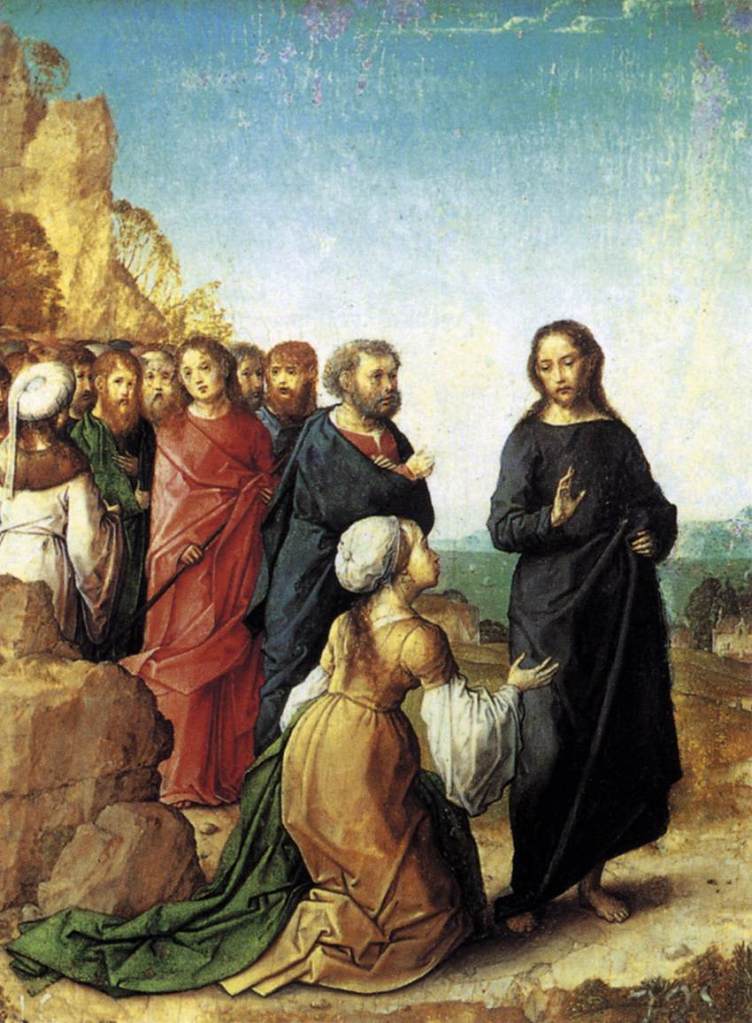
A painting of “The Canaanite Woman asks for healing for her daughter” by Spanish painter Juan de Flandes ca. 1500 as part of the 47 small panels of paintings commissioned by Queen Isabella I of Castile; from commons.wikimedia.org.
More than a person, who is a relationship, a meaning for us to continue with our why like in fulfilling our mission in Jesus, in answering his call to follow him.
As a continuation of our reflection last Sunday about faith and intimacy in the Lord, clarifying who is Jesus Christ for us deepens that faith and intimacy we have in him.
It is only when we are clear and convinced with who isJesus shall we become clearly convinced with our call and mission in him by finding him among everyone and whatever circumstances we may get into in life. Even in our human relationships.
Relationships and friendships, marriages and ties are shattered and broken these days not merely because of infidelity and betrayals which start to happen the moment we take our beloved for granted. We betray one another not when we speak against them or turn against them; it all starts the moment we no longer recognize them as a beloved, our loved one or friend.
Would you exchange a family member or a friend for any amount of money or thing or property? Or your wife or husband for another better looking woman or man?
Photo by author, St. Paul Spiritual & Renewal Center, Bgy. Tanyawak, Alfonso, Cavite, 18 August 2026.
Normally, we deal with every question first with our minds like when the apostles gave Jesus varied answers of leading religious figures like John the Baptist and the prophets as what the people thought of him. But, it took on a different dimension when Jesus asked “But who do you say that I am?” that is pointed into our hearts.
And here we find a remarkable quality – sometimes deficiency – of Peter. He was always baring his heart and soul; he easily opens us what’s in him and clearly here as Jesus later explained, Peter allowed the Spirit to speak from his heart, “You are the Christ, the Son of the living God.”
Notice in Peter’s response we find traces of Sinek’s starting with why. Peter with his his brother Andrew and fishing partners James and John were the first disciples called by Jesus, following him longest than the rest of the Twelve. For Peter, more than finding in Jesus the answers to his starting question of why about life, he had remained with Christ primarily of the who he is to him. Despite that he would waver on this many times, he remained faithful to Jesus with his own martyrdom.
See that in Matthew’s account, Peter said the words “You are the Christ, the Son of the living God” while Mark and Luke merely reported Peter as saying “You are the Messiah/Christ” (Mk.8:29 and Lk.9:20). Peter saying Jesus as “Son of the living God” reveals something deeper in who is Jesus for him as he speaks of a relationship. Not just details and facts.
Most likely, Peter must have experienced something so deep as in “living”, so alive like when he saw that miraculous catch of fish before being called to become fisher of men. It was an experience that Paul describes to us in the second reading, of having experienced personally the “depth of the riches and wisdom of God” (Rom.11:33).
Photo by author, St. Paul Spiritual & Renewal Center, Bgy. Tanyawak, Alfonso, Cavite, 18 August 2026.
That is how we are with those most dearest to us – there are things so deep for words, so profound realities we have experienced that we have come to be so convinced, so in love with someone we follow or regard. Someone like “a peg in a sure spot” as God described Eliakim to Shebna according to Isaiah (22:23).
More than the why of doing, the who leads us to our being. And the more we get to know Jesus, the more we also get to know who we are. Our identity as a person does not depend on what social media portray or what others say. The more we get to know Jesus, the more we get to know ourselves, the more we become at home with our weaknesses and failures, sins and shortcomings.
Photo by author, St. Paul Spiritual & Renewal Center, Bgy. Tanyawak, Alfonso, Cavite, 18 August 2026.
This may sound simplistic: all these problems we have about school violence, degradation of our moral values as a nation that perpetuate in office corrupt and inept officials while destroying our environment with our disregard for proper disposal of waste and garbage, may be due to our disregard for who is Jesus to us.
The question who connects us with God and everyone. And with our very self. How sad that in this age of too much digitization, we have been so focused on techniques of doing like what and how, forgetting being, the focus of who.
From Caesarea Philippi which is up north, Jesus and his disciples would take a U-turn down towards Jerusalem that is their true destination. After this scene comes the Transfiguration of Jesus and the triple predictions of Jesus of his coming passion, death and resurrection. Let us know who Jesus is so that we can follow him more closely as his disciples. Amen. A blessed, hopefully warmer and drier week ahead to everyone!
Lord My Chef Sunday Recipe for Soul by Fr. Nicanor F. Lalog II
Eighteenth Sunday in Ordinary Time, Cycle A, 02 August 2026
Isaiah 55:1-3 ><}}}}*> Romans 8:35, 37-39 ><}}}}*> Matthew 14:13-21
Photo by author, Anvaya Cove Resort, Morong, Bataan 21 July 2026.
Salamuch July, hello August! Though this eighth month of the year is named after the Roman emperor Augustus, August actually came from the Latin word augustus meaning venerable; used as an adjective, it describes something as majestic and grand like when we say “august halls” or “august chambers” of power and justice.
So, please stop demonizing August as “ghost month” which is a pagan belief. For us Christians who affirmed last Sunday to Jesus that we have “understood” very well his parables, Matthew challenges us this August not only how well we have understood the parables on the kingdom of heaven but most especially how much do we know and love and trust Jesus the Christ.
Photo by a friend living in Washington state, 28 July 2026.
From the shores of Galilee, Matthew now brings us to the wilderness with Jesus where he fed more than five thousand people from a few loaves of bread and pieces of fish.
When he disembarked and saw the vast crowd, his heart was moved with pity for them, and he cured their sick. When it was evening, the disciples approached him and said, “This is a deserted place and it is already late; dismiss the crowds so that they can go to the villages and buy food for themselves.” Jesus said to them, “There is no need for them to go away; give them some food yourselves.” But they said to him, “Five loaves and two fish are all we have here.” Then he said, “Bring them here to me,” and he ordered the crowds to sit down on the grass. Taking the five loaves and the two fish, and looking up to heaven, he said the blessing, broke the loaves, and gave them to the disciples, who in turn gave them to the crowds. They all ate and were satisfied, and they picked up the fragments left over – twelve wicker baskets full (Matthew 14:15-20).
See again that distinctive detail Matthew shares with us when Jesus saw the crowds who have followed him and his disciples to the other side of the lake: his heart was moved with pity for them, and he cured their sick. That is how great is the love of Jesus for each of us. He is always moved with pity which is more than a feeling but of actually doing something, even a miracle for us like in this scene in the wilderness.
Life is a wilderness. So vast and uncertain. But, lovely and beautiful. Not really august but grand and majestic, so difficult to explain, often ambiguous, largely mysterious. Even captivating. That is why it is always good to be alive even if life is difficult.
Last Thursday I officiated at the funeral Mass of another best friend from our minor (high school) seminary. In fact, Jonas was my classmate way back in second grade who partly inspired me to become a priest. He is my second best friend after Gil also from the seminary whom I have accompanied spiritually in life and at their deathbeds. Before going to his funeral at prayer in my room, I asked God if I would still have friends alive to attend my own funeral?
The mystery deepened after we have laid Jonas to his final resting place when a few hours later his mother-in-law – the mother of his widow – died too! Imagine the devastation to my friend’s wife who has not rested yet after taking care of him for a month in the hospital then her mother died too? And to their only child just starting her career as a medical doctor?
Photo by a friend living in Washington state, 28 July 2026.
Many times Jesus teases us.
Or seduces us as the Prophet Jeremiah insisted on how God lured him to following him despite the many hurts and pains he had to go through but could not turn away from him because he had grown to loving him so much too.
Like the people who followed Jesus to the wilderness, we gather every Sunday to listen to his words and share in his Body and Blood because we have felt so empty in life that only him could fulfill us.
But, that is so easy to claim as we can readily profess our faith in God, in Jesus Christ but it is different when it is borne out of a wilderness experience like the disciples.
How many times have we felt like them thinking more of our selves than others when in a difficult situation, telling Jesus to send the people home because it was getting late and dark; most of all, so that they could get food for themselves?
It was easy for the crowd to just come to Jesus and think only of themselves but not with the disciples – like our parents, our kuya or ate, our superiors, or those people we look up to with responsibilities over us. That is why be kind with those in positions too. So easy to accuse them of their shortcomings and worst, to spread gossips when we do not realize the enormous weight they carry on their shoulders.
The equation becomes different and heaviest when Jesus tells us to “give them some food yourselves”. It is scary because at that moment Jesus asks us too of “what do you have” which we already knew beforehand as too little. Not enough. Just five loaves of bread and three pieces of fish.
Recall those moments you knew so well your limits, you capacity. And that’s when you start regretting why you have accepted the position or why have you volunteered at all or perhaps why become a priest or why got married?
Photo by author, Anvaya Cove Resort, Morong, Bataan 21 July 2026.
Life is a wilderness that looks so lovely with its sunrise and sunsets but in between, it is so difficult. Because it is in the wilderness of this life when we truly come face to face with the harsh realities of our insecurities and inadequacies, scarcity and emptiness.
But Jesus shows us today that wilderness too becomes our grace-filled moment when he asks us to bring to him whatever little we have. It is the crucial point, turning point when we have to choose between turning to Jesus and trusting his instructions or retreating to our selves, to what we have or believing more to what the world offers.
Let us choose to radically believe in Jesus by surrendering to him whatever we have.
Photo by Mr. Nicko Timbol, OLFU Campus Ministry, 25 October 2025.
This is actually an extension of his question last Sunday, “Do you understand all these things?”
As we have reflected last week, to understand in Filipino is “maunawaan” from the root word “una” which is to be first. To understand the parables of the kingdom of heaven is to entrust ourselves to Jesus completely, to surrender even the little that we have, including our fears and insecurities.
That is why in the first reading God tells us through Isaiah to “come to him” to eat the true bread and drink true water fulfilled in Jesus Christ his Son. To understand all these things is to be convinced that in this life, only God suffices. He alone in Jesus Christ can fulfill our deepest desires and longings like peace and joy, love and hope, all the real reasons for living. Not things. Or even persons and relationships that do not last, often manipulative because not rooted in Christ.
This Sunday, let us not be ashamed of the little that we have, the worst that we have. For as long as we have Jesus, there is nothing that we cannot accomplish nor be fulfilled. St. Paul said so well in the second reading, nothing – not even death – can separate us from the love of God in Christ Jesus our Lord (Rom. 8:39). Amen. Have a blessed august month fulfilled in Christ!
Lord My Chef Daily Recipe for Soul by Fr. Nicanor F. Lalog II
Friday in the Seventeenth Week of Ordinary Time, Year II, 31 July 2026
Memorial of St. Ignatius of Loyola, Priest
Photo by author, Sacred Heart Novitiate, Novaliches, Quezon City, 20 March 2024.
Glory and praise
to you, O God our loving
Father for the gift of
St. Ignatius of Loyola
who taught us that
"Man is created
to praise, reverence,
and serve God our Lord,
and by this means
to save his soul"
(First Principle and Foundation,
Spiritual Exercises #23).
Photo by author, Sacred Heart Novitiate, Novaliches, Quezon City, 20 March 2024.
How sad,
dear God,
that the most painful
truth is that you are most
often rejected by us
who assume to know you most,
too familiar with you and
your ways like what
our two readings reveal today:
Jeremiah was rejected
by your people
led by their priests
after speaking your words
to them to change their evil
ways lest their Temple lie in ruins
like in Shiloh along with
other disasters God was planning
to punish them (Jeremiah 26:4, 7-9);
in the gospel,
Jesus went home to Nazareth
but "the people took offense
at him" for his mighty
words and deeds
(Matthew 13:57-58).
Photo by author, Sacred Heart Novitiate, Novaliches, Quezon City, 20 March 2024.
Two scenarios,
same message
of rejecting you,
O God because we
believe more in our selves,
in our ideas and understanding
of who you are than believing
your very person in
Jesus Christ;
teach us, O Lord,
to be empty always
so that you may fill us
with your love
like St. Ignatius
who taught us to
pray and contemplate
to attain your love:
"Take, Lord,
and accept
all my liberty,
my memory,
my understanding,
and my entire will,
all that I have and possess.
Thou hast given all to me.
To Thee, O Lord, I return it.
All is Thine,
dispose of it wholly
according to Thy will.
Give me Thy love
and Thy grace,
for this is sufficient
for me"
(#234, Spiritual Exercises).

All for your greater glory,
O Lord.
Amen.
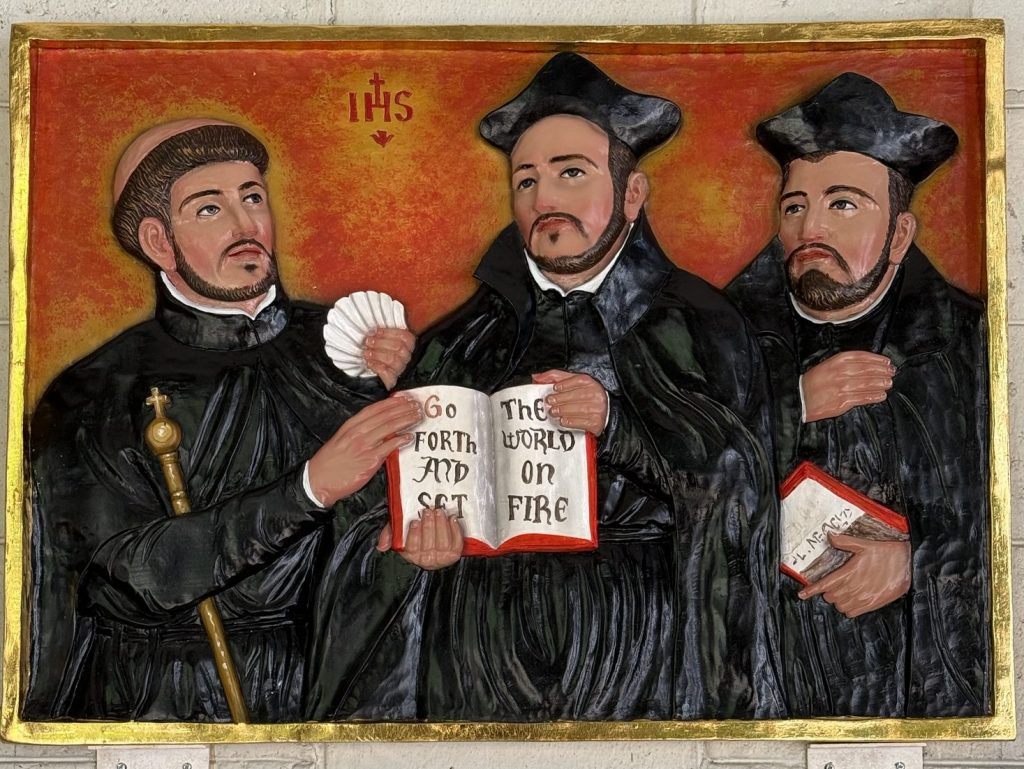
Photo by author, the three core group of the Society of Jesus founded by St. Ignatius of Loyola at the middle, St. Francis Xavier at his right, and St. Peter Faber at his left; frame at the facade of Sacred Heart Novitiate, Novaliches, Quezon City, 20 March 2024.