Cross my heart?

Lord My Chef Sunday Recipe for the Soul, 14 September 2025
Feast of the Exaltation of the Cross
Numbers 21:4-9 ><]]]]'> Philippians 2:6-11 ><]]]]'> John 3:13-17
*This is a reissue of our 2023 reflection. Salamuch.
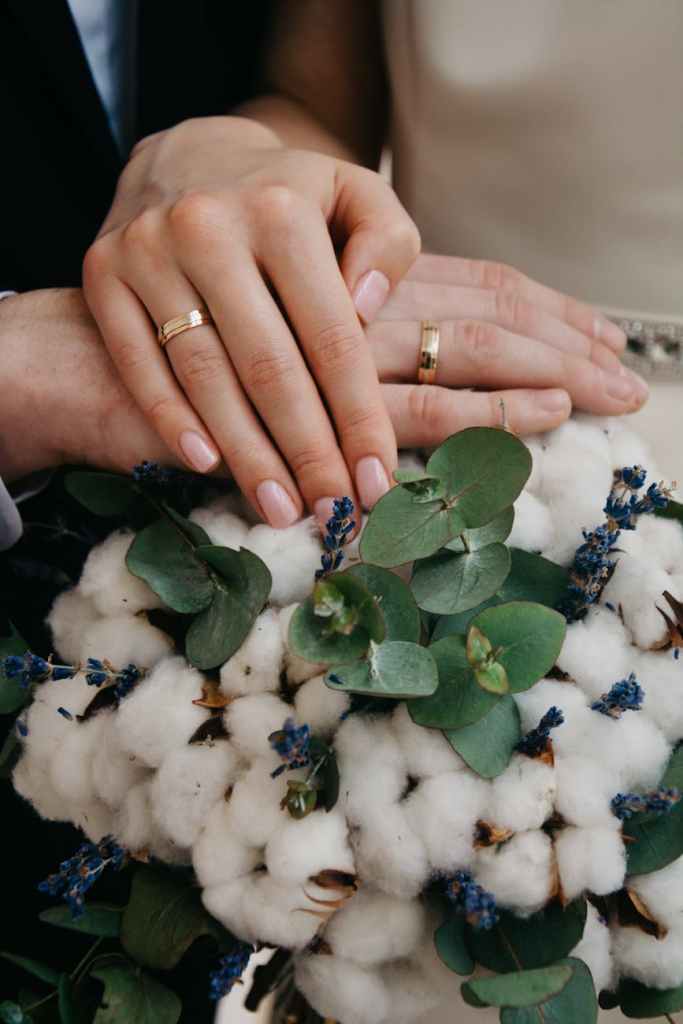
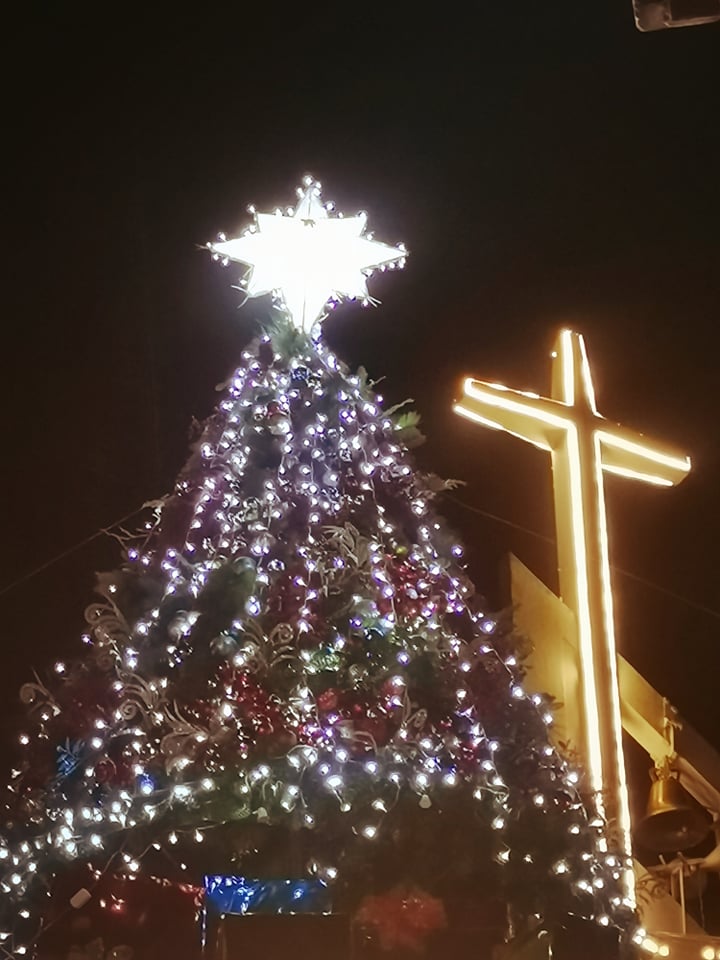
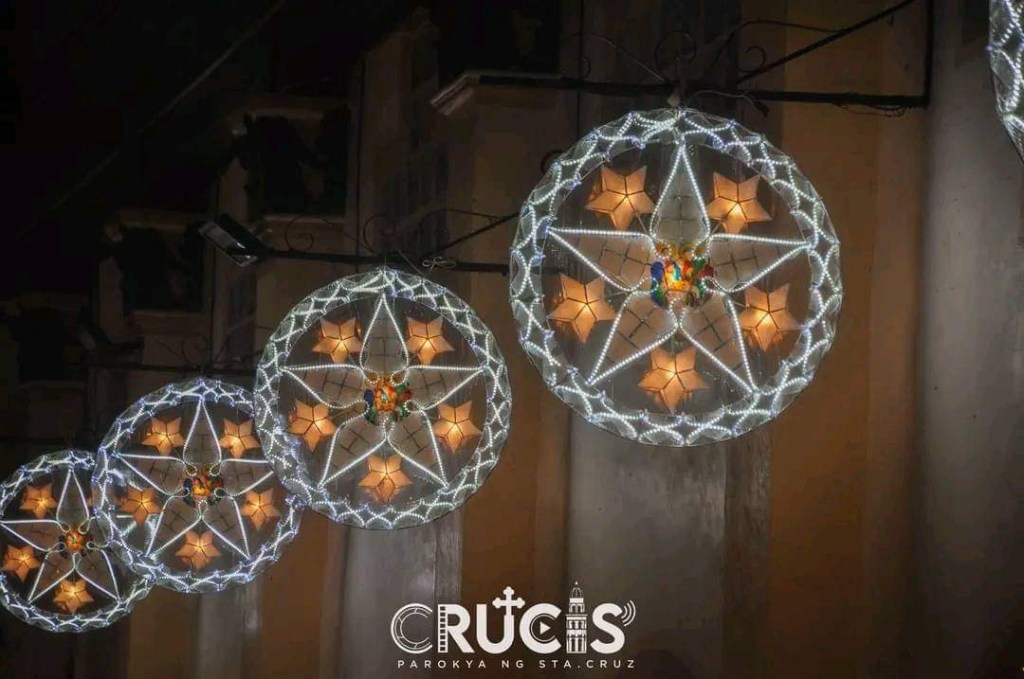
Photo by Mr. Gelo Carpio, 27 January 2020, Bagbaguin, Sta. Maria, Bulacan.

The cross is one of the most widely used but also abused and misunderstood sign in almost every generation. In fact, we are so accustomed with the cross of Jesus Christ found everywhere like in homes and offices, churches and classrooms, hospitals, restaurants and vehicles. Almost everybody carries it in our persons as an object of veneration, as a badge, or as a jewel.

On the cross we find Jesus shown in glory, peacefully sleeping in death, sometimes with his body broken by suffering. Hence, many times we use the word “cross” like in “cross my heart” to indicate our sincerity and truthfulness. But, are we truly aware of its meaning and significance in our faith, of its centrality as the symbol of God’s love for us expressed by the self-sacrificing death of Jesus Christ his Son?

Photo by author, St. Scholastica Convent, Baguio City, 23 August 2023.

This Sunday we take a break from our cycle of readings to celebrate this Feast of the Exaltation of the Cross which falls on September 14. Due to its centrality in our faith, it is still celebrated even if the date falls on a Sunday like today.

This feast started in the fourth century with the miraculous discovery of the True Cross by Helena, mother of the Emperor Constantine, on 14 September 326, while she was on a pilgrimage to Jerusalem. She then ordered through her son the emperor the building of the Church of the Holy Sepulchre that was dedicated nine years later with a portion of the True Cross placed inside it in September 13, 335. The following day, the Cross was brought outside of the church to be venerated by the clergy and the faithful.

In the year 627, during the reign of the Emperor Heraclius I of Constantinople, the Persians conquered the city of Jerusalem and removed a major part of the Cross from its sanctuary. The emperor then launched a campaign to recover the True Cross which he regarded as the new Ark of the Covenant for the new People of God. Before embarking into war, Emperor Heraclius went to church wearing black as a sign of penance, then prostrated himself before the altar and begged God for courage. His prayer was granted as he won the war and recovered the Cross from the Persians. He brought the Cross back to Jerusalem in 641 amid great celebrations by carrying it on his shoulders. Upon reaching the gate leading to Calvary, the emperor could not go forward! Heraclius and his retinue were astonished and could not understand what had happened until the Patriarch Zachary of Jerusalem told him, “Take care, O Emperor! In truth, the imperial clothing you are wearing does not sufficiently resemble the poor and humiliated condition of Jesus carrying His cross.”

Upon hearing those words, the emperor removed his shoes and bejewelled robes, put on a poor man’s clothing and was eventually able to proceed to Calvary and replaced the Cross inside the Church of the Holy Sepulchre where a number of miracles happened during the occasion: a dead man returned to life, four paralytics were cured, ten lepers were healed, 15 blind men were given their sight, with several possessed people exorcised and many sick people totally healed!

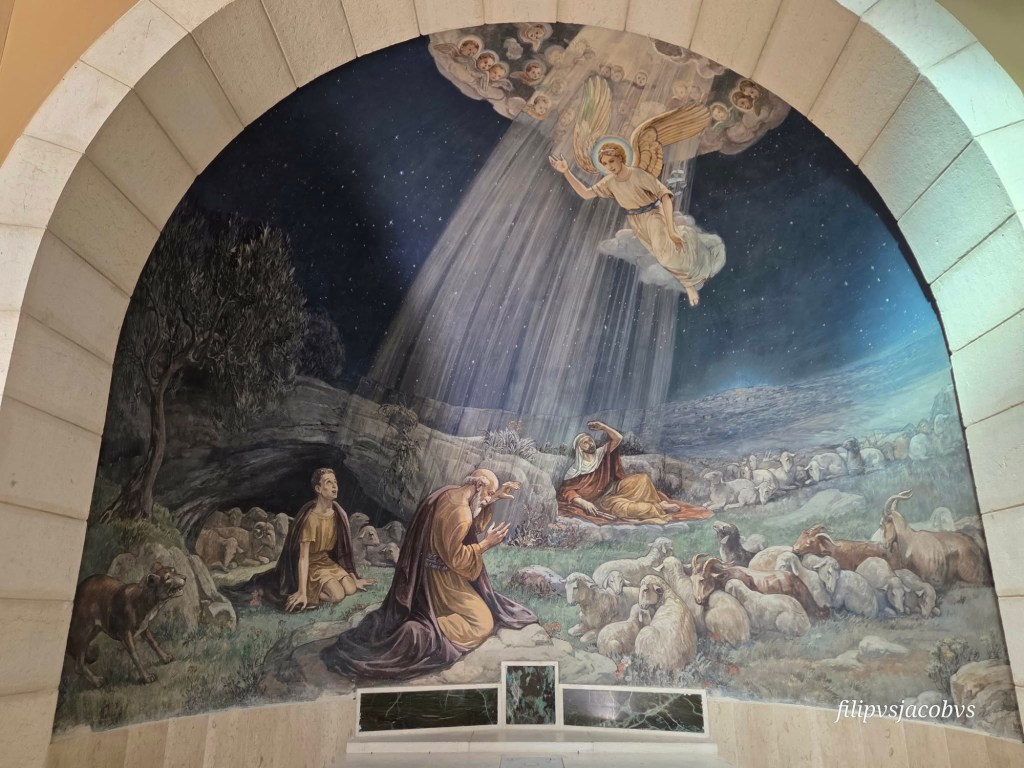
Photo by author, Mirador Jesuit Villa & Retreat House, Baguio City, 24 August 2023.

Very notable in this story were the words of the Patriarch of Jerusalem. It was only after the emperor had taken off his royal clothings and put on those of the poor was he able to carry the Cross.

It is the same thing that is asked of us today: it is so easy to display the cross inside our homes and cars, or wear it as a jewelry or even as a tattoo on our skin. But, that amounts to nothing unless we have the cross inside our hearts, our very being. More than the many signs of the cross and imaginary drawing of its lines we draw on our chest is the need for us to empty ourselves of our pride and sins so that we can be filled with Jesus Christ.

Brothers and sisters: Christ Jesus, though he was in the form of God, did not regard equality with God something to be grasped. Rather, he emptied himself, taking the form of a slave, coming in human likeness; and found human in appearance, he humbled himself, becoming obedient to death, even death on a cross (Philippians 2:6-8).

Called kenosis in Greek, self-emptying is the way of the Cross of Christ. It is choosing love and mercy than self-centeredness and self-righteousness; sacrifice than satisfaction; fairness and justice than greed and possession; bearing all the pains and perseverance than complaining and whining about difficulties and trials in life like the Israelites in the wilderness (first reading); and, thinking more of others than of one’s self.

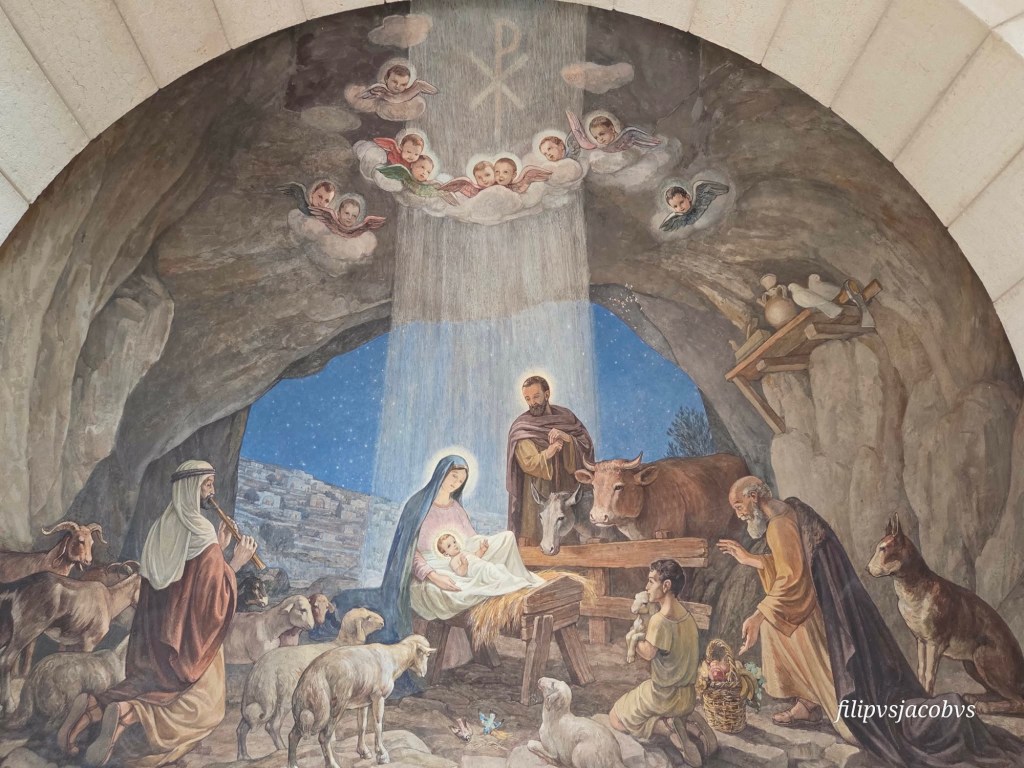
Photo by author, 02 September 2023.

The recent COVID-19 pandemic had taught something very amusing about the positivity of being negative, when negative was actually positive – healthy and COVID free! Remember how during those days when we would always wish we would yield negative results in our swab tests for COVID?

When we look at the sign of the cross (+), it is a positive sign, a plus sign. Though the cross calls us to let go, to be detached and dispossessed, it is actually an invitation to have more of God, of life and fulfillment! In this time of affluence when everything is easily available for as long as you have the means and the resources, the sign of the Cross reminds us that life is more of letting go and of giving than of having like God who “so loved the world that he gave his only Son, so that he who believes in him might not perish but might have eternal life” (Jn.3:16). St. Francis of Assisi said it perfectly why the Cross is an exaltation, a triumph:

For it is in giving that we receive,
it is in pardoning that we are pardoned.
and it is in dying that we are born to eternal life.

Amen. Enjoy Sunday and have a blessed week ahead!

Fr. Nicanor F. Lalog II
Our Lady of Fatima University
Valenzuela City
(lordmychef@gmail.com)

Uniqueness of the Cross

Lord My Chef Sunday Recipe for the Soul, 14 September 2025
Feast of the Exaltation of the Cross
Numbers 21:4-9 ><}}}}*> Philippians 2:6-11 ><}}}}*> John 3:13-17
*This is an updated version of our reflection last year; pray for our Marriage Encounter this weekend.
Via Crucis at Fatima University Medical Center, Valenzuela City, 2025.

This Sunday we have a unique celebration, the Feast of the Exaltation of the Cross that falls on the 14th day of September. It is so important that even if it falls on a Sunday, the more it must be celebrated as it is most central in the teachings of Jesus Christ.

It is so unique because despite its being made up of two ordinary pieces of wood, the Cross is most unique with its deeply extraordinary in meaning as sign of God’s immense love for us humans through Jesus Christ’s Passion and Death.

From being the sign of the most inhuman punishment in history, the Cross is now the very sign of how God “so loved the world that he gave his only Son, so that he who believes in him might not perish but might have eternal life” (Jn.3:16). It encapsulates the whole mystery of Jesus Christ, of how this all-powerful God beyond the ordinary became weak like us in everything except sin so that we too may be like Him, divine and more than ordinary. In His suffering and death on the Cross, Jesus made the lowly wood so ordinary to be so exalted to become His sign of love and mercy, power and majesty.

Photo by author, Jerusalem, May 2017.

Hence, in the Cross is the power of God’s love to transform us to better persons.

In the Cross is God’s power to lead us closer to Him with its vertical beam and to others with its horizontal beam.

In the Cross is the power of good if we choose to embrace it with Christ Jesus as our Lord and Master.

The Cross is most unique of all signs in the world because underneath its ordinariness, that is where we see God’s glory and majesty. It was underneath the Cross of darkness and gloom on Good Friday that humanity began to see light and hope in life’s many absurdities. Most of all, it was underneath that Cross of suffering and death of Jesus Christ that we feel and experience the assurance of the Resurrection.

How?

Through our own pains and sufferings that are most uniquely ours too!

With their patience worn out by the journey, the people complained against God and Moses, “Why have you brought us up from Egypt to die in this desert, where there is no food or water? We are disgusted with this wretched food!” In punishment the Lord sent among the people saraph serpents, which bit the people so that many of them died (Numbers 21:4-6).

Photo by author, Dominican Hills, Baguio City, January 2018.

You must have heard that old story of a man who came to Jesus to return the cross given for him to carry; he asked Jesus to have it replaced with a lighter one. Jesus then led the man to a huge room with all kinds of crosses for him to choose which he prefers as the best one for him so that he would stop complaining.

After closely examining the specs of so many crosses, the man finally decided to pick one he deemed as perfect for him after considering its weight and other dimensions, only to find out from Jesus Himself that it was the same cross he had actually returned for exchange!

Many times in life we are like those people in the first reading, never ending in their complaints to God, even challenging Him, accusing Him of forsaking us, of being unfair when life becomes difficult and unbearable. There are times we feel being on the distaff side of life always like a flat tire, never on top. We cry foul to God especially with all our hurts and pains inflicted by others, asking Him where was He when most needed?

Photo by author in Jordan near the Israeli border where Moses put up the bronze serpent as instructed by God to heal those bitten by the snakes after they have complained of their conditions in the wilderness, May 2019.

While it is true life is indeed difficult, the cross reminds us of the fact that the pains and hurts we have are uniquely ours too, something we have to accept and most of all, own.

There are pains that are so deep and won’t go away that have in fact affected us dismally in our lives already. Instead of self-blaming and self-pity, we just have to ask for God’s grace to accept and own them like Jesus Christ. We just have to “bring it home” – that imagery of the Cross planted on the Calvary – into our very selves, in our being as something so true and real. And uniquely ours.

Stop thinking of others’ pains and hurts. We are not all the same. If ever we have similar experiences, the hues and shades even gravity and circumstances are not same because each pain and hurt, like the cross, is uniquely ours. Like every person, every cross is unique because it is also a gift, a mystery, and life. We have to “befriend” our pains and hurts, our own cross instead of resist it. It is in “befriending” our pains and hurts, our cross in life that we grow and mature, becoming more free to love and to be joyful because that is when the cross triumphs over its disgrace and shame in us and with others. That is when our pains and hurts, when our crosses begin to reveal to us the many beautiful truths of Easter awaiting us.

The Cross of Christ triumphed because Jesus carried it wholeheartedly, allowing those two pieces of wood to reveal not only to Him who knew everything beforehand its meaning but most of all to everyone of us the deeper truths the Cross signifies as St. Paul eloquently expressed in our second reading.

The Cross of Christ atop the church of our Lady of Lourdes in France. Photo by my former student Ar. Philip Santiago during his pilgrimage, September 2018.

One thing I realized after my mother died May last year is the fact that while there are so many pains and sufferings in this world, my own pain and suffering in losing her are most difficult to bear; hence, something I must carry because it is uniquely mine.

But, one thing so unique I noticed is that the more I see my cross following my mother’s death, the more I saw also the cross of others. The Cross of Jesus triumphed truly in me when I embraced and owned my cross, when I befriended my pains and hurts that eventually led me to recognize and see, to feel more and experience too the crosses of others.

When we become conscious of each one’s unique cross, slowly we are able to reveal to them the meaning of their personal crosses too because we become more sympathetic, more open, more silent to listen more, love more, care more and be more present with those in their own unique cross. No wonder, I find conversing more engaging with others who also grieve because we can see each other’s unique crosses!

Jesus calls us to imitate Him that by embracing and owning our cross, we too may lead others to finding the meaning of their own cross and thus experience Easter soon. Let us pray:

Give us the grace,
dear God
to always embrace the Cross
like your Son Jesus Christ
where we can all be empty
of ourselves to be filled
with your Holy Spirit
and make your love
visible in us.
Amen.
A blessed week to everyone!

Fr. Nicanor F. Lalog II
Our Lady of Fatima University
Valenzuela City
(lordmychef@gmail.com)

What impresses Jesus?

Quiet Storm by Fr. Nicanor F. Lalog II, 11 September 2025
Photo by author, Sacred Heart Novitiate, Novaliches, QC, 2023.

Of course, there is no need for us to impress Jesus Christ for he loves us so immensely beyond measure. However, I have realized this week in my prayers that the Lord is most impressed with us when we are in our weakest.

It has been recurring in my prayers several times with the latest in this Wednesday’s gospel, “Raising his eyes toward his disciples Jesus said: ‘Blessed are you who are poor, for the Kingdom of God is yours’” (Luke 6:20).

I just love that scene of Jesus looking up to his disciples, looking up to us because normally we humans are the ones who look up to God his Father where he is seated to his right in heaven. When we pray, we sometimes raise our hands reaching up to God.

There is something so beautiful and wonderful when the Sacred Scriptures tell us of Jesus looking up to us. What an honor and a privilege! Because that happens when we are weakest, most flawed, and dirty with sin.

Imagine being there at that scene of the sermon on the plain and Jesus had to raise his eyes toward his disciples: he must have been at a lower position than them. This scene will have its fullness in the washing of the disciples’ feet after their Last Supper on Holy Thursday.

We who could no longer bow that low to clean and wash our feet as well as trim our toenails know this so well. Imagine all the dirt and flaws Jesus must have seen in the disciples’ feet that evening. Not a word was heard from Jesus. He teased no one nor complained of the dirt and unsightly things he must have seen too. Jesus simply bore everything because he loved them so much.

Photo from Our Lady of Fatima University website, June 2025.

Jesus continues to look up to us every time we receive him in our hands during the Holy Communion. That is why I always tell the people especially our students to be very solemn during that occasion when the Son of God most powerful, all-knowing in his simplest form and sign as a thin wafer, enters us body and blood. It is the most perfect time to pray to Jesus, to tell him everything and most of all, to listen to him because that is when he is right inside our body, when he is down inside us, we above him.

Jesus does not need our triumphs and “goodness” because they all came from him actually. What he does not have is what we have a lot- the negative things like sins, hurts and bitterness, anger and resentment festering deep inside us for a long time. Those are the thing Jesus want from us, the very things he is most “impressed” with us that we are able to live with those burdens for so long. But, he is most impressed with us in the truest sense when we are able to surrender these to him because that’s when we are blessed and filled in him.

Raising his eyes toward his disciples Jesus said: “Blessed are you who are poor, for the Kingdom of God is yours. Blessed are you who are now hungry, for you will be satisfied. Blessed are you who are now weeping, for you will laugh. Blessed are you when people hate you, and when they exclude and insult you, and denounce your name as evil on account of the Son of Man” (Luke 6:20-22).

Photo by author, Sacred Heart Novitiate, Novaliches, QC, 2023.

In this age of affluence brought about by technological advances, being poor and hungry, being maligned and weeping are things to be avoided at all costs. With people so fascinated with money and wealth, fame and power, being poor and hungry for God, weeping and being maligned for what is true and good and just are not impressive at all, even foolish.

But, look at the effect of those shameless social media posts by “nepo babies” of their crass lifestyle sustained by ill-gotten wealth at the expense of the poor – they have all been bashed relentlessly in the country leading to more evidence of corruption among government officials and law-makers while in Indonesia and Nepal, these same practices have sparked social unrest and upheavals recently!

For so long, many have wished to be rich and wealthy, to have all the money to buy good food and drinks, build mansions filled with expensive cars and adorn themselves with signature clothes and jewelries in the belief they can impress others. Maybe with their fellows with the same benighted souls but more often, they only bred jealousies and envies that led to vicious circles of corruption and crimes in the name of having more money.

In truth, no one is impressed with material things because people who feel good only with possessions are actually the most pitiable ones for they could not see their own value as a person. To be able to see one’s value as a person despite one’s sins and weaknesses is the beginning of being truly human.

Recall the Lord’s parable of the Pharisee and the publican praying at the temple: the publican who stayed at the back beating his chest so contrite for his sins went home blessed according to Jesus than the Pharisee who boasted of his own righteousness. “Magpakatotoo ka!” screamed a soda commercial not too long ago but still echoes so true these days.

Jesus is not impressed with what we have done nor achieved but with what we have become – that amid all the beatings and pains of life with all of our shortcomings and sins, we forge on with life, persevering in faith, filled with hope that Christ is our salvation. What impresses Jesus Christ most in us is what we lack because that is when he can be closest to us, one in us. See yourself the way Jesus sees you – as a person, loved and cared for. Regardless of what. Let me end this with a prayer wrapped in a song which I have always loved because it sounds like Jesus speaking to me, so impressed with me despite of everything.

From YouTube.com

We are God’s masterpiece

Lord My Chef Sunday Recipe for the Soul, 07 September 2025
Twenty-Third Sunday in Ordinary Time, Cycle C
Wisdom 9:13-18 ><}}}}*> Philemon 9-10, 12-17 ><}}}}*> Luke 14:25-33
Photo by Thiago Matos on Pexels.com

“Napasarap ang kuwentuhan” is how we would describe the scene last Sunday continuing to today’s gospel as Jesus pushed through in his journey to Jerusalem.

Recall Jesus dined at the home of a leading Pharisee last Sunday where “people observed him carefully” while “he noticed them” choosing seats of honor at the party that he told them a short parable on humility. One of the guests liked it that Jesus narrated another parable about coming to a banquet where everybody is invited. Many were impressed with his second parable that Luke now tells us great crowds followed Jesus after that dinner on a sabbath.

Great crowds were traveling with Jesus, and he turned and addressed them, “If anyone comes to me without hating his father and mother, wife and children, brothers and sisters, and even his own life, he cannot be my disciples. Whoever does not carry his own cross and come after me cannot be my disciple. Which of you wishing to construct a tower does not first sit down and calculate the cost to see if there is enough for its completion? Otherwise, after laying the foundation and finding himself unable to finish the work the onlookers should laugh at him and say, ‘This one began to build but did not have the resources to finish'” (Luke 14:25-30).

Photo by Mr. Jay Javier in Quiapo, 09 January 2020.

Keep in mind that Jesus “resolutely determined to journey to Jerusalem” (Lk.9:51) to fulfill his mission of offering himself on the cross. This is the second time since he embarked on that journey that he had told those wishing to become his disciples must forget themselves, take up their cross and follow him.

During that time, the cross was the Roman empire’s worst punishment – most humiliating and excruciatingly painful leading to a slow death. Imagine how the audience of Jesus must have felt hearing his words about taking up one’s cross, whether in its literal or figurative meaning. Jesus completely changed that on Good Friday when he totally and freely offered himself to die on the cross because of his immense love for us and the Father. From being a sign of cruelty and shame, the Cross became the sign of love and honor as Jesus the Son of God became one of us in passion and death so that we may be like him in his glorious resurrection.

And that is what Jesus wants for us, to be holy like him that is why he invites us to do the same, “take up your cross and follow me” which we may call as the “Christ project” wherein destruction leads to new creation, death to life, and self-giving to true love.

Here we find the wisdom and gentle mastery of Jesus as a teacher in using a “building project” as an example of discipleship, a world apart from the shameless, scandalous ghost projects of DPWH with some contractors through manipulations by lawmakers stole billions of pesos from the poor people without doing any flood control facilities at all.

Photo by author, Church of St. Anne in Jerusalem, May 2017.

The Christ project is the most noble “building project” of all where everyone becomes God’s masterpiece: “Which of you wishing to construct a tower does not first sit down and calculate the cost to see if there is enough for its completion? Otherwise, after laying the foundation and finding himself unable to finish the work the onlookers should laugh at him and say, ‘This one began to build but did not have the resources to finish'” (Lk.14:28-30).

What is Jesus longing to “construct” in your life?

We have all been disciples of Christ since baptism but many times in life, we have taken for granted his call to follow him and journey in him, with him, and through him. See that in his two parables today, Jesus did not say that we have to be “like them” in preparing to build a tower or go to war; instead at the ending, Jesus said, “In the same way, anyone who does not renounce all his possessions cannot be my disciple” (Lk.14:33).

We are all disciples of Christ. It is an inescapable reality in life, an honor and a responsibility because whether we like it or not, our discipleship in Christ plays a major role in our life direction. Or lack of direction. If you are feeling lost, most likely you have veered away from Christ in life’s journey. When life is in a mess, Christ is missing.

The author of the Book of Wisdom tells us how God in his infinite wisdom slowly unfolds to us his grand plans for us as his disciples, his beloved children. See that our most meaningful and fulfilling moments in life were those we were closest to God – not really when we were drowning in wealth and fame and material things. See the simplicity and sincerity of the common folks betrayed by this system of corruption – they can look straight the camera lens without hiding not like the fake, empty fronts of the the well dressed senators, contractors and DPWH officials in the hearings.

Photo by author, Our Lady of Fatima University, Valenzuela City, September 2023.

All our lives we must become a disciple of Christ that is why we must constantly reflect on his demands not only to examine how far we have gone by looking in the past but most especially to renew our commitment to him so we can move forward, nearer to the Father and to one another in loving service. This is what St. Paul was asking Philemon in accepting anew his escaped slave Onesimus.

Jesus invites us this Sunday to stop and reflect about his plans, his project for us to be God’s masterpiece. Discipleship is a call to self-emptying, to daily crucifixion of forgetting one’s self, of always choosing Jesus, choosing what is true and good and just. Of course it is easier said than done but that is the way it is. Better to make the choice freely than wait later when it would be imposed on us by the circumstances.

This is the meaning of our Care for Creation celebration this Sunday when we are called to see the unity of everyone and everything in “Christ Jesus… the image of the invisible God… in him were created all things in heaven and earth, the visible and invisible… For in him all the fullness was pleased to dwell, and through him to reconcile all things for him, making peace by the Blood of his cross through him, whether those on earth or those in heaven” (Col.1:15, 16, 19-20).

Caring for creation and environment is discipleship in action as Pope Francis called on us in his 2015 encyclical Laudato Si of the need to have an inner change, an “ecological conversion” wherein we do our individual part of sacrifice and care for God’s creation. It is always easy to join the many green movements and environmental crusades but if deep in our hearts remain our own comfort and convenience, nothing would ever change in the world around us as we continue with our insatiable consumption of so much goods. What we need is a “shift” in our perspectives in life, to see it wholly as interconnected.

We require a new and universal solidarity. As the bishops of Southern Africa have stated: “Everyone’s talents and involvement are needed to redress the damage caused by human abuse of God’s creation”. All of us can cooperate as instruments of God for the care of creation, each according to his or her own culture, experience, involvements and talents. (Laudato si’, #14)

Caring for creation is discipleship when we choose to follow Jesus in implementing his grand design and project for a better world where peace truly reigns in all creation. Amen. A blessed week ahead of everyone. Fr. Nicanor F. Lalog II, Our Lady of Fatima University, Valenzuela City (lordmychef@gmail.com)

Photo by Mr. Raffy Tima of GMA7 News in Batanes, September 2018.

Shine in Jesus

Lord My Chef Daily Recipe for the Soul, 02 September 2025
Tuesday in the Twenty-Second Week of Ordinary Time, Year I
1 Thessalonians 5:1-6, 9-11 <*((((>< + ><))))*> Luke 4:31-37
Photo by author, sunrise at the Lake of Galilee, Israel, May 2017.
Let your light shine on me,
Jesus,
keep me "alert and sober
so that I may continue
to encourage one another
and build one another up"
(1 Thessalonians 5:6, 11);
let your light shine in me,
Jesus,
fill me with your authority
and power to disclose truth
and expose evil as people
nowadays are so used to sin
as very ordinary, tolerable
and acceptable;
let your light shine in me,
Jesus,
fill me with your Spirit
to always proclaim
in words and in deeds
your gospel of salvation
from self-centeredness,
materialism,
and relativism
that have all tried
deleting God
and prayer
in life;
despite my sinfulness
and weaknesses,
help me bring you Jesus
to those burdened and lost,
sick and confused
after being so misled
by the world's many lies
and broken promises.
Amen.

Fr. Nicanor F. Lalog II
Our Lady of Fatima University
Valenzuela City
(lordmychef@gmail.com)

Life, death, and resurrection.

Lord My Chef Daily Recipe for the Soul, 01 September 2025
Monday, Twenty-Second Week in Ordinary Time, Year I
1 Thessalonians 4:13-18 <*((((>< + ><))))*> Luke 4:16-30
Photo by author, Betania Tagaytay City, August 2018.
Hello, September!
Praise and glory to you,
God our loving Father
for this new month:
30 days of life filled with surprises,
30 days to rejoice in you,
30 days to be better,
30 days to be one in you
in Christ your Son our Lord;
help us Jesus to imitate
St. Paul in helping Christians
how your death and resurrection
shape our identity and future.

Then we who are alive, who are left, will be caught up together with them in the clouds to meet the Lord in the air. Thus we shall always be with the Lord. Therefore, console one another with these words (1 Thessalonians 4:17-18).

"we shall always be
with the Lord."
Help me, Jesus
to imitate Paul
in encouraging
one another that
"we shall always be with you, Lord"
especially when material
things and worldly concerns shape
my thoughts about the future;
lately, I have been so concerned
with the moral degradation
that has worsened in the country
that lately have been shaping my
thoughts about the future too;
Lord Jesus,
help me,
forgive me
when things of the world
shape my thoughts of the future
even my identity as your disciple
that in the process
I fail to recognize your coming
your presence in me and
among us like your folks
in Nazareth;
let me feel anew
your Spirit in me,
Jesus,
to let that same Spirit
animate me like Paul
so I could bring
"glad tidings to the poor,
proclaim liberty to captives,
recovery of sight to the blind,
to let the oppressed go free,
and to proclaim a year
acceptable to the Lord"
(Luke 4:18-19).
Let me share 
in your paschal mystery,
Jesus,
to never lose sight of
your Cross
to find your Resurrection
nearby,
not the ways of the world
that many times
worsen our people's plight.
Amen.
Photo by Pete Johnson on Pexels.com

People observe, Jesus notices

Lord My Chef Sunday Recipe, 31 August 2025
Twenty-Second Sunday in Ordinary Time, Cycle C
Sirach 3:17-18, 20, 28-29 ><}}}*> Hebrews 12:18-19, 22-24 ><}}}*> Luke 14:1,7-14
“Meal in the House of a Pharisee” 1886-1896 painting by James Tissot from brooklynmusueum.org.

For the next three Sundays beginning today, Luke gathered teachings of Jesus Christ all set on the dining table, a sort of some “table talks” about the great banquet in the end of time and how we could all get in to share in the eternal meal with the Father.

On a sabbath Jesus went to dine at the home of one of the leading Pharisees, and the people there were observing him carefully. He told a parable to those who had been invited, noticing how they were choosing the places of honor at the table (Luke 14:1, 7).

I love the way Luke presented this scene when he said “the people there were observing Jesus carefully” while the Lord told them a parable after “noticing how they were choosing places of honor at the table.”

How lovely! People observe, Jesus notices.

As it had happened in every instances of gatherings with Jesus, people carefully observed him, trying to find something to accuse him in of disregarding their traditions and laws like healing the sick on a sabbath day. They have “boxed” and judged Jesus as a dissident and a trouble-maker among them in his apparent disregard of laws and traditions.

Photo by author, Manila Club, BGC, June 2025.

In a funny twist, Luke tells us in this scene the immense love of Jesus then and now for everyone that despite his noticing and knowing everything in us, he neither counted those things against us nor ever judged us. How sad many of us with that habit of putting God in a box like a cop keeping tabs of our infractions when in fact God simply noticed our actions and behavior to invite us to become better without any judgment at all.

Keep in mind this scene reveals to us its context of the heavenly banquet which took place after the sabbath services at the synagogue where Jesus participated, hosted by a Pharisee, a VIP of the synagogue and of the society at that time. It was a party where every who’s who was supposed to be present, with everyone competing for the best seats closest to the host. And so, Jesus the keen observant but never judgmental used the occasion to teach us the essence of humility to make it to heaven or eternal life that is signified by a wedding banquet like that big meal he attended.

“When you are invited by someone to a wedding banquet, do not recline at table in the place of honor. A more distinguished guest than you may have been invited by him… For everyone who exalts himself will be humbled, but the one who humbles himself will be exalted” (Luke 14:8, 11)

Photo by Pixabay on Pexels.com

These past Sundays, we have seen Christ’s insistence of the Father’s desire to have everyone welcomed into heaven by giving us some instructions of what to do to gain eternal life.

This Sunday while in a big party, Jesus took the occasion to teach us the value of humility to get into heaven. From doing, Jesus now moves into being, our disposition and attitude to make it into heaven where what matters most is not where we are seated but where we stand. Recall how Jesus reminded the brothers James and John with their mother that he has nothing to do with the seating arrangements prepared by the Father in heaven after she requested her two sons to be seated beside him when he comes into his glory.

Heaven is more of where we stand with Jesus where his virtue of humility is most pronounced when he “humbled himself, becoming obedient to death, even death on a cross” (Phil.2:8). That is why St. Augustine taught that “humility is a sign of Christ”, a revelation of Jesus that allows us to recognize him our Lord and Master leading us to the Kingdom of heaven without any feelings of inferiority and despair.

On the Cross which he prefigured at his Last Supper, Jesus showed himself as the most humble of all who went to life’s lowest point of suffering and dying to meet us as he noticed everything in us to lift us up and be like him, humbly standing in our sufferings. It is on the Cross that we find humility as the basic and essential requirement to get into the heavenly banquet of the Lord.

Very often when we examine our state of humility, what comes to our mind are the many negativities we have like our sins and failures, vices and weaknesses, our being unworthy. But, that is when we bow down most to beg for Christ’s mercy like before the Holy Communion when we pray, “Lord, I am not worthy to receive you under my roof but only say the word and I shall be healed.”

That is both the humility of Jesus and of us humans so vividly expressed at the washing of the feet after the Last Supper. Normally, we look up to Jesus in heaven but at the washing of feet, like every time we receive Holy Communion, we take the higher position, looking down at him not with pride but with all humility because Jesus humbled himself first before us. Here we find humility as seeing ourselves the way Jesus sees us – weak and sinful, yet so loved and forgiven. This is what Ben Sirach taught us in the first reading: humility is the fundamental attitude of wisdom because it opens us to the splendor of God when we find our self-worth and value too!

Without humility, it is either we see only the best or the worst in us as a person, without God, without others.

This is the bigger issue with the “nepo babies” now being bashed on social media after flaunting their wealth and ostentatious lifestyles. Their posts were far from inspiring, at most are tasteless and most convulsive. All we have noticed in their posts is their pride not only in lacking humility but most precisely in not finding value in themselves. Sadly but I dare say they are the ugliest and most pitiable persons because they find value only in wealth and things, not in themselves as persons. Hence, the flaunting of their possessions that only make them so pathetic because along that came their utter disregard for others especially the poor who suffer most with their parents’ greed for money through corruption.

Humility is always uplifting in the positive sense, not looking at others as below us but to realize despite our sins and weaknesses, we are loved, we are noticed as a person so worthy, so valuable. When we are humble, then we become joyful too because we are assured of love and acceptance despite our flaws. This is the gist of the message to us this Sunday of the author of the Letter to the Hebrews: unlike the Israelites in the Old Testament who were so fearful to approach God who spoke to them with thunder and lightning, we can get close to God in Jesus who humbled himself to be one with us by dying on the Cross.

True humility keeps us rooted with our selves, with others and with God. It is this rootedness best expressed in the Sunday Eucharist that we are able to follow Jesus in his journey to Jerusalem and eventually into heaven in all eternity. Amen. Have blessed Sunday and most blessed September too!

Photo by the Marketing Office, Our Lady of Fatima University, Valenzuela City, June 2025.

What if St. Paul & Jesus come to our Church today?

Lord My Chef Daily Recipe for the Soul, 25 August 2025
Monday, Twenty-first Week in Ordinary Time, Year I
1 Thessalonians 1:1-5, 8-10 <*((((>< + ><))))*> Matthew 23:13-22
Photo from The Fatima Tribune, Red Wednesday at the Chapel of Angel of Peace, Our Lady of Fatima University, Valenzuela City, 27 November 2024.
Today I wonder,
God our Father,
what if Paul your Apostle
or Jesus Christ your Son
were to visit our church today,
what would they find out?
Would Paul be proud of us
like the Thessalonians of
his time?

We give thanks to God always for all of you, remembering you in our prayers, unceasingly calling to mind your work of faith and labor of love and endurance of hope of our Lord Jesus Christ, before our God and Father, knowing, brothers and sisters loved by God, how you were chosen… In every place your faith in God has gone forth, so that we have no need to say anything (1Thessalonians 1:2-4, 8).

Oh how I envy the Thessalonians
that Paul along with
Silvanus and Timothy
were so proud of their "faith
and labor of love
and endurance in hope";
most of all,
of their "conviction"
that he had no need
to say anything,
as in, "walang masabi".
So beautiful!
How I wish Paul could say
the same things today to our
parish, to our community of
believers with their vibrant
faith, hope and love.
What  I dread, O Father
is when Jesus comes
and begins speaking
the same way to us
his priests and bishops:

Jesus said to the crowds and to his disciples: “Woe to you, scribes and Pharisees, you hypocrites. You lock the Kingdom of heaven before men. You do not enter yourselves, nor do you allow entrance to those trying to enter (Matthew 23:13).

Shame on us, Lord Jesus,
your priests and bishops!
If you were here today,
you would surely say the same
things to us: many of us
your priests do not pray at all
that many have forgotten to
pray properly and celebrate
liturgy meaningfully;
many would rather go on
vacation and recreation than
celebrate Mass and sacraments
for your people;
yes, Lord Jesus,
"woe to us" your servants
for many of us have no plans
of going to heaven at all with the
kind of Eucharist we celebrate
that people have lost faith
in you and your church.
Forgive us, Jesus,
your priests for being
blind fools,
following the limelight
of the world than your path
of the Cross;
lead us back to you, Jesus,
so that your flock may be
enlivened again in their
faith, hope and love
like the Thessalonians
of your great Apostle Paul.
Amen.

Fr. Nicanor F. Lalog II
Our Lady of Fatima University
Valenzuela City
(lordmychef@gmail.com)
Photo from The Fatima Tribune, Red Wednesday at the Chapel of Angel of Peace, Our Lady of Fatima University, Valenzuela City, 27 November 2024.

Anamnesis

Quiet Storm by Fr. Nicanor F. Lalog II, 21 August 2025
Photo by author, St. Joseph Chapel, St. Paul Center for Renewal, Alfonso, Cavite, 20 August 2025.

As we ended our annual clergy retreat today when we remembered in the Mass a saint, Pope Pius X and a hero, Benigno “Ninoy” S. Aquino Jr. , I wish to reflect on the word “remember”, a very lovely word worth remembering always.

From the prefix “RE” that connotes repetition as in again and the root “MEMBER” that means a part, to remember literally is to make someone or something a part again. What and who we remember are those gone and away from us, a history in the past. More than mere recalling of a person, event or thing, remembering is making those absent present.

Though the philosopher Martin Heidegger rightly claimed that we humans are “beings of forgetfulness,” God actually programmed us for remembering: from infancy to childhood, our parents drilled into us to remember our name and address, the names of people around us, of things, and everything as we grew. That is why the expression “kalimutan mo na yun” is the most useless piece of advice anyone can give. It is impossible to forget, whether it is so good or so bad. What we need is to harness the power of remembering, to continue learning from the past whether good or bad because whatever is remembered for all its worth is always the best teacher anyone can have.

Photo by Taryn Elliott on Pexels.com

Remembering is a power because it is a grace, a gift from God himself. When we remember, we not only time travel to the past but make it present in order to perfect us. The past cannot be changed anymore as insisted by Japanese writer Toshikazu Kawaguchi in his series of novels Before the Coffee Gets Cold.

Remembering changes the person, not the past. It is in remembering the bitter lessons of the past we learn most in life because that is when we experience healing and fulfillment. Hence, remembering is at the very core of George Santayana’s warning that whoever does not learn from history is condemned to repeat it. Remembering enables us to move on in life by finding our ways and ultimately our very selves anew especially when lost and confused.

Of God’s many gifts to us, remembering is the most unique because it is never lost at all. People who refuse to remember are the most difficult to deal with like politicians, crooks and low-lifers. And the more corrupt and evil people are, the more they are forgetful, remembering or knowing nothing at all!

God meant us to keep this gift of remembering to be always reasonable and just, or simply good and sane because it keeps us in touch with reality, making us grow and mature in his love. Actually, it is remembering that continues to operate among us despite our faltering memory or even with those afflicted with Alzheimer’s and dementia because remembering is more than keeping information and details like names of people but most of all of God’s interventions through persons and events in our lives individually and collectively that significantly made us experience joy and gladness so crucial for our growth and maturity, eventually in the achievement of our goals.

Photo by author.

On the bulletin board of our sacristy at the National Shrine of Our Lady of Fatima in Valenzuela City is a laminated piece of bond paper with the Greek word “anamnesis” written in Greek.

It was personally printed and posted on Holy Thursday 2010 by the former rector and parish priest of the Fatima Shrine Msgr. Bart Santos now the Bishop of Iba, Zambales. I remember that so well because that was the first time I was assigned as an attached priest at the Fatima Shrine in June 2010 to June 2011 under Bishop Bart.

According to Bishop Bart who used to teach Sacred Scriptures in the seminary, he wanted to instill in all their servers of the Mass the value and meaning of the Eucharist as an anamnesis or remembering. I was so glad upon my return in February 2021 at the Fatima Shrine again as an attached priest while working full-time as chaplain at the Our Lady of Fatima University and the Fatima University Medical Center that the sign of Bishop Bart was still there – until now! I just hope the people here realize and still remember that word anamnesis as Bishop Bart had explained to them during the Holy Thursday Mass ten years ago.

Photo by author.

When everything seems dark in life with family and friends betraying us, when people we have helped turn against us, denying having known us, try remembering Jesus went through all these first at his Last Supper.

When you feel lost for directions in life, when you are into a burnout, when nothing seems to be working in your favor that you can’t find sparks of inspiration and zeal anymore, remember that first day when you embarked on this journey in life. Remember the people, the places and the things that bring you gladness and joy in pursuing your passion or fulfilling your mission. Most of all, remember when God called you to whatever mission he sent you.

Remembering is a form of stepping back to stop, to create a space and let God work in us as we have reflected last Monday (https://lordmychef.com/2025/08/18/steps-to-god/). This is what we need most in our selves and in our country as a people: the virtue of remembering, of making present the movements of God in our history. Ninoy Aquino did the supreme sacrifice of coming home in August 21, 1983 because he remembered the country he most loved; he remembered his call and mission to serve; he remembered the ideals and mission fought for by our heroes like Jose Rizal and Andres Bonifacio.

It is in remembering we remain anchored to our call and mission in life, both individually and communally. Without remembering, we cannot progress because we lack reference points of what we have covered, of where we are. That is why even the angels at Easter had to remind Mary Magdalene and companions, “He is not here; he has risen! Remember how he told you while he was still with you in Galilee…” (Lk.24:6). Most of all, let us remember always the words of Jesus at his Ascension so we may keep on pursuing our mission in him, “And remember that I am with you always until the end of time” (Matt. 28:20). May God bless you always!

From Pinterest.