Journeying in Christ

Quiet Storm by Fr. Nicanor F. Lalog II, 25 July 2020

Santiago de Compostela in Spain is one of the world’s oldest and most popular pilgrim sites where the body of the Apostle St. James the Greater whose feast we are celebrating today is believed to be buried in its beautiful cathedral.

I have not been there yet and despite COVID-19’s disruption of air travel expected to last until 2022, my hope remains that someday in God’s time I may finally do the “el camino de Santiago de Compostela” (the way of Saint James of Compostela), too.

But, with or without the el camino de Santiago de Compostela, this great Apostle from the very beginning had always been in a journey in himself into the kingdom of God – Jesus Christ – by showing us the way of transformation into a true disciple of the Lord.

He is called the Greater not because he is holier than the other St. James called “the Lesser”, son of Alpheus, but to simply indicate the different importance they received in the writings of the New Testament. In the gospel of Mark, he comes in second in the list after Peter while in the gospels of Matthew and Luke, he is ranked third after the brothers Peter and Andrew; he again comes in third in the Acts of the Apostles after St. Peter and his brother St. John.

It is from this book where we also learn St. James the Greater as the first bishop of the original Christian community in Jerusalem that during the persecution by King Herod Agrippa in 40 AD, he also became the first Apostle to be martyred (Acts 12:1-2).

His martyr’s death thus fulfilled Christ’s words to him that he would indeed “drink from his chalice” to be with him in his Kingdom, a journey that essentially began within this great apostle after leaving everything behind to follow Jesus.

The journey within self to Jesus Christ

St. James the Greater and his brother St. John the Evangelist and believed to be the same beloved disciple came from a middle class family with both parents still alive and most likely, very supportive of them as attested by some little anecdotes in the gospel accounts.

Money was never an issue for them because their father Zebedee could hire workers to work in their fishing business. He must have sighed with a great relief when James and John immediately left him after being called by Jesus to be his disciples.

Marker along the “el camino de Santiago de Compostela”.

Finally, his sons have found some directions in life following Jesus who was getting known then in Galilee as a powerful and credible Teacher unlike the Pharisees and scribes.

Jesus nicknamed James and John as Boanerges for “Sons of thunder” (Mk.3:17) due to their temperament like when they proposed that they send fire to burn a Samaritan town that have refused them passage during their journey to Jerusalem (Lk.9:54).

They have seen and experienced the tremendous powers of Jesus not only in preaching but most especially in calming the storms, walking on sea, exorcising evil spirits, healing all kinds of sickness, and even raising to life some who have died.

Most of all, St. James the Greater was privileged to witness along with his brother and St. Peter the Transfiguration of Jesus Christ on Mount Tabor, seeing all the glory of Christ conversing with Moses and Elijah. It was after this major event that their most controversial episode would occur when their mother came to ask Jesus that James and John be seated “one at your right and the other at your left, in your Kingdom” (Mt.20:21).

The other ten Apostles “grew indignant” of the brothers James and John for being so ambitious but Jesus summoned them and explained things which all of them would heed except for one:

“You know that the rulers of the Gentiles lord it over them, and the great ones make their authority over them felt. But it shall not be also among you. Rather, whoever wishes to be great among you shall be your servant; whoever wishes to be first among you shall be your slave. Just so, the Son of Man did not come to be served but to serve and to give is life as a ransom for many.”

Matthew 20:25-28

This took place shortly before Palm Sunday when Jesus entered Jerusalem.

A few days later on the evening of Holy Thursday, Jesus again brought St. James the Greater with his brother St. John and St. Peter to accompany him pray at Gethsemane where Judas Iscariot eventually betrayed him to his enemies.

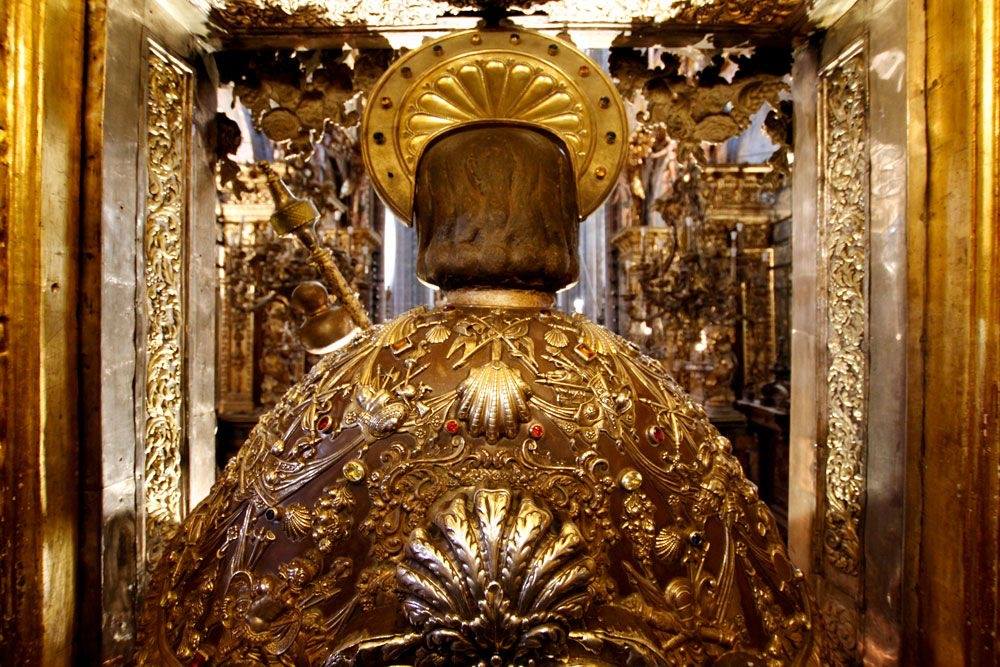
A pilgrim hugging from the back the statue of Santiago de Compostela after completing his el camino.

Here we find St. James the Greater being present to two major stops in Jesus Christ’s journey to the Calvary: first, on Mount Tabor for his Transfiguration and second, at Gethsemane for his agony in the garden. In both events in the life of our Lord, St. James the Greater was a privileged witness, first of his coming glory and then of his passion and death.

It would only be after Easter and the Pentecost when all these major stops in his personal journey with Christ when everything would become clear to him and the other Apostles.

All along their journey from the shores of Galilee to Jerusalem, St. James the Greater remained by the side of Jesus Christ, probably unaware of another journey with the Lord taking place right inside his heart to truly be a part of his Kingdom by sharing in his Passion, Death, and Resurrection.

For his faithful adherence to Jesus from Galilee to Jerusalem, St. James the Greater again had the rare privilege like at Mount Tabor and Gethsemane in being the first to die as a martyr proclaiming the Gospel of Christ which is the meaning of the expression of “drinking from the chalice” of the Lord.

Sometimes in life, we just have to make “sakay” as my generation used to say, “sakay lang ng sakay” or “ride on, man, ride on” without really knowing where our trip would lead us. St. James just made “sakay” without knowing Jesus was already fulfilling his wish of “drinking from his chalice”.

Photo by Fr. Gener Garcia, sculpture of a pilgrim’s feet at Santiago de Compostela museum, 2019.

St. James the Greater was truly great not because of the distances in miles or kilometers he had covered with Jesus from Galilee to Jerusalem and all the way to Compostela in Spain; we honor him today because of that great journey he had undertaken within him, in his heart to remain always at the side of Christ even if had to smoothen his many rough edges as a person, and cleanse his heart as a sinner like us.

That is the most important journey we are all taking in this life, the journey within us.

The longest journey in life is the distance between the heart and the mind.

Former UN Sec.Gen Dag Hammarskjold in “Markings”

My friend Fr. Gener Garcia last year went to Santiago de Compostela to follow the el camino with our kababayan Bishop Bart Santos of Iba, Zambales and Fr. Jaypee Avila assigned as a chaplain for OFW’s in Milan, Italy.

He is so generous to share with us his photos of their pilgrimage as well as his experiences and realizations in life. According to him, on the four sides of the sculpture of the pilgrim’s feet in front of the museum of Santiago de Compostela is the following quotation:

Marker along the el camino de Santiago de Compostela.

Camino recto, camino erguido, camino buscando un sentido. Camino porque tengo un objetivo, y no parare hasta alcanzar mi destino.

(I walk straight, I walk upright, I walk looking for meaning. I walk with a purpose and I won’t stop until I meet my destiny.)

The pilgrim’s journey is the same one you and I are on. Know your goals and understand your challenges. Face them head-on, tackle them with intention, and never give up.

Do you know what your purpose in life is? What would you say if someone ask you what your destiny was?

Santiago de Compostela Museum of Pilgrims

Have a blessed Saturday everyone!

*All photos by Fr. Gener Garcia, 2019.

Let Christ possess us

The Lord Is My Chef Sunday Recipe for the Soul by Fr. Nicanor F. Lalog II
XIIIth Sunday in Ordinary Time, Year A, 28 June 2020
2 Kings 4:8-11, 14-16 >><)))*> Romans 6:3-4, 8-11 >><)))*> Matthew 10:37-42
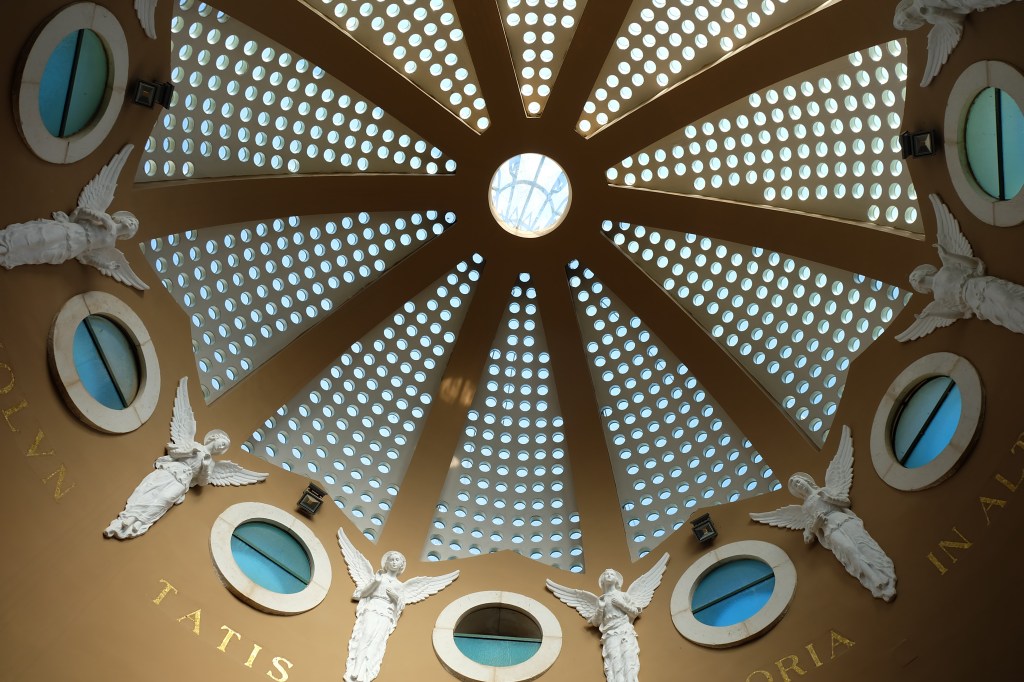
Photo by author, Dome of the Chapel of Nativity at Shepherd’s Field, Bethlehem, the Holy Land, May 2019.

Jesus continues his lessons to us his disciples being sent to look for the “lost sheep of Israel”, to be not afraid for he is with us in this journey and mission. But, it is not enough that we have Jesus on our side and be present among us: we have to allow Jesus to take possession of us completely!

From having no fear because Jesus is here, Christ now deepens his presence by inviting us to be possessed by him, to be in communion with him.

Jesus said to his disciples: “Whoever loves father and mother more than me is not worthy of me, and whoever loves son or daughter more than me is not worthy of me; and whoever does not take up his cross and follow after me is not worthy of me. Whoever finds his life will lose it, and whoever loses his life for my sake will find it.”

Matthew 10:37-39
Photo by author, processional Cross at the altar, 2019.

The Mystery of the Cross

Discipleship in Jesus Christ is more than a total allegiance to him who is neither a demanding nor exacting Lord and Master for he does not arbitrarily impose himself upon us.

Nothing like that of subservience but something more lofty because it is wrapped in a mystery — a mystery of love freely given and shared to us by God even if we do not deserve it all. Remember the mystery of the Blessed Trinity four Sundays ago (June 07)?

Ever since, God has never imposed himself upon us, that we should love him back in return for he does not really need our love. He gave us the gift of freedom so that we may love him freely for he never imposes on us.

And here lies the beauty of discipleship, of this relationship we have with God that is based solely on love expressed to us in the most personal manner by giving us his Son Jesus Christ who suffered and died on the Cross but rose again on Easter. This we were reminded by the Solemnities of the Body and Blood of Jesus and of his Sacred Heart last June 14 and 19 respectively.

Now you see my dear readers the clearer picture of our liturgical celebrations expressing our concrete experiences of being loved by God in Jesus Christ most especially during times of trials and sufferings like in this COVID-19 pandemic.

It is Christ who made the initiative to be one with us in our pains and sufferings; God did not remove our crosses in life but made them holy in his Son Jesus Christ so that every time we go through life’s many difficulties, we share in the Lord’s Passion, Death, and Resurrection.

That is why, we are invited to take and carry our cross every day for it is through the Cross we are saved. It is not enough to simply believe in the person of Jesus but we need to accept and embrace his Cross because it is through which he had won our salvation by dying on it and rising again.

This is easier said than done. It is so difficult to love Jesus more than our loved ones like family and friends. And it is most difficult to love the Lord more than our selves, when we have to let go of our plans and agenda.

Letting go and letting God in itself is already crucifying — but that is when this mystery of Christ’s love and of his Cross deepens further when we lose ourselves in him!

Celebrating Mass without te congregation during the ECQ, March-April 2020.

Possessed by Christ

To be possessed by Jesus is to receive God and his gift of salvation through the mystery of Christ and his Cross. Like our Christian life, proclaiming the gospel carries with it the sign of the Cross of Christ.

We are not asked to reenact or reproduce his Crucifixion nor is Jesus asking us to be suicidal or go against our natural aspirations and dreams.

To be possessed by Jesus means we continue to take care of ourselves without neglecting the needs of others.

To be possessed by Jesus means being generous to others in the same manner Jesus has always been generous to us.

To be possessed by Jesus means to realize that every act of self-giving is really an act of receiving!

Photo by author, Malagos Park, Davao City, 2018.

That is the paradox of the Cross, of discipleship in Christ: “Whoever finds his life will lose it, and whoever loses his life for my sake will find it” (Mt.10:40).

And that is also where the mystery of Christ’s love deepens because whatever we give is not really ours but Christ’s.

Every time we give love, it is the love of Jesus.

When we are kind and generous with others, it is the kindness and generosity of Jesus we give and share.

When we are patient and understanding to others, it is still the patience and understanding of Jesus in us.

Even if we give and share material things like money, food, clothing… whatever good we share and give are all from Jesus not from us.

And the more we give, the more we receive!

Have you noticed especially during this pandemic how the generous among us are now more blessed?

Wonder no more because you have allowed yourself to be possessed by Jesus Christ!

This is what the woman at Shumen had realized after welcoming the Prophet Elisha into her home in our first reading. She even gave him a room to stay every time he comes for his mission while the Lord provided all her needs, even rewarded her with a son as promised by Elisha.

When we allow Jesus to take over us, when we enter into communion in him and with him in his very life, we become more free to love, we strengthen our relationships with others, we wander less and worry less in life; most of all, we feel lightened in our burdens with the presence of Jesus giving us fullness of life in him.

This is the grace I hope we have seen from this quarantine period, especially those two months of lockdown when were freed from our usual grind and busyness with more time to be silent and still, to pray and reflect on our relationships with God and with others. It was a difficult and very trying period that had given in return a lot of opportunities to others.

Photo by author, Marcos Highway, 2019.

Dead to sin, alive to God

Brothers and sisters: We know that Christ, raised from the dead, dies no more; death no longer has power over him. As to his death, he died to sin once and for all; as to his life, he lives for God. Consequently, you too must think of yourselves as dead to sin and living for God in Christ Jesus.

Romans 6:9-11

It has been four months since houses of worship were ordered closed to help stop the spread of the corona virus. Somehow, the lockdown had made us realize the importance of receiving the Sacraments especially the Holy Eucharist.

But, sacraments are not everything for we have the bigger roles of putting into practice its reality of being the saving presence of Jesus Christ.

Now that lowly life is beginning to go back to its usual grind especially the traffic, soon we might forget again the more important things in life like God and our relationships in our family and friends that it is hoped we have rediscovered during the quarantine period.

That is why I strongly feel the government must now allow Churches to open so the people may experience again God in the sacraments and in our rites and rituals lest they get busy again with so many things only to miss finding anew the meaning of our lives found in silence and stillness before the Cross of Christ.

It is my hope that in this quarantine period, may we find through the Cross of Jesus that when we learn to submit and surrender to him, that is when we truly become free; and, when we lose and give away our lives to him, that is when we gain fullness of life in him. Amen.

A blessed week and a more abundant July to everyone!

Countdown sa Pasko sa gitna ng COVID-19 lockdown

Lawiswis ng Salita, Miyerkules, Dakilang Kapistahan ng Pagbabalita ng Pagsilang ni Hesus, 25 Marso 2020

Isaias 7:10-14; 8:10 +++ Hebreo 10:4-10 +++ Lukas 1:26-38

Painting ng Pagbabalita ng Anghel kay Maria ng Pagsilang ni Hesus sa harapan ng Basilica ng Annunciation sa Nazareth, Israel. Larawan kuha ng may-akda, Mayo 2017.

Wala akong kahilig-hilig sa ano mang countdown ngunit kagabi sa aking pagninilay ng Dakilang Kapistahan ng Pagbabalita kay Maria ng Pagsilang ng Mesiyas, bigla ko naisip siyam na buwan na lamang mula ngayon ay Pasko na ng Pagsilang!

Kaya… Merry Christmas sa inyong lahat ngayon pa lamang!

Naisip ko tama lang isipin na natin ngayon siyam na buwan bago ang Pasko ng Pagsilang sa gitna ng lockdown sanhi ng COVID-19 upang magbago ating kamalayan sa Christmas countdown sapagkat higit pa sa petsa ang Disyembre 25 — ito ay isang kaganapan o “event” wika nga sa Inggles na nangangahulugan din ng “fulfillment” o kabuuan.

Ang Pasko ay si Hesu-Kristo, ang Diyos Anak na nagkatawang-tao!

Sinasabi na maraming binabago sa buhay ang COVID-19 at una na rito ang “back to basics” tulad ng paghuhugas ng mga kamay palagi, pagsasama-sama ng pamilya, at taimtim na pananalangin.

At isa sa mgapangunahing basic ng buhay ay ang Diyos na nagkatawang-tao, si Hesus. Dapat nating mapagtanto muli na bagaman dumating na si Hesus 2000 taon na nakalipas, patuloy pa rin siyang dumarating sa piling natin at muling darating sa wakas ng panahon.

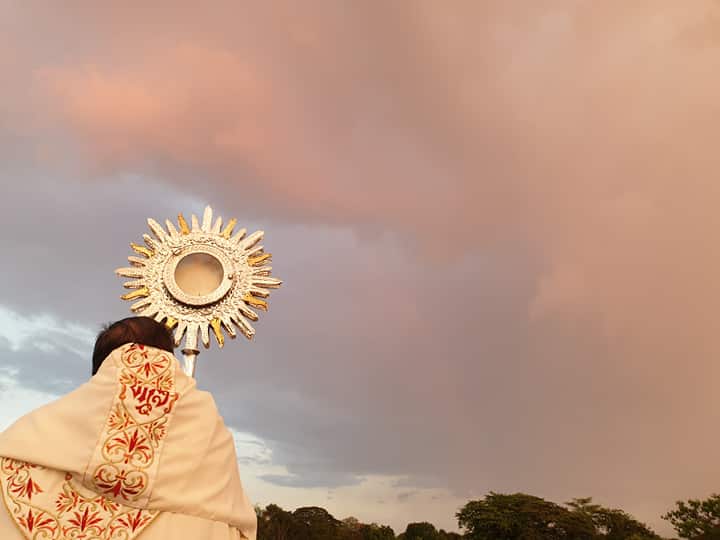
Paglibot ng Santisimo Sakramento sa Parokya ni San Juan Apostol at Ebanghelista, Bagbaguin, Santa Maria, Bulacan noong 22 Marso 2020. Larawan kuha ni Bb. Ria De Vera

Si Kristo ay dumating, dumarating, at darating sa tao na bukas ang puso at kalooban

Isang mabuting halimbawa ang ipinakita sa atin ng Mahal na Birheng Maria nang ibalita sa kanya ng Anghel Gabriel ang mabuting balita ng pagsilang niya kay Hesus na ating Tagapagligtas. Tatlong bagay ang ating nakikita rito.

Una ang kanyang pagiging bukas palagi sa salita at kalooban ng Diyos.

Kapag pingninilayan ko ang tagpong ito ng ebanghelyo ayon kay San Lukas, palagi ko naiisip na mas malamang nananalangin noon ang Birheng Maria.

Kaya paulit-ulit ko na sinasabi sa inyo mga ginigiliw ko, lalo na mga magulang na gamitin ang pagkakataong ito ng lockdown na ituro muli ang mga dasal na nakalimutan na ng mga bata. Higit sa lahat, magdasal ng sama-sama tulad ng pagrorosaryo. Mamyang alas-7:00 ng gabi, sabay-sabay tayo sa buong daigdig makiisa sa panawagan ni Papa Francisco na dasalin ang “Ama namin” kontra sa COVID-19.

Tanging sa pananalangin lamang natin mapapakinggang tunay ang kalooban ng Diyos sa atin.

Ikalawa ang pagtanggap ng Mahal na Birheng Maria sa salita at kalooban ng Diyos.

Hindi sasapat ang pananalangin lamang; kung hindi rin naman pumayag si Maria sa hiling ng Diyos na maging Ina ni Hesus, wala ring Pasko at hanggang ngayon marahil inaabangan pa natin ang Kristo.

Katulad ng Mahal na Birheng Maria, nawa tayo man ay pumayag at sumang-ayon sa hinihiling sa atin ng Diyos. Gaya ni Maria, masabi rin natin ang matamis na pananalita niya sa anghel matapos mapakinggan ang mabuting balita, “Maganap na nawa sa aking ang iyong mga sinabi” (Lk.1:38).

Ikatlo, pinangatawanan ni Maria ang kanyang “Oo” o “Opo” sa Panginoon.

Masdan mabuti ang huling talata ng ebanghelyo sa araw na ito: “At iniwan siya ng anghel” (Lk.1:39).

Tingnan ninyo ang lahat ng nasusulat sa Bagong Tipan: wala nang ibang pagkakataon na ang anghel ay nakipag-usap pa muli kay Maria! Kay San Jose at mga Apostol tulad ni San Pedro, ilang ulit nagpakita ang anghel upang liwanagin mga gawain nila. Nguni’t si Maria pagkaraan nito ay naiwan nang mag-isa sa kanyang matibay na pananampalataya sa Diyos!

Ang tanging sigurado lang si Maria ay ang pangalang ibibgay sa kanyang sanggol na Hesus. Maliban dito ay pawang pagtitiwala at pananalig ang umiral kay Maria na naging tapat sa pagsunod sa Diyos hanggang sa mapako sa Krus si Hesus. Kaya naman sa kanya unang nagpakita si Hesus na muling nabuhay sapagkat si Maria ang unang tunay at lubos na nanalig sa kanya, sa salita at sa gawa.

Ang lugar kung saan binati ng anghel si Maria na ngayon ay nasa ilalim ng Basilica ng Annunciation sa Nazareth. Larawan ay kuha ng may-akda, Mayo 2019.

Hamon ng Ebanghelyo

Nakakatuwa ang maraming balita ng mga taong nagsasakripisyo, naglalaan ng sarili para sa kapwa sa gitna ng pandemiyang COVID-19. Una na sa kanila ang mga tinaguriang frontliners na health workers – mga duktor, nars, med tech, at lahat ng naglilingkod sa mga pagamutan.

Kahapon ay naikuwento ko sa inyo isang tindero ng saging na hindi nagtaas ng presyo bilang tulong niya sa lockdown na umiiral.

Kaibayo naman nito ang napakalungkot at masakit – at nakakapikon! – na mga balita ng mga mapagsamantalang tao sa gitna ng krisis.
Unang-una na ang mga halal na upisyal ng bayan sampu ng kanilang mga pamilya na nagpa-VIP treatment para sa COVID testing. Gayun din iba pang upisyal ng bansa na hanggang ngayon ang inaatupag ay sariling kapakanan habang buong bayan ay nagdurusa.

Sila ang mga makabagong Haring Acaz na noon ay kunwari tumangging humingi ng palatandaan mula sa Diyos kung tunay niyang ililigtas ang Israel. Ang totoo, nakipag-alyansa na si Haring Acaz sa mga katabing bansa laban sa Assyria gayong kabilin-bilinan sa kanya ni Propeta Isaias na magtiwala sa Diyos lamang. Batid ng Diyos ang katotohanan at kunwari’y tiwala si Haring Acaz sa kanya!

Kahapon sinabi ng Punong Ministro ng Italya na siyang bagong sentro ng COVID-19 na lahat ay nagawa na nila sa lupang ibabaw laban sa pandemiyang ito; inamin niyang wala na silang maaring takbuhan ng tulong kungdi ang Diyos sa langit.

Alalahanin natin na hindi sapat ang basta manalangin.

Katulad ni Maria, atin nawa maisabuhay ang pagiging bukas palagi sa Diyos sa pakikinig sa kanyang tinig at higit sa lahat, pagsang-ayon dito at paninindigan sa pamamagitan ng ating mabubuting gawa.

Manalangin tayo:

Larawan kuha ni Bb. Anne Ramos, 22 Marso 2020, paglibot ng Santisimo Sakramento sa Parokya ni San Juan Apostol at Ebanghelista, Bagbaguin, Santa Maria, Bulacan.

O Diyos Ama naming mapagmahal, kami ay nagpapasalamat sa pagbibigay mo sa amin sa iyong Anak, ang Panginoong Hesu-Kristo na siyang aming kaligtasan lalo’t higit sa panahong ito ng COVID-19.

Buksan po ninyo aming puso at kalooban katulad ni Maria upang manahan din sa amin si Hesus, gawin niyang luklukan ang aming mga puso at kalooban.

Bigyan mo rin kami ng tapang at pananampalataya tulad ni Mari upang lahat ng aming sasabihin at gagawin ay pawang nilalayon at kalooban ng Panginoong Hesus.

Maging matatag nawa kami tulad ni Maria na samahan si Hesus hanggang paanan ng Krus upang mapanindigan kanyang kalooban sa kapangyarihan ng Espiritu Santo. Amen.

That “Eureka!” moment of life – and death

The Lord Is My Chef Recipe for the Soul

Homily at the Funeral of Archimedes Lazaro (ICS ’97), 18 February 2020

Wisdom of Solomon 3:1-9 ><)))*> 0 <*(((>< Luke 7:11-17

Photo by Pixabay on Pexels.com

Soon afterward Jesus journeyed to a city called Nain, and his disciples and a large crowd accompanied him. As he drew near to the gate of the city, a man who had died was being carried out, the only son of his mother, and she was a widow. A large crowd from the city was with her. When the Lord saw her, he was moved with pity for her and said to her, “Do not weep.” He stepped forward and touched the coffin; at this the bearers halted, and he said, “Young man, I tell you, arise!” The dead man sat up and began to speak, and Jesus gave him to his mother. Fear seized them all, and they glorified God, exclaiming, “A great prophet has arisen in our midst,” and “God has visited his people.”

Luke 7:11-16

Today, we are like at the city of Nain. Traffic is so heavy outside as many of us – family and friends, former classmates, colleagues at work from all over and neighbors – gather to pray and pay our last respects for Archie.

Celebrating a funeral Mass for a young person is always difficult for me. Like Jesus, I feel so sad for their parents. Normally, it is the children who bury their parents. It must be so painful for parents burying a son or a daughter. That is why in our gospel, Jesus was “moved with pity” with the widow of Nain.

But today, amid the pains and sorrows with the sudden death of Archie last week at a very young age, we actually celebrate life in Jesus Christ.

Photo by author of the hills of Galilee from the Walls of Jerusalem, May 2017.

Jesus comes to visit us always

Like in that scene at Nain, we remember and celebrate the life of Archie who had come to visit us even for a short time.

I love that part of the gospel where the people at Nain exclaimed at how “God has visited his people” when Jesus raised the dead young man.

Jesus continues to visit us everyday through one another like Archie.

Despite his many sins and imperfections, Archie made us experience Jesus Christ’s love and friendship, warmth and kindness, especially to his two sons, family, and friends.

Surely, Jesus must have visited Archie, too, during those dark moments of his life.

And the good news is, Archie visited Jesus so often especially these last two years when he started to pick up the pieces of his life.

Last time I saw Archie was last November when he came to celebrate Mass in our Parish. And I have heard how he had sought spiritual guidance from Fr. Carl, driving that far to Paco every month as he renewed his relationship with Christ, trying to follow anew the Lord he had served since elementary as a sacristan and later as a seminarian in our high school seminary.

It is Jesus who first finds us always

Photo by author at Mt. St. Paul Spirituality Center, Baguio, 04 February 2020.

We all know Archie’s tocayo is one of ancient Greece’s great scientist and inventor, Archimedes.

It is said that he discovered the principle of buoyancy – the “Archimedes’ principle” – while taking a bath.

When Archimedes sat onto his bathtub, he observed that “when a body is submerged in a fluid, it experiences an apparent loss in weight that is equal to the weight of fluid displaced by the immersed body.”

Archimedes was so ecstatic with his accidental discovery that he jumped naked from his bathtub out to the streets, shouting “eureka!” or “I have found” the solution to a problem he was trying to solve at that time.

Archimedes had not only enriched the field of mathematics and sciences with his discoveries but also the English language with the word “eureka” or “eureka moment”: when somebody discovers something very significant in business and economics, the sciences especially medicine, and practically in every field and subject.

Most especially in life.

Photo by author, Mt. St. Paul Spirituality Center, Baguio, 04 February 2020.

Archie had the same eureka moment in life: he had found Jesus Christ again that he went back to Mass and Confessions.

He had found meaning in life again after losing hope and directions.

Most of all, Archie had found love again.

Like his namesake of ancient Greece, Archie is now exclaiming “eureka” ecstatically into heaven – naked – with nothing but the love and mercy of Jesus Christ who first found him and brought him back to life a few years ago.

Today as we bring the remains of Archie into his final resting place, we thank God who never stops looking for us, finding us so that we can find him again and finally rest in him.

Today it is Jesus who is most ecstatic of all because he is the first to have found Archie and that is why, he had called him back to him, never to get lost again.

But the souls of the just are in the hand of God, and no torment shall touch them. They seemed, in the view of the foolish, to be dead; and their passing away was thought an affliction and their going forth from us, utter destruction. But they are in peace. In the time of their visitation they shall shine.

Wisdom of Solomon 3:1-3, 7

Amen.

Keep Christmas Alive

The Lord Is My Chef Recipe for the Soul, 01 January 2020

Wednesday, Solemnity of the Blessed Virgin Mary, Mother of God

Numbers 6:22-27 ><}}}*> Galatians 4:4-7 ><}}}*> Luke 2:16-21

Photo by Rev. Fr. Gerry Pascual, Minor Basilica of the Immaculate Conception, Washington DC, 2017.

Today marks the octave or eighth day of Christmas when we celebrate the Solemnity of the Blessed Virgin Mary, Mother of God.

Octave means we extend the celebration of Christmas Day into eight days because one day – December 25 – is not enough to reflect on the meaning and mystery of the Incarnation of the Son of God.

The eighth day also signifies eternity which comes next after the seven days of the week.

Hence, whenever people greet me on this day with a “Happy New Year”, I just say “thank you” and then greet them too with “a blessed Christmas to you” or the usual “Merry Christmas”!

I am not disturbing your peace this Christmas and it is more than my being a “language nerd” – but, if you really want to appreciate more and experience the depth and the joy of Jesus Christ’s birth, stop that happy new year greeting.

The more proper and perfect greeting this January 2020 is still “blessed Christmas” or “Merry Christmas” because it is another year in the Lord Jesus Christ.

And here we find the very important and deeper meaning of Christmas: do not ever forget it is about Jesus Christ. Christmas is not about gifts and bonus, it is not about food and merry making, it is not about vacation and long weekends.

Christmas is all about Jesus Christ, the Son of God who became human like us in everything except sin in order to save us and bring us back to the Father in heaven. In his coming, it is not only us who were made holy but even our time that became “his story”.

Indeed, Jesus Christ is the reason of the Season. Let us maximize in greeting “Merry Christmas” and stop its abrupt ending with the coming of the new year that after all, is based on his birth that is why we call it “Anno Domini” (AD) or “year of the Lord”.

Nativity Scene at the National Shrine of the Minor Basilica of the Our Lady of Mt. Carmel, Quezon City. Photo by author, 30 December 2019.

Why stop greeting everyone with a happy new year

Keep greeting everyone with “a blessed Christmas” or a “Merry Christmas” until January 12, last day of our Christmas Season with the Baptism of the Lord.

In the Philippines, you may continue greeting people with Merry Christmas until January 19, Feast of the Sto. Nino which is an extension of the Christmas Season in our country granted by Rome.

Furthermore, for the lazy among you, you can have the excuse of not removing your Christmas decors until February 02, Feast of the Presentation at the Temple because chronologically, that is the precise moment when Christmas Season ends. That is why, the giant Christmas Tree at the Vatican’s St. Peter’s Square is traditionally removed only on this date.

Also, please stop announcing in churches about the Mass tonight and tomorrow as “New Year’s Mass” because there is no Mass for New Year.

Though our Sacramentary offers prayers for Mass at New Year, the same book stipulates that “this cannot be celebrated on January 1 because it is the Solemnity of the Blessed Virgin Mary, Mother of God.”

Basic reason why we should not be greeting one another with a happy new year on January 1st is the fact that we celebrated our New Year in the Church during the First Sunday of Advent, that Season of four Sundays when we prepare for Christmas.

Remember, Advent has two aspects: from First Sunday of Advent until December 16, our focus is on the Second Coming of Christ or Parousia at the end of time. Nobody knows when it will be, not even Jesus Christ except the Father in Heaven. Then, from December 17 to 24, we enter the second aspect of Advent which is the focus on the first coming of Jesus when he was born in Bethlehem more than 2000 years ago. All the readings on these days center on the events and stories leading to Christ’s birth.

So my dear reader and follower, we start each year in the Church preparing for the coming of the King of kings and we end the year with Solemnity of Christ the King.

To be exact, we start and end each year in Jesus Christ, not in numbers.

Every day of the year is a Christmas in essence, a coming of Jesus Christ.

And for us to continue this beautiful story of Christmas especially on these first 19 days of 2020, the Blessed Virgin Mary, the Mother of Jesus Christ who is true God and true Man, teaches us the way to keep this spirit of bringing the Savior into the world even beyond December 25 and January 1.

The shepherds went in haste to Bethlehem and found Mary and Joseph, and the infant lying in the manger. When they saw this, they made known the message that had been told them about this child. All who heard it were amazed by what had been told them by the shepherds. And Mary kept all these things, reflecting on them in her heart.

Luke 2:16-19
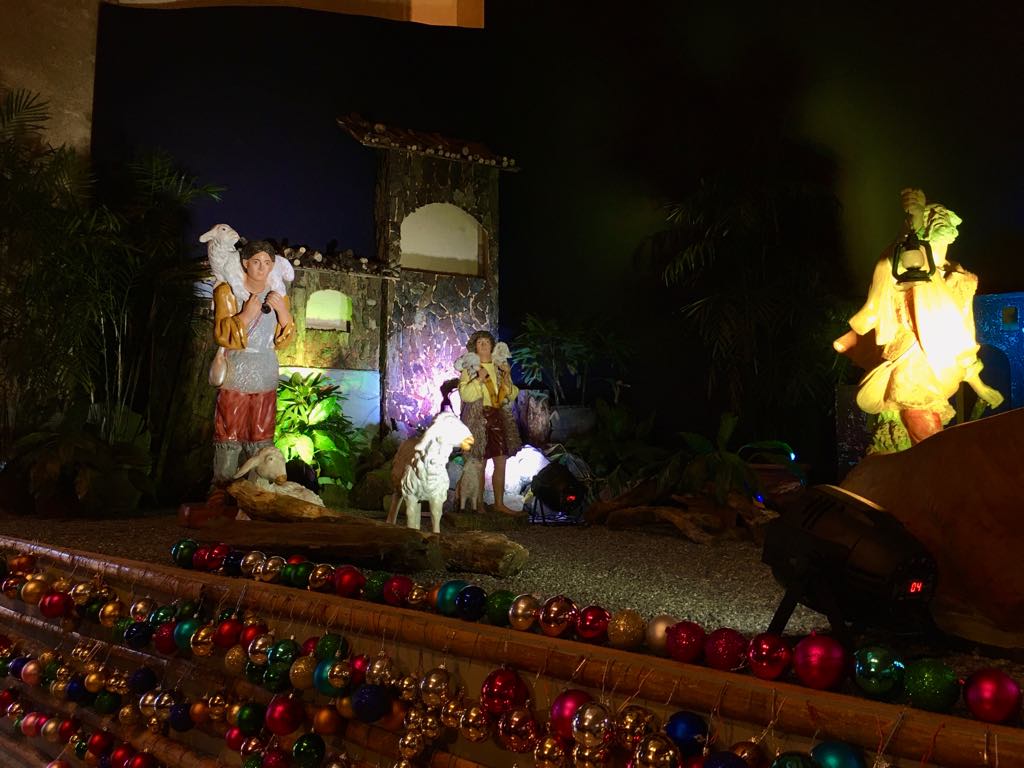
Shepherds approaching the Nativity Scene at the National Shrine of the Basilica of Mt. Carmel, Quezon City. Photo by author, 30 December 2019.

Mary to guide us through another year closer to Jesus

A natural reason we have for cutting short our greetings of Merry Christmas to one another is the very close proximity of December 25 with the New Year. Though the civil calendar also came from the Church, in a sense the start of the year has been made holy by its closeness with Christmas.

Rightly then, all the more we find the reason to keep on greeting Merry Christmas than happy new year!

Notice the sudden shift from the holy and transcendent so evident in just a span of one week that personally, I feel we have to promote all the more a stop in this greeting of happy new year at Christmas Season.

How easily we can forget the wonder and awe of Christ’s birth!

See how from our rich liturgical celebrations of Advent and Christmas then suddenly this last seven days of the year, we turn to pagan practices to usher in the new year?

Have we become like the shepherds who came to Jesus only at his brith and never to be mentioned again in the entire account of St. Luke?

What happened?

A shepherd near the Nativity Scene at the National Shrine and Basilica of Our Lady of Mat. Carmel in Quezon City. Photo by author, 30 December 2019.

Mary guides us to the true meaning of Christ’s birth and of the new year that closely comes after Christmas. See how St. Luke narrated the attitude and disposition of Mary, the Mother of Jesus Christ our Lord and God:

And Mary kept all these things, reflecting on them in her heart.

That’s the problem with our Christmas celebrations: after December 25, we go back to “normal lives” which is more of living without Jesus, of getting into the daily grind of life away from Jesus.

Like us, Mary did not know what was really ahead of her with the birth of Jesus: she had no idea about his being lost at the temple, of his being tempted by the devil, of his being rejected and killed by his own people despite his many healings and other miracles.

Mary simply believed in Jesus. And that is why she is blessed according to Elizabeth, because she believed the words spoken to her would be fulfilled.

Mary had nothing certain about her coming year, of her life except the name to be given to her Son, Jesus which means “God is my Savior”.

The same is true with us! We do not know if we will still be together until December or at least in January 2021. We do not know who would get married this year, who would be migrating to another country, who will hit it big time in business or whatever.

Stop consulting fortune tellers because they know nothing about the future! Only the Father of Jesus knows everything that is going to happen. And he had sent us his Son Jesus to make sure that through everything that is going to happen, none of us would ever be lost (Jn.6:39).

Like Mary, we have only one surety and security this 2020: Jesus Christ, our Lord and God living with us!

Let us focus this year in Jesus Christ and his words of salvation.

And that is the challenge of Christmas of the new year 2020: that every day, despite all the good news and bad news we hear and encounter in life, we make that conscious decision to trust in Jesus that good is coming to us for his name means God is my Savior.

Like Mary, let us lose ourselves every day in this wonderful moment of Christmas of looking at the child Jesus inviting us to be caught up in his joy of coming, to fear not of the new year ahead for he has come precisely to be one with us.

May we stay with him, keep his words in our hearts like Mary by reflecting on their meaning trusting and awaiting their fulfillment.

Let us not leave Jesus like the shepherds, though, they were the first to see the Lord at Christmas, they missed his full glory of resurrection because they never went back to him again.

Have a blessed and Merry Christmas!

From the inside of the Church of the Nativity in Bethlehem, the small doors that require pilgrims to humbly bow first to enter the church and find Jesus. Photo by author, May 2019.

Blessed be God forever!

The Lord Is My Chef Simbang Gabi Recipe, 24 December 2019

2 Samuel 7:1-5, 8-12, 14, 16 ><)))*> <*(((>< Luke 1:67-79

Marker on the Church where St. John the Baptist is believed to have been born in Ein Karem, Jerusalem. Photo by author, May 2019.

At last!

These are most likely the two words we must be saying today on this ninth day of our Simbang Gabi.

Finally, we have completed the nine day novena to the birth of our Savior Jesus Christ for tonight will be Christmas.

But, more than being the last day of our novena, today is also the beginning of better days ahead for us all starting with Christmas!

From this day on, let us imitate Zechariah in his new found faith, hope and love in God expressed in his song of praise and thanksgiving after recovering his sense of hearing and speaking after nine months of forced silence.

“Blessed be the Lord, the God of Israel, for he has come to his people and set them free. He has raised up for us a mighty Savior, born of the house of his servant David.”

Luke 1:68-69
Sunrise at the Lake of Galilee, the Holy Land. Photo by author, May 2019.

Three canticles of praise, three prayers of faith

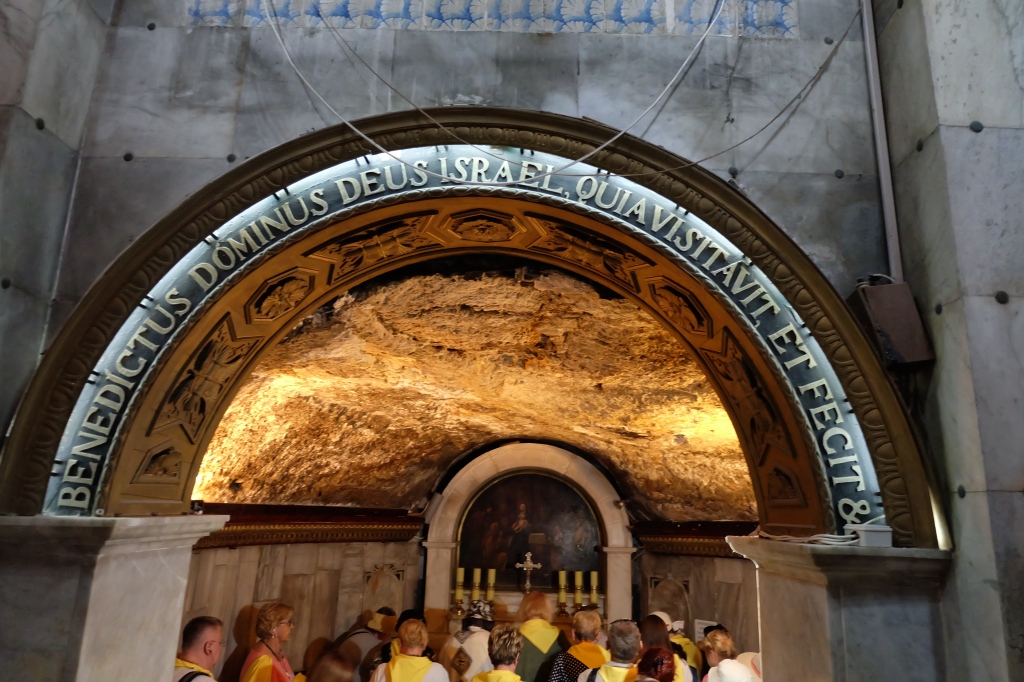
Popularly known as the Benedictus from its Latin opening verse “Blessed be God”, this is the second of the three canticles St. Luke tells us Zechariah had sang after naming his son “John”.

The other two songs are the Magnificat by Mary during her Visitation of Elizabeth and the third is the Nunc Dimittis by Simeon upon seeing the child Jesus during his presentation at the Temple of Jerusalem.

These canticles or songs make up the beautiful Christmas story by St. Luke who put them onto the mouths of Mary, Zechariah, and Simeon to signify their being filled with the Holy Spirit in experiencing the coming of Jesus Christ: Mary sang “my soul proclaims the greatness of the Lord” during the Visitation in response to the praises by Elizabeth (Lk.1:46-55) while Simeon the prophet prayed to God to “let him go in peace” – to die – after seeing the coming of the Savior (Lk.2:29-32).

These eventually became part of the prayers of the Church (Liturgy of the Hours) we priests and religious are obliged to pray day in, day out:

  1. Benedictus in the morning to show how willing are we to face the new day by making our Savior Jesus Christ present in our lives like St. John the Baptizer, his precursor;
  2. Magnificat in the evening to praise and thank God in working his salvation in us through Jesus Christ;
  3. Nunc Dimittis at night before bedtime to signify our readiness to die and finally be one with God in Jesus Christ.

They are our “spiritual vitamins” that fill us with the Holy Spirit to strengthen and deepen our relationship with the Father in Jesus Christ which every Christian may pray too to experience and be one with God daily.

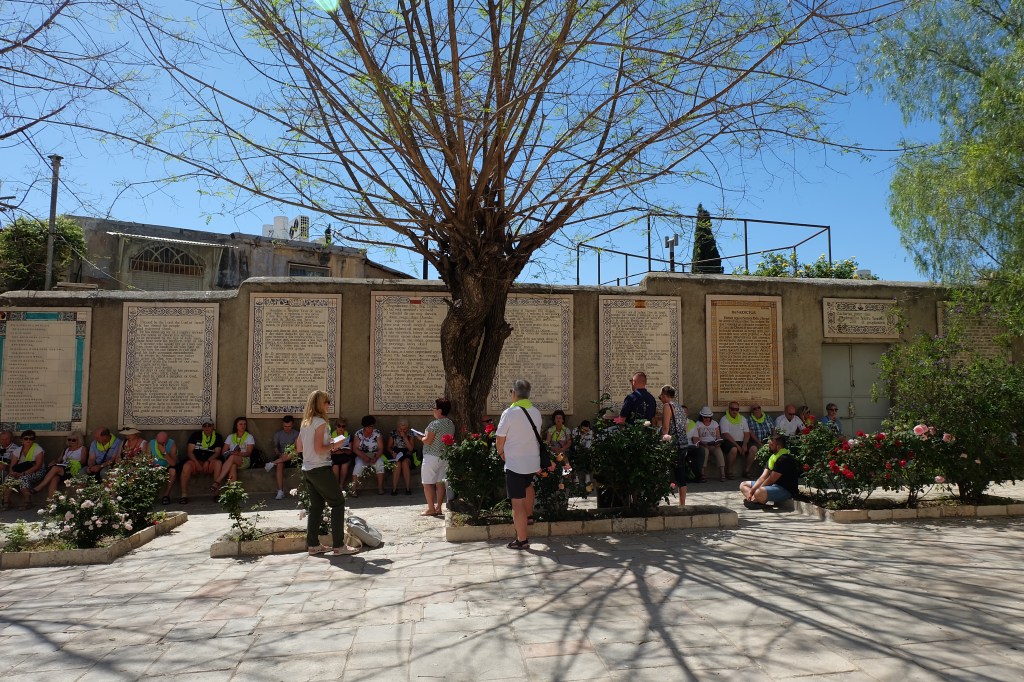
Pilgrims waiting outside the Church of St. John the Baptist in Ein Karem, Jerusalem. On the walls are the translation into different languages of the world, including Filipino, of Zechariah’s Benedictus. Photo by author, May 2019.

Why God is blessed according to Zechariah

The Benedictus signifies Zechariah’s coming to full circle after nine months of forced silence after doubting the angel’s message that he and Elizabeth would finally have a son.

Our sacristy, Advent 2019.

In singing the Benedictus, Zechariah did not only recover his power of speech but most of all showed the fruits of his nine months of silence and prayer preparing for the birth of his son John as well as, ultimately, for Christ’s coming (his song indicates it).

Finally, Zechariah has been healed of his pains and hurts that prevented him in experiencing God, in believing in his powers again, giving him more reasons to hope and be joyful.

This is the reason we also have the Advent Season when we try to dispose ourselves more to Christ’s coming to us not only at Christmas but everyday in our lives.

Zechariah mentions three powerful verbs why he praised God: for he has come to his people, set them free, and has raised up a mighty Savior.

God has come to us

Zechariah first experienced God coming to him when the angel announced to him John’s birth while incensing at the temple during the Day of Atonement. Unfortunately, he was “absent” at God’s “presence” that he questioned how Elizabeth would bear a child.

Everything now changes not only because he had seen his own son but he himself experienced God’s coming in his life.

Sometimes, our pains and hurts, frustrations and disappointments, defeats and failures blind us, numb us that we cannot see, we cannot experience God coming to us in every brand new day he gives us, through the people we meet with their smiles and greetings, with our family and friends who have have stayed with us in good times and bad.

Every morning we wake up to reminds us God has come to us. Rise and meet him in joy, entrust the new day to him, and ask for the grace to remain in him!

God has set us free

Every time God comes, there is always freedom – freedom from evil and sin, freedom from the past and all its pains and hurts, freedom from guilt feelings, freedom everything that prevents us from being truly free to be our own, good sel, to be free and faithful to love and forgive others too.

Carmelite Monastery, Guiguinto, Bulacan. Photo by author, November 2019.

Literally speaking, Zechariah felt free again to speak and express himself fully. But more than that is the experience to go and live fully in God.

We can never experience Christmas if we cannot assert this freedom Christ had won for us when he died on the Cross. Forget all those “hugot” lines and move forward with life.

The name of God is “I AM” because he is always in the PRESENT, never in the past nor in the future.

That is why each new day is a gift, a present from God who as set us free from yesterday’s mistakes and failures and sins.

Go and be free for God!

God has raised up for us a mighty Savior

Christmas is not a date but an event, a person we experience in Jesus Christ who is a dialogue himself according to Pope Emeritus Benedict XVI. Jesus is always communing with us, inviting us to be one in him in his love.

In his Benedictus, Zechariah is also professing the saving work of God in Jesus Christ who became human like us in everything except sin. God is so blessed because of his great love for us, he chose to enter, or intervene into human history to bring us into eternal life by faith in Christ Jesus.

To raise up is a strong term also indicating the Paschal mystery Christ will go through, the ultimate communion of God into our own lowliness of suffering and death to bring us into the glorious victory of his resurrection.

Every morning, every day we are reminded by Zechariah of the words of the angel Gabriel to Mary regarding the birth of John: nothing is impossible with God.

And Zechariah had experienced this first hand when his barren and old wife Elizabeth conceived their child John.

May we have a renewed faith, hope and love in God at the closing of our Simbang Gabi this year. Like David in the first reading, rest be assured of God’s plan for each of us. Let us be patient to wait and prepare always for his coming like Zechariah even in his old age. Amen.

Birthplace of St. John the Baptist at Ein Karen, Jerusalem. Photo by author, May 2019.

God is gracious

The Lord Is My Chef Simbang Gabi Recipe, 23 December 2019

Malachi 3:1-4, 23-24 ><)))*> ><)))*> ><)))*> Luke 1:57-66

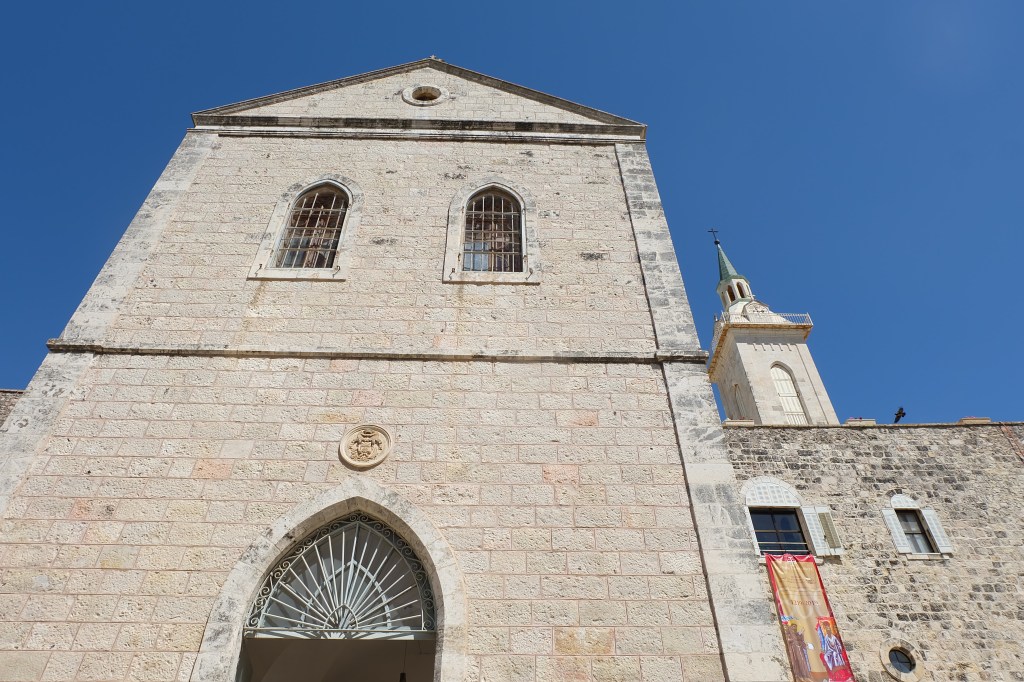
Facade of the Church of St. John the Baptist in Eim Karen where the precursor of the Lord was born. Not to be confused with Church of the Visitation at its other side in the same town. Photo by author, May 2019

Two days before Christmas, St. Luke brings us back to the continuation of his first story about Christmas: the birth of John the Baptizer.

When the time arrived for Elizabeth to have her child she gave birth to a son. Her neighbors and relatives heard that the Lord had shown his great mercy toward her, and they rejoiced with her. When they came on the eighth day to circumcise the child, they were going to call him Zechariah after his father, but his mother said in reply, “No. He will be called John.” But they answered her, “There is no one among your relatives who has this name.” So they made signs, asking his father what he wished him to be called. He asked for a tablet and wrote, “John is his name,” and all were amazed. Immediately his mouth was opened, his tongue freed, and he spoke blessing God.

Luke 1:57-64
Site where St. John the Baptist is believed to have been born. Photo by author, May 2019.

Where is God leading me?

Christmas is almost here. And it is not yet too late in these last two days of Advent that we try some “last ditch efforts” to spiritually prepare ourselves for this joyous season by asking just one question following the story of John’s birth:

“Where is God leading me?”

See the artistry of St. Luke, at how he began his Christmas story with the annunciation of the birth of John to his father Zechariah while incensing the Holy of Holies of the Temple in Jerusalem.

He doubted the good news and he was silenced by the angel until John was born.

Today, after three days, or nine months to be exact, St. Luke brings him back into the scene set free from his punishment. Zechariah was able to speak again when he concurred with his wife’s desire to name their child John by writing it on a tablet.

The name John in Hebrew is Jehohan which means “God is gracious” or “graciousness of God”.

Advent and Christmas are a story of how each one of us is a John, a graciousness of God, of us people so blessed by God to fulfill his promise of salvation in Jesus Christ.

But do we realize the many blessings we have from God?

The other night I saw an interesting post on Facebook from one of my former students in high school. It was from a woman sharing her experience while waiting in line at an ATM that has now gone viral.

She claimed that at first, she felt so bad at what was taking three people so long at the ATM to withdraw their cash. But when she got nearer, she overheard their conversations.

It turned out the three were given a bonus of Php 2000.00 each by their boss.

And they were extremely happy, so thankful, telling each other how they would prepare spaghetti and fruit salad on Christmas eve!

And the woman who posted the photo realized how those simple folks were so thankful for Php 2000.00 bonus when she and others like her who get more than that amount still complain?!

Very nice reflection!

Advent gives us four weeks to remember God’s graciousness to us this past year. The bountiful blessings we have had which we take for granted. Worst, we even complain with!

Altar of the Church of St. John the Baptist, Israel. When we came there last May, it was being closed for major restorations expected to last for years.

Whenever we see and count our blessings, do we ever thank God and ask him too where he is leading us to?

Zechariah was already old, had a great chance of incensing the Holy of Holies at their most important feast, doubted God’s grace but eventually still received it after nine months of silence.

By his action, Zechariah had shown how he had grown in faith during those nine months of “forced silence”, of how he had start to believe again in God, hope again, and practically live life anew!

Tremendous graces in just nine months being silent. Imagine that.

And we can have more grace today until tomorrow being silent, reflecting, praying as we count one by one the many blessings we have received this year.

Call it ageing gracefully, a grace in itself wherein as we grow old, we continue to find direction in life, we continue to find God leading us to him, for a specific mission to fulfill.

Dome of the Church of St. John the Baptist in Israel. Photo by author, May 2019.

Yesterday we have reflected that we are like St. Joseph entrusted with a special mission from God. That God “needs” us to bring Jesus, to care and protect Jesus here in the world. Each of us has a special part or role to play in God’s Divine plan in Jesus Christ.

Never lose hope in life. No matter what is our situation in life, God continues to work in us, working for us, inviting us to work with him.

It is interesting to know that the name Zechariah means “God remembers” while Elizabeth means “God has promised or vowed”.

If their names are brought together, we can see the complete picture why St. Luke started his Christmas story with Zechariah, Elizabeth, and John and not with Jospeh or Mary right away: they all mean “God is gracious because he remembers his promise always”!

May we always trust God and ask him where he is leading each of us this Christmas no matter what is our status in life. Amen.

Blessed are the women!

The Lord Is My Chef Simbang Gabi Recipe, 21 December 2019

Zephaniah 3:14-18 ><)))*> ><)))*> ><)))*> Luke 1:39-45

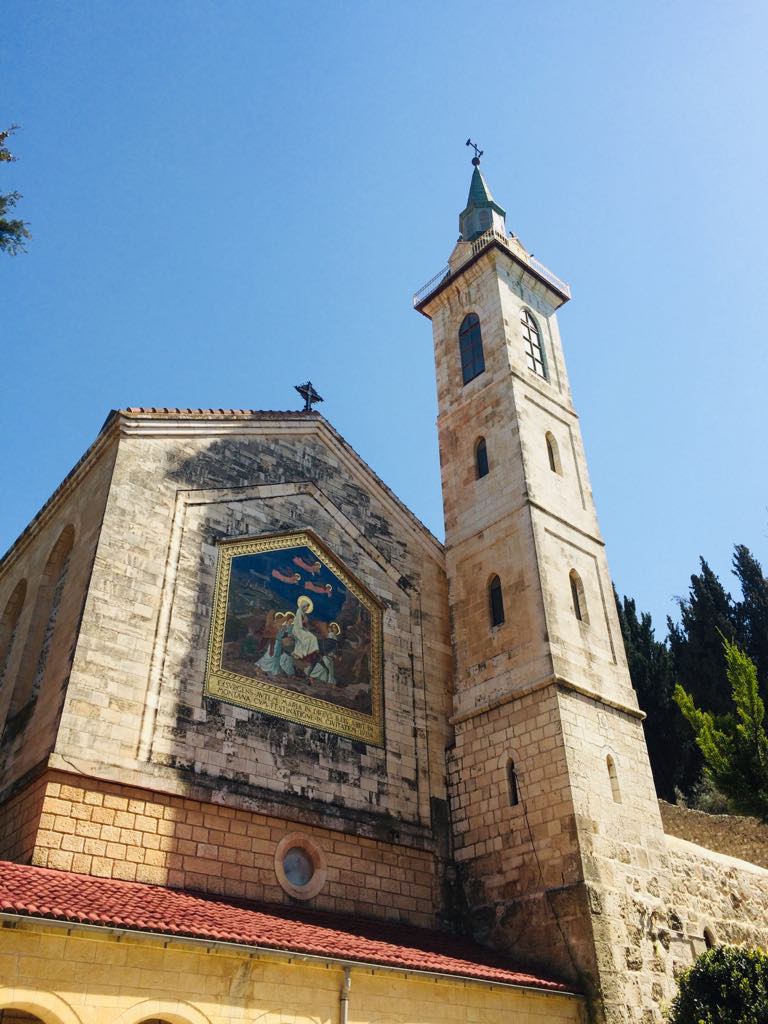
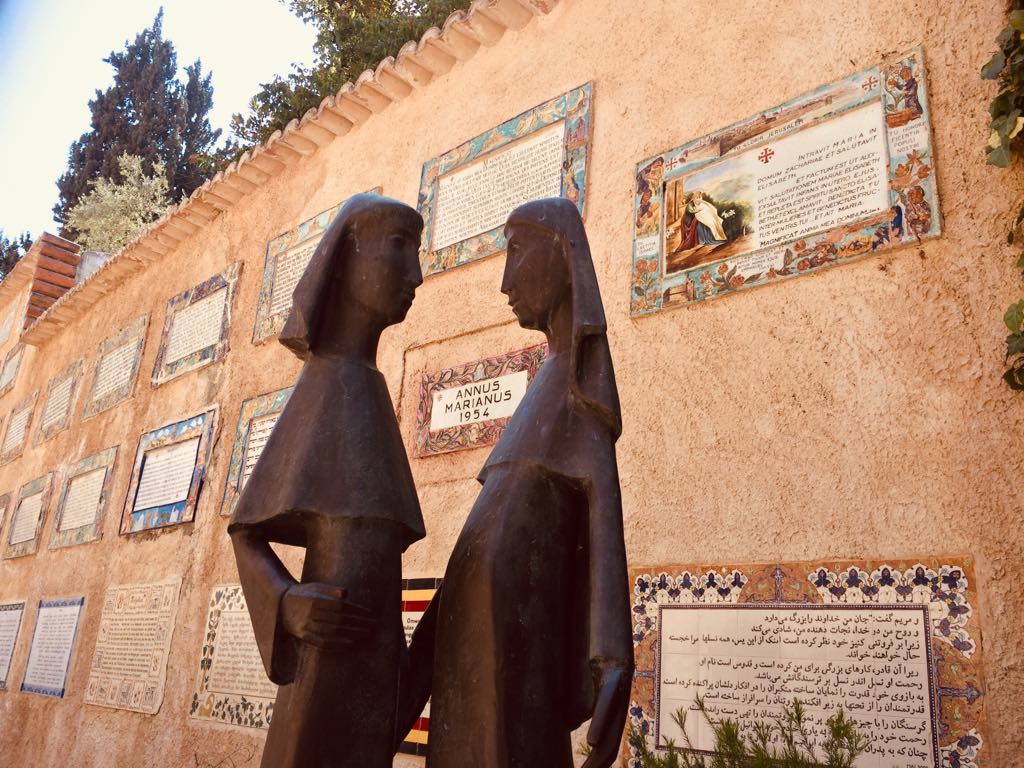
Bronze statues of Mary and Elizabeth fronting the Church of the Visitation in Judah; inscriptions on the wall are Mary’s “Magnificat” in different languages including Filipino. Photo by author May 2017.

For most Filipinos, being “blessed” (mapalad) and “lucky” (suwerte) are often used interchangeably because they both mean the same which is being fortunate. And most of the time, we mean blessedness as being endowed with wealth and material things.

Anyone with a stable job or a flourishing career or a growing business with at least a car and a house and lot is always considered as blessed. If you go big time or have made it to the top, then you are most blessed!

Parents who have put all their children through college, especially in expensive and exclusive Catholic schools and universities are also considered blessed in our culture that puts a high premium on education.

For most of us Filipinos, being blessed means to be financially stable and secured with some degrees of fame and accomplishments.

But our gospel today says nothing about these things as being blessed. Fact is, nowhere do we find in the Bible, especially in the gospel accounts where Jesus tells us that financial viability is a blessing. On the contrary, his teachings teem with a lot of moral aspersions against reliance and worship of money and material wealth.

True blessedness is having faith in God, believing that his words would be fulfilled!

Church of the Visitation, the Holy Land. Photo by author May 2017.

Mary set out in those days and traveled to the hill country in haste to a town of Judah, where she entered the house of Zechariah and greeted Elizabeth. When Elizabeth heard Mary’s greeting, the infant leaped in her womb, and Elizabeth, filled with the Holy Spirit, cried out in a loud voice and said, “Most blessed are you among women, and blessed is the fruit of your womb. And how does this happen to me, that the mother of my Lord should come to me? Blessed are you who believed that what was spoken to you by the Lord would be fulfilled.”

Luke 1:39-43, 45

Conversations between women

The Bible rarely records conversations exclusively between women. And even less frequent in the Bible is a conversation between two pregnant women that makes St. Luke’s account of the Visitation unique in itself.

For St. Luke, this encounter and exchange is significant because here are two women who bore a child in the most miraculous manner. Observe that St. Luke never used the word “pregnant” to describe the two women but simply told us that it is obviously the situation of both Elizabeth and Mary.

Exegetes explain St. Luke may have never used the term “pregnant” to emphasize to his readers God’s powerful grace on the two women in bearing a child: Elizabeth in her old age and barrenness and Mary in her youth and virginity.

What is most remarkable here is the way the two women were so “absorbed” in their conversation that one can imagine the “holy ground” they were standing so filled with Divine presence with the Holy Spirit hovering above them as two great souls met to honor God!

Even now if you go on a pilgrimage to the Church of the Visitation in Ein Karem, you can still experience that serenity and joy both women must have experienced on that hallowed ground.

Left painting on the dome is the Visitation while the other at the right is a depiction of how the angel saved St. John the Baptizer with St. Elizabeth from the murder of Holy Innocents ordered by Herod after learning the birth of Jesus Christ. Photo by author, May 2017.

True Blessedness

St. Luke tells us a lot of stories about “blessings” in his gospel account like here at the Visitation.

The most significant of these story of blessings is found in Luke 11:27-28 when Jesus was preaching, “a woman from the crowd called out and said to him, ‘Blessed is the womb that carried you and the breasts at which you nursed.’ He replied, ‘Rather, blessed are those who hear the word of God and observe it.'”

And that “blessed one who hears the word of God and observes it” is none other than his own Mother, the Blessed Virgin Mary, the first and par excellence “Doer-of-the-Word” for St. Luke!

Here at the Visitation, Elizabeth became the first human person, a woman, to call Mary “blessed” – the first of many disciples from future generations who will address the Blessed Mother in this manner as proclaimed by Mary herself in her Magnificat, “from now on will all ages call me blessed” (Lk.1:48).

Mary blessedness is primarily due to her faith and trust in God’s word spoken to her by the angel Gabriel. Unlike Zechariah, Mary right away submitted herself to the will of God by asking “how can this be”, indicating her deep faith.

Mary’s faith makes her a model disciple whom we must all imitate in following and believing Jesus Christ our Savior.

Likewise, Elizabeth can also be considered as a model disciple to us all because she believed and recognized the coming of the Christ by calling Mary “the mother of my Lord” (Lk.1:43). And again, holds the distinction as the first person and woman in St. Luke’s gospel to call Jesus “Lord”.

Here we find again the story of the Visitation that true blessedness and holiness is to be filled with God like St. Joseph the other day.

The Immaculate Conception at the Cathedral Basilica in Malolos City. Photo by author, December 2019.

In praise of the women of the world, man’s part-ner

Another beautiful trait of St. Luke’s gospel account is it emphasis on the important roles of women not only in the spread of the Gospel but most especially in the world. He is the first champion of women’s rights, next only to Jesus Christ.

In narrating to us this brief story of the Visitation, we rediscover the beauty and blessedness of womanhood – and that is the celebration of Messianic age. Mary and Elizabeth are great women because of their faith, we now celebrate Advent and Christmas.

They both brought Jesus Christ into the world, something that women always do until now, especially mothers who faithfully teach and form their children to become good and faithful Christians.

Both women are a testament to Isaiah’s portrayal of God as a woman who is like faithful mother:

“Can a mother forget her infant, be without tenderness for the child of her womb? Even should she forget, I will never forget you.”

Isaiah 49:15

Christmas is a beautiful reminder to us all of the very noble and important role of women in the world that unfortunately many of us, especially men, have continually refused to accept or ignored since the Fall of Adam and Eve.

In Genesis, we find God declaring “let us make man a suitable partner.”

And he created the woman, a part-ner of man, taken from one of his ribs because she is equal in dignity with him, created in the image and likeness of God. In fact, she is the most beautiful of his creation, being the last and most perfect!

During his recent concert in the country, U2’s Bono praised the women and human rights activists in the country, dedicating to them their song “Beautiful Day”.

“Human rights drown out human wrongs, that’s a beautiful day. When sisters around the world go to school with their brothers, that’s a beautiful day. When journalists don’t have to worry about what they write, that’s a beautiful day. When women of the world unite to rewrite history as herstory, that is a beautiful day.”

Bono from news reports

Because of Mary and Elizabeth, we now have that beautiful day of the year, Christmas that led to the most beautiful day of all, Easter.

In a fitting rejoinder to our gospel today, another woman the other day gave us a beautiful day to celebrate justice and democracy in the country when Quezon City RTC Judge Jocelyn Solis-Reyes convicted Datu Andal Ampatuan Jr. and other members of his influential clan for the murder of 57 people in the Maguindanao massacre that happened ten years ago.

Throughout history, we have seen that it has always been the women who make it happen for us all to have a beautiful day because they are the ones who bring life, who nurture life, who deepen life.

Let us make each day more beautiful by loving and caring always especially for those special women in our lives who have shown us the beauty and meaning of life, beginning with our own mother. Amen.

Photo by Mr. Jim Marpa, 2019.

Transforming presence of God

The Lord Is My Chef Simbang Gabi Recipe, 20 December 2019

Isaiah 7:10-14 ><)))*> ><)))*> ><)))*> Luke 1:26-38

Manor House, Camp John Hay, December 2017. Photo by author.

One reason Christmas is the most favorite time of the year is its colors. From houses to malls and almost every building, one can find a spectacular display of different colors and lights that brighten everyone.

But everything changes when one enters the church.

Advent is so different. Color is violet near the deep blue shade to signify the importance of conversion and penance that lead into transformation while the colors of the world found in malls are about money and material things.

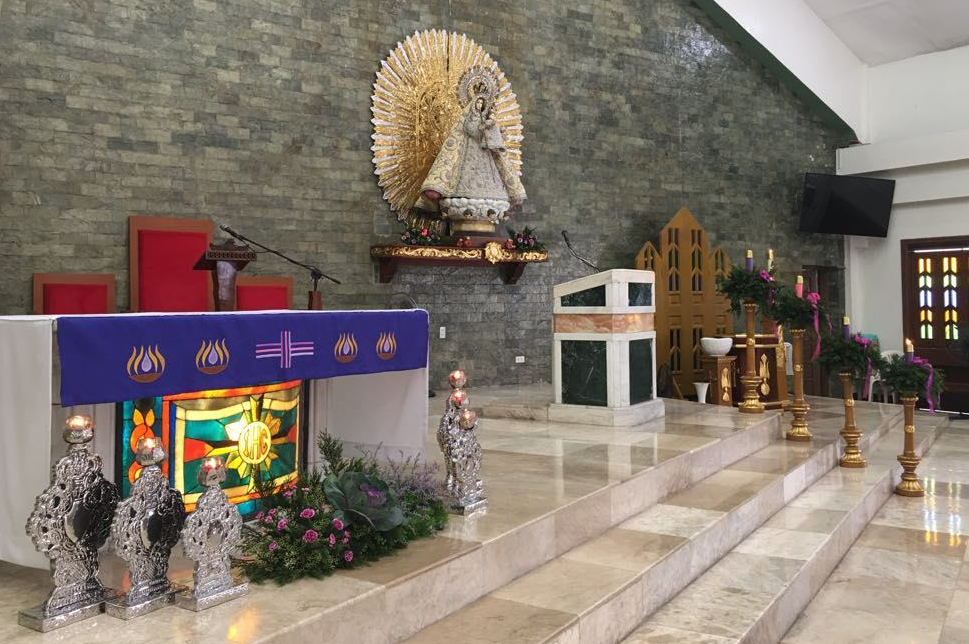
Our parish sanctuary area, Advent 2019.

God takes initiative

We have seen yesterday in St. Luke’s first Christmas story how God entered through human activities and history for the coming of Jesus Christ by first announcing the birth of his precursor, St. John the Baptizer.

But today, in his second Christmas story which is the Annunciation of the birth of Jesus to the Blessed Virgin Mary, St. Lukes shows us how God is now acting on his own. Of course, God always takes the initiatives in life being the “prime mover”.

But in announcing the birth of Jesus, God went “out of his way” so to speak to bring us this tremendous grace of Christmas as he would always do in many instances in our lives.

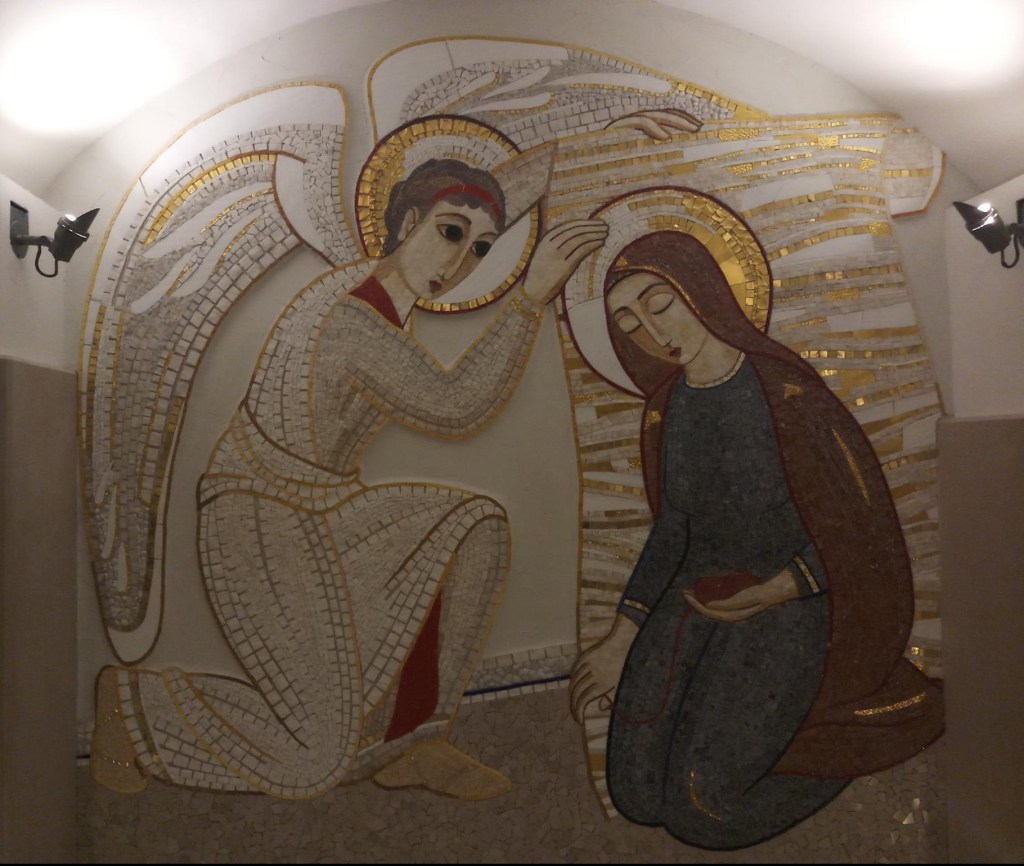
In the sixth month, the angel Gabriel was sent from God to a town of Galilee called Nazareth, to a virgin betrothed to man named Joseph, of the house of David, and the virgin’s name was Mary. And coming to her, he said, “Hail, full of grace! The Lord is with yo.” But she was greatly troubled at what was said and pondered what sort of greeting this might be. Then the angel said to her, “Do not be afraid, Mary, for you have found favor with God. Behold, you will conceive in your womb and and bear a son, and you shall name him Jesus .”

Luke 1:26-31
Mosaic of the Annunciation to Mary at the Shrine of St. Padre Pio at Rotondo, Italy. Photo by Arch. Philip Santiago, 2018.

So different from yesterday’s story of the annunciation of the birth of John the Baptizer to Zechariah, let us see how God took the initiative in the annunciation in the birth of Jesus to Mary.

  1. Zechariah was a priest while Mary was a commoner. It was natural for God to work through his ministers but in choosing Mary an ordinary woman was something else not because of any special quality she had but simply because God is good. The angel clearly told this to Mary, “you have found favor with God”. God does not call the qualified but he qualifies the call!
  2. God used the setting of the Temple of Jerusalem in yesterday’s account because that is where he is supposed to dwell but today, everything happened in a very simple house in Nazareth, the only place of significance and importance in the New Testament never mentioned in the Old Testament. It was a place looked down upon by many like St. Bartholomew asking Philip, “can anyone good come from Nazareth?”
  3. There was a major feast going on, the Yom Kippur, with a lot of people present when Zechariah was informed of the birth of John; Mary was alone in her house when the angel came to announce to her the birth of Jesus on the six months after going to Zechariah.

Intense Presence of God and of Mary

Usually, as we have seen yesterday in the annunciation of the birth of John, God always acted in silence and hiddenness. He blends and flows with world history as well as with our own personal histories.

But, there are times even in our own experiences when God really pulls something extraordinary, a miracle to bless us, to save us.

That was the case in the Annunciation to Mary. God “freely acted on his own” for the good news to happen, regardless of whoever was the king of Judea or emperor of Rome. He set the stage and everything for the fulfillment of his plan of salvation for us.

And the very good thing here is we find a perfect congruence or an equilibrium wherein, God was intensely present and so was Mary.

In the annunciation of John’s birth, God was very much present answering the prayers of his parents but Zechariah was miserably absent, doubting the good news!

Mary said, “Behold, I am the handmaid of the Lord. May it be done to me according to your word.” Then the angel departed from her.

Luke 1:38

God is always coming to us in many instances and persons who come to our lives. Are we present to him?

Notice how she entered into a dialogue with the angel Gabriel in explaining how things would happen. She was so open and so absorbed too as if the Holy Spirit must have had a perfect landing on her that she became pregnant with Jesus!

It sounds funny but that was how it happened because tomorrow, we would hear St. Luke telling us how Mary hurriedly went off to see her cousin Elizabeth, meaning there was a transforming change that occurred in Mary right away!

And that is how God truly works – if we can be truly open like Mary with God’s intense presence, we can experience overnight conversion and transformation that we have heard experienced by many unbelievers, sinners, addicts of all kinds. All they could say was there was a very brief moment when they felt God so intensely present and boom! everything changed for the best.

Mary believed

Mary was not only open to God but most of all, she has always believed in him. See how St. Luke tells us after the Annunciation, “then the angel departed from her”, never to come again to inform her of special messages from God unlike St. Joseph.

After the Annunciation, Mary was left on her own in the sense that all she had was her firm faith in God through Jesus Christ her Son.

Mary believed in everything that was spoken to her! It was all she had up to the foot of the Cross when Christ died, when she waited with the apostles in Jerusalem for the Pentecost and in all her other apparitions later. She has always believed in Jesus her Son.

Today, we complain a lot of people no longer believing in God, leaving the Church, refusing to pray and celebrate the sacraments.

Perhaps it is about time for us to ask our very selves too, especially us your priests and pastors as well as the parents: do we truly believe what we are doing, what we are practicing as Catholics?

It is always easy to say we believe in God like King Ahaz in the first reading who refused to ask God for signs that Israel would be delivered from the advancing Babylonians.

It was merely a “show” because Ahaz had already entered into alliance with small kingdoms to fight the Babylonian invaders. He had never believed God or his Prophet Isaiah; hence, Israel was conquered and crushed as a nation, thrown into exile in Babylon for a long time.

A Filipino painting of the Annunciation to Mary on a wall facing the Basilica of the Annunciation in Nazareth. Photo by author May 2017.

God’s power and his intense presence can only work in proportion with the faith we have. This is what Jesus had told the apostles when they asked him to “increase their faith”: “If you have the faith the size of a mustard seed, you would say to the mulberry tree, ‘Be uprooted and panted in the sea,’ and it would obey you” (Lk.17:5-6).

In another instance, the apostles failed to cast away the demon possessing the son of a certain man. After Jesus had driven away the evil spirit, his apostles came to him in private to ask, “Why could we not cast it out? And Jesus said to them, ‘Because of your little faith'” (Mt.17:19).

Like Mary, let us believe wholly to God by giving our whole selves to him. Let us create a room in ourselves for God so he can be present in us and transform us like Mary. Amen.

Holy presence in hiddenness

The Lord Is My Chef Simbang Gabi Recipe, 19 December 2019

Judges 13:2-7, 24-25 ><)))*> ><)))*> ><)))*> Luke 1:15-25

The Walls of Jerusalem, May 2019. Photo by the author.

From St. Matthew, we now move to the Christmas story by St. Luke that starts in the temple of Jerusalem. And surprisingly, not precisely with Jesus or his parents.

In the days of Herod, King of Judea, there was a priest named Zechariah of the priestly division of Abijah; his wife was from the daughters of Aaron, and her name was Elizabeth. Both were righteous in the eyes of God, observing all the commandments and ordinances of the Lord blamelessly. But they had no child, because Elizabeth was barren and both were advanced in years. Once when he was serving as priest in his division’s turn before God, according to the practice of the priestly service, he was chosen by lot to enter the sanctuary of the Lord to burn incense. Then, when the whole assembly of the people was praying outside at the hour of the incense offering, the angel of the Lord appeared to him, standing at the right of the altar of incense.

Luke 1:5-11

We know what happened, of how Zechariah doubted the good news announced to him about the birth of his son John the Baptizer.

Many times in our lives, especially in this age of too much communications in the social media where everything is exposed, we hardly notice the best and nicest things in life happening in silence, mostly in hiddenness.

And the saddest part of this present reality is that it is God whom we miss in this “overexposures” we have in social media because he always comes to us hidden in the most ordinary and simple things in life.

Yesterday St. Joseph taught us the need to value silence and stillness in the Lord as an important lesson in facing life’s many adversarial situations.

Today we hear Zechariah forcibly silenced to experience the Lord’s power and grace, his very presence in fact.

An inside section of the remaining Walls of Jerusalem. Photo by author, May 2019.

God’s presence hidden in our time and space

Advent is the season that reminds us that God comes to us always hidden in our very time and space. Unless we know how to be silent and simple, we shall never experience the Divine presence that has covered the whole world ever since.

Of the four evangelists, St. Luke is the only one who claims to have “investigated everything accurately” about the life and teachings of Jesus Christ (Lk.1:3). That is why he has the most stories and details about Christmas.

For St. Luke, Christmas begins with the coming of St. John the Baptizer, Jesus Christ’s precursor. In a very unique manner, he tells us how God’s presence came through a husband and wife yearning so much to have a child of their own, Zechariah and Elizabeth, both belonging to the upper crust of the Jewish society having descended from the priestly families.

In fact, Zechariah was a priest who was so blessed that Day of Atonement known as the Yom Kippur of the Jews that happens around September 18-24. (That is how we come to celebrate Christmas on December 25: Elizabeth conceived John in September, giving birth to him in June 24; tomorrow, we shall hear in the Annunciation to Mary that Elizabeth was six months pregnant which falls on March 24. Simple math, we arrive at December 25 as Christ’s birthdate.)

Praying at the Wall, May 2019.

During the Yom Kippur, priests drew lots on who would incense the Holy of Holies where the “Ark of the Covenant” was kept containing the stone tablets of God’s commandments given to Moses. It was the closest thing they have as signs of God’s presence among them. Hence, until now they venerate and pray at the “wailing Wall” of Jerusalem because that is supposed to be the only remaining structure of their temple destroyed in 70 AD closest to that part of the Holy of Holies.

It was so rare at that time to be assigned to incense the Holy of Holies because there were so many priests drawing lots and only one would be chosen for the rite that happens about twice daily for the whole week. It was a tremendous blessing indeed to be chosen to incense the Holy of Holies.

Here we find St. Luke setting the stage of his Christmas story to remind us all that God comes right into our time and space, in our history, in our here and now.

See his descriptions:

  1. It happened in a specific time during during “the days of Herod, King of Judea”, when Zechariah was “chosen by lot to enter the sanctuary of the Lord to burn incense” while people were outside praying and waiting.
  2. It happened in a specific place, the temple of Jerusalem.
  3. Most of all, it happened to real people, “Zechariah of the priestly division of Abijah; his wife Elizabeth was from the daughters of Aaron.”
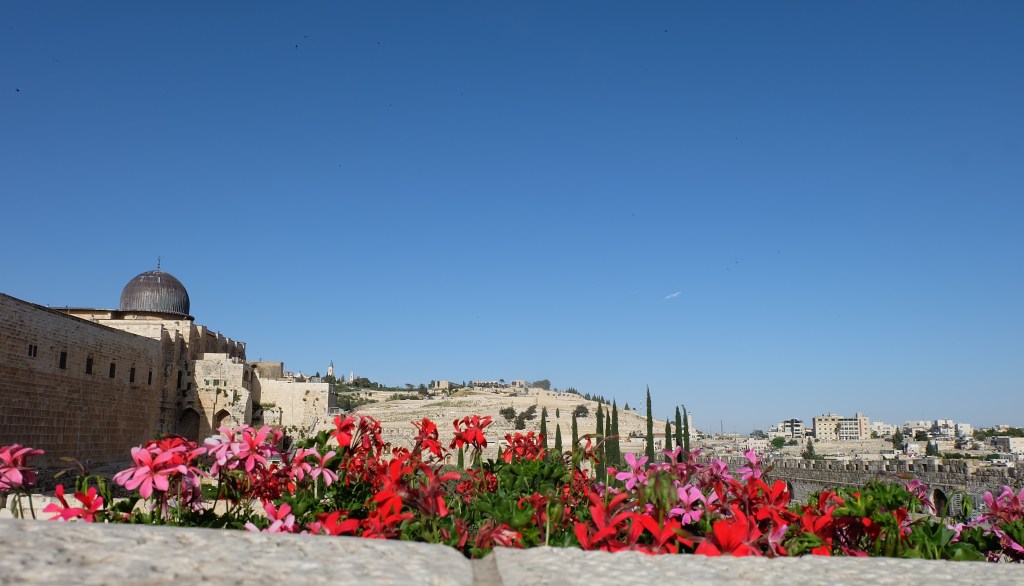
A view from the Walls of Jerusalem of the Jewish section; dome is the Moslem section, Mount of Olives at the background. Photo by author, May 2017.

The Presence of God, the Absence of Man

When we are deeply hurt and disappointed, we are usually less rational. Worst, although we try to keep our faith alive, that is also when we doubt God, refusing to recognize his presence among us, and even right in us.

In this story of the annunciation of the birth of John the Baptizer, we find God giving Zechariah the tremendous grace to approach his Divine presence by having the rare opportunity to incense the Holy of Holies.

Most of all, at their most important feast when priests gather in the temple to pray for the people and for their personal intentions, God sent Zechariah the angel Gabriel to personally tell him his and Elizabeth’s prayers have been heard and granted!

But what happened? Zechariah doubted, even questioned God!

“How shall I know this? For I am an old man, and my wife is advanced in years.”

Luke 1:18

That’s the problem with us: God is always present but we are always absent that we never meet him. And every time he comes to visit us, we are so busy with so many other things.

If we cannot see and experience God in the most ordinary things and events in our lives, nothing would be enough to convince us of his love and mercy, of his presence and power.

That is why Zechariah was silenced by the angel, who, by the way, is already the presence of God yet Zechariah doubted.

This remaining week before Christmas, let us try to have some silence, or better, let us create a space for silence and solitude to experience God’s loving presence among us, in us.

It is only in silence where we can truly learn how to trust and be intimate with God and with our loved ones because it is only in silence where we can dare to open our selves to God and to others.

Let “the spirit of the Lord stir” you like Samson in the first reading (Jgs.13:25) this Christmas by creating silent moments with Jesus. Amen.