Postscript to Jesus calling us, “come to me”

Quiet Storm by Fr. Nicanor F. Lalog II, 08 July 2026
It has been three days since Sunday when we heard Jesus calling us to “Come to me, all you who labor and are burdened, and I will give you rest. Take my yoke upon you and learn from me, for I am meek and humble of heart; and you will find rest for your selves. For my yoke is easy, and my burden is light” (Mt.11:28-30).

It is one of the shortest and most memorable passage in the gospel but, how do we really come to Jesus in order to rest and feel light?

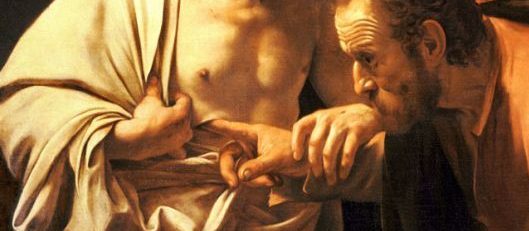
The good news is, it is Jesus who actually comes to us first, inviting us to come to him to find rest and feel light. Exactly like at the meeting of the Risen Lord and Thomas the Apostle eight days after Easter as narrated to us by John. You will recall that last Friday was the Feast of St. Thomas the Apostle (June 3) when I presented in my homily Caravaggio’s painting called The Incredulity of Thomas done in 1602. This is the second time I have used a painting by this renowned Italian painter said to be the favorite of the late Pope Francis too.

Photo of painting by Caravaggio, “The Incredulity of Thomas” via wikipedia.commons.org.

Thomas “refused” to believe the Apostles’ news to him that Jesus had risen, saying that “Unless I see the mark of the nails in his hands and put my finger into the nail marks and put my hand into his side, I will not believe” (Jn.10:25).

Many times we are like Thomas, a Didymus, with a twin in life like doubt and certainty, belief and unbelief, darkness and light.

Like Thomas, we say unconsciously that “Unless I see the mark of the nails in his hands and put my finger into the nail marks and put my hand into his side, I will not believe” (Jn.10:25) because it is when we are suffering, when we are in darkness, when we are in doubt when we truly search and long for God and Jesus.

It is not that Thomas nor we could not believe that Jesus had risen or doubted Christ at all; actually, Thomas believed in Jesus that is why he came on the eighth day to await the Lord’s coming in the same manner that we still pray despite our “doubts”.

 Now a week later, his disciples were again inside and Thomas was with them. Jesus came, although the doors were locked, and stood in their midst and said, “Peace be with you.” Then he said to Thomas, “Put your finger here and see my hands, and bring your hand and put it into my side, and do not be unbelieving, but believe.” Thomas answered and said to him, “My Lord and my God!” (John 20:26-28)
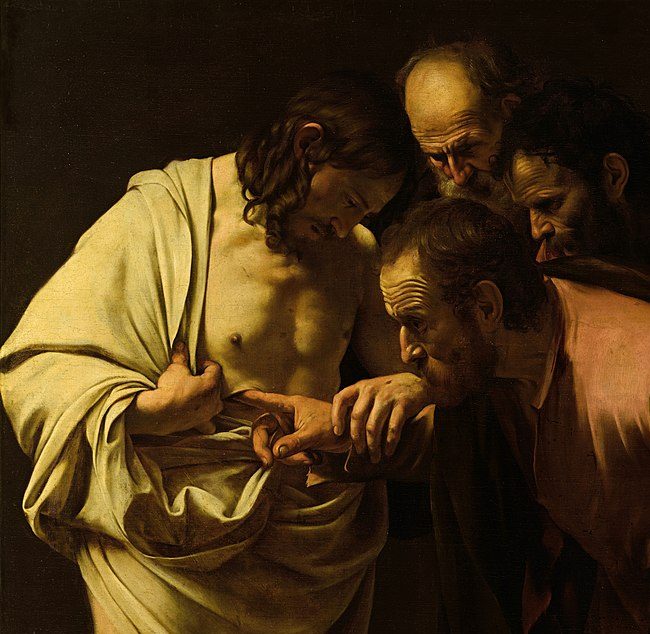
Photo of painting by Caravaggio, “The Incredulity of Thomas” via wikipedia.commons.org.

See the artistry of Caravaggio in this painting, that characteristic play of light and darkness emanating from Jesus, illuminating Thomas and his elder Apostles Peter and John.

All darkness in life are diminished, even vanished completely when we bring everything and everyone in the light of Jesus Christ who comes to us to enlighten us, to illumine us from many darkness we go through in life like Thomas on that night of the eighth day of Easter.

But, there is more to the light of Christ that we can see in this Caravaggio painting.

Amid its stillness and silence, one could feel deeply Jesus Christ’s words last Sunday – come to me – echoed softly, personally, lovingly to Thomas. And to each one of us today.
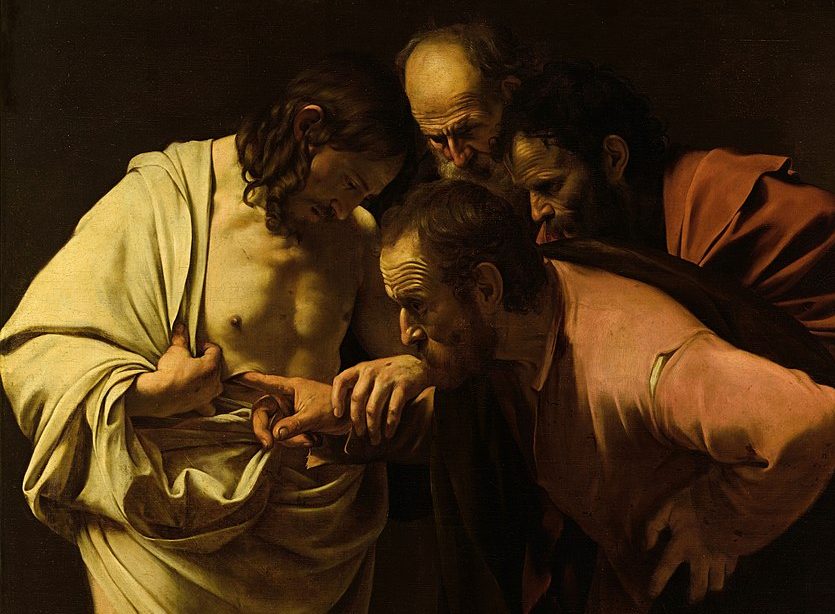
Photo of painting by Caravaggio, “The Incredulity of Thomas” via wikipedia.commons.org.

John tells us that Jesus simply said to Thomas to “Put your finger here and see my hands, bring your hand and put it into my side, and do not be unbelieving, but believe.” Thomas answered and said to him, “My Lord and my God” (Jn.20:27-28).

Okay, fine… it is just my imagination or my contemplation that I heard Christ’s words last Sunday echoed in this scene, “come to me and I will give you rest” but, there is something so beautiful and deeply personal with Jesus in saying or implying those same words here. You can hear it so close, so near you, not from afar especially when you consider its Filipino translation of “Lumapit kayo sa akin” or the informal “Halikayo at lumapit sa akin” that both indicate a separation of even a few feet away from Jesus who is calling us.

See the proximity of the four people in this painting. That is how close Jesus gets to us whenever he comes to us, inviting us to come to him in order to find rest especially in those dark moments in our lives, when we feel hurt and abandoned. When we are so stressed out as seen in those wrinkles on the foreheads of the three apostles!

Contrast their images to the serenity of Jesus. Most of all, see also the hands of Jesus, of how his left hand with the nail wound visible moving aside his garment so that Thomas and his companions may see further his pierced side.

Whenever Jesus comes to us, calling us to come to him to show us his wounds from the cross to remind us that before all our pains and hurts came, he was there first to suffer and be wounded and died for us.

And he has come to us again, calling us to come to him because he had risen, assuring us that all our wounds like his will heal eventually! That is when we experience rest. And being light in life.

But, what I love most in this painting is the way Caravaggio depicted the Risen Lord holding the hand of Thomas while probing into his side wound:
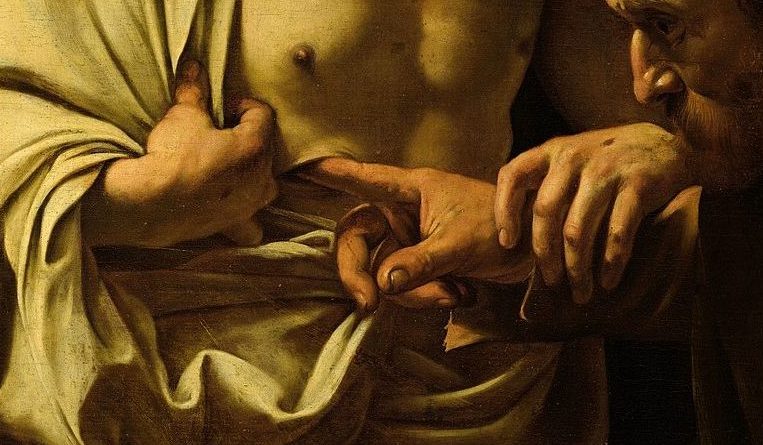
Photo of painting by Caravaggio, “The Incredulity of Thomas” via wikipedia.commons.org.

How lovely! Caravaggio must be in the highest heaven when he painted this part.

Remember when Thomas dared to say unless he sees the nail marks in the Lord’s hands and put his hand at his side, he would not believe?

Jesus knew it so well not only with Thomas but with each one of us, of our being a Didymus, always with a twin of doubt so that he does not merely appear but touches us to experience deeply, personally his loving presence through his wounds.

See how Caravaggio depicted the left hand of Jesus again with the mark of nail holding the very hand of Thomas, directing his finger into his pierced side. You could feel the sure grip as well as gentleness of the Lord’s hand in leading the finger of Thomas into his pierced side wound. So dramatic as if it is not enough for Jesus to being present but most of all, experienced as closest at possible.

Jesus touches us always, literally and figuratively by holding our wounded selves to experience his wounded self too. He does not only call us in words but leads us with his total self.

Christ’s invitation for us to “come to him” remains personal and personalized. Not mass produced like what is happening these days where speed and reach are the main considerations, not the person.

While writing this piece yesterday, one of the blogs I follow came out with a new article exactly about last Sunday’s gospel scene, claiming that if God texts us today, these very words to “come to me” by Jesus would be his “text message” to us (https://thedevotionalguy.blog/2026/07/07/if-god-sent-you-a-text/).

I believe so. Because text messages have become the closest things we can have of anyone in these days of social media. However, if ever you receive that text message from Jesus, run outside to meet him personally for surely, he had come. Amen. God bless you.

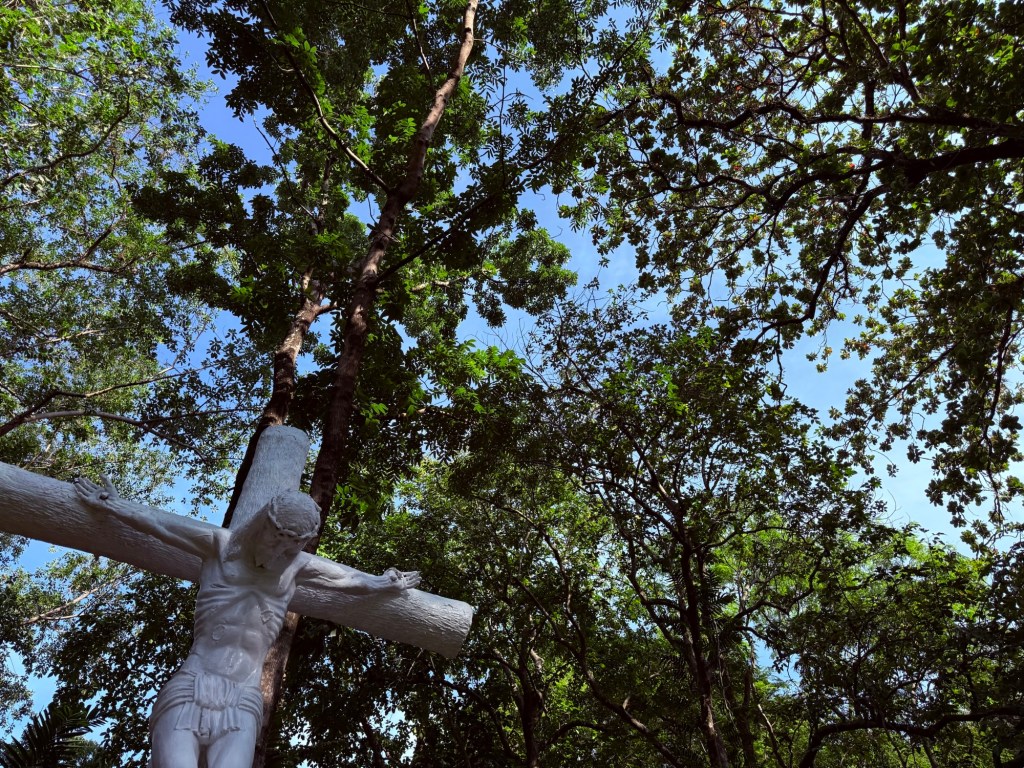
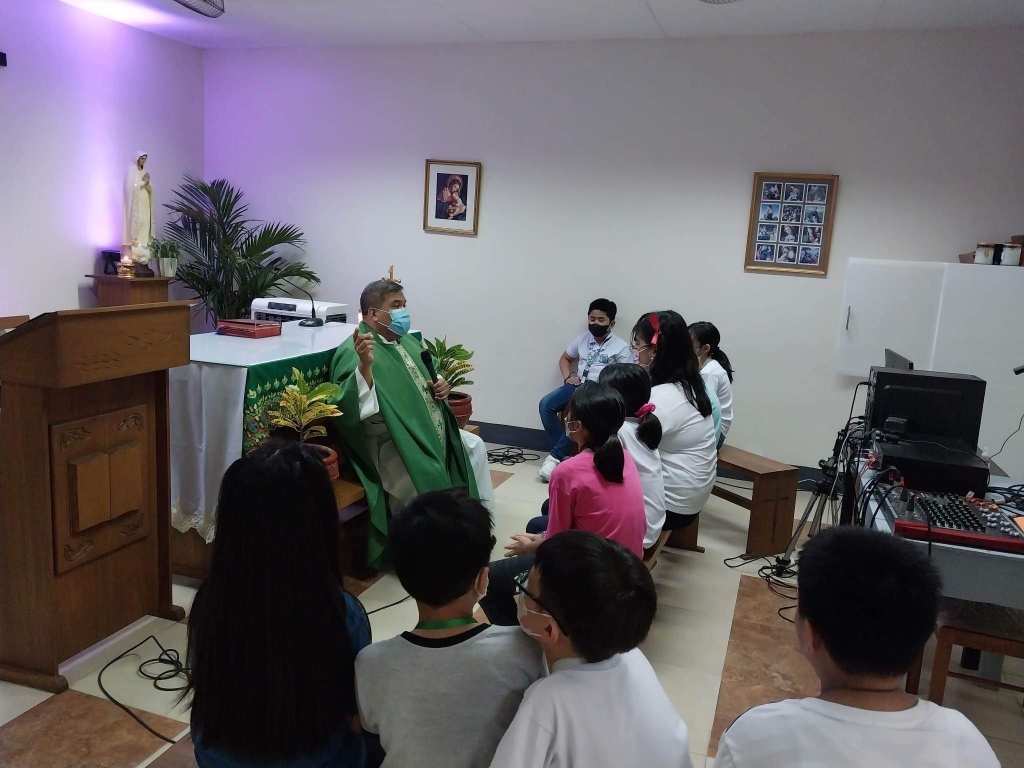
Photo by author, St. Michael Retreat House, Antipolo City, 16 June 2026.

Probing the “dark places” within us

Lord My Chef Daily Recipe for the Soul by Fr. Nicanor F. Lalog II
Friday in the Thirteenth Week of Ordinary Time, Year II
Feast of St. Thomas, Apostle, 03 July 2026
Ephesians 2:19-22 <*{{{{>< + ><}}}}*> John 20:24-29
Photo of painting by Caravaggio, “The Incredulity of Thomas” via wikipedia.commons.org.
Thank you,
dear Jesus
for this first Friday in July 2026,
the feast of your Apostle Thomas
called Didymus:
some say due to his having
the twin of faith and doubt
but most likely also our
very own twin because
like him,
deep within us
are many "dark places"
that need to be enlightened
by your light.

Thomas called Didymus, one of the Twelve, was not with them when Jesus came. so the other disciples said to him, “We have seen the Lord.” But Thomas said to them, “Unless I see the mark of the nails in his hands and put my finger into the nail marks and put my hand into his side, I will not believe.” Now a week later, disciples were again inside and Thomas was with them. Jesus came, although the doors were locked, and stood in their midst and said, “Peace be with you.” Then he said to Thomas, “Put your finger here and see my hands, and bring your hand and put it into my side, and do not be unbelieving, but believe.” Thomas answered and said to him, “My Lord and my God!” (John 20:24-28)

Every day 
you also come to us,
Lord Jesus
amid the many darkness
around us,
often in our locked doors
of doubts and disbelief,
cynicism and pessimism,
grief and hopelessness;
many times we think
we infer
we rationalize
that your Resurrection
and presence are just too good
to be true!

So many things within us
resist a faith too easy to claim
or put into effect just to believe
you; enlighten the many "dark places"
within us that we have become
so skeptical these days:
our government and church
are just like so similarly plagued
with corruption and evil
that are sadly allowed
or tolerated,
justice utterly lacking with
evil doers seem to be more
favored than law-abiding ones
with all these persisting because
many are oblivious to the
darkness and disorder going on.
Where are you,
Jesus in all of our mess
in life as individuals,
as a nation,
as a church,
as a family
that we most often
doubt than believe?
Photo by author, St. Michael Retreat House, Antipolo City, 16 June 2026.
Guide my hand,
lead my finger into your
wounds, 
dear Jesus
that I may experience 
you Risen;
let me experience your 
coming and loving presence
amid our darkness
and woundedness;
let me not seek you
Jesus in spectacular things
in feel-good situations
but like Thomas
in touching your wounds
in that dark room
be enlivened with your
inner light of peace
and assurance that
more than your miracle 
of rising from the dead
is the reality of living,
of life coming out 
from real death.
Grant me that spark of
faith like in Thomas 
while touching your wounds,
Lord Jesus
so that a glimmer of hope
within me may finally glow
and grow as I follow you,
my Lord and 
my God.
Amen.

When things are not clear with us

Lord My Chef Daily Recipe for the Soul, 17 November 2025
Monday in the Thirty-Third Week of Ordinary Time, Year I
Memorial of St. Elizabeth of Hungary, Religious
1 Maccabees 1:10-15, 41-43, 54-57, 62-63 <*(((>< + ><)))*> Luke 16:35-43
Photo by Fabrizio Verrecchia on Pexels.com
Jesus asked him,
"What do you want me
to do for you?"
He replied,
"Lord, please let me see."
Jesus told him,
"Have sight;
your faith has saved you"
(Luke 18:40-42).
What a touching story
for this Monday
as we quickly approach
the end of our liturgical
calendar,
when Jesus likewise
in the gospel is on his final
journey before his Passion
to Jerusalem.
"What do you want me
to do for you?"
Honestly,
Lord Jesus,
I do not know
what I really want
in life;
as I get older,
it seems the
more I get confused
and afraid of many things
as I start to feel my body
ageing, getting weaker,
forgetting a lot of things,
feeling desperate at times
like that blind man at the roadside.
And so,
I cry out to you too
like him with
"Jesus, Son of David,
have pity on me!"
This time I know what I want
from you:
like him,
let me have sight;
clear my mind
and my heart
and my soul
of all doubts and fears,
hesitations
and mistrust
that I too may leave
the "roadside"
to follow you closer on
the road to Jerusalem
like St. Elizabeth of Hungary,
praying more,
believing more,
giving up more,
and giving more
of myself to you
through others.
Amen.
Photo by Pixabay on Pexels.com
Today we also pray
in a special way to all
those having problems
with their in-laws,
those grieving the lost
of a child,
and widows:
O St. Elizabeth of Hungary,
you went all through
these pains and sufferings,
please pray for the many
wives and mothers
and widows going thrugh
these. Amen.
Fr. Nicanor F. Lalog II
Our Lady of Fatima University
Valenzuela City

Thomas, our twin?

Lord My Chef Daily Recipe for the Soul, 03 July 2025
Thursday, Feast of St. Thomas the Apostles
Ephesians 2:19-22 <*{{{{>< + ><}}}}*> John 20:24-29
Caravaggio’s painting “The Incredulity of St. Thomas” (1602) from en.wikipedia.org.
Lord Jesus,
teach me to be like you -
so understanding,
so caring,
so loving
to those who are doubting
you like Thomas your Apostle;
poor Thomas -
he has been called "Doubting"
when the evangelists simply
referred to him as "Didymus"
or twin; however, it is so lovely
too to know that doubt and
certainty are like twins because
when we doubt,
the more we seek and find
the truth which Thomas did.
When I think of my own faith
journey in you, Lord,
many times I was worst
than St. Thomas for I was not only
doubting you
but also hesitant in following you
because of fears and mistrust,
lack of confidence in my self,
and simply self-centered.
Could it be, Lord,
that in each one of us is
Thomas our twin -
doubting,
hesitating,
indecisive,
in following you?

Now a week later his disciples were again inside and Thomas was with them. Jesus came, although the doors were locked, and stood in their midst and said, “Peace be with you.” Then he said to Thomas, “Put your finger here and see my hands, and bring your hand and put it into my side, and do not be unbelieving, but believe.” Thomas answered and said to him, “My Lord and my God!” (John 20:26-28).

How nice of you, 
Lord Jesus
to be so warm with Thomas
on that night
when you appeared again;
instead of engaging Thomas
into a debate or discussion,
you called him,
invited him to touch your wounds,
to feel your scars;
what an incredible courage,
Lord Jesus
to let us see and feel
closely your wounds,
to stare and look at your
sufferings, to remember and
imagine your lowest point in life
if only to show us that it is
the only way to glory;
many times, we are afraid
to admit even to ourselves
and to others our wounds and hurts,
preferring to keep them
even hide them
to keep our illusions
of greatness.
May we find 
the graces of
joy and warmth,
love and kindness
that fill our many wounds
in life as a result of our
following you, Lord Jesus
for it is in our woundedness
and hurts that we become
"members of the household of God
who are built together to be
the dwelling place of God
in the Spirit" (Ephesians 2:19, 22).
Amen.

Fr. Nicanor F. Lalog II
Our Lady of Fatima University
Valenzuela City

The gift of communion

The Lord Is My Chef Daily Recipe for the Soul by Fr. Nicanor F. Lalog II
Wednesday, Feast of St. Thomas, Apostle, 03 July 2024
Ephesians 2:19-22 <*{{{{>< + ><}}}}*> John 20:24-29
From the the Catholic Diocese of Little Rock, Arkansas, dolr.org.
Praise and glory to You,
God our Father
for your gift of the Church,
the Body of Christ built on the
foundation of the Apostles as a
community of faith,
hope,
and love!
Thank You for the gift
of St. Thomas also known as
Didymus; though he was not
present on the evening of Easter
when the Risen Lord appeared
to his fellow disciples,
he joined them eight days
later to be with them,
most especially with Jesus;
what a beautiful gesture
of him who could not
believe of the Resurrection;
what a gift of courage for him
to submit himself to actual tests
to prove to himself that
Jesus had risen;
most of all,
his goodwill to be one
in communion
with his brother Apostles
and Lord Jesus.

Brothers and sisters: You are no longer strangers and sojourners, but you are fellow citizens with the holy ones and members of the household of God, built upon the foundation of the Apostles and prophets, with Christ Jesus himself as the capstone. Through him the whole structure is held together and grows into a temple sacred in the Lord, in him you also are being built together into a dwelling place of God in the Spirit (Ephesians 2:19-22).

Let us keep those words
of St. Paul, dear Jesus,
"Through him
the whole structure
is held together
and grows into a temple
sacred in the Lord,
in him you also are being built
together into a dwelling place
of God in the Spirit":
what will happen if we
destroy this communion
in You and with You through
one another?
What could have happened
if St. Thomas remained adamant
with his "doubts" and never came to join
the other Apostles on that eighth day after
Easter?
Caravaggio’s painting “The Incredulity of St. Thomas” (1602) from en.wikipedia.org.
Lord Jesus Christ,
teach me to have the
healthy doubts of St. Thomas,
to dare test himself,
not You nor others,
to find You, the Truth;
grant us the humility to
accept and embrace
not only your wounds
but also those wounds
of our fellow disciples
because the twofold communion
with God and with one another
is inseparable -
wherever communion with God
in the Father, and the Son,
and the Holy Spirit is destroyed,
the root and source of our communion
with each other is destroyed too;
whenever we do not live communion
among ourselves, communion with
God is not alive and true either.
Like St. Thomas,
enlighten us with your light
and truth, Jesus,
to see you
among one another
to live in communion.
Amen.

St. Thomas the Apostle,
Pray for us!

Hindi makapaniwala

Lawiswis ng Salita ni P. Nicanor F. Lalog II, Ika-09 ng Abril 2024
Caravaggio’s painting “The Incredulity of St. Thomas” (1602) from en.wikipedia.org.
Sa tuwing maririnig ko
ang kuwento kay Santo Tomas
Apostol ni Kristo,
ako'y nanlulumo dahil
batid ko hindi ayon
turing natin sa kanya
na "Doubting Thomas"
gayong tanging tag-uri
sa kanya ng Ebanghelista
ay "Didymus" o "Kambal";
nag-alinlangan nga si Tomas
sa balitang napakita si Jesus
na muling nabuhay
sa kanyang mga kasama
nguni't kailanma'y
di nabawasan
kanyang paniniwala
at pagtitiwala.
Malaking pagkakaiba
ng hindi maniwala
sa hindi makapaniwala
na isang pag-aalinlangan
bunsod ng kakaibang pakiramdam
tulad ng pagkamangha
o ng tuwang walang pagsidlan
sa isang karanasang napaka-inam
ngunit hindi maintindihan
balot ng hiwaga
at pagpapala
gaya nang mabalitaan
ni Tomas
paanong nakapasok sa
nakapinid na mga
pintuan
Panginoong Jesus
na muling nabuhay.
Katulad ng kanyang
mga kasamahan
nonng kinagabihan ng Linggo
ding iyon,
wala ding pagsidlan
tuwa at kagalakan
ni Santo Tomas
nang sa kanya inilarawan
ipinakitang mga kamay
ni Jesus
taglay pa rin
mga sugat natamo
sa pagpapako sa Krus
nagpapatunay
na Siya nga
ang Panginoong
nagpakasakit at namatay noon,
nabuhay muli ngayon!
Hindi ba 
ganyan din tayo
sa gitna ng ating mga
pag-aalinlangan
bagama't damang dama 
natin ang katotohanan
ng mga pagpapala at biyaya
hindi tayo makapaniwala
sa kadiliman ating natagpuan
liwanag ni Kristo habang sa
kawalan naroon Kanyang
kaganapan at kapunuan?
Sandigang ating pinananaligan
dasal na nausal ni Tomas na
banal pagkakita kay Jesus 
na muling nabuhay,
"Panginoon ko 
at Diyos ko!"
Huwag tayong matakot 
kung tayo ay
mag-alinlangan
at kung minsa'y
hindi makapaniwala
sa mga gawa ng Diyos
na sadyang kahanga-hanga;
sa mundong ito
na ang pinanghahawakang
kasabihan ay
"to see is to believe",
ang kabaligtaran nito
ang siyang katotohanang
ating mapapanaligan,
"believe that you may see"
dahil sa dilim at
kawalan parati dumarating
ang Panginoong Jesus natin!

Lent is for “leveling up”

40 Shades of Lent by Fr. Nicanor F. Lalog II
Thursday in the Fourth Week of Lent, 14 March 2024
Exodus 32:7-14 <'[[[[[>< + ><]]]]]'> John 5:31-47
So true, 
O God our Father,
that we are like your people
in the desert
– “stiff-necked” –
who easily turned away from you
to worship the golden calf
while you conversed with Moses
up on Mt. Sinai.

We can be easily
carried away
and distracted
by the many other “golden calves”
around us that we worship
especially if they give us
delight and answers
to our needs
and questions.

Forgive us, Father,
in doubting your love for us,
in doubting your fidelity
to your promises to us,
in doubting your powers
despite the many blessings
you have showered upon us;
forgive us for our foolishness
for not being convinced that
we are your chosen people
when we would rather get trapped
with our daily worries in life
and forget all your
love and concern for us.

What a tragedy
when we prefer to be
second or even third rate people
when in fact we are all your children,
your beloved and forgiven children!

In this Season of Lent,
help us to "level up"
to you, O Lord,
of not simply stopping
with the prophets who
were all like a “burning and shining lamp”
to us when they were all
your precursors.

Help us,
O Lord,
to desire you
and nothing less
for we are all special
in your eyes.
Amen.
Photo by Ms. April Oliveros, Mt. Pulag, April 2023.

Graduation lessons from St. Thomas the Apostle

Quiet Storm by Fr. Nicanor F. Lalog II, 03 July 2023
Photo by olia danilevich on Pexels.com

In this season of graduations when we also celebrate today the feast of St. Thomas the Apostle, we are reminded that growth and maturity in Christian faith goes through a process too of “graduation”.

St. Thomas went through different stages in life as a disciple of Christ before finally graduating with honors as a martyr. Most of all, he is a good model for every graduating student to emulate because he is the one so famous for having “doubts” and being known as the “doubting Thomas”.

To doubt is not necessarily bad. In fact, it is a grace from God because every doubt is a step closer to wisdom and knowledge. Without doubts, we can never learn because we will never be able to verify and validate what we know if we do not doubt at all. We shall discuss this further as we reflect on the three graduation events in the life of St. Thomas the Apostle.

His first graduation happened when the Lord’s best friend, Lazarus, died.

“The Raising of Lazarus”, 1311 painting by Duccio de Buoninsegna. Photo by commons.wikimedia.org

Recall how Jesus and his Apostles were prevented from visiting Lazarus when he was seriously ill because he lived with his sisters Marth and Mary in the town of Bethany that was near Jerusalem where the Lord’s enemies were plotting to arrest and put him to death. It was too risky for Jesus to go to Bethany but, because of his love for Lazarus and his sisters, Jesus decided to take the risk to visit him.

It was St. Thomas who rallied his fellow apostles to come with the Lord to share in his death.

So then Jesus said to them clearly, “Lazarus has died. And I am glad for you that I was not there, that you may believe. Let us go to him.” So Thomas, called Didymus, said to his fellow disciples, “Let us also go to die with him.”

John 11:14-16

A good student is always a risk-taker. All graduating students since 2021 to present deserve a great commendation, a great congratulations for taking all the risks and difficulties in pursuing your studies in these four years of the pandemic. Despite the poor internet connections, the threats of viral infections and many other risks, you forged on and now you are a step closer in fulfilling your dreams.

The key here is to never be away from Jesus like St. Thomas who at that early stage had identified himself with the destiny of Christ in offering himself on the Cross. St. Thomas knew it then that nothing is easy in this life but if we are with the Lord, there is nothing we cannot overcome.

Graduation as a process or a passing through stages is also a passover, a pasch like the Passion, Death, and Resurrection of Jesus Christ. Recall the gospel the other Sunday when Jesus told his Apostles to fear no one, to be not afraid. The same thing is what St. Thomas is reminding us today: do not be afraid to learn, to commit mistakes, to doubt, to fail, to get hurt. These little deaths are all part of our process of growing and maturing, of getting better, of being achievers.

The second graduation moment of St. Thomas happened during their Last Supper when the Lord was telling them of his coming death that would lead to his Resurrection and return to the Father’s house where he would prepare a room for them.

“Where I am going you know the way.” Thomas said to him, “Master, we do not know where you are going; how can we know the way?” Jesus said to him, “I am the way and the truth and the life. No one comes to the Father except through me.”

John 14:4-6

Imagine the somber and serious mood of the Last Supper, of Jesus telling everyone of his coming pasch. Then suddenly, there was St. Thomas interjecting with a statement “we do not know where you are going” with a question, “how can we know the way?”

Notice the comedy twist? Funny indeed and truly, we could see St. Thomas in a low level of understanding but if he never dared to ask that question, we would never have that most quotable quote of the Lord of him being “the way and the truth and the life.”

Here, St. Thomas is teaching us to always ask for explanations, even from the Lord himself! As RiteMed would say in its commercials, “Huwag mahihiyang magtanong”!

Photo by Mr. Paulo Sillonar, 07 June 2023.

In telling St. Thomas – and us – that Jesus is the way and the truth and the life, the Lord is reminding us how it is forever valid that true learning is gained from our dealing and relating with persons, with people, not with things like gadgets. Or even pet animals nor plants.

As you go on your school break after your graduation, spend more time with people, with your parents, with your brothers and sisters and cousins. Or playmates. Leave your gadgets and pets behind. Go out and play, bond with people. Get real and stop those virtual realities.

Very often, the teachers we truly love or like and appreciate impact are those who have gone out of their ways to reach out to us, to relate with us. They were the teachers really deserving to be called mentors who not only taught us with so many knowledge and information and techniques but most of all, the ones who have made us experience life, the ones who have opened our minds and hearts to realities of life, showing us the relationships between the classroom and actual life.

Jesus is more than a teaching or a doctrine or a lesson. Jesus is a person we relate with, we experience life with, we live with through people he sends us in the family and in the school. And we learn most in life with them.

Do not be afraid to approach and ask them for explanations, directions, and clarifications. Google nor ChatGPT can never teach you life. St. Thomas must have learned so much from that simple table incident in their Last Supper that even if at first he doubted Christ had risen, he eventually made the boldest expression of faith in Jesus when they finally met on the eighth day of Easter, his final graduation.

Then he said to Thomas, “Put your finger here and see my hands, and bring your hand and put it into my side, and do not be unbelieving, but believe.” Thomas answered and said to him, “My Lord and my God!” Jesus said to him, “Have you come to believe because you have seen me? Blessed are those who have not seen and have believed.”

John 20:27-29
Caravaggio’s painting “The Incredulity of St. Thomas” (1602) from en.wikipedia.org.

Many times, our doubts lead us to more brighter outcome than any uncertainty we may have before like St. Thomas. If St. Thomas did not believe at all that Jesus had risen, he would have not come to the Upper Room to be with the other Apostles to meet Jesus the following Sunday. He believed, though, there were some doubts that were natural. After all, the Resurrection of Jesus was beyond normal, beyond logic. It was truly astounding.

After a long series of stages, here we find St. Thomas making the boldest and strongest expression of faith ever which we silently pray every consecration period in the Mass, “my Lord and my God.”

Dear students, be a man of prayer, be a woman of prayer.

Persevere in deepening your faith despite the many difficulties and challenges being posed today by modern culture characterized by relativism and individualism, materialism and consumerism. St. Mother Teresa said it well, “We are called to be faithful, not successful”. The recent dark days of the pandemic have shown that science will never be enough in this world, in this life. There is God. And the good news is he is not that far from us. He is the one calling us to believe even if we have not seen him. If the world says to see is to believe, that if there are no pictures it did not happen at all, Jesus is telling us today in the experience of St. Thomas that when you believe, then you shall see!

Let us imitate St. Thomas, a student who studied hard, worked harder, and prayed hardest to Jesus who never abandoned him especially in his doubts and weaknesses. May the example of St. Thomas strengthen our faith in Jesus who is our Lord and God. Amen.

The gift of doubts

The Lord Is My Chef Daily Recipe for the Soul by Fr. Nicanor F. Lalog II
Monday, Feast of St. Thomas, Apostle, 05 July 2023
Ephesians 2:19-22   <*((((>< +++ ><))))*>   John 20:24-29
Caravaggio’s painting “The Incredulity of St. Thomas” (1602) from en.wikipedia.org.
Praise and glory
to you, Lord Jesus Christ,
for always believing in us,
coming to us,
calling us to follow you
despite our doubts and weaknesses
like St. Thomas the Apostle.
Most of all,
thank you dear Lord Jesus
for blessing us who have not
seen you and yet believed in you!

Jesus said to him (Thomas), “Have you come to believe because you have seen me? Blessed are those who have not seen and have believed.”

John 20:29
Let me follow you, 
Jesus, for you are "the Way,
the Truth and the Life"
as you have told St. Thomas
at your Last Supper;
like St. Thomas,
comfort me with your presence
and understanding in times of 
insecurities when pains and
disappointments make me doubt;
like St. Thomas, 
give me the courage to conquer
my many doubts in life 
and lead them to outcomes 
brighter than any uncertainties
I often fear needlessly;
like St. Thomas,
let me persevere 
despite the difficulties
of deepening my faith in you
by keeping me close to you,
"my Lord and my God".
Amen.

The joy of leaving

The Lord Is My Chef Sunday Recipe for the Soul by Fr. Nicanor F. Lalog II
Solemnity of the Lord's Ascension-A, 21 May 2023
Acts 1:1-11 ><}}}*> Ephesians 1:17-23 ><}}}*> Matthew 28:16-20
Photo by author, sunset in the city from OLFU-QC, Hilltop Campus, January 2023.

Last Sunday we reflected that leaving is the most painful part of loving. Every separation hurts us, whether it is temporary or permanent like death. However, leaving can also be the source of our deepest joy when every departure is because of love, for love.

When we truly love, we only wish the best for our beloved. And sometimes that happens when our beloved leaves like when Jesus told his disciples at the last supper that it is better for him to leave so that the Holy Spirit would come (Jn. 16:7).

Moreover, when a loved one leaves, we are certain he/she is coming to somewhere better, someone better. That is why we have said last week that every leaving is also a coming like our coming together as a relationship no longer bounded by time and space but happening in spirit and truth.

That is the joy of leaving – it is a coming into a deeper or higher level of relationship that no longer depends in time and space.

That is the meaning of the Lord’s Ascension we celebrate today.

That is why the Ascension is not to be seen as Jesus “floating” on air going up to heaven which is not just a place but more of a relationship with God who is everywhere. Ascension is Jesus Christ’s entry into another level of intimacy and glory with the Father he shares with us his disciples as a result of his Passion, Death, and Resurrection.

The eleven disciples went to Galilee, to the mountain to which Jesus had ordered them. When they saw him, they worshipped, but they doubted. Then Jesus approached and said to them, “All power in heaven and on earth has been given to me. Go, therefore, and make disciples of all nations, baptizing them in the name of the Father, and of the Son, and of the Holy Spirit, teaching them to observe all that I have commanded you. And behold, I am with you always, until the end of the age.”

Matthew 28:16-20
Photo by author, Chapel of the Ascension at the Mount of Olives in Jerusalem, May 2017.

It is in this context of a relationship, an intimate one, where we can understand fully what Matthew meant when he wrote how on the Ascension of Jesus, the disciples “worshipped, but they doubted him.” How could anyone worship but at the same time doubt?

Doubt here does not mean skepticism about the person of Jesus Christ. It has been 40 days since Easter and surely, the disciples have been convinced it was the Lord. The disciples’ doubt referred to their hesitancy to make a commitment to Jesus. No problem with Jesus. Problem was with the disciples. Just like us!

Photo by author, inside the Chapel of the Ascension on the Mount of Olives in Jerusalem, 2017.

We recently celebrated our silver anniversary in the priesthood. All six of us classmates unanimously agree on the tremendous grace of still being priests after 25 years despite our many flaws. Most of all, amid our doubts and hesitancy 25 years ago if we could really be that faithful and good as priests of Jesus Christ. That was the doubt of the disciples. “Makaya ko kaya yung ipinag-utos ni Lord?” must be the question nagging them that moment.

Or, that doubt of the disciples may be likened with the doubts of a man and a woman getting married, both so afraid with the vows and commitments they would make if they could really be faithful and loving to each other, “for richer or poorer, in sickness and in health.”

Remember that the Resurrection of Jesus did not instantly lead to a perfect faith for his followers who experienced it. They were still grappling with everything but have already embraced Jesus. There is no doubt with their love in Jesus. They were afraid for themselves they might fail, they might not measure up to Jesus whom they have failed on Holy Thursday and Good Friday. They were still wavering in their understanding and commitment to the Lord.

That is the good news of the Ascension – that amid all those doubts and hesitancies of his disciples, Jesus still believed in them, entrusting his mission to them, including us today. Imagine how everyday when we wake up, Jesus reminds us to “ascend” in him and with him to a higher level of relationship with the Father through one another in the exercise of our duties and responsibilities, in fulfilling our vows to God, to the Church, or to the country, to your wife, to your husband, to your office.

Like his disciples on that Ascension day, Jesus continues to entrust to us his Church his mission to the world because he believes in us even though he knows very well our imperfect faith.

Of course, it is difficult to make a complete and irrevocable commitment especially when there is the slightest doubt within us; but, most often what we do is to still make that bold step forward to grow deeper in that faith in God and with others than reduce or remove that little faith we have. This is most true as we have experienced in our relationships, that is why we celebrate anniversaries.

Photo by author, pilgrims waiting entrance into the Chapel of Ascension, May 2019.

Have you noticed how these past ten years young lovers celebrate “monthsaries” that sometimes look so cheesy and baduy? It was only recently have a realized how our young people are really serious with their relationships, with things of the heart like faith, hope and love. Their celebrations of their “monthsaries” indicate how the young generation desires long term relationships, celebrating each month of triumph over their initial doubts of keeping their love alive.

Even parents these days post pictures of the “monthsaries” of their babies to show how they have grown since birth which also indicate how the parents themselves have grown and matured despite so many odds and doubts within them in nursing, nurturing the life of another person, of their offspring.

These are all indications of our imperfect faith that gets perfected, gets deeper and stronger in the passing of each day every time we assert it. Not when we discard it. Try recalling those instances when you doubted your abilities in fulfilling a mission or assignment, in keeping a relationship and see how far you have gone now in life.

Photo by author, part of the site believed where Jesus stepped on his Ascension inside the Chapel of the Ascension, Mount of Olives in Jerusalem, May 2017.

Nobody is perfect. Everyone, including the most accomplished and successful people among us have our strengths and weaknesses. We all have our different areas of doubts we still struggle up to this time but that does not diminish the faith we possess. In fact, that is how our faith have grown deeper, our love perfected while our relationships leveled up higher than before.

This Sunday, Jesus does not only command us to fulfill his mission entrusted to us more than 2000 years ago through his eye-witnesses who made up the first community of disciples.

We who comprise this community of disciples today are likewise assured of Christ’s grace for us to grow in our faith and commitment to him.

Like in the first reading, we are reminded by the angels not to be idle nor complacent but instead to go out to fulfill Christ’s mission of proclaiming his gospel in words and in deeds.

Every Sunday we proclaim our faith in Christ’s death and resurrection until he comes again. That second coming belongs to our time. St. Paul is encouraging us in the second reading “to enlighten the eyes of our hearts” (Eph. 1:18) to realize how God had done everything and continues to do everything in Christ for us to mature in our faith, helping us in every step of our journey as disciples of Jesus. We cannot see the whole path of the journey but each step forward is enough for us to progress in our faith expressed in our loving service to one another.

This is the gist of the Pope’s Message for this Sunday’s World Communication Day, of “Speaking with the heart” which means to communicate in love and in truth, not with lies and fake news. To speak with the heart is to have a heart opened to love in strengthening our relationships not in destroying them like what is happening in the world with so much divisions and polarizations. Speaking with the heart means leaving behind our mistrust and doubts for one another in order to make that bold step toward peace by recognizing each one as a brother and sister in Christ. Amen. Have a blessed week ahead!