The Lord Is My Chef Daily Recipe for the Soul by Fr. Nicanor F. Lalog II
Friday in the Twenty-Ninth Week of Ordinary Time, Year I, 27 October 2023
Romans 7:18-25   <*{{{{><  +  ><}}}}*>   Luke 12:54-59
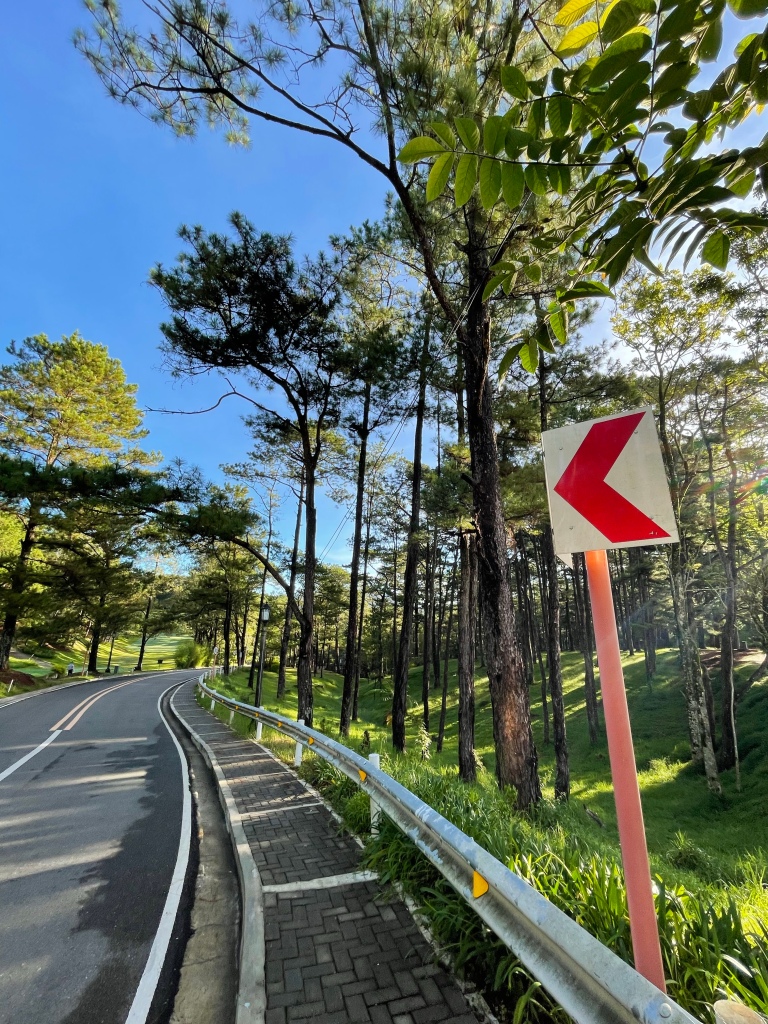
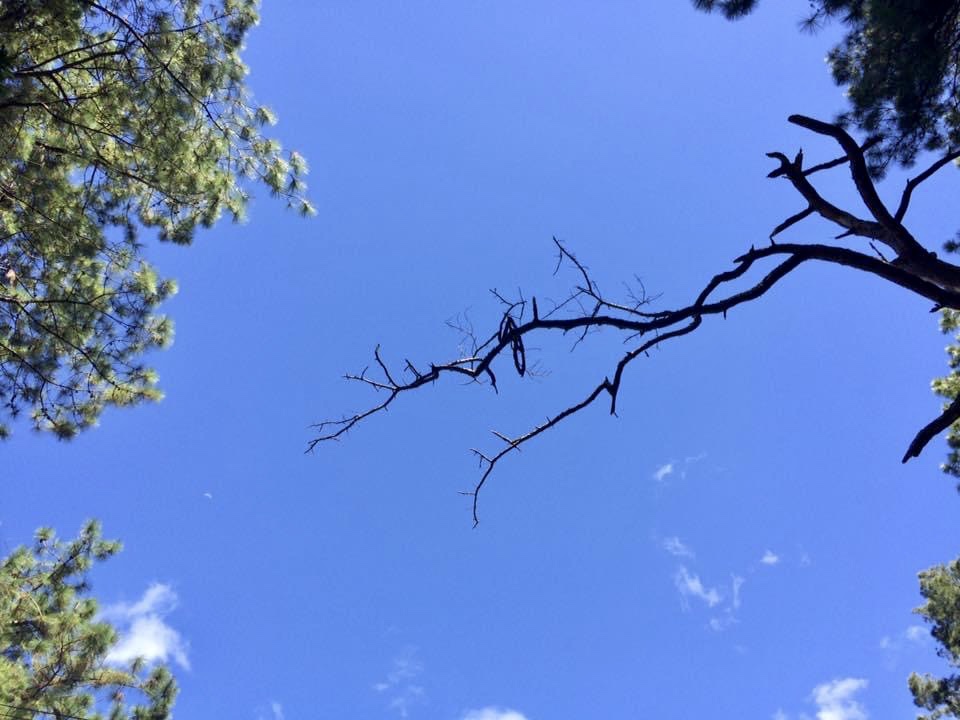
Photo by author, Camp John Hay, Baguio City, 12 July 2023.
God our loving Father,
help us to live spiritually
in this material world,
to live always rooted in you,
our life and our being;
like St. Paul, we find ourselves
always in the same dilemma,
"For I do not do the good I want,
but I do the evil I do not want"
(Romans 7:19).

So true are the words
of the wise that
"we are not human beings
having a spiritual experience;
we are spiritual beings
having a human experience"
for you have made us for you
and eternity, O God,
not for this world that is
temporary and passing;
Jesus Christ came to
show us and make us experience
this reality of our spiritual being
and yet, we keep on insisting
on mastering the material world,
destroying its unity in you,
separating everything
and dividing our hearts within.

Let us take your side, O Lord,
send us the Holy Spirit
to enlighten our minds
and our hearts to discern
your holy will always;
may we learn to be silent
and still, to trust in you,
to feel you in ourselves
and in others
so we may live spiritually
and meaningfully.
Amen.
The Lord Is My Chef Sunday Recipe for the Soul by Fr. Nicanor F. Lalog II
Twenty-Ninth Sunday in Ordinary Time, Cycle A, 22 October 2023
Isaiah 45:1, 4-6 ><}}}}*> 1 Thessalonians 1:1-5 ><}}}}*> Matthew 22:15-21
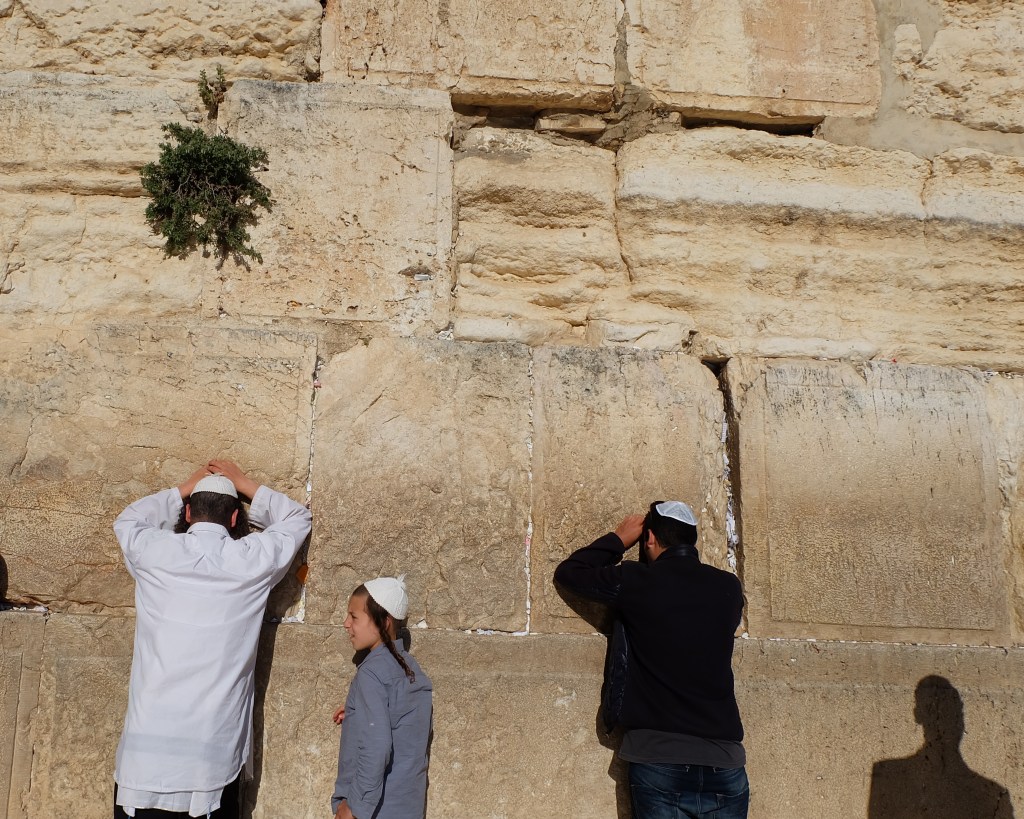
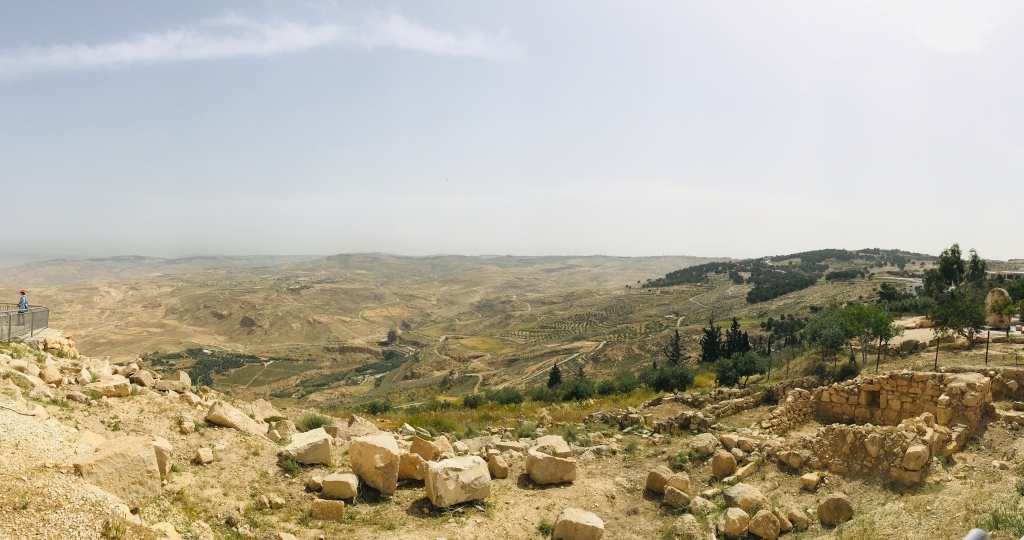
Photo by author, Jerusalem, May 2017.
We are now getting closer toward the end of our liturgical calendar with our gospel scenes of Jesus still at the temple area in Jerusalem where his enemies were growing more intense in banding together to trap him for his arrest and crucifixion.
Many times, that same die-hard religious conceptions of the Lord’s enemies continue to distort our way of Christian living today. First of these is the apparent division between the realms of the world or Caesar and of God and his kingdom.
The Pharisees went off and plotted how they might entrap Jesus in speech. They sent their disciples to him with the Herodians saying, “Tell us, then, what is your opinion: Is it lawful to pay the census tax to Caesar or not?” Knowing their malice, Jesus said, “Why are you testing me, you hypocrites? Show me the coin that pays the census tax.” Then they handed him the Roman coin. He said to them, “Whose image is this and whose inscription?” They replied, “Caesar’s.” At that he said to them, “Then repay to Caesar what belongs to Caesar and to God what belongs to God.”
Matthew 22:15-16, 17-21
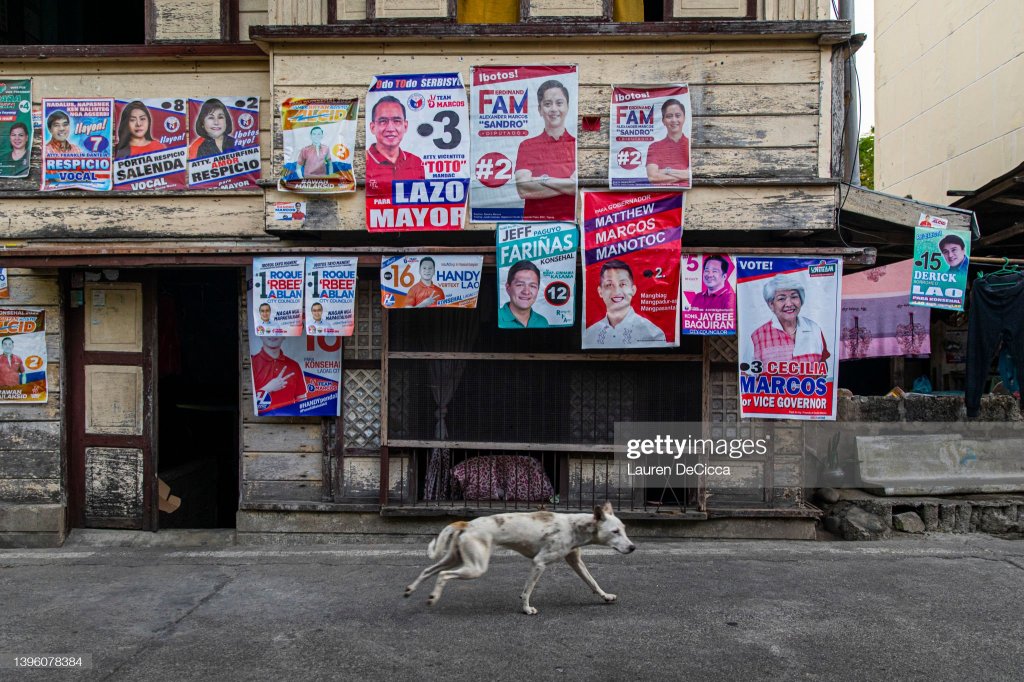
Photo by Lauren DeCicca/Getty Images in Laoag City, 08 May 2022.
It’s election fever again in the country (does it ever end?) when talks on the separation of the Church and the state abound in every corner of campaigns and discussions. What is very funny is despite everyone’s insistence of such separation, candidates keep on going to every church and chapel of all faith to meet their religious leaders and followers who in turn endorse some of them!
Then and now, the division was more clearly in our hearts than in religion and political life. Despite everyone’s endless quoting of the Lord’s declaration to “repay to Caesar what belongs to Caesar and to God what belongs to God”, we remain more divided as a people and individuals right in our hearts where the first casualty is Jesus Christ. Then us and our loved ones.
The way of God as Jesus had shown and taught us is not found in opposing civil and religious or spiritual realms of life but in giving ourselves for the good of others in all areas of life, first to God and everything follows. Jesus Christ came to the word to heal our divided hearts, to make us whole again (and be holy) by showing us how we are all one in God, our origin and end. St. Francis of Assisi saw this unity of God’s creation and was so central in his life and teachings that he was able to literally live out the gospel values of both material and spiritual poverty.
Photo by author, Jerusalem, May 2017.
There are no divisions between the material world and the spiritual world because everything is created by God, came from God and will ultimately end in God. “Caesar” is everything of the world we so often give more emphasis in life, more attention and more focus. Primary is our own self as we consciously and unconsciously stamp with the image and inscription of “Caesar” as we try to hide and remove God’s image in us.
See how Jesus in many instances did not bother himself with our worldly affairs like being a judge to divide the share of inheritance of feuding brothers (Lk. 12:13-15) or of James and John asking him to have them seated at his sides when his glory comes (Mk. 10:35-45) because those things separate us from God and each other.
One tragedy of Christ’s time that continues today is when we the supposed religious leaders and guides are divided within each of us, so concerned with our own pride and other priorities in life like fame and wealth. Forgive us your priests and bishops whose lifestyle and way of relating to others betray like the Pharisees who and what is first in our lives.
Keep in mind how the Pharisees were not supposed to have anything that bears semblances of idolatry in the temple area like the Roman coin with image and inscription of the Caesar considered as god and emperor by the Romans. We priests and bishops still have that “Roman coin” today in the form of social media especially Facebook that show and prove more than ever how we are a church for the rich and not of the poor no matter what the gospel and documents say. What a scandal of our time to find priests and bishops shamelessly posted on social media always present, readily available especially for funeral Masses of the rich but never or so rare with the poor! These only prove to the people of the existence of the great divide among us Jesus had supposedly healed more than 2000 years when churchmen continue to play these days the very game of the Pharisees, scribes, chief priests and elders of Christ’s time.
Photo by author, Jerusalem, May 2017.
When we examine world history, it has actually felt easier for us to divide our lives into the material and spiritual realms by giving what is due and proper to each one. This has been the way of the world especially in the past 300 years at the start of the Industrial Revolution that resulted in so many inventions and scientific breakthroughs that have spawned various thoughts and philosophies.
On the outside or in the realm of Caesar, we seem to be better with more technologies and affluence but as persons, we have remained lost and more hurting inside that drive many into suicides and depression. How ironic when we are supposed to be better, crimes against human persons get worst these days with wars and atrocities still happening. Life may had drastically improved especially in the fields of medicine and communications but the gaps among us peoples have grown wider especially these last 20 years known as the “Fourth Industrial Revolution” characterized by digitization and robotics that include Artificial Intelligence or AI. Like in the parable of the wicked tenants, we have usurped everything from God, even our very lives and the world itself.
Of course, the obligations to Caesar and to God are radically different: to the state we pay taxes, but to God we give our undivided hearts, our total being. This is what Isaiah told us in the first reading that everything in history is directed by God for the good of his people. He is the God of history. Let no one mistake any god for God because “I am the Lord, there is no other” (Is.45:6).
When Jesus asked his enemies to show him the coin that pays the census taxes, he is also asking us this Sunday to bare our hearts before him to let him heal us of the divisions within that are reflected by the many wars and divisions in the world. The deepest divide within us in this time is when we live and act like the Pharisees and Herodians with insincere hearts living a big lie of living in “accordance with the truth” (Mt. 22:16).
Let me end this reflection with those beautiful words by St. Paul in our second reading today:
We give thanks to God always for all of you, remembering you in our prayers, unceasingly calling to mind your work of faith and labor of love and endurance in hope of our Lord Jesus Christ, before our God and Father, knowing, brothers and sisters oved by God, how you were chosen. For our gospel did not come to you in word alone, but also in power and in the Holy Spirit and with much conviction.
1 Thessalonians 1:2-5
Photo by author, Church of St. Anne in Jerusalem, May 2017.
So lovely! St. Paul is also talking to us today, assuring us how despite our many sins, of being slaves of Caesar and other gods like the Thessalonians who were pagans before, we too were willed by God to be called as his children in Jesus Christ.
We in the Church are a people despite our many flaws and imperfections especially us your priests were called out of sin and darkness to be God’s own people, beloved children. He has given us life in the Holy Spirit that when we look back in our lives, we are convinced in our hearts it was him who worked in us in the realm of material world. God has always been the “invisible hand” leading us when we felt so down and lost, defeated and almost dead. Here we are, still alive and forging on amid the many difficulties we encounter within and outside us.
When we cooperate with the grace of God and focus more on him than to the many Caesars, when we live in faith in Christ, laboring in his love for others, God becomes more present in our material world, enabling us to endure further life’s challenges in hopes that Jesus Christ will come again. Amen. Have a blessed week ahead.
The Lord Is My Chef Daily Recipe for the Soul by Fr. Nicanor F. Lalog II
Tuesday in the Twenty-Sixth Week of Ordinary Time, Year I, 03 October 2023
Zechariah 8:20-23   <*(((>< + ><)))*>   Luke 9:51-56
The old city of Jerusalem with the Golden Dome Mosque seen from the inside of the Church Dominus Flevit (the Lord Cried); photo by author, May 2017.
Today O Dear God
our loving Father,
I pray for those going
through many difficulties
and sufferings in life;
those travelling the road
to Jerusalem,
even inside Jerusalem
already, one with Jesus
without them knowing
carrying their Cross
to the Calvary.
When the days for Jesus being taken up were fulfilled, he resolutely determined to journey to Jerusalem.
Luke 9:51
Open our eyes,
open our hearts,
dear Father to recognize
Jesus our companion
to Jerusalem,
in Jerusalem;
help us to be "resolute"
like Christ in going to
Jerusalem to face
Passion and Death
to eventually realize our
Resurrection in him
 too!
I pray, dear God,
for those giving up,
have given up to
continue the journey
to Jerusalem:  those
who have been living
all these years with
dialysis or chemotherapy,
those with never-ending
rehabilitation due to stroke
and other accidents,
those living daily with
medications and motivations
to fight depression,
to resist suicide;
those nursing so much pains
and hurts within not only
due to physical trauma but
especially emotional and
spiritual traumas;
Lord, I pray also for their
caregivers, their family
and loved ones so
often pushed to the limits
physically, emotionally,
and spiritually; console and
comfort them with the warmth
of the Holy Spirit, strengthen them
and assure them of your love;
tap their shoulders and whisper
to them they are doing well.
I pray dear Father
for those grieving,
those still grappling with
the loss of a loved one;
those suddenly thrown into
emptiness within and without
with the death of a wife or
husband, a mother or a father,
a brother or a sister;
Jesus Christ knew so well the
deep hurt and emptiness every
death creates; accompany them
in the eerie silence and darkness
of suddenly not seeing
nor hearing, not embracing
nor serving a beloved departed.
God,
life is a journey;
thank you in giving us Jesus
our companion; like
the two disciples going
back to Emmaus in
sadness and disappointments,
ignite our hearts anew with
Christ's loving presence,
to go to you, to seek you
right in our hearts,
our little Jerusalem
until we come to you in heaven,
the new Jerusalem.
Amen.
Facade of the Church of the Holy Sepulchre where one finds inside another church enclosing the very site of the Crucifixion of Jesus Christ; photo by author, Jerusalem, May 2017.
Quiet Storm by Fr. Nicanor F. Lalog II, 15 September 2023
“Mater Dolorosa” also known as “Blue Madonna” (1616) by Carlo Dolci. Photo from Wikimedia Commons.
I started praying about this blog last month after the Feast of the Nativity of the Blessed Virgin Mary. It just occurred to me on that day to greet some of my “girlfriends” – yes, God has blessed me with so many of them who are mostly women and ladies who have taught me and shared with me so many lessons and thoughts about life only women can see.
One of them is my former colleague at GMA-7 News, Kelly, widowed for six years since the passing of her husband Larry whom I have visited and anointed many times during his long battle with cancer. When I asked her how she has been doing since our last meeting before the pandemic, she was her usual self – candid yet a bit sardonic in her reply, “I’m good. I have health issues but I’m handling them, living a simple but contented life… alam mo naman ako, I’m so Alannis Morissette.”
I thought she was again speaking “gay” as in chorva when she described herself as Alannis Morisette. And before I could ask her the meaning of “Alanis Morissette”, she turned out to be speaking English – referring to the singer Alanis Morissette as she sent me lyrics of her 1995 song Handin My Pocket. Immediately I checked it on Youtube and found it perfect too for today’s celebration of the Memorial of Our Lady of Sorrows or Mater Dolorosa as it speaks of every woman’s sacrifice and sufferings in this world that is sadly still dominated by male chauvinists.
Mary as Our Lady of Sorrows reminds us of every woman’s fidelity to God through her husband and children, family and loved ones as well as vocation. Her remaining at the foot of the Cross was her lowest and painful point in life to be with her crucified Son, Jesus Christ. She was so absorbed with his pain and sufferings that at Easter, she was in turn absorbed by the glory of our Risen Lord which culminated at her Assumption into heaven.
How was Mary able to keep her composure? Oneness in Christ her Son from whom all good things come even in the most trying times. When I look at her face as portrayed in the arts, it is not pity that I feel but her dignity, nobility and simplicity. Notice her praying hands, totally surrendering herself to God which began at the Annunciation when she told the angel, “Behold, I am the handmaid of the Lord. May it be done to me according to your word” (Lk.1:38). There at the foot of the Cross of Jesus, her hands remained in praying position, entrusting everything to God, filled with faith, hope and love.
Alanis Morissette express almost the same faith, hope and love in the modern sense today with her 1995 Hand in My Pocket. A Canadian-American, Morissette grew up in a devout Roman Catholic family. Although she is now a practicing Buddhist, Morissette claimed repeatedly in some interviews that she owes her singing career to her Catholic faith. Her personal life is marked with so many pains and sufferings too, going through depressions and eating disorders as well as having been raped while 15 years old. It was from these experiences that she got all her inspirations in her many songs that strike chords in the hearts of many modern people, not just women, who strive to find meaning by hoping to brighter tomorrows amid the many hardships modern life has brought us.
I’m broke, but I’m happy I’m poor, but I’m kind I’m short, but I’m healthy, yeah I’m high, but I’m grounded I’m sane, but I’m overwhelmed I’m lost, but I’m hopeful, baby
And what it all comes down to Is that everything’s gonna be fine, fine, fine ‘Cause I’ve got one hand in my pocket And the other one is giving a high five
We just have to remember our own mothers to realize and appreciate how our Lady of Sorrows and Alanis Morissette were able to bear all of life’s sufferings. It is in their hands. The praying hands. The hand in the pocket holding on to the present realities and the other hand up in the air hoping everything will be fine.
How ironic – pun intended as it is the title too of my favorite Morissette song – that despite all the great love women have offered and given us through our own mothers and sisters, aunts and grandmothers, teachers and nurses, not to forget the multitude of women who make our economy grow by laboring here and abroad plus the nuns who pray and run so many orphanages, women are still neglected and forgotten, even unloved, maltreated, and abused. Sadly, their fellow women are the ones who inflict those pains in this cruel and ungrateful world.
Starting today, be kind to women, especially those closest to you, those who have remained loving and kind despite your excesses and other idiosyncrasies.
Here is Ms. Alanis Morissette. Her music video is very interesting too, showing the many contrasts every disciple of Christ like Mary our Lady of Sorrows goes through in this life. Set in black and white, it evokes rawness yet at the same time brings out that eternal spring of hope within each one of us. Have a blessed rest day ahead!
The Lord Is My Chef Daily Recipe for the Soul by Fr. Nicanor F. Lalog II
Thursday in the Twenty-first Week of Ordinary Time, Year I, 31 August 2023
1 Thessalonians 3:7-13   ><))))*> + <*((((><   Matthew 24:42-51
I just realized today
while praying your words,
O Lord, from St. Paul
the true meaning of
goodbye:  it is not really
an end but beginning
of another meeting,
of another coming together.

How lovely is St. Paul's
prayer to the early
Christians he had not seen
for so long!
Now may God himself, our Father, and our Lord Jesus direct our way to you, and may the Lord make you increase and abound in love for one another and for all, just as we have for you, so as to strengthen your hearts, to be blameless in holiness before our God and Father at the coming of our Lord Jesus with all his holy one. Amen.
1 Thessalonians 3:11-13
Teach me to live in the present
moment, Lord;
let me savor the beauty
and joy of each moment,
of each day filled with life;
let me celebrate the presence
of every person I meet
and enable them too
to celebrate life in you;
let me not waste my life
awaiting for your coming
or return, awaiting for my
own end and death
for every here and now
is also my last moment.

Goodbye, O Lord,
is not departure
but coming together
again, until we meet
again.  Wherever,
whenever.  Even in forever.
Amen.
Lawiswis Ng Salita ni P. Nicanor F. Lalog II, Ika-7 ng Agosto 2023
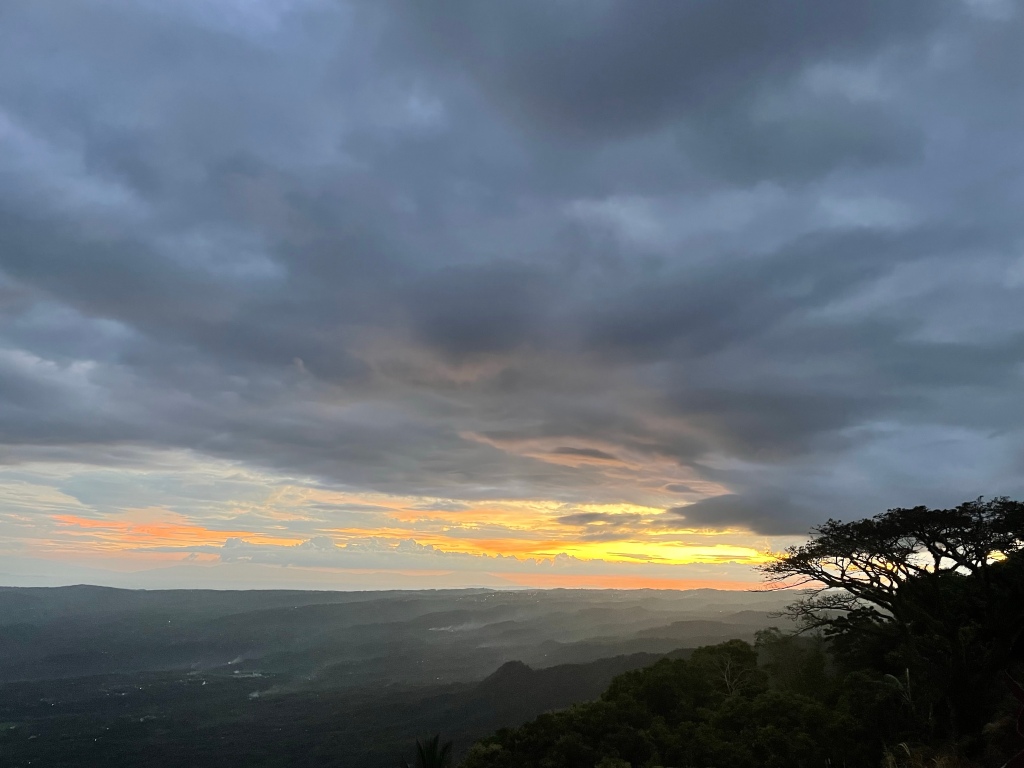
Larawan kuha ng may-akda, takipsilim sa Tagaytay, ika-8 ng Pebrero 2023.
Madalas maitanong sa akin ng mga tao kung kasalanan daw ba, o masama, ang magreklamo sa Diyos? Bago sila sagutin, lagi kong hiling na liwanagin muna kung sila ba ay nagrereklamo o dumaraing sa Diyos?
Malaki pagkakaiba ng dalawang salitang ito na tila magkapareho lalo na kung ating uugatin ang kanilang pinagmulang wika na Latin, Pranses, Kastila at Inggles. Marahil dahil sa pagsasalin-salin ng mga salitang reklamo at daing, naiba kanilang kahulugan kaya mahalaga nating maunawaan upang makatulong sa ating wastong pakikipag-ugnayan sa isa’t-isa at sa Panginoong Diyos.
Hindi po ako dalubhasa sa linguistika o pag-aaral ng mga wika ngunit ibig ko na pagnilayan ang pagkakaiba ng reklamo at daing mula sa kanilang pinagmumulan o pinagbubuhatan. Ang reklamo ay mula sa isipan habang ang daing ay buhat sa puso at kaibuturan ng kalooban. Sa pagkakaibang ito ng kanilang pinagmumulan natin makikita kanilang kasamaan at kabutihan.
Larawan kuha ng may-akda mula sa Jordan tanawin ang ilang ng Israel noong Mayo 2019.
Masama ang pagrereklamo dahil ito ay sinasadya o wilfull sa Inggles. Mayroong malisya at masamang paglalayon bunsod ng maling pag-gamit ng kaisipan o intellect na kung saan pinangingibabawan ito ng kasamaan.
Sa pagrereklamo, mayroong pagpaplano at pag-aaral sa paglalahad ng hangad na hindi lamang maaksiyunan at solusyunan ang hinaharap na suliranin o katayuan kungdi maungkat pa ang ibang mga isyu ng nagrereklamo. Katulad lamang ito noong tayo ay mga bata pa na bubulung- bulong kapag masama ang loob kung nauutusan.
Sa pagrereklamo, naroon ang isang proseso ng kaisipan at hindi lamang bunga ng emosyon o damdamin na kapag naibulalas na ay tapos na. Naroon palagi ang paghahanap ng butas at kung anu-ano pang mga bagay na maaring isisi at ipula saan man at kanino man.
Kitang-kita ito sa karanasan ng mga Israelita doon sa ilang matapos sila ay hanguin ng Diyos sa pamumuno ni Moises mula sa pagkaalipin sa Egipto. Tingnan at suriin paanong nagreklamo mga Israelita noon kay Moises nang sila ay magutom at mahirapan sa paglalakbay.
Kaya, nagreklamo na naman sila. Ang sabi nila, “Kailan pa ba tayo makatitikim ng masarap na pagkain? Mabuti pa sa Egipto! Doon, isang hingi lamang namin ay mayroon na agad isda, pipino, pakwan, sibuyas, at bawang. Dito walang makain kundi manna.
Bilang 11:4-6
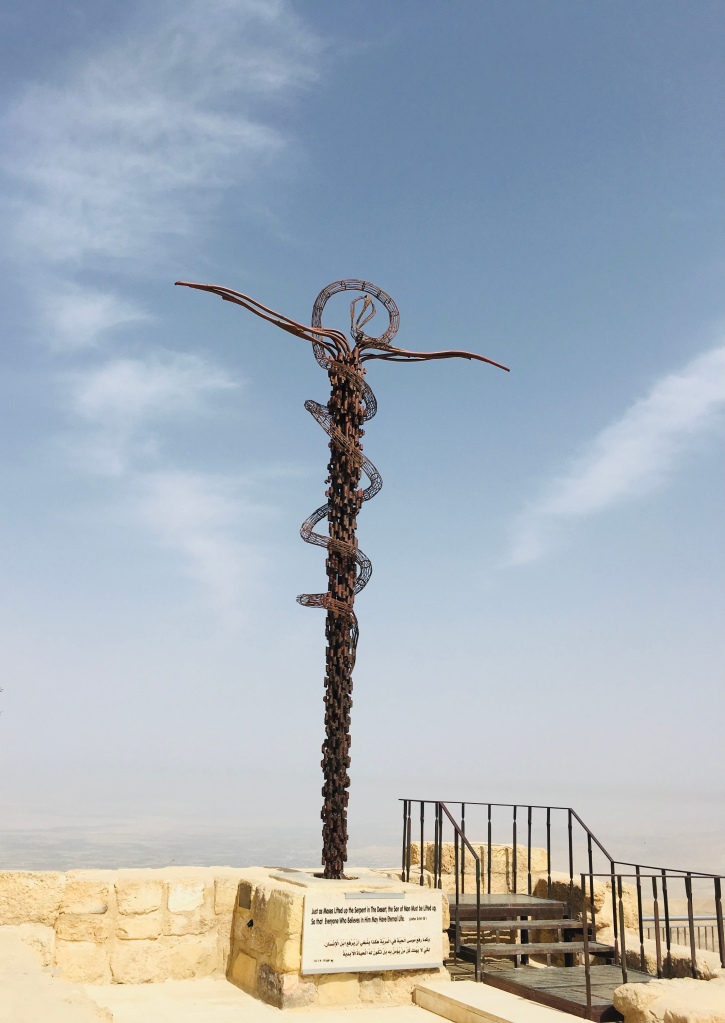
Ang eskultura ng ginawang ahas na tanso ni Moises sa tikin sa lugar kung saan mismo nangyari na ngayon nasa pangangalaga ng mga Paring Franciscano sa Jordan. Larawan kuha ng may-akda, Mayo 2019.
Pagmasdan ang masakit na bahagi ng bawat reklamo, masdan paanong magsalita mga reklamador na tila wala kang nagawang mabuti para sa kanila.
Kadalasan ang problema ng mga reklamador ay hindi lamang sa ayaw na ayaw nila ng hirap at tiisin sa buhay kungdi wala din silang tiwala sa kapwa kaya naman puno sila ng pangungutya at paghahamon. Dito natin mababakas ang malalim na kasamaan ng reklamo na isang uri ng manipulasyon at pambabraso upang maimaniobra at maipilit ang sariling kagustuhan na tanda ng kawalan ng pasensiya sa buhay at ng pagtitiwala sa iba lalo na sa Diyos.
Maraming pagkakataon ang pagrereklamo ay nagiging isang panunumbat, panunukat, at paghahamon maging sa Diyos na maaring ikabunga ng hindi maganda.
Mula sa Bundok ng Hor, nagpatuloy ang mga israelita patungong Dagat ng mga Tambo upang lihisan ang Edom. Dahil dito, nainip sila sa pasikut-sikot na paglalakbay na yaon. Nagreklamo sila kay Moises, “Inialis mo ba kami sa Egipto para patayin sa ilang na ito? Walang kaming makain ni mainom! Sawa na kami sa walang kwentang pagkaing ito.” Dahil dito, sila’y pinadalhan ni Yahweh ng makamandag na ahas at sinumang matuka nito ay nmamatay.
Bilang 21:4-6
Larawan kuha ng may-akda sa Mt. St. Paul, La Trinidad, Benguet noong 2017.
Sa kabilang dako naman, hindi masama, lalong hindi rin kasalanan ang dumaing sa Diyos. Kung tutuusin ay maituturing na isang pananalangin ang ating pagdaing sa Diyos!
Bakit?
Muli, makikita natin ang pinagmumulan ng ating pagdaing na walang iba kungdi puso natin.
Maraming pagkakataon, ang ating pagdaing ay bumubukal mula sa kaibuturan ng ating sarili dahil sa matinding hirap at pagtitiis. Wala kang mapagsabihan dahil labis na ang kawalan ng pagpapahalaga sa iyo ng ilang tao na dapat sana’y kumilala sa iyong mga pagpapagal at, hindi sa anu pa mang dahilan, ay tumanaw ng utang na loob man lamang sa iyong kagandahang-loob.
Kaya naman natural at hindi mo na rin mapigilan pag-uwal mula sa puso at kalooban mga nararamdaman lalo na sama ng loob maging pagtatampo sa ilang tao. At maski sa Diyos na tila baga walang pakialam sa iyo. Pero ganoon nga ba? Hindi!
Dumaraing tayo sa Diyos kahit tila pakiwari natin malayo siya o walang pakialam dahil wala na tayong ibang matakbuhan kungdi siya na lamang. Hindi masama na tayo ay dumaing sa Diyos at ihayag pagtatampo sa kanya dahil pagiging totoo ito sa sariling nararamdaman.
Dito sa nararamdamang ito rin nakatago ang kagandahan nitong pagdaing na isang panalangin din sapagkat sa bawat hinaing, naroon ang pagsusumamo sa Poong Maykapal na siya lamang ang mayroong magagawa sa atin. Hindi magagalit ang Diyos sa atin dahil batid niya kung baga tayo ay “naglalambing” sa kanya katulad ni Moises sa ilang pagkakataon.
Hindi kaila kay Moises ang iyakan ng lahat ng sambahayan na nakatayo sa pintuan ng kani-kanilang tolda. Nagalit nang labis ang Diyos, kaya nabalisa si Moises. Itinanong ni Moises kay Yahweh, “Bakit ninyo ako isunuong sa ganitong kalaking pasanin? Bakit ninyo ako ginaganito? May nagawa ba akong laban sa inyo? Ako ba ang nagsilang sa kanila? Hindi ko sila kayang alagaang mag-isa. Napakalaki ng gawaing ito para sa akin! Kung ganito rin lamang ang gagawin ninyo sa akin, mabuti pa’y mamatay na ako ngayon din kaysa maghirap nang matagal.”
Bilang 11:10-12, 14-15
Larawan kuha ng may-akda sa may St. Catherine Monastery, Mt. Sinai, Egypt, Mayo 2019.
Tayo ma’y nakapagdrama na rin siguro ng kung ilang ulit tulad ni Moises sa Diyos ng ganito. E, pinansin ba tayo ng Diyos? Siyempre hindi! Bagamat hirap na hirap tayo ngunit, heto pa rin tayo, buhay na buhay!
Ganoon kaganda ang pagdaing – maihinga lang ay naaayos na ang lahat sa atin, gumagaan ating pasanin dahil ang totoo dama natin ang Diyos sa piling natin.
Kapag tayo dumaraing sa Diyos, doon niya tayo tiyak dinirinig dahil doon tayo pinakamalapit sa kanya kay Kristo Jesus doon sa Krus. Tuwing tayo ay batbat ng hirap at sakit lalo na sa mga pula at reklamo ng mga taong tinutulungan at kinakalinga natin, doon tayo nakabayubay sa krus kasama si Jesus at katulad ni Jesus.
Kapag wala tayong narinig kungdi reklamo ng maraming tao sa kabila ng ating pagsisikap para sa kanila, doon tayo nagmamahal na tunay gaya ni Jesus.
Hindi tayo makareklamo kanino man maliban sa Diyos dahil sa ating kaibuturan, batid natin siya lang ating maaasahan. Hindi labi ang nangungusap sa atin kungdi puso at kalooban sa kapangyarihan ng Espiritung Banal gaya ng sinasaad ni San Pablo (Rom. 8:26-27).
Kayo kung ikaw ay pagod na sa bigat ng mga pasanin sa buhay, nabibingi na sa mga reklamo at patutsada ng mga “magagaling” na tao sa paligid mo, chill lang. Okey lang magbuntung-hininga tulad ni Jesus (tingnan Marcos 8:11-13) nang mapuno sa kakulitan ng mga kalaban.
Ibuhos iyong daing, pati luha, sa Diyos na tanging sa ating nakauunawa. Higit sa lahat, nagmamahal at natutuwa dahil sa kabila ng maraming reklamo ng iba, gumaganap tayo sa kanyang misyon at ipinagagawa. Amen.
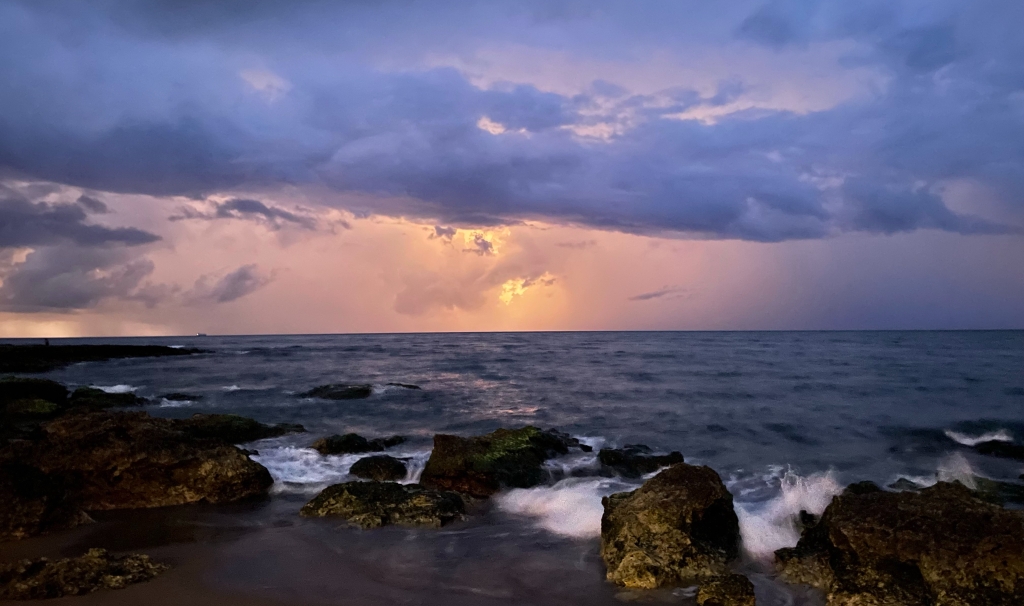
Larawan kuha ng may-akda sa San Juan, La Union, ika-24 ng Hulyo 2023.
The Lord Is My Chef Daily Recipe for the Soul by Fr. Nicanor F. Lalog II
Friday in the Fifteenth Week of Ordinary Time, Year I, 21 July 2023
Exodus 11:10-12:14   <*(((><<< + >>><)))*>   Matthew 12:1-8
Photo by Fr. Pop Dela Cruz in San Miguel, Bulacan, 2022.
Your words today, dear God
remind us of your presence,
of your journeying with us,
of your passing over:
"But the blood will mark
the houses where you are.
Seeing the blood,
I will pass over you;
thus, when I strike
the land of Egypt,
no destructive blow will
come upon you"
(Exodus 12:13-14).
This came into fulfillment
in Jesus Christ's coming
in our midst:
"Jesus was going through
a field of grain on the sabbath"
(Matthew 12:1) when the Pharisees
noticed the day than the persons
at the scene that they sorely
missed the whole point of
the Lord's presence among them,
"I say to you, something greater
than the temple is here"
(Matthew 12:6).
Keep us aware of you
always, O God;
let us find your face
on the face of everyone we meet,
let us recognize you in the person
next to us especially those
searching for you,
in need of comfort,
and those lost
because no one sees them,
no one recognizes them
nobody loves them.
Amen.
In this season of graduations when we also celebrate today the feast of St. Thomas the Apostle, we are reminded that growth and maturity in Christian faith goes through a process too of “graduation”.
St. Thomas went through different stages in life as a disciple of Christ before finally graduating with honors as a martyr. Most of all, he is a good model for every graduating student to emulate because he is the one so famous for having “doubts” and being known as the “doubting Thomas”.
To doubt is not necessarily bad. In fact, it is a grace from God because every doubt is a step closer to wisdom and knowledge. Without doubts, we can never learn because we will never be able to verify and validate what we know if we do not doubt at all. We shall discuss this further as we reflect on the three graduation events in the life of St. Thomas the Apostle.
His first graduation happened when the Lord’s best friend, Lazarus, died.
“The Raising of Lazarus”, 1311 painting by Duccio de Buoninsegna. Photo by commons.wikimedia.org
Recall how Jesus and his Apostles were prevented from visiting Lazarus when he was seriously ill because he lived with his sisters Marth and Mary in the town of Bethany that was near Jerusalem where the Lord’s enemies were plotting to arrest and put him to death. It was too risky for Jesus to go to Bethany but, because of his love for Lazarus and his sisters, Jesus decided to take the risk to visit him.
It was St. Thomas who rallied his fellow apostles to come with the Lord to share in his death.
So then Jesus said to them clearly, “Lazarus has died. And I am glad for you that I was not there, that you may believe. Let us go to him.” So Thomas, called Didymus, said to his fellow disciples, “Let us also go to die with him.”
John 11:14-16
A good student is always a risk-taker. All graduating students since 2021 to present deserve a great commendation, a great congratulations for taking all the risks and difficulties in pursuing your studies in these four years of the pandemic. Despite the poor internet connections, the threats of viral infections and many other risks, you forged on and now you are a step closer in fulfilling your dreams.
The key here is to never be away from Jesus like St. Thomas who at that early stage had identified himself with the destiny of Christ in offering himself on the Cross. St. Thomas knew it then that nothing is easy in this life but if we are with the Lord, there is nothing we cannot overcome.
Graduation as a process or a passing through stages is also a passover, a pasch like the Passion, Death, and Resurrection of Jesus Christ. Recall the gospel the other Sunday when Jesus told his Apostles to fear no one, to be not afraid. The same thing is what St. Thomas is reminding us today: do not be afraid to learn, to commit mistakes, to doubt, to fail, to get hurt. These little deaths are all part of our process of growing and maturing, of getting better, of being achievers.
The second graduation moment of St. Thomas happened during their Last Supper when the Lord was telling them of his coming death that would lead to his Resurrection and return to the Father’s house where he would prepare a room for them.
“Where I am going you know the way.” Thomas said to him, “Master, we do not know where you are going; how can we know the way?” Jesus said to him, “I am the way and the truth and the life. No one comes to the Father except through me.”
John 14:4-6
Imagine the somber and serious mood of the Last Supper, of Jesus telling everyone of his coming pasch. Then suddenly, there was St. Thomas interjecting with a statement “we do not know where you are going” with a question, “how can we know the way?”
Notice the comedy twist? Funny indeed and truly, we could see St. Thomas in a low level of understanding but if he never dared to ask that question, we would never have that most quotable quote of the Lord of him being “the way and the truth and the life.”
Here, St. Thomas is teaching us to always ask for explanations, even from the Lord himself! As RiteMed would say in its commercials, “Huwag mahihiyang magtanong”!
Photo by Mr. Paulo Sillonar, 07 June 2023.
In telling St. Thomas – and us – that Jesus is the way and the truth and the life, the Lord is reminding us how it is forever valid that true learning is gained from our dealing and relating with persons, with people, not with things like gadgets. Or even pet animals nor plants.
As you go on your school break after your graduation, spend more time with people, with your parents, with your brothers and sisters and cousins. Or playmates. Leave your gadgets and pets behind. Go out and play, bond with people. Get real and stop those virtual realities.
Very often, the teachers we truly love or like and appreciate impact are those who have gone out of their ways to reach out to us, to relate with us. They were the teachers really deserving to be called mentors who not only taught us with so many knowledge and information and techniques but most of all, the ones who have made us experience life, the ones who have opened our minds and hearts to realities of life, showing us the relationships between the classroom and actual life.
Jesus is more than a teaching or a doctrine or a lesson. Jesus is a person we relate with, we experience life with, we live with through people he sends us in the family and in the school. And we learn most in life with them.
Do not be afraid to approach and ask them for explanations, directions, and clarifications. Google nor ChatGPT can never teach you life. St. Thomas must have learned so much from that simple table incident in their Last Supper that even if at first he doubted Christ had risen, he eventually made the boldest expression of faith in Jesus when they finally met on the eighth day of Easter, his final graduation.
Then he said to Thomas, “Put your finger here and see my hands, and bring your hand and put it into my side, and do not be unbelieving, but believe.” Thomas answered and said to him, “My Lord and my God!” Jesus said to him, “Have you come to believe because you have seen me? Blessed are those who have not seen and have believed.”
John 20:27-29
Caravaggio’s painting “The Incredulity of St. Thomas” (1602) from en.wikipedia.org.
Many times, our doubts lead us to more brighter outcome than any uncertainty we may have before like St. Thomas. If St. Thomas did not believe at all that Jesus had risen, he would have not come to the Upper Room to be with the other Apostles to meet Jesus the following Sunday. He believed, though, there were some doubts that were natural. After all, the Resurrection of Jesus was beyond normal, beyond logic. It was truly astounding.
After a long series of stages, here we find St. Thomas making the boldest and strongest expression of faith ever which we silently pray every consecration period in the Mass, “my Lord and my God.”
Dear students, be a man of prayer, be a woman of prayer.
Persevere in deepening your faith despite the many difficulties and challenges being posed today by modern culture characterized by relativism and individualism, materialism and consumerism. St. Mother Teresa said it well, “We are called to be faithful, not successful”. The recent dark days of the pandemic have shown that science will never be enough in this world, in this life. There is God. And the good news is he is not that far from us. He is the one calling us to believe even if we have not seen him. If the world says to see is to believe, that if there are no pictures it did not happen at all, Jesus is telling us today in the experience of St. Thomas that when you believe, then you shall see!
Let us imitate St. Thomas, a student who studied hard, worked harder, and prayed hardest to Jesus who never abandoned him especially in his doubts and weaknesses. May the example of St. Thomas strengthen our faith in Jesus who is our Lord and God. Amen.
The Lord Is My Chef Daily Recipe for the Soul by Fr. Nicanor F. Lalog II
Friday, Memorial of Sts. Marcellinus and Peter, Martyrs, 02 June 2023
Sirach 44:1.9-13   ><]]]]'> + ><]]]]'> + ><]]]]'>   Mark 11:11-26
Photo by author, January 2023.
Praise and glory to you,
God our loving Father,
for this first Friday of June;
your words are very interesting
with Ben Sirach calling us to
recall and remember the faithful
men and women who have lived'
and gone ahead of us while Mark
combined two stories in our
gospel scene today.
Now I will praise those godly men, our ancestors, each in his own time. But of others there is no memory, for when they ceased, they ceased. And they are as though they had not lived, they and their children after them. Yet these also were godly men whose virtues have not been forgotten.
Sirach 44:1, 9-10
So true indeed are his words
until now!  There are many great
people we remember their names
for their great faith and but there
are still far more than them whom we
know remain unnamed having served
God so well among his people;
may we try to remember today
our simple folks whose faith
have inspired us to be more
faithful and charitable like
Ben-sirach.
On the other hand,
Mark combines two stories
in the life of our Lord Jesus
to instill in us the importance
of faith not just as a belief
nor a system of theology
we must learn but a relationship
we must keep with God through
our brothers and sisters.
Forgive us, Jesus,
for those times our faith
bore no fruit and withered
so dried like the fruitless fig tree;
forgive us, Jesus,
when we make religion
an economic enterprise
like what happened to the
temple of Jerusalem during
your time; cleanse us of our
selfish motives that faith
has become more of a means
for social mobility than for
spiritual growth through
meaningful relationships
with God and with others.
Grant us, Jesus,
the courage and fidelity
of Sts. Marcellinus and Peter
to be firm in our faith in you.
Amen.
Lawiswis ng Salita ni P. Nicanor F. Lalog II, Ika-30 ng Mayo 2023
Larawan kuha ng may-akda, exhibit ng Sto. Nino sa Malolos Cathedral, Enero 2022.
Kailan ko lamang napag-ukulan ng pansin – at pagninilay – itong isang bagay ukol sa mga tinagurian nating “special child”, yaong mga isinilang na mayroong iba’t-ibang kapansanan sa pangangatawan, pag-iisip at pandamdam (emotional).
Mabuti nga sa panahong ito ay “special” na ang tawag sa kanila kesa noong dating panahon namin na wala pang mga “sped” o special education. At least, hindi pa laganap lalo sa mga lalawigan. Noon basta hindi normal ika nga ang isang tao lalo na mga bata na ipinanganak na mayroong kapansanan na tinatawag na Down Syndrome, “mongoloid” ang tawag. Kaya naman ako noon sa mura kong isipan at katangahan, hindi ko mawari bakit siya kumain ng lapis o pencil na noo’y Mongol ang tatak?! Sorry po pero yun talaga naisip ko noong elementary ako lalo na nang biniro ng guro namin isang kaklase na palaging kagat-kagat ang lapis niya na magiging mongoloid siya sa ginagawa niya! Siyempre, ako man noo’y palaging kinakagat ang lapis at marahil kaya ako kung minsan ay parang special din.
Pero wala pong biro at mabalik tayo sa ating paksa, pansin ko lang sa pamilya ng mga kapatid nating mayroong mga naturang kapansanan na madalas at mabilis nila kaagad sinasabi na ang kanilang anak o kapatid ay “special”. Minsan mararamdaman mo rin kanilang lungkot marahil hindi sa ano pa man kungdi ang pag-aalala paano magiging buhay ng kanilang special child lalo na sa pagtanda nila.
Noong ako ay batang pari pa sa isang barrio na aking minimisahan ay mayroong special child na palaging nagsisimba. Masayang-masaya ang batang iyon sa pagsisimba at halos sumigaw sa pagsagot at pag-awit sa Misa. Napansin ko tumatahimik siya at masugid niyang tinitingnan ang lahat ng nangungumunyon.
Kinausap ko ang bata na siguro ay labing-limang taong gulang na noon. “Ibig mo ba na magkomunyon? Alam mo ba ko kung ano yun tinatanggap?” Sabi niya sa akin ay si Jesus daw iyong nasa Banal na Ostiya. Kaya kinausap ko kanyang magulang na di makapaniwalang pwede iyon. Inihanda ko ang special child at makaraan ang ilang linggo, siya ay binigyan namin ng “first communion”. Tuwang-tuwa ang bata at kanyang mga magulang. Hanggang ngayon siya ay masayang nagsisimba sa kanilang bisita.
Dati naman sa pinanggalingan kong parokya ay ipinahanap ko sa mga katekista ang lahat ng mga bata na sampung taong gulang pataas na hindi pa nakukumpilan. Isang teenager na special child ang kanilang natagpuan sa aming depressed area. Pinuntahan namin upang kausapain at himukin ang mga magulang ng special child na siya ay pakumpilan yamang libre naman. Nagulat ang ama na puwede daw palang kumpilan kanyang anak at noon siya ay naiyak nang ikuwento sa akin na kaya dalawa lang kanilang anak. Natakot daw siyang special muli ang ikatlong anak nila.
Larawan kuha ng may-akda, Baguio Cathedral, 2018.
Bakit nga ba tinatawag na special child mga batang isinilang na mayroong iba’t-ibang kapansanan at pangangailangan? Hindi ba kapag special dapat ay mahusay at magaling. Halos perfect, hindi ba?
Special child ang tawag sa kanila kasi sila ay espesyal sa Diyos. At higit na espesyal sa lahat ang kanilang mga magulang at kapatid na pinili ng Diyos upang ipagkatiwala sa kanila ang Kanyang mga special children. Sila lang marahil sa dami ng iba pang ama at ina at mga kapatid ang may higit na pagmamahal at malasakit upang arugain at palakihin ang special child ng Diyos.
Noong magbuntis ang kapatid ko sa kanyang ikatlong anak, siya ay nakunan. Malungkot na malungkot ang kapatid ko noon dahil hirap siya sa pagbubuntis. Ipinaliwanag sa akin ng kanyang doctora na kapag daw ang sanggol sa sinapupunan ng ina ay na-detect na magkakaroon ng kapansanan o sakit, mayroon daw mekanismo mismo yung baby na mag automatic shut off para di na siya lumaki at mabuhay pa. Kaya nakukunan ng baby.
Samakatwid, natural sa plano ng Diyos na lahat ng isisilang ay buo at walang kapansanan ngunit kung sakaling mayroong makalusot at mabuhay hanggang mailuwal ng kanyang ina bilang special child, ito ay kalooban ng Diyos. Siya ay biyaya ng Diyos. Regalo ng Diyos. Kaya sinasabi ng iba “suwerte” daw ang special child. Malaking biyaya ng Diyos ang bawat buhay, lalo na kung mayroong kapansanan dahil sila ay pinahintulutan niyang isilang at mabuhay para sa isang misyon para sa ating lahat. At ito iyon: espesyal bawat isa sa atin sa Diyos.
Noong isang linggo ay nagmisa ako sa pumanaw na kapatid na special child ng isang ka-opisina. Natapat noong araw na iyon ang ebanghelyo ay napakaganda sa wikang Inggles na ganito ang sinasabi:
Lifting up his eyes to heaven, Jesus prayed, saying: “Father, they are your gift to me. I wish that where I am they also may be with me, that they may see my glory that you gave me, because you loved me before the foundation of the world.”
John 17:24
Kay sarap namnamin mga salita ni Jesus, “Father, they are your gift to me.” Sa Tagalog ay hindi ganoon ang pagkakasalin at hindi binanggit ang kataga na regalo o gift. Ito yung tagpo ng kanyang pananalangin para sa kanyang mga alagad matapos ang kanilang Huling Hapunan bago siya dakpin noong Huwebes Santo.
Sino ba tayo para ituring ni Jesus na regalo o gift sa kanya ng Ama?
Sa kabila ng ating maraming kapintasan, kakulangan at kasalanan, iyan ang katotohanan: regalo tayo ng Diyos Ama di lamang sa isa’t-isa kungdi maging sa Anak niyang si Jesus.
Tayong lahat ay regalo ng Diyos. Napakahalaga, lalo na yaong mga mayroong kapansanan at iba’t ibang kahinaan sa pangangatawan at buhay.
Sa bawat special child ay mayroong extra-special na ina at ama at mga kapatid. Kaya kung ibig mo ring maging extra-special sa Diyos, kaibiganin, tulungan, at pahalagahan mga special children at kanilang pamilya. Amen.








 lordmychef.com