Christ comes in the Mass

Lord My Chef Simbang Gabi Recipe for the Soul by Fr. Nicanor F. Lalog II
Friday, Simbang Gabi-IV, 19 December 2025
Judges 13:2-7, 24-25 <*((((>< + ><))))*> Luke 1:5-25
View of a decorated Christmas tree and tower of the Franciscan Monastery of St Saviour locally also known as San Salvador monastery in the Christian Quarter Old city East Jerusalem

From Matthew, we now shift to Luke’s account of the story of Christmas which is the most complete and detailed of all gospel accounts. In fact, most artistic renditions of Christmas were inspired by Luke’s gospel.

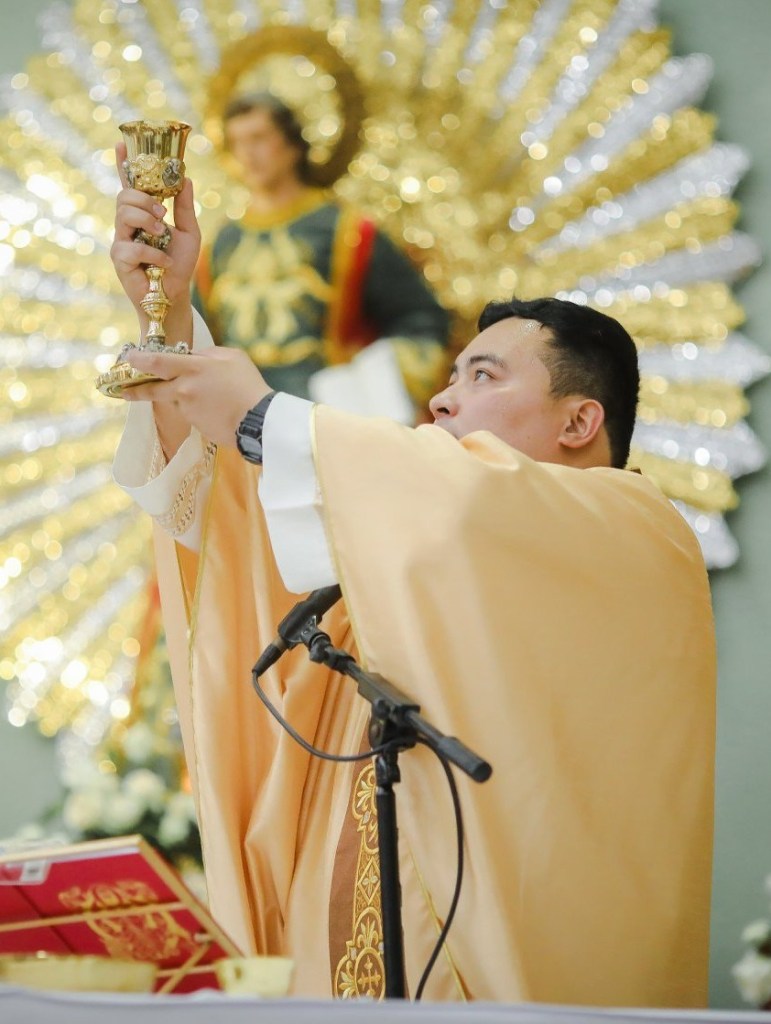
Very surprising in his Christmas story, Luke started it with the annunciation of the birth of John the Baptist to his father Zechariah who was then serving at the temple of the Lord in Jerusalem, a beautiful reminder to us all these days that Christ comes in our Holy Mass.

And I wonder – what if I imitate Zechariah in the gospel on this Simbang Gabi: come out late in the altar… totally silent, unable to speak?

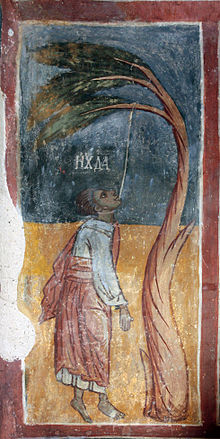
Meanwhile the people were waiting for Zechariah and were amazed that he stayed so long in the sanctuary. But when he came out, he was unable to speak to them, and they realized that he had seen a vision in the sanctuary. He was gesturing to them but remained mute. Then, when his days of ministry were completed, he went home (Luke 1:21-23).

Photo by author, December 2023.

A priest recently posted on Facebook an appeal to us all priests to truly pray and reflect to have a good homily this Simbang Gabi and Christmas Season because the people deserve more than jokes, hugot lines and gimicks during these ten days of celebrating the Mass.

And we totally agree with him!

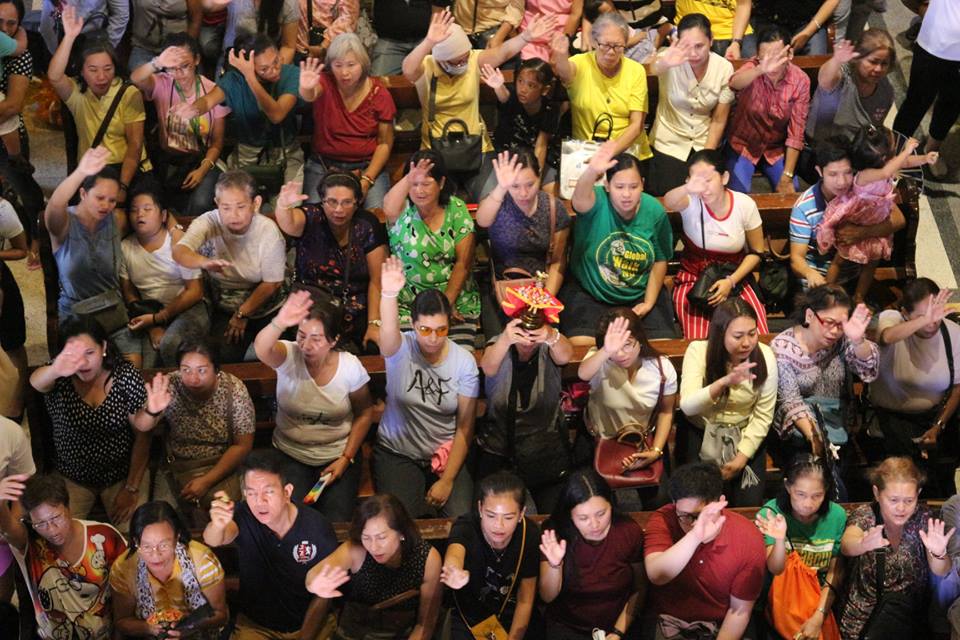
Let us accept the fact that majority of Catholics in the world – not only in the Philippines – celebrate Mass only on Christmas. At least in our country, there is the Simbang Gabi when many Catholics try to complete its nine-days of Masses plus the Christmas Day itself and, that’s it for them – ten consecutive days in December and absent every Sunday from January to November with a few who would return to Mass on Palm Sunday, fiestas and birthdays. Especially these days, most people have no qualms at all of skipping Sunday Masses while there are still some who wrongly believe the online Mass suffices.

The challenge and call for us priests this season is indeed very true when we are able to pray and prepare well our homilies to catechize the once-a-year-Catholics so that they may experience the love and mercy of God in Jesus Christ who had come and continues to come during our celebrations of the Mass and other sacraments.

Problem is, very often we priests are indeed so much like Zechariah on that day when he doubted the good news of John’s birth announced by an Angel. Not only are many priests notoriously late in their Mass schedule, worst of all as the people complain, either they have nothing or too much to say during their homily!

Photo by Ar. Philip Santiago, Jerusalem, October 2025.

Like the people awaiting Zechariah during that important feast, people are amazed today why some priests could not say anything substantial at all except to continuously ask people to clap their hands and praise God with such cues as “God is good…” and “all the time…” and soon enough what’s next, collection, then after communion special collection!

On the other hand, like the people awaiting Zechariah during that feast, people are also amazed when their priests speak a lot without any sense at all. Worst, many times, the priests are like Jollibee – puro pabida either by converting the altar into a stage for his stand-up jokes and entertainment or turn the sanctuary into a videoke bar because Father is so bilib in his voice.

Sorry, my brother priests. Let’s listen to what people are saying. Let’s listen especially to God when he speaks to us. Or, do we have time to listen to him in prayers?

One truth we priests could not admit or refuse to admit despite its glaring realities is that many of us have become just like politicians – so corrupted that we simply entertain people, keep them ignorant of the more essential things in life and about God because many of us do not pray or are not even interested of going to heaven at all.

Maybe like Zechariah, many priests have been burned out not only of the tasks and living in near isolation but also due to the long wait for answers to our prayers coupled with the many pains and hurts that came along with the ministry that has become more of duties than relationship with the Caller, Jesus Christ.

Photo by Lara Jameson on Pexels.com

In telling us this story of the annunciation to Zechariah, Luke had touched on something very timely and sensitive among us priests including the faithful in this age of social media: we have been so detached from God and the divine, many times so impersonal with one another, and, worst of all, so attached with material and worldly things.

As a result, many people have stopped looking up to some priests as models and inspiration for upright living because we have become so much like them in almost every aspect from clothing to speaking and even thinking!

“Pari pala yun!” is what some people often remark these days when they find priests making tambay dis oras ng gabi in almost every cafe or worst, in places we should not even go like casinos and bars, whether with GRO’s or macho dancers.

A growing concern among us these days is the complaint of lay faithful who feel lost and could not guidance like find definitive answers from their pastors about moral issues so blurred by the modern technologies and Western thoughts like wokism. Imagine a Catholic school allowing gay pride festivities? Or relativistic priests to issues of abortion and contraceptives, sex change and gender manipulations, even cases of pornography and other modern addictions. A growing number of laypeople openly express their disappointment at how lately priests have become so lenient with sins that they are already confused on what to confess!

Photo by author, March 2024.

Zechariah and us priests today face the same problem before God: we talk too much and pray so little that perhaps, we need to be silenced too in order to pray more, to listen more to God, his words, his plans and his people as envisioned by synodality now in oblivion.

Imagine all his life as a priest, Zechariah had been praying for a son but when it was finally answered by God, he refused to believe it. Suddenly, he was so lost at what he was supposed to be an expert like spirituality and prayer, most of all, of God’s goodness.

What happened to Zechariah?

And that is what our gospel is asking us priests today, what happened Father?

In the first reading we have heard of the wife of Manoah who felt “a man of God” approached and told her of the good news of the birth of a son (Samson); how lovely if people could feel the same way like in the old days of their priests as “man of God”!

It is very sad when laypeople complain their priests have become so “ordinary” without any sense of holiness or at least of the holy, from simplest wearing of clerical shirt and proper Mass vestments to good grooming and tidiness.

Maybe because we priests have been so concerned so much with palabas than of paloob, when like the social influencers, many among us are so carried away by media chasing content than substance, especially theology.

Photo by author, Jerusalem, May 2017.

One of the most painful cuts in the ministry today that hurts so bad is when priests striving to be holy, speaking and doing what is right and proper would then be called as pharisaical. This is very evident in the celebration of the Mass as some priests would belittle even insult those who follow rubrics as well put on proper vestments.

Luke invites us today, both ordained priests and laypeople who share in the priestly office of Jesus in their baptism, that we look into ourselves, into our hearts amid our worship of God like Zechariah in the very presence of God in the Holy of holies: are we present in the Lord?

Do others feel Christ’s coming in our presence especially in the word and later in our life of witnessing and loving service to them?

Let us strive to have meaningful celebrations of the Mass and other communal worship not only this Advent and Christmas because people await from us ministers of the altar like Zechariah of old the good news of the coming of Christ in every Mass we celebrate with them. Help us your priests, our dear lay faithful by giving us the chance to pray more and serve more instead of inviting us in your activities and other affairs we are not needed. Amen. Have a blessed Friday!

Priesthood is face of Christ

Lord My Chef Daily Recipe by Fr. Nicanor F. Lalog II
Wednesday in the Second Week of Advent, 10 December 2025
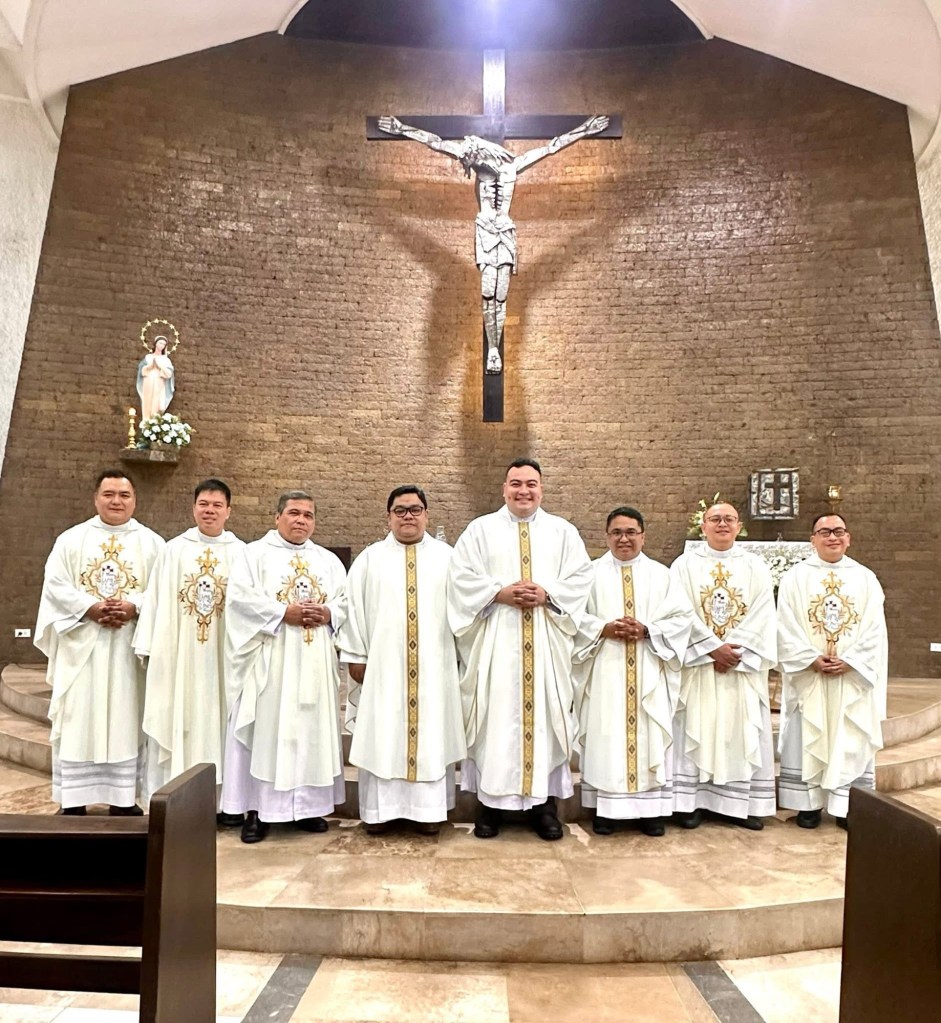
Presbyteral Anniversary Homily of former parishioner and students
Isaiah 40:25-31     <*{{{{><  +  ><}}}}*>     Matthew 11:28-30
Photo by Pixabay on Pexels.com

Advent is seeking the face of God – and so is the priesthood. The joy of our priesthood to a large extent is our continuous seeking for the face of God. It is part of human nature that we always seek and associate a face behind every name and voice.

When we were called to the priesthood, we first heard a “voice” that led us into the high school seminary. That’s why priesthood is a vocation, a call from the Latin verb “voco, vocare, vocavi”.

But, we pursued further our vocation into the major seminary, some had to leave for a while while others were sent out in order to see the face behind this voice, this call because the most essential in priesthood is the Caller Jesus Christ, not really his call.

In our search for Jesus and his face, it is hoped that eventually we as priests become the face of Jesus to everyone, speaking to them those same gentle words to “Come to me, all you who labor and are burdened, and I will give you rest” (Mt.11:28).

Thank you very much for inviting me again to speak to the three of you – Fr. RA, Fr. LA, and Fr. Howard. (Can we call you as Fr. HA so that your name finally rhyme with the two as in “Hahahaha”?)

Sixth Presbyteral Anniversary of Fr. Ra, Fr. LA, and Fr. Howard, 10 December 2025, ICS Chapel.

Congratulations on your sixth presbyteral anniversary. They say the first five years of priesthood is the “honeymoon stage”; so now, you enter the reality stage when many times you will be disillusioned in the ministry, especially with your brother priests who are supposed to be the face of Christ – but not!

That is why the readings for today on your sixth presbyteral anniversary are so appropriate as they offer the Advent message of comfort and encouragement, and a promise of salvation – the message every priest needs to hear these days when our leaders in government and yes, even in the church seem to be so weak and without direction, far from Jesus our Eternal Priest.

The Lord invites us through the Prophet Isaiah to look up and pray – to see the stars in the heavens, the bright constellations that form objects and animals like “faces” on the dark skies of the night.

Photo by author from the Dominus Flevit Church overlooking Jerusalem, May 2017.

“To whom can you liken me as an equal? says the Lord” (Is.40:25).

Do we still pray and reflect on the mystery of God’s power and care? Or are the priorities of the day a constant distraction? 

We shall never see the face of Christ in ourselves nor in the people we serve no matter how dedicated we are if we do not pray. It is our prayer life, especially those intense moments of silence before the Blessed Sacrament that will show us the face of Christ. According to Abp. Fulton Sheen, the more we pray before the Blessed Sacrament, the more we look like Jesus. Before Pope Benedict XVI died, he wrote that all these sex scandals that have rocked the Church in the past decades are largely due to fewer priests making time for Christ in the Blessed Sacrament.

Before our ministry came, there was Jesus first calling us to be with him, to be one in him in prayers. Palagi nating unahin si Jesus higit sa lahat. Our efforts find meaning only in Christ as Isaiah tells us, “Though young men faint and grow weary, and youths stagger and fall, they that hope in the Lord will renew their strength, they will soar with eagles’ wings; they will run and not grow weary, walk and not grow faint” (Is.40:30-31).

It is funny that when you invited me last month Fr. RA and Fr. Howard, I asked you if it is the anniversary of our GC? Yes, these three crazy men keep a GC, just the three of them and to make it more like a group, they included me into their folly.

First Mass of Fr. RA in our Parish in Bagbaguin, Sta. Maria, Bulacan six years ago.

That is the landscape of our Church today when we live our faith in a mass-mediated culture where we find images especially faces so prominent more than ever as in Facebook. There lies hidden the hidden schemes of the devil to mislead us priests in exposing more our faces than being the face of Christ.

A friend in media recently asked me if those priests in that grand procession are really priests as she wondered why they wear those elaborate vestments they look like Poon and imahen.

I felt what she was driving at – rampa pa more! Isn’t she right?

Except for the Nazareno in Quiapo and Sto. Nino in Cebu, most of our Church processions have all turned into pageantries with all the pomp and gaiety of a show, a palabas.

Puro palabas na tayo, wala nang paloob which is the deeper meaning of the “face”: not as something outside o panglabas but more of the inside. Face is image and likeness, that thing that identifies us. Our identification or ID is Jesus Christ. That is the reason the new Ratio in seminary formation had renamed the theology department as “configuration” stage.

Be the face of Jesus to the people you serve, Fr. RA, Fr. LA and Fr. Howard.

First priest of St. John Evangelist Parish in Bagbaguin; actually second after Bp. Bart Santos who was ordained when Bagbaguin was still under La Purisima.

Be the face of Christ too to us priests because these days, many priests follow and show other faces than Christ’s. As I used to tell you, kapag ang pari mabuti sa kapwa pari, tiyak na mabuting tao siya; pero kapag ang pari kahit anong bait (hindi buti, ha) sa mga tao pero masama sa kapwa pari, hindi yan mabuting tao.

St. John the Evangelist, the Patron Saint of Fr. RA in Bagbaguin wrote in one of his letters that “No one has ever seen God. Yet, if we love one another, God remains in us, and his love is brought to perfection in us” (1Jn.4:12).

So beautiful! It is when we truly love, especially like Jesus our Eternal Priest, that we become the face of Christ, when we see the face of Christ. Amen. And cheers to six years in priesthood!

The heart of the priest

Lord My Chef Daily Recipe for the Soul, 04 August 2025
Monday, Memorial of St. John Baptiste Marie Vianney, Priest
Numbers 11:4-15 <*{{{{>< + ><}}}}*> Matthew 14:13-21
St. John Baptiste Marie Vianney from https://liturgiadashoras.online/.

People complain and ask me why our patron saint, St. John Baptiste Marie Vianney is always portrayed “unattractive” as old, balding and so thin who seemed to be so tired, even sad. Para daw hirap na hirap.

Usually I smile at them because when I entered the seminary, I felt the same way too upon seeing his images. But as I learned about his life and teachings, the more I realized St. John Baptiste Marie Vianney is actually one of the original “rock star” saints of the Church with his white, balding hair so much like Jimmy Page of Led Zeppelin!

There is something so deeply within him when we try to feel and observe his portrayals in the arts as more than images but a reality and experience of a man deemed weak yet so strong with an intensity of a Michael Jordan in his life and ministry. He was another St. Paul who had truly let “Christ lived in him” (Gal. 2:20), “strongest when weakest” (2Cor.12:10) who declared with conviction that “the priesthood is the love of the heart of Jesus.” Hence in my prayers last night and today, I asked Jesus to give me a heart “so big, so wide to welcome everyone and life’s many challenges” (https://lordmychef.com/2025/08/03/praying-with-our-patron-saint-john-baptiste-marie-vianney/).

Detail of a painting of the Sacred Heart of Jesus at Visitation Monastery, Marclaz, France from godongphoto / Shutterstock.

The readings this Monday of the eighteenth week in Ordinary Time perfectly jibed the celebration of the Memorial of St. John Baptiste Marie Vianney as they spoke of the heart of the priest.

In the first reading we heard of Moses lamenting to God of the difficulty in dealing with his people who were so stubborn and refused to recognize God’s immense love for them, so similar with us priests in many occasions when we feel so frustrated and sad when parishioners fail to see the good things we are doing for them.

When Moses heard the people, family after family, crying at the entrance of their tents, so that the Lord became very angry, he was grieved. “Why do you treat your servant so badly?” Moses asked the Lord. “Why are you so displeased with me that you burden me with all this people?”… I cannot carry all this people by myself, for they are too heavy for me. If this is the way you will deal with me, then please do me the favor of killing me at once, so that I need no longer face this distress” (Numbers 11:10-11, 14-15).

Many times, we priests feel like Moses who cannot voice out problems with the people who would never understand it at all. Worst, people would even blame us priests why we work so hard or why do we bother at all with their lives. “Pabayaan na lang ninyo kami…sanay na kami” are what they often say. It can be frustrating when people refuse to match the fire and ardor of their priests.

In this scene, we find one of the many instances in the life of Moses that was centered on God in prayers. The heart of the priest is a heart in prayer. The attitude of Moses in the first reading conversing with God in prayer shows us that in our life and ministry, there is no one to turn to except God alone with whom we can be our most personal self, even dare God to “take us” or “kill us” when we are so fed up. The good news is, God never took those words seriously as he knew Moses and the prophets including us who spoke to him that way never knew what we were saying at all.

There is a saying that goes, “if you can’t bear the heat, leave the kitchen”; but, it cannot be applied with the priesthood that is neither a profession nor a job one can easily walk out from and start into another venture or career. Priesthood is a call or a “vocation” from God; however, priesthood is more of the Caller than the call. It is a life centered on prayer to become like Jesus Christ who alone feels and understands and appreciates all our ups and downs in the ministry. The more we get closer to Jesus in the Cross, the more we experience fulfillment that we would never dare to trade it for anything or anyone else, not even the prettiest woman on earth.

Photo by author, Chapel of St. Francis Xavier, Sacred Novitiate, Novaliches, QC, March 2024.

Priesthood is the love of the heart of Jesus that continues to be wounded and hurt by sins of men and women in this modern age so selfish and materialistic. Thus, every priest is called to be a “wounded healer” too like Christ who in his woundedness healed the wounds of others. We remind people of the paradox and scandal of the Cross of Jesus, of life itself by taking into heart Christ’s teaching, “For whoever wishes to save his life will lose it, but whoever loses his life for my sake will find it” (Mt. 16:25).

Let us now reflect on our gospel.

When Jesus heard of death of John the Baptist, he withdrew in a boat to a deserted place by himself. the crowds heard of this and followed him on for from their towns. When he disembarked and saw the vast crowd, his heart was moved with pity for them, and he cured their sick (Matthew 14:13-14).

Observe the brevity of Matthew in narrating the situation at the scene without losing its very soul and meaning especially for us priests: Jesus did not have any intentions to go after Herod nor to challenge him for his execution of John the Baptist who spoke the truth.

Instead, Jesus sought solitude. Like Moses in the first reading, Jesus turned to God in his grief and anguish of the death of John the Baptist. He crossed the lake to pray and be one with the Father to pour out his sadness and most of all, to reflect on what to do next after John’s death.

Jesus shows us in this scene of his going into solitude that our low points in life as priests are also our high points like Christ’s Transfiguration. Every prayer moment is a transfiguration moment because that is when we get closest with Jesus. It has been consistently proven in our collective and personal experiences as priests verified by studies that crises in the priesthood happen when we stop praying because that is detaching from Jesus Christ, our Caller.

Priesthood is not only difficult but very difficult starting with the vestments we have to wear. What a shame when priests prefer to do away with the proper vestments as well as wearing of shoes during celebrations of the Mass and other sacraments because the weather is so hot. What then are we going to bear if the weather is already a big issue for us? One of the teachings of St. John Vianney that I have always followed is the value of putting on good vestments in the celebration of Sacraments because they are a homily in themselves, proclaiming the glory and love of God for us all.

Photo by FlickrBrett Streutker from catholic365.com.

Many times, people forget priests have personal concerns and problems too, that we get hurt, get lonely, get sick and grieve at the death of family and friends. Despite all these lows in our life as priests, we go and follow the Caller Jesus Christ when people come and ask for our help and service. Woe to our brother priests who forget this and think more of themselves especially of their comfort!

See how when Jesus was praying in solitude and the crowd followed him, it was not difficult for him to forget his own worries that his heart was moved with pity upon seeing them disembarked from their boats. Despite his sadness at the death of John, Jesus taught the crowd who have followed him and healed the sick among them. And when the Twelve told him to drive away the crowd to search for their own food and lodging, Jesus told them to give them food themselves. What followed was the great miracle of the feeding of over five thousand people from five loaves of bread and two pieces of fish. It was the event that prepared the Twelve and the people to the Last Supper of the Lord and the road to Emmaus where Jesus was recognized at his “breaking of bread”.

The whole life of St. John Baptiste Marie Vianney was a prayer of praise and thanksgiving to God in Christ’s priesthood. He had a heart so big and wide, hearing confessions daily up to 16 hours! Pray for us your priests to have big hearts too to bear all the wounds and hurts because only the heart that suffers, that is “broken” can truly sing of the joys and pains of living, of the sense and meaning of serving to the point of being emptied, and of the healing and transforming power of Christ’s love and mercy. Amen. Pray for us your priests. Salamuch. Fr. Nicanor F. Lalog II, Our Lady of Fatima University, Valenzuela City (lordmychef@gmail.com).

 have not been to France nor do I know French but while searching for images of St. John Marie Vianney, I found this from the French website, https://www.notrehistoireavecmarie.com/; it is perhaps the depiction of the new pastor speaking to the young Antoine whom he asked for directions to Ars.

Praying with our patron saint, John Baptiste Marie Vianney

Lord My Chef Daily Recipe for the Soul, 04 August 2025
Monday, Memorial of St. John Baptiste Marie Vianney, Priest
Numbers 11:4-15 <*((((>< + ><))))*> Matthew 14:13-21
I have not been to France nor do I know French but while searching for images of St. John Marie Vianney, I found this from the French website, https://www.notrehistoireavecmarie.com/; it is perhaps the depiction of the new pastor speaking to the young Antoine whom he asked for directions to Ars.
On this feast of our Patron Saint,
John Baptiste Marie Vianney,
I praise and thank you dear Jesus
for the gift of vocation to the priesthood;
thank you for calling me to become your priest;
thank you for the courage and strength
to accept your call;
most of all, thank you for your patience
in me despite my repeated sins
and failures as your priest.

Onn this feast of our Patron Saint,
John Baptiste Marie Vianney,
I pray to you Lord Jesus
our Eternal Priest to give me
a big heart,
a heart so wide to welcome
everyone and life's many
challenges.

When Jesus heard of death of John the Baptist, he withdrew in a boat to a deserted place by himself. the crowds heard of this and followed him on for from their towns. When he disembarked and saw the vast crowd, his heart was moved with pity for them, and he cured their sick (Matthew 14:13-14).

Photo by FlickrBrett Streutker from catholic365.com.
O Jesus,
only a heart so wide
like yours can take those
kind of "beatings" -
to withdraw in silence,
perhaps cry in silence,
to be hurting alone with
the pain of the suffering and
death of a brother in ministry;
you bore all our pains
and went straight to the Father
to find solace and strength
for the terrible news nobody else
would really feel nor understand;
make me a good,
loving brother to other priests,
Jesus;
on the other hand,
despite your grief and sadness,
you did not drive away the crowd
so eager to have you in feeding them
with your words and teachings,
in healing their sick notwithstanding
the pains you have in the death of
John the Baptist; where did you get
that kind of immense feeling of
oneness with the crowd
that when you saw them,
your "heart was moved with pity
for them" and cured their sick
and eventually fed them not only
with your words but with true bread!
That is why I pray
for a bigger heart as your priest,
Lord Jesus -
a heart so big to willingly accept
and bear every pain
and hurt in your name
because only a wounded heart
like yours can truly sing
of the joys and pains of living,
of the sense and meaning of serving,
of the healing power of your love.
Detail of a painting of the Sacred Heart of Jesus at Visitation Monastery, Marclaz, France from godongphoto / Shutterstock.
Forgive me, Jesus,
when many times I feel like
giving up,
complaining to you
like Moses
in today's first reading,
hurting deep inside
when your people could not
see and realize
all the good things you have
been doing for them;
hence,
I pray for a big heart
to bear the pains and
disappointments of your people
even if they are not reasonable
nor valid at all;
most of all,
give me a big heart,
Lord,
because according to
St. John Baptiste
Marie Vianney,
"the priesthood
is the love
of the heart
of Jesus."
Amen.

St. John Baptiste Marie Vianney,
Pray for us priests!
Amen.

Fr. Nicanor F. Lalog II, Our Lady of Fatima University, Valenzuela City (lordmychef@gmail.com).

From https://liturgiadashoras.online/.

Kapatiran at sinodo sa lipatan

Lawiswis ng Salita ni P. Nicanor F. Lalog II, Ika-29 ng Mayo 2025
Larawan kuha ng may-akda, St. Scholantica Retreat House, Tagaytay City, Agosto 2024.

Ito ay pagsang-ayon sa ginawang pagninilay kamakalawa ni P. Ritz Darwin Resuello ukol sa nalalapit naming lipatan ng mga pari. Malaman ang kanyang mga sinulat. At nakatutuwa ang kanyang pamagat na mayroong halong salya at padyak: GUMUGULONG LANG BA ANG ROLETA? ISANG PAGNINILAY SA NALALAPIT NA LIPATAN.

At iyon nga ang punto de vista nitong ating pagninilay din: gumugulong lang ba ang roleta sa lipatan ng mga pari?

Nakakatawa. Kasi totoo lalo nitong mga lumipas na panahon. Kung minsan nga parang hindi lang roleta kungdi tila bolang kristal na rin ang ginagamit sa lipatan.

Larawan kuha ng may akda noong Misa ng Krisma, 2025.

Hindi natin kinukuwestiyon ang pagpapasiya ng Obispo na siyang may final say ngunit gaya ng nilahad ni P. Ritz, napakinggan ba ng “may pag-galang at pag-unawa ang tunay na pangangailangang pastoral” ng parokya?

a. Pakikinig nang may paggalang at pag-unawa sa tunay na pangangailangang pastoral ng parokya: Mahalaga pong lumikha ng malugod na kapaligiran para sa lahat ng boses, lalo na sa mga direktang naapektuhan ng lipatan na ito – ang mga pari, at higit sa lahat, ang mga parokyano. Ang mga hinaing, ang mga natatanging katangian ng isang komunidad, at ang kanilang kasalukuyang pastoral na sitwasyon ay lubhang mahalaga. Ang espirituwal na kapakanan ay manatili nawang pangunahing priyoridad. Gaya ng idiniin ni Papa Francisco, ang diyalogong ito ay hindi lamang tungkol sa pagdinig kundi tungkol sa pagpapatibay ng isang tunay na pagpapalitan ng mga ideya kung saan tayo ay natututo nang sama-sama at kung saan ang bawat atas ay malinaw na tumutugon sa kung ano ang tunay na kinakailangan sa parokya (P. Ritz, aka Heinrich Atmung sa FB post, 27 mayo 2025, 8:30 ng umaga).

Noong ako ay nasa ICSB Malolos, dumating ang ilang panauhin namin na mga lingkod layko ng parokya sa UP-Diliman na pawang mga propesor sa naturang pamantasan.

Hindi tungkol sa agham at edukasyon aming naging paksa sa hapunan kungdi ang kanilang tanong: paano ba kami tinuturing at tinitingnan ng mga pari sa pagbibigay ng aming mga pastol?

Pakiramdam nila kasi na tila hindi tiningnang mabuti kanilang katayuan sa buhay bilang mananampalataya nang bigyan ng pastol na palaging naroon sa mga rally kesa nasa parokya. Bagama’t anila maraming nagrarally sa UP, hindi nila kailangan ng isa pang ralliyistang pari kungdi isang nananatili doon upang kanilang masangguni sa maraming bagay sa buhay nila ng pagtuturo at pakikisalamuha sa mga mag-aaral na mayroong natatanging pangangailangang espiritwal.

Nadarama nga ba naming mga pari ang pintig ng mga tao sa parokya? Hindi tuloy nila maiwasang magtanong bakit tila sila ginagawang “tapunan” sila ng mga paring may problema.

Iba na ang mga tao ngayon. Mulat at handang makipag-usap at suriin hindi lang mga homilya kungdi mga desisyon ng kanilang pari. They deserve nothing less, ika nga dahil nga naman sa tagal ng pag-aaral at paghubog ng mga pari bago maordenahan, pagkatapos ay puro pagpalakpak at telenovela lang kuwento sa Misa? Hinubog ang mga pari upang maging mahuhusay at masisipag sa paglilingkod kaya kawalan ng katarungan na ipapasan sa mga tao lalo na kung ituring silang maliit na parokya na puwede nang pagtiyagaan mga pari na may problema sa iba’t-ibang aspekto tulad ng pananalapi, pag-uugali, at seksuwalidad.

Kuha ng may-akda, Sacred Heart Novitiate, Novaliches, QC, 20 Marso 2025.

Nasaan ang diwa ng sinodo o sama-samang paglalakbay kung saan ay nakikinig ang lahat ng panig lalo’t higit ang mga nag-aasign ng pari? Maraming parokya nasisira dahil hindi isinaalang-alang kapakanan ng mga mananampalataya kasi nga naman yung mahusay nilang kura pinalitan ng tamad at walang pakialam o makasarili. Lahat ng pagsisikap ng naunang pari ay pilit binubura at winawasak ng sumunod na kapalit dahil sarili ang inuuna at hindi ang mga kawan. At mayroong pari na hindi maka-move on, hindi maiwanan dating parokya dahil pakiwari sa sarili ay Mesiyas!

Problema ito sa buong Simbahan maski sa ibang bansa dahil marahil sa isang pinag-uugatan: ang pagturing sa mga parokya bilang maliit o malaki, mayaman o mahirap. Hindi totoong may pangit na parokya; nasa uri ng pari iyon. Mayroong mga munting pamayanan na napapayabong ng ibang pari na tingin ng iba ay imposible.

Panahon na upang alisin sa talasalitaan ng mga pari ang label na maliit at malaki o mahirap at mayamang parokya dahil bawat pamayanan ay katipunan ng mga alagad ni Kristo. Higit sa lahat, bawat parokya ay pinanahanan ng Espiritu Santo bilang Katawan ni Kristo na dapat palaging pahalagahan ano man ang katayuan. Kung tutuusin batay sa turo ng Panginoong Jesus, iyon ngang hirap na parokya at tila pinagtampuhan ng panahon ang dapat bigyang halaga ng mga pari gaya ng mga nasa kabundukan at liblib na pook. Hindi ko malilimutan ang salita noon sa amin sa seminaryo ng dating naming Obispo na Arsobispo Emerito ng Naga, ang Lubhang kagalang-galang Rolando Tria-Tirona, “those who have less in life should have more of God.”

Ito ang sinasaad ng katagang sinodo, ang katagang palasak na ngayon ngunit hindi pa rin maramdaman dahil wala namang nakikinig at nagbibigay halaga sa bawat isa.

Kuha ng may-akda, Sacred Heart Novitiate, Novaliches, QC, 20 Marso 2025.

Usiginga… kailan nanaig kalooban ng mga kawan kesa sa kura? O ng karamihan ng mga pari kesa sa Obispo at iilan niyang upisyal?

Totoong walang demokrasya sa Simbahan sa larangan ng chain of command dahil ito ay isang hierarchy, na mayroong hanay ng mga upisyal sa pamumuno ng Santo Papa katuwang mga Obispo na kinakatawan ng mga Kura sa bawat Parokya.

Subalit, hindi ito nangangahulugang diktadura ang Simbahan. Kung tutuusin nga ay sa Simbahan dapat matagpuan ang tunay na diwa ng kalayaan na kung saan ay masinsinang tinatalakay ng lahat ang higit na makabubuti sa karamihan batay sa kalooban ng Diyos. Ito ang dahilan kaya nagpatawag ng sinodo ang yumaong Santo Papa Francisco.

Dito makikita din natin ang isang malinaw na problema ng Simbahan na hindi namin matanggap – na kaming mga pari mismo ang problema ng Simbahan. At sa Simbahan. Ngunit saka na natin iyan pag-usapan at balikan ang pagninilay ni P. Ritz na ating pinagtitibay. Wika niya muli sa kanyang FB post noong Mayo 27:

b. Pagyakap sa maagap na pastoral na karunungan: Mahalaga pong isaalang-alang kung paano nakatutulong ang bawat “assignment” sa paglago ng isang pari sa ministeryo at nagpapayaman ng kaniyang mga karanasan, laging naghahanap ng balanse sa pagitan ng mga pangangailangan ng mga parokya at ng paglago ng indibidwal na mga pari.

Mula sa cbcpnews.com.

Matalik na kalakip ng diwa ng sinodo ang kapatiran ng mga pari. Ngunit kapansin-pansin tuwing lipatan ang problema ng aming mga tampuhan at mga reklamo sa assignment. Totoo namang mayroong mga pari na namimili at mareklamo sa assignment ngunit hindi sila ang problema sa lahat ng pagkakataon tuwing may lipatan.

Ang problema ay ang sistema at patakaran – o kawalan ng mga ito.

Masakit sabihin ngunit aking pangangahasan sa pagkakataong ito na sa dalawamput-pitong taon ko sa pagiging pari, mas maayos ang lipatan at mga assignment noon kesa ngayon. Problema na rin naman noon din ngunit mas malala ngayon ang pananaw ng hindi pagiging patas o unfair sa pagpili ng mga assignment.

Hindi matatapos ang mga reklamo at hinaing sa bawat lipatan hanggat hindi naiibsan ang pananaw na ito. Hindi po salapi ang problema ng mga pari. Hindi rin naman babae o mga pogi. Ito palagi ang problema at daing natin – ang hindi patas sa maraming aspekto at pagkakataon.

Dito pumapasok ang maruming kahulugan ng “politika” sa Simbahan tulad ng barkadahan at favoritism. Mayroong napaparusahan, mayroong pinalalampas. Mayroong pinag-iinitan at mayroong kinukunsinti. Ang malungkot, mayroong mga pinangingilagan kaya pinagbibigyan lahat ng kagustuhan. Bato-bato sa langit, tamaan sapul!

Gayon pa man, on a positive note, dito makikita ang mabuti at malalim na kapatiran ng mga pari kung saan mayroong ilang maninindigan upang kausapin ang lahat kung kinakailangan alang-alang sa ilang bagay na nakakaligtaan o ayaw tingnan ng ilan sa mga kapatid naming naka-kahon na hindi makaahon sa kabila ng kanilang pag-amin at pag-ako ng kanilang pagkakasala at pagkakamali. Problema ng stigma.

Tanging hiling lang naman ng mga pari ay kausapin sila upang mapakinggan kanilang kalagayan at kalooban sa pagbibigay ng assignment. Ito yung pinupunto ni P. Ritz sa kanyang pitak. Sadya bang nasuring mabuti ang lahat ng paraan upang mapalago ang sino mang pari sa kanyang destino? Wala namang pari na likas na masuwayin kungdi ang ibig rin ay sariling ikapapanuto. Sa kabutihang-palad, mas marami pa rin ang mga paring masunurin at nagpapahalaga ng pangako ng obedience kaya sana ay naroon palagi ang fairness.

Hindi mawawala mga inggitan at siraan sa lipatan ngunit huwag mawawala ang “sense of fairness” dahil dito nakasalalay mabuting samahan at ugnayan. Susunod at susunod pa rin mga pari sa lipatan alang-alang sa obedience at faith in God ngunit palaging uusok ang isyu ng lipatan parang isang takore ng kumukulong tubig. Pakinggan natin ang sipol ng kumukulong tubig sa takore, yung tinatawag sa Inggles na tempest in teapot. Diyan pumapasok ang ikatlong punto ni P. Ritz:

c. Pagpapatibay ng malinaw at mapagmalasakit na komunikasyon: Kung posible po, ang pagbibigay ng napapanahon at “transparent” na impormasyon tungkol sa lipatan ay maaaring makapagpapagaan ng mga alalahanin at makapagpadali ng mas maayos na pagsasaayos para sa lahat – ang mga pari, kawani ng parokya, at ang mga mananampalataya. Ang isang maikli ngunit napag-isipang paliwanag ay maaaring lubos na makapagpatibay ng tiwala sa loob ng ating pamilya sa diyosesis.

Mula sa vaticannews.va.

Ang Simbahan ay komunikasyon. Kaya naman sa mga dokumento nito lalo mula nang Vatican II, sinasaad na sa Simbahan dapat masaksihan ang pinakamainam at pinakamataas na antas ng pagtatalastasan.

Ngunit taliwas palagi. Maraming pagkakataon sa mga pari kulang ang komunikasyon. Ni walang formal communication sa mga lipatan. Mayroong mga pari na atat nang lumipat na akala mo ay makikipagpalit lang ng tsinelas! Juice colored…! Kaluluwa ang pinag-uusapan habang ang antas ng aming usapan ay parang paglipat lang ng bahay kung saan ang pananaw ng ilan ay mag-impake lang ng mga gamit at damit. Kapirasong text o sulat hindi pa magawa kung hindi kayang tawagan o personal na kausapin sa mga balakin.

Kaya nga babalik tayo sa tanong ng mga tao: ano nga ba turing natin sa kanila tuwing maglilipatan kasi ang sagot dito ay siyang sagot sa tanong ano nga ba turingan naming mga pari sa isa’t isa? Hangga’t walang maayos na sagot sa mga katanungang ito, mananatili ang pananaw at paghahalintulad sa roleta na gamit sa perya ang lipatan. O bolang kristal ng mga manghuhula.

Sa diwa ng sinodo at kapatiran bilang sama-samang naglalakabay na Simbahan, patuloy tayong manalangin para sa mga pastol at kawan. At huwag din mag atubiling makilahok sa mga talakayan at usapan na ang tanging mithiin ay hanapin at sundin ang kalooban ng Diyos upang higit Siyang mapaglingkuran at masalamin dito sa lupang ibabaw. Salamuch po.

Larawan kuha ng may-akda, Chapel of the Angel of Peace, Our Lady of Fatima University, Valenzuela City, Marso 2025.

Halik Judas, halik ng pagkakasundo

Lawiswis ng Salita ni P. Nicanor F. Lalog II, Ika-16 ng Abril 2025
Larawan kuha ng may-akda, Canyon Woods Resort, Batangas, 15 Marso 2025

Tinaguriang Spy Wednesday o Gabi ng mga Taksil itong Miyerkules Santo dahil sa gabing ito nakipagkasundo si Judas Iskariote sa mga punong pari na ipagkanulo niya si Jesus kapalit ng tatlumpung piraso ng pilak.

At gayon nga ang nangyari noong Huwebes Santo pagkatapos ng Huling Hapunan, pinuntahan ni Judas ang Panginoon sa halamanan ng Gethsemane at doon hinalikan bilang hudyat ng pagkakanulo sa Kanya.

Kaya ang babala sa halik Judas.

Ang halik ni Judas kay Jesus, isang eskultura ni Ignazio Jacometti noong 1854 sa kapilya ni San Lorenzo sa Saint John Lateran Church sa Roma. Mula sa GettyImages ng iStock photos.

Marahil ay minsan o ilang ulit din tayo nakalasap ng “halik Judas” sa mga akala nating kaibigan at kakampi. Ngunit aminin din natin ang ilang pagkakataon na tayo ay nag-Judas sa mga minamahal at nagmamahal sa atin.

Ngayong Miyerkules Santo, huwag lang natin isipin mga nagkanulo sa atin kungdi mga pagkakataong nagtraydor din tayo katulad ni Judas Iscariote.

Ngayong Miyerkules Santo, aminin din natin ang maraming pagkakataon na ang ating pagka-Judas ay sadyang tunay at sagad katulad ni Judas Iscariote na kapos sa katapatan at pagtitiwala sa habag at awa ng Panginoong Jesu-Kristo.

Nang makita ni Judas na si Jesus ay hinatulang mamatay, nagsisi siya at isinauli sa mga punong saserdote at sa matatanda ng bayan ang tatlumpung salaping pilak. Sinabi niya, “Nagkasala ako! Ipinagkanulo ko ang taong walang sala.” “Ano ang pakialam namin? Bahala ka!” sagot nila. Inihagis ni Judas ang mga salaping pilak sa loob ng templo saka siya umalis at nagbigti (Mateo 27:3-5).

Mahirap sagutin kung nasaan na nga ba ngayon si Judas Iscariote. Pinatawad kaya siya ng Diyos gayong siya ay nagsisi naman? Mahirap itong sagutin kasi nga ay nagpakamatay siya sa pamamagitan ng pagbibigti kaya tila kulang o hindi taos ang kanyang pagsisisi.

At iyan ang isang nakakatakot na katotohanan sa ating lahat ngayon, lalo na sa aming mga pari ng Simbahan.

Hindi po natin hinuhusgahan ang nag-viral na video ng isang pari na nagpapalabas ng tindera ng palaspas noong Linggo.

Nakakalungkot ang pangyayari. At masakit ang kuwento na minura pala ng vendor si Father kaya siya ay uminit ang ulo at hindi nakapagpigil sa pagpapalabas ng mga nagtitinda sa patio.

Inaamin ko po na madaling magsalita ngayong tapos na pangyayari ng kung ano nga ba dapat ang dinawa ni Father. Mas malamang pa nga siguro, ilan sa amin ay ganoon din ang magiging tugon at magviviral. Ngunit hindi po ito paghuhusga o pagbabatikos kungdi pagninilay sa mga nangyari.

Ang problema sa atin – lalo na sa aming mga pari at alagad ng Simbahan – hindi rin taos ang pagsisisi sa mga kasalanan at kamalian katulad ni Judas Iscariote.

Tama ang ginawa ng parokya na naglabas kaagad ng pahayag sa pangyayari na kung saan sila ay humingi ng “paumanhin” sa pangyayaring “nagdulot ng lungkot at pagkabigla.” Tama na sana mga iyon pero ang haba ng kanilang pahayag na mayroong Inggles at Filipino.

Larawan kuha ni Lara Jameson on Pexels.com

Hindi siguro nila naunawaan ang gawi ng social media. Hindi mapipigilan ang mga tao sa pagpapalaganap ng ano mang viral video lalo na kung pari o taong mayroong sinasabi ang sangkot. Kapag lumabas na sa social media, mahirap nang habulin. Higit sa lahat, maigsi lang ang pahayag para kagat agad, wika nga.

Sa halip ng mahabang paliwanag sa pangyayari, mas mainam na nagpahayag na lamang ng pagsisisi, ng pag-amin sa pagkakamali. No ifs, no buts sabi sa Inggles. Wala nang saysay ipaliwanag pa ang buong pangyayari dahil marami pa ring masasabi kung paano sana iyon naiwasan.

Hindi lamang ito ang pagkakataon na nag-viral kaming mga pari sa social media at sa kabila ng pagkakamali at pagkakasala, hindi makita ang taos pusong pagsisisi dahil palaging mayroong paliwanag.

Nasaan ang kadalisayan ng paghingi ng paumanhin kung agad namang susundan ng paliwanag? Ganyan din sa kumpisalan: palaging may paliwanag mga tao sa pagkakasala. E… ano ba talaga? Nagtitika ba tayo sa ating kasalanan kung mayroon tayong paliwanag at palusot sa tuwina?

Ipagpatawad ng mga kapatid kong pari pero aminin natin ito ang malaki nating problema lalo na sa Pilipinas: palagi na lamang mayroong paliwanag at pagtatanggol sa mga paring nagkakamali at nagkakasala. Hindi ba?

Larawan kuha ng may-akda, Sacred Heart Novitiate, Novaliches, QC, 17 Marso 2025.

Sapat-sapat na ang isang tunay at tapat na pag-amin at paghingi ng paumanhin o tawad sa kamalian at kasalanan.

Hindi ko sinasabing ipako sa krus ang nagkakasalang pari. Ang problema, wala tayong hinarap at tinapos na kaso ng pang-aabuso ng kapangyarihan maski sa atin-atin man lamang.

Bakit ang hirap sa amin na humingi lang ng tawad na sa obispo o kapwa pari, o mga parokyanong nasaktan?

Marahil hirap kaming umamin dahil ang tiwala namin ay nasa aming sarili tulad ni Judas Iscariote at hindi kay Kristo.

Hanggang sa huli tulad na Judas Iscariote, halos kami ay magbigti, hindi matanggap ang katotohanan na kulang kami sa pagtitiwala kay Jesus.

Hindi kami makapagtiwala ng lubos kay Jesus di lamang sa Kanyang hatid na kapatawaran kungdi sa kanyang liwanag at karunungan upang malampasan ano mang kasamaan at pagkakamali na aming nagawa. Duda kami kay Jesus baka hindi umamin aming nakaaway. Duda kami kay Jesus na madiriin kaming lalo e kalabaligtaran ang nangyayari kadalasan.

Tingnan paano sa mga sumunod na mga balita, maraming mga tao nagpahayag pa rin ng pag-unawa at suporta kay Father. Iyan ang biyayang nalilimutan naming mga pari palagi – higit pa rin ang tiwala at pag-galang ng mga tao sa pari.

Larawan buhat sa thesacredpage.com.

Ito ang malaking kaibahan ni Simon Pedro kay Judas Iscariote: bagaman walang sinasaad sa mga ebanghelyo ng kanyang pag-amin man lang sa kasalanang itinatwa niya si Jesus, maliwanag ang kanyang pagsisisi at pagtitiwala sa Panginoong muling nabuhay doon sa may lawa nang tatlong ulit siyang tanungin ng “Simon, anak ni Juan, iniibig mo ba ako?”.

Pagmasdan na pagkatapos umamin si San Pedro sa kanyang tatlong ulit na pagtatatwa at masabi kay Jesus na “Opo iniibig kita” saka lamang siya sinabihan ng Panginoong “sumunod ka sa akin” (Jn. 21:15-19). Marahil ay nagyakap ang Panginoon at si Simon Pedro pagkatapos noon at nagbigayan ng halik ng kapayapaan gaya ng kaugalian ng mga Judio.

Kung mayroong halik Judas, mayroong halik ng kapayapaan ni Kristo tulad sa Banal na Misa kung saan mayroong pagkakasundo ang dating nagkaalitan o nagkasamaan ng loob.

Yaong katagang pagkakasundo ay napakayaman sa kahulugan. Hindi ba kapag tayo ay susundo sa airport o saan man, kailangan nating iwanan ating kinaroroonan upang tayo ay magtagpo? Ang pagkakasundo o reconciliation sa Ingles ay ganun din: iwanan natin ang nakaraang pangyayari upang tayo ay magtagpo at magkasundo, magkaisa at muling mabalik dating mabuting samahan. Tingnan ang daloy ng pag-amin at paghingi ng tawad siyang naghahatid sa pagkakasundo at saka lamang magkakaroon ng pagsunod kay Kristo. O kanino mang ating natraydor.

Inyong subukan ngayong mga Mahal na Araw upang malubos inyong kagalakan sa Pasko ng Pagkabuhay. Amen.

Larawan kuha ng may-akda, 14 Abril 2025.

Ang Simbahan at ang EDSA ’86

Lawiswis ng Salita ni P. Nicanor F. Lalog II, Ika-25 ng Pebrero 2025
Larawan mula sa wikipedia.org.

Hindi maikakaila ang mahalagang papel ng Simbahang Katolika sa tagumpay ng People Power 1986 na sinasagisag ng National Shrine of Mary, Queen of Peace mismo sa kanto ng EDSA at Ortigas Avenue kung saan pinigilan ng mga madre, pari, seminarista at layko ang mga sundalong sasalakay sana noon sa mga “rebeldeng” nasa Kampo Crame.

Sa gitna ng maraming pagbabago sa pag-usbong ng maraming matatayog na gusali, nananatiling paalala ang dambanang ito ng katotohanang wala tayong magagawa sa buhay natin kung nakahiwalay tayo sa Diyos sa pamamagitan ni Kristo Hesus kasama ang kanyang Ina na si Maria (Juan 15:5).

Nguni’t ipinahihiwatig din ng simbahang ito ang malaking bugtong sa ating panahon ngayon, kung ano na ang nangyari sa diwa ng EDSA 1986 na tila sa paglipas ng panahon ay unti-unti nang nalilimutan ng marami? Tingnang kung paano sa ngayon ang EDSA ang tanda ng lahat ng magulo at mali sa ating bayan, taliwas sa dating ningning at karangalan nito. Higit sa lahat, kay laking kabalintunaan ng ating kasalukuyan na ang mga pinatalsik ng EDSA noon ay hindi lang basta nakabalik ngayon kungdi sila pang muli ang namumuno, muling nananahan mismo sa palasyo ng Malacanang!

Larawan ni Jaime Cardinal Sin sa Villa San Miguel, 23 Pebrero 1986, kuha ni Alex Bowi/Getty Images.

Anyare? Kung paanong naging mahalaga ang papel ng Simbahang Katolika noon sa tagumpay ng People Power 1986, pagkalipas ng halos apat na dekada ay masasabi ring malaki ang kinalaman ng mga pari at obispo sa pagkupas at pananamlay ng diwa ng EDSA sa ngayon.

At taliwas sa larawan ng EDSA Shrine ang ating makikita sa ngayon ay ang pagkalango ng maraming mga obispo at pari sa kapangyarihan ng pulitika mula noong Pebrero 1986.

Wala nang nakasunod sa yapak ng karunungan at kabutihan ng yumaong Cardinal Sin na masasabi nating hindi namulitika at lalong hindi pulitiko noong 1986. Isang tunay na pastol ng kanyang mga kawan, inihatid ni Cardinal Sin tayo noon sa mayamang pastulan at malinis na batisan ika nga. Kung hindi sa kanyang panawagan sa Radyo Veritas noong gabi ng Pebrero 21, 1986, napulbos na marahil ang Kampo Aguinaldo at Krame, hindi na naging Pangulo si Tabako at umigsi buhay ng alamat na si Enrile.

Maraming pari at obispo iba nakita sa pakikibaka noon ni Cardinal Sin. Nakaligtaan nilang tularan ang buhay-panalangin (prayer life) ni Cardinal Sin na siyang bukal ng kanyang kabanalan o, kung di kayo papayag ay espiritualidad. Sa kabila ng maraming kontrobersiya sa kanyang mga sinasabi noon, isang mababanaagan palagi sa kanya ang malinaw na tanda ng buhay na pananalangin. Mayroon siyang prayer life kaya mayroon din siyang kababaang-loob at malasakit sa maliliit.

Maliban sa ilang natitira pang katulad ni Cardinal Sin, maraming obispo at pari ngayon ang sampay-bakod o amuyong sa mga pulitiko at mayayaman. Marami sa kanila mga TH na social climber nagkukunwaring “social activist” na puro burgis ang kasama pati asta at salita.

Larawan kuha ni Pete Reyes kina Sr. Porfiria “Pingping” Ocariza (+) at Sr. Teresita Burias nananalangin upang pigilan mga kawal sasalakay sana noon sa mga rebelde sa Kampo Crame noong People Power 1986.

Kung noong EDSA ay tanda ng kanilang paglilingkod at kawang-gawa ang kanilang mga sutana na sumasagisag sa kanilang kaisahan sa Panginoong Jesu-Kristo, maraming mga obispo at pari ngayon dinurungisan kanilang habito na naging pasaporte palapit sa mga mayayaman at makapangyarihan.

Nakakalungkot ang maraming obispo at pari na nagsisiksikan sa pagmimisa para sa ilang mayayaman habang napakaraming maliliit na ni hindi mabasbasan kanilang mga yumao, ni hindi madalaw para dasalan mga may sakit. Minsang magkawang-gawa, naka-Facebook naman!

Ang pinakanakakasuka sa lahat na tiyak taliwas sa diwa ng EDSA 1986 ay ang mga obispo at pari na sunud-sunuran sa mga mayayaman at makapangyarihan. Nawala na ang kredibilidad ng mga kaparian na taglay noon ni Cardinal Sin dahil alam na alam ng mga pulitiko at mayayaman ang kahinaan ng mga obispo at pari – kuwarta, kuwalta, salapi at pera. Kitang-kita ito sa mga kasalan at lamayan. Maski sa tolda, magmimisa mga obispo at maraming pari para sa anibersaryo ng gasolinahan, sisindihan mga Christmas lights ng kanilang tindahan, magtutulak ng wheelchair ng milyunaryong lumpo, at iiwanan mga parokya maski Linggo para makimisa sa libing ng yumaong donya o don. Istambayan ay Starbucks, tanghalian sa lahat ng eat-all-you-can at bakasyon sa abroad, first class pa sa eroplano sagot ng mayayaman at pulitiko. Nasaan diwa ng EDSA? Wala! Nilamon at tinabunan ng buhol buhol na trapik ang EDSA!

Noon sa EDSA 1986, humingi ng tulong sa mayayaman para sa mga kawal at mga tao pero ngayon, hindi na nahihiya mga obispo at pari ipasagot sa governor at mayor kanilang mga party at outing. Hindi lang donasyon sa mga pagawain sa parokya hinihingi nila kungdi mga sariling pagawain sa bahay at sasakyan.

Nakakahiya. Nakakapanlumo.

Larawan ni Linglong Ortiz, 23 Pebrero 1986.

Kung paanong ang mga pari at obispo ang naging malaking bahagi ng tagumpay ng EDSA People Power noong Pebrero 1986, sila ngayon ang isang malaking dahilan sa pagkawasak ng diwa nito. Hindi na madama ng mga maliliit kanilang mga pastol na nanginginain sa mga handaan, iniwanan mga maralita sa kanilang kariton.

Nawa makita muli naming mga pari at obispo ang malaking estatwa ni Maria, ang Reyna ng Kapayapaan doon sa bubong ng simbahan sa EDSA at matanto rin paanong nanatili si Maria malapit sa Anak niyang si Jesus at sa mga tulad niyang anawim, mga maliliit. Hindi sa panig ng mga mayayaman at makapangyarihan.

Pansinin na habang tumatagal ang EDSA, tila nawawala na pagkakaisa natin sa Diyos kay Kristo kasama ang kanyang Ina na si Maria na dapat sana ay pangunahan ng mga obispo at pari. Iyon ang diwa ng EDSA noon na hindi ko makita ngayon. Pansin din ba ninyo?

Advent is freedom from enemies

The Lord Is My Chef Daily Recipe for the Soul by Fr. Nicanor F. Lalog II
Simbang Gabi-9 Homily, 24 December 2024
2 Samuel 7:1-5, 8-12, 14, 16 <*((((>< + ><))))*> Luke 1:67-79
Photo by author, Advent 2022.

Finally! This may be the word and expression today, the 24th of December. Finally, a lot of you would be bragging about having completed the nine-day novena to Christmas. Finally, it would be Christmas day. And finally, we could sleep longer.

But then, finally what?

When Zechariah’s tongue was loosened after naming his son John in fulfillment of the angel’s instruction to him, it was not the word “finally” that came from his mouth but “Blessed be the Lord, the God of Israel!”(Lk.1:68). After being mute for nine months, Zechariah’s silence became praise with gratitude and wonder giving him the voice to speak again.

Zechariah his father, filled with the Holy Spirit, prophesied, saying: “Blessed be the Lord, the God of Israel, for he has come to his people and set them free. He has raised up for us a mighty Savior, born of the house of his servant David. Through his prophets he promised of old that he would save us from our enemies, from the hand of all who hate us, He promised to show mercy to our fathers and to remember his holy covenant. This was the oath he swore to our father Abraham: to set us free from the hand of enemies, free to worship him without fear (Luke 1:67-74).

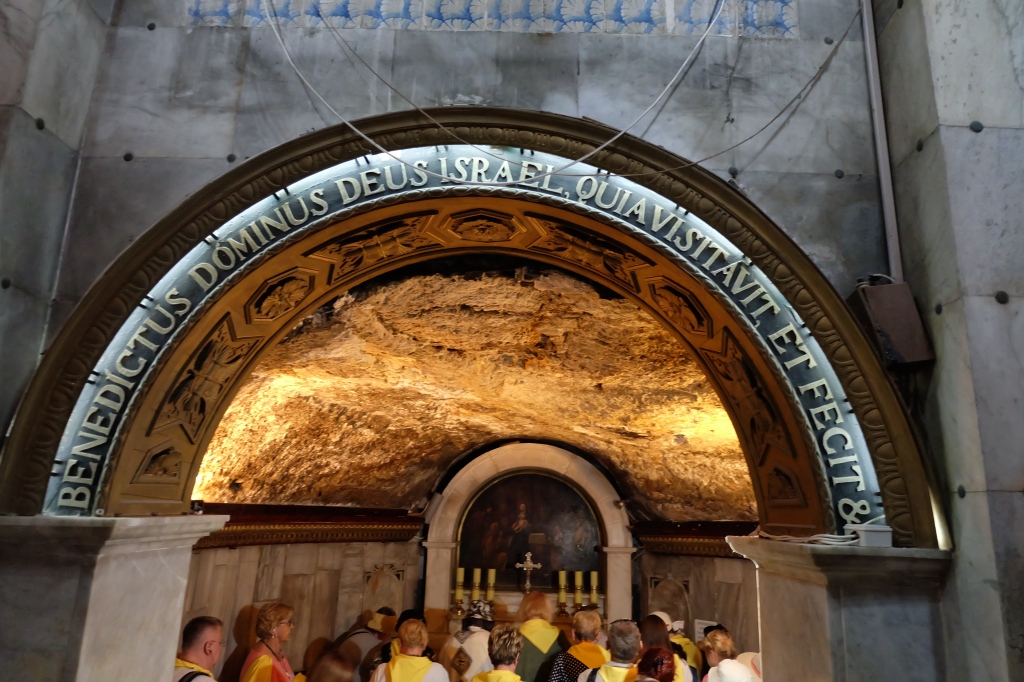
Photo by author, birthplace of St. John the Baptist underneath the church dedicated to him in Judah.

We have reflected last Thursday that Advent and Christmas is a journey that begin in the church, in the celebration of the Mass as Luke opened his Christmas story with the annunciation of John’s birth to Zechariah during their Yom Kippur at the Jerusalem Temple.

Luke’s artistry and mastery in weaving stories brought us right into every scene leading into Christmas – from Jerusalem to Nazareth then to the hill country of Judah in the home of Zechariah until John’s birth where our scene remains today. Tonight and tomorrow, he will be leading us along with Matthew and John to Bethlehem for the birth of the Lord.

But this journeys Luke recounted to us were not only about places but most of all an inner journey into our hearts. As we all know, the destination does not really matter but the journey, the trip. It is most true with our Simbang Gabi too – it is not about completing the nine-day novena that matters most but what have we become!

After tonight and tomorrow’s Masses, our churches would be empty again, only to be filled up on Ash Wednesday, and then Palm Sunday and Holy Thursday. How tragic that on Easter which is “the Mother of all feasts in the Church”, people are miserably absent because they are out in the beach and resort enjoying summer. In fact, more people come to Christmas (Pasko ng Pagsilang) than with Easter (Pasko ng Pagkabuhay) when it is actually the very foundation of our faith.

With our students after Simbang Tanghali last year at the Medicine Lobby of Our Lady of Fatima University, Valenzuela City.

So, what have we become after these nine days of waking up early or staying up late at night, praying, listening and reflecting on the word of God, sharing our material blessings in the collections and gift-giving if we stop going to Mass the whole coming new year?

American Trappist monk Thomas Merton wrote that seeking God is not like searching for a “thing” or a lost object because God is more than an intellectual pursuit or a contemplative illumination of the mind. Merton explained that God reveals Himself to us in our hearts through our communion and fellowships in the Church. 

We come to church to celebrate the Mass and pray with the whole community to express our communion with one another in Jesus Christ. It is in this communal aspect of prayer we become holy, when we are transformed and as Zechariah prophesied, we are “set free” by Jesus Christ who is the main focus of his Benedictus.

Who are those enemies Zechariah mentioned twice in his Benedictus? Who are those enemies we have to be set free for God and free to love?

Photo by author, Church of St. John the Baptist, Israel, May 2019.

Again, look at this minute detail Luke used in composing Zechariah’s Benedictus when he spoke twice of the word “enemies”: first of “saving us from our enemies, from the hand of all who hate us” (Lk.1:71) and then, the fulfillment of God’s promise to Abraham “to set us free from the hand of enemies, free to worship him without fear” (Lk.1:74).

Surely, those “enemies” were not just the Romans and other pagans around Israel at that time nor the Pharisees and scribes, the priests and Sadducees of the temple who had hands in Christ’s death for they are now gone. The gospel accounts were written in the past but remain true and relevant at all time in history, especially now more than ever in our own time.

Are we the “enemies” within who think only of our selves even in our religious and spirituality, manipulating God, controlling God?

A friend asked me last week if their priest was right in saying that the Simbang Gabi is the most effective means to obtain special favors from God. I emphatically told her “no”, adding that their priest’s claim is misleading. We cannot dictate God. God blesses everyone, including sinners who do not even go to Mass. We do not need to multiply our prayers as Jesus warned us because God know’s very well our needs before we pray. Then, why pray at all?

We pray and most especially celebrate the Mass especially on Sundays to know what God wants from us because we love God. Period. And that love for God must flow in our loving service and kindness with others. If gaining favors is the main reason we go to Mass or even pray, then, we are the “enemies” who prevent ourselves to freely worship God!

Mr. Paterno Esmaquel of Rappler rightly said it in his Sunday column:

“We are a society obsessed with achievement and success, command and control… Even we who try to complete the Simbang Gabi can plead guilty. During the Simbang Gabi, for example, we are tempted to focus on achieving all the nine days and succeeding for another year. By fulfilling this tradition, we can then ask God (or “command” God, like a genie) to grant our wishes. We can therefore wield greater control over life that is otherwise unpredictable (https://www.rappler.com/voices/thought-leaders/the-wide-shot-missed-simbang-gabi-found-christmas-grace/).

And who are feeding all these misleading and erroneous thoughts on the people? We your priests and bishops!

How sad as we have mentioned last week when many priests have totally lost any sense at all of the sacred in the celebration of the Mass. Some of them not only come unprepared for the celebration without any homily, even so untidy and shabbily dressed and worst of all, make fun of almost everything and everyone that the Mass has become a cheap variety show. Online Masses continue not for evangelization for “shameful profits” in the Sacrament through “likes” and “followers” that some priests are now more concerned in finding ways to be trending and viral instead of how to effectively evangelize the people with our good liturgical celebrations flowing into our witnessing of life.

Yes, we priests and bishops are the enemies right here in the church when we align more with the rich and powerful, when we have no qualms asking/receiving gifts and favors from politicians and still, would want to collect more money and donations from people with our endless envelops that have totally alienated the poor from the church. The poor are the ones who suffer most, paying for the corruption of the politicians who help the clergy in their projects for the poor. Poor Jesus Christ!

Perhaps, on this last day of our novena to Christmas, let us all force ourselves – especially us priests and bishops – to go into silence to identify, to weed out those enemies within and outside us that prevent us from welcoming Jesus Christ in our hearts.

Let us pray to God that He may set us free from these enemies within us, around us so we can be like John the Baptist who will “go before the Lord to prepare his ways, to give his people knowledge of salvation.” Amen. See you tonight or tomorrow, Christmas in the Holy Mass!

Photo by author, Dumaguete City Cathedral, November 2024.

Pope Francis’ rule of 8

Quiet Storm by Fr. Nicanor F. Lalog II, 05 December 2024
Pope Francis waves to pilgrims as he enters St. Peter’s Square for his general audience on Wednesday, Dec. 4, 2024. Credit: Julia Cassell/CNA

Pope Francis again called on us priests to keep our homilies short during his General Audience at the Vatican yesterday, December 04, 2024. He said, “Preachers must preach an idea, a feeling, and a call to action. Beyond eight minutes the preaching starts to fade, it is not understood.”

According to the Catholic News Agency, the pilgrims applauded the Pope’s remarks that is again sweeping the social media circles of many Catholics especially in the Philippines. It is trending, in fact, because our people are so fed up with our long, boring homilies.

However, I find the Pope’s reminder lacking in substance, in what is most essential.

Photo from Catholic News Agency, 12 June 2024.

This is the second time this year since June and the third since 2018 that Pope Francis urged priests to be brief with their homilies. It is actually an echo to the recommendations by Archbishop Nikola Eterovic’s 2010 book on the 2008 Synod on the Word of God that advised bishops to keep their homilies to eight minutes or shorter to avoid “improvisations” at the pulpit.

(Now you see, the problem actually is with the bishops who mostly give poor homilies but effective tranquilizers. In fact, Pope Francis’ homily last Holy Thursday was over 20 minutes, but, of course, he is the Supreme Pontiff…)

Instead of focusing on the duration of the homily, Pope Francis should have adopted St. Augustine’s stance: the priest must first and foremost pray to give a good homily. Duration and length of homily is secondary when the priest’s homily is the fruit of his prayers (and studies).

From Pinterest.com.

In the fourth book of his Doctrina Cristiana, St. Augustine said that “every homily is from God” when truly prayed upon by the priest and deacon. He admitted that not every priest is gifted in preparing good homilies that is why he encouraged priests to share homilies that others may imitate. St. Augustine categorically wrote that there is no problem in copying the homily of other priests; what is unacceptable (and sinful) is when the priest’s homily and life do not jibe, when the priest does not walk his talk.

That is why when people ask me what is the most difficult part of priesthood, I always say since my first year as a priest, it is the prayer life – not celibacy nor poverty. Both are hinged on the priest’s prayer life.

Prayer is always difficult because it is the work of the Holy Spirit, demanding our time and total self. When we pray, we strip ourselves naked before God, facing our true selves minus our many pretensions and masks as a person. And a priest.

Hence, whatever we preach is the fruit of our prayer which is very scary. When we priests deliver our homily, we subject ourselves to your scrutiny. And that’s how we are judged by the people: does this priest practice what he preaches?

I have been a priest for more than 26 years but I still get nervous and scared before every celebration of the Mass, specially in delivering the homily.

When the Alleluia is sung and we bow our heads before the altar to recite our silent prayer – “Lord, cleanse my heart and my lips that I may worthily proclaim the Gospel” – I always add the words of John the Baptist to Jesus at Jordan before His baptism, “Lord, let me decrease so that you will increase.”

We priests are the first to be affected by our preaching. Kami ang unang nasasaktan at tinatamaan sa katotohanang ipinahahayag namin. That is when true connection with people and the gospel happens which Pope Francis discussed lengthily in his 2013 Apostolic Exhortation “Evangelii Gaudium”, giving practical tips in preparing homilies in its third chapter, “Proclaiming the Gospel”. Always at the very core of every homily and of the priesthood in particular is prayer, our communion with Jesus Christ, our Eternal Priest.

When the priest lacks the passion in celebrating the Sacraments particularly Holy Eucharist and Confession, when he habitually skips giving a homily, and worst, when he avoids celebrating the Mass daily – he is no longer praying. That is 100% sure. Most likely, Father is in crisis, deep into a vice, or a relationship.

Therefore, instead of zeroing into the duration of the homily, the Holy Father must encourage – or demand – us priests and bishops to have a prayer life, to go back to Jesus in prayer as the late Pope Benedict XVI had insisted until shortly before his death in December 2022.

And this falls upon you, too, our dear lay people. Please stop inviting us priests too often to late night socials and coffee. Give us the space and time to be home before 9PM or better, to keep us in our rectory in the evening to study and pray for our celebration of the Holy Mass the following day. We may go out at night but not so often. It is not our way of life.

Let me end this with another worthy lesson from St. Augustine in his other book about teaching catechism called De Catechizandis Rudibus, “the catechist is the lesson himself/herself.” In the same manner, “the priest is the homily himself”, too! Pray for us your priests and help us remain holy and prayerful.