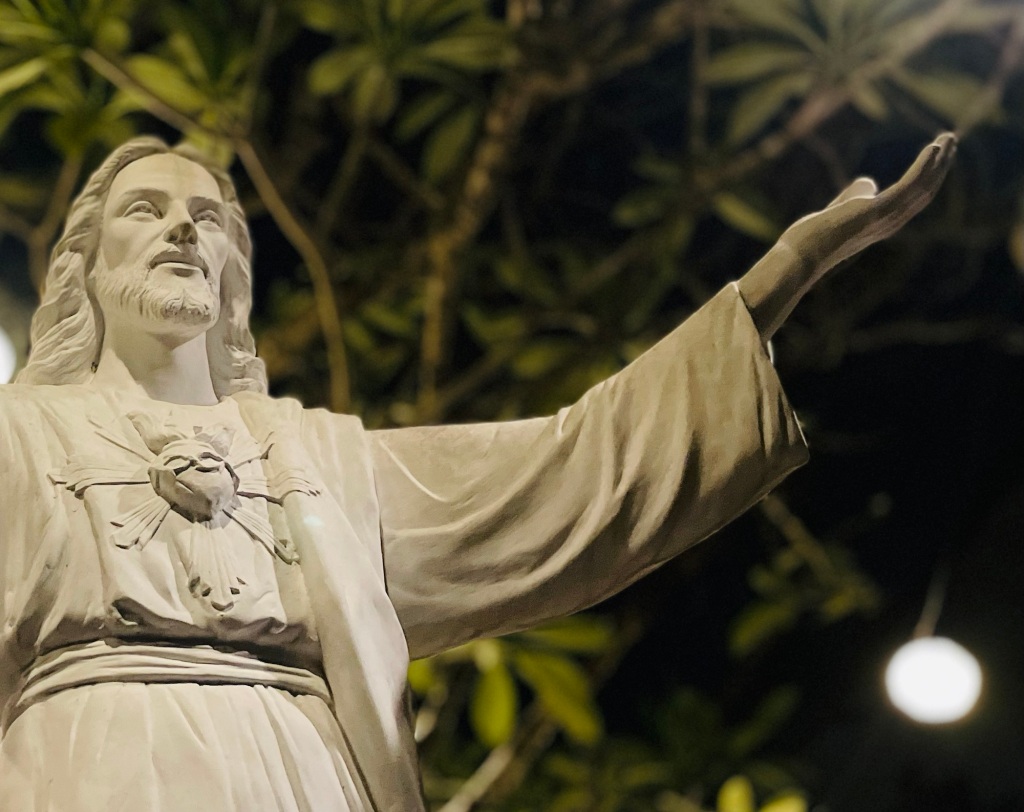
God surely comes

Lord My Chef Sunday Recipe for the Soul, Fr. Nicanor F. Lalog II
First Sunday of Advent-A, 30 November 2025
Isaiah 2:1-5 ><}}}}*> Romans 13:11-14 ><}}}}*> Matthew 24:37-44
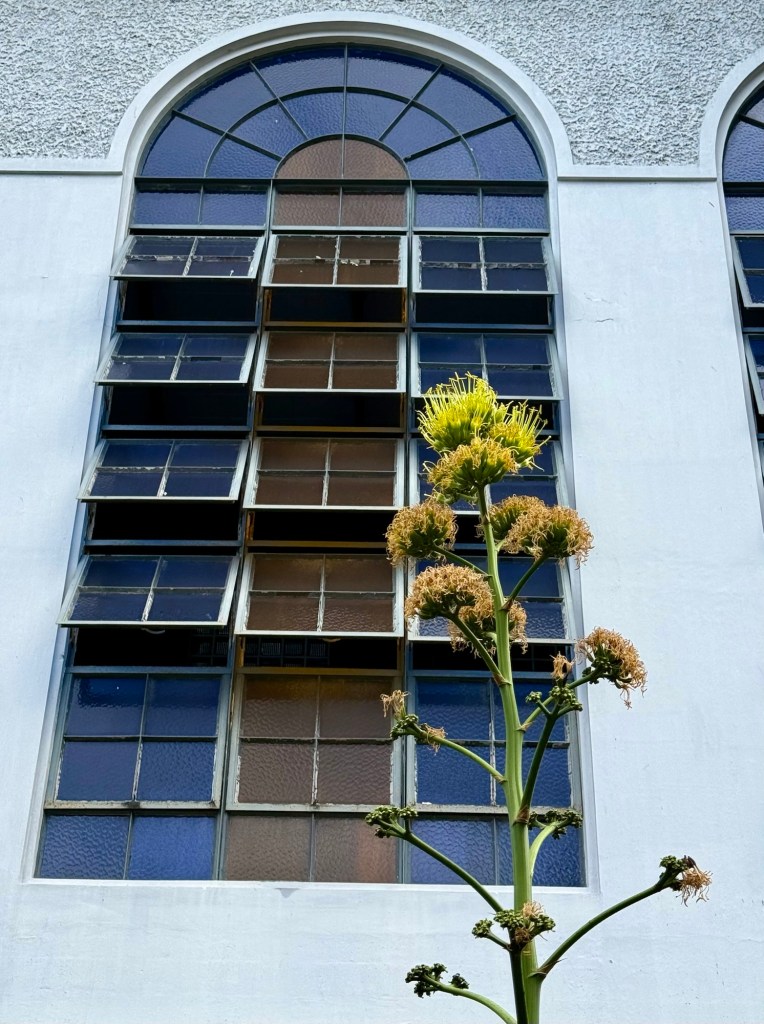
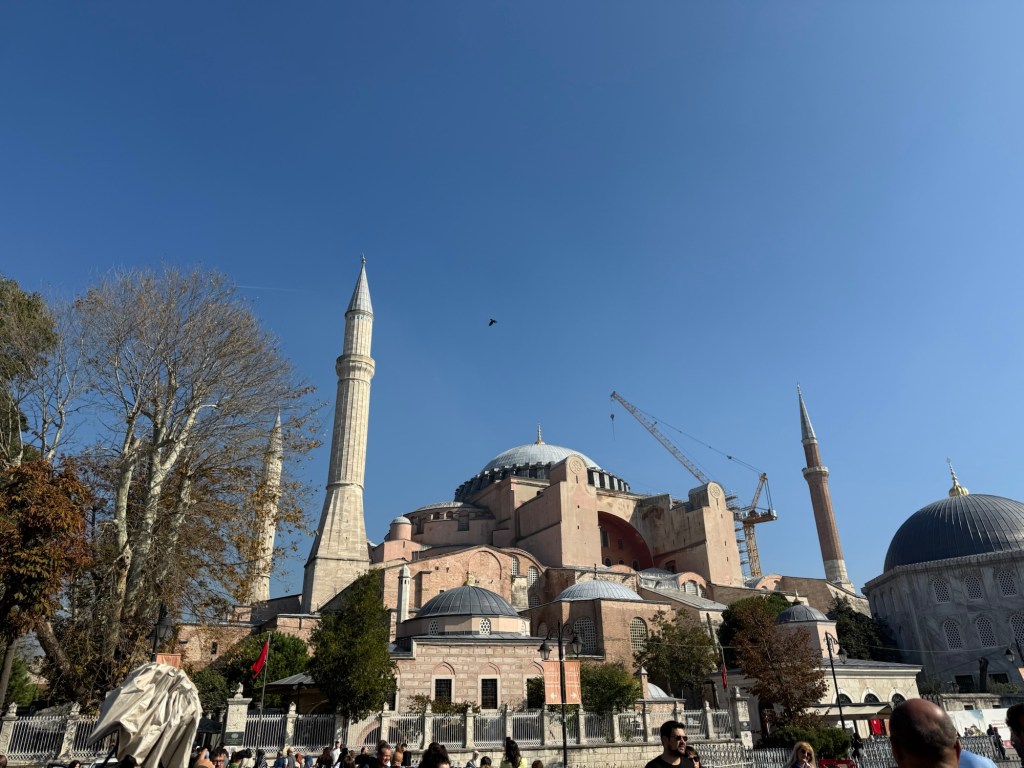
Photo by author, the Hagia Sophia, Istanbul, Turkiye, 01 November 2025.

I rarely travel abroad and though I am joyful and grateful for those rare occasions especially through the kindness of some friends, I feel so sad seeing how other countries are doing so well, so good – so unlike us in the Philippines.

After my recent trip to Turkiye and Romania, the more I am convinced I would never experience a better Philippines at least in my lifetime for sure.

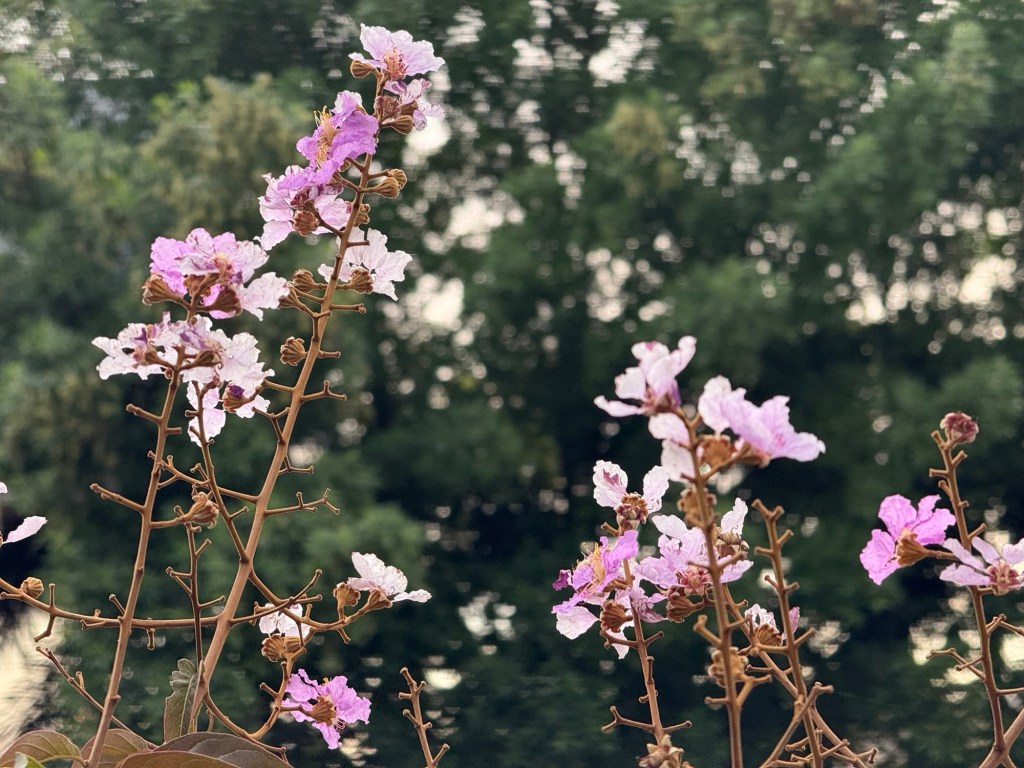
Photo by author, Bucharest, Romania, 07 November 2025.

Look at Hong Kong: while firemen were still fighting the blaze in a high-rise housing complex last Wednesday that caused over 120 deaths with scores wounded and missing, authorities have already arrested in less than 24 hours at least three suspects linked with the deadly fires while here in the Philippines, all the key players in the multi-billion peso ghost project scam remain free with some already hiding abroad.

And just as we are about to end November for the merry month of December, the secretary of Trade and Industry came out in the news insanely insisting that anyone with 500 pesos can have a noche buena of ham, spaghetti and fruit salad?! What else can we say but a heavy sigh with OMG…

Sorry for the lamentations. In times like these you really can’t avoid wonder sometimes where is God? Has he forgotten us in the Philippines? So very sad.

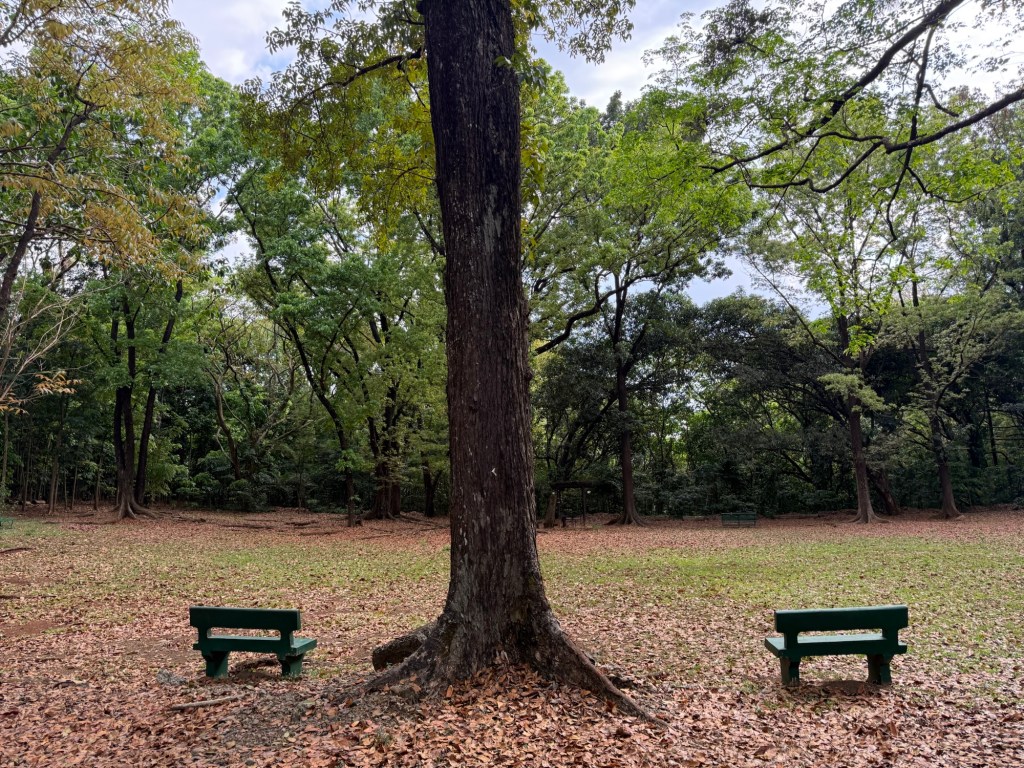
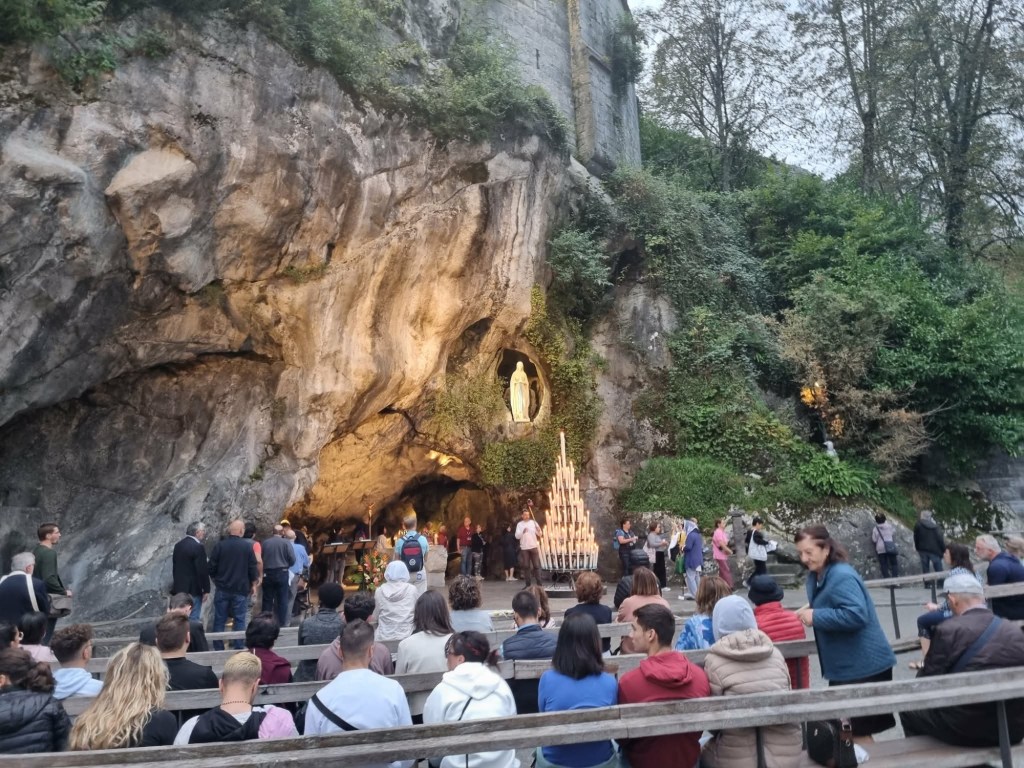
Photo by author, Camp John Hay, Baguio City, 01 December 2018.

Oh, by the way, a blessed “Happy New Year” to everyone! We begin this first Sunday of Advent as the new year in our Church calendar.

From the Latin adventus that means “coming” that used to designate the arrival of the Roman emperor in the provinces and colonies of the ancient Roman empire, we have adopted it in the Church as a season of preparing for the coming of the true King of kings, Jesus Christ. Notice how we closed last Sunday our Church calendar with Christ the King and now opens it with preparations for the coming of Christ, the King of kings.

Advent has two aspects: from this Sunday until December 16, all readings and prayers are directed to the Second Coming of Christ or parousia at the end of time; from December 17-24, all prayers and readings shift our attention to look back and reflect at the first coming of Christ in Bethlehem more than 2000 years ago. That is the meaning of the four candles in our Advent wreath.

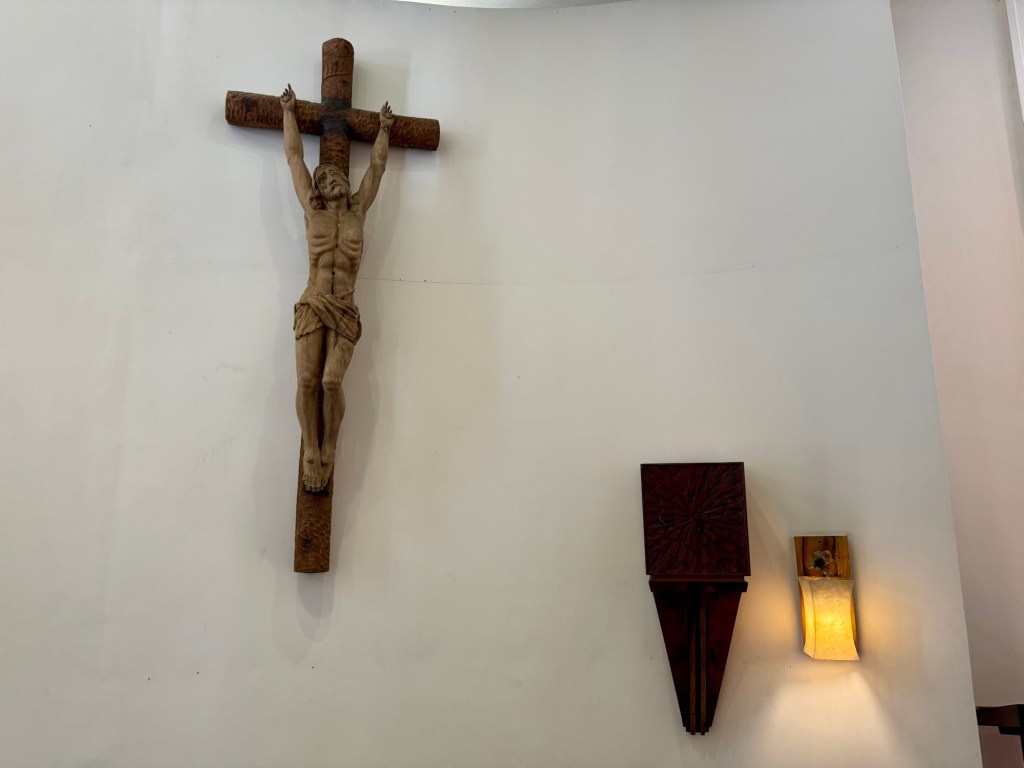
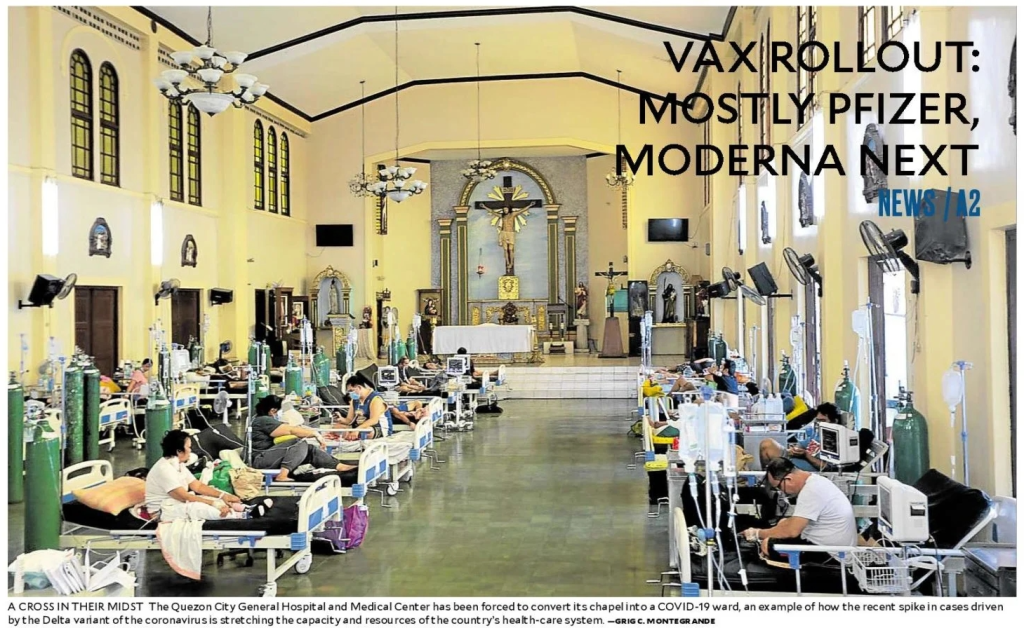
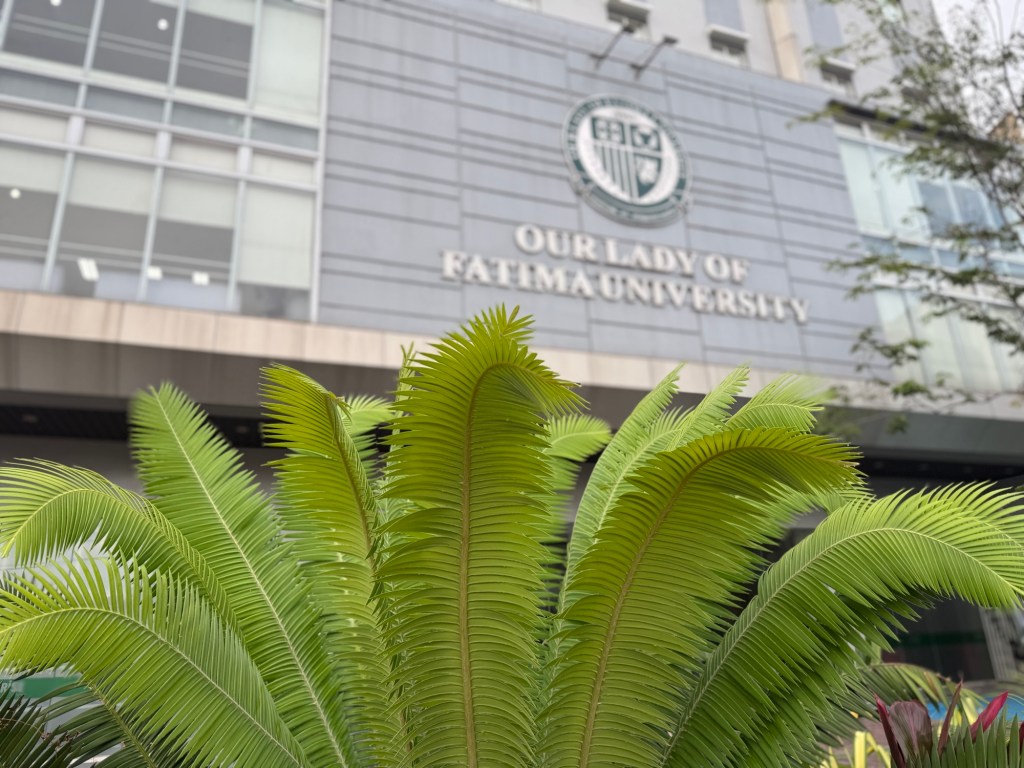
Photo by author, Basic Education Department Chapel, Our Lady of Fatima University, Valenzuela City, 2021.

Between these Second and First comings of Jesus that Advent prepares us, we celebrate every day Christ’s Third Coming according to St. Bernard of Clairvaux which is the meaning of the very words of the Lord to his disciples then and now as narrated this Sunday by Matthew in the gospel:

Jesus said to this disciples: “As it was in the days of Noah, so it will be at the coming of the Son of Man. In those days before the flood, they were eating and drinking, marrying and giving in marriage, up to the day that Noah entered the ark. They did not know until the flood came and carried them all away. So will it be also at the coming of the Son of Man” (Matthew 24:37-39).

Despite all the negative news we have in the country and from around the world, despite all the darkness and problems we have in our lives, we are still blessed today because Jesus has come, will come again, and always comes. Welcome!

Let us get that feeling therefore on this first Sunday of Advent of having “arrived” to another year of journey in our spiritual life with Matthew as guide every Sunday Mass, praying for God’s grace for us to prepare not only for the Second Coming of Christ at the end of time but most especially for his daily coming to us which could also mean our death.

Jesus comes every day and therefore, every day is judgment day.

But it does not mean catastrophe because Christ’s coming at the end of time is about our attitude in living as he pointed out to his disciples during the days of Noah. Jesus comes in the most ordinary circumstances without us even knowing at all that it could be the end just like when the floods came after Noah’s family have entered and locked the ark.

It is not being morbid nor pessimistic in life. We know for sure death’s certainty except its precise moment. Death is not something to be afraid of but something we have to prepare for as it leads us to eternal life in God. It is scary for those not living life fully in God. To meet Jesus Christ is to live fully and authentically, to find life’s meaning in him not in things. How sad that many people these days live superficially without any qualms at all about God and spirituality and morality. More sad is the fact that many practically live their lives in social media without even knowing it at all! Observe what we post, the language we speak, our line of thoughts that are all influenced by media. Reflect on the great amounts of screen time we make daily and weekly that eat up our very existence!

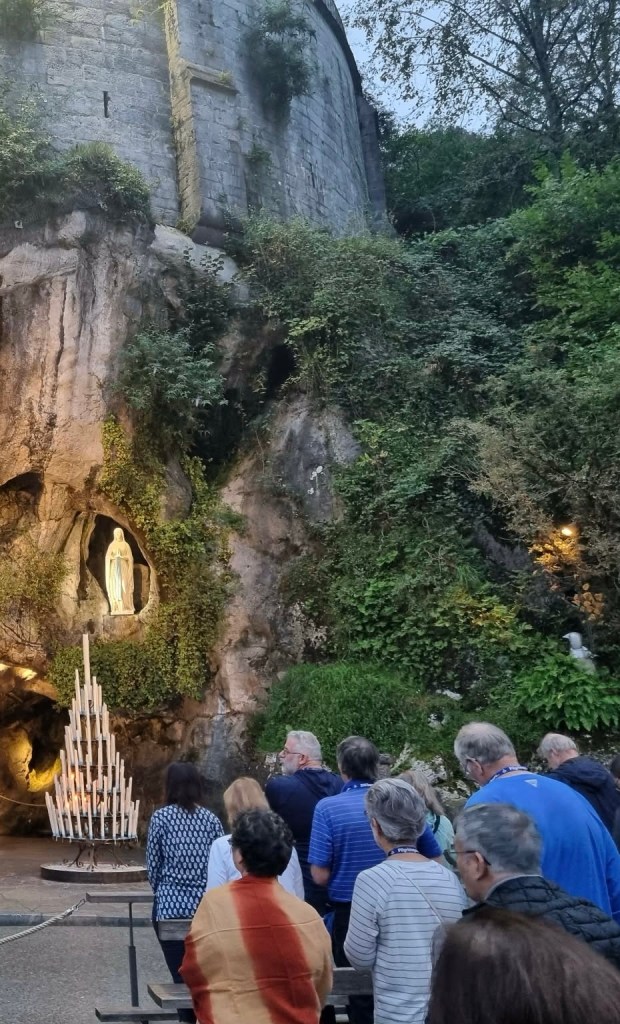
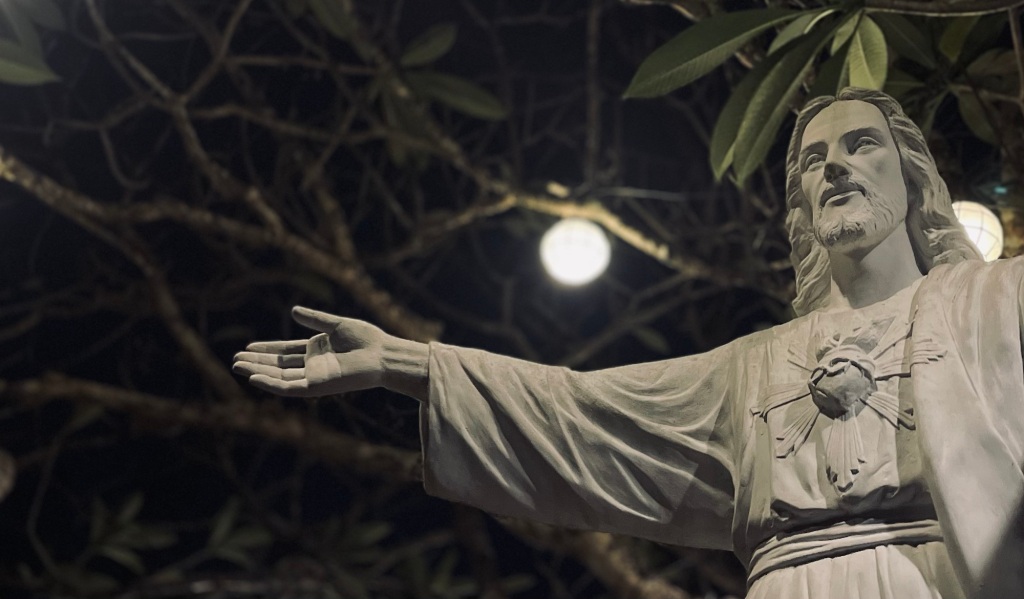
Photo by author, 2019.

Advent is the season of vigilance, of being awake. Jesus reminds us today never to doubt his coming for he surely comes. If we are negligent, we end in disaster and catastrophe like in his example:

“Two men will be out in the field; one will be taken, and one will be left. Two women will be grinding at the mill; one will be taken, and one will be left. Therefore, stay awake! For you do not know on which day your Lord will come” (Matthew 24:40-42).

The prophet Isaiah tells us in the first reading how the coming of the Messiah is so sure that it does not depend in the vagaries of history because our God is the God of history himself. He fulfills his promises according to his plans, not according to man’s designs and manipulations. Despite the many wars and natural calamities the world has experienced in history, Jesus had come and keeps on coming. How foolish governments spend billions of dollars and countless hours studying how to find life in outer space while working on how to annihilate each other, destroy life at its weakest moments of infancy and old age while forgetting the hungry and dying among us. If we could just open our minds and our hearts to Christ’s daily coming then we fulfill Isaiah’s prophecy, “They shall beat their swords into plowshares and their spears into pruning hooks” (Is.2:4).

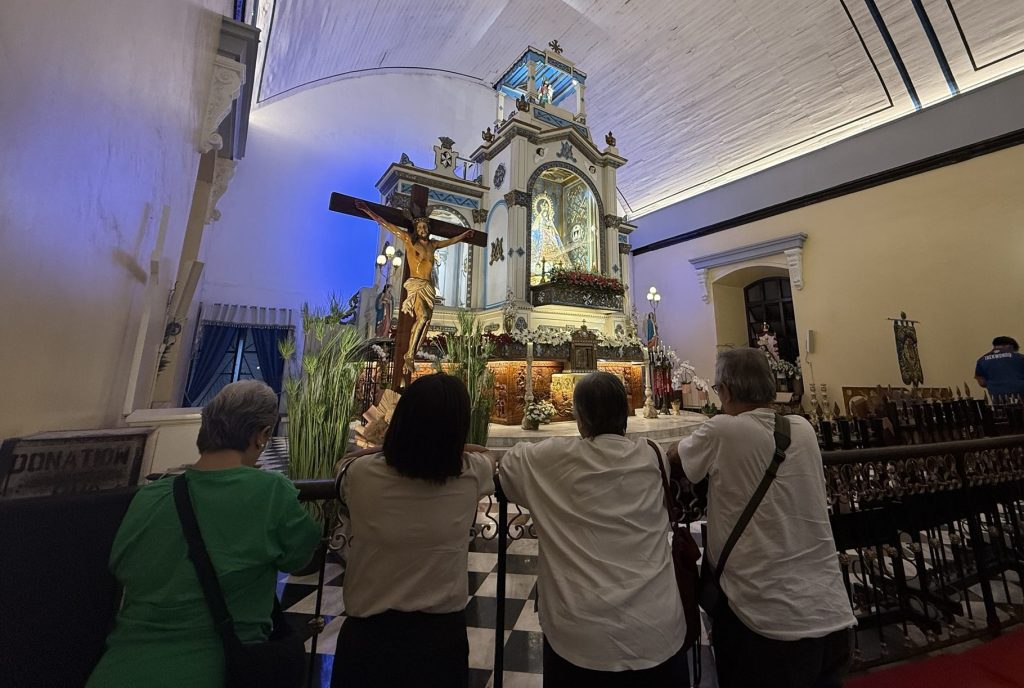
Photo by author, 2018.

This can only happen when we recognize every here and now, every present moment as Christ’s coming that is already taking place in our midst as St. Paul reminds us in the second reading, “For our salvation is nearer now than when we first believed; the night is advanced, the day is at hand. Let us then throw off the works of darkness and put on the armor of light” (Rom. 13:11-12).

Aside from preparing for our salvation that happens in Christ’s coming, Advent is also the season when we are called to share the light of Jesus to those in darkness. This early, so many malls, offices and homes have already put up with their colorful Christmas decorations like lanterns and Christmas trees. May we not forget to share most of all the light of Jesus Christ that brings joy and peace from our firm faith, fervent hope and unceasing charity and love especially when times are dark and rough for that is when the Lord truly comes. Amen. A blessed Advent season to everyone!

Have no fear, Jesus is here!

Lord My Chef Daily Recipe for the Soul, 17 October 2025
Friday, Memorial of St. Ignatius of Antioch, Bishop & Martyr
Romans 4:1-8 <*{{{{>< + ><}}}}*> Luke 12:1-7
Photo by Johannes Plenio on Pexels.com
Your words,
O Lord Jesus
this Friday
are so lovely,
so comforting
especially in this time
when many fear ageing,
suffering, and death.

I tell you, my friends, do not be afraid of those who kill the body but after that can do no more. I shall show you whom to fear. Be afraid of the one who after killing has the power to cast into Gehenna; yes, I tell you, be afraid of that one (Luke 12:4-5).

How I wish 
I could hug you, Jesus,
lean on you
while relishing your
calling us "my friends"
not to be afraid of those
who kill the body;
more than trusting you,
let me live in you, Jesus
like Abraham as explained
by St. Paul in the first reading
who deeply trusted God in
everything; deepen my consciousness
as a senior citizen that life
does not end in the grave
because the soul persists
even after death;
thank you also
for the gift of hair
though it had thinned
and turned gray,
now sparse and perhaps
easier for the Father to count
and remember but most of
all as signs of his love
and care for me;
let me not be afraid,
Jesus, for I am worth
more than the sparrows.
St. Ignatius of Antioch
whose feast we celebrate
today, pray for us modern
people so afraid of pain
and suffering and death:
pray for us to be like you -
to accept death, even
pursue death which is
our rebirth to new life.
Amen.

Fr. Nicanor F. Lalog II
Our Lady of Fatima University
Valenzuela City
(lordmychef@gmail.com)
Photo by Pixabay on Pexels.com

Strive in discipline

Lord My Chef Sunday Recipe for the Soul, 24 August 2025
Twenty-first Sunday in Ordinary Time, Cycle C
Isaiah 66:18-21 ><}}}*> Hebrews 12:5-7, 11-13 ><}}}*> Luke 13:22-30
Phot by author of pilgrims trying to enter through the narrow door of the Church of the Nativity in Bethlehem, the Holy Land.

Anyone who had gone on a pilgrimage to the Holy Land must have heard the story of the fabled “narrow door” at the entrance of the Church of the Nativity in Bethlehem, of how it was reduced into that small door a very long time ago to prevent pilgrims from bringing their horses and camels inside the church that made a lot mess and stench.

Photo by author, narrow doors from the inside of the Church of the Nativity in Bethlehem, the Holy Land, May 2019.

That little door of the Church of the Nativity later became symbolic of the humble gesture of bowing low first to enter and see the Savior’s birthplace, eventually heaven as Jesus had been teaching us these past Sundays.

We are now in the final installment of the teachings by Jesus about the coming End, of what must we do to gain eternal life. He is now halfway through his long journey to Jerusalem since he started eight Sundays ago.

Along the way, he had met every kind of people, proclaiming to them the same message – that the kingdom of God is at hand where everyone is welcomed like what Isaiah prophesied in the first reading.

Jesus passed through towns and villages, teaching as he went and making his way to Jerusalem. Someone asked him, “Lord, will only a few people be saved?” He answered them, “Strive to enter through the narrow gate, for many, I tell you, will attempt to enter but will not be strong enough. After the master of the house had arisen and locked the door, then will you stand outside knocking and saying…” (Luke 13:22-25).

Photo by author, Angels’ Hills Retreat Center, Tagaytay City, April 2025.

In his teachings these past three Sundays, Jesus had been warning us against too much focus on things of the world that perish like material wealth, telling us to be more concerned of things of heaven that lead to eternal life. He had been clear that it would not be easy at all with the demands of being his disciples.

It was in this context that someone in the crowd asked Jesus today on his way to Jerusalem if only a few people would be saved. The question sounds very amusing not only because Jesus had always been clear that heaven does not come cheap as we must learn to renounce our self, take up his cross and follow him. That someone in the crowd who asked that question is actually us! And we know so well why until now we keep asking that same question: because we lack the discipline within to truly follow Christ. We always want what is easy and convenient, preferring shortcuts, avoiding sacrifices, as much as possible, no pains and sufferings. Hence, despite our knowing what it takes to gain eternal life, we still keep on doing the opposite.

It is the same with our physical well-being wherein we know so well what is healthy but we still keep doing, eating and drinking what is unhealthy. The sad truth of this lack of discipline in our body and soul is how we start shaping ourselves only when we are already sick and close to dying! That is when we feel sorry and start telling God like those in the parable that “we ate and drank in your company.”

Jesus had no intentions of dodging the question of that someone – and us in many occasions when we realize how difficult it is to follow his path of simplicity and humility, of love and kindness, of mercy and forgiveness. See how he neither gave a number nor a percentage of those who would be saved in the End. Jesus simply told the people including us today to do everything to make it into the Kingdom of God that is like a “narrow gate” and a “locked door”.

Following Jesus is more than being in his company but more of being like him. On this final Sunday of his teaching on the End, of entering the Kingdom of God in eternity, Jesus reminds us to shape up, body and soul so that we can squeeze ourselves into heaven’s “narrow gate” and “locked door”. Here we find again the second reading giving us more light into the meaning of the gospel this Sunday.

Brothers and sisters, you have also forgotten the exhortation addressed to you as children: “My son, do not disdain the discipline of the Lord or lose heart when reproved by him; for whom the Lord loves, he disciplines; he scourges every son he acknowledges.” Endure your trials as discipline… At the time, all discipline seems a cause not for joy but for pain, yet later it brings the peaceful fruit of righteousness to those who are trained by it. So strengthen your drooping hands and your weak knees. Make straight the paths for your feet, that what is lame may not be dislocated but healed (Hebrews 12:5-7, 11-13).

Photo by Life Of Pix on Pexels.com

Discipline is a word so misunderstood these days that too often, it is frowned upon, even feared by many. In this age of so much “freedom” without any regard to “responsibility”, discipline has become its main casualty.

From the Latin verb discere which is “to learn” and “to follow”, its noun form disciplina means teaching or learning from which came the word discipulus for disciple, a follower or a pupil. Therefore, a person of discipline is one who follows or obeys teachings. Contrary to the wrong idea of many today that discipline limits freedom which they see as the ability to do whatever one wishes, the more disciplined a person is, the more free the person actually becomes!

When we discipline ourselves in every aspect of our lives like in food and drink intake, in using our time wisely, in budgeting our money and resources among other things, the more we become free to many other things in life. Remove discipline and do whatever you like in your life, eventually you become “unfree” because definitely you will miss your responsibilities and obligations like studies in school and duties at home and the office.

The same is true in our spiritual life: without discipline like prayer life, disorder and sin happen. It is discipline that literally and figuratively shapes us into persons able to squeeze through the narrow gate and locked door of freedom and salvation!

Photo by author, St. Catherine Monastery, Mt. Sinai, Egypt, May 2019.

In following the reflection of the author of Hebrews, we find that discipline is not just a human effort but the work of God too. As St. Augustine wrote, “grace builds on nature” – the more we discipline ourselves, the more blessed we become because God’s grace and gifts in us are perfected. See how discipline is like a built-in “app” God installed in each of us to ensure that we have all the means to reach heaven in Jesus Christ.

Looking back to the past four weeks, we find Jesus as the perfect example of a disciplined person, of leading a disciplined life focused on the mission from the Father. Since he started this long journey, Luke noted in chapter nine how Jesus was “resolutely determined” to go to Jerusalem, teaching us along the way to be like him focused on things of heaven than of earth, always vigilant of the coming End. Since the resumption of Sundays in Ordinary Time last July 06, Luke showed Jesus frequenting the synagogue on sabbath to worship and to preach. Most of all, Jesus prayed a lot which prompted his disciples to ask him to teach them how to pray too. Our celebrating the Sunday Mass in the church is a discipline of highest order because every Eucharistic celebration is a dress rehearsal of our entrance into heaven. Always come until we all gather together in eternity. Amen. Have a blessed and disciplined week ahead everyone. Fr. Nicanor F. Lalog II, Our Lady of Fatima University, Valenzuela City (lordmychef@gmail.com).
Letting go, letting God

Lord My Chef Daily Recipe for the Soul, 13 August 2025
Wednesday, Memorial of Sts. Pontian & Hippolytus, Priests & Martyrs
Deuteronomy 34:1-12 ><)))*> + ><)))*> + ><)))*> Matthew 18:15-20
Photo by author, Franciscan Monastery on Mt. Nebo in Jordan believed to be where Moses was shown by God the view of the Promised Land he was not allowed to enter into.
God our loving Father,
teach me to be like Moses:
teach me
to let go,
let God;
how lovely
that between letting go
and letting God lies
just the small letter "d"
which is to die everyday in myself
so that you prevail,
O God when I accept
your will
and your plans.
Like Moses,
let me share and
be content in the joy
of knowing or seeing
the fulfillment of your promise
in others without ever
holding nor experiencing
its very fruit;
fill me with
the Holy Spirit
to guide my heart
especially at this stage
in my life as a senior citizen
to learn to step aside
to make a space for you
and for others like the
younger ones who would take
charge from what I have to leave
behind; let me realize
that simply being a part
of your mission is more than enough
with no need for me
to be recognized
or be in control always.
It is the same process
I need to learn
and imbibe,
to let go and let God
regarding sins of another
brother or sister -
of making a room
for you to work in the heart
of a wayward,
erring fellow disciple
instead of taking it into
my hands that are dirty
with sins too;
unlike during the time
of Saints Pontian
and Hippolytus,
there is no need for me to
go through a bloody death
except to let go of my ego
and pride
so that you take command
in Christ our Lord.
Amen.

Fr. Nicanor F. Lalog II
Our Lady of Fatima University
Valenzuela City
(lordmychef@gmail.com)
Photo by author, entrance to the Franciscan. Monastery on Mt. Nebo in Jordan believed to be where Moses was shown by God the view of the Promised Land he was not allowed to enter into.

Begin with the End in sight

Lord My Chef Sunday Recipe for the Soul by Fr. Nicanor F. Lalog II
Nineteenth Sunday in Ordinary Time, Cycle C, 10 August 2025
Wisdom 18:6-9 ><}}}}*> Hebrews 11:1-2, 8-19 ><}}}}*> Luke 12:32-48
Our new College of Medicine Building with the lovely flowers of Banaba trees welcoming the new academic year this Monday, 11 August 2025.

One of the remarkable trends in management these past two decades is the emphasis on values-based approaches like The Seven Habits of Highly Effective People by the late Dr. Stephen Covey. Second in his list is the title of our reflection this Sunday, “Begin with the end in sight.”

Actually we mentioned that in our reflection last Sunday but we stressed the word “end” begins with a capital “E” to refer to things of God and eternal life as in the End of all in death. This is the theme of the Lord’s teaching today he presented in three parables with the last two calling us to be faithful stewards awaiting their Master’s return in the End while the first one expressing the summary of his lessons, “For where your treasure is, there also will your heart be” (Lk.12:34). But unlike most Sundays, we reflect today on the second reading from the Letter to the Hebrews that shows us Abraham’s faith journey as an expression of Christ’s teachings on setting our sights with the End.

Faith is the realization of what is hoped for and evidence of things not seen. Because of it the ancients were well attested. By faith Abraham obeyed when he was called to go out to a place that he was to receive as an inheritance; he went out, not knowing where he was to go (Hebrews 11:1-2, 8).

Photo by author, RISE Tower, Our Lady Fatima University, Valenzuela City, 06 August 2025.

We all believe in something, whether it is something good or something bad. However, what or who we believe in makes the difference because what or who we believe in determines how we live.

That is why Dr. Covey’s declaration is most true, especially when we talk of our End that is actually a Who – God. It is our faith in God who drives us in this life especially when it is dark and difficult, even painful so that we may achieve our End to be with him in eternity. The author of Hebrews found Abraham’s faith journey so remarkable as it enlightens too our own faith journey in God through Jesus Christ our High Priest as a context.

First, the author of Hebrews defined faith as “the realization of what is hoped for and evidence of things not seen.” Faith is more than trusting God in Jesus Christ. For the author of Hebrews, faith is more of knowing and understanding of what lies ahead though it cannot be seen. Faith here is more of having vision than sight, of seeing beyond things, so convinced of its existence even not seen like Noah who built an ark on God’s command even if there were no dark clouds nor rains visible at all. Faith for the author of Hebrews is like our Filipino expression “a…basta!” of having the conviction God created the universe even though no one saw the act of creation. It is something real that “only the heart can see” because it is also borne out of a deep relationship with God and with those we love. See now the three instances cited by the author of Hebrews in Abraham’s faith journey that are similar with our own experiences.

Photo by author, RISE Tower, Our Lady Fatima University, Valenzuela City, 06 August 2025.

“By faith he sojourned in the promised land as in a foreign country, dwelling in tents… for he was looking forward to the city with foundations, whose architect and maker is God” (Heb.11:9-10). Abraham was a “pilgrim” – a wayfarer – not only from his place of birth into the promised land but also on the journey from the present into the future and eternity. See how Abraham looked into the End at the start of his journey in God and with God walking on the path of what is to come.

All he had was faith in God. Surely there were times of darkness and distress along the way which the author of the Book of Wisdom in our first reading accurately described as “night of the passover” that reminds us of darkness hovering the path of God. Jesus reiterated this “night of passover” literally and figuratively speaking. Have faith in Christ whenever our journey gets tough and rough, when there are detours or when we actually get lost. God will find us to reach his city he made for us.

“By faith he received power to generate, even though he was past the normal age – and Sarah herself was sterile – for he thought that the one who made the promise was trustworthy” (Heb.11:1). We all know the story of Abraham and Sarah having their own son in old age, of the many twists and turns in their lives before Isaac was finally born and thus fulfilled God’s promise that Abraham became the father of all nations. In Matthew’s genealogy of Jesus Christ, Abraham is mentioned first as a testament of his faith in God that led to the birth of the Messiah.

Photo by author, RISE Tower, Our Lady Fatima University, Valenzuela City, 06 August 2025.

Many times we ask why God takes so long in fulfilling his promises to us. We wonder if God really called us to a certain vocation or profession or wanted this and that for us especially when in our prayers we are convinced of God’s will. Why does God keep us waiting?

Experience had taught us that more than a test of our faith, those waiting moments for God’s answer to our prayers were grace-filled moments of our own transformation into better persons so that we may value more his gifts to us, whether they are persons or things or moments. God is faithful. Remember the words of St. Paul, “God’s gifts and call are permanent and irrevocable” (Rom.11:29).

“By faith Abraham, when put to the test, offered up Isaac, and he who had received the promises was ready to offer his only son…He reasoned that God was able to raise even from the dead, and he received Isaac back as a symbol” (Heb.11:17, 19). This is the most moving and touching in the story of Abraham’s faith: he never doubted nor questioned God at all when he was asked to offer his son Isaac. Imagine how Abraham must have felt after waiting for so long for a son, then suddenly God asked him to offer him back Isaac?

See the unfolding of this scene in Genesis 22 with Abraham totally silent going up the mountain with Isaac who asked what shall they offer to God? Abraham simply assured him God will provide. Everything proceeded in silence until Abraham was to kill Isaac when an angel stopped him and told him how God was so pleased with his fidelity. This scene reminds me of the pain of many parents, especially mothers at the funeral of their son or daughter. It is the most difficult Mass for me to celebrate; normally, it is the children who bury their parents, not the other way around. When parents bury their children, no matter how young or old they may be, it is beyond words. I just try to believe more, to have more faith in God that he would bless and comfort the grieving parents.

Photo by author, RISE Tower, Our Lady Fatima University, Valenzuela City, 06 August 2025.

Abraham’s faith is a gift from God we too have all received and must deepen. It is easier said than done but we have to accept that nothing in this life is really ours to keep for all is God’s. And if ever God takes something from us, it is because he is giving us something even more than what we already have. That is why Jesus asks us in the gospel this Sunday to give up everything for him for he is our only End.

Jesus said to his disciples: “Do not be afraid any longer, little flock, for your Father is pleased to give you the kingdom. Sell your belongings and give alms. Provide money bags for yourselves that do not wear out, an inexhaustible treasure in heaven that no thief can reach nor moth destroy. For where your treasure is, there also will your heart be” (Luke 12:32-34).

This Sunday, Jesus invites us to examine where our treasure is for that is where our heart is, giving himself to be our treasure for he alone can lead us to our final End. Like Abraham, Jesus asks us to see beyond the present moment, to give up whatever we have, whether good or bad, people or things, even memories. It is very difficult and even painful but with faith in God, it could be our most liberating and grace-filled moment in life when we learn to forgive and be sorry, to be content, and finally start living by loving and be convinced we are loved because these are all we need in the End. Amen. A blessed week to everyone!

Photo by author, RISE Tower, Our Lady Fatima University, Valenzuela City, 06 August 2025.

Jesus wants YOU.

Lord My Chef Sunday Recipe for the Soul, 03 August 2025
Eighteenth Sunday in Ordinary Time, Cycle C
Ecclesiastes 1:2; 2:21-23 ><}}}*> Colossians 3:1-5, 9-11 ><}}}*> Luke 12:13-21
Photo by author, Sacred Heart Novitiate, Novaliches, QC, March 2024.

Our gospel this Sunday is very interesting as it is similar with what we have heard last July 20, the sixteenth Sunday when Jesus visited the home of Martha who asked him, “Lord, do you not care that my sister has left me by myself to do the serving? Tell her to help me” (Lk.10:40).

Compare that with our gospel today:

Someone in the crowd said to Jesus, “Teacher, tell my brother to share the inheritance with me.” He replied to him, “Friend, who appointed me as your judge and arbitrator?” Then he said to the crowd, “Take care to guard against all greed, for though one may be rich, one’s life does not consist of possessions” (Luke 12:13-15).

Photo by author, PDDM Chapel, Araneta Ave., QC, August 2024.

“Tell my sister…tell my brother.”

How funny we waste energy complaining to Jesus about others when he is not interested at all because he is actually most interested with us! In Martha’s home and in this scene, the Lord shows us that he came here for each of us personally, as if telling us to stop all those pointing to others because each one of us will definitely be dealt with individually, personally by him in the end. But, are we ready like that rich man in the parable?

That is why Luke tells us this amusing anecdote in the journey of Jesus to Jerusalem to remind us anew that in the spirit of Christ’s teaching last week on prayer, he is most concerned with our relationship with God our Father – not with our petty quarrels on money and inheritance or politics. We have to stop that “holier-than-thou” attitude, of being sanctimonious pointing at others without looking deep into ourselves, “Why do you notice the splinter in your brother’s eye, but do not perceive the wooden beam in your own eye?” (Mt.7:1,3).

This Sunday, we hear one of Jesus Christ’s many warnings against relying on wealth, possession and even status for our well-being and security. He invites us to look deep into ourselves than look at others.

Photo by author, Sacred Heart Novitiate, Novaliches, QC, March 2024.

“Take care to guard against all greed, for though one may be rich, one’s life does not consist of possessions.”

A very tough warning from Jesus that sends chills down our spine. It is always easier to point at others than look into ourselves in responding to him, on what is to be “rich in the sight of God” we are all struggling with, though, admittedly many of us truly aspire to be.

There are so many anxieties and other feelings within each of us that push us against the words of Jesus not only here. And Jesus knows very well how we turn to many things other than God for our security and well-being like the rich man in the parable he told the crowd.

We call that “security blanket” which we use to cover ourselves that often temporarily relieves us of our fears and anxieties but ultimately gives us away in the end like that rich man in the parable. He thought he would be safe and secured by building a bigger barn for his “bountiful harvest” that year that would sustain all his needs. But, that night he was taken by the Lord and died, leaving everything behind him.

We can easily identify with that rich man in the parable who portrays what each of us harbors in the depth of our hearts of never having enough. Palaging kulang, palaging bitin at kapos ano man mayroon tayo. We are always afraid that what we have may not be enough that we want to increase, to have more of whatever we think gives us security and well-being in the face of life’s many exigencies and unpredictability.

But, when is enough really enough? In this age of affluence, we have totally forgotten about the value of contentment, of relying more to God than to ourselves. It is not really a question of what we have but of our attitude in what we have, no matter how much or how less that may be.

Of course, we need to be prudent and wise in responsibly planning for our future but Jesus tells us in this parable that what really matters in life is our relationship with God expressed in the Our Father last week. What we need to store in our “barn” is not material things but more of spiritual values like love, kindness, compassion, fidelity, mercy and compassion.

Photo by Pixabay on Pexels.com

Jesus is inviting us today to examine and clean out of our “barn” to make room for God who alone matters in the end. Let God be the only possession we have who possesses us in the end – not our cellphones and gadgets nor our popularity nor negatives feelings like bitterness we have kept so long in our hearts.

Qoheleth in the first reading is neither promoting cynicism nor any negative thoughts about life but simply warned us of the great “sorrow and grief” of too much focus on things of the world that vanish like vapor. The reason we work so hard, fulfilling many tasks and obligations is not merely to earn a living and have nice homes, wonderful vacations here and abroad, education of children and better retirement; we work because we want to have fullness of life. That is why I prefer the Pilipino word for “work” – hanap buhay that literally means “to search life” because we work to find the meaning of life. But, what happens if we become enslaved by our jobs and professions while our possessions eventually possess us that in the process, we lost our very selves and those dearest to us in our relationships?

Photo by Pixabay on Pexels.com

Fullness of life can only be found in God through Jesus who gave us himself totally on the Cross we receive every Mass in the Eucharist. That is why beginning this Sunday and in the next three weeks, we find Luke presenting to us various teachings of Jesus on the way to Jerusalem with a stress on the need to always consider the End, that is, God himself who alone gives us fullness of life. St. Paul speaks of this in the second reading that amid our many concerns in life, let us be focused into things of heaven that are eternal, not of earth that are passing.

Last Friday I read a beautiful story of a man taking care of his critically sick mother that he fell asleep by her side. When he woke up, she was gone forever. He checked their CCTV and saw how in her final moments, the mother saw her son not properly covered that she used all her remaining strength to pull the blanket over him. Then she closed her eyes and died peacefully. It was her final act of love: she tucked her son in bed the day he was born, she tucked him the day she died.

We reflected last Sunday that prayer changes us not the situations. This Sunday, let us pray to Jesus to help us clean and clear our “barn” of worldly things to make more room for God in ourselves to become better persons. And – beginning today – for us to stop pointing at others, asking Jesus to check on them; instead. let us focus on our personal transformation into Christ as better disciples and witnesses. Amen. Have a blessed week ahead! Fr. Nicanor F. Lalog II, Our Lady of Fatima University, Valenzuela City (lordmychef@gmail.com).

Photo by Mr. Sean Pleta in Australia,

One in Christ in life, in death

Lord My Chef Daily Recipe for the Soul, 29 July 2025
Tuesday, Memorial of Sts. Martha, Mary and Lazarus, Siblings
1 John 4:7-16 <'[[[[>< + ><]]]]'> John 11:19-27
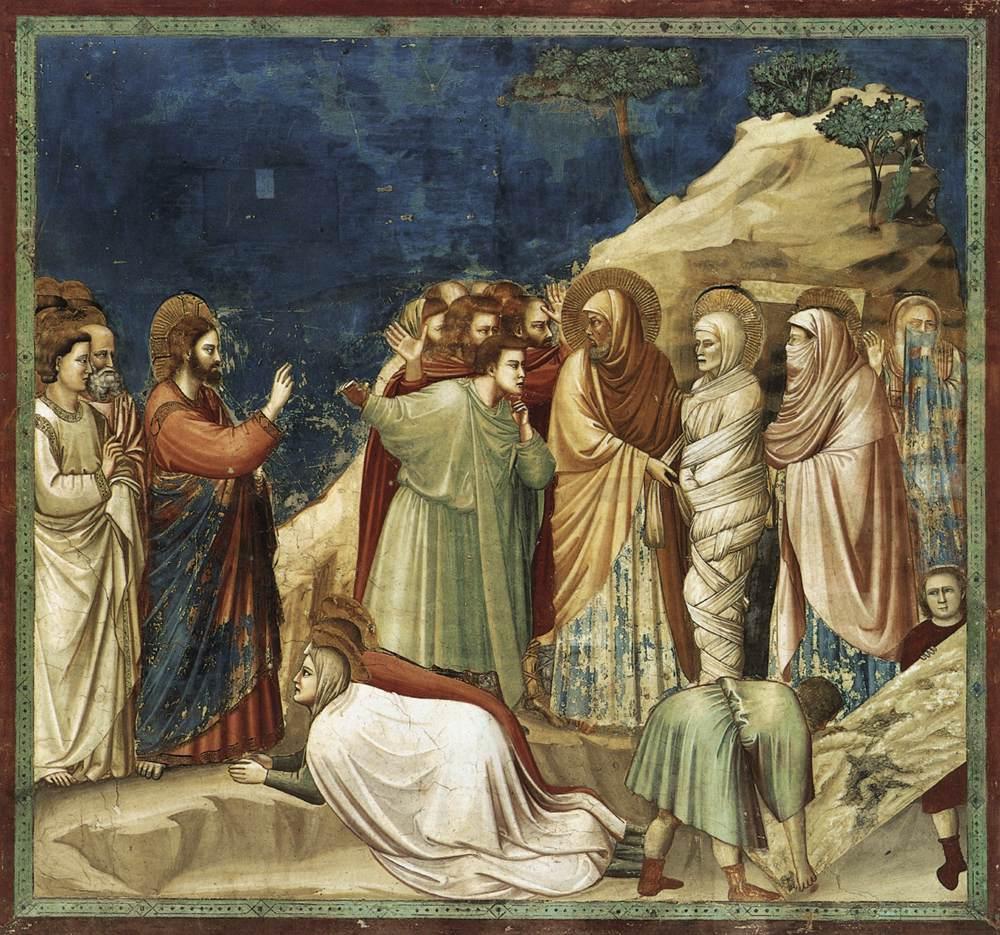
“The Raising of Lazarus”, 1311 painting by Duccio de Buoninsegna from commons.wikimedia.org
What a beautiful reminder to us,
dear Jesus on this day as we celebrate
the Memorial of the Holy Siblings
Saints Martha, Mary and Lazarus:
the only time they are presented as one
and complete was during the raising of
Lazarus; you were there in their most
sorrowful moment in life as brother and
sisters because you have always been there
with them in good times when they were
all alive and well.
I pray,
dear Jesus,
for all siblings like
Saints Martha, Mary and Lazarus
to remain one as a family after
their parents have been gone;
so many times in such deep sorrow,
we are like Martha telling you Lord,
"if you had been here my brother -
or sister or parents -would not have
died" (John 11:21); but, your response
to her and to us was so rich in meaning
we can only summarize in love,
"your brother will rise... I am the resurrection
and the life; whoever believes in me,
even if he dies, will live, and anyone
who lives and believes in me will never die.
Do you believe this?"
(John 11:23, 25-26)
Help me believe
like Martha,
Jesus;
help me believe by being
more loving and caring
with my family while still alive
and well;
help me believe by being
more understanding
and forgiving,
more kind and sensitive
with my brother or sister
while still alive;
please help, Jesus
the siblings
at odds with each other,
not talking with each other,
grouping together against each other
because of betrayals
and dishonesty in their share
of inheritance;
help them seek your face
to be more just and loving
because "love is of God"
(1 John 4:7);
let siblings be like
Saints Martha, Mary and Lazarus
be one in you, Jesus
in faith,
hope
and love
while still alive
so that in their death
they remain one in you.
Amen.

Fr. Nicanor F. Lalog II
Our Lady of Fatima University
Valenzuela City
(lordmychef@gmail.com)
An icon of Jesus visiting his friends, the siblings Sts. Lazarus, Mary and Martha. Photo from crossroadsinitiative.com.

Easter in Death

Quiet Storm by Fr. Nicanor F. Lalog II, 22 April 2025

Easter is God surprising us with every death of a loved one as a testament of the Resurrection of his Son and our Lord Jesus Christ. What a big surprise this afternoon right after Easter, we all heard the news of the death of the Holy Father, Pope Francis.

Of course, there was the sadness and surprise of the news but deep within us as the news sank deeper is the joy of his being with God in eternity.

The first Pope from South America, Cardinal Jorge Mario Bergoglio of Buenos Aires, Argentina broke many traditions in the papacy first when he picked a name never been used by his predecessors, choosing instead a non-priest saint known for simplicity and humility, St. Francis of Assisi.

When he was presented to the city and the world (Urbi et Orbi) as the new Pontiff, instead of blessing those present at St. Peter’s Square, Pope Francis announced first his request for prayers from the people before blessing them eventually as every new Pope would do.

Yesterday at his Easter Message to the people, Pope Francis spoke about death and eternal life, of how “the Risen Christ fills us with the certainty that we too are called to share in the life that knows no end, when the clash of arms and the rumble of death will be heard no more.” In life, Pope Francis faced head on the many problems of secularism and materialism in the world, becoming the voice of the poor and the marginalized with mercy of God as one of his major themes in his papacy.

During the COVID pandemic of 2020.

Personally, his most defining moment as a Pope happened during his special Message at the height of the pandemic in 2020 when despite his age and frailty, he walked through the empty St. Peter Square with courage and determination, faith and hope to lead us in prayers and love in crossing the turbulent sea of life amid the storm of COVID virus.

In life, Pope Francis proved to us like his two predecessor St. John Paul II and Benedict XVI the truth and reality of God amid a world that has continued to refuse his very existence and relevance.

In dying, Pope Francis showed us too like his two predecessors that death is in fact a blessing because it is a sharing in the Resurrection of Jesus Christ especially when you die in Easter.

St. John Paul II died on April 02, 2005 in the Easter Octave, the eve of Divine Mercy Sunday while Pope Benedict XVI died on the eve of the new year in December 31, 2022 during the octave of Christmas.

Octave refers to the eight day celebration of the major Solemnities of Easter and Christmas to remind us of its depth and meaning that cannot be grasp in just one day of the actual feast. Moreover, the eighth day or octave is actually signifies eternity: from Sunday to Saturday of every week we have seven days; octave as the eighth day is heaven.

How lovely that on Easter Sunday at the balcony of the Vatican, Pope Francis gave his blessings to the urbi et orbi anew to be his final one – consciously or unconsciously as he stepped onto the threshold of eternal life. It was his final homily too that was most eloquent, blessing us all in the “Name of the Father and of the Son and of the Holy Spirit.”

Thank you for blessing us, Pope Francis – Lolo Kiko – in life and in death. Amen.

*See also our homily last Easter Sunday that dwelled on death as a blessing, a proof of Christ’s Easter, https://lordmychef.com/2025/04/20/easter-is-god-surprising-us/.