Jesus wants YOU.

Lord My Chef Sunday Recipe for the Soul, 03 August 2025
Eighteenth Sunday in Ordinary Time, Cycle C
Ecclesiastes 1:2; 2:21-23 ><}}}*> Colossians 3:1-5, 9-11 ><}}}*> Luke 12:13-21
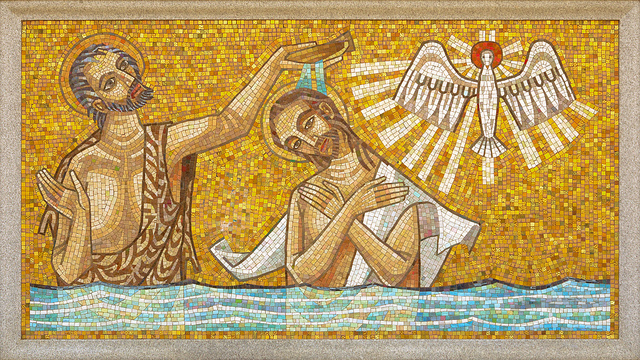
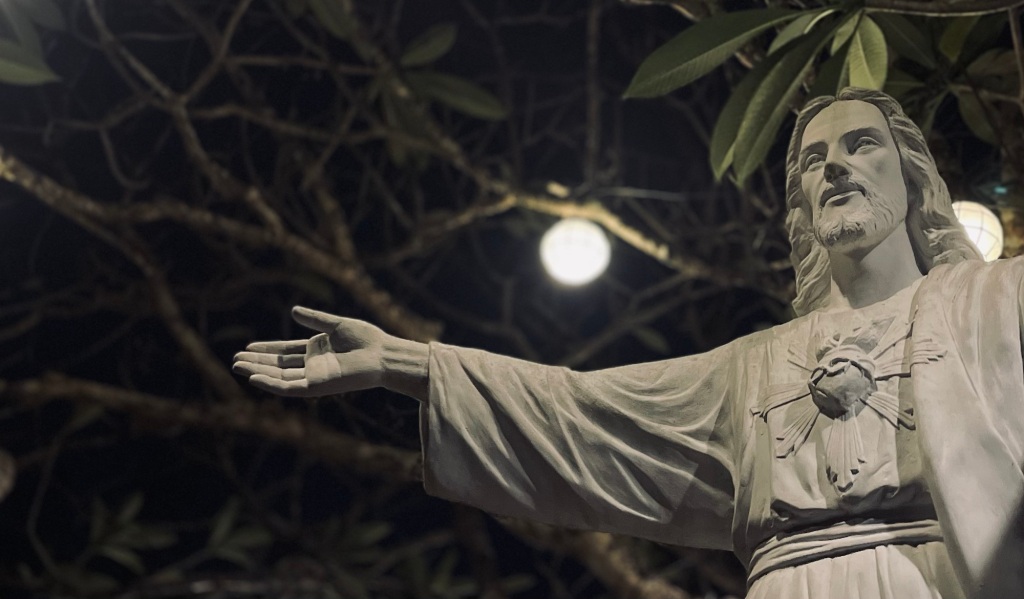
Photo by author, Sacred Heart Novitiate, Novaliches, QC, March 2024.

Our gospel this Sunday is very interesting as it is similar with what we have heard last July 20, the sixteenth Sunday when Jesus visited the home of Martha who asked him, “Lord, do you not care that my sister has left me by myself to do the serving? Tell her to help me” (Lk.10:40).

Compare that with our gospel today:

Someone in the crowd said to Jesus, “Teacher, tell my brother to share the inheritance with me.” He replied to him, “Friend, who appointed me as your judge and arbitrator?” Then he said to the crowd, “Take care to guard against all greed, for though one may be rich, one’s life does not consist of possessions” (Luke 12:13-15).

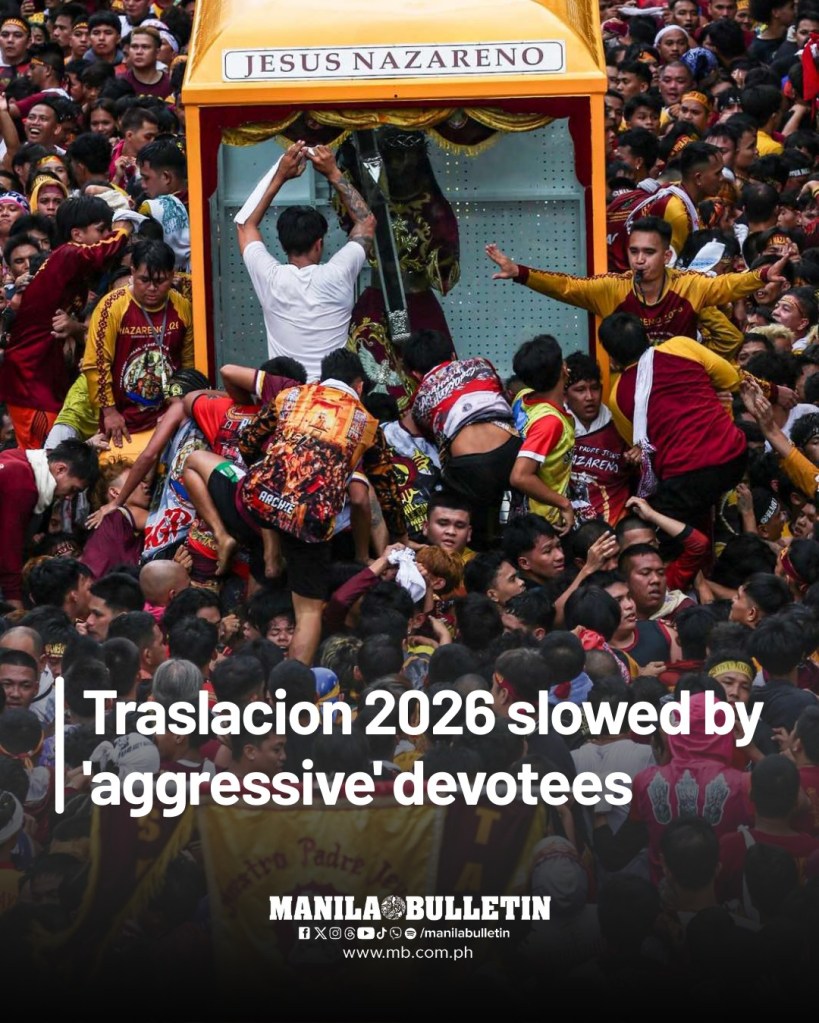
Photo by author, PDDM Chapel, Araneta Ave., QC, August 2024.

“Tell my sister…tell my brother.”

How funny we waste energy complaining to Jesus about others when he is not interested at all because he is actually most interested with us! In Martha’s home and in this scene, the Lord shows us that he came here for each of us personally, as if telling us to stop all those pointing to others because each one of us will definitely be dealt with individually, personally by him in the end. But, are we ready like that rich man in the parable?

That is why Luke tells us this amusing anecdote in the journey of Jesus to Jerusalem to remind us anew that in the spirit of Christ’s teaching last week on prayer, he is most concerned with our relationship with God our Father – not with our petty quarrels on money and inheritance or politics. We have to stop that “holier-than-thou” attitude, of being sanctimonious pointing at others without looking deep into ourselves, “Why do you notice the splinter in your brother’s eye, but do not perceive the wooden beam in your own eye?” (Mt.7:1,3).

This Sunday, we hear one of Jesus Christ’s many warnings against relying on wealth, possession and even status for our well-being and security. He invites us to look deep into ourselves than look at others.

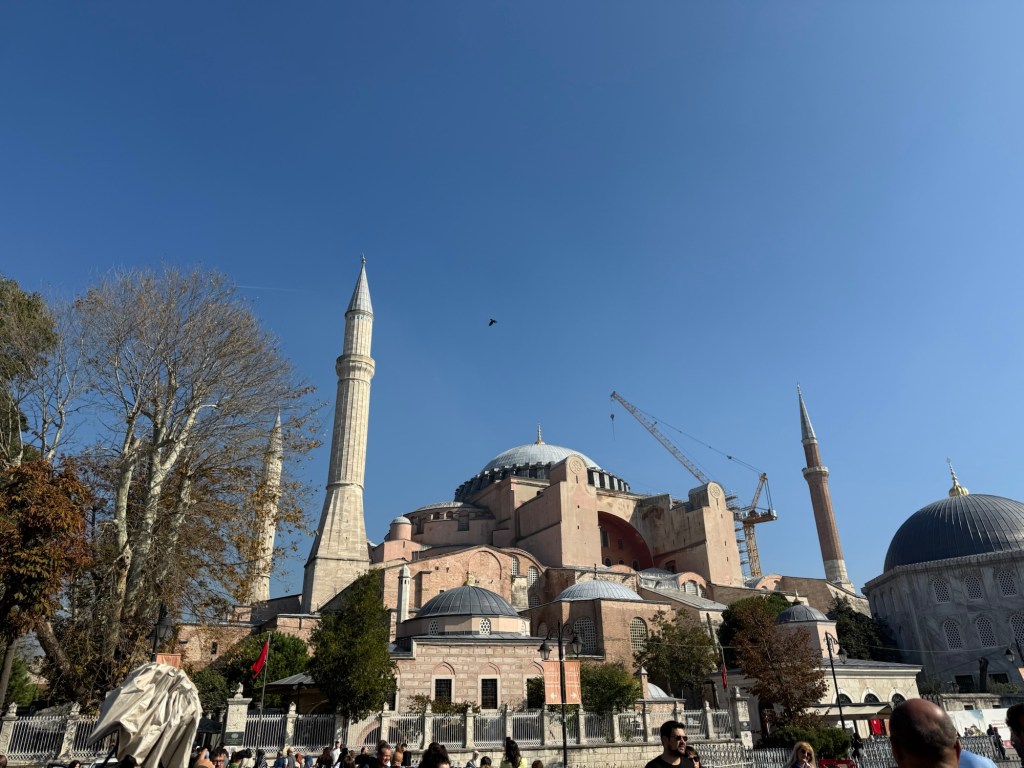
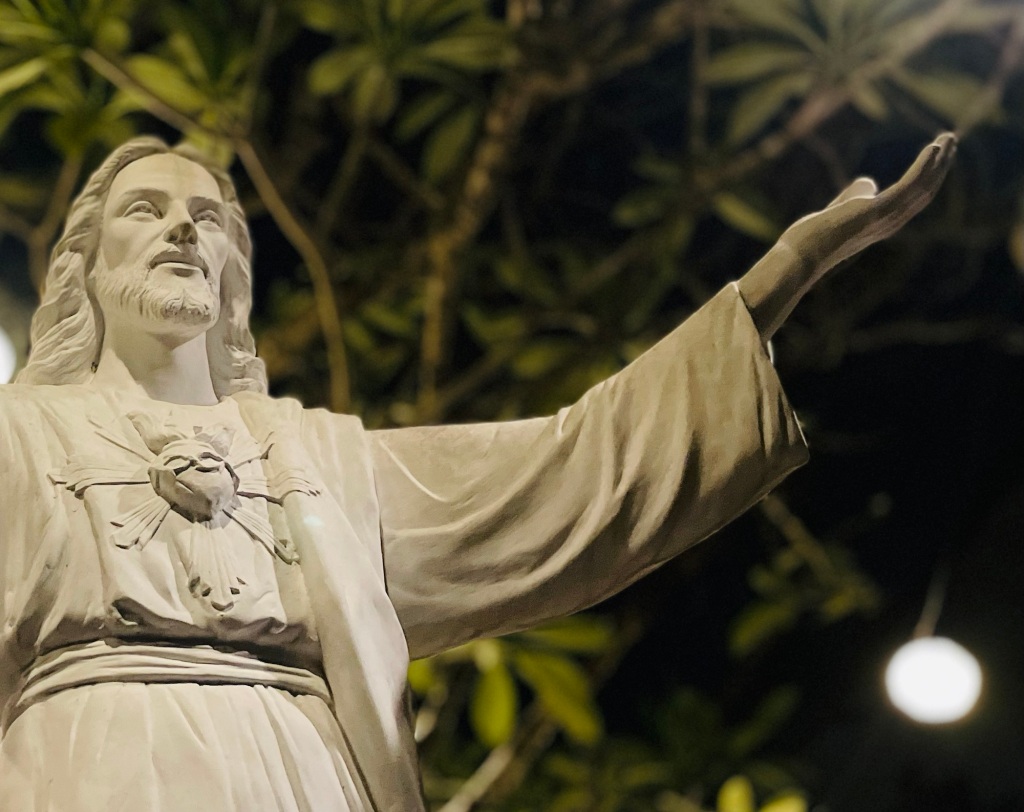
Photo by author, Sacred Heart Novitiate, Novaliches, QC, March 2024.

“Take care to guard against all greed, for though one may be rich, one’s life does not consist of possessions.”

A very tough warning from Jesus that sends chills down our spine. It is always easier to point at others than look into ourselves in responding to him, on what is to be “rich in the sight of God” we are all struggling with, though, admittedly many of us truly aspire to be.

There are so many anxieties and other feelings within each of us that push us against the words of Jesus not only here. And Jesus knows very well how we turn to many things other than God for our security and well-being like the rich man in the parable he told the crowd.

We call that “security blanket” which we use to cover ourselves that often temporarily relieves us of our fears and anxieties but ultimately gives us away in the end like that rich man in the parable. He thought he would be safe and secured by building a bigger barn for his “bountiful harvest” that year that would sustain all his needs. But, that night he was taken by the Lord and died, leaving everything behind him.

We can easily identify with that rich man in the parable who portrays what each of us harbors in the depth of our hearts of never having enough. Palaging kulang, palaging bitin at kapos ano man mayroon tayo. We are always afraid that what we have may not be enough that we want to increase, to have more of whatever we think gives us security and well-being in the face of life’s many exigencies and unpredictability.

But, when is enough really enough? In this age of affluence, we have totally forgotten about the value of contentment, of relying more to God than to ourselves. It is not really a question of what we have but of our attitude in what we have, no matter how much or how less that may be.

Of course, we need to be prudent and wise in responsibly planning for our future but Jesus tells us in this parable that what really matters in life is our relationship with God expressed in the Our Father last week. What we need to store in our “barn” is not material things but more of spiritual values like love, kindness, compassion, fidelity, mercy and compassion.

Photo by Pixabay on Pexels.com

Jesus is inviting us today to examine and clean out of our “barn” to make room for God who alone matters in the end. Let God be the only possession we have who possesses us in the end – not our cellphones and gadgets nor our popularity nor negatives feelings like bitterness we have kept so long in our hearts.

Qoheleth in the first reading is neither promoting cynicism nor any negative thoughts about life but simply warned us of the great “sorrow and grief” of too much focus on things of the world that vanish like vapor. The reason we work so hard, fulfilling many tasks and obligations is not merely to earn a living and have nice homes, wonderful vacations here and abroad, education of children and better retirement; we work because we want to have fullness of life. That is why I prefer the Pilipino word for “work” – hanap buhay that literally means “to search life” because we work to find the meaning of life. But, what happens if we become enslaved by our jobs and professions while our possessions eventually possess us that in the process, we lost our very selves and those dearest to us in our relationships?

Photo by Pixabay on Pexels.com

Fullness of life can only be found in God through Jesus who gave us himself totally on the Cross we receive every Mass in the Eucharist. That is why beginning this Sunday and in the next three weeks, we find Luke presenting to us various teachings of Jesus on the way to Jerusalem with a stress on the need to always consider the End, that is, God himself who alone gives us fullness of life. St. Paul speaks of this in the second reading that amid our many concerns in life, let us be focused into things of heaven that are eternal, not of earth that are passing.

Last Friday I read a beautiful story of a man taking care of his critically sick mother that he fell asleep by her side. When he woke up, she was gone forever. He checked their CCTV and saw how in her final moments, the mother saw her son not properly covered that she used all her remaining strength to pull the blanket over him. Then she closed her eyes and died peacefully. It was her final act of love: she tucked her son in bed the day he was born, she tucked him the day she died.

We reflected last Sunday that prayer changes us not the situations. This Sunday, let us pray to Jesus to help us clean and clear our “barn” of worldly things to make more room for God in ourselves to become better persons. And – beginning today – for us to stop pointing at others, asking Jesus to check on them; instead. let us focus on our personal transformation into Christ as better disciples and witnesses. Amen. Have a blessed week ahead! Fr. Nicanor F. Lalog II, Our Lady of Fatima University, Valenzuela City (lordmychef@gmail.com).
Photo by Mr. Sean Pleta in Australia,

One in Christ in life, in death

Lord My Chef Daily Recipe for the Soul, 29 July 2025
Tuesday, Memorial of Sts. Martha, Mary and Lazarus, Siblings
1 John 4:7-16 <'[[[[>< + ><]]]]'> John 11:19-27
“The Raising of Lazarus”, 1311 painting by Duccio de Buoninsegna from commons.wikimedia.org
What a beautiful reminder to us,
dear Jesus on this day as we celebrate
the Memorial of the Holy Siblings
Saints Martha, Mary and Lazarus:
the only time they are presented as one
and complete was during the raising of
Lazarus; you were there in their most
sorrowful moment in life as brother and
sisters because you have always been there
with them in good times when they were
all alive and well.
I pray,
dear Jesus,
for all siblings like
Saints Martha, Mary and Lazarus
to remain one as a family after
their parents have been gone;
so many times in such deep sorrow,
we are like Martha telling you Lord,
"if you had been here my brother -
or sister or parents -would not have
died" (John 11:21); but, your response
to her and to us was so rich in meaning
we can only summarize in love,
"your brother will rise... I am the resurrection
and the life; whoever believes in me,
even if he dies, will live, and anyone
who lives and believes in me will never die.
Do you believe this?"
(John 11:23, 25-26)
Help me believe
like Martha,
Jesus;
help me believe by being
more loving and caring
with my family while still alive
and well;
help me believe by being
more understanding
and forgiving,
more kind and sensitive
with my brother or sister
while still alive;
please help, Jesus
the siblings
at odds with each other,
not talking with each other,
grouping together against each other
because of betrayals
and dishonesty in their share
of inheritance;
help them seek your face
to be more just and loving
because "love is of God"
(1 John 4:7);
let siblings be like
Saints Martha, Mary and Lazarus
be one in you, Jesus
in faith,
hope
and love
while still alive
so that in their death
they remain one in you.
Amen.

Fr. Nicanor F. Lalog II
Our Lady of Fatima University
Valenzuela City
(lordmychef@gmail.com)
An icon of Jesus visiting his friends, the siblings Sts. Lazarus, Mary and Martha. Photo from crossroadsinitiative.com.

Easter in Death

Quiet Storm by Fr. Nicanor F. Lalog II, 22 April 2025

Easter is God surprising us with every death of a loved one as a testament of the Resurrection of his Son and our Lord Jesus Christ. What a big surprise this afternoon right after Easter, we all heard the news of the death of the Holy Father, Pope Francis.

Of course, there was the sadness and surprise of the news but deep within us as the news sank deeper is the joy of his being with God in eternity.

The first Pope from South America, Cardinal Jorge Mario Bergoglio of Buenos Aires, Argentina broke many traditions in the papacy first when he picked a name never been used by his predecessors, choosing instead a non-priest saint known for simplicity and humility, St. Francis of Assisi.

When he was presented to the city and the world (Urbi et Orbi) as the new Pontiff, instead of blessing those present at St. Peter’s Square, Pope Francis announced first his request for prayers from the people before blessing them eventually as every new Pope would do.

Yesterday at his Easter Message to the people, Pope Francis spoke about death and eternal life, of how “the Risen Christ fills us with the certainty that we too are called to share in the life that knows no end, when the clash of arms and the rumble of death will be heard no more.” In life, Pope Francis faced head on the many problems of secularism and materialism in the world, becoming the voice of the poor and the marginalized with mercy of God as one of his major themes in his papacy.

During the COVID pandemic of 2020.

Personally, his most defining moment as a Pope happened during his special Message at the height of the pandemic in 2020 when despite his age and frailty, he walked through the empty St. Peter Square with courage and determination, faith and hope to lead us in prayers and love in crossing the turbulent sea of life amid the storm of COVID virus.

In life, Pope Francis proved to us like his two predecessor St. John Paul II and Benedict XVI the truth and reality of God amid a world that has continued to refuse his very existence and relevance.

In dying, Pope Francis showed us too like his two predecessors that death is in fact a blessing because it is a sharing in the Resurrection of Jesus Christ especially when you die in Easter.

St. John Paul II died on April 02, 2005 in the Easter Octave, the eve of Divine Mercy Sunday while Pope Benedict XVI died on the eve of the new year in December 31, 2022 during the octave of Christmas.

Octave refers to the eight day celebration of the major Solemnities of Easter and Christmas to remind us of its depth and meaning that cannot be grasp in just one day of the actual feast. Moreover, the eighth day or octave is actually signifies eternity: from Sunday to Saturday of every week we have seven days; octave as the eighth day is heaven.

How lovely that on Easter Sunday at the balcony of the Vatican, Pope Francis gave his blessings to the urbi et orbi anew to be his final one – consciously or unconsciously as he stepped onto the threshold of eternal life. It was his final homily too that was most eloquent, blessing us all in the “Name of the Father and of the Son and of the Holy Spirit.”

Thank you for blessing us, Pope Francis – Lolo Kiko – in life and in death. Amen.

*See also our homily last Easter Sunday that dwelled on death as a blessing, a proof of Christ’s Easter, https://lordmychef.com/2025/04/20/easter-is-god-surprising-us/.

Easter is God surprising us

Lord My Chef Sunday Recipe for the Soul by Fr. Nicanor F. Lalog II
Easter Sunday of the Lord's Resurrection, 20 April 2025

A blessed happy Easter to everyone! The joy of Easter is God surprising us of Christ’s Resurrection as our resurrection too even in the midst of emptiness and darkness of this life here on earth.

Surprisingly, it is only now that it occurred to me after 27 years as priest how our Holy Week readings began and ended with the women disciples of Jesus honoring his death. Actually, the readings of Holy Week and Easter do not change except for the three cycles of Easter Vigil and the two Masses of Easter.

On Holy Monday we heard the gospel about Mary of Bethany recognizing the coming sacrifice of Jesus by pouring “a liter of costly perfumed oil made from genuine aromatic nard” on the feet of the Lord and then dried them with her hair that “the house was filled with the fragrance of the oil” (Jn. 12:3). Last night and this morning we heard from Luke and John how Mary of Magdala with other women went to the tomb “early in the morning, while it was still dark” to anoint Christ’s body with oil but found him nowhere!

Here is our God of surprises at work; but, unlike those funny and annoying surprises from the pranks we see on TikTok and social media, God’s surprises are real, so true, and so touching because they are life-changing which began in that Easter morning!

During my recent annual retreat, my spiritual director asked me to pray and write the blessings I have received in the past twelve months. After five days of praying, I listed only six but they were mostly ordinary things I have taken for granted in life except the fourth one – my mother’s death last May 7.

I was surprised when that came to my prayers because it was painful and difficult time for me. So many things have changed in my life since mommy left us and there lies the paradox and mystery of life and death. It was in her dying when I felt anew so close to God.

First, God surprised me with the tremendous outpouring of love and support from so many people during her wake. Second, despite the grief and depression that followed a few months later, I still felt so blessed and closest to God with the unique intensity of the relationships we keep and instilled by our mom which we have taken for granted all these years. And third, I have experienced and realized how death is profoundly good in so many ways because it was after mommy’s death when I found the answers to my many questions about life. With her death, the more I appreciated the grace of my father’s sudden death 25 years ago right on her birthday.

That is the grace and surprise of Easter: in Christ’s dying and rising to life, death has become a blessing to us all as we have come to share in his glorious resurrection too.

Despite that feeling of emptiness within and in our homes, of the irrevocable reality they are gone forever never to join us in our meals and bonding like Christmas, of never hearing their voices again nor be able to hug and embrace them can be shattering, the angel’s reminder to Mary Magdalene and companion women at the empty tomb echoes in our hearts too: “Why do you seek the living one among the dead? He is not here, but he has been raised. Remember what he said to you while he was still in Galilee, that the Son of Man must be handed over to sinners and be crucified, and rise on the third day.” And they remembered his words (Luke 24:5-8).

Photo by author, Mirador Jesuit Retreat House, Baguio City, 2017.

Every deceased loved one is a testament of Easter, of Christ’s resurrection because they all assure us they are alive and living, never to die again like Jesus. That feeling of somehow seeing them again is a tension borne out of the reality of Easter as supranatural and non-logical. Hence, the call for us like Mary Magdalene to always remember!

Remember!

Not only the painful Good Friday but most of all the words of Christ, the experiences with Christ, the love and hope of Christ there in our hearts. Every time we remember the words and memories of our deceased loved ones, they too point us to the realities of Christ’s resurrection. Jesus and our loved ones will always be one of us, among us.

The word remembering literally means to make a person and an event a “member” of the present moment again, that is, “RE” + “MEMBER”.

That is the greatest surprise of Easter – in the Resurrection of Jesus, there has now come a bond among us all, both living and deceased that cannot be broken, that continues today and hereafter.

That is what Peter was telling his fellow Jews on Pentecost Sunday, asking everyone to remember the words and life of Jesus Christ for that is where we find the surprising moments of life we never realized because we took them for granted.

That is why Paul tells us in the second reading to “seek what is above” – the spiritual things and not the material things because that is where we truly belong. That is where we experience again in the most unique and surprising way the presence of Jesus and of our deceased loved ones.

Great surprises happen on the unseen realms of realities giving meaning to what we see and perceive and feel. In that moment we are surprised that we are suddenly enlightened of why deaths and loss happen because there is something better, more real about to unfold. That moment is a hairline between the temporal and eternal when we get a rare glimpse and taste of the Lord risen, of heaven itself.

Photo by author, Mary of the Poor, Sacred Heart Novitiate, Novaliches, QC, 17 March 2025.

When my mother died last May, I must confess how I had to swallow many of the homilies I have shared in the past because they are so far from the realities of losing a loved one. That is when we realize too the great surprising truth of how death makes us more whole than before. We feel transformed when what we know and what we feel become one and integrated. It is like the feeling of “a basta!” in Tagalog.

Our task and mission is to be like Mary Magdalene, to proclaim the Lord is risen, to awaken everyone of the many surprising moments of God with us in Jesus which we have taken for granted.

Not every death is the same but all deaths are one in Jesus Christ – a grace, a blessing, a reminder of Easter, of our own resurrection. Now, right here.

With mommy’s death last year, now I have realized too why Jesus appeared first to women on Easter and that is because they, especially mothers have the most intimate link with us here on earth. The umblical cord is never cut off because mothers are the first to believe in their children, the first to believe in God that is why they are our first catechists too. Women and mothers especially are the most intimate persons that they have visions that go beyond sights, enabling them to be surprised most often. Has God ever surprised you in unexpected ways like Easter? Or death and loss? Amen.

From Facebook, 04 April 2021: “There is an urgency to announce the Joy, the joy of the Risen Lord.”

Our approaching end

The Lord Is My Chef Daily Recipe for the Soul by Fr. Nicanor F. Lalog II
Tuesday in the Thirty-fourth Week of Ordinary Time, Year II, 26 November 2024
Revelation 14:14-19 <*((((>< + ><))))*> Luke 21:5-11
Photo by author, San Antonio, Zambales, 19 October 2024
It happens so often,
Lord Jesus Christ -
just as when we are enjoying
something like a vacation,
exactly at that moment too
when it ends or, at least,
its coming end is felt and realized?

While some people were speaking about how the temple was adorned with costly stones and votive offerings, Jesus said, “All that you see here – the days will come when there will not be left a stone upon another stone that will not be thrown down.” Then they asked him, Teacher, when will this happen? And what sign will there be when all these things are about to happen?” (Luke 21:5-7)

What a paradox,
a mystery so beautiful
that inspires us to live more fully
than sulk with life's sure endings
like what your words tell us today:

I, John, looked and there was a white cloud, and sitting on the cloud one who looked like a son of man, with a gold crown on his head and a sharp sickle in his hand (Revelation 14:14).

Endings are beginnings,
Lord; everything and everyone
shall end in order to begin anew;
despite the destruction,
endings happen to build up
new beginnings,
to signal another start.
Teach us, dear Jesus,
to be ready always,
to prepare for our endings
by living fully,
celebrating life
in your love that
banishes all fears
like death and
endings.
Amen.
Photo by KENJI IWASAKI on Pexels.com

The joy of endings

The Lord Is My Chef Sunday Recipe for the Soul by Fr. Nicanor F. Lalog II
Thirty-Third Sunday in Ordinary Time, Cycle B, 17 November 2024
Daniel 12:1-3 ><}}}}*> Hebrews 10:11-14, 18 ><}}}}*> Mark 13;24-32
Photo by author, the Mount of Olives as seen from the Temple of Jerusalem, May 2019.

We are now at the penultimate Sunday of our Church calendar ending on the Solemnity of Christ the King next week to usher in the four Sundays of Advent before Christmas. That is why every 33rd Sunday, we hear Jesus speaking about the end of everything to usher in new beginnings in Him.

Jesus said to his disciples: “In those days after that tribulation the sun will be darkened, and the moon will not give its light, and the stars will be falling from the sky, and the powers in the heavens will be shaken. And then they will see ‘the Son of Man coming in the clouds’ with great power and glory, and then he will send out the angels and gather his elect from the four winds, from the end of the earth to the end of the sky” (Mark 13:24-27).

After spending a day of teaching at the Temple wherein the Twelve were so impressed with its beauty, Jesus warned them of its impending destruction, explaining it further as they proceeded to rest on Mount of Olives overlooking Jerusalem below with the magnificent Temple.

No, Jesus was not a “KJ” at all.

Jesus was simply telling His disciples including us today of life’s natural cycles of endings and beginnings. Actually, long before Jesus came, people have always been preoccupied with thoughts of the “end of the world” – with or without God – which persist to these days.

Photo by Emilio Su00e1nchez on Pexels.com

Jesus reminds us this Sunday that indeed, the world is going to end but, it is not just a catastrophic end destroying everything. It is an end with a direction, to God and eternal life. It is an end we have to joyously await and prepare for as a new beginning in Jesus Christ.

“Learn a lesson from the fig tree. When its branch becomes tender and sprouts leaves, you know that summer is near. In the same way, when you see these things happening, know that he is near, at the gates… But of that day or hour, no one knows, neither the angels in heaven, nor the Son, but only the Father” (Mark 13:28-29, 32).


"Learn a lesson from the fig tree."

Again, Jesus spoke here in parable which is also the word for “lesson” in Mark’s original Greek writing of the gospel. A parable is a simple story with a deep, profound reality and lesson. That is why Jesus used it so often just like here a few days before His Pasch.

Photo by Muverrihhanim on Pexels.com

And this is the lesson or parable of the fig tree that Jesus spoke of: most of the trees in Jerusalem are evergreen that keep their leaves all year round despite the changing of season while fig trees are deciduous that shed their leaves in winter and summer. This changing condition made the fig tree a perfect parable about the end of the world that Jesus was speaking of – an end of the season to usher in a new one!

In theology, we call this study of the “end” or “last” things as eschatology. There are two kinds of last things in life that we deal in eschatology: our individual end in our death (particular) and the parousia which is the Second Coming of Jesus Christ at the end of the world (general).

Of course, it is always fearful to think of both endings. We hate endings because they are good byes. However, we know deep inside ourselves too that despite that “sweet, sweet sorrow” of every ending comes also a more wonderful hello, a more amazing new beginning. In reality, there are no endings but more beginnings: when children move out of the home to study, they begin their adult life in college; later on, they leave home for good to get married to start a family of their own. Life is a cycle of beginnings and ends that goes on and on and on.

The trick is really to learn the lesson of the fig tree, that is, to live our lives to the fullest in each season and phase, to learn to let go of the past, to savor every present and look forward to every tomorrow. Yes, it is easier said than done but, as we mature and age gracefully in Jesus Christ, we become fulfilled, less stressed amid the many things we are totally unaware and ignorant of what both particular and general endings would bring us.

Photo by Alina Vilchenko on Pexels.com

In presenting to us the parable or lesson of the fig tree regarding the end of our lives or the end of the world – both of which nobody knows when – Jesus is actually encouraging us to live more faithfully in Him and His gospel.

It is useless to know the precise date and hour of both endings nor the exact indications of its imminence; what matters most is that every moment of our lives, we live in Jesus Christ our High Priest who had offered Himself for our salvation (second reading). There is no point in interpreting even visualizing how St. Michael would battle the devil at the end of time; what the prophet Daniel is telling us is how we are assured of victory and salvation in the end if remain faithful to God (first reading).

Live fully by celebrating life. All throughout the year, we have heard Jesus reminding us, assuring us how much He loves us so immensely that is why He became human like us; in His coming, He joined us in all our sufferings except sin to show us that the path back to the Father in heaven is through the path of His Cross.

Despite my coming to Israel thrice, I have never tasted a fresh fig but have always loved it even better than dates. Its sweet taste and tiny bits of seeds inside make it always a pleasure to eat. If we can truly learn its lesson, we can end up like figs too – delightfully sweet inside.

Photo by Ella Olsson on Pexels.com

I recently bought an electric shave as an early Christmas gift to myself. I really don’t mind seeing my hair including mustache and beard turning grey and white; what bothers me lately is how my skin has become so easily irritated by my razor. Yes, I am getting older with skin sagging and add to that a vision getting blurred that shaving with a razor every morning is no longer fun but short of an agony.

As I examined my new shave set, I remembered a Japanese saying I used to tell young people before in my talks and recollections, “Growing up is nice, but sometimes painful.”

Indeed, growing up is nice – and ageing is even nicer though twice painful sometimes.

Like the fig tree, I can sense losing a lot of myself daily, yet becoming more tender and softer in the process, simpler and more joyful, perhaps. To my fellow 59ers and above, May the Lord Jesus lead us through the end in His loving embrace. Amen.

Photo by KENJI IWASAKI on Pexels.com