Quiet Storm by Fr. Nicanor F. Lalog II, 21 October 2020
Statue of St. Paul at the Malolos Cathedral by the famed ecclesiastical artist Willy Layug.
Today we conclude our reflections – or “postscript” – to St. Paul’s Letter to the Galatians about faith we heard proclaimed in the weekday readings two weeks ago from October 05-14, 2020.
A truly faithful personis one who is also free.
We have said that faith is a relationship with God and with others like in marriage and friendship. When our faith with God and with persons is strong with conviction and realistic, then the more we become free because there is no room for doubts that we are not loved.
Brothers and sisters: Scripture confined all things under the power of sin, that through faith in Jesus Christ the promise might be given to those who believe. Before faith came, we were held in custody under law, confined for the faith that was to be revealed. Consequently, the law was our disciplinarian for Christ, that we might be justified by faith. But now that faith has come, we are no longer under a disciplinarian.
Galatians 3:22-25
Recall those times we have felt imprisoned and chained by the past with all of our broken and toxic relationships, sickness and handicaps, failures and sins, and other painful memories: that was when we wavered in our faith, when we lacked conviction in our faith.
We have to be convinced that Jesus came to set us free from all forms of slavery that prevent us from growing and maturing in faith and freedom in him. When our faith is strong, then we are able to break the many barriers that imprison us like gender, color, language, social status and even religion.
Nourish our faith to be free to become our true selves!
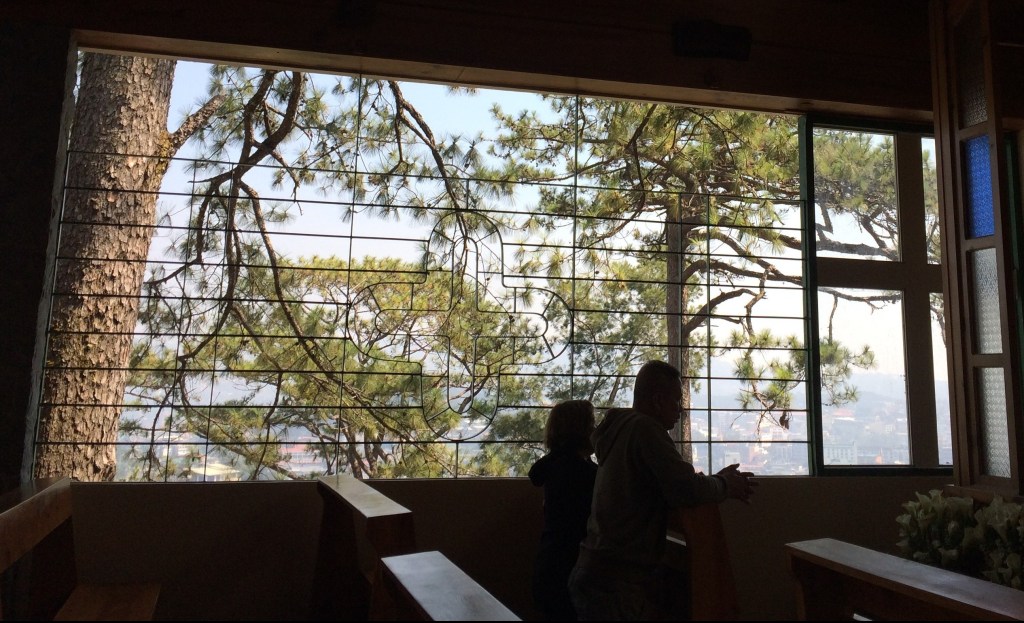
Photo by author, 2019.
Faith works through love.
It is God’s gift of faith that enables us to do good, to do our works of charity and love. And because we are faithful and free, then we also love!
Incidentally, being faithful and free are always tied up with being able to love because love is a choice, a decision we make, not just feelings or emotions.
Every choice is made out of freewill and here is the most interesting part of being faithful and free and loving: like love, man is able to believe and trust because it is God who first believed and trusted us!
A faithful person is always a loving person because he is free to choose what is good, what is right. And the more faithful we become to God, to your spouse, to your family and friends, the more loving you become like them!
For in Christ Jesus, neither circumcision nor uncircumcision counts for anything, but only faith working through love.
Galatians 5:6
Without faith, it is difficult for us to love because of the pains that come always in loving.
Without faith, it is impossible to forgive and be merciful, to let go of others’ infidelity and lack of love and concern because these are virtues and values that come only from within, from a loving heart that is also faithful where Jesus Christ dwells and reigns.
A few years ago, GMA-7 launched its talent search called Starstruck inviting young people to… Dream. Believe. Survive.
For us Christians, it is… Dream. Believe. Live.
The moment we believe, then we are able to see, even God hidden among each one of us. Amen.
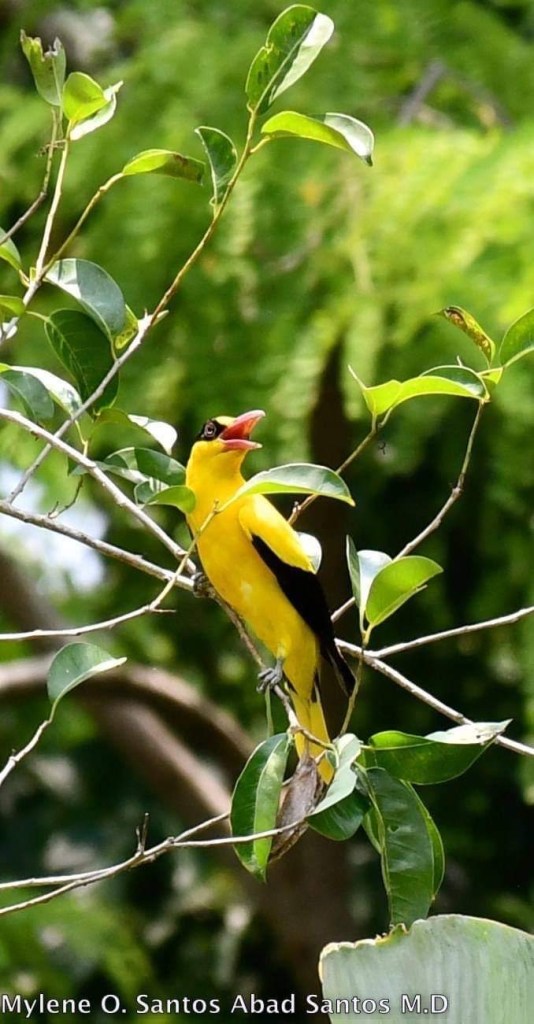
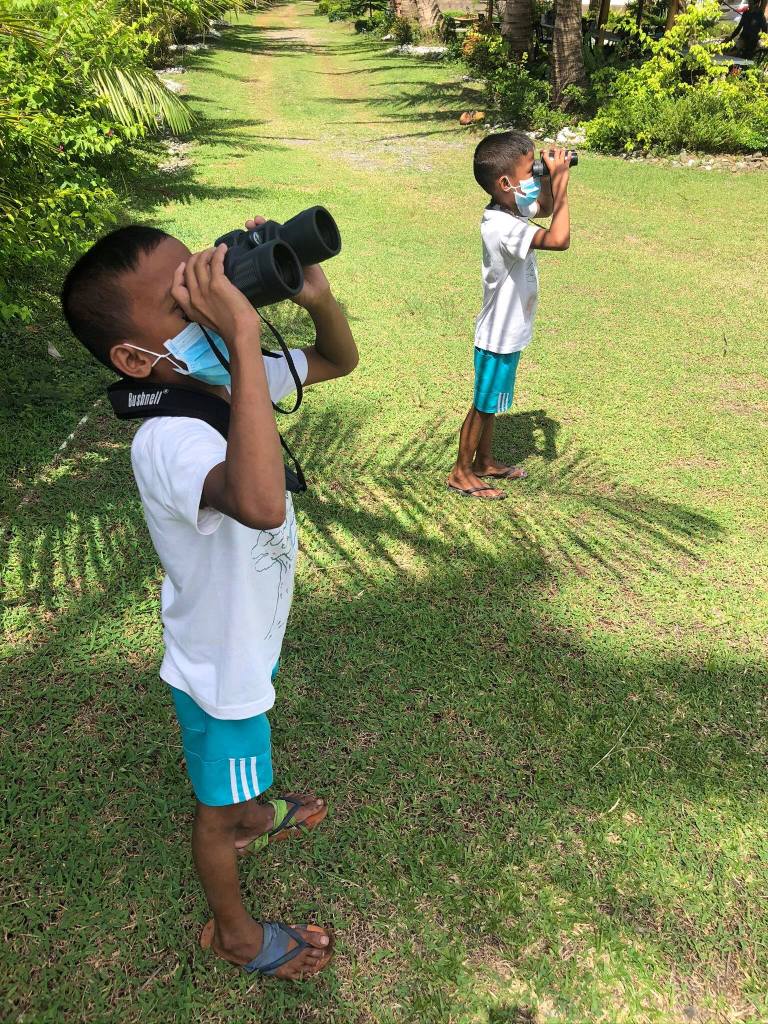
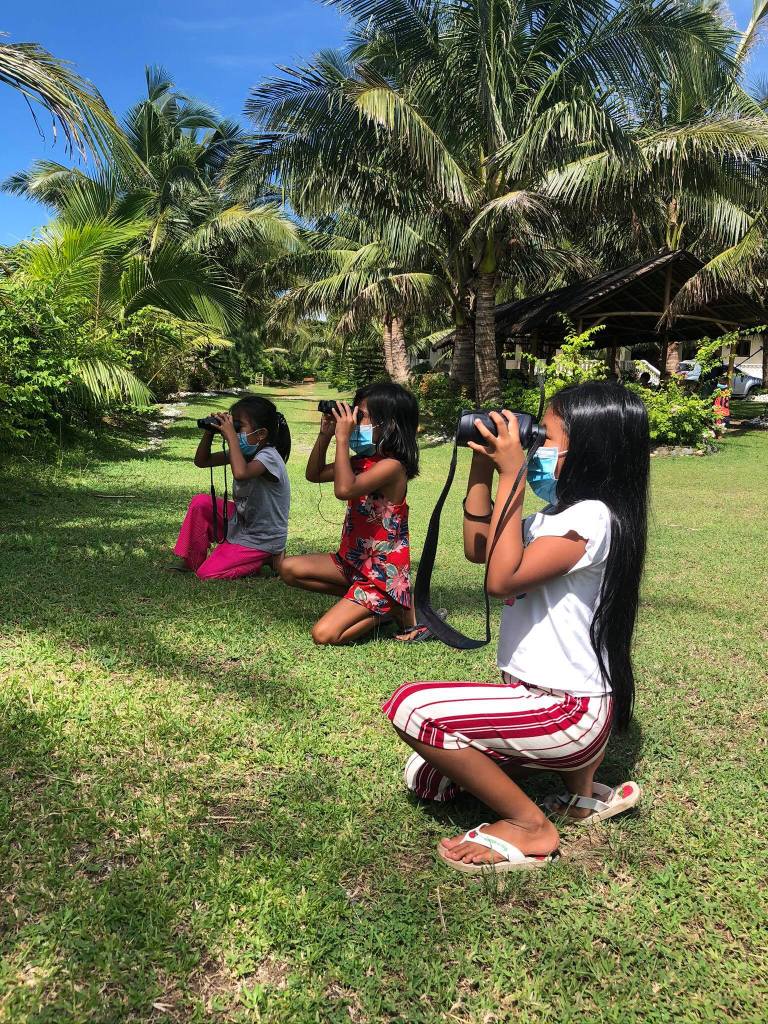
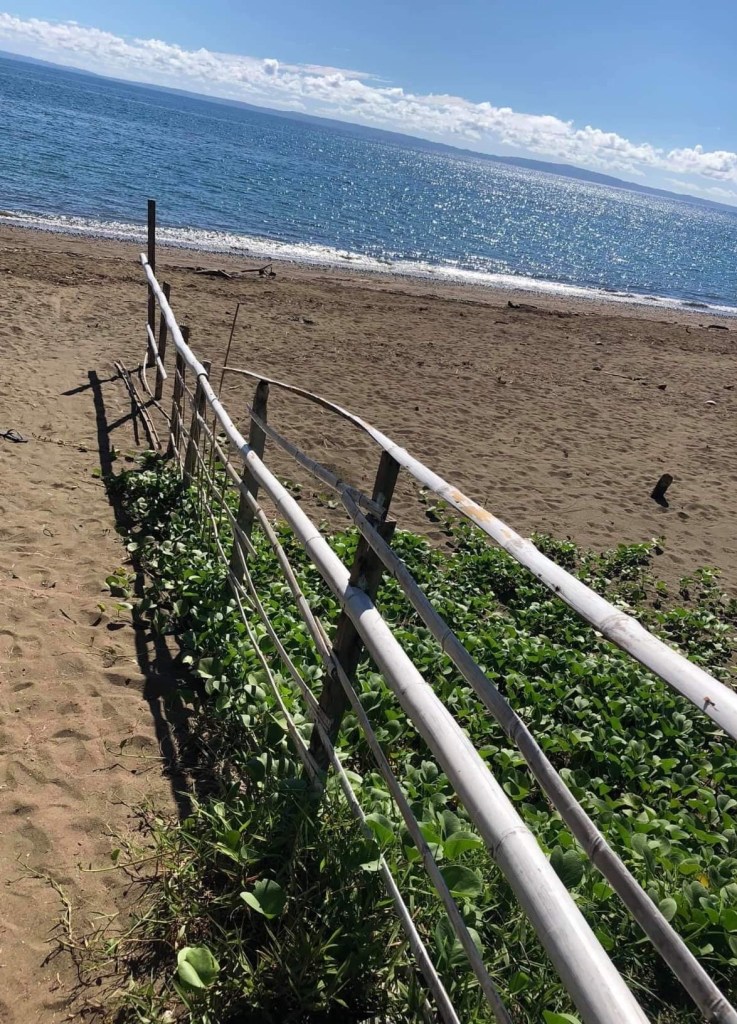
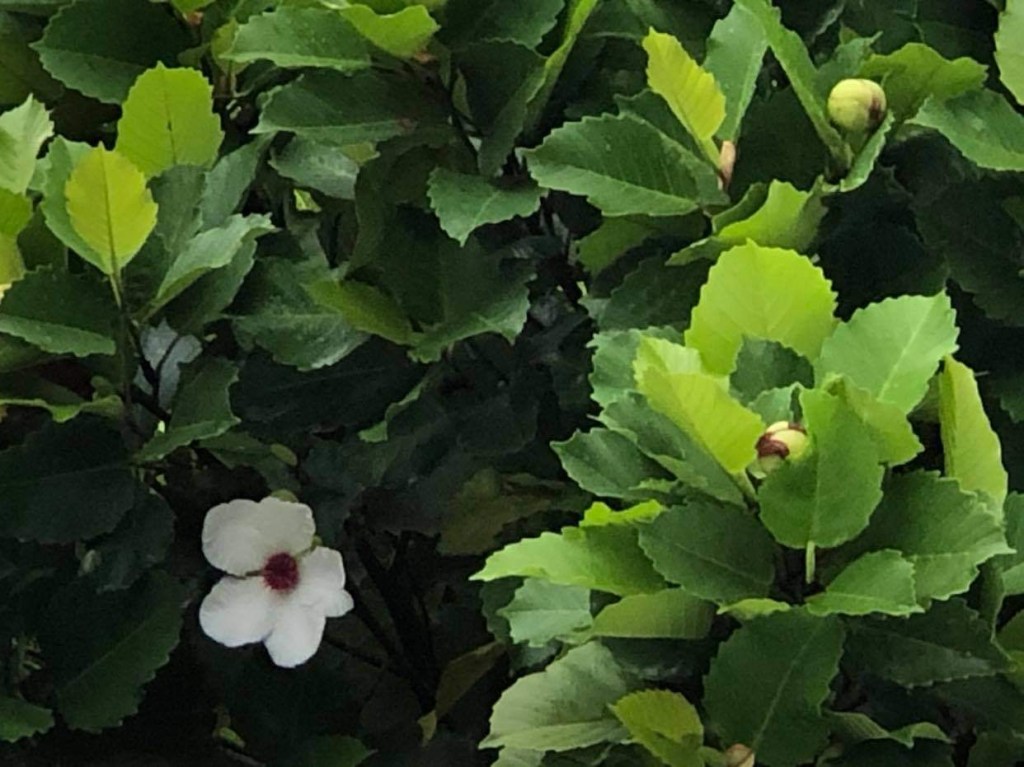
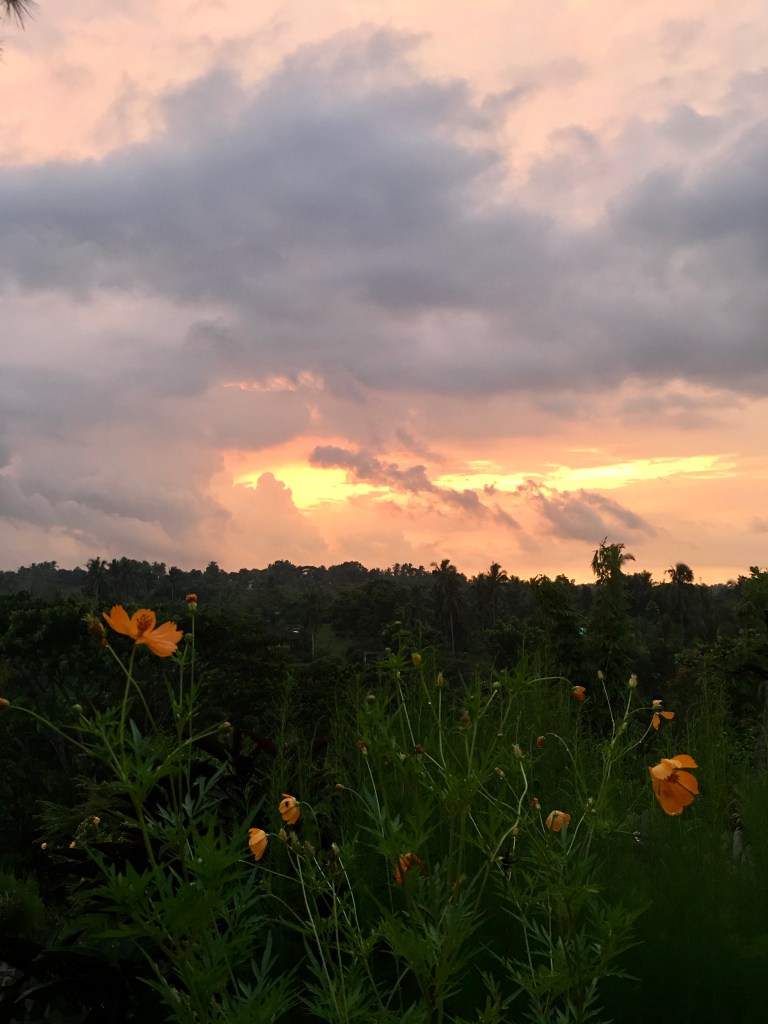
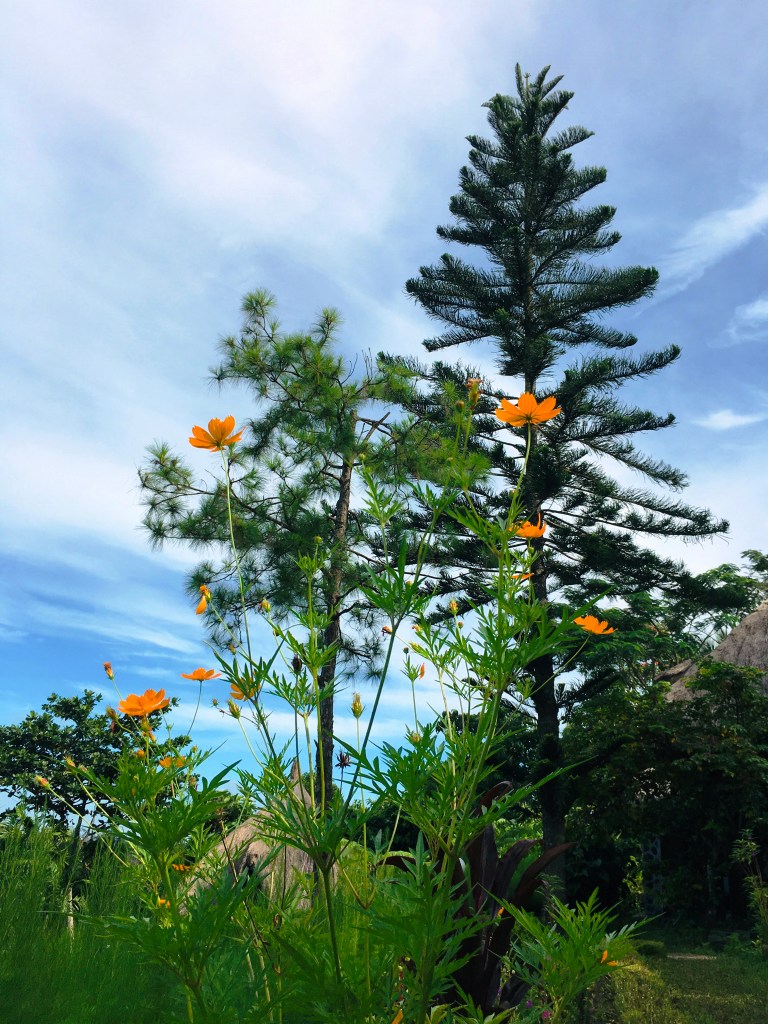
*All photos by Dr. Mylene A. Santos, MD at Katmon Harbor Nature Sanctuary, Quezon, 2020.
The Lord Is My Chef Breakfast Recipe for the Soul by Fr. Nicanor F. Lalog II
Wednesday, Week XXIX, Year II in Ordinary Time, 21 October 2020
Ephesians 3:2-12     >><)))*>  +  >><)))*>  +  >><)))*>     Luke 12:39-48
Photo by author, Baguio City, 2018.
God our loving Father in heaven, teach us to accept that you love us, that you trust us, and that you believe in us so that we can finally be grateful and humble before you.
Yes, dear God – one reason we find it so hard to be grateful and humble before you is because we have hardly accepted nor appreciated your love and trust in us. Teach us to see ourselves as you see us, like St. Paul despite our sinfulness.
To me the very least of all the holy ones, this grace was given, to preach to the Gentiles the inscrutable riches of Christ, and to bring to light for all what is the plan of the mystery hidden from ages past in God who created all things.
Ephesians 3:8-9
What a wonderful attitude by St. Paul, expressing such gratitude to you God in calling him and entrusting him the “stewardship of your grace” (Eph.3:2) for others to experience you and your love!
Remind us, dear God, that everything we have is not simply a grace and blessing from you but a sign of your trust in us – whether as a husband or wife, mother or father, brother or sister, or, whatever profession and vocation we follow – they all mean you believe us, that we are responsible enough and most of all, we can all accomplish our mission in Jesus through the Holy Spirit.
May we heed your Son’s warning in today’s parable that
“Much will be required of the person entrusted with much, and still more will be demanded of the person entrusted with more.”
Luke 12:48
And to do so, let us humbly and gratefully accept your gifts always. Amen.
The Lord Is My Chef Breakfast Recipe for the Soul by Fr. Nicanor F. Lalog II
Tuesday, Week XXIX, Year II in Ordinary Time, 20 October 2020
Ephesians 2:12-22     >><)))*> + >><)))*>  +  >><)))*>     Luke 12:35-38
Photo by Dr. Mylene A. Santos, MD in Quezon, 2020.
Glory and thanksgiving to you, God our Father, through your Son our Lord Jesus Christ in the power of the Holy Spirit for reconciling us all in you, making us one despite our many differences.
How lovely to the ears, to our being the words of St. Paul today, Lord Jesus, assuring us of our citizenship in heaven through the salvation you have brought us all, regardless of our color, race, status or even religion!
So then you are no longer strangers and sojourners, but you are fellow citizens with the holy ones and members of the household of God, built upon the foundation of the Apostles and prophets, with Christ Jesus himself as the capstone. Through him the whole structure is held together and grows into a temple sacred in the Lord; in him you also are being built together into a dwelling place of God in the Spirit.
Ephesians 2:19-22
Help us, O Lord, to embody and manifest this unity of peoples in you in the Church, your Mystical Body here on earth.
Heal us of our many divisions and make us truly Catholic by helping everyone enter into communion with you through one another.
Keep us on guard for your return, Jesus, by “girding our loins and lighting our lamps” (Lk.12:35) ready to welcome you with our good works each day, leading others closer to you.
Let us start by going back to you in prayers and silent meditations that many have forgotten or taken for granted in this 24/7 world saturated by media with all the cacophony of sounds and blinding visuals that have blurred our vision of who we really are as citizens of heaven, beloved children of God our Father in heaven.
Help us find our way back home to the Father in heaven here on earth by finding our way back home to our true selves and to our brothers and sisters in you, dear Jesus. Amen.
Quiet Storm by Fr. Nicanor F. Lalog II, 19 October 2020
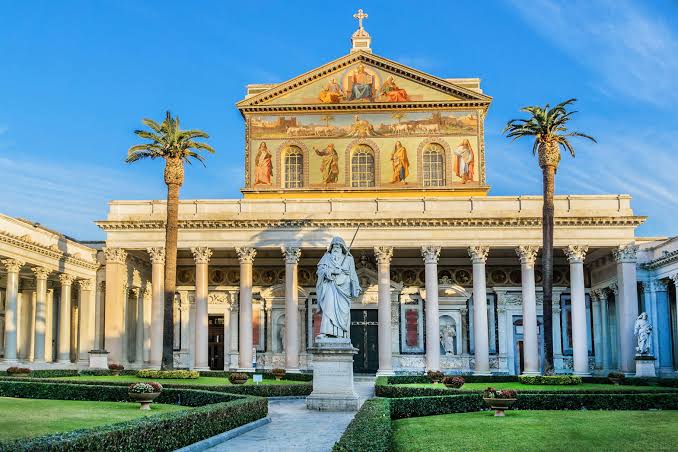
St. Paul’s Basilica in Rome from en.wikipedia.org.
It is really funny these days at how things we grew up with have changed so differently like the postscript we used with initials “P.S.” at the end of letters as an afterthought we sent relatives and friends about 40 years ago.
Today, a postscript is more of a trademark and an application in computers but for my generation, it is from the Latin “post scriptum” that means “written after”.
Consider this piece, my dear Reader, as a postscript or PS to St. Paul’s Letter to the Galatians we heard proclaimed during weekdays from October 5-14, 2020 where he explained and reflected about faith in Jesus Christ whom he loved so much.
Faith is having a relationship with God,
not to obtain things from him.
We always hear people say “have faith” in everything we pray for. Always believe that God will hear us, God will grant us what we need and ask for.
But what happens when we do not get what we are praying for like when a loved one is not healed or recovers from a sickness and eventually dies? Or, flunk an important exam or maybe fail to close a major deal in business? Does it mean we lack faith? Or, is that the main purpose of having faith in God, to obtain things and favors from him?
See how St. Paul called the Galatians “stupid” for being misled by false teachings on the gospel of Jesus Christ: some preachers had come to Galatia at that time telling them of the need to be circumcised like the Jews who converted to Christianity in order to be saved. He wrote the Galatians primarily to rectify those errors they have seemed to believed, where he introduced the doctrine of “justification (salvation) by faith in Christ”, not by rituals and other practices men do. It is not to dismiss our traditions but to stress the primary role of faith in Jesus Christ who died for our sins to save us.
O stupid Galatians! Who has bewitched you, before whose eyes Jesus Christ was publicly portrayed as crucified. I want to learn only this from you: did you receive the Spirit from works of the law, or from faith in what you heard? Are you stupid? After beginning with the Spirit, are now ending with the flesh?
Galatians 3:1-3
Sometimes like the Galatians, we end up with the flesh, believing more in things we do like rituals and other things than truly believing Jesus because we use faith to obtain things from God.
No! We believe because we relate: every relationship like marriage always presupposes faith in the other person. Even Jesus in teaching us how to pray, he taught us the “Our Father” which is an expression of a relationship.
Wedding of my former student, Micah and Lery Magsaysay, February 2020.
Being faithful means being realistic.
Jesus himself assured us that faith can move mountains and do other great things for us if we truly believe. This is perhaps the reason we always equate faith in asking for so many things from God.
Not at all. We also have to be realistic with things we ask from God. He is not a magician who has to please and entertain us with his miracles and powers. When we were in high school seminary, the late Fr. Nick Cruz, SJ gave us a recollection and told us we cannot simply ask anything from God like a rose blooming from your toothpaste to prove he calls you to the priesthood!
Being realistic in our faith by praying first of all to have Jesus, only Jesus and always Jesus!
When Jesus told us to seek and you shall find, to ask and it shall be given to you, and to know and the door shall be opened to you (Lk.11:9-10), he was not telling us to ask for money and gadgets. If we are going to be realistic in our faith, Jesus is telling us to seek God and you shall find him, to ask God and you shall have him, and most of all, God is the only door when we knock would surely open us to new beginnings.
In explaining the unique call we have received from God in Christ, St. Paul gives us the whole reality of our being Christians, of having a faith that is realistic.
For all of you who were baptized into Christ have clothed yourselves with Christ. There is neither Jew nor Greek, there is neither slave nor free person, there is not male and female; for you are all one in Christ Jesus. And if you belong to Christ, then you are Abraham’s descendant, heirs according to the promise.
Galatians 3:27-29
Photo by author, August 2020.
Faith demands conviction and consistency.
God’s gift of faith in us is not everything; we have to cultivate and deepen our faith to experience its wondrous fruits and grace. See the kind of conviction of St. Paul in proclaiming and explaining his faith in Jesus Christ.
Now I want you to know, brothers and sisters, that the Gospel preached by me is not of human origin. For I did not receive it from a human being, nor was I taught it, but it came through a revelation of Jesus Christ.
Galatians 1:11-12
Like the Galatians, many of us are easily swayed by so many other beliefs and teachings that are misleading, claiming to be a part of the faith we have received. Without firmness and conviction in our faith, some among us have gone to accommodating modern thoughts and lifestyles that run contrary to our faith in Christ like abortion, same sex marriage, and in-vitro fertilizations or test tube babies.
A believer without conviction and consistency in faith and actions is not faithful at all. What happens with our “faith is a relationship” when the chips are down, when we are confronted of either being for God or against God?
Sometimes we try “moving the lines”, convincing ourselves that we are not crossing the line of morals and morality like when we are bent on accommodating others and ourselves in some occasions to justify personal preferences.
Sad to say, it happens even among us clergymen like when we tinker with the liturgy and the sacraments in the name of modernism and of arts and worst, with some issues pertaining to acts intrinsically sinful and immoral.
Maybe if we would have the conviction and consistency of faith, we would all be like the good Samaritan in the Lord’s parable – a neighbor to everyone especially those in need, willing to cross the street to faithfully reach out to others in Jesus Christ (Lk. 10:25-37).
Try examining our faith today. Has it bloomed into a relationship we keep with God our Father in Christ Jesus through the Holy Spirit or has it remained as it is, a given, a safety net just in case we need?
Have faith, have God and we’ll journey far, together! Amen.
From americamagazine.org.
On Wednesday, we reflect on being faithful and free, and how faith works through love. Have blessed Monday and see you again!
You may also check our prayers from October 05-14, 2020 based on St. Paul’s Letter to the Galatians at the archives of http://lordmychef.com.
The Lord Is My Chef Breakfast Recipe for the Soul by Fr. Nicanor F. Lalog II
Monday, Week XXIX, Year II in Ordinary Time, 19 October 2020
Ephesians 2:1-10     >><)))*>   +   <*(((><<     Luke 12:13-21
Photo by Mr. Jim Marpa, 2018.
As we begin our work this Monday, guide us O God our Father to discover anew this great gift of life in you. May we see ourselves the way you see us – beloved and forgiven children made in your own image and likeness — your handiwork as St. Paul beautifully expressed!
For by grace you have been saved through faith, and this is not from you; it is the gift of God; it is not from works, so no one may boast. For we are his handiwork, created in Christ Jesus for good works that God has prepared in advance, that we should live in them.
Ephesians 2:8-10
Let us value this unique blessing from you, dear Lord; in your power and supremacy, you could have just let us vanished and be forgotten. Yet, you chose to redeem us in your Son Jesus Christ, giving us countless opportunities to rise again, to bloom, and to be healed.
Make our hearts whole in you, undivided in pride, complacency and selfishness unlike that man in the parable whom we imitate most often, busy storing treasures for ourselves that we forget real wealth is found in what matters to you our God (Lk. 12:21).
Wake us up from this insanity of amassing too much of everything, not realizing that in the process, the more we have, the more we are actually empty and lost because all these things perish.
Only you, O God, suffices. Make us aspire and desire more of you so your glory and majesty may be seen in us. Amen.
The Lord Is My Chef Sunday Recipe for the Soul by Fr. Nicanor F. Lalog II
Week XXIX-A in Ordinary Time, 18 October 2020
Isaiah 45:1, 4-6  ><)))*> + <*(((><  1 Thessalonians 1:1-5 ><)))*> + <*(((><  Matthew 22:15-21
Photo by author, the Walls of Jerusalem, May 2019.
People are lonely because they build walls instead of bridges.
“I Like You Just Because” by Albert J. Nimeth, OFM
We live in a world with so many divisions of our own making. Most of the time we are divided on the things we possess not only of things like properties and borders, inheritance, and toys but also of persons like in child custody and “trading” players in sports! So many times these divisions have caused harm and destruction among us as nations and as individuals.
Sad to say, these divisions come from within us in our hearts where we always try to divide our lives between God and our very selves, especially in the realm of religion and civic life.
The Pharisees went off and plotted how they might entrap Jesus in speech. They sent their disciples to him, with the Herodians, saying, “Tell us, then, what is your opinion: Is it lawful to pay the census tax to Caesar or not?”
Matthew 22:15-16, 17
When our possessions possess us.
Today and next Sunday, Jesus is confronted by his enemies who have increased their efforts in finding faults against him in his speech to charge him with serious cases and get rid of him; but, more than dispatching his enemies with his brilliant answers to their question, Jesus brought to the fore the real score of the great divide within us.
In our gospel scene today, we can see clearly how divided within were the enemies of Jesus like the Pharisees and Herodians who joined forces to put Jesus down despite their being poles apart in their beliefs: the former who were against the Romans taking control in Israel while the latter were members of a faction supportive of the occupying forces.
As they sought the Lord’s opinion on the perceived deep divisions many still believe to exist up to this day between “Caesar” and God, Jesus brought to the open how divided inside were his enemies after all —- just like us today when we have been possessed by our very own possessions!
Knowing their malice, Jesus said, “Why are you testing me, you hypocrites? Show me the coin that pays the census tax.” Then they handed handed him the Roman coin. He said to them, “Whose image is this and whose inscription?” They replied, “Caesar’s.” At that he said to them, “Then repay to Caesar what belongs to Caesar and to God what belongs to God.”
Matthew 22:18-21
Jesus is not proposing a compromise in his answer but rather trying to heal the false divisions we have created inside us.
Aside from the silly alliance of the Pharisees and Herodians, Jesus bared how divided within they have always been when they gave him a coin used to pay taxes to the Caesar that has an image of the emperor and the inscription that says “son of god” – something that was clearly against the First Commandment of God that in fact, they should have not been carrying at all when in the temple area!
They have been divided inside because they have been possessed by their possessions like money. In telling them, and us today, to “repay to Caesar what belongs to Caesar”, Jesus reminds us that what belongs to Caesar are inanimate objects that are external to the heart of things. When a young man asked Jesus one day to tell his brother to give him his share of inheritance, the Lord stressed that he had not come to settle our disputes about money and properties (Lk.12:13). Today, Jesus is telling us that it is our responsibility and not for him to decide for us how to settle our political and other problems.
Jesus clearly points out that what belongs to God is our whole selves, our whole hearts undivided by pride, hypocrisy, and selfishness. While we must give back to Caesar what is due them as further taught by St. Paul and St. Peter in their letters to the early Christians, Jesus directly tells us that our duties to God bind all, everywhere and all the time.
Unlike the image of the Caesar found on coins, we are stamped with the image and likeness of God who created us out of his immense love. It is our duty and moral obligation to always ensure that this image of God in us is never destroyed and always upheld.
Here falls the sensitive – and false issue of “separation of Church and state” in our time like the payment of Roman tax raised by the Pharisees and Herodians. Nowhere does the concept forbid us priests nor the Church as an institution not to speak out when the very image of God is destroyed among men and women with injustice, violence and abject poverty.
What the separation of Church and state forbids is the support and endorsement of a state religion; in a sense, it promotes more harmony and unity among government and religions in their exercise of their true freedom among peoples.
Even God himself works within our own settings in this world to fulfill his plans for us. Trust him because everything works best for those who have believe wholly in God.
In the first reading from the prophet Isaiah we find the most amusing bit of history of how God had used a pagan ruler, Cyrus the king of Persia or Iran today to become his anointed savior or messiah of Israel then in their Babylonian exile. Imagine how God used an outsider, an unbeliever to free his chosen people from one of their darkest moments in history to show us that God is the master of history because everything is his.
May we heed St. Paul’s words to the Thessalonians and to us today to never doubt it was God in Jesus Christ who called us out of darkness and sin to be his new chosen people. Everything in our lives specially in our ministries and apostolate are the initiatives of God – may our hearts be undivided in giving him back everything through Jesus Christ, our life and meaning. Amen.
A blessed new week to you!
Photo by the author, view of the hills from Jerusalem temple, May 2019.
Quiet Storm by Fr. Nicanor F. Lalog II, 17 October 2020
Bishop Dennis Villarojo of the Diocese of Malolos leading the praying of the Rosary during the 11th Healing Rosary for the World last May 27, 2020 at the Malolos Cathedral. Photo from Sandigan.
It is the world’s most powerful weapon in any war, the most potent medicine for any ailment but has always been shunned upon by many especially in this age of sophisticated technology and modern science.
This is the Holy Rosary of the Blessed Virgin Mary, so loved by most saints in the past 800 years, encouraged by the Mother Church, and now rediscovered by many in this time of COVID-19 pandemic.
How prophetic were the words of St. John Paul II in October 16, 2002 when he declared it as “Year of the Rosary” by adding the Luminous Mysteries prayed on Thursdays.
The Rosary of the Virgin Mary… still remains, at the dawn of this third millennium, a prayer of great significance, destined to bring forth a harvest of holiness. It blends easily into the spiritual journey of the Christian life, which, after two thousand years, has lost none of the freshness of its beginnings and feels drawn by the Spirit of God to “set out into the deep” (duc in altum!) in order once more to proclaim, and even cry out, before the world that Jesus Christ is Lord and Saviour, “the way, and the truth and the life” (Jn 14:6), “the goal of human history and the point on which the desires of history and civilization turn”.
St. John Paul II, Rosarium Virginis Mariae, Introduction
It is very interesting to know that the celebration of the Our Lady of the Holy Rosary was instituted following the victory by the Spanish Armada over the Ottoman Turks at the Battle of Lepanto Bay on October 07, 1571. That decisive naval victory attributed to the praying of the Rosary ended the push towards Europe by the powerful Moslem Ottomans. That would be repeated less than a hundred years later at Manila Bay in 1646 when the Protestant Dutch navy retreated unable to break the defenses of the combined Spanish and Filipino forces who placed themselves under the patronage of Our Lady of the Holy Rosary. Following their victory at the La Naval de Manila, the surviving soldiers walked barefoot to the Santo Domingo Church then in Intramuros.
There are so many other stories of how devotion to Our Lady of the Holy Rosary have led to many kinds of victories in various battles – not only in wars but also in plagues and diseases and other crises – waged by Christians both as a nation and as individuals not because the Blessed Virgin Mary is a “fighter” like a warrior but more of a woman of peace, a disciple par excellence of Jesus Christ.
The family that prays together,
stays together;
a world at prayer is a world at peace.
- Venerable Fr. Patrick Peyton
Image of Our Lady of the Holy Rosary whose feast we celebrate every third Saturday of October at Parokya ni San Juan Apostol at Ebanghelista, Bagbaguin, Santa Maria, Bulacan.
What makes Our Lady of the Holy Rosary so unique in fighting all kinds of battle in life is the path she takes, the path of Jesus Christ which is the path of peace. Here we find how though the Rosary is Marian in character, it is in essence Christocentric.
…to rediscover the Rosary means to immerse oneself in contemplation of the mystery of Christ who “is our peace”, since he made “the two of us one, and broke down the dividing wall of hostility” (Eph 2:14).
St. John Paul II, Rosarium Virginis Mariae, #6
Jesus had told us that the peace he gives us is not like the peace of the world but a peace that is won out of love, not of violence and power. Mary as Mother of Jesus offers us the most intimate and incomparable model in contemplating Christ the Prince of Peace, his very person, his words and teachings that leads into inner peace within each person first.
And that is what every mystery of the Rosary teaches us: we remember not just by going back to the past but by making present anew Jesus Christ in the many events of his life relevant with us today because they are very similar with our own experiences.
When we contemplate the Joyful Mysteries, we realize that real joy comes from welcoming and accepting, sharing and finding Jesus who comes to us in the most ordinary ways. In the Sorrowful Mysteries, we find in whatever suffering we find ourselves into, Jesus Christ went through it all first for us, assuring us he continues to be with us even in death that leads us to the Glorious Mysteries of Easter. In these mysteries that end with the Coronation of the Blessed Virgin Mary as Queen of Heaven and Earth, we are reminded and assured of our only “destiny” in life — to be back in the presence of God in heaven with Mary.
Mary in the Holy Rosary reveals to us that our fulfillment in life is found only in her Son Jesus Christ, the light of the world in whom everything must be seen and considered. All the rough edges, the dullness and darkness within us are dispelled when seen in the light of Jesus Christ. And that is why we find in the Luminous Mysteries the most “scriptural” part of the Rosary. According to St. John Paul II, though the gospels were silent about the presence of Mary in these Luminous Mysteries, it is most likely she was there present in silence, something so rare these days as we live our lives in the glitz and glamour of social media like Facebook and Instagram.
Photo by author, 2019.
The COVID-19 pandemic is one of the most unique battle man has ever fought, not only because the enemy is not seen and have made such visibly tremendous impact to our way of life in a global scale like World War II; it happened in the most unusual way that attacked and disturbed our inmost being as human persons desiring peace right in our hearts.
It exposed the sickness we have all been afflicted with, the lack of love, a love that is like the love of Jesus Christ willing to sacrifice, willing to forgive, willing to let go simply because of loving someone more than one’s self.
We have been in chaos within, longing for peace and love that have remained elusive because we have always been busy with everything except with God and our true selves. Long before we have adopted social distancing, we have long been distant from each other, even with those we live with in our homes – so cold and without love. Meals have become needs to feed one’s body, not as events to share one’s self with others as more and more people are getting used to eating by themselves, with cellphones beside them. Everybody is complaining about the face masks and face shields we have to wear without realizing when was the last time we really had a good look at each one’s face as a brother and a sister in Christ, an image and likeness of God, a person to be loved and cherished?
In praying the Rosary meditating in silence its mysteries, we not only discover the mystery of God but most of all our own mystery of being a part of his grand design and plan. That is why we feel anxious and fearful all of a sudden because death has become truer and closest to us in this time of the pandemic when “resting in peace” has become so common. And we know so well we have not loved enough!
“The Assumption of the Virgin” by Italian Renaissance painter Titian completed in 1518 for the main altar of Frari church in Venice. Photo from wikidata.org.
By praying the Rosary, its beads make us enter the rhythm of life once again, that it is not just temporal and material but also eternal and spiritual. With Mary, the Rosary enables us to be conformed to Christ which is the very essence of Christian spirituality.
In the spiritual journey of the Rosary, based on the constant contemplation – in Mary’s company – of the face of Christ, this demanding ideal of being conformed to him is pursued through an association which could be described in terms of friendship. We are thereby enabled to enter naturally into Christ’s life and as it were to share his deepest feelings.
The Rosary mystically transports us to Mary’s side as she is busy watching over the human growth of Christ in the home of Nazareth. This enables her to train us and to mold us with the same care, until Christ is “fully formed” in us (cf. Gal 4:19). Never as in the Rosary do the life of Jesus and that of Mary appear so deeply joined. Mary lives only in Christ and for Christ!
St. John Paul II, Rosarium Virginis Mariae, #15
I have been wondering why despite our many prayers and Masses, why have we not conquered COVID-19 yet? How many rosaries do we have to pray before God answers our prayers for a cure to corona virus?
Perhaps, Our Lady of the Holy Rosary is reminding us today that the problem with COVID-19 is not just medical but deeply spiritual, calling us to be conformed in the person of Jesus Christ that calls for many battles within us against our pride, selfishness, painful past and memories, vices and addictions, so many other negativities that please our senses but leave us empty and lost because they all lack love from which peace springs forth.
Take that Rosary again, learn from Mary that true blessedness is in believing that the words of God will be fulfilled (Lk.1:45) in us by welcoming Jesus, sharing Jesus, and becoming like Jesus in love like his Mother. Amen.
Lawiswis ng Salita ni P. Nicanor F. Lalog II, Ika-16 ng Oktubre 2020
Pitong buwan na nakakaraan
mula nang kumalat mula Wuhan
corona virus, tayo ay nag-lockdown
nang lumaon pinagaan quarantine
COVID-19 pasakit pa rin sa atin.
Nguni't huwag din namang masamain
maraming aral ipinamulat sa atin
itong COVID-19:  pananalangin
at pananalig sa Diyos,
pagpapahalaga sa pamilya at kapwa,
pangangalaga sa ating kalusugan.
Gayon din naman
maraming katatawanan
katuwaan ating naranasan
lumipas na mga buwan
kaya mga ito ating pagparoonan
kesa pabigatan ating mga isipan,
puso at kalooban.
Sa dami at tagal nang hirap ating naranasan
minsan marahil iyong inaasam-asam
makapagpahinga at magbakasyon
at saka sasagi sa isipan na hindi ba gayon
itong COVID-19 ngayon?
Bakasyon at pahinga
kaya nakapagtataka
kapag walang pasok sa eskuwela
at opisina dahil sa piyesta upisyal
gayong wala namang papasyalan
ni pupuntahan
lahat ng araw pare-pareho lang!
Nang magsimula ang lockdown
karamihan hindi naman nahirapan ni kinabahan
bagkus naging engrandeng bakasyunan
kantahan at inuman kung saan-saan
hanggang magkahawahan
nang mabatid katagay sa inuman
walang panlasa, walang pang-amoy
nang maglaon akala mo'y
aping-api, kinawawa at pinabayaan
pinag-aagawan lahat ng uri ng ayuda
pera at de lata
habang ang iba naman ay saganang-sagana.
Ang Pinoy nga naman
maski saan man
basta may kalamidad
hindi pababayaan kumalam kanyang tiyan;
aminin ang katotohanan
parusa nga ba at kahirapan ang lockdown
bakit tayo nagtabaan?
Hindi lamang iyan:
sa bawat tahanan
 mayroon isang tiyak natutuhan
bagong libangan at pagkakitaan
pagluluto at pagbe-bake.
Isang pangunahin kabutihan
nitong lockdown
luminis mga lansangan
umaliwalas kalangitan
kalikasan nabigyan
kapahingahang kailangang-kailangan;
magagandang tanawin
muling nasilayan mula kalayuan
habang sa mga tahanan
laganap na luntian ng mga halamang
 inaalagaan at pinagkakakitaan
ng mga tinaguriang plantitos at plantitas.
Mayroon pang ibang mga katatawan
nangyari sa gitna ng lockdown
at quarantine ng COVID-19
ngunit huwag nang pag-usapan
baka lamang pagmulan
labis na hapis at kalungkutan
mga kabalastugan sa pamunuan,
sakim sa kapangyarihan
katanyagan at kayamanan
ngunit walang pakialam
sa bayang nahihirapan
nagsisikap lampasan mga pagdurusa
dinaraan sa katatawan
katuwaan upang mapanatili
katinuan ng isipan
kesa tularan mga baliw
at hunghang na payaso
sa gobyernong ito.
*Mga larawan sa itaas mga kuha ni G. Jay Javier, Mayo 2020; habang ang mga nasa ibaba ay kuha ng may-akda maliban sa ibong dilaw at puting bulaklak na kuha ni Dr. Mylene A. Santos, MD.
The Lord Is My Chef Breakfast Recipe for the Soul by Fr. Nicanor F. Lalog II
Friday, Week XXVIII, Year II in Ordinary Time, 16 October 2020
Ephesians 1:11-14     >><)))*> + >><)))*> + >><)))*>     Luke 12:1-7
Photo by the author, September 2020.
What a great apostle you have, O Lord God, in St. Paul indeed! Today he tells us something so unique, so understandable and relatable with us regarding our being blessed in Jesus Christ: being sealed in the Holy Spirit.
In him (Christ) you also, who have heard the word of truth, the Gospel of your salvation, and have believed in him, were sealed with the promised Holy Spirit, which is the first installment of our inheritance toward redemption as God’s possession, to the praise of his glory.
Ephesians 1:13-14
I love those two catchphrases by St. Paul: “sealed with the promised Holy Spirit” and “first installment of your inheritance”. It is both a stroke of his genius and mastery of language while at the same time, his openness to the inspiration of the Holy Spirit.
In him we find that blessedness in Christ through the Holy Spirit like having peace, kindness, generosity, forgiveness, understanding and things that bind us together in working together for the Lord’s mission.
But at the same time in speaking of the Holy Spirit as the first installment of our redemption, St. Paul had a foretaste of what we shall all experience in its fullness in eternity, an assurance of the fulfillment of Christ’s promise of salvation.
Like St. Teresa of Avila whose memorial we celebrated yesterday, St. Paul restored all things in you, Jesus Christ. And so, we pray for the grace of enthusiasm and perseverance of working for the coming of God’s Kingdom like him.
Give us the wisdom to proclaim loud and clear not only in words but also in deeds the Gospel so the world may know Jesus is here to restore everything and everyone back to you, God our Father.
We are not going to say anything new, Lord; we merely have to echo in this modern time your Good News of salvation, of love and mercy and forgiveness for everyone specially in this difficult time of the pandemic.
Likewise, give us the courage to witness the power of the Holy Spirit in this world living in front of all kinds of cameras without solid grounding on the realities of life, living in a make-believe world filled with hypocrisy. Seal us with your Holy Spirit, Lord! Amen.
The Lord Is My Chef Breakfast Recipe for the Soul by Fr. Nicanor F. Lalog II
Thursday, Memorial of St. Teresa of Avila, Virgin and Doctor of the Church, 15 October 2020
Ephesians 1:1-10     <*(((><<  || + + + ||   >><)))*>     Luke 11:47-54
Photo by Dr. Mai B. Dela Peña at a Carmelite Monastery in Israel, 2016.
You know so well, O God, how we must pray to you that you have taught St. Paul one of the most beautiful prayer – and greetings – we can all recite individually or communally when gathered in your name.
Blessed be the God and Father of our Lord Jesus Christ, who has blessed us in Christ with every spiritual blessing in the heavens, as he chose us in him, before the foundation of the world to be holy and without blemish before him.
Ephesians 1:3-4
So beautiful are these words showing to us our blessedness in Jesus Christ! If we could all be aware of our blessedness in you that springs from your infinite love for us poured by Jesus Christ at the Cross, maybe there would be less chaos in the world today.
Forgive us in wasting your blessings, exchanging them for fleeting pleasures of fame and wealth that set us apart from one another. Worst, in misleading others away from you with our sinful ways of life like the enemies of Jesus in today’s gospel.
Help us restore all things in your Son, dear Father, like St. Teresa of Avila who taught us to be mindful always of Jesus Christ’s love for us.
Whenever we think of Christ we should recall the love that led him to bestow on us so many graces and favors, and also the great love God showed in giving us in Christ a pledge of his love; for love call for love in return.
St. Teresa of Avila, Office of Readings, October xv