Nang mabuksan ang langit

Lawiswis ng Salita ni P. Nicanor F. Lalog II, Ika-29 ng Setyembre 2020
Martes, Kapistahan ng mga Arkanghel San Miguel, San Gabriel, at San Rafael
Daniel 7:9-10, 13-14     >><)))*>   +   <*(((><<     Juan 1:47-51
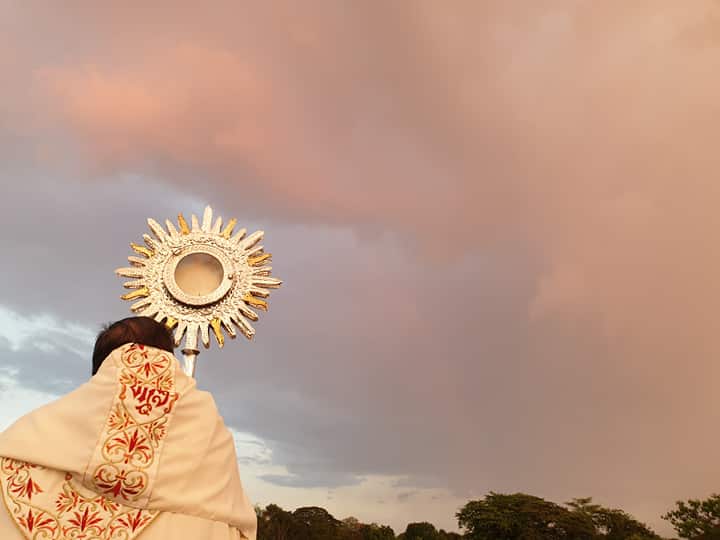
Larawan kuha ng may-akda, pagbubukang-liwayway sa Lawa ng Tiberias, Israel, Mayo 2019.

At sinabi ni Jesus sa lahat, “Tandaan ninyo: makikita ninyong bukas and langit, at ang mga anghel ng Diyos ay manhik-manaog sa kinaroroonan ng Anak ng Tao.”

Juan 1:51
Batid namin Panginoon
 noon pa mang kami'y 
Iyong tinubos sa kasalanan
 nabuksan na ang langit 
upang kami ay makalapit sa Ama 
na bukal ng buti at bait;
Ngunit ang masakit sa langit 
hindi kami makatingin 
dala nitong mabibigat na pasanin
mga kasalanan aming inaamin;
Kaya sana Iyong dinggin
aming dalangin at hiling
ngayong kapistahan ng tatlong Arkanghel
na palaging nasa Iyong banal na piling.
Kay San Miguel Arkanghel
kahulugan ng pangalan 
ay "Sino ang katulad ng Diyos?" 
kami sana'y bigyan, O Jesus, ng tapang
labanan kasamaan at kasalanan 
upang makapanatili sa Iyong banal na harapan;
Bigyan Mo rin kami, Jesus ng Iyong lakas 
katulad ni San Gabriel Arkanghel
na ang kahulugan ng pangalan 
"Diyos ang aking lakas" 
upang Iyong mabuting balita aming maipahayag
lalo na ngayong panahon na ang daigdig
ay manhid sa kasalanan at kasamaan;
Gayon din naman, Panginoon
batid ninyo minsan dala ng aming karamdaman
hindi lamang pangangatawan nanghihina 
kungdi pati puso at kalooban 
Ikaw ay aming tinatalikuran
kaya naman sana Inyong mapagbigyan
sa pamamagitan ni San Rafael Arkanghel
na kahuluga'y "nagpapagaling ang Diyos"
sana'y gumaling o maibsan hirap at tiisin
ng mga may sakit, hipuin kanilang
puso at kalooban upang paghilumin.
Itulot po Ninyo, Panginoong Jesu-Kristo
na katulad ni Nataniel 
kami ma'y walang pagkukunwaring 
tumalima at sumunod 
sa Iyong tawag bilang alagad 
upang maakay ang marami pang iba
palapit sa langit na Iyong binuksan
upang kami ay maligtas ngayon at magpasawalang-hanggan.
AMEN.
Photo by Pixabay on Pexels.com

Fulfilling our words

The Lord Is My Chef Breakfast Recipe for the Soul by Fr. Nicanor F. Lalog II
Monday, Feast of San Lorenzo Ruiz and Companions, 28 September 2020
Job 1:6-22     >><)))*>  >><)))*>   +   <*(((><<  <*(((><<     Luke 9:46-50

How great it is, O God our loving Father that on this Feast of our first Filipino saint, San Lorenzo Ruiz, our readings today and even yesterday were all about words and how we must “walk our talk”.

San Lorenzo Ruiz remained true to his words that if given with a thousand lives, he would give them all to God when he chose martyrdom in Nagasaki, Japan in 1637 along with 15 others that included nine Dominican priests, two brothers, two laymen, and two consecrated women.

Exactly the same way Job is the best example of fidelity and complete trust in God when after losing all his children and properties in just one day, all he said was…

“Naked I came forth from my mother’s womb, and naked shall I go back again. The Lord gave and the Lord has taken away; blessed be the name of the Lord!” In all this Job did not sin, nor did he say anything disrespectful of God.

Job 1:21-22

So many times, Lord, we say so many things without really meaning them well, when our words and actions do not jibe at all.

Sometimes, all we have are good intentions, lacking in actions.

And worst, there are times when we our words reveal dark intentions in our hearts that cannot escape you.

Help us to be true to our words, to be your witnesses in this world where words mean so cheap that even if we say more, we still mean nothing at all because our words are empty.

Through the intercession of San Lorenzo Ruiz, grant us the gift of martyrdom, of witnessing to your Gospel not only in words but most of all in actions. Amen.

“Coming Around Again” (1986) by Carly Simon

The Lord Is My Chef Sunday Music by Fr. Nick F. Lalog II, 27 September 2020
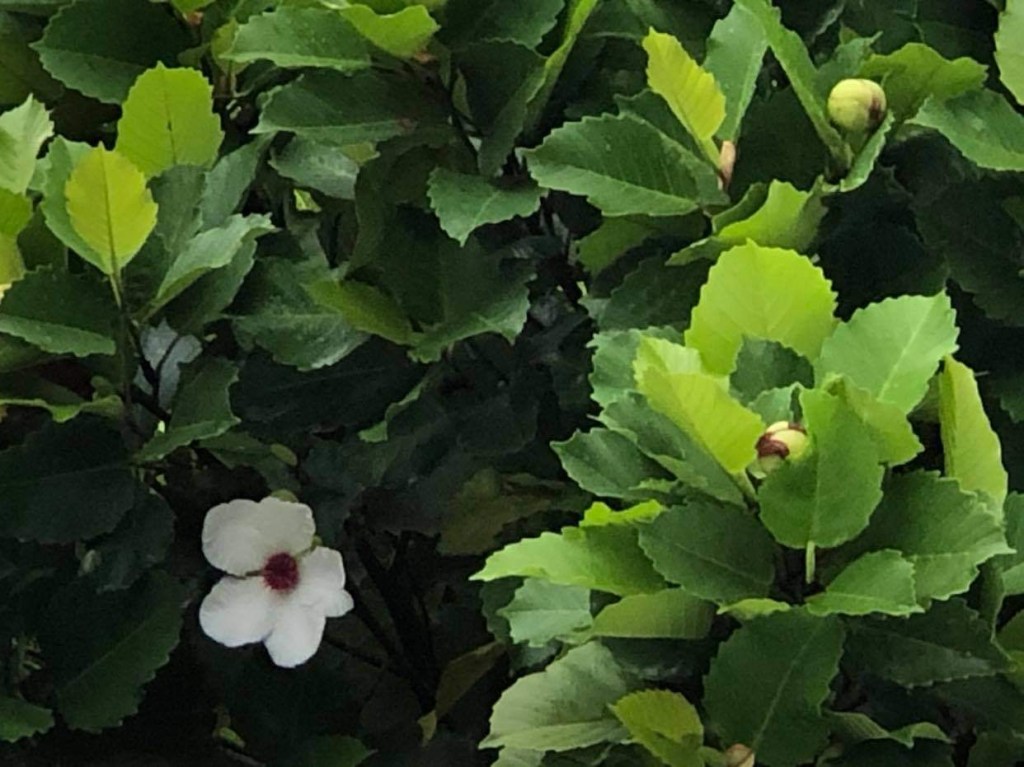
Photo by Dr. Mylene A. Santos, MD, at Katmon Harbor Nature Sanctuary in Infanta, Quezon, March 2020.

It’s Ms. Carly Simon again in the house four weeks after featuring her 1972 classic “You’re So Vain” in August. This time we pick her 1986 hit single “Coming Around Again” she had written for the movie Heartburn starring Meryl Streep and Jack Nicholson.

Coming Around Again is an aptly titled work by Ms. Simon that kickstarted the resurgence of her career at that time with the song peaking at number 18 on the US Billboard Hot 100 and number 5 on the Billboard Adult Contemporary chart, not to mention the warm reception it had received from around the world.

We find this song suited well with our Sunday gospel on the parable by Jesus of a father who asked his two sons to work in his vineyard; the elder one refused but later changed mind and went to the vineyard while the younger son said yes without really going there. Jesus used the parable to drive his message that we shall all be judged by our actions, not by our words.

Most of all, Jesus narrated the parable to warn those who highly regard themselves as good and upright, looking down on others like sinners as less important. The Lord is asking us today to soften our hearts especially to those difficult to love, that we must constantly examine ourselves lest we fall into the trap that despite our being “clean” and upright, we could end up more evil than those we find as sinful (https://lordmychef.com/2020/09/26/soften-our-hearts-lord/).

Anyone who truly loves is always humble, willing to empty one’s self and go down for the sake of a loved one that is exactly opposite to the way of the world which is to be always on top as the most popular, the most powerful, the wealthiest.

I know nothing stays the same
But if you’re willing to play the game
It’s coming around again
So don’t mind if I fall apart
There’s more room in a broken heart
And I believe in love
But what else can I do
I’m so in love with you

To better appreciate this song is of course see Heartburn which is the semi-biographical account of its writer, the late Nora Ephron’s marriage to Watergate scandal investigative reporter Carl Bernstein.

Like Bernstein, Ephron was also a writer and a journalist before eventually becoming a filmmaker after Heartburn. She was nominated thrice for an Academy Award for Best Writing in three other films she wrote, Silkwood (1983), When Harry Met Sally (1989) and Sleepless in Seattle (1993).

Another lovely film to her credit is You’ve Got Mail that also starred Tom Hanks. Her last film was Julie & Julia (2009).

Looking back to the story of Heartburn and its soundtrack Coming Around Again, one finds in this woman’s path of self-emptying as perhaps the key to her success as a movie scriptwriter and a playwright.

A blessed Sunday to you!

Provided to YouTube by Sony Music Entertainment.

Soften our hearts, Lord

The Lord Is My Chef Sunday Recipe for the Soul by Fr. Nicanor F. Lalog II
Week XXVI-A in Ordinary Time, 27 September 2020
Ezekiel 18:25-28   |+|   Philippians 2:1-11   |+|   Matthew 21:28-32
Cross of San Damiano before which St. Francis of Assisi prayed and received Christ’s commission to rebuild His Church. Photo from wikipedia.org.

Brothers and sisters: If there is any encouragement in Christ, any solace in love, any participation in the Spirit, any compassion and mercy, complete my joy by being of the same mind, with the same love, united in heart, thinking one thing. Do nothing out of selfishness or out of vainglory; rather, humbly regard others as more important than yourselves, each looking out not for his own interests, but also for those of others. Have in you the same attitude that is also yours in Christ Jesus, who, though he was in the form of God, did not regard equality with God something to be grasped. Rather, he emptied himself, taking the form of a slave, coming in human likeness; and found human in appearance, he humbled himself, becoming obedient to death, even death on a cross.

Philippians 2:1-8

We priests and religious pray this beautiful hymn by St. Paul every Saturday evening. It is also proclaimed on Palm Sunday to show us Jesus Christ’s self-emptying (kenosis in Greek) to offer himself for our salvation. It is the most important text of St. Paul’s letter to the Philippians that has played a vital role in the discussions of Christ’s preexistence.

Seen in the light of the gospel this Sunday, it is also part of St. Paul’s moral exhortation to the Philippians and us living today to be united as one in Jesus by following his pattern of kenosis that is similar with his teachings that “the first will be last, and the last will be first, that the greatest is the servant of all.”

It is the fundamental model of Christian life, the very essence of following Jesus by denying one’s self and taking up one’s cross but also the most difficult to learn and put into practice as it is exactly the opposite of the way of the world – “upward mobility” — of being rich and famous, of being in control that had divided us with massive walls of indifference, hate, and antagonisms making peace and joy more elusive.

Christ’s kenosis is the only way up in life to be back in God that leads us to unity, peace, and joy.

In this time of the pandemic when we are supposed to be more united and kind and nice with everyone, St. Paul’s call to imitate Jesus Christ’s kenosis is very timely and relevant, calling us to soften our hearts by emptying ourselves of our pride unlike the chief priests and elders of Israel to whom the Lord addressed his parable this Sunday.

Photo by author, wailing of Jerusalem, May 2017.

Our sense of entitlement

Jesus said to the chief priests and elders of the people: “What is your opinion? A man had two sons. He came to the first and said, ‘Son, go out and work in the vineyard today.’ He said in reply, ‘I will not,’ but afterwards changed his mind and went. The man came to the other son and gave the same order. He said in reply, ‘Yes, sir,’ but did not go. Which of the two did his father’s will?” They answered, “The first.” Jesus said to them, “Amen, I say to you, tax collectors and prostitutes are entering the kingdom of God before you.”

Matthew 21:28-31

Beginning today in three successive Sundays, Jesus teaches us again in parables to soften our hearts and let go of our pride that we are better than others, that we deserve more than what is due us like those early workers to the vineyard in last week’s gospel.

In a sense, today’s gospel tells us that there are too many works to be done in God’s kingdom that we have to keep going, imitating Jesus and be careful of falling into the same trap of those workers in last Sunday’s parable who felt entitled to more pay because they worked longer than others.

Notice how Jesus directly addresses his parables in these three Sundays to the same crowd of “chief priests and elders of the people” who have always felt favored by God for being of his “chosen people” since Abraham’s time. They always looked down at others specially the “tax collectors and prostitutes” considered as sinners.

They are not just people from the past who have lived during Christ’s time more than 2000 years ago. Even among us today, there are still chief priests and elders who continue to live and exist!

And here is the rub — among these people who may really be good in faithfully keeping the commandments of the Lord, praying and doing all kinds of devotions and charities are also the worst. Their religiosity are tied only to themselves and never to God, without any love at all.

Keep in mind that every time we feel entitled like the chief priests and elders of the people, it means our hearts have gone hard and cold like the elder son of the merciful father of the parable of the prodigal son or the early workers hired to the vineyard last week.

Photo by author, Mt. St. Paul Spirituality Center, La Trinidad, Benguet, March 2020.

So many times it happens that those who are supposed to be on higher moral grounds turn out to be without any roots and grounding in God at all, becoming harsh and judgmental of others, more sinful than the ones they condemn.

Like the chief priests and elders of the people in the crowd listening to Jesus, they start as the vida only to end up as the contravida like when there is a “black sheep” in the family or a “rotten tomato” in class, that instead of helping them rise from their sinfulness, they who are the ones who condemn and sink others deeper into their holes!

That is why God questions, stirs their hearts through the prophet in the first reading,

Thus says the Lord: You say, “The Lord’s way is not fair!” Hear now, house of Israel: Is it my way that is unfair, or rather, are not your ways unfair?

Ezekiel 18:25

Always examine our hearts for we must all be converted again and again.

We must keep on praising and thanking God for his mercies like in our responsorial psalm this Sunday because he gives us all the chances in life to change and become better persons. Here we find a semblance with the gospel the other Sunday why we must forgive without limits because God’s love for us is infinite.

Actions, not intentions, judge us

Last Monday we celebrated the feast of St. Matthew, the tax collector called by Jesus to become one of his Twelve Apostles who also wrote one of the four gospels. It is very interesting to know that in all gospel accounts, tax collectors and prostitutes are always grouped together because they are the worst sinners at that time.

Tax collectors not only enriched themselves with excessive collections from the people but were seen as traitors who worked for the Roman colonizers of Israel at that time. Prostitutes, on the other hand, have always been considered very low because as women supposed to give birth for the awaited Messiah, they have “dirtied” their womb. Together, tax collectors and prostitutes were seen as the worst sinners in Israel because they have sold their souls to the devil; hence, they were considered beyond redemption, beyond hope, a scourge to their families and to the community that nobody would want to deal with them.

And so, it was very radical, out-of-this-world and totally unimaginable for everybody then when they heard Jesus telling them how “tax collectors and prostitutes” were entering the kingdom of God before the chief priests and elders of the people who were considered very holy at that time!

It was a serious warning to them and us today from the Lord who reminds us that our actions judge us. The parable is an echo of his warning that “not everyone who calls him ‘Lord, Lord’ will enter heaven” (Mt.7:21). St. Matthew is very particular in his gospel account of the complete jibing together of what we say and what we do, of “walking the talk”.

We have so many sayings expressing this important lesson of today’s parable by the Lord like “A single act of good deed is always better than the grandest and best intention” and “Actions always speak louder than words.”

Photo by author, sunset in the parish, August 2020.

In this time of the pandemic when church attendance is limited and we are advised not to sing and reply aloud in the Mass, it is best that we examine how we have become mechanical in our celebrations without realizing the gravity of things we say like when we acclaim after the gospel proclamation “Praise to you, Lord Jesus Christ!”: do we really work hard in his vineyard or are we like the other son who said yes but did not go? When at the end of the Mass we are told “Go in the peace of Jesus Christ” and we say, “Thanks be to God”, do we really go home at peace or still having that festering anger or dislike to someone?

Make your joy complete. Ask Jesus to soften your heart. Take a step backwards like the first son though at first he seemed so bad to disobey his father in refusing to follow his command, do not be ashamed to take back your words and do what is right.

Be careful not with your words but with your actions for which the Lord would judge us in the end.

Find solace in St. Paul’s beautiful hymn this Sunday: the lower we go down, the higher we are lifted up like Jesus. Nobody had ever gone wrong and lost in life going down, of being humble. Many men and women have gone to oblivion, lost and forgotten when their ivory towers collapsed, burying them in the rubble.

Have a blessed Sunday and week ahead!

Prayer to age gracefully

The Lord Is My Chef Breakfast Recipe for the Soul by Fr. Nicanor F. Lalog II
Saturday, Week XXV, Year II in Ordinary Time, 26 September 2020
Ecclesiastes 11:9-12:8     <*(((><<   +   >><)))*>     Luke 9:43-45
Photo by author, sunset at Silang, Cavite, 22 September 2020.

It is officially the end of the week, and how true are your words through Qoheleth that everything comes to an end, that we must strive to make every ending a happy one. Especially our very lives.

Rejoice, O young man, while you are young and let your heart be glad in the days of your youth. Follow the ways of your heart, the vision of your eyes; yet understand that as regards all this God will bring you to judgment. Ward off grief from your heart and put away trouble from your presence, though the dawn of youth is fleeting.

Ecclesiastes 11:9-10

God our Father, grant me the gift of ageing gracefully by having the grace of being excited and surprised each day while still young. It is said that it is not really time that is passing by if we waste it but us who are passing by because lost time can never be recovered or brought back.

Keep me excited and full of enthusiasm of following my heart, pursuing my vision of a better and beautiful future by celebrating every present.

Let me bear in mind Lord that I am not perfect so that I may always have room for my mistakes and those of others; keep me simple so as not to be demanding and exacting. Just let me enjoy life, trust more in you, worry less among us.

And in all my pursuits in life while still young, be at the center, Lord Jesus.

Let me keep in mind as you reminded your disciples in the gospel today, that I may not be so focused and amazed with great and wondrous deeds but most of all in how you have bore all pains and sufferings to save us.

After all, you saved the world by dying on the Cross, O sweet Jesus, and not with so many activities.

And that is the meaning of ageing gracefully: that towards the end of our lives when we sum up everything, we can always look back to the past, to our youth with pride and joy at how we have followed you Jesus in your Passion and Death while awaiting our glorious resurrection in you like the twin brothers Sts. Cosmas and Damian and others saints. Amen.

When time is not

The Lord Is My Chef Breakfast Recipe for the Soul by Fr. Nicanor F. Lalog II
Friday, Week XXV, Year II in Ordinary Time, 25 September 2020
Ecclesiastes 3:1-11  >><)))*>  >><)))*>  >><)))*>   Luke 9:18-22
The wildfires created a natural Instagram filter across California. Photo from MediaNews Group/The Mercury News via Getty Images; 10 September 2020.

There is an appointed time for everything, and a time for every affair under the heavens. He (God) had made everything appropriate to its time, and has put the timeless into their hearts, without man’s discovering, from beginning to end, the work which God has done.

Ecclesiastes 3:1, 11

Thank you, dear God our Father in appointing time for everything, in creating the dimension of time and space so we can have a grasp of your vast reality in this universe. We are finite and you are not whom time and space cannot limit and hold.

Teach us to be open to your presence and grace in every moment of our lives, to make that constant effort to pray like your Son Jesus Christ our Lord.

Prayer is so difficult for us because in our limited time and space, we try to be one with you who is infinite and eternal. We find it boring and a waste of time not only because it is difficult, requiring discipline on our part but because it requires a lot on us to truly love you.

Only love can bridge the finite and infinite, the temporal and eternal. When we are with our beloved, time neither rushes nor slows but seems to stand still like eternity as if we are holding it – when time is not. It is the same experience we have when we are deeply absorbed in prayer, when we feel that intense love for you inside when time passed so easily that an hour seemed like an instant, exactly like what you have said in the Bible that a thousand years are just a day for you.

Because you love. And we also love.

How lovely it is to read in the gospel today that once when Jesus was praying in solitude and the disciples were with him, that is when he surveyed them about what people were saying who he is, later asking them the same question up and personal.

Help us to appreciate and value silence and stillness, to befriend time and eternity in prayer to express our love for you and for others. Amen.

Photo by Dr. Mylene A. Santos, MD at Katmon Harbor Nature Sanctuary, Infanta, Quezon, May 2020.

Panalangin upang tuklasin pagpapala sa bawat pagkakataon

Lawiswis ng Salita ni P. Nicanor F. Lalog II, Ika-25 ng Setyembre 2020
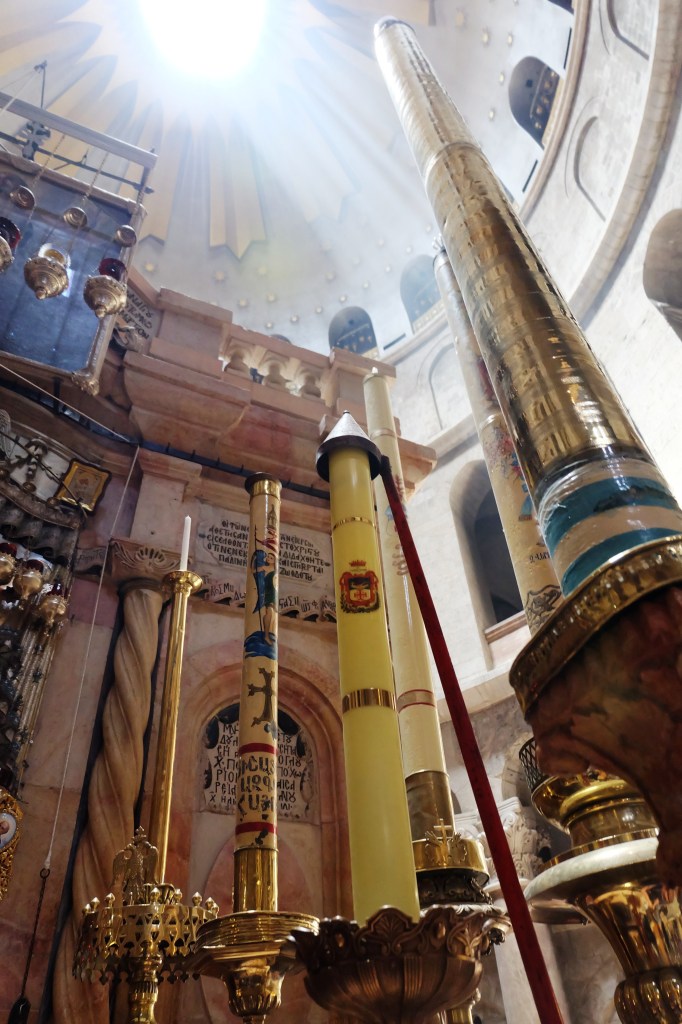
Larawan kuha ng may-akda sa Jerusalem, Mayo 2019.
Tunay na tunay ang iyong mga pananalita
Ama naming mapagmahal sa Aklat ng Mangangaral:
"Ang lahat ng pangyayari sa daigdig ay nagaganap
sa panahong iyong itinakda; 
Iniangkop mo ang lahat ng bagay sa kapanahunan.
Binigyan mo ang tao ng pagnanasang alamin ang bukas
ngunit hindi mo siya binigyan ng pagkaunawa 
sa iyong mga ginawa mula pasimula hanggang wakas." (3:1, 11)
Nakamamanghang isipin 
bakit nga ba tuwing kami ay mananalangin
saksakan kami ng pagka-inipin 
ngunit tuwing kami sa iyo ay hihiling
paglipas ng oras sa pananalangin di namin pansin?
Ito marahil ang paglalarawan ng iyong kaganapan
na hindi ka kayang saklawan ng aming panahon at lunan
dahil hindi lamang ikaw ang sa amin lumalang
kungdi sapagkat sa iyong pag-iral ikaw ay pagmamahal
walang bukas at kahapon, ang lahat ay ngayon.
Itulot po ninyo, O Panginoon
ikaw ay aming tuklasin at sundin sa iyong pagdating
sa bawat sandali at pagkakataon sa aming buhay ngayon
na madalas hindi namin kaagad maunawaan iyong nilalayon
dahil ika'y walang hanggan gayong kami ay pana-panahon;
magtiwala nawa kaming lagi sa iyong pag-ibig
upang kung sakali man kami ay wala sa panahon ng pagkabig
sa iyo lamang kami manalig at lahat ay madaraig!
AMEN.

Only in God is everything new

The Lord Is My Chef Breakfast Recipe for the Soul by Fr. Nicanor F. Lalog II
Thursday, Week XXV, Year II in Ordinary Time, 24 September 2020
Ecclesiastes 1:2-11     >><)))*>  +  +  +  <*(((><<     Luke 9:7-9
Photo by author, Shambala in Silang, Cavite, 22 September 2020.

Vanity of vanities, says Qoheleth, vanity of vanities! All things are vanity! What has been, that will be; what has been done, that will be done. Nothing is new under the sun. Even the thing of which we say, “See, this is new!” has already existed in the ages that preceded us.

Ecclesiastes 1:2, 9-10

Praise and glory to you, O God our loving Father for this brand new day that offers us with fresh opportunities to become better and the best. Most of all, a call to be more loving, more gentle, and more kind like you.

Yes, it is true that “Nothing is new under the sun. Even the thing of which we say, ‘See, this is new!’ has already existed in the ages that preceded us.” Everything in life becomes a vanity if lived without you.

In the beginning at Genesis, you have made everything beautiful, entrusting it all to us with the sacred task of keeping that beauty making us your co-workers in the world. But, alas! We have turned away from you in sins that we have disfigured ourselves and destroyed nature in the process.

The temptation to be like you, O God, that tempted Adam and Eve continues to this day and the more we pretend to be all-knowing and all-powerful like you, the more everything becomes a vanity.

Like Herod in the gospel, the more we try to set the new order of things in life, the more we are disturbed of the past because it is only in you O God our Father through Jesus Christ your Son has everything been made new again. You were the one who have designed everything in this life and had ordered it all to one definite direction of ending in you because everything is yours after all.

Forgive us for playing gods, manipulating not only ourselves but even others and nature.

Teach us through Jesus to be humble, to welcome the good news of salvation into our lives for it is only in our hearts full of contrition for our sins where everything becomes new again in this world as we begin seeing everything and everyone in your light. Amen.

Photo by author, sunset at Shambala in Silang, Cavite, 22 September 2020.

The gift of tears

Quiet Storm by Fr. Nicanor F. Lalog II, 22 September 2020
Photo by Ms. Ria De Vera of our parish church, August 2020.

Lately I have been watching old movies that I wonder why I still cry even if I have seen them more than twice before at the cinema and cable TV. It seems that my being born with “mababa ang luha” (easy to cry) is getting more “mababa” as I get old.

Tears are a gift from God, the most beautiful prayer we can ever express courtesy of the Holy Spirit because when we run out of words for our pains and sadness or when we are overjoyed, he makes us cry to heal and comfort us or complete our joys, assuring us of his loving presence.

That is the reason why we call “home” in Tagalog as “tahanan”: home is where we “stop crying”, that is, “tahan na” because that is where we find all the support we need in times of crisis. Indeed, home is where the heart is.

True to its function, tears cleanse us physically, emotionally and spiritually. I have read two decades ago that researchers at a university in the US have found the chemical composition of our tears differ if we cry because of pain and sadness or due to joy and laughter.

Is it not wonderful and amazing how we take for granted crying and tears without realizing its chemical process within that can transform our very selves?

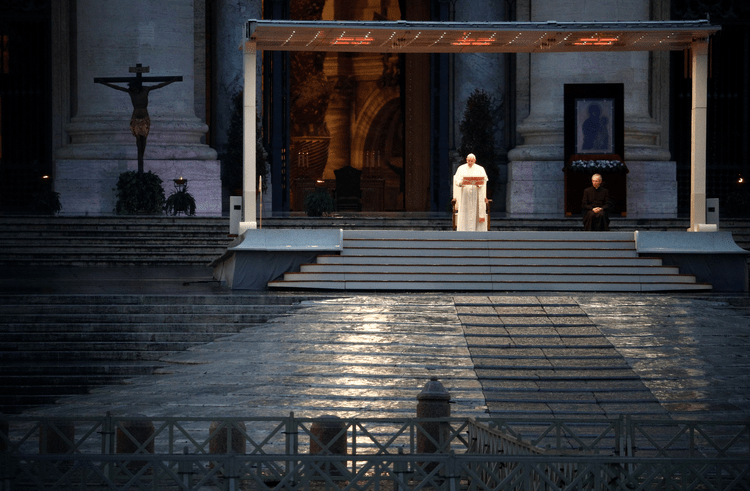
Photo from Reuters.com, July 2020.
Tears and crying mark our life's coming to full circle.

When I was five years old, I saw the picture of a newborn baby crying in the Book Section of the Reader’s Digest. I asked my mom why the baby was crying. In her usual motherly way of explaining things, she told me that if the baby cries upon birth, it means he/she is alive; if the baby does not cry, he/she is dead.

Kapag umiyak, buhay; walang iyak, patay.

My young mind easily absorbed her words that would remain to be one of the most profound lessons I had ever learned about life at a very young age. As I grew up watching TV and movies, I would always sigh with relief whenever I heard the sounds “uha-uha” because the story would surely be nice and not tragic.

Imagine the great inverse that happens with crying and tears to signal the coming to the outside world of life of another human, of how we have to cry to be alive from then on until we die when it becomes our family and friends’ turn to cry and shed tears for us when we are gone.

But there is something more deeper than this great inverse on crying in life and death I had learned only in 2013 through my best friend Gil, a classmate in our minor seminary.

It was late February of that year on the 40th day of the death of his youngest sister Claire when he was diagnosed with cancer. We could not believe the news because Gil was the most health conscious in our “band of brothers” from high school who never smoked, rarely ate meat, and was active in sports like golf and badminton. Unlike most of us, he was never overweight, looked so healthy in our mid-40’s.

Imagine the hurt within him that every time we would visit him, he would cry not really in pain but more on the why of getting cancer. We tried visiting him as often as we can to cheer him up and lift his spirits specially after his surgery when his chemotherapy sessions began.

By September on that same year, we all had to rush and visit him at Makati Med one Sunday afternoon when informed by his Ate Lily that doctors have given up on him. His cancer cells were “ferocious” and nothing could be done anymore except to wait for the inevitable.

That was when I noticed the greater inverse about crying when Gil had finally accepted his condition and life direction, that was when he was most joyous and peaceful too while we were the ones so sad and worried, crying. How our roles were reversed with Gil now telling us to stop crying – tahan na – which we used to tell him months earlier! (Gil died peacefully the following Sunday, 22 September 2013.)

“Mater Dolorosa” as “Blue Madonna” (1616) by Carlo Dolci. Photo from Wikimedia Commons.

I noticed it happening so many times with some friends and parishioners I have come to love in my ministry, those I have pastorally cared for some time after being diagnosed with serious conditions like cancer.

Yes, I have cried despite holding my tears for them while administering the Holy Viaticum and Anointing of Oil. The patients in turn would just glance at me, so dignified and calm like Mary our Lady of Sorrows as if trying to comfort me with their sweet thank you.

As I prayed on those experiences, I realized how life comes to full circle through our crying and tears.

I believe that patients cry when they start undergoing treatment of their sickness due to fears and uncertainty of what would happen next to them; later as they come to terms with their condition, they stop crying because they already knew where they were going, of what was coming next.

We who would be left behind cry and begin to shed tears at thoughts of their dying because admittedly, we are actually the ones more uncertain of where we are going to or how our lives would go through when our loved ones are gone.

That is the greatest pain we feel in the death of a beloved when we grapple with the realities of the many uncertainties of life without them.

And that is why we need to love as much as we can our family and friends while still alive. This quarantine period of the pandemic are grace-filled moments to shower them with our love and presence we have taken for granted for so long as we pursued many things in our lives.

Photo by Dr. Mylene A. Santos, MD at Infanta, Quezon, April 2020.
Tears and crying lead us to heaven.

Death and sickness, like life, become a blessing if we are filled with gratitude not regrets because we have truly loved. When a beloved is gone and we begin to cry, the tears wash away our pains of losing them, cleansing us within to leave us with all the beautiful memories and love we have shared. Then, every remembering becomes truly a re-membering, making a lost loved one a member of the present again.

When we cry, tears polish the love we have shared with everybody until later when our time comes, our visions are also cleared of what is going to happen next, of where we are going. Crying becomes wonderful and truly a grace after all not only in sharing and being one with the grief and pain of another in the present but sooner or later, in having a glimpse of the life after.

In the Gospel of John (11:1-44), we find the story of the raising of Lazarus whom Jesus loved so much that he wept – not just cried – at his death. Jesus raised him up back to life, his final miracle – or “seventh sign” according to John – to show he is the Christ before his own Resurrection at Easter after his “final hour” of Crucifixion on Good Friday.

From then on, Christ sanctified crying and tears to enable us to see beyond pains and hurts, even death especially if you have truly loved.

Sometimes in life, it is always good to let those tears flow, like love even if it is painful, to have a good cry and real cleansing inside. A blessed day to you!

God’s “survival kit”

The Lord Is My Chef Breakfast Recipe for the Soul by Fr. Nicanor F. Lalog II
Tuesday, Week XXV, Year II in Ordinary Time, 22 September 2020
Proverbs 21:1-6, 10-13   >><)))*>  ||+||   <*(((><<   Luke 8:19-21
Photo by Mr. Chester Ocampo, Catanduanes, 2019.

I have learned, Lord, from many sources that the surest way to survive in the forest or any where else during a critical situation is to search and follow the source of water like a stream or a river, or even a drainage.

Experts tell us that wherever there is water, there is life, there is a community where one can always find help and support, healing and nourishment, encouragement and mission.

Like a stream is the king’s heart in the hand of the Lord; wherever it pleases him, he directs it.

Proverbs 21:1

Open our eyes and our hearts, Lord Jesus, to always search and follow you, the only true living water who can quench our thirst and cleanse us from all dirt in this life.

This pandemic demands that we go back to you by finding new ways, new routes of living the gospel we have always taken for granted. Gone are the days of simple rites and rituals that are empty, very selfish and individualistic forgetting we are a family with God our Father.

Let us find our family in you, Jesus, where we can be truly “a mother and brothers and sisters” who listen to your words and “act on it” (Lk.8:21). Amen.