Advent is patient transformation to joy

Lord My Chef Sunday Recipe for the Soul by Fr. Nicanor F. Lalog II
Third Sunday in Advent-A (Gaudete Sunday), 14 December 2025
Isaiah 35:1-6, 10 ><}}}}*> James 5:7-10 ><}}}}*> Matthew 11:2-11
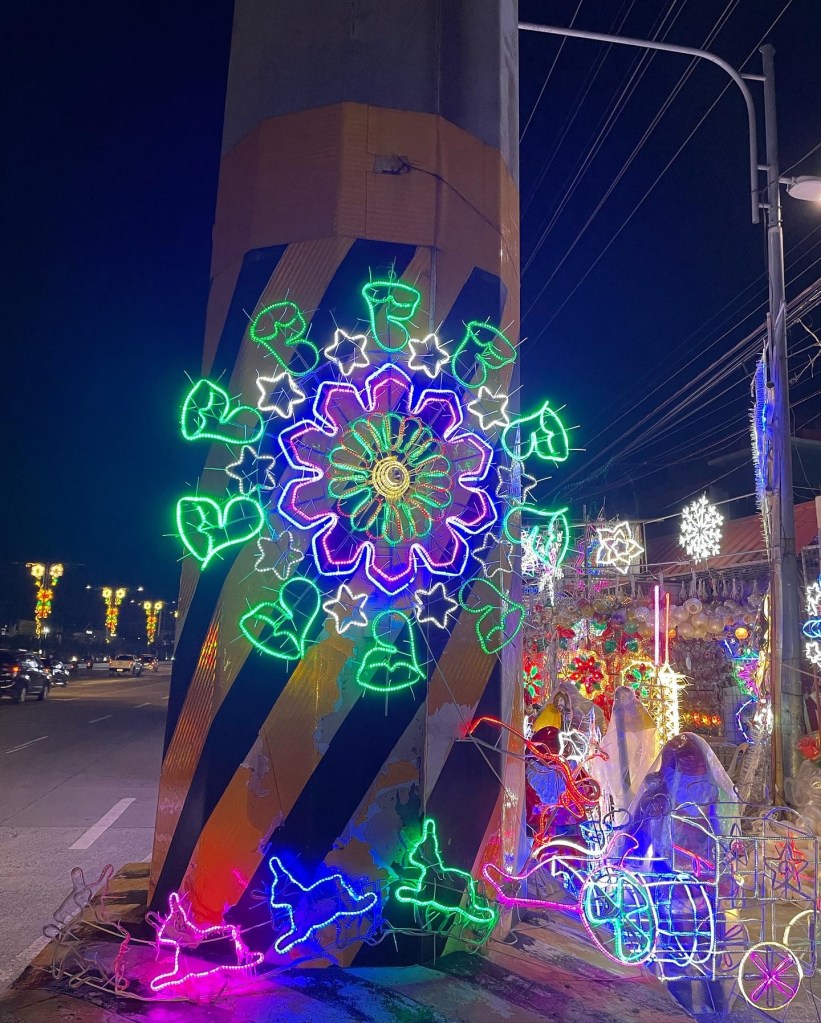
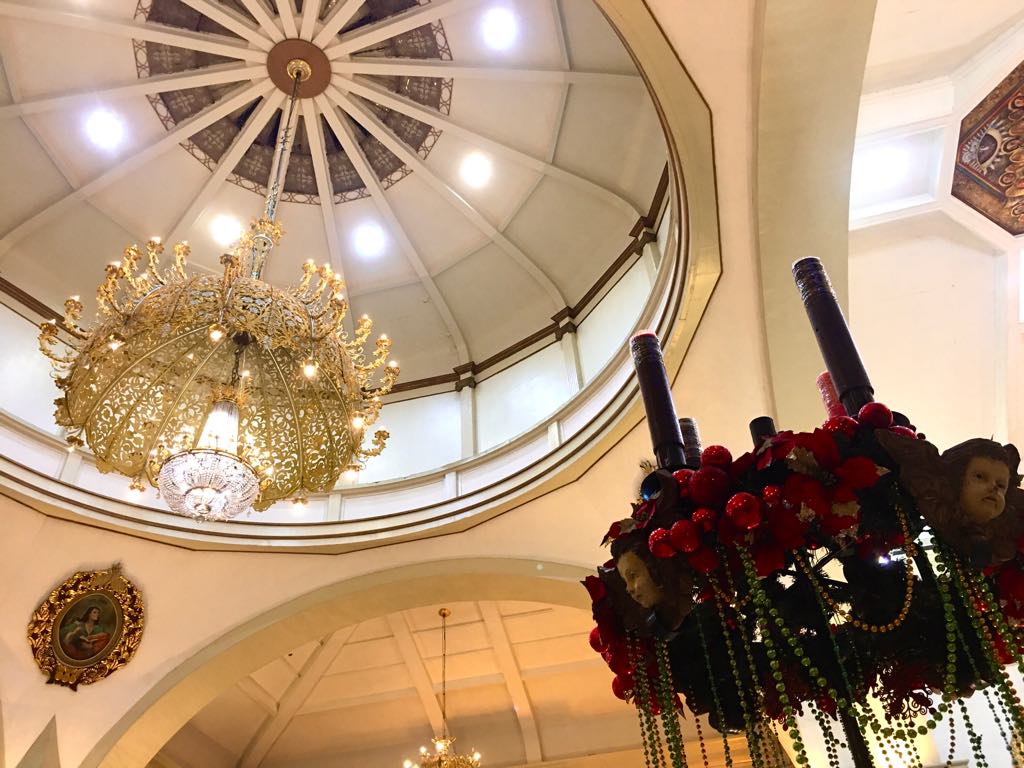
Photo by author, December 2019.

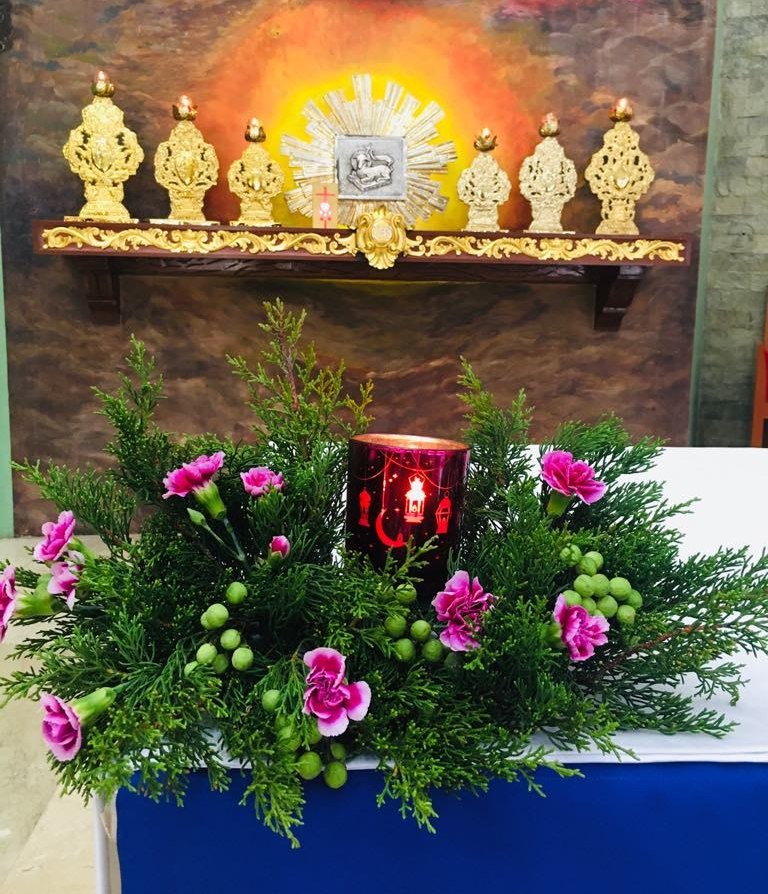
Our churches are bursting in hues of pink this Third Sunday of Advent rejoicing not only in the fast approaching Christmas but most especially in the Lord’s Second Coming already happening in our midst.

Like John the Baptist in today’s gospel who was imprisoned at the time, we could feel in our own waiting for Jesus his saving presence in the many good things happening within us and around us.

When John the Baptist heard in prison of the works of the Christ, he sent his disciples to Jesus with the question, “Are you the one who is to come, or should we look for another?” Jesus said to them in reply, “Go and tell John what you hear and see: the blind regain their sight, the lame walk, lepers are cleansed, the deaf hear, the dead are raised, and the poor have the good news proclaimed to them” (Matthew 11:2-5).

Photo by shy sol on Pexels.com

Remember our reflection last Sunday of John’s preaching in the desert of Jordan signifying our own desert where amid the dryness and emptiness Jesus comes to us, Jesus is most present with us and in us. That is because more than an imagery of nothingness and death, the desert signifies too our intimacy with God. Many times in life, God brings us or allows us to get lost in our own desert to experience his intimacy with us, his immense love for us because when we are sufficient and strong, we rarely feel him nor even desire him. But, when we are like in a desert with nothing, that is when we long for God, and most especially feel him present.

That is why every prophet in the Bible including our Lord Jesus Christ frequented the desert and wilderness to show their intimacy and communion with God. The desert is thus transformed into a greenery filled with life like what Isaiah prophesied in the first reading today:

The desert and the parched land will exult; the steppe will rejoice and bloom. They will bloom with abundant flowers, and rejoice with joyful song. The glory of Lebanon will be given them, the splendor of Carmel and Sharon; they will see the glory of the Lord, the splendor of our God… Then will the eyes of the blind be opened, the ears of the deaf be cleared; then will the lame leap like a stag, then the tongue of the dumb will sing (Isaiah 35:1-2, 5-6).

Photo by Walid Ahmad on Pexels.com

See now the transformations found in our readings: in the last two Sundays we heard Isaiah speaking of the dried and barren desert but today he spoke of its transformation into a lush and verdant stretch of land; in the gospel we find John still in the desert, firm and unchanging in his preaching though his situation had changed a lot.

Last Sunday John was freely proclaiming the coming of the Christ in the desert as he sternly warned the Pharisees and Sadducees of their judgment; this Sunday, John was still in the desert but imprisoned awaiting death when he reproached King Herod in taking his brother Philip’s wife Herodias. But despite that clear danger daily hanging on his head, John was not disturbed at all as he patiently awaited the coming of the Messiah that he sent emissaries to Jesus to ask if he is already the Christ.

Here we find something so human in John the Baptist, so much like us when we sort of doubt ourselves not because we lack faith but simply we just want to be sure of what we are hearing, what we have seen, of what God is really doing.

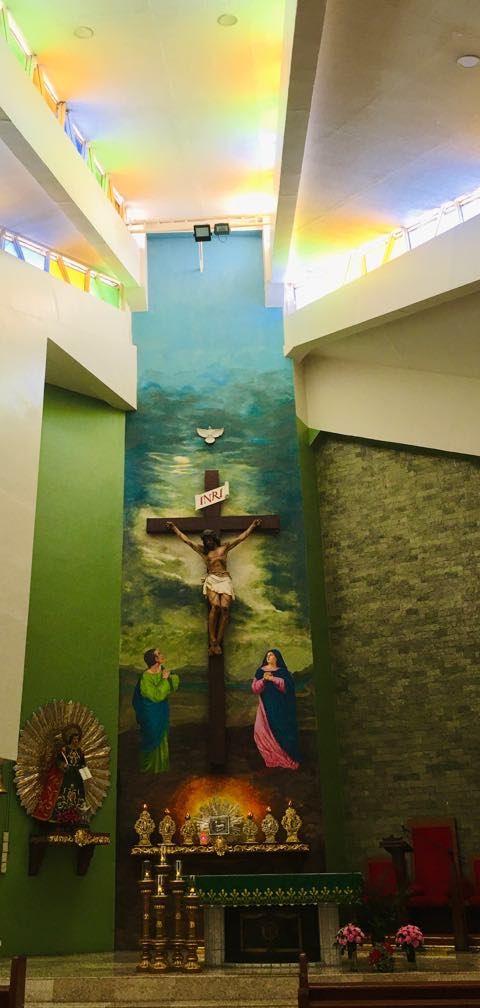
Photo by author, December 2021.

Let it be clear: like John, most often we doubt ourselves not really God when things happen not according to our plans or expectations. Inasmuch as life is a mystery, God is more mysterious! Most of the time, we cannot understand his ways because he moves so differently, even unpredictably from what we know and expect.

Perhaps, John had a different scenario in his mind about the arrival of the Messiah like in the Old Testament tradition of judgment day, of action-packed events punishing evil people. Recall how called the Pharisees and Sadducees “You brood of vipers…Even now the ax lies at the root of the trees. Therefore every tree that does not bear good fruit will be cut down and thrown into the fire (Mt.3:10). 

But something totally different was happening at that time as he heard while in prison – many people and their lives were being transformed. John realized something deeper than expected was going on in Judea and Galilee. And when his emissaries relayed to him the reply of Jesus, John realized that indeed the Christ he was proclaiming had arrived in Jesus. As a prophet well-versed with the scriptures, John found Jesus as the fulfillment of the prophecy by Isaiah when the blind can see, the lame can walk, dead are raised and the good news proclaimed to the poor.

It must have been a Nunc Dimittis experience of Simeon for John that soon enough, he died a martyr ahead of his Lord and Master Jesus Christ. John indeed prepared the way of the Lord in his birth and in his death, showing us the importance of patience in awaiting Christ and in experiencing the joy in his coming.

Be patient, brothers and sisters, until the coming of the Lord. See how the farmer waits for the precious fruit of the earth, being patient with it until it receives the early an the late rains. You too must be patient. Make your hearts firm, because the coming of the Lord is at hand (James 5:7-8).
Photo by author, December 2020

Before the COVID pandemic, my brother and I used to rest at Camp John Hay in Baguio where he would buy in one of the shops there a line of local and organic perfumes. His favorite scent was called “Patience” but one time when we went there, it had ran out of stock that he said wryly, “maski ba naman pabango na patience, wala na rin?”

So true! Patience seems to have been almost extinct in this age of instants. Nobody wants to be patient anymore especially if one can have almost everything instantly. Even during the time of the early church, people have been impatient in life that St. James wrote them on the importance of patience in our journey of faith, in awaiting the Lord’s return.

From the Latin word patior that means to suffer, patience is a kind of suffering, of bearing the pain of waiting especially over a long period of time that we doubt if it is still worth the waiting at all. But we fail to “see” or realize as St. James pointed out like the farmer that waiting is never passive nor empty; there is always something wonderful happening that we do not see like the germination, growth and blooming of crops and plants. The more patient we are, the more suffering in waiting, the greater always the joy that comes when our waiting is finally fulfilled!

Advent teaches us this third Sunday that we need to be patient for waiting itself is a holy ground where we experience God’s coming and intimacy. Though patience tests our limits, it transforms us too!

Think of the stalactites and stalagmites in caves formed millions of years by drops of water. Or the great natural wonders of earth that took thousands of years of formation, transformation. Most of all, our very selves. Who we are and what we are today are long years of patient efforts to be healthy or successful or simply be alive. And that’s a great reason to rejoice.
Photo by author, December 2020.

Patience is so difficult to practice like in our daily experiences of horrendous traffic everywhere but with patience, we arrive at our destination. Patience transforms us into better persons and disciples of Jesus, enabling us to rejoice no matter what is the situation we are into. It is in the midst of sufferings and waiting, of patience and impatience that Jesus calls us to experience his silent and steady presence resting upon us like the rains every farmer is so familiar with. Our joy is doubled, becoming a rejoicing when we practice patience in our endeavors, in life itself.

Let me end this reflection with a quotation I memorized as a child on the wall of our former family dentist’s office in Meycauayan, Bulacan that said:

Time is fast for people who rush;
time is slow for people who wait;
time is not for people who love.

The most loving persons are also the most patient ones. Always. And first among them is Jesus Christ who patiently awaits us to return to him so we can experience his joy. Amen. Have a joyful week ahead!

Jesus our light & fulfillment

The Lord Is My Chef Sunday Recipe for the Soul by Fr. Nicanor F. Lalog II
Feast of the Presentation of the Lord, 02 February 2025
Malachi 3:1-4 ><}}}}*> Hebrews 2:14-18 ><}}}}*> Luke 2:22-40
“Presentation at the Temple” painting by Italian Renaissance artist Andrea Mantegna done around 1455; Mary holding Baby Jesus while St. Joseph at the middle looks on the bearded Simeon. The man at the right is said to be a self-portrait of the artist while the woman at the back of Mary could be his wife. Photo from wikipedia.org.

We take a break from our regular Sunday cycle of readings today being the second of February, the Feast of the Presentation of Jesus at the Temple which is also 40 days after His birth. That is why it is technically the end of Christmas when Joseph and Mary left Bethlehem to bring Jesus to the Temple in Jerusalem.

The Presentation of Jesus at the Temple is one of the earliest major feasts celebrated by the Church in Jerusalem in the third century that reached Rome 300 years later with the designation as the Purification of Mary. Years later as it spread to France, it came to be known as Chandeleur, or Candlemas in English speaking countries and Candelaria in Spanish when the blessing of candles with a short procession was incorporated into its liturgy due to that part of Simeon’s Canticle calling Jesus as the “light of the world” (gentiles). Following the reforms of Vatican II in 1969, St. Paul VI brought it back to its original title as the “Feast of the Presentation of the Lord” due to its Christological emphasis while retaining the traditional rite of the blessing of candles and short procession into the church.

In the Eastern Churches, this Feast is called the Encounter or the meeting of Jesus with the two elderly Simeon and Anna who were both promised by God to witness the coming of His promised salvation before they died.

One thing remains clear in its long history of celebrating the Lord’s Presentation is the beautiful assurance and sign of Jesus Christ’s presence among us enlightening us, lighting our paths, meeting us most especially in our old age as our fulfillment in life.

Now there was a man in Jerusalem whose name was Simeon. This man was righteous and devout, awaiting the consolation of Israel, and the Holy Spirit was upon him. It had been revealed to him by the Holy Spirit that he should not see death before he had seen the Christ of the Lord. He came in the Spirit into the temple; and when the parents brought in the child Jesus to perform the custom of the law in regard to him, he took him into his arms and blessed God, saying: “Now, Master, you may let your servant go in peace, according to your word, for my eyes have seen your salvation, which you prepared in sight of all the peoples, a light for revelation to the Gentiles, and glory for your people Israel” (Luke 2:25-32).

Presentation in the Temple painting by Fra Angelico from fineartamerica.com.

For our reflection, let us identify ourselves with Simeon as we dwell on his actions and words in that momentous Presentation of the Lord in the Temple.

From our long gospel account this Sunday, we get a picture of Simeon as an old man; however, not just chronologically speaking in age but also in his feeling isolated and weak deep inside, waiting for so long in faith and in hope for the coming of the Christ who would bring salvation and peace to a troubled world and a troubled self like us. Let us now reflect on Simeon’s action:

"he took him into his arms and blessed God" 
(Luke 2:28)
Photo from crossroadinitiative.com.

Look at the artistry of Luke as a storyteller and a physician who knew so well how people felt when approaching death whether due to an illness or old age like Simeon and Anna. See how Luke had assembled in one scene the two old people meeting the eternally young Son of God in the temple as if telling us not only to meet Jesus Christ but also to take Him into our arms to embrace and carry Him!

To embrace and carry the Infant Jesus like Simeon and Anna is a call for us to transform and level up our way of looking at old age as a reality we must accept and appreciate than hide or avoid with many illusory tactics that only make it more difficult and leave us more fearful.

Be proud of your grey or white hair like George Clooney and Meryl Streep. Don’t be ashamed of those wrinkles for they are our badges of the many wars and battles we have fought in life, regardless whether we have won or lost. One thing is clear though and that is we are still alive. Laugh it off when our memory fails, when we get slow in everything because life is not a race nor a competition but an art that is perfected as we age.

“Simeon’s Moment” by American illustrator Ron DiCianni. From http://www.tapestryproductions.com

Taking to carry Baby Jesus like Simeon and Anna is embracing old age called “ageing gracefully” – a modern virtue that calls us to deepen our prayer life as we realize and accept the fact that it is now our “boarding time” for the final Encounter with the Lord in eternity.

In my previous parish assignment, there were three elderly men I have become friends with until their death. As they declined in their health, they came to me so often and later called for me to hear their Confessions whenever they would suddenly remember sins they have committed when they were younger. It must have been a unique grace from God to have that “Simeon moment” of carrying and embracing Jesus to be cleansed and purified before they have died. And I am convinced in my four years as a hospital chaplain that everyone is gifted with this “Simeon moment” to carry Jesus just before our final Encounter with Him in the afterlife. To carry Jesus is to cultivate a spiritual life centered in prayer like Simeon and Anna and those three friends I had.

Inversely, the young are blessed too with “Simeon moment” when like Mary and Joseph they share the Christ in them with those who are old and weak by accompanying them, understanding them, and bearing with them in their old age. It is only after we have “taken” the Child Jesus into our hands to hold and carry and embrace can we sing praise to God like Simeon:

"Now, Master, you may let your servant 
go in peace, according to your word,
for my eyes have seen your salvation"
(Luke 2:29-30)
A painting of Simeon with the Child Jesus from the dailyprayerblog.blogspot.com

To age gracefully by carrying and embracing the Infant Jesus like Simeon is realizing deep within us that getting old and weak is also part of our celebration of life because that is when we enter Life Himself and when we also let Him enter us completely.

How did Simeon recognize it was the Savior that the two poor couple with a pair of turtledoves or pigeons were presenting in the temple that day?

Long before Joseph and Mary came to offer Jesus at the temple that day, Simeon had already entered into God’s presence in his long period of waiting through prayers and sacrifices. When Mary and Joseph came to the temple to present Jesus, God entered Simeon through the Holy Spirit to recognize the coming of the awaited Christ. Simeon’s prayerful singing of his praise to God while holding the Infant Jesus on that day was the fulfillment and expression of his long fidelity to God, of his being attuned to the Divine presence and promptings all his life.

In this age of instants, nobody waits anymore because many think that waiting is empty, a weakness and a poverty. A waste of time and energy.

The Fourth Joyful Mystery portrayed in the Presentation Chapel of the Basilica of the National Shrine of the Immaculate Conception in Washington DC.

But Simeon shows us the exact opposite in his Canticle. It is in our waiting for God amidst the darkness and nothingness when Jesus really comes like that day in the temple. God is most present and closest with us when all we can do is cry “Lord” or “Jesus” because His very name is already His presence. If we keep that in mind like Simeon, we will surely find and embrace Jesus wherever, whenever.

As we celebrate the Jubilee of Hope this 2025, let us be reminded of Simeon along with the Prophetess Anna who were both Pilgrims of Hope who never lost sight of Christ in the midst of their long waiting. The first and second readings this Sunday assure us that God is coming, God has come in Jesus amid our many darkness and nothingness, weakness and decline.

Like Simeon and Anna, let us await to approach Jesus always for He alone matters most in this life found within us, among our family and friends and the people around us, expressed in love and mercy, kindness and forgiveness, and joy. Just be patient and wait, Jesus will appear for you to take Him and embrace Him in your arms like Simeon. Tell that to Jesus now with your other deep longings and you will not be disappointed. Amen.

Photo by author, sunrise bursting through thick fogs over Taal Lake in Bgy. Dayap Itaas, Laurel, Batangas, 17 January 2025.

Wait for one another

The Lord Is My Chef Daily Recipe for the Soul by Fr. Nicanor F. Lalog II
Monday, Sts. Cornelius, Pope, and Cyprian, Bishop, Martyrs, 16 September 2024
1 Corinthians 11:17-26, 33 <*((((>< + ><))))*> Luke 7:1-10
Photo by author, Alfonso, Cavite, 21 April 2024.

Therefore, my brothers and sisters, when you come together to eat, wait for one another (1 Corinthians 11:33).

Lovely words, 
God our Father,
for this lovely,
cold Monday
of overcast skies
most likely with a lot of
rains ahead.
Wash us clean, O God,
with your rains of mercy
and wisdom:
it must be so easy to understand
what St. Paul meant that we
"wait for one another"
when we come to eat together
but that is exactly what has
become a rarity these days;
forgive us, Father,
for like the Corinthians
we have become like pagans,
so unChristian in our lives
especially at the Eucharist of
your Son Jesus Christ;
we no longer "wait"
for one another as in
we do not celebrate as one
due to factions and selfishness
that come in all forms;
we no longer "wait"
not serving each other
truly as brothers and sisters;
worst of all, we live for the
present moment alone,
being so unwise like unfaithful
servants not "waiting"
for Christ's return.
Let us "wait" for you,
Jesus, like the people in
Capernaum:
the locals "waiting" for the
centurion as they "strongly urged" you
to help him because of his kindness
to Jews; lovely was how
the centurion "waited"
for you, sending emissaries
asking you Jesus for the healing
of his slave; but, most wonderful of all,
was the centurion's faith in you, Lord
as he described how his slave
faithfully "waited" on him,
prompting him to tell you:

“Lord, do not trouble yourself, for I am not worthy to have you enter under my roof; but say the word and let my servant be healed. For I too am a person subject to authority, with soldiers subject to me. And I say to one ‘Go’, and he goes; and to another, ‘Come here,’ and he comes; and to my slave, ‘Do this,’ and he does it” (Luke 7:6, 7-8).

Indeed, dear Jesus,
to "wait" is to serve;
to "wait" is to be one
with others and with you;
to "wait" to find myself always
not worthy to receive you
but you chose to "wait" for us
in the Cross
with your words of mercy
and forgiveness
that we are all healed,
we are saved.
Pray for us,
holy martyrs Pope Cornelius
and Bishop Cyprian
who both waited faithfully
for their flock
especially those who have
lapsed in faith,
those who have sinned
and erred.
Amen.

Paalala ng Kuwaresma

Lawiswis ng Salita ni P. Nicanor F. Lalog II, Ika-06 ng Marso 2024
Larawan kuha ng may-akda, 2020.

Sa lahat ng panahon sa ating liturhiya ng Simbahan, bukod tangi ang Kuwaresma dahil ito lamang ang nagsisimula ng ordinaryong araw, ang Miyerkules ng Abo o Ash Wedensday at hindi araw ng Linggo.

Kapuna-puna ang nakaraang Ash Wednesday na pumatak ng Pebrero 14, Valentine’s Day na nangyari din noong 2018. Pinag-usapan ng marami sa social media kung alin ang pipiliing ipagdiwang, Valentine’s Day o Ash Wednesday?

Nakatutuwang isipin na marami pa rin ang sumagot sa survey na pipiliin nila ang mangilin sa araw ng pagpapahid ng abo kesa ang makipag-date sa Pebrero 14; iba ang ipinakita ng mga balita at ng social media kung saan panalo ang mga nagdiwang ng Araw ng mga Puso! At tila gayon nga ang nangyari o marahil, pinagsabay nating mga Pinoy ang dalawang pagdiriwang, di alintana mga panawagan ng Kuwaresma at Miyerkules ng Abo na manalangin, magtika ng mga sala, maglimos, at mag-ayuno.

Kaya nga taun-taon, ito ang laging tanong natin, ano nga ba ang kahalagahan ng Kuwaresma sa makabagong panahong ito na kung saan mga tao ay tila hindi na nag-aayuno, wala nang sakripisyo? Higit sa lahat, paunti nang paunti na mga nagsisimba.

Ang problema natin sa Pilipinas ay hindi pa naman katulad sa kanlurang Europa at hilagang Amerika na marami nang tao ang ayaw maniwala sa Diyos. Halos lahat pa rin ng mga tao sa ating bansa ay naniniwala sa Diyos ngunit naguguluhan marahil at hindi makita Kanyang kahalagahan at kaugnayan (relevance) sa buhay sa gitna ng makabagong panahon na wala nang hindi naiimbento at naso-solusyunan.  Bagama’t sasabihan ng marami naniniwala sila sa Diyos, mas tiwala kadalasan ang mga tao sa panahong ito sa agham at teknolohiya.

Narito tatlong bagay na binibigyang-diin sa panahon ng Kuwaresma na makatutulong sa ating matagpuan muli at maranasan katotohanan, kahalagahan at kaugnayan ng Diyos sa ating buhay sa gitna nitong makabagong panahon.

larawan kuha ni Walid Ahmad sa Pexels.com

Hindi lahat ay nakikita. Sa panahon ng Kuwaresma, pinag-aayuno din kung baga ang ating mga mata upang ituon ating pananaw at pansin sa ating kalooban at sa mga bagay na hindi nakikita, unang una na ang Diyos.

Kaya walang dekorasyon ang mga altar sa panahong ito, walang mga bulaklak at hangga’t maari wala ring mga halaman. “Bare” wika nga sa Inggles ang altar. Pagdating ng Biyernes Dolores bago mag-Linggo ng Palaspas, tinatakpan o binabalutan ng telang lila ang mga imahen at larawan sa simbahan sa gayon ding kadahilanan – upang tingnan natin mga mas malalim na katotohan ng ating buhay.

Sa panahong ito ng social media, lahat na lang ay ibig ipakita at ipangalandakan maski kasamaan, kabastusan, at kasalanan. Bakit nga ba nang magkasala sina Eba at Adan, sila ay nagtago dahil sa kahihiyan samantalang ngayon ipinagmamalaki pa ng ilan kanilang ginawang kasamaan?

Larawan kuha ni shy sol sa Pexels.com

Hindi lahat ng bagay sa buhay na ito ay nakikita at lalo din namang hindi lahat dapat ay ipakita. Wika nga ng Munting Prinsipe o Little Prince ni Antoine de St. Exupery, “What is essential is invisible to the eye; it is only with the heart that one can truly see.”

Lahat na lamang sa mundo ngayon ay palabas, showbiz na showbiz ang dating upang ipagyabang mga kayang kainin at bilhin, puntahan at gawin.  Ngunit, sadya bang nagbibigay ng kaganapan at katuwaan mga iyon?  Hindi ba mas masarap pa ring namnamin mga sandali nating kapiling ang mahal sa buhay? Kung tutuusin nga, kadalasan o palagi, yaong mga bagay na natatago at hindi nakikita ang siyang pinakamakahulugan, pinakamainam sa buhay.

Katulad ng Diyos: “Walang taong nakakita sa Diyos kailanman, ngunit kung tayo’y nag-iibigan, nasa atin siya at nagiging ganap sa atin ang kanyang pag-ibig” (1 Jn. 4:12).

Sa buhay, mas mainam pa rin yung simple at nakukubli, mayroong pa ring misteryo o hiwaga na natatago kaya ang lahat ay nagtataka. At minsan-minsan ay namamangha.

Larawan kuha ni Skyler Ewing sa Pexels.com

Hindi lahat ay minamadali. Kaya tinatawag na Kuwaresma ang panahong ito ng paghahanda sa Panahon ng Pasko ng Pagkabuhay ay dahil sa bilang na kuwarenta o apatnapung araw mula Miyerkules ng Abo haggang Sabado bisperas ng Palaspas (bagama’t di naman eksakto palagi) na kung tutuusin ay limang Linggo bago ang mga Mahal na Araw. Samakatwid, mayroong paghihintay dahil kailangang makabuo muna ng apatnapung araw o limang linggo.

Ito ang isang bagay na nawawala na sa mundo ngayon, ang paghihintay. Lahat mainipin kaya siguro maiinit ang ulo ng lahat na ultimo mga bata ay stressed out. Minamadali ang lahat na hindi malaman ano at sino nga ba ang hinahabol natin. Lahat ay instant – hindi lang kape at noodles pati pagkakaibigan, pag-aasawa at pagkakaroon ng baby!

Dahil sa teknolohiya, pilit na minamanipula ng tao ngayon ang panahon na madalas ay minamadali kaya marami ang hindi na maranasan ang Diyos pati sariling pagkatao at mga kapwa-tao sa pagmamadali. Hindi kataka-taka, nawawala na rin mga mabubuting ugali ng paghihintay, pagtitiyaga, pagtitimpi at pagpipigil.

Ang lahat na pangyayari sa daigdig ay nagaganap sa panahong itinakda ng Diyos. Ang panahon ng pagsilang at panahon ng pagkamatay; Ang panahon ng pagtatanim at panahon ng pagbunot ng tanim… Ano ang mapapala ng tao sa kanyang ginagawa? Alam ko na ang itinakda ng Diyos sa tao. Iniangkop niya ang lahat ng bagay sa kapanahunan. Ang tao’y binigyan niya ng pagnanasang alamin ang bukas ngunit hindi binigyan ng pakaunawa sa ginawa ng Diyos mula sa pasimula hanggang sa wakas.

Ang Mangangaral (Qoheleth) 3:1-2, 9-11

Minsan-minsa’y matutunan nating maghintay, magrelax o mag-chill wika nga ng mga kabataan. Masyado na tayong abala sa mga bagay-bagay kaya hindi natin napapansin, namamalayan ang Diyos na nagmamahal sa atin ay kapiling natin. Ang Diyos kabaligtaran natin: maski buong buhay natin hinihintay niya tayong lumapit sa kanyang muli sakaling magpasya tayong iwanan ating mga kasalanan at maling pamumuhay upang sa kanya maranasan ang kapanatagan at kapaypaan. Tinuturuan tayo ng panahon ng Kuwaresma na tumigil at manatili sandali sa buhay, maghintay sa Diyos at kanyang biyayang nakalaan para sa atin.

Larawan kuha ni Natalie Bond sa Pexels.com

Katahimikan. Sa lahat ng mahahalagang aspekto ng Kuwaresma, ito ang pinakamahalaga sapagkat hindi tayo makapagdarasal, makapagninilay, o magsisi sa ating mga kasalanan ng walang katahimikan. Bahagi ng paghihintay ang pananahimik.

Naalala ko noong bata kami tuwing bakasyon sa halamanan ng aming Lola. Maraming tutubi noon at lahat kaming magpipinsan ang unahan sa paghuli habang nag-aasaran sa kantang “tutubi tutubi huwag magpahuli sa batang mapanghi!”

Wala ka talagang mahuhuling tutubi kapag ika’y malikot at maingay ngunit sa sandaling ikaw ay pumirmi at manahimik, kusa pang lalapit ang mailap na tutubi.

Iyon ang buhay, iyon ang Kuwaresma. Manahimik tayo upang higit nating mapakinggan ating sariling kalooban na madalas hindi natin pinakikinggan dahil bantad na bantad tayo sa iba’t ibang tinig at ingay sa atin nagdidikta ng nararapat. Kaya madalas tayong lito kasi sarili natin di natin pinapansin. Gayon din naman, sa sobrang pakikinig sa mga sabi-sabi, nag-aaway away tayo kasi hindi nating pinakikinggan kapwa natin. Ang pananahimik ay hindi pagiging bingi kungdi pakikinig na mabuti; ang katahimikan ay hindi kawalan kungdi kapunuan na kahit pinakamahinang tinig ay sinisikap nating pakinggan.

Larawan mula Pixabay on Pexels.com

Tanging mga tao na kayang manahimik ang tunay na nagtitiwala sapagkat ang katahimikan ang tahanan at lunan ng pagtitiwala. Kaya ito rin ang tinig at wika ng Diyos. Sa ating pananahimik, tayo ay nagtitiwala, naghihintay maski wala tayong nakikita dahil batid natin kumikilos ang Diyos ng tahimik.

Kapag magulung-magulo ang ating buhay, tumigil tayo at manahimik. Pakinggan at higit sa lahat damhin ang sarili at buong kapaligiran upang maranasan kaganapan at katotohanan ng buhay mula sa Diyos na kadalasan ay tahimik na nangungusap sa atin. Madalas sa buhay natin, ang Diyos iyong pinakamahinang tinig na pilit bumubulong-bulong mula sa ating puso. Sikaping tumigil at manahimik, iyon ang pakinggan at sundin at tiyak, ikaw ay pagpapalain.

Sana ay huwag palampasin pagkakataon ng Kuwaresma upang Diyos ay maranasang muli at masimulan natin ugnayang kanyang matagal nang ibig para sa atin. Salamat po.

We are never empty & alone when waiting patiently even in the dark

The Lord Is My Chef Sunday recipe for the Soul by Fr. Nicanor F. Lalog II
First Sunday in the Season of Advent, Cycle B, 03 December 2023
Isaiah 63:16-17, 19; 64:2-7 ><}}}*> 1 Corinthians 1:3-9 ><}}}*> Mark 13:33-37
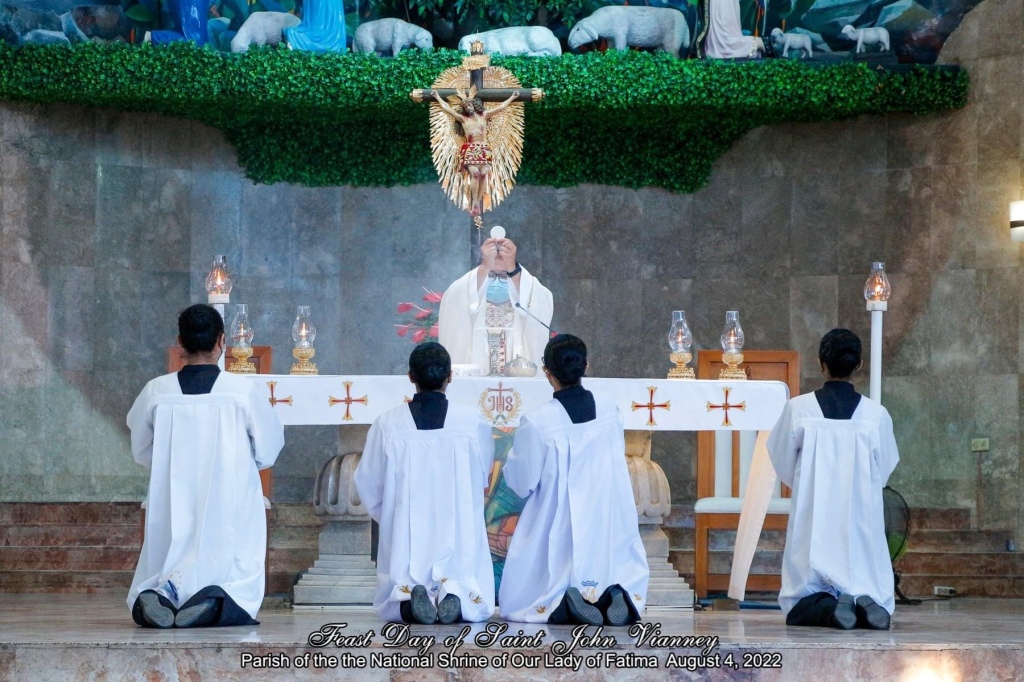
Photo by author, National Shrine of Our Lady of Fatima, 08 December 2022.

I was literally waiting the “advent” or coming of my doctors last Thursday as I wrote this homily for this first Sunday of Advent, the new year in our Church calendar. It was a hazy morning with some drizzle when I arrived for my doctors’ appointments.

But, it was a graceful moment too as I rediscovered the virtue of patience by being a patient myself again.

Sick people are called patients precisely because healing requires a lot of patience. Tons of patience in fact, especially if we are incapacitated or too weak to move. And the most difficult part of patience is waiting, from the simple waiting for doctors and nurses, waiting for the end of the day to waiting for our complete healing until we are well again.

Photo by author, First Sunday of Advent 2021, Basic Education Department, Our Lady of Fatima University, Valenzuela City.

The difficult part of waiting is that we are so conscious of time which we find to be flowing so slowly, making us irritable even doubtful if ever the one we are awaiting would ever come or materialize at all. That is why patience has become a virtue so rare these days.

Many people reject, even abhor patience in this age of instants when everybody wants to bear fruit but resent how it takes time to ripen. We want to have everything now na! We do not want to wait because we are no longer contented with whatever comes to us so that we advance our salaries and buy things in credit cards. Worst is this notorious practice of advancing public holidays to other dates closest to weekends to have “long weekend” celebrations. Even Christmas is not spared from our impatience! See how malls and local government buildings, homes and radio stations could not wait after the Halloween with all the lighting of Christmas trees and decors everywhere.

Unknown to us, we are robbing ourselves of very essence of the event of Christ’s coming to us when we manipulate time and its natural flow. When we lose patience, we stop waiting, then we miss the essence of life, of persons, of everything because we think waiting is being empty.

That is not true! Waiting is never empty. On the contrary, waiting is actually fullness because the very fact that we wait means we have.

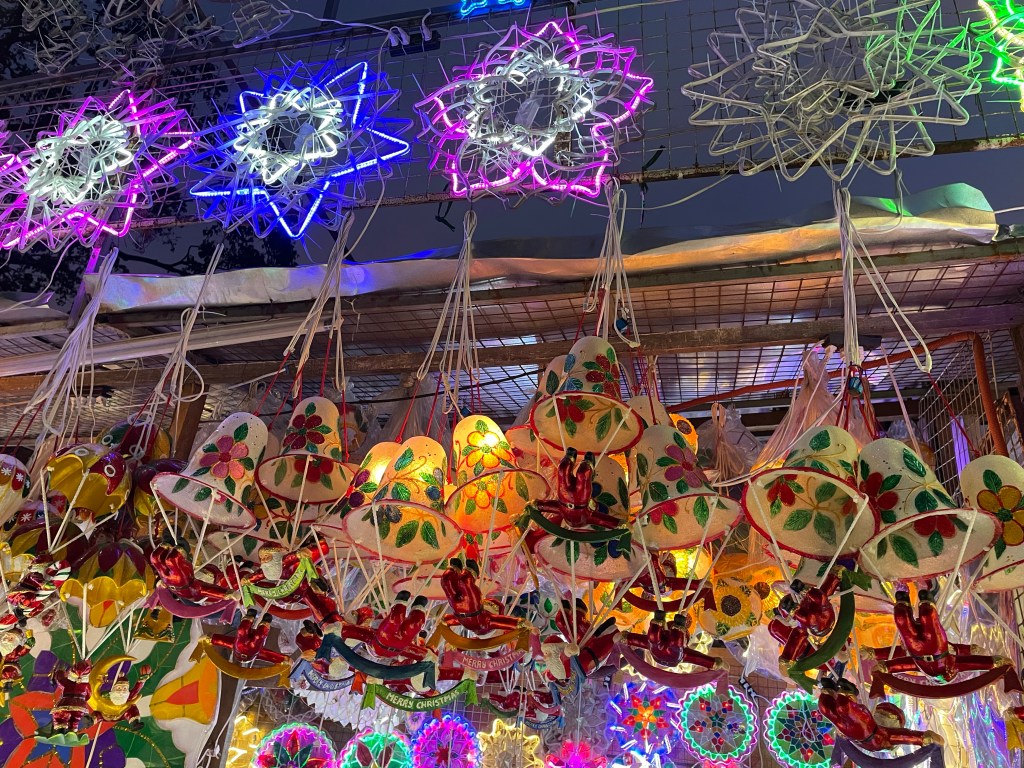
Photo by author, lanterns for sale in San Fernando, Pampanga, November 2020.

When we were growing up, we loved waiting for dad’s coming home from work. We were filled with joy the moment we heard jeepneys stopping, hoping it was dad. Even if he would come home later in the evening when it was dark, we always felt so sure and excited of his arrival with pasalubong because he was always in our hearts.

That is the greatest joy of patient waiting – it is fullness of love due to our relationships. People who can’t wait, who are impatient are often loners, even complainers because they always feel empty within without any regard at all for relationships. Most likely, they have no relationships at all!

Photo by author, lanterns for sale in San Fernando, Pampanga, November 2020.

The first reading reminds us of this great beauty of patient waiting, of already having God himself within us with Isaiah calling God “our father, our redeemer” that both indicate kinship and relationships with him.

You, Lord, are our father, our redeemer you are named forever.

Isaiah 63:16

Very notable is the word “redeemer” that is go’el in the Hebrew language – the family relative who pays off debts or redeems a foreclosed property so that their family or tribe could keep it.

That is exactly what Jesus came for – to redeem us, to ransom us from our debt we could not repay God which is love. By dying on the Cross, Jesus saved us, redeemed us from the clutches of death and evil to be filled with life again. And that is why he is coming again to ultimately vanish all evil and sin to bring us to new heaven and new earth.

Physically we do not see Jesus but realistically, spiritually, we are certain he is with us, within us. Therefore, our waiting for him is never empty but always full of Jesus precisely due to the relationship we have in him and with him.

Photo by author, Advent 2019 in our former parish.

Waiting for Jesus is an expression of our faith. And we wait with him, just like the apostles in the agony of the garden. Notice how Mark narrated to us this calls for being watchful by Jesus; unlike Matthew, Mark mentions the time of Christ’s coming – at night.

Jesus said to his disciples: “Be watchful! Be alert! You do not know when the time will come… whether in the evening, or at midnight, or at cockcrow, or in the morning. May he not come suddenly and find you sleeping. What I say to you, I say to all: ‘Watch!'”

Mark 13:33, 35-37

This may be a minute detail for us but not for Mark who was the first to write the gospel of Jesus which happens to be the shortest and most concise. Night time in the Bible evokes darkness when evil seems to dominate the time which we continue to think of in the present.

But, we are children of light as St. Paul reminds us in one of his letters. And this Sunday he assures us in the second reading that “God is faithful” who “called us to fellowship” in him through Jesus Christ (1 Cor. 1:9). Let us not be afraid of the dark and long waiting for Jesus because he had conquered it when he walked on water, when he stilled the storm in the sea, when he rose again on Easter. Do not forget too that Jesus was born during the darkest night of the year, a reminder and assurance to us that no matter how dark our lives may be, Jesus is near, Jesus is here. So, have no fear in him, our brother and kin who had saved us!

Photo by author, Advent 2019 in our former parish.

Watch and be on guard on Christ’s coming and presence in darkness because too often, we are the ones who miss the Lord. Keep in mind that it is at night, it is in darkness when it is best to believe in the light. Here, we again find that waiting even in darkness in never empty because that is when we are so sure there would be great light bursting forth soon as Isaiah had prophesied that was eventually fulfilled in Jesus Christ. Sometimes, we get bored even impatient or sleepy waiting for Jesus like the five wise virgins who brought extra oil waiting for the groom to arrive. The key is to remain in Jesus, only Jesus, always Jesus as we pray like John the Beloved, Maranatha, “Come, Lord Jesus!” Amen.

Ang kalabisan (at katatawanan)ng long weekend

Lawiswis Ng Salita ni P. Nicanor F. Lalog II, Ika-01 ng Disyembre 2023
Larawan kuha ni G. Jay Javier, shooting ng pelikula sa Fort Santiago.

Madalas kong biruin mga kaibigan at kakilala lalo na sa social media na magtanong kung ano ang “long weekend”? Mula kasi nang maging pari ako, nilimot ko na ang salitang weekend dahil sa mga araw nito – Sabado at Linggo – ang aming gawain at gampanin sa simbahan. Inaasahan kami ng mga tao na makakasama nila tuwing weekend kaya naman lahat ng pagtitipon sa pamilya at mga kaibigan ay tinatapat namin sa ordinaryong araw upang ako ay makadalo.

Ngunit kung tutuusin, wala naman talagang weekend dahil hindi naman natatapos o nagwawakas – end – ang sanlinggo. Kaisipang Amerikano ang weekend kaya meron silang bukambibig na TGIF, Thank God It’s Friday na kung kailan natatapos o nagwawakas (end) lahat ng trabaho at opisina upang maglibang ng Sabado at Linggo, weekend. Pagkatapos ng weekend, kayod muli mula Lunes hanggang Biyernes.

Sa kabilang dako para sa ating mga Kristiyano, ang Linggo ang unang araw ng sanlinggo at hindi ito nagwawakas ng Biyernes o Sabado. Tingnan ninyong mabuti: Linggo, Lunes, Martes, Miyerkules, Huwebes, Biyernes, Sabado, Linggo ulit!

Ulit lang nang ulit ang isang linggo kada araw ng Linggo, ang Araw ng Panginoon o Dies Domini sa wikang Latin kung kailan tayo obligadong magsimba bilang alaala at pagpapaging-ganap ng Misterio Pascua ng Panginoong Jesus, ang kanyang pagpapakasakit, pagkamatay at muling pagkabuhay.

Iyan ang buhay din natin na ang kaganapan ay sa Langit na wala nang wakas kungdi buhay na walang hanggan. Ito ang dahilan mayroon tayong tinatawag na octaves of Christmas at Easter, ang walong-araw ng Kapaskuhan ng Pagsilang at ng Pagkabuhay muli ni Jesus.

Oo nga at mayroong pitong araw sa isang linggo, ngunit ipinakikita sa atin lalo ng Pasko ng Muling Pagkabuhay ni Jesus ang walang hanggang buhay sa ikawalong araw na pumapatak na Linggo palagi, ang Divine Mercy Sunday. Kung Pasko ng Pagsilang, papatak ito palagi ng Dakilang Kapistahan ni Maria, Ina ng Diyos ng Enero Primero na siyang ating ipinagdiriwang at hindi Bagong Taon kasi nga po Unang Linggo ng Adbiyento ang ating bagong taon sa Simbahan.

Tumpak din naman at may katotohanan ang awitin nina John, Paul, George at Ringo ng Beatles na “eight days a week, I lo—-ve you! Eight days a week, I lo—-ve you!

Snapshot mula sa post ni Kier Ofrasio sa Facebook, 30 Nobyembre 2023.

Kaya naman isang malaking kalokohan at kabaliwan itong naisipan noong panahon ni PGMA na ilipat mga piyesta opisyal sa Biyernes o Lunes upang magkaroon ng long weekend. Para daw sa ekonomiya. Sa madaling sabi, para sa pera.

Kuwarta. Kuwarta. At kuwarta pa rin ang usapan, hindi ba?

Nasaan na ang pagsasariwa ng diwa ng mga piyesta upisyal natin bilang isang sambayanan?

Pati ba naman kaarawan o kamatayan ng mga bayani natin na matapos maghandog ng buhay sa atin ay dadayain pa rin natin upang pagkakitaan?

Fer, fer! For real!

Bukod sa materyalismo, mayroon ding masamang implikasyon itong long weekend na ito sa ating moralidad at iyan ay ang kawalan natin ng matiyagang paghihintay – ang pagpapasensiya.

Lahat advanced sa atin. Hindi tayo makapaghintay sa araw ng suweldo. Kaya, vale dito, vale doon. Loan dito, loan doon. At hindi biro ang dami ng mga kababayan nating nasira ang buhay dahil sa pagkaubos ng kabuhayan nang malulong sa maling pag-gamit ng credit cards kung saan totoong-totoo ang kasabihang, “buy now, suffer later”. Kaya, heto ngayon, pati piyesta upisyal ina-advance natin!

Maaring nagkasiyahan tayo sa long weekend ngunit, lubos nga ba ating katuwaan at kagalakan? Napagyaman ba nito ating katauhan at mga ugnayan? O, nabaon lang tayo sa utang lalo ng kahangalan?

Larawan ng walang galawang trapik sa McArthur Highway mula sa Facebook ni Kier Ofrasio, 30 Nobyembre 2023.

Katawa-tawa tayong mga Pinoy simula nang mauso long weekend. Sa haba at tagal ng ating lockdown noong pandemya, long weekend pa rin sigaw natin?

Dapat siguro baguhin na ating taguring na Juan dela Cruz at gawing Juan Tamad.

O, Juan Tanga gaya nang naranasan noong a-trenta nang isara ng mga magagaling ang Monumento. Winalanghiya mga maralita at manggagawa na ipinaglaban ni Gat. Andres Bonifacio noong himagsikan na siyang dahilan kaya ating ipinagdiriwang kanyang kapanganakan noong ika-30 ng Nobyembre 1863.

Kung baga sa Inggles, iyon ang “the short of long weekend, an exercise in futility. And stupidity.” Sana magwakas na gawaing ito na dati naman ay wala sa ating kamalayan. Salamuch po!

Living in the end of time

The Lord Is My Chef Sunday Recipe for the Soul by Fr. Nicanor F. Lalog II
Sunday in the Thirty-second Week of Ordinary Time, Cycle A, 12 November 2023
Wisdom 6:12-16 ><}}}}*> 1 Thessalonians 4:13-18 ><}}}}*> Matthew 25:1-13
Photo by author, PDDM Chapel, James Alberione Center, G. Araneta Ave., QC, 09 November 2023.

For the next two Sundays before the Solemnity of Christ the King, our readings deal with the urgency of the end of time, of the final judgment when Jesus comes again. Every Sunday in the Mass we profess in the Creed that “Jesus will come again to judge the living and the dead” and proclaim after Consecration that “Christ has died, Christ is risen, Christ will come again!”

But, do we really take Christ’s Second Coming to our hearts?

Maybe not at all if you scan the social media like Facebook or the news these days. Many people live as if there is no God nor final judgment. Worst, many have lost the virtue of waiting as nobody waits anymore in this age of instants! So unlike the Thessalonians during the time of St. Paul who all believed Jesus would come again in their lifetime. In fact, they were even so concerned with the sequence of entrance to heaven after some of them died ahead of the Parousia (Greek for Christ’s Second Coming). In explaining Christ’s return at the end of time, St. Paul insisted on two important points in his letter we have heard today.

Photo by author, National Shrine of Our Lady of Fatima, Valenzuela City, 06 November 2023.

First, the Resurrection of Jesus is the beginning of the end of time. We have to live daily as if it is the end of time. Easter is not an isolated event in the past; it is directly linked with everyone for all ages. Like Jesus, all those who have died shall go through “general resurrection” at the end of time when he comes again anytime he wishes. “For if we believe that Jesus died and rose, so too will God, through Jesus, bring with him those who have fallen asleep” (1 Thes. 4:14).

Second, the Parousia is God’s final victory over sin and death. Jesus had definitively won over sin and death on the Cross on Good Friday but its “powers” would finally cease and end at the end of time when Christ comes again to start anew everything in God with “new heaven, new earth”. That is why while awaiting his Parousia, we persevere in witnessing his gospel message of salvation amid the many sufferings we go through in this world like diseases and sickness, famine and poverty, wars and violence.

Here lies our problem – and foolishness – when we turn away from God, refusing to wait by falling into the devil’s temptation of “turning stones into bread” for instant solutions that have left us more divided, more miserable. We need faith in God who is our oil to keep our lamps aglow, giving light in this dark world even if we “become drowsy and fall asleep” while awaiting Christ’s return.

Jesus told the disciples this parable: “The Kingdom of heaven will be like ten virgins who took their lamps and went out to meet the bridegroom. Five of them were foolish and five were wise. The foolish ones, when taking their lamps, brought no oil with them, but the wise brought flasks of oil with their lamps. Since the bridegroom was long delayed, they all became drowsy and fell asleep.

Matthew 25:1-5
Photo by author, Chapel of the Holy Family, Sacred Heart Novitiate, Novaliches, QC, 2016.

Nobody knows when the Parousia will happen, not even Jesus except the Father. But the good news is that Jesus assures us today that it is normal to be drowsy and fall asleep in our lives while awaiting his final coming.

There are times we get so used to the darkness around us in life that we become cynical and even indifferent in our attitudes. We fall asleep, choosing to be mere bystanders, seeing nothing, hearing nothing, saying nothing, and doing nothing.

It is not good, of course. But, it can happen as we find our hands so full of our own personal and family issues that many times, we would opt to just “pray” than actively take part in advocacies and crusades against the many problems that plague the world today from poverty to hunger, wars and violence, human trafficking and prostitution to the destruction of our environment and climate change.

Becoming drowsy and falling asleep mean we get tired of all the problems and chaos in the world, even in our personal lives that we just want to stop and be detached, away from all troubles. No more dramas. To be silent until Jesus Christ comes to us in the dead of the night. Like the wise virgins, we keep focused on Jesus even if we become drowsy and fall asleep in his sure arrival.

Photo by Irina Anastasiu on Pexels.com

Being foolish like those other five virgins in the parable is abandoning God, not waiting for him, being busy with worldly concerns without thinking and looking into the wider horizons of life and realities.

Many times, the world seeks quick fixes to our many problems only to create bigger problems. Jesus had to wait until the hearts of the more than 5000 people who have followed him in the wilderness were opened to God and to one another before he miraculously fed them with bread and fish.

Being wise is having faith in God with good works. How sad that many people have foolishly turned away from God, even declared “God is dead” as they relied more on themselves and their technologies and modern thoughts that are often old mistakes in the past being repeated. Our bodies may get tired but never should we let our minds and spirits droop and fall behind, joining the materialistic and selfish bandwagon of the world. Being wise is to continuously seek God and his ways for a more meaningful way of living. This is the message of the author of the Book of Wisdom we heard today where God is personified as Wisdom like a beloved being sought.

Resplendent and unfading is wisdom, and she is readily perceived by those who love her, and found by those who seek her… because she makes her own rounds, seeking those worthy of her, and graciously appears to them in the ways, and meets them with all solicitude.

Wisdom 6:12, 16
Photo by author, 2019.

God is never far from those who truly seek him, who truly await him. There are always delays as God takes time before coming to us until we are ready for him and his plans.

There are many times in life that the solution to our problems require long waiting not only to find the best answers but most of all to purify our very selves. After all, the problems in the world are mere reflections of what is within each one of us as Jesuit Fr. Manoling Francisco expressed in his song One More Gift.

This is the sad thing with social media around us. Many times, some people use social media only to advance their own agendas that only add flames of hatred and violence. Instead of gathering first the facts and evaluating them prayerfully, we tend to react quickly, becoming emotional that we forget the face of every human person already suffering on the ground, regardless of their color and creed, thus continue the cycle of sins and evil.

Being wise is being grounded in Jesus, believing and trusting in his presence among us in everyone, that he shall surely come to save us and change everything for the best. Far from making us nervous and anxious, discouraged and careless in the uncertainty of his Second Coming, Jesus invites us today to be watchful and attentive to his presence especially in our Sunday Mass when we live in the end time, rehearsing our entrance into heaven as we wait. Amen. Have a blessed week!

Making things happen in Christ

The Lord Is My Chef Daily Recipe for the Soul by Fr. Nicanor F. Lalog II
Friday, Memorial of St. Charles Borromeo, Bishop, 04 November 2022
Philippians 3:17-4:1   ><}}}*> + ><}}}*> + ><}}}*>   Luke 16:1-8
Praise and thanksgiving,
God our loving Father
for the grace of your Son
Jesus Christ 
who had come 
to make us closer to you
more than ever, 
making us "citizens of heaven"
(Philippinas 3:20).
Teach us, dear Jesus,
to be imitators of St. Paul
witnessing your Cross, 
the only path to salvation
because it is our liberation from sin;
do not allow us to be
"enemies of the cross"
whose "God is their stomach;
their glory is in their shame.  
Their minds occupied with earthly
things" (Philippians 3:18-19);
keep us faithful to your teachings 
and example, Lord Jesus Christ
by living your paschal mystery.
Like St. Charles Borromeo
whose memorial we celebrate today,
give us the grace of determination
and perseverance in keeping us
true and faithful to you
by making things happen 
like making Christ present
no matter how difficult and 
unpopular it may be especially 
when others especially our pastors 
have forgotten to live in your footsteps,
when too much time and emphasis
are spent with outward appearances
forgetting internal reformation;
let us stop wishful thinking that
things may get better by being just idle,
simply awaiting for events to happen.
Like that shrewd steward in the gospel,
let us find ways, O Lord, in making
justice and mercy,
love and kindness
become realities
by making them happen
by standing firm in you
Jesus Christ.
Amen.

Advent is beginning with the end in sight

The Lord Is My Chef Sunday Recipe for the Soul by Fr. Nicanor F. Lalog II
First Sunday of Advent-C, 28 November 2021
Jeremiah 33:14-16 ><}}}*> 1 Thessalonians 3:12-4:2 ><}}}*> Luke 21:25-28, 34-36
Photo by author, Malolos Cathedral, 2019.

Blessed happy New Year, everyone!

Today we are celebrating a new calendar year in the Church with this First Sunday of Advent. From the Latin word adventus meaning arrival or coming, it was adapted by the early Christians from the Roman practice of preparing for the visits or assumption to power of their emperors then considered as “gods”.

It is most fitting that we prepare not only outside but most especially inside our very selves for the coming of the true God and King of kings, Jesus Christ our Lord and Savior!

Hence, Advent not only opens but also defines our whole liturgical year that is centered on Christ who has come, who comes now and will come again in the end of time. This is the reason why our gospel this Sunday is looking towards the end of time at the beginning of our Church calendar.

The three comings of Jesus Christ

Advent has two aspects: beginning today the First Sunday of Advent until December 16, all readings and prayers are oriented towards the Second Coming of Christ; from December 17 to the evening of the 24th, our focus shifts to the first coming of Jesus at Christmas.

Between these two comings of Jesus that the Season of Advent reminds us is what St. Bernard of Clairvaux called as the Lord’s “third coming” – his coming everyday into our lives, especially in the celebration of the Sacraments, particularly the Holy Eucharist.

Photo by author, 2019.

Again we find that tension of his being here but not yet. It is in that between his first coming more than 2000 years ago and his Second Coming which no one knows exactly when where we are situated daily, making everyday Christ’s Advent.

“And then they will see the Son of Man coming in a cloud with power and great glory. But when these signs begin to happen, stand erect and raise your heads because your redemption is at hand.”

Luke 21:27-28

It may sound frightening to hear Jesus spoke of the signs of his coming but at closer look and reflections, we find it filled with joy because our redemption is at hand!

Yes, every ending forebodes destruction and passing of the old but that is in order to give way to something new, something better which Jesus had promised his disciples then and us now.

The grace of this season of Advent is the reawakening of our hope in the salvation that has already come in Jesus, who still comes now, and will surely come again in the end of time which is happening in every here and now.

That is why, there is also the sense of urgency and vigilance this Advent.

We are already living in the end-time Jesus had predicted as we have seen in the wars and conflicts going on among nations, the natural calamities happening around the globe made worst by the climate change plus this pandemic we are now having. But, it does not mean the creation will end soon as portrayed in many Hollywood films because these signs are calls for us to be ready and prepared for the final end that will prelude the new beginnings of all.

The days are coming, says the Lord, when I will fulfill the promise I made to the house of Israel and Judah… In those days Judah shall be safe and Jerusalem shall dwell secure; this is what they shall call her: “The Lord our justice.”

Jeremiah 33:14, 16
Photo by author, 2018.

Meeting Jesus in Advent

Notice how Jeremiah’s prophecy so “pregnant” with meanings: more than the coming of the promised Messiah is the radical newness of the whole creation. Judah and Jerusalem, the main province and city of Israel at that time will be transformed, referring to John’s vision in the Book of Revelation of “new heaven and new earth”.

As we have said, Advent not only opens our liturgical calendar but also defines the whole year which is the daily coming of Jesus who had come over 2000 years ago and will come again at the end of time which nobody knows.

Meanwhile, in this “third coming” of Jesus everyday, we find God working in him silently and subtly in the human history and right in our individual lives.

It is in our faithful waiting when Jesus Christ comes. It is the beauty and joy expressed by Jeremiah’s words “the days are coming” that assure us no matter how dark and bleak are our days, despite all the destructions and even death around us, the days are coming when we see everything getting better because God never stops working in our midst in Jesus, the Emmanuel.

“Beware that your hearts do not become drowsy from carousing and drunkenness and the anxieties of daily life, and that day catch you by surprise like a trap. For that day will assault everyone who lives on the face of the earth. Be vigilant at all times and pray that you have the strength to escape the tribulations that are imminent and to stand before the Son of Man.”

Luke 21:34-36

Last Sunday in our celebration of the Solemnity of Christ the King we have reflected how Jesus spoke of the “truth” of his kingdom being among us, of how he had made us into his kingdom which is the reason why he was born and came into the world to testify to this truth (Jn.18:37).

See now the clearer picture of our life, of our time: we start our Church calendar preparing for the coming of Jesus our King and we end every year with the celebration of Christ the King. And we begin each new year with the end in sight of his Second Coming.

On this season of Advent, we are reminded how in our joyful waiting through prayers especially in the celebration of the Holy Eucharist that Christ’s presence is little by little being unveiled, unfolding before us, and being revealed.

It is a call for us of deepening our prayer life to truly experience Christ’s coming in our daily life. This new year in the Church, St. Luke will be our guide in our Sunday readings during the Ordinary Time; one distinction of his gospel is his portrayal of Jesus in prayer always.

Jesus comes to us first of all when we pray, when we enter into communion with him, when we listen to his voice and follow his instructions. In prayer, we are filled with God, allowing him to work his wonders in us and through us and thus make Christ’s coming a daily reality.

That is how prayer truly leads to holiness: when we are filled with God, our prayers are translated into a life of kindness and acceptance, mercy and forgiveness and most of all, of loving service to one another especially those in need.

There will always be sins and shortcomings on our part but in prayers and vigilance, we slowly “increase and abound in love for one another… strengthening our hearts to be blameless before our God our Father at the coming of our Lord Jesus with all his holy ones. Amen. (1 Thess. 3:12,13)

A blessed happy new year again and a more blessed first week of Advent to you!

Seeking, awaiting the Lord

The Lord Is My Chef Breakfast Recipe for the Soul by Fr. Nicanor F. Lalog II
Thursday, Feast of St. Mary Magdalene, Disciple of Jesus, 22 July 2021
Song of Songs 3:1-4   ><]]]]'> ><]]]]'> ><]]]]'>   John 20:1-2, 11-18
 
Painting by Giotto of the Risen Lord Jesus Christ appearing to St. Mary Magdalene from commons.wikimedia.org.
I wonder, dearest Lord Jesus,
why did you appear to Mary Magdalene
on that Easter morning
but not to Peter and John
who also rushed to the scene?
Mary stayed outside 
the tomb weeping.
And as she wept,
she bent over into the tomb
and saw two angels in white
sitting there, one at the head
and one at the feet where 
the Body of Jesus had been.
(John 20:11-12)
It was the second time 
Mary Magdalene had come 
to your tomb that early morning;
when she found it empty,
she rushed to Peter;
when they found it still empty,
John believed and left with Peter
but Mary remained and stayed,
weeping, hoping to find 
your body, dearest Lord. 
And the angels said to her,
"Woman, why are you weeping?"
She said to them,
"they have taken my Lord,
and I don't know whey they laid him."
When she had said this,
she turned around
and saw Jesus there, 
but did not know it was Jesus.
Jesus said to her, "Woman,
why are you weeping? 
Whom are you looking for?"
She thought it was the gardener
and said to him, "Sir, if you carried him
away, tell me where you laid him,
and I will take him."  Jesus said to her,
"Mary!"  She turned and said to him
in Hebrew, "Rabbouni," which means
Teacher.  (John 20:13-16)
O sweet Jesus,
forgive us 
when we fail to see you,
when we miss you coming
as we never stay long
to await you in the empty tombs
of our sadness and failures,
broken dreams and 
disappointments and sickness;
teach us to stay longer,
to grieve in you, pour out in you
our hurts and aches,
pains and sorrows;
like that Bride in the
Song of Songs
let us be intense in seeking you
by patiently awaiting you,
remaining in you that we may also say,
"I had hardly left them when I found him
whom my heart loves." (Song of Songs 3:4)
When love among friends
and one another is real,
surely our beloved would appear
only on a higher, different level
of recognition unlike before;
this is the lesson we can glean
from St. Mary Magdalene
when Jesus called her by name,
asking her to touch him not
because at Easter
we have been raised higher
in Christ, much beloved than before.
Let us answer your call,
dear Lord, to proclaim your gospel to all
despite the troubles we have had before.
Grant us the courage
to change our ways and follow you
like St. Mary Magdalene
who had remained pristine and clean
assuring every sinner with a saintly future.  Amen.