Lord My Chef Daily Recipe for Soul by Fr. Nicanor F. Lalog II
Wednesday in the Eighteenth Week of Ordinary Time, Year II, 05 August 2026
Jeremiah 31:1-7     ><))))*> + ><))))*> + ><))))*>     Matthew 15:21-28
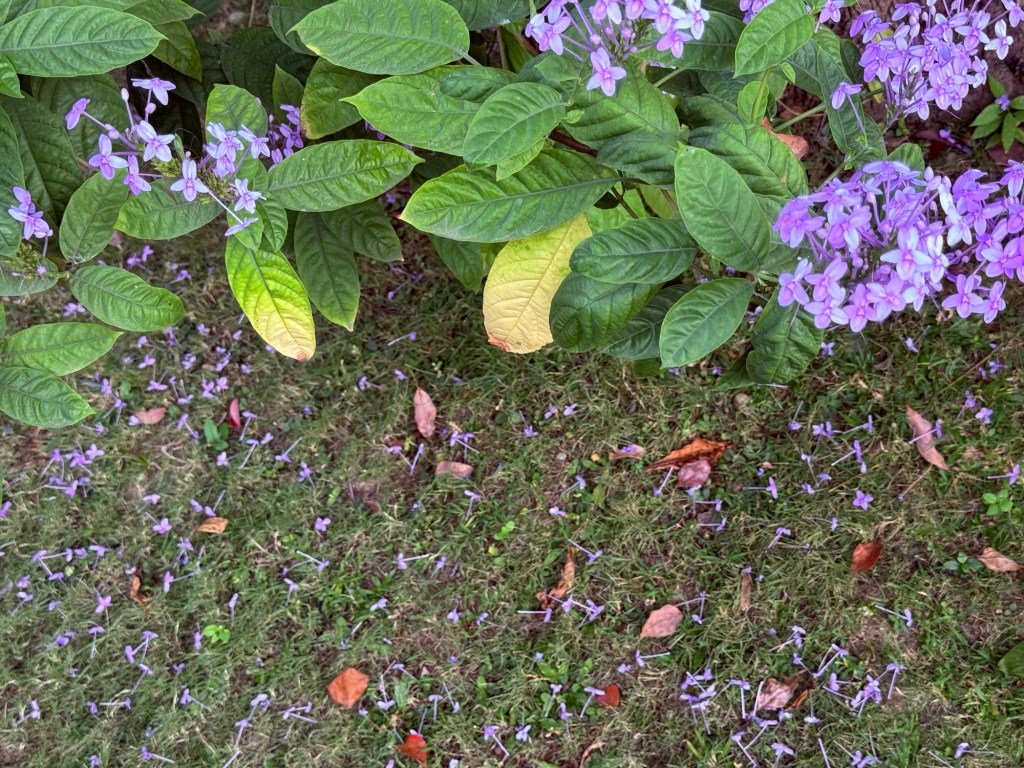
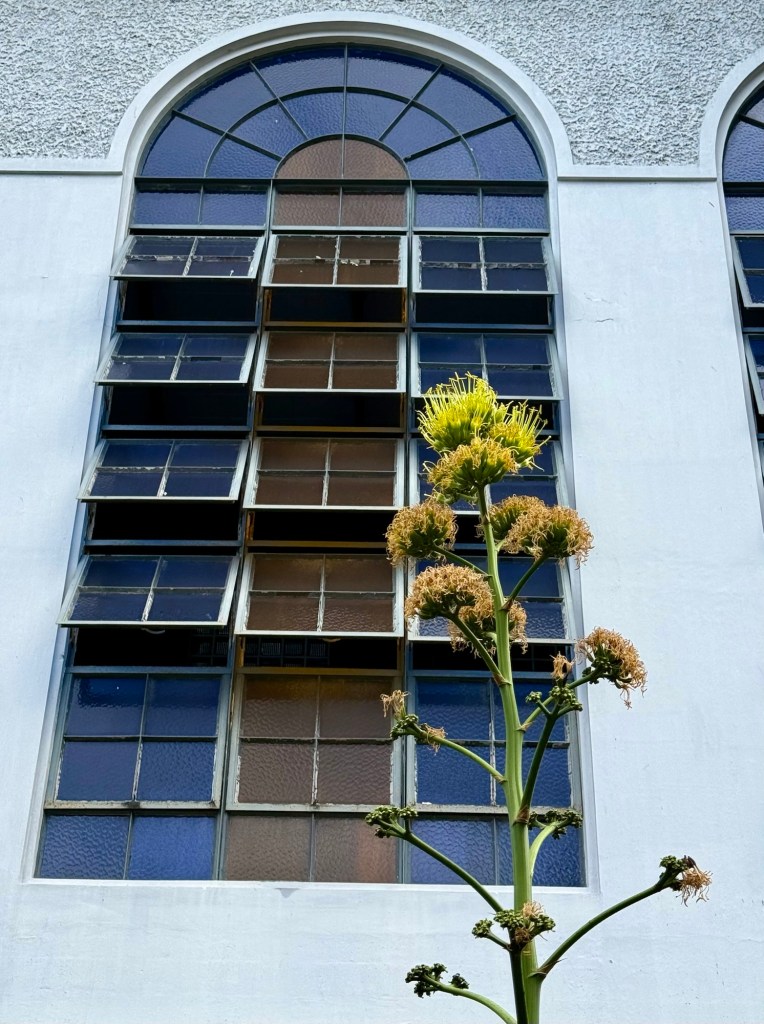
Photo by a friend in Washington, 28 July 2026.
Glory and praise
to you O God our loving Father
with your boundless love
and mercy; your words today
are a beautiful reminder
of how wide is your love and
mercy: in the first reading,
Jeremiah continues to rally our
hopes of your coming redemption
and restoration of Israel
after its fall and conquest by
Assyrians due to their own sinfulness;
in the gospel, a Canaanite woman
who was both a foreigner
and pagan considered like a "house-dog"
among Jews persisted
in asking Jesus for the healing
of her daughter;
two stories about central
characters widely different
and divergent yet converged
in the mercy and love of God.

What a beautiful reminder
how our smallest cry in faith
is always heard by God
while our biggest sin
against him can still be forgiven
for as long as we are willing
to change our ways
and most of all,
be contented with scraps
in life.
Amen.
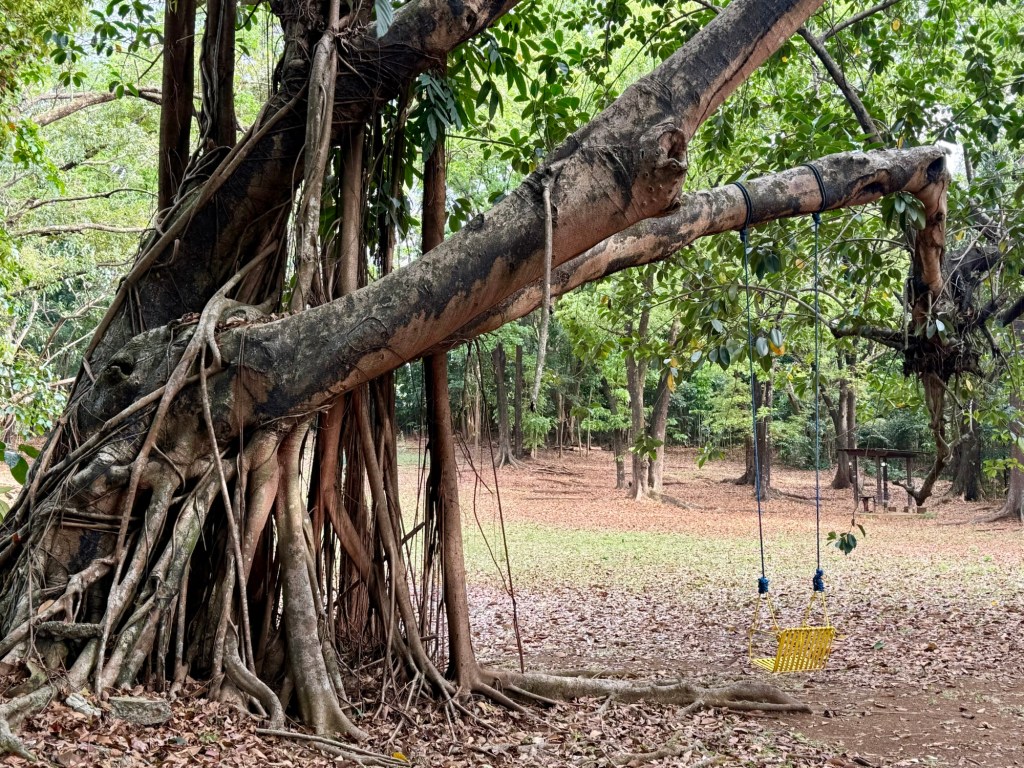
Photo by author, Carmel of the Holy Family Monastery, Guiguinto, Bulacan, January 2026.
Lord My Chef Easter Recipe by Fr. Nicanor F. Lalog II
Second Sunday of Easter, Divine Mercy Sunday, 12 April 2026
Acts 2:42-47 ><}}}*> 1 Peter 1:3-9 ><}}}*> John 20:19-31
Photo by author, Don Bosco Batulao, Batangas, 07 April 2026.
My dear friends, while praying over the gospel this week, this line by the Lord kept on echoing within me. And every time it would echo, the Lord shortened the sentence like these:
“Have you come to believe because you have seen me?”
“Have you come to believe because…?”
“Have you come to believe…?”
“Have you come…?”
Easter is a story of coming and believing amid all the darkness and emptiness in life, of being locked inside like the disciples when Jesus came to visit them “On the evening of that first day of the week, when the doors were locked.”
Before we can stay and remain in the Lord, we must first come. Like Thomas.
Or Jesus who actually comes first because he believes in us his disciples.
Now a week later his disciples were again inside and Thomas was with them. Jesus came, although the doors were locked, and stood in their midst… Then he said to Thomas, “Put your finger here and see my hands, and bring your hand and put it into my side, and do not be unbelieving, but believe.” Thomas answered and said to him, “My Lord and my God!” Jesus said to him, “Have you come to believe because you have seen me? Blessed are those who have not seen and have believed” (John 20:26, 27-29).
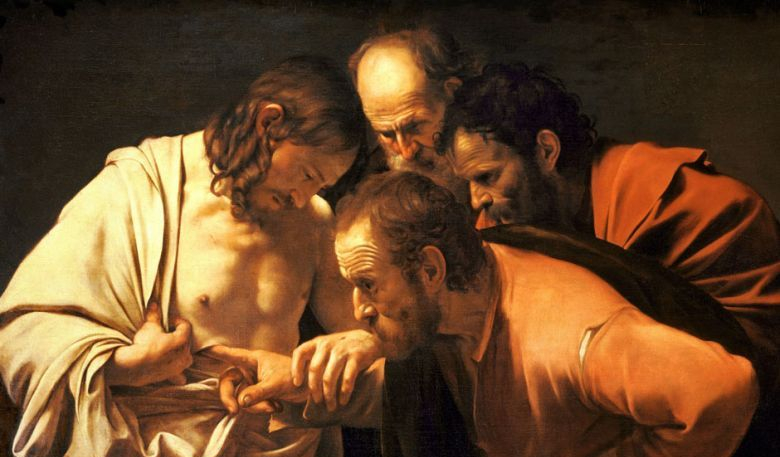
Caravaggio’s painting “The Incredulity of St. Thomas” (1602) from en.wikipedia.org.
We are now on the eighth day of Easter also known as Divine Mercy Sunday that was instituted by St. John Paul II in May 23, 2000 as a “perennial invitation to the Christian World to face with confidence in divine benevolence the difficulties and trials that humankind will experience in the years to come.”
This we can see in Thomas also known as Didymus who was not present when Jesus first came to his disciples on the evening of Easter. See how Jesus as the one actually coming first because he is also the first to believe in us his disciples despite our many flaws. And absences or tardiness.
Joining his fellow disciples, Thomas came and believed on the eighth day after Easter. What Thomas had asked as proofs to believe in the Lord’s Resurrection were not really doubts to be taken negatively. It was not that Thomas did not believe but in fact, he wanted to believe more.
That is why he came the following Sunday. Because he believed.
Photo by author, Sacred Heart Novitiate, Novaliches, QC, 20 March 2026.
Like us, there are times we feel at a loss in our faith in God when difficult and extraordinary things happen to us. We cry in desperation to God, seemingly doubting his presence or if he listens at all to our pleas but we come to pray because we believe. We cry only to someone we believe who can help us in our plight.
Coming and believing happen simultaneously: we come because we believe and we believe that is why we come.
Believing is more than an intellectual assent to a person or something.
Believing is entering into a relationship. There is something deeper that happens when we believe that is why we are moved to come, to draw near especially to a person.
When Jesus told Thomas “do not be unbelieving, but believe”, it was not a reproach but more of an exhortation he tells us too today to be intimate with him, to stay with him, to remain in him.
While the world tells everyone that to see is to believe, Jesus tells us that it is when we believe him, when we believe in him that we shall see. Even more. And clearly!
Photo by author, Sacred Heart Novitiate, Novaliches, QC, 20 March 2026.
Believing is not actually concerned with proofs and evidence because whether with God or with another person, despite the many “proofs” we have gathered from all sources, none of them is actually the reason for our faith in God and with others. Or whatever like our vocation and profession.
Believing is the gift of faith nurtured in our relationships with God and with others.
It often starts so simple like when we pray the Apostles Creed and say “I believe in God” – in our believing and relating with God, we love, and love, and love even more even if there are pains and sufferings.
This we nurture by imitating the early Christians who devoted themselves to the teachings of the apostles that have been handed down to the Church, in communal life, and in the “breaking of the bread and prayers” which is the Holy Eucharist, the summit of our life as disciples of Christ (first reading).
That is why Peter in the second reading is all praises to those who believe and love Jesus even without having seen him: we continue to strive and persevere in life’s many trials because deep inside we experience the truth and realities of Christ’s resurrection, of his loving presence among us that leads us to profound joy and rejoicing in life. Most of all, with peace, the supreme gift of the Risen Lord.
Photo by author, Sacred Heart Novitiate, Novaliches, QC, 20 March 2026.
Last March during my annual silent retreat as I turned 61 years old, my last reflection was Luke’s account of the Road to Emmaus, the gospel every evening of Easter.
In my meditation, I imagined myself joining the two disciples walking home to Emmaus. I was silent all throughout the journey, listening to their conversations until after the breaking of the bread in their home that opened their eyes to finally recognize Christ who had then vanished so quickly.
It was then when I actively joined the scene, telling the two disciples to return right away to Jerusalem. In my meditation, I felt the two disciples saying it was so dark and dangerous to travel back to Jerusalem. But I insisted, telling them, “maski na, tayo na!”
It was a turning point for me because for the past many years every time I go on my personal retreat and in my prayers, I always expressed to God my many fears in doing his will, refusing to follow him. I have always been like Jonah ever since in my relationship with God.
Last March was different. As I turned 61, I have come to believe more because I have become more daring.
There are still those fears in me about God’s will and plans but this time, I am no longer so concerned about my self but God alone – his will, his plans. And that is only when I felt truly at peace. Indeed, as John concluded his gospel today, Jesus does so many other things in our lives that is impossible to record but these few experiences we have of him are meant for us to believe him more, have life in him. Especially peace. Amen.
Photo by author, Sacred Heart Novitiate, Novaliches, QC, 20 March 2026.
Lord My Chef Sunday Recipe, Fr. Nicanor F. Lalog II
Second Sunday in Easter Octave, 27 April 2025
Acts of Apostles 5:12-16 ><}}}}*> Revelation 1:9-11,12-13,17-19 ><}}}}*> John 20:19-13
Photo by author, Angels’ Hills Retreat & Formation Center, Tagaytay, 19 April 2025.
Locked doors. Exactly what I have dreaded most these days not because of claustrophobia but more of amnesia as I often forget my keys that I get locked out of my room.
Many of you probably know that kind of feeling of being locked out of our rooms or even house: we are so stressed that we go through self-blame and self-pity of being so forgetful to intense annoyance when we have to destroy our locks and knobs to replace them with new ones.
But, surely there must be a great difference of being locked inside a room that is more stressful and even fearful leading to claustrophobia. Imagine how the disciples of Jesus felt on that evening of Easter when they have to hide inside the Upper Room and locked the doors for fears of being arrested too following reports of the empty tomb.
On the evening of that first day of the week, when the doors were locked, where the disciples were, for fear of the Jews, Jesus came and stood in their midst and said to them, “Peace be with you.” – John 20:19
Painting by James Tissot (1836-1902) of Jesus Christ’s appearance to his disciples on Easter evening.
Only John tells us this detail of the evening of Easter of how the disciples hid inside locked doors, that despite that, Jesus Christ still came through. Aside from the darkness and empty tomb that characterized Easter which all evangelists narrated, John seems to be telling us something important about those locked doors.
Do you have any locked doors in your life that is why you can’t experience the joy of Easter?
One thing for sure: John included that little detail of the locked doors of the Upper Room where the disciples hid to show us that no obstacle, no locked doors can prevent Jesus from “coming” to us. Jesus had triumphed over sin and death. He is Risen! Nothing can stop Christ from breaking barriers among us and within us to bring his peace and joy of Easter.
However, the problem could be with us as we refuse to recognize Jesus coming to us.
Our refusal to forgive those who have hurt us, especially if they have tried reaching out to us, even apologizing can be a locked door within us. It could be the other way around when who have hurt others have locked inside ourselves in our refusal to ask forgiveness and be reconciled with a loved one.
There may be other locked doors in our life like our fears of failure and disappointment, of lost and separation from our loved ones due to various reasons like betrayal or death. Think of the other kinds of locked doors in our life that have kept us in the darkness of grief and sadness, bitterness and hatred or anger, even hopelessness.
See how in our gospel there are so many elements linked together in experiencing our Risen Lord – the need to believe like Thomas who was not inside the locked doors when Jesus first appeared. The nice thing with Thomas despite his doubts, he came to the room with locked doors to await Christ’s coming and he was not disappointed!
Like Thomas the Apostle, we have to believe Jesus in order to see him. We have to welcome Jesus inside our locked doors. Most of all, we have to come our from our locked doors to be one with others freed by Jesus.
“The Incredultiy of Thomas”, painting by Caravaggio from artsandculture.googe.com.
Every day amid all our daily darkness and emptiness, Jesus breaks our locked doors, coming into our lives like that Easter evening, bringing peace and forgiveness and most of all, joy of finding him, of seeing him, of experiencing him.
The world tells us to see is to believe but Jesus tells us to believe first so that we may see because it is only when we believe that we truly love and when we love, that is when the miracles of Easter begin to happen. Everyday.
Locked doors isolate us and isolation is separation which is the absence of love. This eventually leads to hopelessness which is the exact opposite of love. When we lose hope, we destroy everything, including life. People without hope are the most angry, the most isolated people who would kill and destroy everything because there is nothing to look for nor expect. They are locked inside their own prisons of selfishness.
Jesus rose from the dead to break all barriers to life especially sin and evil that imprison us so that we may believe again, love and hope to live Easter daily.
Easter does not remove the darkness nor emptiness within us but definitely breaks locked doors in us so we can go free to follow the light of Christ, to spread that light with others imprisoned in their locked doors of unbelief.
In the first reading, we find the Apostles after Pentecost continuing the work of Jesus by preaching and healing the sick while in the second reading we heard John thrown into exile to Patmos and yet, still chose to proclaim the gospel and wrote his visions while in prison.
We all know from the Acts of the Apostles that it was not all good news for the early Church that soon faced persecution. But by remaining open to Jesus Christ’s daily coming in themselves and through others like their persecutor named Saul who became Paul, Christianity flourished.
Today in our modern age, St. John Paul II designated in May 2000 this octave or eighth Sunday in Easter as the Divine Mercy Sunday as an invitation to Christians to face with confidence in the Divine Mercy the difficulties and trials that we still have to experience in the years to come.
There will always be darkness and emptiness in life. Including locked rooms. But, Easter is Christ’s triumph over all these. Rejoice in breaking free today. Many times in life, all we need in life is a simple spark of believing in Jesus risen, with us inviting us to come and follow him in his light and life. Amen.
Photo by author, Angels’ Hills Retreat & Formation Center, Tagaytay, 19 April 2025.
The Lord Is My Chef Daily Recipe for the Soul by Fr. Nicanor F. Lalog II
Monday, Sts. Cornelius, Pope, and Cyprian, Bishop, Martyrs, 16 September 2024
1 Corinthians 11:17-26, 33     <*((((><  +  ><))))*>     Luke 7:1-10
Photo by author, Alfonso, Cavite, 21 April 2024.
Therefore, my brothers and sisters, when you come together to eat, wait for one another (1 Corinthians 11:33).
Lovely words,
God our Father,
for this lovely,
cold Monday
of overcast skies
most likely with a lot of
rains ahead.
Wash us clean, O God,
with your rains of mercy
and wisdom:
it must be so easy to understand
what St. Paul meant that we
"wait for one another"
when we come to eat together
but that is exactly what has
become a rarity these days;
forgive us, Father,
for like the Corinthians
we have become like pagans,
so unChristian in our lives
especially at the Eucharist of
your Son Jesus Christ;
we no longer "wait"
for one another as in
we do not celebrate as one
due to factions and selfishness
that come in all forms;
we no longer "wait"
not serving each other
truly as brothers and sisters;
worst of all, we live for the
present moment alone,
being so unwise like unfaithful
servants not "waiting"
for Christ's return.
Let us "wait" for you,
Jesus, like the people in
Capernaum:
the locals "waiting" for the
centurion as they "strongly urged" you
to help him because of his kindness
to Jews; lovely was how
the centurion "waited"
for you, sending emissaries
asking you Jesus for the healing
of his slave; but, most wonderful of all,
was the centurion's faith in you, Lord
as he described how his slave
faithfully "waited" on him,
prompting him to tell you:
“Lord, do not trouble yourself, for I am not worthy to have you enter under my roof; but say the word and let my servant be healed. For I too am a person subject to authority, with soldiers subject to me. And I say to one ‘Go’, and he goes; and to another, ‘Come here,’ and he comes; and to my slave, ‘Do this,’ and he does it” (Luke 7:6, 7-8).
Indeed, dear Jesus,
to "wait" is to serve;
to "wait" is to be one
with others and with you;
to "wait" to find myself always
not worthy to receive you
but you chose to "wait" for us
in the Cross
with your words of mercy
and forgiveness
that we are all healed,
we are saved.
Pray for us,
holy martyrs Pope Cornelius
and Bishop Cyprian
who both waited faithfully
for their flock
especially those who have
lapsed in faith,
those who have sinned
and erred.
Amen.
The Lord Is My Chef Easter Recipe by Fr. Nicanor F. Lalog II
Second Sunday in Easter, Divine Mercy Sunday, 07 April 2024
Acts 4:32-35 ><))))*> 1 John 5:1-6 ><))))*> John 20:19-31
Photo by author, Mirador Jesuit Retreat House, Baguio City, 2018.
We celebrate today the Octave – eighth day – of Easter which coincides with the Feast of Divine Mercy. Both Christmas and Easter observe an octave signifying eternity because when you count from Easter Sunday to this Sunday, there are actually eight, not seven days. That is why there is no such thing as weekend for us Christians because the week never ends but continues on and on every Sunday.
And that is also the mystery, beauty and reality of Jesus Christ’s Resurrection that according to Pope Benedict XVI, “a life that opens up a new dimension of human existence” (Jesus of Nazareth, Part Two, p. 244).
Photo by author, view the refectory, Sacred Heart Novitiate, Novaliches, QC, 18 March 2024.
From now on, nothing can hold us nor keep us locked in sadness and grief, suffering and misery as well as sin and death because in rising from the dead, Jesus had opened up for us new possibilities in the future not only in eternal life but right here on earth.
Like the apostles on that same evening of Easter, we also find it so difficult to grasp and understand, even believe and explain right away though we could feel and experience deep down within us that Jesus is risen.
On the evening of that first day of the week, when the doors were locked, where the disciples were, for fear of the Jews, Jesus came and stood in their midst and said to them, “Peace be with you.” When he had said this, he showed them his hands and his side. The disciples rejoiced when they saw the Lord. Jesus said to them again, “Peace be with you. As the Father has sent me, so I send you.” And when he had said this, he breathed on them and said to them, “Receive the Holy Spirit.”
John 20:19-22
Photo by author, dusk at Sacred Heart Novitiate, 20 March 2024.
Since Sunday we have the prevalence of darkness and emptiness in our Easter stories, reminding us how often that it is in the darkness of our lives when we find light, when in the midst of emptiness when there is fullness.
This Sunday we find the presence of Jesus but still in an unusual manner. There was still darkness for it was night but more than that was the darkness within each disciple who locked themselves inside the Upper Room for fears from Jewish officials who might arrest and put them to death like Jesus.
Many times in life we feel locked in, imprisoned in some situations, feeling resigned as there is no way out from our troubles and miseries but through faith in Jesus, out of nowhere and without any explanation at all, we find ourselves extricated from our inescapable situations.
When my youngest sister was diagnosed with cancer the other year, she told me how she prayed on the eve of her surgery asking God to simply give her the grace to accept whatever the results of her tests would be. But after her surgery, it turned out her cancer was at its earliest stage that required no treatment at all except constant medical checkups! Last February on her major checkup again, doctors found no traces of cancer in her while her surgery had healed so well.
Hope is not positive thinking that things could get better; in fact, to hope is even to expect things to get worst like when the disciples were hiding in fear, expecting to be arrested too. Or my sister resigning to God her fate, just asking for the grace to accept she had cancer.
But it was in that darkness when Christ came and brought light to His disciples and my sister and our family. Strangely enough, it was after seeing the wounds of Jesus when they rejoiced because that proved that the Lord had risen. It was in my sister’s cancer we found ourselves together more in love and care for each other.
In life, our wounds will remain with us but most important of all for Easter to lead us into new existence in Christ, we must first remain in Him and with one another amid our wounds and darkness around us. And for us to remain or stay in Jesus with each other, we must first come.
Now a week later his disciples were again inside and Thomas was with them. Jesus came, although the doors were locked, and stood in their midst… Then he said to Thomas, “Put your finger here and see my hands”… Thomas answered and said to him, “My Lord and my God!” Jesus said to him, “Have you come to believe because you have seen me?”
John 20:26, 27, 28-29
Caravaggio’s painting “The Incredulity of St. Thomas” (1602) from en.wikipedia.org.
My dear friends, while praying over the gospel this week, this line by the Lord kept on echoing within me. And every time it would echo, the Lord shortened the sentence like these:
“Have you come to believe because you have seen me?”
“Have you come to believe because…?”
“Have you come to believe…?”
“Have you come…?”
Before we can stay and remain in the Lord, we must first come. Like Thomas.
What he had asked as proofs to believe in the Lord’s Resurrection were not really doubts to be taken negatively. John referred to him being known as Didymus for Twin. We were the ones who gave him that nickname Doubting Thomas. Like us, there are times we feel at a loss like Thomas with our faith and with ourselves when extraordinary things happen to us. It was not that he did not believe but in fact, he wanted to believe more. That is why he came the following Sunday.
Though I have always loved Caravaggio’s paintings, I don’t think Thomas ever touched the Lord’s wounds. Thomas must have been overwhelmed with the presence of Jesus that all he could say was “my Lord and my God” which we repeat during consecration of the bread and wine into Christ’s Body and Blood.
Photo by Ka Ruben, Easter Vigil 2024, National Shrine of Our Lady of Fatima, Valenzuela City.
Easter leads us into community life centered in the Eucharist. See how since Sunday when Jesus appeared to Mary Magdalene, He instructed her to tell Simon Peter and others of His Resurrection; after appearing to Cleopas and companion on the road to Emmaus, they hurried back to Jerusalem to proclaim the good news of seeing the risen Lord at the breaking of bread; and while they were together which would be the gospel next Sunday, Jesus appeared to them again as a community.
In His rising to life, Jesus brought us together, fellow wounded healers to heal each other, to remain with each other amid our poverty and sufferings because together in Christ, that is when we open new dimensions in existence, in living as a community. We grow into an I-Thou person from the selfish ego. That is what the first reading is telling us in how “the community of believers was of one heart and mind, and no one claimed that any of his possession was his own, but they had everything in common” (Acts 4:32).
It is the risen Lord who comes and stays among us in darkness and woundedness whenever we come and reach out to others like Thomas in the gospel. Even in our doubts, Jesus comes for us to believe more in Him. That is when great things start to happen, many so unbelievable and too deep for words. Basta.
That is why St. John Paul II rightly made the eighth day in Easter as the feast of Divine Mercy too because it is the love of God poured out to us in Jesus Christ’s suffering and death on the Cross when Blood and Water flowed out from His heart as an ocean of mercy for us. This is the love of God John was reflecting in the second reading that was too deep for words to explain except that it is the power that also “conquers the world” (1 Jn.5:3-4). Like St. Faustina in her Diary number 163, let us also pray:
"Help me,
O Lord,
that my heart may be merciful"
by being more loving,
by coming
and remaining in Jesus
among our brothers and sisters
in their many darkness
and emptiness
and wounds in life.
Like You,
Lord Jesus,
let me come
to reach out
to those in doubts
to be Your very proof
of Your having risen
from the dead.
Amen.
40 Shades of Lent by Fr. Nicanor F. Lalog II
Wednesday in the First Week of Lent, 21 February 2024
Jonah 3:1-10     ><}}}}*> + ><}}}}*> + ><}}}}*>     Luke 11:29-32
Photo by Ms. Ria De Vera, somewhere in Alberta, Canada, 17 February 2024.
God our Father,
in this Season of Lent,
let us take one step backward
to let you do your work
in us,
among us.
We have been so used
to our expertise
and knowledge
that we seem to know
everything,
even better than you
like Jonah.

Allow us to take
"sackcloth and ashes"
like the people of Nineveh
to transcend our habits
by taking the back seat this time,
limiting ourselves to your
simple instructions
as we try to believe in you
and others too.
Jonah began his journey through the city, and had gone but a single day’s walk announcing, “Forty days more and Nineveh shall be destroyed,” when the people of Nineveh believed God; they proclaimed a fast and all of them, great and small, put on sackcloth.
Jonah 3:4-5
Continue to speak to us
even harshly like Jesus
in the gospel,
calling us an "evil generation"
seeking signs of your
presence in Christ;
very often,
we need to be shaken
deep inside,
to stop a while
so you can work in us
and among us,
filling us with your
love and mercy
so that we discover
your love and mercy
in us when we are
able to cry like the
psalmist:
"Have mercy on me,
O God,
in your goodness;
in the greatness of your
compassion wipe out my offense.
Thoroughly wash me
from my guilt and of my sin
cleanse me"
(Ps. 51:3-4).
Amen.
The Lord Is My Chef Daily Recipe for the Soul by Fr. Nicanor F. Lalog II
Thursday, Feast of St. Matthew, Apostle, 21 September 2023
Ephesians 4:1-7, 11-13   ><}}}}*> + ><}}}}*> + ><}}}}*>   Matthew 9:9-13
Photo by Mr. Virgie Ongleo in Singapore, 2021.
God our loving Father,
on this feast of your Son's
Apostle St. Matthew who used
to be known as Levi, a tax collector,
I pray for all the men and women
who work hard to provide food,
shelter, and clothing for their
families; through St. Matthew,
Jesus Christ had shown us
you love so dearly every working
man and woman who toil and labor
under the most harsh conditions
trying to earn a living.
As Jesus passed by, he saw a man named Matthew sitting at the customs post. He said to him, “Follow me.” And he got up and followed him.
Matthew 9:9
St. John Chrysostom rightly
noticed how the gospels mentioned
the work of some Apostles called
by Jesus:  Peter, James and John were
fishing while Matthew was collecting
taxes; oh how perceptive were the eyes
and tongue of St. John Chrysostom!
Because fishing was seen as a lowly job
during that time while the taxman was
the most despicable person for Jews
and yet, Jesus called them!
Lord Jesus,
grant your mercy and comfort,
consolation and help to all workers
so hard pressed in this life,
especially the forgotten who strive
to earn money decently like our
farmers and fishermen,
drivers and vendors,
maidservants and nannies
who working abroad
to care for other families as they
left their own families behind;
bless the cops and traffic enforcers,
our government workers
and officials who live in the darkness
of sin, trapped in the lures of wealth
and money; in calling St. Matthew,
Jesus showed us his daily passing
and calling of everyone of us,
people of all social classes while
they go about their ordinary,
daily work.
Grant us the strength
and courage, dear Jesus,
to be like St. Matthew
to immediately rise up and
follow you, to leave everything
behind especially sin and evil,
to be detached and to finally
stop activities that are not
compatible in following
you, Lord; like St. Matthew,
may we "write" your gospel
with our very lives of holiness,
making known to everyone
your Divine Mercy.
Dearest Jesus,
open our hearts to
intently listen to St. Matthew's
voice and message
so we may learn to
rise and stand
then follow you,
Lord,
with determination.
Amen.

St. Matthew,
pray for us!
The Lord Is My Chef Sunday Recipe for the Soul by Fr. Nicanor F. Lalog II
Divine Mercy Sunday in the Octave of Easter, 16 April 2023
Acts 2:42-47 ><}}}*> 1 Peter 1:3-9 ><}}}*> John 20:19-31
Photo by author, 08 February 2023.
The ultimate joy of Easter is God’s Divine Mercy, of how his Son Jesus Christ became human like us in everything except sin, searching and finding us to bring us back to the Father by dying on the Cross. Now he is risen, Jesus overflows us with his Divine Mercy right here, right now.
Unlike other religions, Christianity is so unique because it is about God looking for us humans by becoming like us so that we may become like him in Jesus Christ. In Christ, we have come to know and experience God as a person, relating with us in all tenderness and love because he himself had gone through all our pains and hurts, betrayals and disappointments, even death! Read the Bible and you shall see from the Old Testament to the New Testament, we find series of stories of God searching for man, beginning with Adam and Eve who hid after eating the forbidden fruit reaching its highest point in the coming of Jesus Christ who on this second Sunday in Easter came looking again for us represented by the disciples who have gone hiding in a locked room for fears of their leaders who have threatened to arrest them following reports of the empty tomb.
On the evening of that first day of the week, when the doors were locked, where the disciples were, for fear of the Jews, Jesus came and stood in their midst and said to them, “Peace be with you.” When he had said this, he showed them his hands and his side. The disciples rejoiced when they saw the Lord. Thomas, called Didymus, one of the Twelve, was not with them when Jesus came. So the other disciples said to him, “We have seen the Lord.” But he said to them, “Unless I see the mark of the nails in his hands and put my finger into the nailmarks and put my hand into his side, I will not believe.” Now a week later his disciples were again inside and Thomas was with them. Jesus came, although the doors were locked, and stood in their midst and said, “Peace be with you.” Then he said to Thomas, “Put your finger here and see my hands, and bring your hand into my side, and do not be unbelieving, but believe.” Thomas answered and said to him, “My Lord and my God!”
John 20:19-20, 24-28
“The Incredulity of St. Thomas”, painting by Caravaggio (1601-02) from commons.wikimedia.org.
“The disciples rejoiced when they saw the Lord.” But we wonder, what kind of rejoicing was it? It must have been more than the rejoicing of passing the Bar or any board exam. There was something else in their rejoicing if we try to imagine being there on that Sunday evening of the third day.
What do I mean? Have you ever felt being the one actually lost when some friends or loved ones as well valuable things have gone “missing”?
That feeling of being the one actually lost because the “missing” persons and things have never left us entirely but just there waiting to be found and rediscovered like when things get hidden underneath the car seat or misplaced somewhere else and forgotten. Once “found” again, there is that deep sense of joy coupled with a sense of wonder and astonishment because the truth is, it was not us who have found the lost person or thing but they were the ones who actually found us too! Here is a case more profound than the “eureka” experience for we were the ones who were lost and finally found again.
And that’s the rejoicing of the disciples in seeing Jesus again that evening of Easter Sunday! They were the ones who were actually lost and found by Jesus!
Just like us today in many instances in life when we have been running away from God, locking ourselves inside our very selves because of fears, insecurities and false securities, pride and sinfulness, as well as doubts and incredulity, unbelief and disbelief in God and in one another. Like Thomas, many times we have been so unreasonable in our demands for proofs of God and everything, insisting that “to see is to believe” without realizing that it is when we believe that we actually see.
Recall during the ministry of Jesus in Galilee how he kept telling his disciples to search for the “lost sheep” of Israel first and later everyone who have sinned and been away from God. That was Divine Mercy in action. Consider these other concrete expressions of Divine Mercy by Jesus:
At the Last Supper, John told us that Jesus “loved his own in the world and he loved them to the end” (Jn.13:1); this he proved by washing the feet of the Twelve! He further proved his love the following Good Friday by dying on the Cross and immediately at Easter, to prove his love again, he looked for Mary Magdalene to break the news of his resurrection to his disciples.
Jesus is the one who finds us unaware of his presence like on this second Sunday after Easter when he appeared to Thomas who was so shocked and surprised that all he could tell Jesus was “my Lord and my God”! I doubt if ever had the chance to examine the Lord’s wounds at all!
Next Sunday we shall hear in the gospel how it is always Jesus who searches and finds us when we least expect him like in the opposite directions in life when he walked with the two disciples to Emmaus Easter evening, only to be recognized by them at his breaking of bread.
Last Friday we have heard in the gospel how Jesus again for the third time appeared after finding them in a fruitless night of fishing in Lake Tiberias by telling them to cast their net to the right side of the boat; their nets almost teared with the bountiful catch of fish!
“The Road to Emmaus” painting by American Daniel Bonnell from fineartamerica.com.
In life, it is always Jesus who searches and finds us. We are the ones always getting lost. Many times in life we cry, asking where is God but the fact is he never leaves us, he is always with us, coming to us everyday, especially on Sundays in the Holy Mass where Jesus leads our celebrations.
On Tuesday, I will celebrate my 25th year of ordination to the priesthood. How I got ordained was a long story of getting lost for nine years when I was sent out of the high school seminary after graduation in 1982. I went to college in UST and finished AB Journalism in 1986, working as a writer then a reporter for GMA Channel 7 News until 1991 when I gave my vocation a second chance by entering the seminary again.
All those years from 1982 to 1991, I felt lost and empty despite a promising career with good pay and all the perks that went with it and a sense of security but, deep inside me was a big hole of being incomplete. That was how I went back to God in prayers, then slowly to the Mass and Confessions, and the more I moved closer to God, the more I felt empty yet eager for him that I finally consulted some priests. After a few years of discernment, I decided to leave everything and started anew in God in the seminary in 1991.
It was not easy going back to the seminary but God had such wonderful ways of finding me, even at the nick of time, to save my vocation. My turning point happened during our Ignatian retreat of 30 days when I finally committed myself to God as I felt his love and presence so irresistible, even himself so true. In 1998 with six other classmates, we were ordained priests at the Malolos Cathedral. Again, it was not an easy 25 years with so many times I often felt lost and empty mostly by my own making when I sin. But like before, Jesus in his Divine Mercy has always been the One searching and finding me even in the opposite directions when I hid amid rejections, failures, fears, sadness and weeping.
Like the early Christians in our first reading, I have found God most present in those 25 years as a priest and as an individual in the communal celebrations of the Holy Eucharist, aka, the breaking of bread as I realized too that priestly celibacy is lived in a community not only of priests but with you the laity.
With the responsorial psalm this Sunday as our prayer, “let us give thanks to the Lord for he is good, his love is everlasting” because as Peter tells us in the second reading, God our Father “in his great mercy gave us a new birth to a living hope through the resurrection of Jesus Christ from the dead” (1 Pt. 1:3). Let us rejoice in him who finds us always when we are lost. Amen. Have a blessed week ahead. Say a prayer for me this Tuesday. Thank you.
Prayer I have composed after our 30-day retreat in 1995 that until now, I still pray because it is so personally true. That is Divine Mercy for me. And hope with you too!