
Lord My Chef Easter Recipe by Fr. Nicanor F. Lalog II
Second Sunday of Easter, Divine Mercy Sunday, 12 April 2026
Acts 2:42-47 ><}}}*> 1 Peter 1:3-9 ><}}}*> John 20:19-31

My dear friends, while praying over the gospel this week, this line by the Lord kept on echoing within me. And every time it would echo, the Lord shortened the sentence like these:
“Have you come to believe because you have seen me?”
“Have you come to believe because…?”
“Have you come to believe…?”
“Have you come…?”
Easter is a story of coming and believing amid all the darkness and emptiness in life, of being locked inside like the disciples when Jesus came to visit them “On the evening of that first day of the week, when the doors were locked.”
Before we can stay and remain in the Lord, we must first come. Like Thomas.
Or Jesus who actually comes first because he believes in us his disciples.
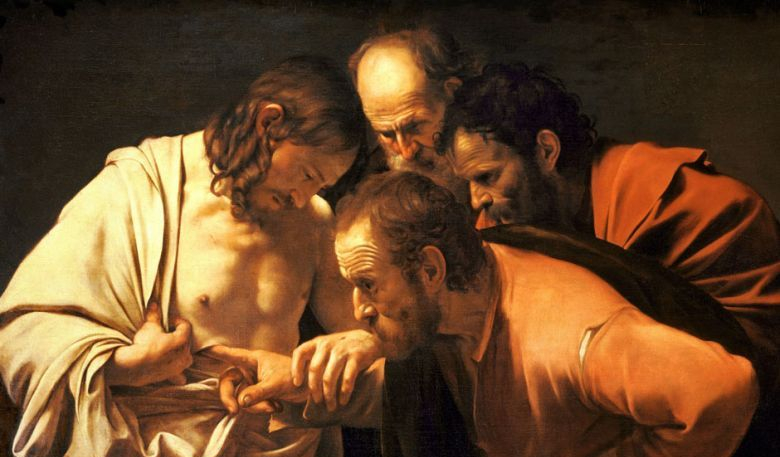
Now a week later his disciples were again inside and Thomas was with them. Jesus came, although the doors were locked, and stood in their midst… Then he said to Thomas, “Put your finger here and see my hands, and bring your hand and put it into my side, and do not be unbelieving, but believe.” Thomas answered and said to him, “My Lord and my God!” Jesus said to him, “Have you come to believe because you have seen me? Blessed are those who have not seen and have believed” (John 20:26, 27-29).
We are now on the eighth day of Easter also known as Divine Mercy Sunday that was instituted by St. John Paul II in May 23, 2000 as a “perennial invitation to the Christian World to face with confidence in divine benevolence the difficulties and trials that humankind will experience in the years to come.”
This we can see in Thomas also known as Didymus who was not present when Jesus first came to his disciples on the evening of Easter. See how Jesus as the one actually coming first because he is also the first to believe in us his disciples despite our many flaws. And absences or tardiness.
Joining his fellow disciples, Thomas came and believed on the eighth day after Easter. What Thomas had asked as proofs to believe in the Lord’s Resurrection were not really doubts to be taken negatively. It was not that Thomas did not believe but in fact, he wanted to believe more.
That is why he came the following Sunday. Because he believed.
Like us, there are times we feel at a loss in our faith in God when difficult and extraordinary things happen to us. We cry in desperation to God, seemingly doubting his presence or if he listens at all to our pleas but we come to pray because we believe. We cry only to someone we believe who can help us in our plight.
Coming and believing happen simultaneously: we come because we believe and we believe that is why we come.
Believing is more than an intellectual assent to a person or something.
Believing is entering into a relationship. There is something deeper that happens when we believe that is why we are moved to come, to draw near especially to a person.
When Jesus told Thomas “do not be unbelieving, but believe”, it was not a reproach but more of an exhortation he tells us too today to be intimate with him, to stay with him, to remain in him.
While the world tells everyone that to see is to believe, Jesus tells us that it is when we believe him, when we believe in him that we shall see. Even more. And clearly!
Believing is not actually concerned with proofs and evidence because whether with God or with another person, despite the many “proofs” we have gathered from all sources, none of them is actually the reason for our faith in God and with others. Or whatever like our vocation and profession.
Believing is the gift of faith nurtured in our relationships with God and with others.
It often starts so simple like when we pray the Apostles Creed and say “I believe in God” – in our believing and relating with God, we love, and love, and love even more even if there are pains and sufferings.
This we nurture by imitating the early Christians who devoted themselves to the teachings of the apostles that have been handed down to the Church, in communal life, and in the “breaking of the bread and prayers” which is the Holy Eucharist, the summit of our life as disciples of Christ (first reading).
That is why Peter in the second reading is all praises to those who believe and love Jesus even without having seen him: we continue to strive and persevere in life’s many trials because deep inside we experience the truth and realities of Christ’s resurrection, of his loving presence among us that leads us to profound joy and rejoicing in life. Most of all, with peace, the supreme gift of the Risen Lord.
Last March during my annual silent retreat as I turned 61 years old, my last reflection was Luke’s account of the Road to Emmaus, the gospel every evening of Easter.
In my meditation, I imagined myself joining the two disciples walking home to Emmaus. I was silent all throughout the journey, listening to their conversations until after the breaking of the bread in their home that opened their eyes to finally recognize Christ who had then vanished so quickly.
It was then when I actively joined the scene, telling the two disciples to return right away to Jerusalem. In my meditation, I felt the two disciples saying it was so dark and dangerous to travel back to Jerusalem. But I insisted, telling them, “maski na, tayo na!”
It was a turning point for me because for the past many years every time I go on my personal retreat and in my prayers, I always expressed to God my many fears in doing his will, refusing to follow him. I have always been like Jonah ever since in my relationship with God.
Last March was different. As I turned 61, I have come to believe more because I have become more daring.
There are still those fears in me about God’s will and plans but this time, I am no longer so concerned about my self but God alone – his will, his plans. And that is only when I felt truly at peace. Indeed, as John concluded his gospel today, Jesus does so many other things in our lives that is impossible to record but these few experiences we have of him are meant for us to believe him more, have life in him. Especially peace. Amen.