The Lord Is My Chef Breakfast Recipe for the Soul by Fr. Nicanor F. Lalog II
Tuesday, Memorial of St. Leo the Great, Pope, 10 November 2020
Titus 2:1-8, 11-14     >><)))*>  >><)))*>  >><)))*>     Luke 17:7-10
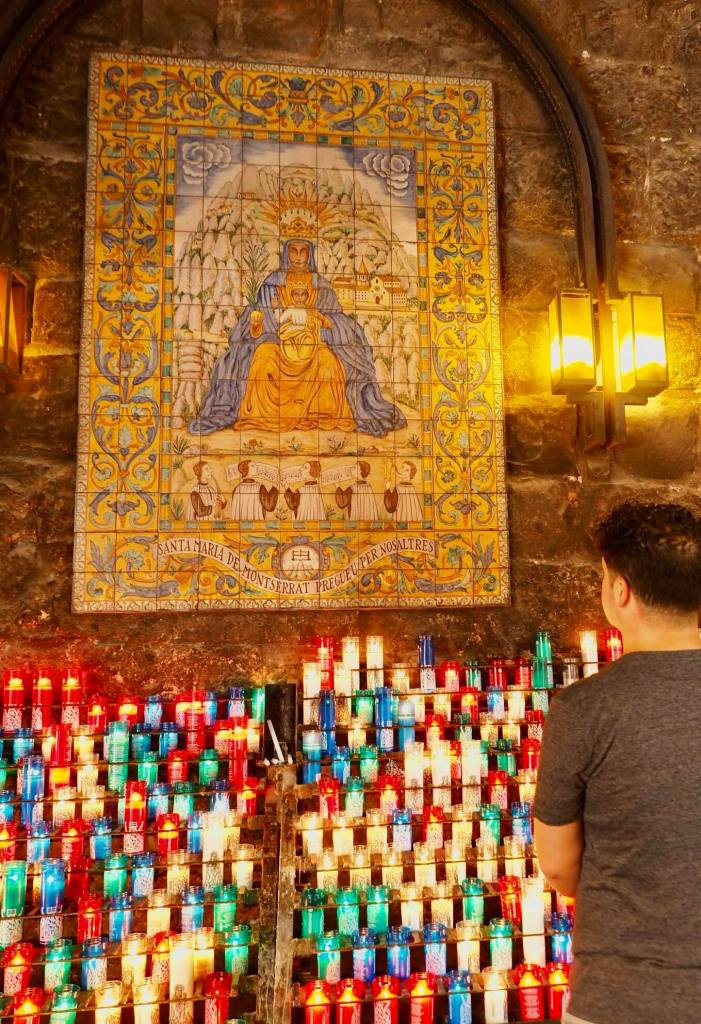
Photo by author, 2019.
God our Father, fill us with your Holy Spirit today so we may show you to others with our good examples of kind deeds and gentle words, loving patience and silent perseverance in the face of life’s many challenges worsened by the pandemic and recent events that make witnessing to your Son’s gospel so difficult.
Surely, if we speak like St. Paul today calling on Titus to be “consistent with sound doctrine” (Titus 2:1) in telling elder men and women as well as younger men and women on how to behave properly, people would laugh at us and even scorn us for being old-fashioned.
How sad that today, we no longer talk about setting good examples for others to follow and emulate but simply rely on what is seen on television and social media, pointing out what’s wrong or what should not be imitated without really trying to be a witness of gospel values like saying prayers, dressing properly and decently, being considerate of others in everything.
Give us the courage, Lord, “to reject godless ways and worldly desires and to live temperately, justly, and devoutly in this age” (Titus 1:11-12).
Like the servant in the parable today, may we take pride in our tasks and roles as your servants, O God, leading holy lives and genuinely caring for one another in love like St. Leo the Great who rose to fame and holiness “without much effort” of trying hard but by simply leading a holy life. Amen.
The Lord Is My Chef Sunday Recipe for the Soul by Fr. Nicanor F. Lalog II
Solemnity of All Saints, 01 November 2020
Revelation 7:2-4, 9-14   |+|   1 John 3:1-3   |+|   Matthew 5:1-12
“Mary and the Saints” painting by Duccio di Buonoinsegna (1308-1311) from en.wikipedia.org.
Let me begin our reflection on this All Saints’ Day with a joke from the “Language Nerds” on how the past, the present and the future came and appeared in a bar. Everybody was tense.
Our celebrations today and tomorrow deal with “verb tenses” – the past, the present, and the future that somehow converge in the here and now of Jesus Christ our Lord. We call it the tension of the already here but not yet, like God and heaven – both already here but not yet.
All Saints’ Day and All Souls’ Day are two Catholic celebrations so unique and distinctive of our faith that bring to the fore the beautiful tensions of the “here and not yet”, of that convergence of the temporal and eternal in our present lives.
It is something like our Filipino delicacies of tuyo (dried fish) and balut (fermented duck egg): when you smell the aroma of the frying tuyo by your neighbor, you could taste it but if you want to really experience its delight, you have to go to your neighbor and join their meal. Or the balut: is it an egg or a duckling?
In a similar manner, we find in our Gospel today that proverbial question of which came first, the egg or the chicken? Are we blessed because we followed the Beatitudes first or, are we blessed first that we can practice the Beatitudes of Christ?
When Jesus saw the crowds, he went up the mountain, and after he had sat down, his disciples came to him. He began to teach them, saying: “Blessed are the poor in spirit, for theirs is the kingdom of heaven. Blessed are they who mourn, for they will be comforted. Blessed are the meek, for they will inherit the land. Blessed are they who hunger and thirst for righteousness, for they will be satisfied. Blessed are the merciful, for they will be sown mercy. Blessed are the clean of heart, for they will see God. Blessed are….
When Jesus preached his sermon on the mount to launch his ministry, he first presented himself — that he is the Christ, the Anointed or Blessed One because he is in fact the Beatitudes: he is the poor in spirit, the merciful and meek, the one with a clean heart.
Inasmuch as the Beatitudes tell us who is Jesus Christ, the Beatitudes also challenge us followers of Jesus to imitate and follow him in being poor in spirit, merciful, and clean of heart.
At first glance, we notice that blessedness seems like a reward given by Jesus after we have imitated him like being blessed after being insulted and persecuted in his name, working for peace and hungering and thirsting for righteousness.
However, the very fact we are able to bear all these sufferings to live the Beatitudes means that we are already blessed.
And that is the truth: in Christ’s Passion, Death, and Resurrection, we have all been blessed by God that we are able to live as his beloved children, now living in his “kingdom of heaven” right here on earth.
Beloved: See what love the Father has bestowed on us that we may be called the children of God. Yet so we are… we are God’s children now; what we shall be has not yet been revealed. We do know that when it is revealed we shall be like him, for we shall see him as he is. Everyone who has this hope based on him makes himself pure, as he is pure.
1 John 3:1, 2-3
Blessedness is who we are as children of God unless we choose to live otherwise.
Blessedness is God’s gift to us that enables us to live according to his will and plans, projecting us further into the future to finally be with him in all eternity in heaven. When we try to live the Beatitudes of Jesus, of going against the tide and flow of the world where power and wealth, popularity and fame are the means life is measured, then that becomes our gift to God.
And that is when we enter into heaven and become saints like what we celebrate today.
According to St. John Paul II, the good news of life is that we all share in the life of God — and that is why we are all blessed.
Our sharing in the life of God makes us blessed.
The difference that we have with the saints is just the tenses: they are now celebrating at present the fullness of their blessedness, of being present before God in all eternity in heaven because they have so well accomplished while living here on earth the works of the Beatitudes of Christ in the past. They have overcome all tests and trials in the past and now having the rewards of full blessedness.
We, on the other hand, though already sharing in the blessed life of God here on earth in the present, still have to face and endure many other trials in the future to perfect ourselves in Christ until we get a final glimpse of him in the afterlife.
Photo by Dr. Mai B. Dela Peña, MD, at Spain, 2018.
Blessedness is a relationship with God.
It is now clear with us that saints are like us who are blessed because we share in the life of God. However, saints enjoy the fullness of this blessedness of being in the very presence of God as a “reward” or a result of their striving with God’s grace to live out the Beatitudes.
Saints now enjoy the eternal presence of God, the fullness of blessedness and fullness of their relationship in God and with God, from earth into heaven.
This is the reason we have a feast for all the saints or those who have gone ahead of us and tried to lead holy lives, living out their blessedness that they now enjoy the eternal presence of God in heaven. They need not be declared by the Church as saints whoever gets into heaven in the presence of God is a saint.
We who are still living here on earth, though blessed as we share in the life of God, cannot be considered as saints yet because we still have to go through a lot of purifications, of tasks in loving.
Again, we see that tension of the here and not yet in this aspect of being saints, of blessedness: heaven is eternal union with God (hell is eternal separation from God); blessedness and heaven are both our relationships with God.
Therefore, the challenge of our blessedness here on earth as seen in the Beatitudes of Jesus is how we maintain and keep that intimate relationship with God that every choice we make is always a choice for life, of choosing to love than hate, to forgive than revenge, to understand and let go.
In the first reading, John tells us of his vision of heaven with great multitude of “saints” or holy men and women “wearing white robes holding palm branches in their hands”. The Lord told him,
“These are the ones who have survived the time of great distress; they have washed their robes and made them white in the blood of the Lamb.”
Revelation 7:14
Although we are extolling in this solemnity all the unnamed saints now in heaven, this is still a feast celebrating the goodness of God, of his immense love for us in blessing us in Jesus Christ who enables us to do good in the power of the Holy Spirit.
As we remember all the Saints, we celebrate also this sharing of God’s life in us for us to be blessed, assuring us of being saints someday!
We are challenged today to live out this blessedness freely given to us by God by being more loving with others specially in this time of COVID-19 as well as when two super typhoons are threatening to slam into some parts of our country this week.
A short note about cemeteries
Sometimes, non-Catholics laugh at us every November first when we troop to the cemeteries to be with our departed loved ones instead of November 2. Despite the closure of cemeteries this week due to COVID-19, many have earlier visited their loved ones in cemeteries while the rest among us would surely do the same once the ban is lifted.
Is there something wrong? NONE. Except for those who just go to cemeteries to drink and have fun without praying and celebrating Mass in their parishes. But there is nothing wrong with our tradition of visiting cemeteries on November first.
In fact, it is a vibrant display of our faith in God because every time we visit the dead on All Saints’ Day, we also presume they are already saints, already in heaven.
Most of all, our coming to the cemeteries on All Saints’ Day is an expression of our hope in heaven while still here on earth.
The cemetery reminds us of hope in the future. In the past when we buried our dead, the cemetery has become the place of our mourning; but, every November first, the cemetery reminds us it is the place of hope where sadness is not really removed but where we find strength and faith that like our departed loved ones, we shall overcome all trials and sufferings here on earth to be one with them in the presence of God in heaven.
That is the good news of All Saints’ Day and All Souls’ Day: we are so blessed by God in Jesus Christ who had opened our access into heaven not only in the future when we die but even now as we mourn – and celebrate the memory of our dead, we already have a taste of eternal life.
May we live out this blessedness God has given us. Amen.
The Lord Is My Chef Breakfast Recipe for the Soul by Fr. Nicanor F. Lalog II
Friday, Week XXX, Year II in Ordinary Time, 30 October 2020
Philippians 1:1-11          >><)))*>  ||+||  <*(((><<     Luke 14:1-6
What a beautiful last Friday of October 2020 today, God our loving Father! After so many struggles in life this week, you send us our favorite people and friends, favorite memories, favorite sights and smells, and every other favorites that delight and console us, comfort and assure us.
You never allow bad things to continue hitting us! Just as we are about to give up, there you are always coming to us in so many ways like with St. Paul who have received some gifts from the Philippians — his most beloved and favorite community as he wrote them while in prison awaiting trial and sure death in Rome.
It happens so often with us too, Lord, and I am convinced you surely have a hand in them because as St. Paul wrote the Philippians:
I am confident of this, that the one who began a good work in you will continue to complete it until the day of Christ Jesus.
Philippians 1:6
We are not complaining for our many struggles in life; at least we are still alive because the moment we no longer struggle, then we must be with you in heaven!
I love the way how St. Paul told us that you, O Lord, perfects -that is, completes – every work we have done, always with us in whatever struggle we have, starting right at the moment we were born literally struggling for life.
Please bless our work and our efforts, our struggles that sometimes we feel going nowhere, feeling all is wasted.
Like that man healed on a sabbath at a home of a leading Pharisee, may we come to meet you always in faith as you have to be with us body and blood and spirit in Jesus Christ to bless and perfect our efforts and works, even sickness and sufferings.
May we pray to grow in love like St. Paul:
And this is my prayer: that your love may increase ever more and more in knowledge and every kind of perception, to discern what is of value, so that you may be pure and blameless for the day of Christ, filled with the fruit of righteousness that comes through Jesus Christ for the glory and praise of God.
The Lord Is My Chef Breakfast Recipe for the Soul by Fr. Nicanor F. Lalog II
Monday, Week XXX, Year II in Ordinary Time, 26 October 2020
Ephesians 4:32-5:8     >><)))*> ||  >><)))*>  ||  >><)))*>     Luke 13:10-17
Easter Vigil in the midst of COVID-19, 2020.
How beautiful are your words for us, loving Father, on this last Monday of October 2020!
Despite the rains caused by a typhoon, our first reading from St. Paul’s Letter to the Ephesians is so heartwarming in reminding us of our new humanity in Jesus Christ your Son, encouraging us to live moral lives by “living in love” (Eph.5:2) as “children of light” (Eph.5:8).
Living in love is living as children of light by first being imitators of you, O God, which is to be holy as you are holy. Remove from our minds that holiness is being sinless; teach us to realize that being holy, being “whole” and perfect is a process of being filled with you, dear God.
Teach us to be open to let you fill us, God, full of life and zest, raring to explore and move forward despite the many pains and setbacks we have had.
Cleanse us of immorality and impurity in our minds and hearts and lips.
Keep us grateful to your many blessings we have received specially those we never asked from you yet you have generously given us.
Most of all, make us truthful and sincere in our love for you through our neighbors; take off our masks of hypocrisy like the leader of the synagogue where Jesus healed on a sabbath a woman crippled by a spirit for 18 years (Lk.13:14).
To live in love as your children of light Lord is also to free others from the many burdens burdens in life they carry so they may start living in you through Jesus Christ. Amen.
The Lord Is My Chef Sunday Recipe for the Soul by Fr. Nicanor F. Lalog II
Week XXIX-A in Ordinary Time, 18 October 2020
Isaiah 45:1, 4-6  ><)))*> + <*(((><  1 Thessalonians 1:1-5 ><)))*> + <*(((><  Matthew 22:15-21
Photo by author, the Walls of Jerusalem, May 2019.
People are lonely because they build walls instead of bridges.
“I Like You Just Because” by Albert J. Nimeth, OFM
We live in a world with so many divisions of our own making. Most of the time we are divided on the things we possess not only of things like properties and borders, inheritance, and toys but also of persons like in child custody and “trading” players in sports! So many times these divisions have caused harm and destruction among us as nations and as individuals.
Sad to say, these divisions come from within us in our hearts where we always try to divide our lives between God and our very selves, especially in the realm of religion and civic life.
The Pharisees went off and plotted how they might entrap Jesus in speech. They sent their disciples to him, with the Herodians, saying, “Tell us, then, what is your opinion: Is it lawful to pay the census tax to Caesar or not?”
Matthew 22:15-16, 17
When our possessions possess us.
Today and next Sunday, Jesus is confronted by his enemies who have increased their efforts in finding faults against him in his speech to charge him with serious cases and get rid of him; but, more than dispatching his enemies with his brilliant answers to their question, Jesus brought to the fore the real score of the great divide within us.
In our gospel scene today, we can see clearly how divided within were the enemies of Jesus like the Pharisees and Herodians who joined forces to put Jesus down despite their being poles apart in their beliefs: the former who were against the Romans taking control in Israel while the latter were members of a faction supportive of the occupying forces.
As they sought the Lord’s opinion on the perceived deep divisions many still believe to exist up to this day between “Caesar” and God, Jesus brought to the open how divided inside were his enemies after all —- just like us today when we have been possessed by our very own possessions!
Knowing their malice, Jesus said, “Why are you testing me, you hypocrites? Show me the coin that pays the census tax.” Then they handed handed him the Roman coin. He said to them, “Whose image is this and whose inscription?” They replied, “Caesar’s.” At that he said to them, “Then repay to Caesar what belongs to Caesar and to God what belongs to God.”
Matthew 22:18-21
Jesus is not proposing a compromise in his answer but rather trying to heal the false divisions we have created inside us.
Aside from the silly alliance of the Pharisees and Herodians, Jesus bared how divided within they have always been when they gave him a coin used to pay taxes to the Caesar that has an image of the emperor and the inscription that says “son of god” – something that was clearly against the First Commandment of God that in fact, they should have not been carrying at all when in the temple area!
They have been divided inside because they have been possessed by their possessions like money. In telling them, and us today, to “repay to Caesar what belongs to Caesar”, Jesus reminds us that what belongs to Caesar are inanimate objects that are external to the heart of things. When a young man asked Jesus one day to tell his brother to give him his share of inheritance, the Lord stressed that he had not come to settle our disputes about money and properties (Lk.12:13). Today, Jesus is telling us that it is our responsibility and not for him to decide for us how to settle our political and other problems.
Jesus clearly points out that what belongs to God is our whole selves, our whole hearts undivided by pride, hypocrisy, and selfishness. While we must give back to Caesar what is due them as further taught by St. Paul and St. Peter in their letters to the early Christians, Jesus directly tells us that our duties to God bind all, everywhere and all the time.
Unlike the image of the Caesar found on coins, we are stamped with the image and likeness of God who created us out of his immense love. It is our duty and moral obligation to always ensure that this image of God in us is never destroyed and always upheld.
Here falls the sensitive – and false issue of “separation of Church and state” in our time like the payment of Roman tax raised by the Pharisees and Herodians. Nowhere does the concept forbid us priests nor the Church as an institution not to speak out when the very image of God is destroyed among men and women with injustice, violence and abject poverty.
What the separation of Church and state forbids is the support and endorsement of a state religion; in a sense, it promotes more harmony and unity among government and religions in their exercise of their true freedom among peoples.
Even God himself works within our own settings in this world to fulfill his plans for us. Trust him because everything works best for those who have believe wholly in God.
In the first reading from the prophet Isaiah we find the most amusing bit of history of how God had used a pagan ruler, Cyrus the king of Persia or Iran today to become his anointed savior or messiah of Israel then in their Babylonian exile. Imagine how God used an outsider, an unbeliever to free his chosen people from one of their darkest moments in history to show us that God is the master of history because everything is his.
May we heed St. Paul’s words to the Thessalonians and to us today to never doubt it was God in Jesus Christ who called us out of darkness and sin to be his new chosen people. Everything in our lives specially in our ministries and apostolate are the initiatives of God – may our hearts be undivided in giving him back everything through Jesus Christ, our life and meaning. Amen.
A blessed new week to you!
Photo by the author, view of the hills from Jerusalem temple, May 2019.
The Lord Is My Chef Sunday Recipe for the Soul by Fr. Nicanor F. Lalog II
Week XXVIII-A in Ordinary Time, 11 October 2020
Isaiah 25:6-10     ><)))*>     Philippians 4:12-14, 19-20     >><)))*>     Matthew 22:1-14
Photo by author, Our Lady of Mount Carmel of the Holy Family, Guiguinto, Bulacan (2018).
As we end the series of teachings in parables by Jesus directed to the chief priests and elders of the people, St. Paul concludes his Letter to the Philippians in our second reading with words so moving for a man awaiting trial and sure death, giving us a glimpse at how this great Apostle of the Lord looked at the most ordinary things in life.
Brothers and sisters: I know how to live in humble circumstances; I know also how to live in abundance. In every circumstance and in all things I have learned the secret of being well fed and of going hungry, of living in abundance and of being in need. I can do all things in him who strengthens me.
Philippians 4:12-14
Wow! Here we find St. Paul at his best and finest, with his mastery of language at the service of his innermost thoughts and feelings, indicating his transformation from the many hardships and difficulties he had gone through as an Apostle and suffered as a prisoner.
Like St. Paul, there are times we experience that perfect balance in life called equilibrium when we are able to bridge the distance between our mind and our heart with Jesus at the center amid so many trials and difficulties.
Most of all, we see in this short passage how St. Paul accepted both living in need and in abundance with calmness and composure because of Jesus Christ who strengthened him!
What an encouragement for us all in this time of pandemic to remind us of learning to adjust to situations, that true peace within comes not from abundance or scarcity of material goods but of letting go and letting God in our lives. St. Paul witnessed to us the centrality of the Lord’s teaching of denying ourselves, taking our cross and following Jesus.
Most of all, in St. Paul we find what is to be clothed in Christ or “to put on Jesus Christ” (Rom.13:14) by accepting God’s invitation to salvation through his Son as the parable of the wedding feast tells us in our gospel this Sunday.
Jesus again in reply spoke to the chief priests and elders of the people in parables, saying, “The kingdom of heaven may be likened to a king who gave a wedding feast for his son. He dispatched his servants to summon the invited guests to the feast, but they refused to come. A second time he sent other servants… Some ignored the invitation and went away, one to his farm, another to his business. The rest laid hold of his servants, mistreated them, and killed them. The king was enraged and sent his troops, destroyed those murderers, and burned their city.
Matthew 22:1-4, 5-7
Do not ignore God’s invitation; carpe diem (seize the moment).
Photo by Angelo N. Carpio, January 2020.
Jesus continues to direct his parables to the chief priests and elders of the people not really to shame them and expose their sinister plots against him but more in the hope of converting them, of giving them the chance of getting into God’s kingdom in heaven.
That is how great is his love for everyone, especially the sinful even if they would not admit it — just like us!
Keep in mind that Christ speaks always in the present and this parable is also meant for us who feel “entitled” in may ways like the chief priests and elders at that time. Interestingly, today’s parable to a large extent has to be taken in the context of the Sunday Mass, the prefiguration of the wedding feast in heaven to which we are all invited.
But how can we get to the wedding feast in heaven if we feel so sure like the chief priests and elders that we refuse to accept God’s invitation?
The Eucharist is the summit of our Christian life where we receive Jesus Christ in words proclaimed, in his Body and Blood, and among the people gathered. Every day Jesus is inviting us to partake in his Sacred Meal to be nourished and get our bearings in life through him like St. Paul.
See how before the pandemic, people refused to celebrate Mass and other Sacraments; but, when quarantine measures were implemented with the suspension of public Masses, everybody wanted to go to churches and receive the Sacraments, specially Holy Communion and Baptism, as well as Confession and Anointing of the Sick!
Photo from Shutterstock/Aleteia.
After seven months of pandemic, many of us have learned to adjust to the new situation but sadly, many have gone back to totally ignoring the Sunday Mass. Worst is at how some have considered online Masses as “video-on-demand” making Jesus Christ a “commodity” anyone can have when most convenient. Pope Francis had reminded us last summer that online Masses are not the norm but a response to the pandemic. Nonetheless, we still have to dispose ourselves properly when celebrating with online Masses like in actual live Mass in a Church and strive to be punctual and avoid doing other things during the online celebration.
In giving us these modern means of communications, God continues to invite us to come to him and gather in his name as a family in our homes for the Sunday online Masses and other liturgical activities that nourish our souls so essential in these trying times. Like the king in the parable today who had to invite guests thrice to his son’s wedding feast, God gives us all the opportunities and chances to celebrate in his gift of salvation through Jesus in the Eucharist which is the summit of Christian life.
May we not miss every opportunity!
When I was assigned to our diocesan schools during my first ten years in priesthood, I used to tell my students that God’s mercy and forgiveness are unlimited but there are acts that can have irreversible consequences like getting involved in a murder, getting pregnant outside marriage, or being caught in a video scam. I would tell them that God will surely forgive you and give you many chances in life while people like your family and friends including those you may have hurt may also forgive and accept you; however, you cannot escape the consequences of those acts that will surely limit your freedom and change forever your situations in life. Bottomline is, do not let yourself be missed out in accepting God’s invitation to his feast of life and salvation by following the path of holiness that beings in the Holy Mass.
The first reading from the Prophet Isaiah directs our attention to “that day” when God would save us and welcome us into heaven symbolized by the feast or banquet with great food and drinks. The good news is we are all invited to his feast, assured with a seat and it would only be our fault to not make it there, either by refusing it or not getting dressed properly.
Being properly dressed is always a sign of maturity.
Photo by Ezra Acayan/Getty Images, 09 February 2020, Baclaran Church.
“The servants went out into the streets and gathered all they found, good and bad alike, and the hall was filled with guests. But when the king came in to meet the guests he saw a man there not dressed in a wedding garment. The king said to him, ‘My friend, how is it that you came in here without a wedding garment?’ But he was reduced to silence. Then the king said to his attendants, ‘Bind his hands and feet, and cast him into the darkness outside, where there will be wailing and grinding of teeth.’ Many are invited, but few are chosen.”
As is often the case in his parables, Jesus pulled a surprise when he added another parable to this parable of the wedding feast that could have easily ended in the annihilation of those who rejected the king’s two earlier invitations.
God is the king who was so good that he never tired of inviting guests thrice to the wedding feast of his son, and this time he opened it to everyone! And here lies the clincher: though everyone is invited, guests were expected to come in proper attire.
We have learned at a very young age of getting properly dressed in an occasion. In fact, dressing properly is a sign of maturity. Some people especially in this age always claim what matters is the inside of the person not the outside appearance like clothes; but, they forget that the outside also indicates what is inside of us!
Clothes speak a lot of who we are and what we are that even St. Paul used several times the metaphors of clothes like “putting on the Lord Jesus” or being “clothed in Christ” as we have cited earlier.
See how the king went to meet the guests not just for pleasantries but for inspection that immediately his eyes caught the man not dressed in a wedding garment. The king was even courteous addressing the man as “my friend” when asked why he came not in a wedding garment.
Try to imagine the scene with that man “reduced to silence” meaning, he was guilty of not putting on a wedding garment even if he knew that was the occasion he was going to. He had been remiss of his duties and obligations, just like the wicked tenants last week or the merciless servant last month.
"Many are invited, but few are chosen" (Matthew 22:14)
St. Matthew never failed to remind us these past weeks that our faith has no value if not translated into actions, if it does not bear fruits. Today, he reminds us to be properly dressed to become a part of the wedding feast of the Lord, of the need to be clothed in holiness, in charity, and kindness with others.
Moreover, with just barely two months to go before we end the liturgical year to usher in Advent in preparation for Christmas, Jesus tells us today to never feel so sure, even “safely assured” of getting into heaven like the chief priests and elders of his time that even if we celebrate Sunday Masses weekly, online or actual, nothing is final yet in this life until we all get into the hall of the wedding feast in heaven when we are judged for our good deeds.
For the meantime, let us not miss joining the “rehearsals” for that feast – the Sunday Mass we celebrate weekly when he invites everyone to come. Be sure to be properly dressed for the occasion, literally and figuratively speaking. Amen.
A blessed week to everyone!
Photo by author at Silang, Cavite, 22 September 2020.
Quiet Storm by Fr. Nicanor F. Lalog II, 08 October 2020
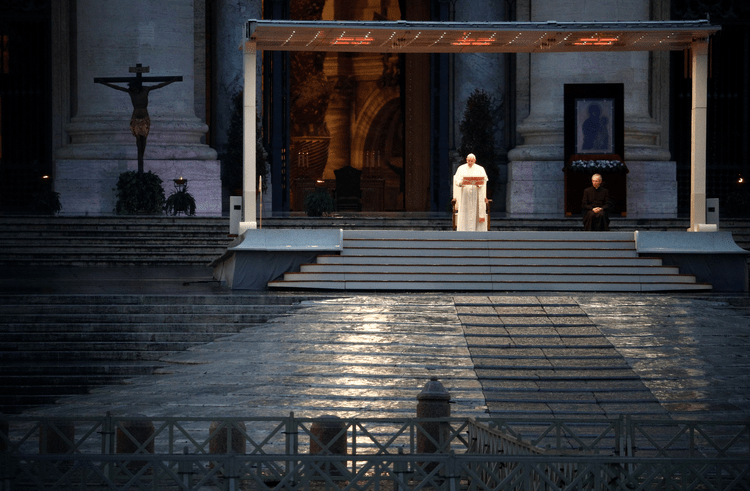
Pope Francis delivering his “Urbi et Orbi” before an empty St. Peter’s Square in Rome, 27 March 2020 at the height of COVID-19 pandemic. Photo from Vatican Media/AFP via Getty Images.
In the beginning
we were counting
the days of quarantine
but when COVID-19
spread with so many dying
then we realized this is not just passing
but could be staying
leaving the world in a standstill
shaking our very core and being
bringing us back to God
praying, surrendering everything
to him as our sole grounding.
Finding God
during this quarantine
is indeed a blessing
directing us to look within
to examine our being
where every healing must begin;
Any sickness is a dis-ease
a lack of order
when things are not pleasing
because of sin and wrong-doing
exactly what we are now seeing
with COVID-19.
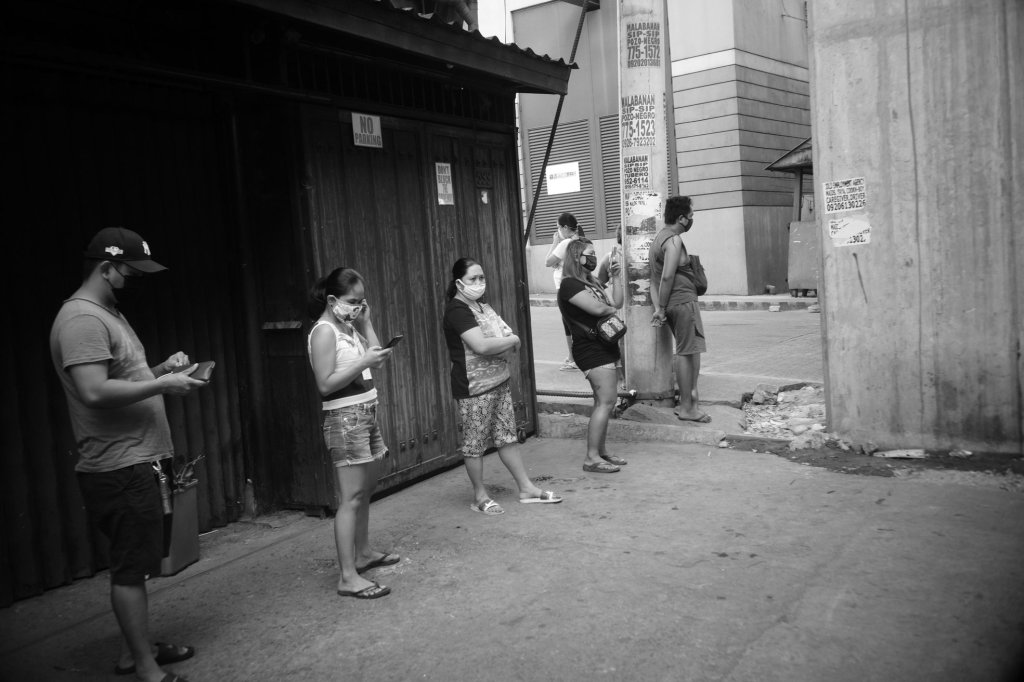
Photo by Mr. Jay Javier, May 2020.
Consider the following:
Long before social distancing
we have always been so far away
even from those with whom we stay
foregoing all the loving,
replaced with twitting or texting;
When we were growing
we were taught to keep our hands clean
but we have pushed it to the extreme
refusing to dirty our hands
forgetting to work with honor and dignity
keeping them free from stains of dishonesty;
Of all the most disturbing
during this quarantine
is the mask that cover our face;
but, why be fazed, objections raised
when we have long erased
to see in every face
that tremendous grace
of God's trace?
In the midst of this calamity
when air became pollution-free
we rejoiced at Nature's beauty;
the remedy for every malady
is not found only in the pharmacy
but right in our hearts when we see
everything and everyone in harmony.
Oh how I long when that day shall be
when everyone is free with nothing to worry;
at ease shall we carry within the peace and serenity
of one big family living cleanly in God's mercy.
The Lord Is My Chef Breakfast Recipe for the Soul by Fr. Nicanor F. Lalog II
Monday, Feast of St. Bartholomew, Apostle, 24 August 2020
Revelation 21:9-14 >><}}}*> |+| >><}}}*> |+| >><}}}*> John 1:45-51
Photo by author, Subic, 2018.
Glory and praise to you, Lord Jesus, the “Word who became flesh and dwelt among us” to reveal the Father’s immense love for us all. He was not contented in just telling the prophets of Old Testament how he loved us that He came and lived with us in you, Lord Jesus!
And that is why we also rejoice on this Feast of St. Bartholomew, a.k.a. Nathanael, who was introduced to you by another Apostle you have called earlier:
Philip found Nathanael and told him, “We have found the one about whom Moses wrote in the law, and also the prophets, Jesus, son of Joseph, from Nazareth.” But Nathanael said to him, “Can anything good come from Nazareth?” Philip said to him, “Come and see.” Jesus saw Nathanael coming toward him and said of him, “Here is a true child of Israel. There is no duplicity in him.” Nathanael said to him, “How did you know me?” Jesus answered and said to him, “Before Philip called you, I saw you under the fig tree.” Nathanael answered him, “Rabbi, you are the Son of God; you are the King of Israel.”
John 1:45-49
O dear Jesus, like St. Peter in the gospel yesterday and now St. Bartholomew, you are telling us anew to never be contented with mere words, with the “what” of who you really are, that we must always “come and see you” in order to experience your very person and truly know you.
I really wonder O Lord what your words meant that before Philip called Nathanael-Batholomew, you have seen him under the fig tree; however, I am so convinced that in your words, Nathanael-Bartholomew must have felt something deep inside him that he threw himself totally to you as your Apostle.
Most of all, teach me to remain simple and hidden in you, Jesus that like St. Bartholomew, despite the scarcity of stories and information about him except this little anecdote from the fourth Gospel, he remained faithful to you until his death by flaying reportedly in India.
May we imitate St. Bartholomew who had shown us that more than words, what matters is our oneness in you, Jesus, without any need for us doing sensational deeds, earning thousands of “likes” and “followers” in social media because only you, Lord, remains extraordinary above all. Amen.
“The most resplendent manifestation of God’s glory is the salvation of souls, whom Christ redeemed by shedding his blood. To work for the salvation and sanctification of as many souls as possible, therefore, is the preeminent purpose of the apostolic life.”
From the Letters of Maximilian Mary Kolbe, Office of Readings
Praise and thanksgiving to you our loving Father for a holy saint in our modern time, St. Maximilian Mary Kolbe whose memorial we celebrate today. His offering of his life in place of another prisoner at Auschwitz in 1941 was a fitting cap for his life of dedication in proclaiming the Gospel of Jesus Christ in words and in deeds.
Though there are no more gas chambers unlike during the time of St. Maximilian Mary Kolbe, the killing of so many people in various forms and methods continue to this day — right on our streets, in abortion clinics, in prisons, even in our homes and in social media where we spread toxins of lies that mislead and destroy many lives.
Inspire us like St. Maximilian Mary Kolbe to work for the sanctification of the world by sharing more of your love and kindness, mercy and forgiveness to everyone especially the weak and vulnerable to abuses and worldly influences.
Like this modern saint who lived during the harshest conditions of World War II, may we strive to make you present in the world where despite the ease and comforts of modern life, many of us are still lost and alone, feeling angry, empty, and confused.
Through our lives, may we fill the world with your presence and holiness by reminding people to return to your original plan of harmony and unity in your love as Jesus told the Pharisees in the gospel today:
Jesus said to them, “Because of the hardness of your hearts Moses allowed you to divorce your wives, but from the beginning it was not so.”
Matthew 19:8
Most of all, to make the world holy anew, grant us courage to stand for what is true and good, to remain standing at the side of your Son’s Cross for indeed, as St. Maximilian Mary Kolbe had taught us in one of his writings, “The deadliest poison of our time is indifference.”Amen.
Quiet Storm by Fr. Nicanor F. Lalog II, 25 July 2020
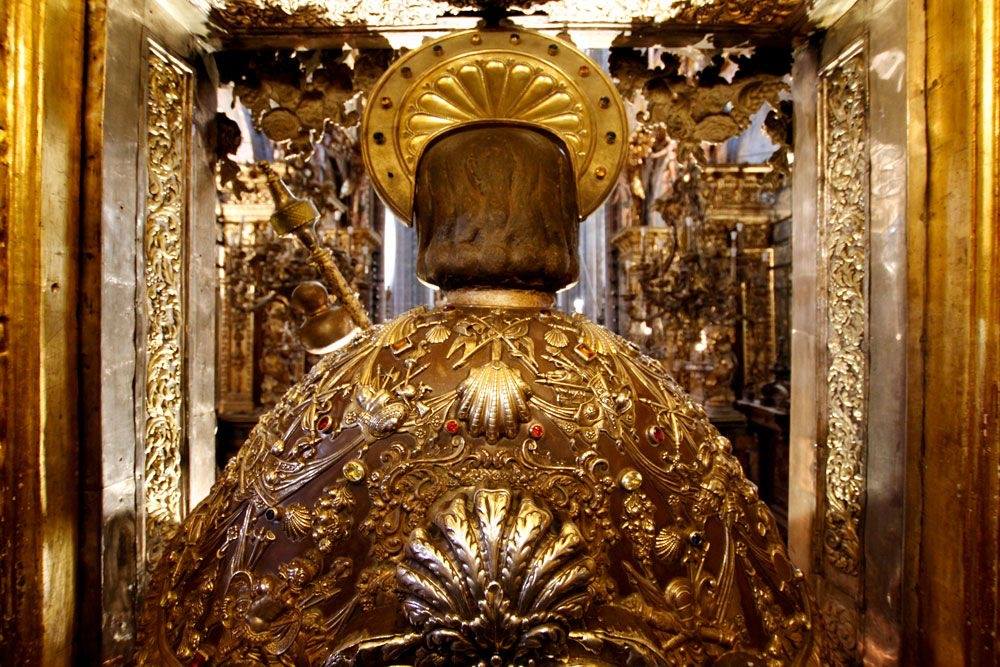
Santiago de Compostela in Spain is one of the world’s oldest and most popular pilgrim sites where the body of the Apostle St. James the Greater whose feast we are celebrating today is believed to be buried in its beautiful cathedral.
I have not been there yet and despite COVID-19’s disruption of air travel expected to last until 2022, my hope remains that someday in God’s time I may finally do the “el camino de Santiago de Compostela” (the way of Saint James of Compostela), too.
But, with or without the el camino de Santiago de Compostela, this great Apostle from the very beginning had always been in a journey in himself into the kingdom of God – Jesus Christ – by showing us the way of transformation into a true disciple of the Lord.
He is called the Greater not because he is holier than the other St. James called “the Lesser”, son of Alpheus, but to simply indicate the different importance they received in the writings of the New Testament. In the gospel of Mark, he comes in second in the list after Peter while in the gospels of Matthew and Luke, he is ranked third after the brothers Peter and Andrew; he again comes in third in the Acts of the Apostles after St. Peter and his brother St. John.
It is from this book where we also learn St. James the Greater as the first bishop of the original Christian community in Jerusalem that during the persecution by King Herod Agrippa in 40 AD, he also became the first Apostle to be martyred (Acts 12:1-2).
His martyr’s death thus fulfilled Christ’s words to him that he would indeed “drink from his chalice” to be with him in his Kingdom, a journey that essentially began within this great apostle after leaving everything behind to follow Jesus.
The journey within self to Jesus Christ
St. James the Greater and his brother St. John the Evangelist and believed to be the same beloved disciple came from a middle class family with both parents still alive and most likely, very supportive of them as attested by some little anecdotes in the gospel accounts.
Money was never an issue for them because their father Zebedee could hire workers to work in their fishing business. He must have sighed with a great relief when James and John immediately left him after being called by Jesus to be his disciples.
Marker along the “el camino de Santiago de Compostela”.
Finally, his sons have found some directions in life following Jesus who was getting known then in Galilee as a powerful and credible Teacher unlike the Pharisees and scribes.
Jesus nicknamed James and John as Boanerges for “Sons of thunder” (Mk.3:17) due to their temperament like when they proposed that they send fire to burn a Samaritan town that have refused them passage during their journey to Jerusalem (Lk.9:54).
They have seen and experienced the tremendous powers of Jesus not only in preaching but most especially in calming the storms, walking on sea, exorcising evil spirits, healing all kinds of sickness, and even raising to life some who have died.
Most of all, St. James the Greater was privileged to witness along with his brother and St. Peter the Transfiguration of Jesus Christ on Mount Tabor, seeing all the glory of Christ conversing with Moses and Elijah. It was after this major event that their most controversial episode would occur when their mother came to ask Jesus that James and John be seated “one at your right and the other at your left, in your Kingdom” (Mt.20:21).
The other ten Apostles “grew indignant” of the brothers James and John for being so ambitious but Jesus summoned them and explained things which all of them would heed except for one:
“You know that the rulers of the Gentiles lord it over them, and the great ones make their authority over them felt. But it shall not be also among you. Rather, whoever wishes to be great among you shall be your servant; whoever wishes to be first among you shall be your slave. Just so, the Son of Man did not come to be served but to serve and to give is life as a ransom for many.”
Matthew 20:25-28
This took place shortly before Palm Sunday when Jesus entered Jerusalem.
A few days later on the evening of Holy Thursday, Jesus again brought St. James the Greater with his brother St. John and St. Peter to accompany him pray at Gethsemane where Judas Iscariot eventually betrayed him to his enemies.
A pilgrim hugging from the back the statue of Santiago de Compostela after completing his el camino.
Here we find St. James the Greater being present to two major stops in Jesus Christ’s journey to the Calvary: first, on Mount Tabor for his Transfiguration and second, at Gethsemane for his agony in the garden. In both events in the life of our Lord, St. James the Greater was a privileged witness, first of his coming glory and then of his passion and death.
It would only be after Easter and the Pentecost when all these major stops in his personal journey with Christ when everything would become clear to him and the other Apostles.
All along their journey from the shores of Galilee to Jerusalem, St. James the Greater remained by the side of Jesus Christ, probably unaware of another journey with the Lord taking place right inside his heart to truly be a part of his Kingdom by sharing in his Passion, Death, and Resurrection.
For his faithful adherence to Jesus from Galilee to Jerusalem, St. James the Greater again had the rare privilege like at Mount Tabor and Gethsemane in being the first to die as a martyr proclaiming the Gospel of Christ which is the meaning of the expression of “drinking from the chalice” of the Lord.
Sometimes in life, we just have to make “sakay” as my generation used to say, “sakay lang ng sakay” or “ride on, man, ride on” without really knowing where our trip would lead us. St. James just made “sakay” without knowing Jesus was already fulfilling his wish of “drinking from his chalice”.
Photo by Fr. Gener Garcia, sculpture of a pilgrim’s feet at Santiago de Compostela museum, 2019.
St. James the Greater was truly great not because of the distances in miles or kilometers he had covered with Jesus from Galilee to Jerusalem and all the way to Compostela in Spain; we honor him today because of that great journey he had undertaken within him, in his heart to remain always at the side of Christ even if had to smoothen his many rough edges as a person, and cleanse his heart as a sinner like us.
That is the most important journey we are all taking in this life, the journey within us.
The longest journey in life is the distance between the heart and the mind.
Former UN Sec.Gen Dag Hammarskjold in “Markings”
My friend Fr. Gener Garcia last year went to Santiago de Compostela to follow the el camino with our kababayan Bishop Bart Santos of Iba, Zambales and Fr. Jaypee Avila assigned as a chaplain for OFW’s in Milan, Italy.
He is so generous to share with us his photos of their pilgrimage as well as his experiences and realizations in life. According to him, on the four sides of the sculpture of the pilgrim’s feet in front of the museum of Santiago de Compostela is the following quotation:
Marker along the el camino de Santiago de Compostela.
Camino recto, camino erguido, camino buscando un sentido. Camino porque tengo un objetivo, y no parare hasta alcanzar mi destino.
(I walk straight, I walk upright, I walk looking for meaning. I walk with a purpose and I won’t stop until I meet my destiny.)
The pilgrim’s journey is the same one you and I are on. Know your goals and understand your challenges. Face them head-on, tackle them with intention, and never give up.
Do you know what your purpose in life is? What would you say if someone ask you what your destiny was?