Thus says the Lord:
"Cursed is the man who trusts in human beings,
who seeks his strength in flesh,
whose heart turns away from the Lord.
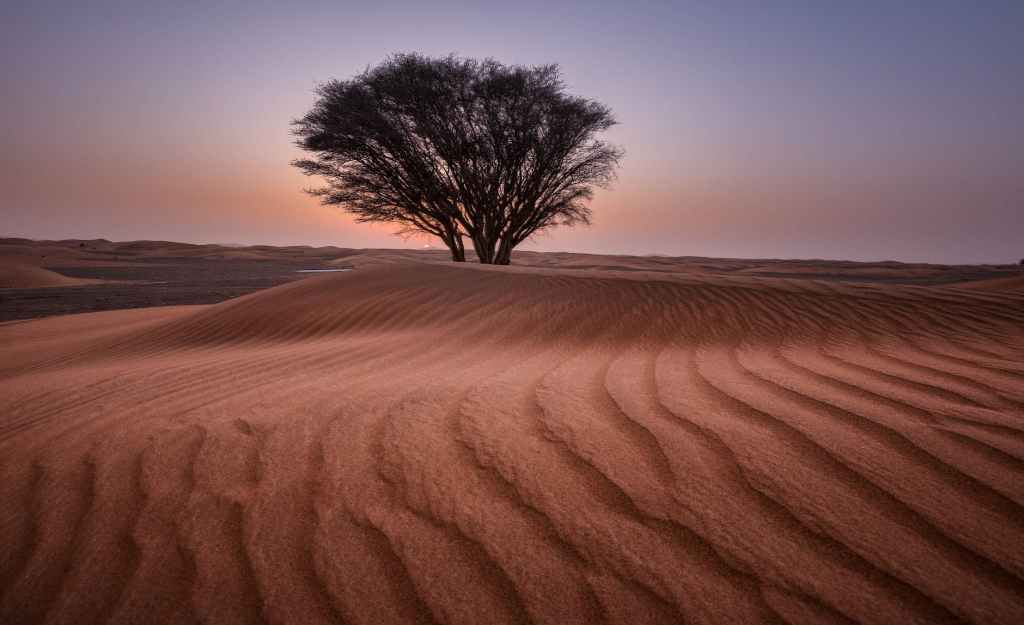
He is like a barren bush in the desert
that enjoys no change of season,
but stands in a lava waste,
a salt and empty earth"
(Jeremiah 17:5-6).
Forgive us,
merciful Father
for turning away from you,
and turning away from our
neighbors especially the sick
many other Lazarus
we ignore at our doorsteps;
forgive us in believing more
in ourselves,
in our science and technology,
ideologies and philosophies
that stretch our rights and freedom
forgetting all about our responsibilities;
how foolish,
O God,
 that we insist on our
beliefs and misplaced trust
in ourselves,
in everything that is passing
and temporary for as long
as it is self-serving
that we become like
a barren bush
or shrub in the desert,
drying up,
dying,
hoping for the rains
that would never come.
Awaken us,
Lord
from this foolishness
and let us arise
to return to you
until there is time.
Photo by author, Hidden Valley, Laguna, February 2025.
Thus says the Lord:
"Blessed is the man
who trusts in the Lord,
whose hope is the Lord.
He is like a tree planted beside
waters that stretches out its roots
to the stream; it fears not the heat
when it comes, its leaves stay green;
in the year of drought it shows no distress,
but still bears fruit"
(Jeremiah 17:7-8).
Let me find my way back
to you, God our Father;
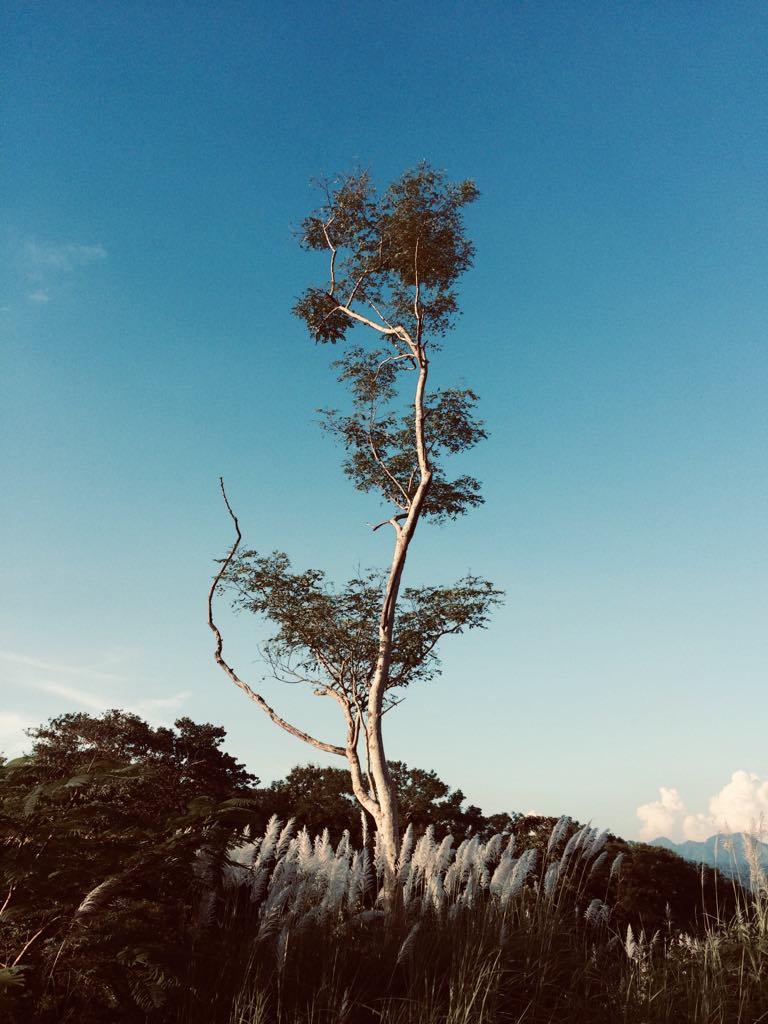
let me be like that tree
planted beside the stream,
beside you,
in you,
trusting you alone;
let me be rooted in you,
Father,
filled with life
and meaning;
deepen my roots in you,
Father,
listening more to your voice
of wisdom
and truth
that are inconvenient
in this age of instants
comfort.
Photo by author, Malagos, Davao City, 18 August 2018.
Lord Jesus Christ,
you have given me with so much
and I have given so little;
let me give more of myself
to you so I can give
and share you more
with others;
keep me rooted in you
as I surrender myself to you,
doing your most holy will.
Amen.
40 Shades of Lent by Fr. Nicanor F. Lalog II
Tuesday in the First Week of Lent, 24 February 2026
Isaiah 55:10-11     + + +     Matthew 6:7-15
Photo by author, somewhere in the SCTEx, November 2018.
Today I borrow
the words of your servant,
Lord Jesus Christ,
the late Fr. John Main, OSB
who wrote that
"The meaning of life
is the mystery of Love.
Just as the roots of trees
hold firm in the soil,
so it is the roots of love
that hold the ground
of our being together."
Keep me rooted in you,
God our Father;
keep me rooted in your love
in Jesus Christ your Son;
water and nourish me
with your words of life
so I may grow tall,
spread my branches,
bloom and bear fruit
to share your love and
kindness and mercy
with others;
keep me rooted in you,
Lord,
strong and firm
to weather the harshest
storms and summer
in life, still full of sap,
still full of life.
Lord Jesus,
you have given me with so much
and I have given so little;
teach me to give more
of myself to you
so I can give more of you
and of your love
to others.
Amen.
Quiet Storm by Fr. Nicanor F. Lalog II, 15 January 2026
Photo by Ar. Philip Santiago, Basilica of the Annunciation, Israel, October 2025.
Two priests and a former nun personally known to me died in our diocese last Sunday. It was also the birthdate of the late Bishop Cirilo Almario, Jr. whom I had remembered in my two early morning Masses on that Sunday, January 11, 2026.
In those two Masses too I mentioned in my homily the retreat I facilitated first week of January with my friends about “ageing gracefully” – my own realizations since joining their ranks as senior citizens last March.
Let me elaborate those two points I have shared with them and in my homily last Sunday.
From forbes.com.
First, let us embrace our being old. Stop saying “when we get old”, pagtanda natin because we are already old. Period. Matanda na tayo.
We cannot reverse our ageing process and it is useless to have all these cosmetic manipulations like dyeing our hair black or stretching our sagging skin and removing those wrinkles.
Embrace old age. It is beautiful and wonderful because it is so good. Our Filipino word for “old” says it all – matanda – which ironically so many women hate to hear as they stress that kalabaw lang ang tumatanda. That is not true.
Our word matanda is from the root word tanda which means “sign” that is why an old person is rightly called matanda because he/she is a sign of God’s goodness, a sign of God’s mercy and love, a sign of God’s beauty and majesty.
Moreover, a matanda is a sign of wisdom and grace that is why when we were young boys, we wanted to be old by putting our dad’s eyeglasses or taste his cigarettes and beer while girls put on their mom’s make up and high heeled shoes. How funny that when we are already old, we resist to accept the fact that we strive to look young again, sometimes ending up as nagmumurang kamatis.
Photo by Mr. Jim Marpa, 2019.
Technically speaking, “old” is actually harsh. Old is something about a past phase that has ran its course like being outdated. Luma in Filipino that connotes stale, passe, lacking relevance and sadly, useless. Just for display purposes. As a person, that is the one we refer to as walang pinagkatandaan. Or huklubang matanda.
To be more specific, the better English term referring to ageing gracefully is ancient that exudes with a sense of timeliness, of being perpetually relevant like the ancient ruins in Rome, Athens, and Jerusalem. Actually, some biblical experts have wanted to rename the “Old Testament” as “Ancient Testament” following this line of thinking.
Photo by author, Ephesus, Turkiye, November 2025.
Things and even persons can rightly be referred to as ancient because of their beauty still intact that inspires us and makes us wonder about life itself. They are not just old sites nor old persons that remind us of the past long gone but ancient because still lovely, “still full of sap and green” as the psalmist extolled the seniors of his time.
Persons who age gracefully like ancient sites stir our inner selves with deeper beauty and realities of life that eyes cannot see. That is perhaps the reason these days many senior men and women are so “in” and considered as attractive.
It is the same wisdom realized by St. Augustine when he wrote about God, “Late have I loved you, O Beauty ever ancient, ever new, late have I loved you. You were within me, but I was outside, and it was there that I searched for you.”
Being ancient -whether as a person or a thing – is something of the inside we must turn to not outside like our skin and physical body. From that inside realization and acceptance of being senior or elderly we experience the grace of ageing because we experience God still present in us, in fact loving us more as he makes as a sign or tanda of his loving presence.
Ageing gracefully is a modern virtue we need to cultivate in this age of instants that glorify youthfulness equated with usefulness. That is why when Pope Benedict XVI resigned from the Papacy in 2013, the more I have come to love and admire him. In his resignation, he taught us the importance of embracing and lovingly accepting our old age when we can no longer adequately perform our many tasks in office even in life itself. It was not a failure nor a surrender in the negative sense but more of a deep courage and trust in God that we accept our being weak and ready to come to him soon.
Photo by author, Pundaquit, San Antonio, Zambales, May 2025.
This brings me to my second realization since turning sigisty years old last year: corollary to embracing old age is accepting death. That is why, as seniors, let us stop saying and thinking of our coming death because we are already dying. Huwag na nating isipin yung “kapag namatay ako” dahil namamatay na nga tayo.
Being senior is doing away with those bucket lists, of thinking about things to do, places to visit before we die. We are already dying and hence, whatever you can do, do it now. There could be no more tomorrow. All we have is the present moment. Anything could happen to us, for better and for worse.
Ageing gracefully is coming to terms with life which leads us to coming to terms with death. Yes, this is easier said than done, but slowly, I am learning and loving it!
Photo by author, Bucharest, Romania, November 2025.
One of the reasons that made me decide to become a priest in the early 1990’s was the conviction that I have felt so deeply God’s love for me as a person in the many experiences I have gone through in life. I felt at that time that by becoming a priest, I could convince more people about the truth and existence of this loving God we have.
I still hold on to that but a year after turning sigisty, becoming sigisty-one in March 22, another fascinating realization I have had is how wonderful this life is. Now that I am old, the more I can boldly claim with conviction that it is good to be alive. Masarap pa rin ang mabuhay! Maganda ang buhay maski mahirap!
Accepting and embracing our ageing, our getting weak, our failing memory are all kinds of dying. And in that midst that we actually live fullest and meaningfully. I don’t know if I can write any further because I ain’t dead yet but… just in case, it was worth the trip. Amen. May you have a fruitful and fulfilling weekend ahead.
Lord My Chef Daily Recipe for Soul, 23 July 2025
Wednesday, Memorial of St. Bridget of Sweden, Religious
Exodus 16:1-5, 9-15     <*((((>< + ><))))*>     Matthew 13:1-9
Photo by Fr. Pop Dela Cruz, San Miguel, Bulacan, 2022.
Lord Jesus,
you are the Sower
and your seed is always good:
wherever it falls,
it grows;
most of all,
you are most good
as you never tire
of going out
to sow
your good seed!
“A sower went out to sow… Whoever has ears ought to hear” (Matthew 13:3,9).
“The Sower” painting by Van Gogh from en.wikipedia.org
Open my heart
and my soul, dear Jesus
to listen intently to your
word and be a "rich soil"
like St. Bridget of Sweden
whose devotion to family,
to her people especially the poor
and to Church reforms that led
to the return of the papacy to Rome
proved her to be a seed well sown;
there are times when I am just like
the path where your seeds fell
that fed only the birds;
quite often, I am like the rocky ground
so full of enthusiasm but wanes quickly
when challenges come;
worst of all, Lord Jesus,
free me from the many thorns
that steal me from you
that I stop maturing and growing;
let me be the rich soil who
receives you and your seed:
let your light of truth
and warmth of faith help me grow;
may your hope nourish me
especially when days are dark
and nights are long;
most of all,
water me with your love
and charity
to bear all
and be fruitful.
Amen.

Fr. Nicanor F. Lalog II
Our Lady of Fatima University
Valenzuela City
Lord My Chef Daily Recipe, Fr. Nicanor F. Lalog II
Sacred Heart Novena Day 8, 25 June 2025
Detalye ng painting ng Sacred Heart of Jesus sa Visitation Monastery, Marclaz, France mula sa godongphoto / Shutterstock.
Habang tayo ay papalapit na sa Dakilang Kapistahan ng Kamahal-Mahalang Puso ni Jesus, ibig ko kayong anyayahang mag-imagine sa dalawang pagbasa ngayong ika-walong araw ng ating nobenaryo.
Napakaganda kasi ng mga tagpo sa Unang Pagbasa na magkausap ang Diyos at si Abram habang sa Ebanghelyo naman ay naroon ang babala ni Jesus sa mga alagad na tigib ng kanyang pagaalala o concern para sa kanila, kasama na rin tayo.
Pagkaraan ng lahat ng ito, si Abram ay nagkaroon ng isang pangitain. Narinig niyang sinabi sa kanya ni Yahweh: “Abram, huwag kang matatakot ni mangangamba man, kalasag mo ako, kita’y iingatan At ikaw ay aking gagantimpalaan” (Genesis 15:1).
Kalasag. Isang panangga ng mga kawal. Shield sa Ingles. Ito ang palaging tangan ng bawat sundalo kasabay ng kanyang sandata upang ipagsanggalang siya sa mga tama ng pana at sibat at kung mayroong malapitang bakbakan, ito ang panangga sa hataw ng mga itak at palakol. nang maglaon, laban na rin sa tama ng bala.
Alalaong-baga, kalasag ang proteksiyon ng kawal.
Ganoon ang Diyos kay Abram. Bilang kalasag niya, ang Diyos ang naging tagapaglaban at tagapagtanggol ni Abram tulad sa eksenang ito nang matagumpay na makipagdigma si Abram sa mga bumihag sa pamangkin niyang si Lot. Pagkatapos ng labanan, dumating ang pari ng Diyos na hari ng Salem, si Melquisidec upang pagpalain si Abram na nagbigay sa kanya ng mga nasamsam niyang kayamanan ng mga kalaban bilang pasasalamat sa tulong ng Diyos.
Kaya ang Diyos bilang kalasag ni Abram ang pangunahing impluwensiya rin sa buhay ni Abram.
Sa tagpong ito, makikipagtipan ang Diyos kay Abram sa unang pagkakataon. Nag-usap sila ng Diyos na parang magkaibigan sa isang pangitain kung saan nagpahayag ng saloobin si Abram ukol sa kayang edad na wala pa siyang anak.
Dito lalong gumanda ang eksena na nakakakilabot din: naghandog si Abram ng mga susunuging alay sa Diyos na tinupok ng apoy na ibig sabihin, tinanggap ng Diyos. Higit sa lahat, pinangako ng Diyos kay Abram na magiging kasing dami ng mga bituin ang kanyang lahi habang ang buong lupaing natatanaw niya ay magiging kanya. Iyon ang pinanghawakang parang kalasag ni Abram sa kanyang buhay. Kaya iyon ang malaking impluwensiya sa kanya.
larawan kuha ng may-akda, Pundaquit, San Antonio, Zambalaes, 14 Mayo 2025.
Imagine natin muli ang eksena ni Abram at Diyos sa gitna ng kadiliman ng gabi nang ganapin kanilang pagtitipan. At pagkatapos, ipasok natin eksena sa Ebanghelyo na katulad kung saan si ay matalik at buong giliw nakikipag-usap sa kanyang mga alagad. Kasama na tayo doon
Tila bagabag si Jesus na nagbababala sa atin sa mga huwad na propeta, sa mga manlilinlang tulad ng mga lobo o asong-gubat na nagkukunwaring tupa. Higit sa lahat, ang kahalagahan sa pagkilala at pagkilatis sa mga bunga ng mga punong kahoy.
Makikilala ninyo sila sa kanilang mga gawa. Napipitas ba ang ubas sa puno ng dawag, o ang igos sa puno ng aroma? Nagbubunga ng mabuti ang bawat mabuting punong-kahaoy, subalit nagbubunga ng masama ang masamang punongkahoy (Mateo 7:16-17).
Kalasag. Tapos bunga at punong kahoy. Anu-ano at sinu-sino nakaka-impluwensiya sa atin lalo na sa makabagong panahong ito?
Nakakalungkot isipin na ipinagmamalaki pa ng ilang kapatid natin ang kanilang pagiging makabago sa pagyakap sa mga kaisipang wokism at “liberated” sa larangan ng sexuality at pag-aasawa gayong salungat ang mga ito sa turo ni Jesus.
Ang bagong kalasag ng maraming tao ngayon ay agham at teknolohiya, pati tao minamanipula sa mga genetic engineering at test tube baby, bukod sa abortion at contraceptives. Marami tayong kinakain at iniinom sa ngayon na genetically modified, mga bunga ng eksperimento sa agham. At ang pinakamalungkot sa lahat, pera-pera na buhay ngayon. Lahat pinepresyuhan maging katotohanan at katauhan.
larawan kuha ng may-akda sa Tagaytay, Abril 2025.
Anu-ano at sinu-sino nakaka-impluwensiya sa atin sa buhay ngayon. Maituturing pa ba nating ating kalasag ang Diyos sa panahong ito na mas pinahahalagahan ang teknolohiya at materyal na bagay kesa espirituwal?
Ito ang babala ni Jesus: tingnan mga bunga nito. Naghahatid ba ng kapanatagan at kapayapaan sa ating sarili at sa mundo?
Maraming nag-aakala na ang sagot sa kadiliman ng buhay ngayon ay ang mga teknolohiya at makabagong kamalayan ngunit ang totoo, lalong naging hungkag ang buhay ng tao, lalo tayong lito at nawawala sa gitna ng maraming nakakaakit na impluwensiya sa buhay. Maraming kalasag tayong ginagamit ngayon na mahuna at hindi maaasahan sa pakikidigma sa buhay.
Walang katulad ang Diyos bilang kalasag. Kay Jesus, doon lamang tayo makapapamunga nang sagana tulad ng puno ng ubas. Maaring salat tayo sa kayamanan ngunit ganap ang ating katauhan kapag ang Diyos ang ating kalasag katulad ni Abram.
Kay sarap pagmasdan tuwing misa ng araw ng Biyernes ang mga deboto ng Kamahal-Mahalang Puso ni Jesus na mayroong suot na iskapularyo. Hindi ba’t hugis ng kalasag ang mga iskapularyo? Huwag nating ikahiyang isuot at panindigan si Jesus bilang ating kalasag, bilang impluwensiya sa buhay natin. Sa araw na ito, tinatanong tayo ni Jesus sa Kanyang Kamahal-Mahalang Puso kung ano at sino ang nakaka-mpluwensiya atin na siyang kalasag din nating laging dala-dala at pinakikinggan? Pagmasdan din natin ang ating mga bunga sa buhay at debosyon sa Sacred Heart.
O Jesus na mayroong
maamo at mapagkumbabang Puso,
Gawin Mong ang puso nami'y
matulad sa Puso Mo!
Amen.
Quiet Storm by Fr. Nicanor F. Lalog II, 05 February 2025
Photo by author, Cathedral of St. Catherine of Alexandria, Dumaguete City, 07 November 2024.
Discipline is a word so misunderstood these days that too often, it is frowned upon or even feared by many. In this age of so much “freedom” without any regard to “responsibility”, discipline has become its main casualty.
Discipline has very interesting origins. From the Latin verb discere which is to learn or to follow, its noun is disciplina for teaching or learning from which came the word discipulus for disciple, a follower or a pupil. Hence, a person of discipline is one who follows or obeys teachings.
The more disciplined a person is,
the more free a person becomes!
As we have mentioned at the start, due to the wrong perception of “freedom” these days as the ability to do whatever one wants, many see discipline as suppression of freedom. But what is most true is its opposite – the more disciplined a person is, the more free the person becomes!
Photo by author, sunrise at St. Paul Spirituality Center, Pico, La Trinidad, Benguet, 06 January 2025.
When we discipline ourselves in every aspect of our lives like in food and drink intake, in using our time wisely, in budgeting our money and resources among other things, the more we become free to many other things in life. Remove discipline and do whatever you like in your life, eventually you become “unfree” because definitely you will miss your responsibilities and obligations like studies in school and duties at home and the office.
Freedom is never absolute. It has always been limited to choosing and doing what is good. When freedom is abused, it can lead us into being not free at all.
Likewise, some people think discipline is temporary and optional. Many believe that discipline is just for kids and young people who ought to follow their parents and elders. What about adults following their superiors and those above them in the natural and social hierarchy of things and relationships? This perhaps explain the reason why there is a growing complaint against young people lacking respect to elders and those in authority.
Discipline is a life-long process, the one sure thing we would need even rely upon so much as we age and get old. Discipline is imposed and taught in our younger age so that we would mature, grow and develop as persons. It is a lifelong process, a habit, a good that we keep on doing until we die. Or, even if we get old and sick, discipline is our North Star, the Polaris within ourselves especially when everything is dark, when we seem lost in life. Discipline enables us to succeed and be fulfilled in life. Find any bum and surely you shall find no discipline at all; but, you can never find a successful person without any discipline.
“Jesus Unrolls Book In the Synagogue” painting by James Tissot (1886-1894), brooklynmuseum.org
Our Lord Jesus Christ is the most perfect example of a disciplined person, of leading a disciplined life. All evangelists tell us how Jesus always went to the synagogue on a sabbath to worship and to preach. Most of all, Jesus always prayed early in the morning or later in the evening in some deserted place. These were all forms of discipline He must have learned from His parents Mary and Joseph who were both portrayed in the gospels as devout Jews, both with high degrees of discipline in life even before Christ was born.
Prayer after all is a discipline, something we have to cultivate that leads to a loving relationship with God and with others too! And here we find the deeper reality of discipline which is not just a human effort and endeavor. Discipline is the work of God, His gift and grace to each one of us to have fulfillment in life
Discipline is not just a human effort;
discipline is the work of God too!
Brothers and sisters: You have also forgotten the exhortation addressed to you as children: My son, do not disdain the discipline of the Lord or lose heart when reproved by him; for whom the Lord loves, he disciplines; he scourges every son he acknowledges. Endure your trials as “discipline”… At the time, all discipline seems a cause not for joy but for pain, yet later it brings the peaceful fruit of righteousness to those who are trained by it (Hebrews 12:5-7, 11).
Photo by author, St. Scholastica Spirituality Center, Tagaytay, August 2024.
How I wish parents would still use that analogy by the author of the Letter to the Hebrews regarding discipline. When we were growing up, our parents would always explain to us after scolding us due to misdemeanor or a mistake that it was to discipline us in doing what is right or what is good.
This is something so evident these days, when you hear the older folks saying how life was more orderly before because of discipline unlike today. And one may find this lack of discipline everywhere – in public places not only home, including in churches. Partly to be blamed for that is us, the older folks who have stopped teaching discipline to kids and the youth.
Lately I have been seeing many of my former students in elementary and high school. I have always known many of them hated me when in school because I was a strict teacher (and priest). Including many of our teachers too! That is why whenever we talked about their school days, I always asked them to forgive me for making their lives so difficult as I demanded excellence and precision in their studies and most of all, discipline at all times like cleanliness in their clothing and bearing, order and silence in classrooms, and of course, proper decorum inside the church.
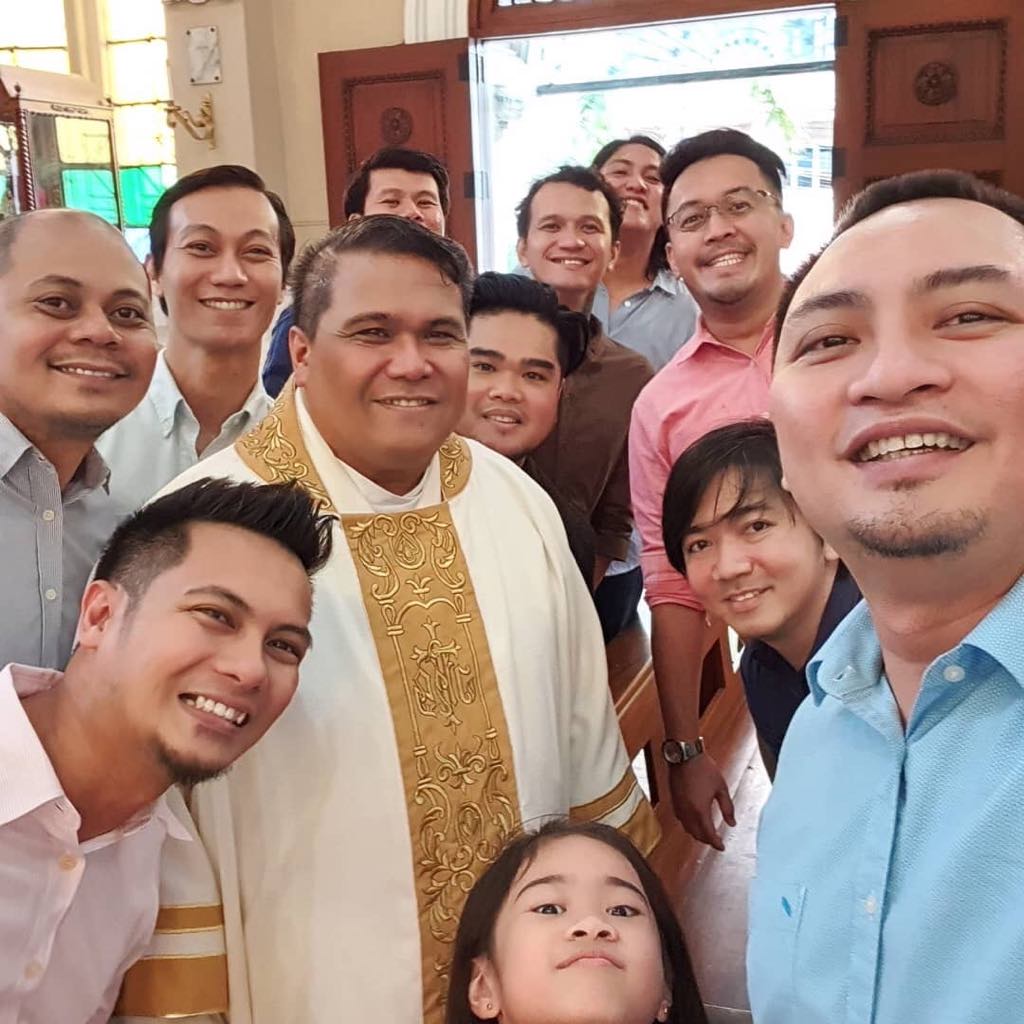
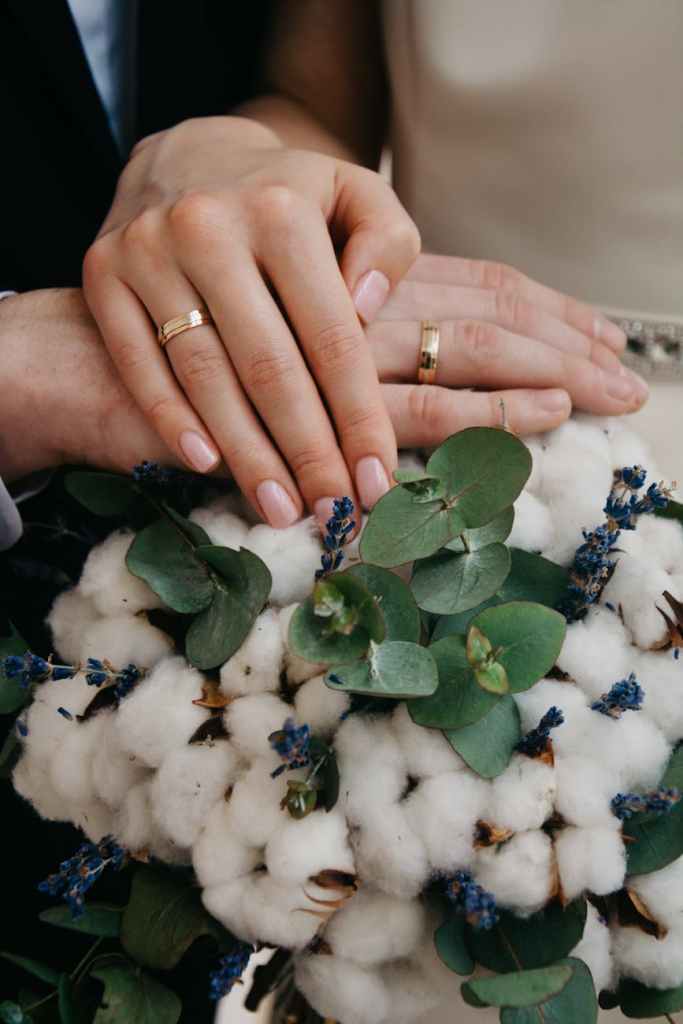
At the wedding of one of my former student with his classmates in January 2020.
Surprisingly, they always ended up thanking me for the discipline I have taught and instilled in them that according to them led to their success in both their personal and professional life. Many of them have their family of their own now with some living overseas. It brings me so much joy with some tears when they tell me how they have taught their own children of the discipline I drilled in them about studies and reading, of prayer, and of simply being the very best for God in everything. It is the same thing with some of our teachers who have remained some of my dearest friends today with some living and working abroad. In fact, they claimed that it was my “terroristic discipline” that greatly prepared them for their lives and work in foreign lands and cultures.
We need to discipline ourselves for God’s grace to work in us. And remember, grace builds on nature – that’s the beauty of discipline: the more we practice it, the more blessed we become! It is a built-in app or program God has installed in each of us. Use it extensively by switching it on always. In case there’s a glitch, still, switch it on and surely it would work. As always. Have a disciplined week ahead.
It is very disappointing that the recent statement of the CBCP on divorce was so unusually soft, trying to balance everything like walking on a thin line, very cautious of not stepping on whoever’s feet or hurting their feelings.
What is most sad is how this statement so watered down unlike the bishops’ previous pronouncements in the last elections supporting a candidate. It is so frustrating for us Catholics when our bishops have repeatedly crossed boundaries getting into partisan politics supporting many election candidates when on this part of our nation’s history they are tepid in standing by the Lord’s flock under attack by fierce and intense pro-divorce lawmakers and supporters. This is the crucial moment when our bishops should rally us more in defending our stand against divorce being the last country where it is still illegal.
We shall have another piece on that later as we continue today our sharing of our past wedding homilies we hope can help you be clarified why we must oppose the divorce bill. Of course, we cannot impose our stand against divorce but we make it clear to everyone why we are against it. After all, it is an informed choice we make guided by the grace of God and the Holy Spirit.
Here is our homily at the wedding at the Manila Cathedral on January 16, 2006 of our very good friend from UST’s the Varsitarian, Dra. Chona T. Capulong and Mr. Stephen Kemp of Kansas.
Twenty three years ago and less than 50 pounds today, our friend and former managing editor Chona had a column at the Varsitarian called “Choice Cuts.”
I will never forget her column with its very catchy title, so well written and most of all, more than 20 years later today, the gospel she had chosen for her wedding speaks about choosing, about choices, Jesus told his disciples, “It was not you who chose me, but I who chose and appointed you to go and bear fruit that will remain…” (John 15:16).
Today we are so blessed to have been called and chosen by Chona and Stephen to be present in this most joyous day of their lives when they pledge their love for each other before God and His people. Let me stress on those words of Jesus saying how we are all “called and chosen to bear fruit.”
God calling and choosing us to bear fruit. The all-knowing God making a choice for us and should we be glad and grateful for that!?
When God calls and chooses us, He does not remove our freedom which is the ability to choose what is good, not simply whatever you want. What happens is that when God calls and chooses us, this gift of freedom is actually enhanced because the Ultimate Good shows us what’s best for us.
That God choosing us rather than us choosing Him is evidently true in friendships and marriage. Chona is from this city of Manila, thousands of kilometers from Wichita, Kansas where Stephen comes from.
How they have met and be in love is a long story; what matters is the choice made by God for them and how they cooperated in that choice.
Most often, whenever we make a choice, it is oriented towards success and triumph. We always make it a point that it would be advantageous for us and most of all, easy and convenient because as much as possible, we want lesser problems and lesser risks.
Being successful, whether in life or in marriage or in business is characterized and based on strength and powers, of how we are able to control situations and bend them to our own advantage. It is about power.
On the other hand, when God makes a choice for us, it is different.
When God makes a choice for us, it is always difficult and never convenient, slow and time-consuming. Most of all, God’s choice always entails sacrifices from our part because, it is so good that we have to be emptied first in order to receive such a beautiful gift like marriage.
When God makes a choice for us, it is always based on our weakness and vulnerabilities. God is not concerned with our being “successful” but more with being fruitful because in this life, especially in marriage, it does not really matter what or how much we have achieved but what have we become.
We may have all the wealth and power in the world, all the success but, what have we become?
Have we been more loving, more forgiving, more understanding, more generous, more honest, more faithful?
Bearing fruit is different from being successful in the sense that when God makes the choices for us, He makes us into better persons, becoming the best husband or best wife or the best person in the world. This He does by letting us come to terms with our own weaknesses and vulnerabilities, emptying ourselves of these impurities and being filled by God’s goodness and holiness.
Being fruitful in marriage means being able to understand and accept, even own because of love the shortcomings of a spouse or of those around us. Being fruitful in life or in marriage is being able to bear all the pains and hardships of life because like in gardening, it is the constant pruning of trees and plants that lead to more blossoms and fruits. It is being like Jesus Christ who willingly accepted His Cross because of His great love for us. He did not remove the Cross but made it holy instead.
Chona and Stephen, this wedding is already a fruit of that call and choosing by Jesus on you. After so many pains and hurts as well as sacrifices from both of you, this day had finally come for both of you to stand before the altar of God and offer yourselves to His plans and choices. This is not the end but the beginning of more pains and hurts and sacrifices.
I am not scaring you, Chona and Stephen; however, may this wedding be an assurance for for both of you that, although there would be more problems and difficulties and trials waiting for you along the way of your married life, be assured of the great glory and fruitful life ahead for both of you.
Continue to cooperate with God’s choices for you by leading a life of faith, hope and love rooted in prayers. Jesus had called and chosen you, Chona and Stephen; Jesus would always be with you because He knows what’s best for you. Amen.
Stephen died a few years ago before the COVID pandemic but our friend Chona had remained firm in her faith in God, raising their daughter into a lovely young lady she is now. Last week, Chona told me how proud and happy she is her daughter is going to take her college abroad, away from her!
So glad that despite her fears as a mother, she had allowed her daughter to study abroad, believing, of course, it is God’s choice for her to eventually become a better woman someday. May we be faithful not only in our duties and responsibilities but especially with the people entrusted to us by God whom He had chosen to become parts of our lives.
The Lord Is My Chef Daily Recipe for the Soul by Fr. Nicanor F. Lalog II
Wednesday in the Twelfth Week of Ordinary Time, Year II, 26 June 2024
2 Kings 22:8-1`3, 23:1-3     <*((((><< + >><))))*>     Matthew 7:15-20
Photo by author, Sacred Heart Novitiate, Novaliches, QC, 20 March 2024.
Keep us faithful to You,
God our Father;
keep us searching for You
especially in the Sacred Scriptures
to learn and listen to your words
that are ever-present and true
and relevant.
The high priest Hilkiah informed the scribe Shaphan, “I have found the book of the law in the temple of the Lord.” Hilkiah gave the book to Shaphan, who read it. The scribe Shaphan also informed the king that the priest Hilkiah had given him a book, and then read it aloud to the king. When the king had heard the contents of the book of the law, he tore his garments and issued this command… “Go, consult the Lord for me, for the people, for all Judah, about the stipulation of this book that has been found, for the anger of the Lord has been set furiously ablaze against us, because our fathers did not obey the stipulations of this book, nor fulfill our written obligations” (2 Kings 22:8, 10-12, 13).
Your words,
Your will,
Your laws are
always among us
especially in Jesus Christ,
the Word who became flesh
and dwelt among us;
but, how sad especially
in this decadent period
and age despite our many
advances in science and technology,
we have morally retrogressed
as many people who are also believers
in You choose to believe the
false prophets in our midst -
influencers in the social media
who peddle lies, massaging the minds
of many people too lazy to think
and pray, preferring to follow the
many vogues and trends that
lead nowhere but destruction;
there are also the modern gnostics
claiming to be progressive
and liberal in their thinking
espousing themselves as more
fair and inclusive but actually
followers of dictatorship of
relativism who allow everything
in the name of inclusivity
without responsibility.
Teach us, O Lord Jesus,
in the way of your decrees;
most of all,
let us look hard on
the fruits of every prophet
who promise to lead us
to fulfillment and truth.
Amen.
The Lord Is My Chef Easter Recipe for the Soul by Fr. Nicanor F. Lalog II
Fifth Sunday in the Easter Season, Cycle B, 28 April 2024
Acts 9:26-31 ><}}}}*> 1 John 3:18-24 ><}}}}*> John 15:1-8
From the Good Shepherd last Sunday, Jesus today declares himself as the “true vine”. Notice that qualifier true vine similar with last Sunday’s good shepherd because Jesus “lays down his life for the sheep” (Jn. 10:11, 17, 18); so we ask, was there an untrue vine?
Yes. Jesus was referring to Israel, God’s vineyard lavished with all his care but produced wild grapes as portrayed in Isaiah’s “Vineyard Song” that he vowed to take it away and plant a new vine fulfilled in Christ (Is. 5:1-7). Jesus as the true vine is an expression of his Incarnation, of how God in Jesus Christ became human like us in everything except sin so that we in turn would become like him, holy and divine. This can only be when keep that union intact by remaining in Christ.
Jesus said to his disciples: “I am the true vine, and my Father is the vine grower. He takes away every branch in me that does not bear fruit, and every one that does he prunes so that it bears more fruit. You are already pruned because of the word that I spoke to you. Remain in me, as I remain in you. Just as a branch cannot bear fruit on its own unless it remains on the vine, so neither can you unless you remain in me.
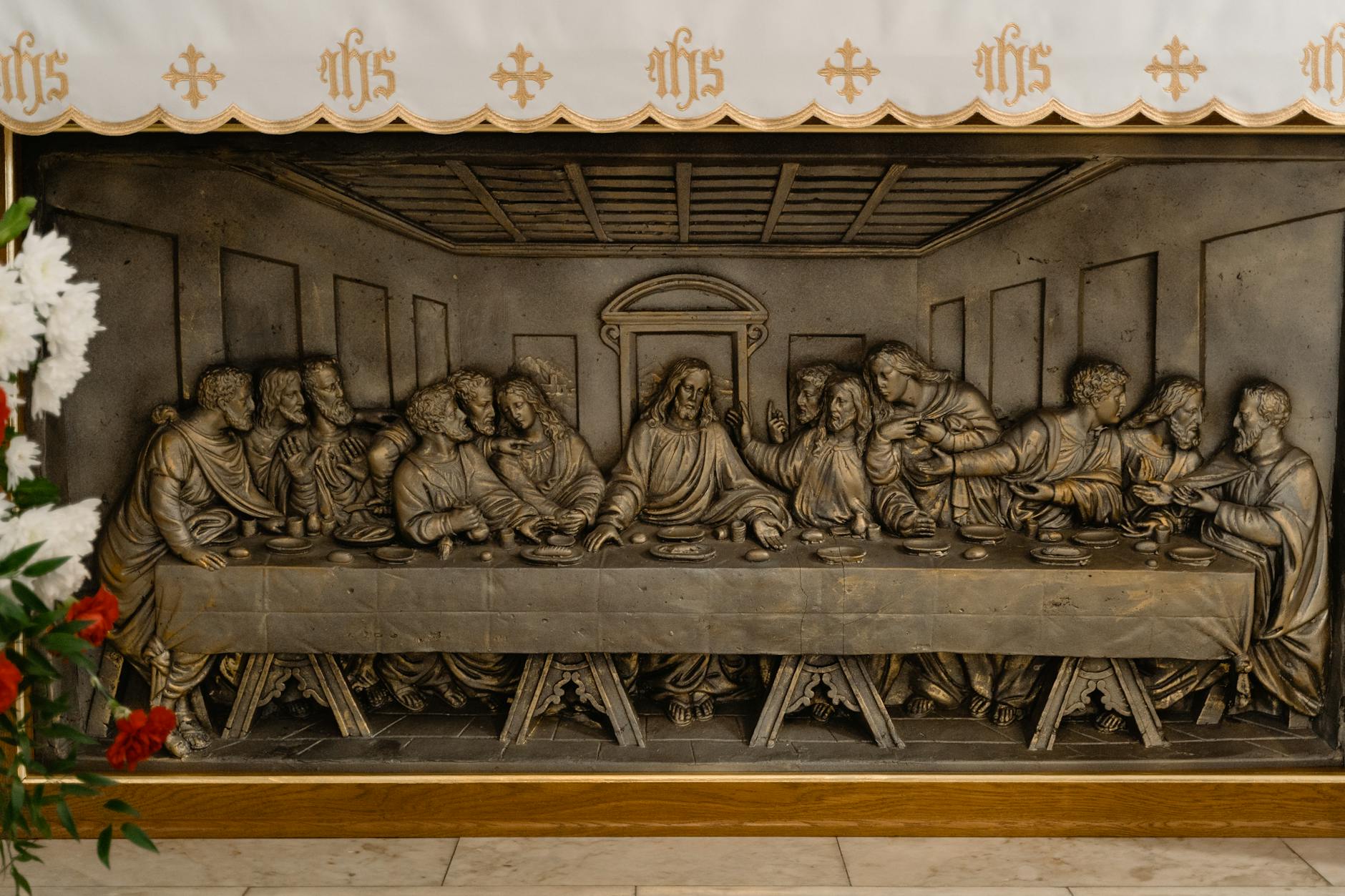
Our scene is now at the Last Supper, after the washing of the feet of the disciples. Judas had already left and Jesus began his series of discourses capped with his high priestly prayer after which they proceeded to Gethsemane for his betrayal and arrest.
Imagine the solemnity of the scene, of how Jesus had shown the Twelve the meaning of his being the good shepherd laying down his life by taking the bread and wine as his Body and Blood given to everyone. All these will have its fullness on Good Friday at the Cross while it would take some time after Easter and Pentecost when the disciples will finally grasp and understand its meanings.
We are not just going back to a past event, to what Jesus had done. In declaring himself as the true vine, Jesus reveals to us himself truly God and Risen from the dead, telling us how we can share in the joy and mystery of his Resurrection. And that is by remaining in Jesus first above all, “Remain in me, as I remain in you. Just as a branch cannot bear fruit on its own unless it remains on the vine, so neither can you unless you remain in me.”
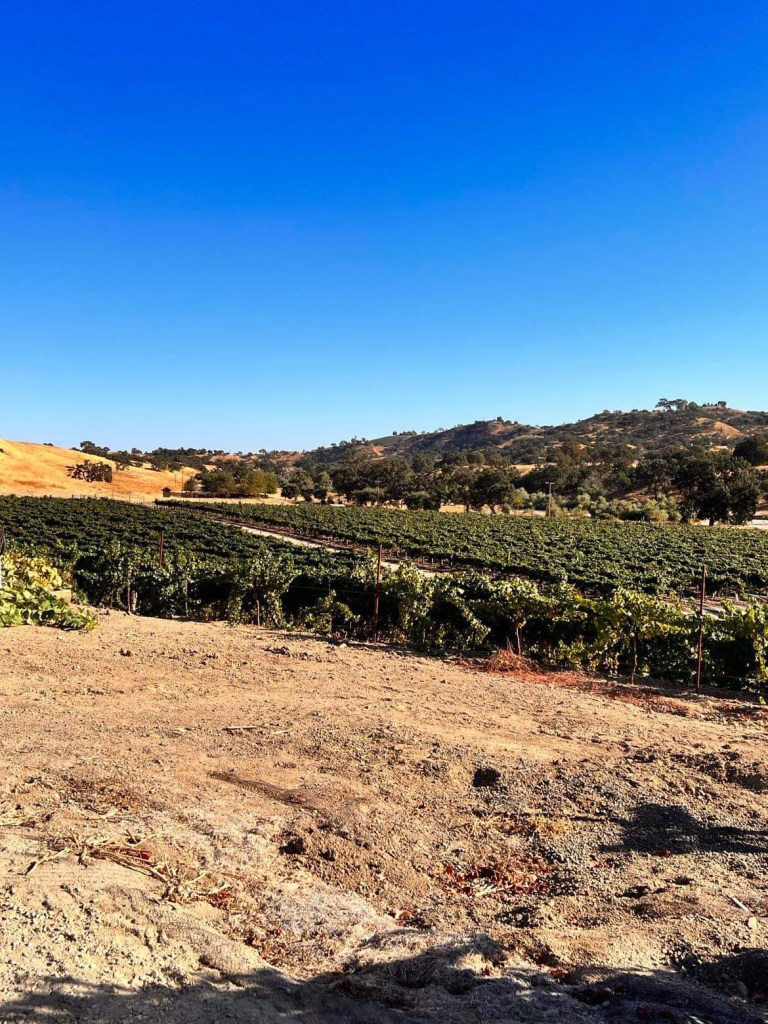
Photo by Dra. Carol Reyes-Santos, MD at Napa Valley, California, 2023.
See how in eight verses, Jesus used the word “remain” eight times because it is not enough Jesus is the true vine in whom we are blessed and become fruitful; we must remain in him too.
There is no doubt of Jesus remaining in us which is what his being a true vine is all about; unlike Israel in the Old Testament that produced wild grapes, Jesus can no longer be uprooted because he is God himself who had become one in us. But, are we one in him and with him?
To remain is more than physical like to stay. A branch remaining, staying intact with the vine but had turned yellow and dried up is clearly not one with the vine. We can be inside the church but be detached with everyone and the celebration. We may be staying or residing in the same address and home but our heart and very self may be so far away from our siblings or parents, or from your wife or husband.
Remaining implies something more than physical presence. To remain is to have a relationship, a bonding that is deep and intimate. To remain is to be of one heart as GMA7 claims to be a kapuso which is more important than being a kapamilya or a kapatid. There is no sense of being a family (kapamilya) when there is no love in the family or at the other hand, a sibling (kapatid) is nothing if the brother or sister is your enemy. We remain with God and everyone when our hearts are attuned or inclined to God and with others in love which is the fruit of the vine, Jesus Christ.
We can only bear much fruit, be more loving, if we remain in Jesus Christ. It is an imperative, therefore in this life that we remain in Christ for without him, separated him, we can do nothing. Fruit and love are always together as shown in the institution narrative and on Good Friday.
Being fruitful is more than being successful that is often seen and measured in material things. Being fruitful, being more loving is spiritual in nature, can never be measured with what we have but what have we given. Most of all, being fruitful is depending, relying more in Jesus Christ than in one’s self. That is why remaining in Christ is a prerequisite to be fruitful.
We remain in Jesus in prayer when he said, “If you remain in me and my words remain in you, ask for whatever you want and it will be done for you” (Jn. 15:7). But, prayer here as in most parts of the gospel does not mean asking God for anything; to remain in Jesus in prayer is to ask for God himself. It is only in having God we can truly love and experience joy and peace within despite the many trials and pains we go through in life.
In the first reading we have heard how Paul, still known as Saul arrived in Jerusalem and “tried to join the disciples, but they were all afraid of him, not believing that he was a disciple” (Acts 9:26). It must have been so difficult for Saul as well as for the early Christians too to welcome him! Saul must have a hard time convincing them he had really changed, that he had been converted in Christ while he must also understand the feelings of the Christians whom he persecuted before.
Photo by Dra. Carol Reyes-Santos,MD, at Napa Valley, California, 2023.
Let us keep in mind too that Saul’s conversion did not necessarily mean an end of their persecution; in fact, persecutions would turn more fierce later but it was during that time when the church grew so fast and wide too! That was because they remained in Christ who caused their efforts to bear much fruits no one expected.
Look back into our lives and see how when we remained in Christ and problems never stopped but that is when we are more fruitful, more fulfilled in life. Like our responsorial psalm this Sunday, “we praise the Lord in the midst of the assembly” to thank God from our hearts for all the blessings he bestows us like inner growth and maturity, feeling fruitful not just successful. Indeed, as the beloved disciple rightly noted in our second reading today, “God is greater than our hearts and knows everything” (1 Jn. 3:20).
This Sunday, Jesus is telling us “I am the true vine” to show us how God’s life is now in us through Christ and how our life is in God still through Christ. Let us remain in Jesus as he continues to reveal to us who he really is, our Lord and God, so we can share in the many joys and mysteries of his Resurrection. Let us pray:
Lord Jesus Christ,
let me remain in You;
let me stay in You
when things are so difficult
and let me still remain in You
when life is so beautiful;
let me be near  and close
to You as You are in me,
speaking Your words,
doing Your will;
in my remaining in You,
may I be fruitful by bringing
others closer to You so that
in the end, we all remain
one in You.
Amen.
The Lord Is My Chef Daily Recipe for the Soul by Fr. Nicanor F. Lalog II
Friday in the Fifth Week of Ordinary Time, Year II, 09 February 2024
1 Kings 11:29-32, 12:19  ><)))*> + ><)))*> + ><)))*>  Mark 7:31-37
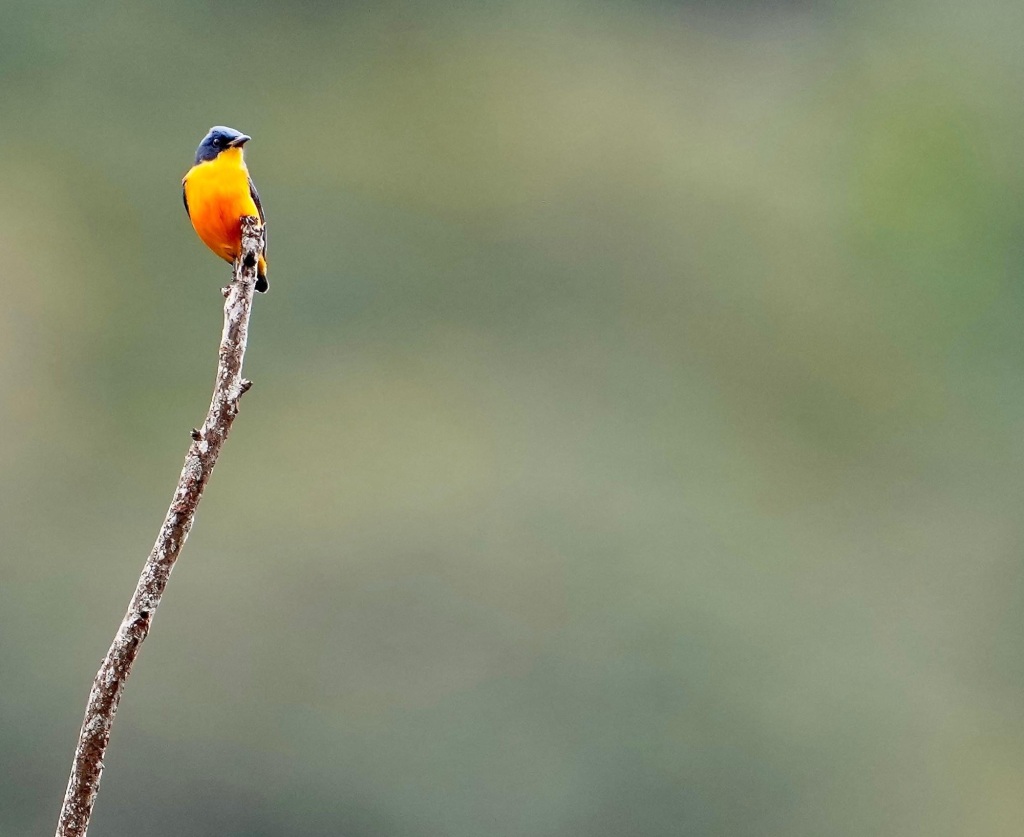
Photo by Dra. Mylene A. Santos, MD, an orange-bellied flowerpecker (Dicaeum trigonostigma) somewhere in the Visayas, December 2023.
Today, dear God,
I share in the joy
of the people at the time
of your Son Jesus
when he healed a deaf in the
district of Decapolis:
They were exceedingly astonished and they said, “He has done all things well. He makes the deaf hear and the mute speak.”
Mark 7:37
Yes, loving Father,
you have done all things well,
so very well in fact,
in Jesus Christ our Lord
that I am also exceedingly astonished
with your love and mercy.

When I look back to my life
even amid all the storms and
failures I have had,
you still have done
 all things well in my favor;
when I remember those sufferings
I almost gave up and quit,
you have done all things
in my favor, making me stronger
and better, even wiser today;
when I look back to the many
losses and defeats I have had,
you still have done all things well
in my favor, teaching me the
values of perseverance, patience,
and fulfillment, as well as
the differences between
 happiness and joy,
success and fruitfulness.

Dear Father,
keep us open to your grace
and wisdom and plans for us;
most of all,
keep us open to Jesus Christ
who comes to us always even
in paths we least expect to find him,
in backward routes no one takes,
and in foreign territories
we refuse to venture into.
Let our daily prayer include
his command,
"Ephphatha"!
Amen.













 lordmychef.com