Remaining in Christ

The Lord Is My Chef Easter Recipe for the Soul by Fr. Nicanor F. Lalog II
Fifth Sunday in the Easter Season, Cycle B, 28 April 2024
Acts 9:26-31 ><}}}}*> 1 John 3:18-24 ><}}}}*> John 15:1-8
Photo by picjumbo.com on Pexels.com

From the Good Shepherd last Sunday, Jesus today declares himself as the “true vine”. Notice that qualifier true vine similar with last Sunday’s good shepherd because Jesus “lays down his life for the sheep” (Jn. 10:11, 17, 18); so we ask, was there an untrue vine?

Yes. Jesus was referring to Israel, God’s vineyard lavished with all his care but produced wild grapes as portrayed in Isaiah’s “Vineyard Song” that he vowed to take it away and plant a new vine fulfilled in Christ (Is. 5:1-7). Jesus as the true vine is an expression of his Incarnation, of how God in Jesus Christ became human like us in everything except sin so that we in turn would become like him, holy and divine. This can only be when keep that union intact by remaining in Christ.

Jesus said to his disciples: “I am the true vine, and my Father is the vine grower. He takes away every branch in me that does not bear fruit, and every one that does he prunes so that it bears more fruit. You are already pruned because of the word that I spoke to you. Remain in me, as I remain in you. Just as a branch cannot bear fruit on its own unless it remains on the vine, so neither can you unless you remain in me.

John 15:1-4
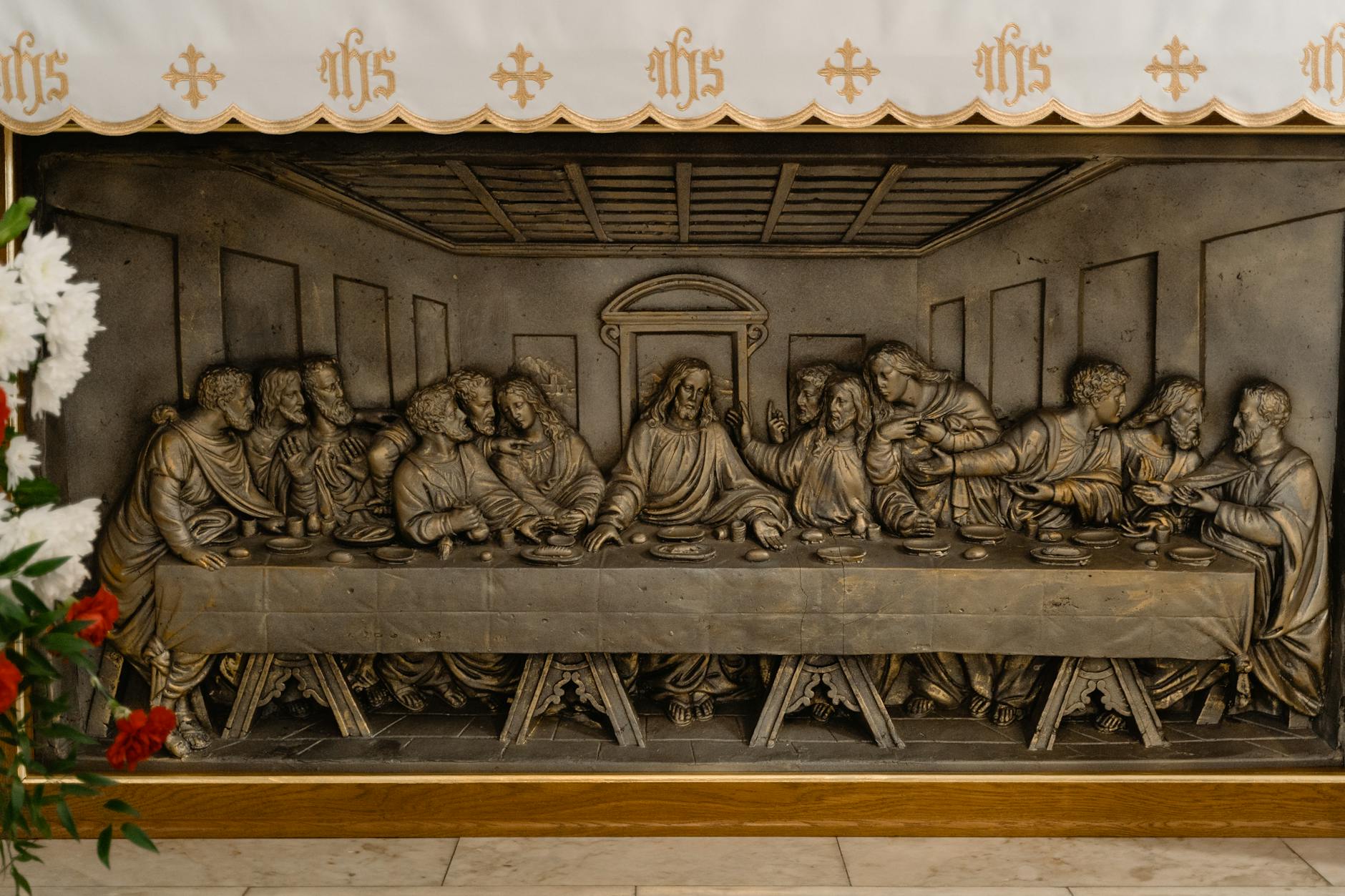
Photo by MART PRODUCTION on Pexels.com

Our scene is now at the Last Supper, after the washing of the feet of the disciples. Judas had already left and Jesus began his series of discourses capped with his high priestly prayer after which they proceeded to Gethsemane for his betrayal and arrest.

Imagine the solemnity of the scene, of how Jesus had shown the Twelve the meaning of his being the good shepherd laying down his life by taking the bread and wine as his Body and Blood given to everyone. All these will have its fullness on Good Friday at the Cross while it would take some time after Easter and Pentecost when the disciples will finally grasp and understand its meanings.

We are not just going back to a past event, to what Jesus had done. In declaring himself as the true vine, Jesus reveals to us himself truly God and Risen from the dead, telling us how we can share in the joy and mystery of his Resurrection. And that is by remaining in Jesus first above all, “Remain in me, as I remain in you. Just as a branch cannot bear fruit on its own unless it remains on the vine, so neither can you unless you remain in me.”

Photo by Dra. Carol Reyes-Santos, MD at Napa Valley, California, 2023.

See how in eight verses, Jesus used the word “remain” eight times because it is not enough Jesus is the true vine in whom we are blessed and become fruitful; we must remain in him too.

There is no doubt of Jesus remaining in us which is what his being a true vine is all about; unlike Israel in the Old Testament that produced wild grapes, Jesus can no longer be uprooted because he is God himself who had become one in us. But, are we one in him and with him?

To remain is more than physical like to stay. A branch remaining, staying intact with the vine but had turned yellow and dried up is clearly not one with the vine. We can be inside the church but be detached with everyone and the celebration. We may be staying or residing in the same address and home but our heart and very self may be so far away from our siblings or parents, or from your wife or husband.

Remaining implies something more than physical presence. To remain is to have a relationship, a bonding that is deep and intimate. To remain is to be of one heart as GMA7 claims to be a kapuso which is more important than being a kapamilya or a kapatid. There is no sense of being a family (kapamilya) when there is no love in the family or at the other hand, a sibling (kapatid) is nothing if the brother or sister is your enemy. We remain with God and everyone when our hearts are attuned or inclined to God and with others in love which is the fruit of the vine, Jesus Christ.

We can only bear much fruit, be more loving, if we remain in Jesus Christ. It is an imperative, therefore in this life that we remain in Christ for without him, separated him, we can do nothing. Fruit and love are always together as shown in the institution narrative and on Good Friday.

Being fruitful is more than being successful that is often seen and measured in material things. Being fruitful, being more loving is spiritual in nature, can never be measured with what we have but what have we given. Most of all, being fruitful is depending, relying more in Jesus Christ than in one’s self. That is why remaining in Christ is a prerequisite to be fruitful.

We remain in Jesus in prayer when he said, “If you remain in me and my words remain in you, ask for whatever you want and it will be done for you” (Jn. 15:7). But, prayer here as in most parts of the gospel does not mean asking God for anything; to remain in Jesus in prayer is to ask for God himself. It is only in having God we can truly love and experience joy and peace within despite the many trials and pains we go through in life.

In the first reading we have heard how Paul, still known as Saul arrived in Jerusalem and “tried to join the disciples, but they were all afraid of him, not believing that he was a disciple” (Acts 9:26). It must have been so difficult for Saul as well as for the early Christians too to welcome him! Saul must have a hard time convincing them he had really changed, that he had been converted in Christ while he must also understand the feelings of the Christians whom he persecuted before.
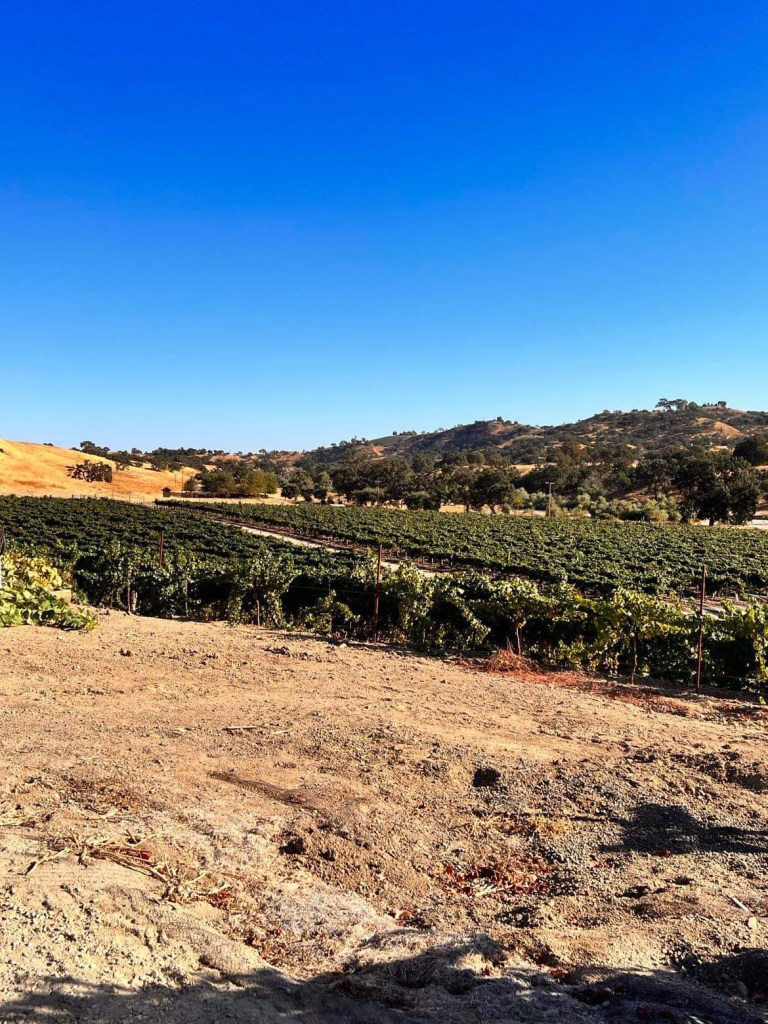
Photo by Dra. Carol Reyes-Santos,MD, at Napa Valley, California, 2023.

Let us keep in mind too that Saul’s conversion did not necessarily mean an end of their persecution; in fact, persecutions would turn more fierce later but it was during that time when the church grew so fast and wide too! That was because they remained in Christ who caused their efforts to bear much fruits no one expected.

Look back into our lives and see how when we remained in Christ and problems never stopped but that is when we are more fruitful, more fulfilled in life. Like our responsorial psalm this Sunday, “we praise the Lord in the midst of the assembly” to thank God from our hearts for all the blessings he bestows us like inner growth and maturity, feeling fruitful not just successful. Indeed, as the beloved disciple rightly noted in our second reading today, “God is greater than our hearts and knows everything” (1 Jn. 3:20).

This Sunday, Jesus is telling us “I am the true vine” to show us how God’s life is now in us through Christ and how our life is in God still through Christ. Let us remain in Jesus as he continues to reveal to us who he really is, our Lord and God, so we can share in the many joys and mysteries of his Resurrection. Let us pray:

Lord Jesus Christ,
let me remain in You;
let me stay in You
when things are so difficult
and let me still remain in You
when life is so beautiful;
let me be near and close
to You as You are in me,
speaking Your words,
doing Your will;
in my remaining in You,
may I be fruitful by bringing
others closer to You so that
in the end, we all remain
one in You.
Amen.
God does everything so well

The Lord Is My Chef Daily Recipe for the Soul by Fr. Nicanor F. Lalog II
Friday in the Fifth Week of Ordinary Time, Year II, 09 February 2024
1 Kings 11:29-32, 12:19  ><)))*> + ><)))*> + ><)))*>  Mark 7:31-37
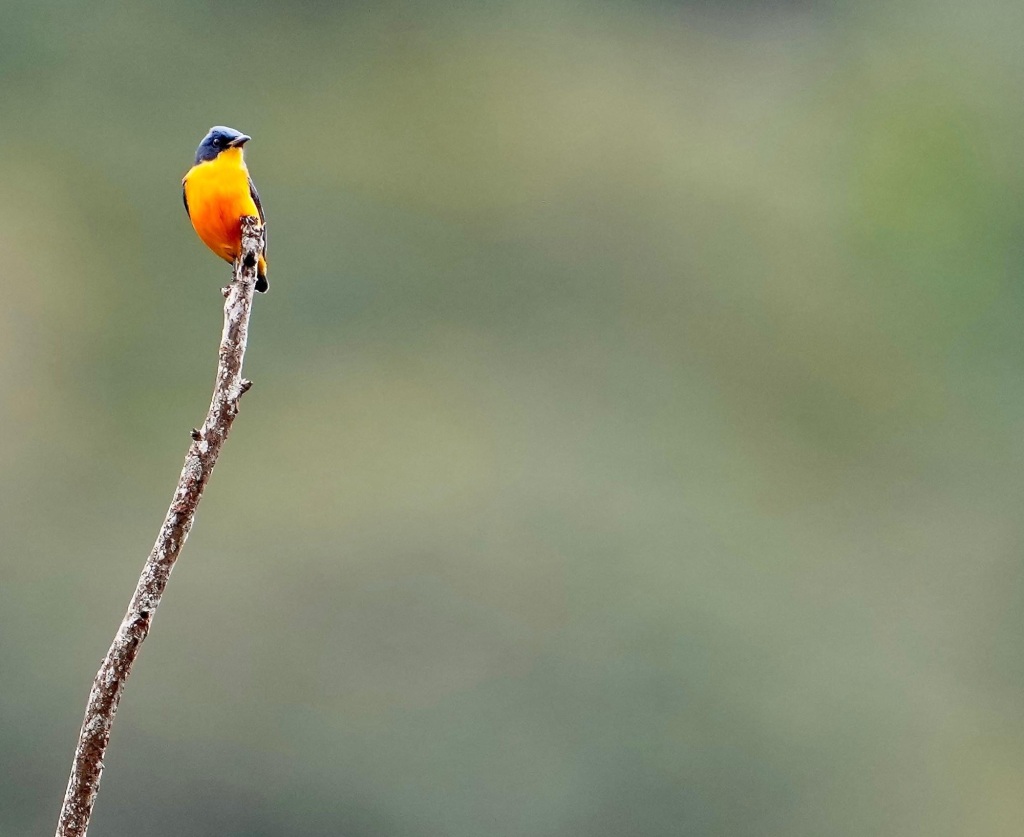
Photo by Dra. Mylene A. Santos, MD, an orange-bellied flowerpecker (Dicaeum trigonostigma) somewhere in the Visayas, December 2023.
Today, dear God,
I share in the joy
of the people at the time
of your Son Jesus
when he healed a deaf in the
district of Decapolis:

They were exceedingly astonished and they said, “He has done all things well. He makes the deaf hear and the mute speak.”

Mark 7:37
Yes, loving Father,
you have done all things well,
so very well in fact,
in Jesus Christ our Lord
that I am also exceedingly astonished
with your love and mercy.

When I look back to my life
even amid all the storms and
failures I have had,
you still have done
all things well in my favor;
when I remember those sufferings
I almost gave up and quit,
you have done all things
in my favor, making me stronger
and better, even wiser today;
when I look back to the many
losses and defeats I have had,
you still have done all things well
in my favor, teaching me the
values of perseverance, patience,
and fulfillment, as well as
the differences between
happiness and joy,
success and fruitfulness.

Dear Father,
keep us open to your grace
and wisdom and plans for us;
most of all,
keep us open to Jesus Christ
who comes to us always even
in paths we least expect to find him,
in backward routes no one takes,
and in foreign territories
we refuse to venture into.
Let our daily prayer include
his command,
"Ephphatha"!
Amen.

We are the vineyard of the Lord

The Lord Is My Chef Sunday Recipe for the Soul by Fr. Nicanor F. Lalog II
Twenty-Seventh Sunday in Ordinary Time, Cycle A, 08 October 2023
Isaiah 5:1-7 ><}}}}*> Philippians 4:6-9 ><}}}}*> Matthew 21:33-43
Photo by author, San Juan, La Union, 25 July 2023.

A good friend recently came home from a 20-day Marian pilgrimage in Europe. I told him to get some rest and avoid reading the news, “Huwag ka munang magbasa ng balita baka masayang nalanghap mong hangin sa Europe.” He replied that with the very reliable internet service in Europe, they were all updated with the things happening in our country. He added, “parang ayaw ko nang magpunta sa Europe, lalo lang ako naaawa at nahihiya sa Pilipinas.”

Very true.

I rarely travel abroad but with what I have been reading and hearing especially from those visiting Japan and Singapore, the more I feel sad and hopeless for our country the Philippines. At least, God comforts us once in a while in sports like the recent golds in the Asian Games courtesy of EJ Obienna in pole vault, Annie Ramirez in jiu-jitsu, and Gilas Pilipinas in basketball. Aside from sports, nothing good seems to come from the news. Even the newscasts these days are depressing with robots “complementing” sportscasters.

Photo of a vineyard in Southern California by Dra. Carol Reyes-Santos, MD, 01 October 2023.

Our readings this Sunday seem to speak of us Filipinos and the Philippines which is like a wonderful vineyard planted by the Lord, especially when we think of our vast, fertile lands and long coastlines with rich bodies of water but we have to import our food, from rice to galunggong. What a shame that our chicharon producers import pig backfat from the tiny island of Taiwan?! Like Isaiah, we find ourselves asking what happened to our country?

Let me now sing of my friend, my friend’s song concerning his vineyard. My friend had a vineyard on a fertile hillside; he spaded it, cleared it of stones and planted the choicest vines; within it he built a watchtower, and hewed out a wine press. Then he looked for the crop of grapes, but what it yielded was wild grapes.

Isaiah 5:1-2

The vine and wine are important signs widely used in the Old Testament and in the gospel accounts by Jesus. In Isaiah’s writings, the vineyard represented Israel as the chosen people of God, so loved and cared for, saved from Egypt and gifted with a land flowing with milk and honey. Despite these blessings, Israel repeatedly turned away from God with their many sins of infidelity that continued in the time of Jesus Christ who borrowed and perfected this parable of the vineyard of the Lord to make it timely in every generation.

Jesus said to the chief priests and the elders of the people: “Hear another parable. There was a landowner who planted a vineyard, put a hedge around it, dug a wine press in it, and built a tower. Then he leased it to tenants and went on a journey. When vintage time drew near, he sent his servants to the tenants to obtain his produce. But the tenants seized the servants and one they beat, another they killed, and a third they stoned. Again he sent other servants, more numerous than the first ones, but they treated them in the same way. Finally, he sent his son to them, thinking, ‘They will respect my son.’ But when the tenants saw the son, they said to one another, ‘This is the heir. Come, let us kill him and acquire his inheritance.’ They seized him, threw him out of the vineyard, and killed him.

Matthew 21:33-39
Photo by author, Sacred Heart Novitiate, Novaliches, QC, 20 March 2023.

For the second straight Sunday, Jesus preached again at the temple area of Jerusalem and addressed this lesson to his enemies, the chief priests and elders of the people trying to find a probable cause to have him arrested.

See how this parable of the wicked tenants very similar with Isaiah’s but at the same time speaking a lot of ourselves and of our time, of how we have become like those wicked tenants taking the “vineyard” as totally ours like our body and country, arguing it is mine or ours that we can do whatever pleases us. Like those tenants, we have claimed of not belonging to God nor anyone at all, that we can do whatever we want because we are the owners of ourselves and the world. “It is my body, it is mine” and none of your business kind of thing.

How often we hear others claiming “this is my body, this is mine; therefore, I can do whatever I want with my body” like abort a baby, take contraceptives, or have a sex change, have those tattoos and body piercings? And we have spread this line of thinking to our environment with road rage spreading like a pandemic while bigger countries are grabbing territories ironically from their smaller neighbors.

The most tragic way of thinking that underlies this “mine mentality” is how so many of us have accepted – consciously and unconsciously – that most untrue statement of all that God is dead. Many would say they believe in God when actually what they mean is they know there is God and so often, they play that God, too. Pope Benedict XVI described it as “totalitarianism of relativism” when we see everything relative, no more morals and morality because we have made ourselves the measure and standards of everyone and everything – because, the “vineyard” belongs to us.

Photo of a vineyard in Southern California by Dra. Carol Reyes-Santos, MD, 01 October 2023.

More sad is the fact that we are beginning to see what happens next to us and the world with these things happening like families and relationships disintegrating, climate change and threats of wars, and more emptiness among us.

But, it is not that bad after all. Jesus not only updated Isaiah’s parable of the vineyard to speak to us in the present but also to promise us of a greater future. Notice the blessing and threat he used.

“What will the owner of the vineyard do to those tenants when he comes?” They answered him, “He will put those wretched men to a wretched death and lease his vineyard to other tenants who will give him the produce at the proper times.” Jesus said to them, “Did you never read in the Scriptures: The stone that the builders rejected has become the cornerstone; by the Lord has this been done, and it is wonderful in our eyes? Therefore, I say to you, the kingdom of God will be taken away from you and given to a people that will produce its fruit.”

Matthew 21:40-43

Once again, Jesus Christ’s parable asked a question to involve his hearers, including us today, in the story because the truth is, he had involved himself with us in his coming and eventually in his Passion, Death and Resurrection.

Unlike in Isaiah’s parable of the vineyard, God is distinct from the vineyard; but in Christ’s parable, we are in fact the vineyard of the Lord because Jesus is one with us being the son of the owner sent to gather his share of produce.

That is the good news, the blessing this Sunday and while there is also the threat of the vineyard being handed over to better tenants, there is the promise of better produce to be shared and enjoyed in all eternity, in heaven. There will always be darkness and difficulties in this life caused by selfish, arrogant, and self-righteous people who feel they own everything in this world. Many times, we too have wasted God’s bountiful blessings to us like our talents and abilities not put into use or never harnessed; health taken for granted and separation from our loved ones. Jesus Christ had died for us to repair ourselves and our relationships. Let us grab this opportunity today of taking care of the Lord’s vineyard, of sharing his blessings.

Most of all, like what St. Paul asked us in the second reading, let us be witnesses to others by remaining faithful to God, striving for “whatever is pure, whatever is lovely, whatever is gracious” (Phil. 4:8).

Last Thursday was World Teachers Day. I told our teachers during Masses in our university this week to remember St. Augustine’s final lesson to Deogratias his deacon preparing candidates for baptism: “The teacher is the lesson himself/herself.”

Beautiful. If we are the Lord’s vineyard, every time we produce good fruits, every time we share these fruits with others, then we become signs of hope of Christ’s presence among us. That is the most important lesson we can share with others especially in these times of darkness. Amen. Have a blessed week ahead!

Photo by author, Baguio City, 11 July 2023.

Jesus is the vine, we are the branches, love is our fruit!

The Lord Is My Chef Daily Recipe for the Soul by Fr. Nicanor F. Lalog II
Wednesday in the Fifth Week of Easter, 10 May 2023
Acts 15:1-6   <*((((>< + ><))))*>    John 15:1-8
From Google.com
Thank you dear Jesus
for not just coming to us
but also in becoming human
like us in everything except sin,
in being planted here on earth
to be one with us
and we be one in you,
one with you.
Thank you dear Jesus
for being our true vine,
making us your branches;
many times we do not understand
and would even refuse your Father's
ways and methods of "pruning" us,
of purifying us so that we 
may bear more fruit.
But, what fruit must we bear,
Lord Jesus?

“I am the vine, you are the branches. Whoever remains in me and I in him will bear much fruit, because without me you can do nothing.”

John 15:5
Lord Jesus,
when you died on the Cross,
you bore only one fruit we
continue to savor and
enjoy today --- LOVE.

Thank you for the fruit
of love; we can only be 
fruitful in love if we
remain in you,
when we are purified
and pruned.  
Many times, 
our pruning and 
purification do not look 
good at all like when there are
differences among us
that arise like with
the first Christians
when some insisted that 
Gentile converts be subjected
to Mosaic laws like circumcision;
keep us intact with you, Lord, 
so that we may see more
of you, our true vine than us
who are merely your branches;
keep us open to one another,
trying to find you, Jesus, 
by being more kind,
more understanding,
more open to overcome 
our differences
so that in the end, 
without us even knowing,
we have become fruitful,
not necessarily successful
because we have become
abundant 
in your love.
Amen.

Love is perfection of life

Quiet Storm by Fr. Nicanor F. Lalog II
The Seven Last Words, 06 April 2023
Photo by author, Chapel of the Holy Family, Sacred Heart Novitiate, Novaliches, Quezon City, 2014.

There was a vessel filled with common wine. So they put a sponge soaked in wine on a sprig of hyssop and put it up to his mouth. When Jesus had taken the wine, he said, “It is finished.” And bowing his head, he handed over the spirit.

John 19:29-30

Every Maundy Thursday, people await that most unique part of the Mass every year when the priest washes the feet of some members of the community. As a priest, it is one of the most humbling experiences I have had when a brother priest washed my feet on that Mass I attended in 2008 and 2021.

But there is something more beautiful to the ritual washing of feet. It is the context and words that accompany that: “Before the feast of Passover, Jesus knew that his hour had come to pass from this world to the Father. He loved his own in the world and he loved them to the end” (John 13:1).

The Greek word for the “end” is telos which is not just a terminal end in itself but indicates or connotes direction. Or fulfillment and perfection, not just a ceasing or end or stoppage of life or any operation.

When Jesus said on the Cross “It is finished”, he meant he had fulfilled his mission, that is, he had perfectly loved us to the end by giving us his very life.

At his death on the Cross, Jesus showed us perfectly in no uncertain terms his love for us, the Father’s love for us that he had told to Nicodemus at the start of the fourth gospel that “God so loved the world that he gave his only Son” (Jn. 3:16).

There on the Cross this was definitively fulfilled and perfected more than ever. Jesus did not have to die on the Cross but he chose to go through it because of his love for us.

Here we find the beautiful meaning of love. It is not just obeying the commandments nor being good and kind with everyone. Love in its totality is the perfection of life. It is our only destiny in life, our call to life from the very beginning. Love, love, love. Keep on loving until it hurts. Until the end.

Beloved, if God so loved us, we also must love one another. No one has ever seen God. yet, if we love one another, God remains in us, and his love is brought to perfection in us.

1 John 4:11-12

From that same letter, John declared at the very start that God is love which according to Pope Benedict XVI in his first encyclical is the most profound statement about God found only in Christianity.

My dear friends, only God can love us perfectly. Only Jesus can love us perfectly like what he did on the Cross. Human love is always imperfect. In our imperfect love, let us find Jesus filling up, making whole, perfecting our love for each other. Let us die in our selves sometimes when we have to let go with each one’s imperfection like when they make side comments. Forget all about revenge. Forgive. Understand the shortcomings of everyone. Accept and own the pains and hurts inflicted on us by our loved ones like our mom and dad, your former wife or husband, your friends, of those who have hurt you in words and deeds. That is being like Christ, dying on the Cross because of love.

Let us pray for those we love and those who love us despite our imperfections.

Lord Jesus Christ,
how I wish I could love until the end,
how I wish I could say too like you
"It is finished";
forgive me because many times with me,
the pains and hurts I have had are not yet
finished, even festering inside me,
eating me up, rotting inside me
that I could not grow and bloom in you.
Forgive me and teach me to forgive too
for it is in forgiving we truly love
perfectly like you.
Amen.
Photo by my former student, Ms. April Oliveros on their ascent to Mt. Pulag, 25 March 2023.

True blessedness

The Lord Is My Chef Sunday Recipe for the Soul by Fr. Nicanor F. Lalog II
Sunday in the Fourth Week of Ordinary Time, Year A, 29 January 2023
Zephaniah 2:3, 3:12-13 ><}}}*> 1 Corinthians 1:26-31 ><}}}*> Matthew 5:1-12
Photo by author, 2020.

Blessedness is a very contentious term for us Filipinos. Very often, we equate blessedness with being rich and wealthy like having a lot of money, a beautiful house, and the latest car model as well as clothes and gadgets. Being blessed sometimes means being lucky or fortunate like winning the lotto or having a child graduating in college or getting promoted in one’s job.

In the Visitation, Elizabeth defined for us the true meaning of being blessed like Mary as someone who believed that what the Lord had promised her would be fulfilled (Lk.1:45). Blessedness is essentially a spiritual reality than a material one; however, it implies that being blessed results from doing something good like being faithful to God.

Today in our gospel from Matthew, Jesus shows us that blessedness is still a spiritual reality than a material one but, it is more of a being – like a status in Facebook – than of doing.

Most of all, being blessed is not being in a good situation or condition when all is well and everything proceeding smoothly in life; blessedness according to Jesus at his sermon on the mount is when we are on the distaff side of life like being poor, being hungry, being persecuted and insulted – being like him!

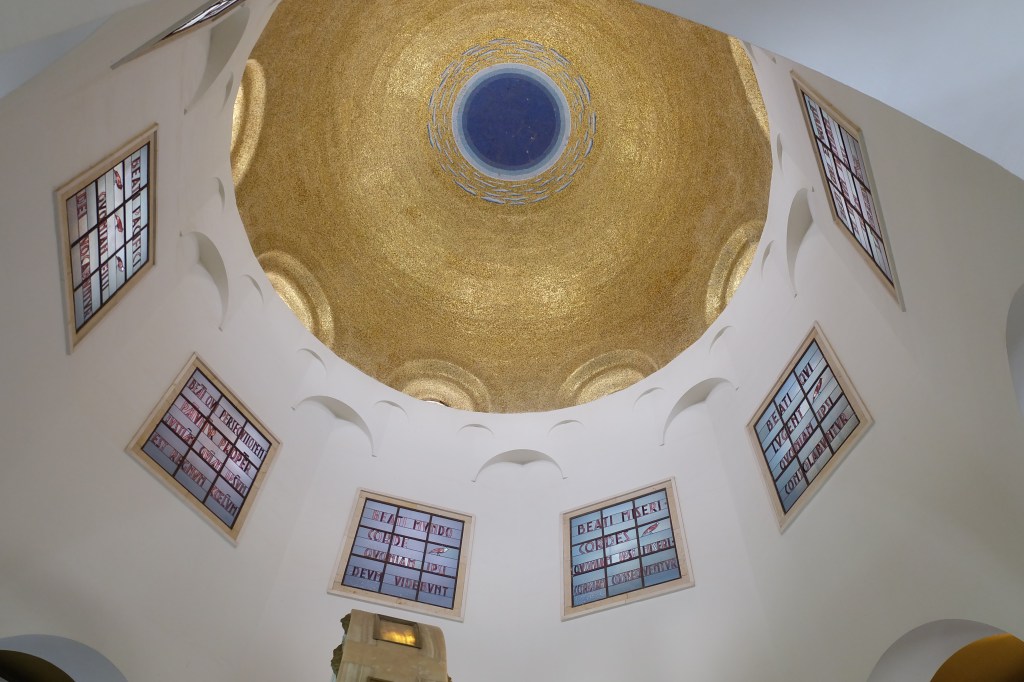
Photo by author, Church of the Beatitudes, Israel, 2019.

“Blessed are the poor in spirit, for theirs is the kingdom of heaven. Blessed are they who mourn, for they will be comforted. Blessed are the meek, for they will inherit the land. Blessed are they who hunger and thirst for righteousness, for they will be satisfied. Blessed are the merciful, for they will be shown mercy. Blessed are the clean of heart, for they will see God. Blessed are the peacemakers, for they will be called children of God. Blessed are they who are persecuted for the sake of righteousness, for theirs is the kingdom of heaven. Blessed are you when they insult and persecute you and utter every kind of evil against you falsely because of me. Rejoice and be glad, for your reward will be great in heaven.”

Matthew 5:3-12

After going around the shores of Galilee, preaching and healing the people, Jesus went up a mountain upon seeing crowds were following him. They were mostly poor people with deep faith in God, hoping and trusting only in him for their deliverance called the anawims.

They were in painful and difficult situations, maybe like many of us, fed up with the traffic and rising costs of everything, fed up with the corruption among public officials and most of all, disillusioned with our priests and bishops!

Then, Jesus called them blessed.

Now, please consider that it is more understandable and normal to say that after being persecuted or after losing a loved one, after all these sufferings that people would be blessed, that the kingdom of God would be theirs.

But, that is not the case with the beatitudes whereby Jesus called them already blessed now, right in their state of being poor, being persecuted, being maligned!

Keep in mind that Matthew’s audience were his fellow Jewish converts to Christianity. By situating Jesus on the mountain preaching his first major discourse, Matthew was reminding his fellow Jewish converts of their great lawgiver, Moses who stood on Mount Sinai to give them the Ten Commandments from God.

However, in the sermon on the mount, Matthew was presenting Jesus not just as the new Moses but in fact more than Moses because Jesus himself is the Law. His very person is what we follow that is why we are called Christians and our faith is properly called Christianity so unlike other religions that are like philosophies or any other -ism.

To understand the beatitudes, one has to turn and enter into Jesus Christ for he is the one truly poor in spirit, meek, hungry and thirsty, merciful, clean of heart, who was persecuted, died but rose again and now seated at the righthand of the Father in heaven. Essentially, the Beatitudes personify Jesus Christ himself. Those who share what he had gone through while here on earth, those who identify with him in his poverty and meekness, mercy and peace efforts, and suffering and death now share in his blessedness.

Therefore, the Beatitudes are paths to keeping our relationship with Jesus Christ who calls us to be like him – poor, hungry and thirsty, meek, clean of heart and persecuted. The Beatitudes are not on the moral plane like the Decalogue that tells us what to do and not to do. Have you ever used the Beatitudes as a guide in examining your conscience when going to Confessions? Never, because the Beatitudes are goals in life to be continuously pursued daily by Christ’s disciples.

Photo by author, Church of the Beatitudes, Israel, 2017.

The Beatitudes are more on the spiritual and mystical plane of our lives that when we try imitating Jesus in his being poor and merciful, meek and clean of heart, then we realize and experience blessedness as we learn the distinctions between joy and happiness, being fruitful and successful.

That is when we find fulfillment while still here on earth amid all the sufferings and trials we go through because in the beatitudes we have Jesus, a relationship we begin to keep and nurture who is also the Kingdom of God. Of course, we experience its fullness in the afterlife but nonetheless, we reap its rewards while here in this life.

As we have noted at the start, we must not take the beatitudes in their material aspect but always in the spiritual meaning. This we find in the first beatitude, Blessed are the poor in spirit, for theirs is the kingdom of heaven.

Actually, this first beatitude is the very essence of all eight other blessedness. Everything springs forth from being poor in spirit, of having that inner attitude and disposition of humility before God. We cannot be merciful and meek, nor pure of heart nor peacemakers unless we become first of all poor in spirit like Jesus, who, “though he was in the form of God, did not regard equality with God something to be grasped. Rather he emptied himself, taking the form of a slave, coming in human likeness and humbled himself” (Phil. 2:6-7, 8).

The prophet Zephaniah showed us in the first reading that poverty in the Old Testament does not only define a social status but more of one’s availability and openness to God with his gifts and calls to us to experience him and make him known. Experience had taught us so well that material poverty is one of life’s best teacher as it leads us to maturity and redemption best expressed in the Cross of Jesus Christ.

In this sense, the beatitude is also the “be-attitude” of every disciple who carries his cross in following Christ. See that each beatitude does not refer to a different person; every disciple of Jesus goes through each beatitude if he/she immerses himself/herself in Christ. That is why last week Jesus preached repentance which leads to conversion. Notice that the beatitudes of Christ are clearly opposite and contrary to the ways of the world as St. Paul tells us in the second reading with God calling the weak and lowly to manifest his power and glory.

Many times in life, we fail to recognize our blessedness when we are so focused with what we are going through, with our work and duties and obligations. This Sunday, Jesus takes us up on the mountain, in the celebration of the Holy Eucharist for us to see ourselves blessed and loved right in the midst of our simplicity and bareness, sufferings and pains. Stop for a while. Find Christ in all your troubles or darkness in life. If you do not find Jesus in your labors and burdens, you are just punishing yourself. If you find Christ because you see more the face of other persons that you become merciful, you work for peace, you mourn and bear all insults and persecution… then, you must be loving a lot. Therefore, you are blessed! Amen.

Have a blessed week ahead!

Photo by author, Church of the Beatitudes, Israel, 2017.

When nothing is lost and when all is lost

The Lord Is My Chef Breakfast Recipe for the Soul by Fr. Nicanor F. Lalog II
Friday in the Eighth Week of Ordinary Time, 28 May 2021
Sirach 44:1,9-13     ><)))*> ><)))*> ><)))*>     Mark 11:11-25
Photo by Dr. Mylene A. Santos, MD, 2020.
Now I will praise those godly men,
our ancestors, each in his own time.
And for all time their progeny will endure,
their glory will never be blotted out.
(Sirach 44:1,13)

So many times, O Lord, I have heard the same words by your sage Ben Sirach, of how so many people who have gone ahead of us are hardly known nor remembered at all not because they are irrelevant or have not left no impact to anyone and this world.

There have been so many people ahead of us and still more living among us that surely much more would still come in the future after we are gone.

But life and living is not about being remembered for whatever reason.

Life and living is always about being good and holy, of being fully alive, living in you, O God our Father through Jesus Christ your Son.

That is why Ben Sirach praised both the known and unknown men who have gone ahead of him, especially the unknown ones because though there is “no memory of them for they have ceased” (v.9) they continue to exist, they are still relevant and in a sense “remembered” by their progeny because of their goodness and holiness.

How wonderful it is to dwell on this ending words of Ben Sirach in his book that remind us that nothing is lost, everything is gained and kept when we live in goodness and kindness.

Help us, O God, to make good of all your gifts to us lest we become like that fig tree Jesus cursed at Bethany along with the priests and merchants he had scolded when they turned your temple in Jerusalem into a marketplace.

Early in the morning,
as they were walking along, 
they saw the fig tree withered to its roots.
Peter remembered and said to him,
"Rabbi, look!  The fig tree that you cursed
has withered."
(Mark 11:20-21)
Photo by author, 2019.

So many times in life, we keep on trying to make and achieve so many things for the wrong reason of being relevant, of being remembered without realizing that simply being good ensures us of never being lost and forgotten.

It is in our personal pursuits of fame, of immortality when – sadly – all is lost.

We pray today, Lord Jesus Christ, for those who are always worried of so many things that past and non-essential, of how they look like, of how they will be remembered.

Give us that true faith in you to always experience your presence especially in cultivating a prayer life that leads to real trust and communion in you. It is in prayer when we become fruitful for that is when we become sensitive of your loving presence, of our living realities enabling us to forgive and reconcile with those who hurt us.

It is this kind of faith that produces fruit that endures and lasts forever, even if we remain unknown as Ben Sirach extolled in his teachings and prayer. Amen.

Remaining in Christ, the True Vine

The Lord Is My Chef Sunday Recipe for the Soul by Fr. Nicanor F. Lalog II
Fifth Sunday in Easter, Cycle B, 02 May 2021
Acts 9:26-31  ><}}}'>  1John 3:18-24  ><}}}'>  John 15:1-8
From Facebook of Fr. Marlito G. Ocon, SJ via GMA News, 30 April 2021.
"Ang lungkot, Father.  
Wala na akong asawa na mauuwian, 
abo na ang asawa ko."

This broke my heart last Friday evening from a post by Jesuit Fr. Marlito G. Ocon of a woman who came by herself to the Philippine General Hospital (PGH) to deliver her baby. Her husband had just died of COVID-19 while she and her baby are both COVID positive. Worst, she has not informed her parents-in-law about the death of her husband because they are also in critical condition in the province for COVID-19.

“Ang lungkot, Father. Wala na akong asawa na mauuwian, abo na ang asawa ko. Hindi man lang kami nagkausap. Hindi ko man lang maibalita na may second baby na kami. Hindi man lang sila nagkita ng anak namin.” (“It is so sad Father. I do not have a husband anymore to come home to, he’s all ash now. We did not even have the chance to speak to each other. I cannot even tell him the news we have our second baby. He did not even get the chance to meet our new baby.”)

Fr. Ocon is one of the chaplains at the PGH, the largest public hospital in Metro Manila. He said, “I have no words because I know any word can’t explain enough why horrible things like this happened. But I realized that it is in our deep, deep silence and it is when we run out of words, and when theology can’t explain enough, that our faith can speak louder.”

Very true.

Lately I have noticed a shift in prayer requests by relatives and friends, from the usual healing prayers for those afflicted with COVID-19 to prayers for their and loved ones’ emotional and psychological well-being.

More and more people have been coming to me for counseling via Zoom and Messenger apps as they hurdle so many crises in marriage, work, livelihood and self since the pandemic started last year. We have resumed yesterday in our parish our weekly confessions and everyone who came cried not only for their sins but most of all for their emotional baggages either triggered or worsened by this pandemic.

And like Fr. Ocon, I could not say anything at all except to pray and tell them to hold on to God, to never let go of him, “kapit lang at huwag bibitiw sa Diyos”, exactly what Jesus is telling us this Sunday:

Jesus said to his disciples:
"I am the true vine, and my Father is the vine grower.
Remain in me, as I remain in you.
Just as a branch cannot bear fruit on its own 
unless it remains on the vine, 
so neither can you unless you remain in me.
I am the vine, you are the branches.
Whoever remains in me and I in him
will bear much fruit because without me you can do nothing."
(John 15:1, 4-5)

“Remain in me.”

In St. John’s vocabulary, “remain in me” is one of the key phrases he used 68 times in his writings (gospel, three letters and the Revelation), 11 times in this whole discourse in John 15:1-17, and if you have listened attentively, that phrase was mentioned eight times in eight verses!

In its strongest sense, “to remain in me” speaks of the intimate bond of the Father and the Son, of the Son and the Spirit that only St. John recorded for us during the Lord’s discourse at his last supper found in John 14-15. Most of all, “to remain in me” follows that great revelation by Jesus as the Christ in the fourth gospel like “I AM the bread of life”, “I AM the good shepherd”, “I AM the way, the truth and the life” and now “I AM the true vine”.

To remain in the Lord is to live in him in faith even if nothing seems to happen like during this pandemic when God seems to be silent and even distant from us.

It is first of all a call to prayer life. Not just recitation of prayers we have memorized since childhood but to cultivate a deep and personal relationship with God when we do not have to speak at all but simply be in his loving presence.

There are times we feel nothing is happening with our prayers but unknown to us, that is precisely when something is actually happening because prayer does not change the situation but the person!

As we grow and mature in our prayer life, we become more aware of God and of the other persons that we become less focused with our very selves. And that is when we change, when we realize our mistakes and sins, our weaknesses, teaching us to be humble, patient and persevering. It is worth keeping in mind this four-letter word PUSH – Pray Until Something Happens.


Most of the time, 
we do not see things in our lives the way God sees them.  
He tells us in Isaiah 55:8-9 that his ways are not our ways, 
his thoughts are not our thoughts for God is totally different from us!  
We have to trust him and remain in him 
"for God is greater than our hearts and knows everything" (1Jn.3:20).  
And that is for sure - as we have proven so many times in our lives.

Photo by author, 27 April 2021, ICSB-Malolos city.

Remaining and being fruitful

Remaining in Jesus means being faithful especially when things get worse, when even in bad times, we consistently stay in the Lord in silence.

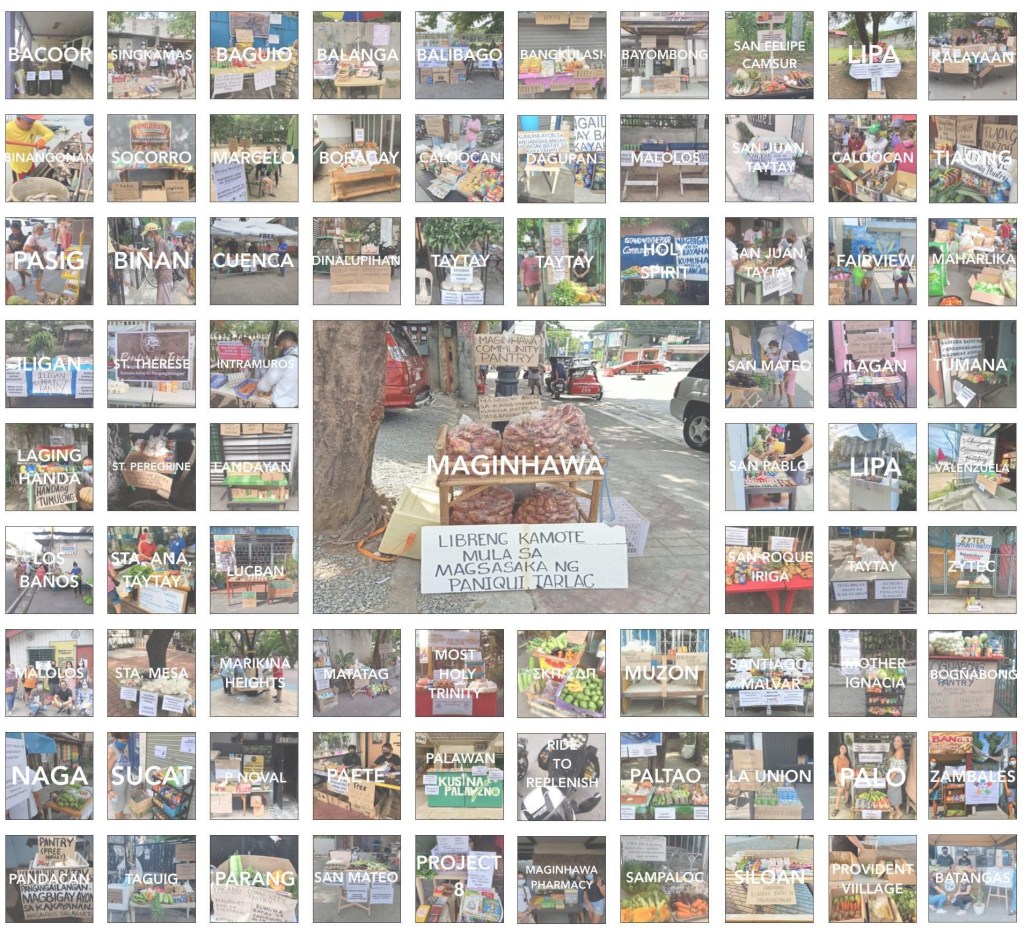
Remember how we have been so sullen in March, wondering if God has forsaken us with the deadly surge of COVID-19 cases amid the glaring incompetence of this government when suddenly our hopes were raised high by this community pantry movement?

Who would have thought of Ms. Patricia Non in the quiet street of Maginhawa in Quezon City would rally the whole nation with her “Community Pantry” now helping so many people going hungry?

Not only that. The most beautiful thing Ms. Patricia Non had done is her bringing out the best in every one of us, rich and poor alike, young and old to share whatever we have for our suffering brothers and sisters!

Most of the time, we do not see things in our lives the way God sees them. He tells us in Isaiah 55:8-9 that his ways are not our ways, his thoughts are not our thoughts for God is totally different from us! We have to trust him and remain in him “for God is greater than our hearts and knows everything” (1Jn.3:20). And that is for sure – as we have proven so many times in our lives.

In the first reading we find the very difficult and almost impossible situation of St. Paul following his conversion: nobody would believe him and everybody suspected him of possible sinister plots against them! But, St. Paul remained consistent in his prayers and studies in Tarsus until Barnabas introduced him to the apostles who gave him the opportunity to preach in Jerusalem. Despite his dark past, St. Paul won so many converts in his preaching in the name of Jesus that eventually, he was sent to missions abroad that led to the growth of the early church.

That is remaining in the Lord – allowing God to work in us and through us like St. Paul so that we become fruitful, not just successful.

Fruitfulness is the result of remaining in the Lord, of letting God do his work in us. Most often, this leads to pains and failures as Jesus tells us of the need to be pruned like the branches of the vine to be more fruitful. But, despite these failures and defeat in our lives, we experience that sense of fulfillment within us because we have grown and matured in the Lord. We have not really failed at all because we have become fruitful.

On the other hand, being successful means relying more on our human efforts like our strengths and intelligence that is usually measured in tangible things like money and popularity. But, we have also experienced or heard many successful people still feeling empty and lost, that despite their fame and wealth, they have no peace and joy within, feeling nobody truly loves them for who they really are.

Many times in life we have experienced that even if we feel safe and sufficient, that is when we feel so empty, something is missing. As we usually say, parang may kulang pa.

This Sunday, Jesus our Good Shepherd reminds everyone of us to remain united in him who is our true vine. It is only in him can we find life and meaning amid the many sufferings and trials going our way especially at this time of the pandemic.

Only in remaining in Jesus is the surest path to fulfillment despite our pains and sufferings, as well as losses in life. Just stay and remain in him as he is always doing something beautiful for us. Amen.

A blessed and fruitful week to everyone!

Posted by Jean Palma on Facebook, 18 April 2021 with the caption: “All these community pantries in four days, and counting. What a powerful movement.” #CommunityPantry

Praying not to be deceived

The Lord Is My Chef Breakfast Recipe for the Soul by Fr. Nicanor F. Lalog II
Tuesday, St. Andrew Dung-Lac, Priest, and Companions, Martyrs, 24 November 2020
Revelations 14:14-19     >><)))*>  +  <*(((><<     Luke 21:5-11
Photo by author, “wailing wall” of Jerusalem, May 2017.

Your words today, Lord Jesus, are disturbing because they are actually happening: “See that you not be deceived, for many will come in my name saying ‘I am he’ and ‘The time has come.’ Do not follow them!” (Lk.21:8).

In our age of instant communications when everything is reduced to bits and pieces of information to be consumed by everyone through various media platforms, we have become so gullible for whatever is fed to us. The more outlandish even unbelievable, the better! Worst, we never bother to check their veracity and even sanity that sometimes, we have become so foolish to accept everything we hear and see and read.

Heighten our sense of reason and most especially our faith in you.

Let us not be deceived in following your impostors as well as focusing more on the coming end that we forget to live in the present moment by making a stand for your gospel truths.

Like St. Andrew Dung-Lac and his companion martyrs in Vietnam, they chose to live in the present moment of giving witness to your gospel than arguing or debating if it were the moment of your final coming or not.

Let us not be deceived by focusing on the peripherals of our faith like rites and rituals empty of loving service for others.

May we stand firmly by your side, for what is true and just, so that when judgement day comes, we may remain faithful in you like grapes so ripened, ready for harvesting, and when pressed, produce good wine to uplift the spirits. Amen.

When going down is the way up

The Lord Is My Chef Breakfast Recipe for the Soul by Fr. Nicanor F. Lalog II
Saturday, Week XXXI, Year II in Ordinary Time, 07 November 2020
Philippians 4:10-19     <*(((><<   |||+|||   >><)))*>     Luke 16:9-15
Photo by author, bas relief of Jesus at his agony in the garden in Gethsemane, the Holy Land, 2017.

Thank you very much, O God our Father for the ability to still kneel before you on many occasions daily. I have just realized how times have indeed changed these days when we rarely kneel, when the rule of each day is to always rise above, go up higher, to be on top.

We call it “upward mobility” that we try our best to get the best education, best jobs and careers so we could move up the corporate ladder, up the social strata, to be popular, to be looked up upon, be admired and followed.

But, what goes up always goes down if we have no foundation in you, dear God, as St. Paul had learned. How amazing that after going through so much sufferings and hardships in his ministry and now in prison awaiting trial and sure death that he had felt on “highest high” in his life!

I know indeed how to live in humble circumstances; I know also how to live with abundance. In every circumstance and in all things I have learned the secret of being well fed and going hungry, of living in abundance and of being in need. I have the strength for everything through him who empowers me.

Philippians 4:12-13
Photo by author, Church of St. Anne, Jerusalem, 2017.

Make us realize like St. Paul that it is in going down like Jesus Christ that we truly rise in you; it is going down, in leaving everything behind and trusting in you that we truly become most effective and fulfilled.

It is in going down when we become fruitful though not necessarily successful which is very relative.

How sad, O Lord, how we have become a clapping generation that even in our churches we always clap our hands for things we see like achievements and material things forgetting those not seen by the naked eyes like character, sensitivity with the poor and hungry and other things of the heart that you look for and always see.

And he said to them, “You justify yourselves in the sight of others, but God knows your hearts; for what is of human esteem is an abomination in the sight of God.”

Luke 16:15

Teach us, Lord, to go down further by being one with those at the bottom and margins so we may experience you in them. Amen.