The Lord Is My Chef Daily Recipe for the Soul by Fr. Nicanor F. Lalog II
Wednesday in the Eleventh Week of Ordinary Time, 15 June 2022
2 Kings 2:1, 6-14   ><}}}}*> + ><}}}}*> + ><}}}}*>   Matthew 6:1-6, 16-18
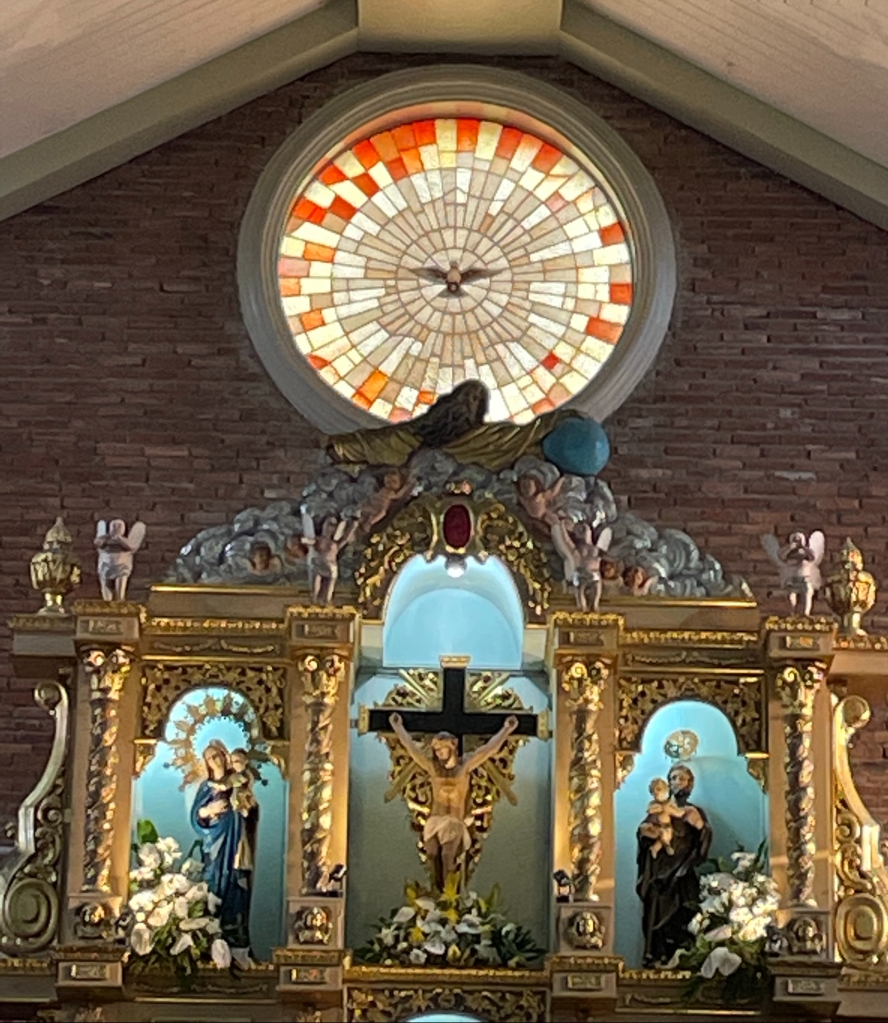
Photo by author, Singapore 2018.
Today we heard, dear God,
the beautiful story of your two
great prophets, Elijah and his
successor Elisha; but what is
most wondrous is the loyalty
of Elisha's discipleship which is
a beautiful imagery of our relationship
with your Son Jesus Christ.
When the Lord was about to take Elijah up to heaven in a whirlwind, he and Elisha were on their way to Gilgal. Elijah said to Elisha, “Please stay here; the Lord has sent me on to the Jordan.” “As the Lord lives, and as you yourself live, I will not leave you,” Elisha replied. And so the two went together.
2 Kings 1, 6
Our loyalty and fidelity are only
to you, heavenly Father but expressed
through prophets and leaders and mentors
you sent us to prepare us too for your
mission; like Elisha, keep us faithful to you,
may we receive your call gladly through
them, and most of all, like Elisha,
may we submit to you, O God, to become
like Elijah your prophet to your people,
speaking to them only your words,
and doing to them only your will.
Let us be more focused on you,
loving Father, not on us and our work;
may we heed the calls of your Son
Jesus Christ for us to lead prophetic lives
amid this age of too much self-promotion:
Jesus said to his disciples: “Take care not to perform righteous deeds in order that people may see them; otherwise, you will have no recompense from your heavenly Father.”
Matthew 6:1
Lord Jesus Christ,
let me decrease so that
you will increase in me
like all your prophets.
Amen.
The Lord Is My Chef Daily Recipe for the Soul by Fr. Nicanor F. Lalog II
Monday, Memorial of Mary, Mother of the Church, 06 June 2022
Genesis 3:9-15   ><}}}}*> + ><}}}}*> + ><}}}}*>   John 19:25-27
Photo by author, 2018.
Praise and glory to you,
God our loving Father
for all the women of the world
as we resume Ordinary Time
in our Church calendar honoring
Mary, Mother of the Church.
How wonderful to recall how
all four evangelists narrated the
presence of women at the crucifixion
of your Son Jesus Christ:  what a
most wondrous sight that continues
to this day when behind every sufferings
we go through are the women who
often join and accompany us even
until death, giving us strength and
courage, comfort and consolation.
But most wondrous, O God,
is the account of the beloved disciple
of Mary, the Mother of Jesus at the
foot of his Cross on Good Friday,
being addressed as "woman".
Standing by the cross of Jesus were his mother and his mother’s sister, Mary the wife of Clopas, and Mary of Magdalene. When Jesus saw his mother and the disciple whom he loved, he said to his mother, “Woman, behold your son.” Then he said to the disciple, “Behold, your mother.” And from that hour the disciple took her into his home.
John 19:25-27
Only you, O God in your Son Jesus,
can give that unique gift of womanhood
especially your Mother Mary;
you first called her "woman" at the
wedding feast at Cana and now here
at the Cross, when your hour had come.
What a beautiful image, dear Lord,
of Mary, of the woman in your work of
redemption so close and so near you
that is in direct contrast with the other woman
in Genesis, Eve, who turned away from you
in sin.
Bless us dear Jesus,
to constantly repeat this beautiful
scene at the Cross, as an individual
and as a community of your disciples:
let us relive this scene in our lives
as Christians taking Mary your Mother
as well as the Church into our own homes
and most especially of respecting every
woman still ignored and taken for granted
in this time; let us remember always our
equal dignity with women as image and likeness
of God as we carry out your final instructions
of remaining one in you in love and mercy.
Amen.
The Lord Is My Chef Sunday Recipe for the Soul by Fr. Nicanor F. Lalog II
Sixth Sunday in Easter-C, 22 May 2022
Acts 15:1-2, 22-29 ><}}}}*> Revelation 21:10-14, 22-23 ><}}}}*> John 14:23-29
Photo by Ms. Danna Hazel de Castro, Kiltepan Peak, Sagada, Mountain Province, 2017.
We are now in our penultimate Sunday of the Easter Season as Jesus announces his Ascension and the sending of the Holy Spirit “who would teach his followers everything and remind them of all he had told them” (cf. Jn.14:26).
Jesus was still having his heart-to-heart talk with his disciples at the Last Supper “after Judas had left”, teaching them two very important realities in life we all wish and pray for but always afraid to work for – love and peace. Keep in mind that during the Last Supper, Jesus was telling everyone about his coming departure from earth after going through his Pasch, making his disciples to worry and be fearful of what would happen to them when the Lord is “gone”. To assure them of his continuing presence among them when his departure happens, Jesus reiterated his commandment to love one another as he gave them his gift of peace, promising the sending of the Holy Spirit who would enlighten them to understand and remember everything he had taught them.
Photo by author, Bolinao. Pangasinan, 19 April 2022.
Jesus said to his disciples: “Whoever love me will keep my word, and my Father will love him, and we will come to him and make our dwelling with him… The Advocate, the Holy Spirit, whom the Father will send in my name, will teach you everything and remind you of all that I told you. Peace I leave with you; my peace I give to you. Not as the world gives do I give it to you. Do not let your hearts be troubled or afraid. You have heard me tell you, ‘I am going going away and I will come back to you. If you loved me, you would rejoice that I am going to the Father; for the Father is greater than I. And now, I have told you this before it happens, so that when it happens you may believe.'”
John 14:23, 26-29
Love & peace as deeper realities, not fancies
Jesus reminds us today like at the Last Supper how love and peace are essential to remain close to him after he had returned to the Father in heaven, making him present among us and in the world we live in filled with many sufferings and pains, trials and struggles.
From the love and peace we strive become also our sources of joy as we go through in life as followers of Jesus Christ. That is why Jesus insists in the gospel this Sunday that love and peace are not mere fancies nor emotions and feelings as the world presents them; love and peace in Christ demand the Cross. It is both a decision we have to keep and sustain through the Holy Spirit Jesus had promised to give us the courage and wisdom to truly love and work for peace.
Photo by author, Parish of St. John the Baptist, Calumpit, Bulacan, 02 May 2022.
Priority of love. See again Jesus teaching us today on the priority of love which must always be the foundation and motivation of our relationships with him and with one another. Recall how he told us last week of the “newness” of his commandment to love which is a radical commitment to Jesus, that in imitating his kind of love willing to sacrifice and die in one’s self, we remain one in the Father and with each other.
Love is the very foundation of our lives as image and likeness of God who is love himself. It is the kind of love that seeks to do the will of the Father like Jesus, willing to forget one’s own good, comfort and convenience. The Greeks call it agape, the very kind of love Jesus witnessed to us on the Cross, the same love he asked Simon Peter at the shores of Lake Tiberias after Easter.
It is humanly very difficult to love that is why the Greeks and Romans have thought of having gods and goddesses of love. It is the reason why Jesus became human so that we can love like God by asking us to keep his word so that he and the Father may dwell in us and enable us to do his works in us. Love is doable in Christ if we let him live in us. As the beloved disciple tells us, “No one has ever seen God. Yet if we love one another, God remains in us, and his love is brought to perfection in us” (1Jn.4:12).
Photo by Ms. Jing Rey Henderson in Taroytoy, Aklan, 30 April 2022.
Motivated by love. If love is the foundation of our lives, then, love must also be the motivation of everything we think, say and do. It is easy to be rooted in the love of God but it can happen that we may be doing things for God not truly borne out of love but due to fears and even selfish reasons. Hence, our need of constantly purifying our love for God
To love like Christ is to do away with all of our ifs and buts, excuses and alibis but simply to love like him. This is the most challenging part of discipleship, making it so difficult to be a Christian especially at this time. The recent events happening in our country challenge us to examine the purity of our love in him as disciples that despite of what have transpired, of whatever have been said and done, we continue to truly love and serve in Jesus.
We heard in the first reading how love inspired the early Christians to meet at the Council of Jerusalem in year 50 to discuss and resolve the many differences they encountered that early in the Church. It was first severe test of the Apostles and early Christians from within and because of love, they have triumphed and has continued to remain until now!
There will always be differences among us especially fellow Christians but these are not meant to divide us but to become means to be one in Christ in love. It is a tragedy when we disciples of Christ who claim to always know what is true and good when in fact we become the obstacles to dialogue and understanding, to peace and unity.
Love leads to peace. Here we find how love leads into peace. Like love, peace is not an emotion nor a feeling, a mere absence of war and differences but more of a product of love that is willing to sacrifice and suffer.
Jesus made it clear during Last Supper that the peace he gives is not like what the world gives that is often due to compromises, to quid pro quo in exchange of some concessions. The peace Jesus gives us is first of all one that is motivated by love of God that calls for a deep faith and trust in the Father.
Photo by author, Bolinao. Pangasinan, 19 April 2022.
Peace does not depend on everything going right in our lives, when all is “silent and peaceful” as we would say. Peace sometimes comes most to us when we go through many trials in life as we trust in God more, in his goodness and in his plans for us.
The peace of Jesus Christ comes and is found within us, not outside us. That is why Jesus tells us to not let our hearts be troubled or afraid. When we trust Jesus and do whatever he asks us out of love, then we experience peace even if there are temporary setbacks to our efforts for ourselves or family or even nation. We just have to have faith in God and continue to love in Christ for in the end, good and truth prevail.
In the Hebrew language, peace is shalom which means finding order or good relationships with one’s self, with others and with God. Let us examine our hearts and our lives this Sunday to see areas within us needing order, where we lack love as foundation and motivation in doing things that peace remains elusive to us.
May the love of Jesus Christ shine in us and through us like in the vision of John of the new Jerusalem coming down that “had no need of sun or moon to shine on it, for the glory of God gave it light, and its lamp was the Lamb, Jesus Christ our Lord” (Rev. 21:23). Amen.
The Lord Is My Chef Daily Recipe for the Soul by Fr. Nicanor F. Lalog II
Tuesday, Feast of St. Philip and St. James the Less, Apostles, 03 April 2022
1 Corinthians 15:1-8   ><}}}}*> + <*{{{{><   John 14:6-14
Jesus teaching his Twelve Apostles, from GettyImages.
Lord Jesus Christ,
on this feast of your apostles
Philip and James the Younger,
grant me the grace to discover
your true identity the way they
got to know you too; draw me
closer to you to be familiar with
you and your ways, to always
"come and see" you in prayers
and experiences in life.
Keep me close to you, dear Jesus,
so that I may truly lead people to you
and not to me nor to my beliefs;
let me lead seekers of you find you
both in your glory and in your Cross
for without your sufferings and death,
everything becomes a novelty and
a fancy, or a philosophy and never
a life and a union in you.
For I handed on to you as of first importance what I also received: that Christ died for our sins in accordance with the Scriptures; that he was buried; that he was raised on the third day in accordance with the Scriptures; that he appeared to Cephas, then to the Twelve.
1 Corinthians 15:3-5
Like Philip, keep me open in
expressing to you my views
when asked like at the wilderness
when you tested him where to find
food for the crowd; in another instance,
let me be like Philip entertaining requests
from others to see you like those Greeks
who have come to Jerusalem;
most of all, keep me open to you,
dear Jesus to accept and treasure
your words and teachings even if I
do not understand immediately if that
is the way to know you more clearly
and eventually see and experience
God our Father.
Like your cousin James the Younger,
let me keep in mind that closeness
with you does not come  through mere
affiliations nor with names because
knowing you is a habit that we must strive
and work for by coming to you daily,
following you even up to the Cross;
it is only in following you, becoming
like you we truly become your
disciples like James who taught
and witnessed your love for everyone
by working so hard with Peter to
intervene in the difficult relations
between the early Christians of Jewish
origins and those of pagan converts;
in practice and in his writings, James
showed that faith in you is fulfilled
in a life lived in love and respect
for each other:  "As the body apart
from the spirit is dead, so faith apart
from works is dead" (James 2:26).
Philip and James were not perfect,
just like me; but in their humility
and obedience, you perfected
them in their lives of witnessing
that cost their lives; keep me
faithful to you, dear Jesus,
and let others see you in me
in words and in deeds.  Amen.
40 Shades of Lent by Fr. Nicanor F. Lalog II
Second Sunday in Lent-C, 13 March 2022
Genesisn15:5-2, 17-18 ><}}}*> Philippinas 3:17-4:1 ><}}}*> Luke 9:28-36
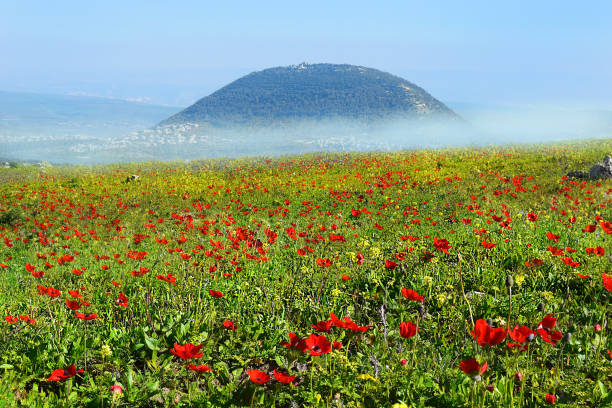
Spring blooming of poppies in Galilee near the Nazareth, against the background biblical Mount Tabor, Israel, from iStockphoto.com.
From the desert where Jesus was tempted by the devil last Sunday, Luke now takes us on top of Mount Tabor for the Lord’s Transfiguration.
In the Bible, the mountain is like the desert that signifies a deeper reality and meaning. It is more than a place that shows communion and oneness with God, indicating an inner ascent within us to unite with God especially in this season of Lent.
And like in the temptation of Jesus in the desert last Sunday, it is very interesting how Luke tells us again two important details not mentioned by Mark and Matthew in their versions of the Lord’s Transfiguration:
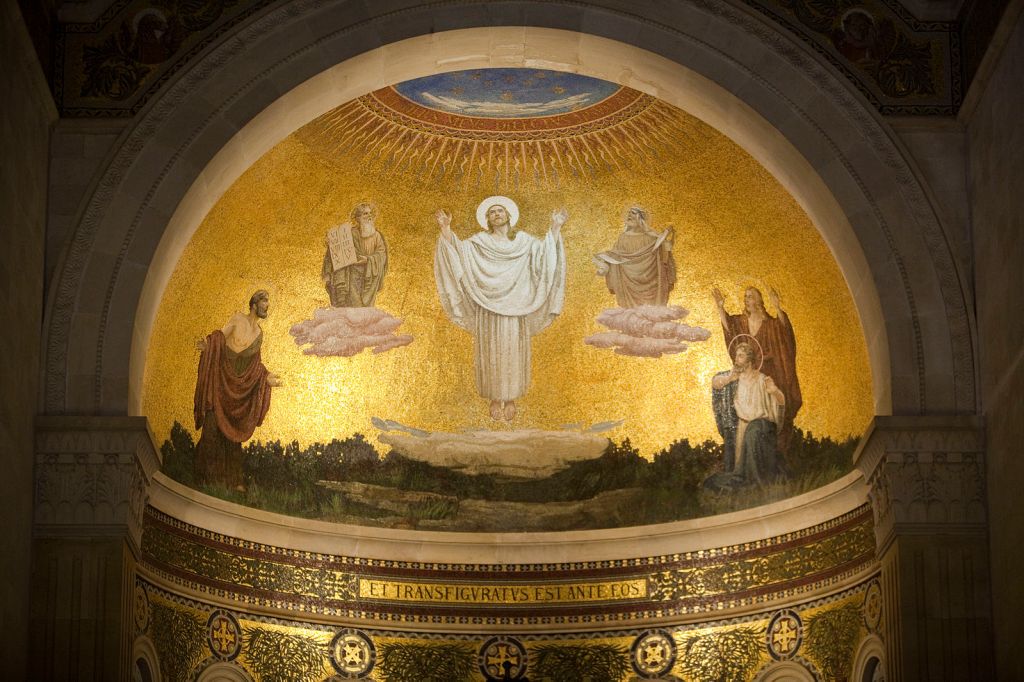
Jesus took Peter, John, and James and went up the mountain to pray. While he was praying his face changed in appearance and his clothing became dazzling white. And behold, two men were conversing with him, Moses and Elijah, who appeared in glory and spoke of his exodus that he was going to accomplish in Jerusalem.
Luke 9:28-31
First, only Luke tells us the reason why Jesus went up the mountain which is to pray. Here we find that the transfiguration of Jesus is a prayer event. That is why we need to pray always because prayer transfigures us like Jesus Christ.
Second, as Jesus transfigured while praying, only Luke informs us the topic Moses and Elijah discussed with the Lord which is his coming “exodus” or passion, death, and resurrection on Good Friday. When we pray, the more we accept and embrace the Cross that truly transfigures us into becoming like Jesus Christ.
But the problem is, we always refuse and avoid prayer because it is always difficult to pray. Prayer is a discipline. Despite its being a grace from God to be able to pray which he freely gives to each one of us, it is gift that also requires from us total surrender and consistency.
Prayer does not necessarily change things like stop calamities or sickness; prayer primarily changes the person, enabling us to respond properly to problems, trials and sufferings that come to us; hence, prayer in itself is an exodus, a pasch that leads us to transfiguration.
Usually, when we pray we feel nothing is happening, that it is a “waste” of time, of being “idle” in one place that could have been used to other productive activities like fixing one’s problems. But it is in prayer when we first experience how “staying” and “going” merge to become one in Jesus Christ.
This we find in the only detail that Luke shared with Matthew and Mark when Peter woke up and saw Jesus transfigured, conversing with Moses and Elijah.
As they were about to part from him, Peter said to Jesus, “Master, it is good that we are here; let us make three tents, one for you, one for Moses, and one for Elijah.” But he did not know what he was saying.
Luke 9:33
Photo from commons.wikimedia.org, mosaic inside the Basilica of the Transfiguration on Mt. Tabor, Israel.
The Transfiguration, a preview of Christ’s glory via his pasch
Very often in life, we want every beautiful and good experience we have to be preserved, wishing they would never end, like Peter asking Jesus if they could just stay on top of the mountain to keep their “cloud nine” experience.
On the other hand, we are quick to beg Jesus to end soonest every pain and suffering, trials and difficulties we are going through in life that if possible, have them erased or deleted from our memories too!
For us, “staying” and “going” are opposites but Jesus is telling us in his transfiguration that these two come together.
In his transfiguration, Jesus is telling us that discipleship is both “staying” and “going” in him. It is only in Christ that we can “keep” the good time of being one with him while we “passover” from life’s many darkness, trials and sufferings by remaining one with him.
After assuring us last Sunday that we can overcome life’s many temptations through him, Jesus tells us today that our transfiguration and glory can only come through the Cross like him. Before Easter comes, there is Good Friday first.
At his transfiguration, Jesus showed us that his divinity belongs with the Cross and cannot be separated because that is his identity as the Suffering Messiah whose glory and pasch are always together. Hence, his transfiguration was the “preview” to his coming glory whereby he remained one in the Father in prayer expressed perfectly in his exodus on Good Friday which Moses and Elijah discussed with him on Mount Tabor.
Recall that his transfiguration occurred after he was recognized by Peter as the Christ while they were at Caesarea Philippi where Jesus also bared for the first time to the Twelve his coming passion, death and resurrection. It was also at that time when Jesus laid to the Twelve the very foundations of discipleship in him which is to forget one’s self, take up one’s cross daily, and follow him.
From Caesarea in Philippi, Jesus and the Twelve made a U-turn to go back to Jerusalem with a stop-over at Mount Tabor for his transfiguration where he reiterated his teachings about himself and his mission. See that during the transfiguration as Peter, James, and John watched in awe, they were frightened when a voice was heard from the cloud that declared “this is my chosen one; listen to him” (v.35).
And what do we hear from Jesus after his transfiguration? His two other predictions of his coming passion, death and resurrection plus his repeated calls to everyone to deny one’s self, to take up one’s cross daily and to come follow him!
It is interesting to note that while the fourth gospel does not have this story of the transfiguration, John rightly refers to the Crucifixion as the “exaltation” of Jesus Christ – his going down, his suffering and dying on the Cross is actually his rising to glory!
The same thing is true to us disciples of Jesus.
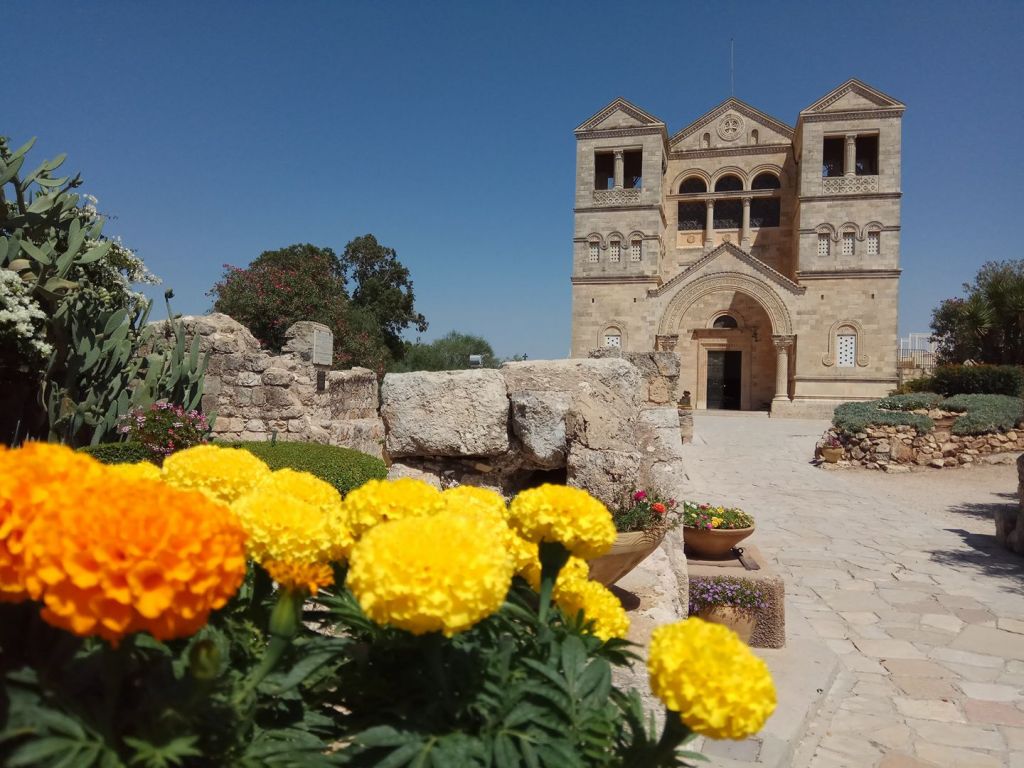
Photo from custodia.org, Basilica of the Transfiguration on Mt. Tabor, Israel.
Staying and going in Christ, with Christ
The grace of this second Sunday in Lent when we hear every year the story of Christ’s transfiguration is his assurance of his love for us by going through his exodus which is his self-offering on the Cross.
The question is not whether we should stay or go but are we willing to both stay and go in Jesus, with Jesus? Discipleship is remaining in Jesus, going with Jesus up to the Cross!
According to Luke, Peter, James, and John did not tell to anyone what they saw and heard on Mount Tabor. Like Mary, they kept everything in their hearts as they remained with Jesus, going with him in all his journeys especially at the Garden of Gethsemane before he was arrested, listening to his words and teachings, witnessing and experiencing his many healings and exorcisms including his passion and death from afar except for John.
They never fully understood everything they saw and heard from Jesus until the coming of the Holy Spirit on Pentecost day but, their “staying” and “going” with him transfigured them without realizing how the Lord was already transforming them inside.
The same thing happens to us when we “stay” and “remain” in Jesus through prayers and reflections of the Sacred Scriptures, through the Sacraments especially the Holy Eucharist every Sunday, through the guidance of other faithful disciples like our family and friends who witness Christ to us with their living examples. Akala natin wala namang nangyayari pero mayroon palagi dahil kasama natin ang Panginoon!
As we stay in the glorious presence of Jesus in prayers and penance, the more we go forward in our dying to self and rising to life in our loving service to everyone, in our kindness, in our patience and understanding, and in our mercy and forgiveness. When we offer ourselves wholly to Jesus, he does everything like what God did to the animals offered by Abraham in the first reading. Notice how Abraham on that night fell into a trance as if he could not believe what was happening while in the presence of the Lord. Palagi naman ganoon sa harap ng Diyos – nakakapangilabot, nakakatakot kasi totoong-totoo!
Lent is not just a preparation for Easter but also a journey for us all to purify and renew and rekindle our faith in Christ’s resurrection by remaining in him, ascending with him through mountains of sacrifices, and being tested in the desert of temptations.
These 40 days of Lent involve many stopovers where we are invited to examine our hearts, our inner selves to see who is inside us, of who are we dwelling with, of who we are going with. Let us heed Paul’s call in the second reading to “stand firm in the Lord”(Phil. 4:1) because our “citizenship is in heaven and Jesus will change our lowly body to conform with his glorified body” (Phil. 3:20, 21).
Let me end this reflection with a quote I got and memorized as a child waiting in our former family dentist, Dr. Eddie Calalec of Meycauayan, Bulacan:
Time is fast for those who rush;
Time is slow for those who waith;
Time is not for those who Love.
Have a blessed week and please say a prayer for me on Wednesday (March 16) when I go through a surgery. Thank you and God bless you!
The Lord Is My Chef Daily Recipe for the Soul by Fr. Nicanor F. Lalog II
Friday, Week VI, Year II in Ordinary Time, 18 February 2022
James 2:14-24, 26   ><)))*> + ><)))*> + ><)))*>   Mark 8:34-9:1
Photo from inquirer.net, 2021.
Awaken us, O Lord,
from our mistake and
error of insisting
that our pious and religious
exercises are the "good works"
that express our faith in you;
let us realize that it is not
enough that we simply
celebrate Mass, recite the
Rosary, join processions and
pilgrimages and keep other
devotions that make us good
practicing Catholics; these are
not the good works that St. James
is asking from us in the first reading:
faith is the true living out
of our faith in you, Jesus Christ!
For just as a body without spirit is dead, so also faith without works is dead.
James 2:26
True faith in you,
O Lord, is forgetting
one's self to reach out
to those in need, fighting
for justice and peace,
being more loving and kind,
forgiving and understanding
of others just like you, dear Jesus.
True faith in you,
dear Jesus, is being
your disciple which is
a call to deny one's self,
to take up one's cross in life,
and to follow YOU always
(Mark 8:34).
Give me the grace
this day, Jesus,
to sincerely look into
myself and examine
how true is my
faith in you,
how my very life
and actions reveal
the faith I have
or simply do not have
at all.  Amen.
The Lord Is My Chef Sunday Recipe for the Soul by Fr. Nicanor F. Lalog II
Sunday Week VI-C in Ordinary Time, 13 February 2022
Jeremiah 17:5-8 ><}}}}*> 1 Corinthians 15:12, 16-20 ><}}}}*> Luke 6:17, 20-26
Photo by author, monastery inside the compound of the Church of Beatitudes, the Holy Land, 2019.
From the shores of Lake Gennesaret in Capernaum, Jesus now takes us to the plains for his first series of teachings called “sermon on the plains”. In Matthew’s gospel, it is called “sermon on the mount” due to his different emphasis and audience, his fellow Jews while Luke situated it on the plains based on his own focus directed to gentiles or non-Jews.
But, whether it was on the mount or on the plains, one thing remains clear: Jesus taught important lessons specifically for his disciples called the Beatitudes.
Last Sunday Jesus called his first four disciples to become “fishers of men” and as he travelled preaching along the shores of Galilee, they grew to Twelve in number.
On the night before this scene of sermon on the plains, Jesus went up a hill with the Twelve to pray before appointing them as Apostles. It was the first “face-to-face” class of the Twelve with the Beatitudes labelled as Discipleship 101.
And raising his eyes toward his disciples he said: Blessed are you who are poor for the kingdom of God is yours. Blessed are you who are now hungry for you will be satisfied. Blessed are you who are now weeping, for you will laugh. Blessed are you when people hate you, and when they exclude and insult you, and denounce your name as evil on account of the Son of Man. Rejoice and leap for joy on that day! Behold, your reward will be great in heaven. But woe to you who are rich, for you have received your consolation. Woe to you who are filled now for you will be hungry. Woe to you who laugh now, for you will grieve and weep. Woe to you when all speak well of you, for their ancestors treated the false prophets in this way.”
Luke 6:20-26
Photo by author, Church of the Beatitudes, the Holy Land, 2019.
Beatitudes, the meaning of discipleship
The Beatitudes tell us the meaning of discipleship, of not simply following Jesus but making a choice, taking a stand to be like him. Each “blessedness” is actually Christ who is described as the poor, the hungry, the weeping, and the hated.
See the set of “Blessed” followed by a corresponding set of “woes”, giving us a hint that the Beatitudes were patterned by Jesus to Jeremiah’s pronouncements to the people we heard in the first reading,
“Cursed is the man who trusts in human beings, who seeks his strength in flesh, whose heart turns away from the Lord. Blessed is the who trusts in the Lord, whose hope is the Lord. He is like a tree planted beside the waters that stretches out its roots to the stream: it fears not the heat when it comes, its leaves stay green; in the year of drought it shows no distress, but still bears fruit.”
Jeremiah 17:5, 7-8
Both in Jeremiah and in the Beatitudes by Jesus, there is the promise of blessings in the future; however, it is not something we only hope to achieve in the future but something realized in the present IF we trust in the Lord.
Photo by author, pilgrims entering the Church of the Beatitudes, 2019.
More than a promise of hope in a future glory, the Beatitudes by Jesus are directions every disciple must take as path in life, guides or criteria in discerning the will of God for us in this life. It is said that the word beatitude is from “be attitude” or the attitudes of a disciple.
That gesture of the Lord looking up to his disciples that include us today while teaching the Beatitudes indicates his recognition of our present situation by speaking in the present tense with “Blessed are you who are now poor, hungry, weeping and hated”.
Are we not feeling poor and hungry, actually weeping and hated in this intensely heated politics in the country where everyone seems to be lacking reason and shame, everyone going insane and worst, salaula (filthy) without any sense of shame at all?
At the same time, all those pronouncements of having the Kingdom of God, of being satisfied, of laughing, and of being rewarded greatly in heaven are not things we get in the future if we suffer now; these we can NOW have amid our sufferings when we are one in Jesus Christ.
The saints have shown us in their lives most especially St. Paul how while being poor, hungry, weeping and hated they have experienced fulfillment and joy at the same time. We ourselves have proven them right that with St. Paul we can “boast” like him, “Therefore, I am content with weaknesses, insults, hardships, persecutions, and constraints, for the sake of Christ; for when I am weak, then I am strong” (2 Cor. 12:10).
The key is union in Jesus Christ because the Beatitudes not only reveal to us his very person but also his Paschal Mystery of Passion, Death and Resurrection. It is therefore an imperative that every disciple must be immersed in Christ because discipleship is the imitation of Christ. Again, we borrow from St. Paul who said, “It is no longer I who live, but Christ who lives in me” (Gal.2:20).
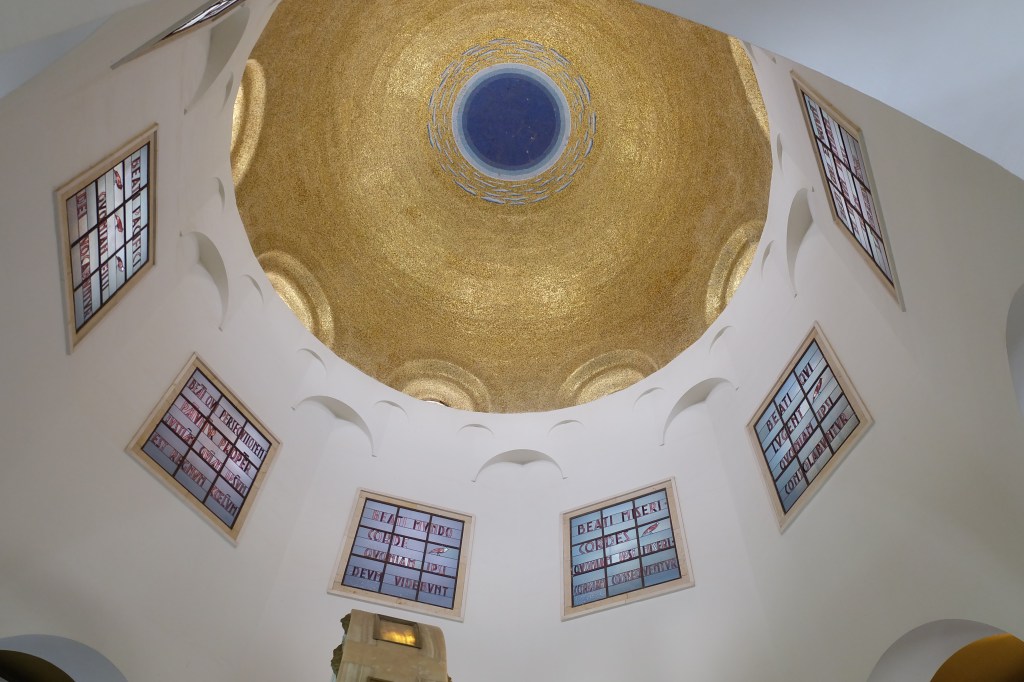
Photo by author, dome of the Church of Beatitudes, the Holy Land, 2019.
Woes of not following Jesus
Contrary to claims by many philosophers and filosofong tasyo alike who are atheists and anti-Church, God is not a sadomasochist who delights in seeing his people suffer and die. Nothing bad can come from God for God is love (1 Jn. 4:8).
Unbelievers continue to question God, most especially Jesus and his Beatitudes that are clearly about sufferings with its apparent dislike or rejection of wealth and fame like what Jesus spoke of the woes in the second part of his Beatitudes.
There is nothing wrong with being rich, being filled, of laughing and being spoken well by others per se; in fact, these are all good in themselves. However, Jesus spoke of them as woes based on the pattern we have seen from Jeremiah’s pronouncements in the first reading: “Cursed is the man who trusts in human beings, who seeks his strength in flesh, whose heart turns away from the Lord.”
See how Jesus was more “soft” and gentle in his woes than God in Jeremiah’s instruction to the people that was so harsh, saying “cursed” is the man who trusts in human beings, whose heart turns away from the Lord.
Photo by author, altar in the Church of Beatitudes, 2019.
But here we find its true context too: it is a warning sign, a reminder of the dangers that can happen to anyone who trusts in himself more and turns away from God.
Here we find something truly happening in the future – not now – unlike in the Beatitudes wherein the future blessings are experienced in the present moment if we suffer in communion with Christ.
Very clear in Jeremiah and in the woes of Jesus, turning away from God surely leads to disaster because it is the opposite path of blessings.
At the same time, since God does not punish, the woes by Jesus are not a condemnation of those who are rich, filled, laughing and well spoken of others. His woes are not expressions of hatred nor hostilities but warning against the dangers of being so proud, of being filled with one’s self, of playing god because it is the path to destruction. Or even perdition as we shall see later this year in the parable of Lazarus and the rich man found only in Luke’s gospel.
The Greeks have a more precise term for that called hubris – an excessive pride and defiance of the gods that leads to one’s nemesis. Clearly, God does not punish nor condemn anyone of us. It is always our choice that we are lost and end in woes, as Shakespeare immortalized in the words of Cassius in Julius Caesar,
"The fault, dear Brutus,
is not in our stars
But in ourselves,
that we are underlings".
Have a blessed week ahead, everyone. God bless you all. Amen.
Huli ka!
Mga salitang
kinatatakutan,
hangga't maari ay
iniiwasan,
tinatakasan,
tinatakbuhan dahil sa
tiyak na kapahamakan.
Ngunit mayroong
bukod tanging pagkakataon
ang salitang "huli ka" ay
katuwa-tuwa,
dala ay galak
hindi takot at pangamba
bagkus kaluwagan
at kasaganaan.
Larawan kuha ni G. Jim Marpa, 2018.
Pagkatapos ni Jesus magsalita ay sinabi niya kay Simon, “Pumalaot kayo at ihulog ang mga lambat upang manghuli.” Sumagot si Simon, “Guro, magdamag po kaming nagpagod at wala kaming nahuli! Ngunit dahil sa sinabi ninyo, ihuhulog ko ang mga lambat.” Gayon nga ang ginawa nila at sa dami ng kanilang huli ay halos magkansisira kanilang mga lambat.
Lucas 5:4-6
Ano nga ba nangyari
magdamag wala silang huli
nagkubli ba mga isda
sa dilim ng gabi?
Paano ang nangyari nang
si Jesus ay nagsabi,
mga isda ay dumaiti
mga bangka napuno ng huli?
Araw-araw
dumarating si Jesus
sa buhay natin
upang tayo ay hulihin:
hindi upang pagdusahin
sa mga pagkakasala natin
bagkus upang lubusin
mga pagpapala niya sa atin.
Larawan kuha ng may-akda, 2018.
Kasabihan ng matatanda
sa bibig nahuhuli ang isda,
ngunit sinabi ni Jesus
sa bibig ng Diyos nagmumula
tunay na pagkain sa atin nagpapala
lahat ng pagpapagal at pagsisikap natin
 makabuluhan mayroon mang kabiguan
hindi mahuhuli ang Diyos sa kanyang kabutihan!
Parating abangan pagdaraan ni Jesus
pakinggan kanyang panawagan
at kung siya ay ating matagpuan
sana'y ating iwanan ang lahat
upang siya ay masundan
pamamalakaya sa sanlibutan
hindi mo pagsisihan, buhay na walang hanggan
tiyak makakamtan ngayon pa lamang!
The Lord Is My Chef Daily Recipe for the Soul by Fr. Nicanor F. Lalog II
Thursday, Memorial of St. Blaise, Bishop & Martyr, 03 February 2022
1 Kings 2:1-4, 10-12   ><}}}}*> + <*{{{{><   Mark 6:7-13
God our Father,
as we celebrate today
the memorial of St. Blaise,
a Bishop and Martyr so loved
by people for the many miracles
attributed to him, I pray only for
one thing:  to be simply simple
like him.
His life was clearly a life of simplicity
anchored in deep faith in you, in just
having you in through prayers and
examples of life; St. Blaise took to
heart Jesus Christ's instructions to
the Twelve "to take nothing for the
journey but a walking stick - no food,
no sack, no money in their belts" as
"they proclaimed repentance, driving
off many demons, and healing the
sick" (Mark 6:8, 12).
Famous for healing those with
afflictions of the throat and neck,
St. Blaise's life of simplicity reminds
us how too much things of the world
like wealth and fame could "choke" us,
preventing us from bridging what is
in our hearts and what is in our minds.
Like King David in the first reading,
let us realize that someday, we are
"going the way of all flesh" that
for us to be truly rich and fruitful
in life, it is best to keep the mandate
of the Lord always for he alone is our
life and meaning.  Amen.
The Lord Is My Chef Daily Recipe for the Soul by Fr. Nicanor F. Lalog II
Wednesday, Solemnity of the Immaculate Conception, 08 December 2021
Genesis 3:9-15, 20 ><}}}*> Ephesians 1:3-6, 11-12 ><}}}*> Luke 1:26-38
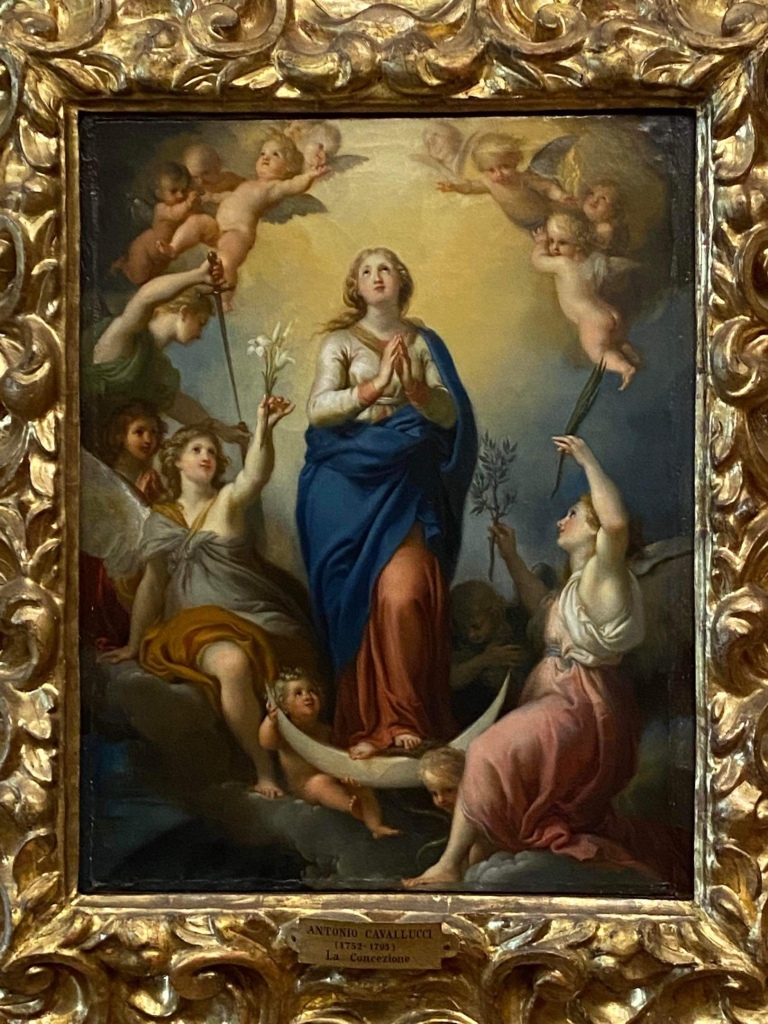
Photo by Rev. Fr. Gerry Pascual at Palazzo Borromeo, Isola Bella, Stresa, Italia, 2019.
Recently I saw on a Facebook post the photo of American model Kendall Jenner in a swimsuit showing what for many is the “perfect body” in a woman. The photo had reportedly gone viral last year.
What caught my attention was the other photo posted opposite Jenner: that of 19-year-old Alyssa Carson who became the youngest female in history to pass all NASA aerospace tests to train as astronaut for future travel to Mars! The caption said it so well, lamenting the fact how the world gives so much attention to “fashion models” with many going insane imitating their bodies forgetting the more essential like inner beauty and intelligence.
More sad is how we have fixed our human understanding and analogies of a “model” as someone who poses and remains still to be painted or photographed for glossy magazines and giant billboards that people are willing to buy or pay for just to view and let their senses feast on.
It may sound funny but those two photos accompanied me while praying and preparing for our celebration today of the Solemnity of the Immaculate Conception. Sorry, I am not going to show you the link to those photos but wha I want to share with you are the two beautiful expressions depicting Mary as “advocate of grace” and “model of holiness” found in the Preface of today’s Mass (that is the prayer before the Holy, Holy leading to the consecration): “She, the most pure Virgin, was to bring forth a Son, the innocent lamb who would wipe away our offenses; you placed herabove all others to be for your people an advocate of grace and a model of holiness.”
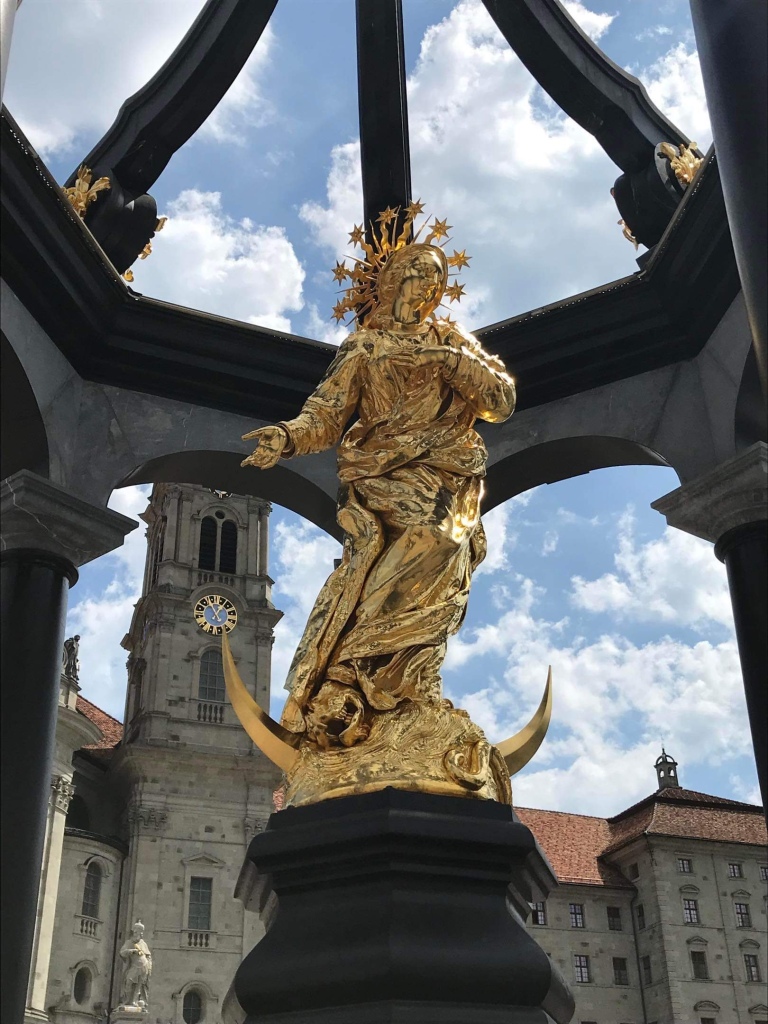
Photo by Fr. Gerry Pascual at Einsiedeln Abbey, Einsiedeln, Switzerland, 2019.
So often with Marian feasts, many people complain and find it hard to relate with the Blessed Virgin because they find them as celebrations of the privileges of Mary who was so blessed and unique, thinking she’s almost a god, not human anymore whom we cannot imitate and emulate.
That is totally untrue and baseless!
Of course, only she has the distinction of being immaculately conceived, one never stained by sin but, aside from that, Mary is like all of us, so human; and we too can be like her, full of grace and holy!
Brothers and sisters: Blessed be the God and Father of our Lord Jesus Christ, who has blessed us in Christ with every spiritual blessing in the heavens, as he chose us in him, before the foundation of the world, to be holy and without blemish before him. In love he destined us for adoption to himself through Jesus Christ, in accord with the favor of his will.
Ephesians 1:3-5
Very clear in this reflection by St. Paul in our second reading that our truest destiny is to be holy and without blemish – that is, immaculate. It is the plan of God since the beginning that we all become his people until sin came and destroyed momentarily that divine plan as we have heard in the first reading.
With the coming of Jesus through his sacrifice on the Cross, we were redeemed from sin to become God’s holy people which the same Preface mentions Mary as the “beginning of the Church”. The same prayer reiterates to us our universal calling from God which is to be holy and blameless before God through Jesus Christ. It is very doable and attainable “for nothing is impossible for God” as the Archangel Gabriel told Mary during the Annunciation (Lk.1:37). And Mary is our proof to that!
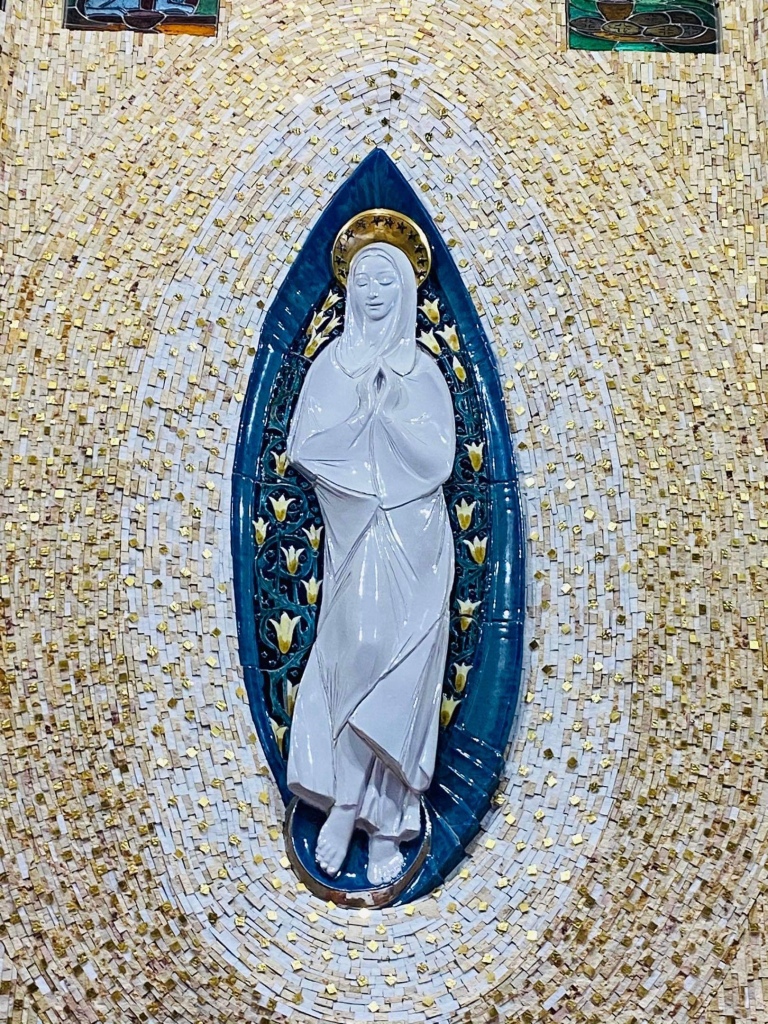
Photo by Rev. Fr. Gerry Pascual at Santuario di Greccio, Rieti, Italy in 2019.
While it is very true that nothing is impossible for God, today’s celebration of the Immaculate Conception reminds of how God “needs” us to cooperate and participate in his beautiful plans for us like Mary to be his instrument or seedbed for his Divine Word to receive and grow and bloom.
That is the meaning of Mary as “advocate of grace” who became the vessel in the coming of Jesus Christ. See how St. Luke was very clear in narrating Mary’s “supporting” role and place in the plan of God: she remains a human being – not God – like us except she was full of grace, that is, immaculately conceived.
Behold, you will conceive in your womb and bear a son, and you shall name him Jesus. He will be great and will be called Son of the Most High, and the Lord God will give him the throne of David his father, and he will rule over the house of Jacob forever, and of his kingdom there will be no end… The Holy Spirit will come upon you, and the power of the Most High will overshadow you. Therefore the child to be born will be called holy, the Son of God.”
Luke 1:31-33, 35
The Church Fathers used to call Mary as the “aquaeductus ecclesiae” or neck of the Church connecting Jesus the caput or head and us the corpus or body. Mary as an advocate of grace is that vessel of all blessings we now have in Jesus Christ because of her obedience and participation in that plan of God of sending Jesus.
Keep in mind that as advocate of grace, Mary brings us all to Jesus as the one Mediator, not away from him. True devotees of Mary bring others to Jesus not away from him for he alone is the Mediator. A true and authentic devotion to Mary always result in deeper knowledge and intimacy with Jesus and his gospel. Notice this in her apparitions especially at Fatima in 1911 where her messages call us to get closer to Jesus, not her.
Mary continues as our advocate of grace telling us the very same words she had told the servers at Cana to “do whatever he tells you” (Jn.2:5).
Do we do the same? Or, mislead others into putting Mary at par or even above Jesus her Son and Lord? In this time of pandemic, are we like Mary as an advocate of grace, a vessel and instrument of blessings to others or do we grab every credit of “charity” and “kindness”, grandstanding for more media mileage of “likes” and “followers” to be viral and trending?
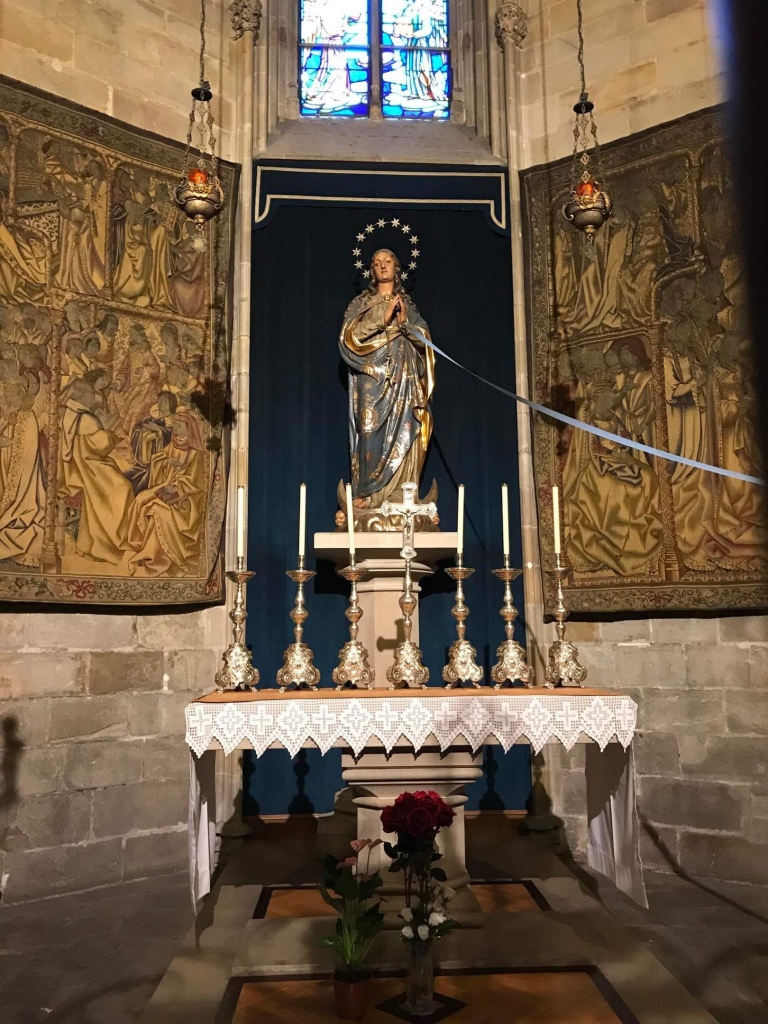
Photo by Fr. Gerry Pascual at the Cathedral of Barcelona, Spain in 2019.
From her being an “advocate of grace”, Mary thus becomes our “model of holiness” too as she reminds us of God’s original plan for us, created in his image and likeness destroyed by sin with the fall of Adam and Eve. See how God immediately promised salvation through the woman fulfilled in Mary as he reprimanded the serpent in tempting Eve:
“I will put enmity between you and the woman, and between your offspring and hers; He will strike you at your head, while you strike at his heel.”
Genesis 3:15
Because of her being the advocate of grace of God by giving birth to Jesus, Mary stands before us as the perfect reminder of Christ’s work of purification and recovery of the image of God in us. Described as the “perfect disciple” and “doer of the Word”, Mary had shown us in her very life which continues to this day in her intercessions and apparitions how discipleship is a life-long process and commitment of holiness. From giving birth to Jesus to his dying on the Cross until his burial, Mary had always been with Jesus that on Easter, it was to her that the Risen Lord first appeared because she was the first to believe totally in him.
At the Pentecost, Mary was with the Apostles awaiting the coming of the Holy Spirit that became the coming out party of the Church. In her life, Mary is the model of holiness because she keeps on working with us and in us, guiding us in following Jesus our Lord and Master so that we might be “conformed to his image” (Rom. 8:29).
Photo by author, Christmas 2020.
Holiness is not being sinless but being filled with God who is all-holy, being like Jesus Christ. Mary showed us the way to holiness is being humble before God, seeing herself as the “handmaid” or servant of the Lord.
If there is one thing the world needs now so badly in this time of the pandemic, it is holiness. Before the pandemic came, mankind was so filled with self, so arrogant and proud acting like god, manipulating everything.
How ironic that a microscopic virus with the simplest signs similar to the common colds made the world stood still for some time, reminding us that there is a God all-powerful who is in control of everything.
Through Mary, may this Solemnity of her Immaculate Conception lead us back to God to recover in us his image and likeness, cleansed and purified of our blemishes and wrinkles of sin by having an enlightened devotion to her, the servant of the Lord par excellence. Amen.











 lordmychef.com