The Lord Is My Chef Daily Recipe for the Soul by Fr. Nicanor F. Lalog II
Thursday in the Fifth Week of Ordinary Time, Year I, 09 February 2023
Genesis 2:18-25   <*(((>< <*(((>< + ><)))*> ><)))*>   Mark 7:24-30
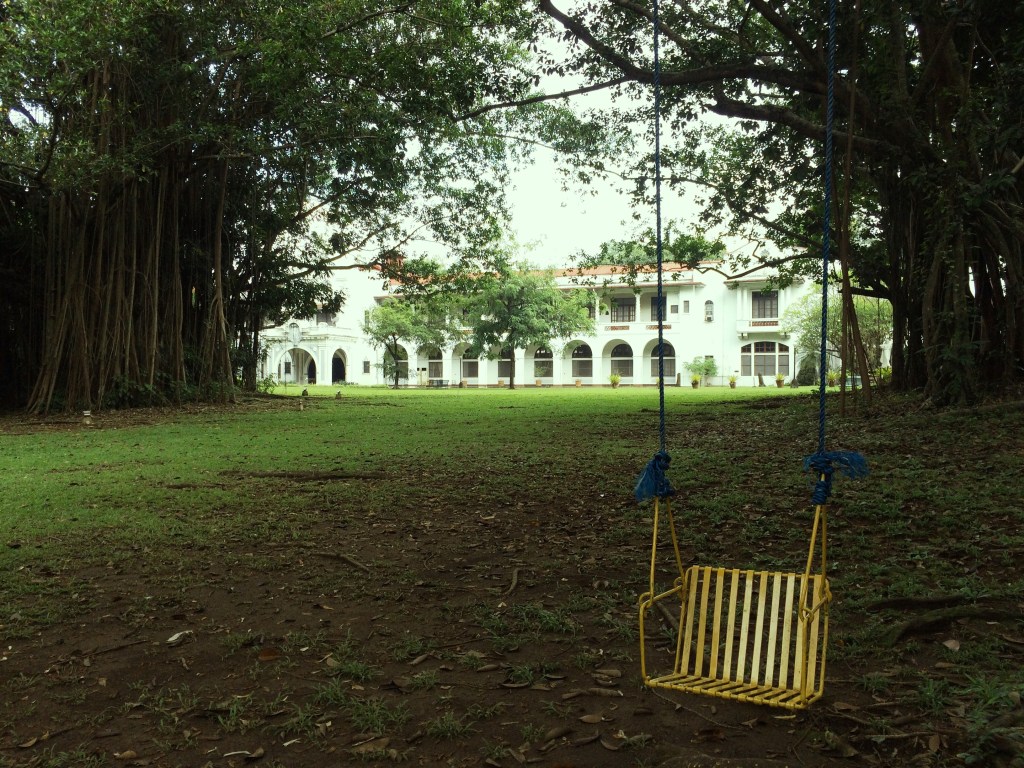
Photo by author, Sacred Heart Novitiate, Novaliches, QC, 2017.
Indeed, O God, as you have said
in the beginning, "It is not good for the man
to be alone" (Genesis 2:18) and yet,
so often in life, we choose to be alone,
by ourselves, thinking only of our own
good and personal interest.
Very often we forget that you have
created us all as "suitable partner"
of one another.

May we always keep in mind this
fundamental truth and reality
that each one of us is a part-ner
of another; that every person we meet
in this life is your gift.

May we always keep that sense of awe
and joy, of excitement in meeting,
in discovering the other person as
my part-ner, somebody like me
created in your image and likeness,
with same equal dignity taken from the
ribs to show we are at par with everyone;
most of all, like the ribs, may we take care
of each one of us,
protect each one from harm
in the same manner the ribs
safely secure the vital organs
of the body like heart, lungs,
kidneys, and liver.
Like that Syro-Phoenician woman
who begged Jesus to heal
her possessed daughter,
may we always come to you
O Lord certain of the fact
that every person is loved
by you for we too
came from you
and shall return to you.
Amen.
The Lord Is My Chef Daily Recipe for the Soul by Fr. Nicanor F. Lalog II
Wednesday, Memorial of St. Josephine Bakhita, Virgin, 08 February 2023
Genesis 2:4-9, 15-17   ><000'> ><000'> + <'000>< <'000><   Mark 7:14-23
Photo by author, 01 February 2023, La Mesa Dam Eco Park seen from OLFU-QC, Lagro, QC.
On this middle of the week,
I pray to you dear God our Father,
that I may keep you at the center of my life
always inasmuch as you have made us humans
the center of all your creation.
At the time when the Lord God made the earth and the heavens while as yet there was no field shrub on earth and no grass of the field had sprouted, the Lord God formed man out of the clay of the ground and blew into his nostrils the breath of life, and so man became a living being.
Genesis 2:4-5, 7
How lovely it is, O God,
to keep in mind in this other
creation story in Genesis that
you created us humans first as
"center" of your creation!
Equally lovelier, O God,
is the imagery of man you have
settled in the garden of Eden,
creating him in your image and likeness
endowed with the most wondrous gift
of freedom which is at the "center"
of our humanity, right in our hearts.
Alas, O God!
Instead of remaining at the center
with you and in you, we prefer
creating our own "center",
moving away from you and from each other;
forgive us in making our hearts,
our very center, dirty with sin and evil.
Jesus summoned the crowd again and said to them, “Hear me, all of you, and understand. From the within the man, from his hearts, come evil thoughts, unchastity, theft, murder, adultery, greed, malice, deceit, licentiousness, envy, blasphemy, arrogance, folly. All these evils come from within and they defile.”
Mark 7:14, 21-23
Reign in our hearts, dear Jesus;
may you be center of our lives!
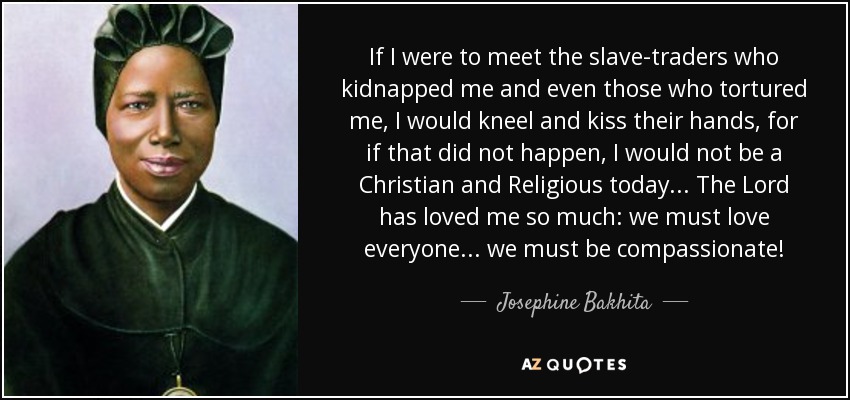
Like St. Josephine Bakhita who went
through so much pain and sufferings as
child when she was sold as a slave in Sudan
that in the process she had forgotten her name,
she was able to keep her sanity and
regained her dignity as a person
until she converted to Catholicism
and eventually became a nun
because she found you, Jesus,
as the center of her life, even forgiving
those who have tortured and maltreated her.
Her redemption from a life of slavery
and constant sufferings proved that indeed,
we are the center of your creation, O Lord,
that you hear our pleas
and come to save us
if we remain centered in you too.
Amen.
The Lord Is My Chef Daily Recipe for the Soul by Fr. Nicanor F. Lalog II
Tuesday in the Fifth Week of Ordinary Time, Year I, 07 February 2023
Genesis 1:20-2:4     ><]]]]'> + ><]]]]'> + ><]]]]'>     Mark 7:1-13
What a blessed Tuesday we have today,
God our loving Father as Genesis tells us
in the first reading how you blessed thrice
the last three days of creation:
on the fifth day, you created and blessed
all water creatures and winged birds;
on the sixth day you created and blessed
man and woman;
and finally on the seventh day,
you blessed the day of sabbath.
Lately we have been meditating
what is to be blessed:  Elizabeth called
Mary "blessed" because she believed your words
spoken to her would be fulfilled;
the other Sunday in his sermon on the mount,
Jesus called the poor in spirit, the meek,
the merciful, the grieving, the hungry and thirsty
as "blessed"; and today, after creating the birds and fish,
man and woman, and day of sabbath,
you blessed them all.
In today's story of creation, you bestowed
your blessing O God to fish and birds and people
after creating them, telling them to be fertile
and to multiply in number;
in blessing the seventh day as sabbath,
you also blessed it as a day of rest;
whether it is used as an adjective or a verb,
being blessed and to bless mean being
filled with grace, abounding in grace,
and most of all, spreading and keeping
that grace from you as expressed by
your command to the fish and birds and people
to go and multiply; to fulfill that command, we
need to rest on sabbath so that we may keep our
ties and link with you, thereby, to have the
strength to care for all creation,
to keep your grace from flowing!
Forgive us, dear Father, in failing to keep your
command to care for your creation,
most especially in neglecting one another as
a brother and sister in Christ when we
"nullify the word of God in favor of our many
traditions we have handed on" like the
Pharisees (Mk.7:13);
help us cleanse our inner selves,
recover our blessedness in you
so we may share your blessings anew.
Amen.
The Lord Is My Chef Daily Recipe for the Soul by Fr. Nicanor F. Lalog II
Friday, Memorial of St. Blaise, Bishop & Martyr, 03 February 2023
Hebrews 13:1-8   ><000'> + <'000>< = ><000'> + <'000><   Mark 6:14-29
Photo by author, La Mesa Dam Eco-Park, 01 February 2023.
Praise and glory to you,
O God our loving Father
in giving us your Son
Jesus Christ always with us
for indeed as the first reading
perfectly said it today, "Jesus
Christ is the same yesterday,
today, and forever" (Heb. 13:8).
Keep us aware with your
presence in our lives, Jesus,
whether we are in good times
or bad; "let our brotherly love
continue, without neglecting
hospitality, for through some
have unknowingly entertained
angels" (Heb. 13:1-2).
Set us free from the prisons
we ourselves have made and
locked us in - the prisons of
ego and pride when we delight
in the thought of holding others
imprisoned to insist on our own
thoughts and whims like Herod
in the gospel and the Romans in
the story of St. Blaise whose
memorial we celebrate today.

Many times, O Lord, what really
happens is that the more we
keep others in prison with our
pride and insistence of self,
dominations and manipulations,
of vengeance and revenge as we
believe we punish them with our
being unforgiving and unmerciful,
the more we imprison ourselves,
the more we are shutout from the
world, the more we are alone
in the darkness of evil.
You have come, Jesus,
to show us the beauty of life
by living in your light and truth,
love and mercy; set us free from
the sins and pride that obstruct us,
that hold us from being truly free
and faithful to you through others.
Amen.
St. Blaise,
pray for us and heal us
of our ailments in the
throat so that our hearts
and minds may always be
bridged in Christ.  Amen.
The Lord Is My Chef Daily Recipe for the Soul by Fr. Nicanor F. Lalog II
Wednesday in the Second Week of Ordinary Time, Year I, 18 January 2023
Hebrews 7:1-3, 15-17   ><)))*> + <*(((>< - ><)))*> + <*(((><   Mark 3:1-6
Photo by author, Ubihan Is., Meycauayan, Bulacan, 31 December 2021.
Beginning today
until next Wednesday,
Mother Church invites us
to observe the Week of Prayer
for Christian Unity especially
for the evangelization of peoples
and for the persecuted Christians
around the world; may our prayers
lead us to work for peace
most especially in our home,
in our parish and community,
and in our country.
May we stop and
put an end to those cliches
of wishing for peace like in
most beauty contests that
make a mockery of peace;
may we realize that peace is
God's greatest gift to us which
we have often taken for granted,
something God freely gives
if we are willing to give up and
sacrifice our very selves
for the sake of peace like
Abraham in the Old Testament.
Melchizedek, king of Salem and priest of God Most High, met Abraham as he returned from his defeat of the kings and blessed him. And Abraham apportioned to him a tenth of everything. His name means righteous king, and he was also “king of Salem,” that is, king of peace.
Hebrews 7:1-2
Peace finally came to us
in Christ Jesus who is likened
to Melchizedek, God's high priest
in the Old Testament; like Melchizedek,
Jesus is our High Priest for he is
"without father, mother, or ancestry,
without beginning of days or
end of life" (Heb.7:3); but,
unlike Melchizedek, Jesus is our
High Priest because he is
the Son of God who offered himself
for us as a sacrifice, dying on the
Cross but rose to life on the
third day!  On the evening of that
Easter, Jesus appeared to his
disciples, greeting them with
"peace" as his precious gift of
his resurrection.
Loving Father,
give us the grace to
value this immense gift
of peace by Jesus Christ
won through his Cross;
like Jesus, may we choose
the path of peace by doing
what is good not evil;
of choosing persons not
things and rituals and laws;
of choosing God above all
than selfish interests.
As we close our hands to pray
for peace and unity, may we learn
to let go of whatever we are holding,
of being empty handed like Jesus;
like that man with withered hand
Jesus healed in the temple on a sabbath,
may we stretch out our hands to reach
out to those in need,
to those persecuted,
to those sick and dying,
to those forgotten.
Let your peace, O God,
begin within me,
right in my heart empty of
pride, filled with the humility,
justice, and love of Jesus.
Amen.
The Lord Is My Chef Sunday Recipe for the Soul by Fr. Nicanor F. Lalog II
Sunday in the Second Week of Ordinary Time, Cycle A, 15 January 2023
Isaiah 9:1-6 ><]]]]'> Ephesians 1:3-6, 15-18 ><]]]]'> Matthew 18:1-5, 10
Photo from reddit.com.
The photo above is a sculpture called “Love” by Ukrainian artist Alexander Milov he created in 2015. I have kept the photo as a bookmark in one of the books I have read and saw it recently. Milov rightly called it “Love” because it shows how that mystery of love expressed to us by God in Christ’s coming continues if we could only be like a child!
See how the sculpture depicts two adults after a disagreement sitting with their back to each other while their inner child in both of them wanting to connect. What a beautiful expression of our condition when despite our vast learning and knowledge, we seem to can’t live without ego and pride, hatred and grudges that prevent us from forgiving and moving on in life. The free spirit exhibited by children in this sculpture shows our true nature which is the very core of Jesus Christ’s teaching, of being a child always.
At that time the disciples approached Jesus and said, “Who is the greatest in the kingdom of heaven?” He called a child over, placed it in their midst, and said, “Amen, I say to you, unless you turn and become like children, you will not enter the kingdom of heaven… See that you do not despise one of these little ones, for I say to you that their angels in heaven always look upon the face of my heavenly Father.”
Matthew 18:1-3, 10
On this Sunday of the second week in Ordinary Time, we extend our Christmas celebration for a day with the Feast of Sto. Niño or Child Jesus in honor of the crucial role of that image gifted by Magellan to Queen Juana of Cebu 500 years ago. It was the Sto. Niño who actually conquered our country to become the only Christian nation in this part of the world – proof enough of Christ’s teaching about being a child so powerful in God’s eyes!
This Feast is a very timely for us too as we go into the busyness of our lives to be reminded anew even for a day of the meaning of Christmas, of Jesus Christ’s coming in love. He came because of love, coming as love himself by being a child, an infant.
It was only recently as a chaplain in the hospital have I felt and realized why a baby is called a “bundle of joy” – my heart melts whenever I visit mothers with their newborn babies especially twins. It is said that even the most hardened criminals are softened upon seeing babies and children. And that is because of what Jesus told us today in the gospel,
“See that you do not despise one of these little ones, for I say to you that their angels in heaven always look upon the face of my heavenly Father.”
Matthew 16:10
What is there with children and the face of God?
I think that is God’s gift of love in each of us, so innately in us right during our moment of conception when life begins as the Church rightly insists based on Sacred Scriptures. It is nurtured and cared for first by the mother that even after we have matured, we call on our mother when surprised or shocked as in “Inang ko po!” or “Nanay ko po!”. See how those approaching death would always speak of seeing their departed mother, coming and visiting them.
This shows and proves to us the deep impact of a mother’s love to each of us because she is always the first to make us experience God’s love in her womb that even long after our umbilical cords have been cut off at birth, there remains an invisible line always between us and our mothers.
It is not only with our mother but also with everyone. This love innately gifted upon each of us by God who is our very first love remains in us through our family and friends and later the people we meet in life as living representatives of that invisible love of God in us. This is what Jesus meant when he warned his disciples in the gospel today,
“See that you do not despise one of these little ones, for I say to you that their angels in heaven always look upon the face of my heavenly Father.”
Matthew 18:10
How sad when this love that has always been in us and in the world suddenly becomes unrecognizable – even unrealistic – because of the darkness of sins and evil. When the child is born and begins to see, experience and realize the absence of love in the family, of a lack of that love between the child’s mother and father who quarrel or separate, or when the child himself/herself is threatened or hurt by anyone he/she looks up to, then trouble happens.
Children can only grasp the gift of life and of their existence when they experience the concreteness, the reality of love first right in their homes. One thing we adults always forget which I insist on every man and woman entering marriage that it is always the children who bear all the pains and sufferings when they separate. Experts claim that criminals mostly come from families where children witness domestic violence, especially when the husband beats the wife.
It is unfortunate that today’s gospel did not include Jesus Christ’s most terrible curse against those inflicting harm on children when he said in the same scene that “Whoever causes one of these little ones who believe in me to sin, it would be better for him to have a great millstone hung around his neck and drowned in the depths of the sea” (Mt. 16:6).
As chaplain of a university, I have been hearing the confessions of our students, recently from junior and senior high school. After listening to their stories and woes, I tell them point blank about their parents and family, of the love among them and they start crying. I do not blame parents for their apparent lack of love for their children nor for their separation nor for their need to work abroad; I stress to young people human love is always imperfect. Only God can love us perfectly.
When the world and the people around us miserably fail in showing us the face of our loving God, that is when all the more we have to be like children anew as Jesus tells us today. It is is in going inside our inner child within, in becoming like a child trusting in the great love of God in us like when we were in our mother’s womb can we grasp again this invisible love poured upon us in Jesus Christ.
This is the challenge for us of the Sto. Niño: let us keep the face of God aglow in us, on our face and in our lives like the light Isaiah spoke of in the first reading when the Messiah comes. Anyone who lives in the gospel of Jesus Christ, even amid all pains and sufferings, would always be aglow with that radiant face of God filled with love and mercy, kindness and compassion despite our many imperfections. The beloved disciple said it so well, “No one has ever seen God. Yet, if we love one another, God remains in us, and his love is brought to perfection in us” (1 Jn. 4:12). Simply love, love, and love. No ifs nor buts. Just love.
Let us remain children of God most especially in our adulthood like Jesus Christ who upon his death on the Cross called God Abba – Father – because he has always been the Son, the Child of God. Remember how at the Last Supper when he gave the new commandment of loving one another as he loves us: it is “new” because unlike the love the world knows which is all feelings and self-centered, Christ’s love is rooted in God through him, in him, and with him.
Let us pray:
Blessed be the God and Father
of our Lord Jesus Christ,
who has blessed us in Christ
every spiritual blessing in the heavens (Eph. 1:3),
as he chose us to be born
and be filled with his love as
icons and representatives of his love;
enlighten the eyes of our hearts, Father,
so we may always answer your call
in your Son Jesus Christ for us to follow
him in being like a child
manifesting your face full of
warmth and love,
kindness and care
especially to those
feeling unloved.
Amen.
The Lord Is My Chef Daily Recipe for the Soul by Fr. Nicanor F. Lalog II
Friday in the First Week of Ordinary Time, Year I, 13 January 2023
Hebrews 4:1-5, 11     ><]]]]'> + ><]]]]'> + ><]]]]'>     Mark 2:1-12
Photo by author, Bolinao, Pangasinan, April 2022.
O God our loving Father!
You are so wonderful and amazing,
so marvelous that you lavish us
daily with love and mercy.
What else can I ask you except
that I "enter your rest" which
the author of the Letter to the
Hebrews had enunciated so well
in the first reading today.
In fact, I have counted six times
he had used in six verses that
little yet powerful word "rest"  we
often take for granted especially in
this restless world.
Let us be on our guard while the promise of entering into his rest remains, that none of you seem to have failed… Therefore, let us strive to enter into that rest, so that no one may fall after the same example of disobedience.
Hebrews 4:1, 11
How ironic, O God
that while we all desire
to enter your eternal rest
in heaven, no one really cares
to value your day of rest
in this life as we busy ourselves
with everything except you
and our loved ones;
make us realize that rest is
primarily about you,
being with you,
returning to you
just like when you
rested after creating everything.
Make us realize that to rest
is to be one in you and with you
in Christ Jesus; to rest is to let
your will be done again like in
paradise before the fall;
to rest is enter you in Jesus.
That is why
I love our Filipino word
for rest which is "pahinga" -
to be breathed on.
By whom?
By you, O God!
Let us rest
and be breathed on
through your words
and sacraments,
through our private
and communal prayers,
through our personal experiences
and through one another.
Dear Jesus,
help us imitate
those courageous men who
opened up the roof above you
to lower their paralytic friend
because to rest is of God,
from above; enable us, Jesus,
to rest in you always
in every here and now
so we may finally rest
in eternity.  Amen.
The Lord Is My Chef Christmas Recipe for the Soul by Fr. Nicanor F. Lalog II
Solemnity of the Epiphany of the Lord, 08 January 2023
Isaiah 60:1-6 ><}}}}*> Ephesians 3:2-3, 5-6 ><}}}}*> Matthew 2:1-12
Still, a blessed Christmas to everyone! As I have been telling you, let us continue greeting one another with a Merry Christmas for it is still the Christmas Season. Forget those happy new year greetings. Insist on Merry Christmas especially today when our celebration reminds us that Christmas is manifesting, showing Jesus Christ!
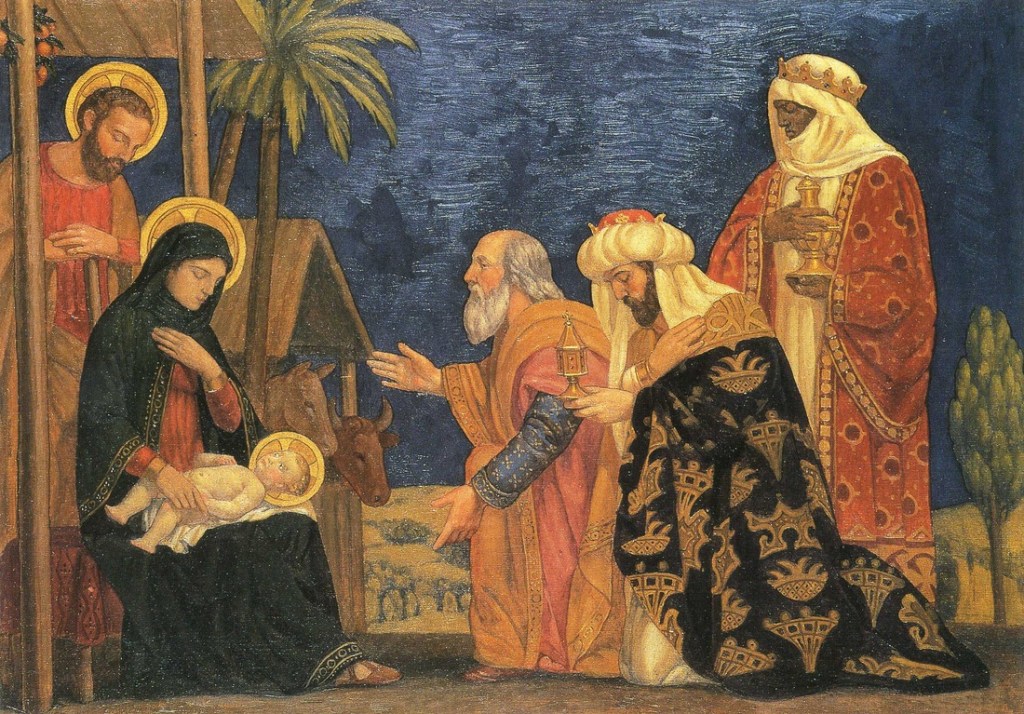
In fact, our celebration today is a high point of Christmas – even the Christmas in some parts of Europe, the US and even the Philippines. As a result, so much focus have been given on the magi that we forget the very essence of Epiphany is Jesus Christ – not the names of the magi nor their gifts nor their number.
From the Greek word epiphanes that means “manifestation”, the Epiphany of the Lord celebrates the discovery of Jesus by the foreigners known as magi from the East, learned men who were seeking the truth. In discovering Jesus, he was made known to all the world as the Savior and the King of Kings.
It is very interesting that what we have we heard proclaimed in the gospel today is the first conversation ever recorded by Matthew in his account that was uttered by the magi searching for Jesus:
When Jesus was born in Bethlehem of Judea, in the days of King Herod, behold, magi from the east arrived in Jerusalem, saying, “Where is the newborn king of the Jews? We saw his star at its rising and have come to do him homage.”
Matthew 2:1-2
That spoken question by the magi which stirred the whole of Jerusalem and bothered even King Herod – “Where is the newborn king of the Jews? – is a theme that resonates throughout Matthew’s gospel because in the Jewish thought, God is their only king. King for them is more than a political ruler but a manifestation or reflection of the face of God who alone is the king of the universe.
Matthew is teaching us something very important in recording the first conversation spoken in his gospel account was by the magi asking “where is the newborn king of the Jews” to remind us that every day, it is Jesus Christ whom we must seek first in our lives, in our prayers, especially in the scriptures.
Upon waking up in the morning, what is the very first thing you do – check on your cellphone for messages? turn on the radio or TV or laptop? What or who do you look for first thing in the morning? Do you at least light a candle on a little altar in your room to pray the Morning Offering or meditate on the scriptures of the day?
The person(s) or things that we immediately focus upon waking up indicate very much the persons or things that rule us daily. See how the magi from the east were seriously seeking Jesus Christ by daring to ask even King Herod about the newborn king of the Jews! Don’t you find that funny considering that the magi were regarded as men of wisdom but dared to inquire and trouble Herod with that question? Were they insulting Herod?
Definitely not. They were just sincerely searching for the true King of all!
That is the essential point in Matthew’s telling us of the magi searching for Jesus: the experts of Jerusalem knew where their newborn king was born based on the scriptures but they never bothered to look for him! Many times we are guilty like them when God is just in our head as an idea or a concept but not a reality in our life.
Next to assiduously seeking Christ, I love to reflect on that aspect of these wise men asking (with sarcasm?) King Herod where is the newborn king of the Jews: the magi must have noticed and felt King Herod was not a true king after all in the Jewish thought and tradition. They must have heard and personally proven upon meeting him that he was indeed ruthless and evil when he ordered the massacre of all boys two years old and below in Bethlehem and vicinity after they have left by going through a different route.
See how Matthew as well as the other gospel writers showed in their accounts the kindness and goodness of Jesus in healing the sick, forgiving the sinners, teaching and guiding the people who were so lost. When we pray the gospel accounts, what we find and experience is the immense love and mercy of God through Jesus Christ. He is rightly called the face of the unseen God – so gentle, so loving, so humble, so merciful. Because of Jesus, we were able to have a glimpse and experience of the great love of this God Jesus taught us to call as Father. That is why at his crucifixion we saw Jesus hailed as truly the “King of the Jews, truly the Son of God” (Mt. 27:37, 54) because he manifested God’s love and holiness, compassion and mercy, kindness and care.
This is the essence of the Epiphany. It was not just the discovery of Jesus by the magi nor his manifestation to all the nations but most of all, the making known of God’s goodness when like the magi who “departed for their country by another way” (Mt.2:12), we change our ways to become icons of Jesus Christ.
Don’t worry; it is a lifelong process. The magi saw Jesus as a child, not as an infant anymore because of their long journey. What matters is that like them, we never stop persevering in following and manifesting Jesus in our lives.
Perhaps this Sunday, we must examine ourselves in the way we deal with other people especially in our family and in our office or school, especially in our parish and community: do we reflect the Kingship of Jesus Christ or that of the world like Herod in our lives?
This Solemnity of the Epiphany is inviting us not just to seek Christ our King but most of all, to manifest Christ’s Kingship based on loving service to others. That is the best gift we can offer Jesus, our very gift of selves just like him. Let us pray:
Dearest Lord Jesus Christ:
let me search you always in my life,
in my prayers,
among the people I meet,
in the Sacraments;
most of all,
let me manifest you Jesus
not only my words and thoughts
but most of all in my daily living,
in my actions
of loving service to others
especially the sick and lowly,
the marginalized and misunderstood;
let me be your light, O Lord,
to guide people in darkness of sin
and ignorance and indifference;
most of all, let me reveal like St. Paul
your mystery of love and salvation
to the many among us who have turned
away from you,
seeking to follow and imitate
King Herod in his ruthless ways
of control and too much pride.
Amen.
The Lord Is My Chef Christmas Recipe for the Soul by Fr. Nicanor F. Lalog II
Thursday in the Weekday of Christmas, 05 January 2023
1 John 3:11-21     ><]]]]'> + ><]]]]'> + ><]]]]'>     John 1:43-51
Phot by Mr. John Ryan Jacob, 02 January 2023 in Paco, Obando, Bulacan.
Lord Jesus Christ,
now I can feel your insistence
for me to come so I may see you;
I think it should be the first thing
to preoccupy us every new year:
how we must come in order to see
you each day, each year.
Philip found Nathanael and said to him, “Can anything good come from Nazareth?” Philip said to him, “Come and see.” Jesus saw Nathanael coming toward him and said to him, “Here is a true child of Israel. There is no duplicity in him.”
John 1:45-47
Let us be sincere, O Lord Jesus,
like Nathanael or St. Bartholomew
who never hesitated to tell Philip
the prevailing belief of your time that
nothing good comes from Nazareth;
problem with us is we always deny
such truths deeply ingrained within us
like our personal biases against others
due to region and religion,
language and politics,
color and inclinations.
Let us come so we may see
you more in others that despite
our many biases and prejudices,
you do come in our many differences;
let us be bold and brave to subject
our beliefs and perceptions to tests
by personally coming to see the reality,
the truth so that we may realize
that you are not only the Messiah
but most of all, like Nathanael,
you are "the Son of God, the King of Israel"
(John 1:49).
Most of all,
Lord Jesus Christ,
let us come and see
with all our reservations
and doubts,
biases and mistrust
so that we may see
far more greater things
than what we have already seen
in passively following you -
let us come so we may see
"the sky opened and
the angels of God
ascending
and descending
on the Son of Man"
(John 1:51).
Amen.
The Lord Is My Chef Christmas Recipe by Fr. Nicanor F. Lalog II
Wednesday in the Christmas Weekday, 04 January 2023
1 John 3:7-10     ><]]]]'> + ><]]]]'> + ><]]]]'>     John 1:35-42
Photo by Mr. Ryan John Jacob, 02 January 2023 in Paco, Obando, Bulacan.
I have always wondered, Lord Jesus,
what have you shown Andrew and his
companion that day you invited them
to "come and see"?
He said to them, “Come, and you will see.” So they went and saw where he was staying, and they stayed with him that day. It was about four in the afternoon. Andrew, the brother of Simon Peter, was one of the two who heard John and followed Jesus. He first found his own brother Simon and told him, “We have found the Messiah,” which is translated Christ.
John 1:39-41
Everyday, you also invite me
to come so that I will see you but
rarely do I really COME to experience
you; rarely do I come to feel you;
rarely do I come to listen to you;
rarely do I come to just sit beside you
nor watch the day go by; forgive me,
Jesus for always refusing to come to you
especially when you are down and sad,
sick and aching inside, when you are
boxed by people, imprisoned in wrongful
thoughts, or simply because you are poor,
not like me and my friends who are cool
and hip and modern...
That is why, many times,
I also fail to SEE you in person,
Lord Jesus that I do not see your smiles
and your tears; I do not see
your sufferings and pains;
I do not see your point of view;
I cannot see your reasons and your
situations nor plight; most of all,
I fail to see your love and trust in me
because I keep on spending more time
coming to see the make believe world of media.
What did Andrew and companion
see that whole day, Jesus?
It must be a lot of you!
A lot of you in yourself,
a lot of you in themselves,
and a lot of you in others
as well as in life and in nature!
Dearest Lord Jesus,
bless me and let me
this 2023 to always come
and see where you stay
so that at the end of each day
I may also say or exclaim like Andrew
"We have found the Messiah"!
Amen.