Photo by author, Betania Retreat House in Tagaytay City, 2017.
How ironic and even sad, Lord Jesus Christ that in this age of too much information around us, when nothing is hidden with everything revealed without any propriety and decency, all the more we live in a world of lies and insincerity.
There is the great disparity between what is deep inside our hearts and what we put up front for all to see.
We have become like the scribes and Pharisees who give too much emphasis on little things, forgetting the more essential ones in life like love and mercy, kindness and goodwill to one another.
We have become so concerned with our outside appearances, forgetting what is in our hearts.
“Woe to you, scribes and Pharisees, you hypocrites. You cleanse the outside of cup and dish, but inside they are full of plunder and self-indulgence. Blind Pharisee, cleanse first the inside of the cup, so that the outside also may be clean.”
Matthew 23:25-26
Teach us, O Lord, to have a pure heart so we may see you!
Remove our blindness to fame and popularity, blindness to what is easy and convenient, blindness to our false beliefs, and blindness to you, Lord Jesus because we are so full of ourselves. Amen.
The Lord Is My Chef Breakfast Recipe for the Soul by Fr. Nicanor F. Lalog II
Monday, Feast of St. Bartholomew, Apostle, 24 August 2020
Revelation 21:9-14 >><}}}*> |+| >><}}}*> |+| >><}}}*> John 1:45-51
Photo by author, Subic, 2018.
Glory and praise to you, Lord Jesus, the “Word who became flesh and dwelt among us” to reveal the Father’s immense love for us all. He was not contented in just telling the prophets of Old Testament how he loved us that He came and lived with us in you, Lord Jesus!
And that is why we also rejoice on this Feast of St. Bartholomew, a.k.a. Nathanael, who was introduced to you by another Apostle you have called earlier:
Philip found Nathanael and told him, “We have found the one about whom Moses wrote in the law, and also the prophets, Jesus, son of Joseph, from Nazareth.” But Nathanael said to him, “Can anything good come from Nazareth?” Philip said to him, “Come and see.” Jesus saw Nathanael coming toward him and said of him, “Here is a true child of Israel. There is no duplicity in him.” Nathanael said to him, “How did you know me?” Jesus answered and said to him, “Before Philip called you, I saw you under the fig tree.” Nathanael answered him, “Rabbi, you are the Son of God; you are the King of Israel.”
John 1:45-49
O dear Jesus, like St. Peter in the gospel yesterday and now St. Bartholomew, you are telling us anew to never be contented with mere words, with the “what” of who you really are, that we must always “come and see you” in order to experience your very person and truly know you.
I really wonder O Lord what your words meant that before Philip called Nathanael-Batholomew, you have seen him under the fig tree; however, I am so convinced that in your words, Nathanael-Bartholomew must have felt something deep inside him that he threw himself totally to you as your Apostle.
Most of all, teach me to remain simple and hidden in you, Jesus that like St. Bartholomew, despite the scarcity of stories and information about him except this little anecdote from the fourth Gospel, he remained faithful to you until his death by flaying reportedly in India.
May we imitate St. Bartholomew who had shown us that more than words, what matters is our oneness in you, Jesus, without any need for us doing sensational deeds, earning thousands of “likes” and “followers” in social media because only you, Lord, remains extraordinary above all. Amen.
The Lord Is My Chef Breakfast Recipe for the Soul by Fr. Nicanor F. Lalog II
Wednesday, Memorials of St. John Eudes & St. Ezechiel Moreno, Priests, 19 August 2020
Ezekiel 34:1-11 >><)))*> ||| >><)))*> ||| >><)))*> Matthew 20:1-16
Photo by author, Pulilan, Bulacan, February 2020.
As we go through more difficulties and sufferings during this time of pandemic, your words today dear God speak so well of what we need most – a true shepherd who will care for the lost and injured sheep.
Yes, you have fulfilled, O God, your promise a long time ago to Ezekiel that you yourself will come by sending us your Son Jesus Christ to look after and tend your sheep after the shepherds of Israel have miserably failed in their duties and responsibilities.
Unfortunately, there are still so many shepherds today in government even in Church who continue to pasture themselves!
Woe to the shepherds of Israel who has been pasturing themselves! Should not shepherds, rather, pasture sheep? You have fed off their milk, worn their wool, and slaughtered the fatlings, but the sheep you have not pastured. You did not strengthen the weak nor heal the sick nor bind up the injured. You did not bring back the strayed nor seek the lost, but you lorded it over them harshly and brutally. As I live, says the Lord God, because my sheep have been given over to pillage, and because my sheep have become food for every wild beast, for lack of a shepherd; I swear I am coming against these shepherds.
Ezekiel 34:2-4, 8, 10
Teach us, O Lord, through the examples of two great shepherds of souls whose feast we celebrate today: St. John Eudes who was one of the early pioneers in propagating devotion to your most Sacred Heart and St. Ezechiel Moreno who served for 15 years in the Philippines and later in South America where innumerable cancer cures were attributed to him.
St. John Eudes and St. Ezechiel Moreno showed in their lives of faithful and loving apostolate for the poor that shepherding is always a gift, never to be counted or equated nor even be seen in terms of wages and pay like in the gospel.
Remind us sweet Jesus in the midst of this pandemic when we are called to be good shepherds like you, may we always see your call and mission to us as gifts freely given not as tasks or work to be compensated by material things because you believe in us.
May we always go the extra mile in answering your call, O Lord, which is in itself a tremendous gift we must cherish for we are not even worthy at all to receive. Amen.
Photo by author, the Assumption Sabbath Place in Baguio City, 2018.
God our merciful Father, on this Solemnity of the Assumption of the Blessed Virgin Mary, we start the praying of ten Hail Mary’s daily at noon until the 15th of next month for collective “healing” and the end of COVID-19 pandemic.
Through the Blessed Mother of your Son our Lord Jesus Christ, we pray for firm faith, vibrant hope, and unceasing love for you and for others as we go into the sixth month of our quarantine to help stop the spread of the corona virus.
But it seems, until now, O God, many of us still do not get the full meaning of this quarantine period with most of us pinning our hopes for a magic cure that would come to end these sufferings and resume our previous way of life.
Help us see, O God, the process of quarantine, of purification you want us to go through not as a punishment but as a lesson to learn and remember that will prevent us from all the excesses that have burdened us down lately, preventing us to rise like the Virgin Mary.
On this great feast of Mary’s Assumption into heaven, teach us how we may all rise up to your presence, win over COVID-19 not just with a vaccine or physical remedy and cure to the disease but on how we must change our ways of life, our attitudes and dispositions.
How wonderful, O God, to hear the story anew of Mary and Elizabeth who trusted you so much in the coming of our Savior as they both emerged from their own kind of “quarantine” period in this gospel scene of the Visitation.
May we realize like Elizabeth during this quarantine period that true blessedness is in believing “what was spoken by the Lord would be fulfilled” (Lk.1:45), that we entrust all our hopes in you, O God, not to mere humans who make a lot of promises only to be broken. May we open ourselves like Elizabeth who went into seclusion upon conceiving St. John the Baptist that you always come in the simplest yet wondrous ways of life. Keep within us that sense of wonder and awe, Lord.
“The Assumption of the Virgin” by Italian Renaissance painter Titian completed in 1518 for the main altar of Frari church in Venice. Photo from wikidata.org.
Teach us like Mary to always proclaim your greatness as we rejoice in Jesus our Savior in our very lives of humility and simplicity, obedience and surrender to your will. May our lives be a song of praise to your wondrous deeds, O Lord, like Mary that is centered and focused on you.
Cleanse us of our sins, especially of greed and conceit that have led to this pandemic.
How sad that until now, we still don’t get it.
May this crisis remind us that we are all in a temporary journey here on earth – like in a quarantine – that our final resting place and destination in the end of everything is in you, O God, like Mary whom you gifted with the Assumption of her body and soul into heaven ahead of us all.
While praying on your words today, O Lord, thoughts of the beach came through my mind. I do not know why; maybe this is the only year when I would have not gone to a beach that I miss so much.
But, as my former spiritual director during our 30-day retreat, the late Fr. Arthur Shea, SJ, used to assure me, “the most difficult prayer is always the most meritorious”.
Indeed, sweet Jesus!
Like your prophet Nahum in the first reading looking forward to the defeat of Nineveh, I remembered those days in the past when I felt so fearful on many occasions whether I can overcome the many trials and challenges that have come my way.
See, upon the mountains there advances the bearer of good news, announcing peace! Celebrate your feasts, O Judah, fulfill your vows! For nevermore shall you be invaded by the scoundrel; he is completely destroyed. The Lord will restore the vine of Jacob, the pride of Israel, though ravagers have ravaged them and ruined the tendrils.
Nahum 2:1, 3
Like Judah, I have won and prevailed in my many battles in life in your power, Lord, when I entrusted myself to you totally.
When I look back in my life, it is so true that it is in giving that we receive, it is in losing when we have, and it is dying when we truly live. That is the lesson of the waves at the beach that keep on coming to shore, as if trying to take it to the sea.
Photo by Mr. Jim Marpa, 2019.
How I wish I could be like the sea, always moving, always light without anything except water unlike the shore that is so adamant as if it would never budge in.
But in reality, it is the sea that always prevails because water is always willing to give up itself to follow the form of the shore, to take the shape of every container where it is poured while the shore through time, its sand and rocks eventually give into the waves to get lost in the sea.
Jesus said to his disciples, “Whoever wishes to come after me must deny himself, take up his cross, and follow me. For whoever wishes to save his life will lose it, but whoever loses his life for my sake will find it.
Matthew 16:24-25
Dearest Jesus Christ, teach me to give up myself to you completely. Teach me to learn to get lost to you in order to find myself, to find fulfillment in life.
This COVID-19 pandemic reminds us today in this age of abundance and affluence that still — the key to authentic living is in giving up, in having less.
As they always say, “something’s gotta to give”. Amen.
The Lord Is My Chef Breakfast Recipe for the Soul by Fr. Nicanor F. Lalog II
Thursday, Feast of the Transfiguration of the Lord, 06 August 2020
Daniel 7:9-10, 13-14 >><}}}*> 2 Peter 1:16-19 >><}}}*> Matthew 17:1-9
Transfiguration of the Lord by Raphael (c.1520) from wikipedia
Thank you very much, Lord Jesus Christ for this wonderful feast of your Transfiguration happening today at more than half past this very difficult year of 2020.
Perfect at this time of the year in our Ordinary Time of the liturgy when everything seems too slow and laid-back as if nothing is happening or even changing in our lives.
Worst, with this pandemic, many of us are already tired, even losing enthusiasm with everything.
But, here you are, dear Jesus, giving us light and inspiration to keep on and be persistent disciples of yours, journeying with you and ascending with you every mountain of hardships and trials in life so that with you and in you, we may also be transformed from within.
Jesus took Peter, James, and his brother, John, and led them up a high mountain by themselves. And he was transfigured before them, his face shone like the sun and his clothes became white as light.
Matthew 17:1-2
In the midst of the darkness and gloom around us today, what a welcome break and relief are the visions of your prophet Daniel in the first reading of your eternal glory in heaven amid great display of lights and flames with your clothes “bright as snow” (Dn.7:9).
But, what I like best is how your “face shone like the sun” at your transfiguration, Lord.
I like that part because most of the time, the depths of the soul are reflected on the face.
Photo by Mr. Jim Marpa, 2019.
Dearest Lord, help us to remain faithful to you, patiently forgetting ourselves, carrying our crosses, and following you closely in this time of the corona virus.
Teach us to listen to your voice, to heed your words, always attentive to your presence even in the many darkness of our lives in this time of pandemic, reminding ourselves that “Lord, it is good we are here” (Mt.17:4) with you.
Every year, we hear this passage of your Transfiguration on the second week of Lent to remind us of your coming glory at Easter; but, even at this time, Lord, we already feel discouraged at how would Christmas 2020 be!
May this feast of your Transfiguration during Ordinary Time remind us to remain faithful in following you, be your persistent disciples rising above ourselves from the many challenges and trials during this pandemic.
Keep our face aglow with your light amid the many sufferings in this time of COVID-19.
Transform us within to change our countenance so that whenever those people crying in pain see us, they may see and experience you, Jesus, within us.
Keep us open to the workings of your Holy Spirit in these difficult weeks and months ahead so we may be cleansed and purified, and transformed within to become your presence and your joy among those with sagging spirits among us, hoping their face may also mirror you within them. Amen.
The Lord Is My Chef Breakfast Recipe for the Soul by Fr. Nicanor F. Lalog II
Friday, Memorial of St. Ignatius of Loyola, Priest, 31 July 2020
Jeremiah 26:1-9 >>><)))*> >><)))*> ><)))*> Matthew 13:54-58
Photo by author, Wailing Wall of Jerusalem, May 2019.
Praise and glory to you, O God our Father for another week and month about to close before us. And still here we are, alive and safe, making through the many trials and difficulties as we all continue to bear the sufferings of this COVID-19 pandemic.
Thank you for sending us your Son our Lord Jesus Christ who have made our hearts your indwelling.
Unfortunately, like his neighbors, so many times we fail or even refuse to recognize his coming to us.
Jesus came to his native place and taught the people in their synagogue. They were astonished and said, “Where did this man get such wisdom and mighty deeds? Is he not the carpenter’s son?” And they took offense at him.
Matthew 13:54-55, 57
So many times, many things run in our minds and in our hearts that we always fail to see and recognize you, sweet Jesus.
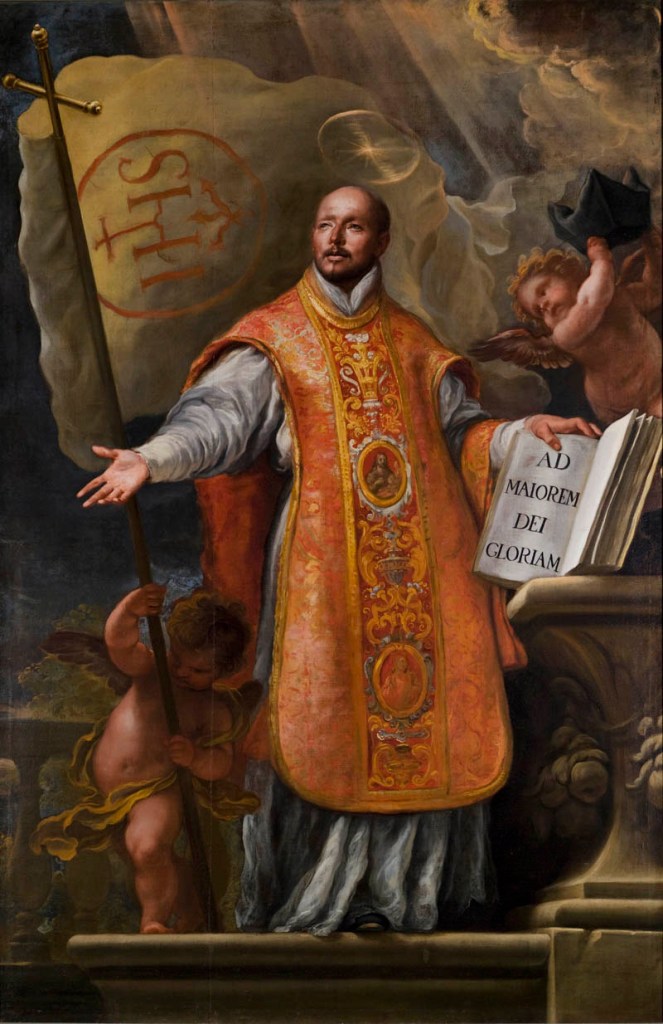
Teach us through St. Ignatius your faithful servant who gave us your wonderful gift of discerning the spirits.
Teach us to lay bare ourselves before you, to be true to our thoughts and feelings so that we may sift through all of these to find your holy will, Lord.
Teach us to “omit nothing” as you commanded Jeremiah in the first reading from your words so that we may be able to discern properly what you want from us.
Make our hearts your temple, O Lord, dwell inside and reign over us so that we may understand fully the meaning of “positive indifference” taught us by St. Ignatius:
“We should not prefer health to sickness, riches to poverty, honor to dishonor, a long life to a short life. . . . Our one desire and choice should be what is more conducive to the end for which we are created.”
Spiritual Exercises by St. Ignatius
Let our thoughts and actions always begin and happily end in your greater glory, Lord.
The Lord Is My Chef Breakfast Recipe for the Soul by Fr. Nicanor F. Lalog II
Thursday, Memorial of St. Peter Chrysologus, Bishop and Doctor of the Church, 30 July 2020
Jeremiah 18:1-6 ><)))*> >><)))*> >>><)))*> Matthew 13:47-53
Photo by author, Third Sunday of Lent, 15 March 2020.
How amazing O God on this day as we celebrate the Memorial of St. Peter Chrysologus who spoke eloquently of the Incarnation of your Son in one of his homilies, your Prophet Jeremiah today also spoke something of our being clay in the potter’s hand.
He who made man without generation from pure clay made man again and was born from a pure body. The hand that assumed clay to make our flesh deigned to assume a body for our salvation. That the Creator is in his creature and God is in the flesh brings dignity to man without dishonor to him who made him.
Why then, man, are you so worthless in your own eyes and yet so precious to God? Why render yourself such dishonor when you are honored by him? Why do you ask how you were created and do not seek to know why you were made?
St. Peter Chrysologus in his sermon on the sacrament of Christ’s incarnation, Office of Readings
Thank you, dear God, for this enlightenment from St. Peter Chrysologus also known as the “man of golden speech” for reminding us the great honor of being created by you… from worthless clay!
Help us to reflect more on why you have created us than ask how we were created, and transformed like in the potter’s hand.
Then the word of the Lord came to me: Can I not do to you, house of Israel, as this potter has done? says the Lord. Indeed, like clay in the hand of the potter, so are you in my hand, house of Israel.
Jeremiah 18:5-6
Teach us, sweet Jesus, to be pliant and docile to the Father who continues to form us like clay in the potter’s hand — that no matter how painful life can sometimes be, even difficult, may we also see and appreciate the Father’s wonderful plans for our transformation in the future.
Help us to go through the pains of growing up and maturity so that when judgment day comes, may we all turn out to be good fish to be collected than bad ones that are thrown according to your parable of the net. Amen.
Quiet Storm by Fr. Nicanor F. Lalog II, 28 July 2020
Photo by Mr. Raffy Tima of GMA-7 News, March 2020
Experts have been telling us since the start of this COVID-19 pandemic that our lives would no longer be the same like before 2020. Even if a new vaccine and more effective treatment are discovered to fight this disease, life on this planet is definitely changed.
But, for better or for worse?
That is the most important challenge of this pandemic next to finding a vaccine and cure or treatment against it: that we seize this unique opportunity from COVID-19 to “reset” or “refresh” the world so we can all start anew by correcting the mistakes and excesses of the past to finally kickoff a true and meaningful growth and development among peoples, especially the poor and marginalized.
Photo from TurboSquid.com
This we can start – or restart – by immediately deleting from our vocabulary and consciousness that word we have been erroneously using since summer, “new normal”.
New normal is abnormal because norms or standards like morality always remain.
Washing of hands frequently, covering one’s mouth and nose when sneezing and coughing, not spitting everywhere are not new normal. Cleanliness has always been the norm since the beginning that we have that saying always true, “Cleanliness is next to Godliness”.
Praying every day, individually and as a family especially the Holy Rosary is not a new normal. Connecting with the Divine has always been the norm of man since the beginning even before Jesus Christ came to the world.
More than half a century ago, the late Fr. Patrick Peyton has been saying, “The family that prays together, stays together; and the world at prayer is a world at peace.” Praying has always been the norm in our lives.
Normal or norms do not change because they are the standard measure. Even before COVID-19 came, normal temperature has always been 37 degrees Celsius, 12-inches make a foot, and so on and so forth.
So, please forget this abnormality of referring to our new way of living as “new normal” because it is not new at all.
Worst, this usage of the term “new normal” courtesy of the media, politicians, and policy makers is a dangerous indication of unconsciously or subconsciously perpetuating our excesses of the past that the Wuhan virus have rightly exposed: too much greed especially among capitalists, materialism and consumerism, and individualism.
From vaticannews.va
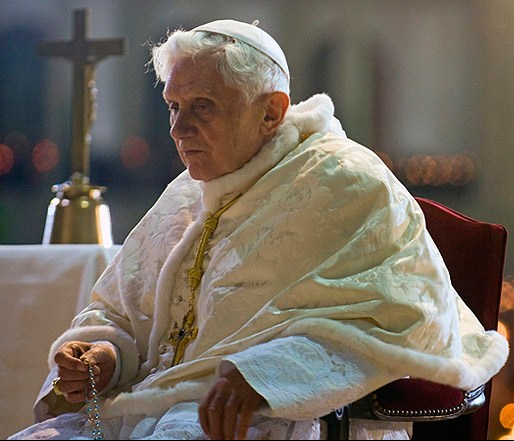
Pope emeritus Benedict XVI had long been speaking against these by describing it as “dictatorship of relativism”.
Acceptance of this term or concept that was actually coined at the aftermath of the 2007 financial crisis indicates that we are miserably not learning the lessons of this global crisis.
Our sights remain myopic, even blinded in looking at this pandemic without realizing at all how this was spawned by our own excesses and sins. Long before we have been told to maintain physical or social distancing to stop spread of the new corona virus, we have long been distant from one another. We have been spending more time with our computers and smartphones, trying to connect with friends and everyone in various social media platforms unmindful of the persons seated near us. “Table for one” in restaurants is fast becoming the order of the day than the exception to the rule.
My point is, accepting everything now as the new normal is also accepting wholesale the new ordering of things going on that continues to neglect the weakest and poorest among us. We are only perpetuating an error and worst an evil among us that we have refused to examine closely in the past.
This “new normal” is a conditioning concept that pushes the marginalized and disadvantaged people deeper into misery as the daily news tells us. Unconsciously to many of us, “new normal” is an excuse even a justification for the continued poverty and slavery of the weak and disadvantaged.
What a shame that while so many countries are suffering from COVID-19 like ours, Beijing is flexing its muscles around the world economically and militarily – right in our seas!- as if they are not bothered at all by this virus that came from their own province of Wuhan.
A very interesting read I have found last month was written by Nigerian Chime Asonye who rightly claims that “the new normal” “should not be the lens through which we examine our changed world”.
The ‘new normal’ discourse sanitizes the idea that our present is okay because normal is regular. Yes, there may be public health challenges, but these are issues that can be managed. We accept life under the omnipresent threat of disease as ordinary. But what exactly is normal about this pandemic? It is not normal for society en masse to be isolated, but if this is normal, then we are supposed to have control of the situation. Even if we feel loss or despair, we are expected to get used to it — accepting that this morbid reality is now standard.
COVID-19 can serve both as a catharsis to our past excesses and a watershed for a brighter future.
The old system, or what people refer to as “normal” before in the world had erroneously set is not working, plainly wrong and abusive; why continue or import it into this coming new period?
As the pandemic rages on it gives us a chance to reimagine the world by tracing history, not forgetting it.
We should revel in the discomfort of the current moment to generate a ‘new paradigm’, not a ‘new normal’. Feeling unsettled, destabilized and alone can help us empathize with individuals who have faced systematic exclusions long-ignored by society even before the rise of COVID-19 — thus stimulating urgent action to improve their condition. For these communities, things have never been ‘normal’.
COVIDS-19 is definitely not a punishment from God but a result of man playing God.
And like in the past, whether in world history or in our own lives when things go wrong even worst, God ensures to make ways that anything bad happening to us would always lead to something good.
Photo by author, Christmas 2019 in our Parish.
See how providential in the sense that microscopic viruses are reminding us that true power is not in being big but in being small, not in being strong but being weak — the very example of God to us when he became human like us more than 2000 years ago.
Unfortunately, his lessons remain unheeded up to our time even among us in the Church.
It is a most welcomed change in the midst of this pandemic that the Vatican last week issued new guidelines through the Congregation for the Clergy (directed to us priests) for the world’s parishes that can help us respond adequately to the challenges of this crisis (http://press.vatican.va/content/salastampa/en/bollettino/pubblico/2020/07/20/200720a.html).
But, that will require another blog.
For the meantime, please stop using that abnormal term “new normal”.
Quiet Storm by Fr. Nicanor F. Lalog II, 25 July 2020
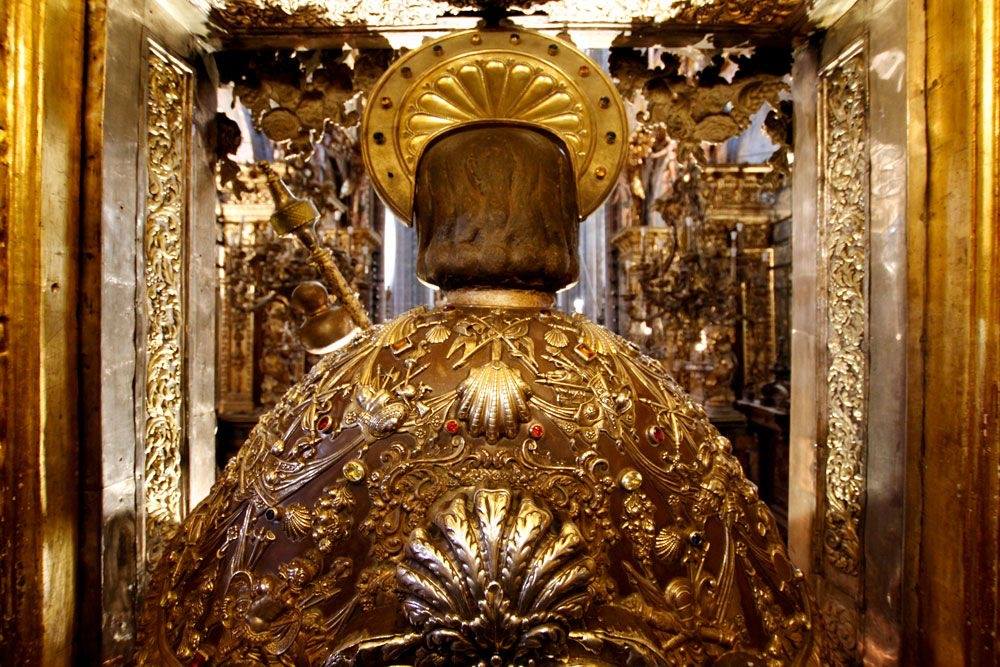
Santiago de Compostela in Spain is one of the world’s oldest and most popular pilgrim sites where the body of the Apostle St. James the Greater whose feast we are celebrating today is believed to be buried in its beautiful cathedral.
I have not been there yet and despite COVID-19’s disruption of air travel expected to last until 2022, my hope remains that someday in God’s time I may finally do the “el camino de Santiago de Compostela” (the way of Saint James of Compostela), too.
But, with or without the el camino de Santiago de Compostela, this great Apostle from the very beginning had always been in a journey in himself into the kingdom of God – Jesus Christ – by showing us the way of transformation into a true disciple of the Lord.
He is called the Greater not because he is holier than the other St. James called “the Lesser”, son of Alpheus, but to simply indicate the different importance they received in the writings of the New Testament. In the gospel of Mark, he comes in second in the list after Peter while in the gospels of Matthew and Luke, he is ranked third after the brothers Peter and Andrew; he again comes in third in the Acts of the Apostles after St. Peter and his brother St. John.
It is from this book where we also learn St. James the Greater as the first bishop of the original Christian community in Jerusalem that during the persecution by King Herod Agrippa in 40 AD, he also became the first Apostle to be martyred (Acts 12:1-2).
His martyr’s death thus fulfilled Christ’s words to him that he would indeed “drink from his chalice” to be with him in his Kingdom, a journey that essentially began within this great apostle after leaving everything behind to follow Jesus.
The journey within self to Jesus Christ
St. James the Greater and his brother St. John the Evangelist and believed to be the same beloved disciple came from a middle class family with both parents still alive and most likely, very supportive of them as attested by some little anecdotes in the gospel accounts.
Money was never an issue for them because their father Zebedee could hire workers to work in their fishing business. He must have sighed with a great relief when James and John immediately left him after being called by Jesus to be his disciples.
Marker along the “el camino de Santiago de Compostela”.
Finally, his sons have found some directions in life following Jesus who was getting known then in Galilee as a powerful and credible Teacher unlike the Pharisees and scribes.
Jesus nicknamed James and John as Boanerges for “Sons of thunder” (Mk.3:17) due to their temperament like when they proposed that they send fire to burn a Samaritan town that have refused them passage during their journey to Jerusalem (Lk.9:54).
They have seen and experienced the tremendous powers of Jesus not only in preaching but most especially in calming the storms, walking on sea, exorcising evil spirits, healing all kinds of sickness, and even raising to life some who have died.
Most of all, St. James the Greater was privileged to witness along with his brother and St. Peter the Transfiguration of Jesus Christ on Mount Tabor, seeing all the glory of Christ conversing with Moses and Elijah. It was after this major event that their most controversial episode would occur when their mother came to ask Jesus that James and John be seated “one at your right and the other at your left, in your Kingdom” (Mt.20:21).
The other ten Apostles “grew indignant” of the brothers James and John for being so ambitious but Jesus summoned them and explained things which all of them would heed except for one:
“You know that the rulers of the Gentiles lord it over them, and the great ones make their authority over them felt. But it shall not be also among you. Rather, whoever wishes to be great among you shall be your servant; whoever wishes to be first among you shall be your slave. Just so, the Son of Man did not come to be served but to serve and to give is life as a ransom for many.”
Matthew 20:25-28
This took place shortly before Palm Sunday when Jesus entered Jerusalem.
A few days later on the evening of Holy Thursday, Jesus again brought St. James the Greater with his brother St. John and St. Peter to accompany him pray at Gethsemane where Judas Iscariot eventually betrayed him to his enemies.
A pilgrim hugging from the back the statue of Santiago de Compostela after completing his el camino.
Here we find St. James the Greater being present to two major stops in Jesus Christ’s journey to the Calvary: first, on Mount Tabor for his Transfiguration and second, at Gethsemane for his agony in the garden. In both events in the life of our Lord, St. James the Greater was a privileged witness, first of his coming glory and then of his passion and death.
It would only be after Easter and the Pentecost when all these major stops in his personal journey with Christ when everything would become clear to him and the other Apostles.
All along their journey from the shores of Galilee to Jerusalem, St. James the Greater remained by the side of Jesus Christ, probably unaware of another journey with the Lord taking place right inside his heart to truly be a part of his Kingdom by sharing in his Passion, Death, and Resurrection.
For his faithful adherence to Jesus from Galilee to Jerusalem, St. James the Greater again had the rare privilege like at Mount Tabor and Gethsemane in being the first to die as a martyr proclaiming the Gospel of Christ which is the meaning of the expression of “drinking from the chalice” of the Lord.
Sometimes in life, we just have to make “sakay” as my generation used to say, “sakay lang ng sakay” or “ride on, man, ride on” without really knowing where our trip would lead us. St. James just made “sakay” without knowing Jesus was already fulfilling his wish of “drinking from his chalice”.
Photo by Fr. Gener Garcia, sculpture of a pilgrim’s feet at Santiago de Compostela museum, 2019.
St. James the Greater was truly great not because of the distances in miles or kilometers he had covered with Jesus from Galilee to Jerusalem and all the way to Compostela in Spain; we honor him today because of that great journey he had undertaken within him, in his heart to remain always at the side of Christ even if had to smoothen his many rough edges as a person, and cleanse his heart as a sinner like us.
That is the most important journey we are all taking in this life, the journey within us.
The longest journey in life is the distance between the heart and the mind.
Former UN Sec.Gen Dag Hammarskjold in “Markings”
My friend Fr. Gener Garcia last year went to Santiago de Compostela to follow the el camino with our kababayan Bishop Bart Santos of Iba, Zambales and Fr. Jaypee Avila assigned as a chaplain for OFW’s in Milan, Italy.
He is so generous to share with us his photos of their pilgrimage as well as his experiences and realizations in life. According to him, on the four sides of the sculpture of the pilgrim’s feet in front of the museum of Santiago de Compostela is the following quotation:
Marker along the el camino de Santiago de Compostela.
Camino recto, camino erguido, camino buscando un sentido. Camino porque tengo un objetivo, y no parare hasta alcanzar mi destino.
(I walk straight, I walk upright, I walk looking for meaning. I walk with a purpose and I won’t stop until I meet my destiny.)
The pilgrim’s journey is the same one you and I are on. Know your goals and understand your challenges. Face them head-on, tackle them with intention, and never give up.
Do you know what your purpose in life is? What would you say if someone ask you what your destiny was?








 lordmychef.com