New normal is not normal

Quiet Storm by Fr. Nicanor F. Lalog II, 28 July 2020
Photo by Mr. Raffy Tima of GMA-7 News, March 2020

Experts have been telling us since the start of this COVID-19 pandemic that our lives would no longer be the same like before 2020. Even if a new vaccine and more effective treatment are discovered to fight this disease, life on this planet is definitely changed.

But, for better or for worse?

That is the most important challenge of this pandemic next to finding a vaccine and cure or treatment against it: that we seize this unique opportunity from COVID-19 to “reset” or “refresh” the world so we can all start anew by correcting the mistakes and excesses of the past to finally kickoff a true and meaningful growth and development among peoples, especially the poor and marginalized.

Photo from TurboSquid.com

This we can start – or restart – by immediately deleting from our vocabulary and consciousness that word we have been erroneously using since summer, “new normal”.

New normal is abnormal because norms or standards like morality always remain.

Washing of hands frequently, covering one’s mouth and nose when sneezing and coughing, not spitting everywhere are not new normal. Cleanliness has always been the norm since the beginning that we have that saying always true, “Cleanliness is next to Godliness”.

Praying every day, individually and as a family especially the Holy Rosary is not a new normal. Connecting with the Divine has always been the norm of man since the beginning even before Jesus Christ came to the world.

More than half a century ago, the late Fr. Patrick Peyton has been saying, “The family that prays together, stays together; and the world at prayer is a world at peace.” Praying has always been the norm in our lives.

Normal or norms do not change because they are the standard measure. Even before COVID-19 came, normal temperature has always been 37 degrees Celsius, 12-inches make a foot, and so on and so forth.

So, please forget this abnormality of referring to our new way of living as “new normal” because it is not new at all.

Worst, this usage of the term “new normal” courtesy of the media, politicians, and policy makers is a dangerous indication of unconsciously or subconsciously perpetuating our excesses of the past that the Wuhan virus have rightly exposed: too much greed especially among capitalists, materialism and consumerism, and individualism.
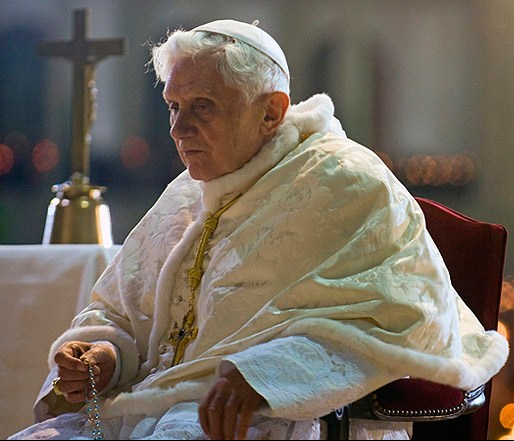
From vaticannews.va

Pope emeritus Benedict XVI had long been speaking against these by describing it as “dictatorship of relativism”.

Acceptance of this term or concept that was actually coined at the aftermath of the 2007 financial crisis indicates that we are miserably not learning the lessons of this global crisis.

Our sights remain myopic, even blinded in looking at this pandemic without realizing at all how this was spawned by our own excesses and sins. Long before we have been told to maintain physical or social distancing to stop spread of the new corona virus, we have long been distant from one another. We have been spending more time with our computers and smartphones, trying to connect with friends and everyone in various social media platforms unmindful of the persons seated near us. “Table for one” in restaurants is fast becoming the order of the day than the exception to the rule.

My point is, accepting everything now as the new normal is also accepting wholesale the new ordering of things going on that continues to neglect the weakest and poorest among us. We are only perpetuating an error and worst an evil among us that we have refused to examine closely in the past.

This “new normal” is a conditioning concept that pushes the marginalized and disadvantaged people deeper into misery as the daily news tells us. Unconsciously to many of us, “new normal” is an excuse even a justification for the continued poverty and slavery of the weak and disadvantaged.

What a shame that while so many countries are suffering from COVID-19 like ours, Beijing is flexing its muscles around the world economically and militarily – right in our seas!- as if they are not bothered at all by this virus that came from their own province of Wuhan.

A very interesting read I have found last month was written by Nigerian Chime Asonye who rightly claims that “the new normal” “should not be the lens through which we examine our changed world”.

The ‘new normal’ discourse sanitizes the idea that our present is okay because normal is regular. Yes, there may be public health challenges, but these are issues that can be managed. We accept life under the omnipresent threat of disease as ordinary. But what exactly is normal about this pandemic? It is not normal for society en masse to be isolated, but if this is normal, then we are supposed to have control of the situation. Even if we feel loss or despair, we are expected to get used to it — accepting that this morbid reality is now standard.

https://www.weforum.org/agenda/2020/06/theres-nothing-new-about-this-new-normal-heres-why/

COVID-19 can serve both as a catharsis to our past excesses and a watershed for a brighter future.

The old system, or what people refer to as “normal” before in the world had erroneously set is not working, plainly wrong and abusive; why continue or import it into this coming new period?

As the pandemic rages on it gives us a chance to reimagine the world by tracing history, not forgetting it.

We should revel in the discomfort of the current moment to generate a ‘new paradigm’, not a ‘new normal’. Feeling unsettled, destabilized and alone can help us empathize with individuals who have faced systematic exclusions long-ignored by society even before the rise of COVID-19 — thus stimulating urgent action to improve their condition. For these communities, things have never been ‘normal’.

https://www.weforum.org/agenda/2020/06/theres-nothing-new-about-this-new-normal-heres-why/

COVIDS-19 is definitely not a punishment from God but a result of man playing God.

And like in the past, whether in world history or in our own lives when things go wrong even worst, God ensures to make ways that anything bad happening to us would always lead to something good.

Photo by author, Christmas 2019 in our Parish.

See how providential in the sense that microscopic viruses are reminding us that true power is not in being big but in being small, not in being strong but being weak — the very example of God to us when he became human like us more than 2000 years ago.

Unfortunately, his lessons remain unheeded up to our time even among us in the Church.

It is a most welcomed change in the midst of this pandemic that the Vatican last week issued new guidelines through the Congregation for the Clergy (directed to us priests) for the world’s parishes that can help us respond adequately to the challenges of this crisis (http://press.vatican.va/content/salastampa/en/bollettino/pubblico/2020/07/20/200720a.html).

But, that will require another blog.

For the meantime, please stop using that abnormal term “new normal”.

A blessed Tuesday to everyone!
Journeying in Christ

Quiet Storm by Fr. Nicanor F. Lalog II, 25 July 2020

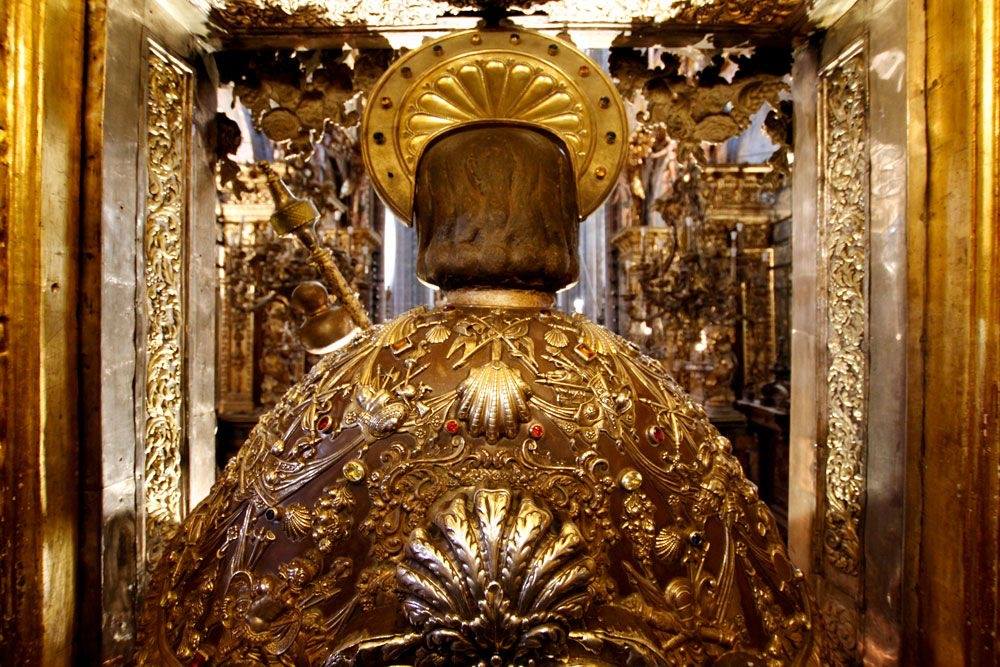
Santiago de Compostela in Spain is one of the world’s oldest and most popular pilgrim sites where the body of the Apostle St. James the Greater whose feast we are celebrating today is believed to be buried in its beautiful cathedral.

I have not been there yet and despite COVID-19’s disruption of air travel expected to last until 2022, my hope remains that someday in God’s time I may finally do the “el camino de Santiago de Compostela” (the way of Saint James of Compostela), too.

But, with or without the el camino de Santiago de Compostela, this great Apostle from the very beginning had always been in a journey in himself into the kingdom of God – Jesus Christ – by showing us the way of transformation into a true disciple of the Lord.

He is called the Greater not because he is holier than the other St. James called “the Lesser”, son of Alpheus, but to simply indicate the different importance they received in the writings of the New Testament. In the gospel of Mark, he comes in second in the list after Peter while in the gospels of Matthew and Luke, he is ranked third after the brothers Peter and Andrew; he again comes in third in the Acts of the Apostles after St. Peter and his brother St. John.

It is from this book where we also learn St. James the Greater as the first bishop of the original Christian community in Jerusalem that during the persecution by King Herod Agrippa in 40 AD, he also became the first Apostle to be martyred (Acts 12:1-2).

His martyr’s death thus fulfilled Christ’s words to him that he would indeed “drink from his chalice” to be with him in his Kingdom, a journey that essentially began within this great apostle after leaving everything behind to follow Jesus.

The journey within self to Jesus Christ

St. James the Greater and his brother St. John the Evangelist and believed to be the same beloved disciple came from a middle class family with both parents still alive and most likely, very supportive of them as attested by some little anecdotes in the gospel accounts.

Money was never an issue for them because their father Zebedee could hire workers to work in their fishing business. He must have sighed with a great relief when James and John immediately left him after being called by Jesus to be his disciples.

Marker along the “el camino de Santiago de Compostela”.

Finally, his sons have found some directions in life following Jesus who was getting known then in Galilee as a powerful and credible Teacher unlike the Pharisees and scribes.

Jesus nicknamed James and John as Boanerges for “Sons of thunder” (Mk.3:17) due to their temperament like when they proposed that they send fire to burn a Samaritan town that have refused them passage during their journey to Jerusalem (Lk.9:54).

They have seen and experienced the tremendous powers of Jesus not only in preaching but most especially in calming the storms, walking on sea, exorcising evil spirits, healing all kinds of sickness, and even raising to life some who have died.

Most of all, St. James the Greater was privileged to witness along with his brother and St. Peter the Transfiguration of Jesus Christ on Mount Tabor, seeing all the glory of Christ conversing with Moses and Elijah. It was after this major event that their most controversial episode would occur when their mother came to ask Jesus that James and John be seated “one at your right and the other at your left, in your Kingdom” (Mt.20:21).

The other ten Apostles “grew indignant” of the brothers James and John for being so ambitious but Jesus summoned them and explained things which all of them would heed except for one:

“You know that the rulers of the Gentiles lord it over them, and the great ones make their authority over them felt. But it shall not be also among you. Rather, whoever wishes to be great among you shall be your servant; whoever wishes to be first among you shall be your slave. Just so, the Son of Man did not come to be served but to serve and to give is life as a ransom for many.”

Matthew 20:25-28

This took place shortly before Palm Sunday when Jesus entered Jerusalem.

A few days later on the evening of Holy Thursday, Jesus again brought St. James the Greater with his brother St. John and St. Peter to accompany him pray at Gethsemane where Judas Iscariot eventually betrayed him to his enemies.

A pilgrim hugging from the back the statue of Santiago de Compostela after completing his el camino.

Here we find St. James the Greater being present to two major stops in Jesus Christ’s journey to the Calvary: first, on Mount Tabor for his Transfiguration and second, at Gethsemane for his agony in the garden. In both events in the life of our Lord, St. James the Greater was a privileged witness, first of his coming glory and then of his passion and death.

It would only be after Easter and the Pentecost when all these major stops in his personal journey with Christ when everything would become clear to him and the other Apostles.

All along their journey from the shores of Galilee to Jerusalem, St. James the Greater remained by the side of Jesus Christ, probably unaware of another journey with the Lord taking place right inside his heart to truly be a part of his Kingdom by sharing in his Passion, Death, and Resurrection.

For his faithful adherence to Jesus from Galilee to Jerusalem, St. James the Greater again had the rare privilege like at Mount Tabor and Gethsemane in being the first to die as a martyr proclaiming the Gospel of Christ which is the meaning of the expression of “drinking from the chalice” of the Lord.

Sometimes in life, we just have to make “sakay” as my generation used to say, “sakay lang ng sakay” or “ride on, man, ride on” without really knowing where our trip would lead us. St. James just made “sakay” without knowing Jesus was already fulfilling his wish of “drinking from his chalice”.

Photo by Fr. Gener Garcia, sculpture of a pilgrim’s feet at Santiago de Compostela museum, 2019.

St. James the Greater was truly great not because of the distances in miles or kilometers he had covered with Jesus from Galilee to Jerusalem and all the way to Compostela in Spain; we honor him today because of that great journey he had undertaken within him, in his heart to remain always at the side of Christ even if had to smoothen his many rough edges as a person, and cleanse his heart as a sinner like us.

That is the most important journey we are all taking in this life, the journey within us.

The longest journey in life is the distance between the heart and the mind.

Former UN Sec.Gen Dag Hammarskjold in “Markings”

My friend Fr. Gener Garcia last year went to Santiago de Compostela to follow the el camino with our kababayan Bishop Bart Santos of Iba, Zambales and Fr. Jaypee Avila assigned as a chaplain for OFW’s in Milan, Italy.

He is so generous to share with us his photos of their pilgrimage as well as his experiences and realizations in life. According to him, on the four sides of the sculpture of the pilgrim’s feet in front of the museum of Santiago de Compostela is the following quotation:

Marker along the el camino de Santiago de Compostela.

Camino recto, camino erguido, camino buscando un sentido. Camino porque tengo un objetivo, y no parare hasta alcanzar mi destino.

(I walk straight, I walk upright, I walk looking for meaning. I walk with a purpose and I won’t stop until I meet my destiny.)

The pilgrim’s journey is the same one you and I are on. Know your goals and understand your challenges. Face them head-on, tackle them with intention, and never give up.

Do you know what your purpose in life is? What would you say if someone ask you what your destiny was?

Santiago de Compostela Museum of Pilgrims

Have a blessed Saturday everyone!

*All photos by Fr. Gener Garcia, 2019.

Renewal in God, with God

The Lord Is My Chef Breakfast Recipe for the Soul by Fr. Nicanor F. Lalog II
Friday, Week XVI, Year II in Ordinary Time, 24 July 2020
Jeremiah 3:14-17 <*(((><< ) + ( >><)))*> Matthew 13:18-23
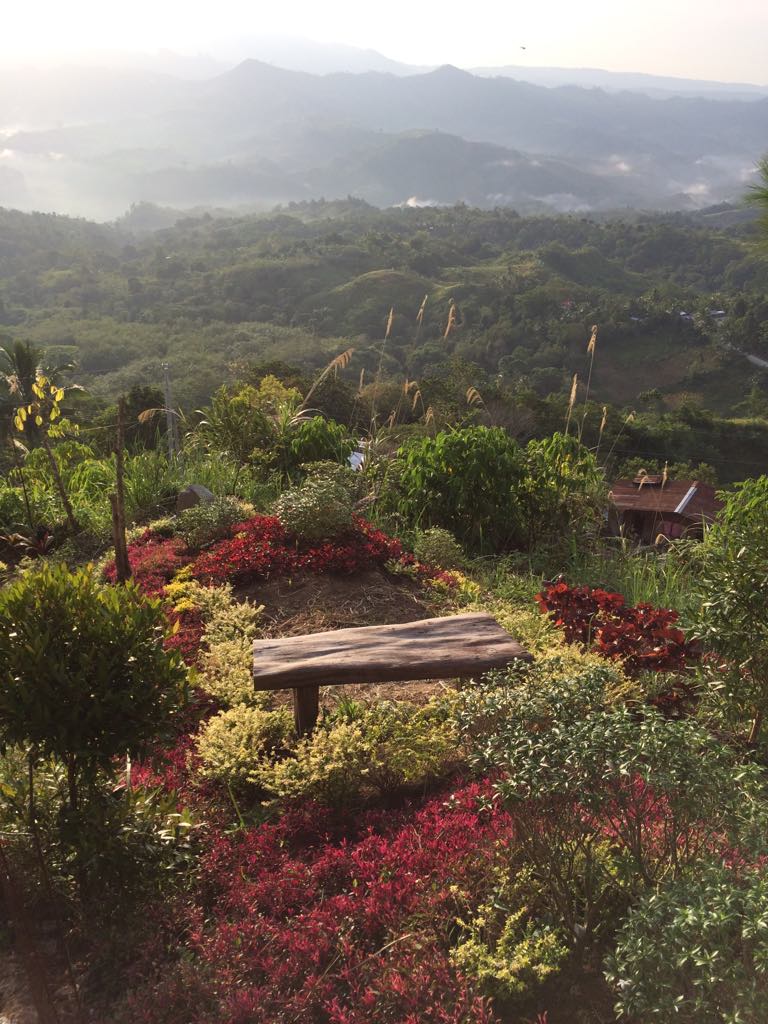
Photo by author, Sonnen Berg Mountain View, Davao City, August 2018.

It is a Friday and we thank you, O God our loving Father, for your boundless grace and mercy of another week to close and a new one to start. Amid the many struggles we have to go through this week with the staggering number of people infected with COVID-19, you continue to bless us.

Help us return to you, your “rebellious children” (Jer.3:14), so we may be renewed in you and with you.

Keep our sights looking forward to our future with your promises of growth and fulfillment.

Let us forget and learn our lessons from our past mistakes and sins so we may walk uprightly, guided by “shepherds you have appointed after your own heart who will shepherd us wisely and prudently” (Jer.3:15), never again to grow “hardhearted in wickedness” against you and others.

Thank you for sending us your Son Jesus Christ, the Sower who never gets tired sowing seeds into our hearts of all your grace necessary for us to be fruitful in life. May we become good soil who will accept and take care of your seeds. Amen.

Photo by author, ricefields in Pulilan, Bulacan, January 2020.

Countdown sa Pasko sa gitna ng COVID-19 lockdown

Lawiswis ng Salita, Miyerkules, Dakilang Kapistahan ng Pagbabalita ng Pagsilang ni Hesus, 25 Marso 2020

Isaias 7:10-14; 8:10 +++ Hebreo 10:4-10 +++ Lukas 1:26-38

Painting ng Pagbabalita ng Anghel kay Maria ng Pagsilang ni Hesus sa harapan ng Basilica ng Annunciation sa Nazareth, Israel. Larawan kuha ng may-akda, Mayo 2017.

Wala akong kahilig-hilig sa ano mang countdown ngunit kagabi sa aking pagninilay ng Dakilang Kapistahan ng Pagbabalita kay Maria ng Pagsilang ng Mesiyas, bigla ko naisip siyam na buwan na lamang mula ngayon ay Pasko na ng Pagsilang!

Kaya… Merry Christmas sa inyong lahat ngayon pa lamang!

Naisip ko tama lang isipin na natin ngayon siyam na buwan bago ang Pasko ng Pagsilang sa gitna ng lockdown sanhi ng COVID-19 upang magbago ating kamalayan sa Christmas countdown sapagkat higit pa sa petsa ang Disyembre 25 — ito ay isang kaganapan o “event” wika nga sa Inggles na nangangahulugan din ng “fulfillment” o kabuuan.

Ang Pasko ay si Hesu-Kristo, ang Diyos Anak na nagkatawang-tao!

Sinasabi na maraming binabago sa buhay ang COVID-19 at una na rito ang “back to basics” tulad ng paghuhugas ng mga kamay palagi, pagsasama-sama ng pamilya, at taimtim na pananalangin.

At isa sa mgapangunahing basic ng buhay ay ang Diyos na nagkatawang-tao, si Hesus. Dapat nating mapagtanto muli na bagaman dumating na si Hesus 2000 taon na nakalipas, patuloy pa rin siyang dumarating sa piling natin at muling darating sa wakas ng panahon.

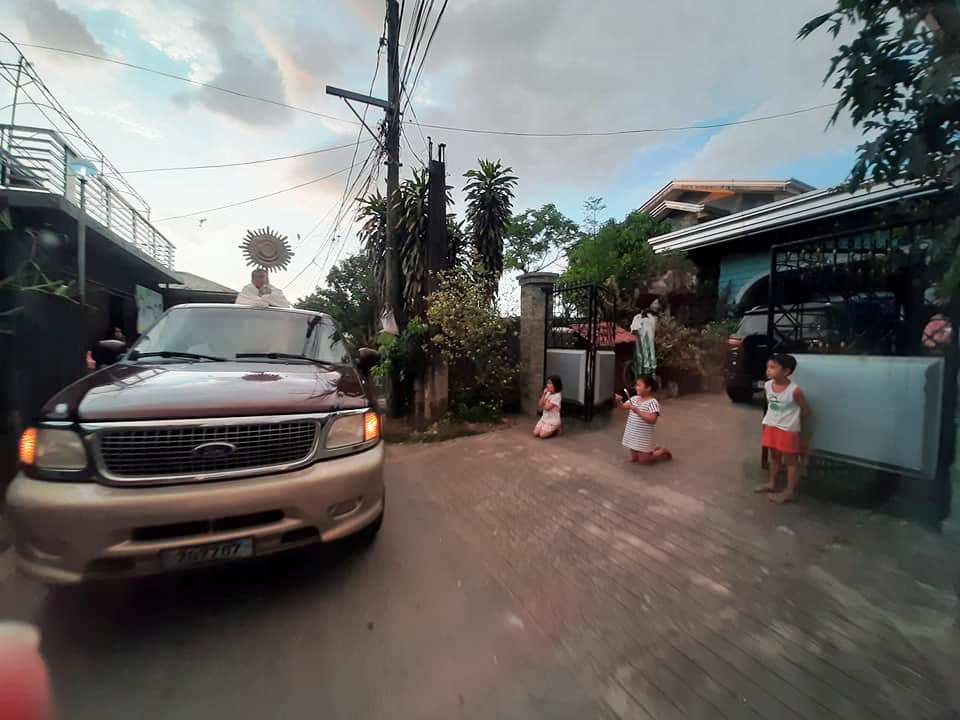
Paglibot ng Santisimo Sakramento sa Parokya ni San Juan Apostol at Ebanghelista, Bagbaguin, Santa Maria, Bulacan noong 22 Marso 2020. Larawan kuha ni Bb. Ria De Vera

Si Kristo ay dumating, dumarating, at darating sa tao na bukas ang puso at kalooban

Isang mabuting halimbawa ang ipinakita sa atin ng Mahal na Birheng Maria nang ibalita sa kanya ng Anghel Gabriel ang mabuting balita ng pagsilang niya kay Hesus na ating Tagapagligtas. Tatlong bagay ang ating nakikita rito.

Una ang kanyang pagiging bukas palagi sa salita at kalooban ng Diyos.

Kapag pingninilayan ko ang tagpong ito ng ebanghelyo ayon kay San Lukas, palagi ko naiisip na mas malamang nananalangin noon ang Birheng Maria.

Kaya paulit-ulit ko na sinasabi sa inyo mga ginigiliw ko, lalo na mga magulang na gamitin ang pagkakataong ito ng lockdown na ituro muli ang mga dasal na nakalimutan na ng mga bata. Higit sa lahat, magdasal ng sama-sama tulad ng pagrorosaryo. Mamyang alas-7:00 ng gabi, sabay-sabay tayo sa buong daigdig makiisa sa panawagan ni Papa Francisco na dasalin ang “Ama namin” kontra sa COVID-19.

Tanging sa pananalangin lamang natin mapapakinggang tunay ang kalooban ng Diyos sa atin.

Ikalawa ang pagtanggap ng Mahal na Birheng Maria sa salita at kalooban ng Diyos.

Hindi sasapat ang pananalangin lamang; kung hindi rin naman pumayag si Maria sa hiling ng Diyos na maging Ina ni Hesus, wala ring Pasko at hanggang ngayon marahil inaabangan pa natin ang Kristo.

Katulad ng Mahal na Birheng Maria, nawa tayo man ay pumayag at sumang-ayon sa hinihiling sa atin ng Diyos. Gaya ni Maria, masabi rin natin ang matamis na pananalita niya sa anghel matapos mapakinggan ang mabuting balita, “Maganap na nawa sa aking ang iyong mga sinabi” (Lk.1:38).

Ikatlo, pinangatawanan ni Maria ang kanyang “Oo” o “Opo” sa Panginoon.

Masdan mabuti ang huling talata ng ebanghelyo sa araw na ito: “At iniwan siya ng anghel” (Lk.1:39).

Tingnan ninyo ang lahat ng nasusulat sa Bagong Tipan: wala nang ibang pagkakataon na ang anghel ay nakipag-usap pa muli kay Maria! Kay San Jose at mga Apostol tulad ni San Pedro, ilang ulit nagpakita ang anghel upang liwanagin mga gawain nila. Nguni’t si Maria pagkaraan nito ay naiwan nang mag-isa sa kanyang matibay na pananampalataya sa Diyos!

Ang tanging sigurado lang si Maria ay ang pangalang ibibgay sa kanyang sanggol na Hesus. Maliban dito ay pawang pagtitiwala at pananalig ang umiral kay Maria na naging tapat sa pagsunod sa Diyos hanggang sa mapako sa Krus si Hesus. Kaya naman sa kanya unang nagpakita si Hesus na muling nabuhay sapagkat si Maria ang unang tunay at lubos na nanalig sa kanya, sa salita at sa gawa.

Ang lugar kung saan binati ng anghel si Maria na ngayon ay nasa ilalim ng Basilica ng Annunciation sa Nazareth. Larawan ay kuha ng may-akda, Mayo 2019.

Hamon ng Ebanghelyo

Nakakatuwa ang maraming balita ng mga taong nagsasakripisyo, naglalaan ng sarili para sa kapwa sa gitna ng pandemiyang COVID-19. Una na sa kanila ang mga tinaguriang frontliners na health workers – mga duktor, nars, med tech, at lahat ng naglilingkod sa mga pagamutan.

Kahapon ay naikuwento ko sa inyo isang tindero ng saging na hindi nagtaas ng presyo bilang tulong niya sa lockdown na umiiral.

Kaibayo naman nito ang napakalungkot at masakit – at nakakapikon! – na mga balita ng mga mapagsamantalang tao sa gitna ng krisis.

Unang-una na ang mga halal na upisyal ng bayan sampu ng kanilang mga pamilya na nagpa-VIP treatment para sa COVID testing. Gayun din iba pang upisyal ng bansa na hanggang ngayon ang inaatupag ay sariling kapakanan habang buong bayan ay nagdurusa.

Sila ang mga makabagong Haring Acaz na noon ay kunwari tumangging humingi ng palatandaan mula sa Diyos kung tunay niyang ililigtas ang Israel. Ang totoo, nakipag-alyansa na si Haring Acaz sa mga katabing bansa laban sa Assyria gayong kabilin-bilinan sa kanya ni Propeta Isaias na magtiwala sa Diyos lamang. Batid ng Diyos ang katotohanan at kunwari’y tiwala si Haring Acaz sa kanya!

Kahapon sinabi ng Punong Ministro ng Italya na siyang bagong sentro ng COVID-19 na lahat ay nagawa na nila sa lupang ibabaw laban sa pandemiyang ito; inamin niyang wala na silang maaring takbuhan ng tulong kungdi ang Diyos sa langit.

Alalahanin natin na hindi sapat ang basta manalangin.

Katulad ni Maria, atin nawa maisabuhay ang pagiging bukas palagi sa Diyos sa pakikinig sa kanyang tinig at higit sa lahat, pagsang-ayon dito at paninindigan sa pamamagitan ng ating mabubuting gawa.

Manalangin tayo:

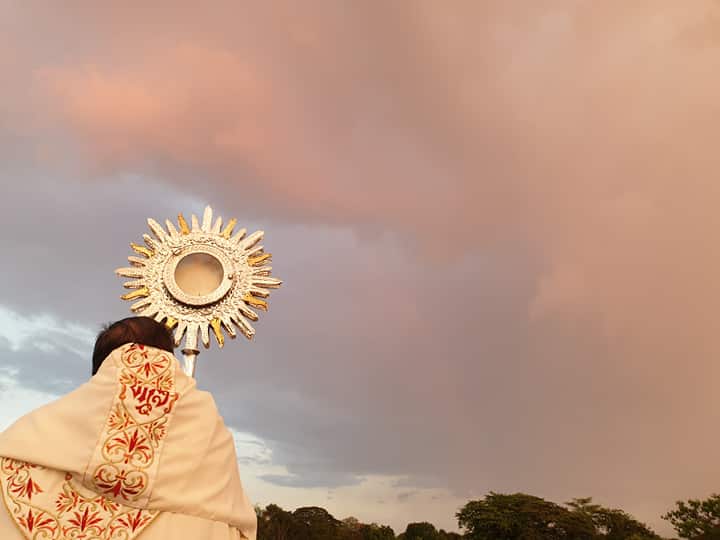
Larawan kuha ni Bb. Anne Ramos, 22 Marso 2020, paglibot ng Santisimo Sakramento sa Parokya ni San Juan Apostol at Ebanghelista, Bagbaguin, Santa Maria, Bulacan.

O Diyos Ama naming mapagmahal, kami ay nagpapasalamat sa pagbibigay mo sa amin sa iyong Anak, ang Panginoong Hesu-Kristo na siyang aming kaligtasan lalo’t higit sa panahong ito ng COVID-19.

Buksan po ninyo aming puso at kalooban katulad ni Maria upang manahan din sa amin si Hesus, gawin niyang luklukan ang aming mga puso at kalooban.

Bigyan mo rin kami ng tapang at pananampalataya tulad ni Mari upang lahat ng aming sasabihin at gagawin ay pawang nilalayon at kalooban ng Panginoong Hesus.

Maging matatag nawa kami tulad ni Maria na samahan si Hesus hanggang paanan ng Krus upang mapanindigan kanyang kalooban sa kapangyarihan ng Espiritu Santo. Amen.

What is in a name?

The Lord Is My Chef Simbang Gabi Recipe, 17 December 2019

Genesis 49:2.8-10 ><)))*> ><)))*> ><)))*> Matthew 1:1-17

Parokya ng Banal na Mag-Anak, Violeta Village, Guiguinto, Bulacan. Photo by Arch. Philip Santiago.

Today we shift our focus in our Advent preparations to the first coming of Jesus Christ when he was born in Bethlehem more than 2000 years ago. Strictly speaking, the Christmas countdown officially starts only today especially with our very long but beautiful gospel from Matthew.

Maybe you are wondering what’s good with our gospel today when it is all about names that mostly sound very funny.

Importance of names: origin and mission

In ancient time, giving name to children was a very serious matter among peoples, especially the Jews.

For them, a name indicates two very important things about a person: one’s origin and mission in life, something parents of today have entirely forgotten, even ignorant because they are more concerned with fad and being unique in naming their children that always end up as a joke as it is always bizarre and weird.

And their poor kid suffers for the rest of his/her life like that man named “Fantastic”. All his life he felt so sad being called Fantastic that he told his wife when he dies, never put his name on his tombstone.

Eventually Mr. Fantastic died and the wife kept her promise not to put his name on his marker. But she felt the need to honor her beloved husband who was so good and honest that in lieu of his name, she asked a tribute written to honor him.

It said, “Here lies a very gentle and loving husband and father who never looked at other women except his wife.”

Every time passersby see and read that tribute, they would always exclaim “Fantastic!”

From Google.

Going back to the importance of giving names….

Corporations are more serious than parents in choosing names and trademarks to their products and services. Every trademark and brand always evokes deeper meanings than just being a product or entity that some of them have entered the vocabulary of many languages like Google, Xerox, and Frigidaire.

And the sad thing about this is how many babies are now being named to follow things and products than the other way around, giving more value to things than human beings!

The book of the genealogy of Jesus Christ, the son of David, the son of Abraham. Abraham became the father of Isaac, Isaac the father of Jacob, Jacob the father of Judah and his brothers.

Matthew 1:1-2
Detail of the ceiling of Parokya ng Banal na Mag-anak after the front or main door: the genealogy of Jesus Christ that starts with Abraham. Great concept by the Parish Priest, Fr. Ed Rodriguez. Photo by Arch. Philip Santiago.

Genealogy of Jesus as direction of Matthew’s Gospel

St. Matthew opens his gospel account with the genealogy of Jesus to settle right at the very start the question about the origin and mission of Jesus Christ.

Here we find the artistry and genius of St. Matthew, some 2000 years ahead of the late Stephen Covey’s third habit of highly effective people: “begin with an end in mind.”

By starting his genealogy with Abraham and David, St. Matthew gives us the whole gospel message in a glance because they are the two key figures in the beginning and realization of God’s promise to send Jesus Christ who would save us all.

Let us just focus on Abraham which means “he who is the father of many.”

It was to him that the story of God’s promise began after the dispersal of mankind following the collapse of the Tower of Babel.

From then on, Abraham points to what is ahead in God’s divine plan, not only for himself but also for the whole mankind for it is through him that blessings come to all. His journey from his birthplace of Ur into Canaan is symbolic of his journey from the present into the future, walking in faith following the Lord’s path and divine plan.

In Abraham we find God starting anew the history of mankind after the Fall that leads up to Jesus Christ who came to lead us all back into the Father.

With Abraham as the main header of Christ’s genealogy, we find not only the beginning but also the end of St. Matthew’s gospel which is the universality of God’s plan of salvation with Jesus telling his disciples to make disciples of all nations (Mt.28:19).

Detail of the ceiling near the sanctuary of Parokya ng Banal na Mag-Anak, the culmination of the genealogy of Jesus. Photo by Arch. Philip Santiago.

Imitating Abraham into our time

Last December 10 was a very important date for me and my parish: it was the ordination date of our first priest.

While waiting for the start of the Mass at the front door (which is actually the back of the Cathedral or any church), I just prayed in silence thinking about my role in the ordination of Fr. RA Valmadrid.

While I marveled at the beautiful renovations of our Cathedral, my sight was slowly moved towards the altar.

It was like an “Abraham experience” in Matthew’s genealogy for me: a wayfarer on a journey into the future, towards God, walking in faith.

In a quick glance, I kind of saw the future glory of every faithful coming to the altar to receive Jesus Christ in the sacraments especially the Holy Eucharist.

I just felt the beauty of entering the Cathedral, or any church which is more than stepping into a building but more of entering God himself, our point of origin and final destination.

Do we realize this tremendous blessing and grace of being baptized, of being a child of God, not only given with a name but most of all, of being counted into the family of God our Father?

In the first reading we have heard Jacob calling his 12 sons. What is so striking here is the blessing Jacob had bestowed upon Judah, instead of Joseph who was the best of all his sons, the holiest and most intelligent.

Like Abraham and Judah, or anyone in the genealogy of Jesus Christ, we can find our own selves too not as the vida or contravida but simply being called to be God’s instrument in fulfilling his plan in sending his Son Jesus Christ.

Truth is, God always comes in the most unexpected situations and peoples most of the time.

In Christ Jesus through our Baptism and faith, we find our genealogy – our origin and mission – as children of God.

If you want to get a feel of this reality, try reading aloud, very slowly, the genealogy of Jesus Christ. At the end, include your self, mention your name, your mother and father. Then close your eyes and let your life flash back in silence.

In the silence of your heart, do you find God coming more to you than you to God?

So amazing, is it not? We are all part of Christ’s genealogy. Let’s bring him forth into the world in our life of faithful witnessing like Abraham. Amen.

Malolos Cathedral. Photo by author.

Advent is regaining our sight and vision

Quiet Storm by Fr. Nicanor F. Lalog II, 06 December 2019

Advent 2019, Parokya ng San Juan Apostol at Ebanghelista, Bagbaguin, Santa Maria, Bulacan.

Advent and Lent are two beautiful seasons in our Church calendar that prepare us for the great feasts of Christmas and Easter, respectively. Both have violet as motif though Advent is supposed to have a more bluish hue to distinguish it from Lent’s penitential character.

They both invite us to “look forward” into that future glory of Jesus Christ when he comes again at the end of time to establish “new heaven and new earth” where peace would finally reign, removing all sufferings and pains, wiping away all our tears to fill us with perfect joy.

On that day the deaf shall hear the words of a book; and out of gloom and darkness, the eyes of the blind shall see. The lowly will ever find joy in the Lord, and the poor rejoice in the Holy One of Israel.

Isaiah 29:18-19

Advent is renewed relationships

More than the promise of a new order of things in the Second Coming of Christ, Advent invites us also to look forward into renewed relationships with God through others.

Our Advent Candle 2019.

Jesus Christ comes first in our hearts, his new manger. Unfortunately, we seem to have forgotten Jesus, remembering only his birthday and its trimmings. Fanned by social media, people are going crazy as early as August with their own Christmas countdown with those memes of Jose Mari Chan poised to sing his popular “Christmas in Our hearts”, forgetting its beautiful message of opening our hearts to Jesus through one another.

How sad that more than ever, people are so excited with Christmas for the wrong reasons like gifts and money, parties and vacations but not Jesus himself.

Advent invites us to “actively wait” Christ’s coming by renewing our relationships with our family and friends in every here and now of our daily living.

As Jesus passed by, two blind men followed him, crying out, “Son of David, have pity on us!” When he entered the house, the blind men approached him and Jesus said to them, “Do you believe that I can do this?” “Yes, Lord,” they said to him. Then he touched their eyes… and their eyes were opened.

Matthew 9:27-29, 30

Need to remove our “blindness”

Advent is a season to remove our blindness to Jesus present in us and in every person we meet. Our gospel today tells us a short story of Christ’s healing of two blind men with a twist of humor.

According to St. Matthew, the two blind men kept following Jesus after teaching a crowd, begging him to restore their sight.

How they were able to follow Jesus, your guess is as wild as mine… but, most funny is how they followed Jesus home to finally heal them!

Go figure it out. How did it happen if both men were blind, following Jesus every step of the way into his home?

But they both teach us a valuable lesson not only for this Advent but for everyday living: of the need to remove our blindness so we may see Christ coming to us day in, day out.

How sad when most of us have eyes but cannot see or even refuse to see Jesus Christ coming to us personally and among other people especially our family and friends, among the ordinary and usual people we meet everyday in our lives.

Last Tuesday amid heavy rains and winds of Supertyphoon “Tisoy”, two elderly couples in the parish requested for the Sacrament of Anointing of the Sick.

After hearing their confessions, anointing them with Oil, and giving them the Holy Communion, I decided to stay longer when I found out they live by themselves despite having six children living in the vicinity with their many apos!

Making things worst for the couple are the two children living abroad: one in the States have totally cut ties with them without any communication in 15 years while the other living Down Under refusing to help them in their medical needs.

May the light of Christ heal us of our many blindness so we may see him among our families and friends.

The way we live and what we hope

I have been told the elderly couple I have visited were not really that “good parents” and neighbors as well. But, I explained to everyone after my visitation that is not important, nor the issue at hand.

What matters most is who would take care or look after these two elderly people, an arthritic father and a mother stricken with stroke? Must we allow ourselves to be blinded by past sins and hurts and pains that we fail to see Christ coming in the present?

Yes, this is easier said than done but, in this life, we only have two choices to make, either we become better or bitter. Make the right and better choice always!

Last Sunday I told my congregation that the way we live dictates our hope.

Photo by Jo Villafuerte at Atok, Benguet, 01 September 2019

Those who strive in life to do what is good, to become better in whatever form are those who truly hope. And truly love because they believe in the future, they look forward to something better if not in this life, maybe after.

But those who do nothing in this life, those who feel resigned, “enjoying” their miseries in life are the ones who do not hope. And surely do not love at all for they see only death and destruction, nothing to look forward to. They do not mind hurting even killing others because they believe there is no future at all.

Indeed, as TIME Magazine’s Lance Morrow wrote in 1991, the opposite of love is not really evil but hopelessness. Very true.

As we end this first week of Advent moving closer to Christmas, let us pray for the grace of Jesus Christ to heal us of our many blindness in life so we may see him anew in us and in others too. A blessed weekend to you!

We shall “pass over” in the Lord

The Lord Is My Chef Breakfast Recipe for the Soul
Friday, Wk. XV, Yr. I, 19 July 2019
Exodus 11:10-12:14 >< }}}*> <*{{{ >< Matthew 12:1-8
Sunset from Bgy. Dapdap, Tagaytay City, 03 July 2019.

Another Friday, another week passing, another new week coming. Thank you so much, O Lord and we are able to move on, to pass over so many challenges and trials.

Every day indeed, O Lord, is an Exodus – a passing over with you leading us, saving us, delivering us from darkness into light, from ignorance into knowledge and wisdom, from sinfulness into grace.

“It is the Passover of the Lord. For on this same night I will go through Egypt, striking down every firstborn of the land, both man and beast, executing judgment on all the gods of Egypt – I, the Lord!”

Exodus 12:11-12

Keep us always ready to go with you, to follow you in every passing over from our Egypt of slavery into freedom of your Promised Land.

We pray, O God, for those among us who are like the Pharisees in the gospel today who see only your laws and rituals but not YOU.

Open our eyes that we may see the main distinction of your every pass over in us is mercy and love.

Come to us Jesus, the Lord of sabbath, and show us the true meaning of your sacrifice which is to find you more among our brothers and sisters.

Let us rediscover anew the beauty and value of life that comes only from you, especially the people around us regardless of their status, color, and creed.

We pray also for those who are struggling in life, those who find it so difficult to make ends meet, those who have to pass over great distances in life just to survive because we have refused to find you among them. Amen.


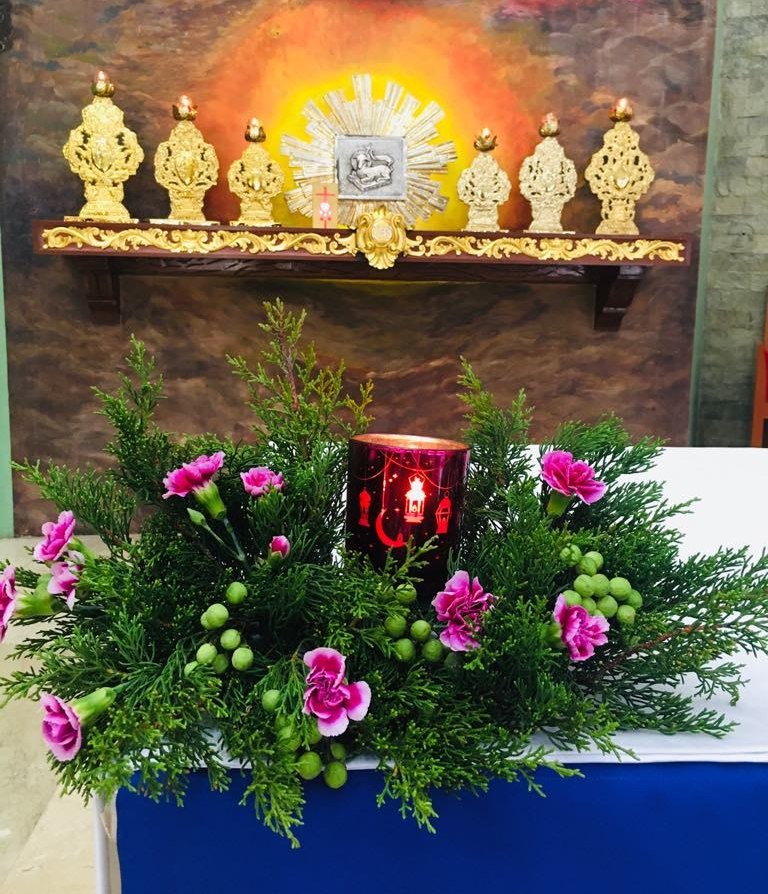
Flowers at our altar, 19 July 2019.

Sacred Heart of Jesus for a heartless world

The Lord Is My Chef Recipe for the Soul
Solemnity of the Most Sacred Heart of Jesus, 28 June 2019
Ezekiel 34:11-16 >< }}}*> Romans 5:5-11 >< }}}*> Luke 15:3-7
Sacred Heart of Jesus at the Jesuits’ Sacred Heart Retreat House and Seminar Center in Novaliches, Quezon City. Photo by author July 2018.

At a glance, the powers of darkness seem to rule the world.

Pains and sufferings are all around us as we see them in the news and, worst, experience them right in our homes and community!

The other Sunday evening, one of our parish lectors was hit by two riders driving under the influence of alcohol that severely damaged her face, particularly her right eye and front teeth. She did not see the motorcycle coming because the drunk riders were going so fast opposite the one way street.

The two riders have no driver’s license and both claim to have no money to pay for the medical expenses of our parish volunteer who comes from a very poor family.

I told her story to our Sunday congregation. Right after the Mass, two ladies came to me, handing me Php 25,000.00 in cash, pledging with more money for the medical and dental bills of our lector. Tears were rolling in my eyes as I thanked the two kind ladies who refused any recognition at all.

Yes, too often we are shocked at the evil going on in the world.

But, more surprising is the fact that it is always God who has the last laugh and final say in all these pain and sufferings around us.

There is always the more powerful Sacred Heart of Jesus offsetting our seemingly heartless world today.

Jesus the Good Shepherd with a lost sheep on his shoulder. A wood carving atop the cathedra of the Minor Basilica Cathedral of the Immaculate Conception in Malolos City. Photo by Lorenzo Atienza, 12 June 2019.

Jesus addressed this parable to the Pharisees and scribes: “What man among you having a hundred sheep and losing one of them would not leave the ninety-nine in the desert and go after the lost one until he finds it? And when he does find it, he sets it on his shoulders with great joy.”

Luke 15:3-5

I love that imagery of Jesus the Good Shepherd carrying on his shoulders the lost sheep. It is so powerful and evocative of God’s immense love for us sinners.

God fulfilled his promise to Ezekiel in the first reading that he would personally come to tend and look after us his sheep by sending us his Son Jesus Christ.

For his part, Jesus showed us in teaching this parable the solicitude of the Father in going beyond his words to the prophet of not just affectionately gathering and leading his sheep to green pastures but by communing with sinners of his time. What a wonderful way by Jesus showing us the pains God is willing to go to find one lost sheep.

From Google.

Jesus knows it so well how difficult and painful to get lost that he spent time with sinners, dining with them in many occasions. He knows the fearful thoughts running through us when we were wandering in darkness and sin that he never judges us nor condemns us like the woman caught committing adultery. Most of all, Jesus knows how difficult it would be for us who were lost to find our way back home, to go back to normal life of grace that he is willing to wait like with St. Paul and with St. Augustine.

Hence, when Jesus the Good shepherd finds the lost sheep, he sets it on his shoulders with great joy. Imagine also the spontaneous reflex to clutch to oneself whatever or whomever was lost and is found. That is how intense is the love of God through Jesus for every lost sheep when finally found. He is filled with joy that he carries the lost sheep on his shoulder to hurriedly bring it to safety and comfort, never to get lost again.

Moreover, here we find the great love of God for us who have gone stray in sin: he would patiently look for the lost sheep and likewise willing to patiently carry it on his shoulders so as not to make it suffer further in going back to the fold. Absolutely, no trace at all of any disgust in God in our going stray in sins!

From Google.

Eventually, Jesus proved this intense love of the Father to us in his dying on the Cross. He showed us how true love that comes from God and rooted in God is a love that is always meek and humble. A love that is unconditional, embracing both friends and foes. Yes, it is easier said than done but doable if we love in Christ Jesus.

From Google.

To love in Christ Jesus is to trust in God’s love. Without this trust in God’s love, we will always rely on our own self, prioritizing on our love of self than love of God and others. That is when darkness comes to rule over us, making us heartless too. Then, indeed, the world becomes evil because we have become its slave.

On this Solemnity of the Most Sacred Heart of Jesus when our nation is in so much darkness, Jesus is inviting us to make his love visible by trusting in his unfailing care as our Good Shepherd. When there is a major paradigm shift in the parable of Jesus wherein there are more lost sheep who are also self-righteous in knowing everything, calling those not on their side as stupid, we are more challenged today to witness Christ’s values of dignity of persons and peace. Let us pray for more patience with the appalling governance we now have courtesy of the majority of our people whom we have denied with God’s love and care for the longest time.

Life is Lent.

40 Shades Of Lent 
Thursday after Ash Wednesday, 07 March 2019
Deuteronomy 30:15-20///Luke 9:22-25

Dearest God:

Life is a mystery, life is Lent. Of course, we always choose life over death but in reality, you know it is not so: though our lips, our minds agree in the words of Moses, our hearts are so far from you.

“Today I have set before you life and prosperity, death and doom.  If you obey the commandments of the Lord, your God, which I enjoin on you today, loving him, and walking in his ways, and keeping his commandments, statutes and decrees, you will live and grow numerous, and the Lord, your God, will bless you in the land you are entering to occupy.”

(Deut.30:15-16)

Teach us, O God, through your Son Jesus Christ our Lord to rightly choose life by being responsible with this gift of life, of taking care of others by forgetting our very self; of bearing with all the pains of life by carrying our cross daily; and most of all, by following his direction, being present and one in him and with him in every persecution.

Life is a daily Lent when we lose ourselves in you to be renewed into a better person more like you, our true image and likeness. Amen.

Both photos from Google.

Testing Friends, Testing God

when-you-trust-a-person
The Lord Is My Chef Breakfast Recipe for the Soul
Friday, 01 March 2019, Week VII, Year I
Sirach 6:5-17///Mark 10:1-12

Thank you very much, O God, in giving us this weekend to examine and test our hearts about our relationships and friendships. 

How nice of you to speak about “tests” in our Mass readings today:
In the first reading, you ask us to “first test a friend and be not too ready to trust him” (Sir. 6:7).

It is sad, O Lord, that in this age of Facebook and social media, friends have become numbers and status symbol for our popularity than persons to be loved and cherished as gifts from you.  To test a friend means to see to it that in our relationships, we do not regard each other as  objects to be possessed like things.

Too often, this happens when we disguise as testing you like the Pharisees in the gospel who asked you, “Is it lawful for a husband to divorce his wife?” (Mk.10:2)

How funny, O Lord, that in testing you, we end up being tested about the friendships and relationships we keep!

And so many times, we fail because we have removed you from the many ties that bind us.

Teach us, O Lord, today to always see you in every person we meet, in every relationship we keep.  Guide us in the way of your commands that we live together in love and unity as brothers and sisters, never allowing our selfish interests to separate us from one another.  Amen.

Fr. Nicanor F. Lalog II, Parokya ng San Juan Apostol at Ebanghelista, Gov. F. Halili Ave., Bagbaguin, Sta. Maria, Bulacan.