Meeting Jesus

The Lord Is My Chef Sunday Recipe for the Soul by Fr. Nicanor F. Lalog II
Week XIX, Cycle A in Ordinary Time, 09 August 2020
1 Kings 19:9, 11-13 >><}}}*> Romans 9:1-5 >><}}}*> Matthew 14:22-33
Photo by Mr. Raffy Tima of GMA-7 News, Batanes, 2018.

I have always loved the sea and lately my thoughts have always been about the beach as I miss it so much after COVID-19 had robbed us of our summer vacation.

In ancient time, the sea evoked fear because it was largely unknown that even in the bible, it is the symbol of evil and its powers over man. That is why our gospel today is very significant when Jesus walked on water to show God’s greater power over evil and sin.

And like our gospel last week, our story today tells us a lot more about Jesus walking on water in the midst of a storm to reveal himself and most of all, his desire to meet us his disciples.

Place and location as non-verbal communication of one’s presence

Every meeting and encounter presupposes locations or places, a locus; but, everything is “levelled up” or elevated in Jesus in whom things do not remain in the physical level.

Proxemics is the non-verbal communication that refers to places and location, its nearness and orientation. How we arrange our furnitures, designate the rooms and sections in our homes, offices, schools and every building we stay and gather communicate and reveal who we are.

For example, Catholic homes are easily identified in having a grotto at the garden, an altar of the Sacred Heart or any saint at the sala, and the Last Supper painting in the dining hall.

But for Jesus, a place or a location is more than the physical site because in him, proxemics takes on a deeper dimension and higher meaning when we meet him in situations and places. That is why after feeding the more than five thousand people last week, he ordered the Twelve to cross the Sea of Galilee (which is actually a lake) ahead of him while he dismissed the crowds.

After doing so, he went up on the mountain by himself to pray. When it was evening he was there alone. Meanwhile the boat, already a few miles offshore, was being tossed about by the waves, for the wind was against it. during the fourth watch of the night, he came toward them, walking on the sea. When the disciples saw him walking on the sea they were terrified. “It is a ghost,” they said, and they cried out in fear. At once Jesus spoke to them, “Take courage, it is I; do not be afraid.”

Matthew 14:23-27
Photo by author, Sea of Galilee at Capernaum where Jesus used to preach, May 2019.

Crossing to Jesus, crossing with Jesus

I love that scene very much, of Jesus getting his disciples into the boat to precede him to the other side of the lake while he dismissed the crowds. Again, St. Matthew never bothered to tell us why Jesus sent the Twelve ahead of him as he stayed behind, dismissing the crowds and later praying alone at night atop the mountain.

Let us now reflect the proxemics or non-verbal communication of our gospel scene this Sunday.

We need to cross to the other side to meet Jesus.

To meet Jesus Christ, we always have to “cross to the other side” by leaving our “comfort zones”.

More than going to the other side of the lake physically, we have to move over to unchartered areas of life, be bold and daring to try new things, new situations in order to mature and find fulfillment by meeting Jesus Christ.

And sometimes, we really have to literally cross the sea or get to the other side of the country or the world to find our self and meet Christ.

Fifteen years ago I went on vacation to Toronto for some soul-searching as I went through a burn-out. While serving at St. Clement Parish, I met many Filipinos serving as lectors, choir members, catechists and volunteers.

Graph shared by sugarindustryfoundationinc.org.ph.

They would always confess to me with both a sense of pride and little shame that they never went to Mass regularly when in the Philippines and now in Canada, they were amazed at how God had brought them there to be involved in parish activities and be closer to Jesus than ever!

As I listened to their stories, I realized the many sacrifices and hardships they have to endure in that vast and cold country with no one to turn to except God. If given the chance, many of them admitted they would return to the Philippines for there is no place like home!

Though I have found so many things I have been searching for in my initial three months of stay there on top of other opportunities given me, I still felt empty. That raging storm within continued. As I prayed and reflected guided by an old, Polish priest who claimed to have been the student of St. John Paul II, I saw myself more, eventually leading me to God anew who refreshed my vocation that I finally decided to go back home after six months of my supposed to be one year leave.

Sometimes in life, we need to get away from our comfort zone, cross to the other side, especially when life becomes so artificial. Jesus invites us to go ahead and cross to the other side of the lake or sea to experience life at its “raw” so we can feel again our souls within and desire him anew until we finally meet him wherever we may be in the world.

It is when we are at the other side of the sea in the midst of a storm when Jesus comes, immediately answering our cries for help – At once Jesus spoke to them, “Take courage; it is I” – because when we are reduced to emptiness and nothingness, then our faith kickstarts again. Faith, like love, is always an encounter with God.

Try going to the other side, leave your comfort zone to meet Jesus and finally have meaning and direction in life!

Silence is the presence of God.

In the first reading we have heard that beautiful story of Elijah meeting God at the mouth of a cave — not in the strong and heavy wind nor earthquake nor fire like Moses before him.

After the fire, there was a tiny whispering sound. When he heard this, Elijah hid his face in his cloak and went and stood at the entrance of the cave.

1 Kings 19:12-13

Silence is the place of the presence of God because silence is his language too. Wherever there is silence, we can surely find and meet God there.

That is why Jesus wants us to cross to the other side, to be silent and listen to him.

Photo by author, crossing the Lake of Galilee, May 2019.

In his silence, God teaches us that except for sin, he never considers everything as being finished; everything is a “work-in-progress” even if he seems to be silent that some think he must be absent or even dead.

The world thrives in noise, loud talks, and screams with each voice trying to dominate another resulting in cacophony of sounds. Shakespeare’s Hamlet said it well when he told Polonius what he was reading were “Words, words, words” — nonsense!

Some people like those in power think that the more words they say, the more meaningful their thoughts and ideas become. Worst, they thought that using foul and filthy language make them so natural and credible, not realizing the more they look stupid with their crazy thoughts and ideas not even clowns and comedians would ever attempt to imitate.

But when our words come from deep silence, they come with power and meaning, touching everyone’s heart and inner core.

That is when silence becomes fullness, not emptiness or mere lack of noise and sound.

Like when our medical frontliners and medical experts spoke with one voice last week airing their thoughts about the pandemic — we were all moved and reawakened to realize how we have been going about with our lives almost forgetting them these past five months!

What a tragedy at how our officials in government and Congress reacted negatively, feeling hurt deep inside with the painful truth of how they have been irresponsible from the beginning. Sapul!

Pico Iyer wrote in a TIME magazine essay 30 years ago that “silence is the domain of trust”.

True. The most trustful people are the most silent; those who speak a lot trust no one and most likely, cannot be trusted too.

Jesus invites us to cross to the other side to be silent and learn to trust him. It is only then when we can meet him. In silence.

Photo by Mr. Raffy Tima of GMA-7 News, Manila Bay with Mt. Samat’s Cross at the background, April 2020.

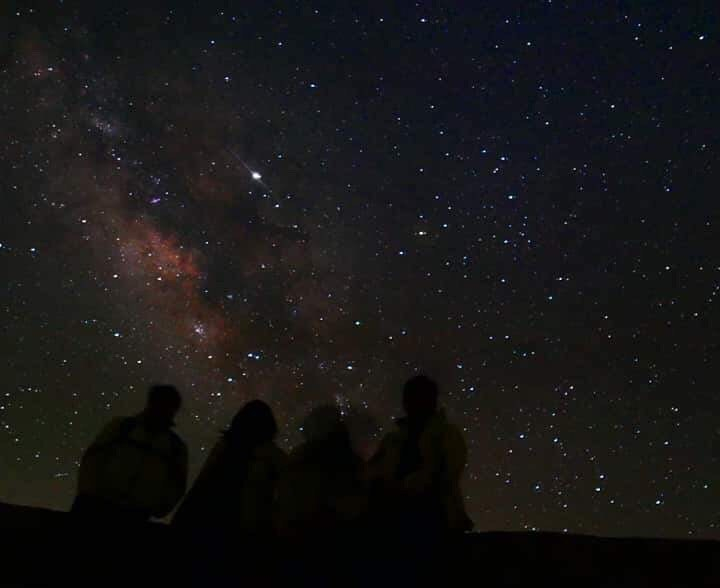
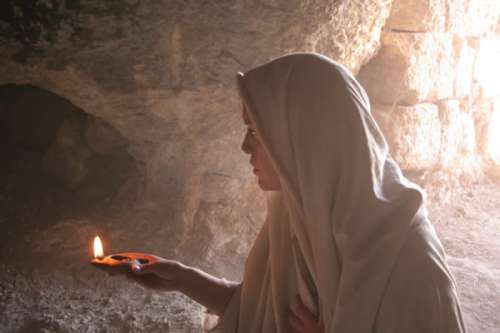
Jesus meets us in darkness.

Jesus asks us to cross to the other side of the lake or sea like his disciples in order to meet us in darkness. This is a paradox because Jesus is the light of the world.

But, note the most notable moments in his life happened in darkness: he was born on the darkest night of the year, he died when darkness covered the whole city of Jerusalem, and he rose from the dead when it was still dark on the first day of the week.

Jesus had overcome darkness! So, what happened to Peter in this episode after being called by Jesus to walk on water too?

Jesus said, “Come.” Peter got out of the boat and began to walk on the water toward Jesus. But when he saw how strong the wind was he became frightened; and, beginning to sink, he cried out, “Lord, save me!”

Matthew 14:29-30

Imagine how everything was going so well with Peter doing another crossing while crossing the lake! But when he saw how strong the wind was he became frightened; and, beginning to sink, he cried out, “Lord, save me!”

Jesus calls us into the dark so that we only look for him and upon finding him, focus on him alone. Peter saw the strong wind, not the stronger and powerful Jesus walking on water, that fear overtook him.

That’s the whole point of St. Paul in our second reading today: he was telling the Romans how some people in Israel trusted more in their physical descent from Abraham than in God’s promise of salvation fulfilled in Jesus they have refused to see and recognize as the Christ (Rom.9:1-5).

When in the dark, be silent and still for Jesus is near! Keep your sights at him, not on anything else. Problem in darkness is not God but us who follow other lights or have become delusional.

Photo by Mr. Jim Marpa, 2019.

That is the tragedy we are into as a nation while crossing to the other side of the sea of pandemic in just one boat when our officials see only themselves as always being right. Worst, they all want to be on the stage with all the lights on them as they speak and sing in cacophony like psychopaths.

All the more we must hold on tight, trust and focus in Jesus who is “now here”, not “nowhere” for he will never allow us to perish.

Let us trust Jesus overcoming all these evil, leading us to the shore. Amen.

A blessed rainy Sunday to you and your loved ones!

To be known and still be loved

The Lord Is My Chef Breakfast Recipe for the Soul by Fr. Nicanor F. Lalog II
Wednesday, Feast of St. Mary Magdalene, 22 July 2020
2 Corinthians 5:14-17 >><}}}*> >><}}}*> >><}}}*> John 20:1-2, 11-18
Painting by Giotto of the Risen Lord Jesus Christ appearing to St. Mary Magdalene from commons.wikimedia.org.

Dearest Lord Jesus Christ:

Today as I prayed on the feast of your beloved Saint Mary Magdalene, my sights were focused on your beautiful exchange of names on that Easter morning at your tomb.

It is so lovely and so deep, and very personal for all of us whom you love so much despite our many sins like St. Mary Magdalene.

When she had said this, she turned around and saw Jesus there, but did not know it was Jesus. Jesus said to her, “Woman, why are you weeping? Whom are you looking for?” She thought it was the gardener and said to him, “Sir, if you carried him away, tell me where you laid him, and I will take him.” Jesus said to her, “Mary!” She turned and said to him in Hebrew, “Rabbouni,” which means Teacher.

John 20:14-16

You called her by her name, “Mary” and she called you by your title “Rabbouni” – what a beautiful scene of two people loving each other so deeply, so truly! You – humbly and lovingly accepting the sinner, and she – submitting herself to you as disciple.

You have expelled seven demons from her, you have known her so well even her darkest secrets and sins, and despite all these knowledge, Lord Jesus, the more you have loved her that you called her by the sweetest word she could ever hear in her life, “Mary”.

The same with us, sweet Jesus: every day you call us by our names, each one of us as a person, an individual, a somebody not just a someone. You love us so much in spite and despite of everything. We are not just a number or a statistic to you but a person with whom you relate personally.

From Google.

Help us to realize this specially when darkness surrounds us, when self-doubts and mistrust abound in us without realizing your deep trust in us, in our ability to rise again in you and follow you.

Teach me to trust you more and love you more like St. Mary Magdalene, to give and offer my self to you totally as yours, calling you “Rabbouni” or Teacher and Master.

Let me give up whatever I still keep to myself, whatever I refuse to surrender so that I may enjoy the intimacy you offer me as a friend, a beloved, and a family in the Father.

What a joy indeed to be like St. Mary Magdalene, fully known and fully loved by you, dear Jesus.

May I learn to know and love others too like you so I may proclaim you to them. Amen.

When darkness becomes light

The Lord Is My Chef Breakfast Recipe, Holy Wednesday, 08 April 2020

Photo by icon0.com on Pexels.com

Tonight is “Spy Wednesday” – the night traitors and betrayers are put on the spotlight because it was on this night after Palm Sunday when Judas Iscariot struck a deal with the chief priests to hand them over Jesus for 30 pieces of silver (Mt. 26:14-16).

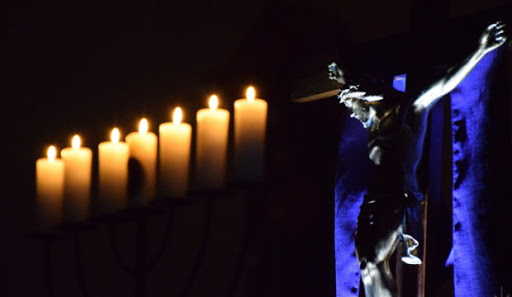
The “Tenebrae” is celebrated in some churches when candles are gradually extinguished with the beating of drums and sounding of matraca to evoke silence and some fear among people as they leave in total darkness to signal the temporary victory of evil in the world for tomorrow we enter the Paschal Triduum of Holy Thursday, Good Friday and Easter Vigil of the Lord.

From Google.

Darkness generally evokes evil and sin, uncertainties and sufferings. But, at the same time, darkness preludes light!

That is why Jesus Christ was born during the darkest night of the year to bring us light of salvation.

Beginning tonight, especially tomorrow at his agony in the garden, we shall see Christ entering through darkness reaching its climax on Friday when he dies on the cross with the whole earth covered in darkness, rising on Easter in all his glory and majesty.

Our present situation in an extended Luzon-wide lockdown offers us this unique experience of darkness within and without where we can learn some important lessons from the Lord’s dark hours beginning tomorrow evening of his Last Supper.

St. John gives us a glimpse into how we must deal with life’s darkness that plagues us almost daily with his unique story of the Lord’s washing of his disciples’ feet on the night he was betrayed.

Before the feast of Passover, Jesus knew that his hour had come to pass from this world to the Father. He loved his own in the world and he loved them to the end. The devil had already induced Judas, son of Simon the Iscariot, to hand him over. So, during supper… he rose from supper and took off his outer garments. He took a towel and tied it around his waist. Then he poured water into a basin and began to wash the disciples’ feet and dry them with the towel around his waist. He came to Simon Peter…

John 13:1-2, 4-6
Photo from aleteia.org.

It is very interesting to reflect how Judas Iscariot and Simon Peter dealt with their own inner darkness on that night of Holy Thursday when Jesus was arrested.

Though Judas Iscariot and Simon Peter are poles apart in their personalities, they both give us some traits that are so characteristic also of our very selves when we are in darkness. In the end, we shall see how Jesus turned the darkness of Holy Thursday into becoming the very light of Easter.

Getting lost in darkness like Judas Iscariot

Right after explaining the meaning of his washing of their feet and exhorting them to do the same to one another, Jesus begins to speak of Judas Iscariot as his betrayer.

When he had said this, Jesus was deeply troubled and testified, “Amen, amen, I say to you, one of you will betray me …It is the one to whom I hand the morsel after I had dipped it.” So he dipped the morsel and handed it to Judas, son of Simon the Iscariot. After he took the morsel, Satan entered him… and left at once. And it was night.

John 13:21, 26-27, 30
Photo from desiringgod.org

The scene is very dramatic.

Imagine the darkness outside the streets of Jerusalem in the stillness of the night and the darkness inside the Upper Room where they were staying.

More darker than that was the darkness among the Apostles not understanding what Jesus was saying about his betrayer because they thought when Judas left, he was being told to buy more wine or give money to the poor!

Most of all, imagine the darkness within Judas.

To betray means to hand over to suffering someone dear to you.

That’s one darkness we always have within, of betraying Jesus, betraying our loved ones because we have found somebody else to love more than them. Satan had taken over Judas. The same thing happens to us when we sin, when we love someone more than those who truly love us or those we have vowed to love always.

And the darkest darkness of all is after handing over our loved ones, after dumping them for something or somebody else, we realize deep within the beautiful light of truth and love imprinted in our hearts by our betrayed loved ones – then doubt it too!

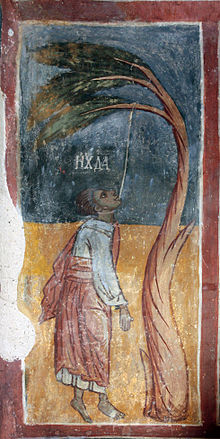
The flickering light of truth and love within is short lived that we immediately extinguish it, plunging us into total darkness of destruction like Judas when he hanged himself.

See how Judas went back to the chief priests because “he had sinned”, giving them back the 30 pieces of silver to regain Jesus.

Here we find the glow of Jesus, of his teachings and friendship within Judas still etched in his heart — the light of truth and love flickering within.

Any person along with their kindness and goodness like Jesus, our family and true friends can never be removed from one’s heart and person. They will always be there, sometimes spurting out in our unguarded moments because they are very true.

That is the darkest darkness of Judas – and of some of us – who think we can never be forgiven by God, that we are doomed, that there is no more hope and any chance at all.

See how the evangelist said it: “Judas left at once. And it was night.”

And that is getting lost in darkness permanently, eaten up by darkness within us because we refuse to believe in the reality of a loving and forgiving God who had come to plunge into the darkness of death to be one with us so we can be one in him. What a loss.

Groping in the dark into the light like Peter

Photo by author, Church of Gallicantu, Jerusalem where the cock crowed after Peter denied Jesus the third time, May 2017.

Of the Twelve, it is perhaps with Simon Peter we always find ourselves identified with: the eager beaver, almost a “bolero” type who is so good in speaking but many times cannot walk his talk.

“Master, are you going to wash my feet?” Jesus answered and said to him, “What I am doing, you do not understand now, but you will understand later.” Peter said to him, “You will never wash my feet.”

John 13:6-8

Here is Peter so typical of us: always assuming of knowing what is right, which is best, as if we have a monopoly of the light when in fact we are in darkness.

See how during the trial of Jesus before the priests, Peter denied him thrice, declaring he never knew Jesus while outside in the dark, completely in contrast with Jesus brilliantly answering every question and false accusation against him inside among his accusers!

Many times in our lives, it is so easy for us to speak on everything when we are in our comfort zones, safe and secured in our lives and career. But when left or thrown out into the harsh realities of life, we grope in the darkness of ignorance and incompetence, trials and difficulties.

How often we are like Peter refusing Jesus to wash our feet because we could not accept the Lord being so humble to do that simply because he is the Lord and Master who must never bow low before anyone.

And that is one darkness we refuse to let go now shaken and shattered by the pandemic lockdown! The people we used to look down upon are mostly now in the frontlines providing us with all the comforts we enjoy in this crisis like electricity, internet, security, food, and other basic services.


Bronze statue of the call of Peter by Jesus. Photo by author, May 2017.

We have always thought of the world, of peoples in hierarchy, in certain status where there are clear delineations and levels of importance, totally forgetting the lessons of Jesus of being like a child, of service and humility: “whoever wants to be great must be the least and servant of all.”

According to Matthew and Luke, Peter realized his sins – the darkness within him – of denying Jesus thrice after the cock crowed that he left the scene weeping bitterly, feeling so sorry. Eventually after Easter, Peter would meet Jesus again on the shores of the Lake of Tiberias, asking him thrice, “do you love me?”

Peter realized how dark his world has always been but in that instance when he declared his love that is so limited and weak did he finally see the light of Christ in his love and mercy!

Unlike Judas, Peter moved out of darkness and finally saw the light in the Risen Lord right in the very place where everything started when he was called to be a fisher of men, in his humanity as he was called by his original name, “Simon, son of Jonah, do you love me?”.

Human love is always imperfect and Jesus knows this perfectly well!

The best way to step out of darkness within us is to be like Simon — simply be your imperfect self, accepting one’s sins and weakness for that is when we can truly love Jesus who is the only one who can love us perfectly.

Overcoming darkness in, Jesus, with Jesus, through Jesus

Though the fourth gospel and the synoptic gospels of Matthew, Mark, and Luke differ in providing us with the transition from the Upper Room of the Last Supper into the agony in the garden, the four evangelists provide us with one clear message at how Jesus faced darkness: with prayer, of being one in the Father.

Even on the cross of widespread darkness, Jesus spoke only to pray to the Father.

Then Jesus came with them to a place called Gethsemane, and he said to his disciples, “Sit here while I go over there and pray.” He took along Peter and the two sons of Zebedee, and began to feel sorrow and distress.

Matthew 26:36-37
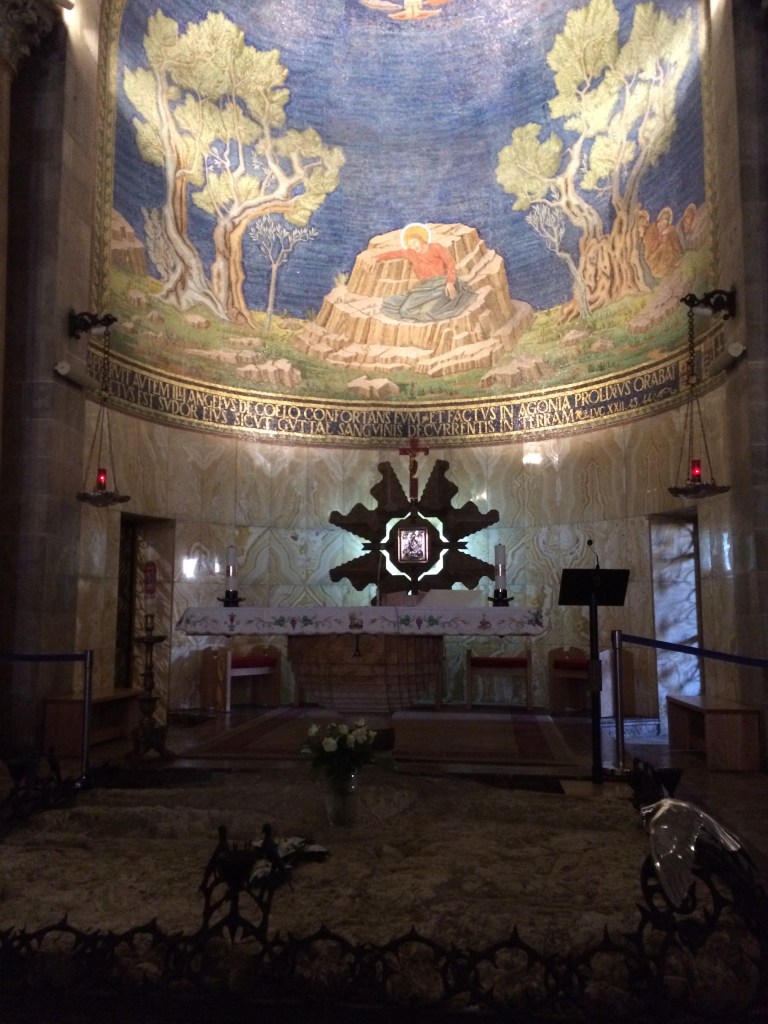
Photo by author, altar of the Church of All Nations beside the Garden of Gethsemane, May 2017. The church is always dimly lit to keep the sense of darkness during the Agony in the Garden of Jesus.

Before, darkness for man was seen more as a curse falling under the realm of evil and sin; but, with the coming of Jesus, darkness became a blessing, a prelude to the coming of light.

We have mentioned at the start of our reflection that Jesus was born during the darkest night of the year to show us he that is the light of the world, who had come to enlighten us in this widespread darkness, within us and outside us.

As the light of the world, Jesus was no stranger to darkness which he conquered and tamed in many instances like when they were caught in a storm at sea and in fact, when walked on water to join his disciples caught in another storm.

But most of all, Jesus had befriended darkness and made it a prelude to light.

How? By always praying during darkness. By prayer, it is more than reciting some prayers common during his time as a Jew but as a form of submission to the will of the Father. Jesus befriended darkness by setting aside, forgetting his very self to let the Father’s will be done.

Bass relief of agony in the garden on the wall of the Church of All Nations at Gethsemane. Photo by author, May 2019.

This he showed so well in two instances, first on Mount Tabor where he transfigured and second in Gethsemane before his arrest.

In both events, Jesus showed us the path to overcoming darkness is always through prayers, of being one in the Father.

It is in darkness when God is most closest to us because it is then when we get a glimpse of himself, of his love and mercy, of his own sufferings and pains, and of his glory.

This is something the three privileged disciples – Simon Peter, James and his brother John – did not realize while being with Jesus at both instances until after Easter. We are those three who always fall asleep, who could not keep with praying in Jesus, with Jesus, and through Jesus.

It was in the darkness of the night when Jesus spent most of his prayer periods, communing with the Father up in a mountain or a deserted place.

On Mount Tabor, Jesus showed his coming glory while in Gethsemane he showed his coming suffering and death. But whether in Gethsemane or on Mount Tabor, it is always Jesus we meet inviting us to share in his oneness with the Father, in his power in the Holy Spirit to overcome every darkness in life.

And the good news is he had already won for us!

Photo by Mr. Raffy Tima of GMA-7 News of Mt. Samat with the Memorial Cross across the Manila Bay following clear skies resulting from the lockdown imposed since March 17, 2020.

In these extended darker days of quarantine period, let us come to the Lord closer in prayer to. experience more of his Passion and Death, more of his darkness so we may see his coming glory when everything is finally cleared in this corona pandemic.

Prayer does not necessarily change things but primarily changes the person first. And that is when prayer changes everything when we become like Jesus in praying.

Jesus is asking us to leave everything behind, to forget one’s self anew to rediscover him in this darkness when we get out of our comfort zones to see the many sufferings he continues to endure with our brothers and sisters with lesser things in this life, with those in total darkness, with those groping in the dark.

Now more than ever, we have realized the beauty of poverty and simplicity, of persons than things.

And most especially of darkness itself becoming light for us in this tunnel.

May Jesus enlighten us and vanish all darkness in us so that soon, we shall celebrate together the joy of his coming again in this world darkened by sin. Amen.

A blessed and prayerful Paschal Triduum to you.

Sharing the light of Christ

The Lord Is My Chef Recipe for the Soul, Sunday Week V-A, 09 February 2020

Isaiah 58:7-10 ><)))*> 1 Corinthians 2:1-5 ><)))*> Matthew 5:13-16

Our parish cross at night, taken with my camera phone, 02 February 2020.

For most of us, 2020 is a very tough year with all the dark clouds that have come to hover above us in January remain in this month of February.

Threats from the corona virus are growing especially in our country. And while the alert level at Taal Volcano had gone down, dangers of its major eruption remain while volcanologists observed last week a “crater glow” on Mayon Volcano, indicating a possible rising of magma in the world’s most perfect cone.

Elsewhere, more bad news are happening like the sudden deaths this week of healing priest Fr. Fernando Suarez and of our very own and beloved Fr. Danny Bermudo, just 24 hours apart due to heart attacks.

In our own circles of family and relatives, friends and colleagues are also dark clouds covering us while we go through our many trials and tests in life that seem to eclipse this early the many gains we have achieved in the whole of 2019.

Indeed, year 2020 shows us in “perfect vision” the sad realities of dark spots in life that behoove us more to heed Christ’s call to be the light of the world.

Jesus said to his disciples: “You are the light of the world. Just so, your light must shine before others, that they may see your good deeds and glorify your Heavenly Father.”

Matthew 5:14, 16
Photo by author, frost on petals, Baguio City, 04 February 2020.

Jesus is the light of the world, not us

Our gospel this Sunday follows immediately the inaugural preaching of Jesus called “the Sermon on the Mount” with the Beatitudes at its centerpiece. We have skipped that part of the gospel last Sunday due to the celebration of the Feast of the Presentation of the Lord.

For us to better appreciate this Sunday’s gospel, let us keep in mind that for Matthew, the Sermon on the Mount is the great discourse of Jesus Christ that depicts his image not only as the new Moses but as the Law himself, being both our Teacher and Savior as well.

Jesus shows us a picture of his person in the Beatitudes as someone we must imitate in being “poor in spirit, meek, and merciful” so we can follow his path to the Father. After all, as the Son of God, Jesus is “the way, the truth, and the life” (Jn. 14:6).

Hence, after enumerating the nine Beatitudes, Jesus followed up his Sermon on Mount with a call for us to be the salt and the light of the world: as salt, we merely bring out the Christ or the taste in every person and as light, it is the light of Christ that we share.

Focus remains in being like Jesus, not in replacing him who is our Savior. That is why he tells us clearly before shifting to another lesson in his Sermon that “your light must shine before others, that they may see your good deeds and glorify your Heavenly Father” (Mt.5:16).

Sharing Christ’s light with our good deeds as a community

So, how do we share the light of Jesus Christ in this age when so many others are claiming to be the light that will dispel all darkness in our lives?

As early as during the darkest period in the history of Israel in the Old Testament called the “Babylonian Captivity (or Exile)”, God had taught his people how to become light for one another during trials and sufferings.

Christ Light of the World, Red Wednesday, 27 November 2019. Photo by author.

Thus says the Lord: Share your bread with the hungry, shelter the oppressed and the homeless; clothe the naked when you see them, and do not turn your back on your own. Then your light shall break forth like the dawn… if you bestow your bread on the hungry and satisfy the afflicted; then light shall rise for you in the darkness, and the gloom shall become for you like midday.

Isaiah 58:7-8, 10

To share one’s bread with the hungry, to welcome the homeless, to clothe the hungry are some of the most concrete demands placed by God to his people since he had freed them from slavery in Egypt and later in Babylonia (Iraq today) when the third part of the Book of Isaiah was written.

Eventually, this prophecy was fulfilled in Jesus Christ who also preached exactly the same things shortly before fulfilling his mission in Jerusalem when he stressed the need to do good to one another because “whatsoever we do to one another, especially to the least among us, we also do unto him” (Mt.25:31-40).

We shall hear this part of Matthew’s gospel at the end of our current liturgical year on November 22, 2020 in the celebration of the Solemnity of Christ the King.

These instructions became the basis of our catechism’s “spiritual and corporal works of mercy” that Pope Francis stressed in 2016 during the Extraordinary Jubilee of Mercy.

From fathersofmercy.com

By saying “you are the light of the world”, Jesus is telling us that to fulfill this mission, we have to do it together as a community, as his Body, the Church!

No matter how good and holy we are, none of us is the “light of the world” on our own.

One candle or lamp, or even a light bulb today cannot produce enough light to brighten a whole town or community. But, if one Christian will be lighting just one little candle in the dark, he or she can encourage others especially those who are timid, hesitant, and indifferent until they finally set the world ablaze with Christ’s light.

Christ’s call to be the light of the world is also a call for us to be united as one community, one family, one faithful couple with all our imperfections and sinfulness. What matters is our striving to be good disciples, always charitable to one another as brothers and sisters in Christ.

Here we find the direct relationship of mission and community: every mission given by Jesus is also a call to become a community because without it, it soon becomes a cult centered on the disciple than the Lord.

Photo by Mr. Jim Marpa, 2018.

The example of St. Paul in sharing Christ’s light

St. Paul shows us the best example of being a light of Jesus is to always have it done and fulfilled in the context of a community, of the Church as the Body of Christ, avoiding chances of grabbing the light from him for personal gains.

“I came to you in weakness and fear and much trembling, and my message and my proclamation were not with persuasive words of wisdom, but with a demonstration of Spirit and power, so that your faith might rest not on human wisdom but on the power of God.”

1 Corinthians 2:3-5

It has always happened especially for us serving in the Church that in sharing the light of Christ, we get carried by our ministry and apostolate that we forget him until we claim being the light ourselves.

Sometimes, we consciously or unconsciously create clouts and personality cults for ourselves for being the best, the brightest, even the holiest and most humble of all!

We foolishly brag the great buildings and edifices we have built or the countless malnourished kids we have fed or sent to school for free through college, et cetera, et cetera, et cetera without being bothered at all where is Jesus Christ in all our efforts and projects!

How sad when we forget that what matters most in life is not what we have done or what we have achieved but what have we become as bearers of the light of Christ like St. Paul.

My dear friend, if you are going through many darkness in life today, simply be good, think only of Jesus Christ in everybody you meet and deal with. That is actually when you shine brightest as the light of Christ because people will be surprised at how calmly and gracefully you carry your cross.

In that way, you encourage others living in darkness to let their little sparks of light come out too without realizing how in their own darkness and limitations they have made Christ’s light seen. Amen.

Have a bright and blessed Sunday with your loved ones!

Following Jesus, our true Star

The Lord Is My Chef Sunday Recipe of the Epiphany of the Lord, 05 January 2020

Isaiah 60:1-6 ><}}}*> Ephesians 3:2-3, 5-6 ><}}}*> Matthew 2:1-12

From Google.

A very blessed Merry Christmas to you, my dear reader and follower! As I have been insisting to you since January first, we are still in the Christmas Season as we celebrate today the Solemnity of the Epiphany of the Lord.

It is the third major celebration of Christmastime after the Nativity of the Lord (December 25) and Mary Mother of God (January 01).

In some parts of the country especially the countrysides, they regard Epiphany in equal standing with Christmas, calling it “Three Kings Sunday” known as “Pasko ng Magsasaka” (Christmas of Farmers).

So, please, do not cut the Christmas Season short and stop greeting others with a happy new year.

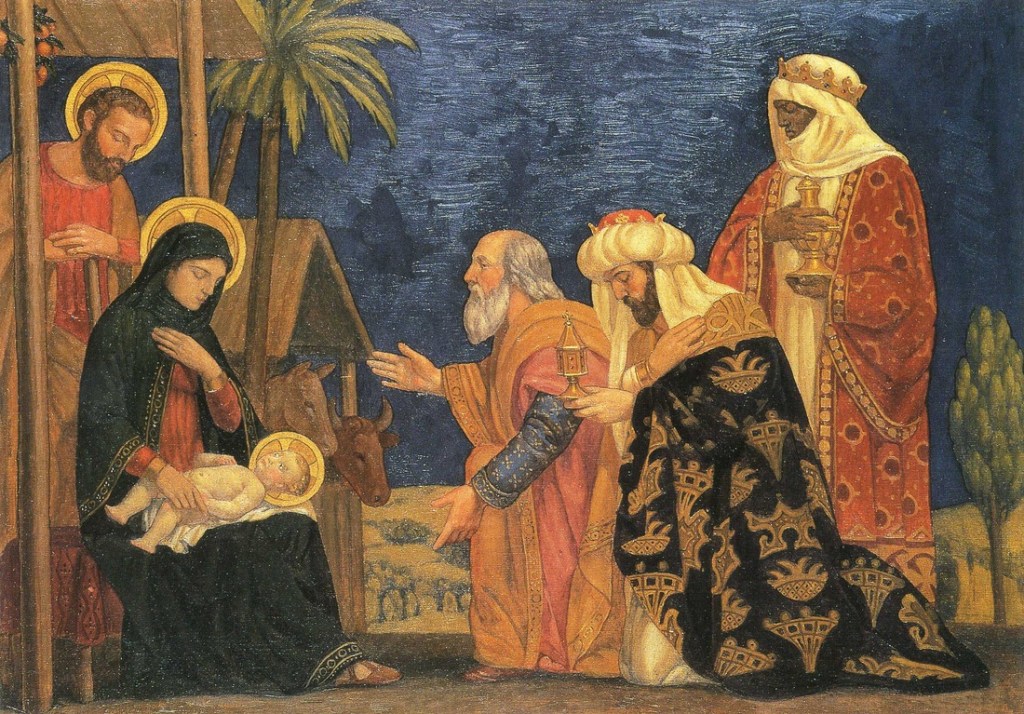
When Jesus was born in Bethlehem of Judea, in the days of King Herod, behold, magi from the east arrived in Jerusalem, saying, “Where is the newborn king of the Jews? We saw his star at its rising and have come to do him homage.” When King Herod heard this, he was greatly troubled, and all Jerusalem with him.

Matthew 2:1-3
From Google.

Jesus Christ is our one and only true Star

Epiphany is from the Greek word epiphanes that means revelation or manifestation of our Lord Jesus Christ to the whole world symbolized by the “magi” or wise men from the East.

While there are many sources that confirm to us both in history and tradition that the magi were from Persia (Iran) who have truly paid homage to the Infant Jesus, evidence pointing to the reality of the star of Bethlehem are still scarce but slowly developing.

Though it is still important to establish the factual basis on the existence of the star of Bethlehem, we who believe in Jesus Christ need to focus more on the theology behind this detail from Matthew’s Christmas story which refers to the Lord himself.

We all search for a “star”, something great and noble in life.

It is a given, a gift that every person is capable of rising above one’s self for something lofty and greater than himself/herself.

Too often, we pursue stars that are so common and ordinary – perhaps low and dull ones – like wealth and fame. Eventually we mature that we follow bigger and more luminous stars that are higher and found deeper in space so to speak like wisdom and peace within.

But no matter what we search in life, whatever star we follow, the saints and our faith teach us how we all desire and long only for the one and only true star of all, Jesus Christ.

St. Benedicta dela Cruz (Edith Stein) said that “anyone who seeks the truth eventually finds God” while the great St. Augustine eloquently wrote in his Confessiones, “You have made us for yourself, O Lord, and our heart is restless until it rests in you.”

Pope Emeritus Benedict XVI beautifully said it in one of his books:

“The key point is this: the wise men from the east are a new beginning. They represent the journeying of humanity toward Christ. They initiate a procession that continues throughout history. Not only do they represent the people who have found the way to Christ: they represent the inner aspiration of the human spirit, the dynamism of religions and human reason toward him.”

Jesus of Nazareth, The Infancy Narratives (page 97)
Old Jerusalem, May 2017. Photo by author.

Lessons of the Magi

Last January first, we reflected how we must make that conscious decision to empty ourselves of our pride to be filled with the Holy Spirit so we can bring Jesus into the world today like Mary the Mother of God.

Today on this Solemnity of the Epiphany of the Lord, we are invited to imitate the magi, to be wise men too in continuing the beautiful Christmas story by always seeking, following and submitting ourselves to Jesus Christ, our only true star in life.

There are three important lessons we can learn from the magi in being truly wise to seek and follow Jesus:

First, welcome darkness and chaos in life. The most life-changing and enriching moments we have are also the most adversarial ones. Remember the “AQ” or adversarial quotient experts are now proposing as true indicators of success in life?

More than success is fulfillment which we desire most when we are in desolation, when we are in the middle of a storm and trial in life, when we are in darkness.

Rise up in splendor, Jerusalem! Your light has come, the glory of the Lord shines upon you. See, darkness covers the earth, and the thick clouds cover the peoples; but pon you the Lord shines, and over you appears his glory.

Isaiah 60:1-2

In the gospel, we have heard how “King Herod was greatly troubled, and all Jerusalem with him” (Mt.2:3) upon hearing from the magi the birth of “the newborn king of the Jews” signified by the star they saw from the East.

Troubles and chaos are great motivators for us to seek better things like meaning in life!

Pilgrims entering through the narrow door of the Church of the Nativity in Bethlehem, May 2019. Photo by author.

Second, dark moments in life are are an invitation to pray more, especially in meditating the Sacred Scriptures, the word of God.

Assembling all the chief priests and the scribes of the people, Herod inquired of them where the Christ was to be born. They said to him, “In Bethlehem of Judea, for thus it has been written through the prophet…

Matthew 2:4-5

The bible is the word of God and when we pray it, it is God himself who speaks to us directly. It is not enough to read and study the Sacred Scriptures like the scribes and chief priests summoned by King Herod.

They knew the book but refused to recognize the Author, God himself.

The scribes and chief priests got it right that the Christ was born in Bethlehem but were not wise enough to join the magi in paying homage to him.

Prayer is a call to communion with God that requires humility and total surrender of self which leads us to lesson number three in following Jesus our true star in life.

From Google.

Third and last but not least lesson from the magi is what are you willing to give in order to follow the Star, Jesus Christ?


The magi from the East were rightly called wise men because they knew very well the most important things in life, the most essential. They did not merely leave the comforts of their home and country to follow the star of Bethlehem.

They were willing to give up so many things just to find Jesus Christ!

This 2020, many of us are having new year’s resolutions, so many plans and dreams and aspirations in life.

It is always good to reach for the stars but we must always keep our feet on the ground as Casey Kasem would always say at the end of his American Top 40 program during the 80’s.

And keeping those feet on the ground is working hard for our dreams with a lot of sacrifices. Keeping feet on the ground is doing all the hard work and avoiding shortcuts.

The magi did not mind going into Jerusalem, asking around amid dangers of suspicions from the powerful, just to find Jesus Christ. Most of all, they have brought gifts with them, precious commodities of that time to signify their sincerity in finding and following Jesus.

How about us today, in this age that is marked with so may people feeling entitled to everything in life?

This early in his Epiphany, Jesus is already showing us the path we have to follow, the way of the Cross, of forgetting one’s self, of setting aside our ego, of letting go and letting God.

Unless we are able to forget our ego, we can never imitate the magi in being wise “to depart for their country by another way” (Mt.2:12) to avoid King Herod.

That is the ultimate indication of being wise, that after finding Wisdom, we change our ways, our lives and live in Jesus Christ, the Holy One. Amen.

Merry Christmas!

From Desicomments.com. Last line should be “Lift our eyes”, not “Life”.

Up close and personal

The Lord Is My Chef Sunday Recipe, Week XXIII-C, 08 September 2019

Wisdom 9:13-18 ><)))*> Philemon 9-10, 12-17 ><)))*> Luke 14:25-33

Photo by Ms. Jo Villafuerte at Atok, Benguet, 01 September 2019

“A loveless world is a dead world, and always there comes an hour when one is weary of prisons, of one’s work, and of devotion to duty, and all one craves for is a loved face, the warmth and wonder of a loving heart.”

Albert Camus, “The Plague”

I always tell people not all days are bright and sunny but, there comes a time when we are so down, when all is so dark and even hopeless that the only thing left for us is to believe, to hope, and to love.

There is really nothing we can do except to patiently wait for the storm to pass while we suffer alone and cry alone. That is when we are surprised and even shocked at how the gospel of Jesus and the commandments of God can sometimes be so rigid that we want it modified even a little because we want to get even, we want to fight back. If we are not busy thinking of revenge, we complain, asking God why me who should suffer?

But, the more we pray and submit ourselves to God, the more we realise that God’s ways are not our ways. That despite the difficulties, we feel deep inside God is with us, guiding us, leading us to something better!

“Who can know God’s counsel, or who can conceive what our Lord intends? Or who ever knew your counsel, except you had given wisdom and sent your holy spirit from on high? And thus were the paths of those on earth made straight.”

Wisdom 9:13, 17-18
Photo by Ms. Jo Villafuerte at Atok, Benguet, 01 September 2019

Here we find the importance of Christ’s teaching last Sunday, of the need to be humble, to be our true selves by being where we should be for “those who humble themselves will be exalted and those who exalt themselves shall be humbled.”

It is in our poverty, in our weakness, even in our incomprehension when the Holy Spirit works well to reveal to us the higher realities of life often wrapped in every pain and suffering we go through. And that is why sometimes in life, it is best to be unreasonable when the only explanation and justification we can have in still being loving and forgiving, merciful and understanding, kind and patient is the person of Jesus Christ.

“If any one comes to me without hating his father and mother, wife and children, brothers and sister, and even his own life, he cannot be my disciple.”

Luke 14:26
Photo by the author, Holy Family Chapel, Sacred Heart Novitiate (Novaliches), July 2016.

Our gospel today is a continuation of last Sunday when Jesus was invited to a Sabbath dinner by a Pharisee. After giving them some “table talks”, Jesus told them another parable about the great feast to stress that God’s mercy is so vast that there is room for everyone in heaven.

People started to follow him after that meal and lesson on heaven, wanting to become his followers and disciples. To further motivate them in following him, Jesus challenged them with these powerful words using a figure of speech. The word “hate” may be too strong and harsh but such is the gravity of discipleship: we have to lose our very selves even those dearest to us when we have to see everything and everyone in the person of Jesus. To “resolutely follow Jesus in his journey to Jerusalem”, we must be ready to be totally his with him alone as the basis in every decision that can be sometimes foolish like St. Paul who claimed in one of his writings he was a fool for Christ!

See the “foolishness in Christ” of this great apostle: St. Paul was in prison at Rome awaiting trial and judgement. A slave named Onesimus escaped his Christian master named Philemon. It was definitely against the law to harbor escaped slaves yet St. Paul welcomed Onesimus in his prison as his companion and servant! More than that, without really knowing him well, St. Paul baptised Onesimus to become a Christian!

Imagine St. Paul’s adherence to the gospel of Christ even to the point of being unreasonable when he could have just told Onesimus to go back or go somewhere else and spare him all the troubles! But no. It was very clear with St. Paul in asking Philemon to receive Onesimus back that he was not sticking to any moral standards or laws but solely on the person of Jesus Christ, in our communion in him as brothers and sisters.

“Perhaps this is why he was away from you for a while, that you might have him back forever, no longer as a slave but more than a slave, a brother, beloved especially to me, but even more so to you, as a man and in the Lord. So if you regard me as a partner, welcome him as you would me.”

Philemon 15-17
Photo by Ms. Jo Villafuerte at Atok, Benguet, 01 September 2019.

Next Sunday we shall hear the very long but beautiful parable of the merciful father also known as parable of the prodigal son. Like God our Father, the merciful father would reassure his two sons of his immense love for them despite their sins because of their very persons as his sons.

Today in our Sunday Eucharist, Jesus welcomes us all as persons, his brothers and sisters despite our sins and weaknesses. Like Mary whose birth we also celebrate today inspire us to receive Jesus our Savior in his total person in ourselves by receiving the persons around us in him. Amen.