The Lord Is My Chef Breakfast Recipe for the Soul by Fr. Nicanor F. Lalog II
Monday, Week XVI, Year I in Ordinary Time, 19 July 2021
Exodus 14:5-18   ><]]]'> ><]]]*> ><]]]'>   Matthew 12:38-42
Photo by Mr. Raffy Tima of GMA7-News, June 2020.
What a beautiful day to reflect
on your very unusual ways, O God our Father;
once again, there is that issue of
being lost in our readings today:
your people have to take a long and
circuitous route out of Egypt
going to your Promised Land only to be
caught up near the Red Sea by
their former masters pursuing them
to take them back to slavery.
But Moses answered the people,
"Fear not!  Stand your ground,
and you will see the victory
the Lord will win for you today."
Then the Lord said to Moses,
"Why are you crying out to me?
Tell the children of Israel to go forward.
And you, lift up your staff and,
with hand outstretched over the sea,
split the sea in two, that the children
of Israel may pass through it
on dry land." (Exodus 14:13,15-16)
Yes, dearest God our Father,
sometimes we need to get lost
in order to find you and one's self;
we have to be led to unfamiliar routes
and places and situations in life for indeed,
complacency breeds contempt.
Set us free from our routines and
own ways of thinking and doing
 that have unconsciously enslaved us
that we no longer trust you.
Teach us to "stand our ground"
like when Moses answered his
people amid their many complaints
that we may be consistent with our
desires to be truly free and fulfilled.
Teach us to "go forward"
as you commanded your people
to cross the Red Sea and believe in you,
follow your lead to experience
your great power and wonders.
He said to them in reply,
"An evil and unfaithful generation
seeks a sign, but no sign
will be given it except
the sign of Jonah the prophet."
(Matthew 12:39)
Forgive us, dear Jesus
in seeking so many signs from you,
doubting you, mistrusting you
despite all the love and mercy
and blessings you have showered us.
When we are lost in the many
trappings of this world,
help us find our way back
home to you, to rest anew
in your gentle mercy and love.  Amen.
The Lord Is My Chef Breakfast Recipe for the Soul by Fr. Nicanor F. Lalog II
Wednesday, Week XIV, Year I in Ordinary Time, 07 July 2021
Genesis 41:55-57; 42:5-7, 17-24   ><)))*>+><)))*>  Matthew 10:1-7
It is only now have I realized,
Lord, how far we have been travelling
in this life
and how often have we
truly asked you for directions;
so often in life
off we go where our desires
and plans lead us
deciding on our own
charting our own maps,
asking directions from everybody,
even non-persons like Google and Waze
and still get lost
for we never asked you directions
nor followed your direction.
When hunger came to be felt
throughout the land of Egypt
and the people cried to Pharaoh for bread,
Pharaoh directed all the Egyptians to
go to Joseph and do whatever he told them.(Genesis 41:55)
Jesus sent out these Twelve
after instructing them thus,
"Do not go into pagan territory or
enter a Samaritan town.
Go rather to the lost sheep of the house of Israel."(Matthew 10:5-6)
Go where, O God?
Go to persons, go to people.
Go to those with integrity and faith in you
like Joseph your servant sold to Egypt
by his own brothers.
Go to those lost and hurting,
to those who were one with us
but left us because we have hurt them
or taken them for granted
or have abandoned them.
Let us go, dear God,
where you desire us to bring you
to share you.
And find YOU.
 Amen.
Quiet Storm by Fr. Nicanor F. Lalog II, 02 July 2021
Genesis 23:1-4, 19-24:1-8, 62-67   ><}}}'> + <'{{{>< Matthew 9:9-13
Congratulations, my dear Senior High School graduates of Our Lady of Fatima University Batch 2021. Yes, you hold the distinction of belonging to the first graduates of the pandemic who persevered, who were not daunted by COVID-19 that continues to plague us after more than a year of altering our lives.
Take pride in belonging to this batch because you have just proven you are the right people in the right time at the right place called by God to witness his truth and mercy, our university motto, “Veritas et Misericordia”.
Too often we pray God would send us the right person to become our friends and colleagues at work or project, or simply our co-journeyer in this life – perhaps lovers – without realizing we are in fact the right person being called and sent first by God in the right place, at the right time.
This was the experience of Matthew in our gospel today:
As Jesus passed by, he saw a man named Matthew sitting at the customs post. He said to him, “Follow me.” And he got up and followed him.
Matthew 9:9
“Calling of St. Matthew” painting by Caravaggio from en.wikipedia.org.
Let me tell you a beautiful story about the call of St. Matthew as depicted in a painting by the renowned artist named Caravaggio during the 1600’s in a chapel in Rome. It is one of the favorite paintings of Pope Francis who claims he used to see it while a student in Rome and later as the Cardinal of Buenos Aires whenever he would go to the Vatican.
Caravaggio’s painting is very unique and amusing especially in the way he would play with lights and darkness like in that other famous painting of the meeting of the Risen Lord and doubting Thomas eight days after Easter. This contrast of light and darkness is very evident in painting the call of Matthew by Jesus.
Very interesting is the kind of clothes the characters wear in this painting: notice how Caravaggio portrayed Matthew, the bearded man with a beret and his companions at the table wearing the expensive clothes of the Middle Ages while Jesus and Simon Peter are in their traditional garments and – barefooted! The room looks like a tavern of Caravaggio’s time than a customs house as narrated by Matthew during the time of the Lord in Galilee.
All of this because Caravaggio was fond of incorporating biblical scenes into his milieu to show the relevance of Christ in their time.
And that is also the reason why I share this painting with you: aside from being the gospel on this first Friday of the month, I find its story so relevant with you Senior High School students and graduates.
When you look at the painting, it is like a video happening in split seconds,
very much like that photo taken in the live mode of an iPhone
with the picture moving a little,
wondering if Matthew would stand and leave to follow Jesus.
When you look at the painting, it is like a video happening in split seconds,
very much like that photo taken in the live mode of an iPhone
with the picture moving a little,
wondering if Matthew would stand and leave to follow Jesus.
From en.wikipedia.org.
See Matthew and company seated at the dark side of the room with Jesus standing near the window partially washed by lights specifically his face and hand with finger pointed towards Matthew whose face is clearly lighted, evidently hesitant, asking Jesus if he were referring to him or to the one slumped on the table. Notice the bright face of Matthew and his index finger pointing to the man beside him, his thumb to himself as if asking “is it I, Lord?” or “who, me?” while his other hand is holding a coin on the table.
So beautiful as it evokes the hesitancy of Matthew and certainty of Jesus!
That is how we have felt this first year of COVID-19, the Academic Year 2020-2021, your batch: there is our hesitancy and uncertainty, fears and anxieties in life, of going back to school or not, of where to get money or laptop or reliable internet service while deep inside us, we felt the Lord so certain in his plans for us, in his love and mercy, that we can “rise to the top” here at Fatima University!
We are the ones always doubting, asking Jesus if he were talking or calling us because we cannot let go of that “coin” Matthew is holding on in the painting symbolizing the materials things and persons on whom we put our trust instead of having faith in God alone.
Doubt no more, my dear graduates of the COVID-19 batch of 2020-2021! You are the right person in the right place – Our Lady of Fatima University – at the right time, Academic Year 2020-2021 on the first year of COVID-19 pandemic.
Jesus is telling you today as he fills you with his light
of truth and mercy in finishing Senior High School in our beloved University
that you are indeed the right people called in the right place at the right time.
Will you "rise to the top" to pursue further studies
to achieve your dreams in this time of the pandemic?
Jesus is telling you today as he fills you with his light of truth and mercy in finishing Senior High School in our beloved University that you are indeed the right people called in the right place at the right time. Will you rise to the top, pursue further studies to achieve your dreams in this time of the pandemic?
Come and follow Jesus, make your dreams come true here with us in Our Lady of Fatima University for we do not stop seeking ways in dealing with the pandemic with our innovative classes and curriculum. We are the first university approved by the government to conduct limited face-to-face classes in our medical courses.
Like Abraham in the first reading from Genesis, trust God that he will send you his messenger, that he will send you people who will be teaching and preparing you for the post-pandemic period while journeying with you, learning with you in this time of the COVID-19.
Amid the darkness of our time like Caravaggio’s painting, do not fail to see the light brightening the scene, getting intense on the face of Matthew and people around him with Jesus looking intently on you, making sure you do not get sick, that you rise and follow him in pursuing your dream.
Don’t worry, my dear graduates, your Rebekah or your Isaac will surely come along the way but at the moment, Jesus wants you to finish your studies first.
Study hard, work harder, and pray hardest! See you in August!
Homily by Fr. Nicanor F. Lalog II
Baccalaureate Mass, Basic Education Department
Our Lady of Fatima University, 16 June 2021
From IgnitedToInspire.com
Congratulations! Today, everyone deserves a warm round of applause, a pat on the shoulder and perhaps, a little treat after our Mass for making it through the Academic Year of the pandemic, 2020-2021.
Most likely while you were chilln’ after your final exams last Wednesday evening, you have seen and heard this great woman of America’s Got Talent, Nightbirde who mesmerized us not only with her voice but most of all with her infectious joy and presence on the stage.
Her words last week are the most quoted in social media even in our Masses last Sunday: “You can’t wait untillife isn’t hard anymore before you decide to be happy.”
She connected so well with us because there is a little Nightbirde in each one of us when we look back to this past academic year when the pandemic happened before we ended classes last year and did not have any Baccalaureate Mass in our University.
Despite the uncertainties and fears and apprehensions due to COVID-19 , we decided to be happy.
We did not wait “until life isn’t hard anymore” to go back to school despite the enormous challenges and adjustments we all have to go through: parents, teachers and faculty, University admin, and most especially you, our dear students.
And if there is one most important lesson we have learned in this past academic year of the pandemic, it is GOD.
Yes!
Like Nightbirde, we have realized how God never abandoned us, always with us, loving us, silently working for us even with just 2% chance of surviving cancer or COVID or passing an exam.
St. Paul said it so well in our first reading:
Moreover, God is able to make every grace abundant for you, so that in all things, always having all you need, you may have an abundance for every good work. You are being enriched in every way for all generosity, which through us produces thanksgiving to God.
2 Corinthians 9:8, 11
The Lord never failed in providing us with all that we need, even during this pandemic.
Let us be open to more of his grace by trusting him more, and sharing his blessings with others.
Dare to “rise to the top” amid the pandemic and other challenges in life!
We did not wait
"until life isn't hard anymore"
to go back to school
despite the enormous challenges
and adjustments we all have to go through:
parents, teachers and faculty,
University admin, and most especially you,
our dear students.
From Our Lady of Fatima University/FB.
God never abandoned us this year. We are still alive and we are now moving up, advancing in our pursuit for education. Some of us may have lost a loved one, others were left behind due to many reasons but we celebrate today our achievements made possible by God.
He is the most important lesson we have learned this year of COVID-19: only God suffices. Without God, we are nothing.
What would our lives be today if we all waited last year for the pandemic to be over to resume classes?
And the good news is, God is assuring us today in this Baccalaureate Mass that he shall be blessing you more this coming academic year 2021-2022.
There will surely be a lot of challenges awaiting us, even more difficult but rest assured that if you were able to complete your Prep or Kindergarten, Elementary or Junior High and Senior High stage, there is nothing you cannot do now!
Lahat kakayanin ninyo huwag lang kayong bibitiw sa Diyos!
God has beautiful plans for you despite this pandemic. Persevere and remain in him.
Study hard,
work harder,
pray hardest!
I have one assignment to give you my dear students as you go on your academic break this June: continue studying, continue praying.
Try to get a copy of a book called “Imitatio Christi” or the Imitation of Christ written around the years 1418-1427 by the German-Dutch monk named Thomas á Kempis.
Don’t worry… it is available in the internet and it is an excellent devotional book. You won’t regret reading it. In fact, next to the Bible, the Imitatio Christi is the other leading devotional book in Christianity.
His reflections are very timely and relevant especially in this time of COVID when he said that what matters most is that we love the Giver – God – and not the gift because God is the source of all good things in life.
A wise lover values not so much the gift of the lover, as the love of the giver. He esteems the affection above the gift, and values every gift far below the Beloved. A noble lover is not content with a gift, but desires Myself above all gifts.
Imitation of Christ, Book III, Part VI, “Of the proving of the true lover” by Thomas á Kempis (d. 1471)
Study hard,
work harder,
pray hardest!
From Pinterest.com
Do not forget amid the many gifts we have received this year of pandemic is the giver of these gifts, God.
When you have God, you have everything. And you can do everything.
Fall in love with God.
So many times in our lives especially when we are still young and strong, we forget God, wasting our lives and precious time with less important things.
We do not realize that God alone is the one whom we must always seek and have in life because he alone loves us truly to whom alone we must always turn to.
To fall in love with God is to cultivate a prayer life, to be a man or woman of prayer.
When you love somebody, you always talk to that person.
If you love God, then you will always pray.
God loves you very much. He believes in you. He knows what you need even before you ask him.
What we do not know is what God wants from us. That is why we have to pray in order to learn what are the plans of God for us this coming academic year 2021-2022.
“When you pray, do not be like the hypocrites, who love to stand and pray in the synagogues and on street corners so that others may see them. Amen, I say to you, they have received their reward. When you pray, go to your inner room, close the door, and pray to your Father in secret. Your Father who sees in secret will repay you.”
Matthew 6:5-6
God is the best and most loving teacher of all. His lessons are always practical and personal. That is the meaning of “entering your inner room” – go into your heart and there you shall meet God, always waiting for you, eager to listen to you and speak to you about his love and plans for you.
He only has one lesson plan: love, love, love.
See how during the pandemic even the most powerful nations were crippled by COVID-19. Even until now these vaccines we have are not an assurance of being safe from the virus. We do not even know its other side effects.
We still have to hurdle so many problems this year.
Problem is we refuse to see that this pandemic is also spiritual in nature, not just medical and social.
Let us learn our lesson very well – God.
And so, I ask you again, my dear students to work hard, study harder and pray hardest this coming Academic Year 2021-2022 to achieve your dreams and realize God’s great plans for you in the future, now. Amen.
God bless you all!
Photo by Mr. Red Santiago of his son praying in our former parish at Bagbaguin, Sta. Maria, Bulacan, 2019.
40 Shades of Lent by Fr. Nicanor F. Lalog II
Ash Wednesday, 17 February 2021
It is Lent again, Lord;
forty days of prayer
forty days of sacrifices
forty days of good works
forty days of silence and self-control
forty days of preparations for Easter.
Forgive us that we always forget our daily life
is essentially a daily Lent:
a daily exodus of going to the wilderness
filled with temptations
and calls for fidelity
to your love and person.
In this time of COVID-19
when so many of us are suffering,
help me, O Lord
not to be carried by feelings
and emotions of the Lenten Season;
give me the courage to see
beyond ordinary things,
to care more and share
even with the least that I have,
to find more reasons
to forgive and understand
most of all, to be fair and just with everyone.
Let me find my way back to you, Lord
in this time when everything and everyone I have
is quickly disappearing or have been gone or lost;
despite the face masks we wear,
let me look more into the eyes
of others to see your image and likeness;
let me wash my hands clean of evil and deceit
as I keep distance from occasions of sins
and most of all, let me empty myself of pride
to realize and experience again
my one and only, first true love is you,
alone, O dearest God.  Amen.
Photo by author, Pulilan bypass road in Bulacan, February 2020.
The Lord Is My Chef Breakfast Recipe for the Soul
Tuesday after the Epiphany of the Lord, 05 January 2021
1 John 4:7-10     >><)))*>  +  <*(((><<     Mark 6:34-44
Photo by author, 12 December 2020.
Dearest God our Father:
Today my heart has only two things to say:
First is, “Thank you for being love, for loving me!”
Beloved, let us love one another; because love is of God; everyone who loves is begotten by God and knows God. Whoever is without love does not know God, for God is love.
1 John 4:7-8
Pope Emeritus Benedict XVI wrote in his first encyclical Deus caritas est which was taken from this letter of the beloved disciple, that, what makes Christianity so unique of all other faith is the statement, God is love.
Indeed, in all the stories told about you in the Bible, in all our experiences in life, there is only one thing you have shown and given us from the very beginning that shall continue in eternity — LOVE.
The very coming of your Son Jesus Christ is all because of LOVE. Christmas is a story of love. Epiphany is also love.
It is all love, love, love… dear God! Please open our hearts, our senses to experience this love of yours you continue to pour upon us. Touch our hearts, open our minds, let us stop denying this truth that we are loved by You.
And so, my second prayer to you today is this: as a sign of thanksgiving, let me to share your love. Let me love like Jesus your Son, thinking more of others than myself – so unlike his apostles who wanted to send home the crowd hungry, worried at where to find food for them:
By now it was already late and his disciples approached him and said, “This is a deserted place and it is already very late. Dismiss them so that they can go to the surrounding farms and villages and buy themselves something to eat.”
Mark 6:35-36
Just for me to start thinking and feeling and acting like you when you saw the crowd like sheep without a shepherd (Mk.6:34, 37), worried for their spiritual and material hunger that you taught them so many things and then fed them with food is a good lesson to start loving like you.
O dear Jesus, fill me with your warmth and enthusiasm whenever I would look at you on the Cross so I may pass on the love you have given me to others. Amen.
The Lord Is My Chef Breakfast Recipe for the Soul by Fr. Nicanor F. Lalog II
Monday, Feast of St. Matthew, Apostle and Evangelist, 21 September 2020
Ephesians 4:1-7, 11-13   >><)))*>   +   <*(((><<   Matthew 9:9-13
Photo by author, Lake of Galilee at the side of Capernaum where Jesus called Matthew the tax collector, May 2019.
Glory and praise to you, O God our loving Father! Your Son Jesus Christ never fails to surprise us with your wondrous plans for us, with your ways of calling us, and of coming to us!
As we celebrate today on this first working day of the week the feast of St. Matthew, you fill us with hope and inspiration to work harder and pray hardest in life to find fulfillment in you our God.
Thank you for being so kind to come and call us like St. Matthew, Lord Jesus. It was a very extraordinary call not because we are so special but actually unimportant with Matthew also known as Levi belonged to the most despised group of people at that time in Israel, the tax collectors who were always mentioned along with sinners and prostitutes. And so were Matthews’s contemporaries at Capernaum, the brothers Simon and Andrew, James and John who were all fishermen, the most ordinary folks doing the most ordinary jobs of that time.
We were all just like them – nothing special and unimportant! If not for your call, we would be nobody at all even in our family circles.
What a joy that even if some people reject us for various reasons, you O Lord never exclude anyone of us from your friendship. Most of all, you even defend us.
While he was at table in his (Matthew’s) house, many tax collectors and sinners came and sat with Jesus and his disciples. The Pharisees saw this and said to his disciples, “Why does your teacher eat with tax collectors and sinners?” He heard this and said, “Those who are well do not need a physician, but the sick do. Go and learn the meaning of the words, I desire mercy, not sacrifice. I did not come to call the righteous but sinners.”
Matthew 9:10-13
Give us the readiness and firmness of St. Matthew in leaving everything behind to follow you, Lord.
Like St. Matthew who “got up (rose in some translations) and followed you” (Mt.9:9) right after you have called him, help us realize that following you requires our detachment from our sinful situations, from things and people who prevent us from totally loving you and serving you.
Help us Lord to arise from our dark, sinful past so we can radiate your light in our version of your gospel like St. Matthew. Amen.
“The Calling of St. Matthew”, painting by Caravaggio (1599-1600) said to be one of the favorite pieces of art Pope Francis used to frequent while still a student in Rome. Photo from Wikipedia.org.
The Lord Is My Chef Sunday Recipe for the Soul by Fr. Nicanor F. Lalog II
Week XXV-A, Ordinary Time, 20 September 2020
Isaiah 55:6-9   >><)))*>   Philippians 1:20-24, 27   >><)))*>   Matthew 20:1-16
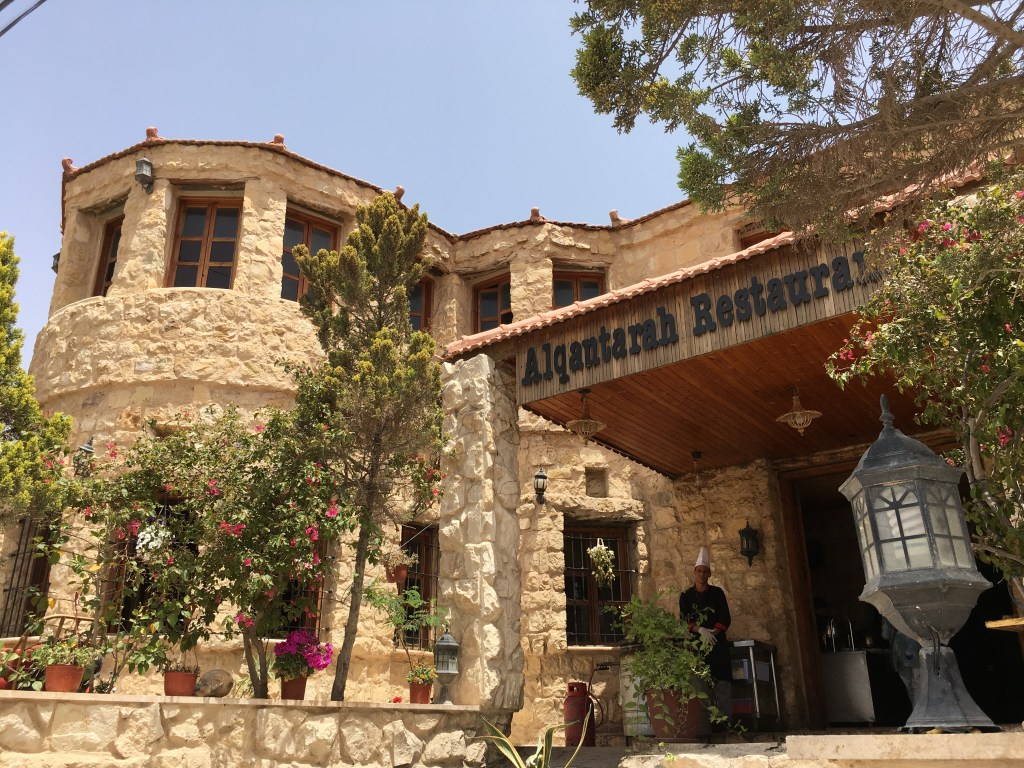
Photo by the author on the way to Petra in Jordan, May 2019.
There was something amusing I realized while praying this Sunday’s gospel of how in our time we no longer hear or use the word “generous” anymore — except when the topic is about food like in the expression “generous servings”!
We all love and enjoy “generous servings” of food and drinks whether in restaurants or at home or at parties because it means something more than what we pay for or come for. And that is the essence of generosity: the giving of more than what is required and just. It is love in the real sense like the prayer for generosity by St. Ignatius of Loyola.
Dearest Lord:
Teach me to be generous.
Teach me to serve you as you deserve,
To give and not to count the cost,
To fight and not heed the wounds,
To toil and not seek for rest,
To labor and ask not for reward, except
To know that I am doing your will.  Amen.
Photo by Mr. Jim Marpa, 2019.
Generosity bonds every community in Christ
Sorry if I have to start our reflection through the stomach because today is our “Pistang Pasasalamat” (Thanksgiving) in the Parish…
Going back to our reflection, my dear reader, recall how in the past two weeks we have heard Jesus teaching us important lessons how our relationships must be based on mutual love through fraternal correction and forgiving of those who have sinned against us.
This Sunday through another parable, Jesus teaches us the importance of generosity as a wonderful expression of love we forget most in our relationships and dealing with others.
Generosity is the glue that keeps our ties stronger and keeps us filled with joy because it is thinking more of the other person than of self. It is love at its finest – charming and elegant as in suave – but so disarming and revealing when overlooked as we shall see in this parable.
Jesus told his disciples this parable: “The kingdom of heaven is like a landowner who went out at dawn to hire laborers for is vineyard. After agreeing with them for the usual daily wage, he sent them into his vineyard. Going out about nine o’clock, he saw others standing idle in the marketplace, and he said to them, ‘You too go into my vineyard, and I will give you what is just.’ So they went off. And he went out again around noon, and around three o’clock, and did likewise. Going out about five o’clock, he found others standing around, and said to them… You too go into my vineyard.’ When it was evening the owner of the vineyard said to his foreman, ‘Summon the laborers and give them their pay, beginning with the last and ending with the first.’ When those who had started about five o’clock came, each received the usual daily wage. So when the the first came, they thought that they would receive more, but each of them also got the usual wage. And on receiving it they grumbled against the landowner, saying, ‘These last ones worked only one hour, and you have made them equal to us, who bore the day’s burden and the heat.’ He said to one of them i reply, ‘My friend, I am not cheating you. Did you not agree with me for the usual daily wage? Take what is yours and go. What if I wish to give this last one the same as you? Or am I not free to do as I wish my own money? Are you envious because I am generous?'”
Matthew 20:1-15
Notice how Jesus again elicited our feelings to drive home his lesson today about love as basis of our relationships. Last week we totally agreed with the king in punishing the merciless servant whose debt he had forgiven but was unmerciful to a fellow servant and debtor.
This Sunday, with whom did we take sides with? Be honest. Did you side with the workers hired in the morning and worked all day only to receive a pay exactly the same with those who worked only for an hour? Did we also feel treated unfairly like them?
But, why are we reacting the same way as those workers who toiled under the sun? What is our complaint? Are we envious because the owner is generous?
Recall our reflections last month about the parable as a simple story conveying deeper truths about life and our selves. From the French parabolein -along the way – Jesus is inviting us to read anew this parable we have heard so many times in the past so we may enter into a dialogue with him to purify and cleanse us to get its whole picture. And hopefully, become generous too.
Nuns bringing goods to the poor during the height of the Luzon-wide lockdown last summer.
Human justice, Divine kindness
The parable is not about social justice and just wages: it is about the immense love of God for us all. Jesus said it at the start, “The kingdom of heaven is like a landowner…” – it is a parable about God and his kingdom.
See the great love of the landowner who went out five times during the day, even at late afternoon so people may have a job to earn some money for the day. We have to keep in mind that the workers were hired because the owner is kind. Period.
The owner is like the good shepherd Jesus described as who would leave the rest of his flock to search for one missing sheep.
How many times have we acted like those early workers, complaining to God when we feel “shortchanged” for our work and efforts, or being better and more good perhaps than others?
It happens so many times when we question him even in the Church and specially in the society and government when we cannot understand how God who is supposed to be just and fair is allowing all injustices and evil to happen like during this time of COVID-19.
The first reading reminds us that to think that way as if we know everything is dangerous because we could be very wrong and mistaken after all. God sees and knows everything that in the end amid all the twists and turns in history and in our personal lives, it is always his will that prevails which proves best for us and mankind. In times like these, we need to have faith in God and trust him more through prayers and reflections.
Seek the Lord while he may be found, call him while he is near… As high as the heavens are above the earth, so high are my ways above your ways and my thoughts above your thoughts.
Isaiah 55:6, 9
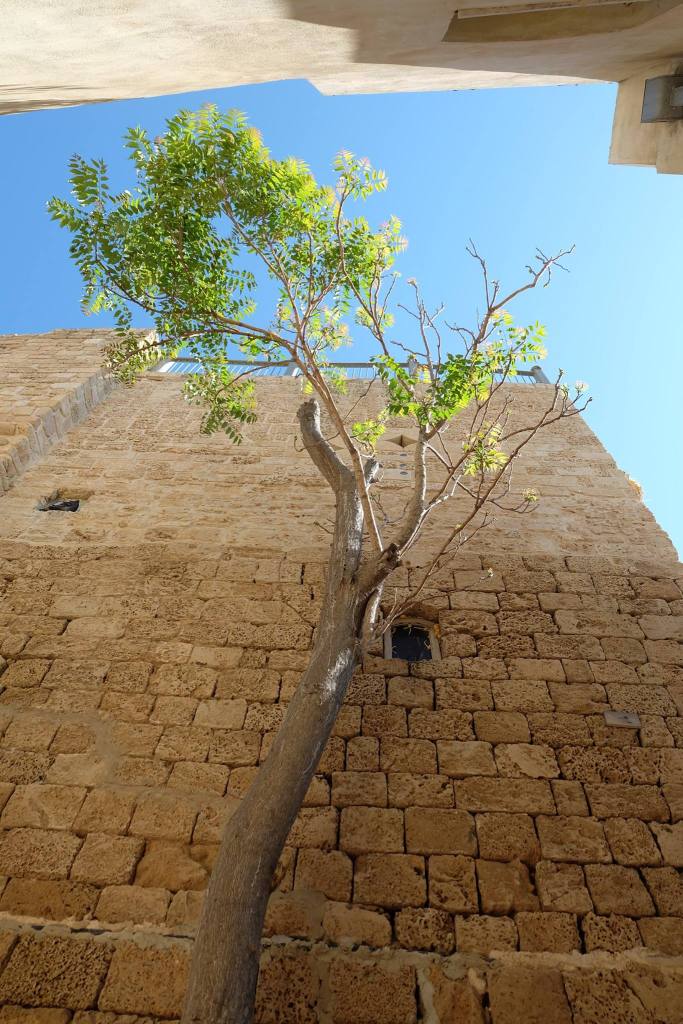
Photo by author, Jaffa in Israel, May 2017.
We keep on saying that one immediate fruit of having a prayer life is the heightening of our sensitivities when we see more of God in others than more of ourselves. The problem with those workers hired earlier in the day that instead of thanking God for his kindness in hiring them, they even wanted more in their pay than what they have agreed upon — so selfish and feeling so entitled like some among us!!!
God as the landowner is teaching us not only to be thankful for the blessings we have received from him but also to rejoice when others aside from us are also blessed. As everyone would say these days, “sana all” are blessed, not only a selected few.
Again we find here a similar situation in the parable of the prodigal son where the father told the elder one that “everything I have is yours” (Lk.15:31) when he refused to come home to celebrate the return of his younger brother, citing how he had obeyed the father all his life without being given a young goat to feast with his friends.
Like that loving father of the prodigal son, God is reminding us this Sunday in this parable to rejoice that others have been blessed, instead of grumbling and complaining, demanding for more than what we have, forgetting everything is out of God’s goodness, never because of our merits.
Looking inside our hearts
My dear friends, this time of the pandemic invites us to be generous by looking deep into our hearts, of seeing God more and others than just our self. At this time when life is so difficult and death is so closest to home with everyone, the best thing we can do is to thank God for his gift of life to us each day and to deepen our faith in him.
Lately I have been praying to God to grant me St. Paul’s clarity of mind and purity of heart as we find ourselves in his similar situation of being imprisoned: him for the gospel, us due to COVID-19.
See the faith of St. Paul in God that even in prison with his death approaching each day, he continues to rejoice and experience peace within because he had realized that the success of the gospel is not on human efforts but in Jesus whom we cannot box in our little worlds and beliefs, rites and rituals. In fact, he was so confident that even with his death, the more the gospel would spread.
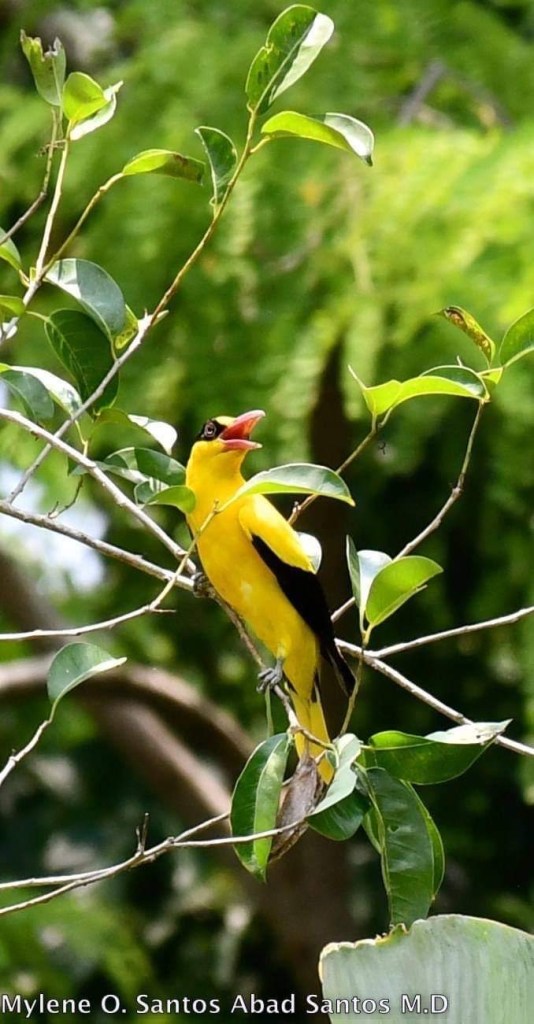
Photo by Dra. Mylene A. Santos at Katmon Harbor Nature Sanctuary, Infanta, Quezon, March 2020.
Brothers and sisters: Christ will be magnified in my body, whether by life or by death… conduct yourselves in a way worthy of the gospel of Christ.
Philippians 1:20, 27
Last Sunday, Jesus taught us to forgive from the heart, that is, to see one another as a brother and sister in God our Father who forgives us without limits for our many sins.
Today, Jesus is asking us to give from the heart – to be generous – not for anything else but because we are brothers and sisters in God our Father who blesses us without limits despite our sinfulness.
Generosity comes from the heart when in that heart is Jesus whom we find dwelling, giving us peace and joy no matter how much suffering we go through because him alone suffices that we are willing to let go of everything.
Share a generous serving of God’s blessings today to someone in need. Amen.
The Lord Is My Chef Sunday Recipe for the Soul by Fr. Nicanor F. Lalog II
Week XXIV, Cycle A in Ordinary Time, 13 September 2020
Sirach 27:30-28:7     >><)))*>   Romans 14:7-9   >><)))*>   Matthew 18:21-35
Photo by author, dusk in our parish, July 2020.
This Sunday we go deeper into the lessons gathered by Matthew from Jesus regarding love as the basis of our relationships. Last week we were told how mutual love is the sole reason why we correct brothers and sisters going stray in life.
But, more sensitive and delicate, not to mention most difficult than fraternal correction is the question of forgiving.
How many times should we forgive?
Peter approached Jesus and asked him, “Lord, if my brother sins against me, how often must I forgive? As many as seven times?” Jesus answered, “I say to you, not seven times but seventy-seven times. That is why the kingdom of heaven may be likened to a kind who decided to settle accounts wit his servants. When he began the accounting, a debtor was brought before hm who owed him a huge amount. Since he had no way of paying it back, his master ordered him to be sold, along with his wife, his children, and all is property, in payment of the debt. At that, the servant fell down, did him homage, and said, ‘Be patient with me, and I will pay you back in full.’ Moved with compassion the master of that servant let him go and forgave him the loan.
Matthew 18:21-27
Forgiving is always difficult because it is from God, calling us to be one with him, one in him, and be like him as that saying perfectly summed up, “To err is human, to forgive is divine.” It is beyond human abilities, reserved only for God until he became human like us in Jesus Christ who made us share in his greatest expression of love which is forgiveness. Hence, every time we forgive, we also become like God, divine and holy that unfortunately, we refuse and even hate!
Yes, it is very difficult because like love, forgiving is the nature of God. In fact, any kind of love is best expressed when it is forgiving. The good news is that we now share in this great love of God in forgiving others like him as we shall see in today’s parable, keeping in mind also that it was the Risen Lord’s commission to his disciples when he appeared to them on that Easter evening (John 20:22-23).
Photo by author, Baguio Cathedral, January 2018.
Forgiving like God our Father
The beauty of forgiving is that it is always a grace from God freely given to us. It is doable in Jesus Christ. The problem is when we refuse to let God work in us, when we refuse to level up our relationships to that of brothers and sisters in Jesus Christ.
There is always that pride in us exhibited by Peter at the start of the gospel today when he asked Jesus how many times he must forgive his brother. Must it be seven times?
Of course, seven being a “perfect number” does not specify a numerical figure of times to forgive except that it gives enough room to let go of a sinner or an offender. However, it still connotes some form of “counting” or taking tabs at how many times must one forgive, implying a limit.
But Jesus pushed it further when he told Peter to forgive “not seven times but seventy-seven times” — that is, twice the perfect number he had cited!
The Lord is telling Peter, and us today, to forget all about keeping tabs, of counting how many times you must forgive because God forgives us without limits which his parable tells us.
The king or master in the parable is God, so wealthy that he could lend sums exceeding the normal level of what one can borrow. Most surprising is like God, the master lent so much amount beyond the debtor’s ability to pay!
That is how rich our God is — so rich in love and mercy, giving us with so much even beyond our ability to pay him back in return. Exactly what we have in the responsorial psalm: “The Lord is kind and merciful; slow to anger and rich in compassion.”
And when that servant prostrated before his master, then the more we see in that religious gesture the deeper meaning of the parable: the rich mercy of God forgiving us for our debts even after we have lost everything like that debtor with nothing enough to pay his loans, not even his wife and children.
See the contrast of the king moved with compassion echoing the same attitude of Jesus so often like in the wilderness where he fed more than 5000 people and that servant so lost with nothing else left but still forgiven.
The parable could have stopped there but Jesus went on to continue what happened next to teach us the deeper truth of forgiving, which is imitating God our Father because we are brothers and sisters in him.
From Google.
When this servant had left, he found one of his fellow servants who owed him a much smaller amount. He seized him and started to choke him, demanding, ‘Pay back what you owe.’ Falling to his knees, his fellow servant begged him… but he refused. Instead, he had the fellow servant put in prison until he paid back the debt. Now when his fellow servants saw what had happened, they were deeply disturbed, and went to their master and reported the whole affair. His master summoned him and said to him, ‘You wicked servant! I forgave you your entire debt because you begged me to. should you not have had pity on your fellow servant, as I had pity on you?’ Then in anger is master handed him over to the torturers until he should pay back the whole debt. So will my heavenly Father do to you, unless each of you forgives his brother from his heart.”
Matthew 18:28-35
Forgiving from the heart
After hearing the second part of the parable, we all felt like the master, angry and indignant with that merciless servant whose action was very shameless and scandalous. But, more than being like the king who properly judged the conduct of that merciless servant, Jesus is also inviting us to probe deeper into our hearts the realities why we felt like the king in the parable?
How many times have we felt so angry and frustrated during this pandemic period at the many occasions when we heard news of injustices and abuse of powers against the little ones like Mang Dodong or the Marawi verteran shot to death in Quezon City? Of those punished in violating the protocols when its chief implementor got away free after attending a mañanita party?
The list goes on specially in our country where laws favor the abusive rich and powerful, those with connections while ordinary citizens with lesser violations, even without any crimes at all suffer the same fate as the servant with lesser debts.
Photo by author, “patak-dugo”, 2019.
We all feel so angry and very sad because more than the injustices and lack of mercies committed by those in powers, they have forgotten we are brothers and sisters in one God our Father. Parang sila lang ang anak ng Diyos…
We feel like the king in the parable because we felt left out, disregarded, and disrespected despite our kindness and mercy with others.
Forgiving from the heart means to forgive others not because we are fellow servants but most of all as brothers and sisters of a loving and merciful Father who forgives us always from our unpayable debts of sin and evil against each other.
This is the very thing St. Paul is telling us in the second reading, that “None of us lives for oneself, and no one dies for oneself” (Rom.14:7). Sometimes we need to be in control of our lives but the truth is, when we try to live St. Paul’s message that our lives belong to one another in Christ, the more we become truly free and happy.
It is the same reminder from Ben Sirach in the first reading telling us how we must avoid anger and resentment specially revenge because it is contrary to our faith in God. Most of all, we also know so well that we need the mercy of God in forgiving our countless sins.
The example of St. John Paul II about forgiving like God
I know what I am telling you are easier said than done. And I confess that I also find it so hard to forgive people who have wronged me, specially those I have loved and helped. Allow me to end this reflection with this beautiful bit of history that happened in our lifetime.
We were in high school seminary when Mehmet Agca shot and almost killed St. John Paul II at St. Peter’s Square on May 13, 1981. We were shocked, so sad for him and very angry with Agca. But, two years later after Christmas in 1983, we were more shocked in disbelief while at the same time in tears with joy when news came out that St. John Paul II came to visit Agca in his cell to forgive him!
It was a major news that landed on TIME magazine the following year with the cover story so relevant with our gospel today:
From Pinterest.
Those who do not forgive are those who are least capable of changing the circumstances of their lives…
Not to forgive is to be imprisoned by the past, by old grievances that do not permit life to proceed with new business.
Not to forgive is to yield oneself to another’s control. If one does not forgive, then one is controlled by the other’s initiatives and is locked into a sequence of act and response, of outrage and revenge, tit for tat, escalating always. The present is endlessly overwhelmed and devoured by the past. Forgiveness frees the forgiver. It extracts the forgiver from someone else’s nightmare. “Unless there is a breach with the evil past,” says Donald Shriver, “all we get is this stuttering repetition of evil.”
Lance Morrow, TIME Magazine, 19 January 1984
As I searched for photos of the assassination attempt on him by Agca, I came across this photo below of their meeting with an accompanying report that made me admire and love St. “JP2” more than ever.
It said that while recuperating in the hospital, St. JP2 learned from the news how people hated Agca, prompting him to ask everyone to “pray for my brother (Agca)… whom I have sincerely forgiven.” That is how holy is this great Pope of our time! Long before visiting Agca in 1983, St. JP2 had already forgiven him, calling him a “brother” despite the evil and sin done to him.
What a great Amen!
Have a blessed and wonderful week ahead, brothers and sisters in Christ!
Maybe you have been asked so many times with the question, which do you prefer to hear first, the good news or the bad news? Usually we say it all depends to our mood and temperament or to the gravity of the situation. Sometimes, we ask for the bad news first so we can suffer earlier and enjoy the good news later. Or, we ask for the good news first to soften the impact of the bad news.
Our gospel this Sunday is still set in the pagan city of Caesarea Philippi and we heard Jesus giving his disciples – including us – with a strong dosage of “bad news” after hearing last week the good news that he is “the Christ, the Son of the living God.”
Jesus began to show his disciples that he must go to Jerusalem and suffer greatly from the elders, the chief priests, and the scribes, and be killed and on the third day be raised. Then Peter took Jesus aside and began to rebuke him, “God forbid, Lord! No such thing shall ever happen to you.” He turned and said to Peter, “Get behind me, Satan! You are obstacle to me. You are thinking not as God does, but as human beings do.” Then Jesus said to his disciples, “Whoever wishes to come after me must deny himself, take up his cross, and follow me. For whoever wishes to save his life will lose it, but whoever loses his life for my sake will find it.”
Matthew 16:21-25
Our gospel today seems to be a very big, bad news for everyone, with things getting worst before getting any better which the Lord had promised to be only in the end that nobody knows when!
See how Jesus started by saying he would “suffer greatly at the hands of elders, the chief priests, and the scribes and be killed and on the third day be raised again.” Not only that: he now calls Peter as “Satan” from being the Rock last Sunday after giving the right answer as to who he is.
Like Peter, we would probably say the same thing to Jesus why make suffering and death central to life that is meant to enjoy?
Like Peter, the Lord is inviting us today to focus more on the good news than on the bad news of suffering and death which for him – the Paschal mystery we call – is actually the best of good news!
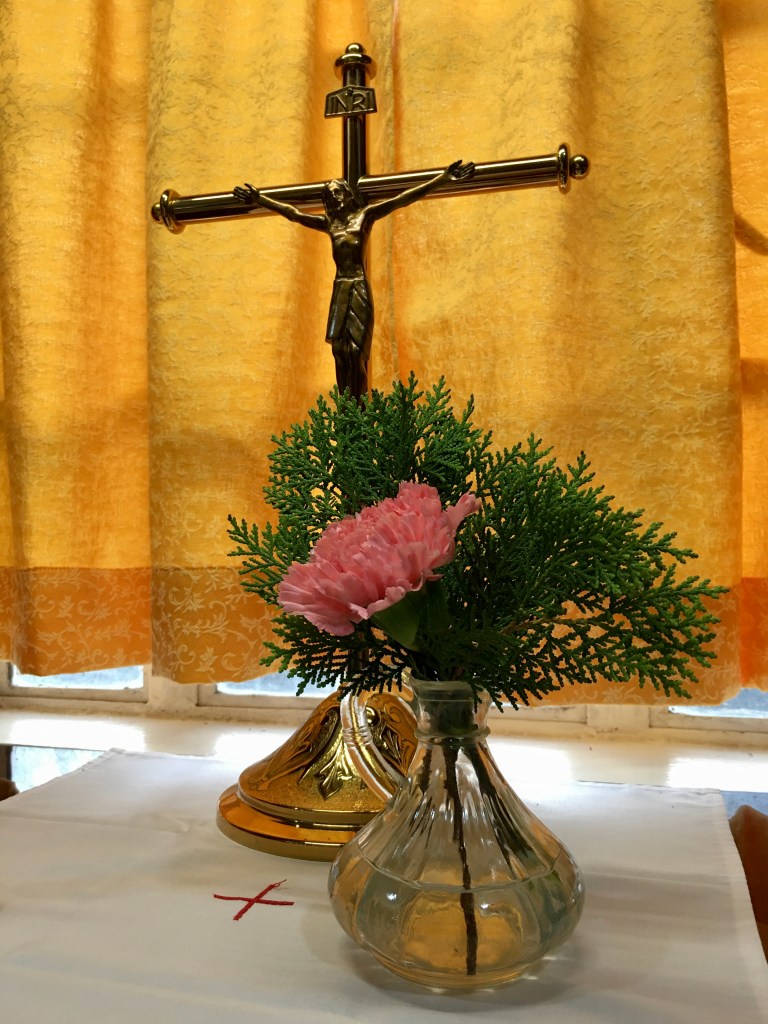
Photo by author, altar flowers in our parish, January 2020.
Jesus Christ’s pasch is the best of good news!
What we have heard as “bad news” from the Lord is his first prediction of his coming pasch or Passion, Death and Resurrection. He would be announcing this prediction of his pasch two more times as they near Jerusalem.
From the He brew word pesach that means to pass over, it connotes suffering and death into new life. It came from the Exodus experience of the Chosen People from Egypt into the Promised Land during the time of Moses, taking its fullest meaning in Jesus Christ, the Son of God who became human like us in everything except sin, “passing over” from eternity to temporal, from Passion and Death to Resurrection.
Authentic discipleship does not require us to seek suffering; no, God is not sadistic as some people with twisted minds would say. However, being faithful to Jesus, witnessing his gospel values bring enough of these sufferings and deaths but on a different level and meaning. We realize that life is a daily exodus, a passing over from darkness into light, from ignorance into wisdom, from sickness into health, from death into new life.
Like the prophet Jeremiah in the first reading, we discover that the more we follow God, the more sufferings we encounter in life but at the same time, we cannot let go of him because his attraction is so powerful! There is something so deep within, so profound and fulfilling in us we realize that living in the ways of God, in the gospel values of Christ can we truly find lasting joy and peace – even if we have to die in our very selves in the process.
You duped me, O Lord, and I let myself be duped; you were too strong for me, and you triumphed. all the day I am an object of laughter; everyone mocks me… But then it becomes like fire burning in my heart, imprisoned in my bones; I grow weary holding it in, I cannot endure it.
Jeremiah 20:7, 9
Photo by author, Gaudete Sunday in our parish, December 2019.
Thinking in God’s ways
Today Jesus is assuring us that there is no such thing as “good news, bad news” with him. The good news/bad news question is really a non-question to disciples of Christ because whatever suffering and death we embrace in him is a sharing in his very life.
Hence, Jesus Christ’s good news is in fact the bestest news we can ever have. Always.
The key is to think as God does, not as human beings do as Jesus pointed out to Peter.
Three things I wish to share with you about thinking in God’s ways:
First is to accept and embrace pains and sufferings not for their own sake but as a way to cleanse our selves to greater glory. As we have said, God is not a sadist; we need to be cleansed like every thing in order to bring out the best in us like diamonds or any precious stone or any material.
Polishing and honing always mean “subtractions” with so many shaving and cutting of the rough edges to bring out the beauty and sharpness of a thing.
Man’s ways has always been to avoid every pain and suffering. No wonder, the most prescribed medicine worldwide is said to be the pain killer. But, experience has taught us this is not true and cannot be the norm of life. Like every gym enthusiast would tell you, “no pain, no gain”. Pain and suffering is part of life and the good news is, Christ has made it holy for us.
Second is to be silent in order to be able to listen to every sound and thus, heighten our sensitivities not only with our true selves but also with God and with others. In this age of social media and instant communications, silent has become a rare commodity. It is always easier to speak even without thinking much than be silent. That is the way of the world: speak out loud, make noises, and let everyone hear you — until they get tired of you.
Photo by author, our parish ceiling at sunset, 25 August 2020.
Third is the most precious in God’s ways of thinking — the way of hiddenness. This is God’s most evident way of making himself felt, experienced, and yes, seen by being hidden and invisible.
Last Thursday we celebrated the memorial of St. Monica, the mother of St. Augustine who narrated the story of how she got sick at Ostia in Italy with his brother hurrying to get back home to Tagaste in Africa so that when she dies, she would be buried there. St. Monica “reproached him with a glance because he had entertained such earthly thoughts”; then, she looked at St. Augustine and told him to bury her anywhere, asking one thing only from him: that he remembers her always in his celebration of the Holy Mass.
So many times, we are so concerned with our popularity that whatever we do has to be made known to everyone to see specially by those so-called “followers” with their “likes” that even up to death, some would spend a fortune for lavish funerals and even mauseleoum.
That’s the way of the world of everybody making a statement, of being known as present, always seen. In the movie “The Devil’s Advocate”, Al Pacino played the role of satan who said it so well at the end after tempting Keanu Reeves, “vanity…vanity is my most favorite sin.”
See the life of Jesus Christ: more than half was spend in hiddenness and silence. He worked only for three years characterized by so many instances of silence and hiddenness too and yet, his impact continues to this day and hereafter.
Beginning with last Sunday after asking us who do we say he is, Jesus is inviting us to follow him in his Passion and Death to be one in his Resurrection. This is also the call by St. Paul in the second reading:
I urge you, brothers and sisters, by the mercies of God, to offer your bodies as a living sacrifice, holy and pleasing to God, your spiritual worship. Do not conform yourselves to this age but be transformed by the renewal of your mind, that you may discern what is the will of God, what is good and pleasing and perfect.
Romans 12:1-2
Jesus is not asking too much from us, no need for any fanfares on our part; simply come to him with our true self, no matter how sinful and incomplete we are. Remember, all is good news with him and you never lose in him. Amen.
A blessed week to everyone!
Photo by author, parish ceiling at sunset, 25 August 2020.













 lordmychef.com