Speaking plainly in Christ

The Lord Is My Chef Sunday Recipe for the Soul by Fr. Nicanor F. Lalog II
Twenty-third Sunday in Ordinary Time, Cycle B, 08 September 2024
Isaiah 35:4-7 ><}}}}*> James 2:1-5 ><}}}}*> Mark 7:31-37
Photo by author, sunrise at Galilee, the Holy Land, 2017.

Thank God the rains have finally stopped here in Metro Manila and nearby provinces but the flood remains widespread as we brace for two more weather disturbances due this week.

So timely is our gospel this Sunday that reminds us of something so essential during calamities, the need to speak plainly and clearly.

Image from crossroadsinitiative.com.

Again Jesus left the district of Tyre and went by way of Sidon to the Sea of Galilee, into the district of Decapolis. And people brought to him a deaf man who had a speech impediment and begged him to his hand on him. He took him off by himself away from the crowd. He put his finger into the man’s ears and, spitting, touched his tongue; then he looked up to heaven and groaned, and said to him, “Ephphatha!” – that is, “Be opened!” – And immediately the man’s ears were opened, his speech impediment was removed, and he spoke plainly (Mark 7:31-35).


"...and he spoke plainly."

From forbes.com, 2019.

Think of our many misunderstandings and quarrels happening in these days of modern means of communications. How ironic that in this age of instant and wireless communications so accessible to everyone, the more we have misinformation and miscommunications.

No one seems to be speaking plainly and clearly anymore because we have been so blinded by the many images and colors competing for our attention, becoming deaf and mute due to the cacophony of sounds we hear even from machines and things that speak. Instead of life becoming easier and convenient in this age of social media and modern technologies, it has become so complicated like Facebook as more and more of us becoming deaf and mute to the realities within and around us.

I have just checked the internet today to find out that there are now over 7.2 billion cellphones in the world as of June 2024, a figure that accounts for about 90% of the global population now at 8 billion. Of course, it does not mean that 90% of the peoples across the world own a cellphone but we can just imagine how this little gadget has become the new “god”, a baal of the modern world everybody worship and follow. Jesus comes to us today, inviting us to separate ourselves from everything mundane even for a few hours to experience Him and His healing of our own deafness and blindness.

Photo by author, shore of Galilee, 2017.

Once again we find Mark guiding us in Jesus Christ’s itinerary that is often so quick and most of all, not really a destination found in maps but within us.

From Gennesaret last Sunday when Pharisees and scribes from Jerusalem questioned Him about the disciples’ non-compliance with their rites of washing and cleansing, Jesus swiftly moved to visit the pagan territories of Tyre and Sidon, making a stop-over at Decapolis where He healed a deaf-mute. Those pagan territories are not mere locations nor sites in the Holy Land but areas within each one of us, our very person who have forgotten God completely even on Sundays as we worship so many other gods running our lives.

Jesus is now visiting us in our own paganism, asking us to separate ourselves even for a while from everything to experience humanity, our human-ness, our being one with God who is the very basis and foundation of our lives.

We are probably one of those people in Decapolis who begged Jesus to heal the nameless deaf-mute or most likely, ourselves the deaf-mute needing healing by Jesus! This healing of the nameless deaf-mute is a parable of the cure of another kind of deafness and speech impediment afflicting us these days that only grace can heal.

Photo by author, wailing wall of Jerusalem, 2017.

Recall how last Sunday Jesus reminded us of checking into our motivations, on what is inside us in doing things. Jesus was not actually against rites and rituals but simply wants us to do things for the glory of God.

Today, Jesus separates us from our daily routines, from the mundane to touch us, to breathe on us His spirit so we can be more attuned with Him and therefore reflect Him in our lives by opening us – Ephphatha – to speak plainly again of God’s love and mercy, of life’s beauty, of our own giftedness.

To “speak plainly” like that healed deaf-mute at Decapolis is to be able to put into actions the words of Jesus Christ. To “speak plainly” is more than verbally pronouncing words and sounds but most of all touching others with our kindness and love. To “speak plainly” is to hold the hands of those afraid to move on in life after a failure, to caress a sick’s forehead or feet, to hug and embrace the lonely and lost, to be present with those in grief and in pain. To “speak plainly” is to be a presence of God to everyone especially strangers, the elderly, the weak and the helpless.

To “speak plainly” first of all requires us to be opened to God’s words. The gospel accounts teem with many instances of Jesus reminding His disciples that include us today of taking into our hearts to understand and put into practice His words. In the second reading, St. James reminds us how we have become deaf and blind of each other that we behave so badly because we have been so molded by worldly standards even in the church:

My brothers and sisters, show no partiality as you adhere to the faith in our glorious Lord Jesus Christ. For if a man with gold rings and in fine clothes comes into your assembly, and a poor person in shabby clothes also comes in, and you pay attention to the one wearing the fine clothes and say, “Sit here, please”, while you say to the poor one, “Stand there”, or “sit at my feel”, have you not made distinctions among yourselves and become judges with evil designs (James 2:1-4)?

Photo by author at Dominus Flevit church outside Jerusalem, 2017.

Think of our many rules and regulations, of our so many documents not only in government but even in the Church. Do they speak plainly?

Many times, we have so much rites and rituals as well documents and laws everywhere that are far from God and from the people, speaking so eloquently of lofty thoughts that are empty, so far from realities that have become only a burden to many, mostly the poor and the powerless.

How sad that those in power, both civil and ecclesiastical authorities have only complacent ears, oblivious to the din from below, the very voice of God among the ordinary people. They have not only turned deaf to the voice of the masses but have even forgotten God’s name in the process! The Apostle Paul gives us the most wonderful lesson about “speaking plainly” of God’s mystery by proclaiming more of Christ crucified than using the world’s “sublimity of words or wisdom” (cf. 1 Cor. 2:1-5).

Photo by author, 2017.

This is the tragedy among us modern Christians today, of us denying even totally unaware of our own deafness, of being mute not able to speak plainly of God in Jesus Christ who came to fulfill Isaiah’s prophecy in the first reading to heal the sick, to strengthen the weak and afraid, and to redeem us held captive by the world’s lies and evil.

Let Ephphatha be our prayer too this Sunday to heal us of our deafness so we may speak plainly again of God’s love and mercy and kindness. Amen. Have a blessed week ahead, everyone!

When we “miss communication”

The Lord Is My Chef Easter Recipe for the Soul by Fr. Nicanor F. Lalog II
Wednesday in the Sixth Week of Easter, 08 May 2024
Acts 17:15, 22-18:1 <*((((>< + ><))))*> John 16:12-15
Photo by Ekaterina Belinskaya on Pexels.com
Your words today,
Lord Jesus remind us
in the most amusing way
our state of miscommunication:

When they heard about resurrection of the dead, some began to scoff, but others said, “We should like to hear you on this some other time.” And so Paul left them.

Acts 17:32-33
Many times in life
we are like the Athenians of old,
so proud of what
we know,
of what we believe,
of what we
hold on as true
without having them tested;
we refuse to open
our minds and our hearts
to truly listen
to the other person,
especially to You,
dear Jesus;
help us realize
that we cannot know
the whole truth
and everything in this life
and world
in an instant;
help us realize
how truth unfolds
in time
in persons;
most of all,
help us realize
we do not know
that much.

Jesus said to his disciples: “I have much more to tell you, but you cannot bear it now. But when he comes, the Spirit of truth, he will guide you to all truth. He will not speak on his own, but he will speak what he hears, and will declare to you the things that are coming.

John 16:12-13
Teach us to be patient
and humble, Jesus,
to listen with our hearts,
to reach out and wait
for the other person;
teach us to have that
sense of wonder like a child,
eager to learn,
always asking questions
without getting right away
the answers to them
because many times in life,
the answers
we seek are found right within
our questions,
right in our hearts
where You dwell.
Amen.

Sobra na, tama na!

Lawiswis ng Salita ni P. Nicanor F. Lalog II, Ika-26 ng Setyembre 2023
Larawan mula sa redditt.com ng iskulturang pinamagatang “Love” ni Ukrainian artist Alexander Milov naglalarawan ng inner child sa bawat isa sa atin na ibig palaging makipag-ugnayan sa kapwa.

Hindi po tungkol sa pulitika ang aking lathalain kungdi ukol sa tila lumalabis nang pagkahumaling ng mga tao sa computer at mga makabagong teknolohiya. Sa aking palagay ay sumusobra na pagsaklaw ng teknolihiya sa ating buhay at nawawala na ating pagkatao. Hindi ako magtataka na bukas makalawa, magkakatotoo na nga yata yung dating ipinangangamba na pananakop ng mga robot sa ating buhay o mismo sa ating mga tao!

Ang katotohanan po ay tumigil na akong kumain sa mga fastfood restaurant hindi dahil sa magastos at unhealthy nilang pagkain at inumin kungdi ang mga nakaka-inis na sisteng kailangang pa akong umorder nang nagpipindot sa mga screen nila ng kakanin gayong may mga crew naman sila.

Minsan pauwi ako mula sa pagmimisa sa lamay sa patay sa Bulacan. Hindi ako gaanong nakakain kaya dumaan ako sa McDonald’s sa Nlex Drive and Dine. Ayokong mag-drive thru para doon na rin makapagpahinga ng konti sabay pagpag na rin maski hindi ako naniniwala doon.

Sising-sisi ako at dumaan pa ako doon; sana nga pala ay nag-drive thru na lang ako kasi naman ay ganito po ang nangyari.

Larawan mula sa news.abs-cbn.com

Pagpasok ko sa McDonald’s doon ay tumambad sa akin ang mga higanteng screen na doon daw oorder. Kasinglaki ni Ronald McDonald yung mga screen pero hindi sila friendly kasi natakot ako. Aminado akong tanga at walang alam sa mga iyon. Hindi po ako techie. Kahit naka-iPhone ako, inaamin kong hindi ko pa rin alam hanggang ngayon kung paano ito gamitin. Di ko naintidihan yang mga hacks na iyan.

Wala akong nagawa kungdi sumunod sa crew na naka-ngiti naman. Binasa ko instructions. Pindot dito, pindot doon. Ewan ko. Naghalo na rin siguro gutom at katangahan, pabalik-balik ako sa simula at hindi maka-order. Mayroon akong nakasabay na engot din at lumapit sa amin yung guwardiya upang tulungan kami. Nawalan na ako ng ganang kumain sa inis sa screen, sa sarili ko na rin, at sa pamunuan ng McDonald’s. Bakit hindi na lang kinuha order ko kesa pinahirapan pa ako doon sa electronic counter na yun?

Bakit kailangang pilitin ang lahat na gumamit ng computer para sa pag-order? Hindi ba naiisip ng mga fastfood na ito na mayroong mga taong hindi pa rin gamay at handa sa gayong uri ng transsaksiyon? Ang pinaka-ayoko sa sisteng ito ng modernisasyon na ang lahat ay automated at computerized ay nawawala ang ating “pagkatao”, iyon bang human touch at humanness ika sa Inggles.

Larawan mula sa NLEX.

Sa expressway ay mauunawaan ko pa dahil upang mapabilis ang biyahe, mainam ang RFID. Ngunit may mga pagkakataon na hindi ako nagmamadali na pagkaraan ng nakakapagod na pagmamaneho sa trapik, ang ibig ko lang ay mayroong makitang isang kapwa-tao. Yung bang madama lang yung “warmth of another human person” ay malaking bagay na rin upang mapawi pagod at stress, na para bang nagsasabing hindi ka nag-iisa. Noong dati ay nakakausap ko pa ng kaunti mga teller sa Nlex sa paniniwala na makapagpasaya lang ako ng isa pang nilalang na maaring bigat na bigat sa problema. Ngayon, wala na yung koneksiyon na iyon kaya hindi kataka-taka, marami sa atin ang disconnected sa isa’t-isa maging sa sarili! Kaya sabog maraming tao ngayon. Siguro kung maibabalik lang natin marami nang nawalang human interaction, mababawasan yang mga road rage sa lansangan.

Isang nakakamiss para sa akin ang magpunta sa bangko at pumila, makahunta ilang mga tao doong kakilala pati na ang manager at magagandang teller. Iyon ang wala sa electronic banking. Totoong convenient at mabilis ang pagbabangko gamit ang cellphone o computer ngunit napaka-impersonal! Iyon na ba ang mahalaga sa atin ngayon, kaginhawahan kesa ugnayan sa kapwa tao?

Pakikipag-ugnayan ang layon ng komunikasyon. Para sa akin, ang pinakamagandang paglalahad ng kahulugan ng komunikasyon ay mula sa Pastoral Instruction na Communio et Progressio sa pagpapatupad ng dokumento ng Vatican II sa social communication na Inter Mirifica:

Communication is more than the expression of ideas and the indication of emotion. At its most profound level it is the giving of self in love. Christ’s communication was, in fact, spirit and life.

Communio et Progessio, #11

Sa lahat ng nilalang ng Diyos, tao lamang ang kanyang binahaginan ng kanyang kapangyarihang makipagtalastasan o komunikasyon. Ang aso ay tumatahol, pusa nagme-meow at ang baboy ay nag-o-oink-oink. Ngunit ang tao, nagsasalita, nangungusap. Naiintindihan, nauunawaan. At kapag nangyari iyon, nagkakaroon ng ugnayan at kaisahan. Communication, tapos communion.

Hindi ito nangyayari sa computer. Manapa, madalas pakiwari ko ay inuulol tayo ng mga ito! Ano kalokohan yung alam mo namang AI (artificial intelligence) o robot ang “kausap” mo tapos sasagot ka sa kahon na “I am not a robot”? At, mantakin mong utusan ka ng Waze o Google map na pakiwari mas alam niya lahat kesa iyo?

Kaya siguro maraming high blood din ngayon kasi nga kapag sumablay mga teknolohiyang ito lalo na ang mahinang signal, tapos na lahat ng usapan. Sa gayon, walang napagkakayarian, walang napagkakasunduan kaya wala ring kaisahan.

Ito rin ang hindi ko magustuhan sa ipinagmamalaki ng dati kong upisina at network, iyong kailang AI-sportscasters.

larawan mula sa gmanetwork.com.

Heto na yata ang rurok ng kalabisan sa pagkamaliw ng karamihan sa teknolohiya. Unang tanong natin dito ay ano po ba ang turing ng mga kumpanyang gumagamit nito sa kanilang mga taga-tangkilik? Tayo ba ay pinahahalagahan pa nila at ipinauubaya na lamang tayo sa mga robot?

Higit sa maraming mahuhusay na tagapagbalita, sa ganang akin walang puwang sa newscast o ano mang uri ng pagbabalita ang mga AI dahil ang komunikasyon ay ugnayan. Communication is a relationship, lalo na balita at isports. Kahit na maperfect pa ang teknolohiyang iyan, hindi mapapalitan at di dapat mapalitan ang tao sa pakikipag-ugnayan sa kapwa tao.

Ikalawa, ano ang dahilan para magkaroon ng AI na sportscaster? Magmalaki? Magyabang? Ano pa kaya gusto ng GMA-7 gayong wala na silang kalaban?

At dapat nilang asikasuhin ay mabigyan tayo ng buhay na mga programa, coverage na umaantig sa aming pagkatao, kayang hipuin kaibuturan ng aming sarili upang madama tuwa at lungkot ng bawat tagumpay at kabiguan saan mang larangan ng buhay. Maramdaman nating hindi tayo nag-iisa sa pag-aasam ng tagumpay at kaunlaran dahil mayroong kaming mga kalakbay sa biyaheng ito ng buhay. Iyon ang kahulugahan ng integrated news – buo. Paanong naging integrated news kung hindi naman tao ang sportscaster nila? Hindi ba doon pa lamang ay sira na ang kabuuan? Sila ba ay mayroong puso para ituring na Kapuso?

Ang kailangan ay isang kapwa na makakasama sa buhay lalo na sa media. Sa Inggles, tawag doon ay companion. Mula sa dalawang salitang Latin, cum na ibig sabihi’y with o kasama at panis na kahulugan ay bread o tinapay; sa literal na salin, ang companioncum panis – ay kahati sa tinapay. “Someone you break bread with.” Ang tinapay naman ay tanda ng ating sarili, ng ating buhay. .

Samakatwid, ang companion o kasama ay isang kapwa na nagbabahagi ng kanyang sarili sa kapwa upang mabuhay din. Iyan ang dangal at karangalan ng pagbabalita na sadya namang maipagmamalaki ng GMA News mula marami nilang mahuhusay na newscasters at reporters. Kaya lahat ay nalungkot nang pumanaw si G. Mike Enriquez na naging bahagi ng buhay ng maraming kababayan natin sa kanyang estilo ng pagbabalita. Taong-tao siya, ika nga.

Larawan kuha ng may-akda, Our Lady of Fatima University, Valenzuela City, 13 Setyembre 2023.

Kaya rin naman sa Banal na Misa, ang tawag doon ay Banal na Komunyon, ang pagbabahagi at pagtanggap sa Katawan ni Kristo sa anyo ng tinapay. Nakiisa sa atin si Jesus sa lahat ng bagay sa ating katauhan liban sa kasalanan tulad ng gutom at uhaw, lungkot at hapis, kabiguan maging sakit at kamatayan upang makabahagi niya tayo sa kanyang buhay at tagumpay.

Walang ganyang umiiral sa mga AI na ito at computerization ng mga sistema sa ating buhay. Sana ay isaalang-alang ito ng mga negosyante at umuugit sa mga industriya lalo na sa media. Ang masakit na katotohanan kasi ay kunwari ay kaunlaran at kadalian o convenience ang kanilang dahilan (para kanino?) kungdi kitang kita naman, pera lang ang suma total. Sa gayon, sa landas na ito ng pagiging impersonal na kalakaran ng maraming bagay gamit ang teknolohiya, unti unti rin tayong nade-dehumanize, nawawala katauhan. Kapag nawala ang katauhan, ano ang pumapalit? Alam na natin iyan. Salamuch po.

TikTok ngayon, Tiktik Magasin noon?

Lawiswis ng Salita ni P. Nicanor F. Lalog II, Ika-25 ng Mayo 2022
Larawan mula sa gettyimages.com at bbc.com.
Huwag sanang masamain
aking pagkagambala
pagkahumaling sa app 
na kung tawagin ay TikTok;
batid ko ang maraming kabutihan
dulot nito sa pakikipagtalastasan
at ugnayan ngunit bakit tila
nauungusan ng mga kahalayan
at kabastusan makabagong laruan?
Nakakaaliw mga katatawanan
at kalokohang napapanood
ngunit nakakabagabag mga
kalaswaan nilalarawan at
napapakinggang usapang
natutungahayan sa munting screen
buong kamalayan ang winawasak,
murang isipan nalilinlang
habang oras at panahon nasasayang.
Hindi sa pagmamarunong
ibig ko ring itanong,
"kailangan pa bang picturan"
maski sa lansangan, dalampasigan 
at may pampang mga pasiklaban
sa pag-giling ng katawan at
suot-suot ay kakapiranggot?
"Kailangan pa bang picturan"
ipangalandakan kagandahan ng katawan?
Kung ating babalikan
sariling kapanahunan 
dekada ochenta mayroong
lathalain kung tawagin Tiktik Magasin, 
mga kuwento at dibuho pulos 
seksuwal at kabastusan 
pinararaan sa panitikan 
bilang pagsasalang-alang 
sa karamihang tao na maselan.
Ang kahalayan saan mang
paraan ipahayag ay masagwa
at masama pa rin; ngunit may
higit na banta sa lahat, lalo samga bata  
nababantad sa mahahalay na 
panoorin lalo na sa TikTok at Youtube:
mga mura nilang kaisipan at kamalayan 
nasisira at nalalason na tila ang buhay
ay puro palabas na lamang.
Kaya sana ay pagnilayan
makabagong teknolohiya 
sa pakikipagtalastasan 
ay biyaya ng Diyos upang
mga tao ay mapaglapit at
mabuklod sa kanilang ugnayan,
mapalawak ang kanyang kamalayan
sa kagandahan nitong buhay at 
sariling dangal bilang kalarawan ng Maykapal! 
Larawan mula sa pinterest.com.

“Levelling up” in Jesus

The Lord Is My Chef Sunday Recipe for the Soul by Fr. Nicanor F. Lalog II
Solemnity of the Ascension of the Lord, Cycle B, 16 May 2021
Acts 1:1-11  ><}}}'>  Ephesians 4:1-13  ><}}}'>  Mark 16:15-20  
Photo by author, Egypt 2019.
So then the Lord Jesus,
after he spoke to them,
was taken up into heaven and 
took his seat at the right hand of God.
But they went forth
and preached everywhere,
while the Lord worked with them
and confirmed the word through
accompanying signs.
(Mark 16:19-20)

Thus we heard the closing of St. Mark’s gospel of Jesus Christ. We deliberately chose the word “closing” than “ending” because the Lord’s Ascension is more than an episode in his life but speaks to us of his mystery as the Christ continuing in our time.

The Lord’s Ascension is neither a location indicating heaven somewhere in outer space where Jesus “took his seat at the right hand of God” that we profess every Sunday in the Apostles’ Creed nor a direction of going up, leaving us all behind below here on earth.

If the Ascension were a location or a direction or both, it would mean separation. Then, how could St. Mark claim in his gospel account “the Lord worked with them” if Jesus had really gone to somewhere else?

There is something deeper with the Lord’s Ascension being a part of the mystery of Jesus as the Christ. It is our relationship with God expressed in our relationships with one another in Jesus, through Jesus, and with Jesus who is the head of the Church with us as his body.

In celebrating the Lord’s Ascension, Jesus is inviting us to “level up” our relationships with God and one another in him, with him, and through him while it continues to happen daily among us characterized by our loving service and kindness to everyone which St. Paul reminds us in the second reading.

Brothers and sisters, I, a prisoner for the Lord, urge you to live in manner worthy of the call you have received, with all humility and gentleness, with patience, bearing with one another through love, striving to preserve the unity of the spirit through the bond of peace; one body and one Spirit, as you were also called to the one hope of your call; one Lord, one faith, one baptism; one God and one Father of all, who is over all and through all and in all. But grace was given to each of us according to the measure of Christ’s gift.

Ephesians 4:1-7
Photo from Dr. Yanga’s Colleges, Inc. community pantry in Bocaue, Bulacan called “Paraya”, April 2021.

Christ’s mystery in Ascension revealed among us

See the eloquence and mastery of words by St. Paul in writing his Letter to the Ephesians while imprisoned in Rome with a lot of time to pray and contemplate the mystery of Christ and his gift of salvation to us.

Here we find St. Paul so fatherly in reminding us all of the wealth and richness of our Christian vocation as the Lord’s disciples by living in “humility and gentleness, with patience through love” to preserve our “unity of the spirit through the bond of peace”. This is the application (praxis) of the Lord’s teachings at his last supper we have heard in the last two weeks of his being the true vine and we his branches who must remain in him in love.

As Jesus “entered” into a new level of intimacy in the Father in his Ascension, he invites us to “level up” and deepen our relationships with God through one another to become his presence in the world as a community or a church: one body and one Spirit, as you were also called to the one hope of your call; one Lord, one faith, one baptism“.

The mystery of the Ascension, of Jesus joining the Father to seat at his right, is expressed and revealed in our community living as his disciples united in his very virtues mentioned by St. Paul. This was made possible by Christ’s Passion, Death, and Resurrection as St. Paul spoke about ascension so different from our typical concepts of location and direction but more of the mystery of Jesus Christ as “The one who descended is also the one who ascended far above all the heavens, that he might fill all things” (Eph.4:10).


The Ascension presents us 
a clear image of unity in Christ 
that after seven weeks of celebrating Easter, 
we  are confronted today with the question: 
"Is Jesus working with us or, 
are we the only ones working without him at all?"

The very person of Jesus Christ is the measure, the standard we follow, not just norms and code of conducts because he is the only one highly exalted (Phil.2:9-11) for having gone through his Passion, Death, and Resurrection expressed as his one whole mystery in the Ascension until his sending of the Holy Spirit at Pentecost we celebrate next week.

The Ascension presents us a clear image of unity in Christ that after seven weeks of celebrating Easter, we are confronted today with the question: “Is Jesus working with us or, are we the only ones working without him at all?”

To work with Jesus is to work with others, to work as one community. When there is a community, there is always a mission and vice-versa. This is the meaning of the words spoken by the angels to the disciples after the Lord’s ascension.

“Men of Galilee, why are you standing there looking at the sky? This Jesus who has been taken up from you into heaven will return in the same way as you have seen him going into heaven.”

Acts 1:11

We cannot remain idle while waiting for the return of Jesus.

As a community of believers and followers of Christ, we actively await his “Second Coming” by striving to live in holiness so that we may eventually make this world a little better and more humane like what happened with the recent “community pantry movement” started by Ms. Ana Patricia Non in Maginhawa Street, Quezon City now all over the country helping the poor and hungry.

It is a direct response to Vatican II’s universal call to holiness: “all Christians in any state or walk of life are called to the fullness of Christian life and to the perfection of love, and by this holiness a more human manner of life is fostered also in earthly society” (Lumen Gentium, #40).

Posted by Jean Palma on Facebook, 18 April 2021 with the caption: “All these community pantries in four days, and counting. What a powerful movement.” #CommunityPantry

55th World Communications Sunday

And speaking of Vatican II, today we are also celebrating the 55th World Communications Sunday with the theme, “Come and see (Jn.1:46). Communicating by Encountering People Where and as They Are.”

The World Communications Sunday is the only feast instituted by Vatican II through the Decree on the Means of Social Communication (Inter Mirifica) issued in December 4, 1963 to remind the faithful of our responsibility to contribute in the social communication ministry of the Church.

In this year’s message, Pope Francis tells us that the Lord’s invitation to his disciples to “come and see” is also the method for all authentic human communication where we personally experience every person to know his true situation in life.

It is in our personal encounter with others that we are able to share with them the redeeming presence and truth of Jesus Christ through our witnessing in faith, hope and love. True communication is the giving of one’s self in love for others, when we try to be humble and gentle and patient as St. Paul reminds us today.

Communicating Jesus Christ cannot happen entirely in mediated forms and methods, through gadgets nor techniques but only through persons through whom Jesus works and confirms his words through accompanying signs of love and mercy, kindness and understanding.

However, as communicators of the Lord, we have to keep in mind that Jesus is the focus, not us. It is the work of the Lord, not ours.

May the Ascension remind us anew to simply do the work of Jesus by focusing on him and his words, not on ourselves. May we priests and other church communicators forget all those aspirations to “trend” or be “viral” with most “likes” and “followers” to become “influencers” or at least popular to whatever degree to be adored and idolized by fans (and paid by sponsors).

It is Jesus Christ who must rise, not us. So, let us be rooted in the Lord as we keep reaching for the stars while keeping our feet on the ground in our community. Amen. A blessed week ahead with everyone!

From Forbes.com via Facebook, 2019.

Befriending the Cross of Christ

The Lord Is My Chef Breakfast Recipe for the Soul by Fr. Nicanor F. Lalog II
First Friday, Week XXXI, Year II in Ordinary Time, 06 November 2020
Philippians 3:17-4:1     >><)))*>  +  <*(((><<     Luke 16:1-8
Photo by Ms. Ria De Vera, August 2020.

Sometimes I wonder if we are still in a pandemic, God. It seems we have slowly gone back to our old ways or, even worst as we seem to have totally forgotten you. We have become so used with the new situations we prefer to call as “new normal” as if the norms or standards of what is just and moral, right and true change at all.

Have we become an enemy of your Son’s Cross?

Join with others in being imitators of me, brothers and sisters, and observe those who thus conduct themselves according to the model you have in us. For many, as I have often told you and now tell you even in tears, conduct themselves as enemies of the cross of Christ. Their end is destruction. Their God is their stomach; their glory is in their “shame”. Their minds are occupied with earthly things. But our citizenship is in heaven, and from it we also await a savior, the Lord Jesus Christ.

Philippians 3:17-20

Our loving Father, I am not asking for a return to our situation during the lockdowns of summer with growing number of COVID infections; I am not praying for more crosses to bear as if the ones we now have are not enough. Just help us befriend your Son’s Cross again, to forget ourselves and follow him instead of following more the social media that has become our new god.

How prophetic were the words of St. Paul to the Philippians, Lord! They are all happening especially in social media that has become everyone’s new religion that seemingly binds but actually divides us as a nation, as your children.

From The Facebook Facade – owning30.com

Everybody wants to be in social media, doing all the crazy stuff to be popular by being viral and trending with many followers to boast without realizing what St. Paul referred to as “their glory is their ‘shame'” when we are filled with our ego – or selfies -that we forget you in others.

Many are beginning to accept the lies being peddled in social media like abortion and euthanasia, genetic engineering, same sex marriage or unions, and homosexual relationships that end in destruction.

Facebook and Instagram have become the altars of those who have made their “stomach as their God” flaunting their food in social media, insensitive to the plight of many going hungry these days.

Wake us up to the reality in Jesus of how our “minds are occupied with earthly things” these days that even you our God we have made into a commodity whom we can have when we want like any product or the Netflix when celebrating online Masses.

Help us realize like the steward in the parable that life is about the giving of self in love for others like Jesus – of befriending your Cross – not wealth nor fame. Amen.

Photo by Mr. Marc Angelo Nicolas Carpio, January 2020.

Mary in the hiddenness of God

Quiet Storm by Fr. Nicanor F. Lalog II, 10 September 2020
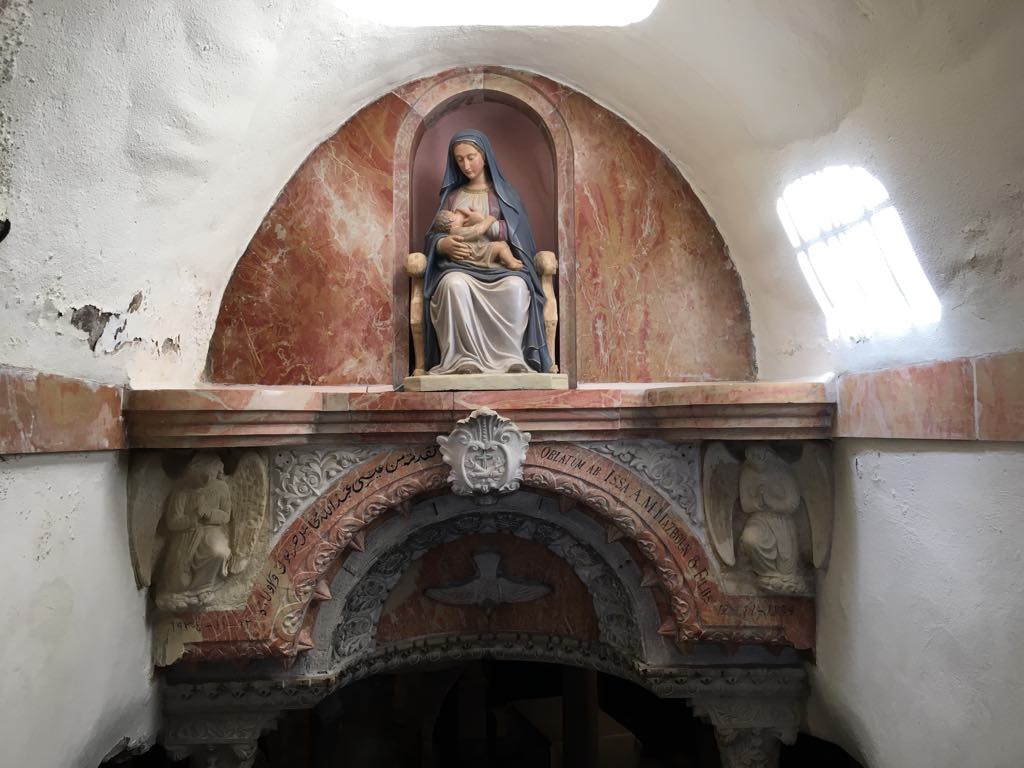
Chapel of the Milk Grotto in Bethlehem where the Holy Family hid before fleeing to Egypt to escape Herod’s murder of innocent babies. According to tradition, a drop of milk from the Virgin Mary fell on the floor of the cave that turned color of the stones to white.

We have just celebrated the Feast of the Birth of the Blessed Virgin Mary, the most perfect example of one who had experienced God’s hiddenness in her life, teaching us with some important lessons in rediscovering and keeping God’s hiddenness specially in this age of social media when everything is shown and has to be seen.

We have mentioned in our previous blog that hiddenness is different from being invisible that simply means “not visible”; hiddenness is more than not being seen per se but that feeling with certainty that God is present though hiding because he wants to surprise us. If God were not hidden, we would have not found him at all. And the more God is hidden, the more we are able to see him and experience him too as seen in the life of Mary (https://lordmychef.com/2020/09/04/the-hiddenness-of-god/).

The hiddenness of Mary.

Simplicity and humility of Mary as venue for the perfect setting of God’s coming in Jesus Christ. Consider her origins: her town of Nazareth in the province of Galilee was definitely outside the more popular city of Jerusalem that was the place to be at that time. Most of all, it is the only town in the New Testament never mentioned in the Old Testament nor by the prophets for lack of any significance in the coming of the Messiah.

Nazareth was largely unknown with some hint of notoriety as expressed by Nathanael (aka, Apostle Bartholomew) when he expressed disbelief to Philip who told him they have found the Christ, Jesus of Nazareth, by saying “Can anything good come from Nazareth?” (John 1:46)

Photo by author of chapel at the grotto believed where Mary received the good news of bearing Jesus Christ in her womb underneath the Basilica of the Annunciation at Nazareth, Israel (2019).

But that is how God works in his hiddenness, coming to us in the most ordinary places and circumstances, even least expected like Mary who was definitely not “in” if we go by today’s popular standard of “who’s in and who’s out?”

In fact, she was so “outside” the circle of influence of their time with her being promdi as we say these days, without any illustrious lineage to be proud of like her spouse Joseph who was from the royal Davidic line or her cousin Elizabeth from the priestly branch of Aaron, the brother of Moses whose husband, Zechariah belonged to another priestly clan in Israel.

Yet, God chose Mary to be the Mother of Jesus Christ because of her hiddenness expressed in her simplicity and humility. It is a far cry from our extreme “Marianism” when we almost worship Mary forgetting Jesus Christ her Son and our Savior! Worst still is the growing trend of “triumphalism” in many parishes racing for the so-called “episcopal” and “canonical” coronation of their various images of the Virgin Mary that come in all kinds of names and titles that has come to look more of a fad than authentic Marian devotion.

Without any intentions of denigrating the role and stature of the Blessed Virgin Mary in our faith as well as her proper place in the life of the Church defined by Vatican II’s Lumen Gentium, I dare ask the following questions:

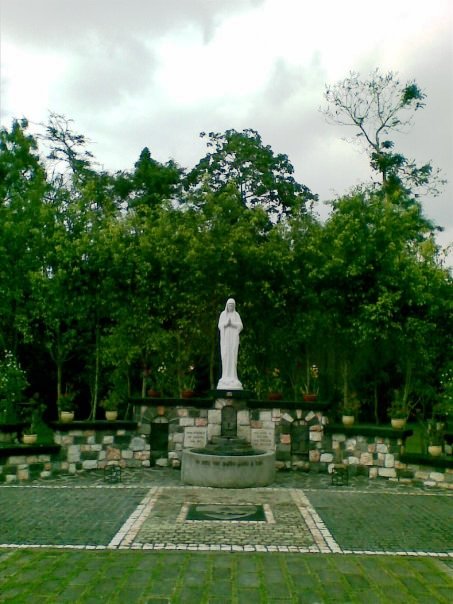
Photo by author, a replica of Our Lady of the Poor of Banneux, Belgium at Girlstown, Cavite (2009).

Is her coronation in heaven as Queen of heaven and earth not enough?

Why the need for these lavish spectacles for the coronation of the most simplest and humblest woman to have lived on earth?

It is a clear case of triumphalism – that exaggeration or overdoing our worship and rituals – especially if the Marian image is less than 200 years old without widespread devotions like the ones at Sto. Domingo (Quezon City) and Manaoag (Pangasinan).

I do not think the Blessed Mother would favor this considering her simplicity and solidarity with the poor and marginalized peoples seen in her many apparitions.

See the quaint and charming simplicity of Mary at Fatima in Portugal (1917) and lately at Banneux in Liege, Belgium (1933) where she identified herself as “Lady of the Poor”.

Note how the Virgin Mary reads “the signs of the times” in her apparitions and appearances when during the 1500’s at the height of European royalties and expeditions, she was always portrayed as victorious in regal clothes; but since Fatima in the 20th century as the world sank into the excesses of Industrial Revolution and affluence, Mary appeared simple, always in solidarity with the poor and suffering.

It is a cue we are sorely missing and sad to say, instead of renewing the world as St. Paul had asked us, we have allowed ourselves with the Mother of God to be transformed into the ways of the world by immersing in its showbiz frenzies, focusing on the material aspects like expensive clothes and jewelries.

Second example of Mary’s hiddenness is her oneness with Jesus Christ. She was never on her own, always seen in Jesus, with Jesus her Son and Lord. She believed in him so much, making him the focus at the wedding feast at Cana as well as at the foot of the Cross where she expressed in the most strongest terms her solidarity with the Savior of the world.

This has always been insisted by the Church since Vatican II regarding our devotions to Mary that must always be in relation with Jesus and his mission — never on her own.

Photo by author, 2019.

In all her apparitions, the Blessed Mother has always been consistent with her messages of conversion and return to God through her Son Jesus Christ, the frequent reception of the Sacraments of the Eucharist and Confession or Reconciliation.

Mary’s Christocentricity is best seen in her oneness with him in pains and sufferings like in the Pieta and the Mater Dolorosa where Jesus is the one standing out, not her. Nor anybody else.

When Mary, or anybody else for that matter goes on one’s own, Jesus is no longer hidden but removed from the scene. Then his Cross disappears and all that is seen is Mary in all her “beauty and glory” that are empty, very secular because these attributes come precisely from her communion in Jesus!

Perhaps, this pandemic is teaching us today to review our Marian devotions and processions that have become more of a show and a spectacle for Instagram than for deepening of our faith.

I pray that the Cofradia that holds the annual December 8 processions at Intramuros would take a rest this year until 2022 to discern their noble efforts before that have degenerated to pomp and pageantry among “devotees” specially camareros and camareras trying to outshine and outclass each other with some participation at the sidelights of their pastors and sacristans.

Keeping the hiddenness of God while we remain hidden in contemplation.

Of all the qualities of Mary we all must imitate to help people rediscover God’s hiddenness is her being hidden in prayer and contemplation.

St. John Paul II noted in Rosarium Virginis Mariae when he launched the Luminous Mysteries in 2002 that although the scriptures are silent about where was Mary during the other significant moments of the life of Jesus, especially at the institution of the Holy Eucharist, it was most likely that Mary was also present deep in prayer.

This we find clearly at the Pentecost when the Holy Spirit descended upon the apostles and the Blessed Virgin Mary while they were praying at the Upper Room in Jerusalem (Acts 1:13-14).

Modern rendition of the Pentecost with Mary among the other disciples of Jesus. From Google.

Pope emeritus Benedict XVI shares with us his profound insight in his second Jesus of Nazareth book series (Birth of Jesus) how after the annunciation of the the birth of Christ to Mary, the angel left her totally without ever coming back to warn or instruct her unlike with Joseph. After saying “Yes” to the plan of God to be the Mother of Jesus, Mary immersed herself deep in prayers and contemplation, becoming hidden herself in God.

Since then, she never doubted Jesus her Son as the Christ, nurturing her faith with prayers beautifully expressed by St. Luke in saying how “Mary treasured things in her heart” when facing difficult situations like during his birth and his finding at the temple. It is not surprising that in the contemplation by St. Ignatius of Loyola, the Risen Lord must have first appeared to his Mother upon rising from the dead because she was the first to believe totally in him (which became the basis of our tradition of the Salubong).

Mary has always been present in the hiddenness of Christ from his coming in the darkness of the night on a manger in Bethlehem, to his hidden years in Nazareth, to his ministry when he would always retreat to a deserted place to pray, to his Crucifixion and death and burial on Good Friday and finally, in the darkness of Easter.

In this age of social media where everyone and everything has to be seen and shown with nothing hidden anymore even without qualms and shame at all, part of our mission and ministry as priests and religious is to lead people back to God’s hiddenness like the Virgin Mary so they may realize anew that the best things in this life are not always seen.

To fulfill this is for us first of all to imitate God like Mary — be hidden!

How unfortunate that instead of leading the people back to God’s hiddenness, we priests and religious have in fact joined the secular world, imitating the “influencers” like bloggers and vloggers that instead of focusing on God who is hidden, we are concerned with our selves and all the “porma” for the sake of number of “likes” and “followers” we have in our posts.

The more we try so hard to make God visible in our ministry by imitating the styles and gimicks of some media personalities that make our liturgy look like a variety show complete with song and dance numbers with our altars heavily decorated like a studio set with giant tarpaulins like in EDSA, that is when we remove God totally – not only his hiddenness – from the scene and inverse proportionately, the more we priests and pastors become more popular than the Lord himself.

“The Assumption of the Virgin” by Italian Renaissance painter Titian completed in 1518 for the main altar of Frari church in Venice. Photo from wikidata.org.

And that is how cults begin, with or without Jesus. It is very sad, even tragic and ironic because we have removed God himself – even Mary! – by unconsciously making ourselves the center of attention like pop icons and idols.

Mary had shown us the most perfect example of discipleship which is more of Jesus, less of self.

Can we not post without using our own pictures – no matter how profound our thoughts are – so the people may see the hiddenness of God in a photo of a lovely flower or a magnificent sunset? Unless you are a bishop or the Pope himself, having your photo published specially in the news is part of the information process about the person in focus. It is totally different in Church communications which is all about God and his message of love, not us.

The quarantine period invites us in the Church to appreciate and share this wonderful hiddenness of God by first becoming incognito, unknown and hidden from others, preferring to be at the background or “behind the camera” as we follow God in his hiddenness until we go to that great beyond of totally hidden from everybody except God.

Do not worry. We have Mary in every step along the way. Amen.

The hiddenness of God

Quiet Storm by Fr. Nicanor F. Lalog II, 04 September 2020
Photo by author, sunset at the Lake of Galilee (Tiberias) in Israel, May 2017.

August has always been a “ghost month” for me since elementary school. Long before I have heard these stories and words of caution against many things in the month of August, I have always dreaded this month when days are grindingly slow.

Specially this year 2020 when the whole month of August felt like the season of Lent when everything was dry and empty, even literally speaking in our churches when the five Sundays of August were like five Good Fridays.

But, for the first time in many years during this pandemic, amid the dryness and emptiness of August 2020, I felt and “found” God anew in his most unique and wonderful characteristic — his hiddenness.

Hiddenness is different from being invisible that simply means “not visible”.

Hiddenness is something both simple and complicated but beautiful and wonderful when we find God in his hiddenness.

Hiddenness of God means more than not being seen per se; it is that feeling with certainty that he is present but, just hiding somewhere. In fact, if God were not hidden, we would have not found him at all!

And the more God is hidden, the more we are able to see him and experience him!

Photo by author, April 2020.

Remember when we were kids and could not find the things that our mother had asked us to get from somewhere in the sala or kitchen or her tocador? She would threaten us with the classic line my generation have all heard and memorized, “Pag hindi mo nakita yan, makikita mo sa akin!”

It is one of our funniest memories of childhood! I am sorry for my English-speaking readers but there is no appropriate translation for this because it is very cultural and even spiritual in nature. Literally translated, it says that if you do not find what you are looking for, you would find it with me. Crazy and insane, is it not?!

I told you, hiddenness of God is both simple and complex but whenever we remember those “sweet, maternal threats”, we laugh and shrug off the experience as we were dead serious then searching for whatever thing mom had asked us because deep in us we knew too well, it must be somewhere there. Sabi kasi ni Inay! (Mom said so!)

That is how it is with God too! We know for sure he is around, he is present. But in hiding because that is how loving God is, like moms and some lovers with surprises for us his beloved.

The Prophet Jeremiah experienced it so well when he wrote:

You duped me, O Lord, and I let myself be duped; you were too strong for me, and you triumphed. All the day I am an object of laughter, everyone mocks me. Whenever I speak, I must cry out, violence and outrage is my message; the word of the Lord has brought me derision and reproach all the day. I say to myself, I will not mention him, I will speak in his name no more. But then it becomes like fire burning in my heart, imprisoned in my bones; I grow weary holding itin, I cannot endure it.

Jeremiah 20:7-9

No one can understand this without having experienced such intense kind of love of God or of another person that even if we are pained, we just cannot walk away or leave. More so with God, the most intense lover of all!

At the very center of Jeremiah’s torment is the invincible power of attraction of God. This is also the reason human love – whether for another a friend or a spouse, for the Church or any institution – must always be based on the love of Christ who told us to “love one another as I have loved you.” If our love remains in the human level, it can never go deeper or higher making it so sublime, so true, so pure.

That is how God is in his hiddenness who is like a lover who never stops looking for us, calling us, luring us, even seducing us to come to him, search him and once found, we may dwell in his great love; hence, even if we do not “see” him, we keep on following him as we also find him in his hiddenness!

Hiddenness of God, mystery and gift of Easter

This hiddenness of God is both the gift and mystery of Jesus Christ’s Resurrection. It is a gift because in his hiddenness, God has become closest to us more than ever while at the same time, a mystery because it is in his very hiddenness that we truly find and discover God.

Remember the two disciples going home to Emmaus on Easter afternoon who was accompanied by Jesus while traveling? They did not recognize him but as they talked, their “hearts were burning” as he explained the Scriptures. Then joining them at their meal at sundown upon reaching Emmaus, Jesus took the bread, blessed it and broke it — and the disciples’ eyes were opened, recognizing him as the Lord who immediately disappeared! The two then rushed back to Jerusalem to announce to the other disciples that Jesus had indeed risen.

That is the beauty of hiddenness, its giftedness and mystery that we find God even our beloved who had died or not physically present with us but deep within, we are certain of their presence as being so true and so real.

Hiddenness is a deeper level of relationship coming from one’s heart and soul not dependent on physical presence. This is the reason why upon appearing to Mary Magdalene on Easter morning, Jesus asked her not to touch him because from then on, knowing and relating with the Lord need not be physical and corporeal as he used to relate with them before his Death and Resurrection.

All these we must have experienced like when after a friend or a relative had died, that is when we felt growing closer with the person than when he/she was still alive and physically present with us. Or, when we were feeling low and down, we experienced sometimes so amazed at how we have felt the presence even the scent of our deceased loved ones comforting us, assuring us that all would be better.

This quarantine period invites us to experience and discover God anew in his hiddenness through prayers and silence so we can reflect on the many lessons this pandemic is teaching us today. In the darkness and emptiness of this pandemic are grace-filled moments with God hidden in our poverty and sadness, sickness and even deaths around us.

Photo by author, Christmas 2018.

Some people have already asked me about what or how would our Simbang Gabi and Christmas celebrations be. They are sad and worried that it must be a very bleak Christmas for everyone with so many out of work.

But, despite this gloom, I tell them that Christmas 2020 would be one – if not the most meaningful Christmas we shall ever have despite forecasts that there would be less of everything, materially speaking.

So often in life, when we have so much material things, that is when we fail to find and experience God.

Recall that in Bethlehem more that 2000 years ago when Jesus Christ was born, God came to us hidden in a stable, on a manger in the darkness of the night.

And do not forget, too, that Christmas is not a date but an event, the very person of Jesus Christ, the all-powerful God who came to us hidden in a child, who upon becoming an adult, was crucified and died. These are sad and down moments for us but for God, it is his hiddenness, his presence. Let us go and find him again for he continues to come to us in hiddenness. Amen.

New normal is not normal

Quiet Storm by Fr. Nicanor F. Lalog II, 28 July 2020
Photo by Mr. Raffy Tima of GMA-7 News, March 2020

Experts have been telling us since the start of this COVID-19 pandemic that our lives would no longer be the same like before 2020. Even if a new vaccine and more effective treatment are discovered to fight this disease, life on this planet is definitely changed.

But, for better or for worse?

That is the most important challenge of this pandemic next to finding a vaccine and cure or treatment against it: that we seize this unique opportunity from COVID-19 to “reset” or “refresh” the world so we can all start anew by correcting the mistakes and excesses of the past to finally kickoff a true and meaningful growth and development among peoples, especially the poor and marginalized.

Photo from TurboSquid.com

This we can start – or restart – by immediately deleting from our vocabulary and consciousness that word we have been erroneously using since summer, “new normal”.

New normal is abnormal because norms or standards like morality always remain.

Washing of hands frequently, covering one’s mouth and nose when sneezing and coughing, not spitting everywhere are not new normal. Cleanliness has always been the norm since the beginning that we have that saying always true, “Cleanliness is next to Godliness”.

Praying every day, individually and as a family especially the Holy Rosary is not a new normal. Connecting with the Divine has always been the norm of man since the beginning even before Jesus Christ came to the world.

More than half a century ago, the late Fr. Patrick Peyton has been saying, “The family that prays together, stays together; and the world at prayer is a world at peace.” Praying has always been the norm in our lives.

Normal or norms do not change because they are the standard measure. Even before COVID-19 came, normal temperature has always been 37 degrees Celsius, 12-inches make a foot, and so on and so forth.

So, please forget this abnormality of referring to our new way of living as “new normal” because it is not new at all.

Worst, this usage of the term “new normal” courtesy of the media, politicians, and policy makers is a dangerous indication of unconsciously or subconsciously perpetuating our excesses of the past that the Wuhan virus have rightly exposed: too much greed especially among capitalists, materialism and consumerism, and individualism.

From vaticannews.va

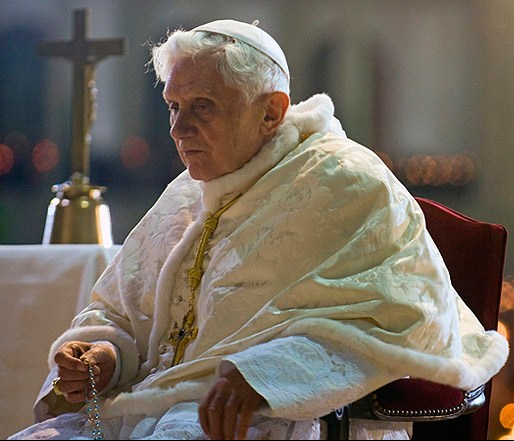
Pope emeritus Benedict XVI had long been speaking against these by describing it as “dictatorship of relativism”.

Acceptance of this term or concept that was actually coined at the aftermath of the 2007 financial crisis indicates that we are miserably not learning the lessons of this global crisis.

Our sights remain myopic, even blinded in looking at this pandemic without realizing at all how this was spawned by our own excesses and sins. Long before we have been told to maintain physical or social distancing to stop spread of the new corona virus, we have long been distant from one another. We have been spending more time with our computers and smartphones, trying to connect with friends and everyone in various social media platforms unmindful of the persons seated near us. “Table for one” in restaurants is fast becoming the order of the day than the exception to the rule.

My point is, accepting everything now as the new normal is also accepting wholesale the new ordering of things going on that continues to neglect the weakest and poorest among us. We are only perpetuating an error and worst an evil among us that we have refused to examine closely in the past.

This “new normal” is a conditioning concept that pushes the marginalized and disadvantaged people deeper into misery as the daily news tells us. Unconsciously to many of us, “new normal” is an excuse even a justification for the continued poverty and slavery of the weak and disadvantaged.

What a shame that while so many countries are suffering from COVID-19 like ours, Beijing is flexing its muscles around the world economically and militarily – right in our seas!- as if they are not bothered at all by this virus that came from their own province of Wuhan.

A very interesting read I have found last month was written by Nigerian Chime Asonye who rightly claims that “the new normal” “should not be the lens through which we examine our changed world”.

The ‘new normal’ discourse sanitizes the idea that our present is okay because normal is regular. Yes, there may be public health challenges, but these are issues that can be managed. We accept life under the omnipresent threat of disease as ordinary. But what exactly is normal about this pandemic? It is not normal for society en masse to be isolated, but if this is normal, then we are supposed to have control of the situation. Even if we feel loss or despair, we are expected to get used to it — accepting that this morbid reality is now standard.

https://www.weforum.org/agenda/2020/06/theres-nothing-new-about-this-new-normal-heres-why/

COVID-19 can serve both as a catharsis to our past excesses and a watershed for a brighter future.

The old system, or what people refer to as “normal” before in the world had erroneously set is not working, plainly wrong and abusive; why continue or import it into this coming new period?

As the pandemic rages on it gives us a chance to reimagine the world by tracing history, not forgetting it.

We should revel in the discomfort of the current moment to generate a ‘new paradigm’, not a ‘new normal’. Feeling unsettled, destabilized and alone can help us empathize with individuals who have faced systematic exclusions long-ignored by society even before the rise of COVID-19 — thus stimulating urgent action to improve their condition. For these communities, things have never been ‘normal’.

https://www.weforum.org/agenda/2020/06/theres-nothing-new-about-this-new-normal-heres-why/

COVIDS-19 is definitely not a punishment from God but a result of man playing God.

And like in the past, whether in world history or in our own lives when things go wrong even worst, God ensures to make ways that anything bad happening to us would always lead to something good.

Photo by author, Christmas 2019 in our Parish.

See how providential in the sense that microscopic viruses are reminding us that true power is not in being big but in being small, not in being strong but being weak — the very example of God to us when he became human like us more than 2000 years ago.

Unfortunately, his lessons remain unheeded up to our time even among us in the Church.

It is a most welcomed change in the midst of this pandemic that the Vatican last week issued new guidelines through the Congregation for the Clergy (directed to us priests) for the world’s parishes that can help us respond adequately to the challenges of this crisis (http://press.vatican.va/content/salastampa/en/bollettino/pubblico/2020/07/20/200720a.html).

But, that will require another blog.

For the meantime, please stop using that abnormal term “new normal”.

A blessed Tuesday to everyone!

St. Paul in time of COVID-19: need for pastoral communication

Quiet Storm by Fr. Nicanor F. Lalog II, 11 June 2020
Painting by Raphael (1515) of St. Paul preaching at Areopagus in Athens, Greece. From wikipedia.

With houses of worship still closed despite the opening of most business establishments, here is the final installment of reflection in our series on how the life and teachings of St. Paul may help us in our ministry during this time of COVID-19 amid a perceived government “persecution” of the Catholic Church.

There is no doubt that like during his time, St. Paul would be using modern means of communication to preach the Gospel of Jesus Christ especially in this most trying time of our history, using the internet as the new “Areopagus” with social media in particular.

Then Paul stood up at the Areopagus and said: “You Athenians, I see that in every respect you are very religious. For as I walked around looking carefully at your shrines, I even discovered an altar inscribed, ‘To An Unknown God.’ What therefore you unknowingly worship, I proclaim to you. The God who made the world and all that is in it…”

Acts of the Apostles 17:22-24

Social Communication

Perhaps before we go into our reflection, it is imperative especially for bishops and priests to be reminded anew of some important terms in communications; this is more than about names or nomenclature because for as long these terms of communications are not clear with us, all our evangelization efforts would be askewed as it is now showing with an explosion of online Masses and other religious celebrations.

First priority is to stop using the words “mass media” and even “social media” in our church communications because these are very limited in scope and context.

It is important to note that in the 2000-year history of the Church, it was only in Vatican II that we have issued a conciliar document on communication wherein the Fathers also introduced the term social communication as a new name for communications in the Church.

How sad that there are still bishops and priests using the terms “mass media” or “media” and lately “social media” when more than 50 years ago the Church through the inspiration of the Holy Spirit coined social communication to refer to “the communication of and in human society including all the ways and means used in this process” (Fr. Franz-Josef Eilers, svd, 2009 BISCOM-FABC, Bangkok).

Social communication is a very prophetic term because it is theological and rooted in God who is communication himself, sharing with us his power to communicate so we may also communicate with him and with others. Most of all, God continues to communicate with us and from that lies our task as a Church to communicate him to the world.

This is the reason why we have to keep on using this term “social communication” in our Church communications to keep us Christocentric, meaning, every communication in the Church and by the Church has Jesus as Message.

And that is essentially the kind of communication process followed by St. Paul the Apostle. In fact, reviewing his letters and the various accounts about him would show us that early, this great apostle has been into social communication, specifically “pastoral communication” that is an emerging field in Church communications whose realities have long been espoused by St. Paul himself.

Pastoral Communication

Pastoral communication is anchored on Jesus Christ, the “Good Shepherd” who sets himself as the norm and standard of our Church communications.

Jesus said, “I am the good shepherd. A good shepherd lays down his life for the sheep… I am the good shepherd, and I know mine and mine know me, just as the Father knows me and I know the Father; and I will lay down my life for the sheep.”

John 10:11, 14-15
Photo by Pixabay on Pexels.com

St. Paul has always been very clear with this in all his communications that towards the end of his life, he had beautifully written his disciple this wonderful piece:

Beloved: I charge you in the presence of God and of Christ Jesus, who will judge the living and the dead, and by his appearing and his kingly power: proclaim the word; per persistent whether it is convenient or inconvenient… For I am already being poured out like a libation, and the time of my departure is at hand. I have competed well; I have finished the race; I have kept the faith.”

2 Timothy 4:1-2, 6-7

Communicating Jesus Christ is always about self-sacrifice, about giving of one’s self like our Lord and Master. In whatever form of communication we use, it is always a call to “enflesh” the Word. In short, communication is spirituality that indicates the kind of relationship we have with God. How we reflect that relationship with God in words and in deeds, in our clothings and everything is communication.

Like St. Paul, he was able to offer himself wholly to God as reflected in his writings and preaching because he was more concerned with the needs of the flock and not with his own needs.

And this is where I sadly feel our bishops sorely absent and silent except for just two, Lingayen-Dagupan’s Archbishop Soc Villegas and Manila’s Apostolic Administrator Bishop Broderick Pabillo.

Where are the other bishops?

Business establishments are almost all opening, even dine-in restaurants and yet, until now for no valid reason, the government continues to ban religious mass gatherings except for maximum of ten persons in areas under GCQ.

When are the bishops and priests going to speak out against this and open the churches so people may be spiritually nourished?

What an auspicious time for the clergy and hierarchy to speak against this continued closure of churches as we are on the eve of our 500th year of Christianization when under serious persecution. Has the Church grown timid in the face of an unfriendly government?

Worst are some priests who seem to follow more the secular world in their digital presence but empty of Jesus Christ, concerned only with popularity measured in number of likes and shares as well as followers.

Many of us have become more of personalities than as priests and ministers, unconsciously trying to be more popular than the Lord himself that we no longer have sacrifice of the Mass but a variety show, complete with sound effects and digital characters, some wit dance numbers and raffles!

When God is displaced, then our love is misplaced, then, we lose all communications too.

Communication is more than the expression of ideas and the indication of emotion. At its most profound level it is the giving of self in love. Christ’s communication was, in fact, spirit and life.  In the institution of the Holy Eucharist, Christ gave us the most perfect and most intimate form of communion between God and man possible in this life, and, out of this, the deepest possible unity between men. Further, Christ communicated to us His life-giving Spirit, who brings all men together in unity. The Church is Christ’s Mystical Body, the hidden completion of Christ Glorified who “fills the whole creation”.  As a result we move, within the Church and with the help of the word and the sacraments, towards the hope of that last unity where “God will be all in all”. 

Communio et Progressio # 11
From Google.

Problem with online Masses and religion

Every communication presupposes presence. That is essentially the meaning of God’s “I AM” in the burning bush to Moses and the “I AM” declarations by Jesus in the New Testament, especially in the fourth gospel where we find him saying “I am the good shepherd”.

Even St. Paul in his letters always began with his standard salutations like “I, Paul…” to indicate his very presence among his “parishioners”.

However, in the digital media, presence is not so essential and can even be faked both ways, either by being “taped” or “replayed” by viewers.

And there lies the great danger of online Masses and other celebrations: whether we like or not, online religious celebrations give the impressions on people that God is a “consummable”, a product or a show that can be had when most convenient to us like video on demand or the streamed shows of Netflix.

That is why we have to open churches soon to stop these online Masses except for those in the Cathedrals and in existence long before COVID-19 that cater to the needs of the sick and elderly in their homes.

Pope Francis has always been clear with this, stressing that these online Masses and religious celebrations are very temporary due to the extraordinary situation brought about by the pandemic.

From Pinterest/Aleteia.

Imagine the problem at Corinth that reached St. Paul’s attention, prompting him to write them another letter to reprimand them but at the same time to encourage them to mend their ways. It was a problem of abusing the Eucharist when St. Paul was no longer with them.

It is the same thing happening in many of our online Masses that have become variety shows to impress viewers. Long before we got into this lockdown, many priests have crossed the boundaries without knowing they have made fools of themselves as they rely more on “likes”, on being viral or trending, dishing out shallow reflections covered with cute song numbers, litany of greetings on air, and so many other inanities that Jesus is lost in the process.

Unfortunately, many laypeople are now also having their own digital preaching or evangelization with their own “productions” taking their cue from their showbiz pastors.

If St. Paul were with us today, he would surely write again to express his dismay at the people seeking more of entertainment than having Jesus Christ.

“But I am afraid that, as the serpent deceived Eve by his cunning, your thoughts may be corrupted from a sincere and pure commitment to Christ. For I think that I am not in any way inferior to these “superapostles”. Even if I am untrained in speaking, I am not so in knowledge; in every way we have made this plain to you in all things.

2 Corinthians 11:3, 5-6

Church communication is Jesus Christ and his Cross as St. Paul reminds us in his writings (1Cor.15:1-3); it is never about techniques or gadgets.

Though we need to be present online, the cutting edge of real communication remains in pastoral communication that means being present with others who need us most including those without internet access, witnessing to the values of Jesus in relating with people, bringing people together into a communion and helping them find answers in their search for meaning and directions in life, in making the right choices and in living their convictions and faith.

What we are speaking of are real people, persons and lives that matter so much, more precious than goods and commodities.

Let us not fall into the trappings of this “media revolution” that made one futurologist describe our contemporary society as

Technologically Intoxicated Zone defined by the complicated and often paradoxical relationship between technology and our search for meaning.

John Naisbitt

According to Naisbitt and other experts, while people prefer quick fixes online of everything, from religion to nutrition, while at the same time fearing and worshipping technology that had blurred the distinction of what is real and fake, the more they live their lives distanced and distracted — something we are already seeing even before the coming of social distancing!

To communicate in the Church at this time is to imitate St. Paul: be present for and with the people wherein we help them find their way to God by being their companions and “co-journeyers” in life, witnessing to them the Cross of Jesus Christ with our very lives as an offering and sacrifice, not as a commodity or a show to be “liked” on Facebook and Instagram.

And, lest we forget, it is God whom people must follow and worship, not us.

So be imitators of God, as beloved children, and live in love, as Christ loved us and handed himself over for us as a sacrificial offering to God for a fragrant aroma.

Ephesians 5:1-2
Pope Francis praying before an empty St. Peter’s Square last March 27, 2020 at the height of COVID-19 in Italy.