Welcoming 2026 with Mary

Lord My Chef Daily Recipe for the Soul by Fr. Nicanor F. Lalog II
Thursday, Solemnity of Mary, Mother of God, 01 January 2026
Numbers 6:22-27 ><}}}}*> Galatians 4:4-7 ><}}}}*> Luke 2:16-21
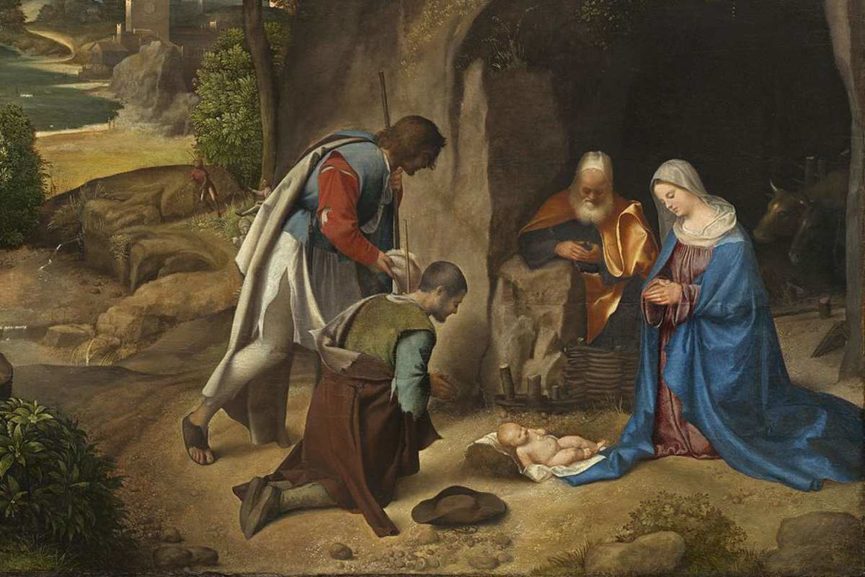
“The Adoration of the Shepherds”, a painting of the Nativity scene by Italian artist Giorgione before his death at a very young age of 30 in 1510.

Still a blessed Merry Christmas to everyone! Please continue greeting one another with a Merry Christmas until January 11, 2026, the Feast of the Lord’s Baptism that closes the Christmas Season.

Keep greeting Merry Christmas even on this new year’s day because what we celebrate today is the Solemnity of Mary, Mother of God – not the New Year! Remember we had our new year last first Sunday of Advent, evening of November 29 and the 30th.

Stop announcing our New Year’s Mass. Our Mass today is Solemnity of Mary, Mother of God which is the Eighth Day within the Octave of Christmas.

It is the oldest feast of the Blessed Virgin Mary that celebrates the mystery of her being the Mother of Jesus Christ who is true God and true Man following the Council of Ephesus in 431 AD. Since Jesus remained fully God and fully human in his conception by the Blessed Virgin Mary, it is right and proper too as the Council affirmed to call Mary the “Mother of God” (Theotokos). Since the birth of Christ is also our point reference in reckoning time that we have the terms “BC” (Before Christ) and “AD” (Anno Domini or Year of the Lord), this celebration teaches a lot on how to welcome this 2026 like Mary.
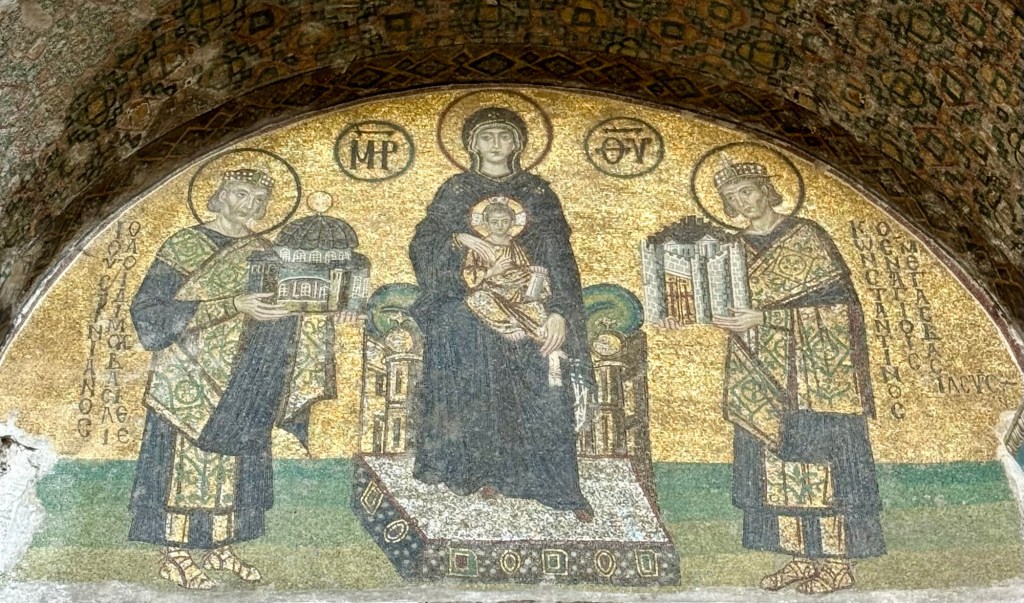
Photo by author, mosaic of Mary with Jesus, Hagia Sophia, Istanbul, Turkiye, 01 November 2025.

First lesson the Blessed Virgin Mary teaches us this new year in Christ is what we have mentioned last Christmas – if there is anything that merits haste, it is those of things of God. How sad that these days we are so preoccupied with what is trending and viral or we race for what is “in” in fashion and everything. In an age of instants, we rush everything that we miss out life itself, God and one another, especially our very selves.

The shepherds went in haste to Bethlehem and found Mary and Joseph, and the infant lying in the manger. When they saw this, they made known the message that had been told them about this child (Luke 2:16-17).

Mary went in haste too for the Lord. Recall her response to the Angel at the Annunciation, “Be it done unto me according to your word.” Her response was immediate. She did not dare the Angel like Zechariah. After the Annunciation, Mary went in haste to visit her cousin Elizabeth pregnant with John the Baptist.

Photo by author, December 2020.

It is true that “haste makes waste” because doing things too quickly leads to mistakes that result in greater losses in time, effort, and materials. The great St. Francis Sales cautioned us that haste is the biggest enemy of growth in spirituality.

However, during the Christmas season, we find that haste is not that totally bad at all.

As shown to us both by Mary and the shepherds, there is something so good with making haste to find Christ, to share Christ, to be with Christ.

We have a prayer formula now rarely used in public prayers wherein the leader says “O God come to my assistance” with the people responding, “O Lord make haste to help me” while making the sign of the Cross like in the praying of the Rosary. It is a beautiful prayer that tells us how God would always hasten to come to us even before we have called Him!

How sad that we rush to everything and everyone except to Jesus our Lord and God! More sad is the fact so many people have been in making haste to these days for the more mundane things without even spending some quality time in the church to pray.

This 2026, let us go in haste in the Lord for He has so many things in store for us as the shepherds and Elizabeth realized.
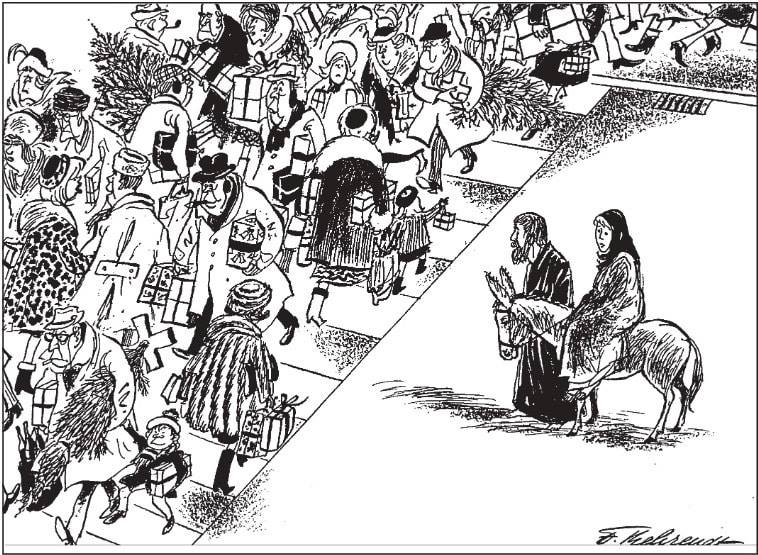
From forwarded cartoon at Facebook, December 2020.

Second important lesson the Blessed Mother is teaching us in welcoming Jesus Christ this new year is the value of silence which is a prerequisite in cultivating a prayer life, in making haste to God.

Though I grew up from the very barrio that manufactures most of the pyrotechnics sold in my hometown of Bocaue in Bulacan dubbed as the fireworks capital of the Philippines, I never liked these popular products every new year. Aside from being so dirty, these are so dangerous as I have seen many of our neighbors who have lost their arms, hands or fingers in manufacturing and playing with fireworks. Worst of all are the many lives of people lost following explosions of some factories in our barrio.

When I became a priest, I kept telling people including my barrio folks that welcoming the new year with fireworks is pagan practice, not Christian. And the most Christian way of welcoming new year like Mother Mary is always in silence, silent prayer like before the Blessed Sacrament.
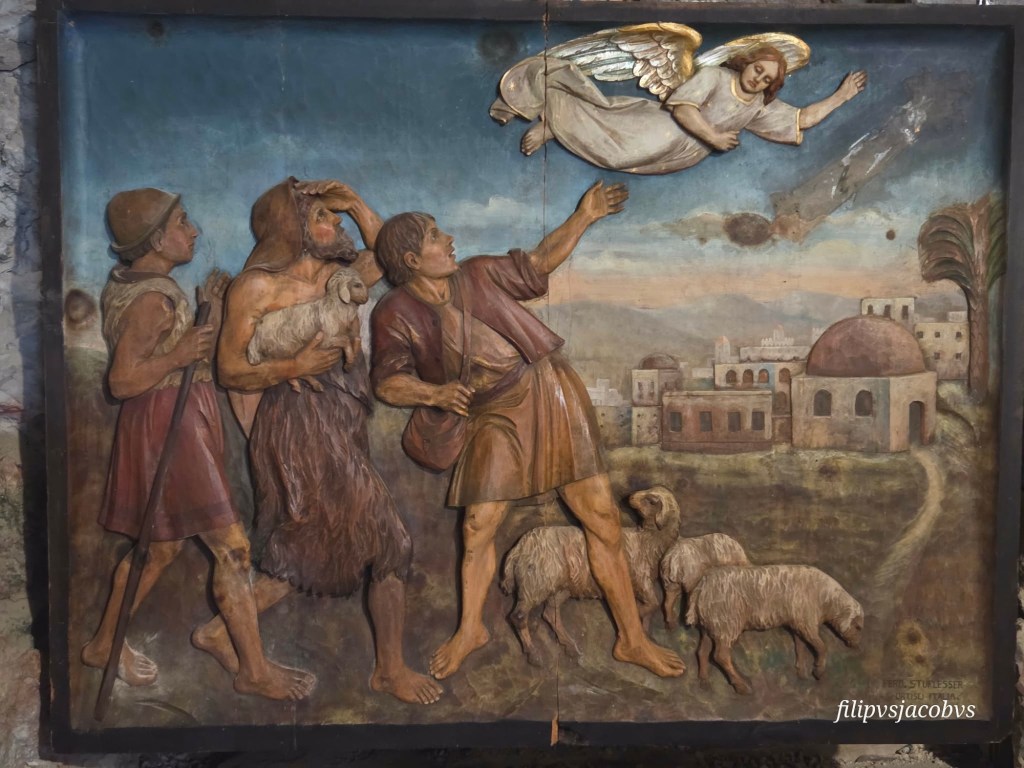
Photo by Ar. Philip Santiago, Chapel at the Angels’ Field in Bethlehem, October 2025.

All who heard it were amazed by what had been told them by the shepherds. And Mary kept all these things, reflecting on them in her heart (Luke 2:18-19).

It is very interesting that Luke had told us how people were amazed at what the shepherds spoke about that night on the birth of Jesus Christ they have found on a manger with his Mother Mary and her husband Joseph. Keep in mind that the shepherds were among the least trusted people of that time but their story went “viral” and “trending” so to speak. Amid all these talks was Mary, the Mother of Jesus, silently meditating everything in her heart!

Tonight or today, try to spend some silent moments of prayer before the Blessed Sacrament to thank God for all the blessings of 2025 as well as to listen to Christ’s instructions and plans for us this 2026. Jesus has always something to tell us but we always go in haste somewhere else or to somebody else. Jesus is right there in our hearts, the faintest voice you always dismiss and take for granted.

Let us cultivate a prayer life like Mary who always kept in her heart the words and experiences she had with Jesus. Let us not be like the shepherds who were there only at Christmas, never came back to Jesus specially when he was preaching in Galilee and when crucified on Good Friday wherein his constant companion in silence was Mary his Mother.
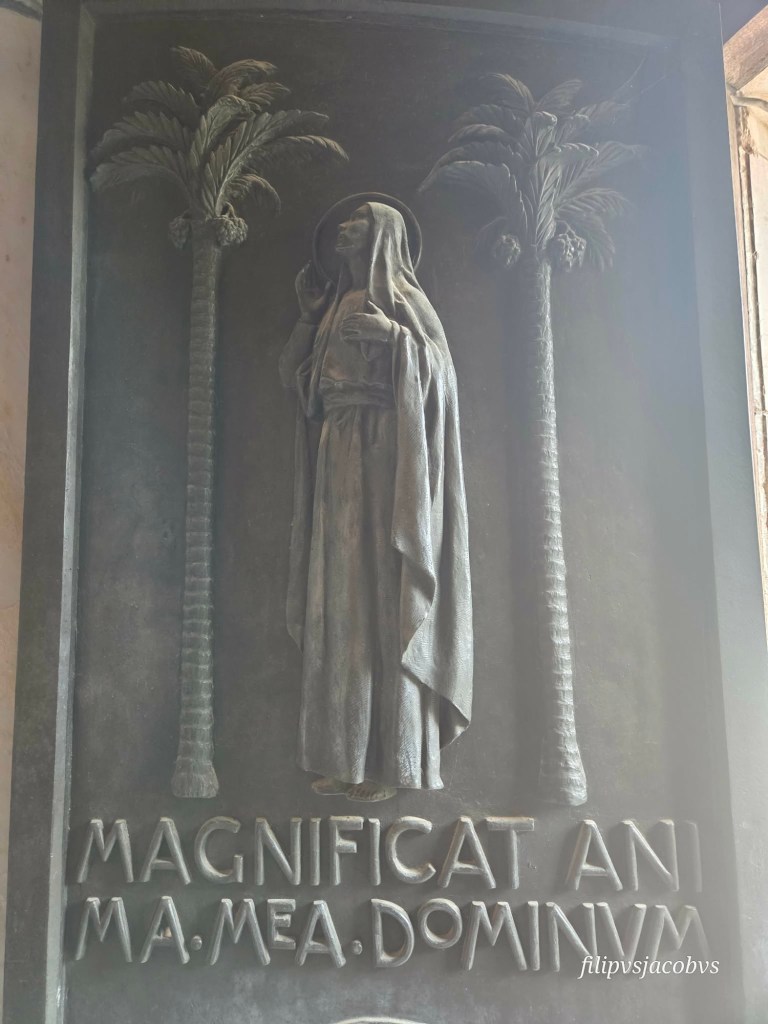
Photo by Ar. Philip Santiago, Basilica of the Annunciation, Nazareth, October 2025.

Third important lesson the Blessed Mother Mary is teaching us this first day of 2026 is to have faith in God in Jesus Christ His Son our Savior. Therefore, please stop all those superstitious beliefs of pampasuwerte like feng shui and fortune telling that are pagan practices.

When eight days were completed for his circumcision, he was named Jesus, the name given him by the angel before he was conceived in the womb (Luke 2:21).

Mary was very much like us when Mary gave birth to Jesus on that first Christmas: she too was totally unaware of what was in store for her, of what would happen to her Son. She was totally unaware of what would happen in the future. The only thing she was certain was the name to be given to her child, “Jesus” which means “God is my Savior”.

All blessings come only from God, not from any other spirits. We drive all the malas and bad spirits and negative vibes of the past year not with noises and blasts of trumpets or fireworks but with silence that is rooted in deep faith in Christ Jesus.

Such was the attitude of Mary on that first Christmas until her glorious Assumption into heaven: she never knew Jesus would be betrayed by one of his trusted friends and apostles; she was never told by the angel how after Jesus would feed and heal so many people He would later be arrested and crucified like a criminal except that she believed in Him until the end, remaining with Christ at the foot of the Cross.

All Mary had was a deep faith in Jesus as told her by the angel as the name to be given to her child is also the child of the Most High. Like Mary, let us keep our faith in Christ alone, not to round fruits nor stones nor other stuffs peddled to us to bring luck this new year.

Let us imitate Mary, the Mother of God, so human like us except in sin who was always in haste with things of God, silently meditating his words and workings, and most of all, trusting wholly in her Son Jesus. Amen. May your new year be filled with Christ’s peace and grace!

Photo by Ar. Philip Santiago, Basilica of the Annunciation, Nazareth, October 2025.

Hollowed, then hallowed

Lord My Chef Daily Recipe for the Soul by Fr. Nicanor F. Lalog II
Friday, Memorial of the Presentation of the Blessed Virgin Mary, 21 November 2025
1 Maccabees 4:36-37, 52-59 <*{{{{>< + ><}}}}*> Luke 19:45-48
Photo by author, Mary’s home in Ephesus, 03 November 2025.
God our loving Father,
today I praise and thank you again
for the recent chance to travel
and experience your majesty
and beauty abroad
and among other peoples
of different culture;
most of all,
I am grateful to have been
to the home of the Blessed
Virgin Mary in Ephesus;
until now,
I am savoring,
"masticating" the blessed
experience.

Jesus entered the temple area and proceeded to drive out those who were selling things, saying to them, “It is written, My house shall be a house of prayer, but you have made it a den of thieves” (Luke 19:45-46).

As I recall 
that brief moment of stay
inside the Ephesus home of Mary,
I felt my whole being emptied - hollowed -
and as I knelt and prayed
without any distractions,
no worries about pictures nor of time,
slowly I felt being filled within
by you, O God: from hollowedness
to holiness or hallowed;
that is why Jesus drove away
the merchants out of temple:
every temple,
every place of worship
including our very selves
is a home and dwelling place of God;
the chief priests, scribes
and leader of the people
felt under attack by Jesus
because they were empty of God,
filled of the world and its things;
the people were spellbound
on the other hand because
they have realized that
truly, we are the indwelling
of God; therefore, let us cleanse
ourselves always within
not only of sin but also of
so many things that distract
us away from God
to dwell in us
like social media.
O Blessed Virgin Mary,
from the very start you have
been reserved by God from any stain
of sin to be the Mother of the Christ
but it was also fulfilled because
of human cooperation: of your parents
dedicating you to God and most of all,
of your fiat to God.
Pray for us, Mama Mary
that we may cultivate a prayer life
that shall make us a home
to God; let us express our
fiat to him daily by presenting
ourselves to him like you.
Amen.
Photo by author, back of Mary’s home in Ephesus, 03 November 2025.

The heart of the priest

Lord My Chef Daily Recipe for the Soul, 04 August 2025
Monday, Memorial of St. John Baptiste Marie Vianney, Priest
Numbers 11:4-15 <*{{{{>< + ><}}}}*> Matthew 14:13-21
St. John Baptiste Marie Vianney from https://liturgiadashoras.online/.

People complain and ask me why our patron saint, St. John Baptiste Marie Vianney is always portrayed “unattractive” as old, balding and so thin who seemed to be so tired, even sad. Para daw hirap na hirap.

Usually I smile at them because when I entered the seminary, I felt the same way too upon seeing his images. But as I learned about his life and teachings, the more I realized St. John Baptiste Marie Vianney is actually one of the original “rock star” saints of the Church with his white, balding hair so much like Jimmy Page of Led Zeppelin!

There is something so deeply within him when we try to feel and observe his portrayals in the arts as more than images but a reality and experience of a man deemed weak yet so strong with an intensity of a Michael Jordan in his life and ministry. He was another St. Paul who had truly let “Christ lived in him” (Gal. 2:20), “strongest when weakest” (2Cor.12:10) who declared with conviction that “the priesthood is the love of the heart of Jesus.” Hence in my prayers last night and today, I asked Jesus to give me a heart “so big, so wide to welcome everyone and life’s many challenges” (https://lordmychef.com/2025/08/03/praying-with-our-patron-saint-john-baptiste-marie-vianney/).

Detail of a painting of the Sacred Heart of Jesus at Visitation Monastery, Marclaz, France from godongphoto / Shutterstock.

The readings this Monday of the eighteenth week in Ordinary Time perfectly jibed the celebration of the Memorial of St. John Baptiste Marie Vianney as they spoke of the heart of the priest.

In the first reading we heard of Moses lamenting to God of the difficulty in dealing with his people who were so stubborn and refused to recognize God’s immense love for them, so similar with us priests in many occasions when we feel so frustrated and sad when parishioners fail to see the good things we are doing for them.

When Moses heard the people, family after family, crying at the entrance of their tents, so that the Lord became very angry, he was grieved. “Why do you treat your servant so badly?” Moses asked the Lord. “Why are you so displeased with me that you burden me with all this people?”… I cannot carry all this people by myself, for they are too heavy for me. If this is the way you will deal with me, then please do me the favor of killing me at once, so that I need no longer face this distress” (Numbers 11:10-11, 14-15).

Many times, we priests feel like Moses who cannot voice out problems with the people who would never understand it at all. Worst, people would even blame us priests why we work so hard or why do we bother at all with their lives. “Pabayaan na lang ninyo kami…sanay na kami” are what they often say. It can be frustrating when people refuse to match the fire and ardor of their priests.

In this scene, we find one of the many instances in the life of Moses that was centered on God in prayers. The heart of the priest is a heart in prayer. The attitude of Moses in the first reading conversing with God in prayer shows us that in our life and ministry, there is no one to turn to except God alone with whom we can be our most personal self, even dare God to “take us” or “kill us” when we are so fed up. The good news is, God never took those words seriously as he knew Moses and the prophets including us who spoke to him that way never knew what we were saying at all.

There is a saying that goes, “if you can’t bear the heat, leave the kitchen”; but, it cannot be applied with the priesthood that is neither a profession nor a job one can easily walk out from and start into another venture or career. Priesthood is a call or a “vocation” from God; however, priesthood is more of the Caller than the call. It is a life centered on prayer to become like Jesus Christ who alone feels and understands and appreciates all our ups and downs in the ministry. The more we get closer to Jesus in the Cross, the more we experience fulfillment that we would never dare to trade it for anything or anyone else, not even the prettiest woman on earth.

Photo by author, Chapel of St. Francis Xavier, Sacred Novitiate, Novaliches, QC, March 2024.

Priesthood is the love of the heart of Jesus that continues to be wounded and hurt by sins of men and women in this modern age so selfish and materialistic. Thus, every priest is called to be a “wounded healer” too like Christ who in his woundedness healed the wounds of others. We remind people of the paradox and scandal of the Cross of Jesus, of life itself by taking into heart Christ’s teaching, “For whoever wishes to save his life will lose it, but whoever loses his life for my sake will find it” (Mt. 16:25).

Let us now reflect on our gospel.

When Jesus heard of death of John the Baptist, he withdrew in a boat to a deserted place by himself. the crowds heard of this and followed him on for from their towns. When he disembarked and saw the vast crowd, his heart was moved with pity for them, and he cured their sick (Matthew 14:13-14).

Observe the brevity of Matthew in narrating the situation at the scene without losing its very soul and meaning especially for us priests: Jesus did not have any intentions to go after Herod nor to challenge him for his execution of John the Baptist who spoke the truth.

Instead, Jesus sought solitude. Like Moses in the first reading, Jesus turned to God in his grief and anguish of the death of John the Baptist. He crossed the lake to pray and be one with the Father to pour out his sadness and most of all, to reflect on what to do next after John’s death.

Jesus shows us in this scene of his going into solitude that our low points in life as priests are also our high points like Christ’s Transfiguration. Every prayer moment is a transfiguration moment because that is when we get closest with Jesus. It has been consistently proven in our collective and personal experiences as priests verified by studies that crises in the priesthood happen when we stop praying because that is detaching from Jesus Christ, our Caller.

Priesthood is not only difficult but very difficult starting with the vestments we have to wear. What a shame when priests prefer to do away with the proper vestments as well as wearing of shoes during celebrations of the Mass and other sacraments because the weather is so hot. What then are we going to bear if the weather is already a big issue for us? One of the teachings of St. John Vianney that I have always followed is the value of putting on good vestments in the celebration of Sacraments because they are a homily in themselves, proclaiming the glory and love of God for us all.

Photo by FlickrBrett Streutker from catholic365.com.

Many times, people forget priests have personal concerns and problems too, that we get hurt, get lonely, get sick and grieve at the death of family and friends. Despite all these lows in our life as priests, we go and follow the Caller Jesus Christ when people come and ask for our help and service. Woe to our brother priests who forget this and think more of themselves especially of their comfort!

See how when Jesus was praying in solitude and the crowd followed him, it was not difficult for him to forget his own worries that his heart was moved with pity upon seeing them disembarked from their boats. Despite his sadness at the death of John, Jesus taught the crowd who have followed him and healed the sick among them. And when the Twelve told him to drive away the crowd to search for their own food and lodging, Jesus told them to give them food themselves. What followed was the great miracle of the feeding of over five thousand people from five loaves of bread and two pieces of fish. It was the event that prepared the Twelve and the people to the Last Supper of the Lord and the road to Emmaus where Jesus was recognized at his “breaking of bread”.

The whole life of St. John Baptiste Marie Vianney was a prayer of praise and thanksgiving to God in Christ’s priesthood. He had a heart so big and wide, hearing confessions daily up to 16 hours! Pray for us your priests to have big hearts too to bear all the wounds and hurts because only the heart that suffers, that is “broken” can truly sing of the joys and pains of living, of the sense and meaning of serving to the point of being emptied, and of the healing and transforming power of Christ’s love and mercy. Amen. Pray for us your priests. Salamuch. Fr. Nicanor F. Lalog II, Our Lady of Fatima University, Valenzuela City (lordmychef@gmail.com).

 have not been to France nor do I know French but while searching for images of St. John Marie Vianney, I found this from the French website, https://www.notrehistoireavecmarie.com/; it is perhaps the depiction of the new pastor speaking to the young Antoine whom he asked for directions to Ars.

Discipleship is prayer, a relationship

Lord My Chef Sunday Recipe for the Soul, 27 July 2025
Seventeenth Sunday in Ordinary Time, Cycle C
Genesis 18:20-32 ><}}}*> Colossians 2:12-14 ><}}}*> Luke 11:1-13
Photo by author, the “Our Father” Church outside Jerusalem where he is believed to have taught his disciples how to pray.

From the home of Martha and Mary, Jesus and his disciples proceeded on their journey to Jerusalem when the disciples saw him at prayer.

Of the four evangelists, Luke is the one who presents Jesus most at prayer, always making time to pray. The disciples noticed this importance of prayer for Jesus that they asked him to teach them how to pray.

More than teaching them the “Our Father”, Jesus again took the occasion to give the Twelve another lesson of things “to do” as a disciple we have seen in the past four weeks like greeting peace every home they visit as they proclaim the Kingdom of God is at hand (July 6, 14th Sunday); being a neighbor to everyone especially those in need in order to gain eternal life (July 13, 15th Sunday); and last week of choosing always the “only one thing needed” by every disciple which is to listen to him and his words.

This Sunday, Jesus deepens that by teaching us his disciples to always pray.

Photo by author, Jerusalem Temple, May 2017.

“And I tell you, ask and you will receive; seek and you will find; knock and the door will be opened to you. For everyone who asks, receives; one who seeks, finds; and to the one who knocks, the door will be opened. What father among you would hand his son a snake when he asks for a fish? Or hand him a scorpion when he asks for an egg? If you then, who are wicked, know how to give good gifts to your children, how much more will the Father in heaven give the Holy Spirit to those who ask him?” (Luke 11:9-13)

More than the mere recitation of a prayer like the “Our Father”, Jesus shows us this Sunday that prayer is the essence of discipleship that is also a relationship with God. That is why he began his lesson in prayer by telling the Twelve, “when you pray, say: Father” that clearly indicates a relationship.

During his time, God was regarded as Someone totally powerful, far from humans whose name could not even be mentioned for its holiness or “otherness”. When Jesus taught to call God “Abba” which is the equivalent to our “dad” or “daddy”, people were scandalized for God is above all to be accorded with the highest respect, never taken on a personal level with such terms of endearment like in human relationships.

Jesus clarified in many instances not only here that though our God is all-powerful and all-knowing, he is a person like us who relates with others, who is so loving and merciful to us he considers his beloved children because he is our Father. Here we find Jesus already bringing God closest to us not only as “God-with-us” but also “God-in-us” so close with each of us as our breath in the Holy Spirit! Jesus proved all these teachings on Good Friday when he died on the Cross.

Photo by author, a bass relief of Jesus Christ’s “agony in the garden” at Gethsemane, May 2019.

Prayer as a relationship is more than telling God what we need which he already knows even before we pray; prayer is more of listening to God for what he wants from us which is to become one in him in Jesus Christ.

I have realized even before my ordination to the priesthood that Jesus calls us not really for tasks he wants us to do but primarily that we may be one in him in an intimate relationship. That is why since my theological studies, I have stopped praying anything for me because God knows what I need most; I pray more for my family and friends while praying only one thing for me – that in every here and now, I am in him until my death.

This intimacy with God in prayer calls for openness that after teaching them the Our Father, Jesus encouraged the disciples to persevere in prayer with a parable of a friend asking for bread, “I tell you, if he does not get up to give the visitor the loaves because of their friendship, he will get up to give him whatever he needs because of his persistence” (Lk.11:8).

Perseverance in prayer is not a kind of “holy nagging” of God in order to change his mind so that he gives our requests. Perseverance in prayer opens us to God’s gifts and plans we acquiesce to with joy. Many complain of God not granting their prayers when in fact, the problem is many hardly pray at all, wearing God with their words without listening to him who has better plans for us by giving us something better than what we are asking for!

Photo by author, a bass relief of Jesus Christ’s “agony in the garden” at Gethsemane, May 2019.

And the best we can have is always him – God himself.

See how Jesus used the transitive verbs “to ask” and “to seek” that both require a direct object when he simply declared “ask and you shall receive, seek and you shall find.” What shall we ask for or seek at all? He did not indicate its direct objects because the answer is only God, as in ask only for God, seek only God.

When we are open to God and into a relationship in him, we are fulfilled, needing nothing at all except him who is everything.

Prayer changes us, not things and situations. There will always be sickness and death, calamities and trials in our lives which prayer cannot prevent from happening. What prayer does is make us stronger in dealing with the storms in our lives, making us better persons and disciples.

No saint had become holy without prayer which is the gateway and foundation of discipleship. This is the whole point of Abraham “bargaining” with God in the first reading: Sodom and Gomorrah were eventually destroyed because no one was left praying and therefore, no one was doing good in the forsaken cities. In their lack of any prayer at all, they have become insensitive of others and of nature that led to their destruction. These are the same dangers our present generation is falling into – a complete disregard of God and others including nature. We have become insensitive of our selves, of others and of the world that we find it so bad, so filled with evil, and so sick. How sad that fewer and fewer people are left praying with so many others not having any qualms at all in missing the Sunday Mass these days.

I have always loved this photo by our friend Ms. JJ Jimeno of GMA-7 News of a man who seemed to have lost his head in deep prayer inside the Prayer Room of the Holy Sacrifice Parish in UP Diliman last June 2019.

Prayer makes us sensitive of God, of our self and of others where we discern what is good and evil, learning what God has in store for us. The more we pray, the more we become sensitive of ourselves and of others and of the world. Yes, we lose ourselves in prayer so that it is Christ who lives in us as St. Paul asserted (Gal.2:20). Contrary to claims by some, prayer is not a flight from reality but actually a dive into the true realities of life as St. Paul tells us in today’s second reading: when we are “raised to life in Christ” (Col. 2:13) in prayers, we are abled to follow Jesus with our own crosses sustained by the gifts of the Holy Spirit in making our society more humane and just.

When we pray, we lose ourselves and we are filled with God so that his kingdom comes when his will is done here on earth as it is in heaven. Amen. Have a blessed week ahead, everyone!

Fr. Nicanor F. Lalog II
Our Lady of Fatima University
Valenzuela City
(lordmychef@gmail.com)

Pangungusap ng Puso

Lord My Chef Daily Recipe by Fr. Nicanor F. Lalog II
Sacred Heart Novena Day 2, 19 June 2025
Detalye ng painting ng Sacred Heart of Jesus sa Visitation Monastery, Marclaz, France mula sa godongphoto / Shutterstock.

Nakatutuwa itong ating wika. Mabulaklak na kahit hindi ka isang makata minsa’y di sinasadya ika’y nakakatha ng kahit maigsing tula.

Madalas ating mabasa sa mga panitikan at mapakinggan saan man kuwentuhan na tila baga itong puso ay nagsasalita gayong wala naman itong bibig. Mismo ang Panginoong Jesus noon ay nagsabi na “ano man ang bukambibig, siyang laman ng dibdib” (Mt.12:34 at Lk.6:45) upang ipakita ang pagkakadugtong ng puso at bibig tulad ng kaisahan nito sa ating kamay batay sa pagninilay kahapon.

Samakatwid, nangungusap nga itong ating puso. At iyan ang ibig kong pagnilayan ngayong ikalawang araw ng ating pagsisiyam para sa Dakilang Kapistahan ng Kamahal-Mahalang Puso ni Jesus. Ito ang sinasaad sa ating napakinggan ngayong araw na bahagi ng pangangaral ni Jesus sa mga tao mula sa kanyang sermon sa bundok.

“Sa pananalangin ninyo’y huwag kayong gagamit ngn napakaraming salita, gaya ng ginagawa ng mga Hentil. Ang akala nila’y pakikinggan sila ng Diyos dahil sa dami ng kanilang salita. Huwag ninyo silang tutularan. Sapagkat alam na ng inyong Ama ang inyong kinakailangan bago pa man ninyo hingin sa kanya. Ganito kayo mananalangin: ‘Ama naming nasa langit, sambahin nawa ang pangalan mo'” (Mateo 6:7-9).

Photo by Designecologist on Pexels.com

Isa sa mga madalas na itanong sa akin ng mga mag-aaral dito sa Our Lady of Fatima University bilang kanilang chaplain ay alin daw ba ang dapat nilang pakinggan, sigaw ng puso o sigaw ng isipan?

Palagi kong tugon sa kanila ay ang pabirong paalala na unahin nilang pakinggan lagi ang sigaw ng kanilang mga magulang.

Pagkaraan ng ilang tawanan, saka ko binabalik sa kanila ang tanong sa ibang anyo naman: humihiyaw nga ba ang puso gayong ang pagtibok nito ay napakahina? Hindi kaya sa pakikipag-usap sa atin nitong ating puso, ang ibig nito ay taimtim na pakikinig dahil kung ito ay mangusap, madalas ay pabulong.

Larawan kuha ng may-akda, Atok, Benguet, 27 Disyembre 2024.

Mag-imagine tayo kunwari ay naroon tayo sa bundok sa sermon ni Jesus. Siguradong malakas ang tinig niya sa pangangaral ngunit sa aking pakiwari mayroong indayog ang kanyang pananalita na kung saan minsan-minsan marahil siya ay bumubulong katulad nitong sa pagtuturo niya kung paano tayo mananalangin. Mahigpit ang kanyang bilin na huwag tutularan mga Hentil na napakaraming sinasabi sa Diyos sa pakiwaring sila ay pakikinggan. Hindi natin kailangang maging maingay at daanin sa dami ng sinasabi ang Diyos bagkus higit na mainam ang pananahimik upang mapakinggan sinasabi sa atin ng Diyos. Sinabi na ni Jesus na alam ng Diyos ating pangangailangan bago pa man tayo dumulog sa kanya sa pagdarasal. Kaya tayo nagdarasal ay upang pakinggan kalooban ng Diyos.

Kaya gumagamit ng stethoscope mga duktor at nurse kasi nga mahina ang tinig ng puso natin. At yon ang unang kinakailangan sa pananalangin – katahimikan upang Diyos ay mapakinggan!

Kung ang puso man ay humihiyaw, marahil wala na tayong masyadong alitan at mga kaguluhan dahil tiyak ating maririnig at mapapakinggan bawat pintig ng puso na iisa ang sinasabi kungdi ang tayo ay magmahal nang tunay. Ito ang buod ng “Ama Namin” at lahat ng mga panalangin. Ang pag-ibig ng Diyos sa ating lahat na ating tinutugunan ng pagmamahal sa ating kapwa dito sa lupang ibabaw lalo na sa pagpapatawad sa kanilang pagkakasala sa atin.

Sa Kamahal-Mahalang Puso ni Jesus, doon ay malinaw na inihahayag ang dakilang pag-ibig ng Diyos sa ating lahat ngunit walang nakikinig dahil mas nahahalina ang marami sa malalakas at maiingay na tinig ng daigdig. Ito yung ikinalulungkot ni San Pablo sa mga taga-Corinto sa unang pagbasa ngayon dahil napakadali nilang nalinlang at napasunod sa mga kakaibang turo ng ibang nangangaral sa kanila. Katulad din natin ngayon na maraming nagpapaniwala at nahahalina sa mga kung anu-anong kaisipan ng mundo gaya ng new age at wokism at iba pang mga ideya na wala nang pakialam sa Diyos at moralidad gaya ng relativism na siyang sanhi ng paniniwala sa same sex marriage at abortion.

Larawan kuha ng may-akda sa Liputan, Meycauayan, Bulacan, 31 Disyembre 2022.

Imagine din natin na first time napakinggan ang panalanging “Ama Namin.” Malamang pabulong at marahang binigkas ni Jesus ang mga titik ng panalanging ito upang tumimo ng higit sa puso at kalooban ng mga tagapakinig.

Kakaibang kaisipan noon iyon sa mga Hudyo sapagkat ang Diyos sa pagkakaalam nila ay makapangyarihan at hindi maaabot doon sa langit. Ngunit kay Jesus, malapit ang Diyos tulad ng sino mang ama sa lupa. Isang personal at mapagmahal na parang tao ang Diyos na pinakilala ni Jesus sa kanila at maging sa atin ngayon kaya mas malamang ay malumanay na malumanay ang pagbigkas ni Jesus lalo ng “Ama naming nasa langit” dahil puno ng pagmamahal at pag-galang. Hindi ba noong una tayong ma-in love ay tahimik din tayo? Hindi natin pinagsasabi yung pers lab natin?

Ayon sa mga dalubhasa sa bibliya, mas mahaba ang tala ni San Mateo sa pagtuturo ni Jesus ng “Ama namin” kesa sa bersiyon ni San Lukas; layunin anila ni San Mateo na ituro ang ating disposisyon sa pananalangin habang si San Lukas naman ang tuon ay naroon sa laman ng ating dasal.

Sa madaling sabi, pagmamahal ang disposisyon nating dapat sa pananalangin di lamang ng “Ama namin” kungdi mismo sa ating pakikipag-ugnayan sa kapwa na siyang paghahayag ng ating ugnayan sa Diyos.

Ang Ama namin at lahat ng pananalangin ay paghahayag ng ugnayan kaya ang mga ito ay dinarama, nilalasap dahil ito ay isang karanasan na pinaninindigan at pinatutunayan sa mabubuting gawa.

Noong bata pa tayo at wala pang kamuwang-muwang sa mga kalokohan at kasamaan ng mundo, napakadali nating napapakinggan bulong ng puso na magmahal, makipag-bati, magsorry, magsabi ng please at thank you, at maging mabuting tao. Subalit sa ating pagtanda, atin nang tinuturuan ang puso natin ng sariling kagustuhan na dapat laging sundin at pakinggan. Magsinungaling kung kinakailangan.

Masaklap na bunga nito ang ating pagkakawatak-watak. Hindi maramdaman ang ating ugnayan dahil maraming ayaw nang magmahal, ayaw nang kilalanin bawat isa bilang kapatid at kapwa sa iisang Ama nating Diyos.

Ngayong ikalawang araw sa ating pagnonobena sa Sacred Heart, matuto tayong muli na manahimik at makinig sa tinig at pintig ng puso natin upang muli tayong makiniig sa Diyos na Ama natin. Kapag muli nating ninamnam ang katotohanang ito, mapagtatanto na rin natin ang ating kapatiran sa iisang Ama kay Kristong kapatid natin.

Sa ating panahong napaka-ingay at kay dami-daming nag-aagawan sa ating atensiyon upang pakinggan at sundin, marahil ay humihiyaw na nga itong puso natin ng pabulong dahil hirap na itong maiahon ang katotohanan ng pag-ibig na ating ibinaon. Pagmasdan paanong palaging kalakip ng debosyon sa Mahal na Puso ni Jesus ang pagtitika sa mga kasalanan at pagbabalik-loob sa Diyos at kapwa. Kasi nga, ang magkasala ay hayagang pagtanggi natin na magmahal. Iyon ang salita at pangungusap tuwina ng puso – magmahal, magmahal, at magmahal pa rin! Manalangin tayo:

O Jesus na mayroong
maamo at mapagkumbabang Puso,
Gawin Mong ang puso nami'y
matulad sa Puso Mo!
Amen.

The need for sensitivity

Quiet Storm by Fr. Nicanor F. Lalog II, 28 May 2025
Photo by author, Cota da Cabo, Pundaquit, San Antonio, Zambales, 15 May 2025.

Salamuch for the very positive response to our blog Praying to “do no harm” where we underscored the need for more sensitivity among us to be able to respond to those being pushed to the limits in life (https://lordmychef.com/2025/05/27/praying-to-do-no-harm/) .

Sensitivity is the condition of a person (or thing) being sensitive that in the positive sense means someone who is quick to detect and appreciate other’s feelings while in the negative sense, one who is easily hurt or delicately affected by other’s feelings and attitudes.

For this sharing, we refer to the positive sense of the need for sensitivity especially in these days when it has become more of a rarity as more and more people seem to becoming numb and even callous. It is maybe a sign that points to one reality we have been seeing but refused to acknowledge these years – the dwindling number of people praying these days.

Prayer is more than reciting certain formal prayers we have learned by heart since childhood or reading novena prayers to a host of our devotions and practices. Prayer is primarily a relationship we keep with God. We pray because we love God.

Photo by author, Cota da Cabo, Pundaquit, San Antonio, Zambales, 15 May 2025.

This is the reason that in prayer, it does not really matter we are able to say or tell God everything because He knows them so well even before we asked Him (Mt.6:8). What really matters most in prayer as St. John Paul II used to say is that we are able to hear and listen to what God wants from us. That we surely do not know at all that is why we need to pray.

Just like in our relationships with others when we simply have to be sensitive with their presence when each one’s presence is more than enough. Or in fact, is everything!

When we pray more and cultivate a prayer life – a relationship with God – it is our sensitivity that is most heightened. The more we become sensitive of our ourselves and surroundings, we become more aware of God’s presence in us and among us. The more we become sensitive of ourselves and of God, then, we become sensitive of others too. Then our relationship with God flows naturally into our relationship with others which becomes the fruit of our prayers: have we become more kind and understanding, more loving and forgiving, more just?

Another beautiful thing with prayer that heightens our sensitivity is the gift of being proactive when we are able to “predict” the future without really predicting it! Our Filipino expression of magdilang-anghel says it so well that whatever we say happens or turns out to be true because we can feel everything and everyone with our heightened sensitivity.

Photo by author, Cathedral of St. Catherine of Alexandria, Dumaguete City, 07 November 2024.

Prayerful people are always sensitive in the positive sense. They are the ones most in touch with the realities of life, literally and figuratively speaking. They are always “present” like God who calls Himself “I AM WHO AM” – the perfectly present. Without sensitivity, there can be no presence at all.

See how kids these days do not mind at all nor pay respects or at least recognize anyone – whether family member or guests – when they are engrossed in their computer games or watching movies or simply scrolling their cellphones. Sorry as I find many of these kids are growing disrespectful as in, bastos.

Experts have long been warning us of the dire effects especially to children of these gadgets and social media itself that make us insensitive, numb and callous practically with the world around us.

Photo by Lara Jameson on Pexels.com

How sad and sickening to see young people literally so absorbed and immersed as in subsob in their cellphones, wired with those pods stuck in their ears living in a world of their own, unmindful of the sounds and commotion, of the people and everything happening around them.

Going back to that beautiful scene after an earthquake shook the prison cell of Paul and Silas in yesterday’s first reading, see how the apostle’s sensitivity and presence saved and converted their jailer.

The crowd in Philippi joined in the attack on Paul and Silas… After inflicting many blows on them, they threw them into prison and instructed the jailer to guard them securely. About midnight… there was suddenly such a severe earthquake… When the jailer woke up and saw the prison doors wide open, he drew his sword and was about to kill himself, thinking that the prisoners had escaped. But Paul shouted out in a loud voice, “Do no harm to yourself; we are all here” (Acts 16:22, 23, 25, 26, 27-28).

Speaking of earthquake, I just found it quite amusing how some students did not feel at all the “jolt” when the 5.1 earthquake struck us before noon yesterday. After we have evacuated our building, I met some students who were laughing at themselves to have not felt at all the earthquake, saying they were caught by surprise when the alarm went off that signaled the evacuation.

Sorry and please excuse us as this may be extending too much the earthquake this noon but, it isn’t funny anymore when we are jolted by news of some people we hardly know taking their lives for various reasons. We wonder and even search our souls wondering what happened they “harmed” themselves until we realize that partly because, we were not there at all when they most needed us.

Photo by author, Cota da Cabo, Pundaquit, San Antonio, Zambales, 14 May 2025.

This is why we need to recover our vanishing sensitivity through prayers to be aware, to notice and feel others around us, especially those silently screaming for help when many are so absorbed in their own little worlds. Every time we become sensitive of God’s presence and reality, we become sensitive of ourselves and of others too. Let us pray:

Forgive us,
Jesus for being far
from those in pain and sufferings,
for being insensitive
to those crying in silence,
for being indifferent
to the realities of mental health
and total well-being
of everyone.

Give us a chance,
Jesus to be like Paul and Silas
of saving one life
from doing no harm to one's self
by first being sensitive
to your presence in prayers
because the more we pray,
the more we become sensitive
of you and of others.
Amen.

Praying to “do no harm”

Lord My Chef Daily Recipe for the Soul by Fr. Nicanor F. Lalog II
Tuesday in the Sixth Week of Easter, 27 May 2025
Acts 16:22-34 <*{{{{>< + ><}}}}*> John 16:5-11
Photo by author, Sacred Heart Novitiate, Novaliches, QC, 20 March 2025.
Let me begin this prayer
Lord Jesus with the call of
St. Paul to their jailer,
"Do no harm to yourself;
we are all here"
following the many
sad news of people
harming themselves
and others because
of so much pains and sufferings.

The crowd in Philippi joined in the attack on Paul and Silas… After inflicting many blows on them, they threw them into prison and instructed the jailer to guard them securely. About midnight… there was suddenly such a severe earthquake… When the jailer woke up and saw the prison doors wide open, he drew his sword and was about to kill himself, thinking that the prisoners had escaped. But Paul shouted out in a loud voice, “Do no harm to yourself; we are all here” (Acts 16:22, 23, 25, 26, 27-28).

These are the words most precious
these days, Lord:
"Do no harm to yourself."

Do no harm to yourself
even if you have failed
for you are more precious than
grades and achievements.

Do no harm to yourself
despite the pains and hurts
there must be a better way
to stop the beatings.

Do no harm to yourself
because we are here...
but, alas, Lord!
We can only cry those words
after they have harmed
themselves and others.
Worst,
we call only those words
"Do no harm to yourself"
when they are gone.
Forgive us,
Jesus for being far
from those in pain and sufferings,
for being insensitive
to those crying in silence,
for being indifferent
to the realities of mental health
and total well-being
of everyone.

Give us a chance,
Jesus to be like Paul and Silas
of saving one life
from doing no harm to one's self
by first being sensitive
to your presence in prayers
because the more we pray,
the more we become sensitive
of you and of others.
Amen.
Photo by author, Sacred Heart Novitiate, Novaliches, QC, 20 March 2025.

Ang Simbahan at ang EDSA ’86

Lawiswis ng Salita ni P. Nicanor F. Lalog II, Ika-25 ng Pebrero 2025
Larawan mula sa wikipedia.org.

Hindi maikakaila ang mahalagang papel ng Simbahang Katolika sa tagumpay ng People Power 1986 na sinasagisag ng National Shrine of Mary, Queen of Peace mismo sa kanto ng EDSA at Ortigas Avenue kung saan pinigilan ng mga madre, pari, seminarista at layko ang mga sundalong sasalakay sana noon sa mga “rebeldeng” nasa Kampo Crame.

Sa gitna ng maraming pagbabago sa pag-usbong ng maraming matatayog na gusali, nananatiling paalala ang dambanang ito ng katotohanang wala tayong magagawa sa buhay natin kung nakahiwalay tayo sa Diyos sa pamamagitan ni Kristo Hesus kasama ang kanyang Ina na si Maria (Juan 15:5).

Nguni’t ipinahihiwatig din ng simbahang ito ang malaking bugtong sa ating panahon ngayon, kung ano na ang nangyari sa diwa ng EDSA 1986 na tila sa paglipas ng panahon ay unti-unti nang nalilimutan ng marami? Tingnang kung paano sa ngayon ang EDSA ang tanda ng lahat ng magulo at mali sa ating bayan, taliwas sa dating ningning at karangalan nito. Higit sa lahat, kay laking kabalintunaan ng ating kasalukuyan na ang mga pinatalsik ng EDSA noon ay hindi lang basta nakabalik ngayon kungdi sila pang muli ang namumuno, muling nananahan mismo sa palasyo ng Malacanang!

Larawan ni Jaime Cardinal Sin sa Villa San Miguel, 23 Pebrero 1986, kuha ni Alex Bowi/Getty Images.

Anyare? Kung paanong naging mahalaga ang papel ng Simbahang Katolika noon sa tagumpay ng People Power 1986, pagkalipas ng halos apat na dekada ay masasabi ring malaki ang kinalaman ng mga pari at obispo sa pagkupas at pananamlay ng diwa ng EDSA sa ngayon.

At taliwas sa larawan ng EDSA Shrine ang ating makikita sa ngayon ay ang pagkalango ng maraming mga obispo at pari sa kapangyarihan ng pulitika mula noong Pebrero 1986.

Wala nang nakasunod sa yapak ng karunungan at kabutihan ng yumaong Cardinal Sin na masasabi nating hindi namulitika at lalong hindi pulitiko noong 1986. Isang tunay na pastol ng kanyang mga kawan, inihatid ni Cardinal Sin tayo noon sa mayamang pastulan at malinis na batisan ika nga. Kung hindi sa kanyang panawagan sa Radyo Veritas noong gabi ng Pebrero 21, 1986, napulbos na marahil ang Kampo Aguinaldo at Krame, hindi na naging Pangulo si Tabako at umigsi buhay ng alamat na si Enrile.

Maraming pari at obispo iba nakita sa pakikibaka noon ni Cardinal Sin. Nakaligtaan nilang tularan ang buhay-panalangin (prayer life) ni Cardinal Sin na siyang bukal ng kanyang kabanalan o, kung di kayo papayag ay espiritualidad. Sa kabila ng maraming kontrobersiya sa kanyang mga sinasabi noon, isang mababanaagan palagi sa kanya ang malinaw na tanda ng buhay na pananalangin. Mayroon siyang prayer life kaya mayroon din siyang kababaang-loob at malasakit sa maliliit.

Maliban sa ilang natitira pang katulad ni Cardinal Sin, maraming obispo at pari ngayon ang sampay-bakod o amuyong sa mga pulitiko at mayayaman. Marami sa kanila mga TH na social climber nagkukunwaring “social activist” na puro burgis ang kasama pati asta at salita.

Larawan kuha ni Pete Reyes kina Sr. Porfiria “Pingping” Ocariza (+) at Sr. Teresita Burias nananalangin upang pigilan mga kawal sasalakay sana noon sa mga rebelde sa Kampo Crame noong People Power 1986.

Kung noong EDSA ay tanda ng kanilang paglilingkod at kawang-gawa ang kanilang mga sutana na sumasagisag sa kanilang kaisahan sa Panginoong Jesu-Kristo, maraming mga obispo at pari ngayon dinurungisan kanilang habito na naging pasaporte palapit sa mga mayayaman at makapangyarihan.

Nakakalungkot ang maraming obispo at pari na nagsisiksikan sa pagmimisa para sa ilang mayayaman habang napakaraming maliliit na ni hindi mabasbasan kanilang mga yumao, ni hindi madalaw para dasalan mga may sakit. Minsang magkawang-gawa, naka-Facebook naman!

Ang pinakanakakasuka sa lahat na tiyak taliwas sa diwa ng EDSA 1986 ay ang mga obispo at pari na sunud-sunuran sa mga mayayaman at makapangyarihan. Nawala na ang kredibilidad ng mga kaparian na taglay noon ni Cardinal Sin dahil alam na alam ng mga pulitiko at mayayaman ang kahinaan ng mga obispo at pari – kuwarta, kuwalta, salapi at pera. Kitang-kita ito sa mga kasalan at lamayan. Maski sa tolda, magmimisa mga obispo at maraming pari para sa anibersaryo ng gasolinahan, sisindihan mga Christmas lights ng kanilang tindahan, magtutulak ng wheelchair ng milyunaryong lumpo, at iiwanan mga parokya maski Linggo para makimisa sa libing ng yumaong donya o don. Istambayan ay Starbucks, tanghalian sa lahat ng eat-all-you-can at bakasyon sa abroad, first class pa sa eroplano sagot ng mayayaman at pulitiko. Nasaan diwa ng EDSA? Wala! Nilamon at tinabunan ng buhol buhol na trapik ang EDSA!

Noon sa EDSA 1986, humingi ng tulong sa mayayaman para sa mga kawal at mga tao pero ngayon, hindi na nahihiya mga obispo at pari ipasagot sa governor at mayor kanilang mga party at outing. Hindi lang donasyon sa mga pagawain sa parokya hinihingi nila kungdi mga sariling pagawain sa bahay at sasakyan.

Nakakahiya. Nakakapanlumo.

Larawan ni Linglong Ortiz, 23 Pebrero 1986.

Kung paanong ang mga pari at obispo ang naging malaking bahagi ng tagumpay ng EDSA People Power noong Pebrero 1986, sila ngayon ang isang malaking dahilan sa pagkawasak ng diwa nito. Hindi na madama ng mga maliliit kanilang mga pastol na nanginginain sa mga handaan, iniwanan mga maralita sa kanilang kariton.

Nawa makita muli naming mga pari at obispo ang malaking estatwa ni Maria, ang Reyna ng Kapayapaan doon sa bubong ng simbahan sa EDSA at matanto rin paanong nanatili si Maria malapit sa Anak niyang si Jesus at sa mga tulad niyang anawim, mga maliliit. Hindi sa panig ng mga mayayaman at makapangyarihan.

Pansinin na habang tumatagal ang EDSA, tila nawawala na pagkakaisa natin sa Diyos kay Kristo kasama ang kanyang Ina na si Maria na dapat sana ay pangunahan ng mga obispo at pari. Iyon ang diwa ng EDSA noon na hindi ko makita ngayon. Pansin din ba ninyo?

Praying for wisdom

The Lord Is My Chef Daily Recipe for the Soul by Fr. Nicanor F. Lalog II
Monday, Seventh Week in Ordinary Time, Year I, 24 February 2025
Sirach 1:1-10 ><))))*> + ><))))*> + ><))))*> Mark 9:14-19
Photo by author, Hidden Valley Springs Resort, Calauan, Laguna, 20 February 2025.
Your words today O Lord
God our Father
are so timely
when some people in power
try to erase from our consciousness
the grace of EDSA People Power 1986;
your words O Lord
are so timely
when some people in power
dilly dally with their authority
refusing to serve justice to those
who belittle the laws of the land,
without any decency at all with
themselves and with others;
your words dear God
are so timely
when we your people
will elect again our next batch
of lawmakers and leaders.

Your words,
O Father are so timely
that we may finally wake up to the reality
of the great difference between
wisdom and intelligence:
how sad people put more
premium on intelligence though
important but always abused
and misused for personal gains;
wisdom is different because
it is YOU, O God!
Wisdom is finding you,
seeing the whole of everything,
our interrelatedness,
more of "looking into"
than "looking at"
because wisdom
is holiness.

All wisdom comes from the Lord and with him it remains forever. The sand of the seashore, the drops of the rain, the days of eternity: who can number these? Heaven’s height , earth’s breadth, the depths of the abyss: who can explore these? Before all things else wisdom was created; and prudent understanding, from eternity.

How sad
the world looks more,
follows more
and believes more
people of high intelligence,
so brilliant but empty of humanity,
filled with technology
driven with utility;
let us desire more of wisdom,
of being wise,
of wrapping with prayer
our every endeavor;
let us grow in wisdom
by growing in Christ
who clearly taught us today
how certain kinds of exorcisms
and other ministry
"can only come out
through prayer"
(Mark 9:29).
Amen.
Photo by author, Hidden Valley Springs Resort, Calauan, Laguna, 20 February 2025.