The Lord Is My Chef Daily Recipe for the Soul by Fr. Nicanor F. Lalog II Wednesday in the Twenty-fifth Week of Ordinary Time, Year II, 25 September 2024 Proverbs 30:5-9 <*((((>< + ><))))*> Luke 9:1-6
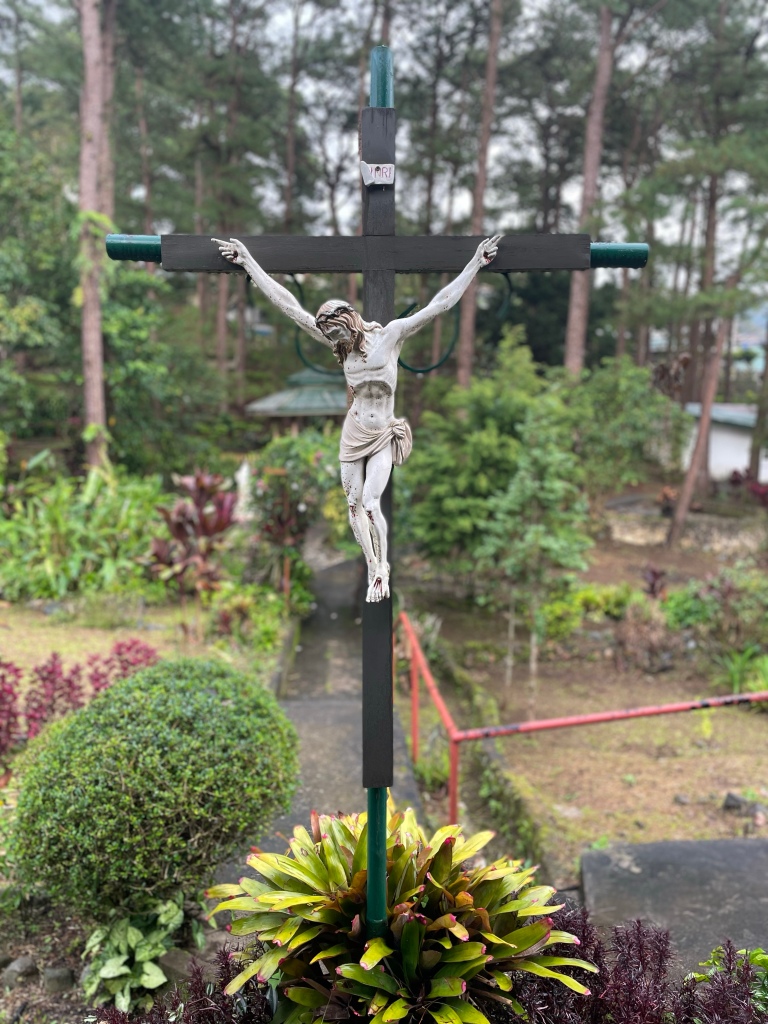
Photo by author, Sacred Heart Novitiate, Novaliches, QC, 20 March 2024.
Jesus said to them, “Take nothing for the journey, neither walking stick, nor sack, nor food, nor money, and let no one take a second tunic” (Luke 9:3).
Lord Jesus, bless me to continue in this journey with You, in You, taking nothing but You; at first, I could not believe it to be true that many times, I doubted, taking so many things with me in this journey; but, as we walk farther, Lord, the more I realized, that indeed, I need to take nothing.
The farther we journey, Jesus, the more I take and bring, the more difficult, the slower I move; so true that the truly rich among us is the one whose who needs least in life; grant me the grace, O Lord, the grace of integrity, of wholeness and harmony between my inner self and outward behavior; like the author of the Proverbs, "give me neither poverty nor riches; provide me only with the food I need; lest being full, I deny you or being in want, I steal, and profane the name of my God" (30:9). Amen.
Quiet Storm by Fr. Nicanor F. Lalog II, 19 August 2024
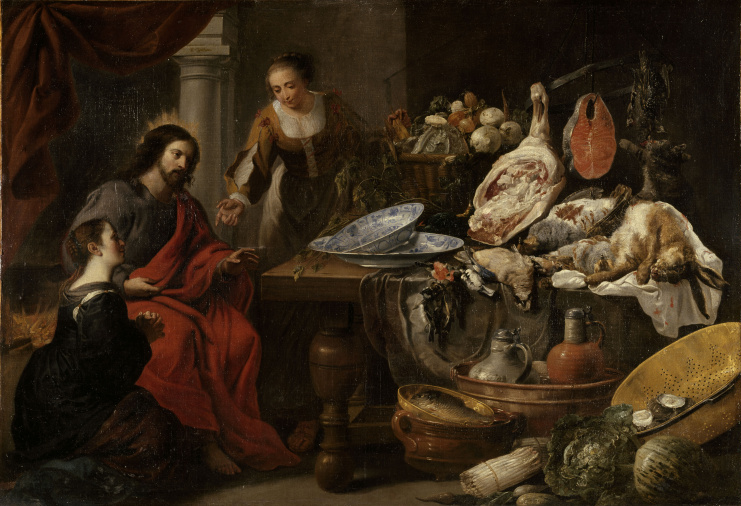
“Christ and Rich Young Ruler” by Heinrich Hofmann from en.wikipedia.org.
The volcanic smog from Taal that has shrouded the south since early Monday morning inspired me tonight to share with you this short reflection from the gospel:
Jesus said to him,”If you wish to be perfect, go, sell what you have and give to the poor, and you will have treasure in heaven. Then come, follow me.” When the young man heard this statement, he went away sad, for he had many possessions (Matthew 19:21-22).
I have been trying to imagine not only the sad face of the young man but most of all, the sadness of Jesus. Most often, the first image of a sad Jesus who comes to our mind is when he was in His Passion and Crucifixion.
That’s understandable.
Try imagining, reflecting Jesus sad when we are sad like at the death of His friend Lazarus. The beloved disciple tells us in his gospel account that upon seeing the sisters Mary and Marta, Jesus became more sad not only with the death of a good friend.
If there is one thing we can always be sure of, Jesus shares our feelings too! When we are sad, Jesus must be most sad too. And how unfair when we fail to see the sadness too of Jesus as if we suffer or grieve alone. Perhaps, it is a part of our pa-victim syndrome, of us being on the distaff side always of the story. Let us not forget Jesus because failing to experience and realize the sadness of Christ means we are still filled with pride, so self-centered and most likely, after overcoming our sadness, we would still keep our “possessions”. What a tragedy that has become a vicious circle with us priests.
Photo by author, Chapel of the Angel of Peace, 25 June 2024.
When is Jesus sad?
As we begin our retreat tonight here in Tagaytay, I feel Jesus saddest when we His priests are sad in celebrating the Mass and other sacraments, in doing our ministry. Jesus cries so hard in shame when we priests are not only sad but also angry, even insolently ministering to the people especially when they are poor.
How easy it is for us priests to readily identify with the young man being sad even with our admission or confession of having many possessions. That’s very easy, like saying sorry from the nose. But, are we ready to let go of our attachments so we become joyful in Christ again as seen in the way we celebrate especially the Mass?
When we priests are sad in our ministry, people are more sad that makes Jesus most sad of all! In the first place, no one – nobody – among the people must be saddened by priests or by the Church as an institution. Priesthood is the joy of Jesus Christ!
It is a grave contradiction that we ever be that rich young man in the gospel portrayed as sad due to many possessions. Its deepest pain and cut is found in the very reason of this sadness: Jesus is most sad when we priests are sad because He knows very well we are no longer His.
Photo by author, St. Scholastica Spiritual Center, Baguio City, August 2023.
This kind of sadness which is so negative (because we can be sad too like everyone) starts subtly when we priests are inconvenienced, when we have to sacrifice and suffer, forgetting that it is the life we have freely embraced in the first place. Some priests presumed we can suspend for a while our commitments and vows, and simply be human, whatever that means. So, they stop praying, stop sacrificing, stop living out the vows of poverty, obedience and celibacy.
As priests sink deeper into sadness, they find themselves already trapped in a festering evil and sin, becoming angry and lazy, making so many alibis and excuses from celebrating the Mass especially funerals for poor parishioners.
When there is the confluence of sloth and anger, then it becomes a point of no return because sadness detaches us priests from Jesus and His people. That is the saddest part of this sadness, of priests living in their make-believe world of vanities and all kinds of possessions. Worst part of this is how the sad priests are totally oblivious to the fact they have infected with their sadness the people they were sent to help liberated from burdens and miseries. That is when people come to the Mass and sacraments because they just have to fulfill an obligation to God that is most sad because God sent priests to bring joy, not sadness.
If a priest is making you sad, pray hard for that priest. You are not alone. Priests are sad when their brother-priests are sad in the ministry too.
But, Jesus is most sad when His priest is sad. Pray hard for His priests especially those who seem to enjoy and laugh with the “good life” but sadly empty inside. A priest is supposed to be a leaven to the people, someone who would help others to rise and grow. And glow in Jesus. Let us pray:
Lord Jesus Christ, our Eternal Priest, sorry for making you sad; most of all, for being sad because of my many possessions; help me find my way back to you to be filled anew with your joy. Amen.
The Lord Is My Chef Sunday Recipe for the Soul by Fr. Nicanor F. Lalog II Sixteenth Sunday in Ordinary Time, Cycle B, 21 July 2024 Jeremiah 23:1-6 ><}}}}*> Ephesians 2:13-18 ><}}}}*> Mark 6:30-34
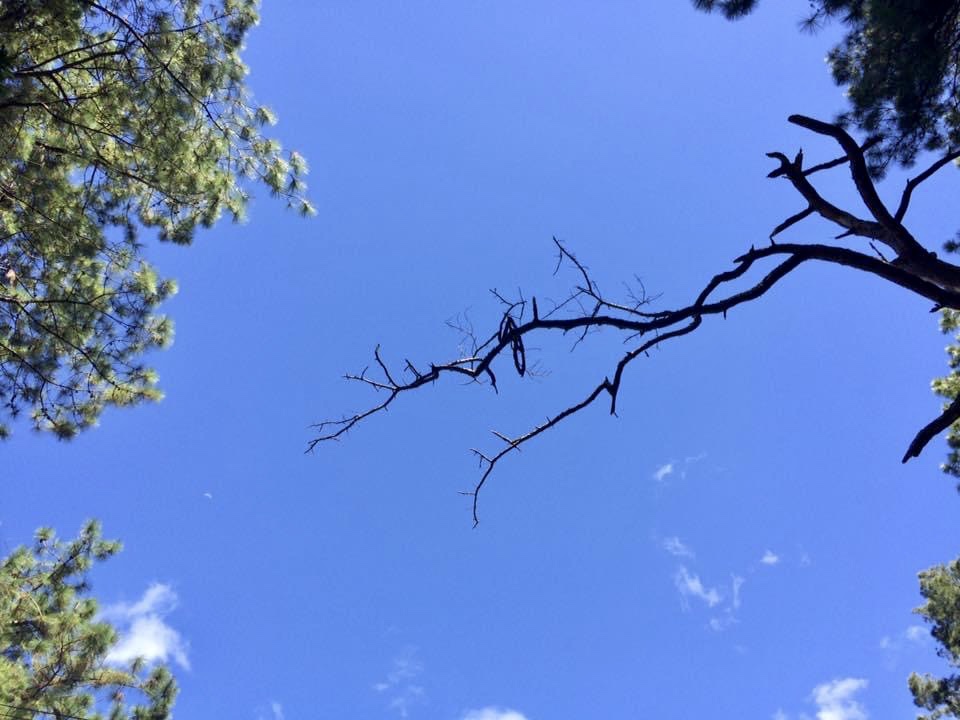
Photo by author, Katmon Nature Sanctuary &Beach Resort, Infanta, Quezon March 2023.
After being sent“two by two” last Sunday, the Apostles now return to Jesus, reporting “all they had done and taught.” What a beautiful gospel scene this Sunday, supposed to be our day of rest that begins in God and must be rooted in God.
The apostles gathered together with Jesus and reported all they had done and taught. He said to them, “Come away by yourselves to a deserted place and rest a while.” People were coming and going in great numbers, and they had no opportunity even to eat. So they went off in the boat by themselves to a deserted place (Mark 6:30-32).
Last Sunday we were reminded to rediscover the family and friends sent with us “two by two” in this life while today the Lord wants us to be aware of our need to rest in order to rediscover Him first of all, then one’s self and others.
Unfortunately, many people today have entirely forgotten the meaning and importance of rest that we succumb to all kinds of sickness related with stress and fatigue. In fact, Filipino workers were recently ranked as the second worst in terms of work-life balance in a worldwide survey. One factor it cited is the lesser paid vacation leaves our workers have compared with their counterparts in other countries.
Photo by author, Sonnenberg Resort, Davao City, 2017.
Rest is not only stopping from work to be recharged like cellphone batteries; we are not things like robots and drones sent out simply for a task that once achieved, no more. We are inter-related persons meant to form bonds and unity, a family and a community. That is the result of our being sent on a mission to share God’s creative works leading to our union in Him with others.
God rested and made Sabbath holy after creation because He had completed all His works that were all good; we, on the other hand, merely participate in His creative works. That is why no matter how hard we push ourselves with our work, we can’t completely finish them as more things to do come along the way, making us bored or stressed out because we could no longer find life but simply routine. We have been so focused on accomplishing many things as if we are the savior of the world (messianic complex) that we feel so important, bloating our ego. That is when we start literally throwing our weight to those around us like in those reels of road rage. The sad part of this is how we eventually hurt the people we love and supposed to serve like the shepherds of the Old Testament that God through Jeremiah had accused to have “misled and scattered” the people of Israel (Jer.23:1).
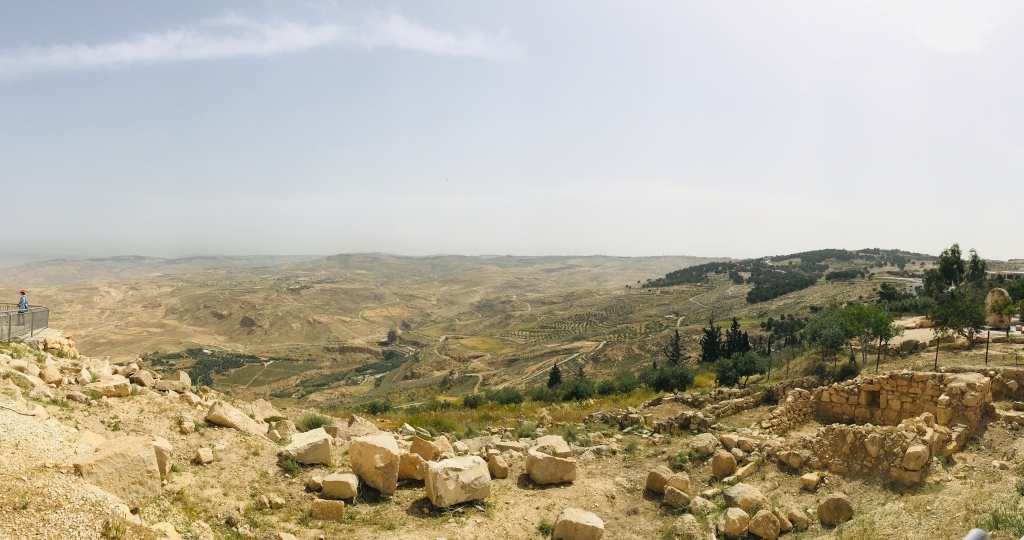
Photo by author, border between Jordan and Israel, May 2019.
Today, Jesus is inviting us to “Come away by yourselves to a deserted place and rest a while (Mk.6:31)” to remind us that in everything we do in this life, what matters most is not the task but us, the persons we love and care for, and Christ who is our only fulfillment in life.
Like the apostles, we have to return to Jesus precisely because our mission, our work is not ours but Christ’s. We need to return to Jesus every Sunday in the Eucharist when we are nourished by His words and strengthened by His Body and Blood to sustain us in our mission.
Rest is neither doing nothing like sleeping all day or doing anything we like that we forget God and in the process, our very self and others. Rest is a time of conversion when we lay aside our plans and agenda by returning to God so that we could have focus again in this life. Rest is actually to be filled with God, to be holy.
This we find expressed perfectly in our Filipino word for rest which is pahinga from the root hinga or breath that is spiritus in Latin. To rest in Filipino is mag-pa-hinga that literally means hingahan, to be breathed on. Genesis tells us how God breathed on man to be alive after creating him while in John’s Gospel we find Jesus breathed on His apostles after greeting them with peace twice on the night of Easter when He appeared to them at the Upper Room. From here we get that beautiful imagery of rest as being breathed on by God – mag-pa-hinga sa Diyos – which is to be closer with God!
Here now is the challenge and best part of the good news this Sunday: the more closer we get to God in Jesus and through Jesus especially on Sunday our day of rest, the more we must get closer with others. The more we pray, the more we rest in the Lord, the more we serve, the more we love.
Mark told us how Jesus invited the Twelve to “come away by yourselves to a deserted place and rest a while” but the people saw them and even got earlier to the other side of the lake!
When he disembarked and saw the vast crowd, his heart was moved with pity for them, for they were like sheep without a shepherd and he began to teach them many things (Mark 6:34).
Photo by author in the Holy Land, 2019.
Rest is more than the amount of time spent “resting” but the disposition to be with the Lord, to be one with Him that we become holy like Him. That moment when Jesus led the Twelve to rest was already a “rest” for Him that resulted in serving more the people who have followed them.
Jesus being moved with pity for the people indicated His rest and communion with the Father expressed in His oneness with the suffering people who were like sheep without a shepherd. Jesus has always been one with the Father right from the very start until His death on the Cross where He declared “It is finished” and commended His total self to the Father.
The truest sense of us having a real rest, of getting closer with God is when we get closer with others especially those entrusted to our love and care like our loved ones and those who are poor and sick.
Problem these days among us priests including laypeople is our wrong idea about rest; we do not really rest at all but simply indulge in pleasures that are many times scandalous for being godless and unmindful of other people. True rest makes our hearts natural to be aware of the sufferings of others, to be one with them or at least take their plight into consideration in our rest.
We can only say “mission accomplished” to rest when we are one with God through others that St. Paul explains in the second reading at how Jesus Christ reconciled us all through the Cross, “putting an enmity to death by it” (Eph. 2:16). Next Sunday, this we shall see when after teaching and healing the people in that deserted place, Jesus would feed the crowd of over 5000 people from just a few loaves of bread and pieces of fish.
Let us rest in the Lord to prepare our hearts and souls as well as our tired body to be filled with God so we can fill others too with Him. Let us pray:
Lord Jesus Christ, we live in a highly competitive world of 24/7 wherein everyone is so busy that we forget You and the persons You have entrusted to us; remind us we are not the Messiah nor a superhero to save the world; we can only do as much in this life as God had accomplished all for us in You, the Christ; let us take two or three even five steps backwards to let You, Jesus, do your work in us. Amen.
The Lord Is My Chef Daily Recipe for the Soul by Fr. Nicanor F. Lalog II Tuesday in the Fourteenth Week of Ordinary Time, Year II, 09 July 2024 Hose 8:4-7, 11-13 ><))))*> + <*((((>< Matthew 9:32-38
Then he said to his disciples, “The harvest is abundant but the laborers are few; so ask the master of the harvest to sent out more laborers for his harvest” (Matthew 9:38).
Lord Jesus, teach us to examine again the meaning of your words "the harvest is abundant" - how do we look at, what do we see at this abundant harvest of your people, "troubled and abandoned, like sheep without a shepherd"?
What do we see at your flock, at your people?
Forgive us, Lord Jesus, when we are like the wayward kings of Israel of Hosea's time who misled the people away from God; what an abundant harvest laid to waste by corrupt and sinful laborers some of whom were never sent by God while others turned away from God.
Forgive the laborers among us who see the abundant harvest more as a business venture, a shameful tourist attraction for the display of our delusions of grandeur; forgive us, Lord when some of us your laborers label others as troublemakers, as oppositionists, even daring to call declare others using the power of the devil like You!
Nothing much had changed since the time of Hosea and your time, Lord Jesus: your abundant harvest wasted by selfish laborers who see only themselves and their well-being instead of seeing your people as a gift and a responsibility entrusted to our care; help us, O Lord, to value your abundant harvest meant for your greater glory not ours. Amen.
The Lord Is My Chef Daily Recipe for the Soul by Fr. Nicanor F. Lalog II Friday in the Tenth Week of Ordinary Time, Year II, 14 June 2024 1 Kings 19:9, 11-16 <*((((>< + ><))))*> Matthew 5:27-32
Photo by Mr. Vigie Ongleo, Sagada, Mt. Province, 2014.
O God, dear Father, how I have loved so much ever since today's story of Elijah fleeing from death at the hands of Jezebel's army; so many times I have felt like Elijah, so tired, fed up fighting, hoping for death when the going gets tough and rough; and so many times too, You have never forsaken me, Father like Elijah, asking me many times that question, "Why are you here?" (1 Kings 19:9, 13).
Very often, I get confused, Father,
if I am that zealous for You
like Elijah or just me so insistent
with what I believe,
with what I know,
with what I hold so dear
in You and for You;
many times I do not know
if I am still doing your will
especially when it is so difficult,
so uncomfortable and,
yes, I have asked You many times
why not just make me
an ordinary man,
instead of being your prophet....
Photo by Mr. Vigie Ongleo, Sagada, Mt. Province, 2014.
But your question remains, Lord, that I rarely face nor answer squarely: "Why are you here?"
You know me so well, Lord: like Simon Peter in Capernaum after your discourse on the bread of life, my favorite response to You is "Master, to whom shall we go? You have the words of eternal life. We have come to believe and are convinced that you are the Holy One of God" (John 6:68-69).
But most of all, I am here because like the psalmist, "I long to see your face, O Lord" (Psalm 27:7-8); and for me to see your face means to love more until it hurts me; to see your face, Lord, is to be still and silent amid the noise of this world for you are always there in our midst among the weak and voiceless, among those in the margins and underneath the heaps of scraps and garbage; to see your face, O Lord, is to remember always it is your work, not mine that I must accomplish.
Why am I here, Lord? Because You told me so. Thank you so much in bringing me here this far, no matter what for as long I feel getting closer with You. In that case, I shall always be here for You! Amen.
Photo by Mr. Vigie Ongleo, Sagada, Mt. Province, 2014.
The Lord Is My Chef Daily Recipe for the Soul by Fr. Nicanor F. Lalog II Tuesday, Memorial of St. Barnabas, Apostle, 11 June 2024 Acts 11:21-26, 13:1-3 ><]]]]'> + <'[[[[>< Matthew 10:7-13
Photo by author, Mt. St. Paul, La Trinidad, Benguet, 2016.
Praise and glory to You, God our loving Father for this memorial of St. Barnabas, one of the first to embrace Christianity after the Resurrection of your Son Jesus Christ.
A Levite Jew born in Cyprus, his original name was Joseph but upon joining the Apostles in Jerusalem, he was nicknamed Barnabas which means "son of encouragement" or "son of consolation" whom St. Luke described as "a good man, filled with the Holy Spirit and faith" (Acts 11:24).
Fill us, dear Jesus with the same goodness and faith of St. Barnabas, truly children of encouragement and consolation, believing in our brothers and sisters especially those have withdrawn from the ministry and apostolate for various reasons including shame and embarrassment for past mistakes and sins like St. Paul.
Then he (Barnabas) went to Tarsus to look for Saul, and when he had found him he brought him to Antioch. For a whole year they met with the church and taught a large number of people, and it was in Antioch that the disciples were first called Christians.
Fill us with your gift of peace, Lord Jesus, to imitate St. Barnabas who vouched for St. Paul's sincerity of conversion as well as in encouraging and consoling the early Christians who were persecuted for their faith in You.
Help us imitate St. Barnabas in his beautiful disposition of focusing more on You, Jesus than in the problems and personalities we encounter in fulfilling your mission; most of all, grant us the humility of St. Barnabas to reconcile later with St. Paul after a serious disagreement that led to their parting of ways as companions in their mission.
Make us realize, Jesus, that saints like St. Barnabas do not fall from Heaven but are people like us who have many and complicated problems in life; let us arise from our sins and mistakes like St. Barnabas who showed in his life that holiness is not being sinless but being humble to admit one's sins and faults, going through conversion daily with a willingness to forgive others to be reconciled anew in You, Jesus. Amen.
The Lord Is My Chef Sunday Recipe for the Soul by Fr. Nicanor F. Lalog II Second Sunday in Advent, Cycle B, 10 December 2023 Isaiah 40:1-5, 9-11 ><}}}*> 2 Peter 3:8-14 ><}}}*> Mark 1:1-8
Photo by author, the Forest Lodge, Camp John Hay, Baguio City, 12 July 2023.
It has been a week since we started our new liturgical year with the Season of Advent. And let’s admit that we have hardly noticed how fast time passes by these days with all the parties and gatherings we have been having since December started!
And that is the joy of patient waiting even in the dark during this time of active waiting for Jesus Christ’s Second Coming which is the first phase of this Season of Advent.
If we remain and persevere to be faithful in Jesus and his teachings, we realize that every day in life is always a new beginning in Christ to start anew in becoming a better disciple. We hardly notice the passing of time when we love and serve God in others because we experience that life is more of a series of beginnings than of endings as Mark reminds us at the start of his gospel account:
The beginning of the gospel of Jesus Christ the Son of God.
Mark1:1
Photo by author, Malolos Cathedral Advent 2019.
Mark was the first to write a gospel account, composing it in Rome in the year 70 AD when the early Christians who were mostly of Jewish origins were under persecution. For his audience of Jewish origins, the word beginning meant a lot like the Book of Genesis, connoting how God is always present amid the persecution, of how order comes after chaos.
In simply declaring to us “The beginning of the gospel of Jesus Christ the Son of God”, Mark is reminding us how God is always starting a new creation, a new order, a new revelation in us and among us.
Very often, beginning connotes an ending; but, not with God nor with the gospel who is Jesus Christ. Remember how Mark’s gospel ended abruptly and unexpectedly in the discovery of the empty tomb by Mary Magdalene, Mary mother of James and Salome who all “fled… bewildered and trembling… in great fear that they said nothing to anyone” (Mk.16:1-8).
By “ending” his gospel account that way, Mark actually wanted his listeners that include us today to continue writing and proclaiming the gospel of Jesus Christ in our own lives. For Mark, the gospel never ends but simply begins over and over again through the lives of disciples who meet and befriend Jesus Christ, the Son of God.
Photo by author, Advent 2018.
Now, to think of the beginning is to remember our origin or starting point, the person of Jesus Christ.
The late Fr. Henri Nouwen used to say that the word remember means “to make a member a part again”; hence, re-membering our beginning is making God in Jesus Christ a part of our lives again, of our present moment again.
More than just going back to the basics shouted by everyone these days even in the Church, remembering our beginning is bringing back the person of Jesus Christ in our lives today. That is what a new beginning means, a return to the person of Jesus Christ who is the essence of Christmas, of the Church, of the world.
Everything in life becomes clear when we begin in Jesus Christ. All these questions we have been asking inside, the many whys of life, will only be answered and clarified when we begin in Jesus. Many in the world would say it is very simplistic but, the problems of the world then and now are all due to the removal Jesus Christ from our hearts, homes, offices, and classrooms, and relationships. Begin again in Christ and see how everything, everyone becomes new and beautiful again!
Photo by author, Advent 2018.
Sometimes, Mark’s gospel is called the “Gospel of Beginnings” because of his frequent mention of Jesus “beginning” to do something like when “he began to teach” in many occasions in the synagogue and temple area (Mk. 4:1, 6:2 and 34, and 8:31) or when “he began to speak in parables” (Mk. 12:1); when Jesus came to Jerusalem and entered the temple, “he began to cleanse” it (Mk.11:15) while at the agony in the garden, “he began to be troubled” (Mk. 14:33).
All these indicate how our ministries began in Jesus Christ and nowhere do we find Mark telling us Jesus had ended them all. In fact, in the longer ending of his gospel that was later on added by his followers, we find Jesus telling his disciples that include us today to continue with his works and mission. Every mission we have in life especially in the Church must always begin in Jesus Christ.
After all, when we reflect on Mark’s brief opening sentence to his gospel account that associated the word beginning with the Lord’s name Jesus Christ, we find him telling us that same truth that everything created began in Jesus Christ as expounded by John at his prologue (Jn. 1:1-5) and Paul in his letter to the Colossians 1:15-20.
Examine how John and Paul beautifully expressed in poetry their theology simply expressed by Mark as “The beginning of the gospel of Jesus Christ the Son of God”.
Here we find that even if Mark’s gospel is the shortest of the four gospel accounts, “brevity is the soul of wit” (Shakespeare in Hamlet). And that is the short of all these things we believe in and hold so dearly in our faith: Jesus Christ as the beginning and the origin of everything.
There lies the challenge to us these days when people no longer remember, and even willing to forget God and Jesus Christ: of how like Mark we can always begin each day, our work and ministries, our missions and everything in Jesus Christ. In the first reading, God calls us through the Prophet Isaiah to comfort his people, especially those sick and weary, those losing hope in life that until now happens. Perhaps because what we keep on offering others are not really the essential one, Jesus Christ, our beginning.
It is a brand new week again as we get closer to Christmas and most especially to Parousia. The problems and darkness remain in our lives. The words of Peter in the second reading today are scary when God “dissolves” everything at the Parousia; however, it is a call for us believers to witness the hope in Christ’s coming not by our words and beliefs but by our witnessing to Jesus Christ, by the holiness of our lives that begin in Jesus Christ. Amen.
Lawiswis Ng Salita ni P. Nicanor F. Lalog II, Ika-15 ng Nobyembre 2023
Ang kauna-unahang may sakit na aking pinahiran ng Banal na Langis ay ang tiyahin ng aking ina na kung tawagin namin ay Ned. Ayon sa nanay ng aming ina na Ate ng Ned, utal daw kasi ang dalawang nauna niyang anak at hindi masabi ang Nana Cedeng(o Chedeng), ang palayaw ng kanyang tunay na pangalang Mercedes.
Kaya, naging Ned na ang nagisnang tawag ng mga mommy ko at pati na kaming magpipinsan na kanyang mga apo. Walang anak ang Ned dahil maaga siyang nabiyuda nang magka-cancer ang kanyang kabiyak na siyang tunay na taga-Bocaue, Bulacan. Mula sa Aliaga, Nueva Ecija ang mga lola ko sa panig ng aking ina na mula sa angkan ng mga Bocobo.
Nang ako ay magdiriwang ng aking Primera Misa Solemne bilang bagong orden na pari noong ika-26 ng Abril 1998, hindi na nakapaglalakad ang Ned kaya bago kami magprusisyon, siya ay aking dinalaw at pinahiran ng Langis ng Maysakit. Pagkaraan ng ilang Linggo, sinugod siya sa ospital dahil sa stroke at nag-comatose kaya kinailangang ipasok sa ICU. Hindi naman siya kaagad namatay tulad ng iba kong pinahiran ng Langis ng Maysakit….
Pagkaraan ng isang linggo, inilipat na siya ng regular na silid at aking dinalaw. Hindi naapektuhan ng stroke ang kanyang pananalita. Tumingin siya ng matagal sa akin at pagkaraan ay hiniling na lumapit sa kanya.
“Mayroon akong ikukuwento sa iyo, Father, pero hindi ko alam kung ikaw ay maniniwala” sabi niya sa akin. Hinagod ko kanyang noo gaya ng ginawa niya sa akin noong ako ay natigdas nang bata pa. “Ano po inyong sasabihin?”, tanong ko sa kanya.
Larawan kuha ni G. Bryan San Luis, Kapistahan ni San Martin ng Tours, Patron ng Bayan ng Bocaue, Bulacan, 11 Nobyembre 2023.
“Father… ako e namatay na. Ang natatandaan ko lang ay naglalakad ako mag-isa sa madilim na kalsada. Maya-maya may nakita akong liwanag at bigla mayroong sumalubong sa aking mama na naka-kabayong puti. Sinabi sa akin nung mama, ‘Cedeng, magbalik ka na ika… hindi mo pa oras.'”
Sabi ng Ned, kaagad naman siyang tumalikod at naglakad pabalik ngunit muli niyang nilingon yung mama na naka-kabayo. Tinanong daw niya, “Hindi ba kayo si San Martin ng Tours?” At sumagot naman daw yung mama na siya nga si San Martin ng Tours. “E paano po ninyo ako nakilalang si Cedeng?” tanong daw niya. Sumagot daw si San Martin, “Paanong hindi kita makikilala, Cedeng, e kada piyesta ng Mahal na Krus at kapistahan ko ay nagsisimba ka palagi sa Bocaue?” Nangiti raw si San Martin sa kanya at di na niya nalaman ang mga sumunod maliban sa makita sarili niya naroon na sa ospital.
Wala daw siyang pinagsabihan ng karanasang iyon maliban sa akin dahil ako ay pari. At muli niya akong tinanong, “naniniwala ka ba Father na pinabalik ako dito ni San Martin ng Tours?” Hinagod ko muli ang noo ng Ned at sinabi ko sa kanyang “Opo, naniniwala po ako sa inyo.”
Larawan kuha ni G. Bryan San Luis, si San Martin aming Patron kasama ang Mahal na Krus sa Wawa na amin ding ipinagpipista tuwing buwan ng Hulyo sakay ng pagoda sa Ilog ng Bocaue.
Tumagal pa ang Ned ng limang taon bago siya pumanaw noong ika-5 ng Hulyo, 2003. Mismong sa harap ko siya namatay nang siya ay aking dalawin matapos ako magmisa sa kapit-bahay niyang namatay.
Naku, kay laking isyu noon sa aming lugar ang pagkamatay ng Ned. Ako sinisisi ng matatanda kasi daw inuna kong puntahan ang patay bago ang buhay! Ewan ko sa kanila ngunit pagpapala ang aking naranasan at nakita sa pangyayari: nang malagutan ng hininga ang Ned sa harap ko, kaagad kong tinawag ang kanyang tagapag-alaga, pinahiran ko pa rin siya ng Banal na Langis, at nang matiyak na patay na siya, kaagad akong nagmisa mag-isa doon sa kanyang silid kasama malamig niyang bangkay. (Ewan ko ba. Dalawang pari na rin, parehong Monsignor, ang namatay sa harapan ko at sa pangangalaga ko.) .
Palagi ko ikinukuwento ang “near-death experience” na iyon ng aking Lola hindi lamang sa dahil kakaiba kungdi mayroong malalim na katotohanang inihahayag – ang pagmamahal sa ating parokya, ang pananalangin ng mga Banal sa atin at higit sa lahat, ang kahalagahan ng Banal na Misa na siyang “daluyan ng lahat ng biyaya at rurok ng buhay Kristiyano” ayon sa Vatican II. Wika ni San Juan Pablo II, sa Banal na Misa aniya ay mayroong cosmic reality
Nang magkaroon ako ng sariling parokya noong 2011, isa iyon sa mga una kong kinuwento sa mga tao upang ituro pagmamahal sa kanilang parokya. Ipinaliwanag ko sa kanilang ang mga Banal na mga Patron ng parokya ang unang nangangalaga sa mga mananampalataya, ang ating mga tagapagdasal doon sa langit, mga taga-pamagitan.
Larawan kuha ni G. Bryan San Luis, prusisyon noong Kapistahan ni San Martin ng Tours, Patron ng Bayan ng Bocaue, Bulacan, 11 Nobyembre 2023.
Naniniwala ako na si San Martin ng Tours ang sumalubong kay Ned kasi nga hindi pa naman niya oras, kaya wala pang paghuhukom na naganap sa kanya na tanging si Jesu-Kristo lang ang makagagawa.
Ang pinaka-gusto kong bahagi ng kanyang kuwento ay ang kanilang usapan kung paano nakilala ni San Martin ang aking Lola sa tunay niyang palayaw na Cedeng. At hindi Ned.
Ipinakikita nito sa atin ang kahalagahan ng pagsisimba tuwing Linggo at mga pistang pangilin sa simbahan lalo ngayon panahon na akala ng marami ay sapat na ang online Mass. Ang Banal na Misa ay “dress rehearsal” natin ng pagpasok sa Langit. Kay sarap isipin na bukod sa Panginoon at Mahal na Birheng Maria na sasalubong sa atin doon ay kasama din ang Patron ng ating Parokya na kinabibilangan natin. Nakalulungkot maraming tao ngayon ni hindi rin alam kung ano at saan kanilang parokya! Alalahanin mga nakita ni San Juan Ebanghelista sa langit habang siya ay nabubuhay pa upang isulat sa Aklat ng Pahayag:
At narinig ko ang isang tinig mula sa langit na nagsasabi, “Isulat mo ito: Mula ngayon, mapapalad ang naglilingkod sa Panginoon hanggang kamatayan!” “Tunay nga,” sabi ng Espiritu. Magpapahinga na sila sa kanilang pagpapagal; sapagkat susundan sila ng kanilang mga gawa.”
Pahayag 14:13
Anu-ano nga ba ating mga pinagkakaabalahanan sa buhay ngayon? Anu-ano ating pinag-gagawa na susundan tayo sa kabilang buhay upang ating ipagpatuloy? Kabutihan ba o kasamaan? Huwag nating sayangin pagkakataong ipinagkakaloob sa atin ng Diyos ngayon. Siya nawa.
San Martin ng Tours, ipanalangin mo kami.
Larawan mula sa flickr.com ng isang icon ni San Martin ng Tours hinahati kanyang kapa para sa isang pulubi.
The Lord Is My Chef Daily Recipe for the Soul by Fr. Nicanor F. Lalog II Friday, Memorial of St. Leo the Great, Pope & Doctor of the Church, 10 November 2023 Romans 15:14-21 ><]]]]’> + ><]]]]’> + ><]]]]’> Luke 16:1-8
Photo by author, San Juan, La Union, July 2023.
I just realized today, God our Father, how the word “miss” has a variety of meanings: as something we failed or something or someone we remember or, someone or something we forget and neglected.
How sad that very often, the people we miss - those we forget, even taken for granted because they are common, are those nearest to us like family and friends, those in our inner circles.
Thus I aspire to proclaim the Gospel not where Christ has already been named, so that I do not build on another’s foundation, but as it is written: Those who have never been told of him shall see, and those who have never heard of him shall understand.
Romans 15:20-21
Is it not so funny that the ones we meet inside the church every day and every Sunday are also the very ones who are like us - evangelized or simply know Jesus and his teachings; but, where are the rest? the unchurched? the ones we say who must hear the good news?
Lord Jesus Christ, teach us to be wise like that steward in your parable today: to save face and himself, he went to see his master’s debtors he himself must have missed, disregarded and never given any importance at all because they were common, below him in stature; let us realize like that shrewd steward, like St. Paul to look for those we miss most because of proximity and ordinariness; they could be our family members who have stopped praying or celebrating Mass or those living closest to our church or chapel and have lost interest in the sacraments and liturgy or former colleagues in the ministry who have lapsed in their practice of faith.
Let us go out today to find them and make them feel and experience they are loved, they are missed most in Christ Jesus. Amen.
Quiet Storm by Fr. Nicanor F. Lalog II, 18 October 2023
Photo courtesy of Fr. Herbert Bacani, Parish Priest of Immaculate Conception Quasi-Parish in Marungko, Angat, Bulacan, 15 October 2023.. When the pastor is properly dressed, his servers follow; surely, the parishioners are not far behind.
Thank you very much for the warm reception to our reflection last Sunday on the parable of the wedding garment when we took as cue the lack of sense these days of dressing properly even among us priests. So glad many priests reflected too along the same line in their homilies last Sunday. And the message is very clear: we priests have to set the example in dressing properly and decently at all times.
Methinks this deterioration in manner of dressing of people has a direct correlation with the clergy’s “undressing” of their cassocks and clerical shirts after Vatican II’s reforms they have abused and misconstrued into something else. No wonder, it started too the downward slide of credibility of clergy made worst by the reports of sexual abuses.
Photo courtesy of Fr. Len Hernandez taken during our 25th anniversary with Bp. Dennis at his chapel, 18 April 2023.
What a shame and pity when people comment how some priests not looking as priests at all at the way they dress. Some at the extreme have become so secular with their worldly fashion senses of designer clothes, jewelries even bling-blings with high end cars and gadgets who look like actors and models than priests while at the other end are those lost hippies or beatniks and rebels of no cause at all with their long hair, maong pants and sneakers in vain efforts to do liberation theology yet too far from the masses.
Again, many will argue our personhood does not depend on our outside appearances like clothes. Of course but not absolutely true! Jesus himself had taught us in the parable of the wedding garment last Sunday that dressing properly is an imperative because whatever is seen outside is always indicative of what is inside. If we, especially us priests, could not even look good outside, how can others believe we are good inside? Besides, if we could not even dress up decently for any occasion, how can we be expected to fulfill other greater things in life? Remember the Lord’s reminder, “The person who is trustworthy in very small matters is also trustworthy in great ones; and the person who is dishonest in very small matters is also dishonest in great ones” (Lk. 16:10).
When I was in my second year in seminary formation, our former teacher in elementary school, the late Miss Santiago saw me on my way to serve in the Mass at our parish church. When she saw me perspiring a lot, she said, “Naku, Nicanor! Iyang pagsusuot pa lang ng sutana pala e malaking sakripisyo na sa inyo? E basang basa ka na ng pawis.” That compliment by one of our kindest teacher has been etched in my heart ever since, teaching me that valuable lesson that our cassock in itself is a homily. That is why in teaching communications in the seminary, I have always insisted to seminarians that the priest himself – his clothes, his hair, his language and everything – is a sign of God before the people. Hence, I have offered them with these simple propositions:
If the priest is not that good looking and his homily is also not that good and then he comes poorly dressed during the Mass, what would people think? What an ugly God we have! Ang pangit naman ng Diyos!
If the priest is not that good looking, his homily is also not that good but his vestments are beautiful as St. John Vianney would say are a homily in itself, then people are at least consoled to have a glimpse of God’s beauty.
If the priest is not that good looking but his homily is good complemented with his beautiful vestments, people are blessed as they feel God is indeed so good all the time.
If the priest is good looking, his homily is well prepared and prayed for with his matching beautiful vestments, people joyously sing “alleluia!” in their hearts as they are touched by God.
In 403 AD, St. Augustine wrote a catechism manual for his deacon named Deogratias called De Catechizandis Rudibus (On Catechizing Beginners) in preparing candidates for Baptism. Its most important lesson is found at the last part of the thick book when St. Augustine told Deogratias to always remember “the teacher/catechist is the lesson himself/herself.”
In the same manner, the priest is always the homily himself whatever he is doing and especially wearing, 24/7. There is no way of dissecting our being a priest from our being individuals and citizens; everything in us will always be seen and measured in Jesus Christ our eternal Priest and Master. That is why last Sunday in the parable of the wedding garment, Jesus taught us also of the need to be conformed in him, to be like him.
How can we priests demand people to dress properly in coming to the celebration of the Eucharist when we priests are the ones shabbily dressed?
What a shame when priests give as pretexts for not wearing the prescribed garbs because of the hot weather in the country or to be more attuned with the people we celebrate Mass with like the poor. Where is our sense of sacrifice? It is as if saying we are awaiting autumn and winter in the country before we could wear our cassocks and albs and vestments! And for those who insist on being one with the poor that they wear the simplistic white chasuble and stole, I say it is a disgrace because those who have less in life must have more of God. Mahirap na nga sila, titipirin pa natin sa magagandang gamit at damit natin?
How can we be vessels of God’s grace and blessings when we are untidy and dugyot at the altar and after the Mass?
Pinning and capping ceremony of our nursing students, Our Lady of Fatima University-Valenzuela City with our faculty members acting as Florence of Nightingale, 2022.
Another pretext many priests use for not wearing the proper clothes in their ministry is practicality which is essentially the capital sin called sloth. How could a priest bless a car or a store or a house no matter how small they may be with just a stole without an alb and still get stipend meant in part so he can be decently dressed? Where is our effort in serving the people if not in proper attire?
The worst case of priests along with their sacristan not dressed properly is in the celebration of the Mass for a wedding. It is so unfair and unjust when priests do not take time to consider polishing the minute details of the Mass for God’s sake as his signs and channels of grace for those embarking on a lifelong journey in Christ as husband and wife.
In my 25 years as a priest, I have always prayed for my family and friends to also love my priesthood. I think the same holds true for the people who need to embrace our priesthood, not us priests! If you love our priesthood, then, you will love our cassocks and albs and chasubles and clerical shirt too. Demand that inasmuch as we must prepare our homily, we must also prepare for our vestments. Inasmuch as you help us to be good, help us to look good too in representing Jesus Christ here on earth, reminding you of eternal life and bliss.
We live in so different a time than before where sentiments against the Church and her clergy are growing. This situation calls us priests to strive harder as witnesses and reminders of Jesus Christ. And that begins with the way we dress, the simplest and most basic sign of our identity.
Me during my conferral of the cassock, June 1991, Immaculate Conception Major Seminary in Guiguinto, Bulacan.
One of my unforgettable moments in my vocation history happened in 1991 when I returned to the seminary, nine years after being told to leave in 1982. That Sunday afternoon after being conferred with the white cassock, I felt something so different inside me as if telling God like the Prophet Isaiah, “Here I am, send me” (Is. 6:8).
The same prophet reminds us priests whenever we wear our priestly garments for the liturgy and ministry of that great song to God, “I will rejoice heartily in in the Lord, my being exults in my God; for he had clothed me garments of salvation, and wrapped me in a robe of justice, like a bridegroom adorned with a diadem, as a bride adorns herself with her jewels” (Is. 61:10). Let us sing that song rejoicingly, heartily! Amen.