The Lord Is My Chef Sunday Music by Fr. Nick F. Lalog II, 23 August 2020
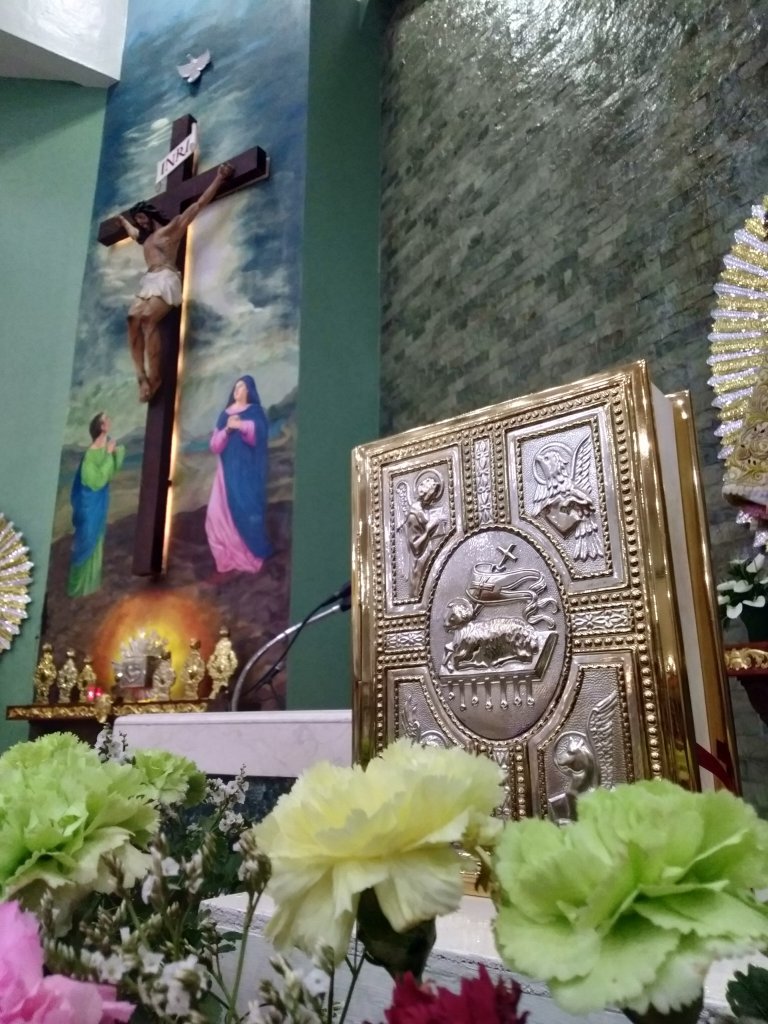
Photo by author, Gospel book (Evangelare), January 2020.
Jesus is asking us today in the gospel like his disciples at Caesarea Philippi, “who do you say that I am?” (Mt.16:15). As we have mentioned in our Sunday reflection, things we say of another person can come from two perspectives, the “what” and the “how”.
“What” we say of a person usually comes from common knowledge, the basics like name and address that sometimes not so reliable as we have not actually and personally known. But, to say of a person based on “how” we have known him/her is deeper because it comes from our personal relationship with some degree of intimacy (https://lordmychef.com/2020/08/22/it-is-not-what-we-say-who-jesus-is-but-how-we-say-who-he-is/).
To know another person is always to enter into a relationship that leads to a deeper friendship.
That is why for this Sunday we offer you this almost surreal, dream-like 1981 music by Gary Wright, “Really Wanna Know You” that spent 17 weeks on Billboard’s Hot 100, reaching highest spot of #16.
Really Wanna Know You speaks of that spiritual thing we experience when we meet someone who seems so special, creating some sparks in us that leads us to something deeper than mere acquaintance. Notice how the sounds of electronic keyboards with the blending voices create that strange, beautiful, and out-of-ordinary feelings like attraction or simply being drawn to the other person.
I don't mind being lonely
But I do mind if not being loved
Maybe you're feeling the same way too
You're ready to hold some one

I really want to know you
I really want to show you the way I feel
I really want to know you
I really want to show you the way I feel

Something about you is telling me
We're coming from the very same place
It's only just a notion I have
(But) I see it written over your face

I really want to know you
I really want to show you the way I feel
I really want to know you
I really want to show you the way I feel
And the good news is that Jesus feels the same way to us, always the first to reach out to us because he feels something so special with each one of us.
Take that chance and meet Jesus in prayers, in the Scriptures, and in others who love and care for us.
After showing us some glimpses of the person of the Lord these past three weeks, St. Matthew now leads us into the middle of his gospel where Jesus takes a U-turn in his ministry by revealing himself to the Twelve as he heads back to Jerusalem to fulfill his mission.
Jesus went into the region of Caesarea Philippi, he asked his disciples, “Who do people say that the Son of Man is?” They replied, “Some say John the Baptist, others Elijah, still others Jeremiah or one of the prophets.” He said to them, “But who do you say that I am?” Simon Peter said in reply, “You are the Christ, the Son of the living God.” Jesus said to him in reply, “Blessed are you, Simon son of Jonah. For flesh and blood has not revealed this to you, but my heavenly Father.” Then he strictly ordered the disciples to tell no one that he was the Christ.
Matthew 16:13-17, 20
St. Matthew told us last Sunday how Jesus withdrew to the region of Tyre and Sidon where he had healed the daughter of a Canaanite woman tormented by a demon. From there, they headed north to Caesarea Philippi, a pagan major city at that time.
It was a perfect setting for our gospel this Sunday – just like our present milieu that challenges us not only to be identified as a Christian but also to make a stand for Jesus as his true disciple at a time when faith and morals are disregarded, economics takes precedence over spirituality.
Who do people say I am: “what” I know of Jesus
The two questions posed by Jesus to his disciples while at Caesarea Phillip – and to us today – may sound very similar and even simple but are actually distinctly different and even worlds apart from each other.
Photo by Mr. Jim Marpa, 2019.
His first question “Who do people say that the Son of Man is?” is straightforward, seems to demand not much critical thinking and introspection. A plain question with a plain answer like the usual news we hear and read called “straight reporting” in journalism that tells us the essential “who, what, where, and when” of the story.
So many times, we face this question without even being asked at all!
Through our words and actions we reveal “who do you say the Son of Man is?” in how we pray, what we pray for, the things we post on social media, especially those electronic chain letters that if you say “Amen” you will get money. And so many other things when we try to show everyone we know Jesus without really thinking and reflecting well. No wonder, people get so many wrong impressions about who Jesus is: “some say he is John the Baptist, others Elijah, still others Jeremiah” or one of those prophets of wealth and health who make life easier!
Telling who Jesus Christ from “what” we know and believe can always be dangerous and misleading because it is all in our heads that could often be wrong. Telling who Jesus Christ from “what” we know and believe cannot be so reliable because it is always mechanical, by the book, not actual and most of all, not real.
It is always easy to speak highly of Jesus from “what” we know and believe like those many preachers with fire and brimstone or modern apostles, a.k.a. vloggers complete with their “shock” preaching and antics and gimmicks who end up more popular with thousands of followers and likes. And wealthy, too! Jesus Christ? Forgotten and stuck in Facebook, the bible, and tabernacle.
But who do you say I am: “how” I know Jesus
On the other hand, the Lord’s second question is direct and personal, probing our heart and soul, asking not just for answer from our lips but from our total self: “But who do you say that I am?”
See the words of the Lord after Simon had answered he is the Christ, the Son of the living God:
Jesus said to him in reply, “Blessed are you, Simon son of Jonah. For flesh and blood has not revealed this to you, but my heavenly Father.”
Matthew 16:17
More than a play of words, here we find a deeper dimension of saying who Jesus Christ is: not just telling the what but most of all, the how that reveals more than what we know in our minds but how we have experienced Jesus, of how we have been living in him!
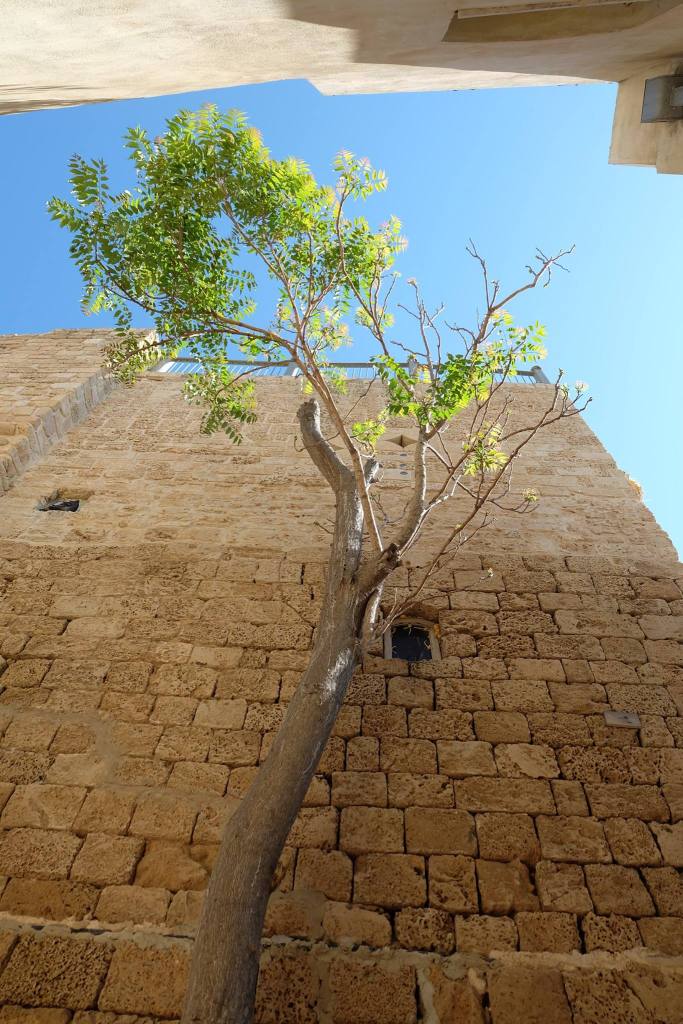
Photo by author, house at Jaffa (Jopa), Israel where Peter met some gentiles according to Book of Acts, May 2017.
For us to say who is Jesus Christ is always a how because it is a story of our relationship with him, it is a how we have grown deeper, how we have journeyed in him and with him.
It is the ability to see beyond structures and persons, excesses and sins, faults and misgivings because despite shortcomings, it is how we see Jesus as the foundation of our lives and of our Church.
See the ways of other religious sects, their pastors and members who spend so much time bashing us Catholics, insisting on the what of Jesus and the bible, never the how they live.
No wonder, they can raise their hands in prayers and still clap their hands while the President in maligning us Catholic priests and bishops in their gatherings.
To speak of who is Jesus is more than to tell what we know about him but how we have known him, how we have been since knowing him!
Anyone who can say who Jesus is from his how is always blessed like Simon because our answer is always the fruit of our life in Christ. We all become like Simon, another Peter or Rock whose very life and existence rests on Jesus our Lord. Despite our weaknesses and sinfulness, we are still blessed and entrusted with the keys of heaven because we have allowed Jesus to be our foundation of life. There is a process, a history always. Hence, it is a telling of the how.
In the first reading, we find God dismissing the master of the palace named Shebna to be replaced by Eliakim due to his infidelity. That is the meaning of the whole prophecy by Isaiah, of how the Lord will someday entrust his people to a trustworthy steward, someone who does not only know what God is but one who has truly known and experienced God.
Saying who God is, always a revelation from him
It is interesting that in the Jewish thought, to know another person is not knowing the what but of having a relationship or some degree of intimacy. Again, it speaks of the how we have been saying.
St. Paul shows us in the most beautiful manner in his many writings this saying of who Jesus is with his how, his very personal experience of the Lord in his life that has continued and deepened until his death. See the beautiful hymn he had composed for our second reading today:
Oh, the depth of the riches and wisdom and knowledge of God! How inscrutable are his judgments and how unsearchable his ways! For from him and through him and for him are all things. To him be glory forever. Amen.
Romans 11:33, 36
Like St. Peter, we find here St. Paul so blessed despite his sins and sinfulness, of how he had experienced Christ not just a name or a man like any what he had known in his mind.
No one can ever write such great poetry with profound thoughts without any deep relationship with God. Whatever we know of God is always a revelation from him, too. When we speak of who God is, it is always borne out of how we have been relating with him our Lord which is called “spirituality”; it is deeper than religiosity or being religious that is always at the level of the head and more of our ego than of the reality of God.
Sometimes, we do not even have to speak and say who Jesus Christ is.
We simply have to live out that relationship we have in him and people would know who Jesus is. No need for elaborate and spectacular showmanships we have in our many rites and rituals, even in our liturgies now so maligned with our triumphalism.
Lest we forget, Jesus saved the world by suffering and dying on the Cross, not with activities and debates which would be his topic next Sunday. God bless everyone!
Lawiswis ng Salita ni P. Nicanor F. Lalog II, Ika-21 ng Agosto 2020
Larawan kuha ni G. Jim Marpa, 2019.
Ngayong panahon ng COVID-19
sumagi sa akin mga turo ng dalawang pari
na napakalapit at mabuti sa akin:
Una ay si Padre Nanding
malimit sabihin sa akin
"Pinakamasarap makasama
tao na mayroong panlasa";
"iyong iba," aniya,
"pakanin mo ng buong baka,
hindi pa rin masaya!"
Ikalawang paring butihin
ay si Padre Johann
madalas ako paalalahanan
"Biyaya ng Diyos ang ganang kumain
dahil ibig sabihin
wala kang sakit na dapat intindihin
di tulad ng ibang hindi makakain."
Nakatutuwang isipin at malayin
kung paanong noong panahon natin
mga mumunting butil ng pagkain
pinahahalagahan upang huwag sayangin;
ngayon naman ating alalahanin
itong ating panlasa at ganang kumain
mga biyayang hindi napapansin;
magdildil ka man ng asin o
maalat man o maasim ulam na inihain
huwag nang punahin o laitin
sapagkat iyong nalalasap pa rin
ang pagkain at walang COVID-19!
Sa hapag ng pagkain
mga samahan at ugnayan natin
nabubuo, tumatatag at tumitibay
kaya sa ating buhay
masarap kasabay
sa paglalakbay
mayroong panlasa
at maganang kumain,
basta huwag lang sasairin
at uubusin ang sinaing
baka iba hindi na makakain
dahil ikaw pala ay sakim!
Ito naman ang habilin na galing sa akin:
basta nakaka-amoy ng masarap na lutuin
maski hindi sa iyo ang pagkain
matuwa ka na rin, wala ka pang COVID-19;
gayun din naman,
iyo nang kalimutan hindi man kagandahan
 ilong na ngayon ay natatakpan
makaamoy man ng alimuong
makalanghap man ng masansang
at masamang hangin ay mabuti pa rin:
nakakahinga ka ng malalim
wala kang COVID-19!
Lawiswis ng Salita ni P. Nicanor F. Lalog II, Ika-20 ng Agosto 2020
Larawan kuha ng may-akda, Sacred Heart Novitiate, Novaliches, 2018.
Minsa'y lumapit kay Hesus
kabataan na ibig malaman
tunay na kabutihan
upang maranasan
kaganapang inaasam;
kulang aniya sa kanya
pagtalima sa mga utos
at tuntunin ng Diyos
kaya sinundan niya
ng isa pang tanong ang Panginoon:
"Ano pa po ang kulang
upang aking makamtan
buhay na walang hanggan?"
ngunit nang mapakinggan
anyayang talikuran mga ari-arian,
dagli siyang lumisan na luhaan
si Hesus ay iniwanan,
kayamanan hindi niya kayang talikuran..
Marahil iyo ring naranasan
maging katulad niyong kabataan
na maguluhan at mag-asam
sa kabila ng marami nang nakamtam
bakit parang kulang pa rin
itong buhay natin
walang kahulugan at kaganapan
hindi na tayo masiyahan
sa dating kinagawian;
anong laking kabalintunaan
sa tuwing nagtatanong
sa gitna ng katahimikan
itong ating kalooban
"Ano pa nga ba ang sa akin ay kulang?"
samantalang ating katayuan
 sapat lamang sa pangangailangan
hindi nagkukulang maging sa
mga kaibigan at gawang kabutihan.
Pagmasdan bugtong at palaisipan
nitong ating buhay at kapalaran
kailanman hindi kayang tapatan
ng ano mang kayamanan o katanyagan
maging ng sino pa mang nilalang
sapagkat itong ating kalooban
sadyang nilikha upang panahanan
ng Panginoong Diyos na ating pinagmulan
at siyang ring hahantungan;
 tuwing sumasagi itong katanungan
"Ano pa nga ba ang sa akin ay kulang?"
iyan ay tiyak na palatandaan
na tayo ay nasosobrahan
kailangan nang mabawasan
at mawalan
upang mapunan
tangi ng Diyos lamang
na Siya nating kapanatagan at kapayapaan.
Larawan kuha ng may-akda, Lawa ng Galilea (Tiberias) sa Israel, Mayo 2017.
Photo by author, an oasis at the Dead Sea area, May 2017.
Thank you very much, dear God our Father in bringing us closer to you more than ever through your Son Jesus Christ our Lord.
Thank you for “taking away our stony hearts and giving us natural hearts” (Ez.36:26) as you have promised your prophet Ezekiel in the Old Testament.
Thank you for inviting us always into your “wedding banquet”, revealing to us your wonderful plan of being with you in eternity.
Forgive us, too, O merciful Father when despite our new and natural heart in Christ, we refuse to follow your Spirit within us to totally change our ways, when we forget to realize that for every gift from you is our responsibility to nurture and make this bear fruits in our lives.
Like the man who came to the wedding banquet not dressed for the occasion in the parable by Jesus, we always miss the chance of being truly one with you in loving charity when we fail to seek knowledge to serve you in others.
May we keep in our hearts these beautiful teachings by St. Bernard whose memorial we celebrate today that like him, may we nurture your gifts through constant studies and prayers:
There are those who seek knowledge for the sake of knowledge: that is curiosity.
There are those who seek knowledge to be known by others: that is vanity.
There are those who seek knowledge in order to serve: that is LOVE.
St. Bernard of Clairvaux (1090-1153)
Lord Jesus, please take away our stony hearts and give us natural hearts that beat with firm faith, fervent hope, and unceasing charity and love. Amen.
The Lord Is My Chef Breakfast Recipe for the Soul by Fr. Nicanor F. Lalog II
Wednesday, Memorials of St. John Eudes & St. Ezechiel Moreno, Priests, 19 August 2020
Ezekiel 34:1-11 >><)))*> ||| >><)))*> ||| >><)))*> Matthew 20:1-16
Photo by author, Pulilan, Bulacan, February 2020.
As we go through more difficulties and sufferings during this time of pandemic, your words today dear God speak so well of what we need most – a true shepherd who will care for the lost and injured sheep.
Yes, you have fulfilled, O God, your promise a long time ago to Ezekiel that you yourself will come by sending us your Son Jesus Christ to look after and tend your sheep after the shepherds of Israel have miserably failed in their duties and responsibilities.
Unfortunately, there are still so many shepherds today in government even in Church who continue to pasture themselves!
Woe to the shepherds of Israel who has been pasturing themselves! Should not shepherds, rather, pasture sheep? You have fed off their milk, worn their wool, and slaughtered the fatlings, but the sheep you have not pastured. You did not strengthen the weak nor heal the sick nor bind up the injured. You did not bring back the strayed nor seek the lost, but you lorded it over them harshly and brutally. As I live, says the Lord God, because my sheep have been given over to pillage, and because my sheep have become food for every wild beast, for lack of a shepherd; I swear I am coming against these shepherds.
Ezekiel 34:2-4, 8, 10
Teach us, O Lord, through the examples of two great shepherds of souls whose feast we celebrate today: St. John Eudes who was one of the early pioneers in propagating devotion to your most Sacred Heart and St. Ezechiel Moreno who served for 15 years in the Philippines and later in South America where innumerable cancer cures were attributed to him.
St. John Eudes and St. Ezechiel Moreno showed in their lives of faithful and loving apostolate for the poor that shepherding is always a gift, never to be counted or equated nor even be seen in terms of wages and pay like in the gospel.
Remind us sweet Jesus in the midst of this pandemic when we are called to be good shepherds like you, may we always see your call and mission to us as gifts freely given not as tasks or work to be compensated by material things because you believe in us.
May we always go the extra mile in answering your call, O Lord, which is in itself a tremendous gift we must cherish for we are not even worthy at all to receive. Amen.
Lawiswis ng Salita ni P. Nicanor F. Lalog II, Ika-18 ng Agosto 2020
Larawan kuha ni G. Jim Marpa, 2018.
Noong aking kabataan
aking natutunan sa mga harutan
naming magpipinsan at magkakaibigan
habang nakapila sa poso na iniigiban
ang baldeng walang lamang
ang siyang pinaka-maingay.
Ngayon sa aking katandaan
higit kong naunawaan yaring katotohanan
habang nagninilay sa gitna ng lockdown
na siya ngang tunay mga taong maiingay
karamihan sanga-sanga kanilang mga dila
pinagsasasabi'y walang katotohanan o kabuluhan.
Hindi nila batid sa pag-iisip nilang makitid
katahimikan ay hindi kawalan kungdi kapunuan
pinakikinggan bawat pintig, dinarama maski ang kalma
tinitimbang ano mang katotohanan at kabuluhan
upang pagkaabalahan, pag-usapan
kung hindi man ay kalimutan at isantabi na lamang.
Larawan kuha ng may-akda, talon sa Taiwan, Enero 2019.
Sa pakikipag-talastasan ng Diyos
masdan lagi itong pinangungnahan ng katahimikan:
sa Matandang Tipan matatagpuan
bago likhain ng Diyos ang sanlibutan,
walang ano man kungdi dilim at katahimikan
saka lamang Siya nagsalita upang lahat ay malikha;
doon sa Bagong Tipan ganito rin ang napagnilayan
ni San Juan bago si Hesus ay isinilang:
aniya, sa pasimula naroon na ang Salita
kasama ng Salita ang Diyos
 sa Kanya nalikha ang lahat
at naging tao ang Salita
 tinawag na Kristo
humango sa makasalanang tao.
Hindi natin kailanman mauunawaan
mga salita ng Diyos na makapangyarihan
kung hindi tayo handang manahimik
 upang sa Kanya ay makinig;
noong si Hesus ay isinilang
 tatlumpung taon ang binilang
bago Siya napakinggan
pagkaraang binyagan sa Jordan
 maliban nang Siya ay matagpuan
 sa templo nakikipagtalastasan
 noong Kanyang kamusmusan;
gayun pa man sa Kanyang pangangaral
madalas Siya ay manahimik at magdasal
kaya lahat namamangha sa kanyang salita pati gawa.
Saanman mayroong katahimikan
pagtitiwala tiyak matatagpuan;
at kung saan man walang katahimikan
bukod sa maingay, walang kaayusan.
Magandang pagkakataon ngayong lockdown
pagsikapan, huwag katakautan ang katahimikan
dahil dito nalalantad, nakakatagpo ang katotohanan
na palagi nating tinatakasan, iniiwasan
kung kaya ang kalayaan hindi nating makamtan;
sa katahimikan lahat pinakikinggan -
sariling kalooban, kapwa at Diyos maging kalikasan
tungo sa pagmamahalan, kaisahan, at kaganapan ng buhay.
Larawan kuha ni Bb. Ria De Vera, bukang liwayway sa aming parokya, Abril 2020.
The Lord Is My Chef Breakfast Recipe for the Soul by Fr. Nicanor F. Lalog II
Tuesday, Week XX, Year II in Ordinary Time, 18 August 2020
Ezekiel 28:1-10 <*(((><< || + || >><)))*> Matthew 19:23-30
Photo by author, Petra in Jordan, May 2019.
Then Peter said to Jesus in reply, “We have given up everything and followed you. What will there be for us?” Jesus said to them, “Amen, I say to you that you who have followed me… And everyone who has given up houses or brothers or sisters or father or mother or children or lands for the sake of my name will receive a hundred times more, and will inherit eternal life.”
Matthew 19:27-28, 29
“We have given up everything and followed you, Lord. What will there be for us?”
Oh! how often we tell this to you, Lord Jesus, as if we have given so much for the sake of your kingdom.
Sometimes, it is not really a question we ask but a reminder to you of our “goodness” and “benevolence” with others, of how good we have been when in fact whatever we give and share are all from you.
Forgive us, O Lord, when most specially in the midst of pains and sufferings, we ask you “What will there be for us?” in order to remind you of our rewards, or entitlement as if you forget them or that there is such a thing at all with you.
Photo by author, 2019.
We are sorry Lord in counting the costs and most of all, in demanding so many in return.
“What will there be for us?” is often the question we ask when we doubt your generosity and fidelity to your promises to us.
Like Ezekiel in the first reading, remind us O Lord to keep in mind not to be “haughty of heart”, that “we are not god despite our many achievements brought about by our intelligence or beauty” (Ezekiel 28:1-7).
Dearest Jesus, you have given us with so much and we have given so little; teach us to give more of ourselves, more of our time, more of our treasures, and most of all, more of you to others. Amen.
The Lord Is My Chef Breakfast Recipe for the Soul by Fr. Nicanor F. Lalog II
Monday, Week XX, Year II in Ordinary Time, 17 August 2020
Ezekiel 24:15-23 >><)))*> || + || <*(((><< Matthew 19:16-22
Photo by author, sunrise at Camp John Hay, Baguio City, 2017.
The young man said to him (Jesus), “All of these I have observed. What do I still lack?” Jesus said to him, “If you wish to be perfect, go, sell what you have and give to the poor, and you will have treasure in heaven. Then come, follow me.” When the young man heard this statement, he went away sad, for he had many possessions.
Matthew 19:20-22
The young man’s question to you, Jesus, still echoes in me: “What do I still lack?” A question that reverberates in me on many occasions for different reasons. So many times, Lord, I felt the answer lies on something that my hands can simply grab or hold to take and be not lacking anymore.
What do I still lack? A question I automatically ask because I have always felt I have the answers, I can always work for it and have whatever I lack.
When tragedy and failures strike, I ask the same question, what do I still lack? What have I missed? What went wrong?
It is a question I have always felt as a problem needing solutions, of something missing that must be filled to be no more lacking.
But today, Lord, I felt the emptiness of the young man too.
It is not just lacking of something but more of a longing for you. It is an emptiness of the heart and soul that nothing can ever fill because “What do I lack” is not a problem to be solved but a situation, a condition to be with you always, Lord.
That is why, sometimes, you have to “take away the delight of our eyes” (Ez.24:16), Lord, so we may see what we lack ––YOU!Amen.
The Lord Is My Chef Sunday Recipe for the Soul by Fr. Nicanor F. Lalog II
Week XX, Cycle A in Ordinary Time, 16 August 2020
Isaiah 56:1, 6-7 >><}}}*> Romans 11:13-15, 29-32 >><}}}*> Matthew 15:21-28
Twilight at our parish by Ms. Ria De Vera, 12 August 2020.
For the third Sunday in a row, Jesus reveals a very wonderful side of him who goes out of his way to meet us and comfort us in the most difficult situations and places we are into. It is something we need so much in these days of Moderate Enhanced Community Quarantine (MECQ) seen right away in the opening of today’s gospel.
At that time, Jesus withdrew to the region of Tyre and Sidon. And behold, a Canaanite woman of that district came and called out, “Have pity on me, Lord, Son of David! My daughter is tormented by a demon.” But Jesus did not say a word in answer to her.
Matthew 15:21-23
Jesus goes out of his way to meet everyone
Israel is a very small country but always leaves a big impact on everyone who goes on a pilgrimage there. There is that sense of awe in every sacred site that until now continues to “speak” and evoke among pilgrims the presence and holiness of God and his saints.
Like what we have mentioned last Sunday, the proxemics or the non verbal communication of the places Jesus have visited convey to us deeper meanings than just mere sites. And that is more true during the time of Christ like the setting of this Sunday’s gospel, the region of Tyre and Sidon.
Now part of Lebanon found south of its capital city Beirut that was devastated by powerful explosions two weeks ago, Tyre and Sidon were gentile or pagan cities during the time of Jesus with a considerable Jewish population.
His going there shows us his fidelity to his mission of “searching for the lost sheep of the house of Israel” that partly explains to us why he never bothered to give the slightest hint of recognition to the Canaanite woman who had sought his help for her daughter “tormented by a demon”.
Photo by author, the Holy Land, May 2019.
And despite the lack of any explanation again by St. Matthew on the attitude by Jesus “snubbing” the pagan woman, we can safely assume that Christ surely knew that by going to Tyre and Sidon, gentiles would seek his healing as news of his fame had spread beyond Galilee at that time.
Here we find the great love and concern of Jesus for everyone, specially the rejected and marginalized in the society.
His “withdrawing to the region of Tyre and Sidon” was in itself a revelation of his universal love, a love without borders reaching out to those lost and feeling alone in life, those rejected, those discriminated for their color and beliefs, status and gender, sickness and diseases like AIDS and lately, COVID-19!
Inclusive Jesus, exclusive human
At the beginning of chapter 11 of St. Paul’s Letter to the Romans from which our second reading is taken today, the great Apostle starts by asking “has God rejected his people?” St. Paul emphatically said “no”, explaining at length the plan of God in Jesus Christ to save all peoples not just the Jews, beautifully telling us,
For the gifts and the call of God are (permanent and) irrevocable.
Romans 11:29
St. Paul’s reflections on God being “inclusive” as against our being so “exclusive” in sending us Jesus Christ to bring us all together as one sheds us some light on that extraordinary incident in the region of Tyre and Sidon involving the Canaanite woman.
Again, I invite you my dear reader to reflect on the many layers of meaning found in this episode so special like the feeding of more than five thousand people the other Sunday and Jesus walking on water last week.
First, notice the silence of Jesus. Keep in mind when the Lord is silent, it does not mean he is out or does not care at all to our needs and pleas. When there is silence – specially a deafening one – the problem is never with God but with us people.
And, true enough! See how the disciples asked Jesus to “Send her away, for she keeps calling out after us” (Mt.15:23) — exactly the way we deal sometimes with those begging our help and attention, seeing them as a nuisance to be sent away? What a shame!
From Google.
Now, we go to the climax of this episode with the woman coming to Jesus, “paying him homage” for the healing of her daughter tormented by a demon. It was a scene similar with St. John’s wedding at Cana where the Blessed Mother also approached Jesus with a request when wine ran out during the feast.
In both episodes we find Jesus being a snub – suplado, as we say.
Most of all, in both scenes we find the remarkable faith in Jesus by his Mother at Cana believing he can do something to spare the newly wed couple of embarrassment from running out of wine while this Canaanite woman felt so sure only Jesus can cure her daughter.
See how she addressed Jesus like his disciples with not just “Lord” but also with the title “Son of David” to indicate her faith in him as the Messiah.
And it did not stop there as she engaged Jesus into a dialogue — indicating intimacy and trust, depth and communion that we refer in Filipino as “matalik na ugnayan” or “matalik na usapan”.
Sometimes in life, Jesus seems to have that longing for some “lambing” from us that he tries to be “pakipot” or hard to get in order to be intimate with us. Please take these Filipino traits positively to get what I mean from this unique scene of Jesus and the Canaanite woman in Tyre and Sidon.
Jesus said in reply, “It is not right to take the food of the children and throw it to the dogs.” She said, “Please, Lord, for even the dogs eat the scraps that fall from the table of their masters.” Then Jesus said to her in reply, “O woman, great is your faith! Let it be done for you as you wish.” And the woman’s daughter was healed from that hour.
Matthew 15:26-28
Photo by author, Church of All Nations beside the Garden of Gethsemane in the Holy Land, May 2019.
Brothers and sisters all in one God as Father
St. Matthew recorded this episode not to scandalize and shock us with those words coming from the Lord, referring to the Canaanite woman as one of the “dogs” that was the term used to designate pagans at that time.
For St. Matthew who was writing for Christians of Jewish origins, the episode was a reminder that the people of Israel were indeed the “children” of God to whom the coming Messiah and salvation – like bread or food – were first promised. St. Paul spent a great deal of explaining of this in his letter specially to the Romans .
Rigthly then, theirs was the “food” not right to be thrown to the “dogs” but, that fact does not exclude the “dogs” from partaking later from the leftover food of the children, as if telling Jesus, today we satisfy ourselves with crumbs, tomorrow we shall have bread!
The Canaanite woman clearly knew where to place herself before the Lord, proving to him her deep faith and amazing knowledge of God’s goodness and plans for everyone. For that, she was highly praised by Jesus for her faith. The only other person also praised by Jesus in having a tremendous faith in him was the centurion – another pagan – who begged the Lord for the remote healing of his servant.
Last Sunday afternoon I read the story of how a nurse was driven out of her boarding house after she tested positive for COVID-19 virus. The poor lady had nowhere to go to spend the night after being denied of any assistance by barangay officials, even by her own family in Batangas! Good enough, somebody reported her to the Philippine National Red Cross that sent an ambulance to take care of the nurse who was found crying by herself at the gutter of a street in Pasay City.
What a very sad and tragic reality happening among us these days of the pandemic.
Where is our love and concern for everyone, especially the weak and the sick, those in our own versions of Tyre and Sidon where no one would dare to go except Jesus, perhaps like the dorms and residences of our medical frontliners who are so tired and sick physically, emotionally, and spiritually during this pandemic?
In these past three weeks we have reflected how Jesus lovingly joined us, staying with us in the wilderness, in the storms of the dark sea, even at the pagan territories where nobody would ever want to go.
This Sunday, Jesus is inviting us to break all barriers and borders between us that separate us from each other. Let us animate our community with Christ’s love and mercy for us all amid our many differences so that slowly we fulfill Isaiah’s prophecy in the first reading that someday the house of the Lord shall be called “a house of prayer for all peoples” (Is.56:7). Amen.
A blessed and safe new week to you! And please do not forget to pray ten Hail Mary’s every 12-noon for national healing and end of the pandemic until September 15, 2020.












 lordmychef.com