The Lord Is My Chef Breakfast Recipe for the Soul by Fr. Nicanor F. Lalog II
Wednesday, Week XXIX, Year II in Ordinary Time, 21 October 2020
Ephesians 3:2-12     >><)))*>  +  >><)))*>  +  >><)))*>     Luke 12:39-48
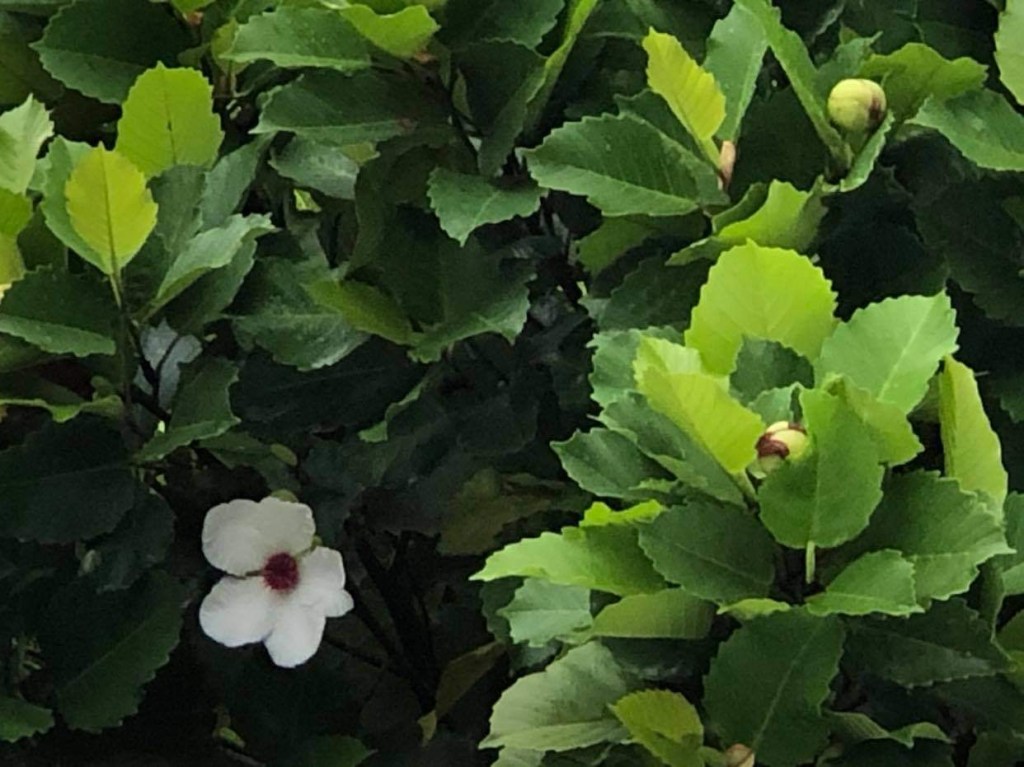
Photo by author, Baguio City, 2018.
God our loving Father in heaven, teach us to accept that you love us, that you trust us, and that you believe in us so that we can finally be grateful and humble before you.
Yes, dear God – one reason we find it so hard to be grateful and humble before you is because we have hardly accepted nor appreciated your love and trust in us. Teach us to see ourselves as you see us, like St. Paul despite our sinfulness.
To me the very least of all the holy ones, this grace was given, to preach to the Gentiles the inscrutable riches of Christ, and to bring to light for all what is the plan of the mystery hidden from ages past in God who created all things.
Ephesians 3:8-9
What a wonderful attitude by St. Paul, expressing such gratitude to you God in calling him and entrusting him the “stewardship of your grace” (Eph.3:2) for others to experience you and your love!
Remind us, dear God, that everything we have is not simply a grace and blessing from you but a sign of your trust in us – whether as a husband or wife, mother or father, brother or sister, or, whatever profession and vocation we follow – they all mean you believe us, that we are responsible enough and most of all, we can all accomplish our mission in Jesus through the Holy Spirit.
May we heed your Son’s warning in today’s parable that
“Much will be required of the person entrusted with much, and still more will be demanded of the person entrusted with more.”
Luke 12:48
And to do so, let us humbly and gratefully accept your gifts always. Amen.
The Lord Is My Chef Breakfast Recipe for the Soul by Fr. Nicanor F. Lalog II
First Friday, Memorial of Guardian Angels, 02 October 2020
Exodus 23:20-23   | + |  >><)))*>   | + |   Matthew 18:1-5, 10
Photo by author, dome of the Malolos Cathedral, December 2019.
Praise and thanksgiving to you, O God our loving Father! In your great love for us, you did not only give us your Son Jesus Christ to redeem us but also sent us guardian angels who guide and protect us in this journey in life.
What an honor in making each one of us truly your favorite child!
May we always heed the guidance and leading of our guardian angels so we may always follow and do your Holy Will, O God.
May we be respectful, devoted and grateful to our guardian angels who function as our protectors, keeping us safe from all harm and dangers.
Lastly, give us the courage and banish our fears, Lord, for we have our guardian angels always beside us, sometimes ahead of us to prepare our paths.
Let us “follow them, stay close to them so we may dwell under the protection of God’s heaven” (St. Bernard). Amen.
The Lord Is My Chef Sunday Music by Fr. Nick F. Lalog II, 27 September 2020
Photo by Dr. Mylene A. Santos, MD, at Katmon Harbor Nature Sanctuary in Infanta, Quezon, March 2020.
It’s Ms. Carly Simon again in the house four weeks after featuring her 1972 classic “You’re So Vain” in August. This time we pick her 1986 hit single “Coming Around Again” she had written for the movie Heartburn starring Meryl Streep and Jack Nicholson.
Coming Around Again is an aptly titled work by Ms. Simon that kickstarted the resurgence of her career at that time with the song peaking at number 18 on the US Billboard Hot 100 and number 5 on the Billboard Adult Contemporary chart, not to mention the warm reception it had received from around the world.
We find this song suited well with our Sunday gospel on the parable by Jesus of a father who asked his two sons to work in his vineyard; the elder one refused but later changed mind and went to the vineyard while the younger son said yes without really going there. Jesus used the parable to drive his message that we shall all be judged by our actions, not by our words.
Most of all, Jesus narrated the parable to warn those who highly regard themselves as good and upright, looking down on others like sinners as less important. The Lord is asking us today to soften our hearts especially to those difficult to love, that we must constantly examine ourselves lest we fall into the trap that despite our being “clean” and upright, we could end up more evil than those we find as sinful (https://lordmychef.com/2020/09/26/soften-our-hearts-lord/).
Anyone who truly loves is always humble, willing to empty one’s self and go down for the sake of a loved one that is exactly opposite to the way of the world which is to be always on top as the most popular, the most powerful, the wealthiest.
I know nothing stays the same But if you’re willing to play the game It’s coming around again So don’t mind if I fall apart There’s more room in a broken heart
And I believe in love But what else can I do I’m so in love with you
To better appreciate this song is of course see Heartburn which is the semi-biographical account of its writer, the late Nora Ephron’s marriage to Watergate scandal investigative reporter Carl Bernstein.
Like Bernstein, Ephron was also a writer and a journalist before eventually becoming a filmmaker after Heartburn. She was nominated thrice for an Academy Award for Best Writing in three other films she wrote, Silkwood (1983), When Harry Met Sally (1989) and Sleepless in Seattle (1993).
Another lovely film to her credit is You’ve Got Mail that also starred Tom Hanks. Her last film was Julie & Julia (2009).
Looking back to the story of Heartburn and its soundtrack Coming Around Again, one finds in this woman’s path of self-emptying as perhaps the key to her success as a movie scriptwriter and a playwright.
The Lord Is My Chef Sunday Recipe for the Soul by Fr. Nicanor F. Lalog II
Week XXVI-A in Ordinary Time, 27 September 2020
Ezekiel 18:25-28   |+|   Philippians 2:1-11   |+|   Matthew 21:28-32
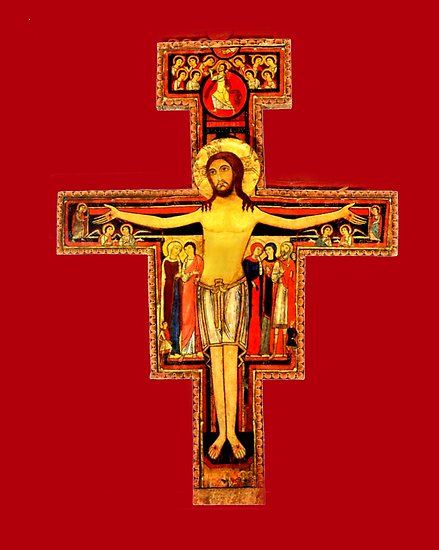
Cross of San Damiano before which St. Francis of Assisi prayed and received Christ’s commission to rebuild His Church. Photo from wikipedia.org.
Brothers and sisters: If there is any encouragement in Christ, any solace in love, any participation in the Spirit, any compassion and mercy, complete my joy by being of the same mind, with the same love, united in heart, thinking one thing. Do nothing out of selfishness or out of vainglory; rather, humbly regard others as more important than yourselves, each looking out not for his own interests, but also for those of others. Have in you the same attitude that is also yours in Christ Jesus, who, though he was in the form of God, did not regard equality with God something to be grasped. Rather, he emptied himself, taking the form of a slave, coming in human likeness; and found human in appearance, he humbled himself, becoming obedient to death, even death on a cross.
Philippians 2:1-8
We priests and religious pray this beautiful hymn by St. Paul every Saturday evening. It is also proclaimed on Palm Sunday to show us Jesus Christ’s self-emptying (kenosis in Greek) to offer himself for our salvation. It is the most important text of St. Paul’s letter to the Philippians that has played a vital role in the discussions of Christ’s preexistence.
Seen in the light of the gospel this Sunday, it is also part of St. Paul’s moral exhortation to the Philippians and us living today to be united as one in Jesus by following his pattern of kenosis that is similar with his teachings that “the first will be last, and the last will be first, that the greatest is the servant of all.”
It is the fundamental model of Christian life, the very essence of following Jesus by denying one’s self and taking up one’s cross but also the most difficult to learn and put into practice as it is exactly the opposite of the way of the world – “upward mobility” — of being rich and famous, of being in control that had divided us with massive walls of indifference, hate, and antagonisms making peace and joy more elusive.
Christ’s kenosis is the only way up in life to be back in God that leads us to unity, peace, and joy.
In this time of the pandemic when we are supposed to be more united and kind and nice with everyone, St. Paul’s call to imitate Jesus Christ’s kenosis is very timely and relevant, calling us to soften our hearts by emptying ourselves of our pride unlike the chief priests and elders of Israel to whom the Lord addressed his parable this Sunday.
Photo by author, wailing of Jerusalem, May 2017.
Our sense of entitlement
Jesus said to the chief priests and elders of the people: “What is your opinion? A man had two sons. He came to the first and said, ‘Son, go out and work in the vineyard today.’ He said in reply, ‘I will not,’ but afterwards changed his mind and went. The man came to the other son and gave the same order. He said in reply, ‘Yes, sir,’ but did not go. Which of the two did his father’s will?” They answered, “The first.” Jesus said to them, “Amen, I say to you, tax collectors and prostitutes are entering the kingdom of God before you.”
Matthew 21:28-31
Beginning today in three successive Sundays, Jesus teaches us again in parables to soften our hearts and let go of our pride that we are better than others, that we deserve more than what is due us like those early workers to the vineyard in last week’s gospel.
In a sense, today’s gospel tells us that there are too many works to be done in God’s kingdom that we have to keep going, imitating Jesus and be careful of falling into the same trap of those workers in last Sunday’s parable who felt entitled to more pay because they worked longer than others.
Notice how Jesus directly addresses his parables in these three Sundays to the same crowd of “chief priests and elders of the people” who have always felt favored by God for being of his “chosen people” since Abraham’s time. They always looked down at others specially the “tax collectors and prostitutes” considered as sinners.
They are not just people from the past who have lived during Christ’s time more than 2000 years ago. Even among us today, there are still chief priests and elders who continue to live and exist!
And here is the rub — among these people who may really be good in faithfully keeping the commandments of the Lord, praying and doing all kinds of devotions and charities are also the worst. Their religiosity are tied only to themselves and never to God, without any love at all.
Keep in mind that every time we feel entitled like the chief priests and elders of the people, it means our hearts have gone hard and cold like the elder son of the merciful father of the parable of the prodigal son or the early workers hired to the vineyard last week.
Photo by author, Mt. St. Paul Spirituality Center, La Trinidad, Benguet, March 2020.
So many times it happens that those who are supposed to be on higher moral grounds turn out to be without any roots and grounding in God at all, becoming harsh and judgmental of others, more sinful than the ones they condemn.
Like the chief priests and elders of the people in the crowd listening to Jesus, they start as the vida only to end up as the contravida like when there is a “black sheep” in the family or a “rotten tomato” in class, that instead of helping them rise from their sinfulness, they who are the ones who condemn and sink others deeper into their holes!
That is why God questions, stirs their hearts through the prophet in the first reading,
Thus says the Lord: You say, “The Lord’s way is not fair!” Hear now, house of Israel: Is it my way that is unfair, or rather, are not your ways unfair?
Ezekiel 18:25
Always examine our hearts for we must all be converted again and again.
We must keep on praising and thanking God for his mercies like in our responsorial psalm this Sunday because he gives us all the chances in life to change and become better persons. Here we find a semblance with the gospel the other Sunday why we must forgive without limits because God’s love for us is infinite.
Actions, not intentions, judge us
Last Monday we celebrated the feast of St. Matthew, the tax collector called by Jesus to become one of his Twelve Apostles who also wrote one of the four gospels. It is very interesting to know that in all gospel accounts, tax collectors and prostitutes are always grouped together because they are the worst sinners at that time.
Tax collectors not only enriched themselves with excessive collections from the people but were seen as traitors who worked for the Roman colonizers of Israel at that time. Prostitutes, on the other hand, have always been considered very low because as women supposed to give birth for the awaited Messiah, they have “dirtied” their womb. Together, tax collectors and prostitutes were seen as the worst sinners in Israel because they have sold their souls to the devil; hence, they were considered beyond redemption, beyond hope, a scourge to their families and to the community that nobody would want to deal with them.
And so, it was very radical, out-of-this-world and totally unimaginable for everybody then when they heard Jesus telling them how “tax collectors and prostitutes” were entering the kingdom of God before the chief priests and elders of the people who were considered very holy at that time!
It was a serious warning to them and us today from the Lord who reminds us that our actions judge us. The parable is an echo of his warning that “not everyone who calls him ‘Lord, Lord’ will enter heaven” (Mt.7:21). St. Matthew is very particular in his gospel account of the complete jibing together of what we say and what we do, of “walking the talk”.
We have so many sayings expressing this important lesson of today’s parable by the Lord like “A single act of good deed is always better than the grandest and best intention” and “Actions always speak louder than words.”
Photo by author, sunset in the parish, August 2020.
In this time of the pandemic when church attendance is limited and we are advised not to sing and reply aloud in the Mass, it is best that we examine how we have become mechanical in our celebrations without realizing the gravity of things we say like when we acclaim after the gospel proclamation “Praise to you, Lord Jesus Christ!”: do we really work hard in his vineyard or are we like the other son who said yes but did not go? When at the end of the Mass we are told “Go in the peace of Jesus Christ” and we say, “Thanks be to God”, do we really go home at peace or still having that festering anger or dislike to someone?
Make your joy complete. Ask Jesus to soften your heart. Take a step backwards like the first son though at first he seemed so bad to disobey his father in refusing to follow his command, do not be ashamed to take back your words and do what is right.
Be careful not with your words but with your actions for which the Lord would judge us in the end.
Find solace in St. Paul’s beautiful hymn this Sunday: the lower we go down, the higher we are lifted up like Jesus. Nobody had ever gone wrong and lost in life going down, of being humble. Many men and women have gone to oblivion, lost and forgotten when their ivory towers collapsed, burying them in the rubble.
The Lord Is My Chef Breakfast Recipe for the Soul by Fr. Nicanor F. Lalog II
First Friday, Week XXII, Year II in Ordinary Time, 04 September 2020
1 Corintians 4:1-5 /// Luke 5:1-11
Photo by author, Lent in our parish 2020.
Dearest Jesus Christ:
Your words today through St. Paul are very edifying but also demanding, even scary and frightening.
But, I would rather have it that way than get them into my head.
Brothers and sisters: Thus should one regard us: as servants of Christ and stewards of the mysteries of God. Now it is of course required of stewards that they be found trustworthy.
1 Corinthians 4:1-2
Yes, it is an honor to be chosen as your servant, Lord, and a steward of the mysteries of God.
It is so pleasant to the ears and so flattering to one’s self to be a steward of the mysteries of God, of his wisdom – of Jesus Christ crucified.
Keep me lowly and humble, Lord. Remind me always that everything is about you and never about me. Keep me faithful to you and your call that whatever others may say about me, let me be concerned solely with your words and with your judgment. At the same time, keep me silent too, never to brag of my mission and most of all, never to judge others for that resides in God alone.
Keep my mind and my heart open to you always, Lord, so I may always be like a fresh wineskin to be poured on with new wine to mature and grow spiritually in you. Amen.
One of the best ads during the lockdown last summer from Smart.
What a wonderful lesson we have today from St. Paul about your wisdom, O God our Father that is found in the scandal of the Cross of your Son Jesus Christ!
Brothers and sisters: Let no one deceive himself. If anyone among you considers himself wise in this stage, let him become a fool so as to become wise. For the wisdom of this world is foolishness in the eyes of God, for it is written: God catches the wise in their own ruses, and again: The Lord knows the thoughts of the wise, that they are vain.
1 Corinthians 3:18-20
This we have realized at the start of this pandemic when everything in the world stopped and forever changed because of microscopic COVID-19 virus, affecting even the most advanced countries of the world.
Most of all, everybody – rich and poor alike – suffered greatly from this virus, teaching us to value persons more when people we took for granted for so long have become our “saviors” during this prolonged quarantine periods like vendors and delivery personnel, our househelpers, and others we used to look down upon who continued to serve us with food and other needs.
Not to be forgotten too are the members of neglected sectors of our society, specially those in the medical and healthcare system and the agriculture who showed us the importance of human and natural resources over imports and technology as well as entertainment.
What a great lesson about wisdom of God and foolishness of man in this modern time!
One thing very clear, O Lord, that to be a fool for you is first of all to let go of our foolish pride and be humble before you and others.
It is the only way we can let you do your work of changing us and the world when we learn to let go of our foolish pride like St. Peter in today’s gospel when he as an experienced fisherman heeded your command to cast his nets into the deep even though you are the carpenter’s son.
When we review the lives of all saints, they are all men and women of exceptional humility before you, Lord; like St. Gregory the Great who focused more on you that he was able to reform our liturgy, set up schools and monasteries, sent missionaries to England, and instill holiness among the clergy in his “Pastoral Instructions.”
Help us to believe more in you than in ourselves so that you may do your work in us and through us. May we value your Cross, Lord Jesus, considered as foolish in this sophisticated age yet has continued to prove that it is the only path to our transformation as persons and nations. Amen.
Photo by author, XVth Station of the Cross, the Resurrection, Mount St. Paul, La Trinidad, Benguet, February 2020.
Maybe you have been asked so many times with the question, which do you prefer to hear first, the good news or the bad news? Usually we say it all depends to our mood and temperament or to the gravity of the situation. Sometimes, we ask for the bad news first so we can suffer earlier and enjoy the good news later. Or, we ask for the good news first to soften the impact of the bad news.
Our gospel this Sunday is still set in the pagan city of Caesarea Philippi and we heard Jesus giving his disciples – including us – with a strong dosage of “bad news” after hearing last week the good news that he is “the Christ, the Son of the living God.”
Jesus began to show his disciples that he must go to Jerusalem and suffer greatly from the elders, the chief priests, and the scribes, and be killed and on the third day be raised. Then Peter took Jesus aside and began to rebuke him, “God forbid, Lord! No such thing shall ever happen to you.” He turned and said to Peter, “Get behind me, Satan! You are obstacle to me. You are thinking not as God does, but as human beings do.” Then Jesus said to his disciples, “Whoever wishes to come after me must deny himself, take up his cross, and follow me. For whoever wishes to save his life will lose it, but whoever loses his life for my sake will find it.”
Matthew 16:21-25
Our gospel today seems to be a very big, bad news for everyone, with things getting worst before getting any better which the Lord had promised to be only in the end that nobody knows when!
See how Jesus started by saying he would “suffer greatly at the hands of elders, the chief priests, and the scribes and be killed and on the third day be raised again.” Not only that: he now calls Peter as “Satan” from being the Rock last Sunday after giving the right answer as to who he is.
Like Peter, we would probably say the same thing to Jesus why make suffering and death central to life that is meant to enjoy?
Like Peter, the Lord is inviting us today to focus more on the good news than on the bad news of suffering and death which for him – the Paschal mystery we call – is actually the best of good news!
Photo by author, altar flowers in our parish, January 2020.
Jesus Christ’s pasch is the best of good news!
What we have heard as “bad news” from the Lord is his first prediction of his coming pasch or Passion, Death and Resurrection. He would be announcing this prediction of his pasch two more times as they near Jerusalem.
From the He brew word pesach that means to pass over, it connotes suffering and death into new life. It came from the Exodus experience of the Chosen People from Egypt into the Promised Land during the time of Moses, taking its fullest meaning in Jesus Christ, the Son of God who became human like us in everything except sin, “passing over” from eternity to temporal, from Passion and Death to Resurrection.
Authentic discipleship does not require us to seek suffering; no, God is not sadistic as some people with twisted minds would say. However, being faithful to Jesus, witnessing his gospel values bring enough of these sufferings and deaths but on a different level and meaning. We realize that life is a daily exodus, a passing over from darkness into light, from ignorance into wisdom, from sickness into health, from death into new life.
Like the prophet Jeremiah in the first reading, we discover that the more we follow God, the more sufferings we encounter in life but at the same time, we cannot let go of him because his attraction is so powerful! There is something so deep within, so profound and fulfilling in us we realize that living in the ways of God, in the gospel values of Christ can we truly find lasting joy and peace – even if we have to die in our very selves in the process.
You duped me, O Lord, and I let myself be duped; you were too strong for me, and you triumphed. all the day I am an object of laughter; everyone mocks me… But then it becomes like fire burning in my heart, imprisoned in my bones; I grow weary holding it in, I cannot endure it.
Jeremiah 20:7, 9
Photo by author, Gaudete Sunday in our parish, December 2019.
Thinking in God’s ways
Today Jesus is assuring us that there is no such thing as “good news, bad news” with him. The good news/bad news question is really a non-question to disciples of Christ because whatever suffering and death we embrace in him is a sharing in his very life.
Hence, Jesus Christ’s good news is in fact the bestest news we can ever have. Always.
The key is to think as God does, not as human beings do as Jesus pointed out to Peter.
Three things I wish to share with you about thinking in God’s ways:
First is to accept and embrace pains and sufferings not for their own sake but as a way to cleanse our selves to greater glory. As we have said, God is not a sadist; we need to be cleansed like every thing in order to bring out the best in us like diamonds or any precious stone or any material.
Polishing and honing always mean “subtractions” with so many shaving and cutting of the rough edges to bring out the beauty and sharpness of a thing.
Man’s ways has always been to avoid every pain and suffering. No wonder, the most prescribed medicine worldwide is said to be the pain killer. But, experience has taught us this is not true and cannot be the norm of life. Like every gym enthusiast would tell you, “no pain, no gain”. Pain and suffering is part of life and the good news is, Christ has made it holy for us.
Second is to be silent in order to be able to listen to every sound and thus, heighten our sensitivities not only with our true selves but also with God and with others. In this age of social media and instant communications, silent has become a rare commodity. It is always easier to speak even without thinking much than be silent. That is the way of the world: speak out loud, make noises, and let everyone hear you — until they get tired of you.
Photo by author, our parish ceiling at sunset, 25 August 2020.
Third is the most precious in God’s ways of thinking — the way of hiddenness. This is God’s most evident way of making himself felt, experienced, and yes, seen by being hidden and invisible.
Last Thursday we celebrated the memorial of St. Monica, the mother of St. Augustine who narrated the story of how she got sick at Ostia in Italy with his brother hurrying to get back home to Tagaste in Africa so that when she dies, she would be buried there. St. Monica “reproached him with a glance because he had entertained such earthly thoughts”; then, she looked at St. Augustine and told him to bury her anywhere, asking one thing only from him: that he remembers her always in his celebration of the Holy Mass.
So many times, we are so concerned with our popularity that whatever we do has to be made known to everyone to see specially by those so-called “followers” with their “likes” that even up to death, some would spend a fortune for lavish funerals and even mauseleoum.
That’s the way of the world of everybody making a statement, of being known as present, always seen. In the movie “The Devil’s Advocate”, Al Pacino played the role of satan who said it so well at the end after tempting Keanu Reeves, “vanity…vanity is my most favorite sin.”
See the life of Jesus Christ: more than half was spend in hiddenness and silence. He worked only for three years characterized by so many instances of silence and hiddenness too and yet, his impact continues to this day and hereafter.
Beginning with last Sunday after asking us who do we say he is, Jesus is inviting us to follow him in his Passion and Death to be one in his Resurrection. This is also the call by St. Paul in the second reading:
I urge you, brothers and sisters, by the mercies of God, to offer your bodies as a living sacrifice, holy and pleasing to God, your spiritual worship. Do not conform yourselves to this age but be transformed by the renewal of your mind, that you may discern what is the will of God, what is good and pleasing and perfect.
Romans 12:1-2
Jesus is not asking too much from us, no need for any fanfares on our part; simply come to him with our true self, no matter how sinful and incomplete we are. Remember, all is good news with him and you never lose in him. Amen.
A blessed week to everyone!
Photo by author, parish ceiling at sunset, 25 August 2020.
The Lord Is My Chef Breakfast Recipe for the Soul by Fr. Nicanor F. Lalog II
Monday, Feast of St. Bartholomew, Apostle, 24 August 2020
Revelation 21:9-14 >><}}}*> |+| >><}}}*> |+| >><}}}*> John 1:45-51
Photo by author, Subic, 2018.
Glory and praise to you, Lord Jesus, the “Word who became flesh and dwelt among us” to reveal the Father’s immense love for us all. He was not contented in just telling the prophets of Old Testament how he loved us that He came and lived with us in you, Lord Jesus!
And that is why we also rejoice on this Feast of St. Bartholomew, a.k.a. Nathanael, who was introduced to you by another Apostle you have called earlier:
Philip found Nathanael and told him, “We have found the one about whom Moses wrote in the law, and also the prophets, Jesus, son of Joseph, from Nazareth.” But Nathanael said to him, “Can anything good come from Nazareth?” Philip said to him, “Come and see.” Jesus saw Nathanael coming toward him and said of him, “Here is a true child of Israel. There is no duplicity in him.” Nathanael said to him, “How did you know me?” Jesus answered and said to him, “Before Philip called you, I saw you under the fig tree.” Nathanael answered him, “Rabbi, you are the Son of God; you are the King of Israel.”
John 1:45-49
O dear Jesus, like St. Peter in the gospel yesterday and now St. Bartholomew, you are telling us anew to never be contented with mere words, with the “what” of who you really are, that we must always “come and see you” in order to experience your very person and truly know you.
I really wonder O Lord what your words meant that before Philip called Nathanael-Batholomew, you have seen him under the fig tree; however, I am so convinced that in your words, Nathanael-Bartholomew must have felt something deep inside him that he threw himself totally to you as your Apostle.
Most of all, teach me to remain simple and hidden in you, Jesus that like St. Bartholomew, despite the scarcity of stories and information about him except this little anecdote from the fourth Gospel, he remained faithful to you until his death by flaying reportedly in India.
May we imitate St. Bartholomew who had shown us that more than words, what matters is our oneness in you, Jesus, without any need for us doing sensational deeds, earning thousands of “likes” and “followers” in social media because only you, Lord, remains extraordinary above all. Amen.
Almighty God and Father, on this Memorial of the Queenship of Mary our Blessed Mother, we join her in that most beautiful song of praise to you, “My soul proclaims the greatness of the Lord, my spirit rejoices in God my savior” (Lk.1:47).
Remind us always, O Lord, specially in this time when we exaggerate everything that unlike the royalties of the world, Mary is our Queen not because of power and wealth nor of fame and popularity but precisely due to her humility and weakness before you.
In this time when we are so fond of “triumphalism”, when we overdo even our devotions and prayers to praise and glorify you, remind us O Lord it is not your way as shown to us by the Blessed Mother Mary.
Let us keep in our minds and hearts that Mary, along with all the saints, are venerated because of their obedience to you, fulfilling your will at all times, making you present among us in our weaknesses and helplessness.
We pray for more simplicity and humility, above all, sincerity in our devotions to Mary and the saints that lead to more authentic faith in you alone who is our God Most Holy.
Like Mary our Queen, may we always say “yes” to you O God our “King of kings”. Amen.
The Lord Is My Chef Breakfast Recipe for the Soul by Fr. Nicanor F. Lalog II
Tuesday, Week XX, Year II in Ordinary Time, 18 August 2020
Ezekiel 28:1-10 <*(((><< || + || >><)))*> Matthew 19:23-30
Photo by author, Petra in Jordan, May 2019.
Then Peter said to Jesus in reply, “We have given up everything and followed you. What will there be for us?” Jesus said to them, “Amen, I say to you that you who have followed me… And everyone who has given up houses or brothers or sisters or father or mother or children or lands for the sake of my name will receive a hundred times more, and will inherit eternal life.”
Matthew 19:27-28, 29
“We have given up everything and followed you, Lord. What will there be for us?”
Oh! how often we tell this to you, Lord Jesus, as if we have given so much for the sake of your kingdom.
Sometimes, it is not really a question we ask but a reminder to you of our “goodness” and “benevolence” with others, of how good we have been when in fact whatever we give and share are all from you.
Forgive us, O Lord, when most specially in the midst of pains and sufferings, we ask you “What will there be for us?” in order to remind you of our rewards, or entitlement as if you forget them or that there is such a thing at all with you.
Photo by author, 2019.
We are sorry Lord in counting the costs and most of all, in demanding so many in return.
“What will there be for us?” is often the question we ask when we doubt your generosity and fidelity to your promises to us.
Like Ezekiel in the first reading, remind us O Lord to keep in mind not to be “haughty of heart”, that “we are not god despite our many achievements brought about by our intelligence or beauty” (Ezekiel 28:1-7).
Dearest Jesus, you have given us with so much and we have given so little; teach us to give more of ourselves, more of our time, more of our treasures, and most of all, more of you to others. Amen.