Faith & intimacy

Lord My Chef Sunday Recipe for Soul by Fr. Nicanor F. Lalog II
Twentieth Sunday in Ordinary Time, Cycle A, 16 August 2026
Isaiah 56:1, 6-7 ><}}}}*> Romans 11:13-15, 29-32 ><}}}}*> Matthew 15:21-28
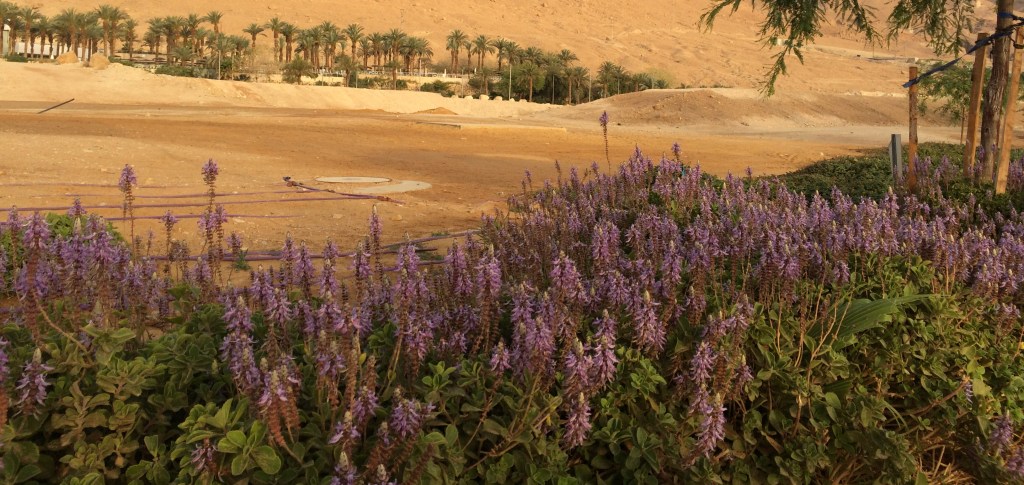
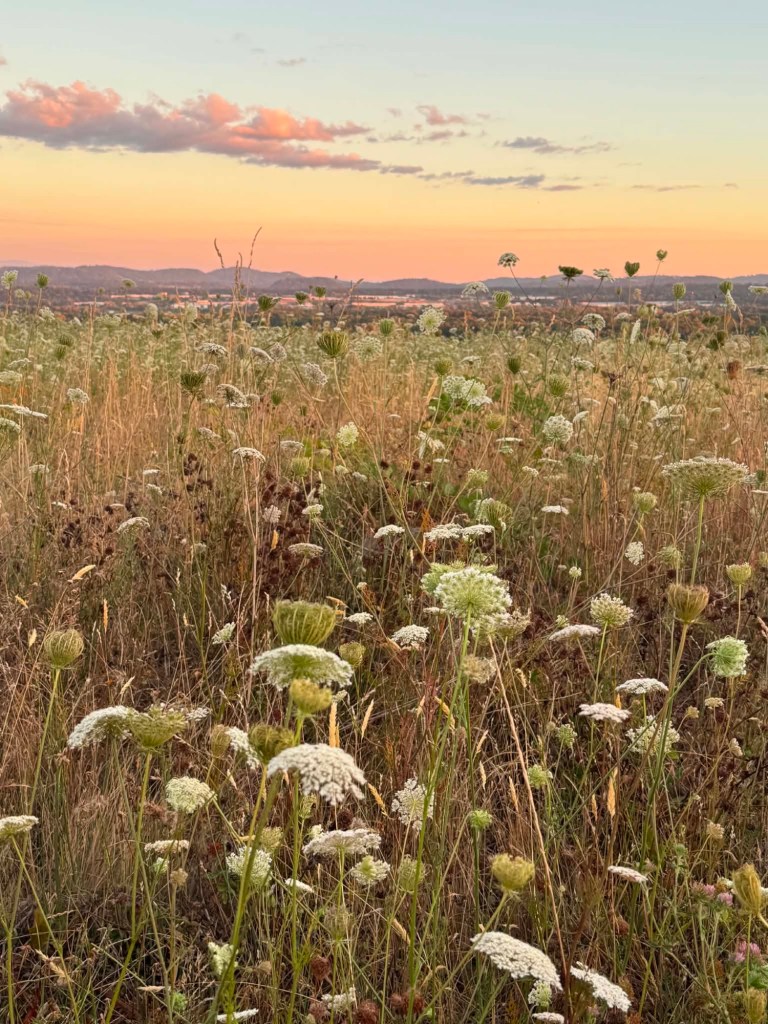
Photo by author, Dead Sea region, the Holy Land, May 2017.

The past two Sundays must have been physically tiring for Jesus and his disciples, not to mention emotionally draining as well. After walking on water to join his disciples in the boat tossed by giant waves last week, they finally landed at Gennesaret.

But, things got worse there when some Pharisees and scribes from Jerusalem raised issues against Jesus why his disciples disregarded their ritual traditions of purification like washing of hands before eating; Jesus defended them, declaring that “it is not what enters one’s mouth that defiles a person; but what comes out of the mouth” (Mt.15:11).

Sensing troubles, Jesus again withdrew but this time to the gentile region of Tyre and Sidon to defuse tensions with his detractors and especially for much needed rest.

At that time, Jesus withdrew to the region of Tyre and Sidon. And behold, a Canaanite woman of that district came and called out, “Have pity on me, Lord, Son of David! My daughter is tormented by a demon” (Matthew 15:21-22).

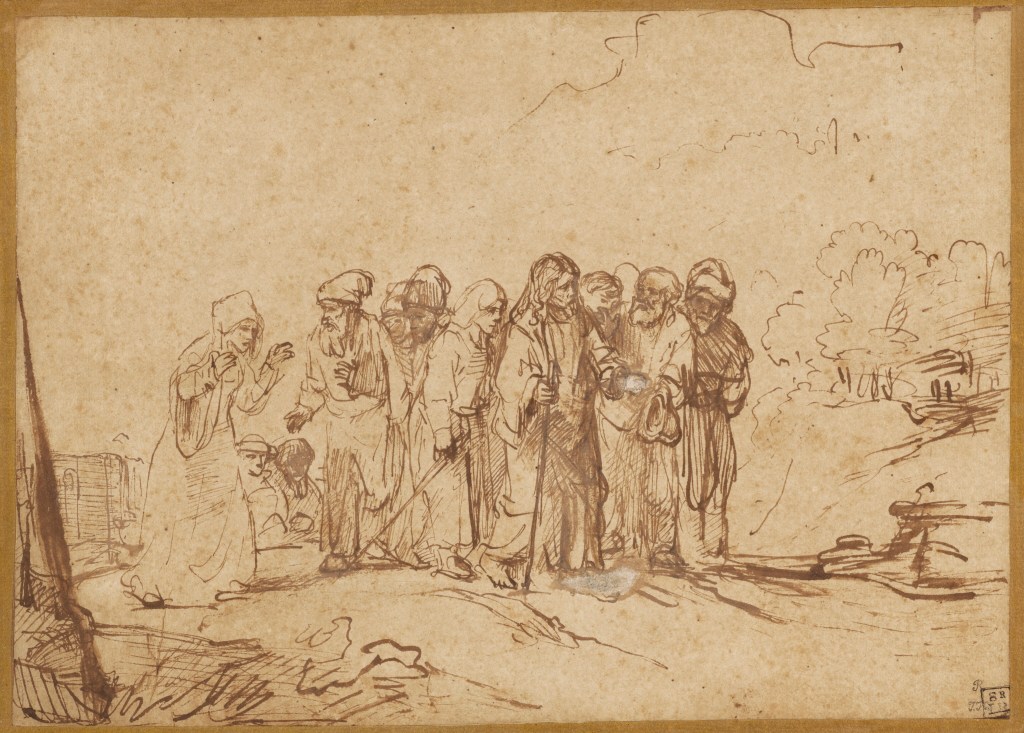
An ink-drawing by a student of Rembrandt of Jesus with the Canaanite woman at the far left from the Getty Museum Collection.

The scene is lovely with a dash of humor – just as when Jesus thought there would be no fellow Jew to disturb them in Tyre and Sidon being a gentile region, a pagan woman recognized him!

See and feel the drama when Matthew wrote, And behold, a Canaanite woman of that district came and called out, “Have pity on me, Lord, Son of David! My daughter is tormented by a demon.”

Two Sundays ago, Matthew presented us Christ teaching the need to have faith in him because he is our abundance in the midst of our scarcity when he fed more than five thousand people from just five loaves of bread and two pieces of fish; after that miracle, Jesus walked on water to join his disciples in their boat tossed by giant waves due to strong winds in the middle of the lake before dawn to teach the importance of faith in him because Jesus is our certainty and security.

This Sunday, Matthew presents to us another dimension of faith in Christ which leads to intimacy in our relationships with God and with others.

Actually, the Canaanite woman is the second pagan Jesus had accommodated a request for healing. In chapter 8, Matthew tells us how Jesus healed the servant of a Roman centurion who was definitely a pagan.

It is very interesting to note that only these two pagans were praised by Jesus for their faith in him. And that is because they were so engaging in making their request from Jesus.

See how very similar with that centurion who told Jesus, “Lord, I am not worthy to have you enter under my roof; only say the word and my servant will be healed” (Mt.8:8) this Canaanite woman in engaging Jesus for the healing of her daughter:

But Jesus did not say a word in answer to her. Jesus’ disciples came and asked him, “Send her away, for she keeps calling out after us.” He said in reply, “I was sent only to the lost sheep of the house of Israel.” But the woman came and did Jesus homage, saying, “Lord, help me.” He said in reply, “It is not right to take the food of the children and throw it to the dogs.” She said, “Please, Lord, for even the dogs eat the scraps that fall from the table of their masters.” Then Jesus said to her in reply, “O woman, great is your faith! Let it be done for you as you wish.” And the woman’s daughter was healed from that hour (Matthew 15:23-28).

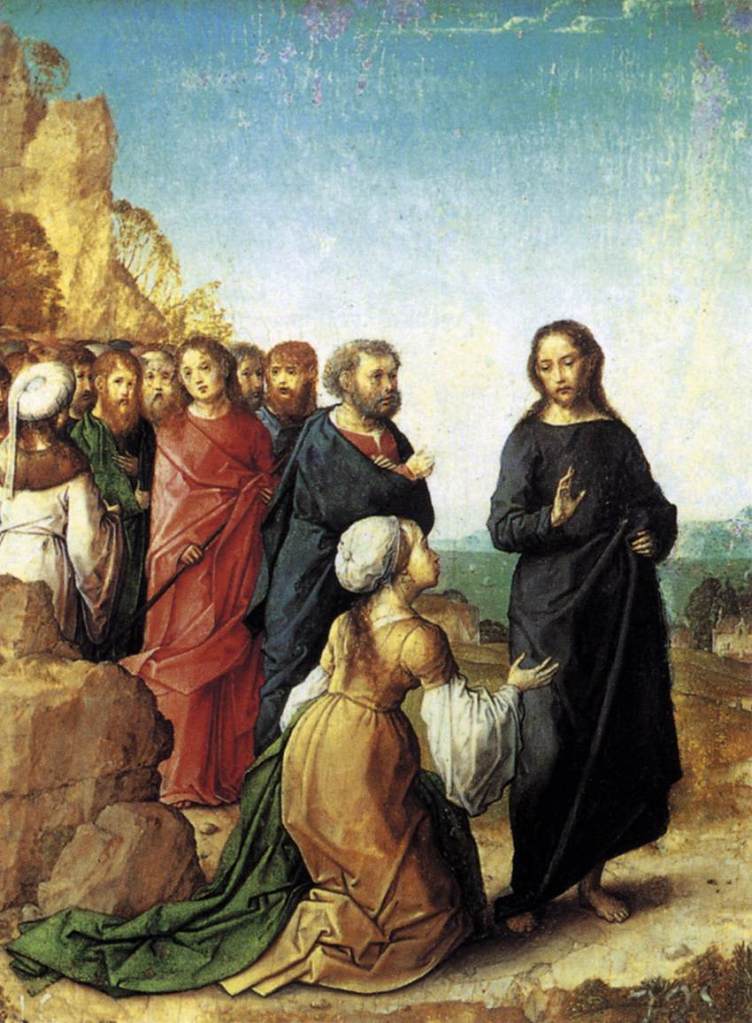
A painting of “The Canaanite Woman asks for healing for her daughter” by Spanish painter Juan de Flandes ca. 1500 as part of the 47 small panels of paintings commissioned by Queen Isabella I of Castile; from commons.wikimedia.org.

The woman definitely had some faith in Jesus whom she addressed as “Lord” like Simon Peter at the middle of the lake last Sunday. She had also researched on Jesus she called “Son of David” – the title of the Messiah only the Jews would know. Here we find a faith that is growing, deepening into an intimacy as shown by her intense engagement with Jesus.

Intimacy happens when there is an engagement like wrestling. Best example is when Jacob wrestled with an angel until sunrise where he prevailed and was given the new name “Israel” that means one who struggles and prevails with God.

Only those with deep faith in God would wrestle and struggle until they prevail like Jacob, the Roman centurion and that Canaanite woman. Wrestling in Filipino is magbuno – that’s how I imagined the Canaanite woman coming forward to Jesus in homage, begging, insisting, “Please, Lord, for even the dogs eat the scraps that fall from the table of their masters.”

What an amazing faith!

It was very clear with the Canaanite woman they as pagans were not one of the “children” or Jews entrusted with the covenant with God signified by the “bread”; the woman clearly had no intentions of usurping any rights from the chosen people for she knew very well their share, the mere crumbs falling from the table.

However, the Canaanite woman expressed in her tough engagement with Jesus her faith and hope as well that day, they were contented with crumbs but some day, they shall be seated at the table too as expressed by God to Isaiah in the first reading that eventually was fulfilled in Christ. And that’s the other miracle that happened that day: the woman’s hope for salvation in the future was fulfilled at the very moment she wrestled with Jesus for her daughter’s healing!

Photo by Pete Johnson on Pexels.com

Many times in life we felt Jesus coming to us in unfamiliar grounds and situations like when he withdrew to Tyre and Sidon where we were weakest, deep into sins, doubting and unfaithful with him.

This Sunday, Jesus invites us to walk with him, even to argue and debate with him, “wrestle” with him in our own Tyre and Sidon because we have nobody else to turn to but him as our joy and fulfillment, healing and forgiveness, most of all, peace.

Do not worry if Jesus would not seem to notice us like the Canaanite woman. Intimacy is more than being close or near Jesus when we come to church or chapel to pray. Our Filipino word for intimacy is more evocative of its nature – matalik that involves active presence leading to total giving of self.

Intimacy is faith in action involving personal contact with Jesus that best happens in unfamiliar territories like Tyre and Sidon where we confront our sins, vulnerabilities and insecurities, weaknesses and failures. It is stripping ourselves naked before Christ like that Canaanite woman who accepted their being referred as “dogs” contented with crumbs. That’s when miracles happen!

Today we remember too those family and friends we have had some falling out and misunderstanding, some for years while others we may be still living with but have a long-running feud and misunderstanding. They are our Tyre and Sidon where Jesus is awaiting us to meet him for healing and reconciliation as reflected by Paul in the Second Reading. Let us have faith to bare ourselves before Christ to be freed from the pains and hurts tormenting us all these years. What matters most is we get intimate with Jesus so the rest of our relationships would follow. Amen. Have blessed, warm and dry week hopefully ahead!

Photo by Mr. Vigie Ongleo, 2021.

Asking the right question

Lord My Chef Daily Recipe for Soul by Fr. Nicanor F. Lalog II
Saturday, Nineteenth Week in Ordinary Time, Year II
Solemnity of the Assumption of the Blessed Virgin Mary, 15 August 2026
Revelation 11:19; 12:1-6, 10 ><}}}*> 1 Corinthians 15:20-27 ><}}}*> Luke 1:39-56
Photo by Ann H on Pexels.com

One significant lesson I learned in journalism and in life is that we are known by the questions we ask, not by our answers that are often wrong. When we ask the right question – especially if it is not misleading to our own assumptions – the problem or issue at hand is already half solved. 

It doesn’t really matter if we don’t get answers right away; many times the answers to our questions come or “unfold” as we move on in life. Some answers come to us later in life or after the death of a loved one. Or, maybe they would be answered in the afterlife.

Just keep asking. As one newspaper says, be an inquirer.

But, why start our reflection on asking question on this Solemnity of the Assumption of the Blessed Virgin Mary?

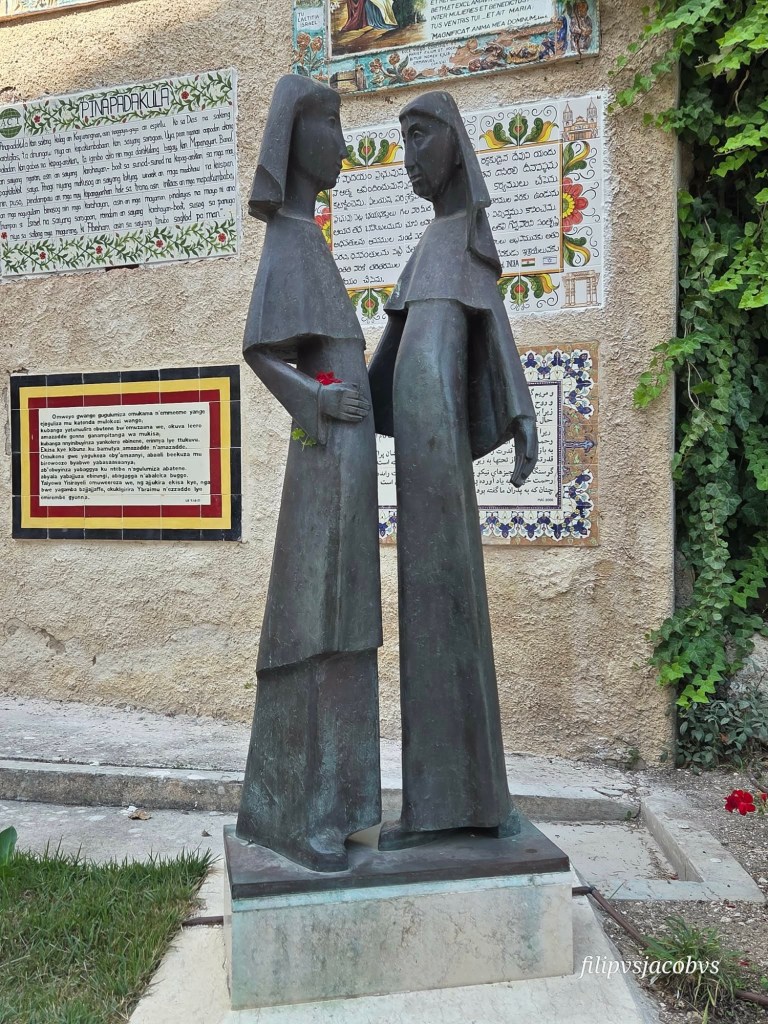
Photo by Ar. Philip Santiago, Church of the Visitation, Israel, 2024.

I was struck by how Elizabeth greeted Mary in her visitation with a question:

“And how does this happen to me that the mother of my Lord should come to me?” (Luke 1:43)

Actually, before Elizabeth asked that question at the Visitation, Mary was the first to ask the difficult question after the Annunciation to her by Archangel Gabriel, “How can this be, since I have no relations with a man?” (Lk.1:34).

In saying “yes” to God’s invitation at the Annunciation all the way to following Jesus to the Calvary and awaiting the coming of the Holy Spirit at Pentecost, Mary is the model disciple of the Lord, the “doer of the Word” in whom we see all that we can become through the power of God despite our human doubts and weaknesses. And many questions.

When Jesus was born, Mary must have so many questions but rather “kept all these things , reflecting on them in her heart” (Lk.2:19). Then when Jesus was thirteen years and got lost in Jerusalem after their pilgrimage, Mary asked anew a difficult question to him, “Son, why have you done this to us? Yur father and I have been looking for you with great anxiety” (Lk.2:48).

“The Finding of the Saviour in the Temple” painting by William Holman Hunt (1860), from en.wikipedia.org.

Mary asked the difficult questions always. And most likely, she had kept so many other questions in her heart especially when Jesus suffered, died and was buried. She was never afraid to ask questions to God because she believed, constantly seeking the truth who is her Son Jesus Christ.

On this solemnity of Mary’s assumption when we are reminded of the supreme truth of our own resurrection and assumption into heaven at the end of time when Christ comes again, we are likewise encouraged to keep asking the important questions we are often afraid to ask and confront in life like, would I make it to heaven? Or, the perennial question we ask if there is really God or if there is really heaven and hell and purgatory? 

See how the most essential questions in life that we ask albeit with fear or hesitations pertain to things of the soul, of eternity, of spirituality. These are questions that spring from our inner deeper self that indicate our origin who is God that even the greatest scientists throughout history admitted and respected like Albert Einstein.

Very often, the answers to these questions unfold in our hearts, in our lives, in the present moment. That is why Mary responded to Elizabeth’s question and praise with a song praising God for all his wondrous works she had experienced and realized in her life:

Photo by a friend in Washington. 28 July 2026.

And Mary said: “My soul proclaims the greatness of the Lord; my spirit rejoices in God my Savior… He has mercy on those who fear him in every generation. He has shown the strength of his arm, and has scattered the proud in their conceit. He has cast down the mighty from their thrones and has lifted up the lowly. He has filled the hungry with good things, and the rich he has sent away empty. He has come to the help of his servant Israel for he has remembered his promise of mercy, the promise he made tonour fathers, to Abraham and his children forever” (Luke 1:46-47, 50-55).

The Magnificat is the summary of the Christ Mary carried in her womb and heart throughout her life that she is referred to as the Ark of the New Covenant as seen by John in heaven in the first reading.

The Magnificat as a song of the Blessed Mother was borne out of long reflections and hard questionings about self and the world in the light of God’s works. Mary like Paul in the second reading experienced God’s saving power in Jesus because both were so open to the working of the Holy Spirit, searching deep within by constantly examining, asking the right questions.

That is why silence is important in every prayer period when we learn to completely trust God especially when our questions are very unsettling, even disturbing.

As a priest for 28 years and hospital chaplain these past five years, I have noticed older people along with those sick and dying spending a lot of their time asking about eternity. That’s why many of them go to confession so often. It must be difficult and amazing at the same time. Sometimes when I look into their eyes, there seems to be an intensity that they could pierce through dark clouds and thick curtains that maybe, just maybe, enable them to catch a glimpse of eternity that result in a remarkable peace within them that we too can feel.

It is when we ask the difficult, essential questions that we are able to arrive at the real truth about life and our very self that ultimately lead us to God and to heaven in Jesus Christ.

“The Assumption of the Virgin” painting by Italian Titian (1516-1518) from en.wikipedia.org.

The assumption of Mary is part of Christ’s gospel. And the good news is that it is a truth and reality we can arrive at here and now, not later when we die for God loves us so much as Paul tells us in the second reading.

In being the first and model disciple of Jesus, Mary is also the first to reap the fruits of Christ’s resurrection by being assumed into heaven body and soul, free of any pains and sorrows in her “death”.

We too rejoice with Mary in celebrating this Solemnity of her Assumption into heaven, hoping and trusting that eventually all our pains and sufferings shall pass away when we die, when Jesus comes again at the end of time to assume us body and soul into heaven in perfect union with God our Father in him, with him, and through him.

Before ending this reflection, we find it most opportune to remind everyone to stop the practice of keeping a little ash of their beloved’s cremated remains in their pendants or in their homes. This is contrary to our teaching on the resurrection of the dead, of the dogma of the Assumption of Mary. It is because of this assurance that we too like Mary shall be assumed into heaven body and soul that the remains of the dead shall be preserved intact in utmost respect and care according to the norms of the Church. Not the crazy beliefs propagated by movies and crematories primarily for profits. Most of all, exorcists have been reminding us too of the negative effects to the dead and to the living by keeping their ashes no matter how little they may be. God bless everyone!

Photo by author, St. Michael Retreat House, Antipolo City, 16 June 2026.

Jesus our certainty & security

Lord My Chef Sunday Recipe for Soul by Fr. Nicanor F. Lalog II
Nineteenth Sunday in Ordinary Time, Cycle A, 09 August 2026
1Kings 19:9, 11-13 ><}}}}*> Romans 9:1-5 ><}}}}*> Matthew 14:22-33
Photo by author, Lake of Galilee, the Holy Land, May 2017.

Way back in 2017 on my second pilgrimage in the Holy Land with friends from GMA News, our early morning boat ride was postponed to midmorning due to strong winds in the Lake of Galilee that locals said could be so dangerous.

And that’s how life could really be a lot often in the most poetic sense.

In this journey in life, we not only walk the earth and climb hills and mountains but also have to cross rivers and lakes and seas many times. This is exactly what we do every Sunday when we journey in faith in Jesus, with Jesus just like the disciples at that time.

This year Matthew leads us in this journey. He tells us a totally different scene and setting in giving us a glimpse of the very person of Jesus Christ this Sunday.

Photo by author, Lake of Galilee, the Holy Land, May 2019.

After the miraculous feeding of more than five-thousand people from five loaves of bread and two pieces of fish last week, Jesus ordered his disciples to go ahead of him on a boat to the other side of the lake as he dismissed the crowds; by evening, Jesus was left alone atop the mountain praying while his disciples encountered rough seas a few miles offshore. During the fourth watch of the night, that is, about 3AM, Jesus came to his disciples walking on water.

When the disciples saw him walking on the sea they were terrified. “It is a ghost,” they said, and they cried out of fear. At once Jesus spoke to them, “Take courage, it is I; do not be afraid.” Peter said to him in reply, “Lord, if it is you, command me to come to you on the water.” He said, “Come.” Peter got out of the boat and began to walk on the water toward Jesus. But when he saw how strong the wind was he became frightened, and, beginning to sink, he cried out, “Lord, save me!” Immediately Jesus stretched out his hand and caught Peter, and said to him, “O you of little faith, why did you doubt?” After they got into the boat, the wind died down. Those who were in the boat did him homage, saying, “Turly, you are the Son of God” (Matthew 14:26-33).

Photo by author, San Juan, La Union, 08 January 2026.

How was our journey of faith this past year? Have our trust in God grown or changed?

It is really difficult to measure our faith, of how deep it has become because most often, we still feel fragile and uncertain, afraid and so unsure.

Growing in faith is often not straightforward; many times we feel shaken, almost at a total loss when suddenly Jesus comes at the nick of time. This is most true when we experience death of a loved one or simply someone close to us.

Actually I have been going to many funerals lately: the death of a best friend last week that was followed by the demise of his mother-in-law a few hours after we have laid him to his final resting place. Last week, several friends and relatives have also died in my hometown but I had to beg off in offering Masses to most of them.

Our faith and trust in God are most tested in deaths. Many things run through our minds when we hear someone close had died: most common reaction is how quick was the shift when we have just saw each other or texted each other then suddenly, we hear death had come while we silently whisper within kailan lang magkausap/magkasama pa tayo…

Like the disciples at that time when their boat was being tossed by waves due to strong winds in the middle of the lake at night: they could not believe how a little while they left Jesus at the shore to cross the lake then suddenly, Jesus was coming toward them on water. It must be terrifying indeed!

“Christ Walking On Water” painting by Julius Servus von Klever (1880) from commons.wikipedia.org

Many times too we find ourselves in great difficulty believing – much more accepting – bad news like when we or somebody close to us is diagnosed with a serious illness, had separated from husband or wife, going through a depression or any mental issues, had an accident or lost everything in a fire.

The list is endless of similar situations when we feel like in a boat tossed by giant waves in the middle of the sea at midnight. Like the disciples in the boat, uncertainties and darkness blind us and drive us into fears that sometimes we fail to recognize Jesus already with us.

Just hold on to God amid all the dangers you face with all your worries and doubts, fears and uncertainties. Most of all, “take courage” as Jesus told the disciples in the boat as he approached them on water because he always comes quietly, often unexpectedly.

By the fact we are able to pray, we are able to celebrate Mass on a Sunday, we are able to cry to God, that is enough proof of his very presence in us giving us courage and strength to endure and move forward with whatever we have just like last week when Jesus asked us to give him whatever little we have. What is most important is we call to God, we believe in him no matter how imperfect it may be like Peter who said, “Lord, if it is you, command me to come to you.”

Ano ba talaga? “Lord, if it is you” – we recognize Jesus our Lord but we can’t remove the “IF” because we are imperfect, divided between doubt and belief.

That’s normal.

There is always that gap in us, like the shore and the sea, doubt and belief that nonetheless keep us in the journey with Christ who asks us to step out in faith even in the high seas.

Photo by author, San Juan, La Union, 08 January 2026.

God does not rush or pressure us to complete faith in him but patiently invites us to grow in trust at our own pace. Even the great Prophet Elijah in the first reading had to wait patiently for God’s coming after fleeing to Mount Horeb to escape the murderous plots of Queen Jezebel against him.

Elijah surely was not aware of everything about God’s plan for him but he had the courage to follow him, to obey him to go to Horeb which is also Mount Sinai where God appeared to Moses. Of course, Elijah knew the scriptures very well, of how God spoke and appeared to Moses and the Israelites in “strong heavy winds and crushing rocks, in earthquake and fire” but found God nowhere. Elijah remained at the mouth of the cave in Horeb until “there was a tiny whispering sound. When he heard this, Elijah hid his face in his cloak and went and stood at the entrance of the cave” (1Kgs.19:12-13).

How lovely is this scene that shows us convincingly that God comes and speaks always in silence. Incidentally, it takes a lot of courage to be silent too.

Faith, like love, comes after an encounter with Jesus. The more we follow Jesus, the more we grow in faith in him as we meet him and most of all, listen to him despite our many imperfections. Just remain in him for he alone is our certainty and security. Let us pray:

Lord Jesus,
draw me deeply into
a trusting relationship with you
by following you more closely
as I struggle with my many
hesitations and doubts
of your presence.
Amen.
Photo by author, Anvaya Cove, Morong, Bataan, 21 July 2026.

Transfiguration is seeing the face of Jesus

Lord My Chef Daily Recipe for Soul by Fr. Nicanor F. Lalog II
Thursday in the Eighteenth Week of Ordinary Time, Year II
Feast of the Transfiguration of the Lord, 06 August 2026
2 Peter 1:16-19 <*{{{{>< + ><}}}}*> Matthew 17:1-9
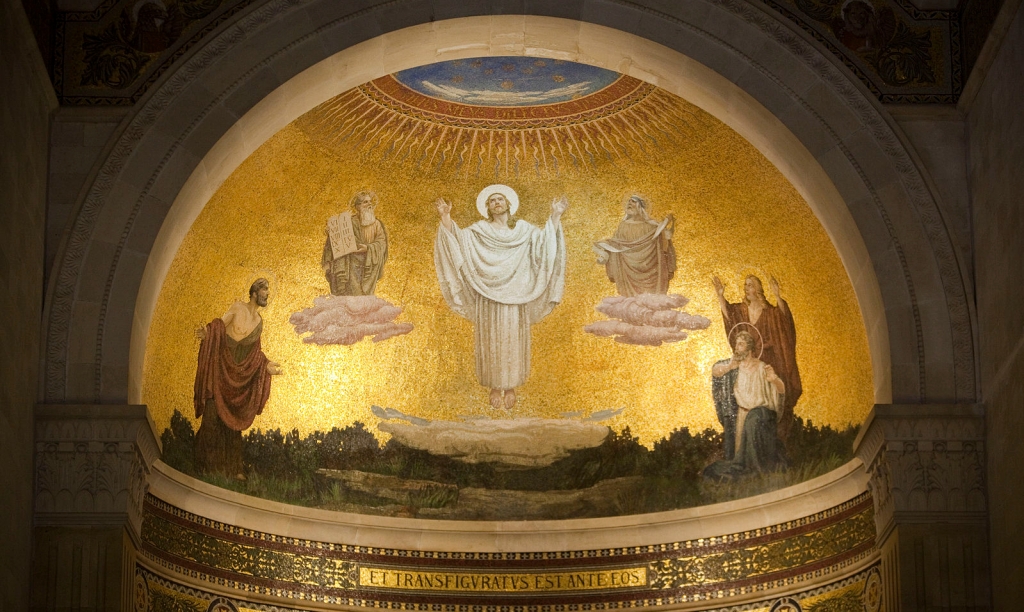
Mosaic inside the Basilica of the Transfiguration on Mt. Tabor, Israel; photo from commons.wikimedia.org.

The face is a reflection of what is in the heart and soul of every person. No amount of cosmetics and beauty procedures can ever bring out that glow and radiance of anyone’s face beaming with joy and fulfillment, peace and contentment coming from the heart.

This direct correlation of the face and the heart is called countenance – an indication of someone’s depth – or shallowness – of inner transformation due to deep spirituality, of communion with God. This is most evident on those we find whose face looks younger than one’s age that we often describe as malalim or deep, or magaling magdala ng problema. Another favorite Filipino expression of a person’s countenance is when we find somebody as madaling makagaanan ng loob – a person we meet for the first time yet we feel so light and easy with, we feel at home with him or her. In the same manner, we sense or notice something negative and unpleasant like rotting inside a person despite having good features like flawless skin or aquiline nose and beautiful eyes, we still find him or her so chaka or ugly.

Countenance is what young people call as “uma-aura” when they pose for FB or IG from “aura” or spirit within evoked and projected by one’s face that cannot be manipulated nor faked.

Jesus took Peter, James, and his brother, John, and led them up a high mountain by themselves. And he was transfigured before them; his face shone like the sun and his clothes became white as light (Matthew 17:1-2).

Painting of the Transfiguration by Italian artist Duccio di Buoninsegna between 1308 and 1311 from commons.wikimedia.org.

What a beautiful expression by Matthew, “his (Jesus’) face shone like the sun” at his transfiguration primarily because deep inside him is his complete and perfect union in the Father. Jesus always insisted on this reality within him, of his perfect communion in the Father from which also flows his total obedience that reached its highest point at his Passion and Death on the Cross, his own Pasch or exodus.

Try recalling unexpected moments in your life when God’s presence was so clear to you like a light shining from within; it could be those moments you have overcome a major obstacle in life or simply when you felt so loved while in some forms of darkness in life. Like the three apostles, during those moments we felt so overwhelmed by God’s glory and majesty that we felt like remaining in that state of comfort and certainty and consolation. Most often, these occurred during or after some trying times or occasions.

There on Mount Tabor in his transfiguration, we are shown that Christ’s glory cannot be separated from the Cross. His majesty and triumph shall come from his pasch. And so are we his disciples. That is why the voice heard by the apostles said, “This is my beloved Son, with whom I am well-pleased; listen to him”. From now on after his transfiguration, Jesus would be speaking thrice of his coming Passion, Death and Resurrection as he heads toward Jerusalem. All his lessons after Mount Tabor are about our participation in his paschal mysteries.

Do we listen at all? How’s our facial expression when we dwell on his conditions of discipleship? Is there a spark within us, a light shining through? Or, do we experience a “blackout”?

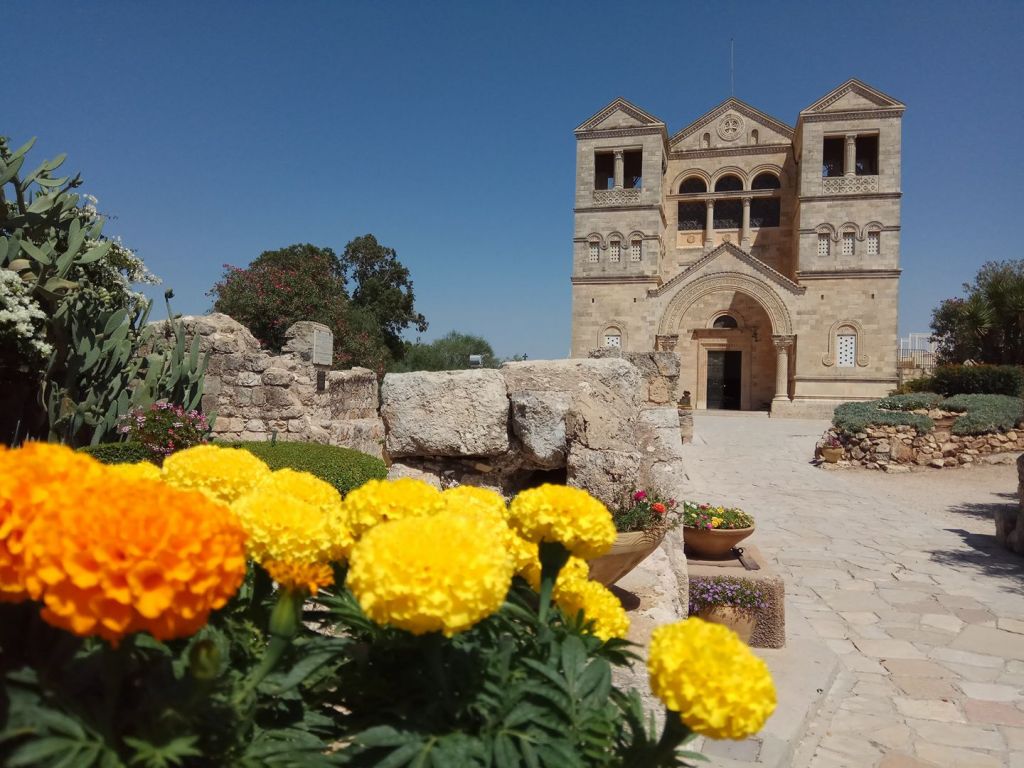
Photo from custodia.org of Basilica of the Transfiguration on Mt. Tabor, Israel.

Every second Sunday in Lent, we hear the same gospel of Christ’s transfiguration in preparation for Easter; this August 6 is the 18th week in Ordinary Time and we celebrate the Feast of Transfiguration to help us sustain in following Jesus in the last 16 weeks of the year.

During this time especially August when everything seems to slow down with life getting a bit difficult, the Transfiguration of Jesus calls us to never lose sight of the Cross of Good Friday as our path to glorious transfiguration in Christ. It is a process we have to patiently and persevere to go through in life.

The apostles learned and embraced all these lessons in a process slowly with the guidance of the Holy Spirit after Pentecost. That is why Jesus told them to come down from Tabor to continue their journey to Jerusalem to fulfill his mission. Through them we have believed despite our not having seen Jesus that is how he would appear as “Lord” on the mountain that we the faithful are climbing to participate in the ultimate manifestation of his return at the end of time.

To journey with Christ, listening and obeying his voice is something of the inside, of the heart. Not of the outside like places. The light of Christ does not remain still, continuously drawing us forward unto him, right into our hearts.

Life is a daily ascent to Mount Tabor, often when nights are long and dark, when the temptation to follow the artificial lights of the world and modernisms offering shortcuts to fulfillment and meaning are so tempting.

Photo from iStockphoto.com of Mount Tabor in Israel where Jesus is believed to have transfigured.

St. Peter warns us in the first reading that “we did not follow cleverly devised myths when we made known to you the power and coming of our Lord Jesus Christ… we possess the prophetic message that is altogether reliable. You will do well to be attentive to it, as a lamp shining in a dark place, until day dawns and the morning star rises in your hearts” (2Pt.1:16, 19).

The path to glory is the path of the Cross of Jesus, right in our hearts when we are willing to forgive and understand, when we are more loving and kind, when we are empty of pride and filled with Jesus always. May the light of Christ shine on us, on our face. Let us pray:

Show me your face,
Jesus by dwelling right here
in my heart,
filling me with your
love and kindness,
justice and truth,
mercy and forgiveness;
show me your face,
Jesus by showing me
Moses too that I may love
your laws and commandments
that often I see as burdensome
not realizing they actually lead
to true freedom to love and be
faithful to you, Lord;
sow me your face,
Jesus by showing me too
Elijah, your powerful prophet
taken to heaven body and soul
by a chariot because he believed
in your words Lord;
show me your face,
Jesus that my face may
shine with your light
while I transfigure in you.
Amen.

Jesus our abundance

Lord My Chef Sunday Recipe for Soul by Fr. Nicanor F. Lalog II
Eighteenth Sunday in Ordinary Time, Cycle A, 02 August 2026
Isaiah 55:1-3 ><}}}}*> Romans 8:35, 37-39 ><}}}}*> Matthew 14:13-21
Photo by author, Anvaya Cove Resort, Morong, Bataan 21 July 2026.

Salamuch July, hello August! Though this eighth month of the year is named after the Roman emperor Augustus, August actually came from the Latin word augustus meaning venerable; used as an adjective, it describes something as majestic and grand like when we say “august halls” or “august chambers” of power and justice.

So, please stop demonizing August as “ghost month” which is a pagan belief. For us Christians who affirmed last Sunday to Jesus that we have “understood” very well his parables, Matthew challenges us this August not only how well we have understood the parables on the kingdom of heaven but most especially how much do we know and love and trust Jesus the Christ.

Photo by a friend living in Washington state, 28 July 2026.

From the shores of Galilee, Matthew now brings us to the wilderness with Jesus where he fed more than five thousand people from a few loaves of bread and pieces of fish.

When he disembarked and saw the vast crowd, his heart was moved with pity for them, and he cured their sick. When it was evening, the disciples approached him and said, “This is a deserted place and it is already late; dismiss the crowds so that they can go to the villages and buy food for themselves.” Jesus said to them, “There is no need for them to go away; give them some food yourselves.” But they said to him, “Five loaves and two fish are all we have here.” Then he said, “Bring them here to me,” and he ordered the crowds to sit down on the grass. Taking the five loaves and the two fish, and looking up to heaven, he said the blessing, broke the loaves, and gave them to the disciples, who in turn gave them to the crowds. They all ate and were satisfied, and they picked up the fragments left over – twelve wicker baskets full (Matthew 14:15-20).

See again that distinctive detail Matthew shares with us when Jesus saw the crowds who have followed him and his disciples to the other side of the lake: his heart was moved with pity for them, and he cured their sick. That is how great is the love of Jesus for each of us. He is always moved with pity which is more than a feeling but of actually doing something, even a miracle for us like in this scene in the wilderness.

Life is a wilderness. So vast and uncertain. But, lovely and beautiful. Not really august but grand and majestic, so difficult to explain, often ambiguous, largely mysterious. Even captivating. That is why it is always good to be alive even if life is difficult.

Last Thursday I officiated at the funeral Mass of another best friend from our minor (high school) seminary. In fact, Jonas was my classmate way back in second grade who partly inspired me to become a priest. He is my second best friend after Gil also from the seminary whom I have accompanied spiritually in life and at their deathbeds. Before going to his funeral at prayer in my room, I asked God if I would still have friends alive to attend my own funeral?

The mystery deepened after we have laid Jonas to his final resting place when a few hours later his mother-in-law – the mother of his widow – died too! Imagine the devastation to my friend’s wife who has not rested yet after taking care of him for a month in the hospital then her mother died too? And to their only child just starting her career as a medical doctor?

Photo by a friend living in Washington state, 28 July 2026.

Many times Jesus teases us.

Or seduces us as the Prophet Jeremiah insisted on how God lured him to following him despite the many hurts and pains he had to go through but could not turn away from him because he had grown to loving him so much too.

Like the people who followed Jesus to the wilderness, we gather every Sunday to listen to his words and share in his Body and Blood because we have felt so empty in life that only him could fulfill us.

But, that is so easy to claim as we can readily profess our faith in God, in Jesus Christ but it is different when it is borne out of a wilderness experience like the disciples.

How many times have we felt like them thinking more of our selves than others when in a difficult situation, telling Jesus to send the people home because it was getting late and dark; most of all, so that they could get food for themselves?

It was easy for the crowd to just come to Jesus and think only of themselves but not with the disciples – like our parents, our kuya or ate, our superiors, or those people we look up to with responsibilities over us. That is why be kind with those in positions too. So easy to accuse them of their shortcomings and worst, to spread gossips when we do not realize the enormous weight they carry on their shoulders.

The equation becomes different and heaviest when Jesus tells us to “give them some food yourselves”. It is scary because at that moment Jesus asks us too of “what do you have” which we already knew beforehand as too little. Not enough. Just five loaves of bread and three pieces of fish.

Recall those moments you knew so well your limits, you capacity. And that’s when you start regretting why you have accepted the position or why have you volunteered at all or perhaps why become a priest or why got married?

Photo by author, Anvaya Cove Resort, Morong, Bataan 21 July 2026.

Life is a wilderness that looks so lovely with its sunrise and sunsets but in between, it is so difficult. Because it is in the wilderness of this life when we truly come face to face with the harsh realities of our insecurities and inadequacies, scarcity and emptiness.

But Jesus shows us today that wilderness too becomes our grace-filled moment when he asks us to bring to him whatever little we have. It is the crucial point, turning point when we have to choose between turning to Jesus and trusting his instructions or retreating to our selves, to what we have or believing more to what the world offers.

Let us choose to radically believe in Jesus by surrendering to him whatever we have.

Photo by Mr. Nicko Timbol, OLFU Campus Ministry, 25 October 2025.

This is actually an extension of his question last Sunday, “Do you understand all these things?”

As we have reflected last week, to understand in Filipino is “maunawaan” from the root word “una” which is to be first. To understand the parables of the kingdom of heaven is to entrust ourselves to Jesus completely, to surrender even the little that we have, including our fears and insecurities.

That is why in the first reading God tells us through Isaiah to “come to him” to eat the true bread and drink true water fulfilled in Jesus Christ his Son. To understand all these things is to be convinced that in this life, only God suffices. He alone in Jesus Christ can fulfill our deepest desires and longings like peace and joy, love and hope, all the real reasons for living. Not things. Or even persons and relationships that do not last, often manipulative because not rooted in Christ.

This Sunday, let us not be ashamed of the little that we have, the worst that we have. For as long as we have Jesus, there is nothing that we cannot accomplish nor be fulfilled. St. Paul said so well in the second reading, nothing – not even death – can separate us from the love of God in Christ Jesus our Lord (Rom. 8:39). Amen. Have a blessed august month fulfilled in Christ!

Understanding the parables, getting close to Jesus

Lord My Chef Sunday Recipe for Soul by Fr. Nicanor F. Lalog II
Seventeenth Sunday in Ordinary Time, Cycle A, 26 July 2026
1 Kings 3:5, 7-12 ><}}}*> Romans 8:28-30 ><}}}*> Matthew 13:44-52
Photo by author, Anvaya Cove, Morong, Bataan, 20 July 2026.

We now come to the final installment of the last three parables by Jesus that began two Sundays ago that speak of the mystery of the kingdom of heaven, its unfolding and demands from us his disciples.

There are a total of seven parables in Matthew 13 known as discourse in parables which started with the parable of the sower until last Sunday where Jesus repeatedly told his listeners that included us today that “whoever has ears ought to hear”; now at its final installment, Jesus asks us after explaining everything, “Do you understand all these things?”

“Do you understand all these things?” They answered “Yes.” And he replied, “Then every scribe who has been instructed in the kingdom of heaven is like the head of a household who brings from the storeroom both the new and the old” (Matthew 13:51-52).

Photo by author, Anvaya Cove, Morong, Bataan, 20 July 2026.

From the French word parabolein for “along the road/path”, parables are stories taken from daily life that offer us deep, profound lessons and realities especially about God and his loving presence among us, of the coming of his kingdom in Jesus Christ. Unfortunately, most of us dismiss them because they are so plain and simple. Or ordinary, not realizing that the deepest truths in life actually come from the simplest aspects of daily living. That is why Jesus kept reminding everyone to always listen, not just hear.

Listening is more intentional, deliberate and conscious, leading to understanding which is an internalization of the lessons and message said. Our Filipino translation shows this so well: to listen is makinig while to hear is madinig or marinig.

Makinig demands attention while dinig is passive, indicating more of the surface level of sounds and words, not really minding the meaning and context. That is why, listening is more reliable, more certain than hearing that has no intention of understanding at all what is meant by being said.

Photo by author, “St. Joseph Protector of the Child Jesus”, 20 March 2024.

Listening leads to knowing and understanding the what, where, when, how and why of events and things of the story or lessons. When there is understanding, relationship happens because more than the facts and details we listen to, we encounter persons. Pope Leo XIV beautifully said this in his first Lenten Message in February that “listening is the first sign of our willingness to enter into a relationship.”

Now we see the intention of Jesus in teaching in parables which is to have a personal relationship with us his listeners and disciples. Moreover, the very act of listening leading to understanding is a process of formation and transformation which is the bigger picture of Jesus teaching in parables – that we may be transformed in him especially when he asked today, “Do you understand all these things?”

Again, its Filipino translation reveals its true meaning and inner dynamics, Nauunawaan ba ninyo ang mga ito? To understand is maunawaan, from the root word una or first in order.

More than knowing, to understand or maunawaan is to realize which is the first of all others because that is the most essential, the most important. “To understand all these things” is not a question of human intelligence that is often short and lacking, and unreliable. “To understand all these things” is a spiritual intelligence, of the humble and lowly, the child-like whom Jesus praised the other week in our weekday gospel (15th week, Wednesday, 15 July 2026, Mt.11:25-27).

Jesus asks us this Sunday “do you understand all these things” to stress that the kingdom of heaven which is actually the person of Christ himself is a treasure beyond price like that treasure found by a man in the field or that precious pearl a trader had found that we are willing to renounce everything to have and possess him!

Understanding the parables of Jesus is finding “God first” before anything or anybody else. In the first reading, we find why King Solomon is the wisest person of all because when asked by God for any gift, he asked for “an understanding heart to judge your people and to distinguish right from wrong” (1Kings 3:9) which delighted God so much. The fear of the Lord is the beginning of wisdom indeed!

God is the first One we must always desire, think and search in life. Without God, we only come in vicious circles of addictions and emptiness and meaninglessness. It is no surprise at all that the most corrupt and vicious people are also the ones who disregard God, who live as if there is no eternity. Without God, we are reduced to mere creatures meant to just eat and survive. Nothing else. That is why some people do not mind at all looking stupid (mukhang tanga at tunay na tanga), without any self respect because only matter matters for them like money (mukhang pera) and things like power or popularity.

With God, we find meaning and direction in everything in life as St. Paul tells us in the second reading, “Brothers and sisters: We know that all things work for good for those who love God, who are called according to his purpose” (Rom. 8:28).

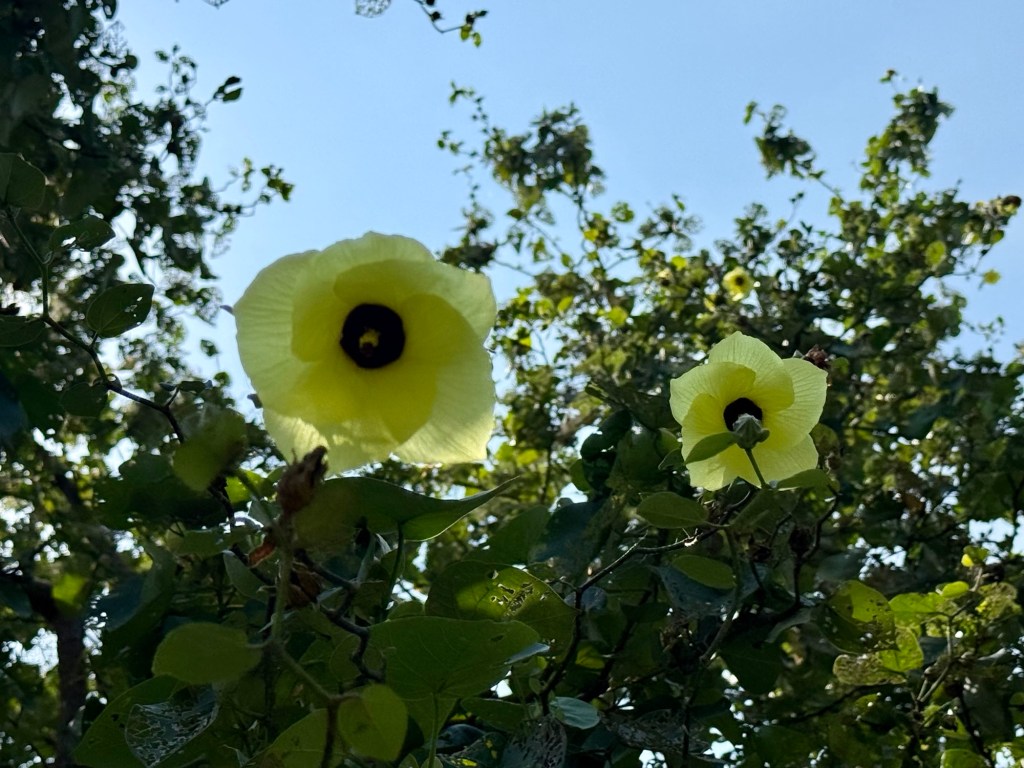
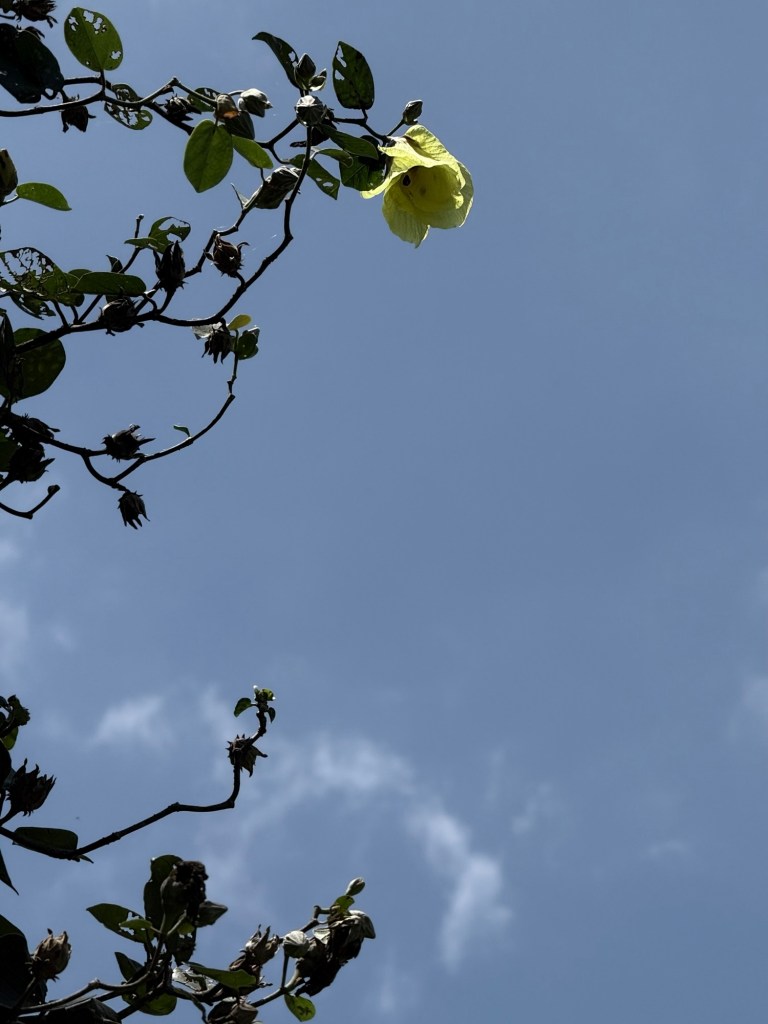
Photo by author, flower of a Balibago Tree, Anvaya Cove Resort, Bataan, 21 July 2026.

“All things”… including trials and tribulations for they make us stronger and better persons. When we look back to our past, we see there are more things we have to be thankful to God than be sorry and have regrets. Many times, our past failures and sufferings and tears have become our gateway to our victory and comfort and joy.

Understanding the parables of Jesus and of life in general is actually a movement into getting closer to Christ, of being “every scribe who has been instructed in the kingdom of heaven is like the head of a household who brings from the storeroom both the new and the old” (Mt. 13:52).

Here we find the coming into full circle of Christ’s discourse in parables: from listening to understanding which is a process of communion and oneness with the Master, Jesus whose very Person is the kingdom of heaven.

Looking back to these past three Sundays of listening and understanding the various parables of Jesus, we find a remarkable stage in his teachings that bring us closest to him, leading us for the next route of his itinerary which is actually an inner journey into our hearts where he alone dwells. Amen. A blessed week ahead of listening and understanding Jesus among the people we meet and happenings we experience.

*Happy Feast Day to all Lolos and Lolas for today is the feast of Sts. Joachim and Anne, parents of the the Blessed Virgin Mary, grandparents of Jesus Christ.

Our inexpressible groanings

Lord My Chef SundayRecipe for Soul by Fr. Nicanor F. Lalog II
Sixteenth Sunday in Ordinary Time, Cycle A, 19 July 2026
Wisdom 12:13, 16-19 ><))))*> Romans 8:26-27 ><))))*> Matthew 13:24-43
Photo by author, Lake of Galilee, the Holy Land, May 2017.

Before reflecting on the second set of parables by Jesus this Sunday, let us take a brief stop at the very short second reading from St. Paul’s Letter to the Romans; it is so lovely and we cannot resist reflecting on the word “groaning” by the great Apostle.

Last Sunday, St. Paul said “We know all creation is groaning in labor pains even until now… we also groan within ourselves as we await for adoption, the redemption of our bodies” (Rom. 8:22,23). And then this Sunday, he spoke again of “groaning”:

Brothers and sister: The Spirit comes to the aid of our weakness; for we do not know how to pray as we ought, but the Spirit himself intercedes with inexpressible groanings. And the one who searches hearts knows what is the intention of the Spirit, because he intercedes for the holy ones according to God’s will (Romans 8:26-27).

To groan or to sigh according to Mr. Webster is a deep, prolonged sound made involuntarily in response to pain, grief or frustration. We have a very picturesque translation of those words in Filipino which is magbuntung-hininga that many of our old folks frowned upon because it is a sign of surrendering, of giving up.

Photo by author, St. Michael Retreat House, Antipolo City, 16 June 2026.

Is it bad? Not at all. Even Jesus sighed at the disbelief among the Jews with him (Mk.8:12). To groan, to sigh is to be fully human and even Christian if we go by the line of thought of St. Paul last week and this Sunday.

Groaning for him is the most profound spiritual response to brokenness. That is why I love our Filipino word magbuntung-hininga that evokes an image of digging deep inside – halukayin – for breath to breathe and forge on in life. It is like gulping a handful of air to breathe before taking a plunge or meeting head on a difficult situation in life. It is actually a kind of spirituality, an expression of holiness of surrendering everything to God, of letting go and letting God.

St. Paul spoke of three kinds of groaning: the first two we heard last Sunday, creation groaning and believers groaning as we have cited earlier. Creation groaning means the world is subject to decay while Christians groan inwardly, bearing all pains and hardships in clear hopes of redemption in Christ.

This Sunday, St. Paul spoke anew of “inexpressible groaning”, of sighing because it is too deep for words that the Holy Spirit within us is doing all the expressions of our deepest feelings. It is the one fact of life we often forget when in deep trials and tribulations: that the Holy Spirit is already within us in all our weaknesses. Actually, we do not have to come before God with perfect words, clear thoughts or settled hearts when praying because he knows everything we are going through. Simply be still for God is with us.

And this my friends is the very meaning of Jesus Christ’s second set of parables this Sunday, the weeds among the wheat.

Jesus proposed another parable to the crowds, saying: “The kingdom of heaven may be likened to a man who sowed good seed in his field. While everyone was asleep his enemy came and sowed weeds all through the wheat, and then went off. When the crop grew and bore fruit, the weeds appeared as well… His slaves said to him, ‘Do you want us to go and pull them up?’ He replied, “No, if you pull up the weeds you might uproot the wheat along with them. Let them grow together until harvest; then at harvest time I will say to the harvesters, “First collect the weeds and tie them in bundles for burning; but gather the wheat into my barn” (Matthew 13:24-26, 28-30).

Photo by Giuseppe Russo on Pexels.com

We live in an imperfect world, of weeds growing among the wheat. There will always be diseases and sickness, failures and death along with scammers and criminals, liars and idiots, suckers and ungrateful and traitors among us. Add to these all the other woes we have in life like that ongoing war in the Middle East that have kicked up gas prices so high like drones and missiles. Hayyyy…!

And we ask, where is God?

How could God allow all these things to happen like when a poor, hardworking motorcycle taxi rider in Caloocan City trying to make ends meet died after being stabbed with an ice pick then robbed by his passenger still at large?

We wonder as a nation how long do we have to bear all the stupidities and idiosyncrasies of those corrupt, evil people in government even in the church when the majority of us have to suffer at the consequences of their excesses and abuses?

The author of the Book of Wisdom reflected on these realities thousands of years ago and had asked the same questions we ask today. He invites us to prayerfully reflect God’s goodness and kindness:

But though you are master of might, you judge with clemency, and with much lenience you govern us; for power, whenever you will, attends you. And you taught your people, by these deeds, that those who are just must be kind; and you gave your children good ground for hope that you would permit repentance for their sins (Wisdom 12:18-19).

Photo by author, Carmel of the Holy Family Monastery, Guiguinto, Bulacan, 21 January 2026.

Despite the weeds – the evil men and women who seem to always prevail – the author of Wisdom in his reflections reminds us to be like God, “the just must be kind.”

It is a very tall order, even difficult but we have to give it a chance because we have seen and proven that many times our human response to the evils and injustices happening end up becoming more brutal like the wars happening right now. Many times, human solutions actually create bigger problems.

That is why all three readings this Sunday tell us to be patient, to dive deeper in prayer where the Holy Spirit enlightens us clearly.

Photo from inquirer.net, Pandacan Church fire, 11 July 2020.

We have seen and experienced in recent years that indeed, “where sin increased, grace abounded all the more” (Rom. 5:20) like with those two good men in the NBI testifying at the impeachment of the Vice-President or of that most decent lawyer from Cebu, Atty. Amando Virgil Ligutan smashing all the lies and grandstanding of her lawyers. Every day we experience grace after grace of deliverance from all dangers through people including strangers who have helped us kindly.

That is why we have to go back to this Sunday’s second reading where St. Paul reminds us that even when we cannot say what is happening within us, the Holy Spirit is praying in us and for us. There are more things happening in us that we have to be thankful with than be sorry or complain about.

Let go of all those negative feelings and thoughts; life is already difficult, don’t make it harder. Instead, may we come to Jesus and learn from him to be patient like God who “gave us good ground for hope that you would permit repentance for their sins” (Wis.12:19).

Let us cultivate our hearts – the field where the seeds are sown that despite the weeds they shall still bear fruit with good works and peace for everyone.

Our classes in the University have begun recently; every time I celebrate Mass with our students, I always remind them these things which I hope may help you too: study hard, work harder, pray hardest. May you have a Holy Spirit-filled week ahead. Amen.

Our interconnectedness in God’s abundance: the parable of life

Lord My Chef Sunday Recipe for Soul by Fr. Nicanor F. Lalog II
Fifteenth Sunday in Ordinary Time, Cycle A, 12 July 2026
Isaiah 55:10-11 ><}}}}*> Romans 8:18-23 ><}}}}*> Matthew 13:1-23
Photo by author, Lake of Galilee, the Holy Land, May 2019.

Matthew’s opening lines in today’s gospel present us a beautiful image of God’s abundance we often take for granted just like the parables of Jesus that remind us of our interconnectedness as brothers and sisters.

On that day, Jesus went out of the house and sat down by the sea. Such large crowds gathered around him that he got into a boat and sat down, and the whole crowd stood along the shore. And he spoke to them at length in parable, saying: “A sower went out to sow” (Matthew 13:1-3).

For the next three Sundays beginning today, all our gospel readings are taken from this 13th chapter of Matthew known as the “Discourse in Parables” that forms one whole unit of the Lord’s teachings in parables.

From the French word parabolein or “along the way”, a parable is a simple story often taken from ordinary things and events in life that offers valuable lessons about life; but, because it is a story taken from ordinary things and events, a parable is often taken for granted.

Many times we only realize later that the most profound realities in life are those found in most ordinary like God who comes to us daily in simplest ordinary things and people and events we take for granted or even refuse to recognize.

Our Filipino word for parable which is talinghaga captures this very well. From the phrase natataling hiwaga that means “tied mystery”: tali is a rope or a tie that binds things together like mystery or hiwaga. Hence, we have talinghaga for parable that indicate how a mystery is tied with the ordinary and simple things and persons and events.

That is the purpose of Jesus in teaching us in parables: that we may learn to find the hidden truths and mysteries of life in the most ordinary things. His teaching in parables is a continuation as well as a deepening of his call to us last Sunday to “come to him and learn from him” so that we may find rest and fulfillment in him.

Photo by author, Lake of Galilee, the Holy Land, May 2019.

What I find amazing in our gospel scene this Sunday is how Jesus was by the shore of the Lake of Galilee yet, his parable is about the sower.

Why not narrate something about the life of fishermen or fish vendors?

Photo by author, Lake of Galilee, the Holy Land, May 2017.

Again, let us situate ourselves in Matthew’s opening line, “On that day, Jesus went out of the house and sat down by the sea.”

Imagine the scene, it was early morning, the sun had just risen, and people were starting to go about their usual lives when they heard Jesus teaching while seated on a boat perhaps owned by Peter. More than the parable of the sower itself, Matthew is showing us in this scene the very parable of our life that the whole world is God’s.

Every pilgrim to the Holy Land can attest to this unique beauty of the Lake of Galilee that is so lovely, so peaceful and yes, divine. It tells us of God’s superabundance in all of his creation, interconnecting us as brothers and sisters in him our Father.

This is the same parable and truth of life that God had spoken through the Prophet Isaiah in the first reading:

Thus says the Lord: Just as from the heavens the rain and snow come own and do not return there until they have watered the earth, making it fertile and fruitful, giving seed to the one who sows and bread to the one who eats, so shall my word be that goes forth from my mouth; my word shall not return to me void, but shall do my will, achieving the end for which I sent it (Isaiah 55:10-11).

Nothing happens by accident in life; God knows everything. And the good news is, he gives everything that is good like the sower. Not just the seeds but the bread we eat, the water we drink, even the very breath we breathe.

Moreover, there is the connectedness of everything in God’s superabundance like that of the rain and snow making the earth fertile and fruitful, giving seed to the sower so that there would be bread for everyone, even clothes to wear.

Painting by Van Gogh, “The Sower on Sunset” from wikipedia.org.

God is the Sower always coming to us, tending us, sowing us with seeds that are absolutely good. It does not really matter what kind of soil receives the seed that even the pathway becomes a conduit in feeding the birds of the air!

The seed is definitely good because God is good. In all instances where the seed had fallen, we find God the Sower himself moving in each step of our life. Observe how in this image of the sower moving from his home to his field, it shows us also the journey of the word and the purpose of God in our life. There is no problem with the seed that is so fecund and definitely efficacious as God had told Isaiah that “my word shall not return to me void, but shall do my will, achieving the end for which I sent it.”

Photo by Nikola on Pexels.com

If ever the word is not fruitful, it is due to our poor disposition as listeners or recipients. That is why St. Paul reminds us in the second reading of how we must responsibly be true to our call and role as disciples of Christ. It is a process we have to be patient but must be consistent. What we are working for is not just for this time or for one’s self or society or country: we have to see the whole reality of life from here to eternity in Christ’s work of salvation is for all. We are all interconnected so that whatever good we do will always bear fruit, “some a hundred or sixty or thirtyfold.”

Photo by author, St. Michael Retreat House, Antipolo City, 16 June 2026.

This Sunday, in this beautiful scene by the Lake of Galilee, or right there on your comfortable seat or wherever you are, Jesus is asking, “where do I see myself in this wide picture and chain of events?” What have I done with the “word”, the “seed” Jesus had sown in me?

In this age of relativism worsened by social media that have blurred reality with algorithms manipulating the way we see and understand truth and reality, the more we have become empty and alienated from one’s self and one another despite the abundance of material things.

How sad that despite the worldwide connections we now have, the more we have been detached from each other, even from one’s self and ultimately from God so that indeed, many of us “look but do not see and hear but do not listen or understand” (v.13) because we have taken life in the ordinary things for granted. We live in Facebook or social media where everything has to be spectacular, even “imeldific” or at least, enhanced if not AI-generated. This Sunday, let’s get real. Enough with fakes and AI’s. Amen. Have a blessed, fruitful week ahead everyone!

Learning from Jesus

Lord My Chef Sunday Recipe for the Soul by Fr. Nicanor F. Lalog II
Fourteenth Sunday in Ordinary Time-A, 05 July 2026
Zechariah 9:9-10 ><}}}}*> Romans 8:9, 11-13 ><}}}}*> Matthew 11:25-30
Photo by author, Sacred Heart Novitiate, Novaliches, QC, 20 March 2024.

What a refreshing gospel we have today with Jesus asking us to come to him to find rest, four weeks after being moved with pity at the sight of the crowd who were like sheep without a shepherd that he called and sent his Twelve Apostles to bring them his good news of salvation (June 14).

The following two Sundays he taught us of our work in harvesting the abundant harvest by being brave and gracious, and hospitable (June 21, 28).

This Sunday, Jesus wraps up his teachings on our work after he himself was rejected by his own folks because he knows very well ours is a difficult mission (June 21) as he praised the little ones who have accepted him like the poor and marginalized.

At that time Jesus exclaimed: “I give praise to you, Father, Lord of heaven and earth, for although you have hidden these things from the wise and the learned you have revealed them to little ones… Come to me, all you who labor and are burdened, and I will give you rest. Take my yoke upon you and learn from me, for I am meek and humble of heart; and you will find rest for your selves. For my yoke is easy, and my burden is light” (Matthew 11:25, 28-30).

Photo by author, Sacred Heart Novitiate, Novaliches, QC, 20 March 2024.

What are the lessons Jesus is asking us to learn from him, especially in these troubled times of ours when the corrupt and idiots reign supremely simply because they are more in number?

See how difficult it is to be a Christian these days when you hear and see all over social media all kinds of inanities and stupidities happening everywhere like callous politicians acting as clowns with a massive crowd of idiots parroting the words of their cult leaders masquerading as religious men. Or the two couples who climbed atop the Empire State Building in New York for a performance of unfurling a banner calling for more love in the world, with the man pretending to propose to the woman who turned out to be his wife for several months already.

From #philstar via FB, 02 July 2026.

Haynaku! Juice colored!

Everything is so exhausting. The only good news we have these days is again our very own Alex Eala “smoking” the grass at Wimbledon. And perhaps the President going to Vancouver to inaugurate the newest Jollibee there with the Canadian Prime Minster enjoying a more joyful chicken joy. Sanaol!

But, amid all these dismal happenings, Jesus is here with us calling us to his side, to experience his warmth, to learn from him how we can feel light amid all these heavy burdens around us.

Notice how with the social media all over us with its bad news that it has become so easy to feel lumbered with all the contradictions in our lives plus see the various needs we feel missing in our relationships that it has become our past time to worry and feel so burdened most of the time.

Jesus promises us this Sunday that following him brings lightness not heaviness of compulsion and duty as most people would think of his demands. However, it is not a kind of R&R we all aspire every weekend at the beach or a mountain resort.

Christ calls us today to come to him and learn from him on how to have a steady, realistic, day-to-day approach to life lived in his company.

First lesson Jesus is teaching us to learn from him today is to rejoice always.

Photo by author, St. Michael Retreat House, Antipolo City, 16 June 2026.

Being joyful is more than being happy; to rejoice is to have our heart smiling because deep down inside we are assured that no matter what happens in life, even if worse comes to worst, Jesus remains with us and would never ever abandon us. That’s because he is not like a stern master without any love and concern for his slaves.

Jesus is the fulfillment of the first reading calling us to rejoice because he is the king who had come, “a just savior is he, meek, and riding on an ass, on a colt, the foal of an ass” (Zec.9:9).

Recall Jesus Christ’s triumphant entry to Jerusalem on Palm Sunday riding an ass so that he could be at eye-level with everyone in the city unlike riding a horse that is so high and even menacing in stature.

Imagine the setting of this Sunday gospel: Jesus was lamenting at how his fellow Jews have rejected him despite his many miracles but at the same time, he was rejoicing, praising the Father in sending him the poor and outcasts of their society as his first believers and followers. Yes, Jesus was hurting for being rejected but he found more reasons to rejoice than sulk. Why waste energy on the negative when there are a lot of good things happening?

Rejoicing means looking beyond the physical and temporal things; rejoicing is being a visionary who sees opportunities behind every problem and issues at hand. Rejoicing is seeing grace than curse, focusing more on Christ than the problems. Indeed,“every gising is a blessing” because every morning we wake up, God assures us of his immense love for us, that he believes in us, and is sending us on a mission to share that joy of living. And believing in him!

Photo by author, July 2011.

Second lesson Jesus is teaching us to learn from him this Sunday is to surrender, to set aside our personal agenda so that we can take up his yoke that is easy and burden that is light.

One reason we cannot rejoice is our refusal to give up our many yokes and burdens that are mostly much ado about nothing at all.

Let go and let God!

Surrendering is daily dying to one’s self to rise to new life in Christ which leads us to the third lesson Jesus wants us to learn from him this Sunday:

Live in solidarity with Christ empowered by the Holy Spirit as St. Paul tells us in the second reading.

Brothers and sisters: You are not in the flesh; on the contrary you are in the spiritr, if only the Spirit of God dwells in you. Consequently, brothers and sisters, we are not debtors to the flesh to live according to flesh. For if you ive according to the flesh, you will die, but if by the spirit you put to death the deeds of the body, you will live (Romans 8:9, 12-13).

Solidarity with Christ is the opposite of solidarity with the old humanity with Adam enslaved to sin which is not just body versus soul nor should flesh be understood as sexual immorality; solidarity with Christ is life in the Holy Spirit that results in eternal life in God. It is a choice we make daily, of whether we shall heed Christ’s call to come to him and learn from him who is meek and humble of heart. Solidarity with Christ is living in the love of Christ.

The good news is, Jesus gives us all the grace we need to love and choose him, to learn from him even if many times we fall and stumble because of our heavy burdens due to sin. This Sunday and every day, make the right choice. Choose Jesus, chose love to be light, choose life. Amen. Have a blessed, light and joyful week ahead.

Photo by Mr. Vigie Ongleo somewhere in Colorado, 03 June 2026.

Life as a daily Exodus

Lord My Chef Daily Recipe for the Soul by Fr. Nicanor F. Lalog II
Monday in the Thirteenth Week of Ordinary Time, Year II
Solemnity of Sts. Peter and Paul, Apostles, 29 June 2026
Acts 12:1-11 ><}}}}*> 2 Timothy 4:6-8, 17-18 ><}}}}*> Matthew 16:13-19
Photo by Dra. Mylene A. Santos, MD, in Ericeira, Portugal, 16 June 2026.

Our readings today are a parable of the Church, of what we should be as the Body of Christ celebrating the Solemnity of St. Peter and St. Paul, the pillars of the Church. Most of all, both speak of that reality in our lives that life is a daily exodus from our selfish self.

We celebrate St. Peter and St. Paul together as pillars of the Church because they were able to overcome their great differences in personalities as well as their diverse cultural and social backgrounds to be won over by Jesus Christ in proclaiming his good news of salvation. Both eventually died as martyrs like Jesus.

Photo by author, Our Lady of Fatima University, Valenzuela City, 10 June 2026.

They displayed deep trust in the Lord whom they have come to know on a personal basis following a series of deep personal exodus through their daily conversion. Saints Peter and Paul did not become saints overnight; they went through a series of personal conversions, of abandonment of selves to God.

The churches in Europe need a lot of this exodus process like in Germany where some clergymen and laypeople refuse to accept the Vatican decision that homily is reserved only for the ordained ministers while a traditionalist group are threatening to ordain bishops and priests without Vatican approval. These are so unlike in the Church before when men and women who eventually became saints chose to suffer in silence than defy Church decisions that eventually through time were accepted.

There is always darkness and uncertainties in the Church, a kind of exodus we need to cross like in the experiences of Sts. Peter and Paul we heard in our first two readings today.

On the very night before Herod was to bring him to trial, Peter, secured by double chains, was sleeping between two soldiers, while outside the door guards kept watch on the prison. Suddenly the angel of the Lord stood by him and a light shone in the cell. He tapped Peter on the side and awakened him, saying, “Get up quickly.” The chains fell from his wrists. The angel said to him, “Put on your belt and your sandals.” He did so. Then he said to him, “Put on your cloak and follow me.” So he followed him out, not realizing that what was happening through the angel was real; he thought he was seeing a vision (Acts 12:6-9).

Photo by Mr. Lorenzo Atienza of the bass relief of St. Peter by artist Nick Lugue at the Malolos Cathedral, 12 June 2019.

How could Peter sleep soundly after being arrested and thrown into prison with two soldiers sandwiching him inside his cell while a host of other guards secured the area outside?

It is a very amusing story about our “prince of the Apostles” sleeping soundly so similar with St. Joseph who slept soundly too in a similar critical situation when he decided to silently leave Mary who was found pregnant with a child before they were married.

Both Joseph and Peter slept soundly under critical situations because of their complete trust and faith in God, of their abandonment of selves to God. We find it difficult to sleep when we have problems because we cannot decide decisively as we lack trust and faith in God, unlike Peter and Joseph.

But, Peter shows us another dimension of his trust in God – his total trust also in the Church, believing that they were all praying for him.

It is a beautiful imagery of the Church then and now, always in darkness during night time when Peter was imprisoned. And that is the parable of this scene: it is always a time of Exodus for us in the Church, of passing over from every trials and difficulties, always trusting our leaders, trusting our faithful and most of all, entrusting everything to God!

If there is one thing most needed these days in our Church especially in the Philippines is this attitude of being in an Exodus, of exiting from our imprisonment in partisan politics so that we can go back to our true mission and mandate of preaching Jesus Christ not only with our words but with our lives. We in the Church can be political without being partisan; the moment we become partisan, most likely we are no longer preaching Christ because we are already rooting for somebody else instead of God.

May we imitate Peter by abandoning everything to God in deep prayers, following God not our plans as symbolized by his putting on his belt and sandals as commanded by the angel.

Photo by Mr. Lorenzo Atienza of the bass relief of St. Paul by artist Nick Lugue at the Malolos Cathedral, 12 June 2019.

Life can only become a daily exodus when we learn to trust and abandon ourselves to God like St. Peter and St. Paul as we see also in his letter to Timothy:

I, Paul, am already being poured out like a libation, and the time of my departure is at hand. I have competed well; I have finished the race; I have kept the faith. The Lord stood by me and gave me strength, so that through me the proclamation might be completed and all the Gentiles might hear it. The Lord will rescue me from every evil threat and will bring me safe to his heavenly kingdom. To him be glory forever and ever. Amen. (2 Timothy 4:6-7, 17, 18)

Imagine the stress of being in prison but without any hint of duress on Paul while awaiting death as seen with his incomparable eloquence in writing, something very evident in all his letters where he always expressed his total abandonment of self to Christ, of his faith in God.

In this beautiful portion of his letter to Timothy, Paul reminds us that life as a daily exodus is to live our lives as a worship to God expressed in that opening line am already being poured out like a libation. A libation is a drink offered to gods in ancient Greece and Rome; as he approached death, Paul summarized here his entire life as an offering to God that we also see in his other writings.

That is the challenge of this solemnity to us, that we live our lives as a form of worship to God.
Our very lives in itself are a prayer, always centered on God, something so foolish when we go by the standards of the world today that is all show – palabas – with nothing substantial inside because only money and fame matter. Paul was very much like Peter who lived their lives as prayers that like Christ in the end, both offered the highest offering of all, martyrdom.

Second thing we find in this excerpt from Paul’s letter to Timothy is the deeper meaning of death as a passage to heaven, an exodus: “The Lord will rescue me from every evil threat and will bring me safe to his heavenly kingdom” (v.18). Paul freely accepts his death, making it a blessing for others that we must emulate. Instead of having those bucket lists of things to do before dying, Paul is teaching us death comes in every present moment that we must always prepare for its happening so that the next generation may continue the good things we have started.

The lithography of Sts. Peter and Paul in Missale Romanum by unknown artist with initials F.M.S (19. cent.) printed by Typis Friderici Pustet. (Renáta Sedmáková | us.fotolia.com)

The key to unlocking how Peter and Paul achieved so much for God and for the Church lies in their personal relationship with Jesus Christ mirrored in their lives.

Many Christians are losing their faith and interest in the Church, leaving in great numbers because of the mixed signals we give them on what do we say who Jesus is. The Church grew in leaps and bounds during the time of Peter and Paul because both apostles shared the true Jesus Christ not only in their words but also in their deeds. They trustingly and humbly went through daily exodus beginning in their very selves in knowing Jesus Christ more clearly, loving him dearly, following him closely and witnessing him daily. May your Monday lead you a fulfilling exodus. Amen.