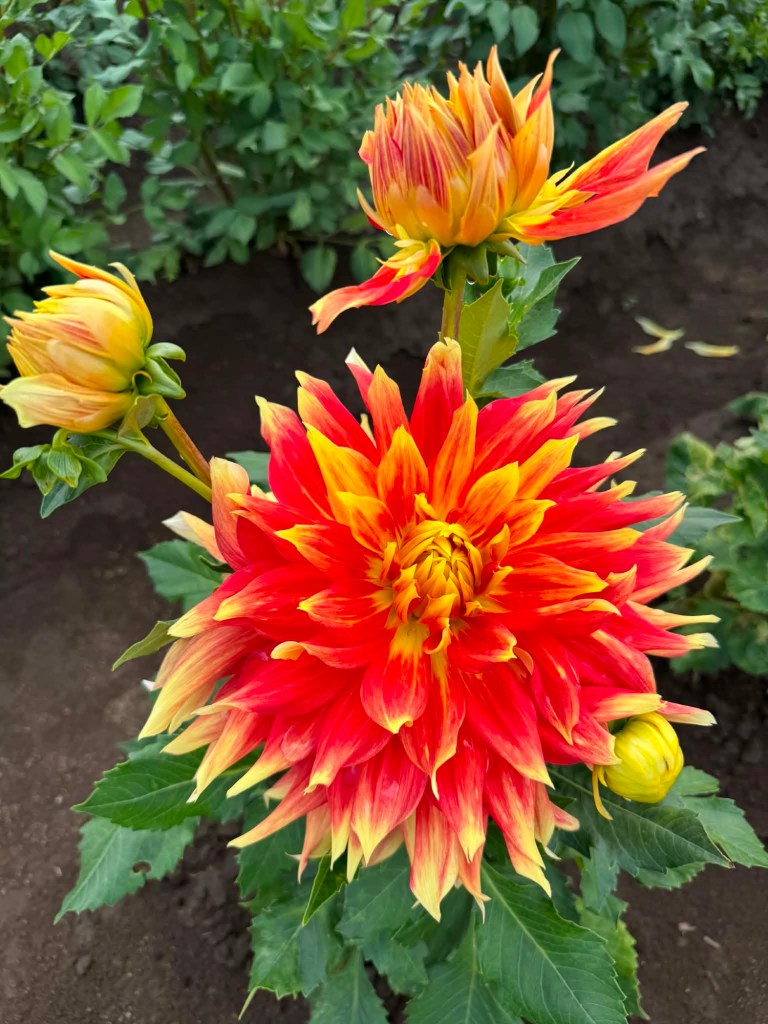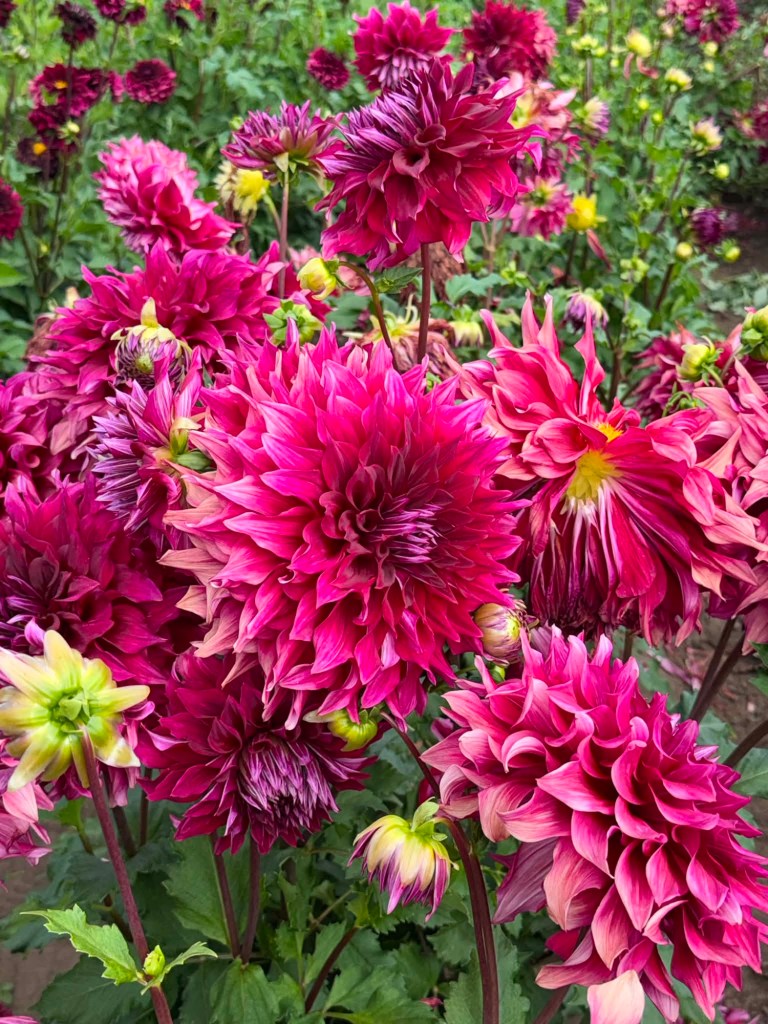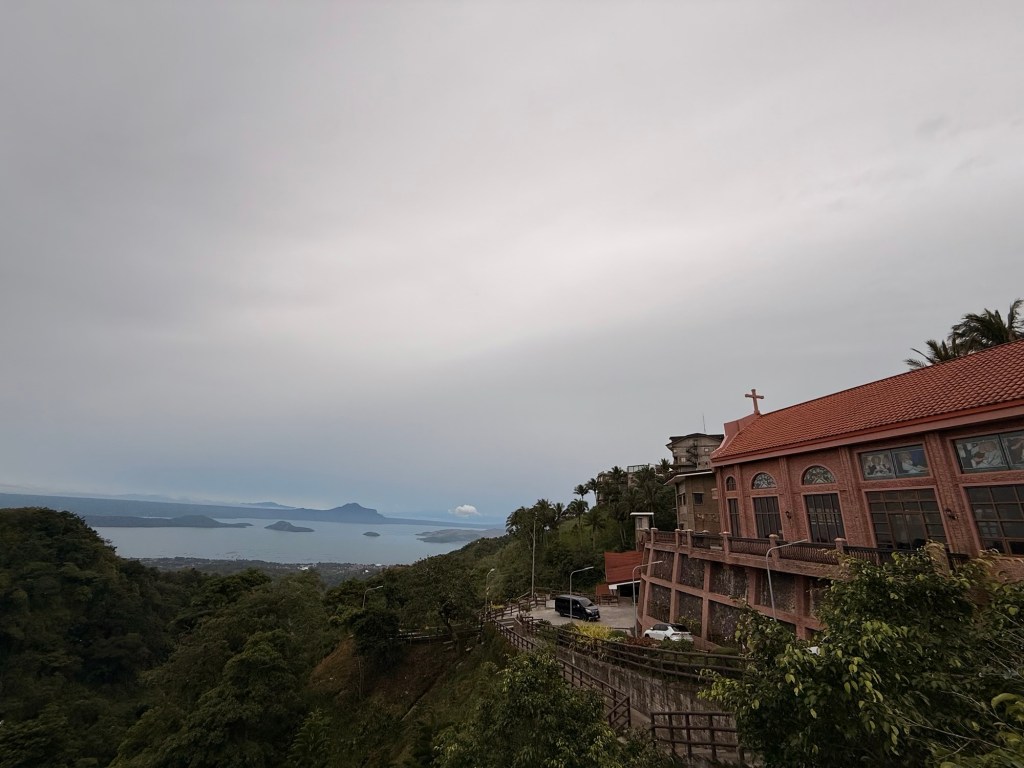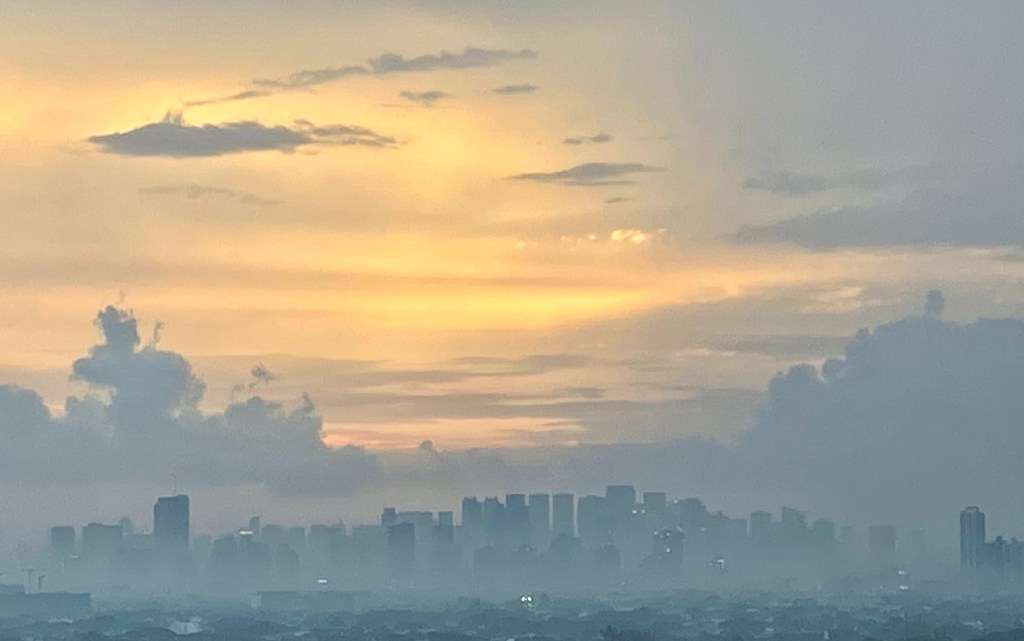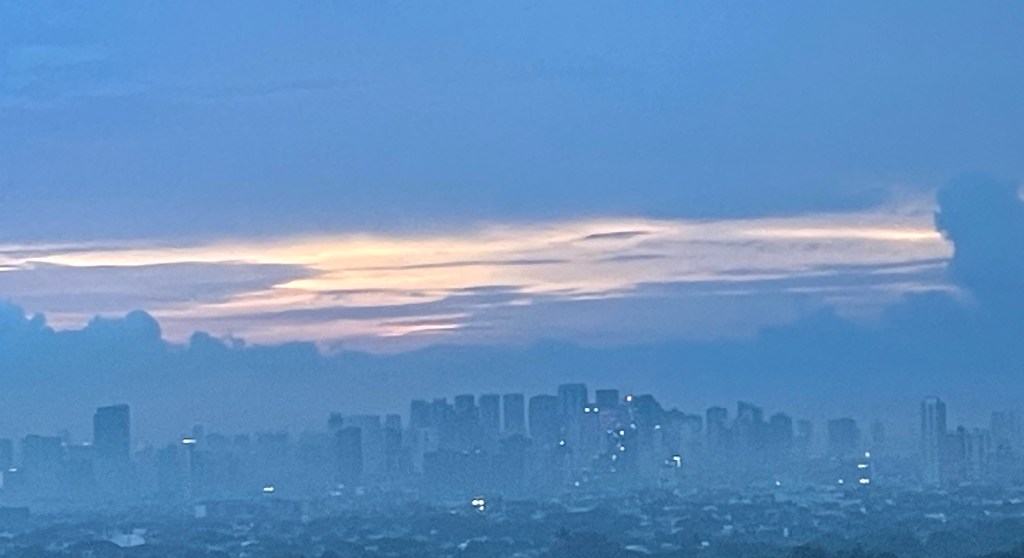
Easter is welcoming those different

Lord My Chef Daily Recipe for the Soul by Fr. Nicanor F. Lalog II
Monday in the Fourth Week of Easter, 27 April 2026
Acts 11:1-18 <*((((>< + ><))))*> John 10:11-18
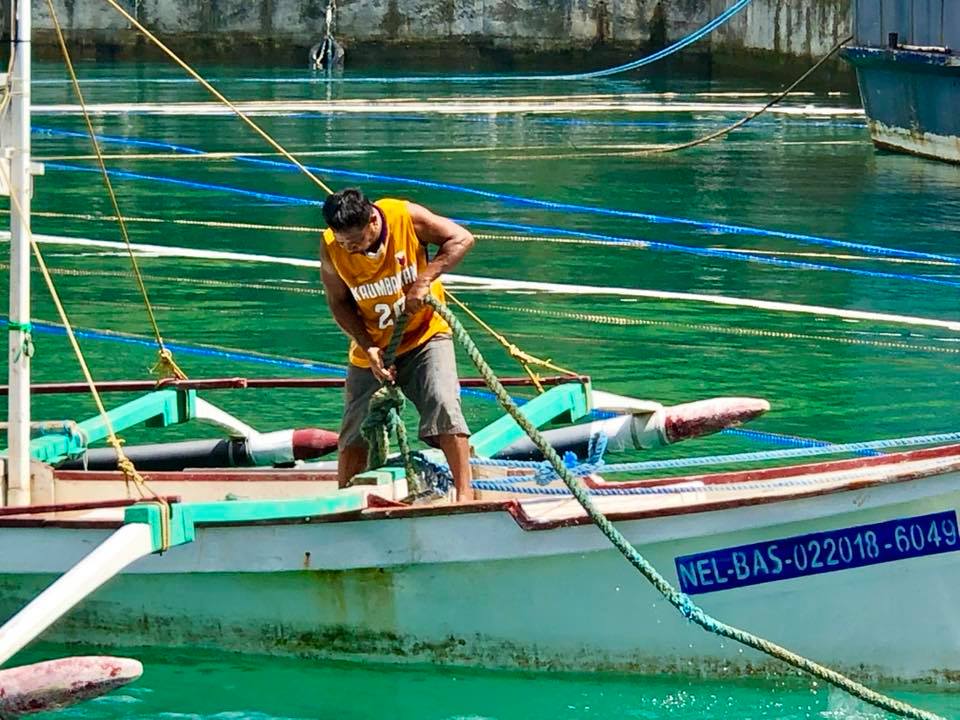
Photo by author, the Sofia Hagia, Istanbul, Turkiye, 12 November 2025.
I miss you,
Lord Jesus Christ;
I miss reaching out
to others in prayer,
sharing you with them.
Like Peter in Joppa.

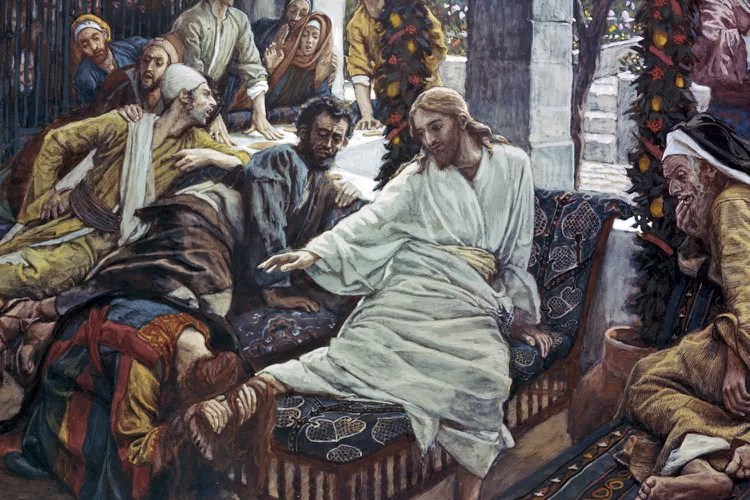
The Apostles and the brothers who were in Judea heard that the Gentiles too had accepted the word of God. So when Peter went up to Jerusalem the circumcised believers confronted him, saying, “You entered the house of uncircumcised people and ate with them.” Peter began and explained it to them step by step, saying, “I was at prayer in the city of Joppa…” (Acts 11:1-5).

Lord Jesus,
continue to work in me,
most especially,
let me see you working
in others too,
right in their hearts,
especially those different
from us not only
physically but most
especially in background
and beliefs; remind me often
that God's grace cannot be
contained nor limited among us
nor in a particular location only;
may this Easter season
be an occasion
for us to change how we see
one another as you yourself
had said, "I have other sheep
that do not belong to this fold"
(John 10:16).
There are so many things 
I need to change in myself,
Jesus, our Good Shepherd
especially those so different
from what I have been used to
like in meeting you,
seeing you,
and following you.
Amen.

Easter is entering Jesus, our Gate

Lord My Chef Sunday Recipe by Fr. Nicanor F. Lalog II
Fourth Sunday of Easter, Cycle A, 26 April 2026
Acts 2:14, 36-41 ><}}}*> 1 Peter 2:20-25 ><}}}*> John 10:1-10
Photo by author, 09 February 2026, Museo Valenzuela.

In the next three Sundays beginning today, our gospel readings will bring us back to Jesus Christ’s teachings before his passion and death because all his pronouncements then are clearest when seen in the light of his resurrection.

As we have mentioned last Sunday, it does not really matter that many or everyone would see the Risen Lord in order to believe him. Like what Jesus had told Thomas the other Sunday, blessed are those who believe without having seen him while last week we have realized in the story of the two disciples returning to Emmaus that the mystery and beauty of Easter is found in the “breaking of bread” when our eyes are opened to recognize Christ who immediately vanishes. This breaking of bread is not just the Holy Eucharist but includes our many experiences when we too experience brokenness in life like the Jews addressed by Peter after the Pentecost.

Then Peter stood up with the Eleven, raised his voice, and proclaimed: “Let the whole house of Israel know for certain that God has made both Lord and Christ, this Jesus whom you crucified.” Now when they heard this, they were cut to the heart, and they asked Peter and the other apostles, “What are we to do, my brothers?” (Acts 2:14, 36-37)

“The Road to Emmaus” painting by Ronald Raab, CSC, from ronaldraab.com.

What a beautiful expression by Luke, “they were cut to the heart” that means they were stirred, they were moved deep inside to a great reality, to a truth that led to their conversion.

It is in our own brokenness when our eyes are opened, our hearts are cut that we find Jesus and become converted.

Despite the scathing words of Peter on their sins on having Jesus crucified, the people did not feel “guilty” in the negative sense of being hopelessly mired in sin. The same thing is true with us: there are moments in life we realize deeply, truly feeling the hurt of having offended God in our many sins that actually lead us to conversion and be transformed into a better person as a disciple of Christ. True contrition does not stop in the realization and admission of our sins; true contrition always leads to conversion. Though we are broken, we are not scattered. In fact, it is in our being broken that we become one, we become whole in Jesus Christ.

Guilt buries, conversion liberates because we find Jesus as the true gate to life who leads us to freedom. In Jesus as our gate in life, we enter a new phase of being free and faithful and loving.

So Jesus said again, “Amen, amen, I say to you, I am the gate for the sheep. All who came before me are thieves and robbers, but the sheep did not listen to them. I am the gate. Whoever enters through me will be saved, and will come in and go out and find pasture. A thief comes only to steal and slaughter and destroy; I come so that they might have life and have it more abundantly” (John 10:7-10).

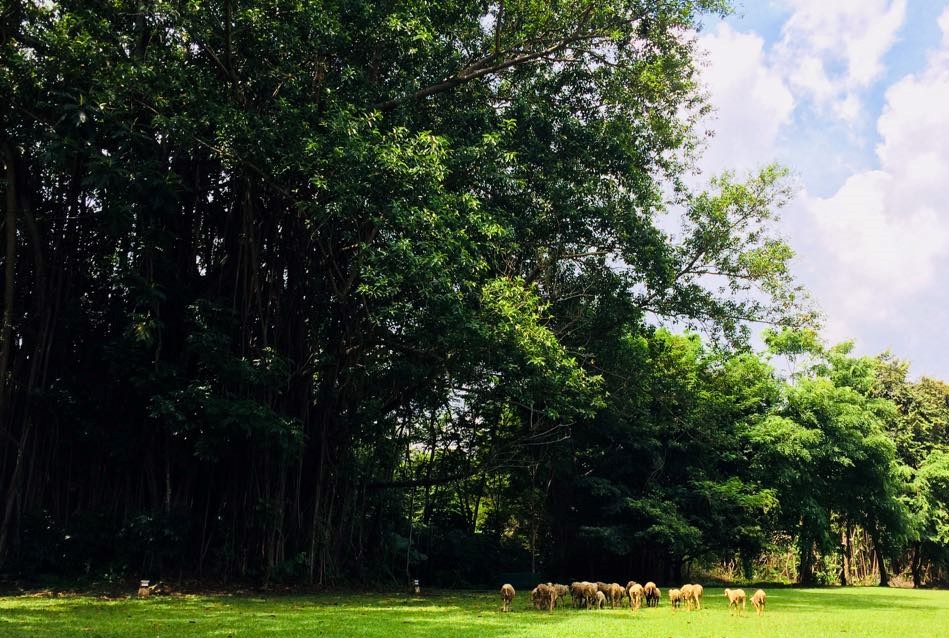
Photo by Dra. Mylene A. Santos, MD, at Katmon Nature Sanctuary & Beach Resort in Infanta, Quezon, 03 April 2024.

Every fourth Sunday of Easter is known as the Good Shepherd Sunday. Only John has this section of Jesus teaching actually to the Pharisees of himself as the Good Shepherd following the controversy in his healing of the man born blind on a Sabbath day.

But before Jesus spoke of his being the Good Shepherd, he first identified himself as the “gate” where the shepherd and the sheep pass through, the direct opposite of the Pharisees and priests of their time who have taken upon themselves as the final standard and arbiter of what is good and holy, of actually usurping the role of God but so stern, so strict. And impersonal.

Hence, the distinction by Jesus in this passage between “thieves and robbers” like his enemies and himself as “the gate” and “the shepherd”.

Whenever I bless homes, I always begin at the door. From the many house blessings I have made, I am not really impressed with the modern, “minimalist” doors with sleek metal handles. What fascinates me most are simple doors with bold colors like lively red or blue. For me, a door is something that exudes with security and protection, not necessarily massive, evoking power.

Photo by author, Angels’ Hills Retreat Center, Tagaytaty City, April 2025.

That’s Jesus Christ for me as the gate. My security and protection.

However, still with house blessings, I have always wondered why we Filipinos even abroad are so fond of two things so peculiar just to us: first is having a regular kitchen often for display and a dirty kitchen for daily use and second, side doors to pass through because the main door is kept locked, used only for visitors.

I think they both reveal something about our spirituality wherein we recognize Jesus our gate, our door, our shepherd yet, we still desire to have other doors and gates, perhaps even shepherds like buddhas and amulets we hung in our homes.

This we find when we examine our inner selves, the cacophony of negative voices that fill us, even entertain us like jealousy, envy, anger, resentment, bitterness, greed, and lust. There are times despite our having faith in Christ, we are filled with more negative than positive like curse than blessing, revenge than reconciliation, war than peace, and worse of all, death than life.

Photo by author, Sacred Heart Novitiate, Novaliches, QC, 20 March 2026.

Where are they coming from?

Very often, we take them for granted, allowing them to percolate inside us until they boil and burst that we hurt others, most of all, our selves in the process.

“I come so that they might have life and have it more abundantly.”

Jesus our door, our gate, our Good Shepherd invites us anew this Sunday to remain in him, to stay with him. Jesus calls us to break free from these other doors and gates that trap us within so that we may be free and faithful. Most of all, be more loving in the real sense.

Jesus invites us to examine our lives today, before having him and after having him. Like what Peter tells us in the second reading, we are reminded of the new freedom we have in Christ: “By his wounds you have been healed. For you had gone astray like sheep, but you have now returned to the shepherd and guardian of your souls” (1Pt.2:24-25).

During the Last Supper, Judas (not the Iscariot) asked Jesus why he would appear only to them and not to everyone and he replied with mysterious words, speaking about love and keeping his commandments so that he and the Father would dwell on his disciples (Jn.14:23-24). Actually, in speaking that way, Jesus was showing his disciples who include us today that his revelation is not about public display of power but of personal relationship in him based on love. In the whole discourse of Jesus during their last supper from the perspective of John, what is most essential is the love of Jesus and the love of his disciples. And this we shall explore in the next two Sundays before Jesus ascends into heaven.

Again, there is no need to see Jesus physically; the more we love, the more we believe, the more we see him in our hearts. Most especially when we pass only in him as our gate, our door to life and fullness. Amen. A blessed week ahead to everyone.

Photo by author, Sacred Heart Novitiate, Novaliches, QC, 20 March 2026.

Easter is coming, believing

Lord My Chef Easter Recipe by Fr. Nicanor F. Lalog II
Second Sunday of Easter, Divine Mercy Sunday, 12 April 2026
Acts 2:42-47 ><}}}*> 1 Peter 1:3-9 ><}}}*> John 20:19-31
Photo by author, Don Bosco Batulao, Batangas, 07 April 2026.

My dear friends, while praying over the gospel this week, this line by the Lord kept on echoing within me. And every time it would echo, the Lord shortened the sentence like these:

“Have you come to believe because you have seen me?”

“Have you come to believe because…?”

“Have you come to believe…?”

“Have you come…?”

Easter is a story of coming and believing amid all the darkness and emptiness in life, of being locked inside like the disciples when Jesus came to visit them “On the evening of that first day of the week, when the doors were locked.”

Before we can stay and remain in the Lord, we must first come. Like Thomas.

Or Jesus who actually comes first because he believes in us his disciples.

Now a week later his disciples were again inside and Thomas was with them. Jesus came, although the doors were locked, and stood in their midst… Then he said to Thomas, “Put your finger here and see my hands, and bring your hand and put it into my side, and do not be unbelieving, but believe.” Thomas answered and said to him, “My Lord and my God!” Jesus said to him, “Have you come to believe because you have seen me? Blessed are those who have not seen and have believed” (John 20:26, 27-29).

Caravaggio’s painting “The Incredulity of St. Thomas” (1602) from en.wikipedia.org.

We are now on the eighth day of Easter also known as Divine Mercy Sunday that was instituted by St. John Paul II in May 23, 2000 as a “perennial invitation to the Christian World to face with confidence in divine benevolence the difficulties and trials that humankind will experience in the years to come.”

This we can see in Thomas also known as Didymus who was not present when Jesus first came to his disciples on the evening of Easter. See how Jesus as the one actually coming first because he is also the first to believe in us his disciples despite our many flaws. And absences or tardiness.

Joining his fellow disciples, Thomas came and believed on the eighth day after Easter. What Thomas had asked as proofs to believe in the Lord’s Resurrection were not really doubts to be taken negatively. It was not that Thomas did not believe but in fact, he wanted to believe more.

That is why he came the following Sunday. Because he believed.

Photo by author, Sacred Heart Novitiate, Novaliches, QC, 20 March 2026.

Like us, there are times we feel at a loss in our faith in God when difficult and extraordinary things happen to us. We cry in desperation to God, seemingly doubting his presence or if he listens at all to our pleas but we come to pray because we believe. We cry only to someone we believe who can help us in our plight.

Coming and believing happen simultaneously: we come because we believe and we believe that is why we come.

Believing is more than an intellectual assent to a person or something.

Believing is entering into a relationship. There is something deeper that happens when we believe that is why we are moved to come, to draw near especially to a person.

When Jesus told Thomas “do not be unbelieving, but believe”, it was not a reproach but more of an exhortation he tells us too today to be intimate with him, to stay with him, to remain in him.

While the world tells everyone that to see is to believe, Jesus tells us that it is when we believe him, when we believe in him that we shall see. Even more. And clearly!

Photo by author, Sacred Heart Novitiate, Novaliches, QC, 20 March 2026.

Believing is not actually concerned with proofs and evidence because whether with God or with another person, despite the many “proofs” we have gathered from all sources, none of them is actually the reason for our faith in God and with others. Or whatever like our vocation and profession.

Believing is the gift of faith nurtured in our relationships with God and with others.

It often starts so simple like when we pray the Apostles Creed and say “I believe in God” – in our believing and relating with God, we love, and love, and love even more even if there are pains and sufferings.

This we nurture by imitating the early Christians who devoted themselves to the teachings of the apostles that have been handed down to the Church, in communal life, and in the “breaking of the bread and prayers” which is the Holy Eucharist, the summit of our life as disciples of Christ (first reading).

That is why Peter in the second reading is all praises to those who believe and love Jesus even without having seen him: we continue to strive and persevere in life’s many trials because deep inside we experience the truth and realities of Christ’s resurrection, of his loving presence among us that leads us to profound joy and rejoicing in life. Most of all, with peace, the supreme gift of the Risen Lord.

Photo by author, Sacred Heart Novitiate, Novaliches, QC, 20 March 2026.

Last March during my annual silent retreat as I turned 61 years old, my last reflection was Luke’s account of the Road to Emmaus, the gospel every evening of Easter.

In my meditation, I imagined myself joining the two disciples walking home to Emmaus. I was silent all throughout the journey, listening to their conversations until after the breaking of the bread in their home that opened their eyes to finally recognize Christ who had then vanished so quickly.

It was then when I actively joined the scene, telling the two disciples to return right away to Jerusalem. In my meditation, I felt the two disciples saying it was so dark and dangerous to travel back to Jerusalem. But I insisted, telling them, “maski na, tayo na!”

It was a turning point for me because for the past many years every time I go on my personal retreat and in my prayers, I always expressed to God my many fears in doing his will, refusing to follow him. I have always been like Jonah ever since in my relationship with God.

Last March was different. As I turned 61, I have come to believe more because I have become more daring.

There are still those fears in me about God’s will and plans but this time, I am no longer so concerned about my self but God alone – his will, his plans. And that is only when I felt truly at peace. Indeed, as John concluded his gospel today, Jesus does so many other things in our lives that is impossible to record but these few experiences we have of him are meant for us to believe him more, have life in him. Especially peace. Amen.

Photo by author, Sacred Heart Novitiate, Novaliches, QC, 20 March 2026.

A rockin’ playlist for Holy Week

Lord My Chef Sunday Music by Fr. Nicanor F. Lalog II, 29 March 2026
Photo by author, St. Ildephonse Parish, Tanay, Rizal, January 2021.

If you have a lot of cash to spend for a unique Holy Week just outside Metro Manila, I suggest you visit St. Ildephonse Parish in Tanay, Rizal and look for the Seventh Station of the Cross when Jesus fell for the second time on his way to the Calvary.

You won’t miss it as you enter the main door immediately to your left. Done by local artisans in 1785, these huge woodcarvings depict one of the most unique Stations of the Cross in the world where soldiers and characters including Jesus Christ have Malay features of brown complexion, large and round eyes, and “squared” body features. Everything was given a local taste to make the Station so Filipino like the soldier leading them blowing a carabao horn for a tambuli while another carried a bolo instead of a sword.

But, the most astonishing of all is a man so prominently portrayed at the middle wearing sunglasses, looking far outside. Yes, the dude wore shades!

Photo by author, St. Ildephonse Parish, Tanay, Rizal, January 2021.

Historians we consulted told us smoked glasses have been available in the Philippines during that time courtesy of Chinese traders. According to the catechists and volunteers we talked to while at the parish, they were told by their elders that man with sunglasses is the high priest Caiaphas who led the Sanhedrin trial of Jesus who declared him guilty of blasphemy in claiming himself to be the Christ, the Son of God.

But, why wear shades? Was it because he refused to see and accept the truth that Jesus indeed is the Christ, the Son of God just like us today who wear all kinds of colored glasses presenting our own image God too far from who he really is. Or, as my kinakapatid Dindo Alberto (+) who was my roadtrip companion at that time said it shows that rock and roll had long been in existence since the time of Jesus Christ, the real Superstar.

I believe Kuya Dindo that is why I prepared two rock and rollin’ music this Holy Week for you to listen and reflect while driving on your way to a visita iglesia to pray and be with family and friends.

I have always loved The Smiths since college especially when NU107 came out at the other end of the FM band in the late 80’s. Heaven Knows I’m Miserable Now remains one of my personal anthems since it first came out in 1984.

When I was assigned as chaplain here at the Our Lady of Fatima University in Valenzuela in 2021, I was surprised to hear some of our college students singing and posting on their socmed There Is A Light that Never Goes Out – kids so young almost like my own pamangkins! And that’s one thing I like most with the Gen Zs and Millennials who also love and embrace our music and artists because they are simply the best. Period.

A week after Ash Wednesday last February 24, I used There Is A Light That Never Goes Out by The Smiths in my monthly spiritual talk to our employees at the University and the Fatima University Medical Center as a fitting music and guide in our 40-day journey of Lent which is more of an inner journey into our hearts to find Jesus Christ, the Light who never goes out amid life’s many darkness. Moreover, Jesus is the Light who never goes out as he restores our sight from the blindness we go through like in the healing of the man born blind that was the gospel last March 15, fourth Sunday in Lent. See how its lyrics also apply either to Jesus speaking to us or to anyone seeking Jesus.

Take me out tonight
Where there's music and there's people
And they're young and alive
Driving in your car
I never, never want to go home
Because I haven't got one
Anymore

Take me out tonight
Because I want to see people
And I want to see life
Driving in your car
Oh please, don't drop me home
Because it's not my home, it's their home
And I'm welcome no more

Of course, composer Johnny Marr and lyricist-vocalist Morissey may have other meanings behind this song considered as their finest but still, it speaks about finding hope that leads us to believe in ourselves, in others and in God. In this mass-mediated world that declares to see is to believe, Jesus tells us the other way around, believe that you may see!

When we believe, then we truly “see” and that is when we love, love, and still love until it hurts even unto death because that is when we find meaning in life and everything. And everyone.

And if a double-decker bus
Crashes into us
To die by your side
Is such a heavenly way to die
And if a ten tonne truck
Kills the both of us
To die by your side
Well, the pleasure,
the privilege is mine

Jesus Christ did just that that is why we have Good Friday; he rose from the dead at Easter and since then, has remained the Light who never goes out, lighting our paths in this time of many darkness in life.

Photo by author, Sacred Heart Novitiate, Novaliches, QC, 20 March 2026.

Sometimes, sunglasses help us see clearly as they filter distracting lights and contrasts that blur our vision with the naked eyes. And so, here is our second rock n’ roll song for Holy Week, Bruno Mars and Lady Gaga’s Die With A Smile which we used also in our employees’ Lenten recollection at the University and Hospital last February 24.

Aside from the striking contrast of The Smiths’ There Is A Light That Never Goes Out that represented the punk, alternative, dark side in me, Die With A Smile represented the 1970’s funky groove I grew up with. And that is why I love and follow Bruno Mars: aside from having a Filipino blood in his Pinay mother, his experiments with music strongly rooted in the 1970’s make us from the older generation feel so welcomed and relate so well with him and his message of faithful love until the end of time.

Along with its lyrics that speak from the heart, the melody and great combination of the voices and talents of Bruno and Lady Gaga make Die With A Smile so lovingly touching, even mesmerizing that make you think of the only one you truly love most that you want to spend the rest of your life with until the end of the world – to die with a smile.

Ooh
I, I just woke up from a dream
Where you and I had to say goodbye
And I don't know what it all means
But since I survived, I realized

Wherever you go, that's where I'll follow
Nobody's promised tomorrow
So I'ma love you every night like it's the last night
Like it's the last night

If the world was ending, I'd wanna be next to you
If the party was over and our time on Earth was through
I'd wanna hold you just for a while and die with a smile
If the world was ending, I'd wanna be next to you

Holy Week remind us of our only one true and first love of all – God. We call this the Holy Week in Filipino as mga Mahal na Araw from the word mahal that means mahalaga or important and essential. That is why another word for love in Filipino is pagmamahal, literally to give importance. Not just pag-ibig which is more about liking as ibig means.

In these days of rising costs of fuels and commodities, anything expensive is described too as mahal in Filipino because they are so important and essential. Like the ones we love. Holy Week is mga Mahal na Araw, the holiest days when Jesus Christ expressed his deepest love – pagmamahal – for each of one of us by dying on the Cross because everyone is loved so immensely by God.

Again, Jesus was the first to have “died with a smile” because he offered his very self completely and freely, willingly for us because he loves us. And he had promised that he shall come again at the end of time. Are we willing to wait for him by loving truly those persons he had entrusted to us in this life?

Until our next music, have a blessed Holy Week and most blessed Easter everyone!

Holy Monday Prayer

Lord My Chef Recipe by Fr. Nicanor F. Lalog II
Holy Monday, 30 March 2026
Isaiah 42:1-7 +++ John 12:1-11
Photo by author, Sacred Heart Novitiate, Novaliches, QC, 20 March 2026.
Here is my servant
whom I uphold,
my chosen one with whom I am pleased,
upon whom I have put my spirit;
he shall bring forth justice to the nations,
not crying out,
not shouting,
not making his voice heard in street.
A bruised reed he shall not break,
and a smoldering wick he shall not quench...
(Isaiah 42:1-3).
Lord Jesus Christ,
our Suffering Servant,
let me be your servant too:
open my eyes
and free me from
whatever prison holding me
in darkness
like Judas
your betrayer
at Bethany:
many times I break a bruised reed,
quenching a smoldering wick
by looking more at people
than seeing you in them,
counting things instead
of appreciating persons.
Jesus our Suffering Servant,
only you can bring peace
and justice in this world
troubled with wars waged
everywhere
but especially right in our hearts;
fill me with your Spirit
so I can love you more
and be loving like you
silently doing your work.
Amen.
Photo by author, Sacred Heart Novitiate, Novaliches, QC, 20 March 2026.

Welcoming Jesus in life’s many contrasts

40 Shades of Lent by Fr. Nicanor F. Lalog II
Palm Sunday of the Lord's Passion, Cycle A, 29 March 2026
Isaiah 50:4-7 +++ Philippians 2:6-11 +++ Matthew 27:11-54
From influencemagazine.com.

We begin today the Holy Week with Palm Sunday of the Lord’s Passion. Its long name is derived from the two celebrations that developed separately in Jerusalem and Rome during the first one thousand years of Christianity, one of the oldest in our liturgy.

As early as the fourth century, Christians in Jerusalem celebrated Palm Sunday at the city gate with a procession led by its bishop followed by people holding palms reenacting Christ’s entry into Jerusalem. Meanwhile in Rome, the Pope ushered the Holy Week with the proclamation of the long gospel account from the Lord’s Supper to his Passion, Death and Burial. Eventually in the 12th century, Jerusalem’s practice of a palm procession with the blessing of palms added by the French in year 800 reached Rome and was celebrated separately. After more than a 1600 years, it was only in Vatican II when the two celebrations from Jerusalem and Rome were merged into one that we now have its official designation as Palm Sunday of the Lord’s Passion.

From vaticannews.va

It is a beautiful story of how two distinct practices in Jerusalem and Rome, of two contrasting liturgies mirrored our different and unique journeys into the mystery of God in Jesus Christ’s Passion, Death, and Resurrection.

And I love that contrast because our life is filled too with many contrasts that make it so beautiful and meaningful.

Contrast is when we compare differences between two or more things in order to highlight distinctive features like light and shadows, or pains and joys that make us see life fullest. Contrasts many times are a grace from God when he works in disguise among us, within us, as he writes straight crooked lines in our lives that eventually lead us to him and be fulfilled.

All our readings today present us with many contrasts that enable us to find and welcome Jesus coming to us like that Sunday in Jerusalem in the midst of our pain and sufferings, joys and fears. Three things I wish to reflect this Sunday.

Photo by author, Hagia Sophia, Turkiye, November 2025.

First contrast we find is the wisdom of God and the folly of man.

Read the longer version of the gospel from Matthew 26:14-27:66 and you find the many contrasts presented by the evangelist to highlight God’s wisdom in Jesus and man’s folly among the Jewish people led by their priests and elders, Pontius Pilate, and even with the prince of Apostles, Simon Peter!

At his trial before the Sanhedrin at the house of the high priest Caiaphas, Jesus was so comp-composed, silently listening to the many false accusations against him, and then shocked when he admitted amnd declared his being the Christ indeed (Mt.26:57-68)! And while all these were going inside the house of Caiaphas, outside was Peter denying Jesus thrice when asked of his being a disciple (vv.69-75)!

Again we see this glaring contrast of God’s wisdom in Christ and man’s folly in Pilate as Jesus remained silent during trial, answering briefly only when necessary that have put his enemies at the defensive posture (Mt.27:11-14). And how foolish they were in choosing to set free a known criminal in order to crucify the Christ (vv.21-26) which continues to these days in our own country as we keep on electing corrupt and inept people into office.

The most tragic of all is how some people while professing to be Christians are like those mob in Jerusalem still defending a known murderer now facing trial for crimes against humanity who had cursed God several times, made fun of women including those raped and under whose administration happened rampant and shameless corruption and decadence.

How sad that despite our supposed to be many advancements in science and technology that have completely altered our way of living and way of thinking, we have actually become more lost and empty than ever. Like Pilate and the Jewish people of that time with their elders, the more we assert our supposed to be superior knowledge on everything, the more we sink into emptiness and meaninglessness.

Let us not be blinded with our intelligence that have sent men to space and moon and shrunk the globe into a village but have made us grow more apart from each other; open our eyes and our hearts in Jesus Christ who is the truth because he is the only way in life.

Photo by author, Sacred Heart Novitiate, Novaliches, QC, 20 March 2026.

Second contrast we find is that true power is in weakness not in strength.

Everybody at the trial and crucifixion of Jesus were at their own kind of “power play” especially the soldiers with the Jewish leaders and their cabal of followers (Mt.27:27-44). Imagine the very act of stripping Jesus or anyone for that matter of clothes – it is the most brazen display of power over someone. Not contented with that, they mocked Jesus while unconsciously recognizing him truly as king with the sign placed above his head, “This is Jesus, the King of the Jews” (v.37). They would confirm this later at the death of Jesus when they declared “Truly, this was the Son of God!” (v.54).

At his trial and sentencing until his crucifixion, Jesus showed that true power lies in weakness and surrender as St. Paul eloquently expressed in the second reading today, “Christ Jesus, though he was in the form of God, did not regard equality with God something to be grasped. Rather he emptied himself” (Phil.2:6-7).

How sad the whole world is now plunged into a great disaster without any clear sight of an end in the war launched by the US and Israel against Iran. Who’s really winning? Despite the sophisticated and powerful weapons of the US and Israel, how come Iran still continues to launch many missile attacks against its neighbors and worst of all, control a supposed to be tiny strait that had sent fuel prices beyond reach of Tomahawk missiles!

Let’s look into our own lives, in those moments we “power tripped” against others: what happened? Have we really won over them or, are we now suffering its dire consequences, even paying the price of our too much pride and display of power and strength? Jesus shows us in his triumphal entry into Jerusalem until his Passion and Death, true power is in weakness and surrender. It is the only path to Easter because it is the path of life and love which we shall see next.

Photo by author, Sacred Heart Novitiate, Novaliches, QC, 20 March 2026.

Third contrast we have seen in the passion of the Lord: life symbolized by blood is for love and caring, not for vengeance nor convenience. Not even a solution to a problem.

At the trial of Jesus, when Pilate felt at a loss that he could not set Christ free, he decided to wash his hands to free himself of any responsibility for his death: “I am innocent of this man’s blood. Look it to yourselves.” And the whole people said in reply, “His blood be upon us and upopn our children” (Mt.27:25-26).

It was the height of human arrogance and pride, of folly and insensitivity that sadly happens right in our homes, in our schools and offices, in the society and even in the church maybe.

Instead of using technology and the sciences for the care and preservation of human life symbolized by blood, these have actually objectified persons into things, from contraceptives to abortions, genetic manipulation and gender redefinition. We have become so impersonal that people are seen more in economic andn utilitarian terms especially infants and children as well as the sick and elderly, the most vulnerable ones among us. Worst, criminals and others labeled as misfits are disposed like things either through judicial or extrajudicial killings. So heartless.

See the contrast presented by Matthew in this aspect when at the Last Supper, Jesus “took a cup, gave thanks, and gave it to them saying, ‘Drink from it, all of you, for this is my blood of the covenant which will be shed on behalf of many for the forgiveness of sins'” (Mt.26:27-28).

Life is precious because it is vulnerable that is why God became human in Jesus Christ like us in everything except sin. Right after his birth, he faced the murderous threats of a king and now an adult, he offered himself freely to die on the Cross because he loved us so much so that we too may finally be able to love again like him as willed by God since the beginning.

Isaiah’s Song of the Suffering Servant in the first reading showed this contrast of Yahweh’s servant fulfilled in Christ Jesus of how he valued life so much, of bearing all pains and hurts because of love.

In his triumphal entry into Jerusalem up to his Passion and Death, Jesus showed us so many contrasts for us to see the bigger picture of life itself, of one another as brother and sister, of God who loves us so much. Take time to examine every contrast in life for God is surely in there, even sometimes in disguise. Amen. Have a blessed Holy Week ahead!

From artzabox.com

Lent is believing in Jesus, the Resurrection & Life

40 Shades of Lent by Fr. Nicanor F. Lalog II
Fifth Sunday in Lent, Cycle A, 22 March 2026
Ezekiel 37:12-14 +++ Romans 8:8-11 +++ John 11:1-45
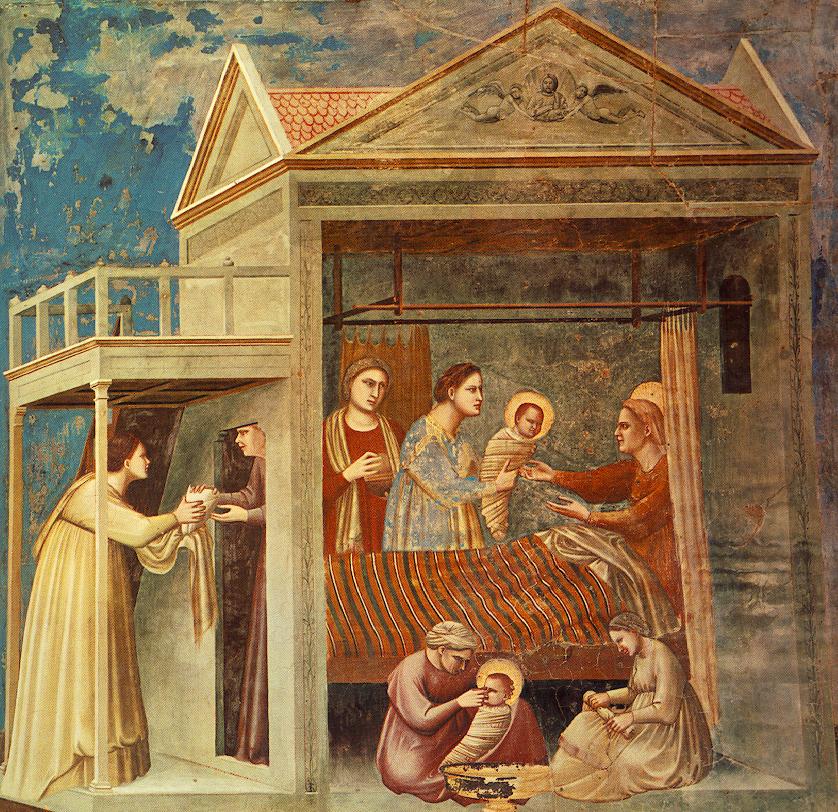
“The Raising of Lazarus” by Italian painter and architect Giotto di Bondone (1266-1337), fresco inside the Scrovegni Chapel in Padua, Italy via commons.wikimedia.org.

We now come to the final Sunday of our Lenten journey into Easter with John still as our guide telling us Jesus Christ’s raising to life of his friend Lazarus who had been dead for four days.

The raising of Lazarus is a prelude for the greatest sign of all by Jesus as the Christ – his Resurrection at Easter after his Passion and Death on good Friday. Though very long, it is a lovely story that speaks of Jesus Christ’s deep friendship with us by being most present in our most painful suffering of all which is death of a loved one as well as our many “deaths” in life.

And like in every true friendship, Jesus invites us like the sisters of Lazarus, Martha and Mary, to believe in him.

When Martha heard that Jesus was coming, she went to meet him; but Mary sat at home. Martha said to Jesus, “Lord, if you had been here, my brother would have not died. But even now I know that whatever you ask of God, God will give you.” Jesus said to her, “Your brother will rise.” Martha said to him, “I know he will rise, in the resurrection on the last day.” Jesus told her, “I am the resurrection and the life, whoever believes in me, even if he dies, will live, and everyone who lives and believes in me will never die. Do you believe this?” She said to him, “Yes, Lord. I have come to believe that you are the Messiah, the Son of God, the one who is coming into the world” (John 11:20-27).

When Mary came to where Jesus was and saw him, she fell at his feet and said to him, “Lord, if you had been here, my brother would not have died.” When Jesus saw her weeping and the Jews who had come with her weeping, he became perturbed and deeply troubled… (John 11:32-33).

Jesus said, “Take away the stone.” Martha, the dead man’s sister, said to him, “Lord, by now there will be a stench; he has been dead for four days.” Jesus said to her, “Did I not tell you that if you believe you will see the glory of God?” (John 11:39-40)

“The Raising of Lazarus”, 1311 painting by Duccio de Buoninsegna from commons.wikimedia.org

“Lord, if you had been here, my brother would not have died.” We are all like Martha and Mary who believed in Jesus Christ. Both expressed to Jesus their faith in him, of believing in him and his powers.

To believe is the starting point of every relationship. With God and with others.

It usually begins in our mind, in our intellect. We believe because we know and have learned their names and backgrounds, their likes and dislikes, and a host of others things. We can truly be friends with others even by believing only with our intellect that is why we understand their predicament and situations, the way they react. Almost everything, we know and have known that we are still the best of friends. Including with God.

Martha exemplified that kind of believing.

Martha is good. If she is the same “Martha, Martha” mentioned by Luke whom Jesus visited, she was well meaning like most of us.

She believed in Jesus. In God. In the scriptures when she told Jesus she knew Lazarus would rise along with all the dead in the resurrection on the last day.

Jesus never argued because it was good. Same with us.

Our friends do not argue nor break away from us with our kind of believing. After all it is reasonable and sane. But, believing from the mind, from the intellect is not enough. For a more intimate and engaging relationship in friendship, believing has to deepen and take root in our heart.

Believing leads to love.

Whatever kind of love, it starts in believing.

We love because we believe as we have claimed last Sunday.

But, believing and loving do not stop there.

How deeply, how truly we believe indicate how deeply, how truly we love.

Photo by author, Sacred Heart Novitiate, Novaliches, QC, 20 March 2026.

Without any intentions of comparing and pitting the two sisters against each other on who is better, John presents to us where believing leads us.

Like Martha, Mary expressed how she believed in Jesus and his powers by telling him “Lord, if you had been here, my brother would not have died.” But it was not merely coming from her mind, from her head, from what she knew of Jesus but more of how she felt with Jesus.

Notice at the start of this long story (verse 2) how John described Mary as the one who anointed Jesus – six days after this raising of Lazarus – with perfumed oil and dried his feet with her hair as expression of her faith and love for the Lord on his burial. Getting some help from Luke’s account again, we find Mary’s level of believing as deeper and matured when she chose to seat at the Lord’s feet to listen to his teachings when he came to visit them.

Mary came to Jesus with her total self – unashamed to weep in front of the Lord. She spoke no words, showed no clues of her “theology” like Martha’s faith seeking understanding by studying the scriptures.

It was Mary’s heart that spoke to Jesus that he was “perturbed” twice and “deeply troubled” seeing her. Even the Jews with her felt the Lord so moved by her that led us to the final scene of this beautiful story.

Feel the revelations at the cave where Lazarus was buried:

When Jesus asked the stone removed from the cave, Martha stepped in. And it was reasonable of her. We do it so often in various occasions like in funerals and deathbeds.

That was when Jesus reminded her, “Did I not tell you that if you believe you will see the glory of God?”

Everybody fell dead silent.

Jesus then prayed aloud briefly to the Father, shouting for Lazarus to come out – alive, still covered with cloth. End of scene.

What’s next?

You tell me. Tell me how much you believe Jesus, how much you love Jesus. And how much you love like Jesus especially when everything, everyone is dead, dead silent, dead still for many reasons.

Photo by author, Sacred Heart Novitiate, Novaliches, QC, 20 March 2026.

How much do we believe in Jesus, the resurrection and life?

Think of our many deaths in life. Not only in losing a beloved but our very own deaths – when we were buried and dead to sin and failures, disappointments and losses like the Israelites thrown into exile that Ezekiel the Prophet described in the first reading. What a beautiful imagery of God raising us to life, opening our graves of sins and failures, weaknesses and darkness, breathing into us his spirit, now better. Or maybe still struggling in life.

Believing in Jesus is believing like Martha and Mary most especially, unashamedly pouring out our pains and griefs to Jesus, baring our battered hearts and souls to him because we have felt, we have experienced his very passion and death in our own life, with those we love and serve.

In these trying times, Jesus invites us to believe more than ever in him by believing also with those severely affected by the hard times like the jeepney drivers and minimum wage earners. Let us try to live in spirit as St. Paul reminds us in the second reading by feeling their struggles, their fears, their sufferings so that they may not cry, “Lord, if you were here our families would have not gone hungry, would have not died” because we his disciples were here for them.

That is believing in Jesus the resurrection and life – being present with those suffering and dying. Solidarity.

Jesus is not asking us to think nor understand their pains and miseries. He is asking us to feel within us their pains and miseries so that like Mary we can bring Jesus to them and raise them to new life. Let us pray:

Lord Jesus Christ,
before all these pains and
sufferings came to me,
you were there first
to suffer and die for me
on the Cross.
Let me love you more
by loving others
especially those also
in pain and suffering.
Amen.

Lent is returning what we have stolen, claimed as our own

40 Shades of Lent by Fr. Nicanor F. Lalog II
Friday, Second Week in Lent, 06 March 2026
Genesis 37:3-4, 12-13, 17-28 + + + Matthew 21:33-43, 45-46
Photo by author, Sacred Heart Novitiate, Novaliches, QC, March 2023.
As we come to nearly closing
this second week in Lent,
forgive us Lord Jesus Christ
for the many times we have
claimed everything as our own:
Lent is when we return back
to God our Father
the life we have all stolen
and destroyed in the process.
It tears apart my heart,
O Lord,
that scene when Jacob's sons
conspired to kill, later sold
Joseph their own brother
because of jealousy
and sadly,
how this still happens among us
as brothers and sisters,
"Judah said to his brothers:
'What is to be gained by killing
our brother and concealing his blood?
Rather, let us sell him
to these Ishmaelites,
instead of doing away with him ourselves.
Afer all, he is our brother,
our own flesh.'
His brothers agreed.
They sold Joseph
to the Ishmaelites
for twenty pieces of silver"
(Genesis 37:26-28).
Forgive us,
Lord in owning each
other like a thing,
an object to be possessed
than a subject to be loved
and respected like when we
rejoice at the summary execution
of criminals, when people argue
in favor of abortion and contraceptives
negating the value of life,
when some insist on same sex unions
and gender reorientation
disregarding the sanctity of
the human body.
Photo by author, from Dominus Flevit Church overlooking Jerusalem, May 2017.
It is the same pride
that consumes us when we
think of our selves,
of our very lives,
of this planet itself
and universe as if
we own everything,
laying claim on everything
and everyone; forgive us,
Father for being so arrogant
with our misplaced confidence
and familiarity in our sense of
ownership and possession
of "your vineyard" entrusted
to us.
We have not only defied you,
Father in disregarding the prophets
you have sent to gather from us your
share of produce from your vineyard
we have now usurped; worst of all,
we have killed your Son Jesus Christ,
not giving him the respect due to him,
"Finally, he sent his son to them,
thinking, 'They will respect my son.'
But when the tenants saw the son,
they said to one another,
'This is the heir. Come, let us kill him
and acquire his inheritance.'
They seized him,
threw him out of the vineyard,
and killed him"
(Matthew 21:37-39).
Every time we sin,
whenever we disrespect others
especially the sick and the weak,
whenever we discredit someone
not present with us in a gathering,
when we are unfaithful and we betray
those we have promised to love
and to serve,
we steal your vineyard, Father,
we kill your Son and Heir,
we claim as ours
without realizing the truth
we have nothing at all
for we are mere stewards.
Photo by author, Sacred Heart Novitiate, Novaliches, QC, March 2025.
Lord Jesus,
you have given me with
so much -
life and talents,
experiences and fulfillment
family and friends
not to own
nor possess like things
but gifts to be shared;
I return them to you
so you may use them
and me according to your will.
Amen.

Lent is refocusing in God

40 Shades of Lent by Fr. Nicanor F. Lalog II
Thursday, Second Week in Lent, 05 March 2026
Jeremiah 17:5-10 + + + Luke 16:19-31
Photo by Walid Ahmad on Pexels.com
Thus says the Lord:
"Cursed is the man who trusts in human beings,
who seeks his strength in flesh,
whose heart turns away from the Lord.
He is like a barren bush in the desert
that enjoys no change of season,
but stands in a lava waste,
a salt and empty earth"
(Jeremiah 17:5-6).
Forgive us,
merciful Father
for turning away from you,
and turning away from our
neighbors especially the sick
many other Lazarus
we ignore at our doorsteps;
forgive us in believing more
in ourselves,
in our science and technology,
ideologies and philosophies
that stretch our rights and freedom
forgetting all about our responsibilities;
how foolish,
O God,
that we insist on our
beliefs and misplaced trust
in ourselves,
in everything that is passing
and temporary for as long
as it is self-serving
that we become like
a barren bush
or shrub in the desert,
drying up,
dying,
hoping for the rains
that would never come.
Awaken us,
Lord
from this foolishness
and let us arise
to return to you
until there is time.
Photo by author, Hidden Valley, Laguna, February 2025.
Thus says the Lord:
"Blessed is the man
who trusts in the Lord,
whose hope is the Lord.
He is like a tree planted beside
waters that stretches out its roots
to the stream; it fears not the heat
when it comes, its leaves stay green;
in the year of drought it shows no distress,
but still bears fruit"
(Jeremiah 17:7-8).
Let me find my way back
to you, God our Father;
let me be like that tree
planted beside the stream,
beside you,
in you,
trusting you alone;
let me be rooted in you,
Father,
filled with life
and meaning;
deepen my roots in you,
Father,
listening more to your voice
of wisdom
and truth
that are inconvenient
in this age of instants
comfort.
Photo by author, Malagos, Davao City, 18 August 2018.
Lord Jesus Christ,
you have given me with so much
and I have given so little;
let me give more of myself
to you so I can give
and share you more
with others;
keep me rooted in you
as I surrender myself to you,
doing your most holy will.
Amen.

Lent is setting things right

40 Shades of Lent by Fr. Nicanor F. Lalog II
Tuesday, Second Week in Lent, 03 March 2026
Isaiah 1:10, 16-20 + + + Matthew 23:1-12
Photo by author, Ephesus, Turkiye, November 2025.
Praise and glory
to you, O Lord,
God our Father!
You are most gracious
and kind despite our sins
you still call us to come to
you.

Come now, let us set things right, says the Lord: Though your sins be like scarlet, they may become white as snow; though they be crimson red, they may become white as wool (Isaiah 1:18).

You are indeed 
a loving God,
dear Father,
inviting us your sinful
children to "come now",
inviting us to a conversation,
always believing change is
possible even if most often
we are not willing to come
to you; give us the humility
and firm resolve to accept
finally your invitation
to come and set things right
so that we may become
a people of justice;
let us come to you,
Lord to be reconciled,
to wash myself clean,
to start anew in you again.
O dear Jesus,
you have been inviting me
for so long to come to you,
to return to you
but I still refuse to believe,
refusing to accept and welcome
you because I feel
I am doomed and hopeless;
open my heart to you,
Jesus, make me "willing
and obedient"
to set things right.
Amen.
Photo by Ms. Kei Abad, Kawaguchiko Lake (Fujisan), 23 November 2025.