Your words today, O Lord Jesus are short but give much to reflect on: "Be merciful... stop judging... stop condemning... Forgive... Give."
Jesus, teach me to be "shamefaced" like Daniel in the first reading: it is not enough that I realize my sinfulness, of my wickedness in refusing to love, in turning away from you, in disregarding your words over and over and still - be forgiven and loved.
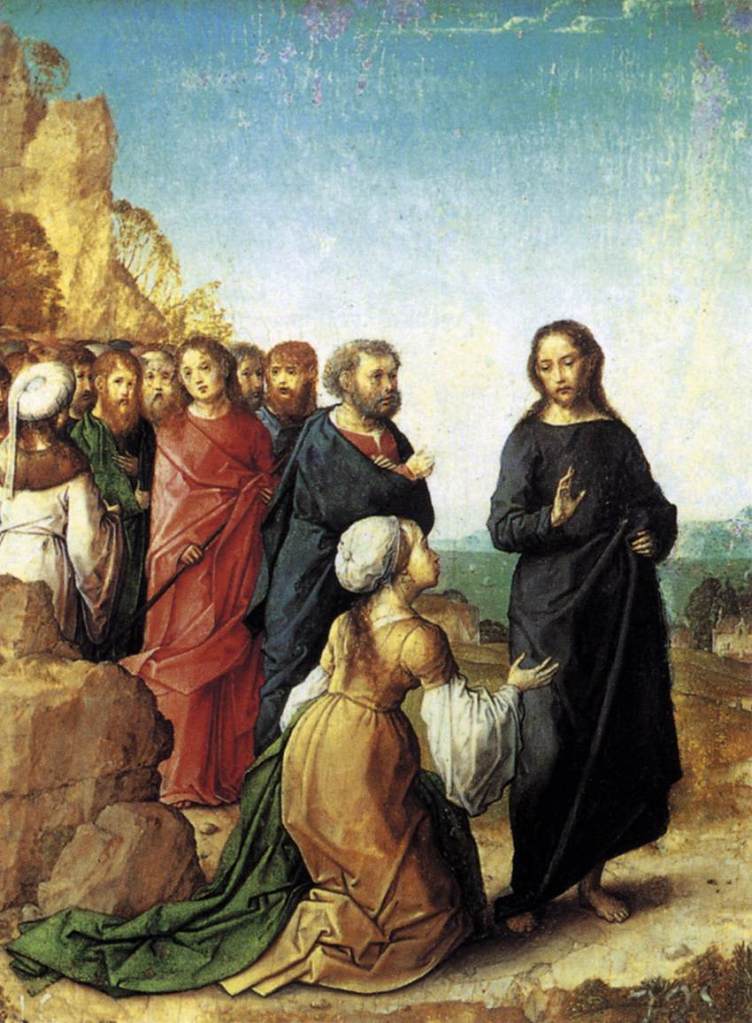
Jesus said to his disciples: “Be merciful, just as your Father is merciful” (Luke 6:36).
So often in life, I forget the Father's mercy that I have totally been oblivious to being merciful; thank you Jesus in giving this comparison today, of being merciful as the Father is merciful.
What a shame of how often I look up to myself as so good, so righteous against others that I judge and condemn them; teach me to be like you, Lord: merciful, non-judgmental, forgiving; most of all, teach me to give freely like you, Lord; remind me always to remember your mercy on me to realize that more than an ideal, mercy is about how it feels in my own life.
Lord Jesus Christ, you have given me with so much love and mercy, kindness and forgiveness of sins but I have refused to be merciful with others; have mercy on me, Lord and let me be merciful like the Father. Amen.
40 Shades of Lent by Fr. Nicanor F. Lalog II Second Sunday in Lent, Cycle A, 01 March 2026 Genesis 12:1-4 +++ 2 Timothy 1:8-10 +++ Matthew 17:1-9
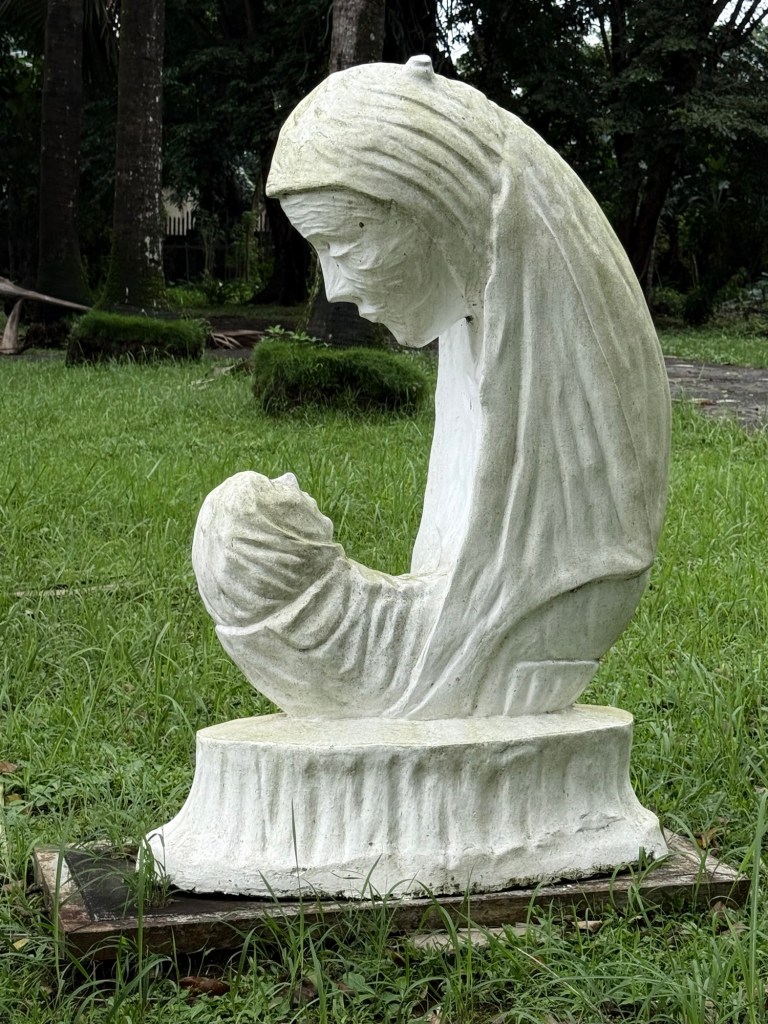
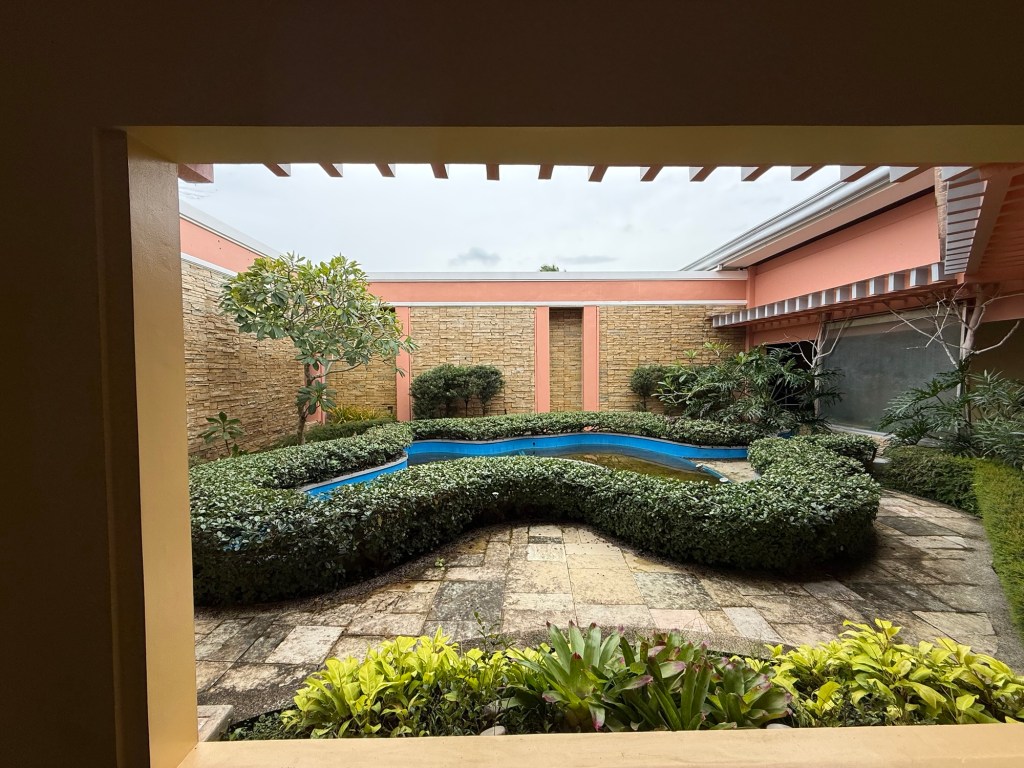
Photo by author, Sacred Heart Novitiate, Novaliches, QC, March 2023.
Despite the sweltering heat of summer, I have always loved the season of Lent when everything is subdued in liturgy – no Gloria nor Alleluia with the altar bare without flowers. It is during this season when we listen to a rich selection of readings from the Sacred Scriptures with music so solemn to guide us in our reflections and prayers to be converted and reconciled with God through one another especially those we have hurt or offended us.
That is why Lent is so beautiful because it is a call for transformation and transfiguration in Jesus Christ, when we are renewed as beloved children of God our Father. As we have reflected on Ash Wednesday, Lent is a coming home to God.
After six days Jesus took Peter, James, and John his brother, and led them up a high mountain by themselves. And he was transfigured before them; his face shone like the sun and his clothes became white as light. And behold, Moses and Elijah appeared to them, conversing with him. Then Peter said to Jesus in reply, “Lord, it is good that we are here. If you wish, I will make three tents here, one for you, one for Moses, and one for Elijah” (Matthew 17:1-4).
Church of the Transfiguration, Mount Tabor in Israel; photo from wikimedia.org.
Every second Sunday in Lent, we listen to the gospel account of Jesus Christ’s transfiguration at Mount Tabor that shows us the inseparability of the Cross and of the Resurrection, the tragedy of Good Friday and the glory of Easter Sunday.
Matthew, Mark and Luke shared the same event with minor variations in their respective account, agreeing on the basic details of the scene that happened on a high mountain six days after Jesus identified himself at Caesarea Philippi as the Christ or Messiah who shall suffer and die but rise again on the third day.
What I like most of the common details mentioned by the three evangelists in their accounts of the transfiguration were the words spoken by Peter to Jesus, “Lord, it is good that we are here.” So lovely.
Photo by author, Sacred Heart Novitiate, Novaliches, QC, March 2024.
Many times we are like Peter who tell Jesus the same words “Lord, it is good that we are here” without really knowing what we are saying. And surprisingly, we often speak these words to Jesus during those moments when we feel him most incomprehensible – hindi maintindihan just like during that scene at the transfiguration.
We have been saying since Ash Wednesday that “life is Lent” – a daily journey to God’s loving presence within us and among us. Life is a daily ascent, of coming close to God that is never easy.
We all struggle in our prayer life because prayer is stripping ourselves naked before God, confronting our true selves. That’s difficult but transformative, making us grow to become better persons.
So many of us could not even keep up with the Sunday Mass, God’s third commandment, “Remember to keep holy the Sabbath day.”
But, thanks be to God that there are moments of prayers and during the celebration of sacraments when we feel so high in the Lord’s presence we could not understand nor explain yet, feel so good to be there.
There were times when we truly heard Jesus telling us, teaching us how to overcome great temptations and trials in life that after being spared from all the troubles and sins, we felt so good to be there with the Lord.
Or, how can we forget those times we faced the most severe difficulties we have had in life when we have lost a loved one, or we have experienced defeat and failure, painful sufferings like sickness or betrayal when we felt so down, so empty and depleted but also felt the gentle touch of Jesus through the kindness of some strangers or faithful friends, inspiring us to rise and be not afraid to start anew in life, convinced that it is good to be there in the Lord.
Recall those times when it was the face of Jesus we saw on those familiar people or even strangers who shared with us the warmth of being welcomed, of being loved, of being forgiven that made us feel so good to be with the Lord.
Our most difficult moments, our most trying times are when we get better, when we mature and grow, when we are transformed in Jesus Christ. Many times, we hardly understand what is going on except that we believe and hold on to Jesus our Lord despite the many temptations that come our way to follow the ways of the world. But, experience have shown us that doing that is not good at all.
Photo by author, Lent 2021.
As we have reflected last Sunday, life is a Lent, a wilderness with so many voices competing for our attention. Many times we listen more to the voice of the devil that lure us into taking shortcuts and instant routes than follow the word of God that tells us to wait and persevere.
This Sunday, Matthew intensifies that call to us to listen to God’s call and voice when during the transfiguration a voice was heard saying, “This is my beloved Son, with whom I am well pleased; listen to him” (17:5).
After the transfiguration of Jesus, everything he shall be telling us is to forget ourselves, take up our cross and follow him.
St. Paul insists this to Timothy in our second reading today, to “bear our share of hardship for the gospel with the strength that comes from God” (2Tim.1:8). Likewise, the story of the call of Abram in the first reading reminds us of our same call from the same God to leave our comfort zones to a life of blessedness, of holiness.
It is always good to be with the Lord; and wherever he is, there we must always be (Jn.12:26). Jesus is always where there is love and kindness, mercy and justice, poverty and emptiness. Even death and darkness for that is when and where we are transformed and transfigured in Christ. That is why it is good that we are with him always. Let us pray:
Lord Jesus, there are so many things I do not understand in this life, especially when I have to be silent to be with you in prayer, to forget myself and carry my cross and follow you in the path of simplicity, kindness and service; but, one thing though is clear: it is when I am with you, even when I could not see clearly everything, that is when I feel peace and fulfillment within, when I feel so good to be here with you. Let me ramain in you, Jesus. Amen.
Church of the Transfiguration, Mount Tabor, Holy Land; from custodia.org.
40 Shades of Lent by Fr. Nicanor F. Lalog II Friday in the First Week of Lent, 27 February 2026 Ezekiel 18:21-28 + + + Matthew 5:20-26
Photo by Dra. Mylene A. Abad Santos, MD, February 2021.
Thank you, dear Father for the first week of Lent about to end; much is still to be desired to be closer to you, to be faithful to you, to be one in you; teach me in your Son Jesus to go beyond the letters of your laws, to go beyond the minimum requirements, to go beyond of what is asked of us in order to be more loving to others in you:
Jesus said to his disciples: “I tell you, unless your righteousness surpasses that of the scribes and Pharisees, you will not enter into the Kingdom of heaven” (Matthew 5:20).
Photo by Dra. Mylene A. Abad Santos, MD, February 2021.
Teach us to be holy or righteous like you; make us whole, to be different and be radical by going back to you our very roots of being and existence; instead taking the path of supremacy especially when we are angry that we are unafraid of breaking away from others, insisting on what is right than on what is good, let us be reconciled with you in others and in our very selves where peace remains the best to have.
To go beyond than what is required is to be humble and gentle like you, dear Jesus, caring more for people and relationships than on being right which often is not the case; holiness or righteousness is confronting and accepting our limitations so that your infinite power of love and mercy may work in us and through us, Lord Jesus.
Photo by Dra. Mylene A. Abad Santos, MD, February 2021.
Lent is going beyond the ordinary because it is about choosing you, Lord above all else always: you never condemn us letting go and forgetting of our past sins when we choose to finally live in your presence doing your will; however, let us not be complacent in your presence, Lord for our good record can be undone completely when we refuse to love you in others.
O Lord Jesus, you have given me with so much chances to become better; help me to remain in you so I can also give more chances more mercy and more love to others lost and trying to find you. Amen.
40 Shades of Lent by Fr. Nicanor F. Lalog II Tuesday in the First Week of Lent, 24 February 2026 Isaiah 55:10-11 + + + Matthew 6:7-15
Photo by author, somewhere in the SCTEx, November 2018.
Today I borrow the words of your servant, Lord Jesus Christ, the late Fr. John Main, OSB who wrote that "The meaning of life is the mystery of Love. Just as the roots of trees hold firm in the soil, so it is the roots of love that hold the ground of our being together."
Keep me rooted in you, God our Father; keep me rooted in your love in Jesus Christ your Son; water and nourish me with your words of life so I may grow tall, spread my branches, bloom and bear fruit to share your love and kindness and mercy with others; keep me rooted in you, Lord, strong and firm to weather the harshest storms and summer in life, still full of sap, still full of life.
Lord Jesus, you have given me with so much and I have given so little; teach me to give more of myself to you so I can give more of you and of your love to others. Amen.
40 Shades of Lent by Fr. Nicanor F. Lalog II First Sunday in Lent-A, 22 February 2026 Genesis 2:7-9, 3:1-7 + Romans 5:12-19 + Matthew 4:1-11
Photo from earth.com.
We now live in a world so noisy with many voices competing for our attention. Everybody is talking including cars and elevators, phones and gadgets and apps with names Siri and Alexa. So often, it is from these competing voices come our temptations in life, too.
In his first Lenten Message, Pope Leo XIV invites us to listen more to the word of God in order to be converted anew to Him. He said it so well that “The willingness to listen is the first way we demonstrate our desire to enter into a relationship with someone.”
Very true! And the question this first Sunday in Lent asks us is, whose voice do I follow? Because the voice we listen most is likely the one we prefer or love most – in fact, it could be the voice of the one we keep a relationship with!
That is the tragic truth of the story of the fall of Adam and Eve in the first reading today – they listened more to the voice of the devil signified by the serpent than to God who warned them not to eat the forbidden fruit.
And that continues to happen every day in our lives! That is why to sin is not merely to turn away from God but actually a refusal to love because sin is rejecting a relationship with God to whom we must listen to. This we see today in Matthew’s version of the temptations of Christ in the desert.
At that time Jesus was led by the Spirit into the desert to be tempted by the devil. He fasted for forty days and forty nights, and afterwards he was hungry. The tempter approached and said to him, “If you are the Son of God, command that these stones become loaves of bread.” He said in reply, “It is written: One does not live by bread alone, but by every word that comes forth from the mouth of God” (Matthew 4:1-4).
Detail of “The Temptation of Jesus According to St. Matthew” on the wall of St. Mark’s Cathedral in Venice, Italy. Photo from psephizo.com.
Right at the start, Jesus made it clear by quoting the Sacred Scriptures, the word of God, that “One does not live by bread alone, but by every word that comes forth from the mouth of God.”
Jesus, the Word who became flesh to live among us tells us clearly today that same truth. God’s word is life when He created everything by just speaking. Any voice that leads to destruction is from the devil, the father of fake news. And the devil’s biggest lie we must always avoid is making and having things easily. See how until now every fake news is always about “instants” like instant food and health, instant solution to everything without realizing its sinful effects as well as side effects that may actually harm us more.
Listening is an art because it teaches us to be patient, to wait and most of all, to persevere which leads us to perfection and excellence. Haste always makes waste. When we listen, we become patient, choosing to wait than take shortcuts or get instants that avoid difficulties and hardships like gambling to be wealthy without working, or cheating to pass exams without learning as well as freedom without responsibilities.
Then the devil took him to the holy city, and made him stand on then parapet of the temple, and said to him, “If you are the Son of God, throw yourself down. For it is written: ‘He will command is angels concerning you’ and ‘with their hands they will support you, lest you dash your foot against a stone.'” Jesus answered him, “Again, it is written, You shall not put the Lord your God to the test” (Matthew 4:5-7).
Photo by author, Domiican Hills, Baguio City, January 2019.
More than an art, listening is a virtue because it demands silence which is a fullness wherein we are able to listen and distinguish every voice and sound so that we may choose which to listen to and follow.
The word “listen” is the palindrome of “silent” – we listen best in silence to hear God, others and our very selves.
When we learn to be silent, we also become more trusting because when we trust, we speak less and listen more. The most silent people are the also the most trusting. When we trust, we wait and avoid shortcuts and instants.
The voice of God stirs our inner self, not just our senses because His voice leads us to deeper realities and meanings in life. Remember that Jesus eventually fed more than five thousand people from just five loaves of bread and two pieces of fish when He saw them already prepared inside their hearts and soul; when Jesus felt them more open to God than to the world, then He gave them bread and fish for their stomach.
Notice how the devil’s temptation to Jesus continues among us with those voices calling us to overly assert ourselves, to be influencers and clout chasers or content creators to be praised and followed by everyone when actually is all about wealth and money, and of course, power. It is the voice of control and manipulation. How sad that many of us gobble their lies completely, consuming everything, filling ourselves even with trash.
The voice of God calls us to sacrifice, to bear pains and sufferings not to be overburdened in life but for us to see God especially among those mostly in need like the poor and marginalized. Often, the voice of God is the softest and tiniest in our hearts calling us to simply trust Him by doing the simplest things like smiling to strangers, easing the pain of those lonely and sad, giving bread to the poor and hungry. Listening to the silence of God enables us to trust Him more that we learn to share and forget ourselves. Then, we grow and mature truly as persons.
Then the devil took him up to a very high mountain, and showed him all the kingdoms of the world in their magnificence, and he said to him, “All these I shall give you, if you will prostrate yourself and worship me.” At this, Jesus said to him, “Get away, Satan! It is written: The Lord, your God, shall you worship and him alone shall you serve.” Then the devil left him and, behold, angels came and ministered to him (Matthew 4:8-11).
Again, we go back to Pope Leo XIV’s Lenten Message about listening as “the first way we demonstrate our desire to enter into a relationship with someone.”
Don’t you feel sad at the sight of today’s everyday life where everyone has something in their ears, whether the tiny earpods or the headset/headphone?
What used to be insane like talking by one’s self has now become a status symbol as everyone looks crazy speaking by themselves through modern devices amid a crowd while walking or seated anywhere conversing to somebody at the other end of their lines unmindful, oblivious of the persons around them. May sariling mundo.
Many these days have created their own worlds and universe with them at its center through our new Baal, the cellphone – the very first thing everyone is looking for after waking up and the last thing in everyone’s hand before sleeping. How sad many among us today practically live in social media. What is most tragic is that all these modern means of communications were invented to bring us closer together when in fact, the more we have grown apart from each others! We are not only polarized as people but even separated from God.
The third temptation of the devil to Jesus continues with us today with all those voices telling us to forget God and morality and truth so that we become popular by being viral and trending. It is the biggest scam and fake news of all by the devil – of us being the “master” to rule and have world with all of its luxuries and power. The voice seems harmless, as if asserting our true selves but actually destroys our being and relationships with God, with others and eventually with our very selves.
Lent is an inside journey into our hearts, of finding Jesus anew inside our hearts where He dwells. St. Paul tells us in the second reading how Jesus brought us back to God, to grace and salvation.
Lord Jesus Christ, help us not to harden our hearts today so that we may listen anew to Your voice within us to find our way back to God, to peace and to fulfillment in ourselves and in one another.Amen. Have a blessed week ahead!
Photo by author, Carmel of the Holy Family Monastery, Guiguinto, Bulacan, 22 January 2026.
40 Shades of Lent by Fr. Nicanor F. Lalog II Friday After Ash Wednesday, 20 February 2026 Isaiah 58:1-9 +++ Matthew 9:14-15
Photo by author, Sacred Heart Novitiate, Novaliches, QC, March 2024.
God our loving Father,
thank you for this
blessed season in Lent;
grant me the true spirit
of fasting,
of emptying my self
of my pride and sins
to be filled with your Spirit,
with your word,
with your love and justice;
in my fasting
and self-emptying,
help me create a space within
that shall restore
my broken relationships
with you,
with others,
and even with my true self.
This, rather, is the fasting that I wish: Releasing those bound unjustly, untying the thongs of the yoke; setting free the appressed, breaking every yoke… Then your light shall break forth like the dawn, and your wound shall quickly be healed; your vindication shall go before you, and the glory of the Lord shall be your rear guard. Then you shall call, and the Lord will answer, you shall cry for help, and he will say: Here I am! (Isaiah 58:6, 8-9)
Show me, Lord Jesus those "bonds of injustice" and "thongs of the yoke" you are calling me to undo; it is so easy to identify the many injustices and oppression happening in the society that are indications of the very inequalities I do against my family members, to those in my close circle of friends and those around me.
Let me fast, Lord, according to your desire and design that is to make you present among us so that whenever anyone would cry to you for help, they may hear through me your voice and presence, "Here I am!"
Lord Jesus Christ, you have given me with so much and I have given you with so little; teach me to give more of myself, more of my time, most especially, more of you in me. Amen.
Photo by author, Sacred Heart Novitiate, Novaliches, QC, March 2024.
40 Shades of Lent by Fr. Nicanor F. Lalog II Thursday after Ash Wednesday, 19 February 2026 Deuteronomy30:15-20 +++ Luke 9:22-25
Can my life, or life itself be separated from you, my God?
Then he said to all, "If anyone wishes to come after me, he must deny himself and take up his cross daily and follow me. For whoever wishes to save his life will lose it, but whoever loses his life for my sake will save it" (Luke 9:23-24).
As I immerse myself to your words today, Jesus, I remember so many occasions when I was younger always trying to save my life, simply clinging to my life, or asserting my life, that's when I lost in every count: it seems to me now that when we are young - and strong - we choose ourselves more, insist on ourselves, even shouting deep within "It's my life"...!
Sad truth is, we lost always as we felt most empty, no direction, no meaning in life. When life is too cushy, without any problems and challenges, that is when life is deep in serious trouble. It is not even life at all but felt like death!
But, Lord, I remember too that since I took that dive, when I thought less of my self, when I started following you, of losing my life for your sake, that was when I found meaning and fullness in life, when I truly save my life; it was a bumpy road, Lord - you know it very well how many times I stopped along the way to choose my own path, even dared leaving you but you were always there waiting for me, walking with me even in the opposite direction just to bring me back to you to gain my life in you.
Glory and praise to you, Lord Jesus! Your words are not just a rhetoric, nor a poetic overstatement of a guru or a teacher but actualizing words of the Son of God, our Savior and Messiah; you have given me with so much and I have given you so little; teach me to give more of myself to you so that I can give myself to others by giving more of you in loving service.
Let me choose you always, Jesus, for life itself cannot be separated from you who is life yourself. Amen.
40 Shades of Lent by Fr. Nicanor F. Lalog II Ash Wednesday, 18 February 2026 Joel 2:12-18 +++ 2 Corinthians 5:20-6:2 +++ Matthew 6:1-6, 16-18
Lent is often portrayed as a journey of 40 days towards Easter starting today, Ash Wednesday. But deeper than a journey in time, it is a journey into the Father that starts in our hearts, deep within each one of us.
It is the season when we are invited to take time to look inside our hearts to see our true selves as sinful in order to meet God dwelling right inside us. The Prophet Joel in the first reading sets this tone of inner journey of conversion perfectly when he voiced out God’s call, speaking to us personally especially in this modern age:
“Even now, says the Lord, return to me with your whole heart, with fasting, and weeping, and mourning; rend your hearts, not your garments, and return to the Lord, your God” (Joel 2:12-13).
Photo by author, Buendia Ave., Makati City, 09 February 2026.
Very often, we are concerned about our external appearance, of how we look to other people but God sees what is in our hearts, of what is really inside us. And the path inside us is to cleanse ourselves thoroughly of the dirt and smudges of sin; hence, the imposition of ashes on our forehead.
Ash has long been a cleansing agent. Long before these modern kitchen stoves and gadgets of today, we used firewood for cooking that blackened the bottom of cooking wares. There were no Scotch Brite nor dishwasher at that time so we would mix ashes and cleanser soap then with steel wool and eskoba, we scrubbed them on the dirty kaldero and kawali until they were sparklingly beautiful again.
It is the very imagery of that cleaning of darkened pots with ash and soap the priest conveys to us when he says “Repent and believe in the gospel” while putting those ashes on our foreheads.
To repent is more than being sorry and admitting our sins but also a firm resolve to change our sinful ways, to be converted by following Jesus Christ in his Cross, by being more loving like him. In his first Lenten Message, Pope Leo XIV reminds us that “Every path to conversion begins by allowing the word of God to touch our hearts and welcoming it with a docile spirit.” He proposes three specific ways in doing this: listening, fasting and together.
Listening. The Holy Father reminds us so beautifully that “The willingness to listen is the first way we demonstrate our desire to enter into a relationship with someone.”
So true! But, so sad, too is the fact whom do we listen more these days? We live in a mass-mediated culture with so many young people practically living in the social media, taking and believing everything they read and see on their screen as the “gospel” truth that have only misled so many of us into various forms of miseries like emptiness, alienation from self and others, and even deaths.
Pope Leo explains that “Our God is one who seeks to involve us. Even today he shares with us who is in his heart. Because of this, listening to the word in the liturgy teaches us to listen to the truth of reality… In order to foster this inner openness to listening, we must allow God to listen as he does.” This is precisely the call of Jesus to us in the gospel when he repeatedly spoke of “God seeing you in secret” – God is always listening to us but do we listen to him?
In order to truly listen to God, first we must learn his language which is silence. See how the word “silent” is a palindrome of “listen” which is the reason why we have two ears so that we may listen more than speak. Remember also the shape of our ears – when placed together they form a heart because listening is not letting the words pass through the other ear nor keep in one’s head to understand but meant to bring down into our hearts so we can be more loving and kind, leading to oneness and bonding with the other persons.
Here we can adopt the suggestions of the CBCP that we fast this Lent on social media: no more cellphones before sleep and after waking up; limit social media and streaming time; observe device-free meals and gatherings; replace screen time with prayer and making time to be with others personally.
Photo by author, Sacred Heart Novitiate, Novaliches, QC, March 2025.
Fasting. According to Pope Leo, “fasting is a concrete way to prepare ourselves to receive the word of God.” He explains that “because it involves the body, fasting makes it easier to recognize what we ‘hunger’ for and what we deem necessary for our sustenance. Moreover, it helps us identify and order our ‘appetites,’ keeping our hunger and thirst for justice alive and freeing us from complacency.”
Again, let us use our Filipino language in understanding fasting and abstinence as well. Fasting is linked with abstaining from food. For us Filipinos, the most common practice of fasting and abstinence is avoiding meat like no meat on Fridays; meat in Filipino is laman. Therefore, when we say “no meat” it literally means walang laman which means empty in Filipino. It is when we are empty of ourselves that we become filled with God and his word, eventually of others especially the sick and suffering.
In a very interesting way, Pope Leo XIV invites us beginning this Lent to fast with our “tongue”: “Let us begin by disarming our language, avoiding harsh words and rash judgment, refraining from slander and speaking ill of those who are not present and cannot defend themselves. Instead, let us strive to measure our words and cultivate kindness and respect in our families, among our friends, at work, in social media, in political debates, in the media and in Christian communities. In this way, words of hatred will give way to words of hope and peace.”
Together. Finally, the Holy Father sums up that listening and fasting must both lead to the common good, the unity of peoples because “conversion refers not only to one’s conscience, but also to the quality of our relationships and dialogue. It means allowing ourselves to be challenged by reality and recognizing what truly guides our desires” not only as a community but especially in our “thirst for justice and reconciliation”.
Again, our Filipino word for listening says it all: pakikinig leads to pagniniig or intimacy which is oneness, communion, and bonding. True conversion leads to communion that begins with reconciliation as St. Paul called on us today in the second reading, “We implore you on behalf of Christ, be reconciled to God. Behold, now is a very acceptable time; behold, now is the day of salvation (1Cor. 5:20,6:2).”
As we receive the ash on our foreheads today, let us have moments of silence to listen to God’s voice we have stifled in our hearts, let us fast from talking and scrolling, and together we help each other to truly journey inside our true selves to meet God this Lent. To meet God is to die into one’s self, one’s sins, one’s selfishness as well dying literally speaking which the old formula of imposition of ash solemnly declares, “Remember that you are dust, and to dust you shall return.”
Let’s face it: it is the reality of death that we have often tried to deny and escape in life that have kept our hearts consumed with all these distractions in modern life that have led us into sins and meaninglessness. Let us start anew today in Christ Jesus to find ourselves and God within our hearts. Amen. A blessed Ash Wednesday to you!
Lord My Chef Sunday Recipe for the Soul by Fr. Nicanor F. Lalog II Sixth Sunday in Ordinary Time, Cycle A, 15 February 2026 Sirach 15:15-20 ><}}}}*> 1 Corinthians 2:6-10 ><}}}}*> Matthew 5:17-37
Photo by author, Benguet, July 2023.
It is a day after Valentine’s, also the final Sunday before we take a long break from Ordinary Time to start the 40 days of Lent this Ash Wednesday leading us to Easter that lasts until the month of May. It is so lovely and timely that we hear Jesus teaching us this Sunday to examine our hearts always so that we can live our faith in him daily, of remaining blessed in his beatitudes.
We are still at the sermon on the mount with Jesus giving us a series of general teachings illustrated in some concrete examples. However, keep in mind these are not new teachings as Jesus himself clarified he had come not to abolish but to fulfill the laws. In the light of the Beatitudes he taught us the other Sunday, Jesus is now directing us to look deeper into our hearts, to make it whole again in him and stay blessed unlike the scribes and the Pharisees.
Jesus said to his disciples: “I tell you, unless your righteousness surpasses that of the scribes and Pharisees, you will not enter into the kingdom of heaven” (Matthew 5:20).
Photo by author, Jerusalem, May 2017.
This is not the first time we have heard the word “righteousness” in Matthew who used it to describe Joseph in his Christmas story as “a righteous man” (Mt.1:19).
Being righteous for the Jews is being holy which is obeying and living by the laws and commandments of God. Unfortunately, they got centered with the letters of the laws as insisted by their scribes and Pharisees. When Jesus came, they have forgotten God himself as well as the value of the human person and life itself for which the laws were meant to be. Matthew rectified this at the start of his gospel with the story of the annunciation of Christ’s birth to Joseph who obeyed God’s command expressed in his love for Mary whom he took as his wife then pregnant with the Savior he named as “Jesus”.
Righteousness or holiness is not being sinless but being filled with God, living our faith in Christ by witnessing his gospel. From the Greek word holos that means “whole” not broken, holiness in a sense is what we call as integrity.
Holiness, righteousness, and integrity all begin in the heart that we find expressed in the sixth Beatitude taught by Jesus two Sundays ago, “Blessed are the clean of heart, for they will see God” (Mt.5:8).
A clean heart is a loving heart. We can only see God and the other persons with a loving heart. The human intellect cannot know most especially God as St. Paul tells us in the second reading.
In the same manner, we know the other person not with the intellect but always with the heart as the Little Prince said, “What is essential is invisible to the eye; it is only with the heart that one can truly see” while Marvin Gaye expressed it so beautifully in his 1971 hit “What’s Going On” with the lines “we have to put some lovin’ here today” so we can understand each other.
Indeed, the heart is the very center or core of every person because everything flows from the heart. And this is what Jesus himself underscores in his three admonitions against anger, lust, and falsehoods this Sunday. In all three teachings, we find how love is severely damaged when we quarrel against each other, when we take everyone as things and objects to be used, and when we lack the sincerity in our words.
Photo by author, September 2021.
“You have heard that it was said to your ancestors, You shall not kill; whoever kills will be liable to judgment. But I say to you, whoever is angry with his brother will be liable to judgment, and whoever says to his brother ‘Raqa,’ will be answerable to the Sanhedrin, and whoever says, ‘You fool,’ will be liable to fiery Gehenna”(Mt.5:21-22).
First thing we notice in these three teachings is its construction where Jesus first mentioned what was said by the ancestors in the phrase “You have heard” immediately followed by his own take, “But, I say to you.”
Again, Jesus is not contradicting the laws given by Moses and elaborated by their elders; Jesus was actually expressing its fullness in him found in love that begins in the heart which St. Paul reiterated in his letters that love is the perfection of the laws and commandments of God.
Whenever we quarrel in words or in deeds, we not only break our ties with each other as brothers and sisters but even with God we call “our Father”. Remember, love of God is love of one another. And the sad part of this reality is our being cut off from God even if we don’t admit it. And even if we know we have nothing against anyone, we surely feel the break-up in our selves due to the lack of love and charity, most of all, of peace. That is why Jesus added that when in our worship we realize a brother or sister has anything against us, we must first reconcile with him or her. That is why before the Holy Communion, we give the greeting of peace with one another who represents the person we are at odds with. The responsibility becomes more pronounced if the person is in the same assembly we are in if we really want to have a meaningful and holy communion.
“You have heard that it was said, You shall not commit adultery. But I say to you, everyone who looks at a woman with lust has already committed adultery with her in his heart” (Mt.5:27-28).
Here we go again with the issues of marital infidelity as well as of divorce: at the very core of this is the equality of every person, of every man and woman as being created in the image and likeness of God with same equal dignity. Jesus reminds us today that there is no difference between man and woman when it comes to marriage because the same duties of fidelity bind each partner. Most of all, Jesus has consistently taught how we must go beyond the Laws when it comes to marriage because every spouse is an image of himself, of his saving grace. Hence, we must reject every temptation and inappropriate words and actions that may destroy unity and love of couples and even in our other relationships as family and friends.
Photo by author, Makati City, 09 February 2026.
“Again you have heard that it was said to your ancestors, Do not take a false oath, but make good to the Lord all that you vow. But I say to you, do not swear at all. Let your ‘Yes’ mean ‘Yes,’ and your ‘No’ mean ‘No.” Anything more is from the evil one” (Mt.5:33-34).
This last admonition is perhaps most needed these days when we are bombarded with too much fake news as well as our own words are empty. Shakespeare said it so well in Hamlet, “words, words, words” wherein we think and believe that the more we increase our words, the more it becomes true and meaningful.
Of course, it it totally untrue as Jesus reminded us today to be truthful always. In Genesis, we are told in the story of creation how God shared only this power of words, of language with humans alone. Our ability to speak is a sharing in God’s power that demands responsibilities (Spiderman). Hence in the first reading, Ben Sirach reminds us to be responsible in choosing good than evil like in choosing between “fire and water”, “life and death”. Ben Sirach’s short reminders are very timely in this age of social media where “influencers” choose for us not only the candidates to elect but even the food to eat and clothes to wear. Being free is to decide, to choose knowingly what is good.
This Sunday, Jesus invites us to look into our hearts, to cleanse it of evil and sins so that he may dwell and reign completely in our hearts so we can have integrity and remain blessed and holy in him. Amen. Have a blessed week ahead, everyone!
Lawiswis ng Salita ni P. Nicanor F. Lalog II, Ika-11 ng Pebrero 2026
Larawan kuha ni Arkitek Philip Santiago, Lourdes, France, Oktubre 2025.
Isa sa mga turo sa amin ni Bp. Almario (+) noong kami ay mga seminarista pa ay huwag na huwag daw kaming maglalagay sa pintuan ng aming silid kapag naging pari na ng “Do not disturb” sign.
Paliwanag niya sa amin ay buhay ng mga pari ang palaging maistorbo at magambala lalo na kung mayroong may-sakit at naghihingalo ano mang oras gaya ng hating-gabi at madaling-araw.
Naalala ko ang turo niyang iyon noong Lunes sa aking homilya tungkol sa ebanghelyo na si Hesus ay “inistorbo” ng mga tao nang tumawid ng lawa at dumaong sila sa Capernaum.
Larawan kuha ng may-akda, Lawa ng Galilea, Israel, Mayo 2017.
Noong panahong iyon, sina Hesus at ang kanyang mga alagad ay tumawid ng lawa, at pagdating sa Genesaret ay isinadsad nila ang bangka. Paglunsad nila, nakilala siya agad ng mga tao kaya’t nagmamadaling nilibot ng mga ito ang mga pook sa paligid; at ang mga maysakit, na nakaratay na sa higaan ay dinala nila kay Hesus, saanman nila mabalitaang naroon siya. At saanman siya dumating, maging sa nayon, lungsod, o kabukiran, ay dinadala sa liwasan ang mga maysakit, at isinasamo sa kanya na pahipuin sila kahit man lang sa palawit ng kanyang kasuutan. At lahat ng makahipo nito ay gumagaling (Marcos 6:53-56).
Imagine natin ang eksenang ito: ni hindi na nakapagpahinga man lang si Hesus pagdating sa Capernaum. Ni hindi niya nakuhang bumuwelo. Agad-agad Siya na sumama sa mga tao. Kung ano man mga plano Niya marahil noong mga araw na iyon ay Kanyang ipinagpaliban para sa mga tao, lalo na sa mga may-sakit.
At iyon naman ang totoo kay Hesus – palagi Siyang may panahon sa bawat isa sa atin. Kaya nga hindi naman Siya pumapalag sa mga humihipo sa Kanyang damit upang gumaling sa kanilang mga sakit. Kailanman ay hindi pinigilan ni Hesus mga tao na siya ay istorbohin upang magpagaling, mangaral at magpaliwanag. Minsan nga ay inaya niya Kanyang mga alagad tumungo sa ilang na pook upang mamahinga ngunit wala Siyang nagawa kungdi ang maawa nang makita Niya na nauna pang dumating sa kanila ang mga tao na parang mga “tupang walang pastol” kaya tinuruan Niya at pinagaling mga may-sakit. At pagkaraan ay pinakain pa!
Napaka-gandang katangian ni Hesus ang kanyang pagtugon sa mga pang-aabala lalo ng mga may-sakit at naghihingalo. Ito marahil ang kaganapan ng ating panalanging “disturb me Lord” sapagkat tunay tayo nagagambala ng Panginoon tuwing kinakilanga at pinaglilingkuran natin ang mga may-sakit at maging iba pang mga nahihirapan sa buhay.
Larawan kuha ni Arkitek Philip Santiago, Lourdes, France, Oktubre 2025.
Kaya naman tuwing ginugunita ang Birhen ng Lourdes sa ika-11 ng Pebrero, atin ring ipinagdiriwang ang Pandaigdigang Araw ng mga May-Sakit. Bantog ang maraming himala ng kagalingan sa pamamagitan ng pamimintuho sa Birhen ng Lourdes. Itinuturing din na mapaghimala ang bukal ng tubig doon sa Lourdes, France na ipinahukay ng Mahal na Birhen sa pinagpakitaan niyang bata noon na ngayon ay Santa na, si St. Bernadette Soubirous.
Itinakda ni San Juan Pablo II noong Mayo 13, 1992 at isinabay sa kapistahan ng Lourdes ang World Day of the Sick upang aniya ay “ating makita sa mga may-sakit ang mukha ni Kristo na sa Kanyang pagpapakasakit, pagkamatay at muling pagkabuhay ay natamo ang kaligtasan ng sangkatauhan.”
Bakit nga ba gayon na lamang ang pagpapahalaga ng Diyos sa mga may-sakit? Dahil lang ba sa sila’y mahihina at walang halos magagawa kaya kailangan nating tulungan at kalingain?
Maraming dahilan ang ating maiisip na pawang mga patungkol sa mga may-sakit dahil nga sa sila ay mahihina, maraming tinitiis at iniindang hirap sa kanilang karamdaman.
Ngunit, marahil hindi sumagi sa ating isipan ang malaking pagpapala na hatid sa atin ng mga may-sakit dahil sa pamamagitan nila ay ating nakikita, nararanasan pagliligtas ni Kristo. Gaya ng sinabi ni San Juan Pablo II, sa kanila ating nakikita ang mukha ni Kristo na nagligtas sa atin sa pamamagitan ng Kanyang pagpapasakit, pagkamatay at muling pagkabuhay.
Tatlong katotohanan aking napagtanto na biyayang binabahagi sa atin ng mga may-sakit at naghihingalo.
Mula sa inquirer.net.
Personal nating nararanasan si Hesus sa mga may-sakit.
Tunay lamang nating masasabing “Katawan ni Kristo” ang Banal na Ostiya kung nahawakan natin ang maruming sugat at balat ng isang may-sakit, o naglinis at nagpaligo sa may-sakit. Higit itong totoo kapag pamilya natin ang may sakit na inaalagaan at kinakalinga.
May mga pagkakataong tuwing konsekrasyon habang binibigkas ko yung mga sinabi at ginawa ni Hesus sa Huling Hapunan (institution narrative) saka dumarating sa aking gunita mga pasyente na aking hinawakan, hinipo… o nilinisan. Namamangha ako sa biyaya na nagawa ko lahat yun gayong mahina aking sikmura (sabi po ng aking Ina noong nabubuhay pa siya, sa lahat daw ng matakaw ako mahina ang sikmura!).
Mahirap ipaliwanag ni ilarawan aking nadarama sa mga pagkakataon na iyon madalas ako ay naluluha, parang may daluyong sa aking dibdib na biglang gagaan at ang tanging nasasabi ko ay basta ganun yun! Totoo nga sabi ni San Juan Pablo II na ating nakikita mukha ni Kristo sa may-sakit. Ito marahil ay sapagkat sila man nakikita na si Kristo.
Ang mga may-sakit pinaka-malapit kay Kristo.
Sa Ebanghelyo ayon kay San Lukas, tiniyak ni Hesus kay Dimas na “ngayon din isasama kita sa paraiso” (23:43). Hindi sinabi ni Hesus na mamyang alas-tres pagkamatay ko o sa Linggo sa aking pagkabuhay. Ang sinabi ni Hesus ay ngayon din habang sila ay nakabayubay sa krus.
Alalaong-baga, sa pangungusap na iyon ni Hesus, inilalahad niya sa atin ang katotohanan na ang pintuan ng langit ay narito mismo sa lupang ibabaw. Higit sa lahat, pumapasok tayo sa langit kapag tayo naroon sa krus ng pagtitiis at paghihirap. Kaya hindi kataka-taka na natatanaw na ng mga may-sakit at mga naghihingalo ang langit na kanilang pupuntahan maging si Kristo na kanilang hahantungan.
Aking napansin sa marami kong pasyente na naihanda sa pagpanaw, mayroon tila “cycle” na sila at ang mga bantay na pinagdaraanan. Una, yung pasyente ang palaging umiiyak dahil takot o galit sa kanilang sinapit. Sino nga ba hindi matatakot at maiiyak kung malaman mo na mamatay ka na dahil sa iyong sakit.
Ngunit unti-unti habang kanilang natatanggap ang kanilang kalagayan at karamdaman, naiiba ang sitwasyon: ang mga may-sakit ang puno ng tuwa at sigla at lakas ng loob habang ang mga mahal sa buhay ang bagabag at naiiyak. Ito marahil ay sapagkat natatanaw na nga ng mga may-sakit kanilang tutunguhan lalo na kung sila ay naihanda o nakapaghandang mabuti spiritually. Hindi na sila umiiyak dahil batid nilang mas mabuti ang kanilang pupuntahan. Ang mga naiiwan ang kinakabahan at umiiyak dahil walang katiyakan silang nakikita sa buhay. Paano na kapag pumanaw na si itay o si inay o sino mang mahal natin sa buhay? Paano tayo? Hindi natin alam ano susunod sa buhay natin di tulad ng papanaw na sigurado na ang langit!
Larawan kuha ng may-akda, Basilika ng Manaoag, Pangasinan, 09 Enero 2026.
Napaka-buti ng Diyos.
Kumbinsido ako lalo ngayon mula nang maging chaplain ako sa ospital na napaka-buti ng Diyos, na mahal na mahal niya tayong lahat. Nakatitiyak ako na mas marami pa rin ang nasa langit kesa nasa impiyerno.
Hanggang sa kahuli-hulihan, ibig ng Diyos tayo ay masagip kaya nga naparito Kanyang Anak na si Jesu-Kristo. Ang tanging napupunta lang sa impiyerno ay yaong sadyang ayaw sa Diyos.
Madalas sinasabi sa akin ng mga duktor at nurse dito sa ospital ay “Father hinitay lang po kayo ng pasyente bago pumanaw.” Kasi nga bihirang-bihira mga pumapanaw na pasyente na hindi ko napupuntahan. Ako mismo ay nagtataka: kapag wala ako, walang naghihingalo? At kung mayroon man, palaging inaabutan ko pa kahit na anong layo pa aking panggalingan! Gayun din kung hatinggabi o madaling-araw: nagigising ako maski sa text ng mga nurse kung mayroong mag-request ng pagpapahid ng langis.
Sadyang mabuti ang Diyos at mahal Niya tayong lahat na hindi Siya tatawag ng sino man kung hindi naman sa Kanya uuwi at hihimlay.
Larawan kuha ng may-akda, Chapel of angel of Peace, Our Lady of Fatima University, Marso 2025.
Sa loob ng limang taong pagiging kapelyan ko sa Fatima University Medical Center sa Valenzuela, naranasan ko maraming pagpapala mula sa mga dinadalaw na pasyente na nagpalalim at nagpayabong sa aking katauhan hindi lamang sa aking pagkapari.
Dahil sa kanila, lalong naging makahulugan at makatotohanan sa akin ang bawat pagdiriwang ng Banal na Eukaristiya kung saan tunay na tunay ngang dumarating si Hesus sa Kanyang Katawan at Dugo.
Totoong nakakapagod ang dumalaw lalo na ang mag-alaga ng may-sakit ngunit mayroong ibang kagaanan ng kalooban itong hatid sa ating katauhan na sagad hanggang ating budhi. Kaya nga, sakali mang pakiramdam natin tayo ay nagagambala o naiistorbo ng mga may-sakit sa kanilang pangangailangan, nawa ating ituring ang mga pagkakataong iyon ay mismong ang Panginoong Hesus nag-aanyaya sa atin ng Kanyang pagpapala na Siya ay maranasan at maka-ugnayan. Amen.