Lord My Chef Daily Recipe for the Soul, 11 July 2025
Friday, Memorial of St. Benedict, Abbot, Fourteenth Week in Ordinary Time
Genesis 46:1-7, 28-30   <*{{{>< + ><}}}*>   Matthew 10:16-23
For those still moving places,
changing careers,
pursuing new love, hobbies
and interests;
for those in their senior years
embarking on new journeys
in life,
for those who have finally
decided to leave their
"comfort zones" to dare
live life authentically,
let us learn from
Jacob, aka, Israel:
Israel set out with all that was his. When he arrived at Beer-sheba, he offered sacrifices to the God of his father Isaac. There God, speaking to Israel in a vision by night, called, “Jacob! Jacob!” He answered, “Here I am.” Then he said: “I am God, the God of your father. Do not be afraid to go down to Egypt, for there I will make you a great nation. Not only will I go down with you; I will also bring you back here, after Joseph has closed your eyes.” (Genesis 46:1-4)
Photo by author, Egypt, May 2019.
Thank you, dear God
our loving Father in calling us
and sending us still to missions
despite our age
and unworthiness;
just be patient with us.
Accompany us in this
new journey we take in life;
be our companion.
Thank you, dear God
our loving Father in believing
in us,
in trusting us
after all these years of
hiding and running away from you;
keep us faithful
to your call and direction.
Thank you, dear God
most of all for Jesus,
in sending him to us
who commissioned us to be
like "sheep in the midst of wolves";
enlighten our minds
and our hearts
with your Holy Spirit
so we may be "shrewd as serpents
and simple as doves"
(Matthew 10:16)
in this world that values
youth and technology,
forgetting persons to be loved
and cared
and cherished
like you.
Like St. Benedict who in his
old age continued to follow you
in new directions in his life
and ministry,
give us the courage
to do the same
for your greater glory.
Amen.

St. Benedict,
Pray for us.

Fr. Nicanor F. Lalog II
Our Lady of Fatima University
Valenzuela City
VATICAN CITY, VATICAN – MAY 08: Faithful in St. Peter’s Square participate in the first blessing of Pope Leo XIV immediately after the white smoke on May 08, 2025 in Vatican City, Vatican. White smoke was seen over the Vatican early this evening as the Conclave of Cardinals took just two days to elect Cardinal Robert Francis Prevost, who will be known as Pope Leo (Leone) XIV, as the 267th Supreme Pontiff after the death of Pope Francis on Easter Monday. (Photo by Ivan Romano/Getty Images)
Lord My Chef Sunday Recipe for the Soul by Fr. Nicanor F. Lalog II
Fifth Sunday in Easter, Cycle C, 18 May 2025
Acts 14:21-27 ><}}}}*> Revelation 21:1-5 ><}}}}*> John 13:31-33, 34-35
Photo by author, Cabo da Roca Villas, Pundaquit, San Antonio, Zambales, 15 May 2025.
Easter is a reality, an event and experience always new and fresh. And relevant. I refuse to describe it as “ever new” because it is not changing nor evolving; it is “new” as it is “unfolding” like God or a loved one’s person revealed daily.
In his coming to us, Jesus brought God most real and closest to us humans more than ever, enabling us to experience in him a newness in life, so refreshing and relevant always. That is why we heard the word “new” five times in our readings today, four in the Book of Revelation and once in the Gospel.
Photo by author, Cabo da Roca Villas, Pundaquit, San Antonio, Zambales, 14 May 2025.
Then I, John, saw a new heaven and new earth. I also saw the holy city, a new Jerusalem, coming down out of heaven from God, prepared as a bride adorned for her husband. The one who sat on the throne said, “Behold, I make all things new” (Revelation 21:1, 2, 5).
When Judas had left them, Jesus said, “I give you a new commandment: love one another. As I have loved you, so you also should love one another. This is how all will know that you are my disciples, if you have love for one another” (John 13:31, 34-35).
Photo by author, Cabo da Roca Villas, Pundaquit, San Antonio, Zambales, 14 May 2025.
New heaven, new earth, new Jerusalem, new commandment. With Jesus making all things new.
“New” as a word connotes something fresh and recent, presupposing two conditions: either as something non-existent before that is introduced and made only now or, something already existing before but found and discovered only recently.
As such, anything “new” is actually a supernatural reality, a gift from God waiting to be discovered by anyone with faith, hope and love. It is in God through Jesus Christ’s Resurrection that we actually experience the true meaning of what is “new”.
First, as something not existing before like John’s vision of “new heaven, new earth, new Jerusalem” in the Book of Revelation. John had been clear at the onset of his writing of his final book which is to report to us the things that will happen in the future. And we all hope that indeed, someday there will be a new heaven, a new earth, and a new Jerusalem in the future. How it would look like, we really don’t know but deep in our hearts we hope for that especially in this time of too much crying, pain and death everywhere.
Of course, it sounds too good to be true but for us disciples of Christ, it is something we have to work for and not just pray for. What a joy to hear the new Pope, Leo XIV mentioning in his first public address asking for the release of all hostages in Gaza as well as for peace in Ukraine. We really hope our new Pope will continue with his more direct and firm assertions of Jesus and his teachings than be like the previous Pope who tried accommodating non-Christian religions and beliefs because peace comes only in Christ.
Though John’s vision of new heaven, new earth, and new Jerusalem refers to the end of time where “there shall be no more death or mourning, wailing or pain” (Rev. 21:4), it is something we can experience now if we let Jesus reign in us so he may wipe away the tears in our eyes caused by our continued hardness of the hearts.
A new heaven, a new earth, a new Jerusalem can only happen when we allow Jesus Christ to reign in our hearts more than ever so that the former heaven, former earth and sea pass away. That is why the Prophet Isaiah called the Christ as the Emmanuel, God-is-with-us, precisely the vision saw by John in Revelation, “Behold, God’s dwelling is with the human race. He will dwell with them and they will be his people and God himself will always be with them as their God” (Rev. 21:3).
As we have seen two Sundays ago, no locked doors can prevent Jesus from breaking through to get to us, for us to experience his loving presence. Most of all like last Sunday, we must learn to entrust ourselves confidently to Jesus our Good Shepherd because only he knows us his sheep so well. That confidence in him in making all things new happens when we love like him.
Photo by author, Sacred Heart Novitiate, Novaliches, QC, 17 March 2025.
"I give you a new commandment: love one another. As I have loved you, so you also should love one another. This is how all will know that you are my disciples, if you have love for one another" (John 13:34-35).
What is new in Jesus Christ’s commandment of loving? Answer: it is a love rooted in God the Father to whom Jesus is totally one with, totally entrusting himself even up to dying on the Cross.
It is a love that has long existed before since the very beginning but only discovered and found recently in Jesus Christ, the Son of God who became human like us in everything except sin. It is new because it ever refreshes anyone who loves like Christ. Most of all, it is new because it is most relevant at all times.
Any love not rooted in God will surely pass and fail. Though other religions and movements preach love, only Jesus tells us to love like him who is rooted in the Father who is love himself. See that Christ’s command to love like him is not only new but also radical at the same time as it brings us to the very root of love, God: “God is love… In this is love: not that we have loved God, but that he loved us (first)” (1 Jn.4: 8,10). According to Pope Benedict XVI, “God is love” is the most unique declaration on God not found in other religions except Christianity.
It is a love already existing before and discovered only by the Apostles in their experience of Jesus Christ. That is why in the first reading Paul and Barnabas told the disciples in Antioch to persevere in faith, saying, “It is necessary for us to undergo many hardships to enter the kingdom of God” (Acts 14:22). How sad it is a truth we have all known and proven all along but we continue to disregard even avoid, taking shortcuts in everything that often end in failures.
It is said that the more constricted the pupa (chrysalis) of a larva or caterpillar, the better are its chances of transforming into a more colorful butterfly.
The same is true with us humans. Life that is so easy and laid back when everything is provided for without any sweat at all always leads to emptiness and nothingness. Very often, the most fulfilled people – not necessarily successful which is very relative – are those who have gone through a lot of sufferings and hardships in life. They are mostly the men and women of passion for learning, willing to sacrifice a lot even their very selves for the sake of a truth and a love they are so convinced. Actually, what they have found and discovered have always been there hidden for ages even millions of years but due to their intense love, they found something so new that eventually revolutionized our lives and the world for better or for worse.
This Sunday, Jesus offers us to make our lives new and better, definitely more beautiful but not necessarily pain free. Are we willing to love like him to discover something new today or this week?
"Lord Jesus Christ, let us love like you
so we may be transformed to someone new
and eventually change the world
to something new and better in you.
Amen."
Photo by author, Cabo da Roca Villas, Pundaquit, San Antonio, Zambales, 14 May 2025.
The Lord Is My Chef Daily Recipe for the Soul by Fr. Nicanor F. Lalog II
Friday in the Twenty-Second Week of Ordinary Time, Year II, 06 September 2024
1 Corinthians 4:1-5     <*((((><  +  ><))))*>     Luke 5:33-39
Photo by author, 15 August 2024.
Thank you,
our loving Father
for another week about to close;
thank you dear God
for this first Friday
in September 2024:
despite the rains and the floods
and the inconveniences
these have brought,
thank you for a new beginning
today.
Let us celebrate this gift
of life you have given us
by putting on a new attitude,
a new disposition,
a new outlook in life
for you have made everything new
in Jesus Christ.
And he also told them a parable. “No one tears a piece from a new cloak to patch an old one. Otherwise, he will tear the new and the piece from it will not match the old cloak. Likewise, no one pours new wine into old wineskins. Otherwise, the new wine will burst the skins and it will be spilled, and the skins will be ruined. Rather, new wine must be pured into fresh wineskins” (Luke 5:36-38).
Make us your trustworthy
stewards of your mysteries, Lord;
make us truly your servants
who shall reveal your many
mysteries of life and death,
of joy and sufferings,
of poverty and wealth,
of fruitfulness and fulfillment,
of redemption and forgiveness
be known in our life of witnessing
without any regard for fame
nor popularity except that
we do your work in Jesus faithfully.
Amen.
The Lord Is My Chef Easter Recipe by Fr. Nicanor F. Lalog II
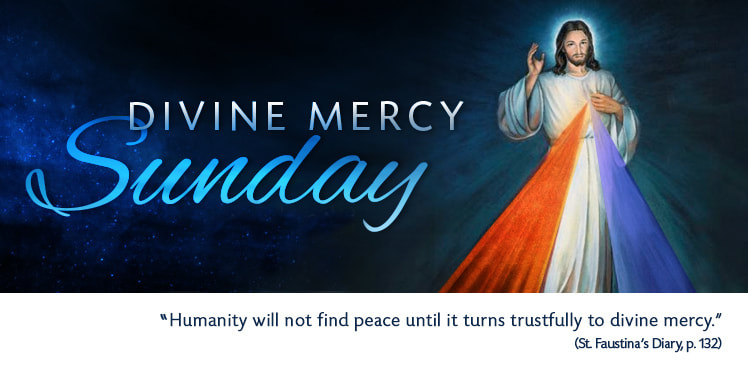
Second Sunday in Easter, Divine Mercy Sunday, 07 April 2024
Acts 4:32-35 ><))))*> 1 John 5:1-6 ><))))*> John 20:19-31
Photo by author, Mirador Jesuit Retreat House, Baguio City, 2018.
We celebrate today the Octave – eighth day – of Easter which coincides with the Feast of Divine Mercy. Both Christmas and Easter observe an octave signifying eternity because when you count from Easter Sunday to this Sunday, there are actually eight, not seven days. That is why there is no such thing as weekend for us Christians because the week never ends but continues on and on every Sunday.
And that is also the mystery, beauty and reality of Jesus Christ’s Resurrection that according to Pope Benedict XVI, “a life that opens up a new dimension of human existence” (Jesus of Nazareth, Part Two, p. 244).
Photo by author, view the refectory, Sacred Heart Novitiate, Novaliches, QC, 18 March 2024.
From now on, nothing can hold us nor keep us locked in sadness and grief, suffering and misery as well as sin and death because in rising from the dead, Jesus had opened up for us new possibilities in the future not only in eternal life but right here on earth.
Like the apostles on that same evening of Easter, we also find it so difficult to grasp and understand, even believe and explain right away though we could feel and experience deep down within us that Jesus is risen.
On the evening of that first day of the week, when the doors were locked, where the disciples were, for fear of the Jews, Jesus came and stood in their midst and said to them, “Peace be with you.” When he had said this, he showed them his hands and his side. The disciples rejoiced when they saw the Lord. Jesus said to them again, “Peace be with you. As the Father has sent me, so I send you.” And when he had said this, he breathed on them and said to them, “Receive the Holy Spirit.”
John 20:19-22
Photo by author, dusk at Sacred Heart Novitiate, 20 March 2024.
Since Sunday we have the prevalence of darkness and emptiness in our Easter stories, reminding us how often that it is in the darkness of our lives when we find light, when in the midst of emptiness when there is fullness.
This Sunday we find the presence of Jesus but still in an unusual manner. There was still darkness for it was night but more than that was the darkness within each disciple who locked themselves inside the Upper Room for fears from Jewish officials who might arrest and put them to death like Jesus.
Many times in life we feel locked in, imprisoned in some situations, feeling resigned as there is no way out from our troubles and miseries but through faith in Jesus, out of nowhere and without any explanation at all, we find ourselves extricated from our inescapable situations.
When my youngest sister was diagnosed with cancer the other year, she told me how she prayed on the eve of her surgery asking God to simply give her the grace to accept whatever the results of her tests would be. But after her surgery, it turned out her cancer was at its earliest stage that required no treatment at all except constant medical checkups! Last February on her major checkup again, doctors found no traces of cancer in her while her surgery had healed so well.
Hope is not positive thinking that things could get better; in fact, to hope is even to expect things to get worst like when the disciples were hiding in fear, expecting to be arrested too. Or my sister resigning to God her fate, just asking for the grace to accept she had cancer.
But it was in that darkness when Christ came and brought light to His disciples and my sister and our family. Strangely enough, it was after seeing the wounds of Jesus when they rejoiced because that proved that the Lord had risen. It was in my sister’s cancer we found ourselves together more in love and care for each other.
In life, our wounds will remain with us but most important of all for Easter to lead us into new existence in Christ, we must first remain in Him and with one another amid our wounds and darkness around us. And for us to remain or stay in Jesus with each other, we must first come.
Now a week later his disciples were again inside and Thomas was with them. Jesus came, although the doors were locked, and stood in their midst… Then he said to Thomas, “Put your finger here and see my hands”… Thomas answered and said to him, “My Lord and my God!” Jesus said to him, “Have you come to believe because you have seen me?”
John 20:26, 27, 28-29
Caravaggio’s painting “The Incredulity of St. Thomas” (1602) from en.wikipedia.org.
My dear friends, while praying over the gospel this week, this line by the Lord kept on echoing within me. And every time it would echo, the Lord shortened the sentence like these:
“Have you come to believe because you have seen me?”
“Have you come to believe because…?”
“Have you come to believe…?”
“Have you come…?”
Before we can stay and remain in the Lord, we must first come. Like Thomas.
What he had asked as proofs to believe in the Lord’s Resurrection were not really doubts to be taken negatively. John referred to him being known as Didymus for Twin. We were the ones who gave him that nickname Doubting Thomas. Like us, there are times we feel at a loss like Thomas with our faith and with ourselves when extraordinary things happen to us. It was not that he did not believe but in fact, he wanted to believe more. That is why he came the following Sunday.
Though I have always loved Caravaggio’s paintings, I don’t think Thomas ever touched the Lord’s wounds. Thomas must have been overwhelmed with the presence of Jesus that all he could say was “my Lord and my God” which we repeat during consecration of the bread and wine into Christ’s Body and Blood.
Photo by Ka Ruben, Easter Vigil 2024, National Shrine of Our Lady of Fatima, Valenzuela City.
Easter leads us into community life centered in the Eucharist. See how since Sunday when Jesus appeared to Mary Magdalene, He instructed her to tell Simon Peter and others of His Resurrection; after appearing to Cleopas and companion on the road to Emmaus, they hurried back to Jerusalem to proclaim the good news of seeing the risen Lord at the breaking of bread; and while they were together which would be the gospel next Sunday, Jesus appeared to them again as a community.
In His rising to life, Jesus brought us together, fellow wounded healers to heal each other, to remain with each other amid our poverty and sufferings because together in Christ, that is when we open new dimensions in existence, in living as a community. We grow into an I-Thou person from the selfish ego. That is what the first reading is telling us in how “the community of believers was of one heart and mind, and no one claimed that any of his possession was his own, but they had everything in common” (Acts 4:32).
It is the risen Lord who comes and stays among us in darkness and woundedness whenever we come and reach out to others like Thomas in the gospel. Even in our doubts, Jesus comes for us to believe more in Him. That is when great things start to happen, many so unbelievable and too deep for words. Basta.
That is why St. John Paul II rightly made the eighth day in Easter as the feast of Divine Mercy too because it is the love of God poured out to us in Jesus Christ’s suffering and death on the Cross when Blood and Water flowed out from His heart as an ocean of mercy for us. This is the love of God John was reflecting in the second reading that was too deep for words to explain except that it is the power that also “conquers the world” (1 Jn.5:3-4). Like St. Faustina in her Diary number 163, let us also pray:
"Help me,
O Lord,
that my heart may be merciful"
by being more loving,
by coming
and remaining in Jesus
among our brothers and sisters
in their many darkness
and emptiness
and wounds in life.
Like You,
Lord Jesus,
let me come
to reach out
to those in doubts
to be Your very proof
of Your having risen
from the dead.
Amen.
Lawiswis ng Salita ni P. Nicanor F. Lalog II, Ika-12 ng Abril 2023
Larawan mula sa freebibleimages.org.
Batay sa kuwento
noong pasko ng pagkabuhay
ni Kristo,
patakbong tumungo
sa kanyang libingan
sina Pedro at Juan,
ang alagad na minamahal;
wala nga doon si Kristo
mga tanging naiwan at natagpuan
ay ang kayong lino na pinambalot
sa kanyang katawan at ang
panyong ibinalot sa ulo
na parehong nakatiklop
at magkahiwalay.
Larawan mula sa freebibleimages.org.
Kung saan nanggaling
mga bagong damit
ni Kristong muling nabuhay
sa atin ay walang isinasaysay
ngunit kung tayo ay magninilay
napakagandang aral sa atin ang binibigay
ng mga naiwang kayong lino:
ngayong Pasko ng Pagkabuhay,
iwanan na natin mga lumang damit
ng pag-uugali
sa atin ay bumabalot
tulad ng pag-iimbot
at mga makasariling paghahangad;
huwag nang itiklop bagkus
hubarin at iwanan
masasakit na karanasan
upang lubusang malasap
tuwa at galak ni Kristong muling
nabuhay; atin na ring hubarin
mga damit ng pagluluksa sa
masasama at di magandang
nakaraan bagkus isuot
malinis at bagong pagkatao
na hinugasan sa dugo ni Kristo
noong Biyernes Santo.
Hindi natin maisusuot
bago nating katauhan kay Kristo
bilang kanyang mga naligtas
at napatawad
hangga't hindi natin
hinuhubad
dati nating pagkatao
sa kasalanan at
kasamaan;
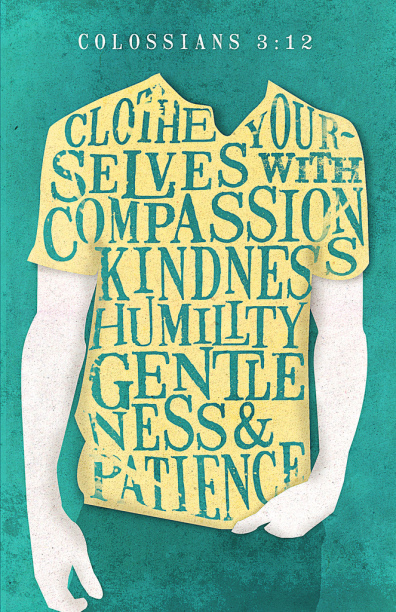
sa isang liham ni San Pablo
ating mapananaligan
mga aral niya tungkol sa
dapat nating kasuotan:
ang pagiging mahabagin,
maganda ang kalooban,
mapagpakumbaba,
mabait at matiisin.
Higit sa lahat,
maibigin.
Iyan ang bagong damit
natin kay Kristo
at huwag natin
hayaang malukot
at marumihan
ng kasalanan!
The Lord Is My Chef Daily Recipe for the Soul by Fr. Nicanor F. Lalog II
Thursday in the Sixth Week of Ordinary Time, Year I, 16 February 2023
Genesis 9:1-13   <*(((>< + ><)))*> = <*(((>< + ><)))*>   Mark 8:27-33
Blessing.
Blood.
Covenant.
Three things you repeatedly
said, O God our Father,
to Noah after the great floods
to mark the new beginnings
not only for him but also for us
today.

You blessed and consecrated man anew
in Noah and his sons,
telling them to go and multiply
with all the animals at their disposal
while assuring them with absolute
respect for human life.
With Noah, you gave the
rainbow as the sign of your
covenant to never again
destroy bodily creatures
on earth with floods.
How lovely, O God,
are your blessings and covenant
with Noah and his sons that
reached its highest point in
Jesus Christ who, upon his death
on the Cross looked like a rainbow
with arms outstretched between
heaven and earth,
establishing the everlasting
covenant sealed with his own blood
as he himself predicted at Caesarea Philippi
after being identified as the Christ.
Everyday you ask us, Lord,
like at Caesarea Philippi,
who do we say you are?
Unless we are able to
recognize you truly in our
own experience,
in our own being
as the Christ who suffered
and died for us on the Cross,
we can never experience
the fresh new beginnings
you offer us daily just like
to Noah and his sons.

Let us see in Christ's Cross -
the new and perfect rainbow -
the new beginnings you
promised after the great flood,
being fulfilled daily in Jesus.
Amen.
The Lord Is My Chef Daily Recipe for the Soul by Fr. Nicanor F. Lalog II
Monday, Memorial, St. Pedro Bautista & Companions, Priests/Martyrs, 06 February 2023
Genesis 1:1-19   <*(((>< + ><)))*> + <*(((>< + ><)))*>   Mark 6:53-56
Photo by author, 6:30 AM, 29 January 2023,in Bgy. Igulot, Bocaue, Bulacan
"In the beginning,
when God created the heavens
and the earth,
the earth was a formless wasteland,
and darkness covered the abyss,
while a mighty wind swept over
the waters" (Genesis 1:1-2).
Praise and glory to you,
God our loving Father,
in waking us up to a wonderful
morning, reminding us of
another beginning!
Though many of us have
the Monday blues,
whining and complaining
of great tasks ahead,
of the many problems still not
solved especially unpaid bills
while others are still sick with
some feeling lost and empty
for so many reasons;
forgive us in first seeing what we
do not have without seeing what
you have given us!
Awaken our senses, Father!
Awaken us to this great
reality of our daily "genesis" story:
of how in the beginning
there was nothing at all!
Help us appreciate how we
all started in the beginning
without the many things
we have today that despite
the gloom and darkness,
pains and hurts,
we are still better off today
than before when we were just
beginning in our career,
in our business,
inn our studies,
in our lives.
Let us keep that in mind
and heart, O Lord, that
in the beginning,
there was nothing until
you blessed us with everything
that is good.
Let us be filled with hope
in you that while everything
may be in chaos in every
beginning,
order soon follows
as you unfold your
wonderful plans
for us.
Your Son Jesus Christ
came to enable us to start anew
in daily life, to find every day
a new beginning, a genesis,
and go back to you, Father;
to be touched with your love
and mercy so that we too
may touch others to experience
new beginnings in life.
The great martyr-priests
of Japan led by St. Pedro Bautista
suffered greatly in bringing the faith
in the land of the rising sun;
their martyrdom may have ended
their lives but their faith in you
touched so many others that
brought new beginnings to life
here on earth; may we touch
others with your love and mercy,
dear Jesus today to start a new
beginning
for a new earth.
Amen.
The Lord Is My Chef Daily Recipe for the Soul by Fr. Nicanor F. Lalog II
Friday in the Second Week of Ordinary Time, Year I, 20 January 2023
Hebrews 8:6-13   <*(((>< + ><)))*> + <*(((>< + ><)))*>   Mark 3:13-19
Photo by Dra. Mylene A. Santos, MD, 2020.
Praise and gratitude to you,
our loving Father for this day
filled with newness,
when everything is new -
new lease on life,
new hopes,
new joys,
new opportunities,
new blessings,
new friends to meet,
new problems to solve,
new situations to deal with,
new chances to grow and mature,
new me!
Most of all,
a new day to renew
your new covenant in Jesus!
Brothers and sisters: Now our high priest (Jesus Christ) has obtained so much more excellent a ministry as he is mediator of a better covenant, enacted on better promises. When he speaks of “new” covenant, he declares the first one obsolete. and what has become obsolete and has grown old is close to disappearing.
Hebrews 8:6, 13
Thank you, dear Jesus,
for your gift of call,
in renewing your call
every new day to be
your disciple,
your apostle like
the Twelve;
let me value and
treasure, and
nurture your call,
Jesus, by growing
closer to you;
help me overcome
my sinful past
to welcome every
graceful present
in you even at the Cross;
let me renew myself
to you today,
to focus more on you
amid our many differences.
How ironic, dear Jesus,
when we were younger
we love and welcome
everything that is new;
as we get older, the more
we refuse to let go of the old
to give way to new
like YOU who is ever new
and radiant!
Amen.
Photo by author, Lake of Galilee(Tiberias), Israel, 2017.
Quiet Storm by Fr. Nicanor F. Lalog II, 31 October 2022
Now streaming at Netflix is Black Butterflies which we find so perfect for this long weekend coinciding with the Halloween celebrations in the real sense. By that I mean the hallowed – which is the old English for “holy” – evening of saints not of demons and evil creatures as Hollywood had erroneously preferred to portray.
Based on a French original “Les papilons noirs”, Black Butterflies is a psychological thriller of superb storyline and cinematography. Despite its depiction of violence and nudity, it is unmistakably French artistry at its best. Every bit in the series is interesting and masterly crafted that you won’t dare to skip and advance to the next scenes.
Overall, Black Butterflies is excellent first of all because of its brevity. It is a six-part series of not more than 60 minutes each episode except for the final one that went four minutes overtime. Despite the many twists and turns in every episode, it is not boring because there are always new revelations from the past and present lives of each of the main characters. I would not say the series is addictive but it is more of interesting as it tickles the mind, including one’s heart and soul that you examine your value systems and philosophy in life especially how we see and judge people.
Black Butterflies is a story of a novelist named Adrien who had agreed to write into a novel the memoir of an elderly man named Albert who had specifically chosen him for the task. How and why he was chosen to write, I will not discuss here so as not to spoil your viewing pleasures but that is the main plot actually.
Creators Olivier Abbou and Bruno Merle seamlessly weaved into a beautiful tapestry the stories of three men around one woman named Solange — Albert who had loved her so much, so true and so passionately worthy of emulation to some extent; Adrien the writer whose inner self was so affected and disturbed, later altered upon uncovering the real persons behind Albert and especially Solange later; and Carrel, the police investigator who had pursued the cold case against Albert and Solange.
Another woman, a tattoo artist and painter named Nastya who turned out to be a half-sister of Solange suddenly joined the plot later in the series. Albert helped launch her career when he bought her first major work of art, a painting of black butterflies that adorned the entrance wall of his residence. Adrien would meet her once at Albert’s home and would sought her about thrice for sex and conversations, only to find out that she is the “missing link” in his novel, even to his life when Nastya turned out to be a vital witness in one of Albert and Solange’s series of murders!
Oh yes, Albert and Solange as couple had the most strange and deviant sexual fantasy that seemed so unbelievable even to Adrien at first.
According to Albert, he met Solange when they were both young kids barely in their teens; she was an outcast in their village being the daughter of a prostitute to a German soldier in World War II. As a consequence, both mother and daughter were mocked by everyone including young boys.
Albert would be her knight in the shining armor, the one who would always defend her until they fell in love with each other and got involved into a series of murders together. Even up to the end after their separation, Albert remained faithful and true to Solange, defending her, covering up for her. In fact, he must have loved and respected Solange so much even from the very start of their relationship that having sex with her never crossed his mind – until one afternoon after an incident at the beach.
They were spending a quiet afternoon at the beach when two American brothers arrived and fascinated with tourists because “they were just like them”, they befriended them. Albert and the two visiting brothers played at the sea while Solange retreated to lie and rest at the shore. The elder American followed her and tried raping her; Solange fought by stabbing him with a corkscrew to his back. Albert and the younger American saw everything from the sea and when the kid tried to flee, Albert killed him to ensure there were no witnesses to the crime. Albert and Solange then fled from the scene, running into the woods and that was only when they had their first sexual experience together. It was so passionate that from then on they would be inseparable, would have a lot of sex. And murders.
The couple opened a salon and were very successful that they could afford to go on vacations so often around France and even Italy. Solange would flirt with men and once they are turned on, she would suddenly back out; naturally, she would anger her target who would then try to rape her. That is when Albert would come into the scene, “rescuing” Solange from her rapist by killing him. After every murder – whether inside the victim’s home or mobile camper, or outside in the wilderness – Albert and Solange would passionately have sex right at the crime scene with all the blood still in their hands.
One of their victims they have met while vacationing was the father of Carrel the police investigator; after killing his father, Solange who had had two previous abortions took the baby left behind but Albert refused the idea of adopting him. He then placed the baby in a basket and left him in a cemetery. That explained the troubled childhood and memory of Carrel who became a police detective spending much of his career looking for the suspects behind his father’s murder who turned out to be Albert and Solange. He almost arrested Albert one night in his home but was overpowered by Albert, thus ending all his investigations into Albert and Solange that spanned 30 years! It would finally be put into conclusion by Carrel’s only friend and partner, Mathilde.
Black Butterflies may have many scenes of violence and nudity but overall, it is a feel good series where the virtues of justice and kindness are highly extolled in the most unusual way. It is a great story of love told in the most absurd way that makes us examine too in our post-modern time how we have become so relativistic without realizing that in the end, moralities and virtues would always remain true and valid and relevant even in our modern time. Despite new discoveries in the many effects of genetics even in human behavior as espoused by Adrien’s wife Nora who worked as a researcher, the series showed the importance of human freedom that enables us to choose what is good and better and best for us.
Most of all, despite all these trends in science and philosophy professing the concept of a “superman” even without claiming to be a follower of Nietzsche, Black Butterflies beautifully expressed in the end the reality of a personal and loving God in Jesus Christ. At a reception celebrating Adrien’s literary award for his novel based on Albert’s memoir, one of the guest reminds him that his favorite quotation in the novel was actually from the Book of Jeremiah, citing its complete quote as “In those days they shall say no more: the fathers have eaten sour grapes, and the children’s teeth are set on edge” (31:29). Albert used to tell Adrien the quotation as if it were his original, implying that his murderous tendencies were borne out of his father’s sins. The expression had an impact on Adrien especially whenever he, too, would remember his violent past. It was only after the guest had explained that this prophecy had long been fulfilled in Jesus Christ who had set us free from sin did Adrien come to his senses and decided to set everything in his life right by writing the final ending of his novel before turning himself over to the police for a murder too.
Incidentally, while the police were pursuing Adrien, his wife Nora was also chasing his mother who had kidnapped their son. She too would be arrested by the police for child kidnapping.
The series ends with Adrien seated inside the police interrogation room, finally stating his real name for the first time after it was hidden from him by his own mother for fears he might end up a murderer like his father. Or, mother?
Last interesting twist in this series is why it is called Black Butterflies?
It was never tackled in any of the six episodes though the term black butterflies and its images were mentioned and shown only in passing. It seems to me that while black butterflies are always considered as a bad omen in almost every culture like ours which often signify the dead and death itself, Black Butterflies the series is inviting us to examine anew what is really evil and bad, morally wrong by looking more into our hearts in the light of Jesus Christ and his teachings than putting its blame on somebody else, especially our dead ancestors. Have a blessed All Saints’ Day and All Souls’ Day!
Photo credits:
All from Netflix - Black butterfly in a frame, Adrien, Albert, and younger Albert and Solange at their Salon.
Last photo by Author, cemetery facing Jerusalem, 2019.
The Lord Is My Chef Daily Recipe for the Soul by Fr. Nicanor F. Lalog II
Thursday in the Twenty-Fifth Week of Ordinary Time, Year II, 22 September 2022
Ecclesiastes 1:2-11   ><]]]]'> + ><]]]]'> + ><]]]]'>   Luke 9:7-9
Photo by author, sunrise at Our Lady of Fatima University in Antipolo City, August 2022.
Your words today,
O Lord our God are
"greatly perplexing"
that I feel like Herod
the tetrarch in the gospel
"trying to see" you,
Jesus (Lk.9:7-9).
So many times
I have prayed before
asking you how I
wanted to see you
because "all is vanity
in this world; nothing is new
under the sun.  Even the
thing we say as new has already
existed in the ages that
preceded us" (Eccl.1:2,9-10);
and so, what else is there
for us to see in this world,
in this life but you,
dear Jesus!
But, how can we see you
truly, O Lord Jesus, so that
we may also find the meaning
of this life amid all the vanities
around us?
When a group of Greeks
came to Jerusalem and
requested to see you
just before Good Friday,
you replied through Philip
with the falling and dying
of a grain of wheat
(Jn.12:20-26) to show us
that in order to see you,
we have to learn to look
through your Cross;
that we can only see you,
Jesus, in your Passion
and Death to see your glory
in your Resurrection.
Forgive us, Lord,
when so many times
we wax our desire to see you
with novelties and sentimentalities
of the world that are simply
vanities like Herod the Tetrarch;
let us go down to our knees
before you on the Cross,
commune with you in
prayers before the Blessed
Sacrament and most especially,
live by witnessing your pasch
in a world so fascinated with
drama and effects
than with essence
that is love willing to
suffer and die like you
on the Cross.
Amen.













 lordmychef.com