The Lord Is My Chef Daily Recipe for the Soul by Fr. Nicanor F. Lalog II
Monday, Week XXX, Year I in Ordinary Time, 25 October 2021
Romans 8:12-17   ><]]]]'> + <'[[[[><   Luke 13:10-17
Photo by Mr. Jim Marpa, 2019.
Praise and glory to you,
God our loving Father
for this gift of another Monday;
help us to live in solidarity
with your Son Jesus Christ
as brothers and sisters,
heirs of your kingdom in heaven
that in our work and studies,
we may always be guided
by the Holy Spirit to seek and
follow your Holy Will.
For you did not receive a spirit of slavery to fall back into fear, but you received a spirit of adoption, through which we cry, “Abba, Father!” The Spirit itself bears witness with our spirit that we are children of God, and if children, then, heirs, heirs of God and joint heirs with Christ, if only we suffer with him so that we may also be glorified with him.
Romans 8:15-17
So many times, O Lord,
we are like that synagogue official
in the gospel today:  blinded not only
by material things but most of all
by our religion - the worst blindness
 we have which we refuse to admit;
hence, we continue to plunge deeper
into its darkness of self-righteousness
as we outwardly profess we believe
 in you, we worship you alone
when in fact we have many other gods
ruling over us like our pride and ego,
our religious positions and titles,
even our ministries that are all
self-serving, too far from the people
specially the poor and sick,
and much too far from you,
dear God.
Give us the grace, dear Father,
through your Son Jesus Christ
in the power of the Holy Spirit to
enlighten our minds and hearts
to search more his light to illumine
the darkness within us and to find
more his face among one another
so that we may be truly in solidarity
 with him and your people.
Amen.
The Lord Is My Chef Sunday Music by Fr. Nick F. Lalog II, 24 October 2021
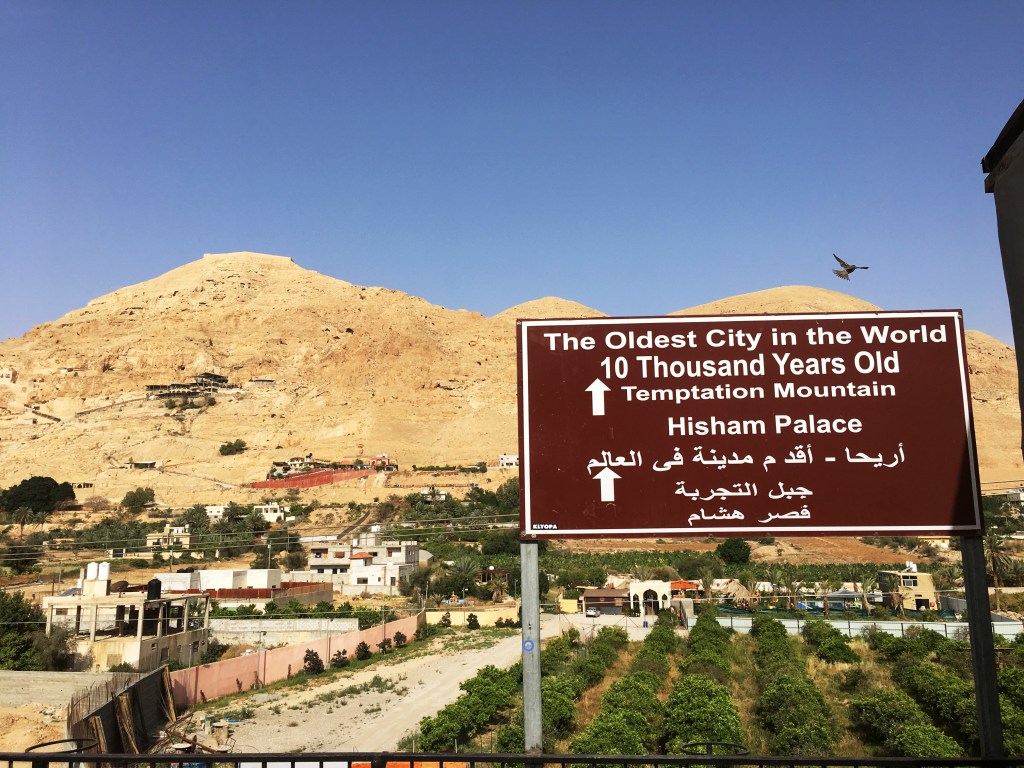
Photo by author, ancient city of Jericho in Israel, May 2019.
It’s a dark and gloomy Sunday with some rains across Metro Manila and like our gospel filled with joy and inspiration in Jesus Christ’s healing of the blind man named Bartimaeus, we bring you Joe Jackson’s 1984 hit single You Can’t Get What You Want (Till You Know What You Want) from his album Body and Soul.
We find Jackson’s song perfectly matched the story of the blind Bartimaeus who got what he wanted from Jesus when he passed by Jericho because he has always been focused on what he really wanted in life which is to be able to see (https://lordmychef.com/2021/10/23/seeing-jesus-walking-with-jesus/).
Many times in life, we are easily distracted from our goals and aspirations by many other things that “blind” us and thus divert us from our aims in life. Exactly what Englishman Jackson says in this great musical piece of sophistication – from lyrics to melody and instrumentations!
Sometimes you start feelin’ so lost and lonely Then you’ll find it’s all been in your mind Sometimes you think someone is the one and only Can’t you see, it could be you and me? But if there’s any doubt Then I think I’ll leave it out
Cause I’ll tell you one thing You can’t get what you want Till you know what you want Said you can’t get what you want Till you know what you want
Sometimes you keep busy reaching out for something You don’t care, there’s always something there Sometimes you can’t see that all you need is one thing If it’s right, you could sleep at night But it can take some time But at least I’m here in line
Cause I’ll tell you one thing You can’t get what you want Till you know what you want Said you can’t get what you want Till you know what you want
We’re sure that you too would be giving a great AMEN! after listening to Joe Jackson’s “explosive” live performance of You Can’t Get What You Want (Till You Know What You Want).
*We have no intentions of infringing into the copyrights of this music and its uploader except to share its beauty and listening pleasure.
The Lord Is My Chef Daily Recipe for the Soul by Fr. Nicanor F. Lalog II
Thursday, Week XXIX, Year I in Ordinary Time, 21 October 2021
Romans 6:19-23   ><)))*> + <*(((><   Luke 12:49-53
But what profit did you get from the things of which you are now ashamed? For the end of those things is death. But now that you have been freed from sin and have become slaves of God, the benefit what you have leads to sanctification, and its end is eternal life. For the wages of sin is death, but the gift of God is eternal life in Christ Jesus our Lord.
Romans 6:21-23
In our modern way of living and
thinking, your words today O God
our Father are difficult to grasp
and accept because we are taught
that any kind of slavery has to be rejected;
but, that is the irony of our time - we keep
on rejecting every form of slavery,
insisting on our freedom to choose and
decide what we want in life that in the
process the more we are enslaved
to sin and powers of evil that lead
to death.
So many times in this modern way of living
we assert how each one of us is the captain
of my ship, free to determine my course in
life in the hope of finding meaning and fulfillment
that often end up with us getting lost and
alienated.
How ironic that it is actually in being
a slave to your grace in Jesus Christ as
St. Paul had asserted that we become
totally free to offer ourselves unconditionally
to you our loving and merciful God and Father;
it is in surrendering ourselves to you as your
servants and slaves when we are more alive,
more fulfilled, more joyful and most peaceful
because slavery to you dear God and your
goodness bring all the good effects in life!
It is only when we empty ourselves to you, O God
that we are filled with your holiness, becoming
like you who is perfect.  Grant us the grace
to stand for what is true and good always,
standing by your side even if it means death
for it is in losing that we gain and in dying that
we truly live.  Amen.
The Lord Is My Chef Daily Recipe for the Soul by Fr. Nicanor F. Lalog II
Wednesday, Week XXIX, Year I in Ordinary Time, 20 October 2021
Romans 6:12-18   ><]]]]'> + ><]]]]'> + ><]]]]'>   Luke 12:39-48
Photo by Ms. Nikki A. Vergara, 2020 in Victoria, Laguna.
We are all slaves,
born as your servants
O God our Lord and Master;
how sad that the more we refuse
to accept this reality, the more
we are enslaved to sin;
the more we assert our freedom
and decide to choose whatever
we want, the more we become unfree.
Do you not know that if you present yourselves to someone as obedient slaves, you are slaves of the one you obey, either of sin, which leads to death, or of obedience, which leads to righteousness? But thanks be to God that, although you were once slaves of sin, you have become obedient from the heart to the patterns of teaching to which you were entrusted. Freed from sin, you have become slaves of righteousness.
Romans 6:16-18
Jesus our Lord and Savior,
let us realize this truth applies to us all;
that although you have saved and
justified us with your offering on the Cross
that continues in our Sacraments like
Baptism and the Eucharist that have
brought us closest to you and the Father,
it is not something like a "magic"
that fixes everything, that automatically
brings us to heaven.
Let us be faithful and prudent stewards,
slaves of grace in you like in today's gospel
who faithfully await your return
with good works and deeds.
Let us keep in our minds and hearts that
the more we profess our faith in you, dear Jesus,
as your servants, the more we have to participate
in your grace to produce fruits of
the Holy Spirit in our lives.  Amen.
The Lord Is My Chef Daily Recipe for the Soul by Fr. Nicanor F. Lalog II
Tuesday, Week XXIX, Year I in Ordinary Time, 19 October 2021
Romans 5:12, 15, 17-19, 20-21   ><)))*> + <*(((><   Luke 12:35-38
Praise and glory to you,
our loving God and Father
in giving us so much hope today,
inspiring us to be better, to be free
to choose and follow you,
to love and serve you in one another.
Where sin increased, grace overflowed all the more, so that, as sin reigned in death, grace also might reign through justification for eternal life through Jesus Christ our Lord.
Romans 5:20-21
Let us live in your Son
Jesus Christ, in the realm of grace
than live in Adam in the realm of sin
and death, enslaved to our passions
and selfish desires.
Let your Holy Spirit work within us,
dear Jesus, to allow us to live in a way
pleasing to God our Father.
Like the psalmist, enable us to proclaim,
"Here I am, Lord; I come to do your will."
Open our eyes to the reality,
O God, of the two kinds of humanity
pervading:  the sinful humanity and the
redeemed humanity in Christ;
how sad that so often, especially
in the news we read and follow,
it is always the humanity in solidarity
with Adam in sin that seems to prevail.
Let us claim your abounding grace,
"girding our loins and lighting our lamps"
to be focused more on our justification
found in your righteousness in Christ.
Amen.
The Lord Is My Chef Daily Recipe for the Soul by Fr. Nicanor F. Lalog II
Monday, Feast of St. Luke, Evangelist, 18 October 2021
2 timothy 4:10-17   ><]]]]*> + ><]]]]*> + ><]]]]*>   Luke 10:1-9
Painting of “Saint Luke Drawing the Virgin” by Flemish painter Roger van der Weyden (1400-1464); photo from en.wikipedia.org.
Of all your Evangelists, Lord Jesus,
Saint Luke is the most artistic of all,
giving us those rare glimpses with
vivid details of your life and teachings
that began in the annunciation
of the birth of your predecessor,
John the Baptist to the birth and
spread of your Church with unforgettable
characters and stories like the
Prodigal Son, the Good Samaritan,
the Good Thief, and conversion of St. Paul.
He wrote extensively like his teacher
St. Paul, leaving us with
two volumes of your Gospel.
Though scholars could not ascertain
if St. Luke was indeed one of those 72
disciples you have sent out two-by-two
in today's gospel, his writings teem
with so many instances as if he was
with you in your preaching and
journeys, Lord Jesus.
In his writings, you seemed to have
touched him as he narrated your
story that in the process, he appeared
like touching you all throughout!
It is not difficult to imagine that
because as St. Paul had told
Timothy today in the first reading,
it was only St. Luke who had remained
present with him in his darkest hours
of imprisonment and trial in Rome.
Beloved: Demas, enamored of the present world, deserted me and went to Thessalonica, Crescens to Galatia, and Titus to Dalmatia. Luke is the only one with me. Get Mark and bring him with you, for he is helpful to me in the ministry.
1 Timothy 4:10-11
Indeed in his writings
and maybe in his paintings too,
St. Luke had shown us that true
"communication is more than the
expression of thoughts and
indication of feelings:
at its most profound level,
it is the giving of self in love"
like what you did on the Cross,
Lord Jesus Christ
(cf. Communio et Progressio, 11).
If we could just have that grace
and discipline to rediscover
the beauty of writing in this age
of electronic media
 when our communications are fleeting
 and superficial, always in a hurry,
mediated with many other things
like images and sounds,
teach us to rediscover writing letters,
journal writing, and even painting
so we may get in touch with our
inner selves to find you there
and eventually touch you too
for you have been touching us
for so long without us realizing it.
But most of all, like St. Luke,
give us the grace and courage
to write your Gospel
with our lives.
Amen.
The Lord Is My Chef Sunday Recipe for the Soul by Fr. Nicanor F. Lalog II
Sunday XXIX-B in Ordinary Time, 17 October 2021
Isaiah 53:10-11 ><}}}*> Hebrews 4:14-16 ><}}}*> Mark 10:35-45
Photo by author, 10 October 2021, Paco, Obando, Bulacan.
Five minutes before our Mass last Sunday afternoon at the Holy Cross Parish in Paco, Obando, two rainbows appeared in the sky, freezing me for a while to cherish the moment as I felt God smiling at me, promising me a better week ahead.
It was only after a brief pause savoring the moment when I had the chance to take a shot of the lovely sight before getting inside the church at exactly 530 PM for the Mass. The following Monday, I had the photo posted on “my day” with everybody asking what was my wish upon seeing the double rainbows
When I told them I did not make any wish at all, they said it was “sayang” (what a waste!), that if I had made a wish, it could have been granted or fulfilled.
But, looking back, I did not make any wish at all because at that very moment I felt I had Jesus in my heart, that God had me on his palms, assuring me of his loving presence.
Why make any wish at all when you already have God? Besides, I felt too old for those wishing upon a rainbow or a falling star thing!
My dear friends and relatives, this Sunday, Jesus asks his disciples, brothers James and John “What do you wish me to do for you?” (Mk.10:36); next Sunday, the Lord will ask a blind man “What do you want me to do for you?” (Mk.10:51).
It is very interesting to note that Jesus outrightly explained to James and John he could not fulfill their wishes while next Sunday, he would restore the sight of the blind man named Bartimaeus who pleaded to him as he passed Jericho. It seems that there is more than meets the eye between a wish and a prayer!
James and John, the sons of Zebedee, came to Jesus and said to him, “Teacher, we want you to do for us whatever we ask of you.” He replied, “What do you wish me to do for you?” They answered him, “Grant that in your glory we may sit one at your right and the other at your left.” Jesus said to them, “You do not know what you are asking.”
Mark 10:35-38
Photo by Ms. Anne Ramos when a rainbow appeared as we went around around my former parish assignment bringing the Blessed Sacrament to bless then people on the first Sunday of our quarantine lockdown, 22 March 2020.
Wishes are only granted in fairy tales…
Jesus is now nearing Jerusalem where he would suffer and die but on the third day rise again. He had just repeated for the third and last time to his disciples of his coming pasch but, sadly, they still could not comprehend it fully.
The other Sunday, they could not answer Jesus when he asked them what were they arguing about while along the way to Capernaum because they were discussing among themselves who among them was the greatest.
They could not understand how their Lord and Master, the Messiah of Israel will have to suffer and die; it was beyond their grasp. Nonetheless, amid their lack of understanding and fears of its true meaning, they still followed Jesus, believing he would eventually triumph as a King.
And that is what the brothers James and John were thinking, the two closest to the Lord along with Peter who was earlier rebuked by Jesus at Caesarea Philippi for going against his pasch: they thought of Jesus as a “political leader”, a “game changer” who could surely change their lot for the best, assuring them and their future generations with the good life.
When Jesus asked the brothers James and John, he knew the two were just “fancying” on something not so true. That is what a “wish” is all about: something so fancy, almost untrue like coming from fairy tales that could come true with so slim a probability like hitting a jackpot in lottery or meeting a superstar. We make wishes to fairies often represented by celebrities who try to bring some joy to children suffering from cancer. Or, politicians who for a day would give some voters with huge amounts of money without any conviction at all to fulfill their promises.
As we say in Filipino, “suntok sa buwan” that literally means “punching the moon”.
But again like last Sunday when Jesus looked with love to the man asking him how to gain eternal life, Jesus respected the brothers James and John by entertaining their “wish”, asking them questions until he flatly told them “to sit at my right or at my left is not mine to give but is for those for whom it has been prepared” (Mk.10:40).
When the ten heard this, they became indignant at James and John. Jesus summoned them and said to them, “You know that those who are recognized as rulers over the Gentiles lord it over them, and their great ones make their authority over them felt. But it shall not be so among you. Rather, whoever wishes to be great among you will be your servant: whoever wishes to be first among you will be the slave of all. For the Son of Man did not come to be served but to serve and to give his life as a ransom for many.”
Mark 10:41-45
Photo by author, Chapel of the Holy Family, Sacred Heart Spirituality Center, Novaliches, 2016.
Prayer changes the person, not the situation.
Recall how Jesus assured his disciples and us last Sunday of great rewards awaiting those who have left everything to follow him; but, along these come persecutions because following Jesus means standing for what is true and good that invite enemies and detractors.
There will always be persecutions coming in our life – even if we do not follow Jesus along the way because that is a fact of life. Jesus came not to remove but join us, accompany us, be one with us in our sufferings and trials.
Today, Jesus opens our eyes to the realities, beauty and nobility of discipleship that is unfortunately becoming rare even among us in the clergy. True discipleship in Christ is first of all sharing in his passion and death in order to have a part in his glorious resurrection.
Once again, we feel the Lord’s recurring teaching these past weeks of us entrusting everything to the Father’s hands like children filled with confidence on God’s promises. This is the meaning of Isaiah’s prophecy in the first reading that spoke of the “Suffering Servant of God” who “through his suffering shall justify (save) many” (Is.53:11).
See the gentle humility of Jesus in explaining things to his disciples. There was no hint at all of anger nor exasperation but pure love and understanding, patience and perseverance hoping someday the Twelve would realize in the most personal manner his kind of kingship, the true meaning of being the Messiah.
Photo by author, Garden of Gethsemane, the Holy Land, 2017.
Here Jesus exemplifies so well in his very self the kind of relationships his followers must have based on love and respect, serving the weakest and lowliest, so unlike the way of the world that is based on relations of power and dominance. This we continue to experience when we pray fervently especially before the Blessed Sacrament and most of all when we celebrate the Sunday Eucharist which is the summit of our Christian life.
In the Holy Mass, Jesus the Son of God leads us to the Father in signs perceptible to human senses, exactly what the author of the Letter to the Hebrews speaks of in the second reading, “So let us confidently approach the throne of grace to receive mercy and to find grace for timely help” (Heb.4:16).
So, instead of wishing upon rainbows or shooting stars, better pray!
Lord Jesus Christ,
thank you for understanding
our lack of understanding
and appreciation to your coming
to us daily in the many sufferings and
pains we go through in life;  help us
to be more realistic, to stop all
wishful thinking of living happily
ever after and instead become
more loving and kind, finding you
with everyone we meet.
Amen.
The Lord Is My Chef Daily Recipe for the Soul by Fr. Nicanor F. Lalog II
Tuesday, Week XXVIII, Year I in Ordinary Time, 12 October 2021
Romans 1:16-25   ><)))*> = ><)))*> = ><)))*>   Luke 11:37-41
Photo by Dr. Mai B. Dela Peña, MD, 2017, Japan.
Open our eyes
and our hearts today
to your loving presence,
God our loving Father!
Make us stop for a while
to feel your presence in us
and among us to experience
true wealth and real wisdom
so unlike with what the world
offers that is always misleading.
Like St. Pau, may we feel that
deep pride in you who loves us,
accompanying us in this life,
leading us to fulfillment and joy.
Brothers and sisters: I am not ashamed of the Gospel. It is the power of God for the salvation of everyone who believes… For what can be known about God is evident to them, because God made it evident to them.
Romans 1:16, 19
So many times,
we have chosen to follow
 the flow of this world,
"claiming to be wise" when in fact,
we have become fools in our own making;
like that Pharisee who had invited
Jesus to dine at his home,
we have become so unaware
of the presence of Christ and have
become more amazed at finding
faults and criticisms at what is outside
of us, not realizing the need
to look more inside to cleanse our
hearts and souls where you dwell
and see you present in every moment
 especially among others we least expected.
Amen.
The Lord Is My Chef Daily Recipe for the Soul by Fr. Nicanor F. Lalog II
Monday, Week XXVIII, Year I in Ordinary Time, 11 October 2021
Romans 1:1-7   ><]]]]*> + ><]]]]*> + ><]]]]*>   Luke 11:29-32
Photo by author, 2019.
Praise and glory to you,
O God our loving Father
who has called us through
Jesus Christ your Son
to be your servants.
As we begin this brand new
week of work and school,
let us be reminded
of this great honor from you
that we have taken for granted,
even forgotten and disregarded.
May we learn from St. Paul
to take pride in this calling
to be your servant.
Paul, a slave of Christ Jesus, called to be an Apostle and set apart for the Gospel of God… among whom are you also, who are called to belong to Jesus Christ; to all the beloved of God in Rome, called to be holy. Grace and peace from God our Father and the Lord Jesus Christ.
Romans 1:1, 6-7
In Baptism, we have been called
to be your servant and apostle,
most of all called to be holy
like you, God our Father;
help us recapture the beauty
and honor of this call from you;
enable us to activate this call in us
set apart as a people for a very special
mission especially in this time of the
pandemic.
Most of all, let us remember today
your call for us to witness to Jesus Christ
and his Gospel of salvation through the
particular circumstances of our lives
lest that day of judgment catch us by
surprise immersed in sin and evil,
forgetting the sign of Jonah
and Nineveh (Lk.11:29-32).
Amen.
The Lord Is My Chef Daily Recipe for the Soul by Fr. Nicanor F. Lalog II
Friday, Week XXVII, Year I in Ordinary Time, 08 October 2021
Joel 1:13-15, 2:1-2   ><]]]]'> + ><]]]]'> + ><]]]]'>   Luke 11:15-26
Photo by author, Franciscan Monastery on Mt. Nebo, Jordan, 2019.
God our merciful Father,
thank you very much for this
wonderful and blessed Friday!
Everybody loves Friday
primarily because it is the weekend
to work and school leading to
Saturday and Sunday rest.
But for me and my brothers,
we love this because it is
"Miserere nobis" Friday
when we pray Psalm 51:
"Have mercy on me, God,
in your kindness.  In your compassion
blot out my offense.  O wash me
more and more from my guilt
and cleanse me from my sin."
Help us to cleanse our selves
most especially today in
memory of your Son's
Good Friday; may we heed
the call of your prophet on a
daily basis to keep ourselves
clean.
Gird yourselves and weep, O priests! Wail, O ministers of the altar! Come spend the night in sackcloth, O ministers of my God! The house of your God is deprived of offering and libation. Proclaim a fast, call an assembly; gather the elders, all who dwell in the land, into the house of the Lord, your God, and cry to the Lord!
Joel 1:13-14
So many are our sins against you,
O God, that people have not only turned
against us priests but most of all, they have
turned away from you largely because
we have misled and abused them.
Cleanse us with your mercy and
forgiveness in Jesus Christ your Son;
exorcise us of our many demons
possessing us, allowing ourselves
to be overrun by evil and sin.
“When an unclean spirit goes out of someone, it roams through arid regions searching for rest but, finding none, it says, ‘I shall return to my home from which I came.’ But upon returning, it finds it swept clean and put in order. Then it goes and brings back seven other spirits more wicked than itself who move in and dwell there, and the last condition of that man is worse than the first.”
Luke 11:24-26
Let Jesus your Son
reign in our hearts and soul,
let him be the sole power within us
for he is the most powerful of all,
the only power there is;
let us welcome him inside us
to keep us clean
lest we sin more
and become worst
than before.
Amen.