Trees are “shaken” to get its fruits

The Lord Is My Chef Sunday Recipe for the Soul by Fr. Nicanor F. Lalog II
Week XXVII-A in Ordinary Time, 04 October 2020
Isaiah 5:1-7     ||+||     Philippians     ||+||     Matthew 21:33-43
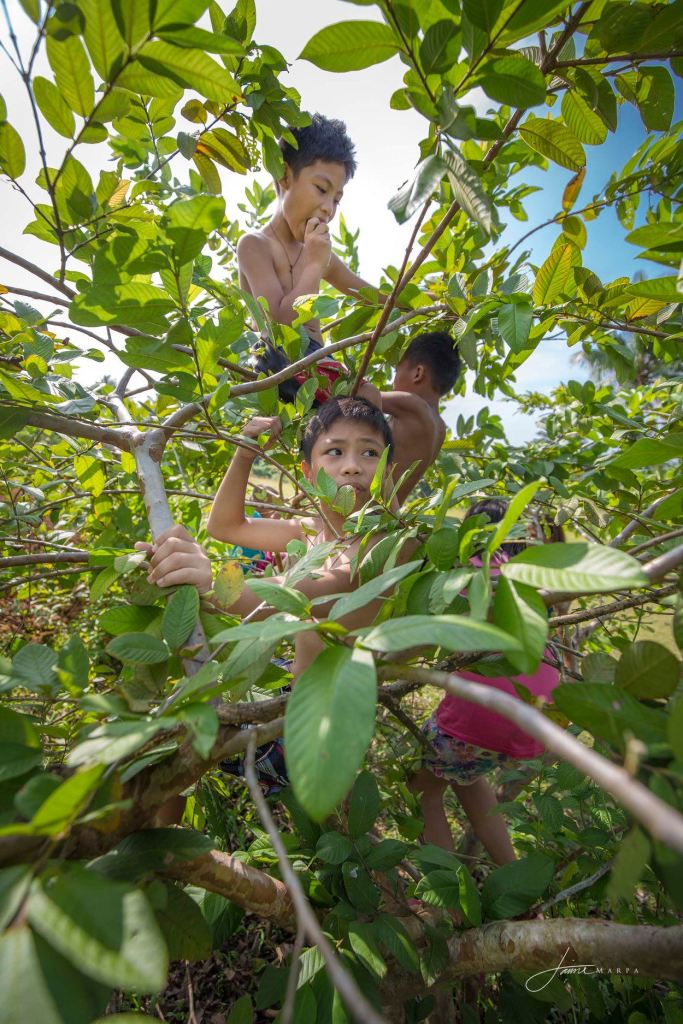
Photo by Mr. Jim Marpa, 2018.

To all the plantitos and plantitas: happy feast day this Sunday, the fourth of October which is also the feast of St. Francis of Assisi, patron of those in the green movements.

Part of the grace of this pandemic is the new awareness and interests of many among us for all kinds of plants borne out of the prolonged quarantine periods these past seven months. I remember growing up in our barrio where fences were all plants like santan, San Francisco and gumamelas whose flowers we used to mix with Tide to play bubbles. Who would have thought that after several decades those plants we used to take for granted like the gabi varieties and others along with cactus found almost everywhere would cost a fortune today?

But what I really miss and hope the plantitos and plantitas will be able to revive and bring back are the fruit trees every home used to have even in vacant lots like guava, santol, atis, aratiles, mabolo, achesa, duhat, kamias and of course, mango. Whenever me and my cousin would trek to the mini forest at the back of our compound called “duluhan” near a swampland to shoot birds and everything with our slingshots (tirador), we always had some fruits to munch in our little adventures.

And part of that adventure was to “shake” until we break branches of trees to get fruits and local beetles called salagubang (on mango trees).

Shaking of tree. Exactly the same thing that Jesus did today in his next parable addressed to the chief priests and elders of the people who would soon have him arrested, tried, and crucified: after telling them parable of the wicked tenants who killed the servants and the son of the owner, Jesus shook and shocked his listeners who later realized the parable was about them!

“What will the owner of the vineyard do to those tenants when he comes?” They answered him, “He will put those wretched men to a wretched death and lease his vineyard to other tenants who will give him the produce at the proper times.” Jesus said to them, “Did you never read in the Scriptures: ‘The stone that the builders rejected has become the cornerstone; by the Lord has this been done, and it is wonderful in our eyes?’ Therefore, I say to you, the kingdom of God will be taken away from you and given to a people that will produce its fruit.”

Matthew 21:40-43

We are the vineyard of the Lord


From Google.

Jesus had already entered Jerusalem and was teaching at the temple area. Among his audience were the chief priests and elders of the people trying to gather evidences against him for his arrest and execution. Unknown to them, Jesus knew what was in their hearts.

Last Sunday the parable was directed to them so they may realize how wrong they have been in regarding them so highly above the publicans and prostitutes who repented for their sins and went to receive the baptism by John the Baptist.

Today, Jesus “shook them” with this second parable taken from a well known song and lament of a beloved to his vineyard by the Prophet Isaiah which we have heard at the first reading.

Vineyards are very common in Israel as in the rest of the Mediterranean and Europe where grapes and wine symbolize life. Hence, the vine is always considered as a highly prized plant that biblical authors have taken as the image of the people whom God cultivates and from whom he expects beautiful fruits.

In the first reading, we find God lamenting why after investing his vineyard with the best of everything, the grapes it produced were so bad that it had to be burned. It was a very strong warning against Israel who have gone wayward in its ways of living that aside from worshipping idols, they also killed the prophets sent by God.

Notice the transition by Jesus using the same imagery from the Old Testament of the vineyard as the people of God but this time bearing fruits at harvest time. By that time, the chief priests and the elders of the people felt they were better than their ancestors who had the prophets killed. In fact, they felt proud that they have been faithful to God, and therefore, fruitful — thinking they were a far cry from Isaiah’s lament. Unknown to them, Jesus could read their hearts, how they were all planning to kill him like the son in the parable so they can have the vineyard, the people and lord it over them!

Everything fell into right places at the end of the parable when Jesus asked them:

“What will the owner of the vineyard do to those tenants when he comes?” They answered him, “He will put those wretched men to a wretched death and lease his vineyard to other tenants who will give him the produce at the proper times.”

Matthew 21:40-41

Try to imagine the scene with Jesus face-to-face with the chief priests and elders of the people – and with us – discussing the present time, not the past.

Here is Jesus Christ shaking us all to find whatever fruits we have, telling us that this parable is about me and you (see v. 45), asking us, why are you trying to remove me from the people? Why are you easing me out, creating all these cults around yourselves like celebrities, getting the people’s money and approval for your own sake?


Sometimes we need to be shaken – even shocked – to bring out our fruits


Photo by author at Silang, Cavite, 22 September 2020.

See again my dear Reader the beauty of the Lord’s parables wherein he invites us to be involved with it to see how we felt with certain situations like in the merciless debtor and early workers at the vineyard; today, Jesus is asking us our opinion on what the vineyard owner must do against the wicked tenants.

He knows what to do and wants us to realize that we could be those tenants too because like the chief priests and elders, we easily see the sins and shortcomings of others, the fruitlessness of others without realizing our own darkness within, even our sinister plans to dominate.

See how the chief priests and elders of the people called the tenants “wretched men” deserving “wretched death”, not realizing that the more we talk of other people, the more we actually talk of ourselves!

Every parable by Jesus is always set in the present moment with sights set to the future, to eternal life.

Sometimes, God has to shaken us, even shock us so we may bring out and give him his share of harvest of fruits like our faith, hope and love that will build the community in him, not take people away from him. Problem with us is like with those tenants and the chief priests and elders: “masyado tayong bumibilib sa ating sarili”, that is, we believe too much on ourselves that unconsciously we feel like God, forgetting we are mere stewards or tenants of his vineyard.

St. Paul reminds us in the second reading that we strive to imitate Jesus, be like Jesus so that people may find in us a model in following Jesus. Very clear with St. Paul: nobody is replacing Jesus Christ whom we must all imitate.

This time of the pandemic is a time of harvesting, of showing others our fruits like love and kindness so we may lead more people to God, not to ourselves or anyone else trying to lord over us.

This is the time we are asked to feel more than think more like those tenants, a time to lead people back to God who truly owns us, his vineyard (see https://lordmychef.com/2020/10/02/on-being-kind-and-loving-during-covid-19/).

When shaken by the Lord, will there be fruits found in us to share with others?

Have a blessed Sunday and brand-new week ahead! Amen.

The gift of tears

Quiet Storm by Fr. Nicanor F. Lalog II, 22 September 2020
Photo by Ms. Ria De Vera of our parish church, August 2020.

Lately I have been watching old movies that I wonder why I still cry even if I have seen them more than twice before at the cinema and cable TV. It seems that my being born with “mababa ang luha” (easy to cry) is getting more “mababa” as I get old.

Tears are a gift from God, the most beautiful prayer we can ever express courtesy of the Holy Spirit because when we run out of words for our pains and sadness or when we are overjoyed, he makes us cry to heal and comfort us or complete our joys, assuring us of his loving presence.

That is the reason why we call “home” in Tagalog as “tahanan”: home is where we “stop crying”, that is, “tahan na” because that is where we find all the support we need in times of crisis. Indeed, home is where the heart is.

True to its function, tears cleanse us physically, emotionally and spiritually. I have read two decades ago that researchers at a university in the US have found the chemical composition of our tears differ if we cry because of pain and sadness or due to joy and laughter.

Is it not wonderful and amazing how we take for granted crying and tears without realizing its chemical process within that can transform our very selves?

Photo from Reuters.com, July 2020.
Tears and crying mark our life's coming to full circle.

When I was five years old, I saw the picture of a newborn baby crying in the Book Section of the Reader’s Digest. I asked my mom why the baby was crying. In her usual motherly way of explaining things, she told me that if the baby cries upon birth, it means he/she is alive; if the baby does not cry, he/she is dead.

Kapag umiyak, buhay; walang iyak, patay.

My young mind easily absorbed her words that would remain to be one of the most profound lessons I had ever learned about life at a very young age. As I grew up watching TV and movies, I would always sigh with relief whenever I heard the sounds “uha-uha” because the story would surely be nice and not tragic.

Imagine the great inverse that happens with crying and tears to signal the coming to the outside world of life of another human, of how we have to cry to be alive from then on until we die when it becomes our family and friends’ turn to cry and shed tears for us when we are gone.

But there is something more deeper than this great inverse on crying in life and death I had learned only in 2013 through my best friend Gil, a classmate in our minor seminary.

It was late February of that year on the 40th day of the death of his youngest sister Claire when he was diagnosed with cancer. We could not believe the news because Gil was the most health conscious in our “band of brothers” from high school who never smoked, rarely ate meat, and was active in sports like golf and badminton. Unlike most of us, he was never overweight, looked so healthy in our mid-40’s.

Imagine the hurt within him that every time we would visit him, he would cry not really in pain but more on the why of getting cancer. We tried visiting him as often as we can to cheer him up and lift his spirits specially after his surgery when his chemotherapy sessions began.

By September on that same year, we all had to rush and visit him at Makati Med one Sunday afternoon when informed by his Ate Lily that doctors have given up on him. His cancer cells were “ferocious” and nothing could be done anymore except to wait for the inevitable.

That was when I noticed the greater inverse about crying when Gil had finally accepted his condition and life direction, that was when he was most joyous and peaceful too while we were the ones so sad and worried, crying. How our roles were reversed with Gil now telling us to stop crying – tahan na – which we used to tell him months earlier! (Gil died peacefully the following Sunday, 22 September 2013.)

“Mater Dolorosa” as “Blue Madonna” (1616) by Carlo Dolci. Photo from Wikimedia Commons.

I noticed it happening so many times with some friends and parishioners I have come to love in my ministry, those I have pastorally cared for some time after being diagnosed with serious conditions like cancer.

Yes, I have cried despite holding my tears for them while administering the Holy Viaticum and Anointing of Oil. The patients in turn would just glance at me, so dignified and calm like Mary our Lady of Sorrows as if trying to comfort me with their sweet thank you.

As I prayed on those experiences, I realized how life comes to full circle through our crying and tears.

I believe that patients cry when they start undergoing treatment of their sickness due to fears and uncertainty of what would happen next to them; later as they come to terms with their condition, they stop crying because they already knew where they were going, of what was coming next.

We who would be left behind cry and begin to shed tears at thoughts of their dying because admittedly, we are actually the ones more uncertain of where we are going to or how our lives would go through when our loved ones are gone.

That is the greatest pain we feel in the death of a beloved when we grapple with the realities of the many uncertainties of life without them.

And that is why we need to love as much as we can our family and friends while still alive. This quarantine period of the pandemic are grace-filled moments to shower them with our love and presence we have taken for granted for so long as we pursued many things in our lives.

Photo by Dr. Mylene A. Santos, MD at Infanta, Quezon, April 2020.
Tears and crying lead us to heaven.

Death and sickness, like life, become a blessing if we are filled with gratitude not regrets because we have truly loved. When a beloved is gone and we begin to cry, the tears wash away our pains of losing them, cleansing us within to leave us with all the beautiful memories and love we have shared. Then, every remembering becomes truly a re-membering, making a lost loved one a member of the present again.

When we cry, tears polish the love we have shared with everybody until later when our time comes, our visions are also cleared of what is going to happen next, of where we are going. Crying becomes wonderful and truly a grace after all not only in sharing and being one with the grief and pain of another in the present but sooner or later, in having a glimpse of the life after.

In the Gospel of John (11:1-44), we find the story of the raising of Lazarus whom Jesus loved so much that he wept – not just cried – at his death. Jesus raised him up back to life, his final miracle – or “seventh sign” according to John – to show he is the Christ before his own Resurrection at Easter after his “final hour” of Crucifixion on Good Friday.

From then on, Christ sanctified crying and tears to enable us to see beyond pains and hurts, even death especially if you have truly loved.

Sometimes in life, it is always good to let those tears flow, like love even if it is painful, to have a good cry and real cleansing inside. A blessed day to you!

Beauty in our mortality

The Lord Is My Chef Breakfast Recipe for the Soul by Fr. Nicanor F. Lalog II
Saturday, Week XXIV, Year II in Ordinary Time, 19 September 2020
1 Corinthians 15:35-37, 42-49     || + ||     Luke 8:4-15
“The Sower” painting by Van Gogh, photo from Wikimedia Commons.

Dearest Lord Jesus,

Today I wish to repeat my prayer to you yesterday: Please grant me St. Paul’s clarity of mind and purity of heart in explaining and leading others to faith in you, most especially in believing the resurrection of the dead.

While we all profess faith in the resurrection of the dead, most of us are still puzzled like the Corinthians who could not accept it.

Here I have found St. Paul’s clarity of mind and purity of heart at its best when he wrote us the most wonderful and loveliest explanation of death and dying that lead to transformation and new life.

Brothers and sisters: Someone may say, “How are the dead raised? With what kind of body will they come back?” You fool! What you sow is not brought to life unless it dies. And what you sow is not the body that is to be but a bare kernel of wheat, perhaps, or of some other kind. So also is the resurrection of the dead. It is sown corruptible; it is raised incorruptible. It is sown dishonorable; it is raised glorious. It is sown weak; it is raised powerful. It is sown a natural body; it is raised a spiritual body.

1 Corinthians 15:35-37, 42-44

In this time of the pandemic when death has become so “ordinary” and most of all, “so closest to home”, I pray for the many people now facing death in their hospital beds, in their homes comforted by the loving presence of family, as well as for those left alone to themselves due to so many reasons only you can understand. And forgive.

Bless those with advanced stages of cancer, those awaiting transplants, for those in their terminal stages. Give them the grace of hope, to continue to love even if things are getting worst than better.

Ease their pains, Jesus, and make them feel your loving presence with them on the cross.

Most of all, transform them like the seeds after having died and sown in good soil, grew and produced fruit a hundredfold. Amen.

Love without borders

The Lord Is My Chef Sunday Recipe for the Soul by Fr. Nicanor F. Lalog II
Week XX, Cycle A in Ordinary Time, 16 August 2020
Isaiah 56:1, 6-7 >><}}}*> Romans 11:13-15, 29-32 >><}}}*> Matthew 15:21-28
Twilight at our parish by Ms. Ria De Vera, 12 August 2020.

For the third Sunday in a row, Jesus reveals a very wonderful side of him who goes out of his way to meet us and comfort us in the most difficult situations and places we are into. It is something we need so much in these days of Moderate Enhanced Community Quarantine (MECQ) seen right away in the opening of today’s gospel.

At that time, Jesus withdrew to the region of Tyre and Sidon. And behold, a Canaanite woman of that district came and called out, “Have pity on me, Lord, Son of David! My daughter is tormented by a demon.” But Jesus did not say a word in answer to her.

Matthew 15:21-23

Jesus goes out of his way to meet everyone

Israel is a very small country but always leaves a big impact on everyone who goes on a pilgrimage there. There is that sense of awe in every sacred site that until now continues to “speak” and evoke among pilgrims the presence and holiness of God and his saints.

Like what we have mentioned last Sunday, the proxemics or the non verbal communication of the places Jesus have visited convey to us deeper meanings than just mere sites. And that is more true during the time of Christ like the setting of this Sunday’s gospel, the region of Tyre and Sidon.

Now part of Lebanon found south of its capital city Beirut that was devastated by powerful explosions two weeks ago, Tyre and Sidon were gentile or pagan cities during the time of Jesus with a considerable Jewish population.

His going there shows us his fidelity to his mission of “searching for the lost sheep of the house of Israel” that partly explains to us why he never bothered to give the slightest hint of recognition to the Canaanite woman who had sought his help for her daughter “tormented by a demon”.

Photo by author, the Holy Land, May 2019.

And despite the lack of any explanation again by St. Matthew on the attitude by Jesus “snubbing” the pagan woman, we can safely assume that Christ surely knew that by going to Tyre and Sidon, gentiles would seek his healing as news of his fame had spread beyond Galilee at that time.

Here we find the great love and concern of Jesus for everyone, specially the rejected and marginalized in the society.

His “withdrawing to the region of Tyre and Sidon” was in itself a revelation of his universal love, a love without borders reaching out to those lost and feeling alone in life, those rejected, those discriminated for their color and beliefs, status and gender, sickness and diseases like AIDS and lately, COVID-19!

Inclusive Jesus, exclusive human

At the beginning of chapter 11 of St. Paul’s Letter to the Romans from which our second reading is taken today, the great Apostle starts by asking “has God rejected his people?” St. Paul emphatically said “no”, explaining at length the plan of God in Jesus Christ to save all peoples not just the Jews, beautifully telling us,

For the gifts and the call of God are (permanent and) irrevocable.

Romans 11:29

St. Paul’s reflections on God being “inclusive” as against our being so “exclusive” in sending us Jesus Christ to bring us all together as one sheds us some light on that extraordinary incident in the region of Tyre and Sidon involving the Canaanite woman.

Again, I invite you my dear reader to reflect on the many layers of meaning found in this episode so special like the feeding of more than five thousand people the other Sunday and Jesus walking on water last week.

First, notice the silence of Jesus. Keep in mind when the Lord is silent, it does not mean he is out or does not care at all to our needs and pleas. When there is silence – specially a deafening one – the problem is never with God but with us people.

And, true enough! See how the disciples asked Jesus to “Send her away, for she keeps calling out after us” (Mt.15:23) — exactly the way we deal sometimes with those begging our help and attention, seeing them as a nuisance to be sent away? What a shame!

From Google.

Now, we go to the climax of this episode with the woman coming to Jesus, “paying him homage” for the healing of her daughter tormented by a demon. It was a scene similar with St. John’s wedding at Cana where the Blessed Mother also approached Jesus with a request when wine ran out during the feast.

In both episodes we find Jesus being a snub – suplado, as we say.

Most of all, in both scenes we find the remarkable faith in Jesus by his Mother at Cana believing he can do something to spare the newly wed couple of embarrassment from running out of wine while this Canaanite woman felt so sure only Jesus can cure her daughter.

See how she addressed Jesus like his disciples with not just “Lord” but also with the title “Son of David” to indicate her faith in him as the Messiah.

And it did not stop there as she engaged Jesus into a dialogue — indicating intimacy and trust, depth and communion that we refer in Filipino as “matalik na ugnayan” or “matalik na usapan”.

Sometimes in life, Jesus seems to have that longing for some “lambing” from us that he tries to be “pakipot” or hard to get in order to be intimate with us. Please take these Filipino traits positively to get what I mean from this unique scene of Jesus and the Canaanite woman in Tyre and Sidon.

Jesus said in reply, “It is not right to take the food of the children and throw it to the dogs.” She said, “Please, Lord, for even the dogs eat the scraps that fall from the table of their masters.” Then Jesus said to her in reply, “O woman, great is your faith! Let it be done for you as you wish.” And the woman’s daughter was healed from that hour.

Matthew 15:26-28
Photo by author, Church of All Nations beside the Garden of Gethsemane in the Holy Land, May 2019.

Brothers and sisters all in one God as Father

St. Matthew recorded this episode not to scandalize and shock us with those words coming from the Lord, referring to the Canaanite woman as one of the “dogs” that was the term used to designate pagans at that time.

For St. Matthew who was writing for Christians of Jewish origins, the episode was a reminder that the people of Israel were indeed the “children” of God to whom the coming Messiah and salvation – like bread or food – were first promised. St. Paul spent a great deal of explaining of this in his letter specially to the Romans .

Rigthly then, theirs was the “food” not right to be thrown to the “dogs” but, that fact does not exclude the “dogs” from partaking later from the leftover food of the children, as if telling Jesus, today we satisfy ourselves with crumbs, tomorrow we shall have bread!

The Canaanite woman clearly knew where to place herself before the Lord, proving to him her deep faith and amazing knowledge of God’s goodness and plans for everyone. For that, she was highly praised by Jesus for her faith. The only other person also praised by Jesus in having a tremendous faith in him was the centurion – another pagan – who begged the Lord for the remote healing of his servant.

Last Sunday afternoon I read the story of how a nurse was driven out of her boarding house after she tested positive for COVID-19 virus. The poor lady had nowhere to go to spend the night after being denied of any assistance by barangay officials, even by her own family in Batangas! Good enough, somebody reported her to the Philippine National Red Cross that sent an ambulance to take care of the nurse who was found crying by herself at the gutter of a street in Pasay City.

What a very sad and tragic reality happening among us these days of the pandemic.

Where is our love and concern for everyone, especially the weak and the sick, those in our own versions of Tyre and Sidon where no one would dare to go except Jesus, perhaps like the dorms and residences of our medical frontliners who are so tired and sick physically, emotionally, and spiritually during this pandemic?

In these past three weeks we have reflected how Jesus lovingly joined us, staying with us in the wilderness, in the storms of the dark sea, even at the pagan territories where nobody would ever want to go.

This Sunday, Jesus is inviting us to break all barriers and borders between us that separate us from each other. Let us animate our community with Christ’s love and mercy for us all amid our many differences so that slowly we fulfill Isaiah’s prophecy in the first reading that someday the house of the Lord shall be called “a house of prayer for all peoples” (Is.56:7). Amen.

A blessed and safe new week to you! And please do not forget to pray ten Hail Mary’s every 12-noon for national healing and end of the pandemic until September 15, 2020.

Two songs for a rainy Sunday in August 2020

The Lord Is My Chef Sunday Music by Fr. Nick F. Lalog II, 09 August 2020
Photo by Fr. Gener Garcia, “El camino de santiago de compostela” in Spain, 2019.

Don’t you feel it is like a Good Friday on this gloomy and rainy Sunday in August? Problems and trials continue to come our way this year 2020 that we are like the Apostles together in a boat in the middle of the sea caught in a violent storm at night with Jesus nowhere in sight!

But, we know the rest of the story, of how Jesus rescued the Twelve by walking on water, calmed the storm upon joining them in their boat until they reached the shore.

Sometimes in life, we need to get away from our “comfort zones” and cross to the other side of the lake or sea like in our gospel especially when life becomes so artificial that we need to experience it in its “rawness” from deep within our souls until we desire and meet God anew wherever we may be (https://lordmychef.com/2020/08/08/meeting-jesus/).

And because of the storms that continue to rage in us and among us in this ghost month of August, we offer you with inspiring songs from two lovely female artists that we hope will uplift you and soothe your tired body and soul.

First in our double header is Ms. Pauline Wilson’s 1997 solo version of their 1979 classic “Follow Your Road” when she was the lead singer of their Hawaii-based jazz fusion band called the Seawind.

So enticingly warm, Follow Your Road teems with a lot of Christian teachings that have strongly influenced Ms. Wilson and partners who are also into Gospel music. The song invites us to reflect on our lives in order to find its meaning and direction – exactly what Jesus has been telling us to follow him especially when we are into storms and darkness in our lives.

We are all but travelers living in a foreign land
Just trying to find our way – best as we can
Looking for an answer, trying to find some light
And though we have journeyed far, it’s not quite far enough.
Have you wondered where your road will lead you?
Maybe to a song that needs singing, or a summer rain
Or it might be you’re afraid to go, afraid to go
But you’ve got to follow your road, or you’ll never know
Uploaded by caddxprt, 17 September 2008.

Our second song on this rainy Sunday is from another Gospel singer Ms. Oleta Adams who was nominated to the Grammy Award as Best Female Pop Vocal Performance the following year after releasing “Get Here If You Can” in 1990.

Ms. Adams first caught the world’s attention in 1989 when she was invited by Curt Smith and Roland Orzabal of Tears for Fears to join them as singer and pianist for their 1989 “Seeds of Love” album from which came the hit single “Woman in Chains” with her singing a duet with Orzabal.

Get Here If You Can is a song putting to the test the love and fidelity of the song’s lover.

Faith, like love, is always an encounter, especially with the Lord Jesus Christ.

The experience of Peter sinking in water as he approached Jesus is a lesson in being focused with our love and faith in Christ despite the heavy storms and darkness that come into our lives.

There are hills and mountains between us
Always something to get over
If I had my way, surely you would be closer
I need you closer

Stay safe and have a blessed new week!

Uploaded by Official Oleta Adams, 2004.

Meeting Jesus

The Lord Is My Chef Sunday Recipe for the Soul by Fr. Nicanor F. Lalog II
Week XIX, Cycle A in Ordinary Time, 09 August 2020
1 Kings 19:9, 11-13 >><}}}*> Romans 9:1-5 >><}}}*> Matthew 14:22-33
Photo by Mr. Raffy Tima of GMA-7 News, Batanes, 2018.

I have always loved the sea and lately my thoughts have always been about the beach as I miss it so much after COVID-19 had robbed us of our summer vacation.

In ancient time, the sea evoked fear because it was largely unknown that even in the bible, it is the symbol of evil and its powers over man. That is why our gospel today is very significant when Jesus walked on water to show God’s greater power over evil and sin.

And like our gospel last week, our story today tells us a lot more about Jesus walking on water in the midst of a storm to reveal himself and most of all, his desire to meet us his disciples.

Place and location as non-verbal communication of one’s presence

Every meeting and encounter presupposes locations or places, a locus; but, everything is “levelled up” or elevated in Jesus in whom things do not remain in the physical level.

Proxemics is the non-verbal communication that refers to places and location, its nearness and orientation. How we arrange our furnitures, designate the rooms and sections in our homes, offices, schools and every building we stay and gather communicate and reveal who we are.

For example, Catholic homes are easily identified in having a grotto at the garden, an altar of the Sacred Heart or any saint at the sala, and the Last Supper painting in the dining hall.

But for Jesus, a place or a location is more than the physical site because in him, proxemics takes on a deeper dimension and higher meaning when we meet him in situations and places. That is why after feeding the more than five thousand people last week, he ordered the Twelve to cross the Sea of Galilee (which is actually a lake) ahead of him while he dismissed the crowds.

After doing so, he went up on the mountain by himself to pray. When it was evening he was there alone. Meanwhile the boat, already a few miles offshore, was being tossed about by the waves, for the wind was against it. during the fourth watch of the night, he came toward them, walking on the sea. When the disciples saw him walking on the sea they were terrified. “It is a ghost,” they said, and they cried out in fear. At once Jesus spoke to them, “Take courage, it is I; do not be afraid.”

Matthew 14:23-27
Photo by author, Sea of Galilee at Capernaum where Jesus used to preach, May 2019.

Crossing to Jesus, crossing with Jesus

I love that scene very much, of Jesus getting his disciples into the boat to precede him to the other side of the lake while he dismissed the crowds. Again, St. Matthew never bothered to tell us why Jesus sent the Twelve ahead of him as he stayed behind, dismissing the crowds and later praying alone at night atop the mountain.

Let us now reflect the proxemics or non-verbal communication of our gospel scene this Sunday.

We need to cross to the other side to meet Jesus.

To meet Jesus Christ, we always have to “cross to the other side” by leaving our “comfort zones”.

More than going to the other side of the lake physically, we have to move over to unchartered areas of life, be bold and daring to try new things, new situations in order to mature and find fulfillment by meeting Jesus Christ.

And sometimes, we really have to literally cross the sea or get to the other side of the country or the world to find our self and meet Christ.

Fifteen years ago I went on vacation to Toronto for some soul-searching as I went through a burn-out. While serving at St. Clement Parish, I met many Filipinos serving as lectors, choir members, catechists and volunteers.

Graph shared by sugarindustryfoundationinc.org.ph.

They would always confess to me with both a sense of pride and little shame that they never went to Mass regularly when in the Philippines and now in Canada, they were amazed at how God had brought them there to be involved in parish activities and be closer to Jesus than ever!

As I listened to their stories, I realized the many sacrifices and hardships they have to endure in that vast and cold country with no one to turn to except God. If given the chance, many of them admitted they would return to the Philippines for there is no place like home!

Though I have found so many things I have been searching for in my initial three months of stay there on top of other opportunities given me, I still felt empty. That raging storm within continued. As I prayed and reflected guided by an old, Polish priest who claimed to have been the student of St. John Paul II, I saw myself more, eventually leading me to God anew who refreshed my vocation that I finally decided to go back home after six months of my supposed to be one year leave.

Sometimes in life, we need to get away from our comfort zone, cross to the other side, especially when life becomes so artificial. Jesus invites us to go ahead and cross to the other side of the lake or sea to experience life at its “raw” so we can feel again our souls within and desire him anew until we finally meet him wherever we may be in the world.

It is when we are at the other side of the sea in the midst of a storm when Jesus comes, immediately answering our cries for help – At once Jesus spoke to them, “Take courage; it is I” – because when we are reduced to emptiness and nothingness, then our faith kickstarts again. Faith, like love, is always an encounter with God.

Try going to the other side, leave your comfort zone to meet Jesus and finally have meaning and direction in life!

Silence is the presence of God.

In the first reading we have heard that beautiful story of Elijah meeting God at the mouth of a cave — not in the strong and heavy wind nor earthquake nor fire like Moses before him.

After the fire, there was a tiny whispering sound. When he heard this, Elijah hid his face in his cloak and went and stood at the entrance of the cave.

1 Kings 19:12-13

Silence is the place of the presence of God because silence is his language too. Wherever there is silence, we can surely find and meet God there.

That is why Jesus wants us to cross to the other side, to be silent and listen to him.

Photo by author, crossing the Lake of Galilee, May 2019.

In his silence, God teaches us that except for sin, he never considers everything as being finished; everything is a “work-in-progress” even if he seems to be silent that some think he must be absent or even dead.

The world thrives in noise, loud talks, and screams with each voice trying to dominate another resulting in cacophony of sounds. Shakespeare’s Hamlet said it well when he told Polonius what he was reading were “Words, words, words” — nonsense!

Some people like those in power think that the more words they say, the more meaningful their thoughts and ideas become. Worst, they thought that using foul and filthy language make them so natural and credible, not realizing the more they look stupid with their crazy thoughts and ideas not even clowns and comedians would ever attempt to imitate.

But when our words come from deep silence, they come with power and meaning, touching everyone’s heart and inner core.

That is when silence becomes fullness, not emptiness or mere lack of noise and sound.

Like when our medical frontliners and medical experts spoke with one voice last week airing their thoughts about the pandemic — we were all moved and reawakened to realize how we have been going about with our lives almost forgetting them these past five months!

What a tragedy at how our officials in government and Congress reacted negatively, feeling hurt deep inside with the painful truth of how they have been irresponsible from the beginning. Sapul!

Pico Iyer wrote in a TIME magazine essay 30 years ago that “silence is the domain of trust”.

True. The most trustful people are the most silent; those who speak a lot trust no one and most likely, cannot be trusted too.

Jesus invites us to cross to the other side to be silent and learn to trust him. It is only then when we can meet him. In silence.

Photo by Mr. Raffy Tima of GMA-7 News, Manila Bay with Mt. Samat’s Cross at the background, April 2020.

Jesus meets us in darkness.

Jesus asks us to cross to the other side of the lake or sea like his disciples in order to meet us in darkness. This is a paradox because Jesus is the light of the world.

But, note the most notable moments in his life happened in darkness: he was born on the darkest night of the year, he died when darkness covered the whole city of Jerusalem, and he rose from the dead when it was still dark on the first day of the week.

Jesus had overcome darkness! So, what happened to Peter in this episode after being called by Jesus to walk on water too?

Jesus said, “Come.” Peter got out of the boat and began to walk on the water toward Jesus. But when he saw how strong the wind was he became frightened; and, beginning to sink, he cried out, “Lord, save me!”

Matthew 14:29-30

Imagine how everything was going so well with Peter doing another crossing while crossing the lake! But when he saw how strong the wind was he became frightened; and, beginning to sink, he cried out, “Lord, save me!”

Jesus calls us into the dark so that we only look for him and upon finding him, focus on him alone. Peter saw the strong wind, not the stronger and powerful Jesus walking on water, that fear overtook him.

That’s the whole point of St. Paul in our second reading today: he was telling the Romans how some people in Israel trusted more in their physical descent from Abraham than in God’s promise of salvation fulfilled in Jesus they have refused to see and recognize as the Christ (Rom.9:1-5).

When in the dark, be silent and still for Jesus is near! Keep your sights at him, not on anything else. Problem in darkness is not God but us who follow other lights or have become delusional.

Photo by Mr. Jim Marpa, 2019.

That is the tragedy we are into as a nation while crossing to the other side of the sea of pandemic in just one boat when our officials see only themselves as always being right. Worst, they all want to be on the stage with all the lights on them as they speak and sing in cacophony like psychopaths.

All the more we must hold on tight, trust and focus in Jesus who is “now here”, not “nowhere” for he will never allow us to perish.

Let us trust Jesus overcoming all these evil, leading us to the shore. Amen.

A blessed rainy Sunday to you and your loved ones!

Value of hiddenness

The Lord Is My Chef Breakfast Recipe for the Soul by Fr. Nicanor F. Lalog II
Monday, Week XVIII, Year II in Ordinary Time, 03 August 2020
Jeremiah 28:1-17 >>><)))*> >><)))*> ><)))*> Matthew 14:22-36
Photo by Mr. Raffy Tima of GMA-7 News before a storm in Batanes, 2018.

God our Father, we come to you again fervently asking for your guidance and protection as the threats of COVID-19 infections are getting closer to home. More and more are getting sick and we could feel them so strongly for they are no longer statistics we read and see in news but persons we know very well in our home and community.

Thank you very much that finally, our government leaders have listened to the calls of medical experts to go on at least two weeks of quarantine to reassess our response to the pandemic.

In this quarantine period, we pray that we learn to value again silence and hiddenness that we have taken for granted in our 24-hour world of media and noise.

So many times, we have taken for granted things that are not seen, that are invisible and hidden, that we ourselves also hide in evil and sin, convincing ourselves nobody would know or “see” it.

And so, we try deceiving others with our false claims of knowledge and competencies like Hananiah and other false prophets among us who give false hopes to people who are eventually misled from you and from one another.

To the prophet Hananiah the prophet Jeremiah said: Hear this, Hananiah! The Lord has not sent you, and you have raised false confidence in this people. For this, says the Lord, I will dispatch you from the face of the earth; this very year you shall die, because you have preached rebellion against the Lord.

Jeremiah 28:15-16

In this time of modified enhanced community quarantine again, teach us O Lord Jesus to deepen our faith in you so that we may remain focused on you alone in moments of storms when it is so difficult to recognize you, when it is easier to “see” and “believe” the powers of the unseen winds like Simon Peter in today’s gospel.

Let us befriend your holy silence and stillness again, sweet Jesus, because in you, the most significant are always the most hidden too. Amen.

“You Gotta Be” by Des’ree (1994)

The Lord Is My Chef Sunday Music by Fr. Nick F. Lalog II, 12 July 2020
Van Gogh’s “The Sower” from Wikimedia Commons.

It is a very lovely Sunday with Jesus Christ continuing to shower us with his good seeds to make us fruitful despite the many setbacks we may have had lately due to the COVID-19 pandemic and sad turn of events.

His parable of the sower proclaimed today in all churches throughout the world reminds us that inasmuch as we have to be a good kind of soil, we need to examine the kind of seeds we have become.

Seeds are so small that we often take for granted, like our very lives and most especially God.

But, Jesus reminds us too of how every seed is the presence of what is to come in the future, of something so big and huge that we can never imagine (https://lordmychef.com/2020/07/11/jesus-is-both-the-sower-and-the-seed-and-so-must-we/).

In a sense, Jesus is telling us today what Des’ree sang in 1994, “You Gotta Be”…..

Listen as your day unfolds
Challenge what the future holds
Try and keep your head up to the sky
Lovers, they may cause you tears
Go ahead release your fears
Stand up and be counted
Don’t be ashamed to cry
You gotta be
You gotta be bad, you gotta be bold
You gotta be wiser, you gotta be hard
You gotta be tough, you gotta be stronger
You gotta be cool, you gotta be calm
You gotta stay together
All I know, all I know, love will save the day

You Gotta Be was first released as a single in 1994 and instantly became a hit worldwide staying on top of almost every chart in the US, Europe and Australia. Music is warmly smooth, at the same time infectious with a sort of hypnotic effect from its sophisticated upbeat set in the cool and soothing voice of Des’ree who also wrote its lyrics.

I have used the song in my classes in our school for girls a decade ago and in many recollections and retreats to young people as it presents to us this great mystery of life packed in a seed that must fall and die to give way to new life and eventually bear fruit.

You gotta hear and feel it to appreciate this wonderful music that sounds like Jesus Christ’s parable of the sower.

I have uploaded the video with lyrics so you can follow and sing. And dance if you wish. Have a blessed day!

Video uploaded by
MyFavMusic123

Jesus our living bread, life of the world

The Lord Is My Chef Sunday Recipe for the Soul by Fr. Nicanor F. Lalog II
Solemnity of the Most Holy Body and Blood of Jesus Christ, Cycle A, 14 June 2020
Deuteronomy 8:2-3, 14-16 )))+((( 1 Corinthians 10:16-17 )))+((( John 6:51-58
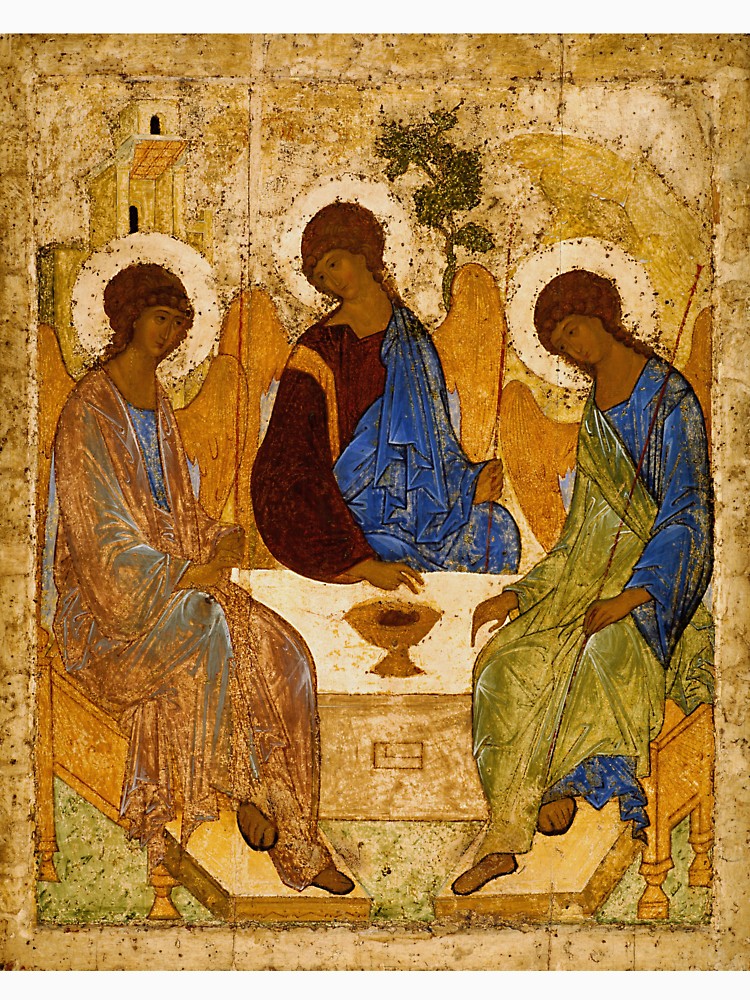
An icon of the Holy Trinity by Russian painter Anton Rublev. Photo from wikipedia.

Above is the beautiful 15th century icon of the Blessed Trinity by Russian painter Anton Rublev. It was based on the Genesis story of God (chapter 18) visiting Abraham at Mamre like angels sharing a meal while in deep conversations, indicating their relationships.

The icon masterfully portrays God as a Trinity of Persons relating with one another in love symbolized by the Eucharistic meal they share.

Most interesting like in most icons is how in this painting the viewer gets involved with the dialogue of the Trinity, thus, becoming the fourth person in the icon present with the Father, the Son and the Holy Spirit like Abraham at Mamre!

I am presenting this icon to you my dear readers and followers to show you the amazing flow of our liturgy these two Sundays as we resumed Ordinary Time on the Monday after Pentecost last month: From the highest truth in our teachings of One God in Three Persons last Sunday, today we have this Solemnity of the Most Holy Body and Blood of Christ to remind us and experience anew that this God we worship and adore is present among us, relating with us in the most personal manner.

Change in name, change of emphasis

Originally known as Corpus Christi or Body of Christ, today’s solemnity was renamed following Vatican II’s reform of the liturgy to give more emphasis on the celebration of the Holy Eucharist that the Preface used before the Consecration is that of Holy Thursday.

Holy Hour in our Parish, Sacred Heart Novena 2020

In the old tradition, focus was more on the Blessed Sacrament – of Jesus Christ reserved in the tabernacle and presented to the faithful for adoration as the Body of Christ, that is, Corpus Christi.

However, when Vatican II changed its name into the “Solemnity of the Most Holy Body and Blood of Jesus Christ”, there was something deeper than the change of name.

The new name challenges us to see the deeper reality of the Holy Eucharist: more than spending time praying before the Blessed Sacrament – though it is good – we are demanded as followers of Jesus Christ to be present like him with others.

Without disregarding the importance of the Blessed Sacrament that have seen a renewed interest among people in this time of corona while churches are closed, Vatican II’s shift in emphasis dares to challenge us disciples of Christ to emulate him in allowing ourselves to be broken for others, to be poured out, offered and shared especially in this time of crisis.

It is in our being broken like the Body of Christ, and poured out like his Blood do we really live the paschal mystery.

Jesus said to the Jewish crowds: “I am the living bread that came down from heaven; whoever eats this bread will live forever; and the bread that I will give is my flesh for the life of the world.” The Jews quarreled among themselves, saying, “How can this man give us his flesh to eat?” Jesus said to them, “Amen, amen, I say to you, unless you eat the flesh of the Son of Man and drink his blood, you do not have life within you.”

John 6:51-53
Photo by Pixabay on Pexels.com

Jesus is the living bread, the life of the world

Our gospel today is not from the Last Supper as we might expect; instead, it is taken from the “Bread of Life discourse” found only in St. John’s gospel which took place after Jesus had fed more than 5000 people in the wilderness from just five loaves of bread and two pieces of fish.

It was a very decisive moment in the ministry of Jesus as far as St. John was concerned; in fact, he refused to call the feeding of 5000 as a “miracle” but as a “sign” that Jesus is the Christ, the awaited Messiah.

Here, we have Jesus speaking clearly, no matter how difficult it may be for his listeners and even for us.

And we wonder, why he spoke that way?

Even today in the Holy Mass, considering the mixed crowd we have in every celebration, the priest is obliged to speak clearly and distinctly the words of Christ at the Last Supper similar to his bread of life discourse, “Take this, all of you and eat it. This is my Body which will be given up for you.”

Jesus always speaks the truth, he always tells us what is true and he never misleads us.

Unlike us when we say something and mean another thing. We always have to speak in ways that has to be deciphered because we really do not mean what we say. Or we are afraid of saying something else because we prefer to please people than stand by what is true.

But not the Lord! From that day until now, Jesus says the same thing and means always the same, that he is always with us, in us, and among us.

And he has proven then and now, time and time again most especially in our personal lives, that indeed Jesus was sent down from heaven as the “living bread” because he is the “life of the world”.

More than the bread from heaven called manna sent by God to the Israelites during their journey in the wilderness into the Promised Land (first reading), Jesus is the bread who sustains us in our new “exodus” and journey into the Father’s house, into fulfillment.

Photo by Mr. Raffy Tima of GMA-7 News of the plight of stranded people opting to wait at an underpass nearest the airport in their desire to get home

Life an Exodus with Jesus leading us

This pandemic and life under quarantine is an exodus in itself calling us to go back to God, to rely solely in him for he alone can save us. That is why he gave us his only Son, Jesus Christ who in turn gave himself totally, Body and Blood to sustain us in this journey or exodus.

Every exodus is always painful but filled with grace because God is most present with us.

That is why we join Masses on television or the internet while others dare to go to churches for the actual celebration of Mass to receive Holy Communion.

We are convinced that Jesus is sustaining us, nourishing us, raising us, helping us, inspiring us in this time of crisis.

And that is why the more we need to pray and even celebrate the Mass because the more we need Jesus Christ as food and drink in this difficult journey.

We can all feel the stress and pressures of the difficulties and uncertainties of this time. Making things worst than the financial and physical sufferings we all go through are the psychological burdens we silently bear that unfortunately others do not seem to think of or even realize.

Mang Dodong who was held for 30 days for not having a quarantine pass while buying fish in Navotas. Photo from GMA News TV.

How sad when others think only of themselves of getting tired, of being hurt, of being misunderstood that they do not care at all with the feelings and well being of those around them like our callous politicians and officials in government and the police.

Sometimes, watching the news can be so depressing when we see all the troubles and sufferings our brothers and sisters have to go through like those stranded in Metro Manila, those separated from their loved ones, those subjected to discrimination because of the COVID-19, those living alone, those who have lost family members and friends, those who have lost many opportunities in life.

But at the same time, the more we are challenged by these sufferings of our people to be like Jesus, to be the living bread, to share with them Jesus who is our very life.

Let us heed the call of St. Paul in the second reading to be one with our brothers and sisters in Jesus Christ in their brokenness, in their sufferings by being present to them in love and kindness, in being more understanding.

We are the Body and Blood of Jesus Christ, his very presence in this world that continues to disregard him, that until now tries to live without him.

May we not fall into that temptation and sin that is largely the reason behind this pandemic: modern man has forgotten that no matter what is our situation in life, we remain poor before God who alone can fulfill our deepest desires and longings.

Despite the many difficulties we face especially with the continued closure of houses of worship, let us continue to work and find creative means in sharing Jesus Christ with others, in coming to him and receiving him in the Holy Communion.

Only Jesus can help us through this pandemic.

In fact, he was the first to die on the Cross by giving us his Body and Blood so that we may live and share his gift of life with others.

A blessed week ahead of you!

Photo by our parish choir member Gelo Nicolas Carpio, our Church at sunset last Sunday.

Tensions lead to life and joy

The Lord Is My Chef Breakfast Recipe for the Soul, Friday, Easter Week-VI, 22 May 2020

Acts of the Apostles 18:9-18 <*(((>< + 0 + ><)))*> John 16:20-23

Photo by Ms. Ria De Vera, Sunrise along Halili Ave. in front of our Parish, 21 May 2020.

Your words today, dear Jesus, are very mysterious, so difficult to understand but so delightful to dwell on, or chew — as St. Ignatius of Loyola reminded us in his “Spiritual Exercises”.

There are many tensions present in your words today, Lord.

And that is where I have found you — in the many tensions that come into our lives!

So often, we find the word “tensions” so negative as they lead to wars and troubles of all sorts. But in deeper reflection, tensions are like frictions that without them, we can never experience life at its fullest.

The beauty of every sunrise and sunset is due to the tensions between light and darkness.

Tensions often occur between good things, never between good and evil. Tensions help us purify our intentions, clarify our priorities because tensions lead us to deeper discernment of your plans and will for us.

In the first reading, there was the tension among St. Paul and the Jews about your good news of salvation. The division resulted into more conversions and baptisms that made Corinth so dear to St. Paul.

Photo by author, altar of our Parish at sunrise, 2019.

But what is most beautiful about tensions is found in the gospel, of how joy is borne out of pain and sufferings like a woman in the pangs of childbirth:

Jesus said to his disciples: “Amen, amen, I say to you, you will weep and mourn, while the world rejoices; you will grieve, but your grief will become joy. When a woman is in labor, she is in anguish because her hour has arrived; but when she had given birth to a child, she no longer remembers the pain because of her joy that a child has been born into the world. so you also are now in anguish. But I will see you again, and your hearts will rejoice, and no one will take your joy away from you.”

John 16:20-22

Lord Jesus Christ, there are so many tensions in our lives these days since the start of quarantine period due to the pandemic.

Help us first identify the tensions in our lives these days.

Some of these tensions are between the need for us to pray more and immerse ourselves with those in need; the tension of going out to help and staying indoor to plan for our actions.

Send us your Holy Spirit, Jesus, to enlighten our minds and our hearts so we may identify the tensions we encounter that lead to life and joy in you. Amen.