The Lord Is My Chef Breakfast Recipe for the Soul by Fr. Nicanor F. Lalog II
Wednesday, Memorial of St. Charles Borromeo, Bishop, 04 November 2020
Philippians 2:12-18     >><)))*>  >><)))*>  ><)))*>     Luke 14:25-33
Photo by Ms. Ria De Vera, sunrise at our Parish during COVID-19 lockdown, May 2020.
Thank you dear God our Father for the timely reminders by St. Paul to us during these last two months of 2020, the most difficult year for us in 50 years. But it is not all that bad, Lord, specially at how it had redirected many of us back to you.
For God is the one who, for his good purpose, works in you both to desire and to work. Do everything without grumbling or questioning, that you may be blameless and innocent, children of God without blemish in the midst of a crooked and perverse generation, among whom you shine like lights in the world.
Philippians 2:13-15
For so long, we have been driving our lives on our own, unmindful of your teachings and ways, O Lord.
We have come to trust and rely more Google for information than knowledge, Waze for directions and destinations than journey, Facebook and Twitter for lifestyle and trends than life itself.
We always grumble or question you and your presence and your voice if ever our social media activities are disrupted.
Oh God…! Just as when we thought we have life with all the technologies and amenities of modern life, the more we have become empty, lost and divided as a people.
Let us go back to you, God, through Jesus Christ.
Help us see anew in this COVID-19 pandemic that without you at the center of our lives and endeavors, nothing good can truly happen with us despite modern technologies.
Like the man building a tower or the king waging a war in the parable of Jesus today, may we humbly accept the truth that after everything is considered in all our plans, it will always be lacking in depth and meaning without God in every consideration because you always know what is really best for us.
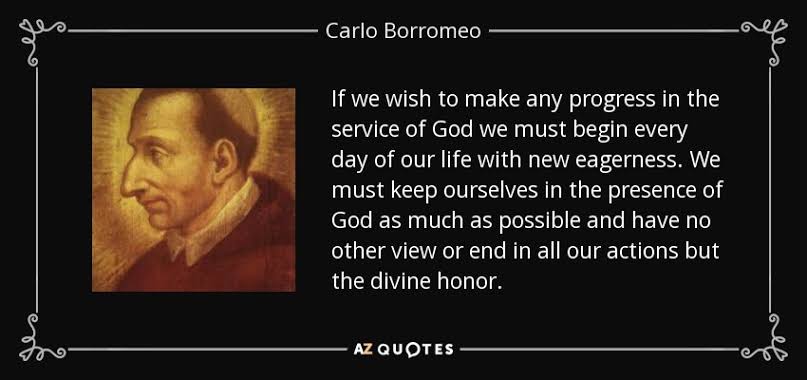
Like St. Charles Borromeo who had lived at a time when the Church had lost more than half of Europe to Protestants, he championed the calls to return to God and to go back to the basics like reforming our clergy and reinforcing catechism.
Through the prayers and inspiration by St. Charles Borromeo, may we let God working in us anew for us to have a better new year, better lives. Amen.
The Lord Is My Chef Sunday Music by Fr. Nick F. Lalog II, 20 September 2020
Photo by Dr. Mylene A. Santos, MD at Infanta, Quezon, April 2020.
Lately I have been reflecting more about the heart courtesy of our daily scripture readings for the Masses these past two weeks. When you are “quarantined” in the past six months except for a few essential trips outside, such is a grace-filled moment of this pandemic that we are able to pray and reflect more about our lives and the people we love.
Last Sunday in our gospel, Jesus asked us to forgive from the heart because we are all brothers and sisters in God our Father who forgives us without limits for our many sins.
Today in our gospel, Jesus is asking us to give from the heart, that is, be generous because we are brothers and sisters in God our Father who blesses us abundantly with everything we need.
Generosity is from the heart where we find Jesus dwelling, giving us peace and joy amid the many pains and sufferings of this life because only him suffices that we are willing to let go of everything (https://lordmychef.com/2020/09/19/generosity-comes-from-the-heart/).
David Benoit’s lovely piece called “Take A Look Inside My Heart” from his 1982 album Stages offers us a unique perspective on this looking into our hearts to reflect on God’s love for us and how we share – or selfishly keep – that love with others.
Benoit is one of the most loved jazz artist in the country who performed more that twice in the past. His music is so natural and light, but intense in meaning yet so balanced as in “tamang timpla” or “tamang tama” that is not so slow and sad but not so fast and punky. Listen and see how his lyrics speaks from a loving heart.
It isn’t easy to show you what you mean to me I’m not that kind with all the moves The way I’m feeling goes beyond what you can see I’m crazy ’bout you, crazy ’bout you
I haven’t tried to impress you by the things I do That isn’t really how I am, hmmm… I’d rather let my dreams be opened up to you So you’ll understand, you’ll understand
Take a look inside my heart and you’ll see I have so much love to give beLieve in me Take a Look inside my heart share my Love Take a Look in my heart… yeah…
Imagine God is David Benoit singing these words to you… And yes, like in the gospel, we sometimes complain to him at how he could let injustice continue despite our efforts to work hard and honest like those workers hired early in the parable by Jesus.
Nobody ever is perfect even if they try There may be times I’ve let you down But when I do I hope you’ll turn my heart around By reachin’ inside, reachin’ inside
Take a look inside my heart and you’ll see I have so much love to give beLieve in me Take a Look inside my heart share my Love Take a Look in my heart…
The song tells us of the immense love of the man to his loved one, assuring her of his faith and dedication that she need not worry when things are not going on as planned. Like Jesus telling us today in his parable to be more loving, more generous with his love for others for it is then that we truly experience inner joy and peace.
I wanna promise you honestly I’ll always care That’s what my Love has come here for And every time I smiLe you know there’s something more I’m waiting to share, wanting to share
Take a look inside my heart and you’ll see I have so much love to give beLieve in me Take a Look inside my heart share my Love Take a Look in my heart…
Have a blessed Sunday and week ahead.
And share a generous serving of God’s blessing especially to someone in need of his love.
The Lord Is My Chef Sunday Recipe for the Soul by Fr. Nicanor F. Lalog II
Week XXV-A, Ordinary Time, 20 September 2020
Isaiah 55:6-9   >><)))*>   Philippians 1:20-24, 27   >><)))*>   Matthew 20:1-16
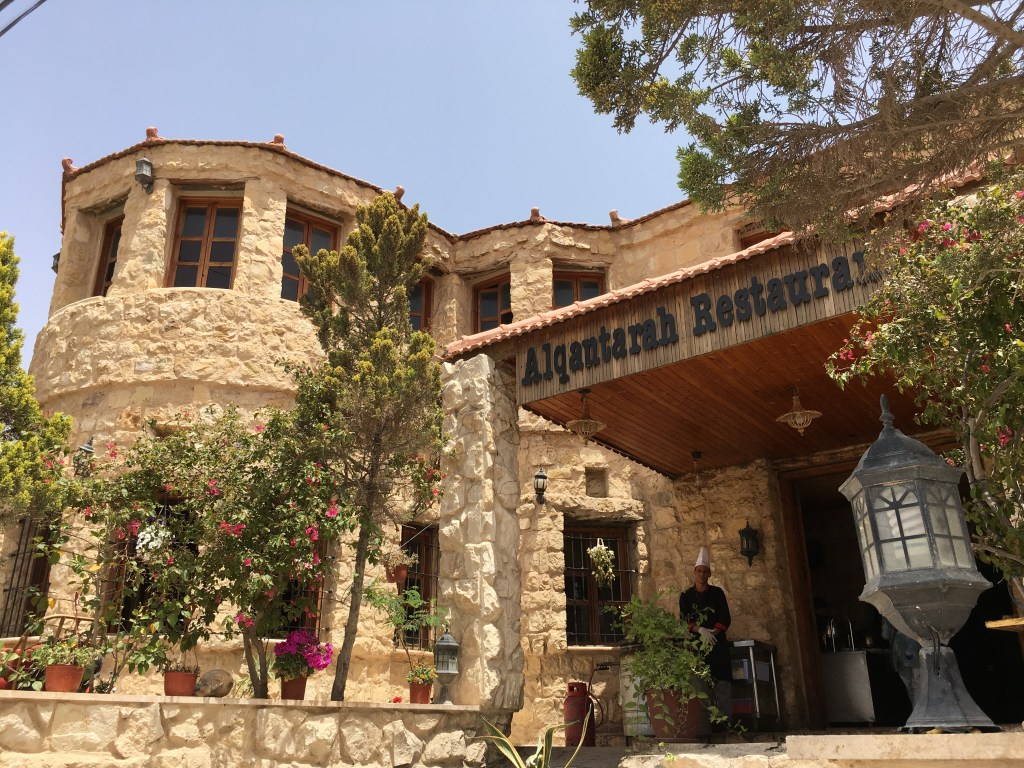
Photo by the author on the way to Petra in Jordan, May 2019.
There was something amusing I realized while praying this Sunday’s gospel of how in our time we no longer hear or use the word “generous” anymore — except when the topic is about food like in the expression “generous servings”!
We all love and enjoy “generous servings” of food and drinks whether in restaurants or at home or at parties because it means something more than what we pay for or come for. And that is the essence of generosity: the giving of more than what is required and just. It is love in the real sense like the prayer for generosity by St. Ignatius of Loyola.
Dearest Lord:
Teach me to be generous.
Teach me to serve you as you deserve,
To give and not to count the cost,
To fight and not heed the wounds,
To toil and not seek for rest,
To labor and ask not for reward, except
To know that I am doing your will.  Amen.
Photo by Mr. Jim Marpa, 2019.
Generosity bonds every community in Christ
Sorry if I have to start our reflection through the stomach because today is our “Pistang Pasasalamat” (Thanksgiving) in the Parish…
Going back to our reflection, my dear reader, recall how in the past two weeks we have heard Jesus teaching us important lessons how our relationships must be based on mutual love through fraternal correction and forgiving of those who have sinned against us.
This Sunday through another parable, Jesus teaches us the importance of generosity as a wonderful expression of love we forget most in our relationships and dealing with others.
Generosity is the glue that keeps our ties stronger and keeps us filled with joy because it is thinking more of the other person than of self. It is love at its finest – charming and elegant as in suave – but so disarming and revealing when overlooked as we shall see in this parable.
Jesus told his disciples this parable: “The kingdom of heaven is like a landowner who went out at dawn to hire laborers for is vineyard. After agreeing with them for the usual daily wage, he sent them into his vineyard. Going out about nine o’clock, he saw others standing idle in the marketplace, and he said to them, ‘You too go into my vineyard, and I will give you what is just.’ So they went off. And he went out again around noon, and around three o’clock, and did likewise. Going out about five o’clock, he found others standing around, and said to them… You too go into my vineyard.’ When it was evening the owner of the vineyard said to his foreman, ‘Summon the laborers and give them their pay, beginning with the last and ending with the first.’ When those who had started about five o’clock came, each received the usual daily wage. So when the the first came, they thought that they would receive more, but each of them also got the usual wage. And on receiving it they grumbled against the landowner, saying, ‘These last ones worked only one hour, and you have made them equal to us, who bore the day’s burden and the heat.’ He said to one of them i reply, ‘My friend, I am not cheating you. Did you not agree with me for the usual daily wage? Take what is yours and go. What if I wish to give this last one the same as you? Or am I not free to do as I wish my own money? Are you envious because I am generous?'”
Matthew 20:1-15
Notice how Jesus again elicited our feelings to drive home his lesson today about love as basis of our relationships. Last week we totally agreed with the king in punishing the merciless servant whose debt he had forgiven but was unmerciful to a fellow servant and debtor.
This Sunday, with whom did we take sides with? Be honest. Did you side with the workers hired in the morning and worked all day only to receive a pay exactly the same with those who worked only for an hour? Did we also feel treated unfairly like them?
But, why are we reacting the same way as those workers who toiled under the sun? What is our complaint? Are we envious because the owner is generous?
Recall our reflections last month about the parable as a simple story conveying deeper truths about life and our selves. From the French parabolein -along the way – Jesus is inviting us to read anew this parable we have heard so many times in the past so we may enter into a dialogue with him to purify and cleanse us to get its whole picture. And hopefully, become generous too.
Nuns bringing goods to the poor during the height of the Luzon-wide lockdown last summer.
Human justice, Divine kindness
The parable is not about social justice and just wages: it is about the immense love of God for us all. Jesus said it at the start, “The kingdom of heaven is like a landowner…” – it is a parable about God and his kingdom.
See the great love of the landowner who went out five times during the day, even at late afternoon so people may have a job to earn some money for the day. We have to keep in mind that the workers were hired because the owner is kind. Period.
The owner is like the good shepherd Jesus described as who would leave the rest of his flock to search for one missing sheep.
How many times have we acted like those early workers, complaining to God when we feel “shortchanged” for our work and efforts, or being better and more good perhaps than others?
It happens so many times when we question him even in the Church and specially in the society and government when we cannot understand how God who is supposed to be just and fair is allowing all injustices and evil to happen like during this time of COVID-19.
The first reading reminds us that to think that way as if we know everything is dangerous because we could be very wrong and mistaken after all. God sees and knows everything that in the end amid all the twists and turns in history and in our personal lives, it is always his will that prevails which proves best for us and mankind. In times like these, we need to have faith in God and trust him more through prayers and reflections.
Seek the Lord while he may be found, call him while he is near… As high as the heavens are above the earth, so high are my ways above your ways and my thoughts above your thoughts.
Isaiah 55:6, 9
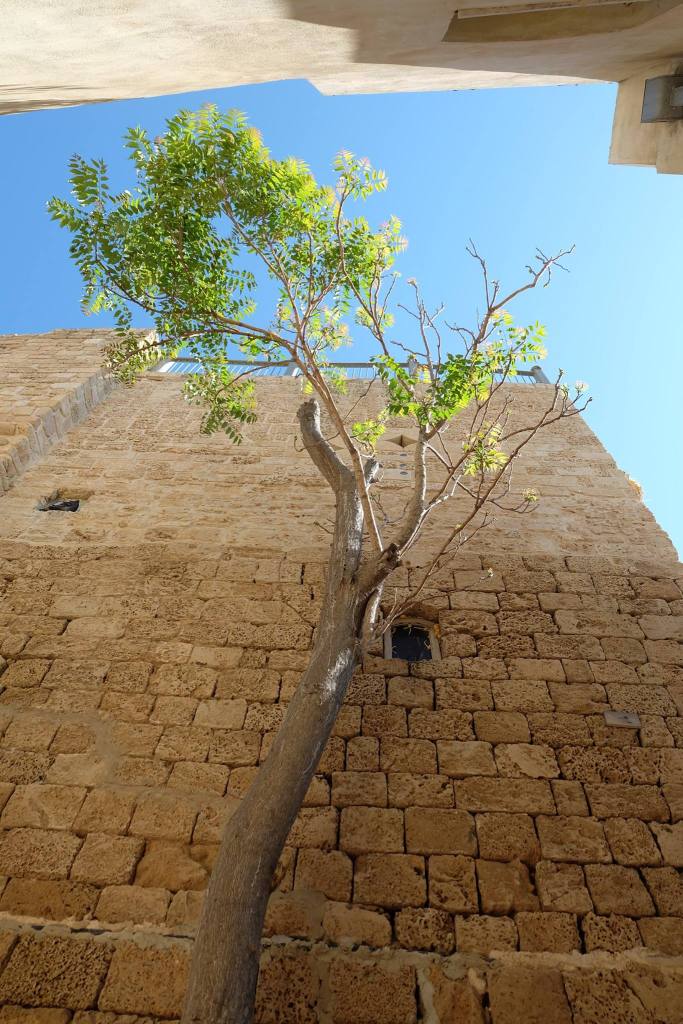
Photo by author, Jaffa in Israel, May 2017.
We keep on saying that one immediate fruit of having a prayer life is the heightening of our sensitivities when we see more of God in others than more of ourselves. The problem with those workers hired earlier in the day that instead of thanking God for his kindness in hiring them, they even wanted more in their pay than what they have agreed upon — so selfish and feeling so entitled like some among us!!!
God as the landowner is teaching us not only to be thankful for the blessings we have received from him but also to rejoice when others aside from us are also blessed. As everyone would say these days, “sana all” are blessed, not only a selected few.
Again we find here a similar situation in the parable of the prodigal son where the father told the elder one that “everything I have is yours” (Lk.15:31) when he refused to come home to celebrate the return of his younger brother, citing how he had obeyed the father all his life without being given a young goat to feast with his friends.
Like that loving father of the prodigal son, God is reminding us this Sunday in this parable to rejoice that others have been blessed, instead of grumbling and complaining, demanding for more than what we have, forgetting everything is out of God’s goodness, never because of our merits.
Looking inside our hearts
My dear friends, this time of the pandemic invites us to be generous by looking deep into our hearts, of seeing God more and others than just our self. At this time when life is so difficult and death is so closest to home with everyone, the best thing we can do is to thank God for his gift of life to us each day and to deepen our faith in him.
Lately I have been praying to God to grant me St. Paul’s clarity of mind and purity of heart as we find ourselves in his similar situation of being imprisoned: him for the gospel, us due to COVID-19.
See the faith of St. Paul in God that even in prison with his death approaching each day, he continues to rejoice and experience peace within because he had realized that the success of the gospel is not on human efforts but in Jesus whom we cannot box in our little worlds and beliefs, rites and rituals. In fact, he was so confident that even with his death, the more the gospel would spread.
Photo by Dra. Mylene A. Santos at Katmon Harbor Nature Sanctuary, Infanta, Quezon, March 2020.
Brothers and sisters: Christ will be magnified in my body, whether by life or by death… conduct yourselves in a way worthy of the gospel of Christ.
Philippians 1:20, 27
Last Sunday, Jesus taught us to forgive from the heart, that is, to see one another as a brother and sister in God our Father who forgives us without limits for our many sins.
Today, Jesus is asking us to give from the heart – to be generous – not for anything else but because we are brothers and sisters in God our Father who blesses us without limits despite our sinfulness.
Generosity comes from the heart when in that heart is Jesus whom we find dwelling, giving us peace and joy no matter how much suffering we go through because him alone suffices that we are willing to let go of everything.
Share a generous serving of God’s blessings today to someone in need. Amen.
The Lord Is My Chef Sunday Recipe for the Soul by Fr. Nicanor F. Lalog II
Week XXIV, Cycle A in Ordinary Time, 13 September 2020
Sirach 27:30-28:7     >><)))*>   Romans 14:7-9   >><)))*>   Matthew 18:21-35
Photo by author, dusk in our parish, July 2020.
This Sunday we go deeper into the lessons gathered by Matthew from Jesus regarding love as the basis of our relationships. Last week we were told how mutual love is the sole reason why we correct brothers and sisters going stray in life.
But, more sensitive and delicate, not to mention most difficult than fraternal correction is the question of forgiving.
How many times should we forgive?
Peter approached Jesus and asked him, “Lord, if my brother sins against me, how often must I forgive? As many as seven times?” Jesus answered, “I say to you, not seven times but seventy-seven times. That is why the kingdom of heaven may be likened to a kind who decided to settle accounts wit his servants. When he began the accounting, a debtor was brought before hm who owed him a huge amount. Since he had no way of paying it back, his master ordered him to be sold, along with his wife, his children, and all is property, in payment of the debt. At that, the servant fell down, did him homage, and said, ‘Be patient with me, and I will pay you back in full.’ Moved with compassion the master of that servant let him go and forgave him the loan.
Matthew 18:21-27
Forgiving is always difficult because it is from God, calling us to be one with him, one in him, and be like him as that saying perfectly summed up, “To err is human, to forgive is divine.” It is beyond human abilities, reserved only for God until he became human like us in Jesus Christ who made us share in his greatest expression of love which is forgiveness. Hence, every time we forgive, we also become like God, divine and holy that unfortunately, we refuse and even hate!
Yes, it is very difficult because like love, forgiving is the nature of God. In fact, any kind of love is best expressed when it is forgiving. The good news is that we now share in this great love of God in forgiving others like him as we shall see in today’s parable, keeping in mind also that it was the Risen Lord’s commission to his disciples when he appeared to them on that Easter evening (John 20:22-23).
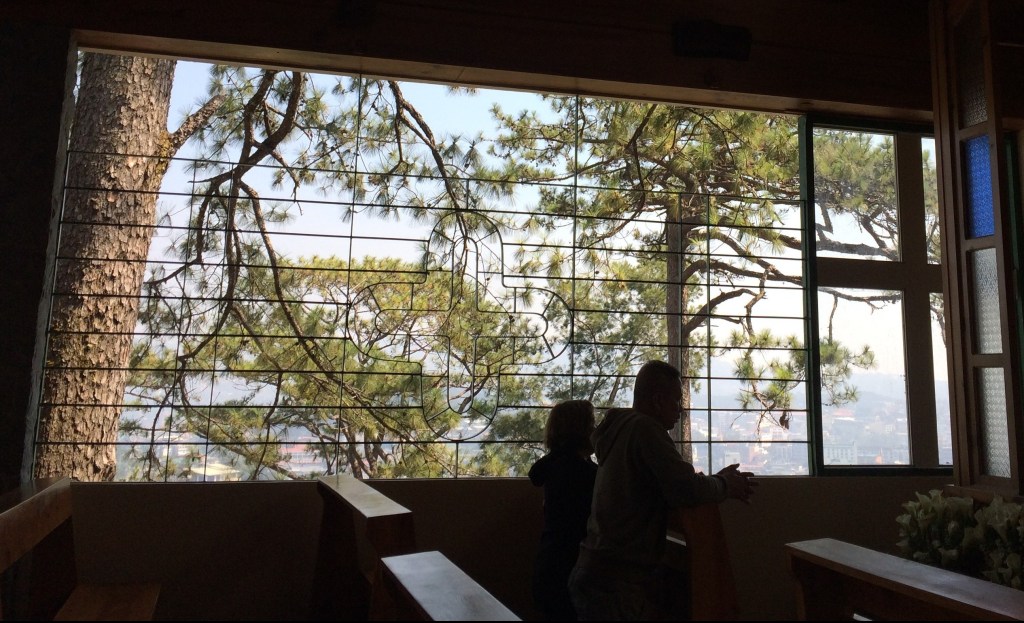
Photo by author, Baguio Cathedral, January 2018.
Forgiving like God our Father
The beauty of forgiving is that it is always a grace from God freely given to us. It is doable in Jesus Christ. The problem is when we refuse to let God work in us, when we refuse to level up our relationships to that of brothers and sisters in Jesus Christ.
There is always that pride in us exhibited by Peter at the start of the gospel today when he asked Jesus how many times he must forgive his brother. Must it be seven times?
Of course, seven being a “perfect number” does not specify a numerical figure of times to forgive except that it gives enough room to let go of a sinner or an offender. However, it still connotes some form of “counting” or taking tabs at how many times must one forgive, implying a limit.
But Jesus pushed it further when he told Peter to forgive “not seven times but seventy-seven times” — that is, twice the perfect number he had cited!
The Lord is telling Peter, and us today, to forget all about keeping tabs, of counting how many times you must forgive because God forgives us without limits which his parable tells us.
The king or master in the parable is God, so wealthy that he could lend sums exceeding the normal level of what one can borrow. Most surprising is like God, the master lent so much amount beyond the debtor’s ability to pay!
That is how rich our God is — so rich in love and mercy, giving us with so much even beyond our ability to pay him back in return. Exactly what we have in the responsorial psalm: “The Lord is kind and merciful; slow to anger and rich in compassion.”
And when that servant prostrated before his master, then the more we see in that religious gesture the deeper meaning of the parable: the rich mercy of God forgiving us for our debts even after we have lost everything like that debtor with nothing enough to pay his loans, not even his wife and children.
See the contrast of the king moved with compassion echoing the same attitude of Jesus so often like in the wilderness where he fed more than 5000 people and that servant so lost with nothing else left but still forgiven.
The parable could have stopped there but Jesus went on to continue what happened next to teach us the deeper truth of forgiving, which is imitating God our Father because we are brothers and sisters in him.
From Google.
When this servant had left, he found one of his fellow servants who owed him a much smaller amount. He seized him and started to choke him, demanding, ‘Pay back what you owe.’ Falling to his knees, his fellow servant begged him… but he refused. Instead, he had the fellow servant put in prison until he paid back the debt. Now when his fellow servants saw what had happened, they were deeply disturbed, and went to their master and reported the whole affair. His master summoned him and said to him, ‘You wicked servant! I forgave you your entire debt because you begged me to. should you not have had pity on your fellow servant, as I had pity on you?’ Then in anger is master handed him over to the torturers until he should pay back the whole debt. So will my heavenly Father do to you, unless each of you forgives his brother from his heart.”
Matthew 18:28-35
Forgiving from the heart
After hearing the second part of the parable, we all felt like the master, angry and indignant with that merciless servant whose action was very shameless and scandalous. But, more than being like the king who properly judged the conduct of that merciless servant, Jesus is also inviting us to probe deeper into our hearts the realities why we felt like the king in the parable?
How many times have we felt so angry and frustrated during this pandemic period at the many occasions when we heard news of injustices and abuse of powers against the little ones like Mang Dodong or the Marawi verteran shot to death in Quezon City? Of those punished in violating the protocols when its chief implementor got away free after attending a mañanita party?
The list goes on specially in our country where laws favor the abusive rich and powerful, those with connections while ordinary citizens with lesser violations, even without any crimes at all suffer the same fate as the servant with lesser debts.
Photo by author, “patak-dugo”, 2019.
We all feel so angry and very sad because more than the injustices and lack of mercies committed by those in powers, they have forgotten we are brothers and sisters in one God our Father. Parang sila lang ang anak ng Diyos…
We feel like the king in the parable because we felt left out, disregarded, and disrespected despite our kindness and mercy with others.
Forgiving from the heart means to forgive others not because we are fellow servants but most of all as brothers and sisters of a loving and merciful Father who forgives us always from our unpayable debts of sin and evil against each other.
This is the very thing St. Paul is telling us in the second reading, that “None of us lives for oneself, and no one dies for oneself” (Rom.14:7). Sometimes we need to be in control of our lives but the truth is, when we try to live St. Paul’s message that our lives belong to one another in Christ, the more we become truly free and happy.
It is the same reminder from Ben Sirach in the first reading telling us how we must avoid anger and resentment specially revenge because it is contrary to our faith in God. Most of all, we also know so well that we need the mercy of God in forgiving our countless sins.
The example of St. John Paul II about forgiving like God
I know what I am telling you are easier said than done. And I confess that I also find it so hard to forgive people who have wronged me, specially those I have loved and helped. Allow me to end this reflection with this beautiful bit of history that happened in our lifetime.
We were in high school seminary when Mehmet Agca shot and almost killed St. John Paul II at St. Peter’s Square on May 13, 1981. We were shocked, so sad for him and very angry with Agca. But, two years later after Christmas in 1983, we were more shocked in disbelief while at the same time in tears with joy when news came out that St. John Paul II came to visit Agca in his cell to forgive him!
It was a major news that landed on TIME magazine the following year with the cover story so relevant with our gospel today:
From Pinterest.
Those who do not forgive are those who are least capable of changing the circumstances of their lives…
Not to forgive is to be imprisoned by the past, by old grievances that do not permit life to proceed with new business.
Not to forgive is to yield oneself to another’s control. If one does not forgive, then one is controlled by the other’s initiatives and is locked into a sequence of act and response, of outrage and revenge, tit for tat, escalating always. The present is endlessly overwhelmed and devoured by the past. Forgiveness frees the forgiver. It extracts the forgiver from someone else’s nightmare. “Unless there is a breach with the evil past,” says Donald Shriver, “all we get is this stuttering repetition of evil.”
Lance Morrow, TIME Magazine, 19 January 1984
As I searched for photos of the assassination attempt on him by Agca, I came across this photo below of their meeting with an accompanying report that made me admire and love St. “JP2” more than ever.
It said that while recuperating in the hospital, St. JP2 learned from the news how people hated Agca, prompting him to ask everyone to “pray for my brother (Agca)… whom I have sincerely forgiven.” That is how holy is this great Pope of our time! Long before visiting Agca in 1983, St. JP2 had already forgiven him, calling him a “brother” despite the evil and sin done to him.
What a great Amen!
Have a blessed and wonderful week ahead, brothers and sisters in Christ!
The Lord Is My Chef Sunday Recipe for the Soul by Fr. Nicanor F. Lalog II
Week XIX, Cycle A in Ordinary Time, 09 August 2020
1 Kings 19:9, 11-13 >><}}}*> Romans 9:1-5 >><}}}*> Matthew 14:22-33
Photo by Mr. Raffy Tima of GMA-7 News, Batanes, 2018.
I have always loved the sea and lately my thoughts have always been about the beach as I miss it so much after COVID-19 had robbed us of our summer vacation.
In ancient time, the sea evoked fear because it was largely unknown that even in the bible, it is the symbol of evil and its powers over man. That is why our gospel today is very significant when Jesus walked on water to show God’s greater power over evil and sin.
And like our gospel last week, our story today tells us a lot more about Jesus walking on water in the midst of a storm to reveal himself and most of all, his desire to meet us his disciples.
Place and location as non-verbal communication of one’s presence
Every meeting and encounter presupposes locations or places, a locus; but, everything is “levelled up” or elevated in Jesus in whom things do not remain in the physical level.
Proxemics is the non-verbal communication that refers to places and location, its nearness and orientation. How we arrange our furnitures, designate the rooms and sections in our homes, offices, schools and every building we stay and gather communicate and reveal who we are.
For example, Catholic homes are easily identified in having a grotto at the garden, an altar of the Sacred Heart or any saint at the sala, and the Last Supper painting in the dining hall.
But for Jesus, a place or a location is more than the physical site because in him, proxemics takes on a deeper dimension and higher meaning when we meet him in situations and places. That is why after feeding the more than five thousand people last week, he ordered the Twelve to cross the Sea of Galilee (which is actually a lake) ahead of him while he dismissed the crowds.
After doing so, he went up on the mountain by himself to pray. When it was evening he was there alone. Meanwhile the boat, already a few miles offshore, was being tossed about by the waves, for the wind was against it. during the fourth watch of the night, he came toward them, walking on the sea. When the disciples saw him walking on the sea they were terrified. “It is a ghost,” they said, and they cried out in fear. At once Jesus spoke to them, “Take courage, it is I; do not be afraid.”
Matthew 14:23-27
Photo by author, Sea of Galilee at Capernaum where Jesus used to preach, May 2019.
Crossing to Jesus, crossing with Jesus
I love that scene very much, of Jesus getting his disciples into the boat to precede him to the other side of the lake while he dismissed the crowds. Again, St. Matthew never bothered to tell us why Jesus sent the Twelve ahead of him as he stayed behind, dismissing the crowds and later praying alone at night atop the mountain.
Let us now reflect the proxemics or non-verbal communication of our gospel scene this Sunday.
We need to cross to the other side to meet Jesus.
To meet Jesus Christ, we always have to “cross to the other side” by leaving our “comfort zones”.
More than going to the other side of the lake physically, we have to move over to unchartered areas of life, be bold and daring to try new things, new situations in order to mature and find fulfillment by meeting Jesus Christ.
And sometimes, we really have to literally cross the sea or get to the other side of the country or the world to find our self and meet Christ.
Fifteen years ago I went on vacation to Toronto for some soul-searching as I went through a burn-out. While serving at St. Clement Parish, I met many Filipinos serving as lectors, choir members, catechists and volunteers.
Graph shared by sugarindustryfoundationinc.org.ph.
They would always confess to me with both a sense of pride and little shame that they never went to Mass regularly when in the Philippines and now in Canada, they were amazed at how God had brought them there to be involved in parish activities and be closer to Jesus than ever!
As I listened to their stories, I realized the many sacrifices and hardships they have to endure in that vast and cold country with no one to turn to except God. If given the chance, many of them admitted they would return to the Philippines for there is no place like home!
Though I have found so many things I have been searching for in my initial three months of stay there on top of other opportunities given me, I still felt empty. That raging storm within continued. As I prayed and reflected guided by an old, Polish priest who claimed to have been the student of St. John Paul II, I saw myself more, eventually leading me to God anew who refreshed my vocation that I finally decided to go back home after six months of my supposed to be one year leave.
Sometimes in life, we need to get away from our comfort zone, cross to the other side, especially when life becomes so artificial. Jesus invites us to go ahead and cross to the other side of the lake or sea to experience life at its “raw” so we can feel again our souls within and desire him anew until we finally meet him wherever we may be in the world.
It is when we are at the other side of the sea in the midst of a storm when Jesus comes, immediately answering our cries for help – At once Jesus spoke to them, “Take courage; it is I” – because when we are reduced to emptiness and nothingness, then our faith kickstarts again. Faith, like love, is always an encounter with God.
Try going to the other side, leave your comfort zone to meet Jesus and finally have meaning and direction in life!
Silence is the presence of God.
In the first reading we have heard that beautiful story of Elijah meeting God at the mouth of a cave — not in the strong and heavy wind nor earthquake nor fire like Moses before him.
After the fire, there was a tiny whispering sound. When he heard this, Elijah hid his face in his cloak and went and stood at the entrance of the cave.
1 Kings 19:12-13
Silence is the place of the presence of God because silence is his language too. Wherever there is silence, we can surely find and meet God there.
That is why Jesus wants us to cross to the other side, to be silent and listen to him.
Photo by author, crossing the Lake of Galilee, May 2019.
In his silence, God teaches us that except for sin, he never considers everything as being finished; everything is a “work-in-progress” even if he seems to be silent that some think he must be absent or even dead.
The world thrives in noise, loud talks, and screams with each voice trying to dominate another resulting in cacophony of sounds. Shakespeare’s Hamlet said it well when he told Polonius what he was reading were “Words, words, words” — nonsense!
Some people like those in power think that the more words they say, the more meaningful their thoughts and ideas become. Worst, they thought that using foul and filthy language make them so natural and credible, not realizing the more they look stupid with their crazy thoughts and ideas not even clowns and comedians would ever attempt to imitate.
But when our words come from deep silence, they come with power and meaning, touching everyone’s heart and inner core.
That is when silence becomes fullness, not emptiness or mere lack of noise and sound.
Like when our medical frontliners and medical experts spoke with one voice last week airing their thoughts about the pandemic — we were all moved and reawakened to realize how we have been going about with our lives almost forgetting them these past five months!
What a tragedy at how our officials in government and Congress reacted negatively, feeling hurt deep inside with the painful truth of how they have been irresponsible from the beginning. Sapul!
Pico Iyer wrote in a TIME magazine essay 30 years ago that “silence is the domain of trust”.
True. The most trustful people are the most silent; those who speak a lot trust no one and most likely, cannot be trusted too.
Jesus invites us to cross to the other side to be silent and learn to trust him. It is only then when we can meet him. In silence.
Photo by Mr. Raffy Tima of GMA-7 News, Manila Bay with Mt. Samat’s Cross at the background, April 2020.
Jesus meets us in darkness.
Jesus asks us to cross to the other side of the lake or sea like his disciples in order to meet us in darkness. This is a paradox because Jesus is the light of the world.
But, note the most notable moments in his life happened in darkness: he was born on the darkest night of the year, he died when darkness covered the whole city of Jerusalem, and he rose from the dead when it was still dark on the first day of the week.
Jesus had overcome darkness! So, what happened to Peter in this episode after being called by Jesus to walk on water too?
Jesus said, “Come.” Peter got out of the boat and began to walk on the water toward Jesus. But when he saw how strong the wind was he became frightened; and, beginning to sink, he cried out, “Lord, save me!”
Matthew 14:29-30
Imagine how everything was going so well with Peter doing another crossing while crossing the lake! But when he saw how strong the wind was he became frightened; and, beginning to sink, he cried out, “Lord, save me!”
Jesus calls us into the dark so that we only look for him and upon finding him, focus on him alone. Peter saw the strong wind, not the stronger and powerful Jesus walking on water, that fear overtook him.
That’s the whole point of St. Paul in our second reading today: he was telling the Romans how some people in Israel trusted more in their physical descent from Abraham than in God’s promise of salvation fulfilled in Jesus they have refused to see and recognize as the Christ (Rom.9:1-5).
When in the dark, be silent and still for Jesus is near! Keep your sights at him, not on anything else. Problem in darkness is not God but us who follow other lights or have become delusional.
Photo by Mr. Jim Marpa, 2019.
That is the tragedy we are into as a nation while crossing to the other side of the sea of pandemic in just one boat when our officials see only themselves as always being right. Worst, they all want to be on the stage with all the lights on them as they speak and sing in cacophony like psychopaths.
All the more we must hold on tight, trust and focus in Jesus who is “now here”, not “nowhere” for he will never allow us to perish.
Let us trust Jesus overcoming all these evil, leading us to the shore. Amen.
A blessed rainy Sunday to you and your loved ones!
The Lord Is My Chef Breakfast Recipe for the Soul by Fr. Nicanor F. Lalog II
Monday, Week XVI, Year II in Ordinary Time, 20 July 2020
Micah 6:1-4, 6-8 <*(((><< )) + (( >><)))*> Matthew 12:38-42
Praise and glory to you, O God our loving Father for this beautiful Monday! We are midway through the month of July in this challenging year. Yes, 2020 is heavy for most of us with all the various problems we are going through but you have never left us, O Lord.
And that is why, Father, we also wonder what else have we not done that would set things right again?
Let us heed your words, O God.
Let us be reminded of your ways, of your very self by nature around us!
Hear what the Lord says: Arise, present your plea before the mountains, and let the hills hear your voices! Hear, O mountains, the plea of the Lord, pay attention, O foundations of the earth! For the Lord has a plea against his people, and he enters into trial with Israel. O my people, what have I done to you, or how have I wearied you? Answer me! You have been told, O man, what is good, and what the Lord requires of you: Only to do right and to love goodness, and to walk humbly with your God.
Micah 6:1-3, 8
Forgive us, merciful Father, for being “an evil and unfaithful generation” always looking for signs of your loving presence.
Teach us to trust you even if we cannot understand your plans.
May we learn from nature around us that thrives so well in your loving care – full of life, full of zest even without so much attention, reminding us of your saving power in Jesus Christ. Amen.
All photos by author except bougainvillea with our parish church by Gelo Nicolas Carpio in the collage above.
Photo by author, Our Lady of Lourdes Chapel, the Grotto, Baguio City, 2019.
God our loving Father, I have been praying to you for so long, in fact almost in my entire life. But as I prayed over your words for today, it just dawned upon me that every “existential question”: when do I really call on you?
The attitude of your King in Jerusalem struck me while praying, wondering if I have the same attitude of having you first of all when things are not going good in my life.
Hezekiah took the letter from the hand of the messengers and read it; then he went up to the temple of the Lord, and spreading it out before him, he prayed in the Lord’s presence: “O Lord, God of Israel, enthroned upon the cherubim! You alone are God over all the kingdoms of the earth… Therefore, O Lord, our God, save us from the power of this man, that all the kingdoms of the earth may know that you alone, O Lord, are God.”
2 Kings 19:14-15, 19
What a deep faith and intimate relationship with you, Lord, by Hezekiah! He went straight up to you, even presenting to you the letter of the Assyrian king threatening to conquer Jerusalem at that time. He did not mind at all the warnings about the strength and power of the Assyrians because he only had you, Lord, in his mind and in his heart.
So often, Lord, I only come to you after I have exhausted my mind thinking about my problems and situations in life; I come to you when I can no longer find solutions; worst, I come to you after I have tried everything and had failed.
Forgive me, Father, when I only think of you as a last resort — instead of being my first always!
Maybe, that is because before ever coming to you, calling on you, Lord, I try doing things first on my own that is always be easy and quick. I have no patience of waiting and of going through sufferings and inconvenience especially through paths and doors.
Jesus said to his disciples: “Enter through the narrow gate; for the gae is wide and the road broad that leads to destruction, and those who enter through it are many. How narrow the gate and constricted the road that leads to life. All those who find it are few.”
Matthew 7:13-14
Dearest Jesus Christ, you have come among us to bring us closest to the Father and yet we continue to remain far from him. Give us the grace today to be more intimate with God our Father so we may truly be centered on him in life, having him as our personal “default” in every situation, whether good or bad. Amen.
40 Shades of Lent, Friday, Week III, 20 March 2020
Hosea 14:2-10 ><)))*> +++ <*(((>< Mark 12:28-34
Photo by author, Mt. St. Paul, Trinidad, Benguet, 04 February 2020.
Unbelievable.
That’s the only word you spoke to me Lord in my prayers last night and this morning.
Unbelievable.
As the days move on, God our Father, the more I could not believe all these things going on. What have happened with us, Lord?
Bakit kami nagkaganito at paano kami humantong dito, Panginoon?
Your words today, O Lord, are so true. It is you indeed who speaks to us especially in the first reading through the Prophet Hosea. You have spoken so well — we have all sinned.
We have disregarded you and others. We have relied so much in our own powers and abilities. We have insisted on doing things our own ways totally discarding your teachings.
But more unbelievable in this unbelievable situation is your immense love and mercy for us, O God our Father.
Thus says the Lord: Return, O Israel, to the Lord, your God; you have collapsed through your guilt. Take with you words, and return to the Lord… I will heal their defection, says the Lord, I will love them freely; for my wrath is turned away from them. I will be like the dew for Israel: he shall blossom like the lily.
Hosea 14:2-3, 5-6
Lent Week-III 2020 in our Parish.
Help us, Father through your Son Jesus Christ that we may look more inside ourselves these trying times, that we may see you more and as we see you as the most essential, the most important of all, we also see our value as persons.
Let us experience that love you have for us that we ought to share with one another, beginning in our family, in our neighborhood.
How unbelievable that some of us, like that scribe who asked Jesus “which is the first of all commandments”, we keep on categorizing, ranking things and even persons to determine who or what is the most important — the first.
Unbelievable but true, this pandemic is happening because we have forgotten you and we have forgotten others too. We have forgotten YOU are always first, always great. Semper Primus, semper Major!
Teach us to see more of you so that we also see you among one another. Amen.
Friday, St. John Bosco, Priest, Patron of the Youth, 31 January 2020
2 Samuel 11:1-4, 5-10,13-17 ><)))*> 0 <*(((>< Mark 4:26-34
Pilgrims waiting for their turn into the Ascension Chapel at the Mount of Olives outside Jerusalem in Israel. Photo by author, May 2019.
On this last day of January 2020, we thank you God our Father for the grace of being alive and safe, for not forsaking us in this most trying first month of the year where we have seen and experienced many calamities here and abroad, deaths and sickness even among our relatives and friends as well people we look up to for inspirations.
It was a very trying month, Lord, that have sent many of us down into our knees in prayer and reflection, making us realize the many moments you have talked to us “in private” – the same way you did to your Apostles to explain the parables you have narrated (Mk.4:34).
How lovely are those words indeed, evoking a sense of kinship and intimacy with you and the Twelve. You know very well everything in our hearts, our innermost thoughts and feelings that you talk to us personally, in private.
What a shame, O Lord, when we commit despicable sins, believing we do them “in private” like David who had relations with Bathsheba and caused the death of her husband Uriah to cover up his sins.
So many times, Lord, we act like David as if nobody would ever know our sins and evil ways except us alone in private – “walang makakaalam kungdi ako lang” -as if you are not all-powerful (omnipotent), all-knowing (omniscient), and ever-present (omnipresent).
It is so foolish of us, Lord! And we are sorry.
Remind us that our most private moments are in fact the time you are most present with us, and in us. That there is no other path to follow in this life except your path, O Lord. Walk us through, Lord.
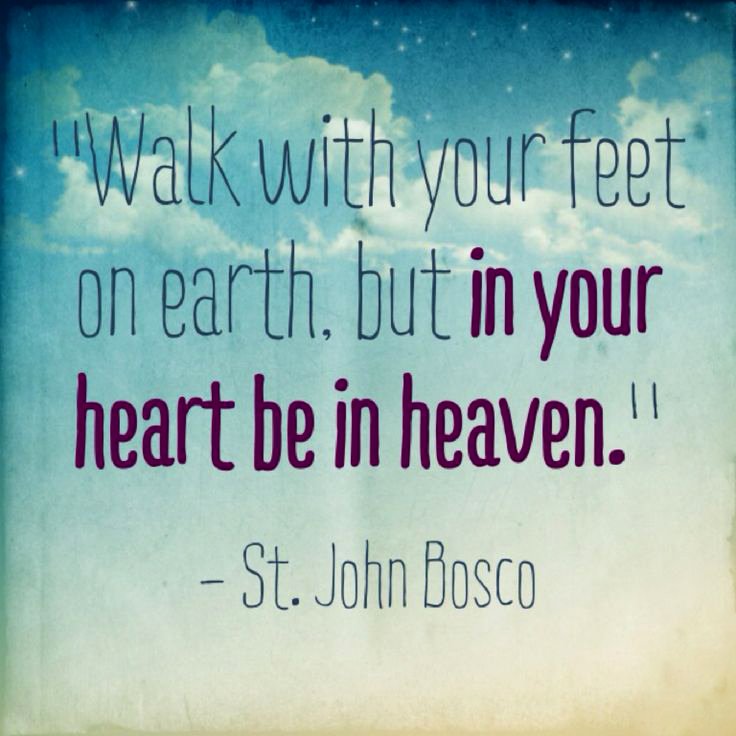
Like St. John Bosco, instill in our hearts this beautiful lesson he had taught us with:
From twitter.com
Like St. John Bosco, may we “always have fun in life, but never sin”, thinking only the glory of heaven as the ultimate end of everything we do in life! Amen.















 lordmychef.com