Lord My Chef Daily Recipe for the Soul by Fr. Nicanor F. Lalog II
Monday, Sixth Week in Ordinary Time, Year II, 16 February 2026
James 1:1-11     ><))))*> + ><))))*> + ><))))*>     Mark 8:11-13
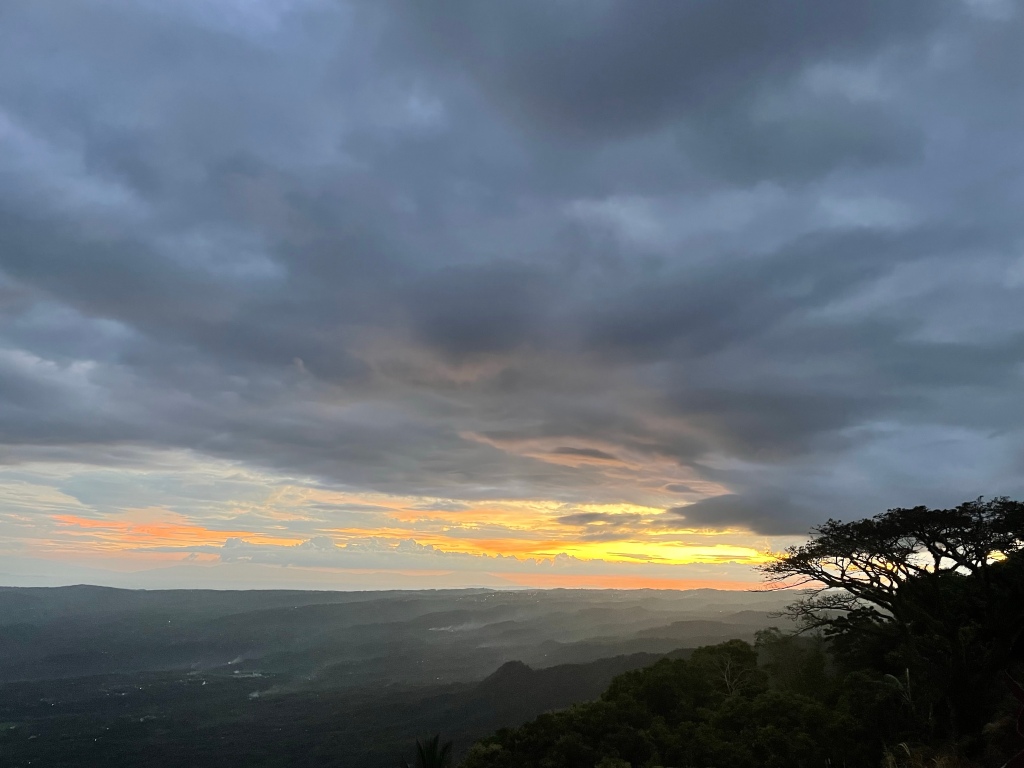
Photo by author, Tagaytay City, February 2023.
Let me be focused
on you alone, Lord Jesus:
like many others today
who are facing
trials and difficulties,
when a lot of situations
and people are testing
my patience and endurance;
grant us the courage
and wisdom,
and perseverance
in seeking your
wisdom.
But he should ask in faith, not doubting, for the one who doubts is like a wave of the sea that is driven and tossed about by the wind. For that person must not suppose that he will receive anything from the Lord, since he is a man of two minds, unstable in all his ways (James 1:6-8).
How sad,
dear Jesus,
when storms come
in our lives, we often lose
our focus on you;
instead of praying
and strengthening our
inner self and will,
that is when we waste time
with our various coping
mechanisms that do nothing
to help us solve our problems
but even worsen them;
keep us centered in you alone,
Lord - convinced and contented
not like the Pharisees who keep
on asking your for signs despite
they have seen all your works.
Amen.
Lord My Chef Daily Recipe for the Soul by Fr. Nicanor F. Lalog II
Thursday, Solemnity of Mary, Mother of God, 01 January 2026
Numbers 6:22-27 ><}}}}*> Galatians 4:4-7 ><}}}}*> Luke 2:16-21
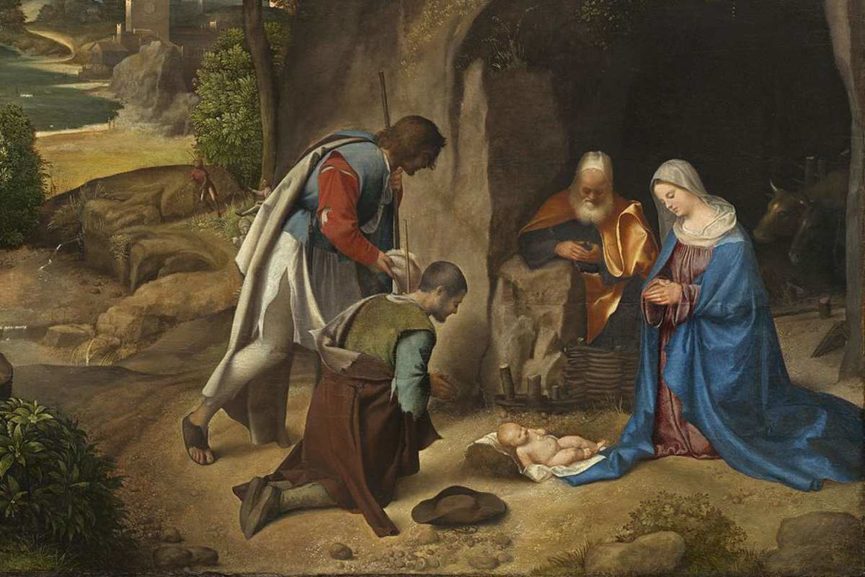
“The Adoration of the Shepherds”, a painting of the Nativity scene by Italian artist Giorgione before his death at a very young age of 30 in 1510.
Still a blessed Merry Christmas to everyone! Please continue greeting one another with a Merry Christmas until January 11, 2026, the Feast of the Lord’s Baptism that closes the Christmas Season.
Keep greeting Merry Christmas even on this new year’s day because what we celebrate today is the Solemnity of Mary, Mother of God – not the New Year! Remember we had our new year last first Sunday of Advent, evening of November 29 and the 30th.
Stop announcing our New Year’s Mass. Our Mass today is Solemnity of Mary, Mother of God which is the Eighth Day within the Octave of Christmas.
It is the oldest feast of the Blessed Virgin Mary that celebrates the mystery of her being the Mother of Jesus Christ who is true God and true Man following the Council of Ephesus in 431 AD. Since Jesus remained fully God and fully human in his conception by the Blessed Virgin Mary, it is right and proper too as the Council affirmed to call Mary the “Mother of God” (Theotokos). Since the birth of Christ is also our point reference in reckoning time that we have the terms “BC” (Before Christ) and “AD” (Anno Domini or Year of the Lord), this celebration teaches a lot on how to welcome this 2026 like Mary.
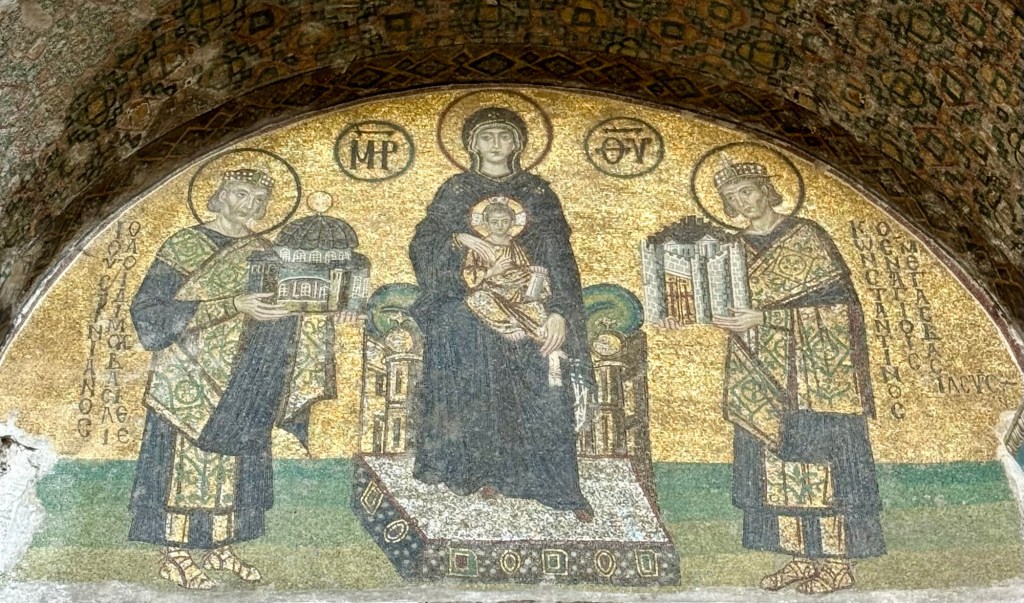
Photo by author, mosaic of Mary with Jesus, Hagia Sophia, Istanbul, Turkiye, 01 November 2025.
First lesson the Blessed Virgin Mary teaches us this new year in Christ is what we have mentioned last Christmas – if there is anything that merits haste, it is those of things of God. How sad that these days we are so preoccupied with what is trending and viral or we race for what is “in” in fashion and everything. In an age of instants, we rush everything that we miss out life itself, God and one another, especially our very selves.
The shepherds went in haste to Bethlehem and found Mary and Joseph, and the infant lying in the manger. When they saw this, they made known the message that had been told them about this child (Luke 2:16-17).
Mary went in haste too for the Lord. Recall her response to the Angel at the Annunciation, “Be it done unto me according to your word.” Her response was immediate. She did not dare the Angel like Zechariah. After the Annunciation, Mary went in haste to visit her cousin Elizabeth pregnant with John the Baptist.
Photo by author, December 2020.
It is true that “haste makes waste” because doing things too quickly leads to mistakes that result in greater losses in time, effort, and materials. The great St. Francis Sales cautioned us that haste is the biggest enemy of growth in spirituality.
However, during the Christmas season, we find that haste is not that totally bad at all.
As shown to us both by Mary and the shepherds, there is something so good with making haste to find Christ, to share Christ, to be with Christ.
We have a prayer formula now rarely used in public prayers wherein the leader says “O God come to my assistance” with the people responding, “O Lord make haste to help me” while making the sign of the Cross like in the praying of the Rosary. It is a beautiful prayer that tells us how God would always hasten to come to us even before we have called Him!
How sad that we rush to everything and everyone except to Jesus our Lord and God! More sad is the fact so many people have been in making haste to these days for the more mundane things without even spending some quality time in the church to pray.
This 2026, let us go in haste in the Lord for He has so many things in store for us as the shepherds and Elizabeth realized.
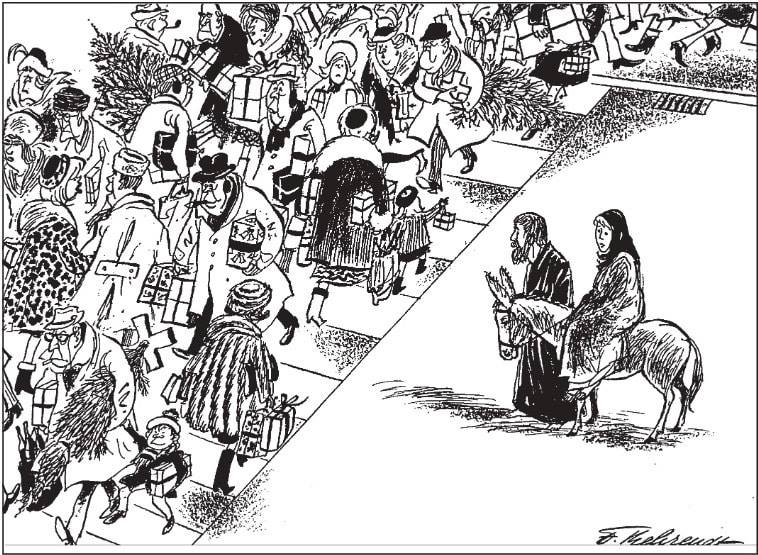
From forwarded cartoon at Facebook, December 2020.
Second important lesson the Blessed Mother is teaching us in welcoming Jesus Christ this new year is the value of silence which is a prerequisite in cultivating a prayer life, in making haste to God.
Though I grew up from the very barrio that manufactures most of the pyrotechnics sold in my hometown of Bocaue in Bulacan dubbed as the fireworks capital of the Philippines, I never liked these popular products every new year. Aside from being so dirty, these are so dangerous as I have seen many of our neighbors who have lost their arms, hands or fingers in manufacturing and playing with fireworks. Worst of all are the many lives of people lost following explosions of some factories in our barrio.
When I became a priest, I kept telling people including my barrio folks that welcoming the new year with fireworks is pagan practice, not Christian. And the most Christian way of welcoming new year like Mother Mary is always in silence, silent prayer like before the Blessed Sacrament.
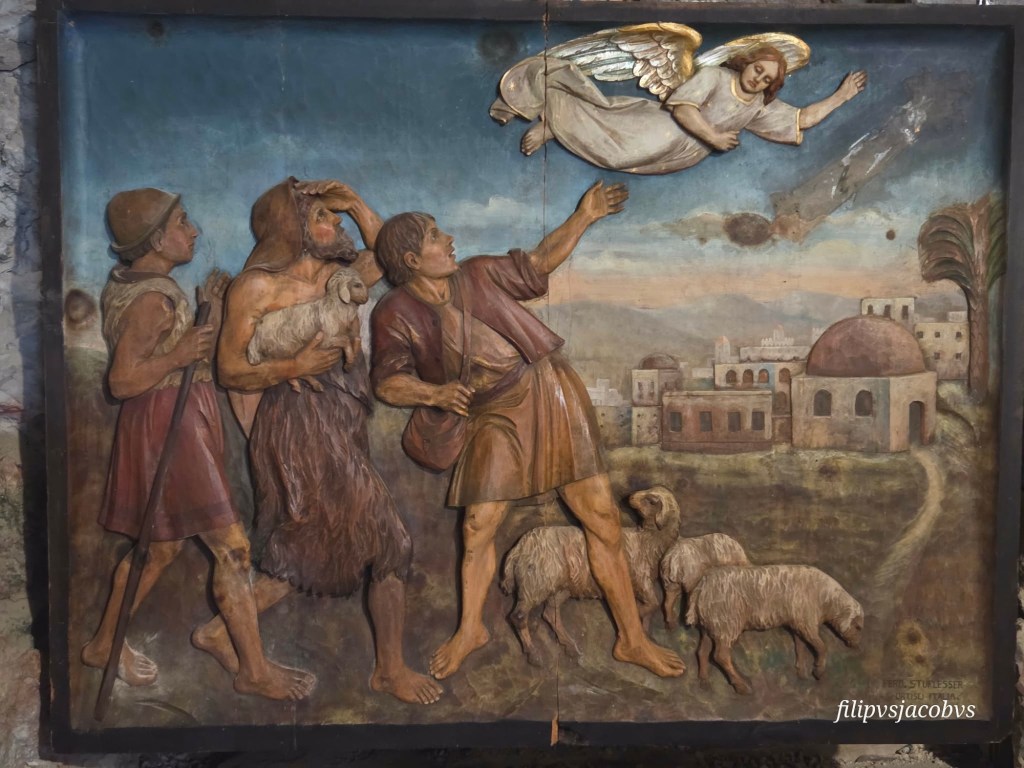
Photo by Ar. Philip Santiago, Chapel at the Angels’ Field in Bethlehem, October 2025.
All who heard it were amazed by what had been told them by the shepherds. And Mary kept all these things, reflecting on them in her heart (Luke 2:18-19).
It is very interesting that Luke had told us how people were amazed at what the shepherds spoke about that night on the birth of Jesus Christ they have found on a manger with his Mother Mary and her husband Joseph. Keep in mind that the shepherds were among the least trusted people of that time but their story went “viral” and “trending” so to speak. Amid all these talks was Mary, the Mother of Jesus, silently meditating everything in her heart!
Tonight or today, try to spend some silent moments of prayer before the Blessed Sacrament to thank God for all the blessings of 2025 as well as to listen to Christ’s instructions and plans for us this 2026. Jesus has always something to tell us but we always go in haste somewhere else or to somebody else. Jesus is right there in our hearts, the faintest voice you always dismiss and take for granted.
Let us cultivate a prayer life like Mary who always kept in her heart the words and experiences she had with Jesus. Let us not be like the shepherds who were there only at Christmas, never came back to Jesus specially when he was preaching in Galilee and when crucified on Good Friday wherein his constant companion in silence was Mary his Mother.
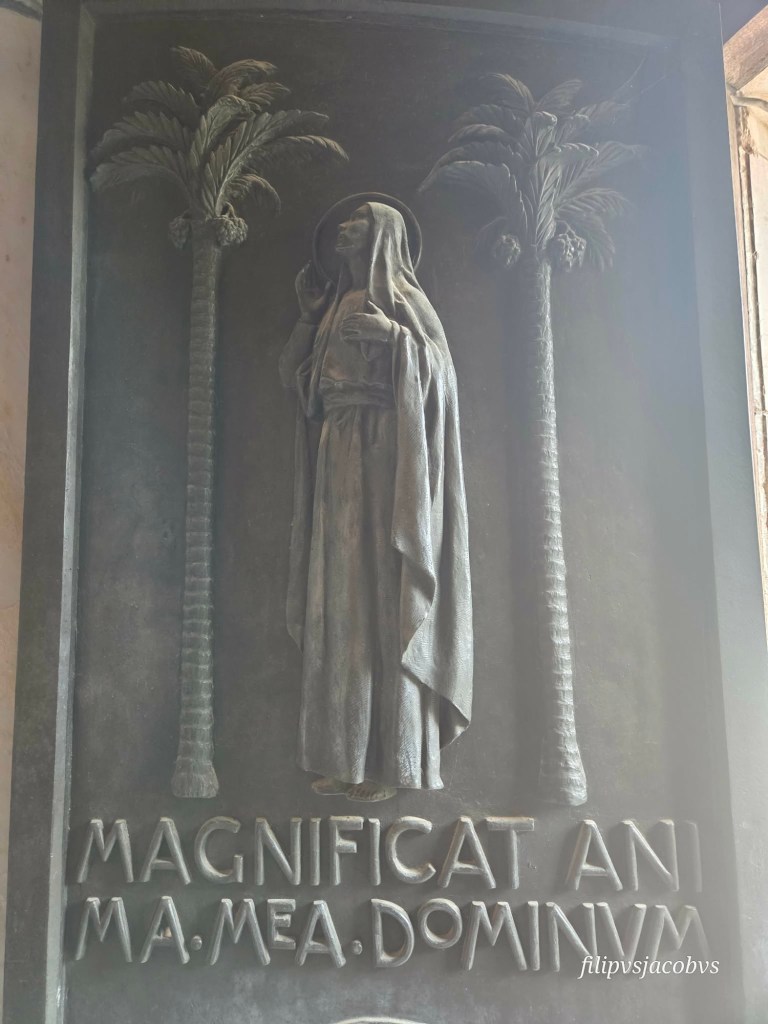
Photo by Ar. Philip Santiago, Basilica of the Annunciation, Nazareth, October 2025.
Third important lesson the Blessed Mother Mary is teaching us this first day of 2026 is to have faith in God in Jesus Christ His Son our Savior. Therefore, please stop all those superstitious beliefs of pampasuwerte like feng shui and fortune telling that are pagan practices.
When eight days were completed for his circumcision, he was named Jesus, the name given him by the angel before he was conceived in the womb (Luke 2:21).
Mary was very much like us when Mary gave birth to Jesus on that first Christmas: she too was totally unaware of what was in store for her, of what would happen to her Son. She was totally unaware of what would happen in the future. The only thing she was certain was the name to be given to her child, “Jesus” which means “God is my Savior”.
All blessings come only from God, not from any other spirits. We drive all the malas and bad spirits and negative vibes of the past year not with noises and blasts of trumpets or fireworks but with silence that is rooted in deep faith in Christ Jesus.
Such was the attitude of Mary on that first Christmas until her glorious Assumption into heaven: she never knew Jesus would be betrayed by one of his trusted friends and apostles; she was never told by the angel how after Jesus would feed and heal so many people He would later be arrested and crucified like a criminal except that she believed in Him until the end, remaining with Christ at the foot of the Cross.
All Mary had was a deep faith in Jesus as told her by the angel as the name to be given to her child is also the child of the Most High. Like Mary, let us keep our faith in Christ alone, not to round fruits nor stones nor other stuffs peddled to us to bring luck this new year.
Let us imitate Mary, the Mother of God, so human like us except in sin who was always in haste with things of God, silently meditating his words and workings, and most of all, trusting wholly in her Son Jesus. Amen. May your new year be filled with Christ’s peace and grace!
Photo by Ar. Philip Santiago, Basilica of the Annunciation, Nazareth, October 2025.
Lord My Chef Sunday Recipe for the Soul, 26 October 2025
Thirtieth Sunday in Ordinary Time, Cycle C
Sirach 35:12-14, 16-18 ><}}}}*> 2 Timothy 4:6-8, 16-18 ><}}}}*> Luke 18:9-14
Photo by author, Alberione Center, Araneta Ave., QC, 11 September 2025.
We got our inspiration anew for this Sunday’s reflection from the blog of Sr. Renee Yann, RSM whom we follow at WordPress (https://lavishmercy.com/2025/10/18/pride-of-place-2/). Her blogs are so wonderfully written with reflections so deep, inspiring and uplifting.
In her recent blog, Sr. Renee tells of their parishioner they fondly called “Mamie” who sat on the same seat in their church they called “Pride of Place” for forty years until her death. And for a good reason. Despite her many trials and sufferings in life, Mamie never failed in helping those in need in their community.
Photo by author, Carmel of the Holy Family Monastery, Guiguinto, Bulacan, 25 September 2025.
As told by Sr. Renee’s dad, Mamie had always sat in the same pew through the Depression as she struggled to keep her grocery opened; after the death of her husband in an accident, Mamie never missed their Sunday Masses seated at the same spot – in fact, she was at the same pew on a Sunday Mass when her son was killed at Pearl Harbor. It was actually their community who “proudly awarded” the seat as a “pride of place” to Mamie following her life of Christian witnessing.
“Pride of Place” isn’t always something physical like a pew in church. More often it’s a moral or spiritual position that’s granted to us by others after we pay moral dues. These dues include trustworthiness, sacrifice, contribution, and wisdom…“Pride of Place” doesn’t come automatically with power or position. It comes with respect. Unfortunately, not every parent, boss, teacher, pastor, elder, president, or champion deserves it. It must be earned and kept as a trust. (https://lavishmercy.com/2025/10/18/pride-of-place-2/).
The story reminded me of our own “pride of place” in the church, of people always occupying the same pew or spot during the Mass that they are amazed how we priests get to know them simply with their “seating arrangement” like their coming late or being absent!
Photo by author, Carmel of the Holy Family Monastery, Guiguinto, Bulacan, 25 September 2025.
But, what struck me most with Sr. Renee’s piece is the spiritual meaning of “pride of place” which refers actually not to where we sit but where we stand. That standing is more than physical but spiritual and moral in nature. Where we stand is about our stance or conviction not only on issues but about our faith and relationship with God expressed in our dealings with others exactly what our gospel tells us this Sunday.
“Two people went to the temple area to pray; one was a Pharisee and the other was a tax collector. The Pharisee took up his position and spoke this prayer to himself, ‘O God, I thank you that I am not like the rest of humanity — greedy, dishonest, adulterous —- or even like this tax collector. I fast twice a week, and I pay tithes on my whole income.’ But the tax collector stood off at a distance and would not even raise his eyes to heaven but beat his breast and prayed, ‘O God, be merciful to me a sinner.’ I tell you, the latter went home justified, not the former; for whomever exalts himself will be humbled, and the one who humbles himself will be exalted” (Luke 18:10-14).
Painting by French artist James Tissot, “The Pharisee and the Tax Collector” (1886-1894) from commons.wikimedia.org.
For the second straight Sunday, we hear another teaching of Jesus about faith expressed in prayers in another parable only Luke has.
Last Sunday we reflected that to persist in prayer is not about wearing God down but of allowing our hearts to clarify our desires until we silently surrender to what God knows is best for us which is salvation or “justification”. See how we find that word again – justified – as the key to this parable at its end when Jesus declared that it was the prayer of the publican that was heard for “he went home justified”.
The object of every prayer is God because prayer is a relationship, not just a ritual. To be filled with God is what holiness is, not being sinless. In fact, holiness is finding our sinfulness before God. And that is the essence of our parable this Sunday.
That is why Jesus directs our attention in the “where” when we pray – not just the location when we pray but our “place” in that relationship with God who is our very foundation. When all we see is our self in prayer like in any relationship, it means it is a monologue, a one-way street. Worst, it is an indication of the absence of God, even of others because the pray-er is so preoccupied with his or her very self!
Photo by the author at the Wall of Jerusalem, May 2017.
The Pharisee was clearly not in God even if he were in front of the temple. His very self was very far from God and all he had was his bloated ego. He may be a very pious person but not really good at all for he has no space for God and for others. He is a very closed man without any room for others. Remember, Luke said that “Jesus addressed this parable to those who were convinced of their own righteousness and despised everyone else” (Lk.18:9).
The tax collector, on the other hand, may be physically far outside the temple but was the one actually nearest to God with his self-acceptance and admission of sins, of his need for God. He was closest to God because he was more open with God and with others by admitting his true self.
Prayer is more than entering a church or a prayer room, or finding our most suitable spot or space to pray. Prayer is being one with God, one in God. Prayer is losing our very self in God. The question now is, “where are we when we pray?
I have always loved this photo by friend from GMANews, Ms. JJ Jimeno who took this while she was praying inside the UP-Diliman Adoration Chapel in May 2019; she aptly captioned it as “losing one’s head in prayer.” True!
First, we become one with God in prayer when we admit our sinfulness, when we confess our sins to him, and own them without any “ifs” and “buts”. God always comes to those who truly open themselves to him by emptying themselves of their sins and inadequacies.
The tax collector was justified in his prayer more than the Pharisee because in confessing his sins, he admitted his need for God. He knew very well his place, so unlike the Pharisee who felt God owes him so much!
Second, we are in God in prayer when we are humble and have the conviction to leave everything behind and go down with God into the lowest point because one is so confident of the efficacy of prayer like what Ben Sirach tells us in the first reading.
The one who serves God willingly is heard; his petition reaches the heaven. The prayer of the lowly pierces the clouds; it does not rest till it reaches its goal (Sirach 35:16-17).
Most often in life, friendships and relationships are kept when we are willing to take the lower stance, not necessarily admitting fault or guilt in any misunderstanding because being lowly indicates the person’s need for the other person and of one’s love to work on that relationship despite its fragility. I tell couples that when they quarrel, the first who must first make the move to greet the other person is not the guilty one but the one with most love and self to give.
Third, we are in God in prayer when there is an offering daily of one’s self to God. It is not enough to be lowly and sorry for our sins in prayer. It has to be sustained because prayer is a discipline like any sport as St. Paul tells us in the second reading, calling us to persevere and endure until the end for Jesus Christ “who shall award us with the crown of righteousness in heaven.”
We are all sinners forgiven and beloved by God. When we find our right place in God in prayer, then we also find him. And meet him. Amen. Have a blessed week ahead into November! Fr. Nicanor F. Lalog II, Our Lady of Fatima University, Valenzuela City (lordmychef@gmail.com)
Photo by author, Carmel of the Holy Family Monastery, Guiguinto, Bulacan, 25 September 2025.
Lord My Chef Sunday Recipe for the Soul, 12 October 2025
Twenty-Eighth Sunday in Ordinary Time, Cycle C
2 Kings 5:14-17 ><}}}}*> 2 Timothy 2:8-13 ><}}}}*> Luke 17:11-19
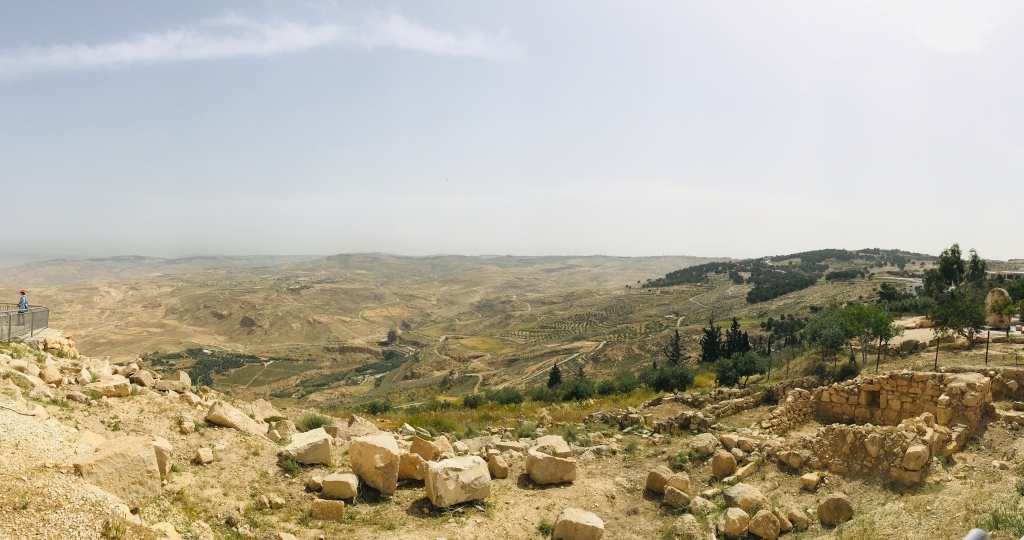
Photo by author, view of Israel from Mt. Nebo, Jordan, May 2019.
Our gospel setting this Sunday strikes a deep lasting impression on anyone who had been on a Holy Land pilgrimage: of those vast expanse of desert in Israel where dusty roads have been replaced by modern concrete or asphalted roads.
Perhaps the feelings remain the same today and during the time of Jesus when he and the Twelve were near the border between Samaria and Galilee, several figures who turned out to be ten lepers appeared at a distance, waving their hands to the Lord. It must have been a surprising sight, then and now, of being found in the desert. Imagine the desperation in their voices of those ten lepers, “Jesus, Master! Have pity on us!” (Lk.17:13).
Jesus right away told them to go show themselves to the priests, and as they went, they were healed. But only one—a Samaritan—returned to thank Jesus who wondered aloud: “Ten were cleansed, were they not? Where are the the other nine? Has none but this foreigner returned to give thanks to God?” Then he said to him, “Stand up and go; your faith has saved you” (Lk.17:17-19).
“The Healing of Ten Lepers” painting by James Tissot en.wikipedia.org
Last Sunday we reflected that faith is primarily a relationship with God; hence, its powers or efficacy will work only when aligned with God and his Holy Will. We will never know how strong we have grown in faith until we get into tests and trials. That is why, the need for us to imitate the Twelve in praying to Jesus, “Increase our faith” (Lk.17:5).
We grow best in faith when we worship God with our fellow believers in the celebration of the Holy Mass especially on Sundays which is our Sabbath. More than a day of rest, Sabbath is a day of restoration to God, with others and most of all, with one’s self. It is a return to Eden, a dress rehearsal of our entry into heaven to dwell in God’s presence eternally.
This is where lies the beauty and significance of this healing of ten lepers – they were not only restored to health but restored in God, to their families, and to their community and fellow believers.
Photo by author, Jerusalem, May 2017.
Those ten lepers have never known any rest at all since getting afflicted with the disease for they were cut off from homes, worship, and community. That is why they could not get near Jesus as they have to keep their distance from everyone according to their laws in order to prevent infecting others and spreading the disease. Likewise, it was the very reason that anyone healed of leprosy or any serious sickness must first present themselves to the priests who have the sole authority to declare one has been healed and therefore may be allowed to reintegrate with their family and community or society in general. Being declared as healed of sickness like leprosy at that time meant the restoration of one’s rights to worship in the temple or synagogue especially on Sabbath.
When Jesus healed them, he restored more than just their bodies and physical health. In sending them to the priests, Jesus invited them into the wholeness of what the Sabbath really is like peace, inclusion, and dignity.
Or, salvation in short.
Sad to say, only one realized this when he returned to thank Jesus. The healed Samaritan leper knew and felt a deeper healing had taken place within him that he responded with heartfelt gratitude to God in Jesus. There was a deepening of his faith in Jesus when he decided to return to thank the Lord that also expressed his desire to enter into a relationship with Jesus.
Photo by author, Sacred Heart Novitiate, Novaliches, QC, 20 March 2025.
Whenever we thank people for their kindness no matter how little that may be, it is more than acknowledging the other person but most of all, of expressing our links with them as well as our desire to be one with them, especially with God who showers us with good things daily. That is why the Mass is also called Eucharist – from the Greek eucharistia meaning “thanksgiving”. After his skin was cleansed of leprosy in the first reading, Naaman the Syrian Army General declared before the Prophet Elisha that he would worship the Lord alone as he returned to his home with two mule-loads of Israeli soil.
Sorry to say but whenever we refuse to celebrate the Mass on Sundays, it means that we are one of those nine ungrateful lepers healed by Jesus! Don’t you feel being called like the Samaritan to return and give thanks to Jesus for the many blessings you have received this Sunday?
See how in this age of faith in a mass-mediated culture that we have become so impersonal, trusting more our gadgets and all those apps like Siri and Waze as if we have already lost faith in the human person. And God.
Photo by Mr. Nicko Timbol, Chapel of the Angel of Peace, OLFU-RISE, Valenzuela City, 03 October 2025.
We spend practically our entire days in front of all kinds of screens than with the face of a human person. Again, this sadly extends to the way we worship with many still stuck in the pandemic mode of online Masses not realizing the important and irreplaceable aspect of personal encounter of Jesus in the actual Mass with other believers.
God remains God even if we do not go to Mass every Sunday. It is us who are losing greatly whenever we skip Sunday Masses, our Sabbath. God specifically made his third commandment to “Remember to keep holy the sabbath day” because Sabbath reminds us that life itself is holy in the first place, a sharing in the life of God. What a tremendous blessing still that even if we forget God or disregard God every Sunday, Paul reminds us today of the beautiful truth and reality that “If we have died with Jesus we shall also live with him; if we persevere we shall also reign with him. But if we deny him he will deny us. If we are unfaithful he remains faithful, for he cannot deny himself” (2Tim.2:11-13).
Can you imagine that? If we are unfaithful to Jesus, he remains faithful?
Every Sunday, Jesus tells us to “Stand up and go; your faith has saved you” despite, in spite of our many sins and absences from the Sunday Masses in the past because he wants us to experience the deeper wholeness that comes with faith and gratitude as experienced by that Samaritan leper he had healed. As we continue to journey with Jesus toward Jerusalem facing many trials and sufferings along the way, he calls us to come to him in the Sunday Mass to deepen our faith by resting in his presence.
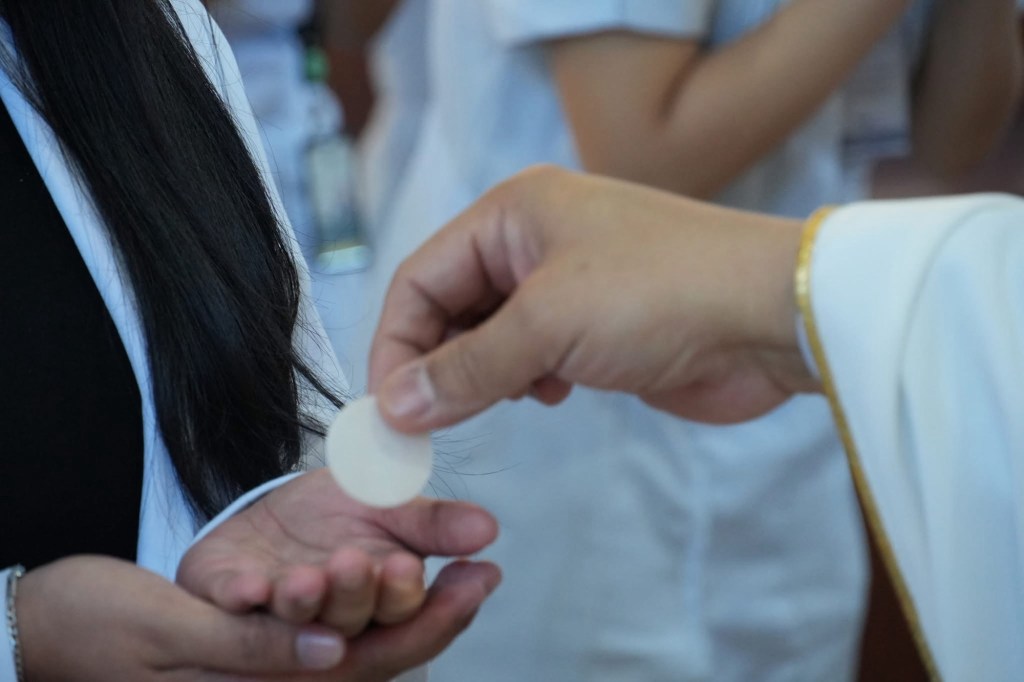
Is there a space in your life at this stage that you feel like one of those lepers, longing for healing and restoration? In the silence of this Sabbath day in our Sunday Mass, speak to Jesus especially after receiving him Body and Blood in the Holy Communion. Amen. Have a blessed week ahead! Fr. Nicanor F. Lalog II, Our Lady of Fatima University, Valenzuela City (lordmychef@gmail.com).
Our Lady of Fatima University-Valenzuela, June 2025.
Lord My Chef Sunday Recipe for the Soul, 05 October 2025
Twenty-Seventh Sunday in Ordinary Time, Cycle C
Habakkuk 1:2-3; 2:2-4 ><}}}}*> 2 Timothy 1:6-8, 13-14 ><}}}}*> Luke 17:5-10
Photo by author, San Fernando, Pampanga, 03 October 2025.
With all the news happening in our country made worse by recent calamities, most of us Filipinos can identify these days with the Prophet Habakkuk, crying out the same things to God:
How long, O Lord? I cry for help but you do not listen! I cry out to you, “Violence!” but you do not intervene. Why do you let me see ruin; why must I look at misery? Destruction and violence are before me; there is strife, and clamorous discord (Habakkuk 1:2-3).
The book of Habakkuk does not really tell us the reasons for the prophet’s cries directed to God. But, does it really matter at all why he was crying in pain? Like Habakkuk, we know very well these days what it feels to be like him. There has always been and there will always be many situations in our personal lives and family, nation and even in the Church that provoke us to cry out to God in distress, complaining all the evil happening when he seems to be so far or not interested.
Photo by Mr. Nicko Timbol, Chapel of the Angel of Peace, Our Lady of Fatima University, Valenzuela City, 03 October 2025.
Of course, it is not really the case here for Prophet Habakkuk nor with us. We do not complain and cry to someone who could not do anything to our plight; we cry, we reach out to those we trust and know can help us like family and friends. And God!
We find many of such complete trust and faith in God expressed in cries and laments in the Book of Psalms. Despairing calls, questions and petitions to God in the Psalms do not actually endanger the faith and trust of the believer but actually affirm them. That is why it is always good to pray the Psalms. Our Lord Jesus Christ himself prayed Ps. 22:1 while on the cross, crying out “My God, my God why have you forsaken me?” to express his deep faith in the Father in his darkest moments.
Habakkuk’s cry is very much similar with those found in the Psalms.
Most of all, Habakkuk teaches us today of God’s response to our cries, calling on us to trust him more than ever, in his Word because it shall be fulfilled for “it will not disappoint; it it delays, wait for it, it will surely come, it will not be late. The rash man has no integrity; but the just one, because of his faith, shall live” (Habakkuk 2:3-4).
Photo by author, San Fernando, Pampanga, 03 October 2025.
Keep in mind God’s final words to Habakkuk for it remains true to these days especially when we are going through difficulties and trials in life – “we shall live because of faith in God”! What a beautiful catch phrase especially at this time.
Recall how we never realize how deep and strong our faith is until we have crossed over through life’s many challenges, often without others even knowing what we have gone through. As we go through life, we continue to realize too how imperfect is our faith until our next problems and tests come.
That is why we need to pray daily to Jesus like the Apostles in this Sunday’s gospel, “Increase our faith” (Lk.17:5). See how Jesus explained faith to his Apostles and to us today.
First, Jesus clarified that faith cannot be quantified because its power does not lie in its “amount” that can be increased like torque in motor engine or similar devices for it to be powerful. That is why Jesus explained to the Twelve that “If you have the faith the size of a mustard seed, you would say to this mulberry tree, ‘Be uprooted and planted in the sea,’ and it would obey you” (Lk.17:6). Just a little amount of faith for as long as it is aligned with God and his plans, we can achieve great things in life.
Photo by Mr. Nicko Timbol, Chapel of the Angel of Peace, Our Lady of Fatima University, Valenzuela City, 03 October 2025.
This, however, does not mean that the purpose of faith is to perform wonders which brings us to Christ’s second point about faith – it is a relationship.
Faith is for service, for love and charity that is why it can result into great wonders in our lives. That is why we mentioned earlier of faith being aligned with God, being one in God. It is a gift freely given to each one of us by God for our own good. Hence, even though faith cannot be quantified, its power can be impeded and rendered useless when we are separated from God. That is why Jesus narrated the parable of the “unprofitable servants”:
“Who among you would say to your servant who has just come from plowing or tending sheep in the field, ‘Come here immediately and take your place at table’? Would he not rather say to him, ‘Prepare something for me to eat…You may eat and drink when I am finished’? Is he grateful to the servant because he did what was commanded? So should it be with you. When you have done all you have been commanded, say, ‘We are unprofitable servants; we have done what we were obliged to do'” (Luke 17:7-8, 9-10).
Many will probably find it uncomfortable that faith as a relationship is between servant and master; but, aside from the gospel milieu, it is the reality of our faith in God for we are indeed his servants working for him who is our Lord and Master.
We cannot claim anything for ourselves in this life. Everything is God’s, even our very lives, our body that many today insist as “theirs” to which they can do whatever they want including abort babies. No. We own nothing in this life and we leave everything when we die. What remains are our good works and love that still came from God!
Unlike the masters of the world who think of their own good, God is a faithful Master who thinks only of the good of his servants, of us. He does not impose on us, giving us freedom so as not to force us in doing things but act out of love like him.
Photo by Mr. Nicko Timbol, Chapel of the Angel of Peace, Our Lady of Fatima University, Valenzuela City, 03 October 2025.
Separated from God, we become worthless or useless or unprofitable servants because we find meaning only in him. When we are aligned with God, faithfully obeying his will, we are able to do the seemingly impossible because it is God working in us like forgive those who have broken our trust, love someone so difficult to deal with, relieve hunger with simple acts of kindness, work on justice where the powerful exploit the weak, remain faithful to prayer even when God seems absent. These are all acts of faith that go beyond normal expectations that reveal to us the power of God, of how deep our faith can be. That faith cannot be quantified.
Truly, as God had told Habakkuk, we live because of faith. When crises and problems seem to overwhelm us, it is to God’s faithfulness we turn to with our cries with despairing overtones that are actually expressions of deep faith and trust in him.
From Paul’s letter to Timothy in the second reading this Sunday, we get our thrid point about faith: this gift of faith is our greatest treasure that we must keep and cultivate to grow deeper, to mature in us. It is this gift of faith that gives us the “spirit of power and love and self-control, not cowardice” (2Tm.1:7).
It is faith as our treasure that gives us the reason “to live on, to live for, and to die for” borrowing the thoughts of the late dissident Swiss theologian Hans Kung. It is faith that sets things right inn our lives because as it moves us closer to God, it likewise enables us to recognize others as brothers and sisters in Christ.
Recent turn of events in our country are so frustrating and yes, very tempting to resort to violent means and measures, including speaking and writing all those expletives and curses against the corrupt. It is normal to be angry but, do we have to be cruel and harsh?
Call me conservative or simply because I am a priest – but, that is what I am that is why I am very much against violence and harsh languages in the midst of all these corruption. I never tire telling people we have proven in 1986 that non-violence works. We have to try it again. However, what we missed after EDSA 86 is we separated from God. We thought we could do it our own ways. This Sunday, we are reminded of our greatest treasure as Filipinos, our gift of faith in God. Let us live in this faith in God. After all, these corruption we see and detest started in our homes, in our schools, in our hearts when we separated from God and one another. Amen. Have a blessed week ahead. Fr. Nicanor F. Lalog II, Our Lady of Fatima University, Valenzuela City (lordmychef@gmail.com)
Our Lady of Fatima University Marketing Dept., June 2025.
Lord My Chef Daily Recipe for the Soul, 14 August 2025
Thursday, Memorial of St. Maximilian Kolbe, Priest & Martyr
Joshua 3:7-10, 11, 13-17     <*((((><  +  ><))))*>     Matthew 18:21-19:1
Photo by Mr. Jim Marpa, 2019.
Praise and glory to you,
God our Father!

Your words today are so lovely
so touching
so personal;
I could feel Joshua leading
your people at the banks
of Jordan River
ready to cross.
The people struck their tents to cross the Jordan, with the priests carrying the ark of the covenant ahead of them. No sooner had these priestly bearers of the ark waded into the waters at the edge of the Jordan…than the waters flowing from upstream halted, backing up in a solid mass for every great distance indeed… while those flowing downstream toward the Salt Sea of the Arabah disappeared entirely. Thus the people crossed over opposite Jericho (Joshua 3:14-15, 16).
Many times, Lord
I am afraid to make
that first step forward
onto the banks of the river of life,
afraid to step on water itself;
many times,
that one little step forward
is all I need but so often
I balked
even chickened out
wasting many opportunites
to grow in faith and trust
in you;
many times, Lord
I am afraid to give
to share
to forgive
because I cannot trust
there would be still enough
for me.
O dear Jesus,
have mercy on me!
Embolden your gift of courage
in me to imitate
the modern saint
Maximilian Kolbe
who was like Joshua
who dared to make that
bold step forward onto the banks
of Jordan River;
like the priestly bearers
of the ark,
St. Maximilian Kolbe
literally stepped forward too
into death by giving himself
for another prisoner at Auschwitz;
what a beautiful imagery
in modern time's darkest moments
that St. Maximilian Kolbe
brought and carried
Jesus Christ
the new ark of the covenant
to bring life not only to
the prisoners of Auschwitz at that time
but even to many among us these
days so lost and trapped
in the gas chambers of
modern forms of
human abuses and exploitation;
Lord Jesus Christ,
grant me the grace
to walk faithfully,
trusting God
who always makes a way
through what seems to be
impassable.
Let me be
the bearer of Christ
to enable others
pass through
from death to life,
from grief to joy,
from hopelessness to love.
Amen.

St. Maximilian Kolbe,
Pray for us.

Fr. Nicanor F. Lalog II
Our Lady of Fatima University
Valenzuela City
(lordmychef@gmail.com)
Lord My Chef Sunday Recipe for the Soul by Fr. Nicanor F. Lalog II
Nineteenth Sunday in Ordinary Time, Cycle C, 10 August 2025
Wisdom 18:6-9 ><}}}}*> Hebrews 11:1-2, 8-19 ><}}}}*> Luke 12:32-48
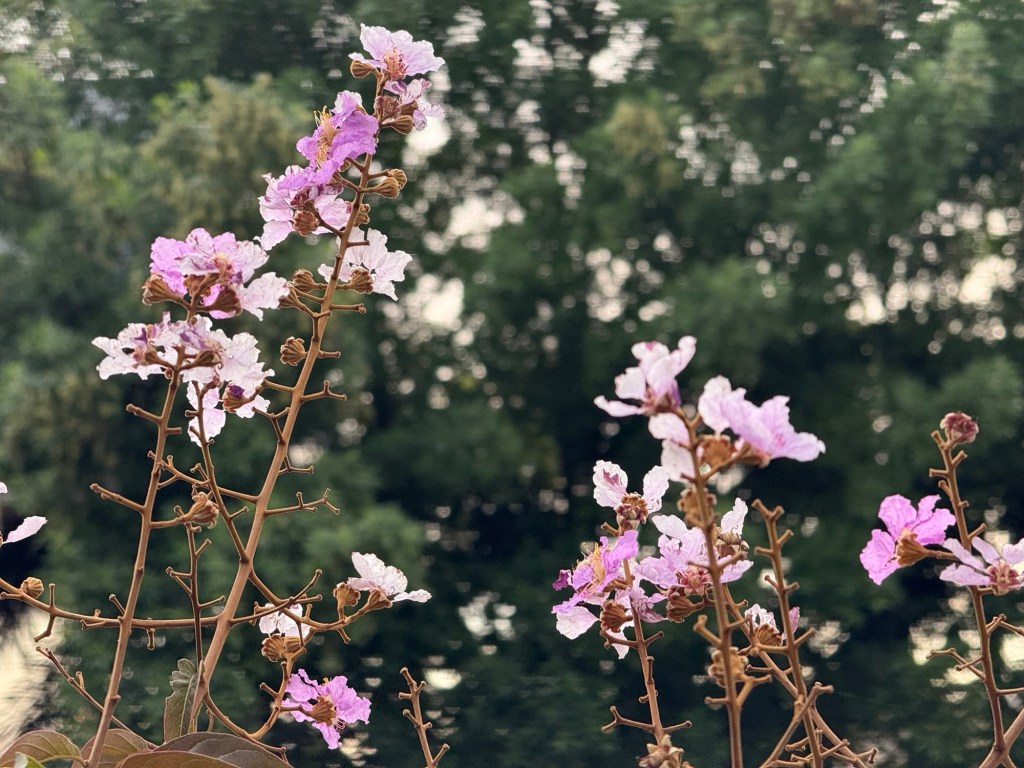
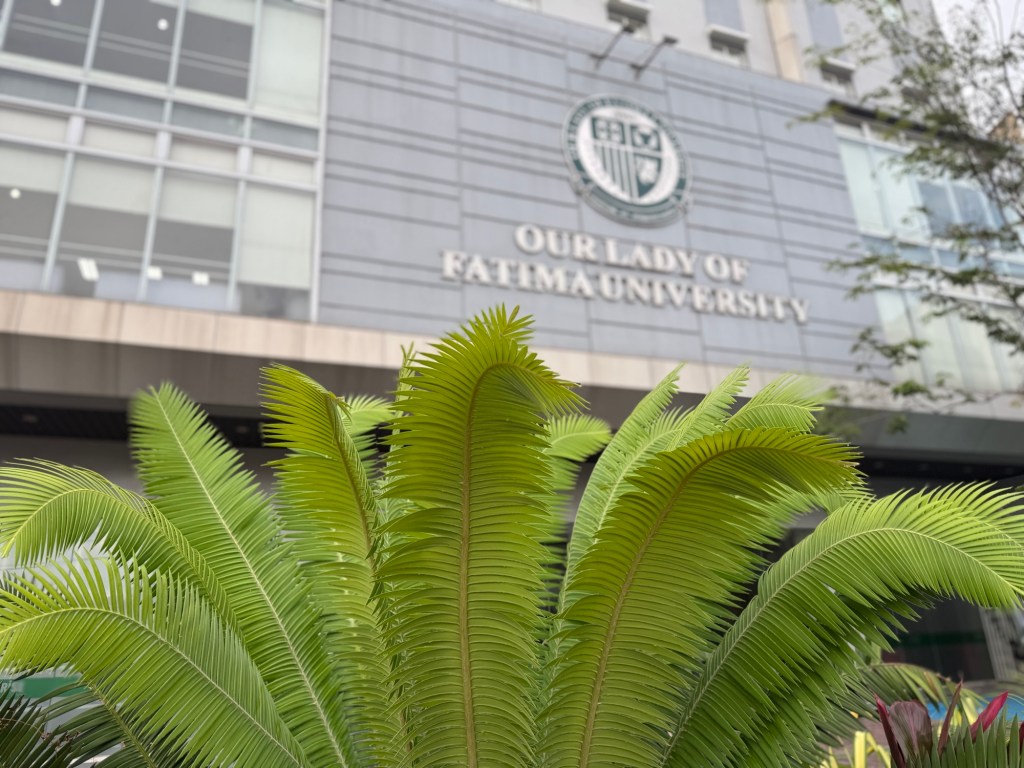
Our new College of Medicine Building with the lovely flowers of Banaba trees welcoming the new academic year this Monday, 11 August 2025.
One of the remarkable trends in management these past two decades is the emphasis on values-based approaches like The Seven Habits of Highly Effective People by the late Dr. Stephen Covey. Second in his list is the title of our reflection this Sunday, “Begin with the end in sight.”
Actually we mentioned that in our reflection last Sunday but we stressed the word “end” begins with a capital “E” to refer to things of God and eternal life as in the End of all in death. This is the theme of the Lord’s teaching today he presented in three parables with the last two calling us to be faithful stewards awaiting their Master’s return in the End while the first one expressing the summary of his lessons, “For where your treasure is, there also will your heart be” (Lk.12:34). But unlike most Sundays, we reflect today on the second reading from the Letter to the Hebrews that shows us Abraham’s faith journey as an expression of Christ’s teachings on setting our sights with the End.
Faith is the realization of what is hoped for and evidence of things not seen. Because of it the ancients were well attested. By faith Abraham obeyed when he was called to go out to a place that he was to receive as an inheritance; he went out, not knowing where he was to go (Hebrews 11:1-2, 8).
Photo by author, RISE Tower, Our Lady Fatima University, Valenzuela City, 06 August 2025.
We all believe in something, whether it is something good or something bad. However, what or who we believe in makes the difference because what or who we believe in determines how we live.
That is why Dr. Covey’s declaration is most true, especially when we talk of our End that is actually a Who – God. It is our faith in God who drives us in this life especially when it is dark and difficult, even painful so that we may achieve our End to be with him in eternity. The author of Hebrews found Abraham’s faith journey so remarkable as it enlightens too our own faith journey in God through Jesus Christ our High Priest as a context.
First, the author of Hebrews defined faith as “the realization of what is hoped for and evidence of things not seen.” Faith is more than trusting God in Jesus Christ. For the author of Hebrews, faith is more of knowing and understanding of what lies ahead though it cannot be seen. Faith here is more of having vision than sight, of seeing beyond things, so convinced of its existence even not seen like Noah who built an ark on God’s command even if there were no dark clouds nor rains visible at all. Faith for the author of Hebrews is like our Filipino expression “a…basta!” of having the conviction God created the universe even though no one saw the act of creation. It is something real that “only the heart can see” because it is also borne out of a deep relationship with God and with those we love. See now the three instances cited by the author of Hebrews in Abraham’s faith journey that are similar with our own experiences.
Photo by author, RISE Tower, Our Lady Fatima University, Valenzuela City, 06 August 2025.
“By faith he sojourned in the promised land as in a foreign country, dwelling in tents… for he was looking forward to the city with foundations, whose architect and maker is God” (Heb.11:9-10). Abraham was a “pilgrim” – a wayfarer – not only from his place of birth into the promised land but also on the journey from the present into the future and eternity. See how Abraham looked into the End at the start of his journey in God and with God walking on the path of what is to come.
All he had was faith in God. Surely there were times of darkness and distress along the way which the author of the Book of Wisdom in our first reading accurately described as “night of the passover” that reminds us of darkness hovering the path of God. Jesus reiterated this “night of passover” literally and figuratively speaking. Have faith in Christ whenever our journey gets tough and rough, when there are detours or when we actually get lost. God will find us to reach his city he made for us.
“By faith he received power to generate, even though he was past the normal age – and Sarah herself was sterile – for he thought that the one who made the promise was trustworthy” (Heb.11:1). We all know the story of Abraham and Sarah having their own son in old age, of the many twists and turns in their lives before Isaac was finally born and thus fulfilled God’s promise that Abraham became the father of all nations. In Matthew’s genealogy of Jesus Christ, Abraham is mentioned first as a testament of his faith in God that led to the birth of the Messiah.
Photo by author, RISE Tower, Our Lady Fatima University, Valenzuela City, 06 August 2025.
Many times we ask why God takes so long in fulfilling his promises to us. We wonder if God really called us to a certain vocation or profession or wanted this and that for us especially when in our prayers we are convinced of God’s will. Why does God keep us waiting?
Experience had taught us that more than a test of our faith, those waiting moments for God’s answer to our prayers were grace-filled moments of our own transformation into better persons so that we may value more his gifts to us, whether they are persons or things or moments. God is faithful. Remember the words of St. Paul, “God’s gifts and call are permanent and irrevocable” (Rom.11:29).
“By faith Abraham, when put to the test, offered up Isaac, and he who had received the promises was ready to offer his only son…He reasoned that God was able to raise even from the dead, and he received Isaac back as a symbol” (Heb.11:17, 19). This is the most moving and touching in the story of Abraham’s faith: he never doubted nor questioned God at all when he was asked to offer his son Isaac. Imagine how Abraham must have felt after waiting for so long for a son, then suddenly God asked him to offer him back Isaac?
See the unfolding of this scene in Genesis 22 with Abraham totally silent going up the mountain with Isaac who asked what shall they offer to God? Abraham simply assured him God will provide. Everything proceeded in silence until Abraham was to kill Isaac when an angel stopped him and told him how God was so pleased with his fidelity. This scene reminds me of the pain of many parents, especially mothers at the funeral of their son or daughter. It is the most difficult Mass for me to celebrate; normally, it is the children who bury their parents, not the other way around. When parents bury their children, no matter how young or old they may be, it is beyond words. I just try to believe more, to have more faith in God that he would bless and comfort the grieving parents.
Photo by author, RISE Tower, Our Lady Fatima University, Valenzuela City, 06 August 2025.
Abraham’s faith is a gift from God we too have all received and must deepen. It is easier said than done but we have to accept that nothing in this life is really ours to keep for all is God’s. And if ever God takes something from us, it is because he is giving us something even more than what we already have. That is why Jesus asks us in the gospel this Sunday to give up everything for him for he is our only End.
Jesus said to his disciples: “Do not be afraid any longer, little flock, for your Father is pleased to give you the kingdom. Sell your belongings and give alms. Provide money bags for yourselves that do not wear out, an inexhaustible treasure in heaven that no thief can reach nor moth destroy. For where your treasure is, there also will your heart be” (Luke 12:32-34).
This Sunday, Jesus invites us to examine where our treasure is for that is where our heart is, giving himself to be our treasure for he alone can lead us to our final End. Like Abraham, Jesus asks us to see beyond the present moment, to give up whatever we have, whether good or bad, people or things, even memories. It is very difficult and even painful but with faith in God, it could be our most liberating and grace-filled moment in life when we learn to forgive and be sorry, to be content, and finally start living by loving and be convinced we are loved because these are all we need in the End. Amen. A blessed week to everyone!
Photo by author, RISE Tower, Our Lady Fatima University, Valenzuela City, 06 August 2025.
Lord My Chef Daily Recipe for the Soul, 05 August 2025
Tuesday, Memorial of the Dedication of the Basilica of St. Mary Major in Rome
Numbers 12:1-13     <'[[[[><  +  ><]]]]'>     Matthew 15:1-2, 10-14
Image of painting from pemptousia.com.
When the disciples saw him walking on the sea they were terrified. “It is a ghost,” they said and they cried out in fear. At once Jesus spoke to them, “Take courage, it is I; do not be afraid.” Peter said to him in reply, “Lord, if it is you, command me to come to you on the water.” He said, “Come.” Peter got out of the boat and began to walk on the water toward Jesus. But when he saw how strong the wind was he became frightened; and, beginning to sink, he cried out, “Lord, save me!” Immediately jesus stretched out his hand and caught him, and said to him, “O you of little faith, why did you doubt?” (Matthew 14:26-31)
Lord Jesus Christ,
bless me
and keep me focused
on you alone
when strong winds
blow on my path
especially when I have
to make important "crossings"
in my life
for me to grow and
mature as a person
and your disciple.
Many times I doubt
and lack the faith in you
even I have experienced
your miracles and salvation
so many times;
I feel afraid
and forget you are there
with me in the darkness of
every crossing in this life,
failing to recognize you,
thinking you are a ghost.
One of the ghosts
I am so afraid of is
the ghost within me,
the strong winds within me
that sway me away from you
and the path of your Cross
life self-doubts;
another ghost I am so afraid
is what others say about me
like that instance in the first
reading when Aaron and Miriam
spoke ill of your servant Moses.

O dear Jesus,
let me be firm in you,
hold on tight to you,
and just look at you
when winds are too strong
and it is so difficult to
get across,
to cross the street
or the sea.
Amen.
Fr. Nicanor F. Lalog II, Our Lady of Fatima University, Valenzuela City (lordmychef@gmail.com).
Photo by Mr. Raffy Tima of GMA7 News, Batanes, September 2018.
Lord My Chef Daily Recipe for the Soul, 07 July 2025
Monday in Fourteenth Week of Ordinary Time, Year I
Genesis 28:10-22     <*((((>< + ><))))*>     Matthew 9:18-26
Photo by author, Mount Sinai, May 2019.
If.
A conjunction so short
we often use to express
a condition or a supposition,
expressing something not certain
like when we say,
"If it rains, then we stay."
But today, dear God, you taught me
another dimension of this conjuction
"if" just like that verb "to doubt"
last week at the Feast of St. Thomas Didymus.
Like the verb "to doubt",
to use the conjunction "if"
is not necessarily negative in
meaning; it could even be a grace
too in itself as it already implies
certainty like when the woman
suffering hemorrhages for 12 years
came up behind Jesus and touched
the tassel on his cloak:
She said to herself, “If only I can touch his cloak, I shall be cured.” Jesus turned around and saw her, and said, “Courage, daughter! Your faith has saved you.” And from that hour the woman was cured (Matthew 9:21-22).
Teach me, Lord Jesus
like that woman to have that deep
faith and trust in you,
to claim always what is mine,
what I truly deserve because
you know what is best for us;
many times, Jesus,
we prefer to stay on the side
of the road, afraid to dare get close
and touch you because
of the more negative connotations
of that conjunction "if"
like what if I fail,
what if I don't get it,
and many other "ifs"
of hesitancy;
like that woman,
let my "if" be my final push
to get close to you.
Or,
like Jacob in the first
reading, let my "if" lead me
into action, into doing something
like an altar for the Lord
after meeting him in a dream
to remind him of your promise,
of your presence,
of your power.
Like Jacob,
we flee for many reasons
yet always end up being found
by you, Lord,
in the most ordinary instances.
If we could just learn
from your ways, Lord,
then our ifs would be
more of certainty
than suppositions.
Amen.
Fr. Nicanor F. Lalog II
Our Lady of Fatima University
Valenzuela City
The Lord Is My Chef Sunday Recipe for the Soul by Fr. Nicanor F. Lalog II
Thirty-second Sunday in Ordinary Time, Cycle B, 10 November 2024
1 Kings 17:10-16 ><}}}}*> Hebrews 9:24-28 ><}}}}*> Mark 12:38-44
Our Sunday readings are so lovely, so picturesque where you find in both first reading and gospel the character of a poor widow standing side by side with great men of faith in God as the main focus, the Prophet Elijah and Christ Jesus, respectively.
In the first reading, we find humorously the Prophet Elijah asking for water, then some bread from a widow gathering sticks outside her home in Zarephath.
Elijah said to her, “Do not be afraid… For the Lord, the God of Israel, says, ‘The jar of flour shall not go empty, nor the jug of oil run dry, until the day when the Lord sends rain upon the earth.'” She left and did as Elijah had said. She was able to eat for a year, and he and her son as well; The jar of flour did not go empty, nor the jug of oil run dry, as the Lord had foretold through Elijah (1 Kings 17:13, 14-16).
Elijah had fled Israel after proclaiming a drought because the people turned away from God to worship baals or false gods brought by the wife of King Ahab, Queen Jezebel. God then directed Elijah to Zarephath outside the city of Sidon to hide where the king was the father of his archenemy, Queen Jezebel!
Imagine Elijah hiding in the most hostile place of all with a pagan widow who worshipped baal so denounced by him. But, here is a marvelous story of faith of Elijah who trusted God completely in obeying Him to move to the pagan region ruled by his enemies. Similar was the faith of the pagan widow who surprisingly believed Elijah and God’s power that she did not mind putting her life and her son’s at risk in harboring their enemy. Their admirable faith both remind us how God accomplishes His great acts of mercy and love when we surrender ourselves totally to Him.
Photo by author, Wailing Wall of Jerusalem, May 2019.
Nine hundred years later after Elijah, we had Jesus in Jerusalem like the prophet in a very hostile place and situation too – in the Temple that was the very domain of His enemies. This was the Holy Week after Jesus had entered Jerusalem on Palm Sunday leading to Good Friday.
And like Elijah who approached a widow worshipper of baal, Jesus dared to sit at the temple area after harshly castigating the scribes there:
He sat down opposite the treasury and observed how the crowd put money into the treasury. Many rich people put in large sums. A poor widow also came and put in two small coins worth a few cents. Calling his disciples to himself, he said to them, “Amen, I say to you, this poor widow put in more than all the other contributors to the treasury. For they have all contributed from their surplus wealth, but she, from her poverty, has contributed all she had, all her livelihood” (Mark 12:41-44).
Jesus sat down
opposite the treasury and observed
how the crowd put money into the treasury.
Throughout this week, that scene of Jesus seated at the Temple had so absorbed me. What was Mark trying to tell us in reporting this? Jesus seated at the temple opposite the treasury observing the crowd is something else.
See the genius of Mark in weaving this Sunday’s gospel scene: right after castigating the corrupt leaders of Israel who were affiliated with the temple, Mark segued into this poor widow dropping some coins into the treasury box. In ancient Israel, the poor like the widows were not required to give those contributions. In a stroke of genius, Mark tells us something is wrong in this scene which Jesus rightly attacked because that widow was one of those widows whose house was devoured by the scribes!
“The Widow’s Mite” painting by French painter James Tissot, from brooklynmuseum.org.
And Mark never intended the story only for the Christians of his time but also for us as we have continued in the Church that malpractice by priests and scribes of Jerusalem. Woe to us priests and bishops who go around in “long robes and accept greetings, seats of honor” and worst of all, “devour houses of widows”, forgetting the poor, preferring always to be with the rich and powerful that social media attest.
Like Zarephath and the Jerusalem Temple, there is Jesus sitting in the middle of our Church under attack on all fronts and within in order to be closer with us especially the widows and the poor who are victims of an unjust society and systems perpetrated by same men and women supposed to be servants of God, or, at least men and women of God.
Photo by author, July 2024.
That image of Jesus seated at the Temple opposite the treasury was in fact a reminder of His being the victim too of injustice in the temple like the poor widow, of His Crucifixion on Good Friday. In fact, the 30 pieces of silver the priests have paid Judas Iscariot to betray Jesus must have come from that treasury.
In the midst of the hostilities and hurts, the divisions and abuses of power by priests and lay alike, in the Jerusalem Temple then and now in our Church, there has always been Jesus sitting among us, observing our offerings after first offering Himself for us all as our perfect High Priest (second reading) who finally freed us from these injustices and inhumanity of the past.
That is why I love this scene so much.
More than tithing, Jesus tells us this Sunday that like that generous heart of the poor widow, despite her plight, she continued to give because she believed, she hoped, most of all, she loved God. She need not give but still insisted because the treasury was for the upkeep of the temple, the very house of God, therefore, for God Himself.
There are times I hurt deep inside for the pains of the many scandals some priests and bishops have caused the Church but I choose to remain, even to sit in this Church or be a victim like Jesus amid all these because I love Jesus. Yes, amid all these sorrows, there is one “first” I see above all, Jesus Christ. This is concretization of last Sunday’s “which is the first of the commandments” – God who is love above all!
Jesus is telling us this Sunday through the poor widow that it is recognizing God in us and in one another that matters, and that is why we give at all.
Photo by author, 2022.
If we love God, if we find God in us and in others, when we find Jesus seated among us, then we realize we are the Church, we are the Temple we love. The moment we realize this, the more we feel at home “sitting with Jesus in the temple”, then we start giving totally because we love as well as know for a fact that whatever we give is actually what we receive from God in Jesus.
Why give so little? Give all, give everything because you never have anything to begin with! Everything is from God. That is why it is in giving that we truly receive. In every Mass, we do not give anything except our mere presence that is not even complete and yet, we get abundant blessings, primarily Jesus Christ whom we receive wholly, Body and Blood.
In every Mass we celebrate, we sit with Jesus in the midst of this inhospitable world we live in, even right in the church we love and hate sometimes. We do not give up. We persevere because we believe, we trust, we hope. Most of all, we love like Elijah and Jesus and believe like the poor widows of Zarephath and Jerusalem Temple. Amen. Have a blessed week ahead!


















 lordmychef.com