Keeping the faith, our rich treasure

Lord My Chef Sunday Recipe for the Soul, 05 October 2025
Twenty-Seventh Sunday in Ordinary Time, Cycle C
Habakkuk 1:2-3; 2:2-4 ><}}}}*> 2 Timothy 1:6-8, 13-14 ><}}}}*> Luke 17:5-10
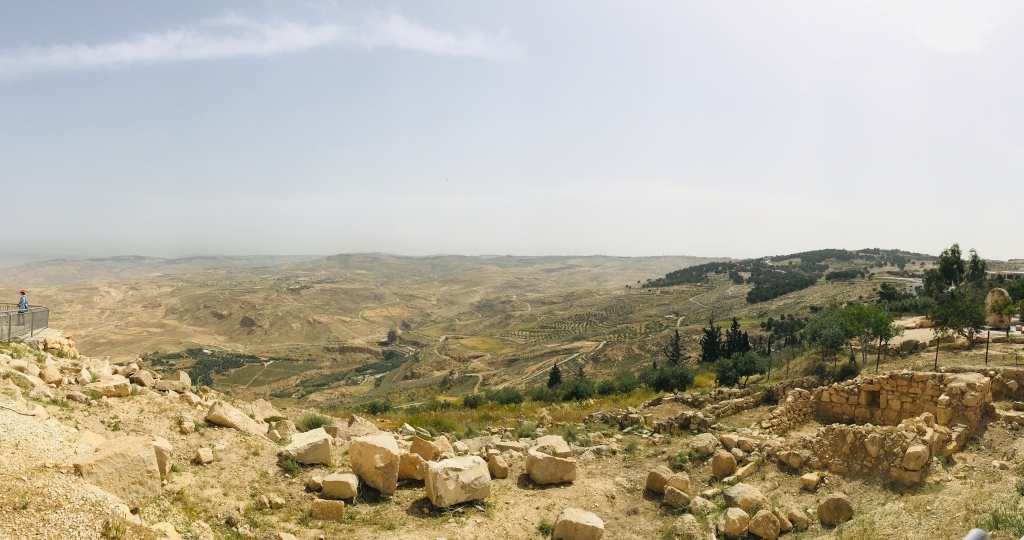
Photo by author, San Fernando, Pampanga, 03 October 2025.

With all the news happening in our country made worse by recent calamities, most of us Filipinos can identify these days with the Prophet Habakkuk, crying out the same things to God:

How long, O Lord? I cry for help but you do not listen! I cry out to you, “Violence!” but you do not intervene. Why do you let me see ruin; why must I look at misery? Destruction and violence are before me; there is strife, and clamorous discord (Habakkuk 1:2-3).

The book of Habakkuk does not really tell us the reasons for the prophet’s cries directed to God. But, does it really matter at all why he was crying in pain? Like Habakkuk, we know very well these days what it feels to be like him. There has always been and there will always be many situations in our personal lives and family, nation and even in the Church that provoke us to cry out to God in distress, complaining all the evil happening when he seems to be so far or not interested.

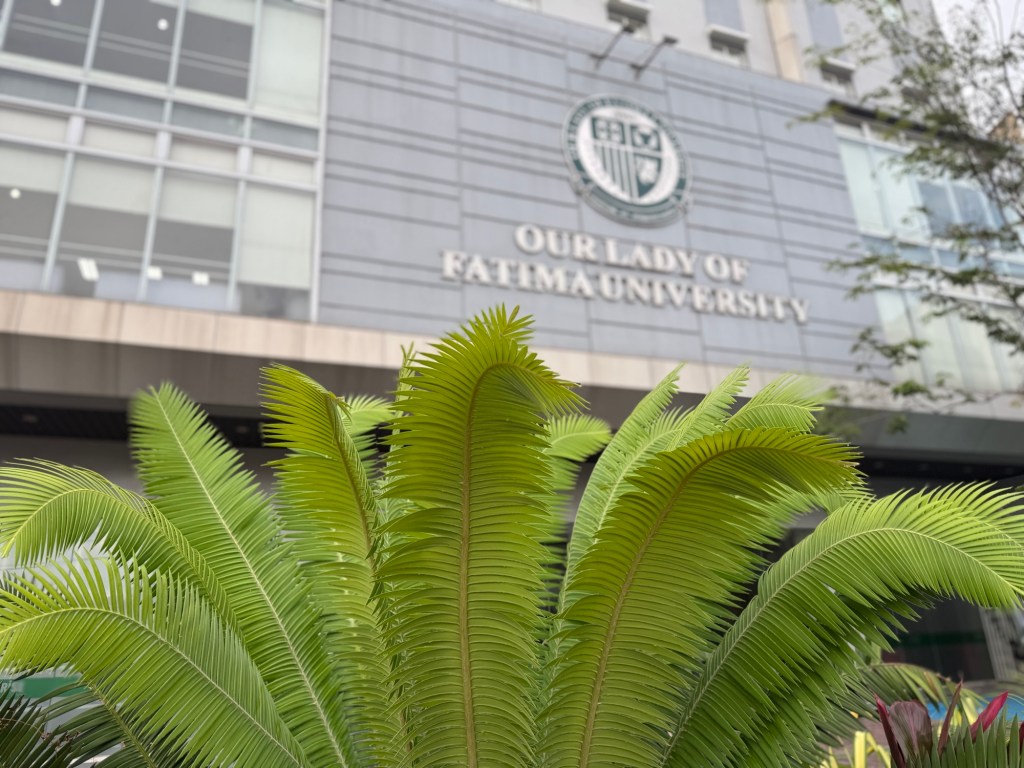
Photo by Mr. Nicko Timbol, Chapel of the Angel of Peace, Our Lady of Fatima University, Valenzuela City, 03 October 2025.

Of course, it is not really the case here for Prophet Habakkuk nor with us. We do not complain and cry to someone who could not do anything to our plight; we cry, we reach out to those we trust and know can help us like family and friends. And God!

We find many of such complete trust and faith in God expressed in cries and laments in the Book of Psalms. Despairing calls, questions and petitions to God in the Psalms do not actually endanger the faith and trust of the believer but actually affirm them. That is why it is always good to pray the Psalms. Our Lord Jesus Christ himself prayed Ps. 22:1 while on the cross, crying out “My God, my God why have you forsaken me?” to express his deep faith in the Father in his darkest moments.

Habakkuk’s cry is very much similar with those found in the Psalms.

Most of all, Habakkuk teaches us today of God’s response to our cries, calling on us to trust him more than ever, in his Word because it shall be fulfilled for “it will not disappoint; it it delays, wait for it, it will surely come, it will not be late. The rash man has no integrity; but the just one, because of his faith, shall live” (Habakkuk 2:3-4).

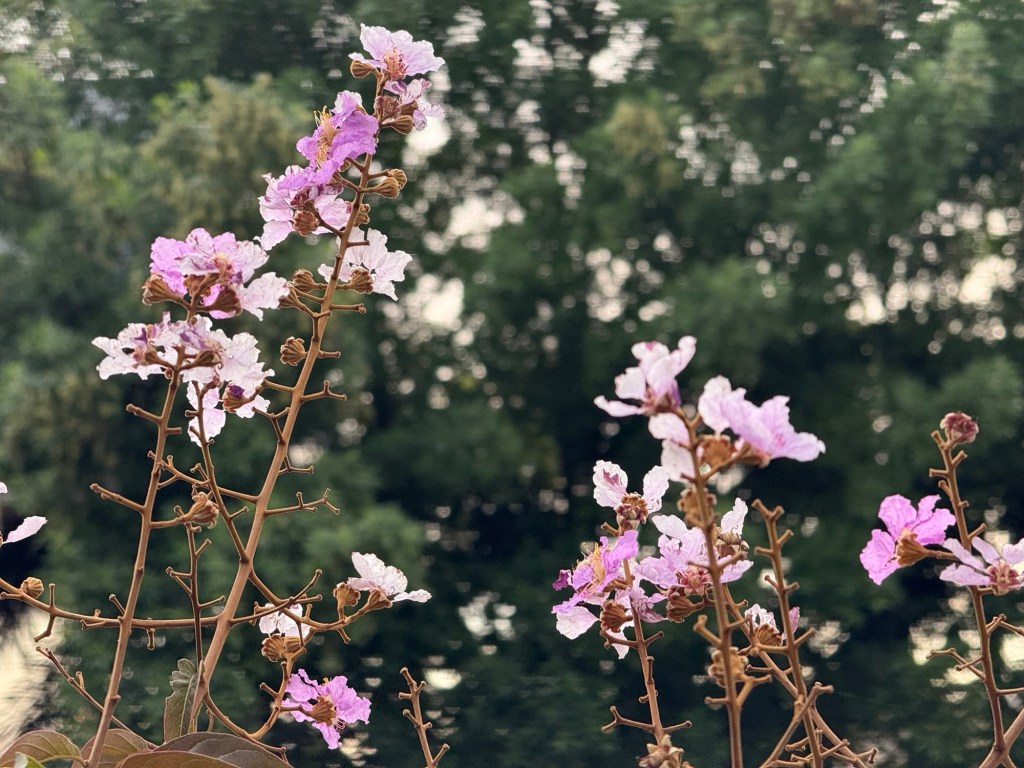
Photo by author, San Fernando, Pampanga, 03 October 2025.

Keep in mind God’s final words to Habakkuk for it remains true to these days especially when we are going through difficulties and trials in life – “we shall live because of faith in God”! What a beautiful catch phrase especially at this time.

Recall how we never realize how deep and strong our faith is until we have crossed over through life’s many challenges, often without others even knowing what we have gone through. As we go through life, we continue to realize too how imperfect is our faith until our next problems and tests come.

That is why we need to pray daily to Jesus like the Apostles in this Sunday’s gospel, “Increase our faith” (Lk.17:5). See how Jesus explained faith to his Apostles and to us today.

First, Jesus clarified that faith cannot be quantified because its power does not lie in its “amount” that can be increased like torque in motor engine or similar devices for it to be powerful. That is why Jesus explained to the Twelve that “If you have the faith the size of a mustard seed, you would say to this mulberry tree, ‘Be uprooted and planted in the sea,’ and it would obey you” (Lk.17:6). Just a little amount of faith for as long as it is aligned with God and his plans, we can achieve great things in life.

Photo by Mr. Nicko Timbol, Chapel of the Angel of Peace, Our Lady of Fatima University, Valenzuela City, 03 October 2025.

This, however, does not mean that the purpose of faith is to perform wonders which brings us to Christ’s second point about faith – it is a relationship.

Faith is for service, for love and charity that is why it can result into great wonders in our lives. That is why we mentioned earlier of faith being aligned with God, being one in God. It is a gift freely given to each one of us by God for our own good. Hence, even though faith cannot be quantified, its power can be impeded and rendered useless when we are separated from God. That is why Jesus narrated the parable of the “unprofitable servants”:

“Who among you would say to your servant who has just come from plowing or tending sheep in the field, ‘Come here immediately and take your place at table’? Would he not rather say to him, ‘Prepare something for me to eat…You may eat and drink when I am finished’? Is he grateful to the servant because he did what was commanded? So should it be with you. When you have done all you have been commanded, say, ‘We are unprofitable servants; we have done what we were obliged to do'” (Luke 17:7-8, 9-10).

Many will probably find it uncomfortable that faith as a relationship is between servant and master; but, aside from the gospel milieu, it is the reality of our faith in God for we are indeed his servants working for him who is our Lord and Master.

We cannot claim anything for ourselves in this life. Everything is God’s, even our very lives, our body that many today insist as “theirs” to which they can do whatever they want including abort babies. No. We own nothing in this life and we leave everything when we die. What remains are our good works and love that still came from God!

Unlike the masters of the world who think of their own good, God is a faithful Master who thinks only of the good of his servants, of us. He does not impose on us, giving us freedom so as not to force us in doing things but act out of love like him.

Photo by Mr. Nicko Timbol, Chapel of the Angel of Peace, Our Lady of Fatima University, Valenzuela City, 03 October 2025.

Separated from God, we become worthless or useless or unprofitable servants because we find meaning only in him. When we are aligned with God, faithfully obeying his will, we are able to do the seemingly impossible because it is God working in us like forgive those who have broken our trust, love someone so difficult to deal with, relieve hunger with simple acts of kindness, work on justice where the powerful exploit the weak, remain faithful to prayer even when God seems absent. These are all acts of faith that go beyond normal expectations that reveal to us the power of God, of how deep our faith can be. That faith cannot be quantified.

Truly, as God had told Habakkuk, we live because of faith. When crises and problems seem to overwhelm us, it is to God’s faithfulness we turn to with our cries with despairing overtones that are actually expressions of deep faith and trust in him.

From Paul’s letter to Timothy in the second reading this Sunday, we get our thrid point about faith: this gift of faith is our greatest treasure that we must keep and cultivate to grow deeper, to mature in us. It is this gift of faith that gives us the “spirit of power and love and self-control, not cowardice” (2Tm.1:7).

It is faith as our treasure that gives us the reason “to live on, to live for, and to die for” borrowing the thoughts of the late dissident Swiss theologian Hans Kung. It is faith that sets things right inn our lives because as it moves us closer to God, it likewise enables us to recognize others as brothers and sisters in Christ.

Recent turn of events in our country are so frustrating and yes, very tempting to resort to violent means and measures, including speaking and writing all those expletives and curses against the corrupt. It is normal to be angry but, do we have to be cruel and harsh?

Call me conservative or simply because I am a priest – but, that is what I am that is why I am very much against violence and harsh languages in the midst of all these corruption. I never tire telling people we have proven in 1986 that non-violence works. We have to try it again. However, what we missed after EDSA 86 is we separated from God. We thought we could do it our own ways. This Sunday, we are reminded of our greatest treasure as Filipinos, our gift of faith in God. Let us live in this faith in God. After all, these corruption we see and detest started in our homes, in our schools, in our hearts when we separated from God and one another. Amen. Have a blessed week ahead. Fr. Nicanor F. Lalog II, Our Lady of Fatima University, Valenzuela City (lordmychef@gmail.com)

Our Lady of Fatima University Marketing Dept., June 2025.

Praying to step forward in Christ

Lord My Chef Daily Recipe for the Soul, 14 August 2025
Thursday, Memorial of St. Maximilian Kolbe, Priest & Martyr
Joshua 3:7-10, 11, 13-17 <*((((>< + ><))))*> Matthew 18:21-19:1
Photo by Mr. Jim Marpa, 2019.
Praise and glory to you,
God our Father!

Your words today are so lovely
so touching
so personal;
I could feel Joshua leading
your people at the banks
of Jordan River
ready to cross.

The people struck their tents to cross the Jordan, with the priests carrying the ark of the covenant ahead of them. No sooner had these priestly bearers of the ark waded into the waters at the edge of the Jordan…than the waters flowing from upstream halted, backing up in a solid mass for every great distance indeed… while those flowing downstream toward the Salt Sea of the Arabah disappeared entirely. Thus the people crossed over opposite Jericho (Joshua 3:14-15, 16).

Many times, Lord
I am afraid to make
that first step forward
onto the banks of the river of life,
afraid to step on water itself;
many times,
that one little step forward
is all I need but so often
I balked
even chickened out
wasting many opportunites
to grow in faith and trust
in you;
many times, Lord
I am afraid to give
to share
to forgive
because I cannot trust
there would be still enough
for me.
O dear Jesus,
have mercy on me!
Embolden your gift of courage
in me to imitate
the modern saint
Maximilian Kolbe
who was like Joshua
who dared to make that
bold step forward onto the banks
of Jordan River;
like the priestly bearers
of the ark,
St. Maximilian Kolbe
literally stepped forward too
into death by giving himself
for another prisoner at Auschwitz;
what a beautiful imagery
in modern time's darkest moments
that St. Maximilian Kolbe
brought and carried
Jesus Christ
the new ark of the covenant
to bring life not only to
the prisoners of Auschwitz at that time
but even to many among us these
days so lost and trapped
in the gas chambers of
modern forms of
human abuses and exploitation;
Lord Jesus Christ,
grant me the grace
to walk faithfully,
trusting God
who always makes a way
through what seems to be
impassable.
Let me be
the bearer of Christ
to enable others
pass through
from death to life,
from grief to joy,
from hopelessness to love.
Amen.

St. Maximilian Kolbe,
Pray for us.

Fr. Nicanor F. Lalog II
Our Lady of Fatima University
Valenzuela City
(lordmychef@gmail.com)
Photo by author, 09 August 2025.

Begin with the End in sight

Lord My Chef Sunday Recipe for the Soul by Fr. Nicanor F. Lalog II
Nineteenth Sunday in Ordinary Time, Cycle C, 10 August 2025
Wisdom 18:6-9 ><}}}}*> Hebrews 11:1-2, 8-19 ><}}}}*> Luke 12:32-48
Our new College of Medicine Building with the lovely flowers of Banaba trees welcoming the new academic year this Monday, 11 August 2025.

One of the remarkable trends in management these past two decades is the emphasis on values-based approaches like The Seven Habits of Highly Effective People by the late Dr. Stephen Covey. Second in his list is the title of our reflection this Sunday, “Begin with the end in sight.”

Actually we mentioned that in our reflection last Sunday but we stressed the word “end” begins with a capital “E” to refer to things of God and eternal life as in the End of all in death. This is the theme of the Lord’s teaching today he presented in three parables with the last two calling us to be faithful stewards awaiting their Master’s return in the End while the first one expressing the summary of his lessons, “For where your treasure is, there also will your heart be” (Lk.12:34). But unlike most Sundays, we reflect today on the second reading from the Letter to the Hebrews that shows us Abraham’s faith journey as an expression of Christ’s teachings on setting our sights with the End.

Faith is the realization of what is hoped for and evidence of things not seen. Because of it the ancients were well attested. By faith Abraham obeyed when he was called to go out to a place that he was to receive as an inheritance; he went out, not knowing where he was to go (Hebrews 11:1-2, 8).

Photo by author, RISE Tower, Our Lady Fatima University, Valenzuela City, 06 August 2025.

We all believe in something, whether it is something good or something bad. However, what or who we believe in makes the difference because what or who we believe in determines how we live.

That is why Dr. Covey’s declaration is most true, especially when we talk of our End that is actually a Who – God. It is our faith in God who drives us in this life especially when it is dark and difficult, even painful so that we may achieve our End to be with him in eternity. The author of Hebrews found Abraham’s faith journey so remarkable as it enlightens too our own faith journey in God through Jesus Christ our High Priest as a context.

First, the author of Hebrews defined faith as “the realization of what is hoped for and evidence of things not seen.” Faith is more than trusting God in Jesus Christ. For the author of Hebrews, faith is more of knowing and understanding of what lies ahead though it cannot be seen. Faith here is more of having vision than sight, of seeing beyond things, so convinced of its existence even not seen like Noah who built an ark on God’s command even if there were no dark clouds nor rains visible at all. Faith for the author of Hebrews is like our Filipino expression “a…basta!” of having the conviction God created the universe even though no one saw the act of creation. It is something real that “only the heart can see” because it is also borne out of a deep relationship with God and with those we love. See now the three instances cited by the author of Hebrews in Abraham’s faith journey that are similar with our own experiences.

Photo by author, RISE Tower, Our Lady Fatima University, Valenzuela City, 06 August 2025.

“By faith he sojourned in the promised land as in a foreign country, dwelling in tents… for he was looking forward to the city with foundations, whose architect and maker is God” (Heb.11:9-10). Abraham was a “pilgrim” – a wayfarer – not only from his place of birth into the promised land but also on the journey from the present into the future and eternity. See how Abraham looked into the End at the start of his journey in God and with God walking on the path of what is to come.

All he had was faith in God. Surely there were times of darkness and distress along the way which the author of the Book of Wisdom in our first reading accurately described as “night of the passover” that reminds us of darkness hovering the path of God. Jesus reiterated this “night of passover” literally and figuratively speaking. Have faith in Christ whenever our journey gets tough and rough, when there are detours or when we actually get lost. God will find us to reach his city he made for us.

“By faith he received power to generate, even though he was past the normal age – and Sarah herself was sterile – for he thought that the one who made the promise was trustworthy” (Heb.11:1). We all know the story of Abraham and Sarah having their own son in old age, of the many twists and turns in their lives before Isaac was finally born and thus fulfilled God’s promise that Abraham became the father of all nations. In Matthew’s genealogy of Jesus Christ, Abraham is mentioned first as a testament of his faith in God that led to the birth of the Messiah.

Photo by author, RISE Tower, Our Lady Fatima University, Valenzuela City, 06 August 2025.

Many times we ask why God takes so long in fulfilling his promises to us. We wonder if God really called us to a certain vocation or profession or wanted this and that for us especially when in our prayers we are convinced of God’s will. Why does God keep us waiting?

Experience had taught us that more than a test of our faith, those waiting moments for God’s answer to our prayers were grace-filled moments of our own transformation into better persons so that we may value more his gifts to us, whether they are persons or things or moments. God is faithful. Remember the words of St. Paul, “God’s gifts and call are permanent and irrevocable” (Rom.11:29).

“By faith Abraham, when put to the test, offered up Isaac, and he who had received the promises was ready to offer his only son…He reasoned that God was able to raise even from the dead, and he received Isaac back as a symbol” (Heb.11:17, 19). This is the most moving and touching in the story of Abraham’s faith: he never doubted nor questioned God at all when he was asked to offer his son Isaac. Imagine how Abraham must have felt after waiting for so long for a son, then suddenly God asked him to offer him back Isaac?

See the unfolding of this scene in Genesis 22 with Abraham totally silent going up the mountain with Isaac who asked what shall they offer to God? Abraham simply assured him God will provide. Everything proceeded in silence until Abraham was to kill Isaac when an angel stopped him and told him how God was so pleased with his fidelity. This scene reminds me of the pain of many parents, especially mothers at the funeral of their son or daughter. It is the most difficult Mass for me to celebrate; normally, it is the children who bury their parents, not the other way around. When parents bury their children, no matter how young or old they may be, it is beyond words. I just try to believe more, to have more faith in God that he would bless and comfort the grieving parents.

Photo by author, RISE Tower, Our Lady Fatima University, Valenzuela City, 06 August 2025.

Abraham’s faith is a gift from God we too have all received and must deepen. It is easier said than done but we have to accept that nothing in this life is really ours to keep for all is God’s. And if ever God takes something from us, it is because he is giving us something even more than what we already have. That is why Jesus asks us in the gospel this Sunday to give up everything for him for he is our only End.

Jesus said to his disciples: “Do not be afraid any longer, little flock, for your Father is pleased to give you the kingdom. Sell your belongings and give alms. Provide money bags for yourselves that do not wear out, an inexhaustible treasure in heaven that no thief can reach nor moth destroy. For where your treasure is, there also will your heart be” (Luke 12:32-34).

This Sunday, Jesus invites us to examine where our treasure is for that is where our heart is, giving himself to be our treasure for he alone can lead us to our final End. Like Abraham, Jesus asks us to see beyond the present moment, to give up whatever we have, whether good or bad, people or things, even memories. It is very difficult and even painful but with faith in God, it could be our most liberating and grace-filled moment in life when we learn to forgive and be sorry, to be content, and finally start living by loving and be convinced we are loved because these are all we need in the End. Amen. A blessed week to everyone!

Photo by author, RISE Tower, Our Lady Fatima University, Valenzuela City, 06 August 2025.

Jesus amid strong winds

Lord My Chef Daily Recipe for the Soul, 05 August 2025
Tuesday, Memorial of the Dedication of the Basilica of St. Mary Major in Rome
Numbers 12:1-13 <'[[[[>< + ><]]]]'> Matthew 15:1-2, 10-14
Image of painting from pemptousia.com.

When the disciples saw him walking on the sea they were terrified. “It is a ghost,” they said and they cried out in fear. At once Jesus spoke to them, “Take courage, it is I; do not be afraid.” Peter said to him in reply, “Lord, if it is you, command me to come to you on the water.” He said, “Come.” Peter got out of the boat and began to walk on the water toward Jesus. But when he saw how strong the wind was he became frightened; and, beginning to sink, he cried out, “Lord, save me!” Immediately jesus stretched out his hand and caught him, and said to him, “O you of little faith, why did you doubt?” (Matthew 14:26-31)

Lord Jesus Christ,
bless me
and keep me focused
on you alone
when strong winds
blow on my path
especially when I have
to make important "crossings"
in my life
for me to grow and
mature as a person
and your disciple.
Many times I doubt
and lack the faith in you
even I have experienced
your miracles and salvation
so many times;
I feel afraid
and forget you are there
with me in the darkness of
every crossing in this life,
failing to recognize you,
thinking you are a ghost.
One of the ghosts
I am so afraid of is
the ghost within me,
the strong winds within me
that sway me away from you
and the path of your Cross
life self-doubts;
another ghost I am so afraid
is what others say about me
like that instance in the first
reading when Aaron and Miriam
spoke ill of your servant Moses.

O dear Jesus,
let me be firm in you,
hold on tight to you,
and just look at you
when winds are too strong
and it is so difficult to
get across,
to cross the street
or the sea.
Amen.

Fr. Nicanor F. Lalog II, Our Lady of Fatima University, Valenzuela City (lordmychef@gmail.com).
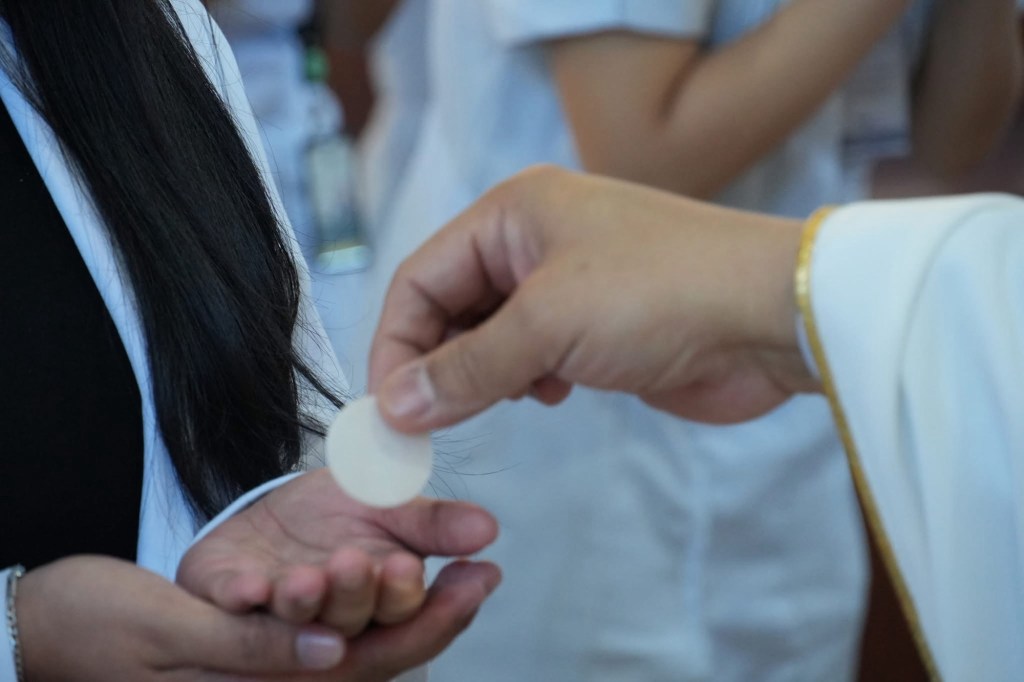
Photo by Mr. Raffy Tima of GMA7 News, Batanes, September 2018.

If….

Lord My Chef Daily Recipe for the Soul, 07 July 2025
Monday in Fourteenth Week of Ordinary Time, Year I
Genesis 28:10-22 <*((((>< + ><))))*> Matthew 9:18-26
Photo by author, Mount Sinai, May 2019.
If.
A conjunction so short
we often use to express
a condition or a supposition,
expressing something not certain
like when we say,
"If it rains, then we stay."
But today, dear God, you taught me
another dimension of this conjuction
"if" just like that verb "to doubt"
last week at the Feast of St. Thomas Didymus.
Like the verb "to doubt",
to use the conjunction "if"
is not necessarily negative in
meaning; it could even be a grace
too in itself as it already implies
certainty like when the woman
suffering hemorrhages for 12 years
came up behind Jesus and touched
the tassel on his cloak:

She said to herself, “If only I can touch his cloak, I shall be cured.” Jesus turned around and saw her, and said, “Courage, daughter! Your faith has saved you.” And from that hour the woman was cured (Matthew 9:21-22).

Teach me, Lord Jesus
like that woman to have that deep
faith and trust in you,
to claim always what is mine,
what I truly deserve because
you know what is best for us;
many times, Jesus,
we prefer to stay on the side
of the road, afraid to dare get close
and touch you because
of the more negative connotations
of that conjunction "if"
like what if I fail,
what if I don't get it,
and many other "ifs"
of hesitancy;
like that woman,
let my "if" be my final push
to get close to you.
Or,
like Jacob in the first
reading, let my "if" lead me
into action, into doing something
like an altar for the Lord
after meeting him in a dream
to remind him of your promise,
of your presence,
of your power.
Like Jacob,
we flee for many reasons
yet always end up being found
by you, Lord,
in the most ordinary instances.
If we could just learn
from your ways, Lord,
then our ifs would be
more of certainty
than suppositions.
Amen.
Fr. Nicanor F. Lalog II
Our Lady of Fatima University
Valenzuela City
Photo by author at Petra, Jordan, May 2019.

Jesus sitting among us

The Lord Is My Chef Sunday Recipe for the Soul by Fr. Nicanor F. Lalog II
Thirty-second Sunday in Ordinary Time, Cycle B, 10 November 2024
1 Kings 17:10-16 ><}}}}*> Hebrews 9:24-28 ><}}}}*> Mark 12:38-44

Our Sunday readings are so lovely, so picturesque where you find in both first reading and gospel the character of a poor widow standing side by side with great men of faith in God as the main focus, the Prophet Elijah and Christ Jesus, respectively.

In the first reading, we find humorously the Prophet Elijah asking for water, then some bread from a widow gathering sticks outside her home in Zarephath.

Elijah said to her, “Do not be afraid… For the Lord, the God of Israel, says, ‘The jar of flour shall not go empty, nor the jug of oil run dry, until the day when the Lord sends rain upon the earth.'” She left and did as Elijah had said. She was able to eat for a year, and he and her son as well; The jar of flour did not go empty, nor the jug of oil run dry, as the Lord had foretold through Elijah (1 Kings 17:13, 14-16).

Elijah had fled Israel after proclaiming a drought because the people turned away from God to worship baals or false gods brought by the wife of King Ahab, Queen Jezebel. God then directed Elijah to Zarephath outside the city of Sidon to hide where the king was the father of his archenemy, Queen Jezebel!

Imagine Elijah hiding in the most hostile place of all with a pagan widow who worshipped baal so denounced by him. But, here is a marvelous story of faith of Elijah who trusted God completely in obeying Him to move to the pagan region ruled by his enemies. Similar was the faith of the pagan widow who surprisingly believed Elijah and God’s power that she did not mind putting her life and her son’s at risk in harboring their enemy. Their admirable faith both remind us how God accomplishes His great acts of mercy and love when we surrender ourselves totally to Him.

Photo by author, Wailing Wall of Jerusalem, May 2019.

Nine hundred years later after Elijah, we had Jesus in Jerusalem like the prophet in a very hostile place and situation too – in the Temple that was the very domain of His enemies. This was the Holy Week after Jesus had entered Jerusalem on Palm Sunday leading to Good Friday.

And like Elijah who approached a widow worshipper of baal, Jesus dared to sit at the temple area after harshly castigating the scribes there:

He sat down opposite the treasury and observed how the crowd put money into the treasury. Many rich people put in large sums. A poor widow also came and put in two small coins worth a few cents. Calling his disciples to himself, he said to them, “Amen, I say to you, this poor widow put in more than all the other contributors to the treasury. For they have all contributed from their surplus wealth, but she, from her poverty, has contributed all she had, all her livelihood” (Mark 12:41-44).


Jesus sat down 
opposite the treasury and observed
how the crowd put money into the treasury.

Throughout this week, that scene of Jesus seated at the Temple had so absorbed me. What was Mark trying to tell us in reporting this? Jesus seated at the temple opposite the treasury observing the crowd is something else.

See the genius of Mark in weaving this Sunday’s gospel scene: right after castigating the corrupt leaders of Israel who were affiliated with the temple, Mark segued into this poor widow dropping some coins into the treasury box. In ancient Israel, the poor like the widows were not required to give those contributions. In a stroke of genius, Mark tells us something is wrong in this scene which Jesus rightly attacked because that widow was one of those widows whose house was devoured by the scribes!

“The Widow’s Mite” painting by French painter James Tissot, from brooklynmuseum.org.

And Mark never intended the story only for the Christians of his time but also for us as we have continued in the Church that malpractice by priests and scribes of Jerusalem. Woe to us priests and bishops who go around in “long robes and accept greetings, seats of honor” and worst of all, “devour houses of widows”, forgetting the poor, preferring always to be with the rich and powerful that social media attest.

Like Zarephath and the Jerusalem Temple, there is Jesus sitting in the middle of our Church under attack on all fronts and within in order to be closer with us especially the widows and the poor who are victims of an unjust society and systems perpetrated by same men and women supposed to be servants of God, or, at least men and women of God.

Photo by author, July 2024.

That image of Jesus seated at the Temple opposite the treasury was in fact a reminder of His being the victim too of injustice in the temple like the poor widow, of His Crucifixion on Good Friday. In fact, the 30 pieces of silver the priests have paid Judas Iscariot to betray Jesus must have come from that treasury.

In the midst of the hostilities and hurts, the divisions and abuses of power by priests and lay alike, in the Jerusalem Temple then and now in our Church, there has always been Jesus sitting among us, observing our offerings after first offering Himself for us all as our perfect High Priest (second reading) who finally freed us from these injustices and inhumanity of the past.

That is why I love this scene so much.

More than tithing, Jesus tells us this Sunday that like that generous heart of the poor widow, despite her plight, she continued to give because she believed, she hoped, most of all, she loved God. She need not give but still insisted because the treasury was for the upkeep of the temple, the very house of God, therefore, for God Himself.

There are times I hurt deep inside for the pains of the many scandals some priests and bishops have caused the Church but I choose to remain, even to sit in this Church or be a victim like Jesus amid all these because I love Jesus. Yes, amid all these sorrows, there is one “first” I see above all, Jesus Christ. This is concretization of last Sunday’s “which is the first of the commandments” – God who is love above all!

Jesus is telling us this Sunday through the poor widow that it is recognizing God in us and in one another that matters, and that is why we give at all.

Photo by author, 2022.

If we love God, if we find God in us and in others, when we find Jesus seated among us, then we realize we are the Church, we are the Temple we love. The moment we realize this, the more we feel at home “sitting with Jesus in the temple”, then we start giving totally because we love as well as know for a fact that whatever we give is actually what we receive from God in Jesus.

Why give so little? Give all, give everything because you never have anything to begin with! Everything is from God. That is why it is in giving that we truly receive. In every Mass, we do not give anything except our mere presence that is not even complete and yet, we get abundant blessings, primarily Jesus Christ whom we receive wholly, Body and Blood.

In every Mass we celebrate, we sit with Jesus in the midst of this inhospitable world we live in, even right in the church we love and hate sometimes. We do not give up. We persevere because we believe, we trust, we hope. Most of all, we love like Elijah and Jesus and believe like the poor widows of Zarephath and Jerusalem Temple. Amen. Have a blessed week ahead!


We are God’s handiwork

The Lord Is My Chef Daily Recipe for the Soul by Fr. Nicanor F. Lalog II
Monday in the Twenty-ninth Week of Ordinary Time, Year II, 21 October 2024
Ephesians 2:1-10 <*((((>< + ><))))*> Luke 12:13-21
Photo by author, the pristine Nagsasa Cove in San Antonio, Zambales, 19 October 2024.
Your words today, O loving God
through St. Paul are so refreshing,
so lovely to read and hear,
very reassuring especially for
those of us losing hope in life,
those so tired and exhausted,
those about to give up;
let us sing joyfully to You, O Lord,
and serve You gladness!

For we are his handiwork, created in Christ Jesus for the good works God has prepared in advance, that we should live in them (Ephesians 2:10).

Everything that we have become,
every good and beautiful thing we do
is simply because of You, O God,
at work in us,
through us;
what a great honor, O God
You made us so good and beautiful,
You brought us here,
You sent us for a mission;
let us be open in order to give
our unconditional "YES" to Jesus Christ
in faith daily so that we may do continue your work
in keeping this a better and more humane world;
let us give our unconditional "YES" to Jesus daily
so we may experience your guidance
and help in our undertakings
to reflect You, dear God,
so that it is You who is always
found and recognized in
everything we do that is true,
good, and beautiful;
let us not be preoccupied
with so much material wealth
and fame that fills us with greed
unable to satisfy the deepest
longings of our hearts
found only in You.
Amen.
Photo by author, river leading to Nagsasa Cove, San Antonio, Zambales, 19 October 2024.

Filled with Spirit

The Lord Is My Chef Daily Recipe for the Soul by Fr. Nicanor F. Lalog II
Friday, Memorial of St. John XXIII, Pope, 11 October 2024
Galatians 3:7-14 <*((((>< + ><))))*> Luke 11:15-26
Photo by author, Sacred Heart Novitiate, Novaliches, QC, 20 March 2024.
Lord Jesus Christ,
fill me with your Holy Spirit,
enliven my faith,
hope and love in You;
in this age of so many divisions
when we are being pulled by
the strong forces of the past
to go back to what was before
due to the excesses of modern time,
let us look for your Cross,
O Lord, to let the "finger of God"
work in us to cleanse us of
all evil and filth that make us
"scatter" than "gather".

“But if is by the finger of God that I drive out demons, then the Kingdom of God has come upon you… Whoever is not with me is against me, and whoever does not gather with me scatters. When an unclean spirit goes out of someone, it roams through arid regions searching for rest but, finding none, it says, ‘I shall return to my home from which I came.’ But upon returning, it finds it swept clean and put in order. Then it goes and brings back seven other spirits more wicked than itself who move in and dwell there, and the last condition of that person is worse than the first” (Luke 11:20, 23-26).

Let us realize,
like what St. Paul tells us
in today's first reading that
we who "have faith in You are
the children of Abraham,
that the blessing of Abraham
might be extended to the Gentiles
through Christ Jesus, so that
we might receive the promise of
the Spirit through faith"
(Galatians 3:7, 14).
Let us embrace that truth,
Jesus, that You have done everything
for our salvation,
for our freedom,
for our being children of the Father;
You have cleansed us,
come fill us with your Spirit
for us to see our similarities
not differences to build a more
humane society here on earth;
fill us with your Spirit, Jesus,
let not the bonds and shackles of sin
hold us, isolated from others,
always competing that prevent
peace in finally happening.
Help us imitate your faithful servant
St. John XXIII who convened the
Second Vatican Council to open
the windows of the Church
and welcome this modern age
so we may find You Jesus ever more
present in this changing time;
most of all, to share You, Jesus
who is still most needed
in this troubled age.

You have done everything
for us, Jesus.
Let us rest on that by
remaining in You,
doing your work
and make us stop
playing god, savior
of the world.
Amen.
Photo by Ka Ruben, new stained glass of the National Shrine of Our Lady of Fatima, Valenzuela City to be blessed on Sunday, the 107th anniversary of the last Apparition of the Virgin Mary in Fatima, Portugal.

Nanay Sta. Monica

Quiet Storm by Fr. Nicanor F. Lalog II, 27 August 2024
Photo of St. Monica from the cover of the book “St. Monica Club: How to Wait, Hope and Pray For Your Fallen-away Loved Ones by Maggie Green, Sophia Institute Press, 2019.

Today we celebrate the Memorial of St. Monica, mother of St. Augustine. She has always been associated with her son Augustine who is considered as one of the great saints of the Church with so much impact in our theology and almost every Catholic teaching. It was through the prayers and many sacrifices by St. Monica that St. Augustine was converted to Christianity who eventually became a priest then later as Bishop and Doctor of the Church. That is why during the Vatican II reforms of the liturgy, her memorial celebration was moved from May 4 to August 27, a day before St. Augustine’s memorial too.

Next to the Blessed Virgin Mary, St. Monica is perhaps the best example of motherhood beyond compare. Patron saint not only of wives and mothers, St. Monica is also the Patroness of those seeking patience and victims of abuse.

Most probably, stories about her suffering in silence in being married to an abusive and philandering pagan husband named Patricius were “overextended” to the extent we Filipinos got a very wrong impression of a “martyr” as being a wife who willingly bears without complaints the abuses by her husband.

St. Monica was very far from that kind of “martyr” but was in fact a “martyr” to the truest sense of its meaning from the Greek word martyria that means to witness Jesus Christ. Witnessing for Christ by bearing sufferings does not mean allowing one’s self to be abused freely by anyone; witnessing for Christ is primarily living a life centered on Jesus in prayers that flow into good works and holiness. Martyrdom is overcoming evil with goodness that is why many times, it ends with death – but, it is not as a defeat but as a triumph that leads to conversion of sinners and unbelievers, exactly how Christianity spread before and until now wherever Christians are persecuted.

According to St. Augustine’s own account in his book Confessions, although domestic abuse was prevalent during their time, their ill-tempered father never beat their mother. Her daily prayers especially her frequent going to the Mass with so many acts of charities to the poor irritated their father Patricius and yet led him to respect St. Monica. Eventually, her prayer life that found expressions in her almsgiving and kindness to everyone won the heart of Patricius, calmed his violent tendencies until he finally converted to Christianity before his death.

Before calming and converting her husband, St. Monica first won over her equally difficult to deal with mother-in-law! So, for those having problems with in-laws, St. Monica is the go-to saint for you!

But it is not that easy at all. We need to do the efforts, to cultivate a prayer life and allow God to work in us in order to grow in faith, hope, and love as well as the virtues especially patience. All these aspects of her faith flowed in her remaining so sweet and gentle despite her problematic husband and three children (whom Patricius refused to be baptized as Christians) that she was able to exercise a good influence over abused wives and suffering mothers who were so moved by St. Monica’s example.

Now here is the funny thing that most likely mothers and wives today would surely laugh at – St. Monica’s advise: “If you can master your tongue, not only do you run less risk of being beaten, but perhaps you may even, one day, make your husband better.”

Huwag daw po kuda nang kuda, mga Nanay at mga Misis…

Having spent most of my 26 years as a priest ministering to students and young people (exactly 17 years and counting), I used to tell them how often our mothers’ nagging is actually their love language; they may be saying a lot even without thinking at all but that’s because they love us, they care for us. That is why I find it amazing, so prophetic when Filipino mothers speak the same thing when children come home, hurt and beaten after not listening to their words of caution: “Sinasabi ko na nga ba…!”

Photo from shutterstock.com

Many times, mothers are prophetic; listen to whatever they may be saying because so often, they tell the truth. About us or of then people we go out with.

One thing I miss these days after my mom’s death in May are her words of love and wisdom as well as her nagging with accompanying threats (tatamaan ka sa akin or lalayasan ko kayo). Psychologists say that is wrong for parents to threaten their kids. I don’t really know but from my own experience those were perfectly examples of tough love that made us strong.

Now Mommy or Mamu as we called her since becoming a grandma is gone, no one reminds us or nags us anymore. And the worst part of that is, you have no one to make sumbong. We have lost somebody willing listen to all of our kuda.

That I think makes every mother to suffer a lot because they keep so many of her children’s pains and hurts, including anger and complaints in their hearts: many times they explain but we refuse to listen, accusing her of bias and favoritism. There are times she would say “hayaan mo na lang anak”… she would be talking and talking again of many things.

Every Nanay is a Sta. Monica, suffering in silence because she has always been loving us in silence. Truly, when a mother dies, our links are never cut off from her as if the umbilical cord remains intact. And wireless up to heaven. How funny that we complain often our our mother’s nagging and endless talking but when she becomes silent, we miss her. Now because we are sure she loves us so much.

Sharing with you this most beautiful tribute of four brothers to their Nanay I found last night in the internet now with 4M views. Pray for all mothers today, thank God for their great gift of life.

https://www.facebook.com/share/v/SJHtTEMdeiPdESJh/?mibextid=KsPBc6

Eating well, living well

The Lord Is My Chef Sunday Recipe for the Soul by Fr. Nicanor F. Lalog II
Twentieth Sunday in Ordinary Time, Cycle B, 18 August 2024
Proverbs 9:1-6 ><}}}}*> Ephesians 5:15-20 ><}}}}*> John 6:51-58
Photo by author, James Alberione Center, QC, 15 August 2024.

It is our fourth consecutive Sunday listening to the sixth chapter of John’s gospel that opened with the miraculous feeding by Jesus of more than five thousand people in a deserted place; Jesus fled from there, went back in Capernaum where people caught with Him and disciples as He began three Sundays ago His “Bread of Life” discourse now getting deeper while the drama among the crowd is heating up.

From murmuring last Sunday about Jesus who said “I am the bread that came down from heaven” (Jn.6:41), the people today quarreled among themselves after Jesus said “I am the living bread that came down from heaven; whoever eats this bread will live forever; and the bread that I will give is my flesh for the life of the world” (Jn. 6:51).

Photo by author, James Alberione Center, QC, 15 August 2024.

Notice the beautiful contrast of reactions by people to Jesus: from murmuring last Sunday, they sank deep into quarreling while Jesus leveled up to “the living bread from heaven” from merely “the bread from heaven” last week. For us to live well, we have to eat well by having Jesus Himself as our food and drink.

The Jews quarreled among themselves, saying, “How can this man give us his flesh to eat?” Jesus said to them, “Amen, amen, I say to you, unless you eat the flesh of the Son of Man and drink his blood, you do not have life within you. Whoever eats my flesh and drinks my blood has eternal life, and I will raise him on the last day. For my flesh is true food, and my blood is true drink. Whoever eats my flesh and drinks my blood remains in me and I in him. Just as the living Father sent me and I have life because of the Father, so also the one who feeds on me will have life because of me” (John 6:52-57).

Photo by Ms. Ria De Vera in Banff, Alberta, Canada, 07 August 2024.

Eating is the most common human activity anywhere, any time. Human life basically revolves around eating as we have seen since time immemorial how we have progressed following our search for food. We work to feed ourselves and loved ones. Without food, we die. Food is so essential that there is always food to share in our gatherings.

That is why Jesus chose the bread and wine as the signs of His living presence among us in the Holy Eucharist He established during the Last Supper on Holy Thursday. In the Eucharist, Jesus elevated the most ordinary human activity of eating as most sublime and Divine. In the Holy Mass, we share in Christ’s Body and Blood so we too may share our very selves with one another.

When Jesus said in Capernaum that the bread He is giving is His own flesh with His blood as drink, He was already preparing the people for the Eucharist while at the same time teaching them that eating is not everything. We have to eat well to live well. When tempted by the devil in the wilderness, Jesus right away taught us to remember that man does not live by bread alone but with every word from God. At the start of this discourse last August 04, Jesus challenged the people, “Do not work for the food that perishes but for the food that endures for eternal life, which the Son of Man will give you” (Jn.6:27).

Photo by Ms. Ria De Vera in Banff, Alberta, Canada, 07 August 2024.

Many times, we get so used in our many activities that unconsciously, we miss life itself as we punish ourselves with exhaustion and sickness as well as emptiness.

Food is not just something that fills our stomach but must also lead into our heart and soul. Observe any cuisine and you get a taste of the culture and people it represents, even with strong hints of its geographical origin. In the first reading we find how the Book of Proverbs personified Wisdom as God to remind us that though He is transcendent and so above us, God is easily accessed even in the most ordinary instances like eating.

Wisdom has built her house, she has set up her seven columns; she has dressed her meat, mixed her wine, yes, she has spread her table. She has sent out her maidens; she calls from the heights out over the city: “Let whoever is simple turn in here; to him who lacks understanding, I say, Come, eat of my food, drink of the wine I have mixed! Forsake foolishness that you may live; advance in the way of understanding” (Proverbs 9:1-6).

How lovely is that part of God calling us to come like Jesus in the gospel when He said “come to me all who are burdened” or when He ordered to “let the children come to me”. Is it not the same thing we say when we are about to eat, to come and get it?

Sadly these days, we seem to have retrogressed in our manner of eating. Social media rightly labeled it as “food porn” when we are flooded with everything about food and drinks minus its deeper meanings. Food is sadly seen in its material aspect that eating is more on filling the stomach, forgetting the soul because we have totally forgotten God and the people around us. No wonder that despite the growing food production and plethora of food we have these days, many still starve while the rest of us remain lost in life, more sick.

Photo by Ms. Ria De Vera in Banff, Alberta, Canada, 07 August 2024.

See, my dear friends, the great coincidence on the very Sunday Jesus began his bread of life discourse, it was also the opening of the Paris Olympics with a mockery of the Last Supper that led us into a kind of “quarrel” as organizers and their supporters insisted it wasn’t the Last Supper at all despite the clear indications and proofs.

“How can this man give us his flesh to eat?” Suddenly, we heard anew that same question by the people in Capernaum to Jesus reechoed in the Olympics at the capital city of the Church’s so-called “eldest daughter”, France. Of course, we know this bread of life discourse by Jesus refers to the Holy Eucharist and surely, the many defenders of the Paris Olympics are aware for many of them are Catholics. But, Jesus must have willed this gospel be proclaimed at this time coinciding with the Olympics for us to evaluate anew our faith in Him because at the very core of this bread of life discourse is the mystery of faith.

“How can this man give us his flesh to eat?” In the gospel of Luke, we find a similar question by Mary at the Annunciation that is filled with faith, “How can this be?” (Lk.1:34); but today, like in Capernaum as exemplified by the Paris Olympics, that question is a renewed refusal to believe in the words of Jesus Christ. Worst of all as we noted earlier in our perceptions of food and eating these days, that question shows modern man’s insistence on everything material, totally disregarding our spiritual nature.

Photo by Ms. Ria De Vera in Banff, Alberta, Canada, 07 August 2024.

Like in Capernaum, many people today who refuse to believe Christ’s words resort to malicious and insidious arguments that it becomes useless to really converse with them as they would rather insist on their grossly material understanding and perception of life these days. Many prefer to quarrel these days than accept life’s many mysteries not merely seen nor tasted by the senses but experienced and realized through faith in God.

Life for them has become merely material which in Greek is bios as in biology. There is another Greek word for life which is zoe that refers to the eternal, divine life of God that Jesus repeatedly used in our gospel today.

Like last Sunday, Jesus did not engage Himself into debating with the crowd in Capernaum by simply repeating the words living and life to emphasize the total acceptance of Him – Body and Blood – in faith: “I am the living bread… my flesh for the life of the world. Just as the living Father sent me and I have life because of the Father, so also the one who feeds on me will have life because of me.” These are the very same words too, life and living that Jesus would mention before His Passion and Death as well as after His Resurrection because eating His flesh and drinking His blood is to share in His life that is also the fullness of life. It is only in Christ Jesus can we find fulfillment in life. Let us pray:

Lord Jesus Christ,
help me watch carefully
how I live, not as a fool
but as wise as St. Paul taught
us today in his letter to the Ephesians;
let us not be intoxicated
with life's pleasures and worldly pursuits
but let us be filled with the Holy Spirit.
Amen.

Photo by author, 15 August 2024.