Discipleship is loving like God

The Lord Is My Chef Sunday Recipe for the Soul by Fr. Nicanor F. Lalog II
Sunday Week VII-C in Ordinary Time, 20 February 2022
1 Samuel 26:2, 7-9, 12-13, 22-23 ><}}}*> 1 Corinthians 15:45-49 ><}}}*> Luke 6:27-38
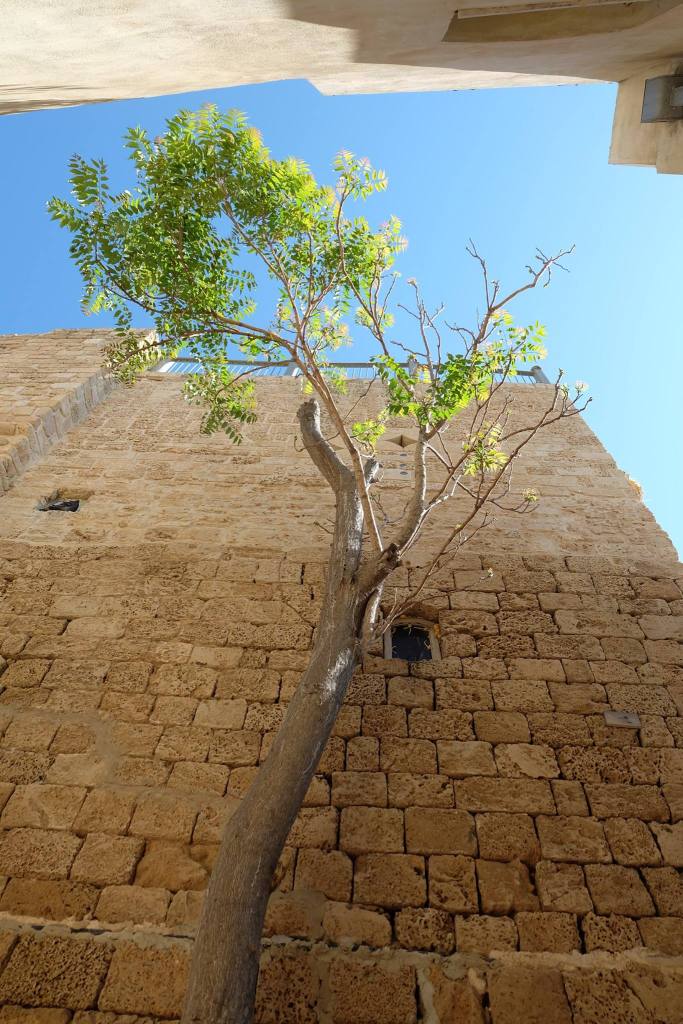
Photo by author, 15 February 2022.

Jesus continues with his sermon on the plains, going into the details of his main lesson, the Beatitudes which is about love. But not just love as we know and practice: twice Jesus tells us to “Love your enemies” (Lk.6:27, 35).

His instruction to “love your enemies” captures all the other moral injunctions in his lessons this Sunday meant to teach us to love like God as revealed by Jesus Christ. Recall how these past three Sundays we have been assured of the grace of God of the paradoxical happiness in life’s many contradictions we as disciples of Christ are invited to adopt by being poor, hungry, weeping and persecuted.

Jesus is teaching us his disciples to trust in him always, to look at everything in his perspective so that we may live and act like God our Father who loves everyone without measure. And to love without measure even one’s enemies begins in foregoing revenge as shown by David in the first reading.

In those day, Saul went down to the desert of Ziph with three thousand picked men of Israel, to search for David. So David and Abishai went among Saul’s soldiers by night and found Saul lying asleep within the barricade, with his spear thrust into the ground at his head and Abner and his men sleeping around him. Going across to an opposite slope, David stood on a remote hilltop at a great distance from Abner and the troops. He said: “Here is the king’s spear. Let an attendant come over to get it. The Lord will reward each man for his justice and faithfulness. Today, the Lord delivered you into my grasp, I would not harm the Lord’s anointed.”

1 Samuel 26:2, 7, 13, 22-23

Photo by author, Dead Sea desert, 2017.

Imitating Christ in his love

David is a type of Jesus Christ, a prefiguration of his coming, of someone who completely trusts in God and his words promised to him. If we read on further, this scene beautifully ends with Saul blessing David for sparing his life as they parted ways while David tells the king, “As I valued your life highly today, so may the Lord value my life highly and deliver me from all difficulties” (1 Sam. 26:24).

To avenge one’s self on an evil doer is a “fairly” spontaneous reaction, something so automatic with our human nature. But to renounce punishment, to not retaliate like the Bishop of Belgium who was recently attacked and mocked by half-naked women recently for his stand against homosexual lifestyles is something so different and unusual. That is why the Bible teems with so many stories of similar accounts how men of God patiently bore all humiliations and pains to educate and form our conscience, forego vengeance and retaliations by trusting in the Lord always who will render to each one his and her due.

One of the most unforgettable story in modern time of such trust in God is by St. John Paul II who went to forgive assassin Mehmet Agca a year after seriously shooting him at the Vatican Square in 1981. Pope emeritus Benedict XVI shows the same confidence in God as his Savior in his latest pronouncements following recent attacks by some people regarding his handling of a sexual abuse case in Germany, not to mention his old age and sickness.

Photo by author, Tagaytay City, 15 February 2022.

Love begins with respect, seeing the worth of a person

Jesus is not asking us to be passive nor resigned in the face of injustice and violence happening around us; very clear at the inauguration of his ministry in the synagogue at Nazareth how Jesus declared he had come to heal our sickness and liberate those oppressed.

In asking us to return good for evil, to love one’s enemies is above all to love like God like he had shown us in its highest expression at the Cross. It is not something reserved only for Jesus as the Son of God nor for the saints or holy men like St. John Paul II, Pope Emeritus Benedict XVI or that Bishop in Belgium.

God does not love only those who do good or finds worthy; God loves everyone because of our very existence.

This is what Jesus is telling us to always look at, to find and see in everyone. We are persons to be loved, not things and objects to be owned and possessed that when no longer useful nor “good” who can be simply dismissed or thrown away.

An important component of love is respect which literally means “to look again” from the Latin words “re” for again and “specere” to look or see. From specere came the words spectacle/s, spectator, and spectacular.

It is when we fail or refuse to look and see an individual as a person – somebody like us with feelings and dreams, someone who cannot be simply defined by history or background, color or creed but another being with life who is from God alone – that is when we sin, that is when we fight and quarrel, making enemies.

When there is no respect, when we refuse to look and see the other as another person with a face reminding us of our very selves and God as our common Source and End, that is when hate and revenge get out of bounds because we have judged the other as somebody not like us or less than us.

It is from respect for the other person where all other virtues like justice and kindness, love and forgiveness spring form because it puts us at the same level despite the wrongs done to us. Respect is recognizing and affirming the personhood of each one of us in God that must guide us in relating.

Now that COVID seems to be waning in the country, may we keep the lessons of the face mask and social distancing which is the value of every person, to always reach out to others, and most of all, to look into the eyes, to find and feel the warmth of every person’s face as image and likeness of God.

To love is to find Jesus in everyone

All the teachings and moral instructions in the Bible – from the prophets to Jesus Christ – are not only doctrines and precepts to be followed but actually the self-revelations of our personal God who relates with each of us in every person. This is why at the end of his teachings this Sunday, Jesus reminds us that the “measure with which you measure will in return be measured out to you” (Lk.6:38).

Let us not look beyond for any other basis for our love and respect. Jesus alone is the One why we love without measure, even our enemies because in him we find the new Adam, the spiritual One according to St. Paul presents in the second reading whom we find in everyone as well as in our very selves. Amen.

You are loved. Have a blessed week ahead.

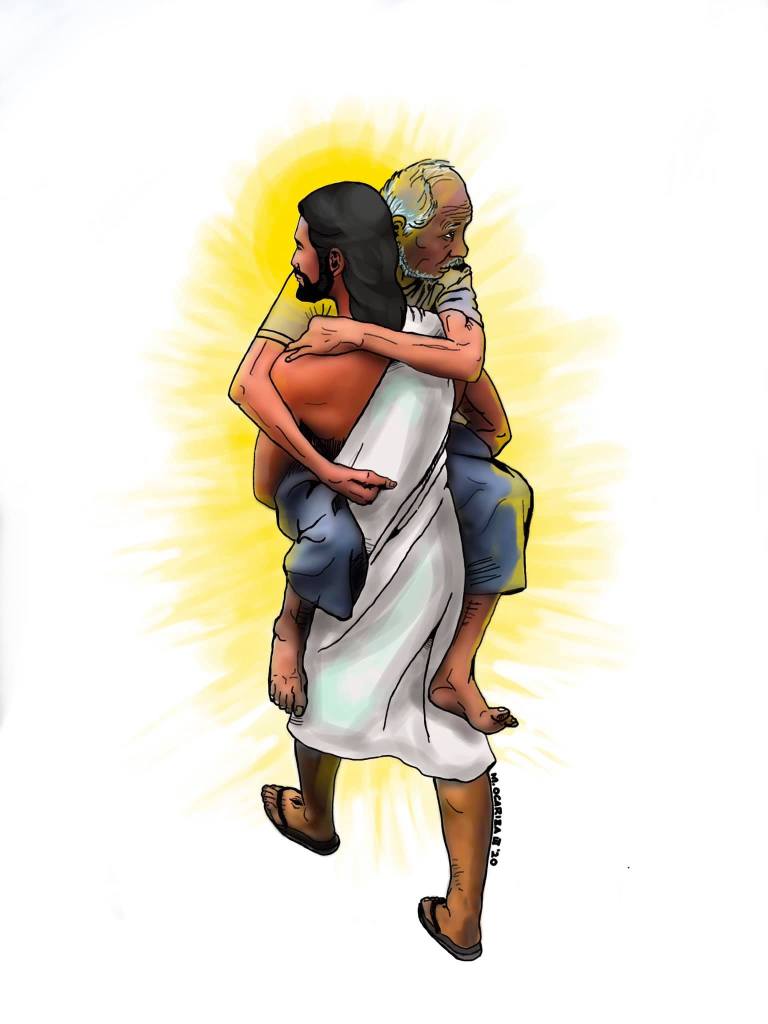
Photo by Mr. Vincent Go, 2020, Mang Dodong of Caloocan City who was forcibly quarantined in Navotas for a month after being caught without an ID while buying some fish to peddle in his neighborhood while a police general got free of any punishments celebrating his birthday mañanita.

Faith + works = discipleship

The Lord Is My Chef Daily Recipe for the Soul by Fr. Nicanor F. Lalog II
Friday, Week VI, Year II in Ordinary Time, 18 February 2022
James 2:14-24, 26   ><)))*> + ><)))*> + ><)))*>   Mark 8:34-9:1
Photo from inquirer.net, 2021.
Awaken us, O Lord,
from our mistake and
error of insisting 
that our pious and religious 
exercises are the "good works"
that express our faith in you;
let us realize that it is not 
enough that we simply 
celebrate Mass, recite the
Rosary, join processions and
pilgrimages and keep other 
devotions that make us good
practicing Catholics; these are
not the good works that St. James
is asking from us in the first reading:
faith is the true living out 
of our faith in you, Jesus Christ!

For just as a body without spirit is dead, so also faith without works is dead.

James 2:26
True faith in you,
O Lord, is forgetting 
one's self to reach out
to those in need, fighting
for justice and peace,
being more loving and kind,
forgiving and understanding
of others just like you, dear Jesus.
True faith in you,
dear Jesus, is being 
your disciple which is  
a call to deny one's self,
to take up one's cross in life,
and to follow YOU always
(Mark 8:34).
Give me the grace
this day, Jesus, 
to sincerely look into
myself and examine 
how true is my
faith in you, 
how my very life
and actions reveal
the faith I have
or simply do not have
at all.  Amen.

Disturb us, Lord

The Lord Is My Chef Daily Recipe for the Soul by Fr. Nicanor F. Lalog II
Thursday, Week VI, Year II in Ordinary Time, 17 February 2022
James 2:1-9   ><]]]]*> + ><]]]]*> + ><]]]]*>   Mark 8:27-33
Photo by author at Jaffa, Israel 2017.
Your words today, Lord Jesus,
are disturbing, even shocking,
jolting us to our very core of 
being because they are very 
true, and happening among us.

Listen, my beloved brothers and sisters. Did not God choose those who are poor in the world to be rich in faith and heirs of the Kingdom that he promised to those who love him? but you dishonored the poor. Are not the rich oppressing you? And do they themselves not haul you off to court? Is it not they who blaspheme the noble name that was invoked over you?

James 2:5-7
Lord Jesus,
what is most disturbing
in James' letter is not his
indictment of the rich for
their greed and other sins;
what is very shocking is how
most of the people who have 
shown partiality to the rich,
allowing them to oppress
the poor. 
This sad reality continues
among us, dear Jesus when
we are shocked and refuse to
accept, when we prefer to be
blind than to see your true 
person as a suffering Messiah,
when we insist in recognizing you
as a royalty of the world who must
be served and honored, not 
realizing that true wealth is
being poor before God, trusting
only in him.  Amen.

Keeping in touch with the Lord

The Lord Is My Chef Daily Recipe for the Soul by Fr. Nicanor F. Lalog II
Wednesday, Week VI, Year II in Ordinary Time, 16 February 2022
James 1:19-27   ><}}}}*> + ><}}}}*> + ><}}}}*>   Mark 8:22-26
Photo by Mr. Jim Marpa, 2018.
Please bear with me, 
O Lord Jesus, for being
playful today like a child:
first thing that came to my 
mind while praying is how 
things have really changed
so much in our time.
If your Apostle James were
with us today, he might have 
written us first with the admonition
to "Think before you click..." 
and then proceeded with his timely 
reminders:

Know this, my dear brothers and sisters: everyone should be quick to hear, slow to speak, slow to anger, for anger does not accomplish the righteousness of God. Therefore, put away all filth and evil excess and humbly welcome the word that has been planted in you and be able to save your souls. Be doers of the word and not hearers only, deluding yourselves.

James 1:19-22
So much have really changed
among us, dear Jesus:  we have
been so glued to our TV and 
computer screens and cellphones
and other gadgets, so detached from
God and from others; we no longer 
listen nor hear your voice, Lord, and
worst, we speak so much that we 
have come to dread silence where
we can hear you loud and clear;
as a result, we gone out of touch with you
and others too, isolated, alone and 
distant not only from everyone 
but with reality.
Touch us again, Jesus,
pull us away from all the noise and
screens of media that hinder us from
experiencing you and your presence;
let us pray and listen first to your words,
then think before clicking the computer;
most of all, be patient with us, Jesus, 
like the blind you healed away from others 
and help us find our way home 
to the Father and one another.  Amen.

Anniversaries are for the hearts

QuietStorm by Fr. Nicanor F. Lalog II
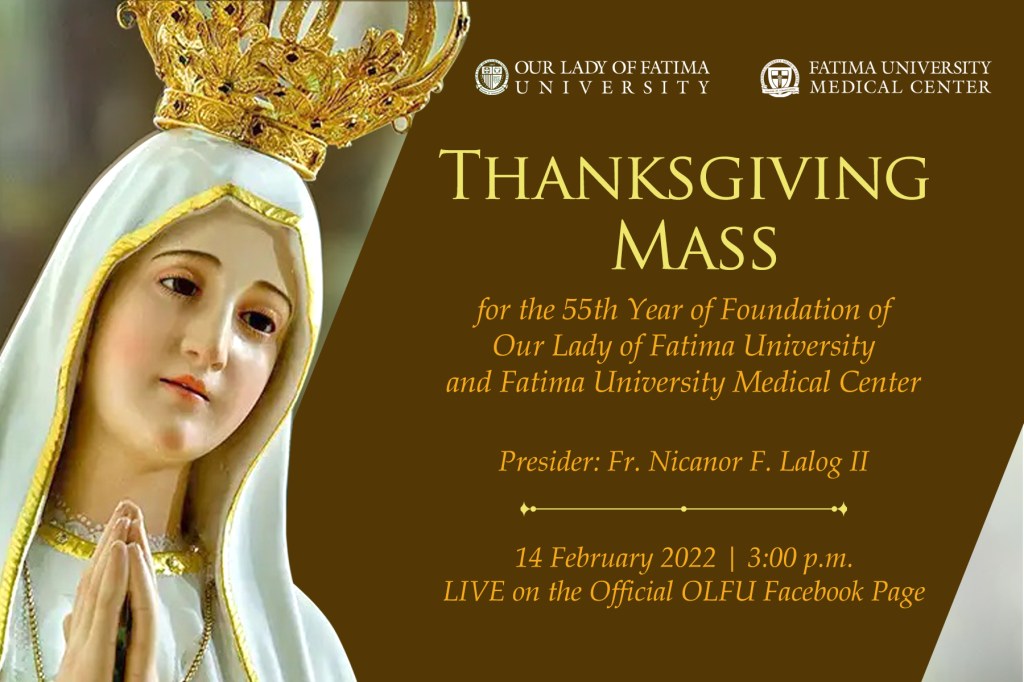
Homily for the 55th Anniversary of Our Lady of Fatima University and
Fatima University Medical Center, 14 February 2022
From Facebook, 14 February 2022.

Every anniversary is a celebration for the heart, of the heart.

Every anniversary is an occasion to look and examine our hearts, to fill our hearts with gratitude and joy for the gift of life and existence, of mission that continues despite and in spite of so many things; a time to cleanse our hearts of pains from the hurts of the past; and, most of all, to open our hearts anew to more challenges and opportunities for deepening and fulfillment.

In keeping with our tradition, we gather on this Valentine’s Day to praise and thank God for his outpouring of blessings in the past 55 years to Our Lady of Fatima University and the Fatima University Medical Center.

Despite the disruptions and problems COVID-19 had caused us that continues to this day, our hearts are overflowing with thanksgiving and great hopes for better tomorrow for our beloved OLFU and FUMC.

Consider it all joy, my brothers and sisters, when you encounter various trials, for you know that the testing of your faith produces perseverance. And let perseverance be perfect, so that you may be perfect and complete, lacking in nothing.

James 1:2-3
Photo from Facebook/OLFU.

St. James reminds us today of yesterday’s sermon on the plains by Jesus Christ that truly blessed are those who are poor, hungry, weeping, and maligned and persecuted for standing for what is true (Lk.6:20-26).

Inasmuch as we greatly dislike inconvenience and sufferings, failures and powerlessness, poverty and sickness, we have experienced that true growth and maturity can only happen by going through difficulties that bring out the best in us through time than the instant gratifications and feel-good sensations offered by the world.

Those who have been with us for over 30 years have witnessed how our University and Medical Center have grown from initially two buildings – the old hospital and nursing school – here at the Valenzuela campus along McArthur Highway now composed with 16 buildings with five other campuses in Quezon City, Antipolo (with another medical center), San Fernando, Cabanatuan, and Sta. Rosa in Laguna.

There were so many difficulties and even mistakes during those years but everybody persevered, hurdling all the trials to establish Our Lady of Fatima University and the Fatima University Medical Center as one of the leading centers of learning and medical sciences in the country with its innovative courses and programs available to more people.

We strived. And we never stopped.

Photo from Facebook/OLFU.

When the COVID-19 pandemic came in 2020, many of our plans were deferred but we continued to persevere in this modern crisis. It is still the most difficult trial we have ever faced in our lives, changing so much the way we live these days.

Despite the uncertainties and yes, fears, we sought ways and new methods in dealing with the crisis, becoming the first school of medicine to offer limited face-to-face classes. Eventually, we opened many of our courses to limited face-to-face classes last year still ahead of other schools and universities.

It was during these difficult years of the pandemic when our vision and mission have become most clear than ever to be a fount of “truth and mercy” during this great period of crisis by “rising to the top” through innovative new methods and approaches in the fields of education, medical sciences and management.

Truly, trials perfect and make us complete as men and women ready to serve and lead others to achieving their dreams and caring for the sick.

St. John of the Cross said “The soul that walks in love is never tired and never tires others.”

On this day of the hearts as we celebrate our 55th anniversary, let us borrow from this great mystic of the Church his words with a slight twist, “The heart that walks in love is never tired and never tires others”.

Our Lady of Fatima University and Fatima University Medical Center in Antipolo, photo from OLFU/FB.

In the gospel we have heard the story of the Mary’s visitation of her cousin Elizabeth then six months pregnant with John the Baptist. Mary had just conceived through the Holy Spirit our Lord Jesus Christ and she hurriedly went to visit Elizabeth.

A beautiful scene of two great women together, conversing and rejoicing in God. Very rare in the bible do we find two women together in one scene and Luke presents this to us to remind us of the wrong perception at that time – that sadly persists to this day – of women taken for granted and looked down upon. Most especially the Virgin Mary who came from the obscure town of Nazareth and compared with her cousin Elizabeth who came from a family of priests, the Blessed Mother was a “nobody”, a simple, country maiden.

But in Mary’s simplicity, we find an important aspect of the heart – of being open to God, of always welcoming Jesus into our hearts to allow ourselves to be his instruments of change. What a beautiful coincidence or divine will that largely behind the success of Our Lady of Fatima University and Fatima University Medical Center are three great women too! – our late co-founder Mrs. Juliet Santos, our President, Dr. Caroline Santos-Enriquez and Chairperson of the Board of Trustees, Dr. Yvonne Santos-Guevarra.

Filled with love for God and for her cousin Elizabeth, the Blessed Virgin Mary went in haste to visit her to show support and recognition to the plan of God to the baby in her womb; filled with love in her heart, Mary visited Elizabeth to share in God’s divine plan of saving mankind.

Aside from facing trials with perseverance, Elizabeth tells us today another thing about true blessedness through Mary: believing that the words of God will be fulfilled!

Photo from OLFU/FB.

My dear friends, the Administrators and Board Directors of Our Lady of Fatima University and Fatima University Medical Center, our dear students and faculty members, fellow employees, and alumni: on this Valentine’s day we not only look into our hearts but also give our hearts to Jesus as the Blessed Virgin Mary had told us at Fatima, Portugal over a hundred years ago.

Like our Lady of Fatima, let our love for God flow to our love for one another.

Like Mary at Fatima, let our love for others be more intense and encompassing in leading men and women into knowledge and wisdom, well-being and health.

Like Mary at Fatima and through her prayers, let our hearts be cleansed and purified to make our faith more firm and our hope more vibrant in Christ who calls us to follow his truth and imitate his mercy. Amen.

A blessed happy 55th anniversary to you!

Remove my blindness, Lord

The Lord Is My Chef Daily Recipe for the Soul by Fr. Nicanor F. Lalog II
Tuesday, Week VI, Year II in Ordinary Time, 15 February 2022
James 1:12-18   ><))))*> + <*((((><   Mark 8:14-21
Photo by Philip Santiago, Lourdes, France, 2018.
Lord Jesus,
please remove the many
blindness I have in myself
that prevent me from seeing you
from understanding you
from following you.
Please remove that one
particular blindness in me
about temptations:  they
do not come from God nor
God wills anyone of us to be tempted;
temptations come from deep
within each one of us!

No one experiencing temptation should say, “I am being tempted by God;” for God is not subject to temptation to evil, and he himself tempts no one. Rather, each person is tempted when he is lured and enticed by his desire. Then desire conceives and brings forth sins, and when sin reaches maturity it gives birth to death.

James 1:13-15
Thank for this clarification and
reminder by St. James that 
temptations originate from
one's self in three stages:
desires, sins, death.
Please open my eyes, Jesus,
enlighten my mind, my heart
and my soul to see the sources
of evil in me to see where these
are leading me.
At the same time, Lord, 
let me count my blessings too
at how "God willed to give us
birth by the word of truth 
that we may be a kind of
firstfruits of his creatures"
(James 1:18).
Open my eyes, dear Jesus,
remove my many blindness
like your apostles who readily
jumped into conclusions and 
missed your whole point about 
hypocrisies of the Pharisees,
thinking you were worried with
their lack of bread, totally forgetting
how you have multiplied bread twice
to feed thousands.
Sometimes too, we are so blinded
with our high regard for ourselves,
seeing more ourselves that we no
longer look at you nor see you
as our sole sole reference in 
everything and everyone.
Amen.

Salamin, sabihin sa akin

Lawiswis Ng Salita ni P. Nicanor F. Lalog II, Ika-14 ng Pebrero 2022
Larawan kuha ni Jenna Hamra sa Pexels.com
Salamin, 
salamin sa dingding
sabihin sa akin at
ipakita rin
mga puwing 
na hindi ko pansin
ni ayaw kilalanin
ni tanggapin!
Ayoko sanang sabihin
ngunit ito binubulong
ng aking damdamin:
paano nga ba tayo humantong
at ganito ating narating
sa tuwing halalan darating
nagpapanting mga tainga natin
sa mga usaping alam na natin?
Paulit-ulit pinag-uusapan
walang kinahihinatnan
pagkatapos ng halalan
kaya paulit-ulit na lamang
walang katapusang 
mga pangakong binibitiwan
nakakalimutan, pinababayaan
pasan ng taong-bayan, di maibsan.
Tingnan nga natin
at suriin ang sarili
kung atin ding sinasalamin
magagandang adhikain
o mga paratang at
pambabatikos natin
dahil kung tutuusin
ang pamahalaan ay larawan natin.
Larawan kuha ni STANLEY NGUMA sa Pexels.com
Galit tayo sa mga sinungaling
dahil tunay nga sila'y magnanakaw rin;
nguni't paanong naaatim
ng marami sa atin araw-araw
magsinungaling sa kapwa
lalo na't nagtitiwala sa atin
maging Panginoong Diyos
pinagtataksilan natin?
Paanong diringgin
panawagan ng nagmamalinis
gayong batid kanilang
mga bahid na dungis
kaban ng simbahan
pinakialaman
para sa sariling kaluguran
maging kahalayan?
Sila ba'y naparusahan
marahil ni hindi pinagsabihan
at ang masaklap
hinayaan na lamang
alang-alang sa habag
at awa, palaging katwiran
kapatawaran
ng mga kasalanan.
Katapatan sa pangakong
sinumpaan, hindi rin mapangatawanan
kunwa'y maraming kaabalahanan
 ang totoo'y puro kababalaghan
maraming pinupuntahan
kasama'y mayayaman
mga aba at walang-wala
kanila ring iniiwan.
Larawan kuha ng may-akda, 2020.
Totoo na malaki ang papel ng Simbahan
na ginagampanan tuwing halalan
ngunit huwag sanang makalimutan
sa araw-araw na katapatan ang tunay na labanan
kung saan mga alagad at pastol ng kawan
magsilbing huwaran sa paglilingkod
kaisa ang bayan ng Diyos
sa karukhaan, kagutuman at kapighatian.
Salamin, salamin sa dingding
kami ba'y marunong pang manalangin?
Bakit tila hindi dinggin ating mga panalangin
gayong mabuti ating layunin?
Diyos pa ba pinagtitiwalaan,
pinananaligan natin o baka naman
lumalabis mga salita natin
habang salat mabubuting gawa natin?
Salamin, salamin sa dingding
kung kami ay magising
maging kasing ingay ng batingaw
katapatan namin sa araw-araw
na gampanin, hindi katiting
pinagaganda lang ng kuliling
lalo na kung mayroong nakatingin
para lang mapansin.
Ang dapat nating ipanalangin
hindi lamang ang halalang darating
kungdi makatotohanang pagsusuri
at pag-amin sa mga kasalanan natin;
pagkaraan ng limang-daang taon
pagkakanya-kanyang dinatnan ni Magellan
umiiral pa rin habang mga puna at pansin 
nina Rizal at GomBurZa nananatiling pangarap pa rin.
Larawan mula sa commons.wikimedia.org

Praying for joy and wisdom

The Lord Is My Chef Daily Recipe for the Soul by Fr. Nicanor F. Lalog II
Monday, Memorial of St. Cyril, Bishop and St. Methodius, Monk, 14 February 2022
James 1:1-11   ><]]]]*> + ><]]]]*> + ><]]]]*>   Mark 8:11-13
Photo by Ms. Jo Villafuerte, 2019.
So many people today, O Lord,
are so busy and excited, being  
Valentine's day, a day of the heart
when sweethearts speak sweet 
nothings, giving flowers to
express their love to their beloved.
I can't blame them, O Lord,
for being taken for a ride in this
highly commercialized world that
has become more stressful;
people have been suffering from
so many forms of difficulties and 
trials that for many, they try to 
escape momentarily.

Consider it all joy, my brothers and sisters, when you encounter various trials, for you know the testing of your faith produces perseverance. And let perseverance be perfect, so that you may be perfect and complete, lacking in nothing.

James 1:2-4
Teach, O Lord, to consider it true
joy and a blessing in disguise every
trial we go through in life; inasmuch as
we greatly dislike inconvenience and 
sufferings, failures and powerlessness,
poverty and sickness, may we recall 
yesterday's Beatitudes, that true
blessedness and joy come from going
through these difficulties that bring out
the best in us through time than the 
instant gratifications and feel-good 
offered by the world.
Grant us the wisdom to appreciate
the trials that come our way, producing
in us the depth and maturity that lead 
to fulfillment and perfection; may we
stop looking for outward signs like 
those Pharisees who kept on debating
with Jesus without any intentions of 
being open to find and accept him.
Amen.
Brothers Saints Cyril and
Methodius,
Pray for us!

Beatitudes of Jesus, attitudes of his disciples

The Lord Is My Chef Sunday Recipe for the Soul by Fr. Nicanor F. Lalog II
Sunday Week VI-C in Ordinary Time, 13 February 2022
Jeremiah 17:5-8 ><}}}}*> 1 Corinthians 15:12, 16-20 ><}}}}*> Luke 6:17, 20-26
Photo by author, monastery inside the compound of the Church of Beatitudes, the Holy Land, 2019.

From the shores of Lake Gennesaret in Capernaum, Jesus now takes us to the plains for his first series of teachings called “sermon on the plains”. In Matthew’s gospel, it is called “sermon on the mount” due to his different emphasis and audience, his fellow Jews while Luke situated it on the plains based on his own focus directed to gentiles or non-Jews.

But, whether it was on the mount or on the plains, one thing remains clear: Jesus taught important lessons specifically for his disciples called the Beatitudes.

Last Sunday Jesus called his first four disciples to become “fishers of men” and as he travelled preaching along the shores of Galilee, they grew to Twelve in number.

On the night before this scene of sermon on the plains, Jesus went up a hill with the Twelve to pray before appointing them as Apostles. It was the first “face-to-face” class of the Twelve with the Beatitudes labelled as Discipleship 101.

And raising his eyes toward his disciples he said: Blessed are you who are poor for the kingdom of God is yours. Blessed are you who are now hungry for you will be satisfied. Blessed are you who are now weeping, for you will laugh. Blessed are you when people hate you, and when they exclude and insult you, and denounce your name as evil on account of the Son of Man. Rejoice and leap for joy on that day! Behold, your reward will be great in heaven. But woe to you who are rich, for you have received your consolation. Woe to you who are filled now for you will be hungry. Woe to you who laugh now, for you will grieve and weep. Woe to you when all speak well of you, for their ancestors treated the false prophets in this way.”

Luke 6:20-26
Photo by author, Church of the Beatitudes, the Holy Land, 2019.

Beatitudes, the meaning of discipleship

The Beatitudes tell us the meaning of discipleship, of not simply following Jesus but making a choice, taking a stand to be like him. Each “blessedness” is actually Christ who is described as the poor, the hungry, the weeping, and the hated.

Again we find in the Beatitudes of Jesus the contrasts and contradictions we have reflected three Sundays ago when he was rejected by his own folks at a synagogue in Nazareth (see https://lordmychef.com/2022/01/29/living-loving-amid-contradictions/).

See the set of “Blessed” followed by a corresponding set of “woes”, giving us a hint that the Beatitudes were patterned by Jesus to Jeremiah’s pronouncements to the people we heard in the first reading,

“Cursed is the man who trusts in human beings, who seeks his strength in flesh, whose heart turns away from the Lord. Blessed is the who trusts in the Lord, whose hope is the Lord. He is like a tree planted beside the waters that stretches out its roots to the stream: it fears not the heat when it comes, its leaves stay green; in the year of drought it shows no distress, but still bears fruit.”

Jeremiah 17:5, 7-8

Both in Jeremiah and in the Beatitudes by Jesus, there is the promise of blessings in the future; however, it is not something we only hope to achieve in the future but something realized in the present IF we trust in the Lord.

Photo by author, pilgrims entering the Church of the Beatitudes, 2019.

More than a promise of hope in a future glory, the Beatitudes by Jesus are directions every disciple must take as path in life, guides or criteria in discerning the will of God for us in this life. It is said that the word beatitude is from “be attitude” or the attitudes of a disciple.

That gesture of the Lord looking up to his disciples that include us today while teaching the Beatitudes indicates his recognition of our present situation by speaking in the present tense with “Blessed are you who are now poor, hungry, weeping and hated”.

Are we not feeling poor and hungry, actually weeping and hated in this intensely heated politics in the country where everyone seems to be lacking reason and shame, everyone going insane and worst, salaula (filthy) without any sense of shame at all?

At the same time, all those pronouncements of having the Kingdom of God, of being satisfied, of laughing, and of being rewarded greatly in heaven are not things we get in the future if we suffer now; these we can NOW have amid our sufferings when we are one in Jesus Christ.

The saints have shown us in their lives most especially St. Paul how while being poor, hungry, weeping and hated they have experienced fulfillment and joy at the same time. We ourselves have proven them right that with St. Paul we can “boast” like him, “Therefore, I am content with weaknesses, insults, hardships, persecutions, and constraints, for the sake of Christ; for when I am weak, then I am strong” (2 Cor. 12:10).

The key is union in Jesus Christ because the Beatitudes not only reveal to us his very person but also his Paschal Mystery of Passion, Death and Resurrection. It is therefore an imperative that every disciple must be immersed in Christ because discipleship is the imitation of Christ. Again, we borrow from St. Paul who said, “It is no longer I who live, but Christ who lives in me” (Gal.2:20).

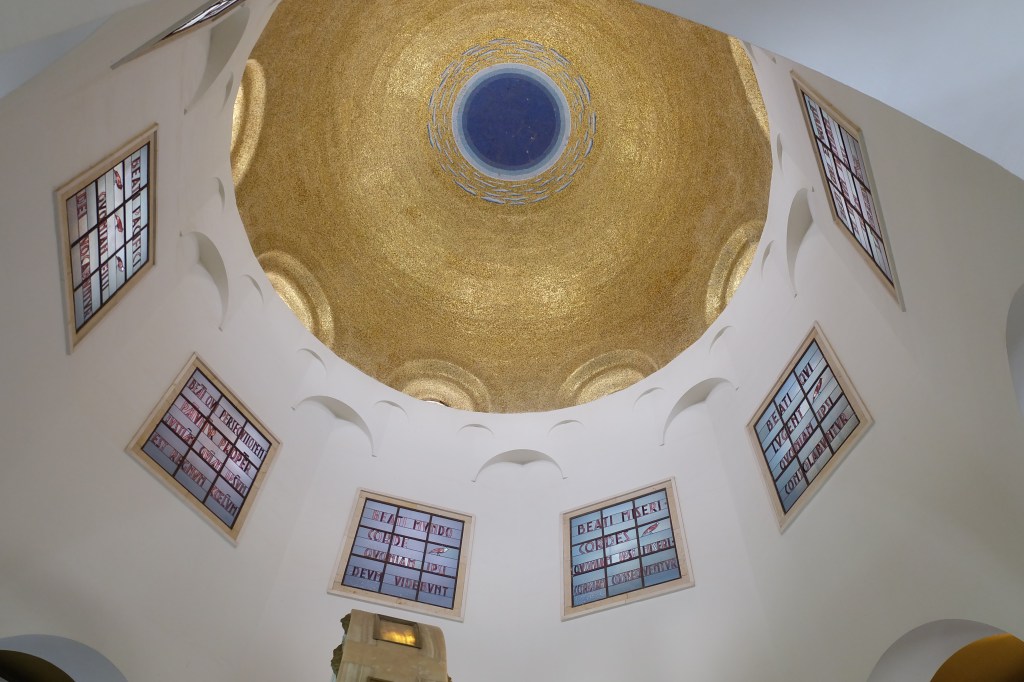
Photo by author, dome of the Church of Beatitudes, the Holy Land, 2019.

Woes of not following Jesus

Contrary to claims by many philosophers and filosofong tasyo alike who are atheists and anti-Church, God is not a sadomasochist who delights in seeing his people suffer and die. Nothing bad can come from God for God is love (1 Jn. 4:8).

Unbelievers continue to question God, most especially Jesus and his Beatitudes that are clearly about sufferings with its apparent dislike or rejection of wealth and fame like what Jesus spoke of the woes in the second part of his Beatitudes.

There is nothing wrong with being rich, being filled, of laughing and being spoken well by others per se; in fact, these are all good in themselves. However, Jesus spoke of them as woes based on the pattern we have seen from Jeremiah’s pronouncements in the first reading: “Cursed is the man who trusts in human beings, who seeks his strength in flesh, whose heart turns away from the Lord.”

See how Jesus was more “soft” and gentle in his woes than God in Jeremiah’s instruction to the people that was so harsh, saying “cursed” is the man who trusts in human beings, whose heart turns away from the Lord.

Photo by author, altar in the Church of Beatitudes, 2019.

But here we find its true context too: it is a warning sign, a reminder of the dangers that can happen to anyone who trusts in himself more and turns away from God.

Here we find something truly happening in the future – not now – unlike in the Beatitudes wherein the future blessings are experienced in the present moment if we suffer in communion with Christ.

Very clear in Jeremiah and in the woes of Jesus, turning away from God surely leads to disaster because it is the opposite path of blessings.

At the same time, since God does not punish, the woes by Jesus are not a condemnation of those who are rich, filled, laughing and well spoken of others. His woes are not expressions of hatred nor hostilities but warning against the dangers of being so proud, of being filled with one’s self, of playing god because it is the path to destruction. Or even perdition as we shall see later this year in the parable of Lazarus and the rich man found only in Luke’s gospel.

The Greeks have a more precise term for that called hubris – an excessive pride and defiance of the gods that leads to one’s nemesis. Clearly, God does not punish nor condemn anyone of us. It is always our choice that we are lost and end in woes, as Shakespeare immortalized in the words of Cassius in Julius Caesar,

"The fault, dear Brutus, 
is not in our stars 
But in ourselves, 
that we are underlings".

Have a blessed week ahead, everyone. God bless you all. Amen.

Pagpapala ng Diyos, bumuhos sa Cana at Lourdes

Lawiswis ng Salita ni P. Nicanor F. Lalog II, Ika-11 ng Pebrero 2022
Paggunita sa Mahal na Birhen ng Lourdes
Isaias 66:10-14  +  Juan 2:1-11
Mga tao pumipila sa mapagpagaling na tubig ng batis sa Lourdes, France; larawan mula sa Shutterstock.
Papuri at pasasalamat sa iyo,
Diyos naming Ama sa pagbubuhos
ng iyong mga biyaya at pagpapala
sa amin sa pamamagitan ni
Hesus na iyong Anak:  kay sarap
isipin una niyang "tanda" o himala
nangyari doon sa kasalan sa Cana, 
Galilea nang gawin niyang masarap 
na inuming alak ang tubig na isinalin 
sa mga tapayan.
Sa gitna ng tanda na ito ay naroon
ang Mahal na Birheng Maria na nagkusang
namagitan sa mga bagong kasal nang 
maubusan ng alak sa kanilang pagdiriwang;
naligtas sila ni Hesus sa kahihiyan 
nang gawin niyang alak mga tubig
sa tapayan.
Makalipas ang kulang-kulang
dalawang libong taon noong 1858,
napakita ang Mahal na Birheng Maria
kay Santa Bernadette doon sa isang 
grotto sa Lourdes, France; bumukal
isang munting batis at hanggang 
ngayon, tinuturing na mapaghimala
matapos mapagaling maraming mga
maysakit.
Salamat sa biyaya ng tubig na
siya ring dumaloy sa sinibat na 
tagiliran ni Hesus doon sa Krus;
salamat sa biyaya ng tubig na
tanda ng paglilinis sa aming katauhan
sa sakramento ng binyag;
salamat Ama sa pagtupad ng iyong
pangako kay Propeta Isaias (66:10-14)
na kami ay iyong "padadalhan ng ina"
na sa amin ay "kakalinga at mag-aaruga 
tulad ng sa isang sanggol sa oras ng
pagkakasakit at kagipitan";  higit sa lahat,
salamat sa pagbibigay mo sa amin, 
Panginoong Hesus, sa iyong Ina, 
ang Mahal na Birheng Maria 
na naging daluyan ng maraming 
pagpapala at kagalingan sa mga 
may sakit at karamdaman sa 
iyong kapangyarihan.
Panginoong Hesus,
dalisayin mo kami at linisin
aming mga puso at kalooban
upang makatulad si Maria na iyong 
Ina at amin ding Ina; sa kanyang
pananalangin nawa kami ay maghatid
ng kagalingan at kapayapaan sa
mga may sakit at nahihirapan gaya
ng mapaghimalang tubig sa batis ng
grotto sa Lourdes, France lalong 
higit sa panahong ito ng pandemya.
Amen.