The Lord Is My Chef Breakfast Recipe for the Soul by Fr. Nicanor F. Lalog II
Monday, Week XVIII, Year II in Ordinary Time, 03 August 2020
Jeremiah 28:1-17 >>><)))*> >><)))*> ><)))*> Matthew 14:22-36
Photo by Mr. Raffy Tima of GMA-7 News before a storm in Batanes, 2018.
God our Father, we come to you again fervently asking for your guidance and protection as the threats of COVID-19 infections are getting closer to home. More and more are getting sick and we could feel them so strongly for they are no longer statistics we read and see in news but persons we know very well in our home and community.
Thank you very much that finally, our government leaders have listened to the calls of medical experts to go on at least two weeks of quarantine to reassess our response to the pandemic.
In this quarantine period, we pray that we learn to value again silence and hiddenness that we have taken for granted in our 24-hour world of media and noise.
So many times, we have taken for granted things that are not seen, that are invisible and hidden, that we ourselves also hide in evil and sin, convincing ourselves nobody would know or “see” it.
And so, we try deceiving others with our false claims of knowledge and competencies like Hananiah and other false prophets among us who give false hopes to people who are eventually misled from you and from one another.
To the prophet Hananiah the prophet Jeremiah said: Hear this, Hananiah! The Lord has not sent you, and you have raised false confidence in this people. For this, says the Lord, I will dispatch you from the face of the earth; this very year you shall die, because you have preached rebellion against the Lord.
Jeremiah 28:15-16
In this time of modified enhanced community quarantine again, teach us O Lord Jesus to deepen our faith in you so that we may remain focused on you alone in moments of storms when it is so difficult to recognize you, when it is easier to “see” and “believe” the powers of the unseen winds like Simon Peter in today’s gospel.
Let us befriend your holy silence and stillness again, sweet Jesus, because in you, the most significant are always the most hidden too. Amen.
The Lord Is My Chef Sunday Music by Fr. Nick F. Lalog II, 02 August 2020
Photo from iStock/StudioAnnika
Our Sunday music for today is specially for all the doctors, nurses, and everyone serving in hospitals since this pandemic began. You are exactly like Jesus Christ in the gospel today who went to a deserted place to rest but upon seeing the crowds who have followed him, “his heart was moved with pity for them, and he cured their sick” (Mt.14:14).
Thank you, dearest doctors and nurses and everyone serving in our hospitals for keeping the love alive, forgetting your selves and loved ones just to answer the call of duty like our Lord who was also so tired preaching with a heart aching for the death of John the Baptist (https://lordmychef.com/2020/08/01/human-situation-divine-response-multiplying-our-blessings/).
And this is the reason we have jazz artist Tom Scott’s 1991 hit “Keeping This Love Alive” as our featured music this Sunday: with the excellent vocals by David Pack, the song tells us how amid so many trials and tests, a man keeps on coming back to the woman he loves so much.
I don't know why my faith gets so low
I'm helpless to control my fears
I turn to you and somehow I know
No matter how far I fall
You will answer my call,
becauseI keep coming back to you

Heal me one more time
I keep coming back to you
You're the reason why (the reason why)
The reason I (the reason I)
I've got to keep this love alive (alive, alive, alive)
Oh, gotta keep this love alive (alive)
Ultimately, it is the love of Jesus Christ that we have experienced that we keep this love alive – in our family and circle of friends, in our community and nation. It is his love that sustains us, enabling us to believe more and hope more.
Thank you dearest doctors, nurses and everyone serving in our hospitals around the world to care for the sick.
The Lord Is My Chef Sunday Recipe for the Soul by Fr. Nicanor F. Lalog II
Week XVIII, Cycle A in Ordinary Time, 02 August 2020
Isaiah 55:1-3 >><}}}*> Romans 8:35, 37-39 >><}}}*> Matthew 14:13-21
Remember our reflection last Sunday? Of how parables teach us that “less is always more” because to have the kingdom of God – Jesus Christ himself – we have to learn to appreciate the little things in life?
Beginning this Sunday until August 16, our gospels will start telling us who is Jesus Christ by showing us his powers and abilities that are exactly opposite the way we see and understand them. This new series of stories are so relevant to us in this time of pandemic, giving us wonderful insights into God’s ways of responding to our human situations.
St. Matthew now leads us with Jesus to the wilderness after teaching us in parables to experience his power in transforming us like the five loaves and two fish to feed more than five thousand people.
Multi-layered story of the multiplication of bread
All four evangelists have recorded this story of Jesus Christ’s multiplication of the loaves of bread with their particular focus and stress, showing us that it truly happened and was a major event in the Lord’s ministry.
Very unique with St. Matthew’s version of this miracle story – which has not one but two! – is his economy of words in narrating it like a straight news as if it were a developing story or a “breaking news” unfolding before us, calling us to follow its updates and details due to its multi-layered meanings.
When Jesus heard of John the Baptist, he withdrew in a boat to a deserted place by himself. The crowds heard of this and followed him on foot from their towns. When he disembarked and saw the vast crowd, his heart was moved with pity for them, and he cured their sick. When it was evening, the disciples approached him and said, “This is a deserted place and it is already late; dismiss the crowds so they can go to the villages and buy food for themselves.” Jesus said to them, “There is no need for them to go away; give them some food yourselves.” But they said to him, “Five loaves and two fish are all we have here.” Then he said, “Bring them here to me,” and he ordered the crowds to sit down on the grass. Taking the five loaves and the two fish, and looking up to heaven, he said the blessing, broke the loaves, and gave them to the disciples, who in turn gave them to the crowds. They all ate and were satisfied, and they picked up the fragments left over — twelve wicker baskets full. Those who ate were about five thousand men, not counting women and children.
Matthew 14:13-21
Photo from iStock/Studio-Annika.
The consolation of Jesus.
Our situation in this time of the corona pandemic is so similar with that of Jesus. With the increasing number of COVID-19 cases, it has finally hit us hard, so close to home with news of those we know getting infected and worst, dying from this disease.
Like Jesus upon hearing the death of John the Baptist, we are all saddened that we wish to withdraw away from everyone.
We want to mourn but there are more people in need of our presence and help in this time of pandemic like the countless medical frontliners and health workers who must be so tired – even sick, physically and emotionally – by now with the growing number of COVID-19 patients and yet have chosen to remain in their posts.
And there are still the other casualties of this pandemic like those who have lost their jobs, those evicted from their rented apartments, those stranded and separated from their loved ones, those begging for food, and those afflicted with other sickness going through dialysis and physical therapy.
Jesus knows so well the “wilderness” we are all going through and he is right here with us, one with us in our sufferings, in our fears and anxieties, and in our exhaustion.
To be one with us is consolation, from the Latin “con” or with + “solare” or alone, to be one with somebody feeling alone.
Jesus did not remove our pains and sufferings, even our death; he joined us to be one with us in these that he can call us to “Come to me, all you who labor and are burdened, and I will give your rest. Take my yoke upon you… For my yoke is easy and my burden light” (Mt.11:28-30, 14th Sunday, 05 Jul 2020).
Compassion of Jesus.
Still with Christ’s reaction of being “moved with pity” at the sight of the crowds who have followed him to the wilderness, we find something more deeper with his being one with us, in consoling us that he had forgotten all about himself, his tired body that he went on to heal the sick among them.
To be moved with pity is more than a feeling of the senses but a response of his total person.
You respond for help, you reply to a call.
Ever wondered why we have the “responsorial psalm” after the first reading in the Mass? Because those words from the Psalms express our total assent and commitment to God, involving our total self like body, mind, heart and soul.
Photo by Dra. Mai B. Dela Peña, Carmel Monastery, Israel, 2016.
God cannot suffer because he is perfect.
That is why he became human like us in Jesus Christ to be one with our suffering and death so that we would one with him in his glorious Resurrection.
In the wilderness, Jesus stayed with the people, not allowing them to leave as suggested by the Twelve because he was moved with pity with the crowd because he wanted to suffer with them.
That is compassion, literally means to “suffer with” from cum + patior. Here in the wilderness, Jesus showed his compassion for the people which will reach its highest point in giving himself on the Cross on Good Friday.
Have we “responded” to God’s call to serve, to a call of duty, and to a plea for help from the poor? Have we truly given ourselves to somebody without ever thinking our own comfort or rewards? Or, are we running away from his Cross?
What a shame in this time of pandemic there are some among us who rejoice at the losses of others like the Twelve who wanted the crowd to be sent home because they were afraid of responsibilities, of taking care of the suffering people.
Consolation and compassion are the two most needed from each of us in this time of crisis.
Our scarcity mentality, the God of plenty.
We now come to the miracle of the feeding of five thousand. According to the late Fr. Henri Nouwen, this story is an example of our “scarcity mentality” when we think of not having enough, of finding what we have as too little, always looking for more; hence, our tendency to hoard everything.
The Twelve were thinking more of themselves, afraid they could go hungry with the five loaves of bread and two fish they have. They were so afraid of difficulties ahead of them in their situation where to find and how to feed those great number of people.
They were focused on what was lacking than on what they have, and who was with them, Jesus Christ! They were hungry for food in the stomach than for food to the soul unlike the crowds who have followed Jesus.
Worst of all, the Twelve got “mad” upon seeing the crowds who have followed them to the wilderness when in fact, it was Jesus who needed most to rest to mourn John’s death!
But through all these, Jesus patiently bore the people’s woes and the Twelve’s selfishness to teach them all in a very nice way something so essential in our response to every human suffering and extreme situation: opening and entrusting our selves totally to God.
And that was actually the greatest miracle that happened that day.
In doing it, Jesus simply asked the Twelve what they have, never asking how much they have or its condition. Just whatever they have to give everything to Jesus like those five loaves and two fish that he took, and while looking up to heaven, blessed and broke the loaves, and gave them to the Twelve to distribute to the crowd.
And everyone was satisfied with a lot of left overs too!
Matthew nor any of the other Evangelists ever explained how it happened because it does not really matter at all. What is most important is what are we willing to give up to Jesus so he can transform us into better persons.
That is what we continue to do this day in every celebration of the Holy Eucharist- whatever we have, even not the best or the worst and littlest we have, when given to Jesus becomes holy and multiplied!
The power of God is immense, without doubt. But, in this miracle of the feeding of five thousand, Jesus is showing us that his power is not meant to satisfy our material or bodily needs but our deepest desires that lead to our fulfillment in him as prophesied by Isaiah in the first reading.
Why spend your money for what is not bread; your wages for what fails to satisfy? Heed me, and you shall eat well, you shall delight in rich fare. Come to me heedfully, listen, that you may have life.
Isaiah 55:2-3
Amid the pandemic worsened by our government officials’ inanities, irresponsibilities, and sheer lack of compassion with us in this wilderness, the Lord assures us today that he is with us for “nothing can separate us from the love of Christ” (Second Reading) if we are willing to give him all that we have.
It is our spiritual transformation first that leads us to our material blessings. We can all have it if we are willing to give everything to Jesus and believe in him always. What do you have for miracles to happen?
A blessed August ahead for you!Amen.
Photo by Dra. Mai B. Dela Peña, Carmel, Israel, 2016.
The Lord Is My Chef Breakfast Recipe for the Soul by Fr. Nicanor F. Lalog II
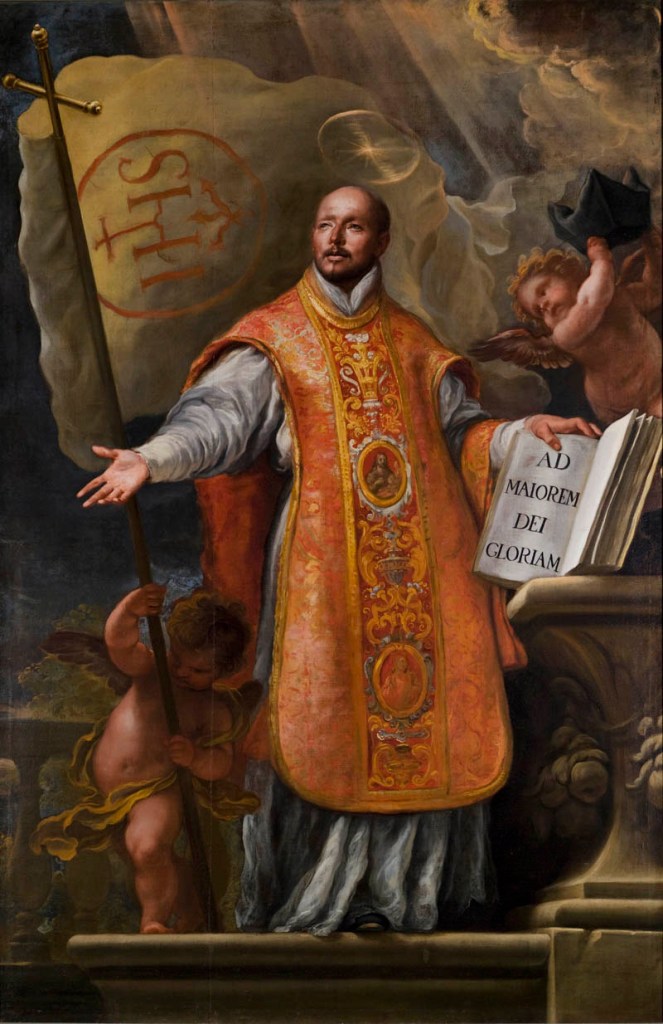
Friday, Memorial of St. Ignatius of Loyola, Priest, 31 July 2020
Jeremiah 26:1-9 >>><)))*> >><)))*> ><)))*> Matthew 13:54-58
Photo by author, Wailing Wall of Jerusalem, May 2019.
Praise and glory to you, O God our Father for another week and month about to close before us. And still here we are, alive and safe, making through the many trials and difficulties as we all continue to bear the sufferings of this COVID-19 pandemic.
Thank you for sending us your Son our Lord Jesus Christ who have made our hearts your indwelling.
Unfortunately, like his neighbors, so many times we fail or even refuse to recognize his coming to us.
Jesus came to his native place and taught the people in their synagogue. They were astonished and said, “Where did this man get such wisdom and mighty deeds? Is he not the carpenter’s son?” And they took offense at him.
Matthew 13:54-55, 57
So many times, many things run in our minds and in our hearts that we always fail to see and recognize you, sweet Jesus.
Teach us through St. Ignatius your faithful servant who gave us your wonderful gift of discerning the spirits.
Teach us to lay bare ourselves before you, to be true to our thoughts and feelings so that we may sift through all of these to find your holy will, Lord.
Teach us to “omit nothing” as you commanded Jeremiah in the first reading from your words so that we may be able to discern properly what you want from us.
Make our hearts your temple, O Lord, dwell inside and reign over us so that we may understand fully the meaning of “positive indifference” taught us by St. Ignatius:
“We should not prefer health to sickness, riches to poverty, honor to dishonor, a long life to a short life. . . . Our one desire and choice should be what is more conducive to the end for which we are created.”
Spiritual Exercises by St. Ignatius
Let our thoughts and actions always begin and happily end in your greater glory, Lord.
The Lord Is My Chef Breakfast Recipe for the Soul by Fr. Nicanor F. Lalog II
Thursday, Memorial of St. Peter Chrysologus, Bishop and Doctor of the Church, 30 July 2020
Jeremiah 18:1-6 ><)))*> >><)))*> >>><)))*> Matthew 13:47-53
Photo by author, Third Sunday of Lent, 15 March 2020.
How amazing O God on this day as we celebrate the Memorial of St. Peter Chrysologus who spoke eloquently of the Incarnation of your Son in one of his homilies, your Prophet Jeremiah today also spoke something of our being clay in the potter’s hand.
He who made man without generation from pure clay made man again and was born from a pure body. The hand that assumed clay to make our flesh deigned to assume a body for our salvation. That the Creator is in his creature and God is in the flesh brings dignity to man without dishonor to him who made him.
Why then, man, are you so worthless in your own eyes and yet so precious to God? Why render yourself such dishonor when you are honored by him? Why do you ask how you were created and do not seek to know why you were made?
St. Peter Chrysologus in his sermon on the sacrament of Christ’s incarnation, Office of Readings
Thank you, dear God, for this enlightenment from St. Peter Chrysologus also known as the “man of golden speech” for reminding us the great honor of being created by you… from worthless clay!
Help us to reflect more on why you have created us than ask how we were created, and transformed like in the potter’s hand.
Then the word of the Lord came to me: Can I not do to you, house of Israel, as this potter has done? says the Lord. Indeed, like clay in the hand of the potter, so are you in my hand, house of Israel.
Jeremiah 18:5-6
Teach us, sweet Jesus, to be pliant and docile to the Father who continues to form us like clay in the potter’s hand — that no matter how painful life can sometimes be, even difficult, may we also see and appreciate the Father’s wonderful plans for our transformation in the future.
Help us to go through the pains of growing up and maturity so that when judgment day comes, may we all turn out to be good fish to be collected than bad ones that are thrown according to your parable of the net. Amen.
The Lord Is My Chef Breakfast Recipe for the Soul by Fr. Nicanor F. Lalog II
Wednesday, Memorial of St. Martha, 29 July 2020
1 John 4:7-16 >><}}}*> ))+(( <*{{{><< John 11:19-27
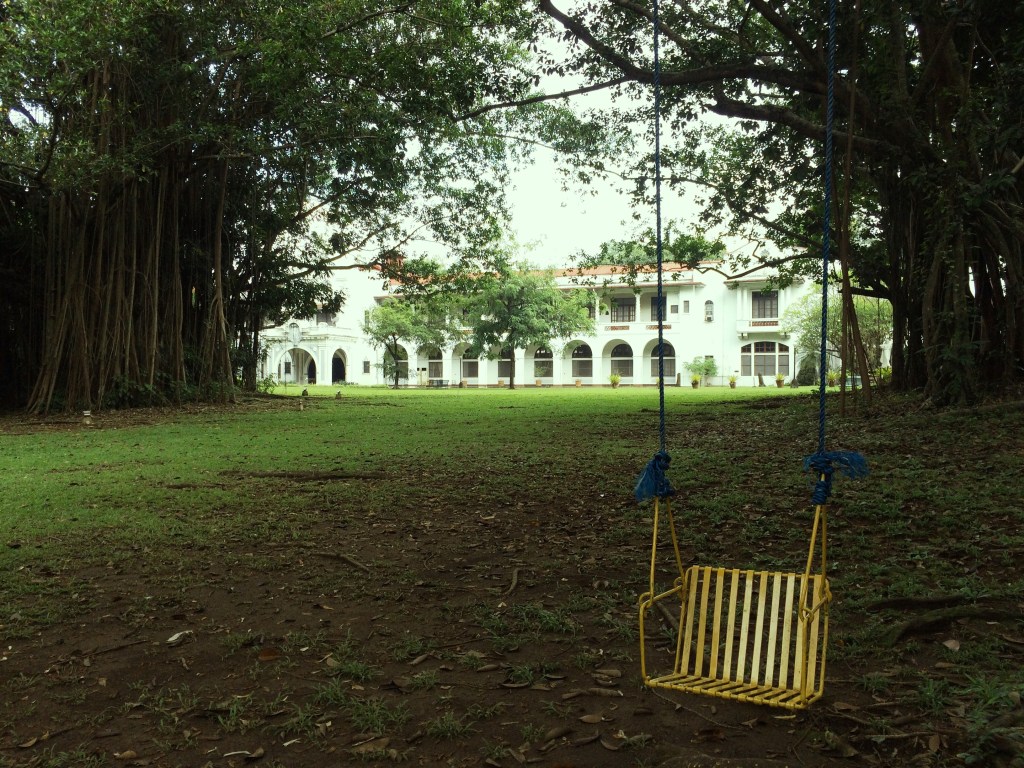
Photo by author, Sacred Heart Novitiate, Novaliches, Quezon City, 2018.
Thank you very much Lord Jesus Christ is sending us holy women like St. Martha whose Memorial we celebrate today. Seven days ago we celebrated the feast of her younger sister St. Mary Magdalene.
How nice of you coming to visit families, even calling brothers and sisters as your disciples like St. Peter and St. Andrew, St. James the Greater and St. John, and now, St. Martha and her siblings St. Mary and St. Lazarus.
What a beautiful reminder for us today so busy with other people like friends and clients and everybody else except family: that you always come first in the family, among husband and wife, parents and. children, and siblings.
Most of all, in the life of St. Martha, you remind us of the need to be present in you and with you every time you come for a visit.
Jesus said to her, “Your brother will rise.” Martha said to him, “I know he will rise, in the resurrection on the last day.” Jesus told her, “I am the resurrection and the life; whoever believes in me, even if he dies, will live, and anyone who lives and believes in me will never die. Do you believe this?” She said to him, “Yes, Lord. I have come to believe that you are the Christ, the Son of God, the one who is coming into the world.”
John 11:23-27
Many times, Lord Jesus, you come to us to be present with us but we are always absent from you like St. Martha.
Like her, so often we are working for you, doing for you, so busy because of you without realizing you prefer us to be doing your work by first being present in you.
There are times, we overthink of your words and of your thoughts we forget the present moment like when you told St. Martha that her brother Lazarus would rise again: we believe in our minds than in our hearts that we look more into the future than in the present moment when our departed loved ones can be truly present with us in you.
As we keep ourselves preoccupied with so many tasks here on earth, teach us also, sweet Jesus like St. Martha that in the resurrection of the dead, we shall all be present in you and with you as the one serving us all in the heavenly banquet. May we choose wisely what is most important like her sister St. Mary. Amen.
The Lord Is My Chef Breakfast Recipe for the Soul by fr. Nicanor F. Lalog II
Monday, Week XVII, Year II in Ordinary Time, 27 July 2020
Jeremiah 13:1-11 >><)))*> >>><)))*> >><)))*> Matthew 13:31-35
Photo from Google.
What a great way to start our last week of work and studies in July with your sense of humor, O God! Your words are so witty and funny but with a strong punch. Hard-hitting, so biting. And so revealing.
For, as close as the loincloth clings to a man’s loins, so I had made the whole house of Israel and the whole house of Judah cling to me, says the Lord; to be my people, my renown, my praise, my beauty. But they did not listen.
Jeremiah 13:11
You really got me, Lord.
What can I say?
Our underwear, that is, the loincloth of Jeremiah’s time, is our most intimate clothing, always in contact with our very selves, in that part of our body that we always guard and keep to ourselves.
But, what happens when we “dirty” ourselves with sins, when we put on all those filth in ourselves, we also feel the same way inside, no matter how clean and crisp our clothes are but when deep down our loincloth – underwear – is rotted and good for nothing?
We can always hide it from others and they will never know the kind of underwear we have but we cannot deceive ourselves of how dirty we are with sins and evil.
And so far from you, O God.
Forgive us when you are supposed to be the closest to us, the one we are always in contact with but we have totally disregarded because of our many sins, when we thought we can always have our own ways without you, denying the fact it simply cannot be for indeed, you have made us to be that closest to you.
Forgive us in your Son and our Lord Jesus Christ. Renew us inside, cleanse us and refresh us to be in close contact with you again, O God.
Help us to remain good and clean inside like the little mustard seed so we may grow to have leafy branches for birds to come and dwell in us.
In your mercy, cleanse us of our sins and be our yeast to mix with us again to leaven into a dough to make your kingdom come here on earth. Amen.
The Lord Is My Chef Sunday Recipe for the Soul by Fr. Nicanor F. Lalog II
Week XVII, Cycle A in Ordinary Time, 26 July 2020
1 Kings 3:5,7-12 >><}}}*> Romans 8:28-30 >><}}}*> Matthew 13:44-52
Photo by author, 2020.
The other Sunday during our Mass, I saw a man wearing a black t-shirt with these signs:
– = +
Of course, it means “Less is more” because a minus (-) is equal (=) to an addition or a plus (+)!
That is also the meaning of the Cross of Jesus Christ wherein it is in giving that we receive, in dying that we live, in losing that we gain more of everything because the cross is a plus sign.
This Sunday, that is essentially the lesson Jesus is telling us on this final installment of his parables wherein we have to lose everything in order to have him, the kingdom of God.
See how the three parables present us with one situation: to get the treasure in a field, its finder has to bury it again, sell all he has to buy the field where he had found the treasure; a trader searching for fine pearls sells everything he has to acquire a pearl of great price he had found; and lastly, not all fish caught in a net thrown in the sea are good to be sold with bad ones that must be thrown.
These parables are reminding us today of the need to exercise our freedom properly by making wise choices in life. Freedom is not the ability to do whatever we want but the ability to choose always what is good.
In every situation in life, we always have to make a choice; it is never true that we have no choice left to make. Choosing not to make a choice is actually choosing what is wrong, what is bad, and what is not good for us and for others.
We are always made by the choices we make in life. And that is why the parables are teaching us to choose wisely like King Solomon in the first reading.
Photo by author, February 2020.
Choosing wisely
The Lord appeared to Solomon in a dream at night. God said, “Ask something of me and I will give it to you.” Solomon answered: “O Lord, my God, you have made me, your servant, king to succeed my father David; but I am a mere youth, not knowing at all how to act. Give your servant, therefore, an understanding heart to judge your people and to distinguish right from wrong.” The Lord was pleased that Solomon made this request. So God said to him: “Because you have asked for this — not for a long life for yourself, nor for riches, nor for the life of your enemies, but for understanding so that you may know what is right — I do as you requested. I give you a heart so wise and understanding that there has never been anyone like you up to now, and after you there will come no one to equal you.”
1 Kings 3:5,7,9, 11-12
Here we go back again to that basic reality of a parable which is a simple story of every day life filled with profound meanings. It is something we take for granted because it is so ordinary like the seed forgetting its great potentials in the future.
Many times in life we get distracted like today when we have a plethora of products and services available that we cannot focus on what is really essential and important. Our decisions are clouded even erratic because we are so distracted with the wide array of choices to make, from food to eat to clothes to wear, movies or series to watch on Netflix or cable TV as well as music to listen from thousands of titles in our playlists.
And in our distraction, many times we miss our priorities in life, especially God and our loved ones.
Then, we end up sad and miserable, way too far from what God had envisioned for us since the beginning which is to live in joy in him.
For those he foreknew he also predestined to be conformed to the image of his Son, so that he might be the firstborn among many brothers and sisters. And those he predestined he also called; and those he called he also justified; and those he justified he also glorified.
Romans 8:29-30
St. Paul is reminding and assuring us in these short passages we heard from his letter today that God called us to be saved and glorified in Jesus Christ not by chance but by purpose. He willed it, he wanted it so because he loves us so much, assuring us all of future glory in him in eternity.
The key to experiencing that joy from God is to always abide in him like King Solomon of choosing what is good, letting go of everything that will separate us from him like sin and evil. For God’s plan and grace to operate and materialize, we need to cooperate with him like being a good soil that produces fruitful wheat.
Photo by Mr. Jim Marpa, 2018.
Our Christian life of joy
Like the Twelve inside the house listening to Jesus explained and narrated more parables, the Lord is also asking us today the same question:
“Do you understand all these things?”
Matthew 13:51
To “understand all these things” is not about human intelligence like being smart or brilliant but of holy wisdom or spiritual intelligence characterized by humility and simplicity before God and others.
To “understand all these things” and be like “every scribe… or the head of a household who brings from his storeroom both the new and the old” (Mt.13:52) is to be one in Jesus Christ, a person learned in the ways of God, who knows how to prioritize things, always making things relevant in the present even if it is an old lesson.
To be truly joyful in life is to just have Jesus, only Jesus and always Jesus.
It is easier said than done but we must try even little by little, slowly by learning more to give of our very selves to others.
It is difficult to imitate the main characters in the parables today – the finder of treasure, the pearl merchant, and the fisherman – when we always think of having more than having what is most valuable and important.
Have we noticed during this pandemic that whenever we would count or take tabs of everything we share, we feel sad and even grouchy because we feel we have lost a lot? And if we get too much in return, we cannot rejoice because we somehow feel guilty?
True joy comes when we are able to be generous, of giving without counting the costs, without thinking of what would be left for me because my only concern is what else can I give the other persons so that my joy can be complete when I see them like me – happy, contented, and peaceful with a simple smile or delighted by a hot bowl of soup or a hearty breakfast.
And that’s that greatest parable of Jesus of all that we need to understand and embrace: the less we have of created things, the more we have of the Creator, of himself who is the kingdom of God.
Then, that is heaven.
A blessed Sunday to everyone!
Photo by Dr. Mylene A. Santos at Infanta, Quezon, July 2020.
Quiet Storm by Fr. Nicanor F. Lalog II, 25 July 2020
Santiago de Compostela in Spain is one of the world’s oldest and most popular pilgrim sites where the body of the Apostle St. James the Greater whose feast we are celebrating today is believed to be buried in its beautiful cathedral.
I have not been there yet and despite COVID-19’s disruption of air travel expected to last until 2022, my hope remains that someday in God’s time I may finally do the “el camino de Santiago de Compostela” (the way of Saint James of Compostela), too.
But, with or without the el camino de Santiago de Compostela, this great Apostle from the very beginning had always been in a journey in himself into the kingdom of God – Jesus Christ – by showing us the way of transformation into a true disciple of the Lord.
He is called the Greater not because he is holier than the other St. James called “the Lesser”, son of Alpheus, but to simply indicate the different importance they received in the writings of the New Testament. In the gospel of Mark, he comes in second in the list after Peter while in the gospels of Matthew and Luke, he is ranked third after the brothers Peter and Andrew; he again comes in third in the Acts of the Apostles after St. Peter and his brother St. John.
It is from this book where we also learn St. James the Greater as the first bishop of the original Christian community in Jerusalem that during the persecution by King Herod Agrippa in 40 AD, he also became the first Apostle to be martyred (Acts 12:1-2).
His martyr’s death thus fulfilled Christ’s words to him that he would indeed “drink from his chalice” to be with him in his Kingdom, a journey that essentially began within this great apostle after leaving everything behind to follow Jesus.
The journey within self to Jesus Christ
St. James the Greater and his brother St. John the Evangelist and believed to be the same beloved disciple came from a middle class family with both parents still alive and most likely, very supportive of them as attested by some little anecdotes in the gospel accounts.
Money was never an issue for them because their father Zebedee could hire workers to work in their fishing business. He must have sighed with a great relief when James and John immediately left him after being called by Jesus to be his disciples.
Marker along the “el camino de Santiago de Compostela”.
Finally, his sons have found some directions in life following Jesus who was getting known then in Galilee as a powerful and credible Teacher unlike the Pharisees and scribes.
Jesus nicknamed James and John as Boanerges for “Sons of thunder” (Mk.3:17) due to their temperament like when they proposed that they send fire to burn a Samaritan town that have refused them passage during their journey to Jerusalem (Lk.9:54).
They have seen and experienced the tremendous powers of Jesus not only in preaching but most especially in calming the storms, walking on sea, exorcising evil spirits, healing all kinds of sickness, and even raising to life some who have died.
Most of all, St. James the Greater was privileged to witness along with his brother and St. Peter the Transfiguration of Jesus Christ on Mount Tabor, seeing all the glory of Christ conversing with Moses and Elijah. It was after this major event that their most controversial episode would occur when their mother came to ask Jesus that James and John be seated “one at your right and the other at your left, in your Kingdom” (Mt.20:21).
The other ten Apostles “grew indignant” of the brothers James and John for being so ambitious but Jesus summoned them and explained things which all of them would heed except for one:
“You know that the rulers of the Gentiles lord it over them, and the great ones make their authority over them felt. But it shall not be also among you. Rather, whoever wishes to be great among you shall be your servant; whoever wishes to be first among you shall be your slave. Just so, the Son of Man did not come to be served but to serve and to give is life as a ransom for many.”
Matthew 20:25-28
This took place shortly before Palm Sunday when Jesus entered Jerusalem.
A few days later on the evening of Holy Thursday, Jesus again brought St. James the Greater with his brother St. John and St. Peter to accompany him pray at Gethsemane where Judas Iscariot eventually betrayed him to his enemies.
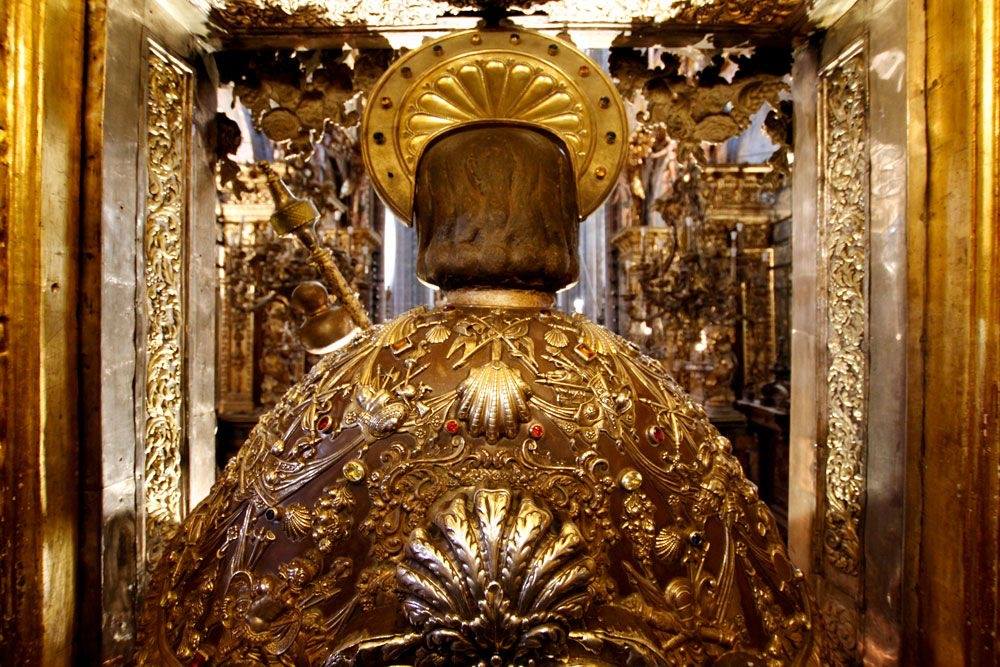
A pilgrim hugging from the back the statue of Santiago de Compostela after completing his el camino.
Here we find St. James the Greater being present to two major stops in Jesus Christ’s journey to the Calvary: first, on Mount Tabor for his Transfiguration and second, at Gethsemane for his agony in the garden. In both events in the life of our Lord, St. James the Greater was a privileged witness, first of his coming glory and then of his passion and death.
It would only be after Easter and the Pentecost when all these major stops in his personal journey with Christ when everything would become clear to him and the other Apostles.
All along their journey from the shores of Galilee to Jerusalem, St. James the Greater remained by the side of Jesus Christ, probably unaware of another journey with the Lord taking place right inside his heart to truly be a part of his Kingdom by sharing in his Passion, Death, and Resurrection.
For his faithful adherence to Jesus from Galilee to Jerusalem, St. James the Greater again had the rare privilege like at Mount Tabor and Gethsemane in being the first to die as a martyr proclaiming the Gospel of Christ which is the meaning of the expression of “drinking from the chalice” of the Lord.
Sometimes in life, we just have to make “sakay” as my generation used to say, “sakay lang ng sakay” or “ride on, man, ride on” without really knowing where our trip would lead us. St. James just made “sakay” without knowing Jesus was already fulfilling his wish of “drinking from his chalice”.
Photo by Fr. Gener Garcia, sculpture of a pilgrim’s feet at Santiago de Compostela museum, 2019.
St. James the Greater was truly great not because of the distances in miles or kilometers he had covered with Jesus from Galilee to Jerusalem and all the way to Compostela in Spain; we honor him today because of that great journey he had undertaken within him, in his heart to remain always at the side of Christ even if had to smoothen his many rough edges as a person, and cleanse his heart as a sinner like us.
That is the most important journey we are all taking in this life, the journey within us.
The longest journey in life is the distance between the heart and the mind.
Former UN Sec.Gen Dag Hammarskjold in “Markings”
My friend Fr. Gener Garcia last year went to Santiago de Compostela to follow the el camino with our kababayan Bishop Bart Santos of Iba, Zambales and Fr. Jaypee Avila assigned as a chaplain for OFW’s in Milan, Italy.
He is so generous to share with us his photos of their pilgrimage as well as his experiences and realizations in life. According to him, on the four sides of the sculpture of the pilgrim’s feet in front of the museum of Santiago de Compostela is the following quotation:
Marker along the el camino de Santiago de Compostela.
Camino recto, camino erguido, camino buscando un sentido. Camino porque tengo un objetivo, y no parare hasta alcanzar mi destino.
(I walk straight, I walk upright, I walk looking for meaning. I walk with a purpose and I won’t stop until I meet my destiny.)
The pilgrim’s journey is the same one you and I are on. Know your goals and understand your challenges. Face them head-on, tackle them with intention, and never give up.
Do you know what your purpose in life is? What would you say if someone ask you what your destiny was?
The Lord Is My Chef Breakfast Recipe for the Soul by Fr. Nicanor F. Lalog II
Saturday, Feast of St. James the Greater, Apostle, 25 July 2020
2 Corinthians 4:7-15 ><}}}*> >><}}}*> >>><}}}*> Matthew 20:20-28
Facade of “Santiago de Compostela” in Spain in honor of St. James the Greater. Photo courtesy of Fr. Gener Garcia during their “El Camino de Santiago de Compostela”, May 09 to June 05, 2019.
Glory and praise to you, Lord Jesus Christ who had called and given us the Apostles as foundations of your Holy Church as we celebrate today the feast of St. James the Greater, the first bishop of Jerusalem and the first among the Twelve to die a martyr.
In him, O Lord, you gave us an image of hope in you, of how we can grow in holiness in you.
Through St. James the Greater, you have shown us your kindness in joining us in our earthly pilgrimage, slowly making us realize how we must adhere to you more closely to finally make it to our final destination in your kingdom in heaven.
Jesus said in reply, “You do not know what you are asking. Can you drink the chalice that I am going to drink?” They said to him, “We can.” He replied, “My chalice you will indeed drink, but to sit at my right and at my left, this is not mine to give but is for those for whom it has been prepared by my Father.”
Matthew 20:22-23
Your kindness is very evident, sweet Jesus.
I really wonder how you felt when the mother of James and John asked you that her sons be seated “one at your right and the other at your left in your kingdom” (Mt.20:21).
You were so kind to simply tell her and her sons, “You do not know what you are asking.”
Photo by Fr. Gener Garcia, image of Santiago de Compostela in Spain, 2019.
So many times, Lord, like St. James, we ask so many things from you, even demanding from you in exchange of what we believe as too great we have given you. You perfectly know so well that we do not know what we are asking at all. You know how we are blinded by fame and honor, power and wealth – things that do not matter at all in your kingdom.
You are so gentle in reminding us about the deeper realities of life, of discipleship by simplifying your demands, “Can you drink the chalice that I am going to drink?” to which we are often so naive, even oblivious for good reasons. Primarily because, we really do not know what we are asking.
And that’s when you are kindest of all, sweet Jesus: like with St. James and his brother St. John, you invite us “to drink the chalice you are drinking” by assuring us it can be done, that it is very possible, that in fact, that is the greatest honor of being with you, to drink from your chalice – without letting us know right away what it meant! St. John eventually realized and wholly accepted what you meant of drinking in your chalice when he became the first to share in your passion and death during the persecution by King Herod Agrippa (Acts 12:1-1).
Slowly, you make us realize too what is to drink in your chalice as we continue life’s journey with you, most especially into our inner self where we eventually find and rest in you when the goings get tough and rough.
It is total kindness on your part Lord to show us the beauty of sharing a meal with you, of sharing in your mission, of sharing in your life and most especially of sharing in your death that we make it with you to your kingdom.
Like St. James the Greater, continue to be kind with us, Lord, accompanying us in this journey.
In the same manner, make us kind to one another too like St. James the Greater who offered his life for the early church, for being the first to drink from your chalice. Amen.
Photo by Fr. Gener Garcia, marker along the “El Camino de Santiago de Compostela”, 2019.