Krus ang pintuan sa langit

Lawiswis ng Salita ni P. Nicanor F. Lalog II, Ika-21 ng Marso 2024
Ikalawang Huling Wika ni Jesus sa Krus
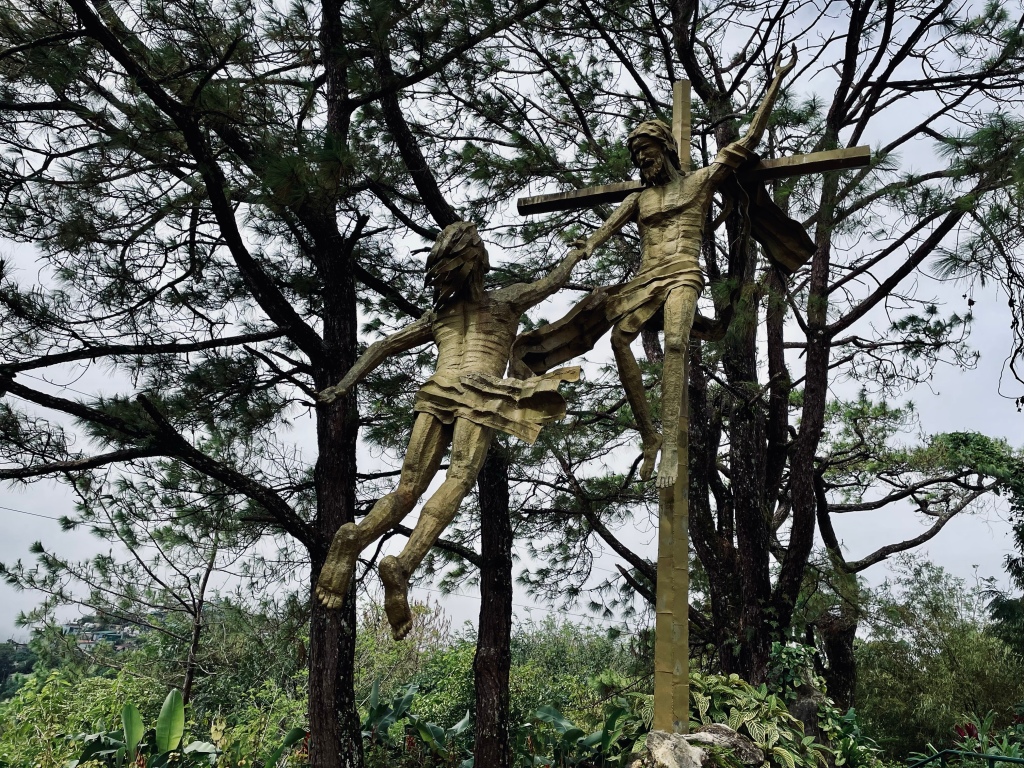
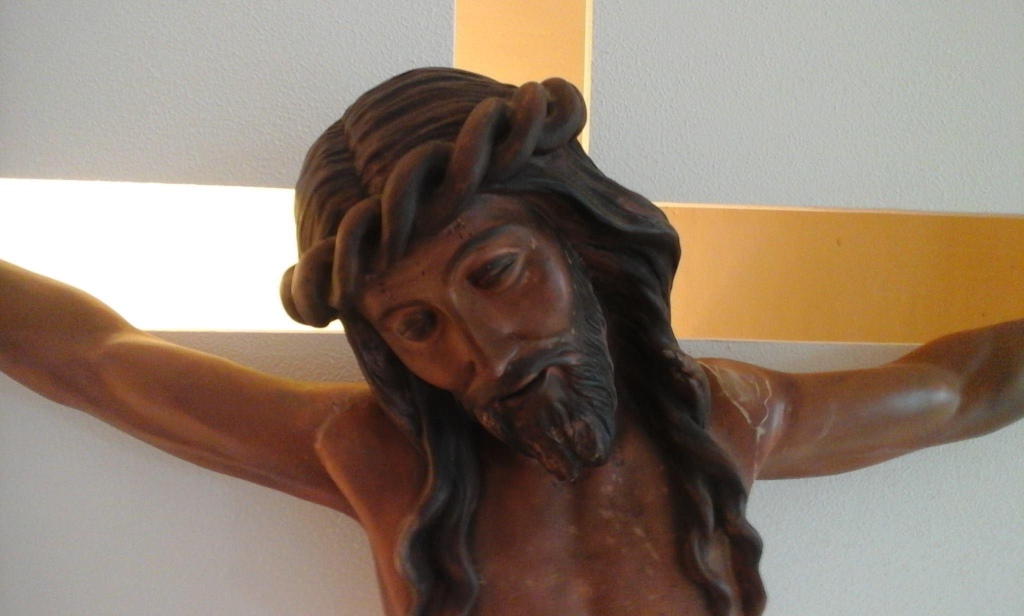
Larawan kuha ng may-akda sa Mirador Jesuit Retreat House sa Baguio City, Agosto 2023.

Ang ikalawang wika ni Jesus sa Krus:

Tinuya siya ng isa sa mga salaring nakabitin, at ang sabi, “Hindi ba ikaw ang Mesias? Iligtas mo ang iyong sarili, pati na kami!” Ngunit pinagsabihan siya ng kanyang kasama, “Hindi ka ba natatakot sa Diyos? Ikaw may pinarurusahang tulad niya! Matuwid lamang na tayo’y parusahan nang ganito dahil sa ating mga ginawa; ngunit ang taong ito’y walang ginawang masama.” At sinabi niya, “JESUS ALALAHANIN MO AKO KAPAG NAGHAHARI KA NA.” Sumagot si Jesus, “SINASABI KO SA IYO: NGAYON DI’Y ISASAMA KITA SA PARAISO.”

Lukas 23:39-43

Muli ay ating namnamin ikalawang wika ni Jesus doon sa Krus pagkapako sa kanya. Nauna niyang sinambit ay kapatawaran; ngayon naman kanya itong sinundan ng pangako ng langit o paraiso.

At iyon ay agad-agad na, ora mismo! Wika nga ng mga bata, “now na”! Hindi mamaya pagkamatay nila ni Jesus o sa Linggo sa kanyang pagkabuhay. Malinaw na sinabi ni Jesus kay Dimas, “SINASABI KO SA IYO: NGAYON DI’Y ISASAMA KITA SA PARAISO.”

Tantuin ninyo mga ginigiliw ko na sa ebanghelyo ayon kay San Lukas, namutawi lamang sa mga labi ni Jesus ang pangakong ito ng paraiso noong siya ay nakabayubay sa krus at hirap na hirap. Wala siyang pinangakuan ng langit nang siya ay malaya at malakas na nakakagalaw, naglilibot at nangangaral.

Alalaong-baga, pumapasok tayo sa langit kasama si Jesus sa sandaling kasama din niya tayong nagtitiis, nagdurusa, nagpapakasakit dahil sa pagmamahal doon sa Krus!

Ang krus ang pintuan papasok sa langit o paraiso.

Madalas naiisip natin kapag nabanggit o narinig ang katagang langit at paraiso ay kagalakan, kawalan ng hirap at dusa. Basta masarap at maayos sa pakiramdam, langit iyon sa atin. Kaya mga addict noon at ngayon kapag sila ay sabog at nasa good trip, iyon ay “heaven” dahil wala silang nadaramang problema at hirap sa buhay.

Larawan kuha ng may akda, 2023.

Kaya hindi rin kataka-taka na ang gamot nating laging binibili ay pain killer – konting sakit ng ulo o kasu-kasuan, naka-Alaxan kaagad. Noong dati ay mayroong shampoo na “no more tears” dahil walang hilam sa mata.

Gayon ang pananaw natin sa langit. At tumpak naman iyon kaya nga sa pagbabasbas ng labi ng mga yumao, dinarasal ng pari, “Sa paraiso magkikitang muli tayo. Samahan ka ng mga Santo, kahit mayroong nauuna, tayo rin ay magsasama-sama upang lagi tayong lumigaya sa piling ng Diyos Ama. Amen.”

Nagmula ang salitang paraiso sa katagang paradiso na tumutukoy sa kaloob-loobang silid ng hari ng Persia (Iran ngayon) kung saan tanging mga pinagkakatiwalaang tao lamang ang maaring makapasok kasama ang royal family. Kaya nang isalin sa wikang Griyego ang mga aklat ng Bibliya, hiniram ang katagang paradiso ng mga taga-Persia at naging paraiso upang tukuyin ang langit na tahanan ng Diyos na higit pa sa sino mang hari sa mundo.

Ngunit, katulad ng silid na paradiso ng hari ng Persia, hindi lahat ay basta-basta na lamang makakapasok ng paraiso. Alalahanin nang magkasala sina Eba at Adan, pinalayas sila ng Diyos at mula noon ay nasara ang paraiso; muli itong nabuksan kay Kristo nang sagipin niya tayo doon sa krus na nagbunga sa pagwawalang-sala sa ating mga makasalanan. Dahil sa krus ni Jesus, tayo ay naging karapat-dapat patuluyin sa paraiso. Sa tuwing ating tinatanggap ang krus ni Kristo, tayo ay nagiging tapat sa Diyos sa pamamagitan ng pagmamahal at paglilingkod sa kapwa. Noon din tayo pumapasok ng paraiso.

Sa panahong ito na wala nang hanap ang karamihan kungdi sarap at kaluguran, ipinaaalala sa atin ni Jesus sa ikalawang wika na ibig niya tayong makapiling ngayon din sa paraiso kung tayo ay mananatiling kasama niya sa pagtitiis at pagpapakasakit sa ngalan ng pag-ibig sa Diyos at kapwa.

Sa panahong ito na dinidiyos masyado ang katawan at sarili upang maging malusog, malakas at kung maari ay manatiling bata at mura ang edad, pinapaalala ni Jesus sa kanyang ikalawang huling wika sa krus na sino mang nasa banig ng karamdaman pati na yaong mayroong kapansanan ay unti-unti na ring pumapasok ng langit ngayon din sa kanilang tinitiis na hirap at sakit.

Sa panahong ito na lahat ay pinadadali at hanggat maari iniiwasan ano mang hirap at dusa, pinapaalala ni Jesus sa kanyang ikalawang huling wika na sa ating pagsusumakit sa maraming tiisin at pasanin sa buhay na ito, noon din tayo pumapasok sa paraiso kahit na kadalasan ito ay nagtatagal sa paghihintay.
Larawan kuha ng may-akda, 2018.

Noong pandemic, natutunan natin na hindi lahat ng tinuturing ng mundo na negatibo ay masama kasi noong mga panahong iyon, iisa ating dasal tuwing tayo ay sasailalim ng COVID test na sana ay “negative” tayo, hindi ba? Noon natutunan natin yung negative ay positive. At iyon mismo ang kahulugan ng krus ni Kristo!

Para sa atin, ano mang mahirap, masakit tulad ng krus ay negatibo ngunit kung tutuusin, ang krus ay hugis positibo o “plus sign” (+) at hindi minus (-); kaya, ano mang hirap at pagtitiis sinasagisag ng krus ay mabuti dahil hindi ito nakakabawas bagkus nakapagdaragdag sa ating pagkatao na naghahatid sa atin sa kaganapan at paglago. Sa suma total, eka nga, sa paraiso!

Ang mga tiisin at pagsubok sa buhay ang nagpapatibay at nagpapabuti sa atin upang maging karapat-dapat makapasok sa paraiso at makapanahan ang Haring magpakailanman – ngayon din, ora mismo, now na!

Kaya, manalangin tayo:

Panginoong Jesus,
bago pa man dumating
lahat nitong aming tiisin
at pasanin sa buhay,
nauna ka sa aming
nagtiis at nagpasan
ng krus noong Biyernes Santo;
nauna kang nagpakasakit
at namatay noon sa Krus
dahil sa pagmamahal sa amin;
kaya, patatagin mo ako sa aking
katapatan at pananampalataya
sa Iyo upang manatiling kaisa mo
sa krus ng kalbaryo ng buhay
upang ngayon din
Ikaw ay aking makapiling,
makasama sa Paraiso.
Amen.

Lent is keeping the ties that bind us

40 Shades of Lent by Fr. Nicanor F. Lalog II
Wednesday in the Fourth Week of Lent, 13 March 2024
Isaiah 49:8-15 <*(((((>< + ><)))))*> John 5:17-30
Photo by Teresa & Luis on Pexels.com
Until now I still relish in delight,
Father that expression
I realized this Monday:
Lent is God always "now here"
and us people "nowhere";
your words today are about
your abiding presence among us,
of remembering and not forgetting,
of the ties that bind us together
of we your beloved children
and you our loving Father in
Christ Jesus our Brother.

Can a mother forget her infant, be without tenderness for the child of her womb? Even should she forget, I will never forget you.

Isaiah 49:15

Jesus answered the Jews, “My Father is at work until now, so I am at work… Amen, amen, I say to you, the Son cannot do anything on his own, but only what he sees the father doing; for what he does, the Son will do also. For the Father loves the Son and shows him everything that he himself does, and he will show him greater works than these, so that you may be amazed.

John 5:17, 19-20
How sad is the fact that
what we most often forget
and fail to remember is our
ties and relationships;
every sin,
every injustice,
every hurt
happens in the context
of our relationships disregarded:
with you God our Father,
we as brothers and sisters;
between husband and wife,
among siblings,
children with their parents,
parents with their kids;
persons of authority
with their subjects supposed
to protect and care for;
worst of all, Father,
we forget that marvelous truth
and reality of you always
finding ways to save us,
to free us,
to forgive us,
and to bless us
because we your beloved children!

Thus says the Lord: In a time of favor I answer you, on the day of salvation I help you; and I have kept you and given you as covenant to the people, to restore the land and allot desolate heritages, saying to the prisoners: Come out! To those in darkness: Show yourselves! Along the ways they shall find pasture, on every bare height shall their pastures be.

Isaiah 49:8-9
In this Season of Lent,
let us go back to our relationships
in you through Jesus with one another
for even if we forget our tasks and
responsibilities in life,
for as long as we remember
the ties that bond us together
then, we shall never forget,
will always remember,
to be present like you
"now here" never "nowhere"
filled with your love and
kindness for everyone.
Amen.
Photo from petalrepublic.com.

Nicodemus and James Taylor

Lord My Chef Sunday Music by Fr. Nicanor F. Lalog II, 10 March 2024
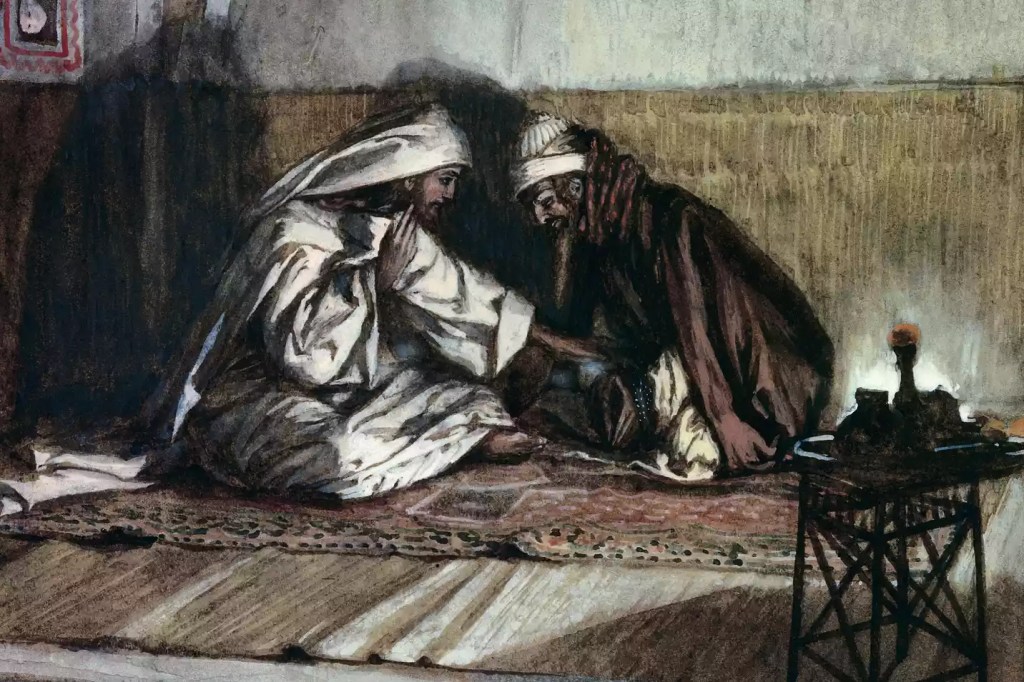
“Nicodemus and Jesus” painting by James Tissot (1836-1902) from SuperStock/GettyImages via learnreligions.com.

One of our favorite singer-songwriters James Taylor is coming next month for a one-night concert at the Mall of Asia Arena; hence, we are featuring two of his songs we find so related with the gospel message this fourth Sunday in Lent also known as Laetare or Rejoice Sunday.

But first, let us take a slight deviation from our usual manner of coming up with the music right away as we realized too the strong links between Nicodemus and James Taylor in their experiences.

Nicodemus belonged to the group of Pharisees, one of the enemies of Jesus at that time. But he admired and believed in Jesus that is why he chose to visit the Lord at night so that people would not notice. Eventually, Nicodemus became a disciple of Jesus after Good Friday after he and another Pharisee named Joseph of Arimathea took the body of Christ and buried him in a tomb (https://lordmychef.com/2024/03/09/lent-is-the-love-mercy-of-god-in-me/).

Nicodemus’ coming to see Jesus at night evoked his situation of being in the darkness of fears and confusions, trying to find directions in life which he found in Christ. It was similar with James Taylor’s plight he beautifully expressed in his 1970 hit Fire and Rain which is about the suicide of a childhood friend as well as his coping with his addiction and depression following his fame.

Just yesterday morning, they let me know you were gone.
Suzanne, the plans they made put an end to you.
I walked out this morning and I wrote down this song,
I just can’t remember who to send it to.
I’ve seen fire and I’ve seen rain. I’ve seen sunny days that I thought would never end.
I’ve seen lonely times when I could not find a friend, but I always thought that I’d see you again.

Won’t you look down upon me, Jesus, You’ve got to help me make a stand.
You’ve just got to see me through another day.
My body’s aching and my time is at hand and I won’t make it any other way.
Oh, I’ve seen fire and I’ve seen rain. I’ve seen sunny days that I thought would never end.
I’ve seen lonely times when I could not find a friend, but I always thought that I’d see you again.

Many times, we find ourselves in situations like Nicodemus when everything is all dark like the night, or James Taylor going through fire and rain.

Now look, Jesus is most present with us when we are in the darkest darkness of the night, right in the middle of a raging storm. Many times we could not see him because he hugs us, embraces us to shield us from more harms.

When Jesus told Nicodemus about his coming crucifixion – “when the Son of Man is raised up” – it was an assurance to us all too that Christ is with us in our worst situation because he suffered first for us on the Cross. I am so glad that JT mentioned Jesus in his song, pleading to the Lord to “look down upon me and help me make a stand.”

That is why we rejoice this Sunday: in the midst of our troubles and sufferings, there are bursts of joy and relief from Jesus within us dwelling in our hearts. And that is why, we find JT’s 1976 hit, Shower the People, so related too with our gospel this Sunday.

When Jesus told Nicodemus how “God so loved the world that he gave his only Son, so that everyone who believes in him might not perish but might have eternal life” (Jn.3:16), it was also a call for us all to be the love and mercy of Christ in the world.

Nicodemus eventually became a disciple of Jesus while JT is still very much around, having weathered so many fires and rains or storms in his life, both telling us how God finds ways to save us, even extricate us from our worst situation. Hence, the need for us to become the presence of Christ’s joy and mercy to people especially those closest to us so that they may realize and experience that God so loved the world because of the way we shower them with love through us.

You can play the game and you can act out the part,
even though you know it wasn’t written for you.
Tell me, how can you stand there with your broken heart ashamed of playing the fool?
One thing can lead to another; it doesn’t take any sacrifice.
Oh, father and mother, sister and brother, if it feels nice, don’t think twice,
just shower the people you love with love, show them the way that you feel.
Things are gonna work out fine if you only will do as I say, just
shower the people you love with love, show them the way you feel.
Things are gonna be much better if you only will.

Here is our doubleheader from the “Sweet Baby James”. Have a blessed, lovely week ahead!

*Both materials are not ours without any intentions at all of infringing its copyrights.

From YouTube.com
From YouTube.com.

Lent is the love & mercy of God in me

40 Shades of Lent by Fr. Nicanor F. Lalog II
Sunday Recipe for the Soul, Lent IV-B, 10 March 2024
2 Chronicles 36:14-16, 19-23 ><}}}}*> Ephesians 2:4-10 ><}}}}*> John 3:14-21
Photo of pink convolvulus from the Botanical Gardens of Jerusalem, flora.org.il.

Many times during prayer periods I banter with God especially when I feel overwhelmed by his kindness and love. Like last Thursday on my way to the adoration chapel when I passed by a row of banks.

As I knelt before the Blessed Sacrament to pray, I just felt like asking God: “BDO (Banco De Oro) ka ba, Lord? Kasi…you always find ways.”

That, for me, my dear friends is the meaning of this fourth Sunday in Lent – God never stops in finding ways to reach out to us, to be with us, to make us experience his love and mercy, kindness and forgiveness despite the hardness of our hearts.

Photo by author, 2019.

Our altars burst in shades of pink this Sunday called Laetare (Latin, rejoice) Sunday from the entrance antiphon that says, “Rejoice, Jerusalem, and all who love her. Be joyful, all who were in mourning; exult and be satisfied at her consoling breast.”

It is a misconception to see Lent as dull and drab due to its penitential nature; while there is the sober tone in our liturgy, let us keep in mind that it is also a season filled with joy and excitement for the coming Easter, the mother of all feasts in the Church.

And today we rightly rejoice because John reminds us in our gospel scene only him narrates – Nicodemus meeting with Jesus in the cover of the darkness of the night – of God’s immense love for us manifested in the dying of Jesus on the Cross.

Jesus said to Nicodemus: “Just as Moses lifted up the serpent in the desert, so must the Son of Man be lifted up, so that everyone who believes in him may have eternal life.” For God so loved the world that he gave his only Son, so that everyone who believes in him might not perish but might have eternal life.”

John 3:14-16
“Nicodemus and Jesus” painting by James Tissot (1836-1902) from SuperStock/GettyImages via learnreligions.com.

John saw a deeper meaning, of a sign pointing to Jesus as the Christ in this conversation with Nicodemus at night. Nicodemus was a Pharisee afraid to come out in the open to show his admiration and belief in Jesus. He eventually joined the disciples on Good Friday with another Pharisee, Joseph of Arimathea when they buried Jesus in a tomb.

See the deep perception of John in this recalling by Jesus to Nicodemus of the bronze serpent raised by Moses in the wilderness (see Num. 21:4-9) as a prefiguration of his own crucifixion.

In the gospel of John, the “lifting up” of the Son of Man refers to Jesus on the Cross. After that scene with the woman caught committing adultery, Jesus declared, “When you lift up the Son of Man, then you will realize that I AM…” (Jn.8:28). Then on Palm Sunday while in the temple area, Jesus told the crowd “‘And when I am lifted up from the earth, I will draw everyone to myself.’ He said this indicating the kind of death he would die” (Jn.12:32-33).

John’s gospel teems with other similar passages showing the inseparability of Christ’s Cross and glory. And so with our life, that is why in the middle of Lent, we rejoice this Sunday!

Photo by author in Petra, Jordan, May 2019.

Like last Sunday, here we find again early in the gospel of John how Jesus laid his vision-mission statement of coming to save us by dying on the Cross during his conversation with Nicodemus that night.

Jesus assured Nicodemus and us today that even while we are in the darkness of life’s many confusions and fears, problems and sufferings, we just have look up to him crucified lighting up our way to life and salvation. That night in their conversation, Jesus assured Nicodemus and us today that even in the worst situations in life when “darkness is our only light and hopelessness is our only hope” as T.S. Eliot wrote in his Four Quartets, God is in us, with us and for us in Christ. Just as when the world was covered in darkness on Good Friday when Jesus died on the Cross, it was the precise moment too of Christ’s glory when he conquered death and sin in obedience to the Father.

Yes, it is true these things are easier said than done but like Nicodemus, even in the darkness of the night we have to dare come close to Jesus, to speak to him and most of all, to hear and listen to him. As one poet had said, “only the brave who walk the darkness of the night shall see the brightness of the stars above.” Most of all, Jesus calls us today to be his love and mercy, his joy and light to the many other Nicodemus groping in the darkness of sin and evil.

In my three years as chaplain in a hospital, I have experienced personally and through others that truth so clear as crystal of God most closest with us in the worst days of our lives. Sometimes, we just sigh deeply as we feel him inside us, assuring us how everything is taken cared of, that everything would be fine.

Like the Israelites in the first reading, we too have to go through an “exile”, a kind of “punishment” not from God but as a result of own our sins and wrongdoing. Many times God let bad things happen to us because we insist on our ways; as God retreats to the back or sides of our lives, he never stops finding ways to save us, even “extricate” us from our imprisonment to sin and sufferings!

Indeed, as St. Paul had said in our second reading today, God is “rich in mercy, because of the great love he had for us” (Eph.2:4). Let us not waste that gift. Even though God forgives every sin no matter how bad it may be, do not forget some of our sins have irreversible consequences we shall face and suffer. Of course, God would still be there to help and guide us but, why wait for that to happen?

There lies the joy and grace – and challenge – of this fourth Sunday in Lent: even while we are in our worst situations in life, in our darkest nights, Jesus is always there for us, in fact, the first to have suffered and died for us so that with him on Easter, we may rise again to new life.

Be the sower of his love and mercy. Be his presence. Be another Nicodemus in the night leading others to the light of Jesus. Let us, therefore, rejoice in the Lord as we pray:

Praise and glory to you,
dearest Father
in giving us your Son
Jesus Christ our Lord,
our light,
our life,
our joy;
make us, O Lord,
your love and mercy
in this world
so everyone may experience
that indeed, God loves the world
that He gives us Jesus through me;
let your Holy Sprit enlighten
my mind and my heart
like Nicodemus
leading those in darkness
into the light of Christ.
Amen.

A joyful week to everyone!

From https://www.wildflowersprovence.fr/plant/convolvulus-lanuginosus/

Lent is reconciliation

40 Shades of Lent by Fr. Nicanor F. Lalog II
Thursday, Memorial of Sts. Perpetua & Felicity, Martyrs, 07 March 2024
Jeremiah 7:23-28 ><}}}}*> + ><}}}}*> + ><}}}}*> Luke 11:14-23
Your words today, O God,
are too strong,
that we are so bad
and, that is so true, too.

Thus says the Lord: When you speak all these words to them, they will not listen to you either; when you call to them, they will not answer you. Say to them: This is a nation which does not listen to the voice of the Lord, its God, or take correction. Faithfulness has disappeared; the word itself is banished from their speech.

Jeremiah 7:27-28
Though we are so bad,
you are still so good to us,
Father; you continue to speak to us
even if you know we do not listen
nor heed your voice.
What is worst,
even in the coming of your Son
Jesus Christ who offered himself
on the Cross, we still refused
to listen and heed his calls,
always asking for signs.

Some of them said, “By the power of Beelzebul, the prince of demons, he drives out demons.” Others, to test him, asked him for a sign from heaven. But he knew their thoughts and said to them, “Every kingdom divided against itself will be laid waste and house will fall against house. Whoever is not with me is against me, and whoever does not gather with me scatters.”

Luke 11:15-17, 23
Lord Jesus Christ,
in your dying on the the Cross,
you have expressed to us
the Father's immense love for us;
indeed, your Cross until now remains
a sign of contradiction in the world
as your calls to love and to forgive,
to be humble and be kind,
to give than to receive
remains a foolishness and weakness
for many of us;
but you continue to speak to us
despite our being deaf and hard-hearted
because by your Cross,
you have shown us too
it is the greatest sign of reconciliation,
reminding us of the many
contradictions within and around us,
of the many contradictions
in the world that can be
reconciled and be made one
in your self-giving in love
we must imitate like your martyrs
Saints Perpetua and Felicity.

Reconcile us
in you, dear Jesus,
make us one in you
on the Cross!
Amen.

Paalala ng Kuwaresma

Lawiswis ng Salita ni P. Nicanor F. Lalog II, Ika-06 ng Marso 2024
Larawan kuha ng may-akda, 2020.

Sa lahat ng panahon sa ating liturhiya ng Simbahan, bukod tangi ang Kuwaresma dahil ito lamang ang nagsisimula ng ordinaryong araw, ang Miyerkules ng Abo o Ash Wedensday at hindi araw ng Linggo.

Kapuna-puna ang nakaraang Ash Wednesday na pumatak ng Pebrero 14, Valentine’s Day na nangyari din noong 2018. Pinag-usapan ng marami sa social media kung alin ang pipiliing ipagdiwang, Valentine’s Day o Ash Wednesday?

Nakatutuwang isipin na marami pa rin ang sumagot sa survey na pipiliin nila ang mangilin sa araw ng pagpapahid ng abo kesa ang makipag-date sa Pebrero 14; iba ang ipinakita ng mga balita at ng social media kung saan panalo ang mga nagdiwang ng Araw ng mga Puso! At tila gayon nga ang nangyari o marahil, pinagsabay nating mga Pinoy ang dalawang pagdiriwang, di alintana mga panawagan ng Kuwaresma at Miyerkules ng Abo na manalangin, magtika ng mga sala, maglimos, at mag-ayuno.

Kaya nga taun-taon, ito ang laging tanong natin, ano nga ba ang kahalagahan ng Kuwaresma sa makabagong panahong ito na kung saan mga tao ay tila hindi na nag-aayuno, wala nang sakripisyo? Higit sa lahat, paunti nang paunti na mga nagsisimba.

Ang problema natin sa Pilipinas ay hindi pa naman katulad sa kanlurang Europa at hilagang Amerika na marami nang tao ang ayaw maniwala sa Diyos. Halos lahat pa rin ng mga tao sa ating bansa ay naniniwala sa Diyos ngunit naguguluhan marahil at hindi makita Kanyang kahalagahan at kaugnayan (relevance) sa buhay sa gitna ng makabagong panahon na wala nang hindi naiimbento at naso-solusyunan.  Bagama’t sasabihan ng marami naniniwala sila sa Diyos, mas tiwala kadalasan ang mga tao sa panahong ito sa agham at teknolohiya.

Narito tatlong bagay na binibigyang-diin sa panahon ng Kuwaresma na makatutulong sa ating matagpuan muli at maranasan katotohanan, kahalagahan at kaugnayan ng Diyos sa ating buhay sa gitna nitong makabagong panahon.

larawan kuha ni Walid Ahmad sa Pexels.com

Hindi lahat ay nakikita. Sa panahon ng Kuwaresma, pinag-aayuno din kung baga ang ating mga mata upang ituon ating pananaw at pansin sa ating kalooban at sa mga bagay na hindi nakikita, unang una na ang Diyos.

Kaya walang dekorasyon ang mga altar sa panahong ito, walang mga bulaklak at hangga’t maari wala ring mga halaman. “Bare” wika nga sa Inggles ang altar. Pagdating ng Biyernes Dolores bago mag-Linggo ng Palaspas, tinatakpan o binabalutan ng telang lila ang mga imahen at larawan sa simbahan sa gayon ding kadahilanan – upang tingnan natin mga mas malalim na katotohan ng ating buhay.

Sa panahong ito ng social media, lahat na lang ay ibig ipakita at ipangalandakan maski kasamaan, kabastusan, at kasalanan. Bakit nga ba nang magkasala sina Eba at Adan, sila ay nagtago dahil sa kahihiyan samantalang ngayon ipinagmamalaki pa ng ilan kanilang ginawang kasamaan?

Larawan kuha ni shy sol sa Pexels.com

Hindi lahat ng bagay sa buhay na ito ay nakikita at lalo din namang hindi lahat dapat ay ipakita. Wika nga ng Munting Prinsipe o Little Prince ni Antoine de St. Exupery, “What is essential is invisible to the eye; it is only with the heart that one can truly see.”

Lahat na lamang sa mundo ngayon ay palabas, showbiz na showbiz ang dating upang ipagyabang mga kayang kainin at bilhin, puntahan at gawin.  Ngunit, sadya bang nagbibigay ng kaganapan at katuwaan mga iyon?  Hindi ba mas masarap pa ring namnamin mga sandali nating kapiling ang mahal sa buhay? Kung tutuusin nga, kadalasan o palagi, yaong mga bagay na natatago at hindi nakikita ang siyang pinakamakahulugan, pinakamainam sa buhay.

Katulad ng Diyos: “Walang taong nakakita sa Diyos kailanman, ngunit kung tayo’y nag-iibigan, nasa atin siya at nagiging ganap sa atin ang kanyang pag-ibig” (1 Jn. 4:12).

Sa buhay, mas mainam pa rin yung simple at nakukubli, mayroong pa ring misteryo o hiwaga na natatago kaya ang lahat ay nagtataka. At minsan-minsan ay namamangha.

Larawan kuha ni Skyler Ewing sa Pexels.com

Hindi lahat ay minamadali. Kaya tinatawag na Kuwaresma ang panahong ito ng paghahanda sa Panahon ng Pasko ng Pagkabuhay ay dahil sa bilang na kuwarenta o apatnapung araw mula Miyerkules ng Abo haggang Sabado bisperas ng Palaspas (bagama’t di naman eksakto palagi) na kung tutuusin ay limang Linggo bago ang mga Mahal na Araw. Samakatwid, mayroong paghihintay dahil kailangang makabuo muna ng apatnapung araw o limang linggo.

Ito ang isang bagay na nawawala na sa mundo ngayon, ang paghihintay. Lahat mainipin kaya siguro maiinit ang ulo ng lahat na ultimo mga bata ay stressed out. Minamadali ang lahat na hindi malaman ano at sino nga ba ang hinahabol natin. Lahat ay instant – hindi lang kape at noodles pati pagkakaibigan, pag-aasawa at pagkakaroon ng baby!

Dahil sa teknolohiya, pilit na minamanipula ng tao ngayon ang panahon na madalas ay minamadali kaya marami ang hindi na maranasan ang Diyos pati sariling pagkatao at mga kapwa-tao sa pagmamadali. Hindi kataka-taka, nawawala na rin mga mabubuting ugali ng paghihintay, pagtitiyaga, pagtitimpi at pagpipigil.

Ang lahat na pangyayari sa daigdig ay nagaganap sa panahong itinakda ng Diyos. Ang panahon ng pagsilang at panahon ng pagkamatay; Ang panahon ng pagtatanim at panahon ng pagbunot ng tanim… Ano ang mapapala ng tao sa kanyang ginagawa? Alam ko na ang itinakda ng Diyos sa tao. Iniangkop niya ang lahat ng bagay sa kapanahunan. Ang tao’y binigyan niya ng pagnanasang alamin ang bukas ngunit hindi binigyan ng pakaunawa sa ginawa ng Diyos mula sa pasimula hanggang sa wakas.

Ang Mangangaral (Qoheleth) 3:1-2, 9-11

Minsan-minsa’y matutunan nating maghintay, magrelax o mag-chill wika nga ng mga kabataan. Masyado na tayong abala sa mga bagay-bagay kaya hindi natin napapansin, namamalayan ang Diyos na nagmamahal sa atin ay kapiling natin. Ang Diyos kabaligtaran natin: maski buong buhay natin hinihintay niya tayong lumapit sa kanyang muli sakaling magpasya tayong iwanan ating mga kasalanan at maling pamumuhay upang sa kanya maranasan ang kapanatagan at kapaypaan. Tinuturuan tayo ng panahon ng Kuwaresma na tumigil at manatili sandali sa buhay, maghintay sa Diyos at kanyang biyayang nakalaan para sa atin.

Larawan kuha ni Natalie Bond sa Pexels.com

Katahimikan. Sa lahat ng mahahalagang aspekto ng Kuwaresma, ito ang pinakamahalaga sapagkat hindi tayo makapagdarasal, makapagninilay, o magsisi sa ating mga kasalanan ng walang katahimikan. Bahagi ng paghihintay ang pananahimik.

Naalala ko noong bata kami tuwing bakasyon sa halamanan ng aming Lola. Maraming tutubi noon at lahat kaming magpipinsan ang unahan sa paghuli habang nag-aasaran sa kantang “tutubi tutubi huwag magpahuli sa batang mapanghi!”

Wala ka talagang mahuhuling tutubi kapag ika’y malikot at maingay ngunit sa sandaling ikaw ay pumirmi at manahimik, kusa pang lalapit ang mailap na tutubi.

Iyon ang buhay, iyon ang Kuwaresma. Manahimik tayo upang higit nating mapakinggan ating sariling kalooban na madalas hindi natin pinakikinggan dahil bantad na bantad tayo sa iba’t ibang tinig at ingay sa atin nagdidikta ng nararapat. Kaya madalas tayong lito kasi sarili natin di natin pinapansin. Gayon din naman, sa sobrang pakikinig sa mga sabi-sabi, nag-aaway away tayo kasi hindi nating pinakikinggan kapwa natin. Ang pananahimik ay hindi pagiging bingi kungdi pakikinig na mabuti; ang katahimikan ay hindi kawalan kungdi kapunuan na kahit pinakamahinang tinig ay sinisikap nating pakinggan.

Larawan mula Pixabay on Pexels.com

Tanging mga tao na kayang manahimik ang tunay na nagtitiwala sapagkat ang katahimikan ang tahanan at lunan ng pagtitiwala. Kaya ito rin ang tinig at wika ng Diyos. Sa ating pananahimik, tayo ay nagtitiwala, naghihintay maski wala tayong nakikita dahil batid natin kumikilos ang Diyos ng tahimik.

Kapag magulung-magulo ang ating buhay, tumigil tayo at manahimik. Pakinggan at higit sa lahat damhin ang sarili at buong kapaligiran upang maranasan kaganapan at katotohanan ng buhay mula sa Diyos na kadalasan ay tahimik na nangungusap sa atin. Madalas sa buhay natin, ang Diyos iyong pinakamahinang tinig na pilit bumubulong-bulong mula sa ating puso. Sikaping tumigil at manahimik, iyon ang pakinggan at sundin at tiyak, ikaw ay pagpapalain.

Sana ay huwag palampasin pagkakataon ng Kuwaresma upang Diyos ay maranasang muli at masimulan natin ugnayang kanyang matagal nang ibig para sa atin. Salamat po.

Lent is contrition with consistency

40 Shades of Lent by Fr. Nicanor F. Lalog II
Tuesday in the Third Week of Lent, 05 March 2024
Daniel 3:25, 34-43 <*((((>< + ><))))*> Matthew 18:21-35
Photo by Digital Buggu on Pexels.com
In this season of Lent,
teach us, Lord, to be
consistent in our contrition;
let us realize that true
contrition for our sins is
not only when we have cried,
nor when we have beaten
our breasts with mea culpa,
mea culpa, mea maxima culpa,
nor when we say sorry to
everyone we have sinned.
Being sorry for our sins
before you, God our Father,
is being consistent -
when our contrition leads us
to change our evil ways
and most of all, when we
become consistent in our
prayer and lives
that we stop with our
sins and evil ways.

Azariah stood up in the fire and prayed aloud: “For we are reduced, O Lord, beyond any other nation, brought low everywhere in the world this day because of our sins. But with contrite heart and humble spirit let us be received; as though it were burnt offerings of rams and bullocks, or thousands of fat lambs, so let our sacrifice be inn your presence today as we follow you unreservedly; for those who trust in you cannot be put to shame.

Daniel 3:25, 37, 39
Most of all,
O God,
to be contrite for our sins
is being consistent also
in being forgiving
with our fellow sinners;
every day, we call you
God "Our Father",
asking you to forgive us
our sins as we forgive
those who sin against us
but so often,
we just say these words
without really acting on them,
fulfilling them by forgiving
our fellow sinners;
to be sorry for our own sins
is to see also the pure
heart of another sinner
asking for forgiveness
of sins.

To be contrite
is to be consistent
in forgiving others
from one's heart
because a truly contrite heart
sees and feels
a fellow contrite heart too!
Amen.

Lent is the zeal of Jesus

40 Shades of Lent by Fr. Nicanor F. Lalog II
Sunday Recipe for the Soul, Lent III-B, 03 March 2024
Exodus 20:1-17 ><}}}*> 1 Corinthians 1:22-25 ><}}}*> John 2:13-25
Photo by author, 2019,

It has been 19 days since we started this 40-day journey of Lent as an internal pilgrimage to God our first love. Since the first Sunday of Lent, Mark guided us to Jesus as we joined him in the desert of our poverty and sinfulness to the heights of his transfiguration through the many trials and sufferings we have gone through in life.

Beginning this third Sunday in Lent until the fifth Sunday, all our gospel readings are taken from John as we come closer with God who dwells right in our hearts, his temple within us. Keep in mind that our Lenten itinerary is actually symbolic and theological in nature than an actual road map to follow; hence, our shift to the fourth gospel that is so rich in its narration of the events leading to the Holy Week.

Since the Passover of the Jews was near, Jesus went up to Jerusalem. He found in the temple area those who sold oxen, sheep, and doves, as well the moneychangers seated there. He made a whip out of cords and drove them all out of the temple area, with the sheep and oxen, and spilled the coins of the moneychangers and overturned their tables, and to those who sold doves he said, “Take these out of here, and stop making my Father’s house a marketplace.” His disciples recalled the words of the Scripture, Zeal for your house will consume me.

John 2:13-17
Photo by author, Jerusalem, 2017.

In the Bible, the Temple is the sign of God’s presence. That is how central is the Temple of Jerusalem for the Jews even until now. And John deepens this sign of the Temple for us with his most unique narration of its cleansing by Jesus in preparation for its new meaning found in Christ when he died on the Cross.

Only John noted how the disciples recalled after Easter this episode of Jesus cleansing the Temple, linking it with that line from the Passion Psalm, “His disciples recalled the words of the Scripture, ‘Zeal for your house will consume me'”. Matthew, Mark, and Luke in their accounts identically quoted Jesus citing Isaiah 56:7 when he said, “My house shall be called a house of prayer but you have made it into a den of thieves” (Mt. 21:13; Mk. 11:17; Lk.19:46).

Here, John is reminding us – like when the Apostles remembered after Easter – that Jesus is the “just man”, the promised Messiah who not only prayed but embodied this psalm that led him to his Passion and Death on Good Friday.

Save me, God, for the waters have reached my neck. For your sake I bear insult, shame covers my face. Because zeal for your house consumes me, I am scorned by those who scorn you.

Psalm 69:2, 8, 10
Photo by author, Jerusalem, 2017.

That “zeal” of Jesus for the Temple and everything it stood for that consumed him was the zeal of his self-giving love on the Cross that we find in the following conversation he had with the Jews.

At this the Jews answered and said to him, “What sign can you show us for doing this?” Jesus answered and said to them, “Destroy this temple and in three days I will raise it up.” The Jews said, “This temple has been under construction for forty-six years, and you will raise it up in three days?” But he was speaking about the temple of his body. Therefore, when he was raised from the dead, his disciples remembered that he had said this, and they came to believe the Scripture and the word Jesus had spoken.

John 2:18-22

So beautiful! Everything now becomes so clear that Jesus is the new Temple; his cleansing of the temple in Jerusalem was a declaration of his “vision-mission” right at the start of his ministry in John’s gospel (experts say John’s narration of events in Christ’s life was more of theology than chronology).

At his Crucifixion, Jesus Christ had replaced the Temple worship with “worship in Spirit and truth” (Jn.4:23) as he had told the Samaritan woman at Jacob’s well (Third Sunday Lent-A). The synoptic gospels attest to this same view of John in their accounts that upon Christ’s death, “the veil of the sanctuary was torn from top to bottom” (Mt.27:51; Mk.15:38; Lk.23:45) that signaled the end of temple worship in Jesus Christ as the new Temple of God.

Therefore, this “zeal” of Jesus for the Temple symbolizing the Father is the same zeal every disciple must have for God, for others and his Church. It is the very same zeal laid out by God to Moses at Sinai in the Ten Commandments calling on everyone to be fair and just with each other regardless of age, color, sex, and belief. The first three commandments call us for a zeal in loving God above all expressed in the same zeal we must have in the remaining commandments for our neighbors.

Photo by author, temple of Jerusalem, 2017.

After the success of the movie The Ten Commandments in 1956, reporters asked its director Cecil B. DeMilled which of the Ten Commandments of God we often violate or disobey? DeMille said it is the first commandment because every time we commit a sin, that is when we have other gods besides our one, true God.

Very true!

This is the grace of this third Sunday in Lent as we continue this internal pilgrimage to God: that we also cleanse our hearts by examining our zeal for God and for others. The other word for “zeal” is “enthusiasm” which literally means in Greek as “to be filled with God” (from en theos). To be filled with God, to be with his zeal means to be empty of ourselves first by becoming like Jesus Christ. But, how can we proclaim Christ crucified as St. Paul asserted in the second reading when we are more concerned with money and trade, fame and prestige, especially in the Church? How can we proclaim Christ crucified when we avoid his Cross, always seeking shortcuts and instants in everything? How can we be more loving like Christ crucified when we do not have the zeal for others?

Let us pray.

Lord Jesus, 
"overturn" our many excuses
and alibis of being so concerned
with things of the world
pretending we do them in the name
of God and of our family and loved ones;
"overturn" our many justifications
for not going to Mass,
for not receiving the Sacraments,
for not making time
with our family and loved ones;
set us free, Jesus,
from our many addictions
that have cut off our ties
and relationships with You
and real persons
like our family and friends.
Fill us, Jesus, with your zeal
for the Father through the Church
and everyone we meet.
Amen.
From Google.

Lent clarifies our priorities & responsibilities

40 Shades of Lent by Fr. Nicanor F. Lalog II
Thursday in the Second Week of Lent, 29 February 2024
Jeremiah 17:5-10 ><))))*> + ><))))*> + ><))))*> Luke 16:19-31
Photo by author in Tam-Awan Village, Baguio City, March 2018.
Teach us, Father,
to realize anew our
priorities in life this Lent;
make us begin anew
in this holy season to
prioritize on you and
spirituality than material
things especially wealth.

Probe our hearts, O God,
and remove our many attachments
to things that pass and fade,
that hinder us from growth
and maturity, preventing us
from experiencing fulfillment
in you.

Thus says the Lord: Cursed is the man who trusts in human beings, who seeks his strength in flesh, whose heart turns away from the Lord. He is like a barren bush in the desert that enjoys no change of season, but stands in a lava waste, a salt and empty earth. Blessed is the man who trusts in the Lord, whose hope is the Lord. He is like a tree planted beside the waters that stretches out its roots to the stream: It fears not the heat when it comes, its leaves stay green; in the year of drought it shows no distress, but still bears fruit.

Jeremiah 17:5-8
When you become the priority
in our lives, God,
then we become more responsible
with our neighbors too;
we become concerned with everyone,
especially the poor and those in need,
we become our brother's keeper,
thinking about the good of others
unlike the rich man
in today's parable;
grant us the grace
in Jesus Christ
to have a heart that feels
the hunger and thirst of the poor,
the pains and anguish of
the sick and dying,
enabling us to do good
in others.
Amen.