Beatitudes of Jesus, attitudes of his disciples

The Lord Is My Chef Sunday Recipe for the Soul by Fr. Nicanor F. Lalog II
Sunday Week VI-C in Ordinary Time, 13 February 2022
Jeremiah 17:5-8 ><}}}}*> 1 Corinthians 15:12, 16-20 ><}}}}*> Luke 6:17, 20-26
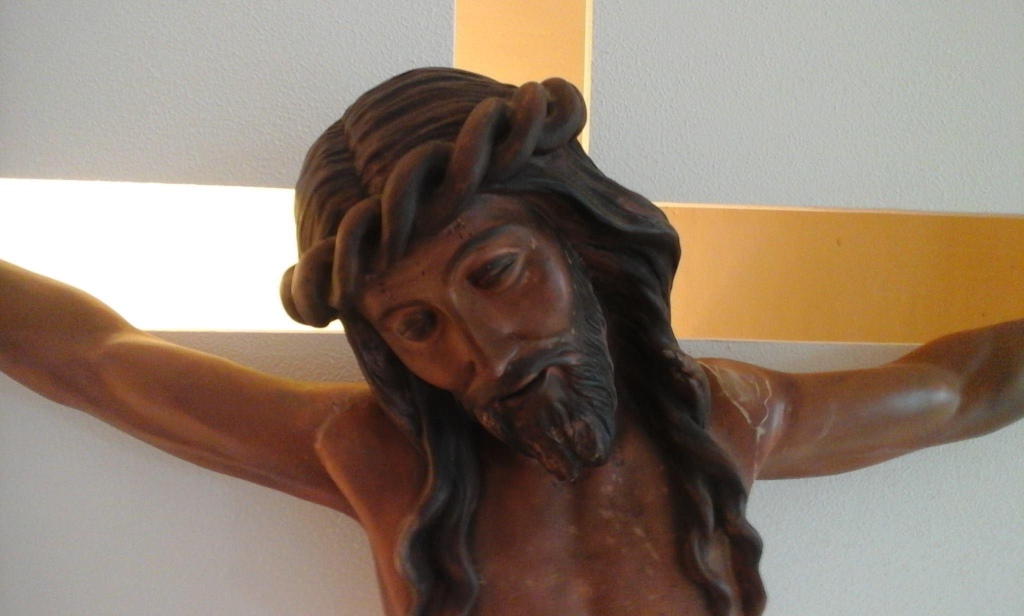
Photo by author, monastery inside the compound of the Church of Beatitudes, the Holy Land, 2019.

From the shores of Lake Gennesaret in Capernaum, Jesus now takes us to the plains for his first series of teachings called “sermon on the plains”. In Matthew’s gospel, it is called “sermon on the mount” due to his different emphasis and audience, his fellow Jews while Luke situated it on the plains based on his own focus directed to gentiles or non-Jews.

But, whether it was on the mount or on the plains, one thing remains clear: Jesus taught important lessons specifically for his disciples called the Beatitudes.

Last Sunday Jesus called his first four disciples to become “fishers of men” and as he travelled preaching along the shores of Galilee, they grew to Twelve in number.

On the night before this scene of sermon on the plains, Jesus went up a hill with the Twelve to pray before appointing them as Apostles. It was the first “face-to-face” class of the Twelve with the Beatitudes labelled as Discipleship 101.

And raising his eyes toward his disciples he said: Blessed are you who are poor for the kingdom of God is yours. Blessed are you who are now hungry for you will be satisfied. Blessed are you who are now weeping, for you will laugh. Blessed are you when people hate you, and when they exclude and insult you, and denounce your name as evil on account of the Son of Man. Rejoice and leap for joy on that day! Behold, your reward will be great in heaven. But woe to you who are rich, for you have received your consolation. Woe to you who are filled now for you will be hungry. Woe to you who laugh now, for you will grieve and weep. Woe to you when all speak well of you, for their ancestors treated the false prophets in this way.”

Luke 6:20-26
Photo by author, Church of the Beatitudes, the Holy Land, 2019.

Beatitudes, the meaning of discipleship

The Beatitudes tell us the meaning of discipleship, of not simply following Jesus but making a choice, taking a stand to be like him. Each “blessedness” is actually Christ who is described as the poor, the hungry, the weeping, and the hated.

Again we find in the Beatitudes of Jesus the contrasts and contradictions we have reflected three Sundays ago when he was rejected by his own folks at a synagogue in Nazareth (see https://lordmychef.com/2022/01/29/living-loving-amid-contradictions/).

See the set of “Blessed” followed by a corresponding set of “woes”, giving us a hint that the Beatitudes were patterned by Jesus to Jeremiah’s pronouncements to the people we heard in the first reading,

“Cursed is the man who trusts in human beings, who seeks his strength in flesh, whose heart turns away from the Lord. Blessed is the who trusts in the Lord, whose hope is the Lord. He is like a tree planted beside the waters that stretches out its roots to the stream: it fears not the heat when it comes, its leaves stay green; in the year of drought it shows no distress, but still bears fruit.”

Jeremiah 17:5, 7-8

Both in Jeremiah and in the Beatitudes by Jesus, there is the promise of blessings in the future; however, it is not something we only hope to achieve in the future but something realized in the present IF we trust in the Lord.

Photo by author, pilgrims entering the Church of the Beatitudes, 2019.

More than a promise of hope in a future glory, the Beatitudes by Jesus are directions every disciple must take as path in life, guides or criteria in discerning the will of God for us in this life. It is said that the word beatitude is from “be attitude” or the attitudes of a disciple.

That gesture of the Lord looking up to his disciples that include us today while teaching the Beatitudes indicates his recognition of our present situation by speaking in the present tense with “Blessed are you who are now poor, hungry, weeping and hated”.

Are we not feeling poor and hungry, actually weeping and hated in this intensely heated politics in the country where everyone seems to be lacking reason and shame, everyone going insane and worst, salaula (filthy) without any sense of shame at all?

At the same time, all those pronouncements of having the Kingdom of God, of being satisfied, of laughing, and of being rewarded greatly in heaven are not things we get in the future if we suffer now; these we can NOW have amid our sufferings when we are one in Jesus Christ.

The saints have shown us in their lives most especially St. Paul how while being poor, hungry, weeping and hated they have experienced fulfillment and joy at the same time. We ourselves have proven them right that with St. Paul we can “boast” like him, “Therefore, I am content with weaknesses, insults, hardships, persecutions, and constraints, for the sake of Christ; for when I am weak, then I am strong” (2 Cor. 12:10).

The key is union in Jesus Christ because the Beatitudes not only reveal to us his very person but also his Paschal Mystery of Passion, Death and Resurrection. It is therefore an imperative that every disciple must be immersed in Christ because discipleship is the imitation of Christ. Again, we borrow from St. Paul who said, “It is no longer I who live, but Christ who lives in me” (Gal.2:20).

Photo by author, dome of the Church of Beatitudes, the Holy Land, 2019.

Woes of not following Jesus

Contrary to claims by many philosophers and filosofong tasyo alike who are atheists and anti-Church, God is not a sadomasochist who delights in seeing his people suffer and die. Nothing bad can come from God for God is love (1 Jn. 4:8).

Unbelievers continue to question God, most especially Jesus and his Beatitudes that are clearly about sufferings with its apparent dislike or rejection of wealth and fame like what Jesus spoke of the woes in the second part of his Beatitudes.

There is nothing wrong with being rich, being filled, of laughing and being spoken well by others per se; in fact, these are all good in themselves. However, Jesus spoke of them as woes based on the pattern we have seen from Jeremiah’s pronouncements in the first reading: “Cursed is the man who trusts in human beings, who seeks his strength in flesh, whose heart turns away from the Lord.”

See how Jesus was more “soft” and gentle in his woes than God in Jeremiah’s instruction to the people that was so harsh, saying “cursed” is the man who trusts in human beings, whose heart turns away from the Lord.

Photo by author, altar in the Church of Beatitudes, 2019.

But here we find its true context too: it is a warning sign, a reminder of the dangers that can happen to anyone who trusts in himself more and turns away from God.

Here we find something truly happening in the future – not now – unlike in the Beatitudes wherein the future blessings are experienced in the present moment if we suffer in communion with Christ.

Very clear in Jeremiah and in the woes of Jesus, turning away from God surely leads to disaster because it is the opposite path of blessings.

At the same time, since God does not punish, the woes by Jesus are not a condemnation of those who are rich, filled, laughing and well spoken of others. His woes are not expressions of hatred nor hostilities but warning against the dangers of being so proud, of being filled with one’s self, of playing god because it is the path to destruction. Or even perdition as we shall see later this year in the parable of Lazarus and the rich man found only in Luke’s gospel.

The Greeks have a more precise term for that called hubris – an excessive pride and defiance of the gods that leads to one’s nemesis. Clearly, God does not punish nor condemn anyone of us. It is always our choice that we are lost and end in woes, as Shakespeare immortalized in the words of Cassius in Julius Caesar,

"The fault, dear Brutus, 
is not in our stars 
But in ourselves, 
that we are underlings".

Have a blessed week ahead, everyone. God bless you all. Amen.

Catching Jesus, catching for Jesus

The Lord Is My Chef Sunday Recipe for the Soul by Fr. Nicanor F. Lalog II
Sunday Week V-C in Ordinary Time, 06 February 2022
Isaiah 6:1-2, 3-8 ><}}}}*> 1 Corinthians 15:1-11 ><}}}}*> Luke 5:1-11
Photo by Mr. Jim Marpa, 2018.

The word catch is a very catchy one, like when we catch our breath. Or, when we catch a train or bus or catch a ball. Recently, we have been catching colds and have also started catching movies. But the most beautiful of all is catching a glimpse of someone special until we catch a person, like a bride or a groom.

To catch means “to have”. It may be something. Or someone. Wholly or partially.

There is always that sense of possession in catching. This Sunday, Jesus wants to catch us all by making us catch others for him, too!

After he had finished speaking, he said to Simon, “Put out into deep water and lower your nets for a catch.” Simon said in reply, “Master, we have worked hard all night and have caught nothing, but at your command I will lower the nets.” When they had done this, they caught a great number of fish and their nets were tearing. When Simon Peter saw this, he fell at the knees of Jesus and said, “Depart from me, Lord, for I am a sinful man.” For astonishment at the catch of fish they had made seized him and all those with him, and likewise James and John, the sons of Zebedee, who were partners of Simon. Jesus said to Simon, “Do not be afraid; from now on you will be catching men.”

Luke 5:4-6, 8-10

From their synagogue at Nazareth, Jesus came to the nearby shore of Galilee Lake at Capernaum preaching his good news of salvation. A large crowd of people followed him, listening to his teachings as he sat on the boat of Simon he had borrowed.

Simon and company were washing their nets, on their way home after a fruitless night of fishing when Jesus came. Simon Peter must have heard – “caught” – the words of Jesus while teaching and soon enough, he was caught with fear with their miraculous catch.

Photo by author, Lake of Galilee, 2017.

Again, we have Jesus with his powerful words making such impact on the people, being fulfilled in their hearing most especially to Simon: After he had finished speaking, he said to Simon, “Put out into deep water and lower your nets for a catch.” Simon said in reply, “Master, we have worked hard all night and have caught nothing, but at your command I will lower the nets.”

The fish has always been there in the lake but what made the big difference that morning was Jesus – he was not only with them but most of all, Simon believed in the words of the Lord!

Here we find again the words of Jesus being fulfilled because somebody listened and believed.

Last week we heard how Jesus was driven out of the synagogue by his own folks who doubted him and his words despite their amazement at the start; today, here at the shore of Capernaum, the people came to Jesus to listen to his words again.

But, the most beautiful part of our story this Sunday is how Jesus came at the most ordinary time and circumstances of the lives of the people. Too often, many people think Jesus comes only in dramatic and miraculous ways to invite us to come and follow him.

Not really. In fact, he comes when we least expect him like in this scene when Simon must have been feeling so down, coming home empty with nothing to feed his family after a fruitless night of fishing.

The good news of our Gospel this Sunday is how Jesus makes us all his worthy followers when we allow him to catch us. That is how the Gospel works – let yourself be caught by the Lord first and soon you shall find yourself being caught up in so many wonderful surprises: When Simon Peter saw this, he fell at the knees of Jesus and said, “Depart from me, Lord, for I am a sinful man.” For astonishment at the catch of fish they had made seized him and all those with him.

Photo by author, statue of Simon Peter after the miraculous catch of fish,asking the Lord to depart from him at the shore of Galilee in Capernaum, 2017.

Jesus does not ask us for great things and deeds; he knows us very well and loves us so much, believing in us that he simply invites us to respond to his calls, to his words in the little everyday things of our lives like being faithful to your husband or wife, being obedient to our parents, being true to our friends, being honest in our work and studies, being kind and open to others. When bad things happen to us, all Jesus asks us is to go deeper in him in faith by being more patient or even uncomplaining to our pains and difficulties.

Of course, these are all easier said than done but this is what we always tell Jesus just before receiving him in the Holy Communion like that Roman official who said, “Lord, I am not worthy that you should enter under my roof, but only say the word and I shall be healed”.

Nobody is truly worthy before the Lord but that is why Jesus came to invite us personally to let ourselves be caught by him like Simon and his brother Andrew along with their fishing partners, the sons of Zebedee, James and John, who left everything to follow him.

Every encounter with Jesus and his words always result in a self-discovery of our unworthiness and sinfulness like Simon Peter and Isaiah in the first reading. But, the good news is that every time God comes to call us, he also gives us the strength and gifts necessary to accomplish his mission for us. What is important is our willingness to follow, like Isaiah who said, “Here I am, send me” (Is.6:8) and be ready to leave everything behind like the first four disciples.

Photo by Dr. Mylene A. Santos, MD, 2020.

At the center of every call and mission is Jesus Christ, our Lord and Master, the Word who became flesh and dwelled among us by being one with us in our pains and sufferings, even in death, so that we may become like him, holy and blessed.

To be holy like God is to share in his work of gathering his people into the Body of Christ which St. Paul had reflected these past three Sundays to remind us of the preeminence of love in fulfilling our mission from Jesus.

Every day, Jesus comes, trying to catch us, asking us to cast our nets, inviting us to catch others for him so we may all be one in him in his love.

Let us all be caught by Jesus, be totally his and experience his amazing love and mercy. Amen.

Have a blessed and COVID-free week ahead!

Photo by Mr. Jim Marpa, 2018.

Malapit sa Diyos, naglalapit sa Diyos

Lawiswis Ng Salita ni P. Nicanor F. Lalog II, Ika-02 ng Pebrero 2022
Kapistahan ng Paghahandog kay Jesus sa Templo
Malakias 3:1-4 ><}}}}*> Hebreo 2:14-18 ><}}}}*> Lucas 2:22-40
Larawan mula sa crossroadinitiative.com.

Ngayon ang ika-40 araw mula ng Pasko ng Pagsilang ng Panginoong Hesus sa Bethlehem, Kapistahan ng Paghahandog sa Kanya sa Templo ng kanyang mga magulang na sina Maria at Jose.

Bukod tangi lamang itong salaysay na matatagpuan sa ebanghelyo ni San Lucas sapagkat ibig niyang ipakita noon sa kanyang mga mambabasa at mga taga-sunod na pumarito si Hesus para sa lahat ng tao, hindi lamang sa mga Hudyo.

Una itong pinagdiwang ng mga Kristiyano sa Jerusalem at lumaganap sa Silangan noong taong 500 kung saan ito tinawag sa wikang Griyego na “Ypapante” na ibig sabihi’y ang “Pagtatagpo” nina Hesus at ng dalawang matanda sa templo na sina Simeon at Anna.

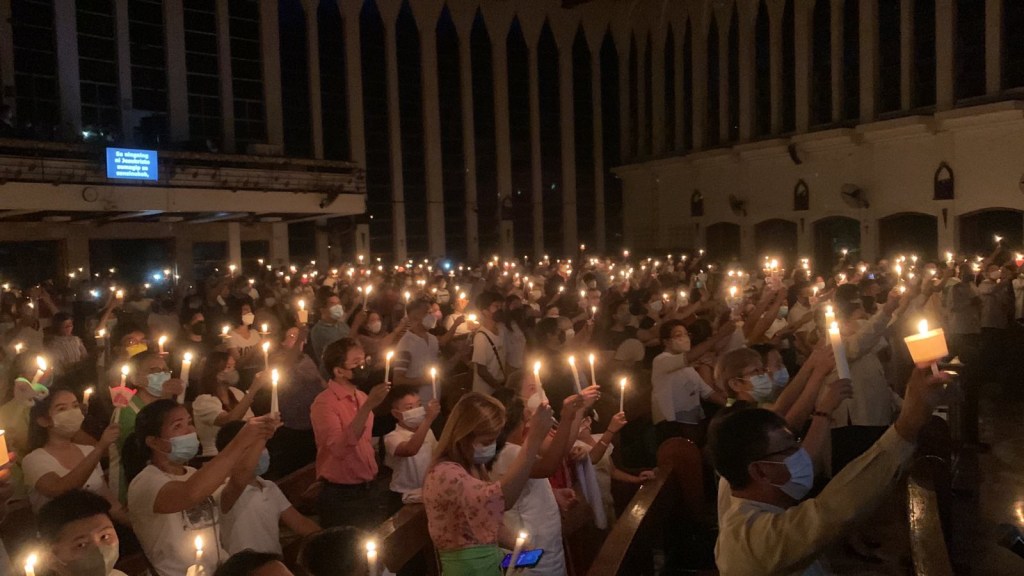
Mula Silangan, umabot ang pagdiriwang na ito sa Europa na nakilala bilang kapistahan din ng Paglilinis ni Maria o “Purification of Mary”. Sa France, nagkaroon ng seremonyas ang mga Kristiyano ng pagbabasbas at pagsisindi ng mga kandila bago pumasok ng simbahan bilang pagkilala kay Hesus na tanglaw ng mundo ayon sa pahayag ni Simeon sa templo, “Liwanag itong tatanglaw sa mga Hentil, At magbibigay-karangalan sa iyong bayang Israel” (Luc. 2:32).

Kaya nang makarating sa Roma ang tradisyong ito noong taong 800, ito rin ang ginawang seremonya ni Papa Sergio I kaya tinagurian itong Candelaria (kandila). Makalipas ang mahigit isang libong taon noong 1962 sa Vatican II, ibinalik sa tunay na pangalan ito bilang Kapistahan ng Paghahandog sa Templo ngunit pinanatili ng mga obispo ang tradisyon ng pagbabasbas at pagsisindi ng mga kandila upang ipakita na si Hesus ang tunay na liwanag sa mundo sa aakay sa atin pabalik sa Diyos.

Kuha ni G. Cristian Pasion, Pasko ng Pagkabuhay, 2021.

Mahalaga na ating mapagnilayang muli at makita sa panahong ito na si Hesus ang tanging liwanag sa ating buhay na tumatanglaw sa gitna ng maraming artipisyal na mga ilaw, mga ilaw na ang binibigyang liwanag ay mga tao at kung sinu-sinong ibig na maging sikat o ibig kilalanin.

Ito yaong mga artipisyal na ilaw ng mga kamera at media na ang pinakikita o ang tinatampok bilang “highlight” ay mga karangyaan, kapangyarihan, katanyagan at mga kapalaluan sa mundo.

Inaanyayahan tayo ng kapistahang ito na tularan sina Simeon at Anna na inabangan buong buhay nila si Hesus na siyang tunay na liwanag ng ating buhay na dapat din nating hanapin, lapitan at sundan.

May isang tao noon sa Jerusalem, ang pangala’y Simeon. Matapat at malapit sa Diyos ang lalaking ito at naghihintay sa katubusan ng Israel. Sumasakanya ang Espiritu Santo na nagpahayag sa kanya na hindi siya mamamatay hangga’t hindi niya nakikita ang Mesiyas na ipinangako ng Panginoon.

Lucas 2:25-26

Bukod sa tanging si San Lucas lamang ang may kuwento ng tagpong ito, mayroon din siyang ginamit na kataga na hindi ginamit ng sinumang manunulat ng Bagong Tipan o maging ng alin mang aklat sa buong Bibliya.

Ito yung salitang naglalarawan kay Simeon bilang , “malapit sa Diyos” na sa Inggles ay “devout”.

Alam na natin yung salitang “righteous” o “matapat” na ginamit din ni San Mateo upang ilarawan si San Jose bilang taong matuwid o banal na tumutupad sa mga batas at alituntunin ng kanilang relihiyon.

“Simeon’s Moment” ni American illustrator Ron DiCianni mula sa  http://www.tapestryproductions.com.

Ngunit iyong “malapit” o “devout” sa Inggles o “deboto” sa pangkaraniwang pananalita, tanging si San Lucas lamang ang gumamit niyon sa buong Bibliya. Apat na ulit niya itong ginamit: minsan sa ebanghelyo na ating napakinggan at tatlong ulit sa ikalawang aklat niyang sinulat, Gawa ng mga Apostol.

Mas maliwanag ito sa Inggles nang tawagin ni San Lukas ang mga Hudyong pumunta sa Jerusalem noong Pentecostes bilang mga “devout Jews” o “mga taong palasamba sa Diyos” (Gawa 2:5); tinawag din niyang mga “devout men” o “mga taong may takot sa Diyos” yaong mga naglibing sa ating unang Martir na si San Esteban (Gawa 8:2); at sa pagsasalaysay ni San Pablo ng kanyang pagbabalik-loob, ginamit na salita muli ni San Lucas sa kanyang kuwento upang ilarawan si Ananias bilang “a devout observer of the law” o “taong may takot sa Diyos” (Gawa 22:12).

Alalaong-baga, para kay San Lucas, ang isang “devout” na tao, o wika nga natin deboto ay isang taong malapit sa Diyos dahil siya ay mayroong takot sa Diyos kaya tumutupad sa Kanyang mga utos! Hindi lamang sila matapat o faithful kungdi mayroong malinis na puso at laging handang tumupad ng buong tapang sa kalooban ng Diyos.

Kaya nga sa ating mga Pinoy, ang deboto ay taong malapit, yaong mayroong matalik na ugnayan sa Diyos at sa kapwa!

Sila yaong mga kaibigang maaasahan, mayroong sariling kusa at hindi naghihintay na pagsabihan pa kung ano ang gagawain. Mayroong sariling-palo katulad nina Simeon at Anna na kusang naghihintay, lumalapit sa Diyos at Panginoon.

“Presentation at the Temple” painting ng Italian Renaissance artist Andrea Mantegna noong 1455; hawak ni Mari ang Banal na Sanggol habang si San Jose naman sa gitna ay nakatingin kay Simeon na mayroong balbas na puti. Larawan buhat sa wikipedia.org.

Nadadalisay ang ating pagiging malapit sa Diyos sa isang buhay-panalangin na kung saan mayroong disiplina sa pagdarasal na hindi lamang mga salitang inuusal ng bibig kungdi sinasapuso.

Masdan paanong sinabi ni San Lucas sina Simeon at Anna na palaging nasa templo nananalangin. Higit sa lahat, ang pananalangin ay kaisahan sa Diyos kaya nabatid kaagad ng dalawang matanda na dumating na si Hesus sa pag-uudyok sa kanila ng Espiritu Santo.

Katulad din yan ng pagkakaroon ng matalik na kaibigan: palagi kayong nag-uusap, nagbabahaginan at nag-uunawaan kaya mayroong kaisahan.

Ang pagiging malapit sa Diyos o deboto ay hindi lamang pagaalaga at pagkolekta ng mga imahen at aklat dasalan kungdi pumapaloob sa kalooban ng Diyos na siyang sinasabi ni propeta Malakias sa unang pagbasa na biglang darating ang Panginoon sa kanyang templo na siyang ating mga sarili.

Gayun din naman, ang taong malapit sa Diyos palaging malapit sa kapwa, lalo na sa mga maliliit at nahihirapan sa buhay gaya ng mga may-sakit at kapansanan. Pagmasdan paanong kinilala ni Simeon mga magulang ni Hesus sina Maria at Jose. Binigyan niya ng halaga kanyang mga kapwa-tao hindi lamang ang Panginoong Hesus.

Ang tunay na kaibigang matalik ay yaong naglalapit sa atin sa Diyos at kabutihan, hindi kasalanan at kapahamakan. Nakakatagpo natin si Hesus sa ating mga kapwa tao gaya ng sinasabi ng may-akda ng sulat sa mga Hebreo na ating napakinggan.

Higit sa lahat, ang taong malapit sa Diyos o isang deboto ay puno ng tuwa at kagalakan. Damang-dama ang tuwa at galak nina Simeon at Anna nang makatagpo at makalong si Hesus na sa sobrang tuwa nila sila’y handa nang mamatay.

Iyon ang tunay na palatandaan ng malapit at nakatagpo sa Diyos: puno ng tuwa na anuman ang sapitin sa buhay, hindi niya alintana ang mga takot at pangamba, maging kamatayan sapagkat ito ang maghahatid sa tunay na paglapit at pagbuklod sa Ama kay Kristo Hesus. Amen.

Larawan kuha ng may-akda, Santo Niño Exhibit sa katedral ng Malolos, Enero 2022.

Living, loving amid contradictions

The Lord Is My Chef Sunday Recipe for the Soul by Fr. Nicanor F. Lalog II
Sunday IV-C in Ordinary Time, 30 January 2022
Jeremiah 1:4-5, 17-19 ><}}}}*> 1 Corinthians 13:4-13 ><}}}}*> Luke 4:21-30
Photo by Dr. Mai B. Dela Peña, Santorini, Greece, 2017.

Life and love are full of contradictions that make both so wonderful, so appealing, and so engaging. The more contradictions we encounter in life and love, the more we become better persons, more like Jesus Christ who is himself “the sign of contradiction”.

We are still inside the synagogue at Nazareth where Jesus had come one sabbath, proclaiming – and claiming himself as the fulfillment of that part from the Book of Isaiah he had read. And here we find him already a sign of contradiction at the inauguration of his ministry!

People were amazed with him at the beginning but, soon enough, their true colors appeared: first, they doubted him for being the “son of Joseph”; then, they became hostile to him after hearing him say how God sent Elijah and Elisha to help pagans after being rejected too by their ancestors.

He said to them, “Surely you will quote me this proverb, ‘Physician, cure yourself,’ and say, ‘Do here in your native place the things that we heard were done in Capernaum.'” And he said, “Amen, I say to you, no prophet is accepted in his own native place. Indeed, I tell you, there were many widows in Israel in the days of Elijah when the sky was closed for three and a half years and a severe famine spread over the entire land. It was none to these that Elijah was sent, but only to a widow in Zarephath in the land of Sidon. Again, there were many lepers in Israel during the time of Elisha the prophet; yet not one of them was cleansed, but only Naaman the Syrian.” When the people in the synagogue heard this, they were filled with fury. They rose up, drove him out of the town, and led him to the brow of the hill on which their town had been built, to hurl him down headlong. But Jesus passed through the midst of them and went away.

Luke 4:23-30
Photo by Dr. Mylene A. Santos, MD, a Black Winged Stilt (Himantropus himantopus), Quezon Province, 27 January 2022.

Making a choice, taking a stand with Jesus

It is true that there are always two or even many sides to a story; that is why, it is imperative that we make a choice for what is true which we must accept and believe and hold on. That was the challenge posed by Jesus Christ to the people at the synagogue and to us today: which part of the scriptures do we fulfill today, his coming or his rejection?

While the gospel is good news, it is not always comfortable because it dares us to be like Jesus Christ, freely living in love and in truth. His gospel challenges us always to change our ways and be witnesses of his justice and mercy.

Last Sunday, we are told that every time we listen and take to heart the words of God found in the scriptures, Jesus becomes present among us, “fulfilled in our hearing”; today, we are challenged to affirm and live the word of God daily in words and in deeds.

And that is where the ironies, the contradictions begin when we make a stand for Jesus and his gospel: his words and teachings are all about love and mercy, kindness and care for one another but, the more we preach and practice them, the more life becomes difficult for us. The more we love, the more we are hurt.

Photo by author, 2019.

Like Jesus, every time we come out in the open to make a stand on what is true and just, good and proper, there will always be rejections. When we speak the truth, there will always be some or many who would be hurt and disturbed from the illusions (even delusions) they have been holding on.

It is the most unkindest cut of all, so to speak: the ones who reject us, the ones who feel “hurt” with our stance are the ones closest to us, the ones we are serving, the ones whose lives we are trying to uplift by liberating them from darkness and ignorance, sins and evil.

We have a Filipino saying that goes, “mahirap gisingin ang nagtutulug-tulugan” (it is difficult to wake up one pretending to be asleep).

That was the problem with the people of Nazareth at that time and even with some of us today: we can be easily astonished with one’s proclamations and words but it can happen that such rave can also mean doubts and skepticism. Some people are not really surprised and even if they ask for more proofs and arguments, no amount of explanations can ever enlighten them because they trust more in themselves and in their illusions of having the truth. They have already made up their minds and would keep on holding on their beliefs.

Worst of all, any appealing discourse is rendered useless and immaterial when people take on the person proclaiming or speaking like Jesus Christ: “Is this not Joseph’s son?”

Now we see the contradictions becoming more pronounced than ever when it involves the person. It always happens everywhere wherein it is the messenger, not the message, who becomes the focus and issue at hand. And here we have the perfect communicator of all, Jesus Christ who is both the medium and the message rejected by his own folks and by us today when we insist on the truths we believe in!

It has always been like that since the beginning of the Church until our present day when those who should have been the first to accept the good news and its preachers have reacted exactly like the folks of Jesus at Nazareth! More than 50 years after Vatican II, until now there are still those who continue to reject the reforms and changes we have in the Church, insisting on maintaining the past that was also borne out of developments in the course of history.

Sometimes I find it amusing whenever we put distinctions between “practicing” and “non-practicing” Catholics. Why be called a Catholic or a Christian at all if you do not practice or believe the teachings of our faith and of the Church?

Photo by author, April 2020.

The power of love that surpasses all others

Luke noted at the end of our story today how Jesus “passed through the people and went away” when they tried to hurl him down headlong at the brow of the hill on which their town was built. See their murderous intents against Jesus, their kin?!

But Jesus simply walked away from them, unharmed.

Like the prophet Jeremiah in the first reading, God assures his prophets and each one of us today how he would protect us every time we make a stand for the Gospel, when we live by the values of the Gospel.

We may not concretely experience God’s protection and deliverance in the given moment but we know from the life of Jesus that God is always present with us, especially at the nick of time, leading us to life eternal.

But, there is still something more to that image of Jesus “passing through” the people; it is very evocative of his own passover that would happen on Good Friday at the cross. For now, there would be so many oppositions and contradictions to him but nothing and no one can deter him from proclaiming his good news of salvation to all.

Like Jesus in this scene, we are invited to follow him in his path, to continue listening and internalizing his words, put it into practice in our daily lives which is a daily passing over, of passing through many contradictions and doubts sometimes from people supposed to love and understand us, accept us.

And that is why Paul encourages us in the second reading to choose a “more excellent way” that surpasses all other gifts, the way of love.

As I have told you earlier, life becomes more appealing and wonderful, so enriching when there are many contradictions coming our way because that is when we truly experience the power and meaning of love in Jesus Christ.

Brothers and sisters: “Love is patient, love is kind… It bears all things, believes all things, hopes all things, endures all things. Love never fails.”

1 Corinthians 12: 4, 7, 8

When doubts are cast upon us by others, especially those closest to us whenever we persevere in proclaiming the Gospel of Jesus Christ in words and in deeds, that is also when our love for him and for others is purified and made perfect.

It is very difficult and would always be painful but it is during these contradictions when our lives become more meaningful because of the love that we have and share. Remember the beautiful reminder about loving from St. John of the Cross, “The soul that walks in love never gets tired nor tires others.” Just love, love, love.

Jesus gives us the grace today of meaningful life lived in love if we listen and internalize his words, choosing to make a stand for him by fulfilling his words in deeds despite the many doubts and contradictions around us, especially from people we love and trust.

Have a blessed week ahead!

Photo by Dr. Mylene A. Santos, MD, a Black Winged Stilt (Himantropus himantopus), Quezon Province, 27 January 2022.

Panatilihin ang Alab sa Diyos

Lawiswis ng Salita ni P. Nicanor F. Lalog II
Miyerkules, Paggunita kina San Timoteo at San Tito, mga Obispo, 26 Enero 2022
2 Timoteo 1:1-8   ><}}}}*> + ><}}}}*> + ><}}}}*>   Lucas 10:1-9
Larawan kuha ni Irina Anastasiu sa Pexels.com

Tatlong taon bago nagsimula ang pandemya noong 2017, naanyayahan ako na pangunahan ang pananalangin sa “retirement ceremony” ng kaibigan na dati ring kasamahan sa trabaho. 

Nakatutuwa pala na makita at makausap muli mga dating kasamahan maging mga naging “bossing” namin na dati’y aming iniilagan dahil baka kami masabon.  Ganoon pala ang magka-edad, ang pumalo sa 50 anyos pataas, pare-pareho kaming nakasalamin at malalabo mga mata, mapuputi ang mga buhok at bago kumain, umiinom ng iba’t ibang mga gamot. 

At ang mga usapan, puro “noong araw”!

Kaya naman hindi maiwasan magkumparahan sa bagong henerasyon at isang nakatatanda na retiree dati naming boss ang nagsabi, “bakit kaya mga bata ngayon maski 40 anyos na, bata pa rin?”            

Napagnilay ako ng katanungang iyon at habang nagkakasiyahan kami sa mga alaala ng aming kabataan, naalala ko ang mga kuwentuhan namin noon kasi ay bihirang-bihira mapag-usapan ang Diyos at mga tungkol sa Kanya gaya ng pagsisimba at mga paksang espiritwal maliban lamang na ako ay kanilang tatanungin lalo na kapag nasa lamayan.

Kaya nawika ko sa aking sarili “marahil kaya bata pa rin mga bata ngayon maski 40 anyos na” dahil nagkulang kaming nakatatanda, ang mga magulang at mga lolo at lola ngayon sa pagdiriin ng pangangaral at pagsasabuhay ng pananampalataya. 

Pansinin po natin si San Pablo paano niya itinuring sina San Timoteo at San Tito bilang kanyang mga anak habang ipinagdiinan ang kanilang pagkamulat sa pananampalataya:  “Hindi ko malilimutan ang tapat mong pananampalataya, katulad ng pananampalataya ng iyong Lola Loida at ni Eunice na iyong ina.  Natitiyak kong taglay mo pa ngayon ang pananampalatayang iyon. Dahil dito, ipinaalala ko sa iyo na maging masigasig ka sa pagtupad sa tungkuling tinanggap mo sa Diyos nang ipatong ko ang aking mga kamay sa ulo mo. Sapagkat hindi espiritu ng kaduwagan ang ibinigay sa atin ng Diyos kundi Espiritu ng kapangyarihan, pag-ibig, at pagpipigil ng sarili” (1Tim.1:5-7).

Larawan kuha ni G. Jim Marpa, 2017.

Hindi ba nakakahiyang isipin na sa ngayon, ang mag-igib at maglinis ng bahay ay pawang mga “reality games” na lang sa telebisyon gayong ganito ang ating buhay noon? 

Hindi ba nakakabahala na parang malaking balita ngayon yung makarinig ng mga tao na nagsusumakit sa pagsisikap na maging mabuti at marangal sa buhay at gawain?

Bakit mangha-mangha mga tao ngayon sa mga kuwento ng pagmamalasakitan ng pamilya at magkakaibigan gayong dapat naman ganoon talaga tayo sa buhay?

Hindi kaya masyadong na-spoil mga henerasyon ngayon, lahat ng kanilang hilig ay ibinigay ng mga magulang at lolo at lola di alintana masamang epekto sa gawi at pag-uugali ng mga bata?  At dahil nga “napanis” o na-spoil ang mga bata, pati ang disiplina ng buhay espiritwal gaya ng pagdarasal at pagsisimba ay napabayaan. 

Opo, disiplina ang pagdarasal at pagsisimba. Kapag pinabayaan mga ito at nawala sa mga tao, wala na tayong igagalang na kapwa o lugar man lamang at pagkakataon dahil maski Diyos at simbahan hindi na kayang igalang pa. 

Nananatili hanggang ngayon lalo sa ating nakatatanda at di lamang sa mga bata ang misyon ni Hesus kaya siya humirang pa ng pitumpu’t dalawang mga alagad na kanyang sinugo na mauna sa kanya (Luc.10:1-9).

Larawan kuha ni G. Jim Marpa, 2019.

Tayo ang mga iyon sa panahong ito, tayong mga nakatatanda na dapat puno ng alab para sa Panginoon at Kanyang mabuting balita na hatid sa lahat na sa panahong ito ay litong-lito maski na sagana sa mga bagay na materyal.

Tayo ang inaasahan ni Hesus na gagabay sa maraming naliligaw ng landas, lalo na mga kabataan na ibig siluin at lapain ng mga nagkalat na “asong-gubat” sa gitna ng saganang anihin.

Tayo ang mga makabagong San Timoteo at San Tito, dalawang banal na nagparubdob ng alab para sa Diyos sa pagpapahayag nila noon sa salita at gawa na “Nalalapit na ang paghahari ng Diyos sa inyo” (Luc. 10:9) dahil sila rin mismong dalawa ay naranasan ang sigasig sa pananampalataya ng kanilang mga magulang at ninuno noon.  Amen. 

Pagbabalik-loob, pagpapaloob sa kalooban ng Diyos

Lawiswis ng Salita ni P. Nicanor F. Lalog II
Kapistahan ng Pagbabalik-loob ni San Pablo, Ika-25 ng Enero 2022
Gawa ng mga Apostol 22:3-16  ><}}}*> + <*{{{><  Marcos 16:15-18
Larawan mula sa en.holyordersofststephen.org ipinapakita pagkamatay ng unang martir ng Simbahan si San Esteban habang pinapanood ni Saul na noo’y taga-usig ng mga Kristiyano habang napakita naman mula sa langit ang Panginoong Jesu-Kristo.

“Kalooban ng Diyos.”  Ito ang sa tuwina palagi nating inaalam sapagkat batid nating ito ang pinakamabuti para sa atin.  Subalit kadalasan tayo ay nabibigo, naguguluhan kung ano ang kalooban ng Diyos dahil madalas akala natin para itong tanong na isang pindot ay malalaman kaagad ang sagot tulad ng sa Google.

Kauna-unahang hinihingi sa atin upang mabatid ang kalooban ng Diyos ang tayo muna ay “pumaloob sa Diyos” na ibig sabihi’y dapat nasa loob tayo ng Diyos. Kung ikaw ay nasa labas ng Diyos, tiyak ikaw ay lumayo sa Kanya dahil sa kasalanan; kaya, pagbabalik-loob sa Kanya ang kinakailangan.

Ibig kong simulan dito ang pagninilay sa Kapistahan ng Pagbabagong-buhay ni San Pablo Apostol na ating ipinagdiriwang sa araw na ito. Ito ang upisyal na salin mula sa Inggles ng “Feast of the Conversion of St. Paul the Apostle” na tila may kulang.

Ganito kasi iyon: Tama rin namang sabihing “pagbabagong-buhay” dahil bawat conversion wika nga ay pagbabago tulad ng na-convert sa ibang relihiyon o sa ibang anyo o gamit. Ngunit sa bawat pagbabago, mayroong higit na malalim na nababago na hindi namang ibig sabihin ay nag-iiba o nagiging different.

Kasi iyong sinasabing conversion ni San Pablo o ng sino pa mang tao ay hindi naman pagbabago ng pagkatao kung tutuusin; sa bawat conversion ng isang makasalanan o masamang tao, hindi naman nababago yaong tao talaga kungdi kanyang puso na siyang naroon sa kanyang kalooban.

Ibig bang sabihin ang pagbabagong buhay ay yaong dating masayahin o palatawa magiging malungkutin o iyakin? Yaong dating mapusok at malakas ang loob magiging duwag? O yaong pagbigla-bigla at padaskol-daskol ay magiging makupad at mabagal sa pagdedesisyon?

Sa pagbabagong-buhay ng sino man tulad ni San Pablo, hindi nababago ang pagkatao: mapusok pa rin si San Pablo, palaban at matapang nang tawagin at sumunod kay Kristo. Hindi naman nabago kanyang karakter pero nabago kanyang puso na nahilig sa kalooban ng Diyos pagkaraan. Iyong kanyang dating kapusukan at katapangan sa pag-uusig ng mga Kristiyano ay nalihis naman sa pagpapahayag ng Mabuting Balita ni Hesus sa mga Hentil at kapwa niya Judio.

Kaya naman higit na malalim at makahulugang isalin ang conversion ng sino man sa katagang “pagbabalik-loob”. Bawat nagkakasala ay lumalayo ang loob mula sa Diyos na ibig sabihin ay “ayaw sa Diyos” gaya ng ating pakahulugan tuwing sinasabing “malayo ang loob”.

Kapag nagsisi at tumalikod sa kasalanan ang isang tao, hindi lamang siya nagbabagong-buhay o nag-iiba ng pamumuhay kungdi higit sa lahat, siya ay “nagbabalik-loob” sa Diyos. Tatlong bagay ang itinuturo sa ating ni San Pablo sa kanyang karanasan ng pagbabalik-loob sa Diyos.  

Larawan mula sa en.wikipedia.org ni San Pablo sa harapan ng Basilica ni San Pablo sa Roma, Italya.

Una, bawat pagbabalik-loob ay isang personal na pagtawag at paanyaya mula sa Panginoong Hesus.  Batay sa salaysay ni San Pablo, “Nasubasob ako sa lupa, at narinig ko ang isang tinig sa akin, ‘Saulo, Saulo!’”(Gawa 22:7).  

Araw-araw inaanyayahan tayo ni Hesus na magbalik-loob sa Kanya. 

Iyong mabatid lamang natin sa ating kalooban na mali ang ating ginagawa o kaya tayo ay kabahan at matakot sa isang masamang gawain, iyon na ang tinig ni Hesus na tumatawag sa atin katulad kay San Pablo. 

Huwag na nating hintayin pa ang isang “dramatic” o “bonggang” pagkakataon wika nga upang pakinggan ang tawag ng Panginoon katulad nang mahulog sa kanyang kabayo si San Pablo.  Hindi ibig ng Diyos na sumadsad pa ang ating buhay sa kasamaan at mawala na ang lahat ng pagkakataong makabalik pa sa Kanya.            

Ikalawa, madalas kapag tayo tinawag ng Diyos na magbalik-loob sa Kanya ay hindi kaagad maliwanag ang lahat sa atin kaya kailangan natin ng taga-akay: “Nabulag ako dahil sa kaningningan ng liwanag na iyon, kaya’t ako’y inakay na lamang ng mga kasama ko papasok sa Damaso” (Gawa 22:11). 

Larawan kuha ni G. Jim Marpa, 2019.

At hindi lamang basta taga-akay ang kailangan natin sa bawat pagbabalik-loob kungdi isang mahusay na gabay katulad ni Ananias na “isang taong may takot sa Diyos, tumutupad sa Kautusan, at iginagalang ng mga Judiong naninirahan sa Damasco” (Gawa 22:12). 

Si Ananias ang ginamit ng Diyos upang mapagaling ang pagkabulag ni San Pablo at malahad sa kanya ang kalooban ng Diyos na mapalaganap ang Mabuting Balita.

Ang mahusay na gabay ay yaong pumapawi at nagpapagaling sa ating mga pagkabulag sa katotohanan ng Diyos sa buhay na ito. Wika mismo ni Hesus, maaring bang maging taga-akay ng mga bulag ang isa pang kapwa bulag?

Magkaroon ng isang mabuting taga-akay o spiritual director na hindi namang dapat pari o madre lamang kungdi yaong isang mabuting pastol na kalakbay at kaagapay sa ating spiritual journey.

Ikatlo, bawat tawag sa pagbabalik-loob sa Diyos ay palaging paanyayang pumasok sa isang komunyon o kaisahan kay Hesus at Kanyang pamayanan o komunidad.  Ito ang magandang bahagi ng pagtawag kay San Pablo:  nagpakilala si Jesus bilang kanyang inuusig na Kristiyano, “Saulo, Saulo!  Bakit mo ako pinag-uusig?  Ako’y si Jesus na taga-Nazaret na iyong pinag-uusig” (Gawa 22:7,8)

Ang totoong pagbabalik-loob o pagbabagong-buhay ay yaong hindi lamang makita ang sarili kungdi makita ang kanyang kaisahan kay Hesus at sa kapwa-tao.  Walang kabuluhan ang ano mang pagpapakabuti ng sarili na nakahiwalay sa Diyos at sa kapwa.  Hindi kabutihan kungdi kapalaluan ang walang ibang makita kungdi sarili.  


Madaling sabihin ang mga bagay na ito at sadyang mahirap gawin.  Subalit kung ating susuriin ang naging buhay ni San Pablo, hindi lamang minsanang pangyayari ang magbalik-loob sa Diyos.

Isang mahabang proseso ang kanyang pinagdaanan sa kanyang pagbabalik-loob o pagbabagong-buhay; katulad natin marahil siya ma’y nagkakasala minsan-minsan sa Panginoon. 

Larawan kuha ng may-akda, 2019.

Ang mahalaga ay ang patuloy niyang pagninilay at pananalangin, ang pagsisikap niyang “pumaloob sa Diyos” upang mabatid at maisakatuparan ang Kanyang Banal na Kalooban na “Humayo kayo sa buong sanlibutan at ipangaral ninyo sa lahat ang Mabuting Balita” (Mc.16:15).  

Kaya, huwag manghinawa sakaling mabagal ang iyong “pagbabagong-buhay”; minsa’y akala mo lamang wala namang nababago at masama ka pa rin.

Hindi totoo iyan dahil batid ni Hesus, nakikita ni Hesus ang pagsisikap natin mula sa kaloob-looban natin hindi pa man tayo pumapaloob sa Kanya.

Ang totoo kasi, palagi namang nasa loob natin si Hesus, kahit anong pilit nating lumayo sa Kanya. Amen.

Listening leads to presence

The Lord Is My Chef Sunday Recipe for the Soul by Fr. Nicanor F. Lalog II
Sunday III-C in Ordinary Time, 23 January 2022
Nehemiah 8:2-4, 5-6, 8-10 ><}}}*> 1 Corinthians 12:12-14, 27 ><}}}*> Luke 1:1-4, 4:14-21
Photo by author, Baguio Cathedral, January 2019.

I am still in quarantine after testing positive for COVID last Monday. One good thing I have realized these past days is how precious every moment of life as I counted each day, checking on my vital signs three times daily until I will have completed soon the required seven days.

Sometimes, we only realize the existential meaning and gravity of every “today” when we go through a difficult phase in life like getting COVID or like the Israelites finally getting home from exile, suddenly hearing the word of God proclaimed after many years of silence:

Then Ezra the priest-scribe said to all the people “Today is holy to the Lord your God. Do not be sad, and do not weep,” for all the people were weeping as they heard the words of the law. He said further, “Go, eat rich foods and drink sweet drinks, and allot portions to those who had nothing prepared; for today is holy to our Lord. Do not be saddened this day, for rejoicing in the Lord must be your strength!”

Nehemiah 8:9-10

There are also times in our lives when suddenly we become so open to God’s words, so focused on Jesus to experience his presence like that sabbath day in a synagogue in Nazareth:

Photo by author, January 2019.

Rolling up the scroll, he handed it back to the attendant and sat down, and the yes of all in the synagogue looked intently at him. He said to them, “Today this scripture passage is fulfilled in your hearing.”

Luke 4:20-21

Thanks to COVID that now I have felt how difficult it is to be separated from everyone, considering the mild symptoms I had as a fully vaxxed with booster too. It must have been so traumatizing for those who caught the virus during the early surges of 2020 and 2021 without the benefits of the vaccines and other modern medicines. Many of them who survived COVID or have lost loved ones until now feel the pains and hurts of those experiences. Indeed, it is after a difficult situation when we truly realize the value of every present moment we have with our loved ones, when everyone becomes so real and precious, when every present is truly a gift.

Today our readings invite us to slow down, to saunter – so to speak – as we journey in Jesus with Luke as our guide who at his prologue to his gospel tells us how he had “investigated everything accurately anew” regarding the “certainty of teachings of Jesus handed down” to us since the beginning (cf. Lk.1:3-4). Like with our loved ones we miss so much these days of quarantine and surge, Jesus reminds us to always listen to make everyone and him present in us.

Our conscious coming into the Father’s house

Last Sunday at the Feast of the Sto. Niño we reflected how we exercise our child-like traits before God whenever we go into “the Father’s house” like the 12-year old Jesus who was found at the Temple. Our going into the Father’s house to pray and receive the Sacraments expresses our rootedness and oneness with God through Jesus Christ.

This Sunday in our gospel, we find Jesus going again into his Father’s house to “proclaim and claim” the word of God as his very presence among us.

Imagine his movements in “slo-mo” when “He came to Nazareth, where he had grown up and went according to his custom into the synagogue on the sabbath day. He stood up to read and was handed a scroll of the prophet Isaiah. He unrolled the scroll and found the passage where it was written: “The Spirit of the Lord is upon me…” (Lk.4:16-18).

It must have been a moving moment for everyone. So mesmerizing for here was a man so present, so strongly felt with something in him freely walking up to proclaim the word of God. And what an experience for everyone that after “Rolling up the scroll, he handed it back to the attendant and sat down, and the eyes of all in the synagogue looked intently at him. He said to them, “Today this scripture passage is fulfilled in your hearing” (Lk.4:21).

That “today” would be repeated by Jesus with the same intensity on Good Friday shortly before he died when he promised to Dimas “today you will be with me in Paradise” (Lk.23:43).

But, do we make that conscious approach in coming into the Father’s house to celebrate the Sacraments particularly the Sunday Eucharist where the first part itself is devoted to the liturgy of the Word?

Photo by author, April 2020.

In non-verbal communications, we have that communication of spaces called “proxemics”, of how places are designed and positioned to convey something special and profound. Houses of worship of every faith are built on this important aspect of proxemics as every space conveys something about God and his people.

One example of proxemics is the patio of the church with its tall cross at the middle to remind the faithful they are about to enter the Father’s house, of their need to dispose themselves both inside and outside by being silent and being dressed properly.

Sadly, many churches in the country has no patio at all or its patio had become a parking area and worst, a basketball court. What is most tragic is how all these dispositions of coming into the Sunday Mass are disregarded by many people, led by church volunteers who talk endlessly with one another while some priests dress and look sloppily. This is one of the positive aspects of the Tridentine or Latin Mass where the atmosphere of solemnity fills the church and the people as well – and that is why many of the faithful are asking for it! A good example of what St. Paul tells us about the unity in diversity within the Church in the Holy Spirit.

How can we experience the “today” of Jesus being present in us and among us when we do not have such kind of attitude and disposition to listen to him which begins outside the church? If we cannot do it in the proxemics or spatial level, how can we even do it right inside our hearts, whether we are laypeople or the clergy?

Listening to Christ today

One of my favorite writings by the great St. John Paul II is Ecclesia de Eucharistia published in 2003. He tells us something so beautiful about the “universal and cosmic character” of the Eucharist which for me captures the essence of the “today” mentioned by Jesus in the gospel:

Yes, cosmic! Because even when it is celebrated on the humble altar of a country church, the Eucharist is always in some way celebrated on the altar of the world. It unites heaven and earth. It embraces and permeates all creation” (Ecclesia de Eucharistia, #8).

Ecclesia de Eucharistia, #8

This is very true but we rarely experience it happening because we have refused to immerse ourselves in the very words of God. So few among our people read and pray the scriptures while many of us priests rarely speak the Lord’s words as we prefer to tell what we have seen or heard in media or from some famous theologians or thinkers.

Whatever our vocation and place in the Church and the assembly, each of us must immerse one’s self in the word of God first because it is his very presence too. In the story of creation, we learned how everything came into being simply with the words spoken by God.

Photo by author, ruins of the synagogue at Capernaum in Galilee frequented by Jesus, May 2017.

This Sunday we have heard how Jesus “read” on a sabbath at a synagogue in Nazareth, of how in his proclamation of that part of the Book of Isaiah the very words were fulfilled in their hearing.

It happens daily in the celebration of the Mass everywhere in the world whenever we – lay and clergy alike – imitate Jesus, asking us first of all to come with strong desire to be one with the Father, whether in his house of worship or in our room when we pray the scriptures.

Let us enter God with Jesus and in Jesus in the Sacred Books to find him there so we can listen to him how and what he reads, not what we want to hear and say.

We can only touch the hearts of the people and make them hear God speaking again in his words offered us daily in the Mass if we first learn and listen to what Jesus reads and tells us. It is only then when we hear the Word who became flesh that we are able to respond, “Your words, Lord, are Spirit and life.” Amen.

Have a blessed week ahead.

In our Father’s house

The Lord Is My Chef Sunday Recipe for the Soul by Fr. Nicanor F. Lalog II
Feast of the Sto. Niño, Sunday II in Ordinary Time, 16 January 2022
Isaiah 9:1-6 ><}}}*> Ephesians 1:3-6, 15-18 ><}}}*> Luke 2:41-52
Photo by author, Sto. Niño exhibit at the Malolos Cathedral, 13 January 2022.

We Filipinos celebrate the longest Christmas season in the world which starts – unofficially -every September first when radio stations begin playing Christmas songs, ending officially today, the third Sunday of January with the Feast of the Sto. Niño (Holy Child Jesus).

Today’s feast is considered a part of the Christmas season which is in recognition of the crucial role of the image of Sto. Niño given by Magellan 500 years ago to Queen Juana of Cebu in the evangelization process of the Philippines. As the late Nick Joaquin would rightly claim in his essays, the Philippines was colonized by the Sto. Niño which is clearly seen in its widespread devotion coming in close second with Nuestro Padre Hesus Nazareno of Quiapo we celebrate every January 09.

What a wonderful “coincidence” or Divine intervention that the two most popular Christ devotions in the country happen on the same month of January, immediately after Christmas, reminding us despite our many shortcomings as the only Christian nation in this part of the world, Jesus reigns supreme in our hearts and homes.

And churches.

Despite the many accusations hurled against our brand of Christianity, of being sacramentalized but not evangelized, we can find hope and consolation in our being as very “church people” – our coming to the church even outside during this pandemic period in itself is a child-like trait, a grace we can deepen for a more matured faith that can lead to our transformation as a people.

This we see in our gospel today which we have heard proclaimed last month at the Feast of the Holy Family, a day after Christmas that was also a Sunday.

Each year his parents went to Jerusalem for the feast of Passover, and when he was twelve years old, they went up according to festival custom. After they had completed its days, as they were returning, the boy Jesus remained behind in Jerusalem, but his parents did not know it. After three days they found him in the temple, sitting in the midst of teachers, listening to them and asking them questions. When his parents saw him, they were astonished, and his mother said to him, “Son, why have you done this to us? Your father and I have been looking for you with great anxiety.” And he said to them, “Why were you looking for me? Did you not know that I must be in my Father’s house?”

Luke 2:41-43, 46, 48-49
“The Finding of the Savior at the Temple” painting by William Holman Hunt (1860) from en.wikipedia.org.

We are all children of the Father in Christ

When we examine Christ’s life and teachings, we find how everything is anchored in being a child of God the Father as he would always remind everyone that unless one becomes like a child, one cannot enter the kingdom of heaven.

This Jesus clearly showed when he was 12 years old after staying behind at the Temple in Jerusalem that left Mary and Joseph so “anxiously looking for him”.

We see in this gospel scene how Jesus must have been so rooted in his own childhood experience that he could speak with familiarity about the child’s being and dignity. Most of all, of being the Son of God, a child of God when he told his Mother Mary, “Why were you looking for me? Did you not know that I must be in my Father’s house?” (Lk.2:49).

As he grew up and matured during his ministry, Jesus frequented the synagogues and later the Temple as a devout and faithful Jew.

What a beautiful expression of his being a child of the Father, always coming to the “Father’s house” to worship and praise, to be one with God and with the people.

What a beautiful expression of his – and our being children of God the Father!

Every time we come to the church to celebrate the Sacraments especially the Holy Eucharist, every time we come to pray inside the church, we express our being children of the Father. It is the most beautiful expression of our being child-like before God when we come to him in his house of worship in total surrender, on bended knees to plea for his grace and mercy.

Photo by Ms. Mira Mandal Sibal, September 2021.

To believe in the Church and come inside the church is part of our faith in the mystery of the Church as the Mystical Body of Christ we profess in the Apostles’ Creed, “I believe in the Holy Spirit, the Holy Catholic Church”.

Recall that after cleansing the Temple, Jesus declared to those asking him for signs to “Destroy this temple and in three days I will raise it up” (Jn.2:19) with the Evangelist’s added note, “But he was speaking about the temple of his body” (Jn.2:21). Eventually on Good Friday as he died on the cross, we are told in another gospel account how “the veil of the sanctuary was torn in two from top to bottom” (Mt.27:50), indicating a new phase in worshipping God in his Son Jesus Christ who has become the Body of the new people he had called that includes us today, the Church.

Therefore, every time we come to the church as a community of people, it is an act of being child-like as taught by our Lord Jesus Christ in the same manner he told his parents that “I must be in my Father’s house”.

Our being able to come to the church for the Mass and the other sacraments is a pure grace from God, an act of being child-like before him when we submit ourselves to him, when we try to listen to his words proclaimed, when we believe in the power of prayers and Sacraments.

At the height of this pandemic when religious gatherings were banned, so many faithful expressed their child-likeness to God by turning to on-line Masses and prayers.

However, as we slowly open up churches for live celebrations, there now arises the call for us to return into the Father’s house. The very nature of the Church as the Body of Christ and the Sacraments presuppose presence.

Here, we find the great relevance of today’s Feast of the Sto. Niño to return to the Father’s house and reconnect anew with our fellow disciples without disregarding health protocols of course.

When the Spaniards returned to the Philippines in 1565 (40 years after Magellan), they saw the Sto. Niño venerated on an altar above other anitos inside a hut presumed to be a house of worship of the natives. Most likely, the natives felt the Sto. Niño as the superior deity always answering their prayers for abundant harvests, healing from sickness or avoidance of pestilence, and fertility for more children to work in the fields. Again, the imagery of that child-like attitude of coming into the “Father’s house” to commune in prayer by those natives.

Photo by author, National Shrine of Our Lady of Fatima, Valenzuela City, 14 January 2022.

It is perhaps the new challenge we will be facing as the COVID-19 virus wears off as experts claim, how to bring back people into the Father’s house. Confounding the problem is the lure of the convenience of online Masses that have commodified the Sacrament, a clear indication of lack of any child-like attitude but more of manipulation.

Added to this is the relativistic attitude of modern time when some people claim to believe in God without necessarily having the need to believe in the Church that is deeply embroiled in cases of sexual abuses by its clergy.

All of these are calls for everyone in the Mystical Body of Christ, the Church which is a mystery in itself for its members, clergy and lay alike, to recapture that child-like attitude of Jesus himself to always affirm his being in the Father’s house. Amen.

A blessed week ahead to everyone. Stay safe!

Becoming an adult Jesus Nazareno at Christmas

The Lord Is My Chef Christmas Recipe for the Soul by Fr. Nicanor F. Lalog II
Sunday, Feast of the Baptism of the Lord, 09 January 2022
Isaiah 40:1-5, 9-11 ><}}}*> Titus 2:11-14, 3:4-7 ><}}}*> Luke 3:15-16,21-22
Photo from flickr.com by Mark S. Abeln, Resurrection Cemetery in Affton, Missouri, USA, 16 November 2010.

Today’s Feast of the Baptism of the Lord closes the Christmas Season in the most unique way as we are again in another surge of COVID-19 while for the first time, not even during these past two years of pandemic, people are totally barred from celebrating the Mass outside the Quiapo church for the feast of the Nuestro Padre Jesus Nazareno or the Black Nazarene.

It is the second consecutive year due to pandemic that there is no Traslacion of the Poon Nazareno but whereas before despite COVID-19 all roads led to Quiapo every January 09, all devotees today are directed to the website of the Minor Basilica of the Nuestro Padre Jesus Nazareno to celebrate the hourly online Masses from dawn until late night tonight.

Police and Church officials have appealed to the public to stay home with the Archbishop of Manila assuring devotees of the grace and blessings still being granted to them by the Señor Nazareno through the “modern means of communications”.

Here we find a most wonderful grace of God for us to mature into an “adult Jesus” in this time still in the Christmas Season when we are invited to put some spirituality to our devotions that are both amazing but baffling even to us. How can we so devoutly Catholic as a nation be blind to all the corruption and disrespect for life going on in our country that we cannot progress like other Asian nations made worst by our choices of leaders in government?

As we close the Christmas Season before going into Ordinary Time tomorrow, let us not remain children but become adults like Jesus Christ when baptized at Jordan by John.

After all the people had been baptized and Jesus also had been baptized and was praying, heaven was opened and the Holy Spirit descended upon him in bodily form like a dove. And a voice came from heaven, “You are my beloved Son; with you I am well pleased.”

Luke 3:21-22
Photo by author, Ubihan River, Meycauayan, Bulacan, 31 December 2021.

Jesus as “one of us”, present among us

All four evangelists have their particular emphasis in narrating the baptism of Jesus at Jordan by John. For this year, we look into Luke’s version that celebrates the anointing and royal investiture of Jesus by the Holy Spirit.

Though there is no need for him to be baptized, Christ’s baptism at Jordan signified his solidarity with us sinners making us share in the gift of the Spirit he had received on that day, making each of us a “beloved child” of God with whom he is well pleased!

First thing we notice with Luke’s baptism account is the Lord being incognito during the baptism by John. There were no conversations or “debate” with John as Jesus was readily presented as among the crowd. It is a beautiful imagery by Luke of the Christ always present but unknown among us.

Jesus being with the people in Jordan River reminds us that Christmas does not mean only of him remaining a child lying in a manger because part of this season’s story is how he grew up and matured in wisdom and spirit in Nazareth, Galilee before embarking on his ministry and mission.

Imagine the Lord joining the sinners like tax collectors, soldiers, and perhaps with some prostitutes going to John for baptism without any special treatment whatsoever. From the very start, Jesus had been eating and conversing, interacting and living with sinners that include us today.

Photo by author of sisters posing along the Israeli border near Al-Maghtas in Jordan, the site where Jesus was baptized, May 2019.

His being immersed in Jordan River (that has always been dirty according to our pilgrimage guide) with the sinful people was a testament of his love and kindness for us without any hints of being judgmental to anyone. Whether we are in dire situations or in the midst of sins and evil or darkness and sufferings, we can always find Jesus standing with us, one with us, even reaching out to us. All we need is to be matured enough to open our eyes and our hearts like the people around him to admit we need conversion, we need God.

Second thing we immediately notice with Luke’s baptism account is Jesus at prayer when the heaven opened and the Holy Spirit in the form of a dove descended upon him with a voice declaring, “You are my beloved Son; with you I am well pleased”.

One distinct characteristic of Luke’s gospel is presenting Jesus always at prayer. In fact, all major events in his life in Luke’s gospel are always preceded by prayer, part of his artistry in teaching us about the importance of prayer.

Here in the baptism of Jesus at Jordan, we are reminded that prayer always precedes every divine revelation. Recall also during the Feast of the Holy Family a day after Christmas last year when we heard Luke’s account of the finding of Jesus at the temple when he told Mary how he must be at his “Father’s house” – of being one and united with the Father especially through prayer! The Christmas story is an everyday reality that happens with those who mature in their faith in Christ in prayers.

Prayer is more than the recitation of prayers and novenas nor of keeping a devotion; prayer is oneness with God. See that after narrating to us the baptism of Jesus at Jordan, Luke tells us the Lord’s genealogy traced back to “Adam the son of God”(Lk.3:38). Unlike Matthew who began his gospel with the genealogy of Jesus Christ, Luke puts his version of the Lord’s genealogy in the context of baptism at Jordan to show us Christ’s eternal birth in God. And this we all share in our Baptism, in our faith we nurture and celebrate daily in our prayer life.

The sad thing with our Christmas celebrations, along with that of the Holy Week, is how we immediately lose sight of the meanings of our feasts and devotions meant to make our lives centered on God. It is good to be led and carried by the signs of our liturgy but these were meant to inculcate in us, to deepen in us our relationship with God expressed through our relations with others which is what spirituality is all about.

This invites us today on this Feast of the Lord’s Baptism along with that of the Black Nazarene of Quiapo to examine our level of maturity in Jesus Christ whom we religiously and devoutly remember and celebrate during Christmas and Good Friday, the two most prominent dates of the Lord’s feasts tied up in this month of January.

Photo by Mr. Jay Javier, Quiapo, 09 January 2020.

Like Jesus Nazareno, we are consecrated to God

As we have mentioned at the start of our reflection, this is a most unique Sunday when we celebrate together two Christ feasts – the Lord’s Baptism and the Traslacion in Quiapo – with the former signaling the closing of Christmas and the latter as the most popular Christ devotion in the country.

Both feasts show us an adult Jesus in Christmas, especially the Black Nazarene of Quiapo.

When Matthew spoke of the Holy Family residing in Nazareth so that what the prophets spoke might be fulfilled that “He shall be called a Nazarene” (Mt.2:23), the evangelist was not referring to the Lord’s place of origin.

Nazareth is the only town in the New Testament never mentioned in the Old Testament to be of significance unlike Bethlehem. The word “Nazoraios” or Nazarene mentioned by Matthew refers to the overall designation of Jesus by the prophets as the hope and fulfillment of God’s promise that there shall come forth a “shoot from the stump of Jesse” (Is. 11:1). Shoot in Hebrew is from the word nezer which is also the context used by Isaiah in chapters 7 and 9 found in Isaiah 11:1 cited by Matthew.

If we add that in the inscription above the Cross, Jesus is called ho Nazoraios (cf. Jn.19:19), then the title acquires its full resonance: what at first sight refers simply to his origin, actually points to his essence: he is the “shoot,” he is the one completely consecrated to God, from his mother’s womb to the day of his death.

Pope Emeritus Benedict XVI, Jesus of Nazareth: The Infancy Narratives, pp. 117-118.

Now we get a complete picture of an adult Jesus Christ at the closing of Christmas Season.

Truly an Emmanuel, God-with-us, whom we so often fail to recognize journeying with us in life specially at its most difficult moments because we continue to refuse to grow and deepen in our spiritual maturity in him in prayers.

Jesus is the fulfillment of the first reading telling us “Here is your God! Like a shepherd he feeds his flock; in his arms he gathers the lambs, carrying them in his bosom, and leading the ewes with care” (Is.40:9, 11).

Let us heed the calls by St. Paul in the second reading that we “reject godless ways and worldly desires and to live temperately, justly, and devoutly in this age, as we await the blessed hope, the appearance of the glory of the great God and our savior Jesus Christ” (Titus 2:12-13).

Have a blessed and safe week ahead, everyone! Amen.

Photo from Google.com.

New year, new directions

The Lord Is My Chef Christmas Recipe for the Soul by Fr. Nicanor F. Lalog II
Sunday After January 1, Epiphany of the Lord, 02 January 2022
Isaiah 60:1-6 ><]]]'> Ephesians 3:2-3, 5-6 ><]]]'> Matthew 2:1-12
From Google.com.

Metro Manila’s main thoroughfare is called EDSA for Epifanio delos Santos Avenue.  Its namesake is a famous scholar from the province of Rizal whose name means “manifestation” or “appearance” from the Greek epiphanes

EDSA today may be considered as the epiphany of everything wrong in the country, from government inefficiency to people lacking in discipline and patriotism.  Mention the word EDSA and you feel sad and gloomy all of a sudden.

But, the Epiphany we celebrate today brings joy and jubilation because it is the manifestation of the universal kingdom of Jesus Christ to the pagans symbolized by the magi from the East.

After the octave of Christmas on January 1, Epiphany reminds us on this joyous season of Christmas that while deep within each one of us is a natural search or inclination for God, it is actually God who looks for us and eventually finds us.

It is always a grace from God that we desire him and his grace is doubled even tripled when we are like the magi who search and follow God in his “epiphanies”!

When Jesus was born in Bethlehem of Judea, in the days of King Herod, behold, magi from the east arrived in Jerusalem, saying, “Where is the newborn king of the Jews?  We saw his star at its rising and have come to do him homage.” When King Herod heard this, he was greatly troubled, and all Jerusalem with him.

Matthew 2:1-3
The Magi with baby Jesus, Mary and Joseph. Source: Henry Siddons Mowbray / Public domain

Nobody really knows for sure where and who were those magi who looked and came for the Child Jesus at Bethlehem. They are called kings as attested from our first reading, “Rise up in splendor!  Your light has come, the glory of the Lord shines upon you… Nations shall walk by your light; kings by your shining radiance.  Caravans of camels shall fill you, dromedaries from Midian and Ephah; all from Sheba shall come bearing gold and frankincense, and proclaiming the praises of the Lord” (Is.60:1, 4, 6). 

From this part of Isaiah’s prophecy we also got that picture of the three wise men traveling as kings from the farthest parts of the world of that time riding on camels to show how everyone, from the most most powerful to the simplest of men and women of the world recognize Jesus as the King of Kings. 

At the start of this new year 2022, our third year in this COVID-19 pandemic, we are invited to be wise like the magi to search for that Bethlehem where we could find rest and comfort, solace and consolation in the newborn king Jesus Christ. It takes a wise person to search for Jesus – and a wiser person to lead others to Him! 

The Epiphany of the Lord reminds us that Christ came to the world to be the fulfillment of everyone and He had become human like us in everything except sin so we can find Him easily right within us, there in our hearts where he is born everyday, where he dwells.

Every new year, every day is a new beginning in Jesus, a day of his epiphany leading us to him. The wise men coming from the East where the sun rises show us Epiphany as a new beginning in our lives, representing our inner journey in life to find and follow Jesus Christ. 

From Google.com.

It is said life is a journey; but, as a journey, life is more of a direction than a destination. So often in life, it is really the trip that matters most, the people we journey with as companions that make our life so meanignful.

What matters most in life is we keep on following Jesus Christ our light, our star.  That is direction, where He is leading us.  It never stops.  We just keep on following Him until we reach our final destination in heaven for we are all “coheirs, members of the same body, and copartners in the promise in Christ Jesus through the gospel” (Eph. 3:6). 

This direction we have to follow in life never stops for the discovery of God is not the end but the beginning of a journey.  And in this journey in Jesus Christ, we do not simply go as followers but are expected to eventually become believers too.  Matthew noted at the end of the gospel today how the magi “departed for their country by another way” (Mt. 2: 12) to show how they have become believers eventually of Christ.  Their lives have changed and must have never been the same as before after finding Jesus because they have believed, so unlike Herod and the experts at Jerusalem who knew everything about the Messiah being born in Bethlehem but refused to believed him. 

This is the danger with us today:  many Christians today are mere followers but not wise enough to be believers of Christ.

We all dream to be fulfilled in life.  And every lofty dream is always from above, from God as Matthew told us this Christmas the dreams of Joseph and now the dream of the magi.  It is said that those who dream with their eyes wide open are the real dreamers, the trailblazers who change the world.  That is because they did not only believe in their dreams and with themselves but most of all, they believed in God. 

On this Solemnity of the Epiphany of the Lord, He is inviting us to dream and believe so that we may live fully in Him.  Every day is a new beginning to search and follow and believe Jesus Christ our light.  Today we are given with over 350 days to begin anew in Jesus.  Be wise.  Search Him.  Follow Him.  Believe Him.  Happy Epiphany of the Lord! Amen. 

Photo by author, Ubihan Island, Meycauyan, Bulacan, 31 December 2021.