Possessed by Christ

The Lord Is My Chef Sunday Recipe by Fr. Nicanor F. Lalog II
Thirteenth Sunday in Ordinary Time, Cycle A, 02 July 2023
2 Kings 4:8-11, 14-16 ><}}}}*> Romans 6:3-4, 8-11 ><}}}}*> Matthew 10:37-42
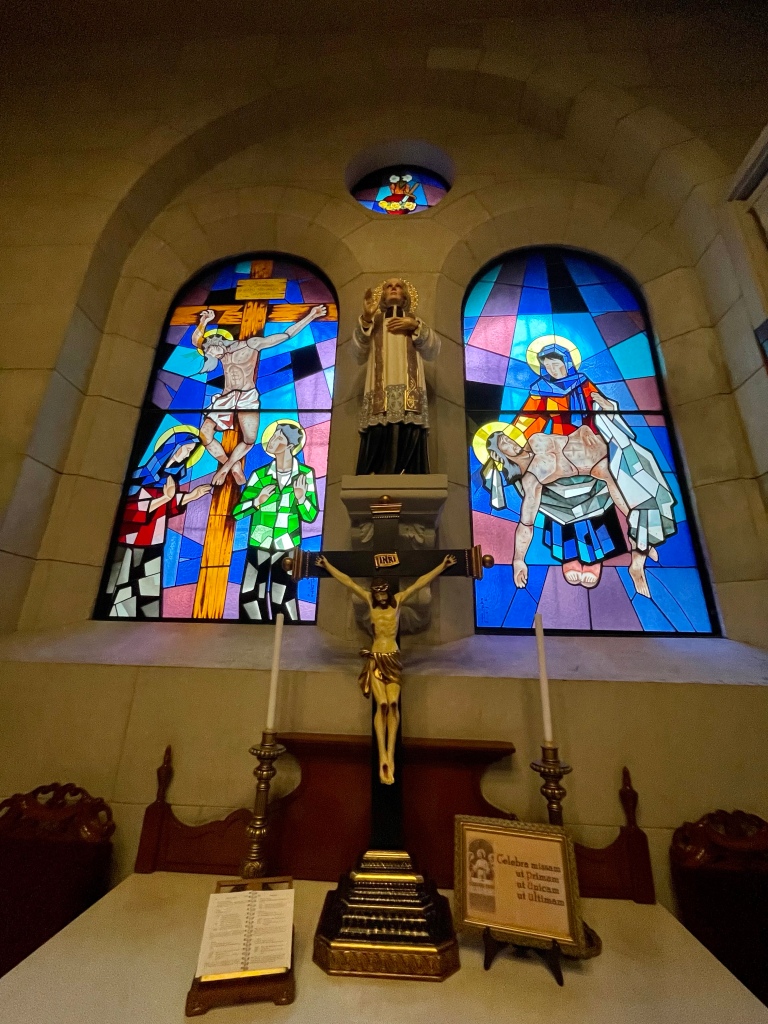
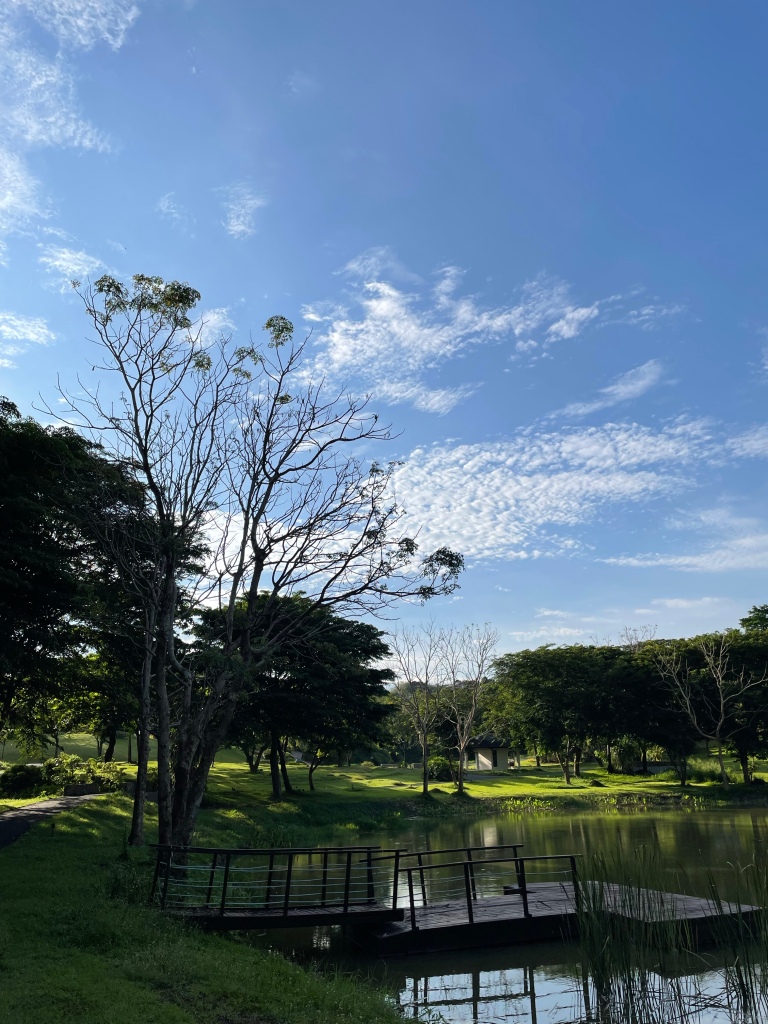
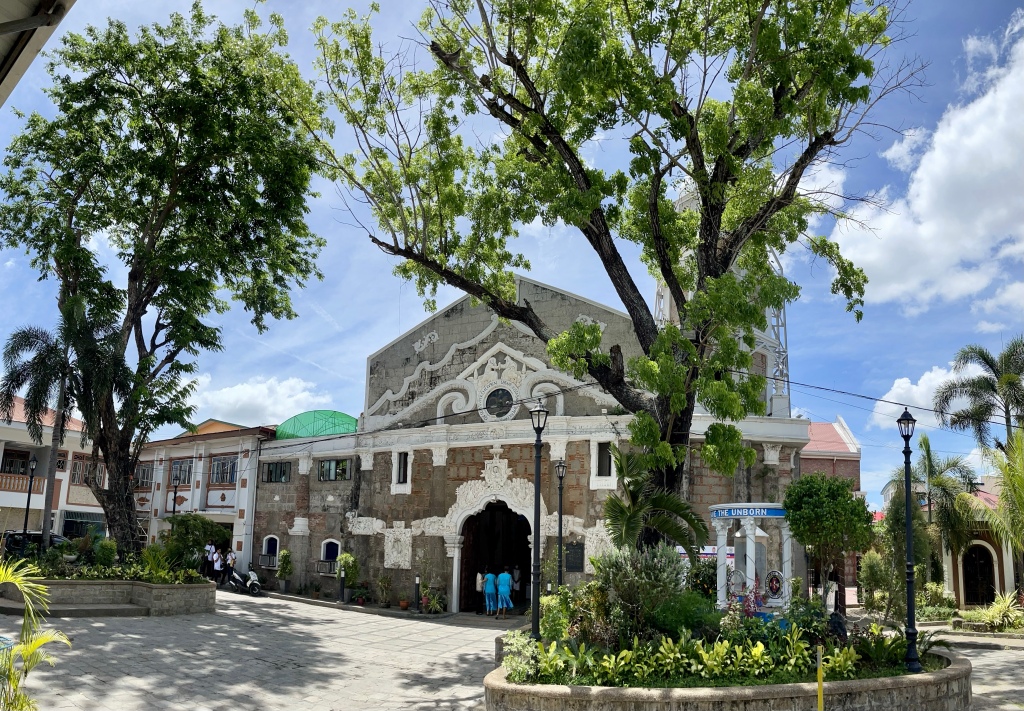
Photo by author, Our Lady of Fatima University-Quezon City with the La Mesa Dam Forest Reserve at the back, 01 July 2023.

Jesus continues to instruct the Twelve with important lessons on discipleship as he sent them on their first mission the other week. Last Sunday he taught them – including us today – to face all fears not to be fearless of anything or anyone but to fear only God.

Today, Jesus cautions us not to be unduly influenced by people especially those closest to us in fulfilling our mission in him. Very often, intimidation and influence can be used to adversely affect our ministry that eventually veer us away from our Lord Jesus Christ in the process. Hence, his encouragement too for us to persevere through those influences as we follow him.

Jesus said to his apostles: “Whoever loves father or mother more than me is not worthy of me, and whoever loves son or daughter more than me is not worthy of me; and whoever does not take up his cross and follow after me is not worthy of me. Whoever finds his life will lose it, and whoever loses his life for my sake will find it.”

Matthew 10:37-39
James J. Tissot, ‘The Exhortation to the Apostles’ (1886-94) from Getty Images.

Being a Christian is being possessed by Christ. That is why he told us last week to “be not afraid of those who kill the body but not the soul” so that we fear only him our Lord Jesus Christ in the sense that we lose all meaning in life without him.

To be possessed by Jesus Christ is to have a life centered in him, detached from undue influences including from our family and friends especially us priests and religious. When priests focus more with self and family or with other people instead of Jesus Christ, everything crumbles – pati sutana nalaglag na! That is when priesthood becomes a career and a means for social mobility and livelihood with money as the priest’s new “lord and master”.

Priesthood is Jesus Christ, the Caller, not the call as I have always insisted to seminarians I teach and direct. Problems happen when the Caller is dislodged from the top spot and focus shifts on the call or priesthood when priests literally and figuratively throw their weight around when we hear the notorious lines “matutulog ang pari, pagod and pari, unawain ang pari”.

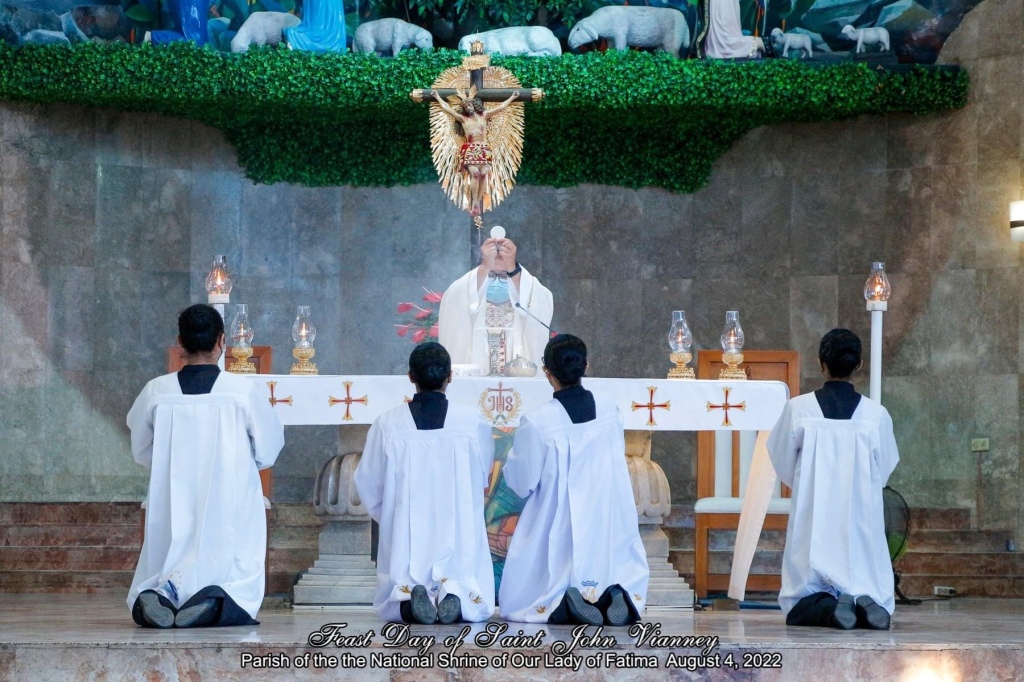
Photo by Ka Ruben, National Shrine of Our Lady of Fatima, August 2022.

Discipleship in general of which the priesthood is just a part is indeed a very difficult life. Nobody said it would be easy as the opening instructions of Jesus to the Twelve clearly stated, “Whoever loves father or mother more than me is not worthy of me, and whoever loves son or daughter more than me is not worthy of me; and whoever does not take up his cross and follow after me is not worthy of me.”

Jesus is not asking us to disregard our family and friends. What Jesus is telling us is actually a warning against too much expectations that our family and friends would love and embrace him too inasmuch as we have given ourselves to him. Not true at all, sad to say.

There are times that those closest to us are the ones who could not accept Jesus Christ’s call of discipleship. There are times that the most difficult people to be catechized and evangelized are those dearest to us.

Many of us must have felt in many instances how our family or friends are the ones who reject the ways of Jesus, the values of Christ. In this highly competitive world so exaggerated by the social media when everyone feels so entitled and deserving for everything, people have become so impersonal in dealing with each other, forgetting the basic courtesies in life, especially respect and kindness. Many are blinded by fame and wealth forgetting God and the people around them.

Photo by Mr. Mon Macatangga, 12 May 2023.

This Sunday, Jesus is teaching us to always have him as the basis and foundation of our relationships. Remember the gospel two Sundays ago when upon seeing the crowds Jesus was “moved with pity because they were troubled and abandoned like sheep without a shepherd” that he taught us to pray for more workers in the harvest (Mt.9:36-37). The problems in the world can never be solved by money and any material thing but only by another person, by someone with the heart and face of Christ filled with his warmth and his loving presence, someone not afraid to love, not afraid to get hurt, not influenced by fads and trends or by what others say.

Everything in this life, in our ministry and in our discipleship has to be seen in the light of Jesus Christ. Things become cloudy or dull and shady when Jesus is absent that can greatly affect, for better or for worse, our relationships with one another. This we see in the first reading about the hospitality offered by that Shumenite woman to Elisha the prophet whom she recognized as a man of God. Elisha clearly saw the woman’s basis of hospitality – God – that he never abused it. In fact, we find a trace of humor when Elisha had to ask his servant what their graceful hostess most needed to reward her hospitality. Sometimes like Elisha in our being so focused in serving the Lord, we become so ignorant of the most obvious with those closest to us; imagine Elisha asking his servant what to reward the Shumenite woman, his seeming oblivious to the fact she and husband were childless! Eventually, Elisha would grant the couple the gift of a son whom he would later bring back to life.

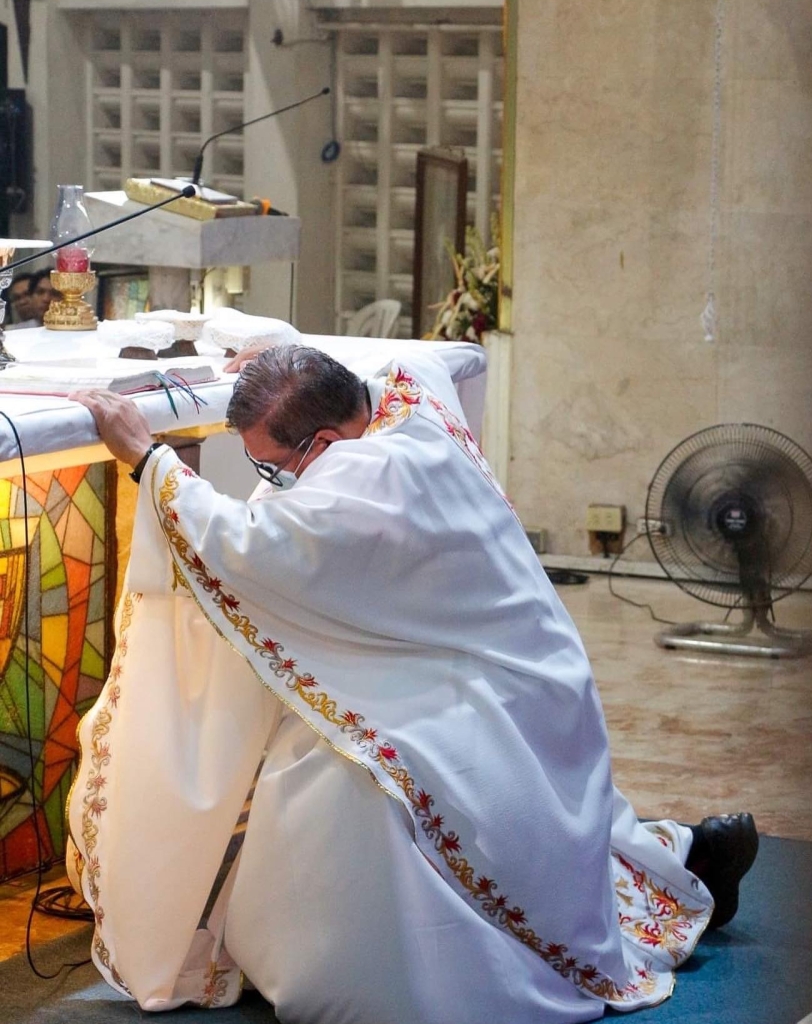
At my 25th anniversary of ordination to the priesthood with friends from UST’s the Varsitarian, 18 April 2023.

To be possessed by Christ means to be “dead to sin and living for God in Christ Jesus” as St. Paul explained in our second reading today (Rom.6:11). For some it may sound foolish but that is the reality and mystery of life we have been reflecting since the resumption of Ordinary Time last month. It is what we call as Christian paradox when in our sharing in Christ’s paschal mystery of his suffering and death, that is also when we find and experience our resurrection and life.

Last Monday, a very dear friend died, Sr. Gina of the Religious of Good Shepherd. We met in 1984 when I joined UST’s the Varsitarian where she was an outgoing staff member. She was the one who proclaimed the first reading at my celebration of my 25th anniversary of ordination to the priesthood last April 18.

Photo by author, Chapel of the RGS Mother House in Quezon City, 29 June 2023.

When I first invited her to my anniversary, she declined due to a big retreat of priests at their spirituality center in Tagaytay; within a few hours, she texted me back and told me she would fix her schedule so she could come to my anniversary celebration. She later texted me twice to insist she had to be present at my silver anniversary.

Unknown to us all, her cancer had recurred and metastasized last November which we learned only June 28 when the RGS Sisters issued a health bulletin about her condition. Sr. Gina had decided to stop all medications to wait for the inevitable at their mother house in Quezon City two weeks earlier. June 29 she texted me to inform me of her condition. I was so happy to chat a few lines with her, asking her if I could visit her this week.

She never replied.

When I learned her condition the other Wednesday night, I cried as I realized the very reason why she insisted on coming to my anniversary in April: to remind me we are possessed by Jesus, only Jesus, always Jesus. Please pray for her beautiful soul. Thank you and God bless!

Facing our fears

The Lord Is My Chef Sunday Recipe for the Soul by Fr. Nicanor F. Lalog II
Twelfth Sunday in Ordinary Time, Cycle A, 25 June 2023
Jeremiah 20:10-13 ><]]]]'> Romans 5:12-15 ><]]]]'> Matthew 10:26-33
Photo from https://edition.cnn.com/2023/06/19/europe/titanic-shipwreck-vessel-missing-intl/index.html.

The recent news this week of the implosion of the submersible “Titan” with the death of its five passengers trying to reach the Titanic wreckage at the bottom of the Atlantic Ocean had elicited a lot of different reactions from various people around the globe.

While I wonder what’s really behind this obsession by some whites with the Titanic, they made me imagine the kind of courage those five men have to dare journey into the bottom of the sea on board their craft despite its highly questionable worth in safety and reliability. At least as I prayed over this Sunday’s gospel, OceanGate’s “Titan” passengers made me examine and contemplate my courage and fears in life both as a person and as a priest.

How much am I willing to risk in pursuing God, in serving his flock? Will I be able to give my life wholly like those five passengers in trying to see the wreckage of the Titanic that sank in 1912?

Jesus said to the Twelve: “Fear no one. Nothing is concealed that will not be revealed, nor secret that will not be known. What I say to you in the darkness, speak in the light; what you hear whispered, proclaim on the housetops. And do not be afraid of those who kill the body but cannot kill the soul; rather, be afraid of the one who can destroy both soul and body in Gehenna. So do not be afraid…

Matthew 10:26-28, 31
James J. Tissot, ‘The Exhortation to the Apostles’ (1886-94) from Getty Images.

Jesus chose his twelve Apostles last Sunday to proclaim his good news of salvation to “the lost house of Israel” after seeing them “tired and troubled, like sheep without a shepherd” (Mt.9:36).

As he sent them to their first mission, Jesus gave them some important instructions which the gospel tells us today and next Sunday. And leading the list of those instructions is the need to take courage when he told them to “fear no one” and twice to “do not be afraid”.

But first, let us clarify that courage is not the same with bravery that often refers to being able to do great feats like those extreme sports we see in social media. Most often, bravery is closely associated with skills like bungee jumping, sky diving, and skateboarding. Courage is different. It is from the Latin word cor or corazon in Spanish, the heart. To fear no one and be not afraid are expressions of courage, of drawing strength from one’s inner core – the heart – where God dwells. To draw strength from the heart which is the core of every person means to give one’s total self, more difficult than just risking a part of ourselves like an arm or a leg that is often the case with bravery.

Secondly, when Christ told his Apostles that included us today to fear no one and do not be afraid, he was not only instructing us to have courage but most of all showing us too the contrast of fear of human beings and the world with the fear of God.

Photo by author, Anvaya Cove, 19 May 2023.

What do I mean?

Courage is not everything. True courage is still having fears – of being afraid of God, of not being able to follow him, not being able to stand by him, of turning away from him in sin as St. Paul reminded us in the second reading. There will always be fears within us but with courage, we face all fears because we realize in our own weaknesses and shortcomings, there is the power and love of God who values us so much than sparrows and knows the number of our hair (vv.29-31).

Most beautiful example is the Prophet Jeremiah who revealed in his book his weaknesses like his being inadequate in himself due to his being timid and hypersensitive. Read the preceding verses before our first reading today to see how Jeremiah could not resist God who had duped/seduced him that he chose to remain faithful despite the great pains and sufferings he had to face as God’s prophet (Jer. 20:7ff). More than the fears of men who were actually his compatriots bent on hurting him, there was still that greater fear of turning away from God who gives him so much strength to overcome his trials in life. Here we find true courage in Jeremiah when amid his great fears for his life, his trust in God becomes a song of praise:

“O Lord of hosts, you who test the just, who probe mind and heart, let me witness the vengeance you take on them, for to you I have entrusted my cause. Sing to the Lord, praise the Lord, for he has rescued the life of the poor from the power of the wicked!”

Jeremiah 20:12-13
Photo by Dra. Mylene A. Santos, MD in San Antonio, Zambales, 05 June 2023.

What matters most in this life above all is God. Every pursuit we make, no matter how great are the dangers may be, may we have the courage to examine ourselves, our motives: is it for God or for myself? This is the essence of discipleship.

If what we pursue is for God, it would surely bring joy and fulfillment to people though it would entail sufferings and hardships, even death for us. By all means, go for it like Jeremiah and St. Paul and all the saints including the men and women of science and letters who toiled so hard amid great dangers and obstacles to serve God and people.

But, if our pursuit is for money or fame or position – for one’s self – it could bring only a little and fleeting joy, perhaps make a noise in the world or social media for a little while but we end up sorely losing everything, feeling disgusted and more fearful than ever in losing God.

May the Lord grant us the courage to be always true to him and his call. Amen. Have blessed week as you welcome July!

“Switching on” the grace of God

The Lord Is My Chef Daily Recipe for the Soul by Fr. Nicanor F. Lalog II
Friday, Homily on Solemnity of the Birth of John the Baptist, 23 June 2023
Isaiah 49:1-6 ><}}}}*> Acts 13:22-26 ><}}}}*> Luke 1:57-66.80
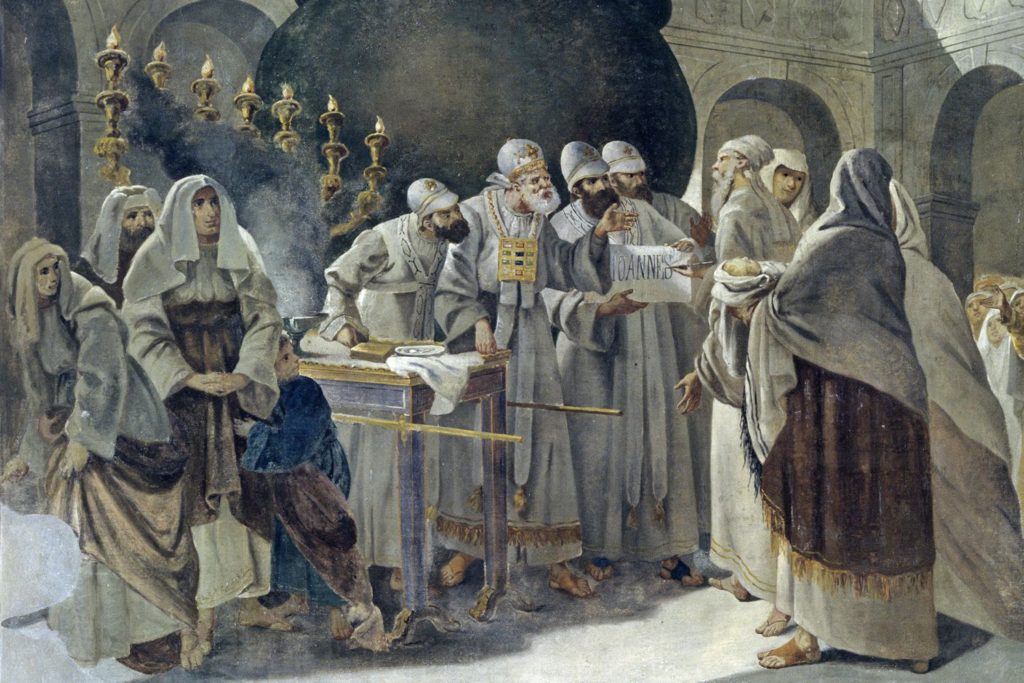
Painting of Zechariah giving name to his son John by Italian painter Riccardo Cessi (1892) from commons.wikimedia.org.

You must have heard a lot of “Dad jokes” from Instagram. Let me now share with you a “Father joke” or priest joke. The world’s first techie was the Jewish priest Zechariah, father of St. John the Baptist because he “asked for a tablet and wrote, ‘John is his name'”.

Ok. It is corny and dry but may I invite you, friends, on something wonderful about this gospel scene in celebration today of the Solemnity of the Birth of St. John the Baptist, the precursor of our Lord Jesus Christ.

Remember how Zechariah was punished by Archangel Gabriel by becoming deaf and mute after he had doubted the good news that he and his wife Elizabeth would soon have a son to be named John. Actually, Zechariah not only doubted but even questioned “how” his barren wife could still bear a child at an old age. As a result, he was forced into silence by the Lord’s angel until everything he had announced was fulfilled.

Photo by author, May 2019, Church of St. John the Baptist, Ein Karem, Israel.

When the time arrived for Elizabeth to have her child she gave birth to a son. Her neighbors and relatives heard that the Lord had shown his great mercy toward her, and they rejoiced with her. When they came on the eighth day to circumcise the child, they were going to call him Zechariah after his father, but his mother said in reply, “No. He will be called John,” But they answered her, “There is no one among your relatives who has this name.” So they made signs, asking his father what he wished him to be called. He asked for a tablet and wrote, “John is his name,” and all were amazed. Immediately his mouth was opened, his tongue freed, and he spoke blessing God.

Luke 1:57-64

Imagine the sight narrated to us by St. Luke: everybody so happy, trying to take a piece of action while Zechariah, father of the new-born child, old and deaf and mute was so silent like a nobody in a corner. In the Jewish society, it is the father who gives name to the children, especially to the son; but, due to Zechariah’s condition, nobody bothered to ask him so that their neighbors, like the typical epal or pakialamera we call in Filipino, assumed the role.

But Elizabeth the mother who had gone into a self-imposed silence upon bearing her child, declared their son would be called “John” or Jehohanan that means “God is gracious” or “graciousness of God” in Hebrew.

Finally amid all the noise and talk, Zechariah made the bold move by writing on a tablet “John is his name” to confirm and reaffirm the name given by his wife Elizabeth. It was a crucial moment when Zechariah boldly made a stand about his faith in God, obeying the angel’s instruction to name his son “John”.

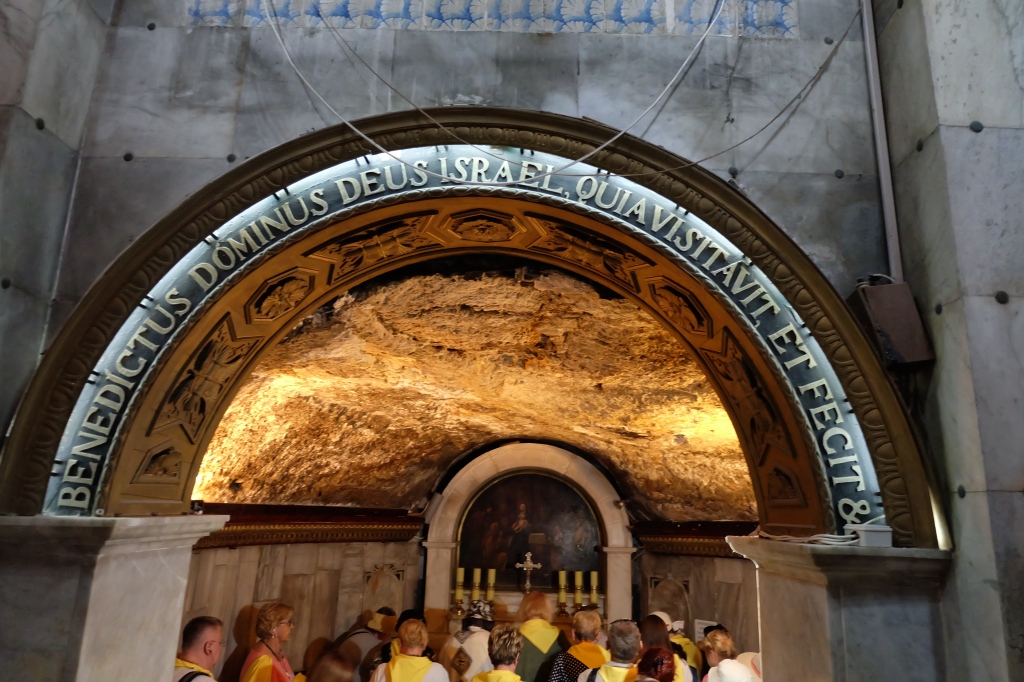
Photo by author of the site believed to be the birthplace of St. John the Baptist at the side of the Church of St. John the Baptist in Ein Karem, Israel, May 2019.

What really happened was the assertion of the plan of God when Zechariah faithfully wrote “John is his name”. That’s what amazed the people so that “fear came upon the neighbors for surely the hand of the Lord was with him” (Lk.1:65, 66).

With a single stroke of hand, everyone felt God present among them as they realized something very special with the child. So amazing too as experienced by the people was when Zechariah asserted God’s plan by naming his son “John”, he was finally able to speak and hear again!

Whenever we assert the plan of God in our lives, in our community, in our family and country, new possibilities open as we break free from all obstacles and hindrances that prevent us from growing and maturing, from being joyful and fulfilled.

Whenever we assert the plan of God in our lives, in our community, in our family and country, that is when we “switch on” the grace of God, when we make God’s blessings operable among us and thus we become like John, a precursor of the Lord whose name means “God is gracious”.

Whenever we obey and assert the plan of God in our lives, in our community, in our family and country, that is when we take that leap of faith, believe again and experience God again.

Many times we could not see nor experience nor realize God’s blessings around us and within us because we do not actually believe and trust him. God’s grace is like a “switch” we have to turn on to operate like the electric light or any appliance and gadget. And the good news is, that grace and “switch” is in us already! We just have to switch it on.

Here we find anew the importance of silent, deep prayer.

Photo by author, Anvaya Cove, 19 May 2023.

The imposed silence on Zechariah made him realize how he had been held prisoner by his disappointments and frustrations over a long period of time when God did not hear his prayers for a child. Imagine their shame being childless despite their being good persons and as husband and wife. At that time, childlessness was seen as a punishment from God, a curse. It must have been a strong blow too to Zechariah’s ego as a priest consulted by everyone for advise and prayers yet could not sire his wife with a child!

All those negative feelings of humiliation and dejection could have caused Zechariah’s trust and faith in God to wane that even his priestly duties have become perfunctory that he never saw the tremendous grace and blessing of incensing the Holy of Holies of the temple. Such duty was a pure grace in itself because it happens only once a year during the holiest celebration of the Jewish of Yom Kippur or Day of Atonement. Priests went through a long process of drawing lots on who among them would incense the Holy of Holies because they were so many in number.

Many times we have been like Zechariah, numb and even indifferent to the movements and works of God in our lives following our many failures in life. Though we may be praying with many devotions doing so many religious activities, we have actually become “spiritual dwarfs” who never grew and matured in faith. Our prayers and devotions have become mere “habits hard to break” that are empty and meaningless.

Photo by author taken in May 2022, Parish of St. John the Baptist in Calumpit, the oldest church in Bulacan province.

Today God is calling us to do a Zechariah, to take that bold step of asserting and insisting God’s plan like when Zechariah boldly declared in writing “John is his name”. The first reading beautifully reminds us of one reality we all go through by wrongly thinking God does not care at all for us when nothing seems to happen with our prayers and efforts in life, in our ministry and mission.

Hear me, O coastlands; listen, O distant peoples. The Lord called me from birth; from my mother’s womb he gave me my name. Though I thought I had toiled in vain, and for nothing, uselessly, spent my strength, yet my reward is with the Lord, my recompense is with my God.

Isaiah 49:1, 4

We cannot be another John – a graciousness of God within us and for others unless we rediscover the courage and clarity to do a Zechariah by asserting God’s command and plans entrusted specifically to us.

See also that upon regaining his sense of hearing and ability to speak, Zechariah “spoke blessing God” by singing the Benedictus in the following verses. The Benedictus is the morning hymn of praise to God we priest sing or recite daily in praying the Liturgy of the Hours. It mentions the blessedness of God and his many blessings to Israel while towards its end, we find Zechariah sending forth his son John to fulfill his mission from God in preparing the way of Jesus Christ. It is prayed in the morning to make us aware of our mission to prepare the way of the Lord Jesus.

Let us be patient, never lose hope and enthusiasm in doing the works of God even if nothing seems to happen at all. Everything we do matters a lot with God and with those around us as St. Paul explained in the second reading on the role of St. John the Baptist in salvation history.

Let us keep in mind that God remembers and keeps his promise always because he is gracious all the time. The name Zechariah in Hebrew means “God remembers” while Elizabeth is “God has promised”. John, as we have earlier said, means “God is gracious.” Let us do our part to bring Jesus into this world so fragmented and tired. Have a grace-filled weekend! Amen.

Photo by author taken in May 2022, altar of the Parish of St. John the Baptist in Calumpit, the oldest church in Bulacan province.

God our confidence

The Lord Is My Chef Sunday Recipe for the Soul by Fr. Nicanor F. Lalog II
Eleventh Sunday in Ordinary Time, Cycle A, 18 June 2023
Exodus 19:2-6 ><}}}}*> Romans 5:6-11 ><}}}}*> Matthew 9:36-10:8
Photo by Ms. April Oliveros at Mt. Pulag, March 2023.

I recently had a long lunch that extended to a longer dinner recently with a good friend who was widowed last January. It was the first time we met again after the funeral of her husband who died three weeks after I had anointed him last Christmas Day.

She was still grieving and yes, angry with God why her husband had to go at an early age. She told me how during her daily prayers she would complain to God, and how she wanted her husband to be still alive, not minding at all of nursing him again.

Likewise, she was worried God might be fed up with her, even mad and angry with her negative feelings and attitudes even though she prays and celebrates Mass more often these days since her husband’s demise.

Photo by Ms. April Oliveros at Mt. Pulag, March 2023.

Does God get angry with us?

The psalmist says, “But you, Lord, are a merciful and gracious God, slow to anger, most loving and true” (Ps. 86:15). If God is slow to anger, does it mean he gets angry, even sometimes?

No. Never.

God does not get angry at all because God is love. God is perfect unlike us who easily get angry and could remain angry over a long period of time because we are imperfect. But God, who is also spirit, does not have emotions, neither gets angry nor irritated with us and yet, always one with us in our feelings especially when we are down in pain and sufferings.

In Christ Jesus who became human like us in everything except sin, God became more one with us to prove his love and oneness for us.

At the sight of the crowds, Jesus’ heart was moved with pity for them because they were troubled and abandoned, like sheep without a shepherd. Then he said to his disciples, “The harvest is abundant but the laborers are few; so ask the master of the harvest to send our laborers for his harvest.”

Matthew 9:36-38
Photo by Mr. Raffy Tima, GMA-7 News, June 2020.

See how Matthew noted that “At the sight of the crowds, Jesus’ heart was moved with pity for them because they were troubled and abandoned, like sheep without a shepherd.” So beautiful. So powerful.

That expression his “heart was moved with pity” is the literal meaning of the Latin word misericordia – mercy in English – that means “a heart moved strongly” like disturbed or thrown off perhaps. More than just a feeling, that virtue of mercy is expressed into compassion which is another Latin word that means “to suffer with” or cum patior. Matthew here is telling us it was more than a feeling for Jesus to have his heart moved with pity but a firm resolve to uplift the crowds because in the first place he has that oneness with them.

Until now in our own time, that heart of Jesus is moved with pity for us whenever he sees us troubled and abandoned, like sheep without a shepherd. Just like my friend grieving the loss of her husband. Or anyone who had lost a beloved, a leg or a part of the body, maybe a job or a career, a dream or a future.

For Jesus, it is always the person who matters that is why his proposal has always been to send us another person, another companion, a fellow to accompany us in our brokenness and darkness. There is his move of gathering us, calling us, and sending us forth to a mission.
Jesus never taught us to ask for more money nor food nor gadgets to solve the problems of the world. Recall his temptation in the desert when he rejected the devil’s challenge to change stones into bread because man does not live by bread alone but with every word from God.

For the world, everything is a problem to be solved, including mysteries of God and of the human person. As we have reflected the past two Sundays, mysteries are not problems and therefore not solvable at all. Mysteries are non-logical realities we must embrace or even allow ourselves to be wrapped with to discover the richness and meaning of this life like God and persons.

When people are down and lost in this life, feeling troubled and abandoned, where do we focus more, to their woes and problems or their very persons? Try thinking of the people you consider as “heaven sent” and helped you in your darkest moments. Are they not the ones who brought out our giftedness as a person, as a beloved child of God with Christ’s gospel?

Photo by author, December 2022 at the National Shrine of Our Lady of Fatima, Valenzuela City.

Problem these days, many people no longer believe in God totally, not giving a care at all with the value and meaning of justification and salvation, of reconciliation and communion in Christ through one another that St. Paul explained in the second reading.

Modern man has become so complacent that he would be saved by a loving and merciful God. It is a wrong kind of confidence because it is a confidence in one’s own powers than in God’s saving act through Jesus Christ as St. Paul preached.

Sad to say, such kind of confidence afflicts mostly the so-called religious and pious ones in the Church, especially us priests and bishops who lose sight of the flock and of Christ in the process. No synod nor meetings and documents would make the local even Philippine Church attuned with the present time unless we the clergy and other disciples must first have our confidence in God, not in ourselves.

How tragic that we are still a Church so steeped in being a hierarchy, lightyears away from being any of the other models of the Church proposed by the late Jesuit Cardinal Avery Dulles: sacrament, herald, communion, and servant. Despite our many denials, priesthood is power and prestige where ministry is more of an office and a privilege. We are more concerned with the call, the vocation of priesthood totally ignoring the Caller, Jesus Christ. Visit any parish and chances are, you find the priest throwing his weight around – literally and figuratively speaking so that the sheep remain without a shepherd.

In the Old Testament, the image of Israel as a lost sheep was the result of failures and even of sins of infidelity of their religious and political leaders. History has proven not only in Israel but everywhere especially the Philippines that when there are failures in leadership in both the political and religious spheres, it is always the common people who suffer most.

Photo by Mr. Mon Macatangga, 12 May 2023.

If we think about it, Jesus could have reacted negatively at the sight of the crowds and even with us today. He could have felt angry and irritated, even annoyed, frustrated and disappointed with how we are wasting all his gifts and grace, his call and his mission. But Jesus chose empathy and sympathy because he always looks into our hearts, into our total person than to our sins and failures, mistakes and errors.

Let us return to our “desert of Sinai” spoken of in the first reading, a reminder of our turning point in life and history when God called and sent us to be a “kingdom of priests, a holy nation” whose confidence is in him alone, not in our very selves nor our programs and structures to find again the many lost sheep of our flock. It is never too late to make a U-turn for God is full of mercy and compassion, slow to anger, loving and true. Amen. Have a blessed week ahead!

The riches of Christ

The Lord Is My Chef Daily Recipe for the Soul by Fr. Nicanor F. Lalog II
Homily, Solemnity of the Most Sacred Heart of Jesus, 16 June 2023
Deuteronomy 7:6-11 ><}}}*> 1 John 4:7-16 ><}}}*> Matthew 11:25-30
Photo by author, Sacred Heart Novitiate, Novaliches, Quezon City, 20 March 2023.

It has been two months since I celebrated by silver anniversary of ordination to the priesthood. Until now, I still continue to reflect and relish on this immense gift of priesthood, still asking with the same sense of awe and wonder since ordination day, “why me, Lord?”

As I reflected this week the Solemnity of the Most Sacred Heart of Jesus which is dedicated for the sanctification of us priests, I have realized how I have remained the same sinful, insecure and fearful man ordained 25 years ago with my six other classmates. As I get closer to becoming a senior citizen in 2025, the more my past sins and stupidities, carelessness and vices are coming back like “Facebook Memory”, reminding me how I have them kept under control, that they could burst and be out in the open if I get careless.

But in the midst of all these darkness and weaknesses still in me, the more I feel so blessed and consoled, and overjoyed by the fact that I still have that same desire to proclaim Jesus Christ to everyone, of how beautiful this life is because of the Lord’s immeasurable love for each of us. Whenever I look back to my past with all my sinfulness and weaknesses amid my getting older, the more I am eager to make Jesus known to everyone while I am still strong and able. There is that feeling of being like St. Paul in saying, “To me, the very least of all the holy ones, this grace was given, to preach to the Gentiles the inscrutable riches of Christ, and to bring to light for all what is the plan of the mystery hidden from ages past in God who created all things” (Eph. 3:8-9).

Or, like in our first reading, I could identify with the Israelites being reminded by Moses in the wilderness that “You are a people sacred to the Lord, your God; he has chosen you from all the nations on the face of the earth to be his people peculiarly his own. It was not because you are the largest of all nations that the Lord set his heart on you and chose you, for you are really the smallest of all nations. It was because the Lord loved you” (Dt.7:6-8).

Beautiful!

Love, love, and love!

That is the “inscrutable riches of Christ”, his immense love for us, dying for us, coming for us even if we are worth nothing at all. And it is because of that love of God for us that we have become so worthy that he gave us even his only Son, Jesus Christ.

That is the essence of this celebration of the Solemnity of the Most Sacred Heart of Jesus.

Love.

A reality we all experience and know but could not define for it has no limits. Love can only be described and best expressed in actions than in words.

See this Solemnity of the Most Sacred Heart of Jesus comes right after the Solemnities of the Most Holy Trinity and of the Most Precious Body and Blood of Jesus these past two Sundays. Both celebrations speak of love: the latter is about relationships based on love and the former is about giving of self in love.

Now that we are well into the Ordinary Time of our liturgical calendar, our celebration today tells us to remember throughout this year this most basic truth and reality of our faith – that we are so loved by God.

Beloved, let us love one another because love is of God; everyone who loves is begotten by God and knows God. Whoever is without love does not know God, for God is love. In this way the love of God was revealed to us: God sent his only Son into the world so that we might have life through him.

1 John 4:7-9

Love is symbolized by the heart, the very core of every person. That is why I love the Spanish word for heart which is corazon, evocative of the core, of the deeper self. And of course, love is the very the person of God.

Of all the writers in the Bible, St. John is the one who most frequently used the word “love”, an indication of its centrality in his thoughts. Moreover, he clarified that this love is not human love because its origin, motives and effects are supernatural in nature who is God himself.

Being the very self and also the riches or wealth of Christ, love is for sharing, for giving. Never for keeping. Because of its supernatural nature, love is inexhaustible. The more you give it, the more you share, the more you have it!

In this is love: not that we have loved God, but that he loved us and sent his Son as expiation for our sins. Beloved, if God so loved us, we also must love one another. No one has ever seen God. Yet, if we love one another, God remains in us, and his love is brought to perfection in us.

1 John 4:10-12
Photo by Ms. April Oliveros, March 2023 at Mt. Pulag.

Let me repeat that last sentence, “if we love one another, God remains in us, and his love is brought to perfection in us.”

The more we love, the more we are able to see and recognize God and other people amidst the darkness around us. Likewise, the more we love the more we see our true selves too despite dark spots within us.

Love is the law of life. To love God by loving ourselves and others is not an obligation imposed from outside. It is the very proof of our faith and union with God in Jesus Christ.

Jesus makes this very clear to us today in the gospel that opens with him praising the simple people, those who were child-like who welcomed him and his preaching. They were the ones Jesus referred at his sermon on the mount, “Blessed are the poor” because love is not an intellectual structure or system to be learned or analyzed. Love is a call to be disarmed of everything we hold onto so we can totally love and follow Jesus Christ.

“Come to me, all you who labor and are burdened, and I will give you rest. Take my yoke upon you and learn from me, for I am meek and humble of heart; and you will find rest for yourselves. For my yoke is easy, and my burden is light.”

Matthew 11:28-30

Jesus came to reveal to us God our Father. And to know the Father is not through the head or intelligence but through our heart that is like Christ’s, meek and humble, filled with love.

By becoming human like us in everything except sin, Jesus who is the image of the invisible God (Col. 1:15) enables us to feel and experience God now closest to us than ever. Most of all, we are able to love and still love especially when the going gets tough and rough.

Here Jesus shows us that love is not absence of sufferings. In fact, love is truest and noblest when there are sacrifices and sufferings as exemplified by Jesus in his life and death on the Cross.

There are times we feel grouchy, so sensitive when people seem to ask even demand so much from us.

From Facebook, 2021.

Sometimes we wonder why are we the ones always giving, always loving, always forgiving. Sometimes we even ask God why are we the ones going through all these trials in life, why are we the ones afflicted with this sickness, why are we given with a special child, why your child had gone ahead of you to eternal life?

So many whys, so many questions.

Rest today in Christ. Feel his embrace. Listen to his silence. Be filled with his love. As you ask Jesus with all those questions, realize that each cry, each lamentation is the “inscrutable riches of Christ”, his very love perfected in your labors and burdens. Amen.

Jesus, meek and humble of heart,
Make my heart like thine!

“Parked Cars” by Stephen Bishop

The Lord Is My Chef Sunday Music, 11 June 2023
Photo by STANLEY NGUMA on Pexels.com

It has been raining for three days and had been listening too to my Stephen Bishop playlist while driving, playing over and over his 1976 hit Save It For A Rainy Day until I got fed up tonight on my way home from my last Mass.

As I let my playlist on, this tune came and reminded me of my homily this Sunday for the Solemnity of the Body and Blood of Jesus Christ:

Every time she looks my way
Heaven gets a little closer
And every time I feel that way
I want to be with her
Love is surely like a rose
Till you find a thorn to hurt you
The one thing she'll always know
My love is true

If you are above 50 years old and almost 60 like me, that’s from Stephen Bishop’s 1989 album Bowling in Paris called Parked Cars. It just hit me as so perfect for our Sunday Music blog today because the Solemnity of the Body and Blood of Christ is about his real presence among us. It is a continuation of our celebration last Sunday of the Solemnity of the Holy Trinity which is about relationships, of our one God in himself a perfect community of three Persons bound in love. This relationship is most real when expressed in giving of self, exactly what Jesus did when he came here for us to save us by offering his total self on the Cross which we make present in every celebration of the Eucharist.

It is a mystery of highest order that is most truest when we imitate Jesus in giving our very selves in loving service to others. Every time we touch those who are sick and afflicted, the lost and weary, those hurting inside, those broken, that is when become like Jesus in giving our very selves to others. Why we are able to love beyond measure like in taking care of our sick parents or family members in itself is a mystery with all the pains and difficulties that come.

And why do we continue giving our selves? Because we love.

Despite the many other meanings Parked Cars may convey as the last two stanzas show, the song reminds us so well of the meaning of Body and Blood of Jesus – that authentic living is being present to another, of giving one’s self in love.

Parked cars
Sittin' in the back seat
Somewhere down on Main St.
Talkin' to the moon
Parked cars
Holding her so close
Wondering if she knows...

That every time she looks my way
Every time she smiles my heart breaks
And all I really want to say
Is that my love is true

Yes all I really want to say is that
My love is true...

Here is Stephen Bishop with Parked Cars as well as our Sunday homily, https://lordmychef.com/2023/06/10/the-gift-of-self/. Have a blessed week ahead.

From YouTube.com.

The gift of self

The Lord Is My Chef Sunday Recipe for the Soul by Fr. Nicanor F. Lalog II
Solemnity of the Body & Blood of Jesus Christ, 11 June 2023
Deuteronomy 8:2-3, 14-16 ><}}}}*> 1 Corinthians 10:16-17 ><}}}}*> John 6:51-58
Photo by author, 2018.

There is a weird British series in Netflix called the Inside Man about a professor of criminology at the death row in the States for the murder of his own wife. He had deep perceptions and analysis of events that people came to see him in prison to consult in locating their missing loved ones. One of them is an American journalist trying to do a story about him while at the same time seeking his expertise in locating her missing friend, a math tutor in England held hostage in the basement by a pastor and his wife.

Though the series is weird, it has some interesting lines about life and death like when the wife of the pastor told him how she had spent the whole afternoon searching the internet how to kill their son’s math tutor they have thrown in their basement. The wife found it unusual there was nothing in Google that tells of ways of killing another person (so weird, is it not?); however, she was surprised that almost everything she had found in the internet and social media was mainly about sex as he teased her husband that it is not love that makes the world go round but sex!

Yes, it is very funny and weird but her observations seem to be true because nobody in his right mind would ever want to destroy life except terrorists and lunatics. People generally love life that our social media are saturated with contents that try to show how we can enjoy this life through sex, food, and travels in that order. Also with cars for boys aged 5 to 95.

Photo by author, March 2020.

Of course, we all know that is not what life is all about that is filled with mysteries.

Last Sunday we reflected in the Solemnity of the Holy Trinity that mysteries are not problems to be solved but realities to embrace to discover life’s truest meaning found in our relationships with God and with others

This Sunday we celebrate the second most important doctrine and mystery of our faith, the Incarnation of the Son of God Jesus Christ. It is a mystery not only how the Son of God became human like us in everything except sin but most of all, of how he has given us his very flesh and blood as our food and drink in this journey called life.

Jesus said to the crowds: “I am the living bread that came down from heaven; whoever eats this bread will live forever; and the bread that I will give is my flesh for the life of the world.” The Jews quarreled among themselves saying, “How can this man give us his flesh to eat?” Jesus said to them, “Amen, amen, I say to you, unless you eat the flesh of the Son of Man and drink his blood, you do not have life within you. For my flesh is true food, and my blood is true drink.”

John 6:51-53, 55
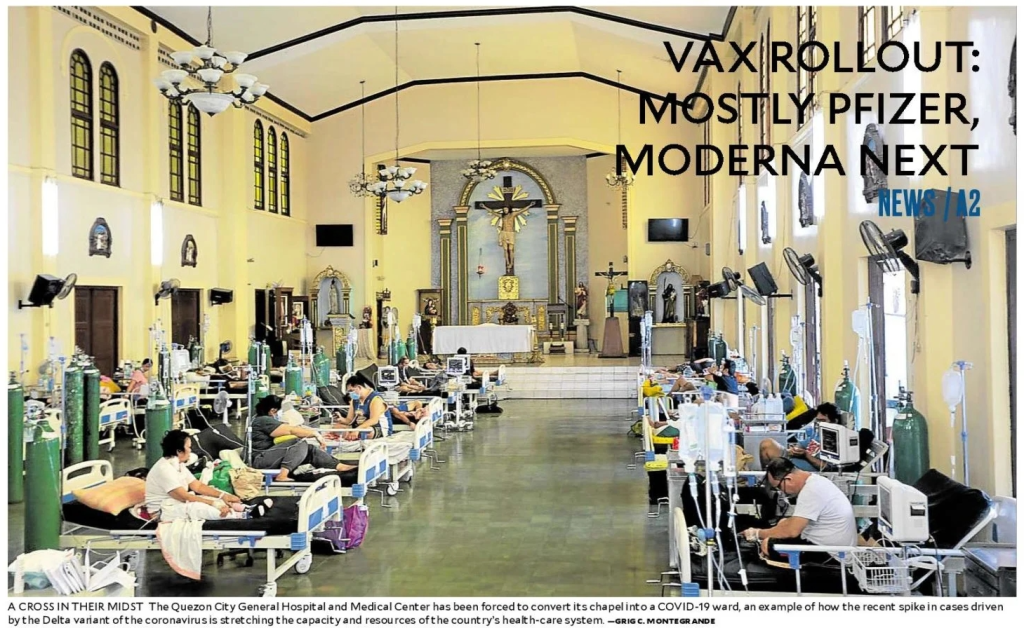
My favorite front page photo during the Delta outbreak of the COVID-19 pandemic published by the Inquirer on 20 August 2021. So evocative of the truth of Jesus himself being our true food and drink – and medicine.

As we have reflected last Sunday, a mystery is a divine truth revealed by God we learn through the gift of faith. It is non-logical but not illogical. It can be explained and understood but not fully.

Here in the mystery of the Body and Blood of Christ we call as the Eucharist, the mystery of our Triune God becomes a reality in our life truly present in perceptible signs of bread and wine. From relating, we now come to the mystery of sharing of our selves like God who shared us his Son Jesus Christ who in turn gave himself for us on the Cross that continues today in the Holy Eucharist as his everlasting sign of his loving presence and service.

See how Jesus spoke clearly in this passage of his giving us his physical body and blood that to receive it, we have to actually eat it too.

First we notice is how in other parts of the New Testament that the term soma is used to refer to the Eucharist which is the Greek word for “body” that may have symbolic meanings; but in this passage, Jesus used the word sarx which means “flesh” in Greek that means only one thing, the corporeal reality of his physical body. Jesus is telling us in no uncertain terms in this passage after the miracle feeding of more than 5000 in the wilderness that he himself is truly and really present as flesh and blood in the Eucharist. Recall that at his Prologue to his gospel, John also used the same term sarx in declaring “the Word became flesh” (Jn.1:14) to correct misunderstandings and doubts that were already developing during the first century of Christianity regarding the physical Incarnation of Jesus the Eternal Word and his true presence in the Eucharist.

Second term used by Jesus four times as he emphasized the reality of his Body and Blood in the Eucharist is the word trogein which in Greek means “to munch” or “bite”; the other Greek word for the verb to eat is phragein which evokes many symbolic meanings like “digesting” a book or “assimilating” the culture. Again, when Jesus said we have to eat his flesh and drink his blood, he truly meant himself as a true food and true drink to nourish and sustain us in this life and hereafter.

Photo by Kuya Ruben, 04 August 2022.

There lies the beauty of this mystery of the Eucharist: Jesus himself is the one we receive, who comes to us personally, physically to be one with us in our very selves. We do not have to wait for death and be in heaven to experience fullness of life in Christ because he comes truly to us while in this life when we receive him in the Holy Communion.

St. Paul reminds us in the second reading with his rhetorical questions, “The cup of blessing that we bless, is it not a participation in the blood of Christ? The bread that we break: is it not a participation in the body of Christ?” (1 Cor. 10:16) of this reality of Christ’s presence in us and among us. He was not waiting for answers of yes or no but posed those questions to affirm the very truth we all know that Jesus is really present in us and among us especially when we are broken like the Israelites in the first reading. This is where the mystery deepens, becomes more real and more fascinating. Jesus the Son of God emptying himself to be like us in everything except sin so that we may become like him, holy and divine.

This I have learned in my two years of being a chaplain in the hospital. Admittedly, it is difficult especially for me as I could easily be carried away by emotions in seeing the sick and suffering while at the same time, can often have my stomach overturned by sights of blood and wounds of others. But, there is always that indescribable feelings of joy and fulfillment after visiting and anointing our sick patients.

Photo by Kuya Ruben, June 2022.

I have no claims to holiness as I am a sinner too but the Eucharist has become most truest to me these past two years in the hospital and university as well as I get into contact with the sick and the students. When I touch patients to pray over them or help in moving them, when students cry to me or ask for hugs after confessions, they all flash to me during the consecration as I raise and say, This is my Body… This is my Blood. Jesus is most truest in the Eucharist when we too imitate him in giving ourselves to others to be broken and shared.

The Eucharist is the most wonderful gift of God to us when we receive his Son Body and Blood to make us strong and holy like him in this life.

That is why we have to go to Mass every Sunday. That is why a priest has to celebrate Mass daily for the people to be strengthened like him in this journey of life filled with trials and sufferings. That is why Moses kept on reminding the Israelites of their many hardships from their exodus into their wandering in the wilderness. That is why this coming Friday, we cap these three weeks of transition into the Ordinary Time with the Solemnity of the Most Sacred Heart of Jesus, another mystery of Christ truly among us and within us as we experience his love most truly right here in our hearts.

What an awesome God we have indeed who has become so small and so simple like us so we can be great like him. Like the simple bread and wine, in the Mass through the Holy Spirit, they become Christ’s Body and Blood. Let’s make it happen this Sunday in our celebration of the Mass. Amen. Have a blessed week ahead.

Thank God for life’s mysteries

The Lord Is My Chef Sunday Recipe for the Soul by Fr. Nicanor F. Lalog II
Solemnity of the Most Holy Trinity-A, 04 June 2023
Exodus 34:4-6, 8-9 ><}}}*> 2 Corinthians 13:11-13 ><}}}*> John 3:16-18
Photo by author, sunrise at Anvaya Cove, 19 May 2023

Our Sunday gospel on this Solemnity of the Most Holy Trinity is one of the shortest proclaimed in the year with just three verses that may be finished in just two minutes. And yet, it contains the most popular verses from the whole Bible used in the song “Tell the World of His Love” when St. John Paul II visited our country in 1995.

God so loved the world that he gave his only Son, so that everyone who believes in him might not perish but might have eternal life. For God did not send his Son into the world to condemn the world, but that the world might be saved through him. Whoever believes in him will not be condemned, but whoever does not believe has already been condemned, because he has not believed in the name of the only Son of God.

John 3:16-18
Photo by author at the Anvaya Cove, 19 May 2023

See how these three verses powerfully summarize our Christian faith of a personal, relating God who is love himself, doing everything in love which is the very meaning of the doctrine of the Most Holy Trinity.

The word mystery is from the Greek mysterion, something hidden but now revealed by God. While it is true that a mystery is beyond human reason because it is divine, it may still be explained and understood though not fully. That is why it is described as non-logical or beyond reason but not illogical which lacks reason.

Most of all, a mystery is not a problem to be solved because it simply cannot be solved at all. In fact, we need to keep mysteries like secrets because mysteries give meaning and depth to our very existence, to our lives. This is the problem with so many people these days lacking mysteries in life when everything about them is shown, even overexposed in the social media. Perhaps that is why so many people are losing meaning in life because they no longer have depth as everything is bared and opened. Life has become so artificial for many not realizing that the most wonderful things in life are those hidden and not seen. Like mystery of God!

Photo by author at the Anvaya Cove, 19 May 2023

There lies the beauty of mystery that is not a problem to be solved but a reality we need to accept and embrace, or better, to allow ourselves to be wrapped by it. As we try to learn and understand more of every mystery in life, especially of God and of our very selves, the more we find life meaningful, the more we appreciate it especially our gift of faith.

When we allow ourselves to be absorbed by life’s mysteries, primary of which is the mystery of God in three Persons, the more we appreciate life itself and our very selves who are in fact a mystery too to ourselves. As we move on in life, as we age and mature, we realize life is not about covering distances but going deeper within ourselves, being transformed into better selves and persons like God, loving and merciful. Eventually we realize too that each one of us is in fact an indwelling of the Holy Trinity, an image and likeness of God himself.

Here we find mystery as a call to a relationship, a communion with God and with others that is why Jesus told Nicodemus in the opening verse of our gospel today that “God so loved the world that he gave his only Son, so that everyone who believes in him might not perish but might have eternal life.

A mystery is a mystery because it is shared. It is nothing if it is merely in itself. We are intrigued with stories and reports because they create relationships in us and with us. That is why God in himself as a mystery is a community of persons. Person implies relationship. From the Latin word persona which is a translation of another Greek word prosopon or the mask worn by stage actors/actresses to indicate their roles in a play or drama.

Remember the term dramatis personae or list of actors in a play and their roles? To a certain sense, there are three persons or personae, that is, roles in our God as we profess in our Creed: the Father as Creator of everything, the Son as the Savior, and the Holy Spirit as the Sanctifier. With God, his persona is eternal while in drama or play, it is temporary.

The more we enter into relationships, the more we relate with other persons, the more we discover the many mysteries of this life, of God because we sooner or later find out we in our selves and humans are not enough. Things cannot relate no matter how hard Steve Jobs and his successors tried their best to design Apple gadgets that conform to human form to give them a sense of relating. Not even animals nor plants no matter how intimate we grow closer to them. Only God suffices.

Photo by author at the Anvaya Cove, 19 May 2023. Though I do not know how to swim, I have always loved the beach where everything and me becomes one in God like the sky that is so far and yet so close. A mystery so lovely!

That is the good news of this Sunday – our awesome and all-knowing, all-powerful God opening himself to us to enter into a personal relationship in him and with him through his Son Jesus Christ who sent us the Holy Spirit to enable us in this sacred mystery.

In sending us Jesus Christ his Son, God took the initiative to be close to us. In fact, closest to us as our breath in sending us the Holy Spirit.

Every time we think of God, when we marvel at him and his creations, the more we find ourselves so different, even too distant from him while at the same time we also feel and experience in the most unique manner how closest we are to him. That is one of life’s most profound and deepest mysteries when are so surprised to our very core of our being that despite our sinfulness and worthlessness, we are still so loved and cared for by God. Difficult to explain but go back to our lowest moments in life when suddenly we sighed for a brief relief that amid our pains and tears, God suddenly comes to comfort us like when Moses met God face-to-face at Mount Sinai.

Having come down in a cloud, the Lord stood with Moses there and proclaimed his name “Lord.” Thus the Lord passed before him… Moses at once bowed down to the ground in worship.

Exodus 34:5-6, 8

Note that God is called “Lord” or “Adoni” in Hebrew because the Jews do not speak out loud the name of God spelled as YHWH, or Yahweh as we say. It is interesting to know that the first letter for God in Hebrew, Yoda, is pronounced like a breath, yahhh. Because that is who God is, our breath, our life, so closest to us but we rarely recognize him because we are so busy with our selves and many endeavors.

That is why I always insist until now to everyone especially seminarians to seriously and faithfully do the sign of the Cross which is more than a prayer but an expression of the mystery of the Trinity not far from us. Every time we make the sign of the Cross properly, that is when we let our selves be wrapped by God and his mysteries.

Photo by author, Anvaya Cove, 05 January 2023.

In the sign of the Cross, God comes closest to us in our very selves and body, relating to us in our head being the Father who is over and above us always, the creator of everything; as the Son who became human like us born by the Virgin Mary passing through her womb, experiencing everything we went through except sin; and as the Holy Spirit on our shoulders giving us balance in this life.

See that at the resumption of Ordinary Time last Monday, we transition to Ordinary Sundays today and next week celebrating the two most important doctrines and mysteries of our faith, the Most Holy Trinity and the Incarnation of Jesus which is what is next Sunday’s Body and Blood of Christ is all about.

Today we reflect on the highest truth of our faith, the mystery of one God in three Persons to remind us that our faith is more than knowing the teachings but most of all of relating in love and mercy, kindness and service like God. Finding that mystery of the Trinity in ourselves leads us to finding God in others too. Amen. Have a blessed week.

Braving the storm

The Lord Is My Chef Sunday Recipe for the Soul by Fr. Nicanor F. Lalog II
Solemnity of the Pentecost Sunday, 28 May 2023
Acts 2:1-11 ><}}}}*> 1 Corinthians 12:3-7, 12-13 ><}}}}*> John 20:19-23
Photo from manilatimes.net, 9PM, 27 May 2023.

Super typhoon “Betty” (aka, “Mawar”) provides us with some interesting insights on today’s celebration of the Solemnity of the Pentecost Sunday which closes the Easter Season after the last Mass tonight when the paschal candle is extinguished and brought back to the baptistry as we resume Ordinary Time this Monday.

St. Luke described in our first reading how the descent of the Holy Spirit on the Apostles and the Blessed Virgin Mary at the upper room in Jerusalem was like the coming of a powerful storm.

And indeed, it was a storm so powerful that have swept the whole world since then, still happening these days calling on us all Christians to be filled anew by the Holy Spirit to continue Christ’s saving work especially in these troubled times when the world is so fragmented and divided.

When the time for the Pentecost was fulfilled, they were all in one place together. And suddenly there came from the sky a noise like a strong driving wind, and it filled the entire house in which they were. Then there appeared to them tongues as of fire, which parted and came to rest on each one of them. And they were all filled with the Holy Spirit and began to speak in different tongues, as the Spirit enabled them to proclaim.

Acts of the Apostles 2:1-4

On the other hand, we have heard in the gospel today how on the evening of the third day – that is, on Easter – Jesus came to his apostles amid locked doors and breathed on them the Holy Spirit after greeting them with peace twice. It does not really matter how the Holy Spirit came into the world, whether 50 days after Easter as narrated by St. Luke in the first reading or right on the evening of Easter as claimed by St. John in his gospel account. What really matters is the fact the Holy Spirit was given to the early Christian community who has continued to stay in the Church and in each one of us, renewing us constantly ever since. It is the same Holy Spirit alive and present in our congregations and parishes today

Photo from shutterstock.com

Pentecost is a different kind of storm we badly need these days in the Church. Unlike weather disturbances, Pentecost does not destroy but in fact builds people, specifically the Church as the Body of Christ and People of God. But, it is also very much like a typhoon in the sense that it batters us to destroy our pride and selfishness that in the process we forget our selves and start thinking of others.

The Holy Spirit is like the power of any typhoon that can shake the very foundations of our long held beliefs and traditions to give way to new ways of living and believing, opening ourselves to the movements of the Spirit that makes Jesus Christ more present in our time.

Let us allow the Holy Spirit to sweep us and the Church like a storm to enable us to see life and world in new perspectives, to find new ways of reaching out to others especially those in the margins we have always forgotten, even taken for granted.

I used to tell people that it is always after the storms when the leaves are greenest and rich soil are deposited that become seedbeds for bountiful harvests in the future. If we can allow the Holy Spirit to sweep us like a storm, then we also learn to hope and trust more in God than in ourselves, as well as in our traditions and even technologies that have prevented us from maturing as Christians and disciples of the Lord.

Every year, more than a dozen typhoons hit and devastate our country; worst, as we have seen in the last ten years, typhoons are getting stronger every year. If we apply that reality to the Holy Spirit, Pentecost is a constant call for conversion among us. And it is in this aspect that I wish to recall another news item we have had last week to appreciate the Pentecost, the coming of the Holy Spirit.

Photo from gmanetwork.com, 24 May 2023.

While we were busy tracking the movements of super typhoon “Betty” last week, a huge fire razed the historic Central Post Office building early Tuesday in Manila. I personally felt so sad seeing the images on TV news of the Post Office building engulfed in fire having been there at least thrice to drop mail and visit the iconic edifice as part of our humanities class in college.

Watching it burned made me asking myself, “is there a war again?” because the last time the Post Office building was burned was at the liberation of Manila in 1945.

And indeed, there is another great war still raging, the war between good and evil, the war between life and death.

That is why, like the storm, the Holy Spirit is like fire in the positive sense. It purifies us, makes us stronger and more committed as disciples of Jesus Christ. Just what we needed in this time in history.

St. Luke tells us in the first reading how after hearing the sound of strong winds in the Upper Room on that Pentecost day in Jerusalem, “there appeared to them tongues as of fire, which parted and came to rest on each one of them. And they were all filled with the Holy Spirit and began to speak in different tongues, as the Spirit enabled them to proclaim” (Acts 2:3-4).

In the gospel, the Risen Lord’s breathing on the disciples was reminiscent of the Genesis account of the first man coming to life when God blew into his nostrils.

The Holy Spirit is life because of the fire and warmth it brings to every faithful and to the Church. It purifies our personhood into better persons to enable us to be converted into Jesus Christ.

It is this transforming fire of the Holy Spirit that we need to bring more warmth and life among us Christians who have become so cold in our faith, becoming more passive than ever with all the decadence going on in the world, even in the Church.

Indeed, as St. Paul said in the second reading, No one can say, “Jesus is Lord,” except by the Holy Spirit (1 Cor. 12:3) because to believe in Jesus Christ is to always accept everyone as brother and sister by standing for what is true and good, protecting life especially at its weakest moments of infancy and old age.

Let the fire of the Holy Spirit dissolve the walls that separate us from each other. Let the fire of the Holy Spirit bring out her gifts for us to be more understanding and wise, being able to forge on with life with fortitude and knowledge, able to counsel those lost and weak, as well as pious and fearful of the Lord,

If fire has the power to destroy great buildings like the Central Post Office in Manila, fire also has the great power to build up not only edifices and other things but most especially people when they are open to its great potentials of conversion and transformations.

May this Solemnity of the Pentecost make us more attuned with the Holy Spirit so we may constantly be converted into better persons and Christians to sweep the world like a storm with great changes in uniting people to work for peace and like fire in having the enthusiasm to work for true development and progress of mankind. Amen.

The joy of leaving

The Lord Is My Chef Sunday Recipe for the Soul by Fr. Nicanor F. Lalog II
Solemnity of the Lord's Ascension-A, 21 May 2023
Acts 1:1-11 ><}}}*> Ephesians 1:17-23 ><}}}*> Matthew 28:16-20
Photo by author, sunset in the city from OLFU-QC, Hilltop Campus, January 2023.

Last Sunday we reflected that leaving is the most painful part of loving. Every separation hurts us, whether it is temporary or permanent like death. However, leaving can also be the source of our deepest joy when every departure is because of love, for love.

When we truly love, we only wish the best for our beloved. And sometimes that happens when our beloved leaves like when Jesus told his disciples at the last supper that it is better for him to leave so that the Holy Spirit would come (Jn. 16:7).

Moreover, when a loved one leaves, we are certain he/she is coming to somewhere better, someone better. That is why we have said last week that every leaving is also a coming like our coming together as a relationship no longer bounded by time and space but happening in spirit and truth.

That is the joy of leaving – it is a coming into a deeper or higher level of relationship that no longer depends in time and space.

That is the meaning of the Lord’s Ascension we celebrate today.

That is why the Ascension is not to be seen as Jesus “floating” on air going up to heaven which is not just a place but more of a relationship with God who is everywhere. Ascension is Jesus Christ’s entry into another level of intimacy and glory with the Father he shares with us his disciples as a result of his Passion, Death, and Resurrection.

The eleven disciples went to Galilee, to the mountain to which Jesus had ordered them. When they saw him, they worshipped, but they doubted. Then Jesus approached and said to them, “All power in heaven and on earth has been given to me. Go, therefore, and make disciples of all nations, baptizing them in the name of the Father, and of the Son, and of the Holy Spirit, teaching them to observe all that I have commanded you. And behold, I am with you always, until the end of the age.”

Matthew 28:16-20
Photo by author, Chapel of the Ascension at the Mount of Olives in Jerusalem, May 2017.

It is in this context of a relationship, an intimate one, where we can understand fully what Matthew meant when he wrote how on the Ascension of Jesus, the disciples “worshipped, but they doubted him.” How could anyone worship but at the same time doubt?

Doubt here does not mean skepticism about the person of Jesus Christ. It has been 40 days since Easter and surely, the disciples have been convinced it was the Lord. The disciples’ doubt referred to their hesitancy to make a commitment to Jesus. No problem with Jesus. Problem was with the disciples. Just like us!

Photo by author, inside the Chapel of the Ascension on the Mount of Olives in Jerusalem, 2017.

We recently celebrated our silver anniversary in the priesthood. All six of us classmates unanimously agree on the tremendous grace of still being priests after 25 years despite our many flaws. Most of all, amid our doubts and hesitancy 25 years ago if we could really be that faithful and good as priests of Jesus Christ. That was the doubt of the disciples. “Makaya ko kaya yung ipinag-utos ni Lord?” must be the question nagging them that moment.

Or, that doubt of the disciples may be likened with the doubts of a man and a woman getting married, both so afraid with the vows and commitments they would make if they could really be faithful and loving to each other, “for richer or poorer, in sickness and in health.”

Remember that the Resurrection of Jesus did not instantly lead to a perfect faith for his followers who experienced it. They were still grappling with everything but have already embraced Jesus. There is no doubt with their love in Jesus. They were afraid for themselves they might fail, they might not measure up to Jesus whom they have failed on Holy Thursday and Good Friday. They were still wavering in their understanding and commitment to the Lord.

That is the good news of the Ascension – that amid all those doubts and hesitancies of his disciples, Jesus still believed in them, entrusting his mission to them, including us today. Imagine how everyday when we wake up, Jesus reminds us to “ascend” in him and with him to a higher level of relationship with the Father through one another in the exercise of our duties and responsibilities, in fulfilling our vows to God, to the Church, or to the country, to your wife, to your husband, to your office.

Like his disciples on that Ascension day, Jesus continues to entrust to us his Church his mission to the world because he believes in us even though he knows very well our imperfect faith.

Of course, it is difficult to make a complete and irrevocable commitment especially when there is the slightest doubt within us; but, most often what we do is to still make that bold step forward to grow deeper in that faith in God and with others than reduce or remove that little faith we have. This is most true as we have experienced in our relationships, that is why we celebrate anniversaries.

Photo by author, pilgrims waiting entrance into the Chapel of Ascension, May 2019.

Have you noticed how these past ten years young lovers celebrate “monthsaries” that sometimes look so cheesy and baduy? It was only recently have a realized how our young people are really serious with their relationships, with things of the heart like faith, hope and love. Their celebrations of their “monthsaries” indicate how the young generation desires long term relationships, celebrating each month of triumph over their initial doubts of keeping their love alive.

Even parents these days post pictures of the “monthsaries” of their babies to show how they have grown since birth which also indicate how the parents themselves have grown and matured despite so many odds and doubts within them in nursing, nurturing the life of another person, of their offspring.

These are all indications of our imperfect faith that gets perfected, gets deeper and stronger in the passing of each day every time we assert it. Not when we discard it. Try recalling those instances when you doubted your abilities in fulfilling a mission or assignment, in keeping a relationship and see how far you have gone now in life.

Photo by author, part of the site believed where Jesus stepped on his Ascension inside the Chapel of the Ascension, Mount of Olives in Jerusalem, May 2017.

Nobody is perfect. Everyone, including the most accomplished and successful people among us have our strengths and weaknesses. We all have our different areas of doubts we still struggle up to this time but that does not diminish the faith we possess. In fact, that is how our faith have grown deeper, our love perfected while our relationships leveled up higher than before.

This Sunday, Jesus does not only command us to fulfill his mission entrusted to us more than 2000 years ago through his eye-witnesses who made up the first community of disciples.

We who comprise this community of disciples today are likewise assured of Christ’s grace for us to grow in our faith and commitment to him.

Like in the first reading, we are reminded by the angels not to be idle nor complacent but instead to go out to fulfill Christ’s mission of proclaiming his gospel in words and in deeds.

Every Sunday we proclaim our faith in Christ’s death and resurrection until he comes again. That second coming belongs to our time. St. Paul is encouraging us in the second reading “to enlighten the eyes of our hearts” (Eph. 1:18) to realize how God had done everything and continues to do everything in Christ for us to mature in our faith, helping us in every step of our journey as disciples of Jesus. We cannot see the whole path of the journey but each step forward is enough for us to progress in our faith expressed in our loving service to one another.

This is the gist of the Pope’s Message for this Sunday’s World Communication Day, of “Speaking with the heart” which means to communicate in love and in truth, not with lies and fake news. To speak with the heart is to have a heart opened to love in strengthening our relationships not in destroying them like what is happening in the world with so much divisions and polarizations. Speaking with the heart means leaving behind our mistrust and doubts for one another in order to make that bold step toward peace by recognizing each one as a brother and sister in Christ. Amen. Have a blessed week ahead!