The Lord Is My Chef Daily Recipe for the Soul by Fr. Nicanor F. Lalog II
Monday in the Thirty-third Week of Ordinary Time, Year I, 20 November 2023
1 Maccabees 1:10-15, 41-43, 54-57, 62-63   <*(((>< + ><)))*>   Luke 18:35-43
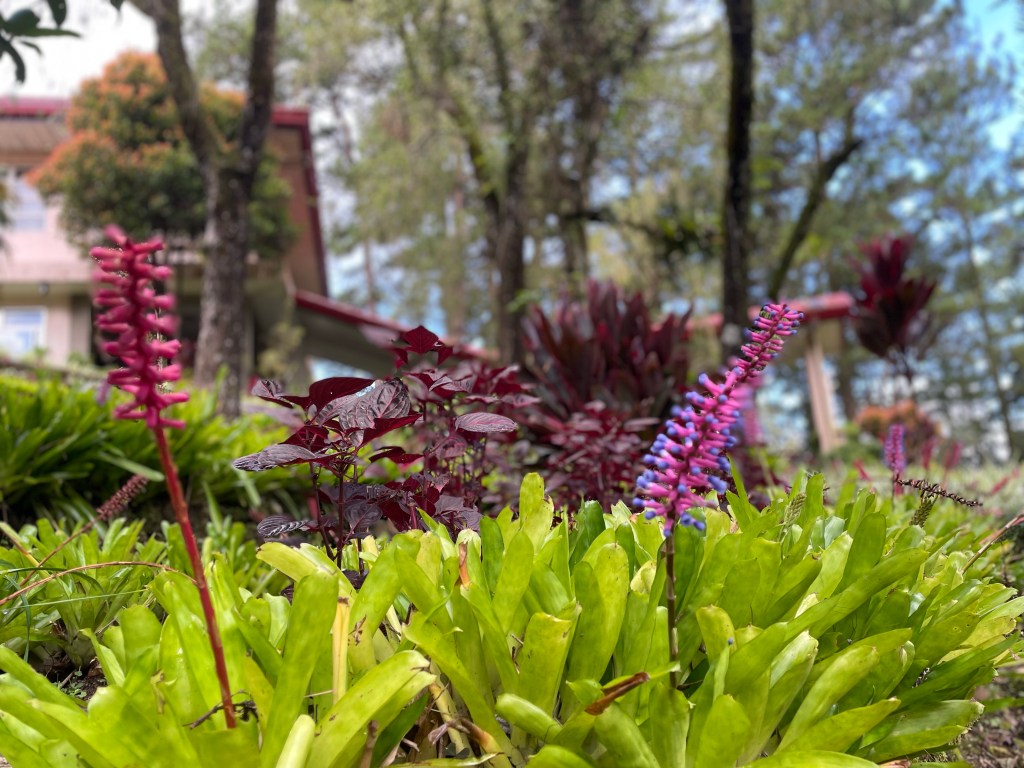
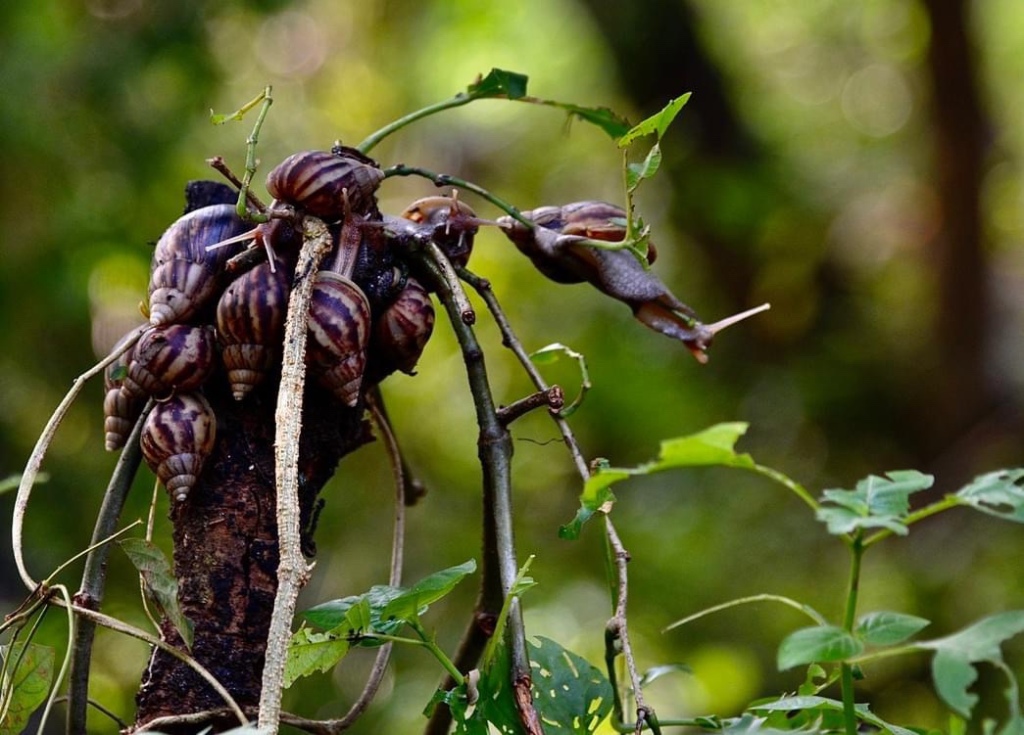
Photo by Dra. Mylene A. Santos, MD, at Tagalag, Valenzuela City, 18 November 2023.
God our loving Father
I feel so much like your psalmist today,
asking you to "Give me life,
O Lord, and I will do your commands."

I have been praying for this for
sometime with the abuses
and abominations among us priests,
of how like in the first readings
many of us have turned away from you,
worshipping money and self,
usurping your sacred altar as ours
with all of our grandstanding and inanities,
of how we have become
beholden to the rich and powerful
always present in all their functions
at the expense of the poor,
always seeking the ways of the world
as influencers than ministers
and pastors shamelessly splashed
all over social media.
Indignation seizes me because of the wicked who forsake your law. Though the snares of the wicked are twined about me your law I have not forgotten. Redeem me from the oppression of men, that I may keep your precepts. I beheld the apostates with loathing, because they kept not your promise.
Psalm 119:53, 61, 134, 158
I have no claims to holiness
nor cleanliness except I strive
to follow your Son Jesus;
and many times, amid my
indignation at the abuses and
abominations done to our sacred
duties even by those supposed to
lead us, I never fail to see myself
as the blind man at Jericho,
possibly blinded by my sins
and imperfections;
like him, dear Jesus,
I pray and beg you,
"Lord, please let me see"
(Luke 18:41).
Lord, please let me see
not only the things that make
me indignant;
let me also see you most
importantly:
your gentle mercy
amid your strong conviction
against sin and evil,
your wisdom in confronting
errors and misinterpretations,
your peace and serenity
in the middle of storms
and adversaries.

Let me go against the tide,
and be my guide.
Amen.
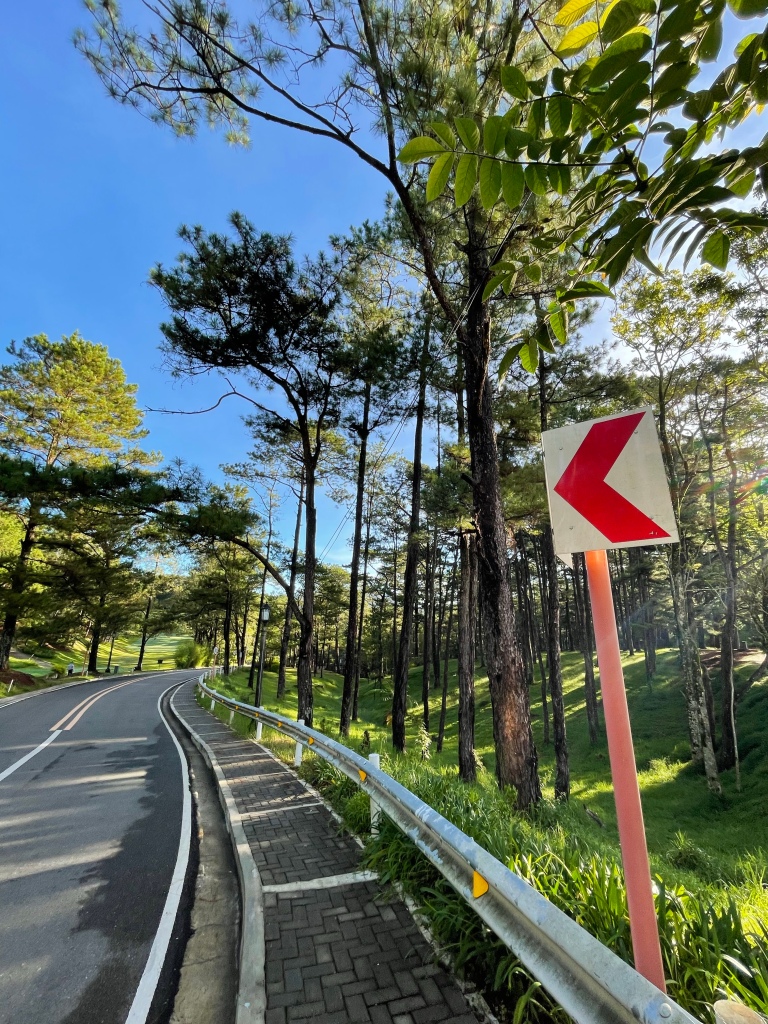
Photo by Dra. Mylene A. Santos, MD, at Tagalag, Valenzuela City, 18 November 2023.
The Lord Is My Chef Daily Recipe for the Soul by Fr. Nicanor F. Lalog II
Thursday, Feast of the Dedication of St. John Lateran, 09 November 2023
Ezekiel 47:1-2, 8-9, 12 ><)))*> 1 Corinthians 3:9-11, 16-17 ><)))*> John 2:13-22
Photo by Arch. Philip Santiago, St. John Lateran in Rome, 2022.
Praise and glory to you,
God our loving Father
in choosing to dwell in us
your people
as your temple;
how sad we have always
desecrated ourselves and
houses of worship with sin and evil
yet you never stopped
building us up over and over
in Jesus Christ
as your dwelling place.
Brothers and sisters: You are God’s building. Do you not know that you are the temple of God, and that the Spirit of God dwells in you?
1 Corithians 3:9, 16
Please, come again, Lord Jesus;
come more often to us your people
especially to us your priests,
to cleanse us of all filth of pride and conceit
when we eject you from the Eucharist
by making it our own celebration,
making a mockery of your sacrifice
we have turned into a carnival,
a spectacle for entertainment
in the name of money and fame;
forgive us, Jesus,
in misleading the people,
 using God like in the temple of Jerusalem;
shame on us when we preach
more of ourselves and interests
than your words that free the people
from bondage to sin and disease;
cleanse us, O Lord, so that life
may spring forth again from our parishes
where people experience your love and mercy
that "Wherever the river flows,
every sort of living creature that can
multiply shall live, and there shall be
abundant fish, for wherever this water
comes the sea shall be made fresh"
(Ezekiel 47:9).
Come, Lord Jesus,
bind us again like cords,
whip us if necessary,
awaken our pastors and bishops
who have forgotten your call
to shepherd your people,
choosing to graze in the green
pastures of the rich and powerful
enclosed in their buildings and
ivory towers bereft of
your spirit and life;
awaken your people too
in the spirit of synodality
to stand for what is true and sacred,
to demand from religious leaders
to give only you, Jesus,
always you, Jesus.
Amen.
Quiet Storm by Fr. Nicanor F. Lalog II, 31 October 2023
Whether you choose to celebrate Halloween in its truest sense which is the Christian and sacred celebration of All Saints or, the popular and pagan manner that is scary or spooky, November first reminds us always of things that are hidden and not seen.
What is really scary whenever November first approaches is the insistence of so many benighted souls including many Christians who highlight the erroneous pagan practice of dressing evil when halloween literally means “hallowed eve” or “holy evening” before the day set aside for all “holy souls” already in heaven we call “saints”. Any soul who enters heaven is considered a “saint”, that is, holy even if not recognized or canonized by the Church.
Remember the old Our Father translation when we used to say “Hallowed be thy name”? That’s it! Hallowed is the old English for holy. Where people got that idea of halloween as evil is clearly from the devil! And part of that sinister ploy by the devil in making evil funny and acceptable – and visible – is happening in the social media where everything must be seen, shown and exposed. Notice the expression “as seen on TV” to sell and market products while Facebook users brag their rule of thumb “show pictures or it never happened”.
Not everything can be seen and must be seen and shown. Recall how Genesis portrayed Adam and Eve hiding in shame, covering themselves with leaves after eating the forbidden fruit but these days, which could be the second phase of the Fall, men and women are not ashamed at all of their sins and scandals that instead of hiding, they make known to everyone deeds better kept in private, saying words better kept unsaid. They have absolutized the truth, baring all in total disregard of persons’ dignity and unity of the community. We have lost decency because we have also lost our sense of hiddenness, of privacy through silence and stillness.
Photo by author, sunrise at the Pacific from Katmon Nature Sanctuary & Beach Resort in Infanta, Quezon, 04 March 2023.
Hiddenness is a sacred presence where each of us can be all by one’s self focused on God who is the root of our being and existence no matter how one may call Him. St. John Paul II said in one of his writings that God created man first to be alone with Him. And that is how it will be to each of us in the end: we die alone. With God.
We all have this gift of hiddenness within each one of us. This we experience in our desires to be still, to go to the mountains or anywhere for a retreat or introspection, for some “me” time to rediscover and find one’s self anew.
Hiddenness is the passageway to the great gifts of silence and stillness that everyone needs to maintain balance in this highly competitive world filled with so much noise where everybody is talking, including cars and elevators. Compounding the problem of noise within and outside us are the cameras everywhere that entertain us and safeguard our well-being. But, are we really safer these days with all the CCTV’s and Face ID’s we use?
From forbes.com.
Many times, we have actually stripped ourselves of the innate mystery of being human, of the beauty and gift of personhood that some have tried to reveal using the camera but failed because we are beyond seeing. We do not notice how the cameras actually rob us of respect when unconsciously we give ourselves away to the world with our photos and videos spreading far without our knowing. Worst, we have allowed the camera to invade our hiddenness without us realizing that its effects backfire to us as we rarely have the time to analyze the possible outcomes of our photos and videos that usually tend to show what is negative and bad than what is positive and good about us. Our fascination with cameras perfectly capture our Filipino term palabas that literally means “outward”, a mere show without substance inside (loob). As a result of these sounds and images saturating us daily, the more we have become confused and lost because we do not have our grounding or “bearing” found only in hiddenness.
“In our society we are inclined to avoid hiddenness. We want to be seen and acknowledged. We want to be useful to others and influence the course of events. But as we become visible and popular, we quickly grow dependent on people and their responses and easily lose touch with God, the true source of our being. Hiddenness is the place of purification. In hiddenness we find our true selves.”
Fr. Henri Nouwen
Photo by author, Anvaya Cove in Morong, Bataan, July 2023.
We need to regain our hallowed hiddenness if we wish to grow and mature truly as persons – emotionally, psychologically and spiritually. With the phone and TV always around us even in the church, everybody and everything has become so ordinary and cheap.
Regaining our hiddenness is learning to put our technology in its proper place to be grounded in God in silence, the one commodity that has become so scarce these days since the invention of the Sony Walkman more than 40 years ago that spawned all these gadgets all over us now.
Silence is the language of God which leads us to Him and to our true selves. Every communication by God is always preceded by silence, something we have refused to learn as the most basic requirement of every communication. No wonder, we quarrel a lot, ending up more confused than ever because we never listen to others in silence. We never dialogue but simply talk, talk, and talk.
Genesis tells us in the beginning when God created everything, there was silence before He said, “Let there be light” while the fourth gospel solemnly tells us, “In the beginning was the Word… And the Word became flesh” (Jn.1:1, 14). Both instances evoke the beauty and majesty of God in grand silence.
All books in the Old Testament especially those of Psalms and of Job teem with many instances of God in silence amid every sunrise and sunset, in the gentle breeze and vast skies and oceans. In the New Testament, all four evangelists reported nothing Jesus said and did in childhood until the age 30 except for his lost and finding in the temple when 12 years old; Jesus was totally silent all those “hidden years” of his life in preparation for his ministry that lasted only three years, accomplishing so much whereas we speak all our lives and still end up empty. Most of all, the evangelists tell us too how Jesus frequently invited his disciples to a deserted place to pray, be silent and rest to be in communion with God his Father.
Hiddenness is God’s mode of presence that cannot be captured nor described in human terms. That is why He is hidden. It is not that God is hiding from us but He is inviting us to be intimately close with Him to exclusively and personally experience Him, be filled with Him.
Photo by Ms. Jo Villafuerte in Atok, Benguet, 01 September 2019.
It was the same thing Jesus did on Easter, remaining hidden from the disciples. When he finally appeared to Mary Magdalene who tried to touch him, Jesus stopped her to signal to her and to us all of the new level of relating with the Risen Lord in hiddenness. In all Easter stories, we are told how the disciples fell silent whenever Jesus appeared to them. In Emmaus, after the breaking of bread, the two disciples finally recognized Jesus who immediately vanished too! Why? Because Jesus wanted his disciples including us today to follow him personally in his hiddenness to find him and ourselves too.
Appearances or images and noise in life are very fleeting. Very often, the most significant moments and insights we have in life are those that come from our long periods of silence, of prayers and soul-searching.
This November 1 and 2 as we remember all those who have left us in this world, let us keep its sacred origins: All Saints Day for those souls already in heaven and All Souls’ Day for those who have departed but still being purified in the purgatory. Both dates invite us to “hide” in prayers, in silent remembering to experience God and our departed loved ones in the most intimate and personal manner without the gadgets and things that numb us of their presence. Amen. Have a blessed All Saints’ and All Souls’ Days!
The Lord Is My Chef Daily Recipe for the Soul by Fr. Nicanor F. Lalog II
Thursday in the Twenty-Ninth Week of Ordinary Time, Year I, 26 October 2023
Romans 6:19-23   <*((((><  +  ><))))*>   Luke 12:49-53
Photo by Dr. Mylene A. Santos, MD, 2022.
Your words, O Lord,
today sound old, even archaic
but they evoke so beautiful
feelings within that lead us
into deeper realities we often
ignore and take for granted:
slavery and separation.
But now that you have been freed from sin and have become slaves of God, the benefit that you have leads to sanctification, and its end is eternal life. For the wages of sin is death, but the gift of God is eternal life in Christ Jesus our Lord.
Romans 6:22-23
Many times we wrongly
choose to become slaves of sin
because of the belief that is when
we are most free in doing
whatever we want,
whatever we like,
whatever we desire
but always, we are proven wrong,
sadly wrong,
disastrously wrong;
being free O God is being
tied up to you,
being your slave
being at home with
what is true and good;
your laws and teachings
are not burdens but are
in fact what lead us to true freedom
without guilt,
without darkness,
without shame.

Most of all,
it is the slavery that leads
us to life and fulfillment in
Jesus Christ who had come
to liberate us from slavery to sin.
In the same manner,
to be your slave, O God,
is to be on your side,
to separate from those
against Jesus;
it is always painful
like every separation
but what makes it a good kind
of separation like slavery to you, God,
is how the fires of Christ's love
and mercy purify us into
better persons that enable us
to prosper,
grow,
and mature.

In the power of the
Holy Spirit,
let us choose always
slavery to you, dear Father,
and separation with you, dear Jesus
lest we become like the chaff
which the wind drives away
(Ps.1:4).  Amen.
The Lord Is My Chef Daily Recipe for the Soul by Fr. Nicanor F. Lalog II
Tuesday, Memorial of St. Anthony Claret, Bishop, 24 October 2023
Romans 5:12, 15, 17-19   <*((((><  +  ><))))*>   Luke 12:35-38
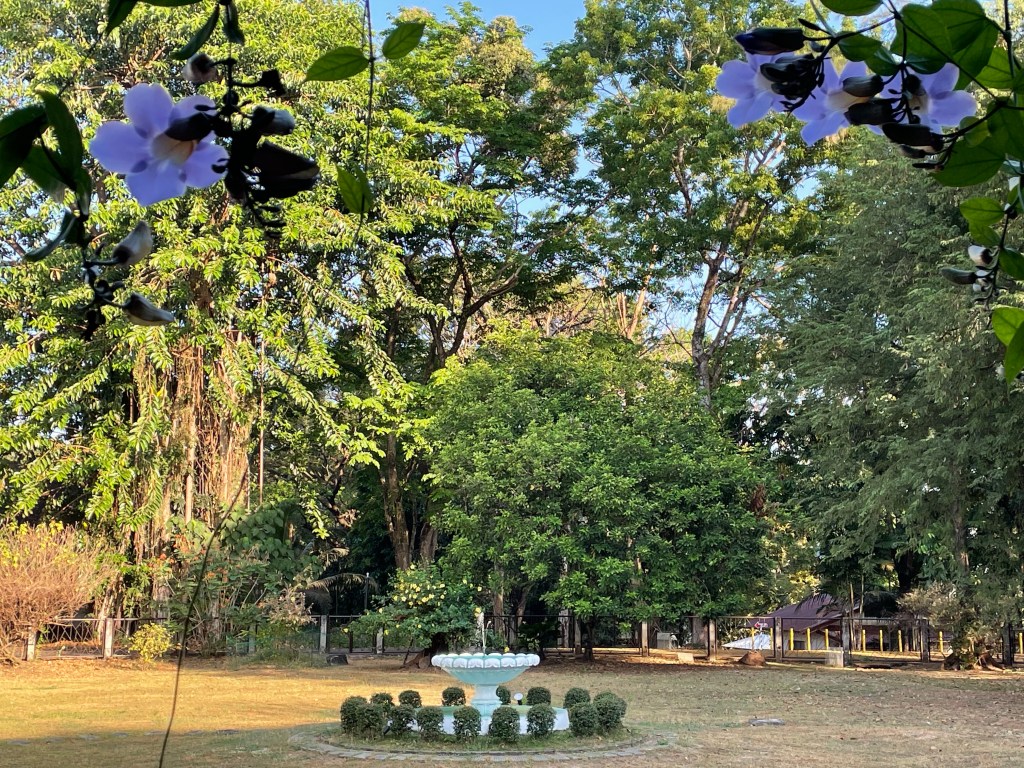
Photo by author at Forest Lodge, Camp John Hay, Baguio City, 12 July 2023.
Praise and glory
to you, God our Father!
So true are the words of
St. Paul everyday, "Where sin
increased, grace overflowed
all the more, so that, as sin
reigned in death, grace also
might reign through justification
for eternal life through
Jesus Christ our Lord"
(Romans 5:20-21).
Every day you bless us,
dear God in Jesus Christ
with the gift of forgiveness
in every present moment
to start anew and be free
from bondage to sin
and be free to do what is good,
to become a better person,
a better witness of your
grace of forgiveness,
prepared "like servants
who gird their loins and
light their lamp" awaiting his
return with our good deeds
amid all the evil and sin that
persist including death.

Though it is very sad
especially when we turn on the TV
or read in papers all those news
and images of wars and atrocities
that show the reality of how
humanity is still in solidarity
with Adam in our sinful ways,
may we always remember that
sin and death have no more
control over us; the death
is no longer the end we all fear
because it is no longer an end
but a beginning of something better
with Jesus who had overcome it
with his gift of forgiveness in every
here and now,
in every present
that assures us with eternal life.

May we not waste every
present that is a gift.
Amen.
The Lord Is My Chef daily Recipe for the Soul by Fr. Nicanor F. Lalog II
Friday in the Twenty-Sixth Week of Ordinary Time, Year I, 06 October 2023
Baruch 1:15-22   <*((((>< +++ ><))))*>   Luke 10:13-16
Photo by author in San Juan, La Union, 24 July 2023.
Of course,
dear God,
you never get angry
with us nor with any one
for you are love and
kindness yourself,
so rich in mercy
and forgiveness.
What truly happens,
O Father, is that when
we finally become aware
of our sinfulness,
of the evils we have done
repeatedly,
shamelessly despite
your goodness,
we become angry with
ourselves because
that is when we realize
all the bad things happening
to us are the results of our
turning away from you,
from your words,
from your precepts.
And the evils and the curse which the Lord enjoined upon Moses, his servant, at the time he led our ancestors forth from the land of Egypt to give us the land flowing with milk and honey, cling to us even today. For we did not heed the voice of the Lord, our God, in all the words of the prophets who he sent us, but each one of us went off after the devices of our own wicked hearts, served other gods, and did evil in the sight of the Lord, our God.
Baruch 1:20-22
Grant us, merciful Lord,
the grace of a sense of sinfulness
because the more we are aware
of our sinfulness,
the more we get closer to you;
when we acknowledge our sins,
that is when we admit
there is a gap between us
and among us we need to close
and make whole anew;
open our eyes,
our hearts,
our souls to your truth
and presence, Lord Jesus;
let us not be blind
to your coming
to free us from the
bondage of sins that
have made us more angry
than ever with ourselves
and with others;
let us not be complacent,
Jesus with all the blessings
you have poured upon us
so we may change and be
converted.

Indeed, the motto of the
Carthusians, an order founded
by St. Bruno whose memorial
we celebrate today is so true:
"while the world changes,
the cross stands firm."

Like St. Bruno and
the Carthusians,
may we strive
"to seek God assiduously,
to find God promptly,
and to possess God fully."
Amen.
The Lord Is My Chef Daily Recipe by Fr. Nicanor F. Lalog II
Wednesday, Memorial of St. Vincent de Paul, Priest, 27 September 2023
Ezra 9:5-9   <*(((>< + ><)))*> __ <*(((>< + ><)))*>   Luke 9:1-6
Photo by author, San Juan, La Union, 25 July 2023.
Show us your will,
your ways,
and your path,
loving Father
in the face of the many
great changes happening now
in our lives,
in our world,
in our places of work;
truly, changes are
inevitable; in the process,
there would be alterations,
destructions in order to build
like the restoration of your
temple after the exile;
but, dear God,
let us not forget in all these
our own sinfulness
and your mercy and forgiveness.
Give us the grace to cry
and pray like Ezra:
I said: “My God, I am too ashamed and confounded to raise my face to you, O my God, for our wicked deeds are heaped up above our heads and our guilt reaches up to heaven. From the time of our fathers even to this day great has been our guilt, and for our wicked deeds we have been delivered up, we and our kings and our priests, to the will of the kings of foreign lands, to the sword, to captivity, to pillage, and to disgrace, as is the case today. And now, but a short time ago, mercy came to us from the Lord our God…”
Ezra 9:6-8
How sad that we
never learn from
our lessons of past sins,
of how the many scourges
we deserve fell on us that
we still keep on living in evil,
denying its hold on us,
becoming blind to all
the excesses around us
that indeed our wicked deeds
are heaped up above our heads!

How sad, most of all,
that we easily forget your
love and mercy,
the forgiveness and
new life you gave us
to start anew
in rebuilding our lives
in you.
Let us heed
your call and summons
to proclaim Christ's
gospel of forgiveness
and healing like
St. Vincent de Paul
to the many people
deep into sin
and evil these days
because of fame
and power
and wealth.
Amen.
The Lord Is My Chef sunday Recipe for the Soul by Fr. Nicanor F. Lalog II
Sunday in the Twenty-third Week of Ordinary Time, Cycle A, 10 September 2023
Ezekiel 33:7-9 ><))))*> Romans 13:8-10 ><))))*> Matthew 18:15-20
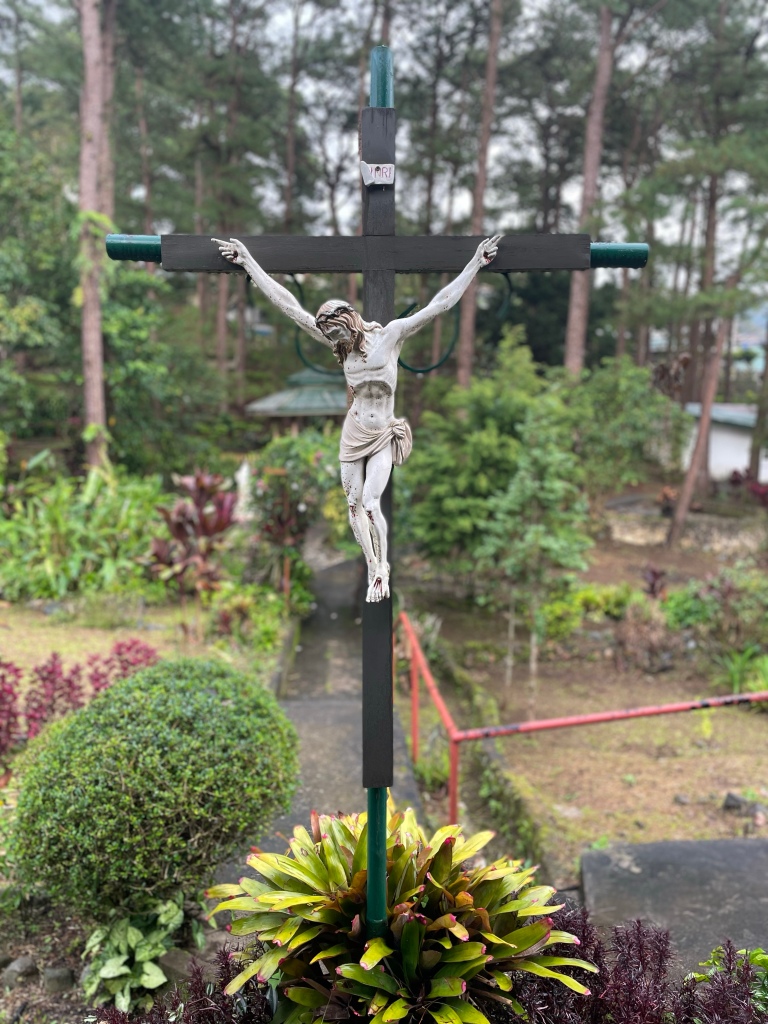
Photo by author, St. Scholastica Convent, Baguio City, 23 August 2023.
Our gospel this Sunday is very difficult but also one of the simplest and fundamental teachings by Jesus Christ: fraternal correction for more harmonious relationships.
That is very difficult because we have all experienced how when we heard of somebody going wayward in life, of living in a life of sin, our immediate reaction is to talk about them, engage in gossips without any intentions at all to correct them. Sad to say, we even distance ourselves from them – exactly the opposite of what Jesus is teaching us today:
Jesus said to his disciples: “If your brother sins against you, go and tell him his fault between you and him alone. If he listens to you, you have won over your brother. If he does not listen, take one or two other along with you, so that every fact may be established on the testimony of two or three witnesses. If he refuses to listen to them, tell the church. If he refuses to listen to the church, then treat him as you would a Gentile or a tax collector.”
Matthew 18:15-17
Photo by author, St. Scholastica Convent, Baguio City, 23 August 2023.
Jesus is now heading to Jerusalem to fulfill his mission. Along the way, he taught his disciples important lessons about the Church he had just “established” upon Peter, the Rock, while at Caesarea Philippi three weeks ago.
In these next three Sundays, Jesus tackles three delicate issues we continue to face even in our modern time like fraternal correction, forgiving, and work. These are delicate topics because they are all expressions of mutual love for one another.
Very often, we commit the sin of omission in the realms of these three, particularly of fraternal correction as we tend to detach ourselves from others especially if they are committing sin. By distancing from them, we unconsciously allow them to sin. In the movie The Good Nurse based on that true story of a nurse in the US who killed so many patients for some years by transferring to different hospitals, the good nurse asked him why he did it? The serial killer nurse said, “nobody told me to stop doing it.”
The dark side of the sin of omission lies in that tendency within us to not care at all especially with those who prefer to separate from us and lead their lives in the way they wanted. There is that tendency within us to be like Cain even if we are not guilty of any sin or may even be the offended party, saying, “am I my brother’s keeper?” Most sad are our Filipino expressions when somebody sins, “Bahal ka na sa buhay mo…pinili mo iyan, pagdusahan mo.”
Photo by author, Camp John Hay, 12 July 2023.
Fraternal correction is the antidote to sins of omission because it is about keeping our relationships intact as family, friends, brothers and sisters in Christ.
Jesus becomes truly present in the world among us when we live in harmony because “where two or three are gathered together in my name, there am I in the midst of them” (Mt. 18:20).
As early as the Old Testament, God had already insisted on this moral precept as his children that we look after one another like a guard or sentinel in the positive sense as he told the Prophet Ezekiel in the first reading. At that time, the enemies of Judah were closely approaching their borders that they designated watchmen as their first line of defense. Failure by these watchmen to warn the people – as it turned out later – could spell disaster for the kingdom.
The same thing is true with us. We are all interrelated with each other. One rotten tomato can spoil the whole batch. We cannot choose to be indifferent or just be mere bystanders amid the evil and sins happening around us perpetrated by those closest to us. But we must do it all in the spirit of love, not because we are better or holier.
Brothers and sisters: Owe nothing to anyone, except to love one another; for the one who loves another has fulfilled the law. Love does no evil to the neighbor; hence, love is the fulfillment of the law.
Romans 13:8, 10
Photo by author, Sacred Heart Novitiate, Novaliches, QC, 22 March 2023.
Fraternal correction is an expression of our mutual love for one another, the exact opposite of sin of omission. St. Paul offers us a lot today about this love that builds our family and community still from his letter to the Romans.
Let us start with St. Paul’s conclusion that love is the fulfillment of the law which we often hear and even proclaim to others. Main question that arises from this is the nature of this love. For St. Paul, love is the self-sacrificing love that Jesus showed us when he offered himself for us on the cross. Recall last Sunday St. Paul reminded us to offer your bodies as a living sacrifice(Rom. 12:1) like Jesus. In that same chapter, St. Paul spoke about not retaliating or seeking vengeance, an echoing of the Lord’s instruction on love when asked by a scholar of the law which is the greatest of the commandments (Mt.22:37-40).
Here we find, love for St. Paul is the imitation of Jesus Christ, a love that can never be measured at all and even be demanded and decreed! The love of Jesus Christ is so new as he mentioned at his last supper (Jn. 13:34) because it is a love rooted in God, a love that elevates us or as young people say “levels up” every disciple into the mystical plane.
Prior to his telling us today “to owe nothing to anyone, except to love one another”, St. Paul was expounding at the beginning of Romans 13 the theme of obedience to authority, a sort of social responsibilities, of things like justice (vv.1-7). While justice demands we pay off our debts and other dues to one another, to the state and public officials, it is a totally different scenario when it comes to love.
Photo by author, St. Scholastica Convent, Baguio City, 23 August 2023.
Love is not a possession that anyone can receive or give in an exactly measured quantity. St. Mother Teresa said that the measure of love is when you love immeasurably. There is no such thing as a kilo of love. It is either you love or do not love! And when that happens, when we do not love, then we sin. That sin can only be repaired and corrected by love. Sin is when we lack love; to overcome sin, pour in more love.
In all his writings, St. Paul always had love as the basis of his teachings so that without sounding as imposing, he could persuade us to live deeply moral lives as expression of that love in Christ which he eloquently expressed in his ode to love in 1 Corinthians 13. One of the earliest Latin phrases I have learned as a child was from my elementary school days at St. Paul College Bocaue (Bulacan). Our school motto is “Caritas Christi urget nos” – The love of Christ impels us (to love more) – from 2 Corinthians 5:14.
When we examine our true love experiences that are not selfish but other centered, we realize that love is a debt we can never pay off because love is a gift from God. This gift of his love makes us those who receive it in a filial, loving relationship with him our Father. Most of all, we realize we too can love like Jesus Christ!
God does not “order” nor “command” us in the strict sense to love him. He asks for our love because he loves us, because he is love. When we love, we fulfill the commandments of God. We live in peace and harmony with one another like in heaven. That is why it is only love that will remain in heaven where there will be no more fraternal corrections. Most of all, never be paid off as a debt because love is all that shall remain to become our very person in Christ. Amen.It is a Sunday. If you love, celebrate Mass in your parish. Have a blessed, loving week!
Photo by author, La Trinidad, Benguet, 12 July 2023.
Lawiswis Ng Salita ni P. Nicanor F. Lalog II, Ika-07 ng Agosto 2023
Larawan kuha ni Dra. Mylene A. Santos, MD, sa France, 2022.
Matapos nating pagnilayan kaibahan ng reklamo at hinaing, ngayon ay masinsinang suriin natin ang sama at kabuktutan – ang kapangitan – nitong pagrereklamo. Bukod sa sinasadya itong pag-isipan upang manipulahin mga tao maging Diyos, ang masaklap na mukha ng pagrereklamo ay naroon ito palagi sa mga taong malalapit sa atin tulad ng pamilya at kaibigan.
Sina Miriam at Aaron ay nag-usap laban kay Moises tungkol sa asawa niyang taga-Cus. And sabi nila, “Si Moises lamang ba ang kinausap ni Yahweh? Hindi ba’t tayo man?” Hindi kaila kay Yahweh ang usapan nilang ito.
Bilang 12:1-2
Larawan kuha ng may-akda sa San Juan, La Union, 24 Hulyo 2023.
Ito ang masakit na katotohanan sa pagrereklamo: ang mga unang-unang nagrereklamo laban sa atin palagi yung pinakamalapit sa atin, iyong mga taong inaasahan natin na sana higit nakaka-unawa sa atin, na sana ang mga tagapagtanggol at kakampi natin, mga nagmamahal sa atin.
Kahapon sa unang pagbasa ating natunghayan paanong nagreklamo mga Israelita laban kay Moises nang sila ay nahirapan at nagutom sa ilang. Dinig na dinig ni Moises kanilang mga reklamo kaya siya ay naghinaing sa Diyos. Dapat sana sina Aaron at Miriam na mga kapatid niya ang dumamay sa kanya subalit sa ating pagbasa ngayon, sumama pa sila sa pagrereklamo laban kay Moises!
At hindi lamang iyon! Nang-intriga pa ang magkapatid laban sa kanilang kapatid. Ginawang isyu nina Aaron at Miriam ang taga-Cus na asawa ni Moises na si Zipporah. Ating napagnilayan kung paanong sa pagrereklamo mayroon palaging panunumbat, panunukat at paghahamon sa mga inirereklamong tao kungdi pati sa Panginoong Diyos tulad sa tagpong ito (https://lordmychef.com/2023/08/07/masama-magreklamo-pananalangin-ang-dumaing/).
Alam naman nina Aaron at Miriam bakit nakapag-asawa si Moises ng hindi Judio dahil nga siya ay tumakas at nagtago sa ilang matapos niyang mapatay isang bantay na Egipsiyo. Sa pagkakataong ito, kanila ring kinukuwestiyon nila pagkatao ni Moises na kapatid nila.
Higit sa lahat, dito ating nakita ang pangit at mabahong katotohanan ng pagrereklamo na bunsod ng simpleng inggit. Tingnan kung paanong kayang wasakin ng pagka-inggit ating pagiging magkakapatid at pamilya!
Nagngingitngit sa inggit sina Aaron at Miriam laban kay Moises at maging kay Yahweh dahil hindi sila makabida sa mga tao. Ibig nilang umepal sa mga tao. Sa mga susunod na kabanata, ganito rin ang kuwento ng mga kalalakihang nainggit sa mga hinirang na propeta ni Yahwen sa ilang. Katulad ni Miriam, sila ma’y pinarusahan ng Diyos.
Larawan kuha ng may-akda sa San Juan, La Union, 25 Hulyo 2023.
Dapat nating matanggap na bawat isa sa atin ay mayroong gampaning papel at misyon sa buhay mula sa Diyos. Huwag nating sukatin o kuwentahin uri ng ating gampanin sapagkat walang maliit o malaking bagay sa Diyos. Ang pinaka-mahalaga sa kanya ay ang ating katapatan sa kanyang iniatas na gawain at misyon. Kung ang ibig ng Diyos na papel natin sa mundo ay tagapagpatay ng ilaw o taga-kaway ng munting bandila tuwing dumaraan ang tren sa crossing, iyon na iyon! Ang ningning at kahalagahan ng bawat gawain ay nakabatay sa Diyos at hindi sa ano pa mang sukatan o pamantayan ng tao. Kaya sa halip mainggit, ating pagbutihin mga gawain natin.
Sa ebanghelyo sa araw na ito ating natunghayan si Simon Pedro “umepal” kay Jesus na naglakad sa ibabaw ng tubig nang hilingin niyang palapitan din siya doon ng Panginoon. At pinagbigyan naman siya ni Jesus ngunit nang maramdaman ni Pedro ang malalakas na hangin, unti-unti siyang lumubog dahil sa takot kaya napasigaw siya sa paghingi ng saklolo kay Jesus.
Madali kasing makita ang ganda ng tanawing naglalakad sa ibabaw ng tubig o masarap siguro maranasan ikaw ay ginagalang ng lahat katulad ni Moises. Pero, iyon na ba lahat?
Hindi natin alintana mga likas na problema at hirap nakaatang sa kanya-kanyang balikat sa bawat tungkulin sa buhay at sa pamilya, sa opisina at sa pamayanan, o kahit saan man. Katulad ni Pedro nang maramdaman niya napakalakas na hangin nang maglakad sa ibabaw ng tubig katulad ni Jesus kaya natakot siya. Hindi lamang ganoon ang magreklamo at mainggit sa mga tao na ating hinahangaan o tinitingala.
Larawan ni Sto. Domingo mula sa Google.
Ngayong ika-walo ng Agosto ay paggunita kay Sto. Domingo, tagapagtatag ng Order of Preachers (OP) na tinaguriang mga Dominicano.
Batay sa mga kuwento noong ipagbuntis siya ng kanyang ina, nanaginip ito ng aso na tumatakbong may kagat-kagat na sulo, paikot-ikot sa madidilim na kalsada dahil gabi. Saan man magtungo ang naturang aso ay naghahatid siya ng liwanag dahil sa sulo sa kanyang kagat-kagat sa bibig.
Alalaong-baga, ipinalagay na ang sanggol niyang isisilang ay maghahatid ng liwanag sa buong daigdig katulad ng aso sa panaginip kaya pinangalanan siyang Domingo o Dominic na mula sa Domini Canes sa wikang Latin na ibig sabihin ay “Aso ng Panginoon”. At iyon nga ang nangyari sa buhay ni Sto. Domingo: siya at ang kanyang mga taga-sunod mula noon hanggang ngayon sa pamamagitan ng pagtuturo ay naghahatid ng liwanag ni Kristo sa daigdig na balot ng kadiliman ng kasamaan at kasalanan.
Hilingin natin kay Sto. Domingo tayo ay kanyang ipanalanging maliwanagan ating mga sarili upang mapawi lalo’t higit mga dilim ng inggit at pagrereklamo na bumabalot sa atin. Amen.
Lawiswis ng Salita ni P. Nicanor F. Lalog II, Ika-31 ng Hulyo 2023
Larawan kuha ng may akda sa Anvaya Cove, Bataan, 19 Mayo 2023.
*Ito ay tula na aking nakatha
dahil sa pagkamangha
sa mga katagang "Halika nga"
ng awiting "Habang Buhay"
ni Zack Tabudlo.
Halika nga!
Madalas sinasambit
upang tayo ay lumapit
upang makita at marinig
ng higit
tumatawag
o sumisitsit;
malimit
kapag nabanggit
hatid ay tuwa at galak
sa nakakarinig
lalo na kung
may kasabay na kaway
ng kamay at
pagngiti
ng labi!
Halika nga!
Kay sarap balikan
itong pagtawag
noon sa amin
 ng mga magulang
na puno ng lambing
at pagmamahal;
kapag ito'y tutugunin
tiyak ikaw ay pupupugin
ng halik sa pisngi
tila sinasabing
ika'y nakaaaliw
kaya sana ay inyong
dinggin
kanilang pangangaral
at habilin.
Halika nga!
Iyan din ang
tawag sa atin
ng Diyos nating butihin
ngunit hindi natin
pinapansin.

Halika nga!
ang paanyaya
ng Diyos sa atin
upang ating pasanin
ay Kanyang pagaanin,
sa Kanya tayo pagpapahingahin.

Halika nga!
Tanging hiling
ng Diyos sa atin
huwag nang tumingin
sa iba, Siya lang
ang mahalin, sambahin
at sundin; huwag mahumaling
sa magaan at madaling
pamamaraan ng mundo
na siyang tukso at pangloloko
nitong diyablo
na sinungaling
at tuso!
Larawan kuha ng may akda sa Anvaya Cove, Bataan, 19 Mayo 2023.

















 lordmychef.com