The Lord Is My Chef Daily Recipe for the Soul by Fr. Nicanor F. Lalog II
Tuesday, Memorial of St. Anthony Claret, Bishop, 24 October 2023
Romans 5:12, 15, 17-19   <*((((><  +  ><))))*>   Luke 12:35-38
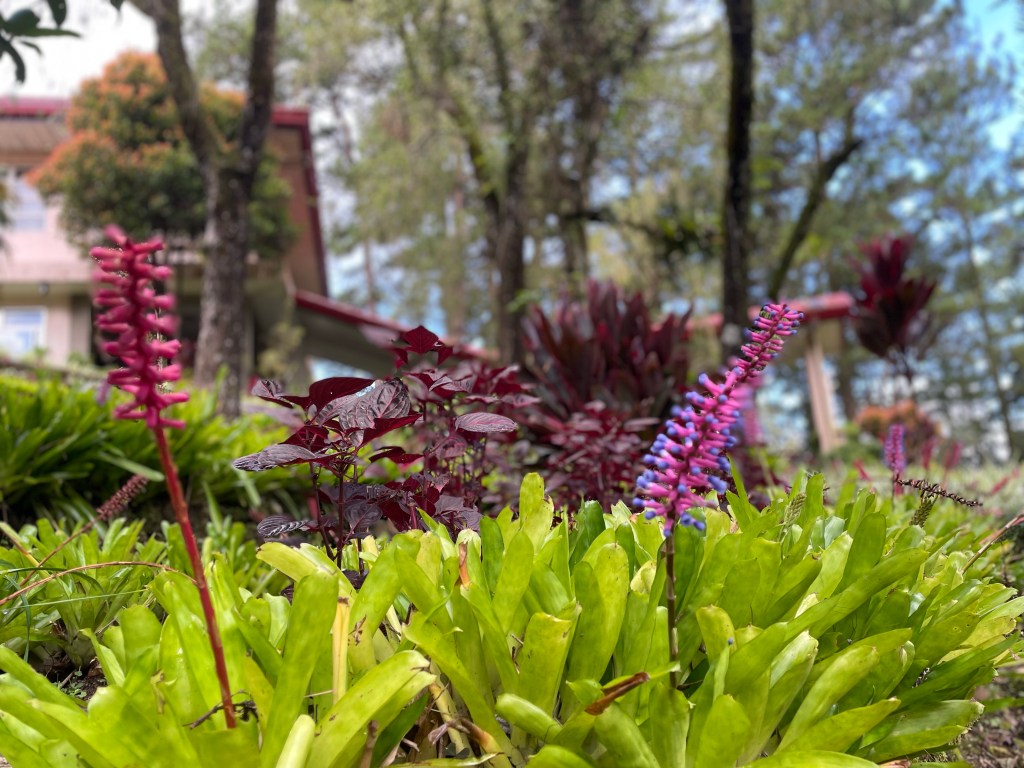
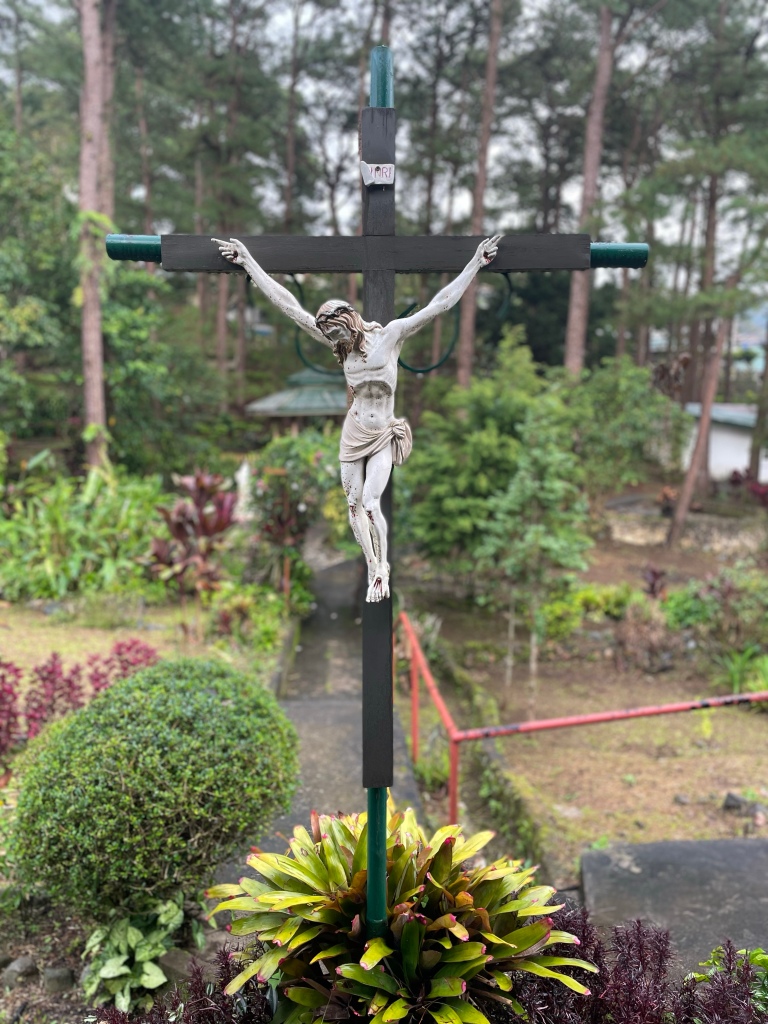
Photo by author at Forest Lodge, Camp John Hay, Baguio City, 12 July 2023.
Praise and glory
to you, God our Father!
So true are the words of
St. Paul everyday, "Where sin
increased, grace overflowed
all the more, so that, as sin
reigned in death, grace also
might reign through justification
for eternal life through
Jesus Christ our Lord"
(Romans 5:20-21).
Every day you bless us,
dear God in Jesus Christ
with the gift of forgiveness
in every present moment
to start anew and be free
from bondage to sin
and be free to do what is good,
to become a better person,
a better witness of your
grace of forgiveness,
prepared "like servants
who gird their loins and
light their lamp" awaiting his
return with our good deeds
amid all the evil and sin that
persist including death.

Though it is very sad
especially when we turn on the TV
or read in papers all those news
and images of wars and atrocities
that show the reality of how
humanity is still in solidarity
with Adam in our sinful ways,
may we always remember that
sin and death have no more
control over us; the death
is no longer the end we all fear
because it is no longer an end
but a beginning of something better
with Jesus who had overcome it
with his gift of forgiveness in every
here and now,
in every present
that assures us with eternal life.

May we not waste every
present that is a gift.
Amen.
The Lord Is My Chef daily Recipe for the Soul by Fr. Nicanor F. Lalog II
Friday in the Twenty-Sixth Week of Ordinary Time, Year I, 06 October 2023
Baruch 1:15-22   <*((((>< +++ ><))))*>   Luke 10:13-16
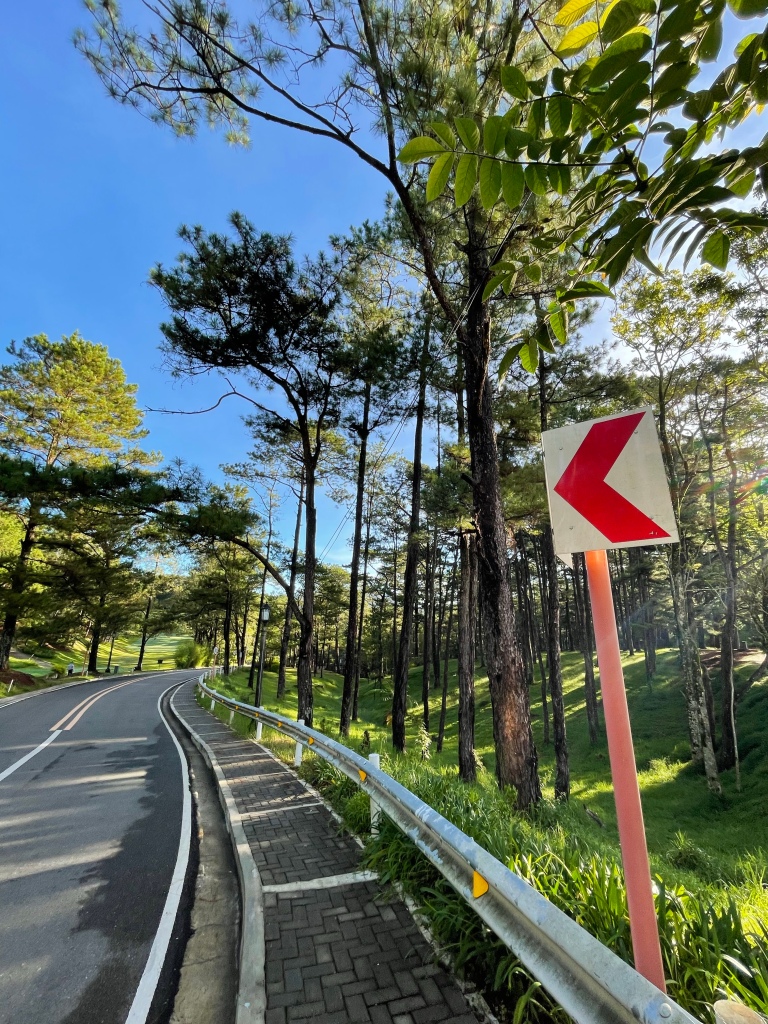
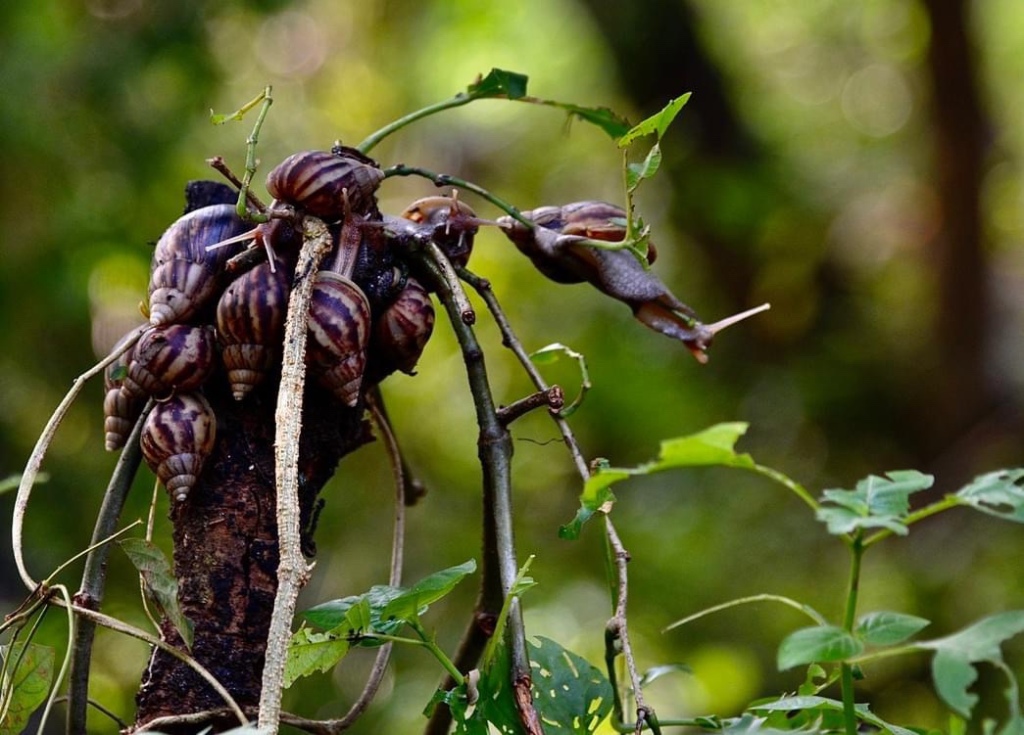
Photo by author in San Juan, La Union, 24 July 2023.
Of course,
dear God,
you never get angry
with us nor with any one
for you are love and
kindness yourself,
so rich in mercy
and forgiveness.
What truly happens,
O Father, is that when
we finally become aware
of our sinfulness,
of the evils we have done
repeatedly,
shamelessly despite
your goodness,
we become angry with
ourselves because
that is when we realize
all the bad things happening
to us are the results of our
turning away from you,
from your words,
from your precepts.
And the evils and the curse which the Lord enjoined upon Moses, his servant, at the time he led our ancestors forth from the land of Egypt to give us the land flowing with milk and honey, cling to us even today. For we did not heed the voice of the Lord, our God, in all the words of the prophets who he sent us, but each one of us went off after the devices of our own wicked hearts, served other gods, and did evil in the sight of the Lord, our God.
Baruch 1:20-22
Grant us, merciful Lord,
the grace of a sense of sinfulness
because the more we are aware
of our sinfulness,
the more we get closer to you;
when we acknowledge our sins,
that is when we admit
there is a gap between us
and among us we need to close
and make whole anew;
open our eyes,
our hearts,
our souls to your truth
and presence, Lord Jesus;
let us not be blind
to your coming
to free us from the
bondage of sins that
have made us more angry
than ever with ourselves
and with others;
let us not be complacent,
Jesus with all the blessings
you have poured upon us
so we may change and be
converted.

Indeed, the motto of the
Carthusians, an order founded
by St. Bruno whose memorial
we celebrate today is so true:
"while the world changes,
the cross stands firm."

Like St. Bruno and
the Carthusians,
may we strive
"to seek God assiduously,
to find God promptly,
and to possess God fully."
Amen.
The Lord Is My Chef Daily Recipe by Fr. Nicanor F. Lalog II
Wednesday, Memorial of St. Vincent de Paul, Priest, 27 September 2023
Ezra 9:5-9   <*(((>< + ><)))*> __ <*(((>< + ><)))*>   Luke 9:1-6
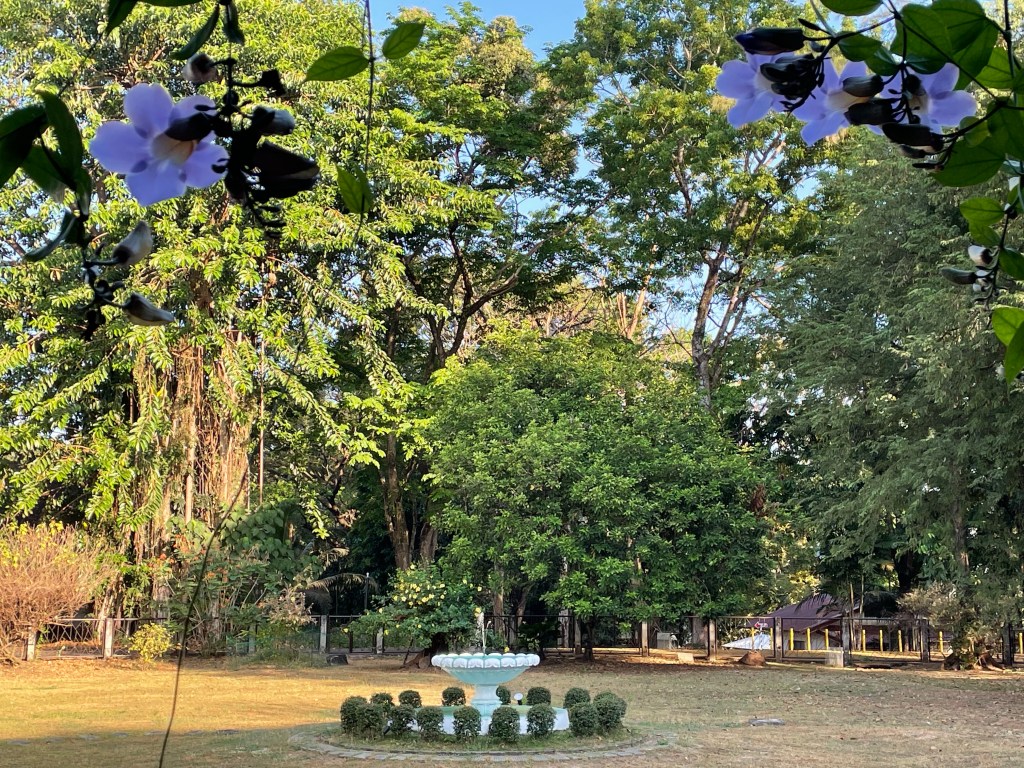
Photo by author, San Juan, La Union, 25 July 2023.
Show us your will,
your ways,
and your path,
loving Father
in the face of the many
great changes happening now
in our lives,
in our world,
in our places of work;
truly, changes are
inevitable; in the process,
there would be alterations,
destructions in order to build
like the restoration of your
temple after the exile;
but, dear God,
let us not forget in all these
our own sinfulness
and your mercy and forgiveness.
Give us the grace to cry
and pray like Ezra:
I said: “My God, I am too ashamed and confounded to raise my face to you, O my God, for our wicked deeds are heaped up above our heads and our guilt reaches up to heaven. From the time of our fathers even to this day great has been our guilt, and for our wicked deeds we have been delivered up, we and our kings and our priests, to the will of the kings of foreign lands, to the sword, to captivity, to pillage, and to disgrace, as is the case today. And now, but a short time ago, mercy came to us from the Lord our God…”
Ezra 9:6-8
How sad that we
never learn from
our lessons of past sins,
of how the many scourges
we deserve fell on us that
we still keep on living in evil,
denying its hold on us,
becoming blind to all
the excesses around us
that indeed our wicked deeds
are heaped up above our heads!

How sad, most of all,
that we easily forget your
love and mercy,
the forgiveness and
new life you gave us
to start anew
in rebuilding our lives
in you.
Let us heed
your call and summons
to proclaim Christ's
gospel of forgiveness
and healing like
St. Vincent de Paul
to the many people
deep into sin
and evil these days
because of fame
and power
and wealth.
Amen.
The Lord Is My Chef sunday Recipe for the Soul by Fr. Nicanor F. Lalog II
Sunday in the Twenty-third Week of Ordinary Time, Cycle A, 10 September 2023
Ezekiel 33:7-9 ><))))*> Romans 13:8-10 ><))))*> Matthew 18:15-20
Photo by author, St. Scholastica Convent, Baguio City, 23 August 2023.
Our gospel this Sunday is very difficult but also one of the simplest and fundamental teachings by Jesus Christ: fraternal correction for more harmonious relationships.
That is very difficult because we have all experienced how when we heard of somebody going wayward in life, of living in a life of sin, our immediate reaction is to talk about them, engage in gossips without any intentions at all to correct them. Sad to say, we even distance ourselves from them – exactly the opposite of what Jesus is teaching us today:
Jesus said to his disciples: “If your brother sins against you, go and tell him his fault between you and him alone. If he listens to you, you have won over your brother. If he does not listen, take one or two other along with you, so that every fact may be established on the testimony of two or three witnesses. If he refuses to listen to them, tell the church. If he refuses to listen to the church, then treat him as you would a Gentile or a tax collector.”
Matthew 18:15-17
Photo by author, St. Scholastica Convent, Baguio City, 23 August 2023.
Jesus is now heading to Jerusalem to fulfill his mission. Along the way, he taught his disciples important lessons about the Church he had just “established” upon Peter, the Rock, while at Caesarea Philippi three weeks ago.
In these next three Sundays, Jesus tackles three delicate issues we continue to face even in our modern time like fraternal correction, forgiving, and work. These are delicate topics because they are all expressions of mutual love for one another.
Very often, we commit the sin of omission in the realms of these three, particularly of fraternal correction as we tend to detach ourselves from others especially if they are committing sin. By distancing from them, we unconsciously allow them to sin. In the movie The Good Nurse based on that true story of a nurse in the US who killed so many patients for some years by transferring to different hospitals, the good nurse asked him why he did it? The serial killer nurse said, “nobody told me to stop doing it.”
The dark side of the sin of omission lies in that tendency within us to not care at all especially with those who prefer to separate from us and lead their lives in the way they wanted. There is that tendency within us to be like Cain even if we are not guilty of any sin or may even be the offended party, saying, “am I my brother’s keeper?” Most sad are our Filipino expressions when somebody sins, “Bahal ka na sa buhay mo…pinili mo iyan, pagdusahan mo.”
Photo by author, Camp John Hay, 12 July 2023.
Fraternal correction is the antidote to sins of omission because it is about keeping our relationships intact as family, friends, brothers and sisters in Christ.
Jesus becomes truly present in the world among us when we live in harmony because “where two or three are gathered together in my name, there am I in the midst of them” (Mt. 18:20).
As early as the Old Testament, God had already insisted on this moral precept as his children that we look after one another like a guard or sentinel in the positive sense as he told the Prophet Ezekiel in the first reading. At that time, the enemies of Judah were closely approaching their borders that they designated watchmen as their first line of defense. Failure by these watchmen to warn the people – as it turned out later – could spell disaster for the kingdom.
The same thing is true with us. We are all interrelated with each other. One rotten tomato can spoil the whole batch. We cannot choose to be indifferent or just be mere bystanders amid the evil and sins happening around us perpetrated by those closest to us. But we must do it all in the spirit of love, not because we are better or holier.
Brothers and sisters: Owe nothing to anyone, except to love one another; for the one who loves another has fulfilled the law. Love does no evil to the neighbor; hence, love is the fulfillment of the law.
Romans 13:8, 10
Photo by author, Sacred Heart Novitiate, Novaliches, QC, 22 March 2023.
Fraternal correction is an expression of our mutual love for one another, the exact opposite of sin of omission. St. Paul offers us a lot today about this love that builds our family and community still from his letter to the Romans.
Let us start with St. Paul’s conclusion that love is the fulfillment of the law which we often hear and even proclaim to others. Main question that arises from this is the nature of this love. For St. Paul, love is the self-sacrificing love that Jesus showed us when he offered himself for us on the cross. Recall last Sunday St. Paul reminded us to offer your bodies as a living sacrifice(Rom. 12:1) like Jesus. In that same chapter, St. Paul spoke about not retaliating or seeking vengeance, an echoing of the Lord’s instruction on love when asked by a scholar of the law which is the greatest of the commandments (Mt.22:37-40).
Here we find, love for St. Paul is the imitation of Jesus Christ, a love that can never be measured at all and even be demanded and decreed! The love of Jesus Christ is so new as he mentioned at his last supper (Jn. 13:34) because it is a love rooted in God, a love that elevates us or as young people say “levels up” every disciple into the mystical plane.
Prior to his telling us today “to owe nothing to anyone, except to love one another”, St. Paul was expounding at the beginning of Romans 13 the theme of obedience to authority, a sort of social responsibilities, of things like justice (vv.1-7). While justice demands we pay off our debts and other dues to one another, to the state and public officials, it is a totally different scenario when it comes to love.
Photo by author, St. Scholastica Convent, Baguio City, 23 August 2023.
Love is not a possession that anyone can receive or give in an exactly measured quantity. St. Mother Teresa said that the measure of love is when you love immeasurably. There is no such thing as a kilo of love. It is either you love or do not love! And when that happens, when we do not love, then we sin. That sin can only be repaired and corrected by love. Sin is when we lack love; to overcome sin, pour in more love.
In all his writings, St. Paul always had love as the basis of his teachings so that without sounding as imposing, he could persuade us to live deeply moral lives as expression of that love in Christ which he eloquently expressed in his ode to love in 1 Corinthians 13. One of the earliest Latin phrases I have learned as a child was from my elementary school days at St. Paul College Bocaue (Bulacan). Our school motto is “Caritas Christi urget nos” – The love of Christ impels us (to love more) – from 2 Corinthians 5:14.
When we examine our true love experiences that are not selfish but other centered, we realize that love is a debt we can never pay off because love is a gift from God. This gift of his love makes us those who receive it in a filial, loving relationship with him our Father. Most of all, we realize we too can love like Jesus Christ!
God does not “order” nor “command” us in the strict sense to love him. He asks for our love because he loves us, because he is love. When we love, we fulfill the commandments of God. We live in peace and harmony with one another like in heaven. That is why it is only love that will remain in heaven where there will be no more fraternal corrections. Most of all, never be paid off as a debt because love is all that shall remain to become our very person in Christ. Amen.It is a Sunday. If you love, celebrate Mass in your parish. Have a blessed, loving week!
Photo by author, La Trinidad, Benguet, 12 July 2023.
Lawiswis Ng Salita ni P. Nicanor F. Lalog II, Ika-07 ng Agosto 2023
Larawan kuha ni Dra. Mylene A. Santos, MD, sa France, 2022.
Matapos nating pagnilayan kaibahan ng reklamo at hinaing, ngayon ay masinsinang suriin natin ang sama at kabuktutan – ang kapangitan – nitong pagrereklamo. Bukod sa sinasadya itong pag-isipan upang manipulahin mga tao maging Diyos, ang masaklap na mukha ng pagrereklamo ay naroon ito palagi sa mga taong malalapit sa atin tulad ng pamilya at kaibigan.
Sina Miriam at Aaron ay nag-usap laban kay Moises tungkol sa asawa niyang taga-Cus. And sabi nila, “Si Moises lamang ba ang kinausap ni Yahweh? Hindi ba’t tayo man?” Hindi kaila kay Yahweh ang usapan nilang ito.
Bilang 12:1-2
Larawan kuha ng may-akda sa San Juan, La Union, 24 Hulyo 2023.
Ito ang masakit na katotohanan sa pagrereklamo: ang mga unang-unang nagrereklamo laban sa atin palagi yung pinakamalapit sa atin, iyong mga taong inaasahan natin na sana higit nakaka-unawa sa atin, na sana ang mga tagapagtanggol at kakampi natin, mga nagmamahal sa atin.
Kahapon sa unang pagbasa ating natunghayan paanong nagreklamo mga Israelita laban kay Moises nang sila ay nahirapan at nagutom sa ilang. Dinig na dinig ni Moises kanilang mga reklamo kaya siya ay naghinaing sa Diyos. Dapat sana sina Aaron at Miriam na mga kapatid niya ang dumamay sa kanya subalit sa ating pagbasa ngayon, sumama pa sila sa pagrereklamo laban kay Moises!
At hindi lamang iyon! Nang-intriga pa ang magkapatid laban sa kanilang kapatid. Ginawang isyu nina Aaron at Miriam ang taga-Cus na asawa ni Moises na si Zipporah. Ating napagnilayan kung paanong sa pagrereklamo mayroon palaging panunumbat, panunukat at paghahamon sa mga inirereklamong tao kungdi pati sa Panginoong Diyos tulad sa tagpong ito (https://lordmychef.com/2023/08/07/masama-magreklamo-pananalangin-ang-dumaing/).
Alam naman nina Aaron at Miriam bakit nakapag-asawa si Moises ng hindi Judio dahil nga siya ay tumakas at nagtago sa ilang matapos niyang mapatay isang bantay na Egipsiyo. Sa pagkakataong ito, kanila ring kinukuwestiyon nila pagkatao ni Moises na kapatid nila.
Higit sa lahat, dito ating nakita ang pangit at mabahong katotohanan ng pagrereklamo na bunsod ng simpleng inggit. Tingnan kung paanong kayang wasakin ng pagka-inggit ating pagiging magkakapatid at pamilya!
Nagngingitngit sa inggit sina Aaron at Miriam laban kay Moises at maging kay Yahweh dahil hindi sila makabida sa mga tao. Ibig nilang umepal sa mga tao. Sa mga susunod na kabanata, ganito rin ang kuwento ng mga kalalakihang nainggit sa mga hinirang na propeta ni Yahwen sa ilang. Katulad ni Miriam, sila ma’y pinarusahan ng Diyos.
Larawan kuha ng may-akda sa San Juan, La Union, 25 Hulyo 2023.
Dapat nating matanggap na bawat isa sa atin ay mayroong gampaning papel at misyon sa buhay mula sa Diyos. Huwag nating sukatin o kuwentahin uri ng ating gampanin sapagkat walang maliit o malaking bagay sa Diyos. Ang pinaka-mahalaga sa kanya ay ang ating katapatan sa kanyang iniatas na gawain at misyon. Kung ang ibig ng Diyos na papel natin sa mundo ay tagapagpatay ng ilaw o taga-kaway ng munting bandila tuwing dumaraan ang tren sa crossing, iyon na iyon! Ang ningning at kahalagahan ng bawat gawain ay nakabatay sa Diyos at hindi sa ano pa mang sukatan o pamantayan ng tao. Kaya sa halip mainggit, ating pagbutihin mga gawain natin.
Sa ebanghelyo sa araw na ito ating natunghayan si Simon Pedro “umepal” kay Jesus na naglakad sa ibabaw ng tubig nang hilingin niyang palapitan din siya doon ng Panginoon. At pinagbigyan naman siya ni Jesus ngunit nang maramdaman ni Pedro ang malalakas na hangin, unti-unti siyang lumubog dahil sa takot kaya napasigaw siya sa paghingi ng saklolo kay Jesus.
Madali kasing makita ang ganda ng tanawing naglalakad sa ibabaw ng tubig o masarap siguro maranasan ikaw ay ginagalang ng lahat katulad ni Moises. Pero, iyon na ba lahat?
Hindi natin alintana mga likas na problema at hirap nakaatang sa kanya-kanyang balikat sa bawat tungkulin sa buhay at sa pamilya, sa opisina at sa pamayanan, o kahit saan man. Katulad ni Pedro nang maramdaman niya napakalakas na hangin nang maglakad sa ibabaw ng tubig katulad ni Jesus kaya natakot siya. Hindi lamang ganoon ang magreklamo at mainggit sa mga tao na ating hinahangaan o tinitingala.
Larawan ni Sto. Domingo mula sa Google.
Ngayong ika-walo ng Agosto ay paggunita kay Sto. Domingo, tagapagtatag ng Order of Preachers (OP) na tinaguriang mga Dominicano.
Batay sa mga kuwento noong ipagbuntis siya ng kanyang ina, nanaginip ito ng aso na tumatakbong may kagat-kagat na sulo, paikot-ikot sa madidilim na kalsada dahil gabi. Saan man magtungo ang naturang aso ay naghahatid siya ng liwanag dahil sa sulo sa kanyang kagat-kagat sa bibig.
Alalaong-baga, ipinalagay na ang sanggol niyang isisilang ay maghahatid ng liwanag sa buong daigdig katulad ng aso sa panaginip kaya pinangalanan siyang Domingo o Dominic na mula sa Domini Canes sa wikang Latin na ibig sabihin ay “Aso ng Panginoon”. At iyon nga ang nangyari sa buhay ni Sto. Domingo: siya at ang kanyang mga taga-sunod mula noon hanggang ngayon sa pamamagitan ng pagtuturo ay naghahatid ng liwanag ni Kristo sa daigdig na balot ng kadiliman ng kasamaan at kasalanan.
Hilingin natin kay Sto. Domingo tayo ay kanyang ipanalanging maliwanagan ating mga sarili upang mapawi lalo’t higit mga dilim ng inggit at pagrereklamo na bumabalot sa atin. Amen.
Lawiswis ng Salita ni P. Nicanor F. Lalog II, Ika-31 ng Hulyo 2023
Larawan kuha ng may akda sa Anvaya Cove, Bataan, 19 Mayo 2023.
*Ito ay tula na aking nakatha
dahil sa pagkamangha
sa mga katagang "Halika nga"
ng awiting "Habang Buhay"
ni Zack Tabudlo.
Halika nga!
Madalas sinasambit
upang tayo ay lumapit
upang makita at marinig
ng higit
tumatawag
o sumisitsit;
malimit
kapag nabanggit
hatid ay tuwa at galak
sa nakakarinig
lalo na kung
may kasabay na kaway
ng kamay at
pagngiti
ng labi!
Halika nga!
Kay sarap balikan
itong pagtawag
noon sa amin
 ng mga magulang
na puno ng lambing
at pagmamahal;
kapag ito'y tutugunin
tiyak ikaw ay pupupugin
ng halik sa pisngi
tila sinasabing
ika'y nakaaaliw
kaya sana ay inyong
dinggin
kanilang pangangaral
at habilin.
Halika nga!
Iyan din ang
tawag sa atin
ng Diyos nating butihin
ngunit hindi natin
pinapansin.

Halika nga!
ang paanyaya
ng Diyos sa atin
upang ating pasanin
ay Kanyang pagaanin,
sa Kanya tayo pagpapahingahin.

Halika nga!
Tanging hiling
ng Diyos sa atin
huwag nang tumingin
sa iba, Siya lang
ang mahalin, sambahin
at sundin; huwag mahumaling
sa magaan at madaling
pamamaraan ng mundo
na siyang tukso at pangloloko
nitong diyablo
na sinungaling
at tuso!
Larawan kuha ng may akda sa Anvaya Cove, Bataan, 19 Mayo 2023.
The Lord Is My Chef Sunday Recipe for the Soul by Fr. Nicanor F. Lalog II
Sunday in the Sixteenth Week of Ordinary Time, Cycle A, 22 July 2023
Wisdom 12:13, 16-19 ><}}}*> Romans 8:26-27 ><}}}*> Matthew 13:24-30
Photo by author, Bgy. Alno, La Trinidad, Benguet, 11 July 2023.
Start with Why is Simon Sinek’s bestselling book written more than a decade ago about the need to focus on asking first “why” before making any choice and decision in life. I have found it very enlightening and useful even in matters of spirituality and prayers.
This is seen in our readings too this Sunday as we continue to listen to our Lord’s teachings using parables until next week. In all occasions of his teachings, his disciples asked him always “Why do you speak to them in parables?” (Mt. 13:10).
As we have explained many times before, parables are simple stories we usually take for granted that reveal to us profound truths about life and our very selves, most especially of God and his kingdom which Jesus had come to proclaim.
The key to unlocking the beauty and lessons within parables is having that spirit of openness and sincerity of heart, especially in asking why which may often take different forms.
Jesus proposed another parable to the crowds, saying: “The kingdom of heaven may be likened to a man who sowed good seed in his field. While everyone was asleep his enemy came and sowed weeds all through the wheat, and then went off. When the crop grew and bore fruit, the weeds appeared as well. The slaves of the householder came to him and said, ‘Master, did you not sow good seed in your field? Where have the weeds come from?'”
It is the question we ask most often, why is there evil at all if God our Creator is good? It is most difficult, even scandalizing when evil happens to us despite our efforts to be better and holy.
Today’s parable of the weeds among the wheat answers those many whys we have in life. It is a beautiful continuation of last Sunday’s parable of the sower that offers us Christians with many insights and challenges for the deepening of our faith and commitment to our mission.
First is our sense of sinfulness. It is one of the most serious problem Christianity, even the whole humanity is facing today. More and more people are losing that sense of sinfulness with so many becoming complacent in their faith and morals, always having reasons and alibis, worst, even justifications in committing sins. Or just about everything!
Today’s parable reminds us to always ask like the slaves, “Master, did you not sow good seed in your field? Where have the weeds come from?”
Photo by author, Bgy. Bahong, La Trinidad, Benguet, 12 July 2023.
Why all the evil in the world today?
How sad that many people have grown cynical with evil, simply accepting its existence in the world as a given reality, to be accepted wholly as if we can do nothing about it. Some even go to the extent of thinking the devil does not exist at all with evil simply existing like weeds?!
Here we find the importance of prayer life when we get to examine our conscience daily, asking why all the evils are happening. From there, we learn humility by examining too how we may have contributed in the commission of evil. Most of all, it makes us aware of that tricky “sins of omission”, of how we might have failed by omitting in doing what is good that have contributed to the spread of evil and sin. It is always easy to look outside blaming others, pointing at others for all the evil happening without seeing our own sins.
Second is the danger of neglect and complacency among us disciples of Christ. See the genius of Jesus as a storyteller when he mentioned that the planting of the bad seed or weeds happened while the Master was asleep, “The kingdom of heaven may be likened to a man who sowed good seed in his field. While everyone was asleep his enemy came and sowed weeds all through the wheat, and then went off. When the crop grew and bore fruit, the weeds appeared as well.”
From Pinterest.com.
In the New Testament, sleep is a metaphor for neglect. Jesus cautions us his disciples that if we are not vigilant and discerning of what we allow to influence us, bad seeds can get planted in our lives, families and relationships, even in the Church and in our ministry!
In some translations, the word used for the weeds is darnel, a kind of weed that looks like the wheat to show how evil works itself into our lives by masking itself to look something as good and harmless for a moment. “Wala namang masama” is our usual excuse until later when that evil is unmasked and revealed, its devastating impact had already wreak havoc on us because we have complacently tolerated its growth for some time.
Remember the saying, the devil is in the details. Likewise, keep in mind that the devil does not merely want us to sin but to eventually destroy our lives! “Be sober and vigilant. Your opponent the devil is prowling around like a roaring lion looking for someone to devour” (1 Pt. 5:8).
Third is Christ’s call for us to be patient but firm in dealing with evil and sin. We live in an imperfect world. There will always be evil and sin like this growing trend called liberalism and wokism that stress everyone’s rights without any regard at all with personal responsibility and accountability. These liberals and wokes who have infiltrated the media and government, maybe even the Church, want the natural order of things be changed like gender and marriage. For them, everything is relative. To each his own like praying the Our Father in a drag version.
Photo by Fr. Pop dela Cruz, San Miguel, Bulacan, 2022.
We have to be patient with them and fight them squarely with more reason and charity, to never stoop down to their level that only shows their weaknesses within.
The author of the Book of Wisdom tells us today how God in his power and might chose to be patient and moderate with us sinners precisely because he is strong; the exercise of strength like being noisy, the flexing of muscles with large gatherings actually indicate weakness.
That is why St. Paul in the second reading reminds us of our own weaknesses too in this time of hope and waiting for Christ’s Second Coming while in the midst of all these evils happening. Hence, our need to pray for the Holy Spirit to enable us to carry out our mission in this world marred by sin.
Here we find again the primacy of prayer life. Not just the recitation of prayers. What St. Paul envisions in our short reading today is the kind of prayer wherein God’s own Spirit is the one interceding for us according to God’s will. Teaching people to pray effectively is one of the most challenging of all pastoral duties because we priests and bishops must first be the ones deep into prayer. When we live in the Spirit, we would always be faithfully in prayer.
Sorry to mention here again our disappointment to our bishops in failing to reflect more on the reasons of upholding the rule that only the priest extends his hands in praying the Our Father. It is fidelity to the liturgy to prevent us from being misled by plain emotions that is already happening like in those “charismatic” Mass and gatherings with emphasis on health and wealth (gagaling, gagaling…siksik, liglig at umaapaw) interspersed with clapping of hands.
Photo by author, Bgy. Alno, La Trinidad, Benguet, 11 July 2023.
Jesus assures us in this parable there will be a time for separation, judgment, and punishment but it is not ours to carry out those actions in the present. Let us continue probing our hearts in prayer. Always start by asking why, not with what we think we know. Many times, as the parables of Jesus tell us, the kingdom of God is found in the simplest things in life like a simple word or a sentence we tend to interpret with our many assumptions. Amen. Have a blessed week ahead everyone!
Lawiswis ng Salita ni P. Nicanor F. Lalog II, Ika-05 ng Hunyo 2023
Hindi mabuti
ang mabait.
Malaki kaibahan
ng mabait sa mabuti;
akala ng marami
sila ay magkatulad
ngunit kung susuriin
sila na rin ang nagsasabi
kabaitan ay kaluwagan,
lahat pinapayagan
pati na rin kasamaan;
madalas tinuturing
ng karamihan kabaligtaran
ng mabait ay mahigpit
na nagpapatupad ng tama
at wasto ayon sa prinsipyo,
naaayon sa patakaran at kaayusan
na inaayawan ng mga
nasa kadiliman
upang maitago kanilang
kabuktutan
at kasamaan.
Inyong tingnan
kaisipan ng karamihan:
sasabihin nila mas
mainam ang mabait
kesa mahigpit,
lahat maipipilit
kahit katuwiran ay pilipit;
at ang mapait
kung sakaling iyong
igigiit kabutihan
at kaayusan,
ikaw ay pag-iinitan
upang kampihan
tinuturing nilang mabait
sa kanila ay sunud-sunuran
walang paninindigan
lahat pinagbibigyan
at pinapayagan
manatili lang sila
sa kapangyarihan!
Wala sa pagkakampi-
kampihan ang kabutihan
di tulad ng kabaitan
naroon sa maling pakisamahan
ng mga bata-bata at alaga;
minsa'y nagsumbong si Juan
kay Jesus upang pigilan
nagpapalayas ng demonyo sa
kanyang pangalan na hindi nila
kasamahan; sila ay sinabihan
ng Panginoon na iyon ay hayaan
sa ginagawang kabutihan sapagkat
aniya, "ang di laban sa atin
ay panig sa atin" habang mariin
niya silang pinagbilinan
mabuti pang talian sa leeg
ng gilingan bato ang sino mang
sanhi ng katitisuran sa kasalanan
(Mk.10:38-42) na mas malamang,
siyang napakabait!
Hindi kalaunan
mahahayag kabulukan
at karumihan
ng mababait
na tawag sa mga bubwit
at daga huwag lang
makapambuwisit,
aamuin, uutuin
ngunit ang katotohanan
sila ay pinagdududahan
at pinaglalaruan lang din
ng akala nilang mga
kaibigan;
kitang-kita naman
kawalan nila ng paninindigan
kaya lahat pinapayagan
huwag lang masaling
hungkag nilang katauhan
sa palakpakan lamang
nasisiyahan.
Kaya nga,
paano nga ba ilalarawan
itong katotohanang
hindi natin matutunan
na magkaibang-magkaiba
ang mabait at mabuti;
pagmasdan kahit saan -
sa paaralan o tanggapan,
sa tahanan maging sa simbahan
palaging kinakampihan
at pinipili, nagugustuhan
ang mabait
kaya ganito ating larawan
bilang sambayanan:
asong kalye
sa lansangan
inaabangan halalan
hanap ay hindi
husay at kagalingan
kungdi kapakinabangan!
Larawan kuha ni Lauren DeCicca/Getty Images sa Laoag City, 08 Mayo 2022.
The Lord Is My Chef Daily Recipe for the Soul by Fr. Nicanor F. Lalog II
Monday, Memorial of Mary, Mother of the Church, 29 May 2023
Genesis 3:9-15, 20   ><)))*> + ><)))*> + ><)))*>   John 2:1-11
From google.com.
God our loving Father,
as we resume the Ordinary Time
this Monday, grant us the grace
your Son Jesus Christ had given
his Mother, the Blessed Virgin Mary,
to "face" you again,
to be sincere and true before your
holiness and perfection,
power and might.
How sad that despite
the graces of his Cross
and Resurrection, we remain
too far from you, O God, because
we are still ashamed like Adam and Eve
to "face" you as we constantly turn away from
you in sins.
Remind us how on that
first miracle of Jesus at the
wedding in Cana when Mary
interceded for the newly-wed couple
that they have ran out of wine,
our worthless selves marred with
sins and imperfections like water
have been transformed into beloved
children of the Father,
so beautiful,
so lovely,
so noble
like an excellent wine.
Amen.
The Lord Is My Chef Sunday Recipe for the Soul by Fr. Nicanor F. Lalog II
Third Sunday in Easter, 22 April 2023
Acts 2:14, 22-33 ><)))*> 1 Peter 1:17-21 ><)))*> Luke 24:13-35
The Road to Emmaus” painting by American Daniel Bonnell from fineartamerica.com.
As I have been telling you, the beauty and joy of Easter is in its “nothingness” like the empty tomb of Jesus and its “darkness” found in the setting of the Lord’s appearances. We have found these in the past two Sundays when Jesus appeared to the Twelve “on the evening of the third day” and “eight days later” amid locked doors.
This Sunday is very different. It is the story of two disciples going back home to Emmaus whom St. Luke did not identify except the one named Cleopas. There is still the setting of darkness as it happened at sunset to early evening while news of the empty tomb was still trending amid reports Jesus had appeared to some women but still nowhere to be seen. But this time, darkness is more evident inside the two disciples walking away from Jerusalem – sad, disappointed and frustrated, forlorn.
Now that very day two of them were going to a village seven miles from Jerusalem called Emmaus, and they were conversing about all the things that had occurred. And it happened that while they were conversing and debating, Jesus himself drew near and walked with them, but their eyes were prevented from recognizing him. He asked them, “What are you discussing as you walk along?” They stopped, looking downcast.
Did you feel the sadness of the two disciples? Today, Jesus assures us of his companionship especially when we are in a “perfect storm”, when everyone and everything are against us, when it is all darkness within us, when we are at our lowest low awaiting for the next worst thing that could happen to us.
It is during these times we think of quitting, of just going home, going back where we have been before, abandoning everything because it seems better to start all over again as everyone/everything have been lost. There need not be tragedies in life for these to happen. Many times it could be when we are in the midst of grave sins or even with our most common sins repeated over and over like venial sins. We feel discouraged, even depressed we could not see any sense at all in going back to God in prayers and the sacraments especially the Holy Eucharist. Those moments we tell ourselves and everyone, “para que?” or “para saan pa?” that we would go back to God, our Jerusalem.
Like the two disciples, we have become so nega that as we walk to the opposite direction in life, we fail to notice Jesus accompanying us, making sakay (ride on) with our trip, just listening to our woes and complaints, stories of sins and failures, pains and hurts, disappointments and frustrations.
Here we find Jesus our only true friend who allows us to be our truest self, even our worst self. He walks with us not only in darkness but in the opposite direction, waiting for the prefect timing to gently bring us back to the right path to Jerusalem. And sometimes, he does it with a splash of humor like when he told the two disciples “Oh, how foolish you are! How slow of heart to believe all that prophets spoke!” (Jn. 21:25).
Many times, we fail to bring back to God and to the right path our lost family and friends because we lack the compassion and gentleness of Jesus. Very often, fail because we react than act like Jesus who’s companionship and compassion opened the hearts of the two disciples: it was only after they have unloaded their burdens when Jesus loaded them or filled them with his words and eventually with his very presence at the breaking of the bread.
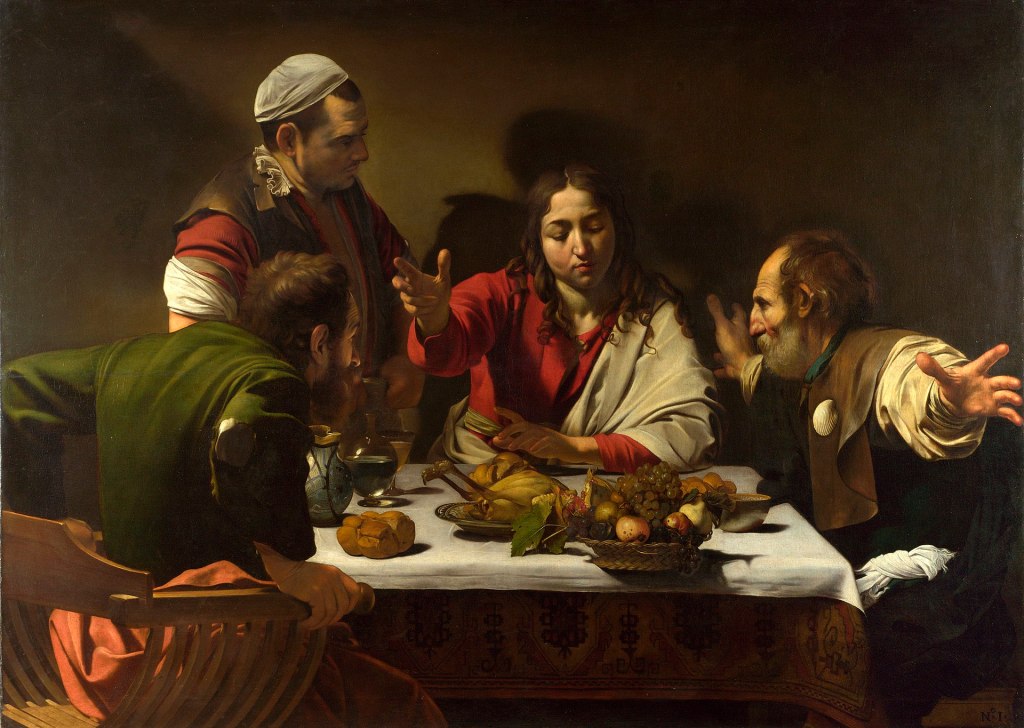
“Supper at Emmaus” by renowned painter Caravaggio from en.wikipedia.org. See the emotion depicted by Caravaggio with his trademark of masterful play of light and shadows. At the center is the Risen Lord blessing the bread that caught the two disciples who are seated in disbelief, one outstretching his arms and the others pushing back in his chair. The third character in the painting is the innkeeper unaware of the significance of the gesture of Jesus. It was at this instance that the two disciples recognized Christ as the traveling man with them to Emmaus.
Human transformation happens only in Christ, with Christ and through Christ in the Eucharist where we also experience a reversal of roles in our relationships with God and with others. Notice how the attitudes and perspectives of the two disciples changed when Jesus broke the bread. Remember it was the two disciples who invited Jesus inside to stay because it was getting dark, hosting a meal for him as their guest but that changed at the table: the two disciples ended up as guests of Jesus who merely joined them in their journey!
And it happened that, while he was with them at table, he took bread, said the blessing, broke it, and gave it to them. With that their eyes were opened and they recognized him, but he vanished from their sight. Then they said to each other, “Were not our hearts burning within us while he spoke to us on the way and opened the scriptures to us?” So they set out at once and returned to Jerusalem where they found gathered together the eleven and those with them who were saying, “The Lord has truly been raised and has appeared to Simon!” Then the two recounted what had taken place on the way and how he was made known to them in the breaking of the bread.
John 21:30-35
One thing I have found in life these past 25 years as a priest is that we can only realize and understand, even see the clearer and bigger picture of our life later after so many years of series of trials and tribulations, joys and celebrations. And often, what we see is the Lord, the companionship of Jesus Christ even in those times we were in sin and away from him. St. Peter said it so well in the second reading that we are in a “sojourning, realizing that you were ransomed from your futile conduct with the precious blood of Christ” (1 Pt. 1:17, 18, 19).
Photo by author, Sacred Heart Novitiate, Novaliches, QC, 20 March 2023.
Many times in life we feel as if we are really the captain of our ship, we direct everything, we control everything but it is actually Jesus. There is always Christ our companion in this journey of life, our true host and we are his guests who shared himself with us on the Cross so we can share in the mystery and victory of his Resurrection. In being one with us in our brokenness, Jesus immediately vanishes the moment we recognize him so we may keep on following him by changing course and direction in our lives.
In this time when people have lost interests in the Church, the Sacraments especially the Holy Eucharist, and the Scriptures along with prayers and devotions, we who are inside the church especially us priests are reminded of this important truth by Jesus, that he is the one in command, he is our host. We only share him in our co-journeyers in life, he is the one who opens our eyes, the one who effects transformation and changes within us. Not us.
Are we one with Jesus, especially in the Eucharist we manipulate so much with our many rituals and acts not necessary? See that the more we manipulate the Mass and other devotions, the more Christ disappears and persons especially priests become the focus.
In Emmaus, Jesus walked with the two disciples going the opposite direction to lead them back and never the other way around as it happens when we priests and volunteers are the ones who mislead people away from Jesus with our lack of warmth and charity for people like the unchurched.
Jesus is truest in the Eucharist when we touch people literally with our hands, when we get our hands dirty in taking care of the sick and needy, when we are truly present with them especially in their griefs, emptiness and sinfulness. That is when they experience, not just know that Jesus is real and true in the Eucharist when they first experience him in us his disciples, in our companionship and compassion with those suffering.
Nobody is perfect. As St. Peter had noted in the first reading, we are all responsible for the suffering and death of Jesus with our sinfulness; however, God’s love for us is far greater than our sins so that in our darkness and emptiness, we are able to see and have fulfillment in Jesus his Son. Amen. Have a blessed week!
Photo by author, Sacred Heart Novitiate, Novaliches, QC, 20 March 2023.