The Lord Is My Chef Breakfast Recipe for the Soul by Fr. Nicanor F. Lalog II
Saturday, Feast of St. James the Greater, Apostle, 25 July 2020
2 Corinthians 4:7-15 ><}}}*> >><}}}*> >>><}}}*> Matthew 20:20-28
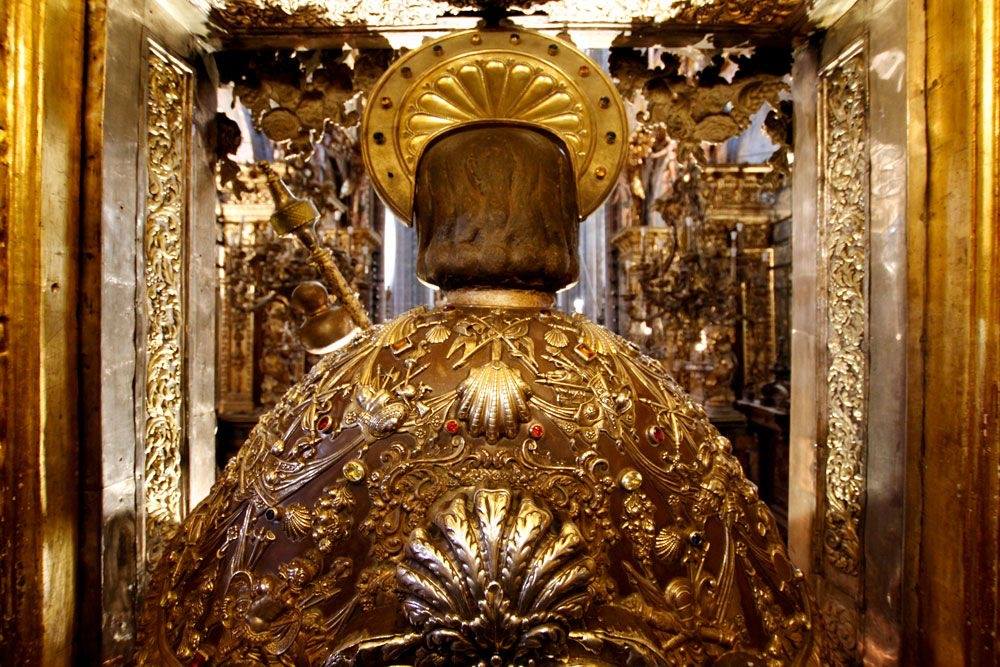
Facade of “Santiago de Compostela” in Spain in honor of St. James the Greater. Photo courtesy of Fr. Gener Garcia during their “El Camino de Santiago de Compostela”, May 09 to June 05, 2019.
Glory and praise to you, Lord Jesus Christ who had called and given us the Apostles as foundations of your Holy Church as we celebrate today the feast of St. James the Greater, the first bishop of Jerusalem and the first among the Twelve to die a martyr.
In him, O Lord, you gave us an image of hope in you, of how we can grow in holiness in you.
Through St. James the Greater, you have shown us your kindness in joining us in our earthly pilgrimage, slowly making us realize how we must adhere to you more closely to finally make it to our final destination in your kingdom in heaven.
Jesus said in reply, “You do not know what you are asking. Can you drink the chalice that I am going to drink?” They said to him, “We can.” He replied, “My chalice you will indeed drink, but to sit at my right and at my left, this is not mine to give but is for those for whom it has been prepared by my Father.”
Matthew 20:22-23
Your kindness is very evident, sweet Jesus.
I really wonder how you felt when the mother of James and John asked you that her sons be seated “one at your right and the other at your left in your kingdom” (Mt.20:21).
You were so kind to simply tell her and her sons, “You do not know what you are asking.”
Photo by Fr. Gener Garcia, image of Santiago de Compostela in Spain, 2019.
So many times, Lord, like St. James, we ask so many things from you, even demanding from you in exchange of what we believe as too great we have given you. You perfectly know so well that we do not know what we are asking at all. You know how we are blinded by fame and honor, power and wealth – things that do not matter at all in your kingdom.
You are so gentle in reminding us about the deeper realities of life, of discipleship by simplifying your demands, “Can you drink the chalice that I am going to drink?” to which we are often so naive, even oblivious for good reasons. Primarily because, we really do not know what we are asking.
And that’s when you are kindest of all, sweet Jesus: like with St. James and his brother St. John, you invite us “to drink the chalice you are drinking” by assuring us it can be done, that it is very possible, that in fact, that is the greatest honor of being with you, to drink from your chalice – without letting us know right away what it meant! St. John eventually realized and wholly accepted what you meant of drinking in your chalice when he became the first to share in your passion and death during the persecution by King Herod Agrippa (Acts 12:1-1).
Slowly, you make us realize too what is to drink in your chalice as we continue life’s journey with you, most especially into our inner self where we eventually find and rest in you when the goings get tough and rough.
It is total kindness on your part Lord to show us the beauty of sharing a meal with you, of sharing in your mission, of sharing in your life and most especially of sharing in your death that we make it with you to your kingdom.
Like St. James the Greater, continue to be kind with us, Lord, accompanying us in this journey.
In the same manner, make us kind to one another too like St. James the Greater who offered his life for the early church, for being the first to drink from your chalice. Amen.
Photo by Fr. Gener Garcia, marker along the “El Camino de Santiago de Compostela”, 2019.
The Lord Is My Chef Breakfast Recipe for the Soul by Fr. Nicanor F. Lalog II
Wednesday, Week XIV, Year II in Ordinary Time, 08 July 2020
Hosea 10:1-3, 7-8, 12 <*(((><< >><)))*> Matthew 10:1-7
Photo by Dr. Mai B. Dela Peña, statues of the Twelve Apostles on the facade of the Church of our Lady of Montserrat in Spain, 2019.
How beautiful are your words today, dearest God our Father. You never fail to surprise me with your deep personal involvement with us all that you can capture exactly what is inside us without any doubt at all.
After praising Israel’s great achievements that have brought them material prosperity, you remain impartial and fair in pronouncing your judgement:
Israel is a luxuriant vine whose fruit matches its growth. The more abundant his fruit, the more altars he built. The more productive his land, the more sacred pillars he set up. Their heart is false, and now they pay for their guilt. God shall break down their altars and destroy destroy their sacred pillars.
Hosea 10:1-2
Indeed, only you can read our hearts, our inmost beings.
How many times have we been deceived by outward appearances like material prosperity in life, thinking these are the crowing glory of one’s great efforts in balancing prayer and work only to be rejected by God for their hard headedness and pride?
A heart that is false is also a heart that has turned away from you, O God; sometimes, these are not evident right away because a heart can always fake outside what is inside.
A heart that takes pride in its grand designs and visions is a heart that is false. Most of all, a heart that refuses to look into the pains and hurts of others, their shortcomings and sins, is a heart that is false because it denies humanity, its being a human flesh tormented by love amidst pains and sufferings. A heart that is false is a heart that refuses to see other hearts with many hurts because it believes more with its self than with God’s love and mercy.
A heart that is false is a heart that has refused to grow and outgrow its previously held convictions and beliefs, more intent in looking at its own heart than into Christ’s meek and humble heart, eventually betraying Jesus and loved ones.
Incline our hearts into the Father’s loving heart, dear Jesus, and give us a heart that is both true and humble, accepting our many limitations, full of hope in becoming a better person in you like your Apostles who started out like us all with imperfect hearts. Amen.
The Lord Is My Chef Breakfast Recipe for the Soul by Fr. Nicanor F. Lalog II
Friday, Feast of St. Thomas, Apostle, 03 July 2020
Ephesians 2:19-22 >><)))*> <*(((><< >><)))*> <*(((><< John 20:24-29
Thank you very much, dearest Jesus, in founding your church upon your Apostles who were all like us: full of flaws and weaknesses, faults and failures, sins and imperfections.
Every time we celebrate their feasts, you remind us of your call to be near you like the Apostles despite our sins and inadequacies, to be sorry and make amends to return to you to be built into a dwelling of the Holy Spirit.
Brothers and sisters: You are no longer strangers and sojourners, but you are fellow citizens with the holy ones and members of the household of God, built upon the foundation of the Apostles and prophets, with Christ Jesus himself as the capstone. Through him the whole structure is held together and grows into a temple sacred in the Lord; in him you are also being built together into a dwelling place of God in the Spirit.
Ephesians 2:19-22
Help us, Lord Jesus, to be like St. Thomas your Apostle who came but doubted, returned and saw you a week later and believed, declaring “My Lord and my God” upon seeing you.
But what did St. Thomas really see that he believed?
Then he said to Thomas, “Put your finger here and see my hands, and bring your hand and out it into my side, and do not be unbelieving, but believe.” Thomas answered and said to him, “My Lord and my God!”
John 20:27
Through St. Thomas, you have blessed us and helped us, dear Jesus to believe in you not in seeing your face but more in seeing and feeling your wounds.
How wonderful, O Lord!
It is not your face but your wounds that enable us to recognize you and believe in you.
We will never see your face in this lifetime, Lord, but every day in our trials and sufferings, in our pains and hurts, in our wounds and woundedness, in our brokenness — there you are most present in us and among us.
Heighten our awareness of your presence, to accept pains and sufferings for your love and mercy so we may deepen our faith in you, following you always in your path of the Cross.
Like St. Thomas, may we follow you closely at your Cross, offering ourselves like you to be broken and shared so that in our wounds and woundedness, others may find healing, most especially you, sweet Jesus. Amen.
The Lord Is My Chef Breakfast Recipe for the Soul by Fr. Nicanor F. Lalog II
Monday, Solemnity of St. Peter and St. Paul, Apostles, 29 June 2020
Acts of the Apostles 12:1-11 >><)))*> 2 Timothy 4:6-8, 17-18 <*(((><< Matthew 16:13-19
Photo from americamagazine.org.
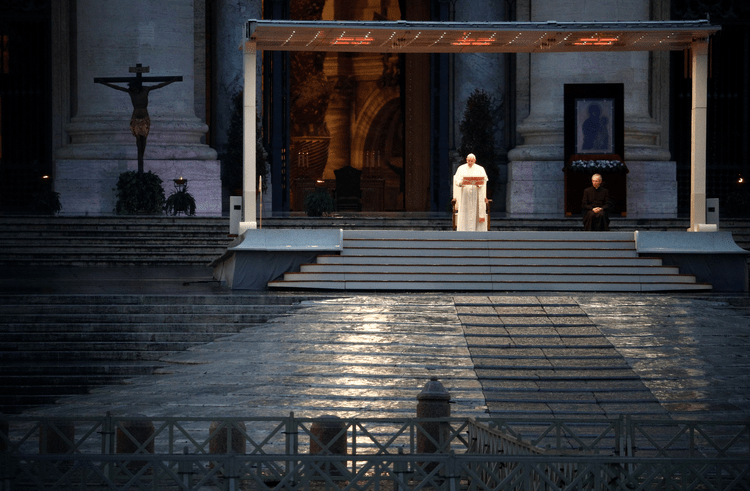
As I prepared to celebrate today’s Solemnity of the two pillars of the Church you have established, Lord Jesus Christ, that image of your Vicar and St. Peter’s successor, Pope Francis delivering his extraordinary Urbi et Orbi message last March 27, 2020 before an empty St. Peter’s Square flashed into my mind, something like a deja vu.
It is a holy deja vu, Lord, of St. Peter’s experience in prison on a Sunday night…
In those days, King Herod laid hands upon some members of the Church to harm them… he proceeded to arrest Peter also – it was the feast of the Unleavened Bread – he had him taken into custody and put in prison under the guard of four squads of four soldiers each. He intended to bring him before the people after the Passover. Peter thus was being kept in prison, but prayer by the Church was fervently being made to God on his behalf. Suddenly the angel of the Lord stood by him and light shone in the cell. He tapped Peter on the side and awakened him, saying, “Get up quickly.” The chains fell from his wrists. The angel said to him, “Put hi on your cloak and follow me.” So he followed him out, not realizing what was happening through the angel was real; he thought he was seeing a vision.
Acts of the Apostles 12:1, 3-5, 7-9
It is happening again, Lord, when we are all in great darkness due to this COVID-19 pandemic.
How blessed are we, O Lord, here with us in the midst of this pandemic is Pope Francis, St. Peter’s successor and St. Paul’s reminder to continue in proclaiming your Gospel in season, out of season.
Keep him strong and inspired always in order to lead us through this dark 2020.
We pray, O dear Jesus, for our Church especially here in the Philippines.
Our churches remain closed, some of our leaders are under attack while some of them along with our fellow workers are so afraid, so timid, abandoning their flock in this crucial moments of tests. Others are so concerned with trivial things, pursuing positions, fame, and wealth.
Have mercy on us, Jesus in veering away from your person and your Cross.
Strengthen us your Church, Lord, especially Pope Francis and all the bishops and priests, to always be aware of the angels you are sending us to deliver us from so many dangers in this time of crisis.
May we avoid “over thinking” that results into “analysis paralysis” that we forget to focus and do the more important things at this time which is to accompany, to be one with your flock now under various attacks not only by the corona virus but the diseases of indifference and convenience.
May we your body, the Church continue to pray with confidence, remembering your own pasch that brought us to salvation as we thank you too in keeping us safe and alive since March.
Give us the courage of St. Paul to take this period of pandemic and crisis as a form of pasch for each one of us, that we may willingly die in our selves and offer ourselves to you through others as an offering through worship with our loving service to one another.
May we keep our sights focused on you alone, Lord Jesus, the Christ of the living God sent to make us one.
Like St. Peter and St. Paul, though they were poles apart in their personalities and backgrounds, they were united in serving you, working for you by seeking only your face, your voice, your will and your presence.
May we keep in mind that when we fail to know you, Lord, that is when people fail to know and meet you too like the people of your time who claimed you were one of the prophets
Yes, the situations today may be like a holy deja vu from the past but you are definitely and truly present among us in this time of crisis.
St. Peter and St. Paul, pray for us!
Amen.
St. Peter by ecclesiastical artist Willy Layug at the Malolos Cathedral.
St. Paul by ecclesiastical artist Will Layug at the Malolos Cathedral.
Quiet Storm by Fr. Nicanor F. Lalog II, 11 June 2020
Painting by Raphael (1515) of St. Paul preaching at Areopagus in Athens, Greece. From wikipedia.
With houses of worship still closed despite the opening of most business establishments, here is the final installment of reflection in our series on how the life and teachings of St. Paul may help us in our ministry during this time of COVID-19 amid a perceived government “persecution” of the Catholic Church.
There is no doubt that like during his time, St. Paul would be using modern means of communication to preach the Gospel of Jesus Christ especially in this most trying time of our history, using the internet as the new “Areopagus” with social media in particular.
Then Paul stood up at the Areopagus and said: “You Athenians, I see that in every respect you are very religious. For as I walked around looking carefully at your shrines, I even discovered an altar inscribed, ‘To An Unknown God.’ What therefore you unknowingly worship, I proclaim to you. The God who made the world and all that is in it…”
Acts of the Apostles 17:22-24
Social Communication
Perhaps before we go into our reflection, it is imperative especially for bishops and priests to be reminded anew of some important terms in communications; this is more than about names or nomenclature because for as long these terms of communications are not clear with us, all our evangelization efforts would be askewed as it is now showing with an explosion of online Masses and other religious celebrations.
First priority is to stop using the words “mass media” and even “social media” in our church communications because these are very limited in scope and context.
It is important to note that in the 2000-year history of the Church, it was only in Vatican II that we have issued a conciliar document on communication wherein the Fathers also introduced the term social communication as a new name for communications in the Church.
How sad that there are still bishops and priests using the terms “mass media” or “media” and lately “social media” when more than 50 years ago the Church through the inspiration of the Holy Spirit coined social communication to refer to “the communication of and in human society including all the ways and means used in this process” (Fr. Franz-Josef Eilers, svd, 2009 BISCOM-FABC, Bangkok).
Social communication is a very prophetic term because it is theological and rooted in God who is communication himself, sharing with us his power to communicate so we may also communicate with him and with others. Most of all, God continues to communicate with us and from that lies our task as a Church to communicate him to the world.
This is the reason why we have to keep on using this term “social communication” in our Church communications to keep us Christocentric, meaning, every communication in the Church and by the Church has Jesus as Message.
And that is essentially the kind of communication process followed by St. Paul the Apostle. In fact, reviewing his letters and the various accounts about him would show us that early, this great apostle has been into social communication, specifically “pastoral communication” that is an emerging field in Church communications whose realities have long been espoused by St. Paul himself.
Pastoral Communication
Pastoral communication is anchored on Jesus Christ, the “Good Shepherd” who sets himself as the norm and standard of our Church communications.
Jesus said, “I am the good shepherd. A good shepherd lays down his life for the sheep… I am the good shepherd, and I know mine and mine know me, just as the Father knows me and I know the Father; and I will lay down my life for the sheep.”
St. Paul has always been very clear with this in all his communications that towards the end of his life, he had beautifully written his disciple this wonderful piece:
Beloved: I charge you in the presence of God and of Christ Jesus, who will judge the living and the dead, and by his appearing and his kingly power: proclaim the word; per persistent whether it is convenient or inconvenient… For I am already being poured out like a libation, and the time of my departure is at hand. I have competed well; I have finished the race; I have kept the faith.”
2 Timothy 4:1-2, 6-7
Communicating Jesus Christ is always about self-sacrifice, about giving of one’s self like our Lord and Master. In whatever form of communication we use, it is always a call to “enflesh” the Word. In short, communication is spirituality that indicates the kind of relationship we have with God. How we reflect that relationship with God in words and in deeds, in our clothings and everything is communication.
Like St. Paul, he was able to offer himself wholly to God as reflected in his writings and preaching because he was more concerned with the needs of the flock and not with his own needs.
And this is where I sadly feel our bishops sorely absent and silent except for just two, Lingayen-Dagupan’s Archbishop Soc Villegas and Manila’s Apostolic Administrator Bishop Broderick Pabillo.
Where are the other bishops?
Business establishments are almost all opening, even dine-in restaurants and yet, until now for no valid reason, the government continues to ban religious mass gatherings except for maximum of ten persons in areas under GCQ.
When are the bishops and priests going to speak out against this and open the churches so people may be spiritually nourished?
What an auspicious time for the clergy and hierarchy to speak against this continued closure of churches as we are on the eve of our 500th year of Christianization when under serious persecution. Has the Church grown timid in the face of an unfriendly government?
Worst are some priests who seem to follow more the secular world in their digital presence but empty of Jesus Christ, concerned only with popularity measured in number of likes and shares as well as followers.
Many of us have become more of personalities than as priests and ministers, unconsciously trying to be more popular than the Lord himself that we no longer have sacrifice of the Mass but a variety show, complete with sound effects and digital characters, some wit dance numbers and raffles!
When God is displaced, then our love is misplaced, then, we lose all communications too.
Communication is more than the expression of ideas and the indication of emotion. At its most profound level it is the giving of self in love. Christ’s communication was, in fact, spirit and life. In the institution of the Holy Eucharist, Christ gave us the most perfect and most intimate form of communion between God and man possible in this life, and, out of this, the deepest possible unity between men. Further, Christ communicated to us His life-giving Spirit, who brings all men together in unity. The Church is Christ’s Mystical Body, the hidden completion of Christ Glorified who “fills the whole creation”. As a result we move, within the Church and with the help of the word and the sacraments, towards the hope of that last unity where “God will be all in all”.
Communio et Progressio # 11
From Google.
Problem with online Masses and religion
Every communication presupposes presence. That is essentially the meaning of God’s “I AM” in the burning bush to Moses and the “I AM” declarations by Jesus in the New Testament, especially in the fourth gospel where we find him saying “I am the good shepherd”.
Even St. Paul in his letters always began with his standard salutations like “I, Paul…” to indicate his very presence among his “parishioners”.
However, in the digital media, presence is not so essential and can even be faked both ways, either by being “taped” or “replayed” by viewers.
And there lies the great danger of online Masses and other celebrations: whether we like or not, online religious celebrations give the impressions on people that God is a “consummable”, a product or a show that can be had when most convenient to us like video on demand or the streamed shows of Netflix.
That is why we have to open churches soon to stop these online Masses except for those in the Cathedrals and in existence long before COVID-19 that cater to the needs of the sick and elderly in their homes.
Pope Francis has always been clear with this, stressing that these online Masses and religious celebrations are very temporary due to the extraordinary situation brought about by the pandemic.
From Pinterest/Aleteia.
Imagine the problem at Corinth that reached St. Paul’s attention, prompting him to write them another letter to reprimand them but at the same time to encourage them to mend their ways. It was a problem of abusing the Eucharist when St. Paul was no longer with them.
It is the same thing happening in many of our online Masses that have become variety shows to impress viewers. Long before we got into this lockdown, many priests have crossed the boundaries without knowing they have made fools of themselves as they rely more on “likes”, on being viral or trending, dishing out shallow reflections covered with cute song numbers, litany of greetings on air, and so many other inanities that Jesus is lost in the process.
Unfortunately, many laypeople are now also having their own digital preaching or evangelization with their own “productions” taking their cue from their showbiz pastors.
If St. Paul were with us today, he would surely write again to express his dismay at the people seeking more of entertainment than having Jesus Christ.
“But I am afraid that, as the serpent deceived Eve by his cunning, your thoughts may be corrupted from a sincere and pure commitment to Christ. For I think that I am not in any way inferior to these “superapostles”. Even if I am untrained in speaking, I am not so in knowledge; in every way we have made this plain to you in all things.
2 Corinthians 11:3, 5-6
Church communication is Jesus Christ and his Cross as St. Paul reminds us in his writings (1Cor.15:1-3); it is never about techniques or gadgets.
Though we need to be present online, the cutting edge of real communication remains in pastoral communication that means being present with others who need us most including those without internet access, witnessing to the values of Jesus in relating with people, bringing people together into a communion and helping them find answers in their search for meaning and directions in life, in making the right choices and in living their convictions and faith.
What we are speaking of are real people, persons and lives that matter so much, more precious than goods and commodities.
Let us not fall into the trappings of this “media revolution” that made one futurologist describe our contemporary society as
Technologically Intoxicated Zone defined by the complicated and often paradoxical relationship between technology and our search for meaning.
John Naisbitt
According to Naisbitt and other experts, while people prefer quick fixes online of everything, from religion to nutrition, while at the same time fearing and worshipping technology that had blurred the distinction of what is real and fake, the more they live their lives distanced and distracted — something we are already seeing even before the coming of social distancing!
To communicate in the Church at this time is to imitate St. Paul: be present for and with the people wherein we help them find their way to God by being their companions and “co-journeyers” in life, witnessing to them the Cross of Jesus Christ with our very lives as an offering and sacrifice, not as a commodity or a show to be “liked” on Facebook and Instagram.
And, lest we forget, it is God whom people must follow and worship, not us.
So be imitators of God, as beloved children, and live in love, as Christ loved us and handed himself over for us as a sacrificial offering to God for a fragrant aroma.
Ephesians 5:1-2
Pope Francis praying before an empty St. Peter’s Square last March 27, 2020 at the height of COVID-19 in Italy.
Thank you very much, O dear Jesus, for the gift of your Apostles who became the foundations of your Church here on earth like St. Barnabas whose Memorial we celebrate today.
Despite his being a “Johnny come lately” replacing your betrayer Judas Iscariot, St. Barnabas proved to be a true apostle with his life of loving service to the early Church.
A Levite Jew from Cyprus who settled in Jerusalem, he was one of the first to embrace your new way of life, Lord, described by St. Luke as “a good man, filled with the Holy Spirit and faith” (Acts 11:24).
What is so wonderful, Lord, is how he lived out the meaning of his name “Barnabas” which is “son of encouragement” or “son of consolation”, exactly the kind of people we need at this time of corona pandemic and of so many social unrests and issues happening.
Send us, Jesus, more “Barnabas” – good men and women filled with your Holy Spirit and faith who would encourage people to do what is good, direct others into reason and understanding through cooperation and collaboration to hurdle all these troubles, not divisions.
Like St. Barnabas who searched and encouraged St. Paul in Tarsus to join the Christians at Antioch in proclaiming your gospel of salvation to those outside Israel including the Gentiles, may we gather and inspire other people into working together in this troubled time instead of fighting each other.
May our words also bring more encouragement to people to rise above each one’s differences in color and language and beliefs to seek what is common so we can collaborate more for peace and common good like what St. Barnabas did in convincing the Christians in Antioch to welcome their former persecutor, St. Paul.
Help us imitate the generosity of St. Barnabas in selling his piece of property so that the Apostles may have the means to provide for the needs of the early Church and thus, consoled the poor and widows.
Most of all, like St. Barnabas who participated at the Council of Jerusalem, may we seek ways in resolving issues among us that may lighten the burdens of people saddled with so many concerns in life without diluting the essence of being your follower, sweet Jesus.
Lastly, like St. Barnabas, may we always have an open heart for reconciling with others, in setting aside past misunderstandings like his falling out with St. Paul to be one again in your most holy name, O Lord Jesus Christ. Amen.
Quiet Storm by Fr. Nicanor F. Lalog II, 05 June 2020
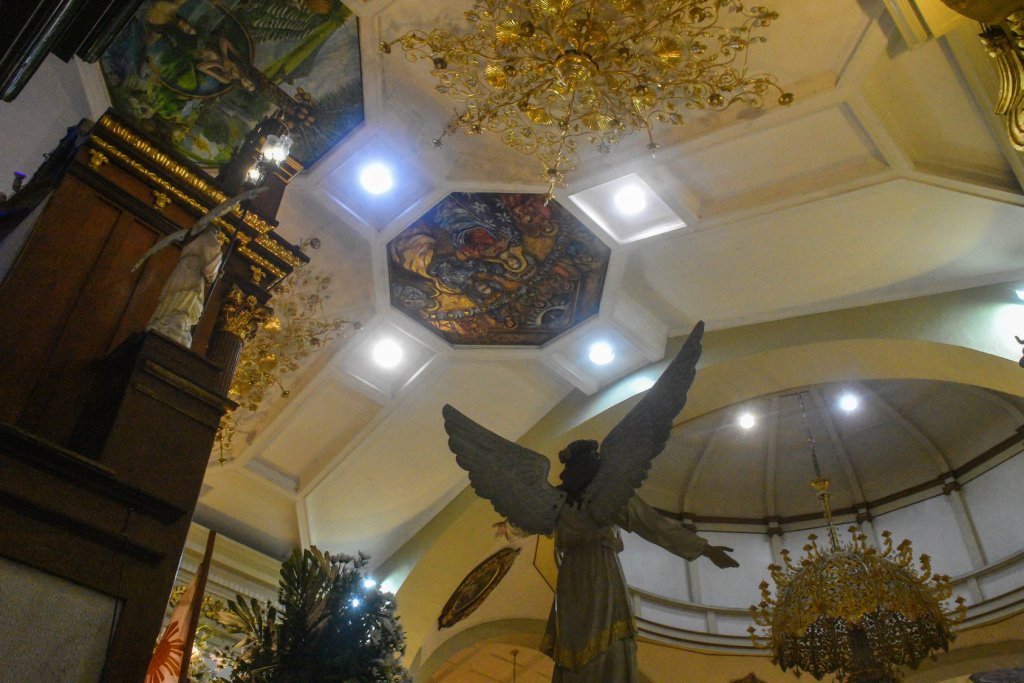
Ceiling of the main altar and dome of the Malolos Cathedral, 12 June 2019. Photo by Mr. Lorenzo Atienza.
The COVID-19 pandemic is the most severe test the Roman Catholic Church in the Philippines has ever faced, striking on the final year of her preparations for the quincentenary of the coming of Christianity in the country.
Making things worst is the “unfriendly” Administration whose policies contradict almost every known Church teaching, from the most basic GMRC and decency to the sanctity of human life.
In this three-part series of reflections, I wish to share with you my brother priests and lay partners in our ministry some lessons I have found in the life and teachings of St. Paul the Apostle that is centered on the person of Jesus Christ.
He never gave specific instructions and answers in dealing with the many issues and problems that confronted the early Church that may help us in the present generation; but, he had taught us to be always centered on Christ, measuring everything in him and his Cross.
Now I am reminding you, brothers, of the gospel I preached to you… Through it you are also being saved… For I handed on to you as of first importance what I also received: the Christ died for our sins in accordance with the scriptures.
1 Corinthians 15:1-3
A sculpture of St. Paul the Apostle upon the entrance to the Malolos Cathedral by the renowned ecclesiastical artist Mr. Willy Layug. Photo by Mr. Lorenzo Atienza, 12 June 2019.
The gospel thrives most in hostile environment
St. Paul lived in a time very similar with ours when great developments and changes were overtaking the world with the usual problems of poverty and inequalities due to growing materialism, and persecution of the Church.
Instead of seeing them as problems, St. Paul saw them as opportunities to spread the Gospel because his sole focus was the Lord Jesus himself and his Cross.
In fact, all who want to live religiously in Christ Jesus will be persecuted. But wicked people and charlatans will go from bad to worse, deceivers and deceived. But you remain faithful to what you have learned and believed…
2 Timothy 3:12-14
When the former Mayor of Davao City assumed the presidency and started lashing out us priests and bishops with his profanities and vitriol including blasphemies against God and Pope Francis, we all expressed our indignation and opposition.
And rightly so! – even in fighting for Kian and those fallen by tokhang as well as the victims of injustice and fake news.
As days moved into months and years, with more vulgarities and lies dished out by the man at Malacañang, there also appeared some silver linings over Pasig River but many of us in the clergy have refused to see and admit— that some of his accusations are true. Although these are more of the exception than the rule, there are indeed some priests leading inauthentic lives far from their vows of poverty and celibacy with others pretending to be shepherds of souls who do not smell like their sheep because they are more keen in amassing wealth and gaining fame and popularity.
Worst of all are those who have sold their souls to politicians for some petty favors and a taste of power, of being seen with the rich and famous.
I am not putting down our priests. There are more good and holy priests working faithfully and silently not only in our country but everywhere in the world.
What I am trying to say since our “persecution” by the present Administration began, this is a wake-up call for us priests to shape up and regain our bearings in Christ.
Actually, it had been coming since the previous Administration, too. For the longest time we have been lording it over the people with our abuses and excesses hiding in the excuse as “alter Christus” but, now the changing times have finally caught on us, demanding more transparency and honesty on our part.
Like with the experience of St. Paul, these situations of “persecution” with a pandemic are calls for our conversion in Christ anew, something that Pope Emeritus Benedict XVI has been insisting that we priests go back to Jesus, especially in the Blessed Sacrament.
Photo by Mr. Lorenzo Atienza, ordination to the diaconate at the Malolos Cathedral, 12 June 2019.
Like St.Paul, priests are first a witness of Jesus Christ
This time of crisis due to COVID-19 and the continued “persecution” by an unfriendly administration that has continued to keep our churches closed for no sane reason at all can be a grace-filled moment for us if we allow Jesus Christ to shine in us by bringing hope and inspiration to our people saddled with so much burdens due to COVID-19 and the government’s inconsistencies in managing the pandemic.
It is here where we are most expected by the people to be at the forefront but – unfortunately – we have been silent in asserting our religious freedom to worship within the rules and protocols to prevent the spread of COVID-19.
Only Bishop Pabillo of Manila had spoken against the “laughable policy” of allowing only five and ten people inside the church in areas under ECQ and GCQ, respectively.
Making matters worst was how the CBCP issued its statement reminding us priests and bishops to follow the directives and guidelines set by the Inter-Agency Task Force (IATF) on Emerging Infectious Diseases regarding the celebration of the Mass! Instead of supporting the lone voice championing our rights to celebrate Mass in public, the CBCP just repeated the same situation when Jesus saw the crowd who have followed him to the wilderness, “sheep confused and lost without a shepherd” (Mt.9:36).
How sad we have given up the fight so easily to have our churches opened in the transition from ECQ to GCQ.
More sad now are the bishops and priests again in the news – filled with fire and courage – speaking out loudly against the anti-terror bill recently passed by Congress.
No problem fighting oppressive measures by any administration but to miss out that same fervor and zeal for our own rights and duties to provide the essential spiritual nourishment of our people at this time is something disturbing, something St. Paul would not allow to happen.
Yes, it is part of our priesthood to fight for people’s rights but always in the light of Jesus Christ.
St. John Paul II had shown us in recent history what it is when while still a priest and later as bishop in Poland, he spoke only of the words of God in the scriptures and fruits of his prayer that he was able to tore down the Iron Curtain his homeland and eventually throughout Europe.
St. Paul never played partisan politics like our Lord Jesus Christ, considering how they have lived at a time rife with occasions to be politicized. He never missed addressing social issues in the light of the gospel as he wrote one of his friends – presumably rich and influential – regarding a slave named Onesimus:
To Philemon, our beloved and co-worker… Perhaps this is why he was away from you for a while, that you might have him back forever, no longer as a slave but more than a slave, a brother, beloved especially to me, but even more so to you, as a man and in the Lord.
Philemon 1, 15-16
How sad when we priests speak of so many things like current events and other trends without giving the people the Word of God.
It is even a scandal when we priests are more busy with social advocacies forgetting we are first of all a “man of the Word” according to Vatican II.
Let us not forget St. Paul’s reminder that though we are in the world, we are not of the world:
Do not conform yourself to this age but be transformed by the renewal of your mind, that you may discern what is the will of God, what is good and pleasing and perfect.
Romans 12:2
The gospel of Christ thrives most in hostile environment and situations but that does not mean going out like activists with clenched fists and raised voices walking the streets. We are not going to change the world; Jesus will — if we can proclaim him in words and in deeds.
The other week as we neared the conclusion of the Easter Season, one of the first readings on weekdays touched me so much, wondering if we priests can also say with all sincerity St. Paul’s words at Miletus when he spoke to the presbyters of the Church of Ephesus before sailing to Jerusalem for his trial:
So be vigilant and remember that for three years, night and day, I unceasingly admonished each of you with tears… I have never wanted anyone’s silver or gold or clothing. You know well that these very hands have served my needs and my companions. In every way I have shown you that by hard work of that sort we must help the weak, and keep in mind the words of the Lord Jesus…
Acts of the Apostles 20:31, 33-35
According to St. Luke, after those words, the people wept loudly as they threw their arms around St. Paul and kissed him. He was so loved by the people because of Jesus Christ, not of his very self.
Surely, like Jesus, St. Paul stretched out his arms and hands more to pray over people after hearing their confessions and problems, spent longer hours praying in silence or writing his letters to the various churches he founded, strengthening and inspiring them in Christ than be out on the streets seething with anger against any despot and regime.
On Monday our second part in the series, Fighting our detractors like St. Paul in time of COVID-19.
St. Paul saying goodbye to Ephesians at Miletus on his way to Jerusalem to face trial.
The Lord Is My Chef Breakfast Recipe for the Soul, Feast of St. Matthias, Apostle, 14 May 2020
Acts of the Apostles 1:15-17, 20-26 ><)))*> ><)))*> ><)))*> John 15:9-17
Photo by author, Mirador, Baguio City, 2019.
Lord Jesus Christ, as we celebrate today the feast of St. Matthias your Apostle chosen to replace your betrayer Judas Iscariot, you remind us anew that in every call in life, it is you -the Caller – who matters most not the mission at all.
It does not really matter if we play at the starting line-up or the second team or substitute like St. Matthias who was originally one of your 72 disciples who have witnessed your works and preaching until your Resurrection and Ascension.
The only thing is he was never a part of those closest to you as one of the Twelve.
But, nothing is “second-rate” when we see you Jesus in every task, every mission given to us.
From Google.
Like St. Matthias, may we always be counted as one of your faithful followers ready to counter the evils by some of our traitorous and unworthy members of the Church like Judas Iscariot with our life of witnessing for you our Caller.
Thank you for the gift of being called by you as a friend.
May we always have the courage to remain faithful to you, Jesus, so we may accomplish our call. Amen.
The Lord Is My Chef Breakfast Recipe for the Soul, Saturday, Feast of St. Mark the Evangelist, 25 April 2020
1 Peter 5:5-14 ><)))*> ><)))*> ><)))*> Mark 16:15-20
Statue of St. Mark and his symbol the lion below him at the western facade of St. Mark Cathedral in Venice, Italy. Photo from Google.
Lord Jesus Christ, as we move into the final week of April and face – with dismay – the extension of this enhanced community quarantine into May 15, the celebration of the feast of your evangelist St. Mark today gives us the much needed boost to persevere in these trying times.
In writing the first gospel account, St. Mark stressed two important things that are very helpful for us today in this time of the corona virus: urgency in proclaiming your gospel and trust in you.
It is something very similar to Stephen Covey Jr.’s concept of “the speed of trust” that when there is trust among people like in a relationship or a team, speed goes up wherein costs are minimized, productivity is increased due to trust.
Give us the grace to trust in you, Lord Jesus, so we can urgently proclaim your gospel of salvation most especially at this time when people are feeling worn out by this lockdown.
So many people are already suffering not only physically but also emotionally and spiritually.
Help us to bring them more joy and hope, healing and renewal not only through our gifts and financial aid but also with our presence and concern for them.
Let us not worry in doing your work with the assuring words of St. Peter in the first reading:
The God of all grace who called you to his eternal glory through Christ Jesus will himself restore, confirm, strengthen, and establish you after you have suffered a little.
1 Peter 5:10
Like in the beginning of the gospel by St. Mark, may we always proclaim your good news Lord whenever and wherever there is a wilderness, emptiness, and weariness among peoples for you are always faithful in enabling us to fulfill your work. Amen.
Nuns bringing relief goods to remote villages in this time of Luzon-wide lockdown due to COVID-19.
Tonight is “Spy Wednesday” – the night traitors and betrayers are put on the spotlight because it was on this night after Palm Sunday when Judas Iscariot struck a deal with the chief priests to hand them over Jesus for 30 pieces of silver (Mt. 26:14-16).
The “Tenebrae” is celebrated in some churches when candles are gradually extinguished with the beating of drums and sounding of matraca to evoke silence and some fear among people as they leave in total darkness to signal the temporary victory of evil in the world for tomorrow we enter the Paschal Triduum of Holy Thursday, Good Friday and Easter Vigil of the Lord.
From Google.
Darkness generally evokes evil and sin, uncertainties and sufferings. But, at the same time, darkness preludes light!
That is why Jesus Christ was born during the darkest night of the year to bring us light of salvation.
Beginning tonight, especially tomorrow at his agony in the garden, we shall see Christ entering through darkness reaching its climax on Friday when he dies on the cross with the whole earth covered in darkness, rising on Easter in all his glory and majesty.
Our present situation in an extended Luzon-wide lockdown offers us this unique experience of darkness within and without where we can learn some important lessons from the Lord’s dark hours beginning tomorrow evening of his Last Supper.
St. John gives us a glimpse into how we must deal with life’s darkness that plagues us almost daily with his unique story of the Lord’s washing of his disciples’ feet on the night he was betrayed.
Before the feast of Passover, Jesus knew that his hour had come to pass from this world to the Father. He loved his own in the world and he loved them to the end. The devil had already induced Judas, son of Simon the Iscariot, to hand him over. So, during supper… he rose from supper and took off his outer garments. He took a towel and tied it around his waist. Then he poured water into a basin and began to wash the disciples’ feet and dry them with the towel around his waist. He came to Simon Peter…
John 13:1-2, 4-6
Photo from aleteia.org.
It is very interesting to reflect how Judas Iscariot and Simon Peter dealt with their own inner darkness on that night of Holy Thursday when Jesus was arrested.
Though Judas Iscariot and Simon Peter are poles apart in their personalities, they both give us some traits that are so characteristic also of our very selves when we are in darkness. In the end, we shall see how Jesus turned the darkness of Holy Thursday into becoming the very light of Easter.
Getting lost in darkness like Judas Iscariot
Right after explaining the meaning of his washing of their feet and exhorting them to do the same to one another, Jesus begins to speak of Judas Iscariot as his betrayer.
When he had said this, Jesus was deeply troubled and testified, “Amen, amen, I say to you, one of you will betray me …It is the one to whom I hand the morsel after I had dipped it.” So he dipped the morsel and handed it to Judas, son of Simon the Iscariot. After he took the morsel, Satan entered him… and left at once. And it was night.
John 13:21, 26-27, 30
Photo from desiringgod.org
The scene is very dramatic.
Imagine the darkness outside the streets of Jerusalem in the stillness of the night and the darkness inside the Upper Room where they were staying.
More darker than that was the darkness among the Apostles not understanding what Jesus was saying about his betrayer because they thought when Judas left, he was being told to buy more wine or give money to the poor!
Most of all, imagine the darkness within Judas.
To betray means to hand over to suffering someone dear to you.
That’s one darkness we always have within, of betraying Jesus, betraying our loved ones because we have found somebody else to love more than them. Satan had taken over Judas. The same thing happens to us when we sin, when we love someone more than those who truly love us or those we have vowed to love always.
And the darkest darkness of all is after handing over our loved ones, after dumping them for something or somebody else, we realize deep within the beautiful light of truth and love imprinted in our hearts by our betrayed loved ones – then doubt it too!
The flickering light of truth and love within is short lived that we immediately extinguish it, plunging us into total darkness of destruction like Judas when he hanged himself.
See how Judas went back to the chief priests because “he had sinned”, giving them back the 30 pieces of silver to regain Jesus.
Here we find the glow of Jesus, of his teachings and friendship within Judas still etched in his heart — the light of truth and love flickering within.
Any person along with their kindness and goodness like Jesus, our family and true friends can never be removed from one’s heart and person. They will always be there, sometimes spurting out in our unguarded moments because they are very true.
That is the darkest darkness of Judas – and of some of us – who think we can never be forgiven by God, that we are doomed, that there is no more hope and any chance at all.
See how the evangelist said it: “Judas left at once. And it was night.”
And that is getting lost in darkness permanently, eaten up by darkness within us because we refuse to believe in the reality of a loving and forgiving God who had come to plunge into the darkness of death to be one with us so we can be one in him. What a loss.
Groping in the dark into the light like Peter
Photo by author, Church of Gallicantu, Jerusalem where the cock crowed after Peter denied Jesus the third time, May 2017.
Of the Twelve, it is perhaps with Simon Peter we always find ourselves identified with: the eager beaver, almost a “bolero” type who is so good in speaking but many times cannot walk his talk.
“Master, are you going to wash my feet?” Jesus answered and said to him, “What I am doing, you do not understand now, but you will understand later.” Peter said to him, “You will never wash my feet.”
John 13:6-8
Here is Peter so typical of us: always assuming of knowing what is right, which is best, as if we have a monopoly of the light when in fact we are in darkness.
See how during the trial of Jesus before the priests, Peter denied him thrice, declaring he never knew Jesus while outside in the dark, completely in contrast with Jesus brilliantly answering every question and false accusation against him inside among his accusers!
Many times in our lives, it is so easy for us to speak on everything when we are in our comfort zones, safe and secured in our lives and career. But when left or thrown out into the harsh realities of life, we grope in the darkness of ignorance and incompetence, trials and difficulties.
How often we are like Peter refusing Jesus to wash our feet because we could not accept the Lord being so humble to do that simply because he is the Lord and Master who must never bow low before anyone.
And that is one darkness we refuse to let go now shaken and shattered by the pandemic lockdown! The people we used to look down upon are mostly now in the frontlines providing us with all the comforts we enjoy in this crisis like electricity, internet, security, food, and other basic services.
Bronze statue of the call of Peter by Jesus. Photo by author, May 2017.
We have always thought of the world, of peoples in hierarchy, in certain status where there are clear delineations and levels of importance, totally forgetting the lessons of Jesus of being like a child, of service and humility: “whoever wants to be great must be the least and servant of all.”
According to Matthew and Luke, Peter realized his sins – the darkness within him – of denying Jesus thrice after the cock crowed that he left the scene weeping bitterly, feeling so sorry. Eventually after Easter, Peter would meet Jesus again on the shores of the Lake of Tiberias, asking him thrice, “do you love me?”
Peter realized how dark his world has always been but in that instance when he declared his love that is so limited and weak did he finally see the light of Christ in his love and mercy!
Unlike Judas, Peter moved out of darkness and finally saw the light in the Risen Lord right in the very place where everything started when he was called to be a fisher of men, in his humanity as he was called by his original name, “Simon, son of Jonah, do you love me?”.
Human love is always imperfect and Jesus knows this perfectly well!
The best way to step out of darkness within us is to be like Simon — simply be your imperfect self, accepting one’s sins and weakness for that is when we can truly love Jesus who is the only one who can love us perfectly.
Overcoming darkness in, Jesus, with Jesus, through Jesus
Though the fourth gospel and the synoptic gospels of Matthew, Mark, and Luke differ in providing us with the transition from the Upper Room of the Last Supper into the agony in the garden, the four evangelists provide us with one clear message at how Jesus faced darkness: with prayer, of being one in the Father.
Even on the cross of widespread darkness, Jesus spoke only to pray to the Father.
Then Jesus came with them to a place called Gethsemane, and he said to his disciples, “Sit here while I go over there and pray.” He took along Peter and the two sons of Zebedee, and began to feel sorrow and distress.
Matthew 26:36-37
Photo by author, altar of the Church of All Nations beside the Garden of Gethsemane, May 2017. The church is always dimly lit to keep the sense of darkness during the Agony in the Garden of Jesus.
Before, darkness for man was seen more as a curse falling under the realm of evil and sin; but, with the coming of Jesus, darkness became a blessing, a prelude to the coming of light.
We have mentioned at the start of our reflection that Jesus was born during the darkest night of the year to show us he that is the light of the world, who had come to enlighten us in this widespread darkness, within us and outside us.
As the light of the world, Jesus was no stranger to darkness which he conquered and tamed in many instances like when they were caught in a storm at sea and in fact, when walked on water to join his disciples caught in another storm.
But most of all, Jesus had befriended darkness and made it a prelude to light.
How? By always praying during darkness. By prayer, it is more than reciting some prayers common during his time as a Jew but as a form of submission to the will of the Father. Jesus befriended darkness by setting aside, forgetting his very self to let the Father’s will be done.
Bass relief of agony in the garden on the wall of the Church of All Nations at Gethsemane. Photo by author, May 2019.
This he showed so well in two instances, first on Mount Tabor where he transfigured and second in Gethsemane before his arrest.
In both events, Jesus showed us the path to overcoming darkness is always through prayers, of being one in the Father.
It is in darkness when God is most closest to us because it is then when we get a glimpse of himself, of his love and mercy, of his own sufferings and pains, and of his glory.
This is something the three privileged disciples – Simon Peter, James and his brother John – did not realize while being with Jesus at both instances until after Easter. We are those three who always fall asleep, who could not keep with praying in Jesus, with Jesus, and through Jesus.
It was in the darkness of the night when Jesus spent most of his prayer periods, communing with the Father up in a mountain or a deserted place.
On Mount Tabor, Jesus showed his coming glory while in Gethsemane he showed his coming suffering and death. But whether in Gethsemane or on Mount Tabor, it is always Jesus we meet inviting us to share in his oneness with the Father, in his power in the Holy Spirit to overcome every darkness in life.
And the good news is he had already won for us!
Photo by Mr. Raffy Tima of GMA-7 News of Mt. Samat with the Memorial Cross across the Manila Bay following clear skies resulting from the lockdown imposed since March 17, 2020.
In these extended darker days of quarantine period, let us come to the Lord closer in prayer to. experience more of his Passion and Death, more of his darkness so we may see his coming glory when everything is finally cleared in this corona pandemic.
Prayer does not necessarily change things but primarily changes the person first. And that is when prayer changes everything when we become like Jesus in praying.
Jesus is asking us to leave everything behind, to forget one’s self anew to rediscover him in this darkness when we get out of our comfort zones to see the many sufferings he continues to endure with our brothers and sisters with lesser things in this life, with those in total darkness, with those groping in the dark.
Now more than ever, we have realized the beauty of poverty and simplicity, of persons than things.
And most especially of darkness itself becoming light for us in this tunnel.
May Jesus enlighten us and vanish all darkness in us so that soon, we shall celebrate together the joy of his coming again in this world darkened by sin. Amen.