Voice of God, Power of God

The Lord Is My Chef Breakfast Recipe for the Soul by Fr. Nicanor F. Lalog II
Thursday, Solemnity of the Birth of John the Baptist, 24 June 2021
Isaiah 49:1-6 ><}}}'> Acts 13:22-26 ><}}}'> Luke 1:57-66, 80
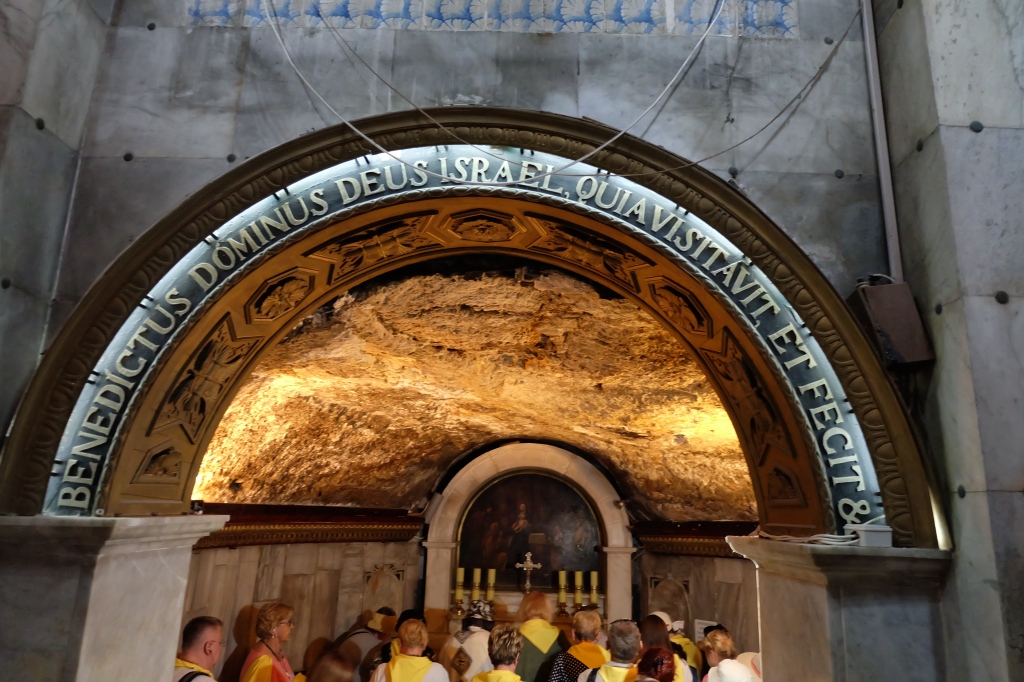
Photo by author, site where St. John the Baptist was born beside the Church in his honor in Judea, 2019.

Today’s celebration of the Solemnity of the Birth of St. John the Baptist reminds us of the very important grace and gift from God we take for granted and always abuse – our voice.

Also known as the “voice in the wilderness” who prepared the coming of Jesus Christ, St. John shows us even before his birth through his father Zechariah the proper use of this gift of voice from God.

Voice is power.

In the Book of Genesis, God created everything by simply saying “let there be…” and it comes into being. When Jesus came as the “the Word who became flesh”, he witnessed to us this immense power of the voice of God when he would simply speak to heal people, cast away evil spirits, and still the seas and quiet the storms.

Only us humans were gifted with this unique power of God to speak using the voice.

How sad that we have forgotten or have been totally unaware of the fact that we merely share in the power of God in speaking, in voicing out what is in our minds and in our hearts. Like freedom or the power to choose what is good, we have abused this power of the voice so evident in this digital age as we drown in a cacophony of voices from everybody wanting to be heard, wanting to rule.


And the tragedy is that 
those with the loudest voice and 
easy access to all kinds of media platforms 
are also the ones in power who only voice 
out their selfish interests like our politicians. 
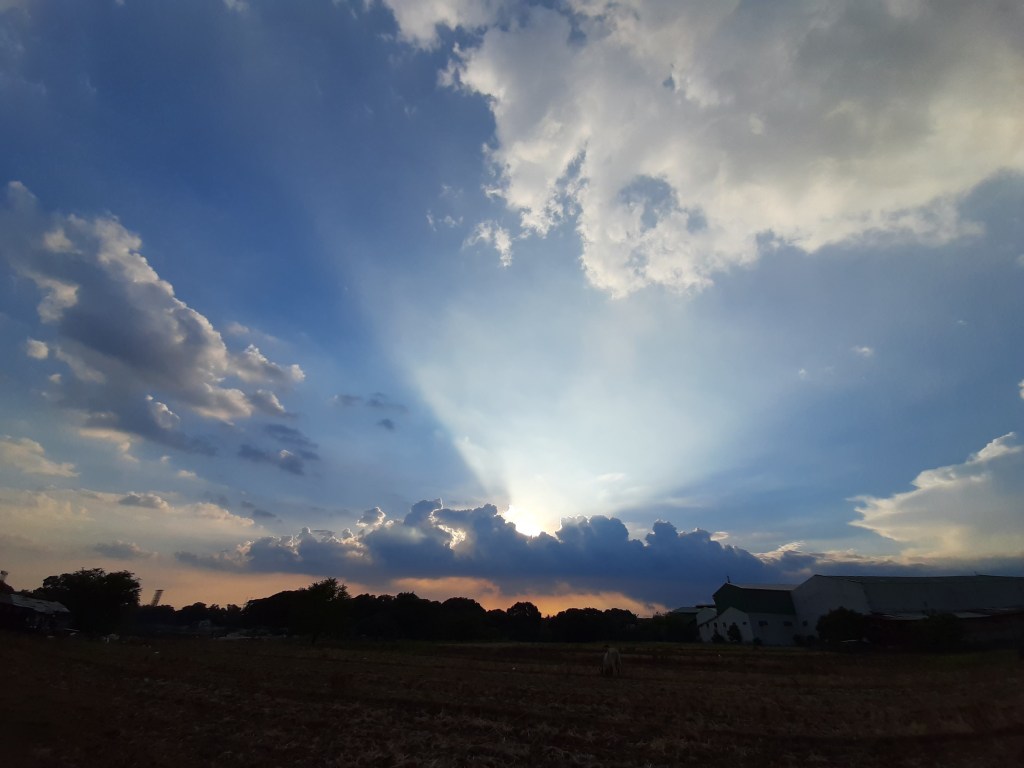
Photo by Ms. Ria De Vera, Bgy. Lalakhan, Santa Maria, Bulacan, June 2021.

And the tragedy is that those with the loudest voice and easy access to all kinds of media platforms are also the ones in power who only voice out their selfish interests like our politicians.

Have you noticed how most of the loud voices we hear these days come from those not involved at all in any kind of suffering? They are not only loud but also so quick to voice their views empty of any concern at all. Worst, many of these loud voices we hear come from people who have little or no concern at all for those truly in pain like the poor and marginalized who have remained voiceless in our society.

When they came on the eighth day to circumcise the child, they were going to call him Zechariah after his father; but his mother said in reply, “No. He will be called John.” So they made signs, asking his father what he wished him to be called. He asked for a tablet and wrote, “John is his name,” and all were amazed. Immediately his mouth was opened, his tongue freed, and he spoke blessing God.

Luke 1:59-60, 62-64

Silence is the voice of God.

At the eve of our celebration today, we have heard how the angel had made Zechariah deaf and mute after he doubted the good news announced to him of the coming birth of their son to be named as John.

Now after nine months of being silent, Zechariah recovered his voice and speech that he spoke blessing God.

Imagine the power and stature Zechariah must have commanded at that time: both he and his wife Elizabeth were from the priestly clans. They were like the royalty at that time, living in an affluent section of the country. Both were born into wealth and fame. And power.

Zechariah’s voice must be one of the most sought after in Judea with his wisdom and influence.

Suddenly gone when his very voice questioned the source of its power, God represented by Archangel Gabriel.

Photo by author, Church of St. John the Baptist, the Holy Land, 2019.

The experience of Zechariah teaches us of the value of silence that has become a very rare commodity these days.

Many of our misunderstandings are due to our lack of silence, of listening to what others are saying or telling us.


Contrary to what 
we also believe,
 silence is not emptiness 
but fullness:


Contrary to what we also believe, silence is not emptiness but fullness: it is different from being quiet when we do not simply speak but allow our minds to work on what we believe in or hold on to. Silence is trying to listen to every voice, especially the faintest ones that usually speak the truth. In the Bible, we find a common pattern in both the Old and New Testaments how God’s communication is preceded always with silence.

Zechariah was forced into silence to experience again its fullness, of being connected anew with God as it gave him opportunities to truly listen intently to God in prayers. That is why everyone was surprised not only when Zechariah confirmed the name of his son would be “John” but most of all when he spoke and his voice heard again by the people. According to Luke, Zechariah sang a blessing to God called the Benedictus.

Then fear came upon all their neighbors, and all these matters were discussed throughout the hill country of Judea. All who heard these things took them to heart, saying, “What, then, will this child be?” For surely the hand of the Lord was with him.

Luke 1:65-66

Becoming the voice of God like John the Baptist

See how Luke presented the scene in pure simplicity as if we were also there, everybody asking “what will this child be?” for surely the hand of the Lord was with him. The scene is packed with the power of God. No voices were heard except the few “pakialamera” or “mahadera” neighbors who wanted the child named Zechariah like his father.

Elizabeth was so cool but emphatic by declaring her son shall be named John. No debates nor arguments among the women who approached Zechariah – surely, not to ask him to voice his decision as he was deaf and mute at that time. Everybody was amazed when he asked for a tablet and wrote “John is his name”.

There was the deafening silence of God’s voice heard loud and clear, perhaps even for several days after the circumcision and naming of John.

“St. John Preaching In the Wilderness” by Anton Raphael Mengs (1728-1779), photo from commons.wikimedia.org

Such is the power of God, of his voice.

Always preceded by silence.

Never harsh nor imposing.

Soft but always felt, always consistent, very clear and simple.

Most of all, refreshing and blissful.

It is a voice kept in one’s heart, nurtured through time in prayer and simplicity of life until the listener becomes the speaker and carrier of the voice of God.

In our digital age where humans and machines speak with voices competing for our attention, we are reminded that the true power of the voice is not in its volume but in God himself who is also the message.

Like images, voices can also be enhanced with the help of modern technology and human ingenuity, especially by image makers and propagandists who are paid to advance one’s power and influence.

Let us be more discerning in listening to the many voices competing for our attention.

Let us begin first in that soft and feeble voice inside our hearts we disregard but consistently speaks to us daily. That voice could be God speaking to us.

Let us rediscover silence and the true power and beauty of the voice of God.

Recall how often in our lives and in human history, the most important voices ever heard, ever written come after long moments of silence, of reflections and listening to God and with others.

The child grew and became strong in spirit, and he was in the desert until the day of his manifestation to Israel.

Luke 1:80

Photo by Fr. Pop Dela Cruz, Binuangan Is., Obando, Bulacan, May 2021.

Participating in God’s choices

The Lord Is My Chef Breakfast Recipe for the Soul by Fr. Nicanor F. Lalog II
Friday in the Sixth Week of Easter, Feast of St. Matthias, Apostle, 14 May 2021
Acts 1:15-17, 20-26   ><)))'>  +  <'(((><   John 15:9-17
Photo by author, Pulilan Bypass Road, Bulacan, 2020.

If there is one thing we dread most in life, dear God our Father, it is making choices. You know it so well because day in, day out it is one thing we pray to you, that you guide us in making the right decision, in choosing the best and perfect choices in this life.

How beautiful to realize and learn from your words in Jesus Christ as we celebrate today the Feast of St. Matthias who replaced Judas Iscariot that it is not really us who make choices but you!

Most of all, you never went wrong in your choices, even with Judas Iscariot. He did not remain in Jesus and that is why he made the wrong and sinful choice of betraying the Lord.

And so first we pray to you today, our loving Father, through Jesus Christ, give us the grace to cooperate and participate in your choices for us so we may remain faithful in you and be fruitful too.

"It was not you who chose me,
but I who chose you and appointed you
to go and bear fruit that will remain,
so that whatever you ask the Father
in my name he may give you."
(John 15:16)

Nothing much is known about St. Matthias but all accounts of his missionary works indicate he nourished and enriched your choice of him in his whole life that he died witnessing the gospel. Like him, may we remain in you to keep our choices according to your holy will always.

At the same time, when given the task to make choices, in choosing people and course of actions to take, help us to be prayerful in discerning your will and choices too like St. Peter and his brother Apostles in finding Judas Iscariot’s replacement.

How wonderful is their prayer that indicated it was you, O Lord, who still made the choice and not them!

So they proposed two, 
Joseph called Barsabbas, 
who was also known as Justus,
and Matthias.  Then they prayed,
"You, Lord, who know the hearts of all,
show which one of these two you have chosen
to take the place in this...."
(Acts 1:23-24)

We pray today for people having a hard time praying to finally realize your choices for them; for those afraid to accept your choices; for those who keep on looking for other options despite your clear choice for them. Enlighten their minds and fill them with courage and trust in you. Amen.

Prayer to deal with life’s many questions

The Lord Is My Chef Breakfast Recipe for the Soul by Fr. Nicanor F. Lalog II
Feast of St. Philip and St. James the Less, Apostles, 03 May 2021
1 Corinthians 15:1-8   ><)))*> + <*(((><   John 14:6-14 
Photo by author, Pililla Wind Farm in Rizal, January 2021.

Lord Jesus Christ, you have taught me in my many experiences in life that a man is known by the questions he asks, not by the answers he gives. So often, the answers we have are always wrong or simply not true at all.

But, if we ask the right questions, even if there are no immediate answers or if we do not fully grasp and understand especially your answer, it is always more than enough than everything we need to know and realize in life.

So many times, we are afraid to ask you because we think more of our selves than of the truth that would set us free. Help us imitate your apostle St. Philip who dared to ask you again something you have been teaching them – and us! – yet have not fully understood yet. It is even doubtful if he really got what you meant when you answered him during the last supper which is exactly the same thing with us until now who forget and could not master the things you have been teaching us.

Philip said to Jesus, 
"Master, show us the Father, 
and that will be enough for us."
Jesus said to him,
"Have I been with you for so long a time 
and you still do not know me, Philip?
Whoever has seen me has seen the Father.
How can you say, 'show us the Father'?
Do you not believe that I am in the Father
and the Father is in me?
The words that I speak to you I do not speak on my own.
The Father who dwells in me is doing his works."
(John 14:8-10) 

Give us, Lord, that same courage and humility of St. Philip to keep on asking things we cannot understand, things we cannot dismiss, things that keep on bugging us because that in itself is a grace from you so that we may know you more, so we can love you more, and most of all, follow you more closely.

If St. Philip had not asked you that question – even if you seem to have sighed in exasperation, did you, Lord? – even us until know would have not realized that you are indeed the em-bodi-ment and the in-carna-tion of the Father in human form.

On the other hand, there is another question that we most of the time avoid confronting: the need to address difficult situations in our lives that affect our interpersonal relationships and the way we live out your gospel, Lord Jesus Christ.

In writing to us a “pastoral letter”, St. James the Lesser tried answering the many questions about our practice of faith that boils down to the most essential which is to “Be doers of the word and not hearers only, deluding yourselves” (James 1:22).

Likewise, it was St. James with St. Peter (Acts 12:17) who tried to face and resolve the questions about the difficult relations between the Christians of Jewish origin and those of pagan origin regarding the integration of Jewish practices and beliefs into Christianity during the Council of Jerusalem:

After they had fallen silent, 
James responded,
"It is my judgment, therefore,
that we ought to stop troubling the Gentiles
who turn to God, but tell them by letter
to avoid pollution from idols, unlawful marriage,
the meat of strangled animals, and blood.
For Moses, for generations now,
has had those who proclaim him in every town, 
as he has been read in the synagogues every sabbath."
(Acts 15:13, 19-21) 

As we celebrate their feasts today, we ask for their intercessions, Saints Philip and James the Lesser that like them, we may also dare to ask and address questions especially when they blur our relationships and proper understanding of you and the Father so that your light, dear Jesus, may shine more than ever in our lives. Amen.

Photo by author, ICMAS-Theologate Chapel, 2020.

The 13th Apostle of Jesus

The Lord Is My Chef Breakfast Recipe for the Soul
Monday, Feast of the Conversion of St. Paul the Apostle, 25 January 2021
Acts 22:3-16    <*(((><<   +++   >><)))*>     Mark 16:15-18    
A sculpture of St. Paul near the entrance to the Malolos Cathedral by artist Willie Layug.

Praise and glory to you, O Lord Jesus Christ in coming to us always in the most personal manner in calling and inviting us to follow you to become fishers of men like in this Sunday’s gospel. You always come in the ordinariness of our lives, challenging us to face our responsibilities and most of all, asking for our commitment to you.

It is very funny but so true when you called St. Paul, he was out on his “ordinary” task of arresting followers of your Way while en route to Damascus. In that brief moment of encounter with him that eventually led to more days of prayers and teachings, you have shown us Lord the true meaning of conversion: it is not really a change in person in us but more of a change in focus.

St. Paul remained zealous in his ways but this time no longer to defend the old Mosaic Law he had defended at all costs before but this time for your gospel, Lord Jesus. He remained a committed person but no longer to the old ways but now in your person, dear Jesus, that he can claim in that “it is no longer I who live but Christ lives in me” (Gal.2:20) .

That is essentially what conversion is all about: remaining the same person but no longer living in himself alone but in Jesus Christ alone.

Teach us, dear Jesus, that conversion in you is a daily happening, that needs to be cultivated in prayer and witnessing like St. Paul; that what really matter is to place you, O Lord Jesus at the center of our lives so that our identity is essentially marked by our encounter in you, by our communion with you and with your Word. More than seeing you in a vision, illumine us with your light, Jesus so we may recover and purify everything in us that has become dull due to sin.

We pray also for those people like Ananias who have been instrumental in bringing us close you, Jesus, people who set aside their biases against us and listened to your instruction so we may be converted and be your witness. Amen.

Prayer to respond faithfully to calls by Jesus

The Lord Is My Chef Breakfast Recipe for the Soul
Friday, Memorial of St. Vincent, Deacon and Martyr, 22 January 2021
Hebrews 8:6-13     >><)))*>  = + =  <*(((><<     Mark 3:13-19
Photo by author, Dominus Flevit Church, the Holy Land, 2017.

Jesus went up the mountain and summoned those whom he wanted and they came to him. He appointed Twelve, whom he also named Apostles that they might be with him and he might send them forth to preach and have authority to drive out demons. He appointed the Twelve: Simon, whom he named Peter; and Judas Iscariot who betrayed him.

Mark 3:13-16, 19

How great indeed is your love for us, O Lord Jesus Christ! I just wonder how or what are your criteria in calling those you wanted to follow you? You do not seem to reject anyone at all! You want all because you love us all!

Thank you very much, dear Jesus! Despite our many flaws and weaknesses, you still want us, you still call us, and most of all, even send us despite our imperfections.

And amid your great love for us is your “poor memory”, of always forgetting or disregarding our sins against you. Like when you called Simon and named him Peter to lead the Twelve as attested in all accounts as being the first among the list of the Apostles; but, at the same time, always mentioned last in every list of your inner circle is Judas Iscariot who betrayed you. Why called him at all?

So often, I find that so strange with you who knows everything and reads our hearts; but, the more I pray over your calls and our response, the more I find it more strange on our part when despite your mediating a new and perfect covenant in God (first reading from Hebrews), we still choose to turn away from you in sin.

Forgive me, Lord Jesus, when I cannot resist the temptation to slide back to the past, to seek something already obsolete and imperfect simply because they are easier.

Teach me to have the inner strength like of St. Peter, your prince of the Apostles and of St. Vincent, your Martyr and Deacon whose feast we celebrate today. May we remain faithful and vigilant in our commitment in responding to your call, Lord Jesus so we may always be one in the Father. Amen.

Photo by author, St. Joseph Parish in Baras, Rizal (07 January 2021).

Disturb me to follow you, Jesus!

The Lord Is My Chef Breakfast Recipe for the Soul by Fr. Nicanor F. Lalog II
Monday, Feast of St. Andrew the Apostle, 30 November 2020
Romans 10:9-18     >><)))*>  +  >><)))*>  +  >><)))*>     Matthew 4:18-22
Photo by author (May 2019), shore of Galilee at Capernaum where Jesus called the brothers Peter and Andrew to come and follow him.

Praise and glory to you, Lord Jesus Christ, on this second day of Advent you have given us the feast of St. Andrew the Apostle known as the “protoclete” or protokletos, the first to be called to follow you because he was also the first to entertain be “disturbed” by you.

Grant us this grace of being disturbed, of being moved within in a positive manner to seek out the truth like St. Andrew.

The moment he first saw you when John the Baptist identified you as the “Lamb of God who takes away the sins of the world,” he was there, moved in his heart and so disturbed that he asked you, “Rabbi, where are you staying?”  And when you invited him and his companion to “come and see,” he believed you are the Messiah (Jn.1:35-41)!

I wonder what did he see in you, in your home, Lord Jesus that convinced him right away you are the Christ? What disturbed him?

Then in the wilderness as you tested Philip and asked him where you could buy food to feed more than 5000 people, Andrew again felt his heart so disturbed with the situation they were into that he was moved to bring to you a boy with five loaves of bread and two pieces of fish but at the same time, sincerely admitted to you how disturbed he was when he asked you, “what good are these for so many?” 

You never answered his question, dear Jesus, but Andrew remained with you and the crow until the great miracle happened when everyone was fed and satisfied with so many leftovers (Jn.6:1-15)!

St. Andrew must have been more disturbed than ever with what he had seen and experienced that he came to follow you more closely like his brother Peter!

For one believes with the heart and so is justified, and one confesses with the mouth and so is saved.

Romans 10:10

St. Andrew always believed in his heart, always allowed his heart to be disturbed with your words, with your presence, with your feelings.

And he never kept to himself those stirrings in his heart, always asking you or voicing out what he felt or thought no matter how crazy or even stupid they may be!

It was because of this openness with himself to you with his inquiries that you were made known as the Christ that eventually in his death, he chose to be crucified in the most different manner because he had truly owned your cross!

Give me that same grace, dear Jesus, to be honest in recognizing the inner stirrings in my heart no matter how crazy they may be, always telling these to you as part of carrying my cross. Like St. Andrew, may I have the courage to lovingly, faithfully and sincerely embrace your cross by expressing to you always whatever disturbs me that in the process you are more revealed in me and to others. Amen.

Makita o makilala?

Lawiswis ng Salita ni P. Nicanor F. Lalog II, Ika-29 ng Oktubre 2020
Larawan mula sa catholicnewsagency.com.
Sa pagdiriwang ng kapistahan
ni San Judas Tadeo kahapon
may isang magandang tagpo 
na kay inam nating balikan
upang pagnilayan
kanyang tanong kay Jesus
noong Huling Hapunan:
"Panginoon, 
bakit po sa amin lamang kayo
magpapakilala nang lubusan
at hindi sa sanlibutan?" (Jn.14:22)
Mahiwaga at matalinhaga
ang tugon ng Panginoon:
"Ang umiibig sa akin ay tutupad
ng aking salita;
iibigin siya ng aking Ama,
at kami'y sasakanya at
mananahan sa kanya." (Jn.14:23)
Bakit nga ba hindi na lamang
magpakita si Jesus sa lahat upang 
mawala na pagaaalinlangan,
at iba pang mga katanungan?
Maski naman magpakita si Jesus 
marahil wala pa ring maniniwala 
hangga't hindi natin siya nakikilala
sa mukha ng bawat kapwa: 
hindi bagay o gamit si Jesus
na basta-basta lamang nakikita 
ng ating mga mata ---
Siya ay Persona: 
makikilala lamang 
ng isang pusong bukas
handang tumanggap
at tularan Kanyang pagmamahal
upang Kanyang panahanan
tungo sa personal na ugnayan.
Photo by Pixabay on Pexels.com
Hanggang ngayon ito pa rin
ang ating tanong sa ating panahon
at bakit nga kaya nagkagayon?
Tuwing magkokomunyon
"Amen" ang ating tinutugon
bago tanggapin
Katawan ng Panginoon
na marahil atin ngang nakikita
nguni't hindi nakikilala
dahil puso ay ipininid
naging manhid
sa daing ng bawat kapatid?
Ang Diyos ay pag-ibig
na siyang Kanyang larawan
at wangis sa atin Kanyang ipinaris;
kung pag-ibig ay ating inalis,
ang lahat sa atin ay malilihis
makita man natin si Jesus di natin Siya makikilala!

Larawan ay kuha ni Lucas Jackson ng Reuters ginamit sa The Economist, 2019.

Prayer to rediscover the beauty of the Church

The Lord Is My Chef Breakfast Recipe for the Soul by Fr. Nicanor F. Lalog II
Wednesday, Feasts of Saints Simon and Jude, Apostles, 28 October 2020
Ephesians 2:19-22   >><)))*> + <*(((><<  ||  >><)))*> + <*(((><<   Luke 6:12-16
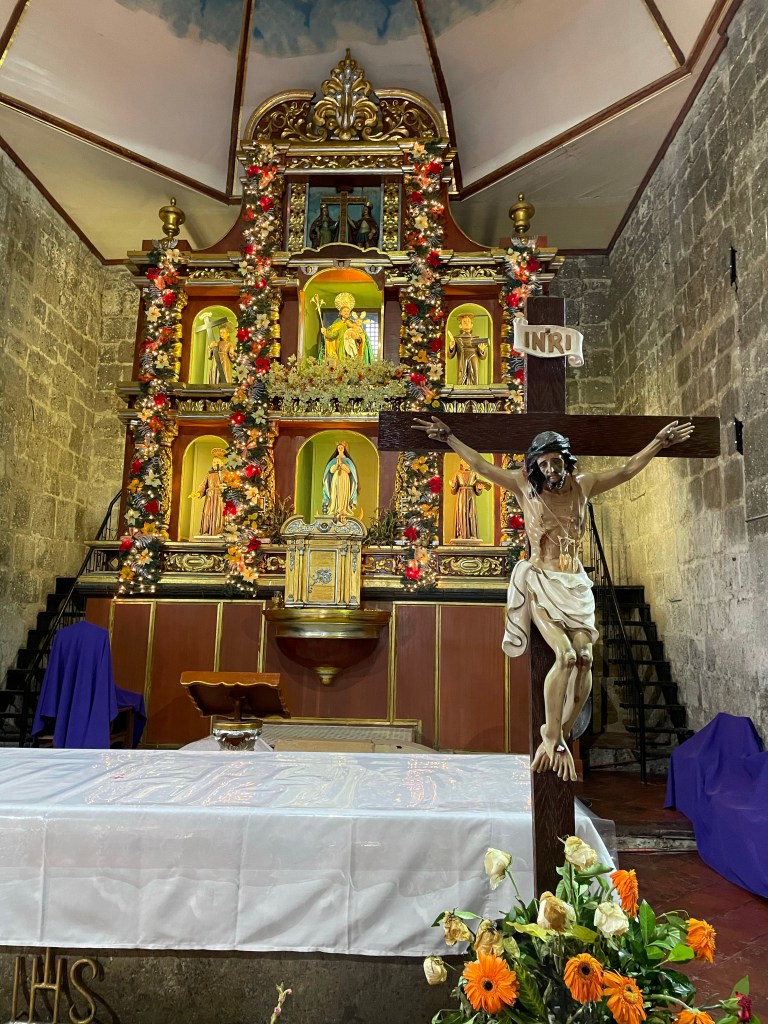
Photo by author, Malolos Cathedral, August 2020.

Dearest Lord Jesus:

What did you pray for on the night before you named your Twelve Apostles?

Jesus went up the mountain to pray, and he spent the night in prayer to God. When day came, he called his disciples to himself, and from them he chose Twelve, whom he also named Apostles:

Luke 6:12-13

What an amazing sight, a scene to behold you, Jesus who is true God and true man, praying to the Father, spending the night just to name the Twelve Apostles! Most likely, you prayed for them individually so they may be strong in their commitment to you. What an honor!

And the most beautiful part in every call you make specially with the Twelve Apostles is how you have chosen them from their so diverse backgrounds and temperaments to prove that what interests you most Lord Jesus are people or persons, not labels or backgrounds.

Remind us always, dear Jesus of this reality, of how you value each of us that you have called us to be your followers as Christians.

Open our eyes and our hearts to always have the zeal and passion of St. Simon.

His two nicknames given by Luke as a “Zealot” belonging to Zealots Party demanding the ouster from Israel of the occupying Romans and that by Mark as “Cananean” from the Hebrew verb qana for “to be jealous, ardent” both mean being filled with passion for his Jewish identity for God, his People Israel and Torah or the Laws.

In choosing Simon as an Apostle, may we be reminded of always having room in the Church for all charisms and human qualities of all peoples who find their communion in our Lord Jesus Christ.

Likewise, we pray to be like Jude Thaddeus who stood firmly by his faith in you, Lord Jesus in writing a short letter to remind the early Church of keeping their Christian identity, of not being deceived by some preachers who sowed confusion and division with their thoughts and ideas.

Pray for us, dear Jesus in this modern time when we who are in the Church who are lacking in passion and drive to make you known not only in words but also in deeds.

Pray for us, still Lord Jesus in this modern age that we may have the strength, clarity, and courage in defending and upholding our Christian identity amidst the many contradictions of the world in which we live in.

May St. Simon and St. Jude help us rediscover the beauty of our Christian faith and live it faithfully, witnessing to its beauty and truth. Amen.

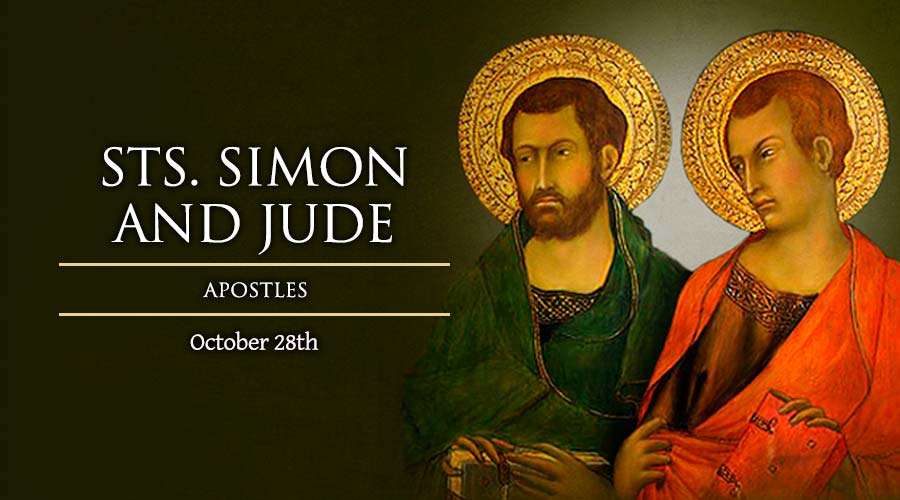
From catholicnewsagency.com.

The company Jesus kept

The Lord Is My Chef Breakfast Recipe for the Soul by Fr. Nicanor F. Lalog II
Monday, Feast of St. Matthew, Apostle and Evangelist, 21 September 2020
Ephesians 4:1-7, 11-13   >><)))*>   +   <*(((><<   Matthew 9:9-13
Photo by author, Lake of Galilee at the side of Capernaum where Jesus called Matthew the tax collector, May 2019.

Glory and praise to you, O God our loving Father! Your Son Jesus Christ never fails to surprise us with your wondrous plans for us, with your ways of calling us, and of coming to us!

As we celebrate today on this first working day of the week the feast of St. Matthew, you fill us with hope and inspiration to work harder and pray hardest in life to find fulfillment in you our God.

Thank you for being so kind to come and call us like St. Matthew, Lord Jesus. It was a very extraordinary call not because we are so special but actually unimportant with Matthew also known as Levi belonged to the most despised group of people at that time in Israel, the tax collectors who were always mentioned along with sinners and prostitutes. And so were Matthews’s contemporaries at Capernaum, the brothers Simon and Andrew, James and John who were all fishermen, the most ordinary folks doing the most ordinary jobs of that time.

We were all just like them – nothing special and unimportant! If not for your call, we would be nobody at all even in our family circles.

What a joy that even if some people reject us for various reasons, you O Lord never exclude anyone of us from your friendship. Most of all, you even defend us.

While he was at table in his (Matthew’s) house, many tax collectors and sinners came and sat with Jesus and his disciples. The Pharisees saw this and said to his disciples, “Why does your teacher eat with tax collectors and sinners?” He heard this and said, “Those who are well do not need a physician, but the sick do. Go and learn the meaning of the words, I desire mercy, not sacrifice. I did not come to call the righteous but sinners.”

Matthew 9:10-13

Give us the readiness and firmness of St. Matthew in leaving everything behind to follow you, Lord.

Like St. Matthew who “got up (rose in some translations) and followed you” (Mt.9:9) right after you have called him, help us realize that following you requires our detachment from our sinful situations, from things and people who prevent us from totally loving you and serving you.

Help us Lord to arise from our dark, sinful past so we can radiate your light in our version of your gospel like St. Matthew. Amen.

“The Calling of St. Matthew”, painting by Caravaggio (1599-1600) said to be one of the favorite pieces of art Pope Francis used to frequent while still a student in Rome. Photo from Wikipedia.org.

More than words

The Lord Is My Chef Breakfast Recipe for the Soul by Fr. Nicanor F. Lalog II
Monday, Feast of St. Bartholomew, Apostle, 24 August 2020
Revelation 21:9-14 >><}}}*> |+| >><}}}*> |+| >><}}}*> John 1:45-51
Photo by author, Subic, 2018.

Glory and praise to you, Lord Jesus, the “Word who became flesh and dwelt among us” to reveal the Father’s immense love for us all. He was not contented in just telling the prophets of Old Testament how he loved us that He came and lived with us in you, Lord Jesus!

And that is why we also rejoice on this Feast of St. Bartholomew, a.k.a. Nathanael, who was introduced to you by another Apostle you have called earlier:

Philip found Nathanael and told him, “We have found the one about whom Moses wrote in the law, and also the prophets, Jesus, son of Joseph, from Nazareth.” But Nathanael said to him, “Can anything good come from Nazareth?” Philip said to him, “Come and see.” Jesus saw Nathanael coming toward him and said of him, “Here is a true child of Israel. There is no duplicity in him.” Nathanael said to him, “How did you know me?” Jesus answered and said to him, “Before Philip called you, I saw you under the fig tree.” Nathanael answered him, “Rabbi, you are the Son of God; you are the King of Israel.”

John 1:45-49

O dear Jesus, like St. Peter in the gospel yesterday and now St. Bartholomew, you are telling us anew to never be contented with mere words, with the “what” of who you really are, that we must always “come and see you” in order to experience your very person and truly know you.

I really wonder O Lord what your words meant that before Philip called Nathanael-Batholomew, you have seen him under the fig tree; however, I am so convinced that in your words, Nathanael-Bartholomew must have felt something deep inside him that he threw himself totally to you as your Apostle.

Most of all, teach me to remain simple and hidden in you, Jesus that like St. Bartholomew, despite the scarcity of stories and information about him except this little anecdote from the fourth Gospel, he remained faithful to you until his death by flaying reportedly in India.

May we imitate St. Bartholomew who had shown us that more than words, what matters is our oneness in you, Jesus, without any need for us doing sensational deeds, earning thousands of “likes” and “followers” in social media because only you, Lord, remains extraordinary above all. Amen.