A wedding and a funeral

Lord My Chef Wedding Recipe by Fr. Nicanor F. Lalog II
Homily, Wedding of Ellah and John Victor
Santuario de San Jose Parish, Greenhills, Mandaluyong
27 December 2025
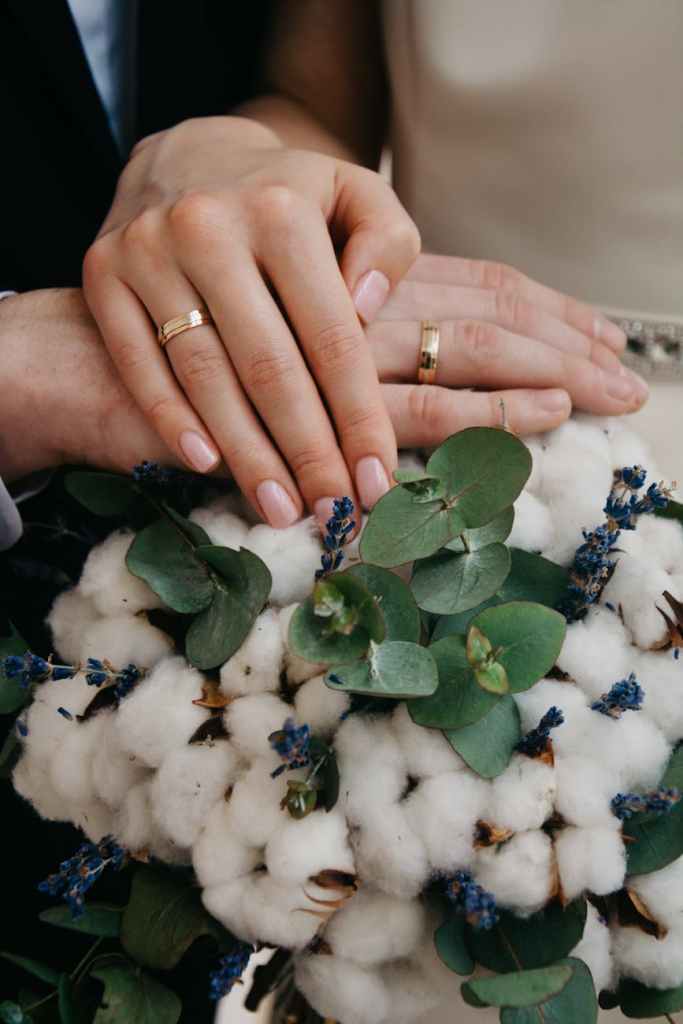
Photo by Deesha Chandra on Pexels.com

A former student in our girls’ high school invited me to officiate her wedding last December 27, 2025; we were supposed to meet December 20 before my Simbang Gabi in our university chapel for my formal invitation when her father died suddenly that same afternoon while on a trip down south with his fellow big-bikers.

Ellah was so devastated with the news, wanting to reset her wedding. She has been working overseas for the past three years and had saved enough for her wedding day. Her only request from her parents who have separated when she was in elementary was for them to be together when she gets married. And they willingly obliged for their unica hija. And then tragedy struck exactly a week before her wedding day that happened to be the feast day of St. John Evangelist, the beloved disciple of the Lord. Sharing with you my homily on that bittersweet day of wedding of a beloved student and funeral of her father.

Photo by Joseph Kettaneh on Pexels.com

Congratulations, Ellah and JV on this most joyous day of your lives.

I know, it must be so difficult for you, Ellah but I am so glad that you still pushed through with your wedding today as planned. Your dad would not be happy if you had this postponed.

Showbiz ka rin talaga, Ellah! Parang cine – a wedding and a funeral.

But, let it be clear with you both, Ellah and JV that God willed it for you get married today on the feast of Jesus Christ’s beloved disciple St. John the Apostle and Evangelist. God wanted you to be married this day – not next year nor next month, nor last year. This is the day that the Lord has made for you to seal your love at His altar in this beautiful church because God has great plans for you, Ellah and JV.

Our gospel is so beautiful – the story of Easter when Jesus Christ rose from the dead.

On the first day of the week, Mary Magdalene ran and went to Simon Peter and to the other disciple whom Jesus loved, and told them, “They have taken the Lord from the tomb, and we don’t know where they put him.” So Peter and the the other disciple went out and came to the tomb (John 20:1,2-3).

“The Three Marys” (1910), painting by American Henry Osawa Tanner from biblicalarchaeology.org.

Here we find a most beautiful image of human relationships, of how a woman needs a man, and a man’s readiness to be at her side, to comfort and accompany the woman.

Just like you today, Ellah and JV.

Of course, Mary Magdalene and Simon Peter were both disciples of Jesus. They have no romantic relationships. But, the mere fact that Mary thought of reporting the missing body of Jesus to Peter being the leader of the Apostles speaks a lot to us these days when gender equality is overextended.

A woman needs a man for leadership that is why he is the man of the house. This we find in the rite of putting on veil on the newly-weds: only the head of the woman is covered because in every family, in every couple there is only one head, one leader – the man. Wherever there are two heads, it means there is a monster. There can be no order in any relationship when everyone is the leader or the head. This is most especially true in every couple.

However, let it be clear too that these mutual need of woman for man and man for woman is always governed by love which is more than a feeling but a decision, a meeting of one’s mind and heart. If your read the letters of St. John like what we have in our first reading today, you will realize three important lessons by the beloved disciple about LOVE:

Photo by Irina Iriser on Pexels.com

First, God is the source of love.

Ellah and JV, remain rooted in God for “God is love.” If there is one thing you have found so clear in your lives since college, Ellah and JV, God has always been there with you. His abiding love never forsake you both, especially in your most trying times. Keep serving Him in your parish, in your lives, in your married life. Handle life with prayer.

Second, St. John tells us that love is not merely said in words but proven in deeds and works.

Walk your talk of “I love you.” One of the things I ask couples preparing for marriage is, who should be the first to greet, to speak when you have an LQ? Sino dapat maunang kumibo kapag nag-away ang mag-asawa o magkasintahan?

Many say it should be the man but I ask them whatever happened to the principle of ladies first? On the other hand, some say whoever caused the quarrel must be the one to apologize but the problem is, would anyone admit fault? The answer is simple but difficult to practice: whoever has more love to give must be the first to blink, must be the first to make the move. Love in any relationship is not a competition. Just keep on loving and loving. Show and make your love felt in actions. Not just words.

Third, very clear with St. John that love is always self-giving.

The true measure that you have loved is when you are able to love somebody else more than yourself. Love is always the giving of self.

In another part of his letter, St. John beautifully wrote that “No one has ever seen God. Yet, if we love one another, God remains in us, and his love is brought to perfection in us” (1Jn.4:12).

Photo by Pixabay on Pexels.com

Remember, Ellah and JV, Jesus is always between the two of you, not in front nor at your back. Whatever you do to each other, you do it first to Jesus. When you work hard JV and become patient with the tantrums of Ellah, you first become loving to Jesus and then to Ellah. The same with you Ellah: when you take care of JV, when you cook his favorite meal, you are first loving Jesus then JV. But, the moment you become mean to each other, when you become unfaithful to each other, Ellah and JV, you become unloving first to Jesus and then to each other.

Wedding is not everything, Ellah and JV. There will be dark days and difficult times ahead of you, just like now as you grieve at the death of your dad, Ellah.

But, remember Ellah and JV your gospel today: Easter happened when it was dark; the tomb was empty because Jesus had risen from the dead. Like in life, whenever it is dark and empty, hold on to each other Ellah and JV, have faith in God for there in your midst is Jesus Christ.

Never lose hope in life; as I used to teach you Ellah in high school, hopelessness is the opposite of love, not hatred. The moment you find no hope in everyone and in everything, then you stop loving and that is when you start destroying everything and everyone. Never lose that hope and you will always find love, Ellah and JV. God bless you more and blessed Merry Christmas!

Bless our hands, Lord

Lord My Chef Daily Recipe for the Soul by Fr. Nicanor F. Lalog II
Wednesday, Memorial of St. Agnes, Virgin & Martyr, 21 January 2026
1 Samuel 17:32-33, 37, 40-51 <*((((>< + ><))))*> Mark 3:1-6
Photo by Titouan Jullien on Pexels.com
Today, I thank you
dear God our Father
for the gift of our hands,
our hands that touch and hold
others dear to us,
hands that keep joyful things
closest to us,
hands that openly receive so
much from you and from others,
hands that cover our face and
protect our selves from harm,
hands that move freely
to do so many things
and enable us enjoy freedom;
forgive us Father when these
same hands you have blessed
to feed us and keep us warm
are the same hands we hurt
others, the same hands we close
to refuse friendship and goodwill
of others; the same hands that
make us unfree in taking what is
not ours and committing so many sins.
Bless our hands,
Jesus, like what you did
to that man with withered hand;
let us stretch our hand, Jesus
to touch and help others in need;
open our hands, Jesus
to receive and to share you;
like David slaying Goliath,
use our hands, Lord,
small and feeble they may be
to do your will and proclaim
your power and greatness;
may our hands be your hands,
Jesus, regardless of our youth
like St. Agnes
whom we remember today,
the little hands that hold on
to you in deep faith,
the little hands that spread
your gospel of love and justice.
Amen.
Photo by Mariam Antadze on Pexels.com

New wine, new wineskins

Lord My Chef Daily Recipe for the Soul by Fr. Nicanor F. Lalog II
Monday, Second Week in Ordinary Time, Year II, 19 January 2026
1 Samuel 15:16-23 <*((((>< + ><))))*> Mark 2:18-22
Photo by Pixabay on Pexels.com
It is still too early,
Lord Jesus Christ
but every moment is
always a "happy hour"
in you as you speak of
new wine into fresh wineskins:

Likewise, no one pours new wine into old wineskins. Otherwise, the wine will burst the skins, and both the wine and the skins are wuined. Rather, new wine in poured into fresh wineskins” (Mark 2:22).

Teach me, Jesus
to have a "new mind in Christ"
(1 Cor. 2:16),
to truly fast my mind
and my heart
by emptying myself
of so many things like
beliefs and suppositions
that prevent me from
welcoming you into myself;
turn me into a fresh wineskin,
Lord by discarding
my old self
that has become my comfort zone
of complacency
and mediocrity;
teach me obedience,
Jesus that I may truly
appreciate and realize the true
meaning of our many traditions
like fasting and prayer
that lead to glorifying you
and union in you;
forgive me on many occasions
of acting and believing
like King Saul
of justifying disobedience,
insisting on my own
understanding
and seeing of things.
Many times,
indeed,
we "burst" because
we never have you
in us, Jesus,
for we are so filled
with our old selves.
Amen.
Photo by Rachel Claire on Pexels.com

Ageing gracefully

Quiet Storm by Fr. Nicanor F. Lalog II, 15 January 2026
Photo by Ar. Philip Santiago, Basilica of the Annunciation, Israel, October 2025.

Two priests and a former nun personally known to me died in our diocese last Sunday. It was also the birthdate of the late Bishop Cirilo Almario, Jr. whom I had remembered in my two early morning Masses on that Sunday, January 11, 2026.

In those two Masses too I mentioned in my homily the retreat I facilitated first week of January with my friends about “ageing gracefully” – my own realizations since joining their ranks as senior citizens last March.

Let me elaborate those two points I have shared with them and in my homily last Sunday.

From forbes.com.

First, let us embrace our being old. Stop saying “when we get old”, pagtanda natin because we are already old. Period. Matanda na tayo.

We cannot reverse our ageing process and it is useless to have all these cosmetic manipulations like dyeing our hair black or stretching our sagging skin and removing those wrinkles.

Embrace old age. It is beautiful and wonderful because it is so good. Our Filipino word for “old” says it all – matanda – which ironically so many women hate to hear as they stress that kalabaw lang ang tumatanda. That is not true.

Our word matanda is from the root word tanda which means “sign” that is why an old person is rightly called matanda because he/she is a sign of God’s goodness, a sign of God’s mercy and love, a sign of God’s beauty and majesty.

Moreover, a matanda is a sign of wisdom and grace that is why when we were young boys, we wanted to be old by putting our dad’s eyeglasses or taste his cigarettes and beer while girls put on their mom’s make up and high heeled shoes. How funny that when we are already old, we resist to accept the fact that we strive to look young again, sometimes ending up as nagmumurang kamatis.

Photo by Mr. Jim Marpa, 2019.

Technically speaking, “old” is actually harsh. Old is something about a past phase that has ran its course like being outdated. Luma in Filipino that connotes stale, passe, lacking relevance and sadly, useless. Just for display purposes. As a person, that is the one we refer to as walang pinagkatandaan. Or huklubang matanda.

To be more specific, the better English term referring to ageing gracefully is ancient that exudes with a sense of timeliness, of being perpetually relevant like the ancient ruins in Rome, Athens, and Jerusalem. Actually, some biblical experts have wanted to rename the “Old Testament” as “Ancient Testament” following this line of thinking.

Photo by author, Ephesus, Turkiye, November 2025.

Things and even persons can rightly be referred to as ancient because of their beauty still intact that inspires us and makes us wonder about life itself. They are not just old sites nor old persons that remind us of the past long gone but ancient because still lovely, “still full of sap and green” as the psalmist extolled the seniors of his time.

Persons who age gracefully like ancient sites stir our inner selves with deeper beauty and realities of life that eyes cannot see. That is perhaps the reason these days many senior men and women are so “in” and considered as attractive.

It is the same wisdom realized by St. Augustine when he wrote about God, “Late have I loved you, O Beauty ever ancient, ever new, late have I loved you. You were within me, but I was outside, and it was there that I searched for you.”

Being ancient -whether as a person or a thing – is something of the inside we must turn to not outside like our skin and physical body. From that inside realization and acceptance of being senior or elderly we experience the grace of ageing because we experience God still present in us, in fact loving us more as he makes as a sign or tanda of his loving presence.

Ageing gracefully is a modern virtue we need to cultivate in this age of instants that glorify youthfulness equated with usefulness. That is why when Pope Benedict XVI resigned from the Papacy in 2013, the more I have come to love and admire him. In his resignation, he taught us the importance of embracing and lovingly accepting our old age when we can no longer adequately perform our many tasks in office even in life itself. It was not a failure nor a surrender in the negative sense but more of a deep courage and trust in God that we accept our being weak and ready to come to him soon.

Photo by author, Pundaquit, San Antonio, Zambales, May 2025.

This brings me to my second realization since turning sigisty years old last year: corollary to embracing old age is accepting death. That is why, as seniors, let us stop saying and thinking of our coming death because we are already dying. Huwag na nating isipin yung “kapag namatay ako” dahil namamatay na nga tayo.

Being senior is doing away with those bucket lists, of thinking about things to do, places to visit before we die. We are already dying and hence, whatever you can do, do it now. There could be no more tomorrow. All we have is the present moment. Anything could happen to us, for better and for worse.

Ageing gracefully is coming to terms with life which leads us to coming to terms with death. Yes, this is easier said than done, but slowly, I am learning and loving it!

Photo by author, Bucharest, Romania, November 2025.

One of the reasons that made me decide to become a priest in the early 1990’s was the conviction that I have felt so deeply God’s love for me as a person in the many experiences I have gone through in life. I felt at that time that by becoming a priest, I could convince more people about the truth and existence of this loving God we have.

I still hold on to that but a year after turning sigisty, becoming sigisty-one in March 22, another fascinating realization I have had is how wonderful this life is. Now that I am old, the more I can boldly claim with conviction that it is good to be alive. Masarap pa rin ang mabuhay! Maganda ang buhay maski mahirap!

Accepting and embracing our ageing, our getting weak, our failing memory are all kinds of dying. And in that midst that we actually live fullest and meaningfully. I don’t know if I can write any further because I ain’t dead yet but… just in case, it was worth the trip. Amen. May you have a fruitful and fulfilling weekend ahead.

Permitting, not permitting

Lord My Chef Daily Recipe for the Soul by Fr. Nicanor F. Lalog II
Wednesday, First Week in Ordinary Time, Year II, 14 January 2026
1 Samuel 3:1-10, 19-20 <'[[[[>< + ><]]]]'> Mark 1:29-39
Photo by author, Bgy. Ubihan, Meycauayan City, January 2022.
How lovely are your words
today, Lord Jesus Christ,
the Word who became flesh
and dwelled among us!
Thank you very much 
in sharing with us the power
of your words; in fact,
we are the only ones with whom
you have gifted with this power;
the world and everything in it
was created simply by God speaking
the words that came to exist.
Teach us, Jesus
the value of listening to you,
letting you speak first
so that like Samuel,
you may "not permit any word
we speak to be without effect"
(1 Samuel 3:19); may we truly share
in your prophetic ministry
by "enfleshing" the words we speak
by walking our talk;
likewise, heal us,
dear Jesus
of our many infirmities
and sickness due to sins
and evil that make us
speak too much
that instead of building up
others we destroy one another;
like those demons you drove out
from the sick you have cured
in today's gospel,
keep our mouths shut,
"do not permit us to speak"
(Mark 1:34)
when not necessary.
Amen.

This is the time of fulfillment

Lord My Chef Daily Recipe for the Soul by Fr. Nicanor F. Lalog II
Monday, First Week in Ordinary Time, Year II, 12 January 2026
1 Samuel 1:1-8 <*((((>< + ><))))*> Mark 1:14-20
Photo by author, San Juan, La Union, 09 January 2026.

After John had been arrested, Jesus came to Galilee proclaiming the Gospel of God: “This is the time of fulfillment. The Kingdom of God is at hand. Repent, and believe in the Gospel” (Mark 1:14-15).

Thank you dear Jesus
for this brand new week,
for this start of Ordinary Time
in our liturgical calendar;
how wonderful to remind us
it is the time of fulfillment,
of completion and wholeness
in you, O Lord because it is only
in you lies our fulfillment.
Teach us to open our hearts
and souls to your call, Jesus
like the brothers Peter and Andrew,
James and John,
your first disciples;
was it really that quick and easy
for them to leave everything behind
including the father of James
and John just to follow you?

Yes, dear Jesus,
like them,
we felt incredulous
and even fearful with your call,
not only last year
but even this year;
in fact, as we begin
our Ordinary Time this Monday,
the more I felt your calling
continues everyday
because without you
we shall never be complete.
Like Hannah,
our lives will never be complete
and fulfilled without having you
that may take several forms
like a child for Hannah;
many times Lord we wonder
why we cannot have what we
are specifically praying for
like Hannah who has become
a subject of ridicule by others
for being barren and childless;
but, inasmuch as your call continues
for us, then you hereby assure us too
of your continuing works in our
many deficiencies if we can only
be patient and persevering in you
in awaiting your calls.
Amen.
Photo by author, San Juan, La Union, 09 January 2026.

A kingdom or a home?

Lord My Chef Sunday Recipe for the Soul by Fr. Nicanor F. Lalog II
Feast of the Holy Family of Jesus, Mary & Joseph, Cycle A, 28 December 2025
Sirach 3:2-6, 12-14 ><}}}}*> Colossians 3:12-21 ><}}}}*> Matthew 2:13-15, 19-23

Last November we were blessed to have visited Romania’s three famed castles at Transylvania region: the Bran Castle considered as the home of Count Dracula in Bram Stoker’s stories; the Cantacuzino Castle owned by one of Romania’s wealthiest family which is the setting of Netflix’s Wednesday series; and the Pelisor Castle which is the smallest but loveliest for me due to its romantic story behind.

I remembered these Romanian castles because of our gospel today about two kings: one is a ruthless, old king named Herod so “greatly troubled” upon hearing the news of the “newborn king of the Jews”, our Lord Jesus Christ (Mt.2:2, 3).

Very often when we hear of kings and royalties living in castles, so many images of affluence and power come into our minds. And indeed they are so true when we went inside those castles with its wonderful interiors and amazing artworks; however, as we learned more of its history especially of the lives of its occupants, our wonder and excitement dissipated. It was really more like a fairy-tale, or a horror story in the case of Bran Castle.

Photo by author, Cantacuzino Castle, Romania, 06 November 2025.

It must have been so lonely and sad living in those palaces; however, let us admit how often the presence and reality of Jesus whom we take for granted like when he was born in Bethlehem more than 2000 years ago invite us into those parts of our lives where we like to rule like kings or queens.

I find this important and even essential before reflecting about the Feast of the Holy Family because it is right in our homes – ironically or tragically – where we are first exposed to evil and sins. It is inside our homes when the father or mother or siblings take on their “power trips”, insisting on their rules, even flexing their powers over each other that in the process we hurt each other. Sometimes, the trauma that comes after may last a lifetime.

Would we rather choose a kingdom or a home? Be a Herod or a Baby Jesus?

Of course, our answers are so obvious as we would generally choose a home than a kingdom and be a Baby Jesus than a Herod. This we can do by imitating St. Joseph.

When the magi had departed, behold, the angel of the Lord appeared to Joseph in a dream and said, “Rise, take the child and his mother, flee to Egypt, and stay there until I tell yo. Herod is going to search for the child and destory him.” Joseph rose and took the child and his mother by night and departed to Egypt… When Herod had died, behold, the angel of the Lord appeared in a dream to Joseph in Egypt and said, “Rise, take the child and his mother and go to the land of Israel, for those who sought the child’s life are dead.” He rose, took the child and his mother, and went to the land of Israel. But when he heard that Archelaus was ruling over Judea in place of his father Herod, he was afraid to go back there… He went and dwelt in a town called Nazareth, so that what had been spoken through the prophets might be fulfilled, He shall be called a Nazorean (Matthew 2:1314, 19-22, 23).

Photo by author, site of the Nazareth home of the Holy Family underneath the Church of St. Joseph in Nazareth, Israel, 2017.

Remember how Matthew described St. Joseph as a righteous man? Here after the birth of Jesus Christ, we find Joseph’s holiness most shining. See how before this scene, Matthew described to us the attitudes of Herod and the experts in Jerusalem vis-a-vis the Magis from the East: Herod and company were all disturbed while the Magis were all sincere and so open in their search for the Christ.

That’s what we were saying earlier: of how we play so much on our turf and power, on how we want to make our “rule” as sovereignty felt always right in our home, in Jerusalem that was then the seat of power and of worship. Very clear at that time, the temple was already so untidy that needed Christ’s cleansing thirty years later.

When sin especially pride fills us, it is difficult to recognize Jesus. Moreover, even the smallest and harmless or weakest person like a child or a woman would always disturb anyone filled with one’s self, feel threatened like Herod that one’s rule is being taken away. How sad when a father or a husband, a mother or a wife including the eldest children would dare challenge everyone at home, asking who is the father or who is the one supposed to be in command? Sino ba and tatay (o nanay) dito na dapat masunod? It is the most scariest tactic of all not because of what the power trippers can do but actually it was a proof enough they are immatured and lacking of proper understanding about power and authority.

Photo by author, March 2024.

Joseph was clearly not of the same kind. He readily left his home and moved the Infant Jesus and Mary to Egypt. Remember that Bethlehem as the town of David is Joseph’s turf so to speak being from royal Davidic lineage himself. It must have been so difficult for him to leave Bethlehem and be a refugee in Egypt!

But Joseph had none of those airs of rule and superiority. For him, the only rule was God and that meant always the good of Jesus and Mary. That is why Joseph twice “rose” to obey the angel’s instructions to him to take the Infant Jesus and Mother Mary to Egypt and then back to Israel after some time.

Joseph’s rising was actually an act of bowing low to the power and authority of God, most of all to the Son of God he had named as “Jesus”.

Can we imitate Joseph’s “rising” from our selfishness and ordinariness of petty quarrels and assertions of power or “rule” especially in our homes? To imitate the Holy Family, we need to be like Joseph who rose not just literally from his sleep and comfort but rose above his very self. Jesus is inviting us this Sunday to rise too above our pride and self-centeredness to give way to his love and mercy, kindness and understanding for each other so that everyone remains safe and unharmed like the Infant Jesus and Mary following Joseph’s selflessness.

Photo by author, St. Joseph Parish Church, Pacdal, Baguio City, 28 December 2024.

Home is where the heart is. This is most true when we get into the origin of the Filipino equivalent of home which is tahanan which is from the root word tahan that means to stop crying. When children cry, we tell them to tahan na, tahan na… or stop crying.

Home is where we stop crying because that is where we are most safe, that is where we find the people who love us, believe in us, the one who would still accept us and forgive us when we have sinned. Home is our safest place because that is where there are people willing rise above their selfishness, to rise above their painful memories, and rise to let go of their comforts for others in distress and more difficult plight and situation in life.

Jesus, Mary and Joseph all rose from their very selves for each other to be safe. Most of all, they rose above themselves because they love so much for each other, a reflection of their great love for God the Father. Amen. May your family be blessed!

Bloodlines do not bring Christmas

Lord My Chef Simbang Gabi Recipe for the Soul by Fr. Nicanor F. Lalog II
Thursday, Simbang Gabi-III, 18 December 2025
Jeremiah 23:5-8 ><}}}}*> + ><}}}}*> + ><}}}}*> Matthew 1:18-25
Photo of St. Joseph with Child Jesus from vaticannews.va.

After presenting to us the genealogy of Jesus, Matthew now gives us the very essence of Christ’s origin who is God himself making him truly Divine but at the same time coming from the lineage of Abraham and David, truly human like us in everything except sin.

But, in the light of the corruption so rampant in our country, I find Matthew’s genealogy so timely as it also shows us so clearly the need to break away from the much vaunted and abused powers of bloodlines and kinship so common in most nations and societies where key positions and status are considered as hereditary.

Sociologists call it “familism” which is too much emphasis on one’s family line that leads to abuses like nepotism in offices, dynasty in politics and even caste systems that all degrade of the value of every human person. We reflected yesterday how in the genealogy of Jesus, we are all beloved children of God; when some people cling to power and positions as if they are the only ones capable of doing things even in bringing Christmas, they are totally wrong.

See how in our country politicians shamelessly abuse their power in a family dynasty occupying all elective positions aside from controlling major businesses in their town or city, region or province. A classic example of kawalan ng kahihiyan. And thank God Jesus was not born in the Philippines!

Sorry for the rant but let us recall Matthew’s shift yesterday in the flow of Christ’s genealogy at the end: “Eliud the father of Eleazar. Eleazar became the father of Matthan, Matthan the father of Jacob, Jacob the father of Joseph, the husband of Mary, of her was born Jesus who is called the Christ” (Mt.1:15-16). See the break from the rhythmic cadence of “is the father of, is the father of” to stress that Jesus is from God, not from any man like St. Joseph, biologically speaking. This, I think, is crucial for Matthew so that no one can ever claim an exclusive family tie or bloodline in Jesus nor brag being a “relative” or even the “son” of God like that pastor now in jail in Manila.

Francisco Goya’s painting, “Dream of St. Joseph” (El Sueno de San Jose) done in 1772; from en.wikimedia.org.

With the birth of Jesus by Mary, all mankind by faith in Christ can now trace our origin in God – thanks to both St. Joseph and Blessed Virgin Mary! They showed us that Christmas did not happen by mere bloodlines but through active cooperation in the work of God.

This is how the birth of Jesus Christ came about. When his mother Mary was betrothed to Joseph, but before they lived together, she was found with child through the Holy Spirit. Joseph her husband, since he was a righteous man, yet unwilling to expose her to shame, decided to divorce her quietly. Such was his intention when, behold, the angel of the Lord appeared to him in a dream and said, “Joseph, son of David, do not be afraid to take Mary your wife into your home. For it is through the Holy Spirit that this child has been conceived in her (Matthew 1:18-20).

Photo by Deesha Chandra on Pexels.com

Men are seldom described by their relationship to a woman as it is more often the other way around like in the tradition of wives assuming their husband’s surnames.

Most notable exception anywhere in history is St. Joseph who is known more because of his connection to Mother Mary; however, it is in this unique aspect that we also find his greatness, his holiness.

Like in any patriarchal society, it is always the father who gives the identity to the child especially among the Jews. Every pilgrim who had gone to the Holy Land knows this so well when you look at the ID of tour guides and bus drivers that always include the lines that says “bar” followed by one’s father’s name as “son of so and so.” Unlike men, women easily claim motherhood for a child as part of her nature; a man would never give his name to any child not his.

But not Joseph who was really an exception for being “righteous” according to Matthew.

Photo from vaticannews.va, 2020.

Righteousness among the Jews is also holiness which is to keep and abide by the laws of God.

Here we find Matthew as a Jew writing to his fellow Jewish converts to Christianity that holiness is more than obedience to the Ten Commandments and its over 600 precepts every pious Jew must first follow.

For Matthew, righteousness or holiness is always complementary to justice which is more than legal fairness but having the character of God who is fair and merciful, compassionate and kind especially with the weak. In the first reading, we hear Jeremiah speaking about the coming Messiah to be called “the Lord is justice” who shall restore what’s broken, primarily his people.

Actually we got this thought on the complementarity of justice and righteousness from one of our favorite bloggers at WordPress, Sr. Renee Yann who in her “Lavish Mercy” issue in March 19, 2019 cited a Protestant exegete about the matter:

“Justice in the Old Testament concerns distribution in order to make sure that all members of the community have access to resources and goods for the sake of a viable life of dignity…. Righteousness concerns active intervention in social affairs, taking an initiative to intervene effectively in order to rehabilitate society, to respond to social grievance, and to correct every humanity-diminishing activity” (Walter Brueggemann, Journey to the Common Good).

That complementarity of justice and righteousness in St. Joseph is best expressed by Matthew when he said that “When Joseph awoke, he did as the angel of the Lord had commanded him and took his wife into his home.”

When Mary was found pregnant with a child not his, St. Joseph already displayed his righteousness when he took the concrete and painful step of quietly leaving her to spare her of all the shame and even punishment their laws imposed on such cases. And after the angel had explained to him everything about the pregnancy of Mary, St. Joseph all the more showed the depth and reality of his holiness or righteousness that was willing to forget his total self for the greater good of Mary and everyone!

Photo by author, “St. Joseph Protector of the Child Jesus”, 2024.

As a sign of his righteousness in accordance with his deep sense of justice, St. Joseph showed in his very life that true relationship with God is expressed in our love for others which would become later a major teaching by Jesus Christ.

Moreover, it was in accepting Mary as his wife that Jesus finally came into the world as our Savior. Today, St. Joseph is teaching us that Christmas happens whenever we respect and accept each other because that is when Christ comes in our midst like in their eventual marriage.

It was not the first time that St. Joseph displayed his kind of righteousness complemented by the virtue of justice. After the Nativity, St. Joseph took the difficult and perilous task of fleeing to Egypt to protect and save Mother Mary and the Infant Jesus from the murderous wrath of King Herod.

Twice St. Joseph acted as a righteous man in the temple: first at the presentation of Jesus when he allowed Simeon and Anna to take the Holy Infant into their arms and praised him; and second in the finding of Jesus in the temple when St. Joseph chose to step into the background to let the Child Jesus assume his teaching vocation among the learned men there, an apparent anticipation of the ministry of Jesus later. (Recall in that scene that St. Joseph was totally silent while it was the Blessed Mother who did all the talking by speaking to Jesus how worried they have been looking for him.)

Based on these few instances found in the gospel wherein the Holy Family were presented together, St. Joseph remained righteous and just during their hidden years in Nazareth as he worked hard to provide for Mary and Jesus, actively doing good for his family and community while silently fostering, forming the personality and ministry of Jesus Christ.

Let us imitate St. Joseph working hard in silence amid the great temptations of glamor in this social media age, always rooted in Christ, our only Savior and Mediator. True holiness is purely grace and part of that is our hard work in actively bringing Jesus into this world so sick, so dark with evil and sin. Amen. Have a blessed Thursday!

Photo by author, site of the Nazareth of the Holy Family underneath the Church of St. Joseph in Nazareth, Israel.

Our living family tree

Lord My Chef Simbang Gabi Recipe for the Soul by Fr. Nicanor F. Lalog II
Wednesday, Simbang Gabi-II, 17 December 2025
Genesis 49:2, 8-10 <*[[[[>< + ><]]]]*> Matthew 1:1-17
Photo by author, December 2023.

Next to the Belen and the Parol, the Christmas Tree stands out as the third leading sign of Christmas especially in our country. Though it was first introduced by the German Lutherans in the 16th century, we Catholics have adopted it too with the Vatican having a giant Christmas Tree every year lighted at St. Peter’s Square in Rome.

The Christmas Tree invites us to remember Jesus who was born in Bethlehem is the true Tree of Life, as it “depicted the tree of paradise and the Christmas light or candle which symbolized Christ, the Light of the world” (Book of Blessings, page 443). Remember also that since ancient time especially among the Anglo-Saxons, trees symbolize our relationships as family and kin that is why we have “family trees” that trace our roots.

And that is what a genealogy is all about.

Photo by author, December 2022.

Matthew along with John opened his gospel account with the origin of Jesus; both felt the need to present right away to their specific audience where the Christ came from. John traced it to eternity as the Word (Logos) while Matthew whose followers were mostly Jewish converts to Christianity presented Jesus as the fulfillment of God’s promise in the Old Testament through their two main personalities, Abraham and David.

The book of the genealogy of Jesus Christ, the son of David, the son of Abraham. Abraham became the father of Isaac, Isaac the father of Jacob, Jacob the father of Judah and his brothers. Judah became the father of Perez and Zerah, whose mother was Tamar (Matthew 1:1-3).

Every year we hear this gospel proclaimed on December 17 which is also the start of the second and final phase of Advent when all our readings and prayers direct our attention to the first Christmas that happened more than 2000 years ago.

For Matthew, it all started with God’s promises to Abraham, the father of all nations and to David, the greatest King of Israel whose royal lineage made the Christ a King, in fact the King of Kings. What is most interesting in Matthew’s genealogy is the fact that with each of those names that sound so funny for many of us today was a true person just like us – so human and so imperfect, even sinful except the Blessed Virgin Mary. Matthew did not sanitize nor photoshop the personalities in the Lord’s genealogy because that is the Good News: it is good to be human that is why the Son of God became one of us in everything as a human being except sin.

This year, I wish to reflect on just one person, Judah.

Jacob called his sons and said to them: “Assemble and listen, sons of Jacob, listen to Israel, your father. You, Judah, shall your brothers praise – your hand on the neck of your enemies; the sons of your father shall bow down to you. Judah, like a lion’s whelp, you have grown up on prey, my son… The scepter shall never depart from Judah, or the maqce from between his legs, while tribute is brought to him, and he receives the people’s homage” (Genesis 49:2, 8-9, 10).

This is the second Christmas me and my siblings are celebrating without both our parents. Our mother died May 2024. Though it was so heavy and difficult for us, everything moved so fast that year. So unlike this 2025.

Photo by author, December 2020.

We never get used to deaths in the family; the pain becomes most painful as we move through the years especially during Christmas as if our Belen would never be complete without a St. Joseph and a Mama Mary. Of course, Christmas and life itself is all about Jesus Christ but it is a different reality and story celebrating this most joyful season without parents. Especially for a priest like me. (No drama intended.)

That is why I felt so drawn in my prayers to Judah in Matthew’s genealogy as one of the great, great, great grandfather of Jesus Christ.

In the first reading, we have Jacob nearing death while they were all in Egypt courtesy of his eleventh son Joseph who rose to power after being sold there by his brothers. Though my mother never gave such speeches when she was nearing death, all her life she used to tell us similar things when we were growing up, of how after she and dad would be gone that I must look after my two sisters and only brother, that we would not quarrel and be loving one another always. I think such habilin as we say in Filipino is common among us Pinoys along with the usual passing on or entrusting of family and properties to the eldet, either the kuya or ate.

But that’s not the case in our first reading because Judah was not the eldest of Jacob’s children with her first wife Leah. Judah was their fourth son with three elder brothers – Reuben, Simeon and Levi with a sister named Dinah. Judah also had six half-brothers from their father’s concubines or later wives: Dan, Napthali, Gad, Asher, Joseph, and Benjamin.

Rembrandt’s 1660 painting of “Judah and Tamar” via en.wikimedia.org

Why was Judah the one anointed by Jacob to lead his family and not the elder sons as it is the norm among Jewish and even Filipino families?

This is where the story gets most interesting: Judah’s Kuya Reuben fell from grace because he had sex with their father’s concubine Bilha whose sons were Dan and Napthali while his Diko Simeon and Sangko Levi were disqualified from leading the family after their bloody revenge for the rape of their sister Dinah.

However, that does not mean Judah was clean and honorable at all!

Matthew told us in his genealogy of Jesus that Judah’s sons Perez and Zerah (twins) were born through Tamar who was actually the wife of Judah’s eldest son Er who died without having any son. As per Jewish tradition, Judah’s second son Onan married Tamar but refused to have a son with her that he “spilled his seed” to the ground – that is, he masturbated! It angered God that he took Onan (that is why masturbation is sinful and also known as “onanism” from Onan).

After losing his two sons because of Tamar, Judah refused to give his third and youngest son Shelah to marry her. So, Tamar devised the plan of pretending a prostitute, luring Judah into bed and have her pregnant with the twins Perez and Zerah. Read Genesis 38 for the full story!

Of Jacob’s sons, Joseph was the most eligible to lead and continue Jacob’s family lineage and not Judah had no credentials at all to speak of as a great man leading his brothers, eventually becoming the father of the Jewish nation from whose name came the word “Judaism”.

“Patriarch Judah”, a Russian Orthodox painting in 1654 from en.wikipedia.org.

Remember too that Judah was totally silent and timid unlike Reuben when his elder brothers planned of killing Joseph because of jealousy; it was him, however, who thought of selling Joseph into slavery to Egypt to make some money.

Judah’s only saving grace came after more than twenty years when Joseph was already a powerful man in Egypt demanded to have Jacob’s youngest son Benjamin as his slave in exchange for them to purchase foodstuff during the famine (Gen. 42). Judah pleaded for Benjamin’s life that Joseph finally revealed himself as their lost brother after he could no longer contain his tears and joy in being reunited with his brothers anew.

Despite all these shady past of Judah, God chose him to continue the family lineage of his father Jacob from whom the Messiah, Jesus came.

Like Judah, we are not the perfect son or daughter, brother or sister in the family.

Like Judah, we are not most qualified for being the favored one or anointed one in the family or in the organization. There is always somebody better than us.

But God’s works in mysterious ways, in ways so different from our own ways. As the saying goes, God does not call the qualified but qualifies his calls. Likewise, God writes straight in crooked lines.

The Simbang Gabi invites us not only to look forward to the birth of the Messiah; in these nine days of prayers and reflections, we also look back to our past to face and embrace, admit and own those shades of darkness in our lives.

Matthew’s genealogy reminds us today that this family tree of faith in Jesus extends down the generations and includes us today. Feel and experience, most of all, celebrate that joy of belonging to God’s living family tree where every branch, every member is loved and cared for. God believes in us that he entrusted to us his Son Jesus Christ. That’s Christmas – God becoming human, infant and weak like us, entrusting himself to our care and love and protection.

This Simbang Gabi, let us remember our family members and other persons who made us feel belonging in this living family tree of Jesus. Let us also pray for those lost family members and friends that Jesus wants us to draw near to his living family tree with our friendship and warmth, forgiveness and acceptance. As you light your Christmas tree tonight, do not forget to share the light and warmth of Jesus Christ, our Tree of Life. Amen. Have a blessed Wednesday!

From Facebook, December 2023.

Immaculate Conception, Intimacy of God

Lord My Chef Daily Recipe for the Soul by Fr. Nicanor F. Lalog II
Monday, Solemnity of the Immaculate Conception, 08 December 2025
Genesis 3:9-15, 20 ><}}}}*> Ephesians 1:3-6, 11-12 ><}}}}*> Luke 1:26-38
“Cestello Annunciation” by Botticelli painted in 1490; from en.wikipedia.org.

We praise and thank God today on this Solemnity of the Immaculate Conception of Mary that formally kicked off the process of the fulfillment of his promised salvation in Jesus born by the Virgin Mother.

According to our official Church teaching called dogma, Mary was conceived by her mother St. Anne without any stain of original sin through the merits of Jesus Christ our Savior. Mary has to be pure and clean because she would bear the Son of God who is perfect and spotless.

God chose Mary to be the Mother of Jesus not because of her having any special traits but purely out of God’s goodness “who has blessed us in Christ with every spiritual blessing in the heavens” (Eph.1:3).

Hence, this feast reminds us too to imitate the Blessed Virgin in saying “yes” to God’s invitation to cooperate in his wonderful plans of bringing Jesus into this world so darkened by sin that has left us broken and fragmented from each other. Rejoice, therefore, because everyday, God sends us his angel to greet us with “Hail, full of grace! The Lord is with you” (Lk.1:26), inviting us into an intimacy with him like Mary.

Photo by author, left side of the facade of the Basilica of the Annunciation in Nazareth, Holy Land, May 2019.

Intimacy is more than being close with another; it is an expression of love that is willing to sacrifice, to suffer and get hurt for the sake of the beloved.

God was the first to express his intimacy with us not just by expressing his immense love for us in words by the prophets in the Old Testament but by sending us his Son Jesus Christ who became human like us in everything except sin. Actually, God does not need to become human like us to save us but he chose to be one of us because he loves us so much. As an expression of his intimacy and solidarity with us, Jesus suffered and died on the Cross while going through every pain and hurt we go through in life like grief and sadness in losing a friend, betrayal by a friend, abandonment by friends, no to mention being terrified, going hungry and thirsty. Jesus became like us so that we may become like God – intimately loving him through others.

Actually, God does not need us but he chose to love us, to be with us, to be intimate with us because he loves us so much. God remains God even without us. When we do not pray, when we do not go to Mass on Sundays, when we are bad and not good, God is still God. It is us humans who are lessened when we turn away from from God.

That’s the intimacy of God with us.

How about us, are we willing to be intimate with God in Jesus Christ?

Sadly, many people “create” and “force” intimacy which is a grace, a gift of God freely given to everyone. Like friendship, we cannot force intimacy into someone not meant to be. And like friendship too, intimacy begins in Christ, blooms in Christ.

Photo by author, chapel beneath the Basilica of the Annunciation in Nazareth; see those pilgrims praying behind iron grills at the back of the sanctuary which is the site where the Angel announced to Mary the birth of Jesus Christ.

Underneath the Basilica of the Annunciation in Nazareth is a chapel near the very site where the angel is believed to have appeared to Mary to announce the coming of the Savior. At the back of the sanctuary of this chapel is that holy site of the Annunciation enclosed by iron grills with an altar table at the center with the declaration in Latin, Verbum Caro Hic Factum Est (The Word became flesh here).

Mary’s intimacy with God began long before the Annunciation to her by the Angel cultivated in her prayer life. Every time I pray this scene of the Annunciation, I always imagine Mary deeply absorbed in prayer. Most likely, she must be praying about her coming wedding to Joseph. Luke and Matthew were both consistent about their status as being “betrothed to each other” when God announced through the Angel the birth of the Christ.

Photo by author, close up of the Annunciation site beneath the Basilica of the Annunciation in Nazareth; written on the altar table that says in Latin, “The Word became flesh here.”

Imagine the excitement and joy of two faithful Jews getting married soon when suddenly the Angel appeared to them on separate occasions and diverse situations to announce God’s plan of sending his own Son Jesus Christ for the salvation of the world?

It must have been most painful to both Mary and Joseph but as being truly faithful and loving of God, they both agreed to the Divine plan! And that is the great sign of their immense love for God – eventually for each other. Moreover, in saying yes to God, both Mary and Joseph showed the kind of intimacy they have with the Divine.

Let us focus on the intimacy of Mary with God on this Solemnity of the Immaculate Conception found in our gospel account of the Annunciation.

Photo by Rev. Fr. Gerry Pascual of Iba, Zambales at Santuario di Greccio, Rieti, Italy in 2019.

Then the angel said to her, “Do not be afraid, Mary, for you ahve found favor with God. Behold, you will conceive in your womb and bear a son, and you shall name him Jesus (Luke 1:30-31).

Notice that in many scenes and prayers about the Blessed Virgin Mary, we find the prominence of her “womb” like here in the Annunciation and when Elizabeth praised her during her Visitation as “blessed is the fruit of your womb” (Lk.1:42).

In Hebrew, the word for womb is “racham, rachamin” which is their word too for “mercy” because for them, God’s mercy comes from his innermost being. Hence, whenever the Jews speak of mercy of God, they point their fingers downward into the womb or uterus and moves it upward to the heart to indicate the flow of mercy of God from his innermost being expressed in love which is he’s very being and core.

This is the reason the Church Fathers translated mercy into “misericordia” from the Latin verb to move or to stir – “misereor” – and word for heart “cor” that literally means “to move or to stir one’s heart”. It is more than a feeling like compassion; mercy is deeper as it encompasses one’s being leading to intimacy that is a communion or oneness with others which is also intimacy.

Photo by author, Church of the Visitation, Ein-Karem, Israel, May 2017.

Where there is love, there is always intimacy with the lover willing to bear all pains and hurts for the beloved. And vice versa. Like Jesus. Then Mary who was willing to sacrifice her wedding and marriage to Joseph by being the Mother of the Son of God.

But why? Because we have experienced too that true joy comes only when there is giving of self, when there is willingness to let go and suffer. At the Last Supper, Jesus described joy as like a mother in the pangs of childbirth when she goes through a lot of pains and worries and fears almost like dying but once the baby is delivered, joy happens because she had brought forth a new life into the world.

True joy is having the firm belief that no matter what happens even in the worst scenarios, God would never leave nor forsake us. Joy happens when we find new life, new directions because there is another person willing to remain with us, assuring us we are never alone. That again is intimacy when you feel not alone especially in the most trying times.

Without intimacy with God and another person, there can be no true joy because no one would dare to take risks in this life like mothers. This is what modern women are missing when they see childbearing more as a chore or a burden or a suffering they can always avoid than self-giving borne out of love which happens in the context of an intimacy. No wonder too that sex has been so trivialized, reduced to an activity and act instead of as a gift of self because there is no more responsibility and intimacy. We cannot have lasting and meaningful relationships without intimacy.

Photo by author, 2021.

On this Solemnity of the Immaculate Conception, we are reminded of God’s mercy and intimacy with us, of his loving relationship with us that continues in Christ Jesus with Mary.

Let us nurture this beautiful relationship with God that flows and bears fruit in our relationships with one another.

Like Mary, may we finally say yes to God into an intimate relationship with him through our selflessness. Like Mary, we are blessed and full of grace. The joy awaiting far outweighs the pains and sufferings we shall go through in our gift of self in our relationships. Have no fear for Jesus had suffered first before us so that we can love and be intimate like him. Amen. Have a blessed week.